


873 Results
Form:
books
books
Actions:
Price:
$43.75
(available to order)
Summary:
Between 1937 and 1938, garden designer Christopher Tunnard published a series of articles in the British Architectural Review that rejected the prevailing English landscape style. Inspired by the principles of Modernist art and Japanese aesthetics, Tunnard called for a "new technique" in garden design that emphasized an integration of form and purpose. Tunnard's magazine(...)
$43.75
(available to order)
Summary:
Between 1937 and 1938, garden designer Christopher Tunnard published a series of articles in the British Architectural Review that rejected the prevailing English landscape style. Inspired by the principles of Modernist art and Japanese aesthetics, Tunnard called for a "new technique" in garden design that emphasized an integration of form and purpose. Tunnard's magazine(...)
Title:
Gardens in the modern landscape
Actions:
Price:
$43.75
(available to order)
Summary:
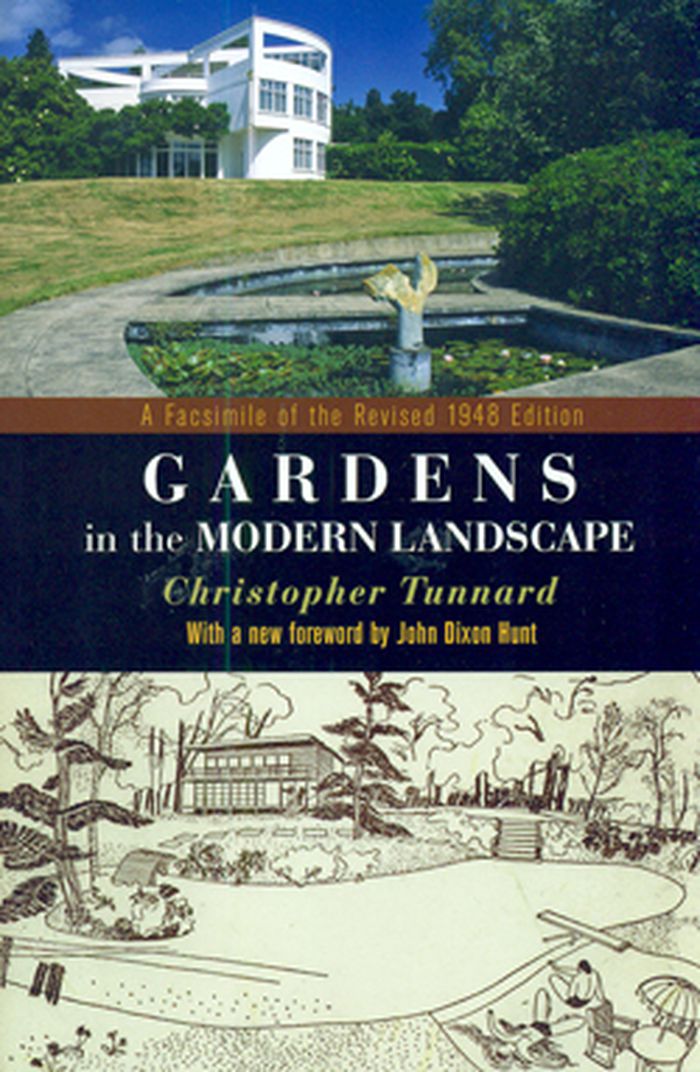
Between 1937 and 1938, garden designer Christopher Tunnard published a series of articles in the British Architectural Review that rejected the prevailing English landscape style. Inspired by the principles of Modernist art and Japanese aesthetics, Tunnard called for a "new technique" in garden design that emphasized an integration of form and purpose. Tunnard's magazine pieces were republished in book form as Gardens in the Modern Landscape in 1938, and a revised second edition was issued a decade later. Taken together, these articles constituted a manifesto for the modern garden, its influence evident in the work of such figures as Lawrence Halprin, Philip Johnson, and Edward Larrabee Barnes. Long out of print, the book is here reissued in a facsimile of the 1948 edition, accompanied by a contextualizing foreword by John Dixon Hunt.
Gardens in the modern landscape
Actions:
Price:
$43.75
(available to order)
Summary:
Between 1937 and 1938, garden designer Christopher Tunnard published a series of articles in the British Architectural Review that rejected the prevailing English landscape style. Inspired by the principles of Modernist art and Japanese aesthetics, Tunnard called for a "new technique" in garden design that emphasized an integration of form and purpose. Tunnard's magazine pieces were republished in book form as Gardens in the Modern Landscape in 1938, and a revised second edition was issued a decade later. Taken together, these articles constituted a manifesto for the modern garden, its influence evident in the work of such figures as Lawrence Halprin, Philip Johnson, and Edward Larrabee Barnes. Long out of print, the book is here reissued in a facsimile of the 1948 edition, accompanied by a contextualizing foreword by John Dixon Hunt.
Form:
books
books
Publication:
June 2014
June 2014
Subject:
Landscape Theory
Landscape Theory
Form:
books
books
Price:
$34.00
(available to order)
Summary:
The second annual Alchemy Lecture was presented in November 2023 at York University to a sold out in-person audience and nearly one thousand live online viewers. Moderated by Dr. Christina Sharpe, the Alchemists—agile thinkers and practitioners working across a range of disciplines and geographies—convened to discuss their radical visions of the beautiful world, and the(...)
$34.00
(available to order)
Summary:
The second annual Alchemy Lecture was presented in November 2023 at York University to a sold out in-person audience and nearly one thousand live online viewers. Moderated by Dr. Christina Sharpe, the Alchemists—agile thinkers and practitioners working across a range of disciplines and geographies—convened to discuss their radical visions of the beautiful world, and the(...)
Subject:
Social
Social
Publication:
September 2024
September 2024
Title:
Five manifestos for the beautiful world. The Alchemy lectures 2
Actions:
Price:
$34.00
(available to order)
Summary:
The second annual Alchemy Lecture was presented in November 2023 at York University to a sold out in-person audience and nearly one thousand live online viewers. Moderated by Dr. Christina Sharpe, the Alchemists—agile thinkers and practitioners working across a range of disciplines and geographies—convened to discuss their radical visions of the beautiful world, and the manifestos that may help to guide us there. Their treatises have been captured and luminously expanded in the pages of this book. Cherokee Nation citizen and professor Joseph M. Pierce asserts that "[f]or this decolonial future to become possible, the guiding force must no longer be capital but relations." Informed by her practice of "curation as care," Brazilian film curator Janaína Oliveira evokes music and movement as a means toward this relationality: "it's almost by falling that you live. . . . The beautiful world dances the stumbles. The beautiful world dances dancing." Kenyan-British visual artist Phoebe Boswell uses the space of a virtual gallery to ask, "If we burn down the institution, what happens next? Do we trust ourselves to know?" and gestures toward the possibility of this "as yet unlived, unexperienced thing."
Five manifestos for the beautiful world. The Alchemy lectures 2
Actions:
Price:
$34.00
(available to order)
Summary:
The second annual Alchemy Lecture was presented in November 2023 at York University to a sold out in-person audience and nearly one thousand live online viewers. Moderated by Dr. Christina Sharpe, the Alchemists—agile thinkers and practitioners working across a range of disciplines and geographies—convened to discuss their radical visions of the beautiful world, and the manifestos that may help to guide us there. Their treatises have been captured and luminously expanded in the pages of this book. Cherokee Nation citizen and professor Joseph M. Pierce asserts that "[f]or this decolonial future to become possible, the guiding force must no longer be capital but relations." Informed by her practice of "curation as care," Brazilian film curator Janaína Oliveira evokes music and movement as a means toward this relationality: "it's almost by falling that you live. . . . The beautiful world dances the stumbles. The beautiful world dances dancing." Kenyan-British visual artist Phoebe Boswell uses the space of a virtual gallery to ask, "If we burn down the institution, what happens next? Do we trust ourselves to know?" and gestures toward the possibility of this "as yet unlived, unexperienced thing."
Form:
books
books
Publication:
September 2024
September 2024
Subject:
Social
Social
Form:
books
books
Actions:
Price:
$52.50
(available to order)
Summary:
In the last ten years, the Dutch photographer Erik van der Weijde has been responsible for over fifty publications: these include not only slim photozines and simply produced brochures but also voluminous cloth-bound books — many of them distributed via his own publishing house 4478ZINE. This Is Not My Book provides for the first time an overview of his work, which(...)
$52.50
(available to order)
Summary:
In the last ten years, the Dutch photographer Erik van der Weijde has been responsible for over fifty publications: these include not only slim photozines and simply produced brochures but also voluminous cloth-bound books — many of them distributed via his own publishing house 4478ZINE. This Is Not My Book provides for the first time an overview of his work, which(...)
Title:
Erik van der Weijde: This is not my book
Actions:
Price:
$52.50
(available to order)
Summary:
In the last ten years, the Dutch photographer Erik van der Weijde has been responsible for over fifty publications: these include not only slim photozines and simply produced brochures but also voluminous cloth-bound books — many of them distributed via his own publishing house 4478ZINE. This Is Not My Book provides for the first time an overview of his work, which constitutes one of the most important artistic positions at the interface between photography and independent publishing. The book uses large-format representations to show the lines of connection between the individual publications. It also contains van der Weijde’s 4478ZINE publishing manifesto and other texts as well as five conversations with the publishers Anne König and Jan Wenzel. This Is Not My Book indicates a full stop, an act of punctuation set down by the author with his published work.
Erik van der Weijde: This is not my book
Actions:
Price:
$52.50
(available to order)
Summary:
In the last ten years, the Dutch photographer Erik van der Weijde has been responsible for over fifty publications: these include not only slim photozines and simply produced brochures but also voluminous cloth-bound books — many of them distributed via his own publishing house 4478ZINE. This Is Not My Book provides for the first time an overview of his work, which constitutes one of the most important artistic positions at the interface between photography and independent publishing. The book uses large-format representations to show the lines of connection between the individual publications. It also contains van der Weijde’s 4478ZINE publishing manifesto and other texts as well as five conversations with the publishers Anne König and Jan Wenzel. This Is Not My Book indicates a full stop, an act of punctuation set down by the author with his published work.
Form:
books
books
Publication:
March 2017
March 2017
Subject:
Graphic Designers, Monographs
Graphic Designers, Monographs
Form:
books
books
Actions:
Price:
$44.00
(available in store)
Summary:
In an empty factory unit tucked away in Berlin’s Köpenicker Strasse, The Proletarian Building Exhibition was mounted with the humblest of resources in 1931. It marked the first action by a group of revolutionary architects, builders, and students forming the Kollektiv für sozialistisches Bauen under the architect Arthur Korn. Taking aim at modernist architects(...)
$44.00
(available in store)
Summary:
In an empty factory unit tucked away in Berlin’s Köpenicker Strasse, The Proletarian Building Exhibition was mounted with the humblest of resources in 1931. It marked the first action by a group of revolutionary architects, builders, and students forming the Kollektiv für sozialistisches Bauen under the architect Arthur Korn. Taking aim at modernist architects(...)
Publication:
May 2016
May 2016
Title:
Collective for a socialist architecture: proletarian building exhibition 1931
Actions:
Price:
$44.00
(available in store)
Summary:
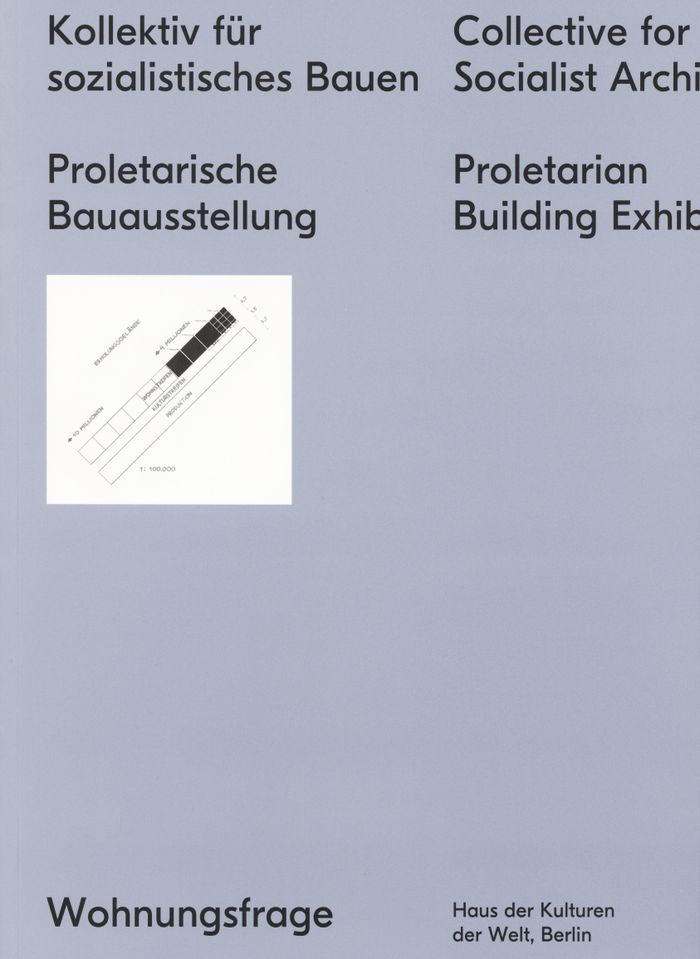
In an empty factory unit tucked away in Berlin’s Köpenicker Strasse, The Proletarian Building Exhibition was mounted with the humblest of resources in 1931. It marked the first action by a group of revolutionary architects, builders, and students forming the Kollektiv für sozialistisches Bauen under the architect Arthur Korn. Taking aim at modernist architects participating in the German Building Exhibition and CIAM, they cast architecture as an instrument of power, questioned capitalist solutions to the housing question, and unveiled planning approaches imported from the then-Soviet Union. A full facsimile of the exhibition manifesto/catalog and exhibition panels is featured in addition to contributing essays by contemporary architects, writers and educators, and the Collectives’ Annual Report including a proposed work program and statement of intent. Historical photos are interspersed throughout providing a full reconstruction of this significant architectural and sociopolitical event.
Collective for a socialist architecture: proletarian building exhibition 1931
Actions:
Price:
$44.00
(available in store)
Summary:
In an empty factory unit tucked away in Berlin’s Köpenicker Strasse, The Proletarian Building Exhibition was mounted with the humblest of resources in 1931. It marked the first action by a group of revolutionary architects, builders, and students forming the Kollektiv für sozialistisches Bauen under the architect Arthur Korn. Taking aim at modernist architects participating in the German Building Exhibition and CIAM, they cast architecture as an instrument of power, questioned capitalist solutions to the housing question, and unveiled planning approaches imported from the then-Soviet Union. A full facsimile of the exhibition manifesto/catalog and exhibition panels is featured in addition to contributing essays by contemporary architects, writers and educators, and the Collectives’ Annual Report including a proposed work program and statement of intent. Historical photos are interspersed throughout providing a full reconstruction of this significant architectural and sociopolitical event.
Form:
books
books
Publication:
May 2016
May 2016
Form:
books
books
Actions:
Price:
$67.50
(available to order)
Summary:
On the rocky coast of the Côte d'Azur perches a crisp, white modern home, elongated and compact, cryptically called ''E.1027''. The Anglo-Irish designer Eileen Gray (1878–1976) bought the site, paid for the construction and designed the building (with the assistance of her close friend, Jean Badovici, to whom Gray gave the site, building and contents). It was Gray's first(...)
$67.50
(available to order)
Summary:
On the rocky coast of the Côte d'Azur perches a crisp, white modern home, elongated and compact, cryptically called ''E.1027''. The Anglo-Irish designer Eileen Gray (1878–1976) bought the site, paid for the construction and designed the building (with the assistance of her close friend, Jean Badovici, to whom Gray gave the site, building and contents). It was Gray's first(...)
Title:
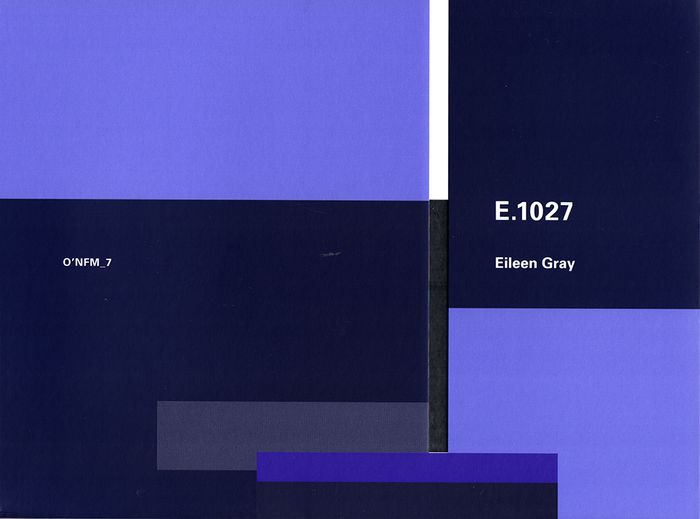
Eileen Gray: E.1027 1926-1929. O'Neil Ford Monograph Vol.7
Actions:
Price:
$67.50
(available to order)
Summary:
On the rocky coast of the Côte d'Azur perches a crisp, white modern home, elongated and compact, cryptically called ''E.1027''. The Anglo-Irish designer Eileen Gray (1878–1976) bought the site, paid for the construction and designed the building (with the assistance of her close friend, Jean Badovici, to whom Gray gave the site, building and contents). It was Gray's first foray into architecture, and as such it was a manifesto. For Gray, the whole building—the structure, its materials, the color scheme, the windows, the hardware, the fittings, the furniture—was an experiment with new concepts of spatial relations, an attempt to create an architecture of lightness and freedom. This new publication finally places this key example of modern architecture in its rightful position in history, contextualizing the structure with essays, reproductions of archival material, photographs and numerous scale drawings.
Eileen Gray: E.1027 1926-1929. O'Neil Ford Monograph Vol.7
Actions:
Price:
$67.50
(available to order)
Summary:
On the rocky coast of the Côte d'Azur perches a crisp, white modern home, elongated and compact, cryptically called ''E.1027''. The Anglo-Irish designer Eileen Gray (1878–1976) bought the site, paid for the construction and designed the building (with the assistance of her close friend, Jean Badovici, to whom Gray gave the site, building and contents). It was Gray's first foray into architecture, and as such it was a manifesto. For Gray, the whole building—the structure, its materials, the color scheme, the windows, the hardware, the fittings, the furniture—was an experiment with new concepts of spatial relations, an attempt to create an architecture of lightness and freedom. This new publication finally places this key example of modern architecture in its rightful position in history, contextualizing the structure with essays, reproductions of archival material, photographs and numerous scale drawings.
Form:
books
books
Publication:
August 2018
August 2018
Subject:
Design Monographs
Design Monographs
Form:
books
books
Actions:
Price:
$20.00
(available to order)
Summary:
Antonin Artaud's journey to Ireland in 1937 marked an extraordinary—and apocalyptic—turning point in his life and career. After publishing the manifesto ''The New Revelations of Being'' about the 'catastrophic immediate-future,' Artaud abruptly left Paris for Ireland, remaining there for six weeks without money. Artaud was eventually arrested as an undesirable alien,(...)
$20.00
(available to order)
Summary:
Antonin Artaud's journey to Ireland in 1937 marked an extraordinary—and apocalyptic—turning point in his life and career. After publishing the manifesto ''The New Revelations of Being'' about the 'catastrophic immediate-future,' Artaud abruptly left Paris for Ireland, remaining there for six weeks without money. Artaud was eventually arrested as an undesirable alien,(...)
Title:
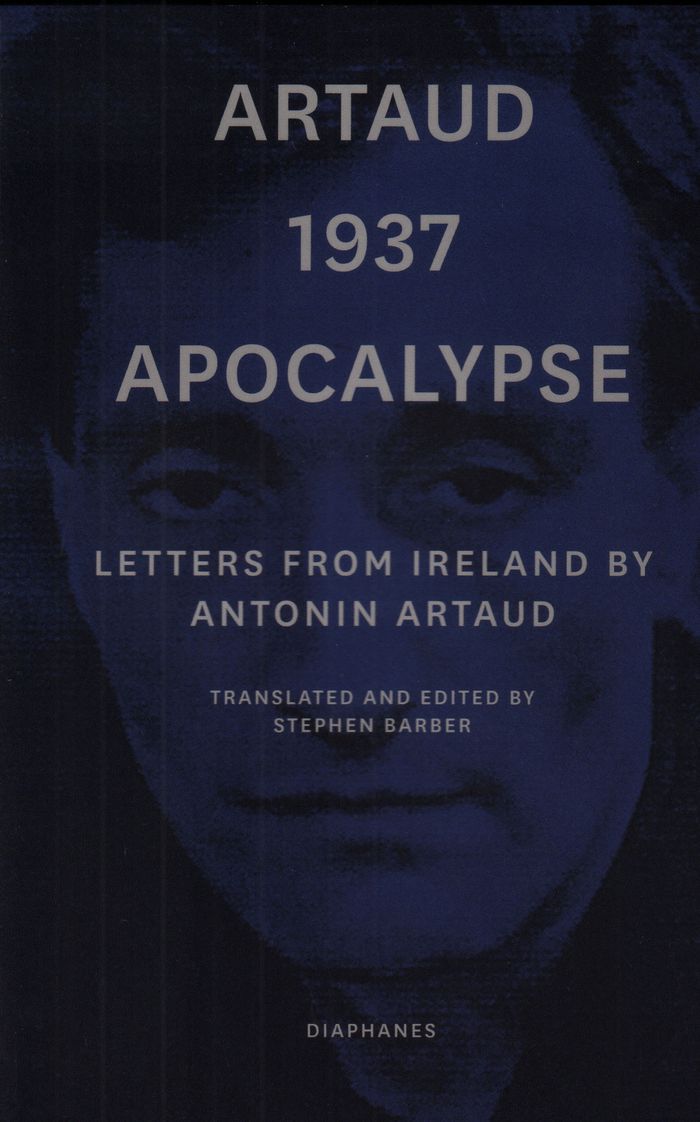
Artaud 1937 Apocalypse: letters from Ireland
Actions:
Price:
$20.00
(available to order)
Summary:
Antonin Artaud's journey to Ireland in 1937 marked an extraordinary—and apocalyptic—turning point in his life and career. After publishing the manifesto ''The New Revelations of Being'' about the 'catastrophic immediate-future,' Artaud abruptly left Paris for Ireland, remaining there for six weeks without money. Artaud was eventually arrested as an undesirable alien, beaten by the police, and summarily deported back to France. On his return, he spent nine years in asylums, remaining there through the entire span of World War II. During his fateful journey, Artaud wrote letters to friends in Paris which included several 'magic spells,' intended to curse his enemies and protect his friends from the city's forthcoming incineration and the Antichrist's appearance. This book collects all of Artaud's surviving correspondence from his time in Ireland, as well as photographs of the locations he traveled through.
Artaud 1937 Apocalypse: letters from Ireland
Actions:
Price:
$20.00
(available to order)
Summary:
Antonin Artaud's journey to Ireland in 1937 marked an extraordinary—and apocalyptic—turning point in his life and career. After publishing the manifesto ''The New Revelations of Being'' about the 'catastrophic immediate-future,' Artaud abruptly left Paris for Ireland, remaining there for six weeks without money. Artaud was eventually arrested as an undesirable alien, beaten by the police, and summarily deported back to France. On his return, he spent nine years in asylums, remaining there through the entire span of World War II. During his fateful journey, Artaud wrote letters to friends in Paris which included several 'magic spells,' intended to curse his enemies and protect his friends from the city's forthcoming incineration and the Antichrist's appearance. This book collects all of Artaud's surviving correspondence from his time in Ireland, as well as photographs of the locations he traveled through.
Form:
books
books
Publication:
May 2019
May 2019
Subject:
Journeys
Journeys
Form:
books
books
Price:
$30.00
(available to order)
Summary:
In volume 16 of The Conversation Series, Hans Ulrich Obrist presents an in-depth exchange with the venerable German-born artist and activist Gustav Metzger, which illuminates the artist's fascinating life and 60-year career. In 1959, Metzger penned a manifesto of Auto-destructive art, which states in part, "Auto-destructive paintings, sculptures and constructions have a(...)
$30.00
(available to order)
Summary:
In volume 16 of The Conversation Series, Hans Ulrich Obrist presents an in-depth exchange with the venerable German-born artist and activist Gustav Metzger, which illuminates the artist's fascinating life and 60-year career. In 1959, Metzger penned a manifesto of Auto-destructive art, which states in part, "Auto-destructive paintings, sculptures and constructions have a(...)
Subject:
Contemporary Art Monographs
Contemporary Art Monographs
Publication:
January 2009, Köln
January 2009, Köln
Title:
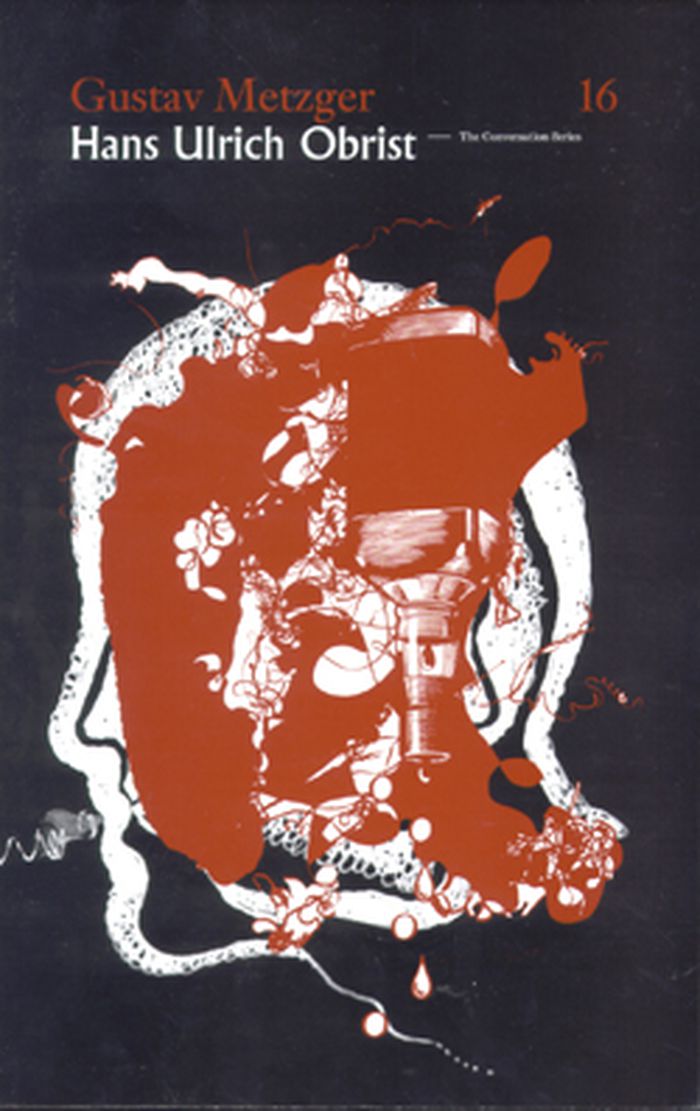
Hans Ulrich Obrist - Gustav Metzger: the conversation series 16
Actions:
Price:
$30.00
(available to order)
Summary:
In volume 16 of The Conversation Series, Hans Ulrich Obrist presents an in-depth exchange with the venerable German-born artist and activist Gustav Metzger, which illuminates the artist's fascinating life and 60-year career. In 1959, Metzger penned a manifesto of Auto-destructive art, which states in part, "Auto-destructive paintings, sculptures and constructions have a lifetime varying from a few moments to 20 years. When the disintegrative process is complete, the work is to be removed from the site and scrapped." In this volume, Metzger talks to Obrist about his past and present association with Auto-destructive art, how he has come to fuse his art practice with his political commitment to human rights and ecology, how he escaped the Holocaust at the age of 13 and the many projects he has yet to realize.
Hans Ulrich Obrist - Gustav Metzger: the conversation series 16
Actions:
Price:
$30.00
(available to order)
Summary:
In volume 16 of The Conversation Series, Hans Ulrich Obrist presents an in-depth exchange with the venerable German-born artist and activist Gustav Metzger, which illuminates the artist's fascinating life and 60-year career. In 1959, Metzger penned a manifesto of Auto-destructive art, which states in part, "Auto-destructive paintings, sculptures and constructions have a lifetime varying from a few moments to 20 years. When the disintegrative process is complete, the work is to be removed from the site and scrapped." In this volume, Metzger talks to Obrist about his past and present association with Auto-destructive art, how he has come to fuse his art practice with his political commitment to human rights and ecology, how he escaped the Holocaust at the age of 13 and the many projects he has yet to realize.
Form:
books
books
Publication:
January 2009, Köln
January 2009, Köln
Subject:
Contemporary Art Monographs
Contemporary Art Monographs
Form:
books
books
Title:
Quantum listening
Quantum listening
Actions:
Price:
$15.95
(available to order)
Summary:
What is the difference between hearing and listening? Does sound have consciousness? Can you imagine listening beyond the edge of your own imagination? In response to the anti-war movements of the 1960s, pioneering musician and composer Pauline Oliveros began to expand the way she made music, experimenting with meditation, movement and activism in her compositions.(...)
$15.95
(available to order)
Summary:
What is the difference between hearing and listening? Does sound have consciousness? Can you imagine listening beyond the edge of your own imagination? In response to the anti-war movements of the 1960s, pioneering musician and composer Pauline Oliveros began to expand the way she made music, experimenting with meditation, movement and activism in her compositions.(...)
Title:
Quantum listening
Actions:
Price:
$15.95
(available to order)
Summary:
What is the difference between hearing and listening? Does sound have consciousness? Can you imagine listening beyond the edge of your own imagination? In response to the anti-war movements of the 1960s, pioneering musician and composer Pauline Oliveros began to expand the way she made music, experimenting with meditation, movement and activism in her compositions. Fascinated by the role that sound and consciousness play in our daily lives, Oliveros developed a series of Sonic Meditations that would eventually lead to the creation of Deep Listening – a practice for healing open to all, rooted in her musicianship. Quantum Listening is a manifesto for listening as activism. Oliveros’ futuristic vision, blending technology and spirituality, shows how Deep Listening is the foundation for a radically transformed social matrix: one in which compassion and peace form the basis for our actions in the world.
Quantum listening
Actions:
Price:
$15.95
(available to order)
Summary:
What is the difference between hearing and listening? Does sound have consciousness? Can you imagine listening beyond the edge of your own imagination? In response to the anti-war movements of the 1960s, pioneering musician and composer Pauline Oliveros began to expand the way she made music, experimenting with meditation, movement and activism in her compositions. Fascinated by the role that sound and consciousness play in our daily lives, Oliveros developed a series of Sonic Meditations that would eventually lead to the creation of Deep Listening – a practice for healing open to all, rooted in her musicianship. Quantum Listening is a manifesto for listening as activism. Oliveros’ futuristic vision, blending technology and spirituality, shows how Deep Listening is the foundation for a radically transformed social matrix: one in which compassion and peace form the basis for our actions in the world.
Form:
books
books
Publication:
July 2024
July 2024
Subject:
Acoustics
Acoustics
Form:
books
books
Price:
$24.00
(available in store)
Summary:
"People make too much of architecture. I have a running quarrel with architects who overestimate architecture. Reality is at eye-level with people walking down the street." Born in 1923 in Budapest, Hungary, Yona Friedman is widely considered one of the greatest utopian visionary architects of the twentieth century. Currently based in Paris, he is just as much a(...)
$24.00
(available in store)
Summary:
"People make too much of architecture. I have a running quarrel with architects who overestimate architecture. Reality is at eye-level with people walking down the street." Born in 1923 in Budapest, Hungary, Yona Friedman is widely considered one of the greatest utopian visionary architects of the twentieth century. Currently based in Paris, he is just as much a(...)
Subject:
Contemporary Art Monographs
Contemporary Art Monographs
Publication:
July 2007, Cologne
July 2007, Cologne
Title:
Yona Friedman / Hans Ulrich Obrist : the conversation series 7
Actions:
Price:
$24.00
(available in store)
Summary:
"People make too much of architecture. I have a running quarrel with architects who overestimate architecture. Reality is at eye-level with people walking down the street." Born in 1923 in Budapest, Hungary, Yona Friedman is widely considered one of the greatest utopian visionary architects of the twentieth century. Currently based in Paris, he is just as much a sociologist as a designer of buildings, more concerned with the way people interact with their environments than monumental statements by an ego-centric creator. In this illuminating talk with The Conversation Series editor Hans Ulrich Obrist, he touches on the needs of the individual in heterogeneous urban societies, past and future projects, utopia, influences and metaphysics, revealing a wise and deeply-animated humanistic intellect. Known for his 1958 manifesto, L'Architecture mobile, Friedman's ideas have remained influential. His work was featured at the 2002 Documenta.
Yona Friedman / Hans Ulrich Obrist : the conversation series 7
Actions:
Price:
$24.00
(available in store)
Summary:
"People make too much of architecture. I have a running quarrel with architects who overestimate architecture. Reality is at eye-level with people walking down the street." Born in 1923 in Budapest, Hungary, Yona Friedman is widely considered one of the greatest utopian visionary architects of the twentieth century. Currently based in Paris, he is just as much a sociologist as a designer of buildings, more concerned with the way people interact with their environments than monumental statements by an ego-centric creator. In this illuminating talk with The Conversation Series editor Hans Ulrich Obrist, he touches on the needs of the individual in heterogeneous urban societies, past and future projects, utopia, influences and metaphysics, revealing a wise and deeply-animated humanistic intellect. Known for his 1958 manifesto, L'Architecture mobile, Friedman's ideas have remained influential. His work was featured at the 2002 Documenta.
Form:
books
books
Publication:
July 2007, Cologne
July 2007, Cologne
Subject:
Contemporary Art Monographs
Contemporary Art Monographs
Form:
books
books
Actions:
Price:
$112.00
(available to order)
Summary:
This two-volume catalogue of the "10th International Architecture Exhibition" presents an anthology of ideas centered around this year's theme: the meta-city. The changes in the physical and social structure of today's city have resulted in a new kind of civilian agglomeration that extends beyond the traditional form, concept, and boundaries of the city, causing profound(...)
$112.00
(available to order)
Summary:
This two-volume catalogue of the "10th International Architecture Exhibition" presents an anthology of ideas centered around this year's theme: the meta-city. The changes in the physical and social structure of today's city have resulted in a new kind of civilian agglomeration that extends beyond the traditional form, concept, and boundaries of the city, causing profound(...)
Subject:
Architecture since 1900, Europe
Architecture since 1900, Europe
Publication:
November 2006, New York
November 2006, New York
Title:
Cities, architecture and society
Actions:
Price:
$112.00
(available to order)
Summary:
This two-volume catalogue of the "10th International Architecture Exhibition" presents an anthology of ideas centered around this year's theme: the meta-city. The changes in the physical and social structure of today's city have resulted in a new kind of civilian agglomeration that extends beyond the traditional form, concept, and boundaries of the city, causing profound transformations in the composition of its population and working habits. The International Exhibition, curated by Richard Burdett, will focus on the transformations of cities around the world, featuring New York, London, Berlin, Moscow, Tokyo, Shanghai, Mumbai, Mexico City, São Paulo Beirut, Istanbul, Johannesburg, and Lagos. Additionally, the biennale will propound a manifesto for rational development of cities in the 21st century. This book will be the definitive catalogue of what is perhaps the most important architecture exhibition in the world.
Cities, architecture and society
Actions:
Price:
$112.00
(available to order)
Summary:
This two-volume catalogue of the "10th International Architecture Exhibition" presents an anthology of ideas centered around this year's theme: the meta-city. The changes in the physical and social structure of today's city have resulted in a new kind of civilian agglomeration that extends beyond the traditional form, concept, and boundaries of the city, causing profound transformations in the composition of its population and working habits. The International Exhibition, curated by Richard Burdett, will focus on the transformations of cities around the world, featuring New York, London, Berlin, Moscow, Tokyo, Shanghai, Mumbai, Mexico City, São Paulo Beirut, Istanbul, Johannesburg, and Lagos. Additionally, the biennale will propound a manifesto for rational development of cities in the 21st century. This book will be the definitive catalogue of what is perhaps the most important architecture exhibition in the world.
Form:
books
books
Publication:
November 2006, New York
November 2006, New York
Subject:
Architecture since 1900, Europe
Architecture since 1900, Europe


