


36173 Results
Form:
books
books
Price:
$38.95
(available to order)
Summary:
In February 1956 the president of IBM hired the industrial designer and architect Eliot F. Noyes, charging him with reinventing IBM's corporate image, from stationery and curtains to products such as typewriters and computers and to laboratory and administration buildings. What followed remade IBM in a way that would also transform the relationships between design,(...)
$38.95
(available to order)
Summary:
In February 1956 the president of IBM hired the industrial designer and architect Eliot F. Noyes, charging him with reinventing IBM's corporate image, from stationery and curtains to products such as typewriters and computers and to laboratory and administration buildings. What followed remade IBM in a way that would also transform the relationships between design,(...)
Title:
The interface: IBM and the transformation of corporate design 1945-1976
Actions:
Price:
$38.95
(available to order)
Summary:
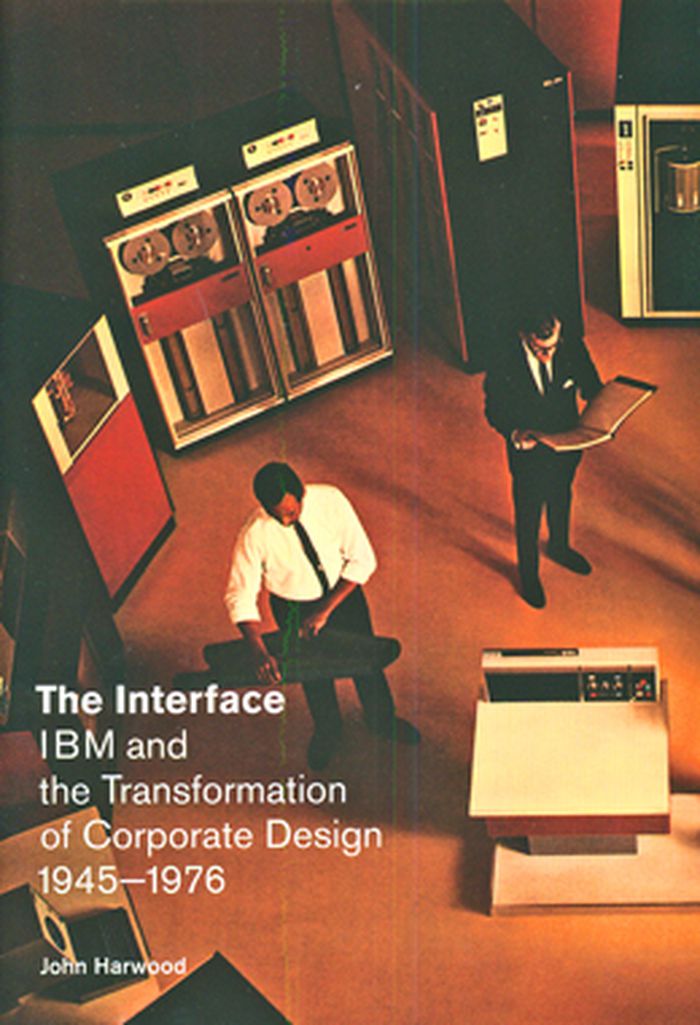
In February 1956 the president of IBM hired the industrial designer and architect Eliot F. Noyes, charging him with reinventing IBM's corporate image, from stationery and curtains to products such as typewriters and computers and to laboratory and administration buildings. What followed remade IBM in a way that would also transform the relationships between design, computer science, and corporate culture. IBM's program assembled a cast of leading figures in American design: Noyes, Charles Eames, Paul Rand, George Nelson, and Edgar Kaufmann Jr. The Interface offers a detailed account of the key role these designers played in shaping both the computer and the multinational corporation. Harwood describes the influence of computer and corporation on the theory and practice of design. Here we see how, in the period stretching from the "invention" of the computer during World War II to the appearance of the personal computer in the mid-1970s, disciplines once well outside the realm of architectural design -information and management theory, cybernetics, ergonomics, computer science- became integral aspects of design.
The interface: IBM and the transformation of corporate design 1945-1976
Actions:
Price:
$38.95
(available to order)
Summary:
In February 1956 the president of IBM hired the industrial designer and architect Eliot F. Noyes, charging him with reinventing IBM's corporate image, from stationery and curtains to products such as typewriters and computers and to laboratory and administration buildings. What followed remade IBM in a way that would also transform the relationships between design, computer science, and corporate culture. IBM's program assembled a cast of leading figures in American design: Noyes, Charles Eames, Paul Rand, George Nelson, and Edgar Kaufmann Jr. The Interface offers a detailed account of the key role these designers played in shaping both the computer and the multinational corporation. Harwood describes the influence of computer and corporation on the theory and practice of design. Here we see how, in the period stretching from the "invention" of the computer during World War II to the appearance of the personal computer in the mid-1970s, disciplines once well outside the realm of architectural design -information and management theory, cybernetics, ergonomics, computer science- became integral aspects of design.
Form:
books
books
Publication:
November 2011
November 2011
Subject:
Industrial Design
Industrial Design
Form:
books
books
Price:
$27.50
(available to order)
Summary:
From property deeds to shipping containers to wearable shelters to virtual spaces: what does it mean to draw a spatial boundary? To be at home? In a world in which notions of place are constantly changing, Jennifer Johung looks at new constructions of staying in place--in contemporary site-specific art, digital media, portable architecture, and various other imaginable(...)
$27.50
(available to order)
Summary:
From property deeds to shipping containers to wearable shelters to virtual spaces: what does it mean to draw a spatial boundary? To be at home? In a world in which notions of place are constantly changing, Jennifer Johung looks at new constructions of staying in place--in contemporary site-specific art, digital media, portable architecture, and various other imaginable(...)
Title:
Replacing home: From primordial hut to digital network in contemporary art
Actions:
Price:
$27.50
(available to order)
Summary:
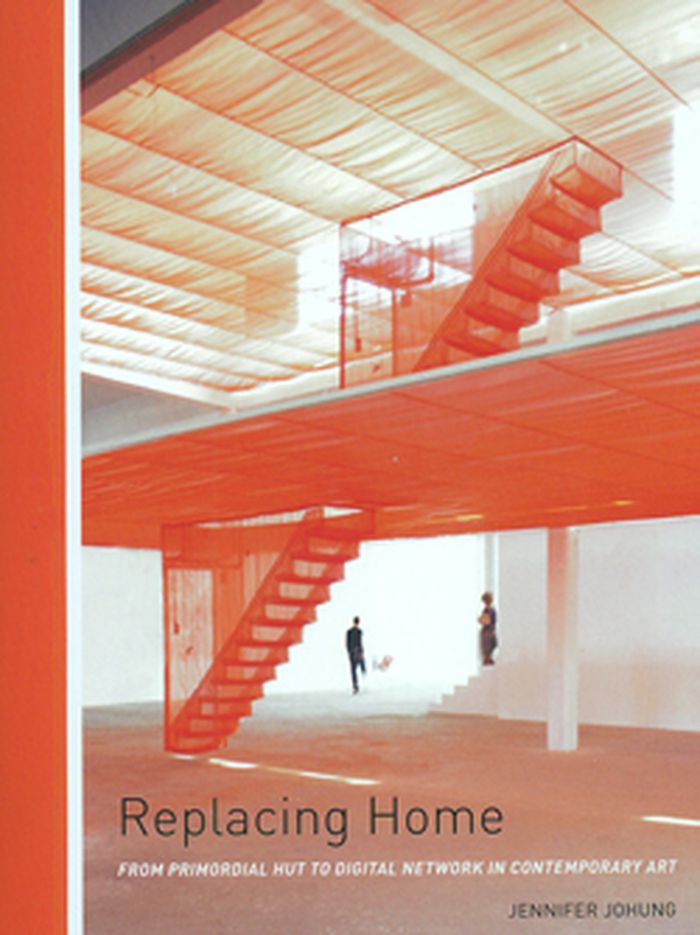
From property deeds to shipping containers to wearable shelters to virtual spaces: what does it mean to draw a spatial boundary? To be at home? In a world in which notions of place are constantly changing, Jennifer Johung looks at new constructions of staying in place--in contemporary site-specific art, digital media, portable architecture, and various other imaginable shelters and sites.
Replacing home: From primordial hut to digital network in contemporary art
Actions:
Price:
$27.50
(available to order)
Summary:
From property deeds to shipping containers to wearable shelters to virtual spaces: what does it mean to draw a spatial boundary? To be at home? In a world in which notions of place are constantly changing, Jennifer Johung looks at new constructions of staying in place--in contemporary site-specific art, digital media, portable architecture, and various other imaginable shelters and sites.
Form:
books
books
Publication:
January 2012
January 2012
Subject:
Art Theory
Art Theory
Form:
books
books
Title:
Moscow: the fourth Rome
Moscow: the fourth Rome
Actions:
Price:
$56.50
(available to order)
Summary:
In Moscow, the Fourth Rome , Katerina Clark shows how Soviet officials and intellectuals, in seeking to capture the imagination of leftist and anti-fascist intellectuals throughout the world, sought to establish their capital as the cosmopolitan center of a post-Christian confederation and to rebuild it to become a beacon for the rest of the world. Clark provides an(...)
$56.50
(available to order)
Summary:
In Moscow, the Fourth Rome , Katerina Clark shows how Soviet officials and intellectuals, in seeking to capture the imagination of leftist and anti-fascist intellectuals throughout the world, sought to establish their capital as the cosmopolitan center of a post-Christian confederation and to rebuild it to become a beacon for the rest of the world. Clark provides an(...)
Publication:
November 2011
November 2011
Title:
Moscow: the fourth Rome
Actions:
Price:
$56.50
(available to order)
Summary:
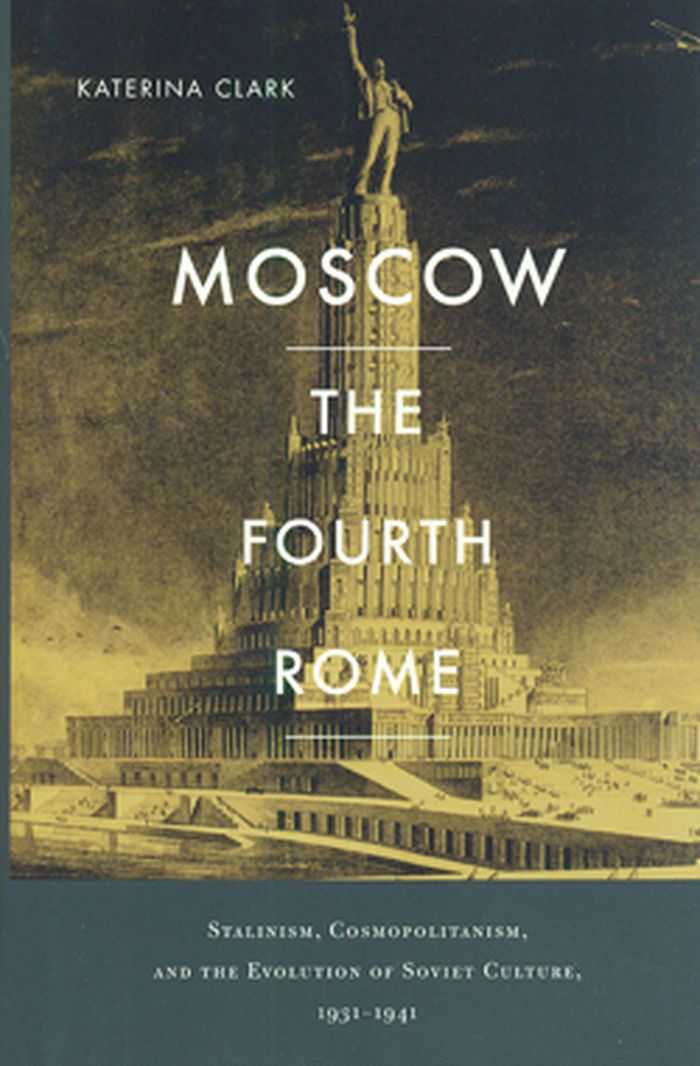
In Moscow, the Fourth Rome , Katerina Clark shows how Soviet officials and intellectuals, in seeking to capture the imagination of leftist and anti-fascist intellectuals throughout the world, sought to establish their capital as the cosmopolitan center of a post-Christian confederation and to rebuild it to become a beacon for the rest of the world. Clark provides an interpretative cultural history of the city during the crucial 1930s, the decade of the Great Purge. She draws on the work of intellectuals such as Sergei Eisenstein, Sergei Tretiakov, Mikhail Koltsov, and Ilya Ehrenburg to shed light on the singular Zeitgeist of that most Stalinist of periods. In her account, the decade emerges as an important moment in the prehistory of key concepts in literary and cultural studies today—transnationalism, cosmopolitanism, and world literature. By bringing to light neglected antecedents, she provides a new polemical and political context for understanding canonical works of writers such as Brecht, Benjamin, Lukacs, and Bakhtin.
Moscow: the fourth Rome
Actions:
Price:
$56.50
(available to order)
Summary:
In Moscow, the Fourth Rome , Katerina Clark shows how Soviet officials and intellectuals, in seeking to capture the imagination of leftist and anti-fascist intellectuals throughout the world, sought to establish their capital as the cosmopolitan center of a post-Christian confederation and to rebuild it to become a beacon for the rest of the world. Clark provides an interpretative cultural history of the city during the crucial 1930s, the decade of the Great Purge. She draws on the work of intellectuals such as Sergei Eisenstein, Sergei Tretiakov, Mikhail Koltsov, and Ilya Ehrenburg to shed light on the singular Zeitgeist of that most Stalinist of periods. In her account, the decade emerges as an important moment in the prehistory of key concepts in literary and cultural studies today—transnationalism, cosmopolitanism, and world literature. By bringing to light neglected antecedents, she provides a new polemical and political context for understanding canonical works of writers such as Brecht, Benjamin, Lukacs, and Bakhtin.
Form:
books
books
Publication:
November 2011
November 2011
Form:
books
books
Actions:
Price:
$47.00
(available to order)
Summary:
Roads to Power tells the story of how Britain built the first nation connected by infrastructure, how a libertarian revolution destroyed a national economy, and how technology caused strangers to stop speaking. In early eighteenth-century Britain, nothing but dirt track ran between most towns. By 1848 the primitive roads were transformed into a network of highways(...)
$47.00
(available to order)
Summary:
Roads to Power tells the story of how Britain built the first nation connected by infrastructure, how a libertarian revolution destroyed a national economy, and how technology caused strangers to stop speaking. In early eighteenth-century Britain, nothing but dirt track ran between most towns. By 1848 the primitive roads were transformed into a network of highways(...)
Title:
Roads to power: Britain invents the infrastructure state
Actions:
Price:
$47.00
(available to order)
Summary:
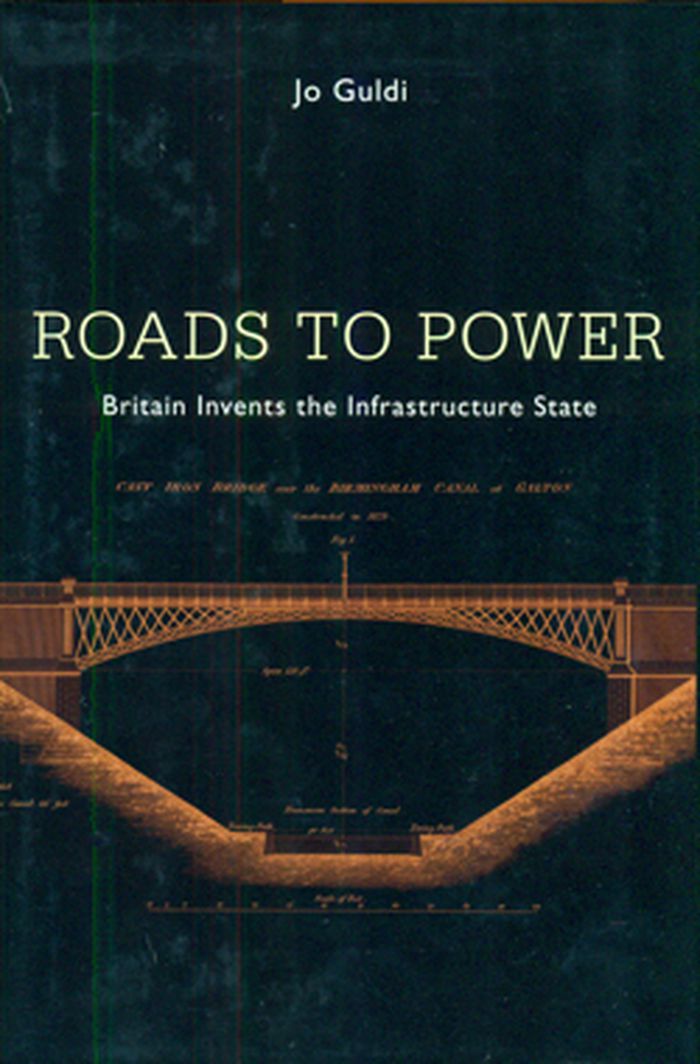
Roads to Power tells the story of how Britain built the first nation connected by infrastructure, how a libertarian revolution destroyed a national economy, and how technology caused strangers to stop speaking. In early eighteenth-century Britain, nothing but dirt track ran between most towns. By 1848 the primitive roads were transformed into a network of highways connecting every village and island in the nation—and also dividing them in unforeseen ways. The highway network led to contests for control over everything from road management to market access. Peripheries like the Highlands demanded that centralized government pay for roads they could not afford, while English counties wanted to be spared the cost of underwriting roads to Scotland. The new network also transformed social relationships. Although travelers moved along the same routes, they occupied increasingly isolated spheres. The roads were the product of a new form of government, the infrastructure state, marked by the unprecedented control bureaucrats wielded over decisions relating to everyday life.
Roads to power: Britain invents the infrastructure state
Actions:
Price:
$47.00
(available to order)
Summary:
Roads to Power tells the story of how Britain built the first nation connected by infrastructure, how a libertarian revolution destroyed a national economy, and how technology caused strangers to stop speaking. In early eighteenth-century Britain, nothing but dirt track ran between most towns. By 1848 the primitive roads were transformed into a network of highways connecting every village and island in the nation—and also dividing them in unforeseen ways. The highway network led to contests for control over everything from road management to market access. Peripheries like the Highlands demanded that centralized government pay for roads they could not afford, while English counties wanted to be spared the cost of underwriting roads to Scotland. The new network also transformed social relationships. Although travelers moved along the same routes, they occupied increasingly isolated spheres. The roads were the product of a new form of government, the infrastructure state, marked by the unprecedented control bureaucrats wielded over decisions relating to everyday life.
Form:
books
books
Publication:
January 2012
January 2012
Subject:
Architectural Theory
Architectural Theory
Form:
books
books
Actions:
Price:
$44.00
(available to order)
Summary:
A pioneer of Conceptual art in Los Angeles during the late 1960s and 1970s, the painter, installation artist and theater director William Leavitt (born 1941) is above all an artist of narrative devices. Since 1969, his works in all the above media have employed abrupt fragments of popular and vernacular culture and depictions of modernist architecture to construct elusive(...)
$44.00
(available to order)
Summary:
A pioneer of Conceptual art in Los Angeles during the late 1960s and 1970s, the painter, installation artist and theater director William Leavitt (born 1941) is above all an artist of narrative devices. Since 1969, his works in all the above media have employed abrupt fragments of popular and vernacular culture and depictions of modernist architecture to construct elusive(...)
Title:
William Leavitt: Theater Objects
Actions:
Price:
$44.00
(available to order)
Summary:
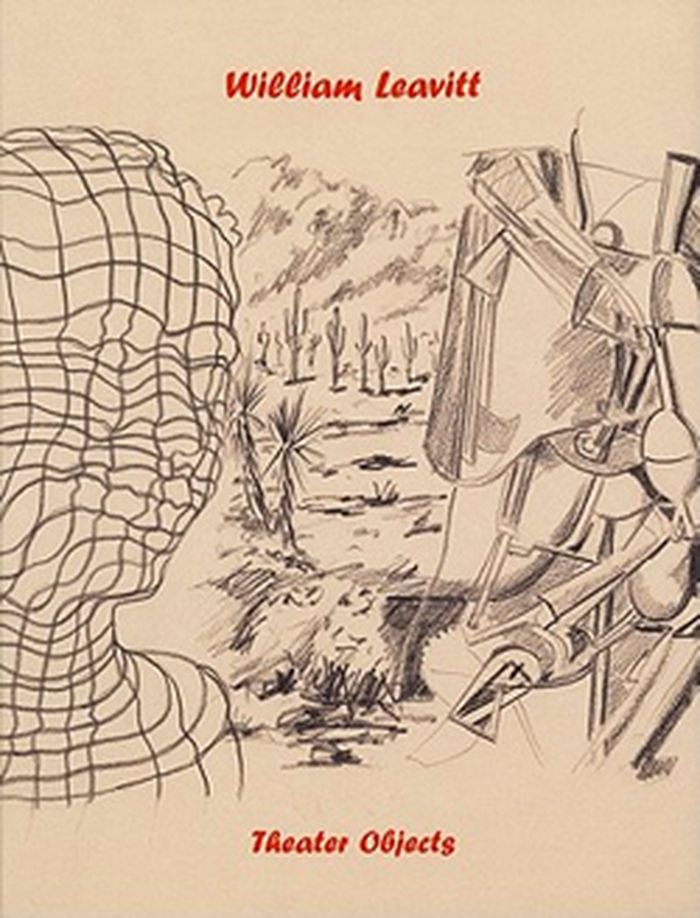
A pioneer of Conceptual art in Los Angeles during the late 1960s and 1970s, the painter, installation artist and theater director William Leavitt (born 1941) is above all an artist of narrative devices. Since 1969, his works in all the above media have employed abrupt fragments of popular and vernacular culture and depictions of modernist architecture to construct elusive narratives of cityscapes and environments. The culture and atmosphere of Los Angeles has played a significant role in Leavitt's handling of these themes; classic southern Californian motifs of ever-present artifice and almost washed-out brightness recur throughout his work. Surveying the artist's 40-year career, this volume includes sculptural tableaux, paintings, works on paper, photographs and performances from the late 1960s to the present. Leavitt has created a remarkable oeuvre that has influenced generations of artists, and this volume is both long overdue and highly anticipated.
William Leavitt: Theater Objects
Actions:
Price:
$44.00
(available to order)
Summary:
A pioneer of Conceptual art in Los Angeles during the late 1960s and 1970s, the painter, installation artist and theater director William Leavitt (born 1941) is above all an artist of narrative devices. Since 1969, his works in all the above media have employed abrupt fragments of popular and vernacular culture and depictions of modernist architecture to construct elusive narratives of cityscapes and environments. The culture and atmosphere of Los Angeles has played a significant role in Leavitt's handling of these themes; classic southern Californian motifs of ever-present artifice and almost washed-out brightness recur throughout his work. Surveying the artist's 40-year career, this volume includes sculptural tableaux, paintings, works on paper, photographs and performances from the late 1960s to the present. Leavitt has created a remarkable oeuvre that has influenced generations of artists, and this volume is both long overdue and highly anticipated.
Form:
books
books
Publication:
April 2011
April 2011
Subject:
Contemporary Art Monographs
Contemporary Art Monographs
Form:
books
books
Title:
Serpentine gallery pavillons
Serpentine gallery pavillons
Actions:
Price:
$64.95
(available to order)
Summary:
Since 2000, the Serpentine Gallery in London's Kensington Gardens has called on some of the world's top architects to design summer pavilions - temporary structures that are erected next to the Gallery itself for a three-month period. The Serpentine, which was built in 1934 as a tea pavilion, opened in 1970 as a show-place for exhibitions of modern and contemporary(...)
$64.95
(available to order)
Summary:
Since 2000, the Serpentine Gallery in London's Kensington Gardens has called on some of the world's top architects to design summer pavilions - temporary structures that are erected next to the Gallery itself for a three-month period. The Serpentine, which was built in 1934 as a tea pavilion, opened in 1970 as a show-place for exhibitions of modern and contemporary(...)
Title:
Serpentine gallery pavillons
Actions:
Price:
$64.95
(available to order)
Summary:
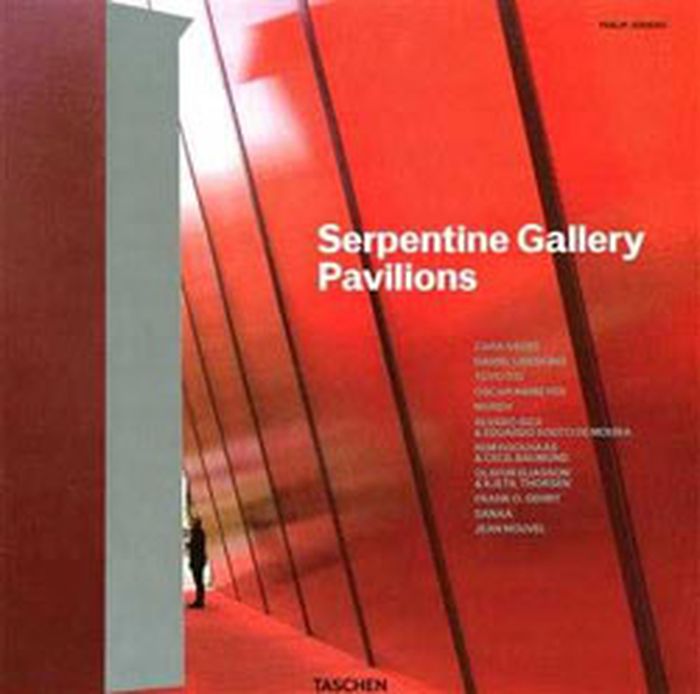
Since 2000, the Serpentine Gallery in London's Kensington Gardens has called on some of the world's top architects to design summer pavilions - temporary structures that are erected next to the Gallery itself for a three-month period. The Serpentine, which was built in 1934 as a tea pavilion, opened in 1970 as a show-place for exhibitions of modern and contemporary artists. The projects completed or envisaged include the work of: Zaha Hadid, 2000; Daniel Libeskind, 2001; Toyo Ito, 2002; Oscar Niemeyer, 2003; MVRDV, 2004 (un-realised); Alvaro Siza and Eduardo Souto de Moura with Cecil Balmond, 2005; Rem Koolhaas and Cecil Balmond, 2006; Olafur Eliasson and Kjetil Thorsen, 2007; Frank Gehry, 2008; SANAA, 2009; Jean Nouvel, 2010; and, other works such as Zaha Hadid's temporary 2006 installation Lilas are included in the book as well. This book is the first to bring together all of the Serpentine Pavilions.
Serpentine gallery pavillons
Actions:
Price:
$64.95
(available to order)
Summary:
Since 2000, the Serpentine Gallery in London's Kensington Gardens has called on some of the world's top architects to design summer pavilions - temporary structures that are erected next to the Gallery itself for a three-month period. The Serpentine, which was built in 1934 as a tea pavilion, opened in 1970 as a show-place for exhibitions of modern and contemporary artists. The projects completed or envisaged include the work of: Zaha Hadid, 2000; Daniel Libeskind, 2001; Toyo Ito, 2002; Oscar Niemeyer, 2003; MVRDV, 2004 (un-realised); Alvaro Siza and Eduardo Souto de Moura with Cecil Balmond, 2005; Rem Koolhaas and Cecil Balmond, 2006; Olafur Eliasson and Kjetil Thorsen, 2007; Frank Gehry, 2008; SANAA, 2009; Jean Nouvel, 2010; and, other works such as Zaha Hadid's temporary 2006 installation Lilas are included in the book as well. This book is the first to bring together all of the Serpentine Pavilions.
Form:
books
books
Publication:
August 2011
August 2011
Subject:
Museums and Universal Exhibitions
Museums and Universal Exhibitions
Form:
books
books

Actions:
Price:
$40.50
(available to order)
Summary:
Our relationship with dirt is complex and ambivalent. Dirt is waste, excrement, rubbish, bacteria--but what then is soil, where crops grow, and to which our bodies eventually return? Dirt may pose significant risks to our health, but it is also vital to our existence. Lavishly illustrated, this exciting and often startling book is a provocative introduction to a vast(...)
$40.50
(available to order)
Summary:
Our relationship with dirt is complex and ambivalent. Dirt is waste, excrement, rubbish, bacteria--but what then is soil, where crops grow, and to which our bodies eventually return? Dirt may pose significant risks to our health, but it is also vital to our existence. Lavishly illustrated, this exciting and often startling book is a provocative introduction to a vast(...)
Title:
Dirt: the filthy reality of everyday life
Actions:
Price:
$40.50
(available to order)
Summary:
Our relationship with dirt is complex and ambivalent. Dirt is waste, excrement, rubbish, bacteria--but what then is soil, where crops grow, and to which our bodies eventually return? Dirt may pose significant risks to our health, but it is also vital to our existence. Lavishly illustrated, this exciting and often startling book is a provocative introduction to a vast and complex subject. Five writers and a graphic novelist pursue different themes from a range of perspectives in order to examine dirt and its contradictions, including personal grooming, the politics of dirt in the home, city sanitation, and waste disposal. From a 2011 exhibition at the Wellcome Collection, London.
Dirt: the filthy reality of everyday life
Actions:
Price:
$40.50
(available to order)
Summary:
Our relationship with dirt is complex and ambivalent. Dirt is waste, excrement, rubbish, bacteria--but what then is soil, where crops grow, and to which our bodies eventually return? Dirt may pose significant risks to our health, but it is also vital to our existence. Lavishly illustrated, this exciting and often startling book is a provocative introduction to a vast and complex subject. Five writers and a graphic novelist pursue different themes from a range of perspectives in order to examine dirt and its contradictions, including personal grooming, the politics of dirt in the home, city sanitation, and waste disposal. From a 2011 exhibition at the Wellcome Collection, London.
Form:
books
books
Publication:
May 2012
May 2012
Subject:
Architectural Theory
Architectural Theory
Form:
books
books

Actions:
Price:
$68.00
(available in store)
Summary:
This first volume (1839-1890)of the "Skira History of Photography" considers the years of the invention of photography and those immediately following-extraordinary years from both the point of view of history and of the development of the inventions. Including the great early forebears, like Daguerre and Talbot, and the great photographic expeditions that placed the(...)
$68.00
(available in store)
Summary:
This first volume (1839-1890)of the "Skira History of Photography" considers the years of the invention of photography and those immediately following-extraordinary years from both the point of view of history and of the development of the inventions. Including the great early forebears, like Daguerre and Talbot, and the great photographic expeditions that placed the(...)
Title:
Photography : The origin 1839-1890
Actions:
Price:
$68.00
(available in store)
Summary:
This first volume (1839-1890)of the "Skira History of Photography" considers the years of the invention of photography and those immediately following-extraordinary years from both the point of view of history and of the development of the inventions. Including the great early forebears, like Daguerre and Talbot, and the great photographic expeditions that placed the world before the eyes of an ever-increasing number of people, this first volume also stresses the fundamental links between photography and the world of science. The volume concludes by examining the burgeoning relationship between photography and the traditional arts disciplines, a point of fundamental importance in the development of a photographic language.
Photography : The origin 1839-1890
Actions:
Price:
$68.00
(available in store)
Summary:
This first volume (1839-1890)of the "Skira History of Photography" considers the years of the invention of photography and those immediately following-extraordinary years from both the point of view of history and of the development of the inventions. Including the great early forebears, like Daguerre and Talbot, and the great photographic expeditions that placed the world before the eyes of an ever-increasing number of people, this first volume also stresses the fundamental links between photography and the world of science. The volume concludes by examining the burgeoning relationship between photography and the traditional arts disciplines, a point of fundamental importance in the development of a photographic language.
Form:
books
books
Publication:
September 2011
September 2011
Subject:
Photography Collections
Photography Collections
Form:
books
books
Actions:
Price:
$18.99
(available to order)
Summary:
Makeshift Metropolis describes how current ideas about urban planning evolved from the movements that defined the twentieth century, such as City Beautiful, the Garden City, and the seminal ideas of Frank Lloyd Wright and Jane Jacobs. If the twentieth century was the age of planning, we now find ourselves in the age of the market, Rybczynski argues, where entrepreneurial(...)
$18.99
(available to order)
Summary:
Makeshift Metropolis describes how current ideas about urban planning evolved from the movements that defined the twentieth century, such as City Beautiful, the Garden City, and the seminal ideas of Frank Lloyd Wright and Jane Jacobs. If the twentieth century was the age of planning, we now find ourselves in the age of the market, Rybczynski argues, where entrepreneurial(...)
Title:
Makeshift metropolis: ideas about cities
Actions:
Price:
$18.99
(available to order)
Summary:
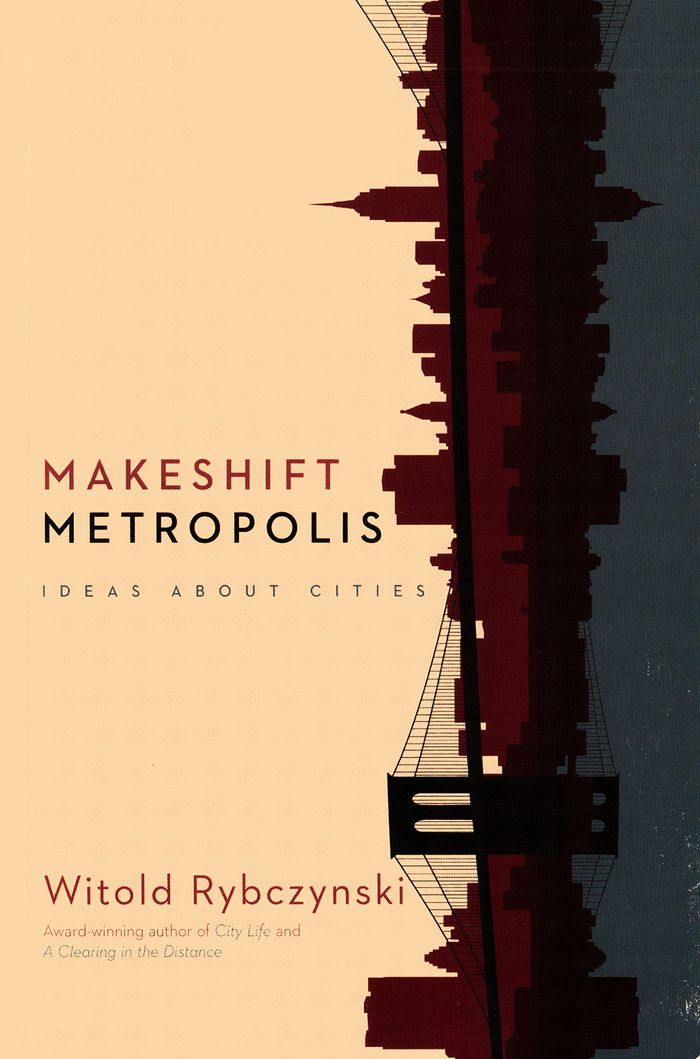
Makeshift Metropolis describes how current ideas about urban planning evolved from the movements that defined the twentieth century, such as City Beautiful, the Garden City, and the seminal ideas of Frank Lloyd Wright and Jane Jacobs. If the twentieth century was the age of planning, we now find ourselves in the age of the market, Rybczynski argues, where entrepreneurial developers are shaping the twenty-first-century city with mixed-use developments, downtown living, heterogeneity, density, and liveliness. He introduces readers to projects like Brooklyn Bridge Park, the Yards in Washington, D.C., and, further afield, to the new city of Modi’in, Israel—sites that, in this age of resource scarcity, economic turmoil, and changing human demands, challenge our notion of the city.
Makeshift metropolis: ideas about cities
Actions:
Price:
$18.99
(available to order)
Summary:
Makeshift Metropolis describes how current ideas about urban planning evolved from the movements that defined the twentieth century, such as City Beautiful, the Garden City, and the seminal ideas of Frank Lloyd Wright and Jane Jacobs. If the twentieth century was the age of planning, we now find ourselves in the age of the market, Rybczynski argues, where entrepreneurial developers are shaping the twenty-first-century city with mixed-use developments, downtown living, heterogeneity, density, and liveliness. He introduces readers to projects like Brooklyn Bridge Park, the Yards in Washington, D.C., and, further afield, to the new city of Modi’in, Israel—sites that, in this age of resource scarcity, economic turmoil, and changing human demands, challenge our notion of the city.
Form:
books
books
Publication:
September 2011
September 2011
Subject:
Urban Theory
Urban Theory
Form:
books
books
Actions:
Price:
$76.00
(available to order)
Summary:
Brenda Colvin (1897-1981) ranks with Sylvia Crowe and Geoffrey Jellicoe as a pioneer of twentieth-century landscape design in Britain. This first full account of her life and work demonstrates her importance. With full access to the archives of Colvin, author Trish Gibson draws on Colvin's personal notebooks and uses many of her previously unpublished photographs and(...)
$76.00
(available to order)
Summary:
Brenda Colvin (1897-1981) ranks with Sylvia Crowe and Geoffrey Jellicoe as a pioneer of twentieth-century landscape design in Britain. This first full account of her life and work demonstrates her importance. With full access to the archives of Colvin, author Trish Gibson draws on Colvin's personal notebooks and uses many of her previously unpublished photographs and(...)
Title:
Brenda Colvin: a career in landscape
Actions:
Price:
$76.00
(available to order)
Summary:
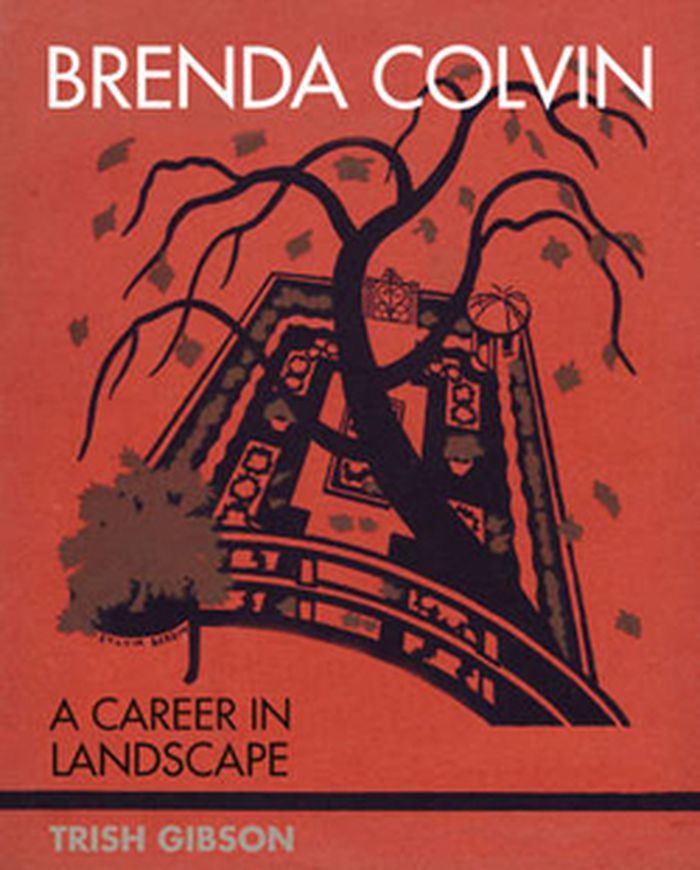
Brenda Colvin (1897-1981) ranks with Sylvia Crowe and Geoffrey Jellicoe as a pioneer of twentieth-century landscape design in Britain. This first full account of her life and work demonstrates her importance. With full access to the archives of Colvin, author Trish Gibson draws on Colvin's personal notebooks and uses many of her previously unpublished photographs and plans for this book.
Brenda Colvin: a career in landscape
Actions:
Price:
$76.00
(available to order)
Summary:
Brenda Colvin (1897-1981) ranks with Sylvia Crowe and Geoffrey Jellicoe as a pioneer of twentieth-century landscape design in Britain. This first full account of her life and work demonstrates her importance. With full access to the archives of Colvin, author Trish Gibson draws on Colvin's personal notebooks and uses many of her previously unpublished photographs and plans for this book.
Form:
books
books
Publication:
July 2011
July 2011
Subject:
Landscape Architecture, Monographs
Landscape Architecture, Monographs


