


960 Results
Form:
books
books
Title:
The big archive
The big archive
Actions:
Price:
$35.50
(available to order)
Summary:
The typewriter, the card index, and the filing cabinet: these are technologies and modalities of the archive. To the bureaucrat, archives contain little more than garbage, paperwork no longer needed; to the historian, on the other hand, the archive’s content stands as a quasi-objective correlative of the “living” past. Twentieth-century art made use of the archive in a(...)
$35.50
(available to order)
Summary:
The typewriter, the card index, and the filing cabinet: these are technologies and modalities of the archive. To the bureaucrat, archives contain little more than garbage, paperwork no longer needed; to the historian, on the other hand, the archive’s content stands as a quasi-objective correlative of the “living” past. Twentieth-century art made use of the archive in a(...)
Title:
The big archive
Actions:
Price:
$35.50
(available to order)
Summary:
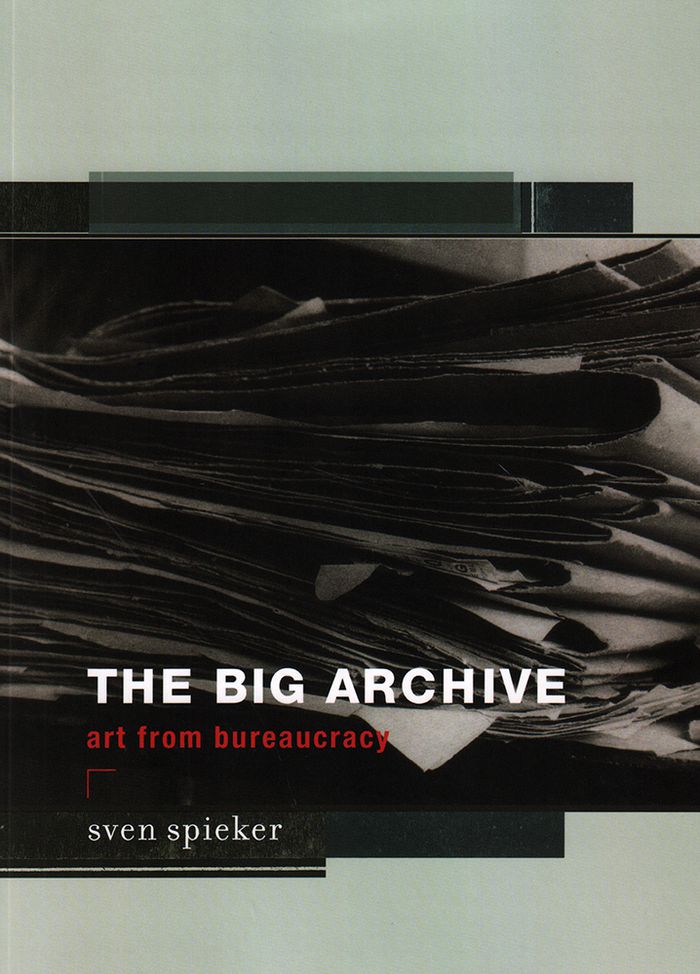
The typewriter, the card index, and the filing cabinet: these are technologies and modalities of the archive. To the bureaucrat, archives contain little more than garbage, paperwork no longer needed; to the historian, on the other hand, the archive’s content stands as a quasi-objective correlative of the “living” past. Twentieth-century art made use of the archive in a variety of ways—from what Spieker calls Marcel Duchamp’s “anemic archive” of readymades and El Lissitzky’s Demonstration Rooms to the compilations of photographs made by such postwar artists as Susan Hiller and Gerhard Richter. In "The big archive", Sven Spieker investigates the archive—as both bureaucratic institution and index of evolving attitudes toward contingent time in science and art—and finds it to be a crucible of twentieth-century modernism.
The big archive
Actions:
Price:
$35.50
(available to order)
Summary:
The typewriter, the card index, and the filing cabinet: these are technologies and modalities of the archive. To the bureaucrat, archives contain little more than garbage, paperwork no longer needed; to the historian, on the other hand, the archive’s content stands as a quasi-objective correlative of the “living” past. Twentieth-century art made use of the archive in a variety of ways—from what Spieker calls Marcel Duchamp’s “anemic archive” of readymades and El Lissitzky’s Demonstration Rooms to the compilations of photographs made by such postwar artists as Susan Hiller and Gerhard Richter. In "The big archive", Sven Spieker investigates the archive—as both bureaucratic institution and index of evolving attitudes toward contingent time in science and art—and finds it to be a crucible of twentieth-century modernism.
Form:
books
books
Publication:
March 2017
March 2017
Subject:
Archive, library and the digital
Archive, library and the digital
Form:
books
books
Actions:
Price:
$41.95
(available to order)
Summary:
Each of us has an ever-growing collection of personal digital data: documents, photographs, PowerPoint presentations, videos, music, emails and texts sent and received. To access any of this, we have to find it. The ease (or difficulty) of finding something depends on how we organize our digital stuff. In this book, personal information management (PIM) experts Ofer(...)
$41.95
(available to order)
Summary:
Each of us has an ever-growing collection of personal digital data: documents, photographs, PowerPoint presentations, videos, music, emails and texts sent and received. To access any of this, we have to find it. The ease (or difficulty) of finding something depends on how we organize our digital stuff. In this book, personal information management (PIM) experts Ofer(...)
Subject:
Archive, library and the digital
Archive, library and the digital
Publication:
November 2016
November 2016
Title:
The science of managing our digital stuff
Actions:
Price:
$41.95
(available to order)
Summary:
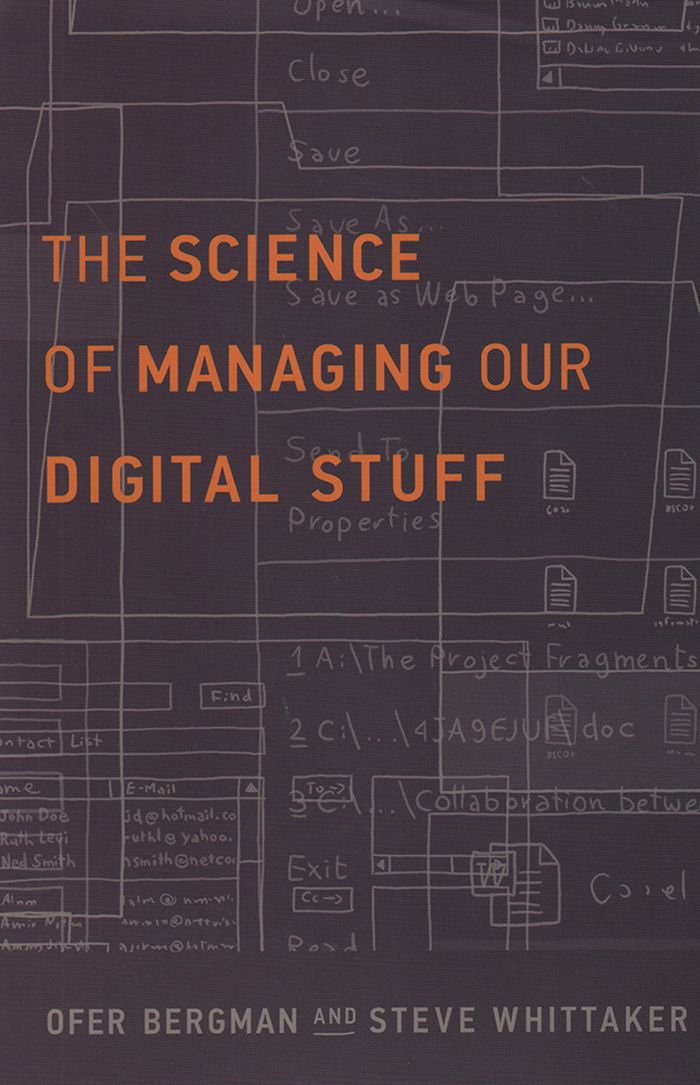
Each of us has an ever-growing collection of personal digital data: documents, photographs, PowerPoint presentations, videos, music, emails and texts sent and received. To access any of this, we have to find it. The ease (or difficulty) of finding something depends on how we organize our digital stuff. In this book, personal information management (PIM) experts Ofer Bergman and Steve Whittaker explain why we organize our personal digital data the way we do and how the design of new PIM systems can help us manage our collections more efficiently.
The science of managing our digital stuff
Actions:
Price:
$41.95
(available to order)
Summary:
Each of us has an ever-growing collection of personal digital data: documents, photographs, PowerPoint presentations, videos, music, emails and texts sent and received. To access any of this, we have to find it. The ease (or difficulty) of finding something depends on how we organize our digital stuff. In this book, personal information management (PIM) experts Ofer Bergman and Steve Whittaker explain why we organize our personal digital data the way we do and how the design of new PIM systems can help us manage our collections more efficiently.
Form:
books
books
Publication:
November 2016
November 2016
Subject:
Archive, library and the digital
Archive, library and the digital
Form:
books
books
Actions:
Price:
$27.95
(available to order)
Summary:
From Greek and Roman times to the digital era, the library has remained central to knowledge, scholarship, and the imagination. The Meaning of the Library is a generously illustrated examination of this key institution of Western culture. Tracing what the library has meant since its beginning, examining how its significance has shifted, and pondering its importance in the(...)
$27.95
(available to order)
Summary:
From Greek and Roman times to the digital era, the library has remained central to knowledge, scholarship, and the imagination. The Meaning of the Library is a generously illustrated examination of this key institution of Western culture. Tracing what the library has meant since its beginning, examining how its significance has shifted, and pondering its importance in the(...)
Title:
The meaning of the library: a cultural history
Actions:
Price:
$27.95
(available to order)
Summary:
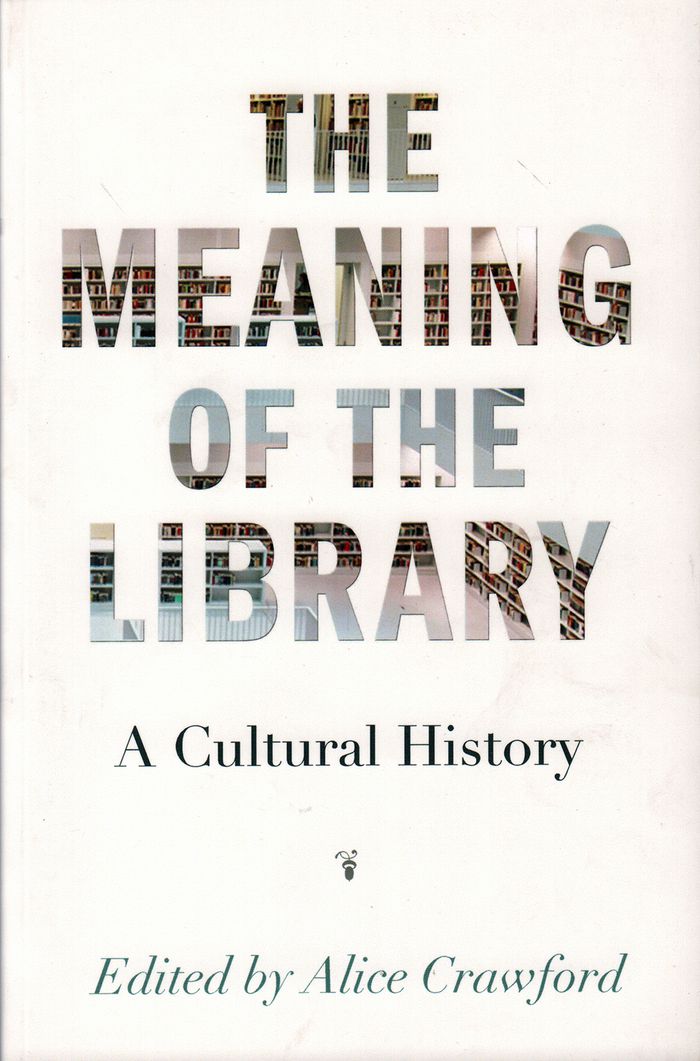
From Greek and Roman times to the digital era, the library has remained central to knowledge, scholarship, and the imagination. The Meaning of the Library is a generously illustrated examination of this key institution of Western culture. Tracing what the library has meant since its beginning, examining how its significance has shifted, and pondering its importance in the twenty-first century, notable contributors—including the Librarian of Congress and the former executive director of the HathiTrust—present a cultural history of the library. In an informative introduction, Alice Crawford sets out the book's purpose and scope, and an international array of scholars, librarians, writers, and critics offer vivid perspectives about the library through their chosen fields. The Meaning of the Library will appeal to all who are interested in this vital institution's heritage and ongoing legacy.
The meaning of the library: a cultural history
Actions:
Price:
$27.95
(available to order)
Summary:
From Greek and Roman times to the digital era, the library has remained central to knowledge, scholarship, and the imagination. The Meaning of the Library is a generously illustrated examination of this key institution of Western culture. Tracing what the library has meant since its beginning, examining how its significance has shifted, and pondering its importance in the twenty-first century, notable contributors—including the Librarian of Congress and the former executive director of the HathiTrust—present a cultural history of the library. In an informative introduction, Alice Crawford sets out the book's purpose and scope, and an international array of scholars, librarians, writers, and critics offer vivid perspectives about the library through their chosen fields. The Meaning of the Library will appeal to all who are interested in this vital institution's heritage and ongoing legacy.
Form:
books
books
Publication:
May 2017
May 2017
Subject:
Archive, library and the digital
Archive, library and the digital
Form:
books
books
Actions:
Price:
$42.95
(available to order)
Summary:
Aaron Swartz était programmeur informatique, essayiste, organisateur politique, et hacker-activiste américain. Adolescent, il était déjà un libre penseur, un programmeur, un écrivain et un militant profondément engagé en faveur de l’accès libre et gratuit à l’information contribuant au bien du public. Élevé dans la banlieue riche de Chicago, il atteint la majorité alors(...)
$42.95
(available to order)
Summary:
Aaron Swartz était programmeur informatique, essayiste, organisateur politique, et hacker-activiste américain. Adolescent, il était déjà un libre penseur, un programmeur, un écrivain et un militant profondément engagé en faveur de l’accès libre et gratuit à l’information contribuant au bien du public. Élevé dans la banlieue riche de Chicago, il atteint la majorité alors(...)
Subject:
Archive, library and the digital
Archive, library and the digital
Publication:
April 2017
April 2017
Title:
Celui qui pourrait changer le monde : écrits
Actions:
Price:
$42.95
(available to order)
Summary:
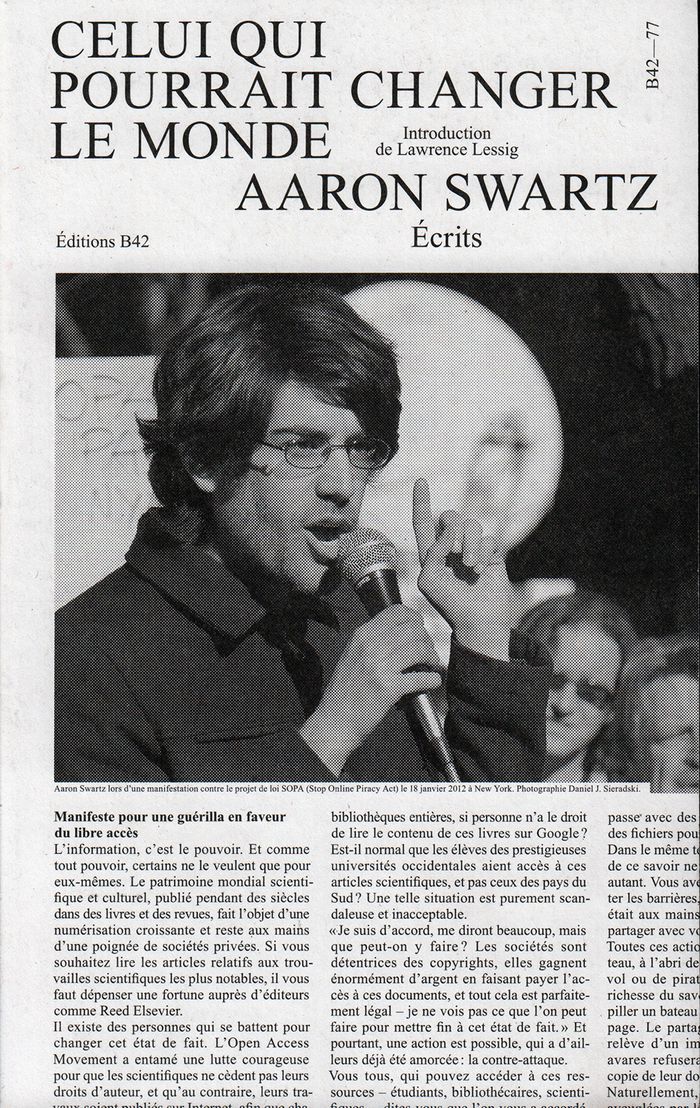
Aaron Swartz était programmeur informatique, essayiste, organisateur politique, et hacker-activiste américain. Adolescent, il était déjà un libre penseur, un programmeur, un écrivain et un militant profondément engagé en faveur de l’accès libre et gratuit à l’information contribuant au bien du public. Élevé dans la banlieue riche de Chicago, il atteint la majorité alors que la bataille relative au téléchargement illégal de musique bat son plein. Il devancera à cette occasion grand nombre des questions encore débattues aujourd’hui. Harcelé par le FBI suite au procès attenté à son égard, Aaron Swartz connaît une fin tragique en mettant fin à ses jours à l’âge de 26 ans alors qu’il faisait face à l’opposition entre son idéal de « free culture » et les lois relatives à la propriété intellectuelle aux États-Unis. Étant donné la terrible brièveté de son audacieuse vie intellectuelle "Celui qui pourrait changer le monde" est une remarquable et substantielle collection de ses écrits (articles, essais, conférences), qui soulignent la pluralité des intérêts du jeune homme, de son amour pour le code, à son idéal d’un monde collaboratif et virtuel. On y découvre un personnage curieux de tout, drôle, brillant, radical et visionnaire, mais aussi plein d’autodérision. Le livre est divisé en six chapitres, suivant ses centres d’intérêts : la culture libre, tout d’abord, les ordinateurs, la politique, les media, les livres et la culture et enfin l’éducation. Ses différents combats (pour la culture libre notamment, qui se politisèrent à la fin de sa vie) sont enracinés dans la croyance qu’accéder à la connaissance et la possibilité de l’utiliser constitue le meilleur moyen d’empowerment et de justice. L’activisme multi-facette de Swartz inclue l’orchestration de pétitions massives en ligne contre les lois relatives au droit d’auteur et la lutte contre le piratage. Swartz a également écrit avec passion sur les livres (Kafka et David Foster font partis de ses favoris), les magazines, les films, la musique et l’éducation.
Celui qui pourrait changer le monde : écrits
Actions:
Price:
$42.95
(available to order)
Summary:
Aaron Swartz était programmeur informatique, essayiste, organisateur politique, et hacker-activiste américain. Adolescent, il était déjà un libre penseur, un programmeur, un écrivain et un militant profondément engagé en faveur de l’accès libre et gratuit à l’information contribuant au bien du public. Élevé dans la banlieue riche de Chicago, il atteint la majorité alors que la bataille relative au téléchargement illégal de musique bat son plein. Il devancera à cette occasion grand nombre des questions encore débattues aujourd’hui. Harcelé par le FBI suite au procès attenté à son égard, Aaron Swartz connaît une fin tragique en mettant fin à ses jours à l’âge de 26 ans alors qu’il faisait face à l’opposition entre son idéal de « free culture » et les lois relatives à la propriété intellectuelle aux États-Unis. Étant donné la terrible brièveté de son audacieuse vie intellectuelle "Celui qui pourrait changer le monde" est une remarquable et substantielle collection de ses écrits (articles, essais, conférences), qui soulignent la pluralité des intérêts du jeune homme, de son amour pour le code, à son idéal d’un monde collaboratif et virtuel. On y découvre un personnage curieux de tout, drôle, brillant, radical et visionnaire, mais aussi plein d’autodérision. Le livre est divisé en six chapitres, suivant ses centres d’intérêts : la culture libre, tout d’abord, les ordinateurs, la politique, les media, les livres et la culture et enfin l’éducation. Ses différents combats (pour la culture libre notamment, qui se politisèrent à la fin de sa vie) sont enracinés dans la croyance qu’accéder à la connaissance et la possibilité de l’utiliser constitue le meilleur moyen d’empowerment et de justice. L’activisme multi-facette de Swartz inclue l’orchestration de pétitions massives en ligne contre les lois relatives au droit d’auteur et la lutte contre le piratage. Swartz a également écrit avec passion sur les livres (Kafka et David Foster font partis de ses favoris), les magazines, les films, la musique et l’éducation.
Form:
books
books
Publication:
April 2017
April 2017
Subject:
Archive, library and the digital
Archive, library and the digital
Form:
books
books
Actions:
Price:
$23.50
(available to order)
Summary:
“The revolution will be Twittered!” declared journalist Andrew Sullivan after protests erupted in Iran. But as journalist and social commentator Evgeny Morozov argues in The Net Delusion, the Internet is a tool that both revolutionaries and authoritarian governments can use. For all of the talk in the West about the power of the Internet to democratize societies, regimes(...)
$23.50
(available to order)
Summary:
“The revolution will be Twittered!” declared journalist Andrew Sullivan after protests erupted in Iran. But as journalist and social commentator Evgeny Morozov argues in The Net Delusion, the Internet is a tool that both revolutionaries and authoritarian governments can use. For all of the talk in the West about the power of the Internet to democratize societies, regimes(...)
Title:
The net delusion: the dark side of the internet
Actions:
Price:
$23.50
(available to order)
Summary:
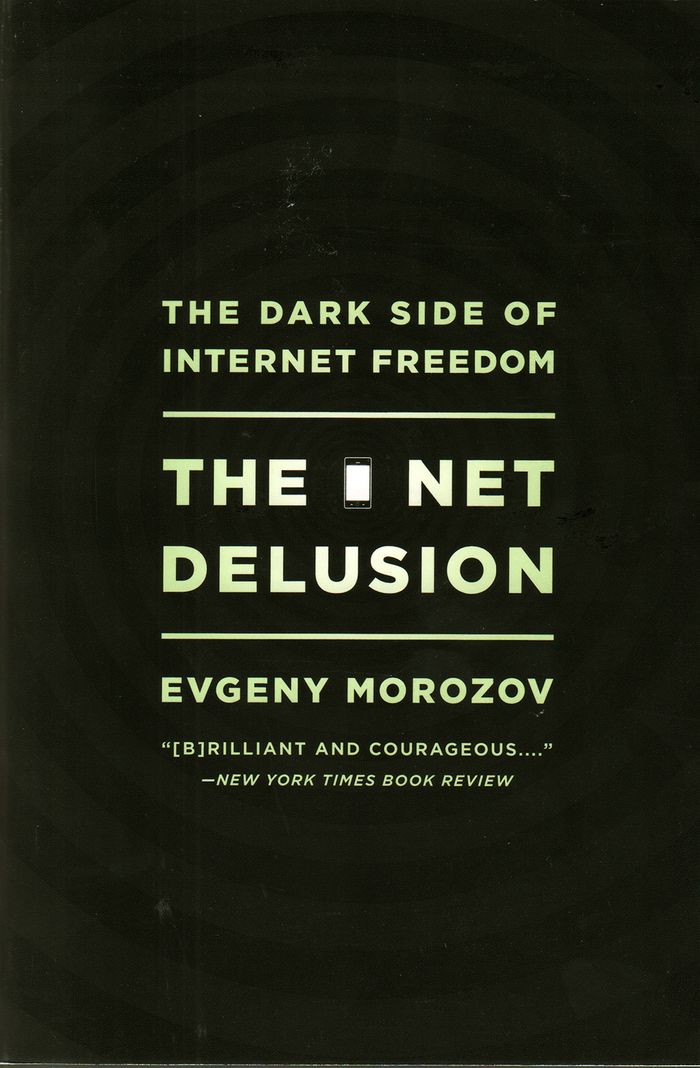
“The revolution will be Twittered!” declared journalist Andrew Sullivan after protests erupted in Iran. But as journalist and social commentator Evgeny Morozov argues in The Net Delusion, the Internet is a tool that both revolutionaries and authoritarian governments can use. For all of the talk in the West about the power of the Internet to democratize societies, regimes in Iran and China are as stable and repressive as ever. Social media sites have been used there to entrench dictators and threaten dissidents, making it harder—not easier—to promote democracy. Marshalling a compelling set of case studies, The Net Delusion shows why the cyber-utopian stance that the Internet is inherently liberating is wrong, and how ambitious and seemingly noble initiatives like the promotion of “Internet freedom” are misguided and, on occasion, harmful.
The net delusion: the dark side of the internet
Actions:
Price:
$23.50
(available to order)
Summary:
“The revolution will be Twittered!” declared journalist Andrew Sullivan after protests erupted in Iran. But as journalist and social commentator Evgeny Morozov argues in The Net Delusion, the Internet is a tool that both revolutionaries and authoritarian governments can use. For all of the talk in the West about the power of the Internet to democratize societies, regimes in Iran and China are as stable and repressive as ever. Social media sites have been used there to entrench dictators and threaten dissidents, making it harder—not easier—to promote democracy. Marshalling a compelling set of case studies, The Net Delusion shows why the cyber-utopian stance that the Internet is inherently liberating is wrong, and how ambitious and seemingly noble initiatives like the promotion of “Internet freedom” are misguided and, on occasion, harmful.
Form:
books
books
Publication:
February 2012
February 2012
Subject:
Archive, library and the digital
Archive, library and the digital
Form:
books
books
Price:
$21.00
(available to order)
Summary:
Arguing that we badly need a new, post-Internet way to debate the moral consequences of digital technologies, To Save Everything, Click Here warns against a world of seamless efficiency, where everyone is forced to wear Silicon Valley's digital straitjacket.
$21.00
(available to order)
Summary:
Arguing that we badly need a new, post-Internet way to debate the moral consequences of digital technologies, To Save Everything, Click Here warns against a world of seamless efficiency, where everyone is forced to wear Silicon Valley's digital straitjacket.
Title:
To save everything, click here: the folly of technological solutionism
Actions:
Price:
$21.00
(available to order)
Summary:
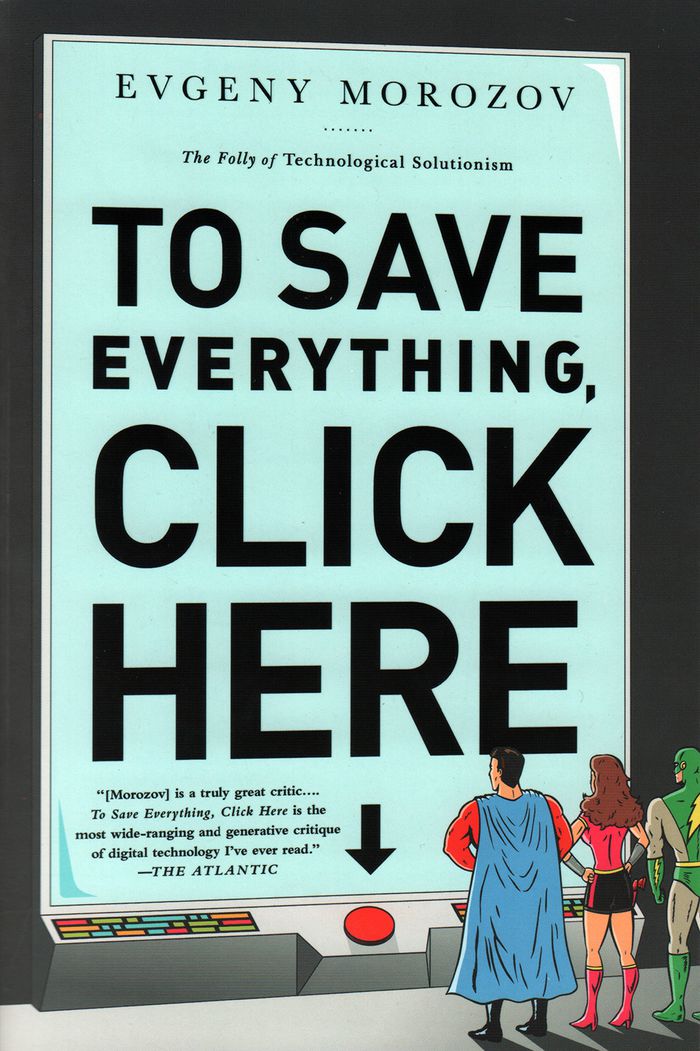
Arguing that we badly need a new, post-Internet way to debate the moral consequences of digital technologies, To Save Everything, Click Here warns against a world of seamless efficiency, where everyone is forced to wear Silicon Valley's digital straitjacket.
To save everything, click here: the folly of technological solutionism
Actions:
Price:
$21.00
(available to order)
Summary:
Arguing that we badly need a new, post-Internet way to debate the moral consequences of digital technologies, To Save Everything, Click Here warns against a world of seamless efficiency, where everyone is forced to wear Silicon Valley's digital straitjacket.
Form:
books
books
Publication:
April 2014
April 2014
Subject:
Archive, library and the digital
Archive, library and the digital
Form:
books
books
Actions:
Price:
$37.95
(available to order)
Summary:
Le potentiel de la bibliothèque de consolider le lien entre la ville et l'homme contemporain invalide les fondements des années 1990, basés sur une vision hiérarchique de l'espace, au profit d'une conception vicinale. La définition d'un espace non-hiérarchique apparaît alors comme l'emblème de tout projet architectural.
$37.95
(available to order)
Summary:
Le potentiel de la bibliothèque de consolider le lien entre la ville et l'homme contemporain invalide les fondements des années 1990, basés sur une vision hiérarchique de l'espace, au profit d'une conception vicinale. La définition d'un espace non-hiérarchique apparaît alors comme l'emblème de tout projet architectural.
Title:
Du livre à la ville : la bibliothèque comme espace public
Actions:
Price:
$37.95
(available to order)
Summary:
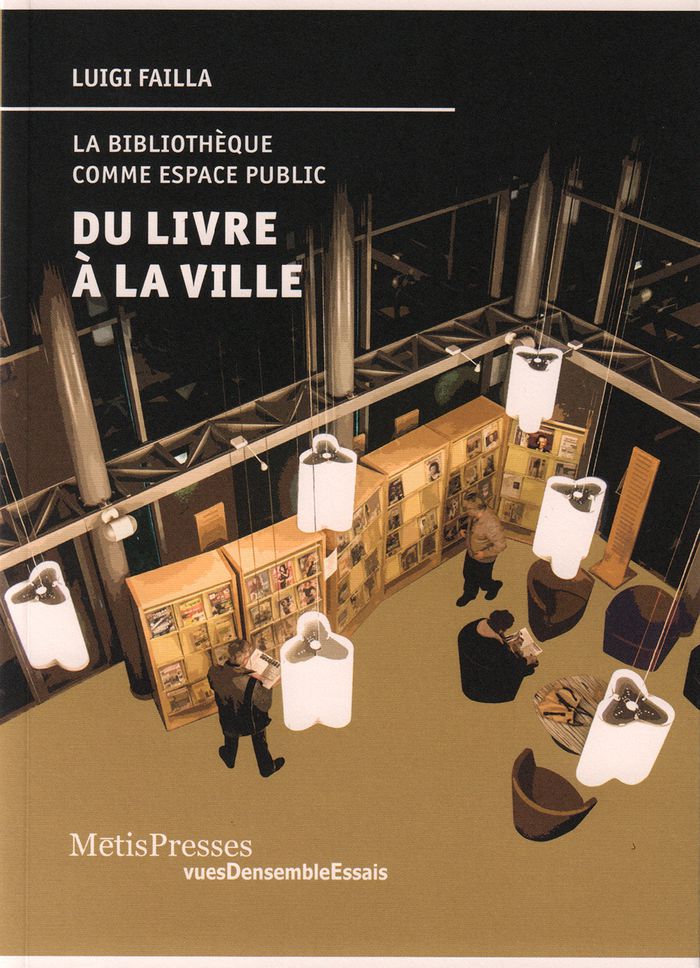
Le potentiel de la bibliothèque de consolider le lien entre la ville et l'homme contemporain invalide les fondements des années 1990, basés sur une vision hiérarchique de l'espace, au profit d'une conception vicinale. La définition d'un espace non-hiérarchique apparaît alors comme l'emblème de tout projet architectural.
Du livre à la ville : la bibliothèque comme espace public
Actions:
Price:
$37.95
(available to order)
Summary:
Le potentiel de la bibliothèque de consolider le lien entre la ville et l'homme contemporain invalide les fondements des années 1990, basés sur une vision hiérarchique de l'espace, au profit d'une conception vicinale. La définition d'un espace non-hiérarchique apparaît alors comme l'emblème de tout projet architectural.
Form:
books
books
Publication:
January 2018
January 2018
Subject:
Archive, library and the digital
Archive, library and the digital
Form:
books
books
Title:
Escaping the digital unease
Escaping the digital unease
Actions:
Price:
$48.95
(available to order)
Summary:
Constant activity in digital and analogue spaces leaves behind an increasingly diffuse feeling of unease, irrespective of how commonplace that activity may be. Meantime however, the marketing of social relations, the dissolution of the private sphere, and the dominance of commercial actors are being perceived as a problem that demands an active interdisciplinary(...)
$48.95
(available to order)
Summary:
Constant activity in digital and analogue spaces leaves behind an increasingly diffuse feeling of unease, irrespective of how commonplace that activity may be. Meantime however, the marketing of social relations, the dissolution of the private sphere, and the dominance of commercial actors are being perceived as a problem that demands an active interdisciplinary(...)
Title:
Escaping the digital unease
Actions:
Price:
$48.95
(available to order)
Summary:
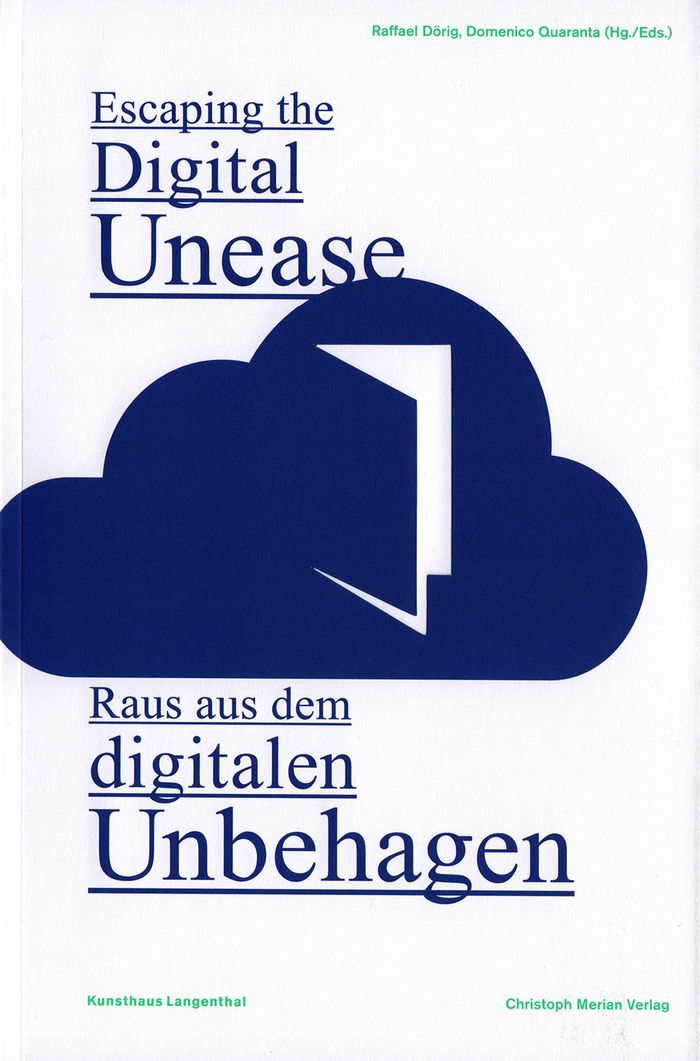
Constant activity in digital and analogue spaces leaves behind an increasingly diffuse feeling of unease, irrespective of how commonplace that activity may be. Meantime however, the marketing of social relations, the dissolution of the private sphere, and the dominance of commercial actors are being perceived as a problem that demands an active interdisciplinary discourse. Media scientists and artists reflect here on that unease and present perspectives on and ways out of the excessive demands on users by way of the most recent research and artistic experiments. This book brings together essays and provides insight into the international group exhibition featuring works by Olia Lialina, Christoph Wachter & Mathias Jud, and Benjamin Grosser, among others.
Escaping the digital unease
Actions:
Price:
$48.95
(available to order)
Summary:
Constant activity in digital and analogue spaces leaves behind an increasingly diffuse feeling of unease, irrespective of how commonplace that activity may be. Meantime however, the marketing of social relations, the dissolution of the private sphere, and the dominance of commercial actors are being perceived as a problem that demands an active interdisciplinary discourse. Media scientists and artists reflect here on that unease and present perspectives on and ways out of the excessive demands on users by way of the most recent research and artistic experiments. This book brings together essays and provides insight into the international group exhibition featuring works by Olia Lialina, Christoph Wachter & Mathias Jud, and Benjamin Grosser, among others.
Form:
books
books
Publication:
February 2018
February 2018
Subject:
Archive, library and the digital
Archive, library and the digital
Form:
books
books
Actions:
Price:
$42.00
(available to order)
Summary:
David Parisi offers the first full history of haptic interface technologies, showing how the efforts of scientists and engineers over the past 300 years have gradually remade and redefined our sense of touch. Through lively analyses of electrical machines, videogames, sex toys, sensory substitution systems, robotics, and human-computer interfaces, Parisi shows how the(...)
$42.00
(available to order)
Summary:
David Parisi offers the first full history of haptic interface technologies, showing how the efforts of scientists and engineers over the past 300 years have gradually remade and redefined our sense of touch. Through lively analyses of electrical machines, videogames, sex toys, sensory substitution systems, robotics, and human-computer interfaces, Parisi shows how the(...)
Title:
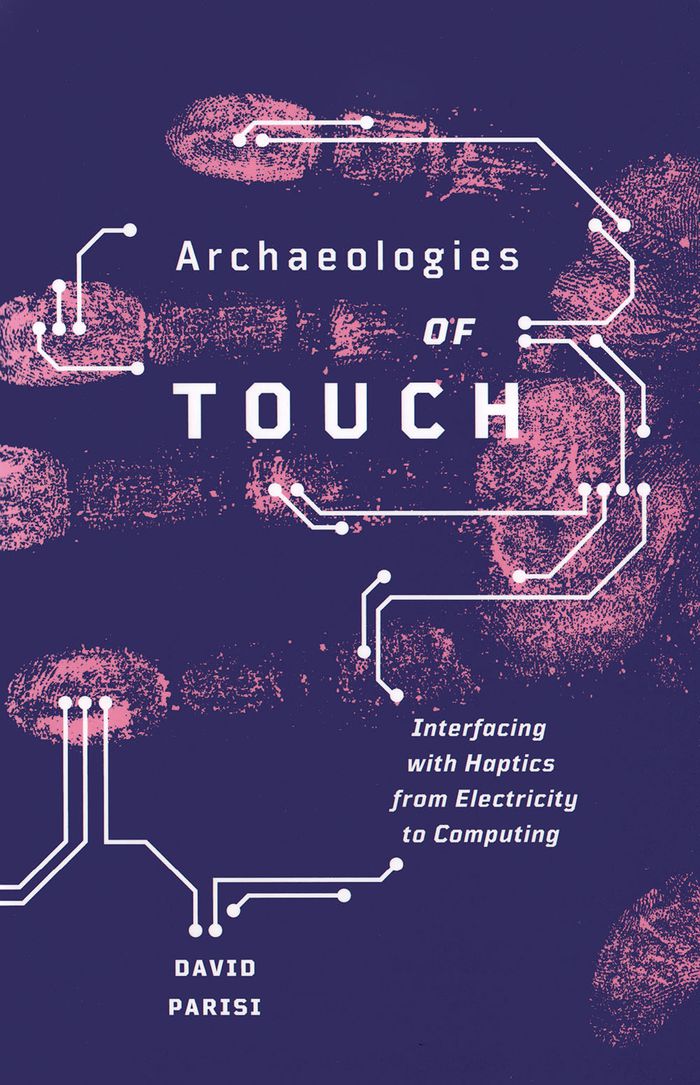
Archaeologies of touch: interfacing with haptics from electricity to computing
Actions:
Price:
$42.00
(available to order)
Summary:
David Parisi offers the first full history of haptic interface technologies, showing how the efforts of scientists and engineers over the past 300 years have gradually remade and redefined our sense of touch. Through lively analyses of electrical machines, videogames, sex toys, sensory substitution systems, robotics, and human-computer interfaces, Parisi shows how the materiality of touch technologies has been shaped by attempts to transform human into more efficient processors of information.
Archaeologies of touch: interfacing with haptics from electricity to computing
Actions:
Price:
$42.00
(available to order)
Summary:
David Parisi offers the first full history of haptic interface technologies, showing how the efforts of scientists and engineers over the past 300 years have gradually remade and redefined our sense of touch. Through lively analyses of electrical machines, videogames, sex toys, sensory substitution systems, robotics, and human-computer interfaces, Parisi shows how the materiality of touch technologies has been shaped by attempts to transform human into more efficient processors of information.
Form:
books
books
Publication:
February 2018
February 2018
Subject:
Archive, library and the digital
Archive, library and the digital
Form:
books
books
Title:
L'être et l'écran
L'être et l'écran
Actions:
Price:
$37.95
(available to order)
Summary:
Les techniques ne sont pas seulement des outils, ce sont des structures de la perception. Elles conditionnent la manière dont le monde nous apparaît et dont les phénomènes nous sont donnés. Depuis près d’un demi-siècle, les technologies numériques nous apportent des perceptions d’un monde inconnu. Ces êtres qui émergent de nos écrans et de nos interfaces bouleversent(...)
$37.95
(available to order)
Summary:
Les techniques ne sont pas seulement des outils, ce sont des structures de la perception. Elles conditionnent la manière dont le monde nous apparaît et dont les phénomènes nous sont donnés. Depuis près d’un demi-siècle, les technologies numériques nous apportent des perceptions d’un monde inconnu. Ces êtres qui émergent de nos écrans et de nos interfaces bouleversent(...)
Title:
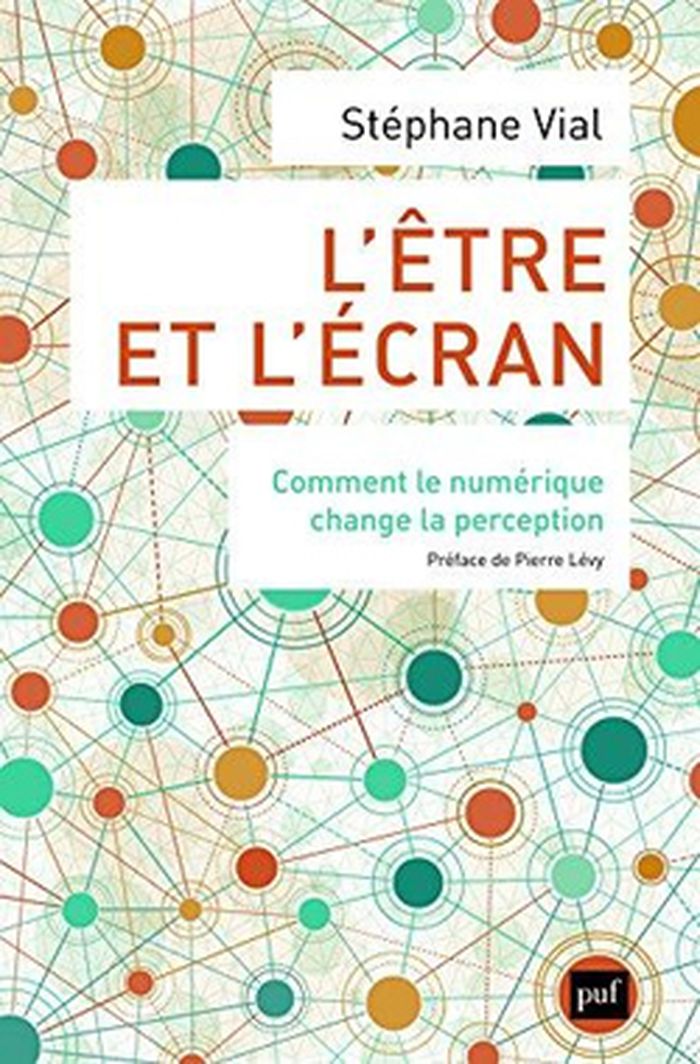
L'être et l'écran
Actions:
Price:
$37.95
(available to order)
Summary:
Les techniques ne sont pas seulement des outils, ce sont des structures de la perception. Elles conditionnent la manière dont le monde nous apparaît et dont les phénomènes nous sont donnés. Depuis près d’un demi-siècle, les technologies numériques nous apportent des perceptions d’un monde inconnu. Ces êtres qui émergent de nos écrans et de nos interfaces bouleversent l’idée que nous nous faisons de ce qui est réel et nous réapprennent à percevoir. Quel est l’être des êtres numériques ? Que devient notre être-dans-le-monde à l’heure des êtres numériques ? Le temps est venu d’analyser l’«ontophanie numérique» dans toute sa complexité. La prétendue différence entre le réel et le virtuel n’existe pas et n’a jamais existé. Nous vivons dans un environnement hybride, à la fois numérique et non numérique, en ligne et hors ligne, qu’il appartient aux designers de rendre habitable. -
L'être et l'écran
Actions:
Price:
$37.95
(available to order)
Summary:
Les techniques ne sont pas seulement des outils, ce sont des structures de la perception. Elles conditionnent la manière dont le monde nous apparaît et dont les phénomènes nous sont donnés. Depuis près d’un demi-siècle, les technologies numériques nous apportent des perceptions d’un monde inconnu. Ces êtres qui émergent de nos écrans et de nos interfaces bouleversent l’idée que nous nous faisons de ce qui est réel et nous réapprennent à percevoir. Quel est l’être des êtres numériques ? Que devient notre être-dans-le-monde à l’heure des êtres numériques ? Le temps est venu d’analyser l’«ontophanie numérique» dans toute sa complexité. La prétendue différence entre le réel et le virtuel n’existe pas et n’a jamais existé. Nous vivons dans un environnement hybride, à la fois numérique et non numérique, en ligne et hors ligne, qu’il appartient aux designers de rendre habitable. -
Form:
books
books
Publication:
August 2013
August 2013
Subject:
Archive, library and the digital
Archive, library and the digital


