


13794 Results
Form:
books
books
Actions:
Price:
$32.00
(available to order)
Summary:
Tracking the work of groups including MTL, Not an Alternative, the Illuminator, the Rolling Jubilee, and G.U.L.F, Strike Art shows how the Occupy movement ushered in a new era of artistically-oriented direct action that continues to ramify far beyond the initial act of occupation itself into ongoing struggles surrounding labor, debt, and climate justice, concluding with a(...)
$32.00
(available to order)
Summary:
Tracking the work of groups including MTL, Not an Alternative, the Illuminator, the Rolling Jubilee, and G.U.L.F, Strike Art shows how the Occupy movement ushered in a new era of artistically-oriented direct action that continues to ramify far beyond the initial act of occupation itself into ongoing struggles surrounding labor, debt, and climate justice, concluding with a(...)
Title:
Strike art: contemporary art and the post-occupy condition
Actions:
Price:
$32.00
(available to order)
Summary:
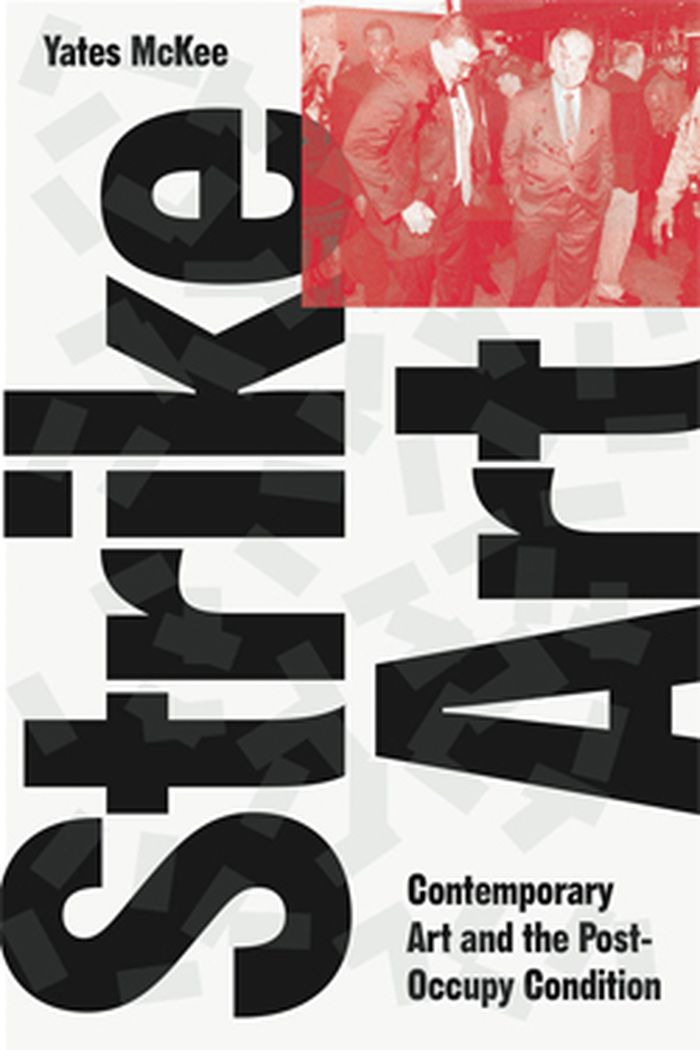
Tracking the work of groups including MTL, Not an Alternative, the Illuminator, the Rolling Jubilee, and G.U.L.F, Strike Art shows how the Occupy movement ushered in a new era of artistically-oriented direct action that continues to ramify far beyond the initial act of occupation itself into ongoing struggles surrounding labor, debt, and climate justice, concluding with a consideration of the overlaps between such work and the aesthetic practices of the Black Lives Matter movement.
Strike art: contemporary art and the post-occupy condition
Actions:
Price:
$32.00
(available to order)
Summary:
Tracking the work of groups including MTL, Not an Alternative, the Illuminator, the Rolling Jubilee, and G.U.L.F, Strike Art shows how the Occupy movement ushered in a new era of artistically-oriented direct action that continues to ramify far beyond the initial act of occupation itself into ongoing struggles surrounding labor, debt, and climate justice, concluding with a consideration of the overlaps between such work and the aesthetic practices of the Black Lives Matter movement.
Form:
books
books
Publication:
October 2015
October 2015
Subject:
Art Theory
Art Theory
Form:
books
books
Title:
A history of the barricade
A history of the barricade
Actions:
Price:
$21.50
(available to order)
Summary:
The barricade was always a makeshift construction (the word derives from barrique or barrel), and in working-class districts these ersatz fortifications could spread like wildfire. They doubled as a stage, from which insurgents could harangue soldiers and subvert their allegiance. Their symbolic power persisted into May 1968 and, more recently, the Occupy(...)
$21.50
(available to order)
Summary:
The barricade was always a makeshift construction (the word derives from barrique or barrel), and in working-class districts these ersatz fortifications could spread like wildfire. They doubled as a stage, from which insurgents could harangue soldiers and subvert their allegiance. Their symbolic power persisted into May 1968 and, more recently, the Occupy(...)
Title:
A history of the barricade
Actions:
Price:
$21.50
(available to order)
Summary:
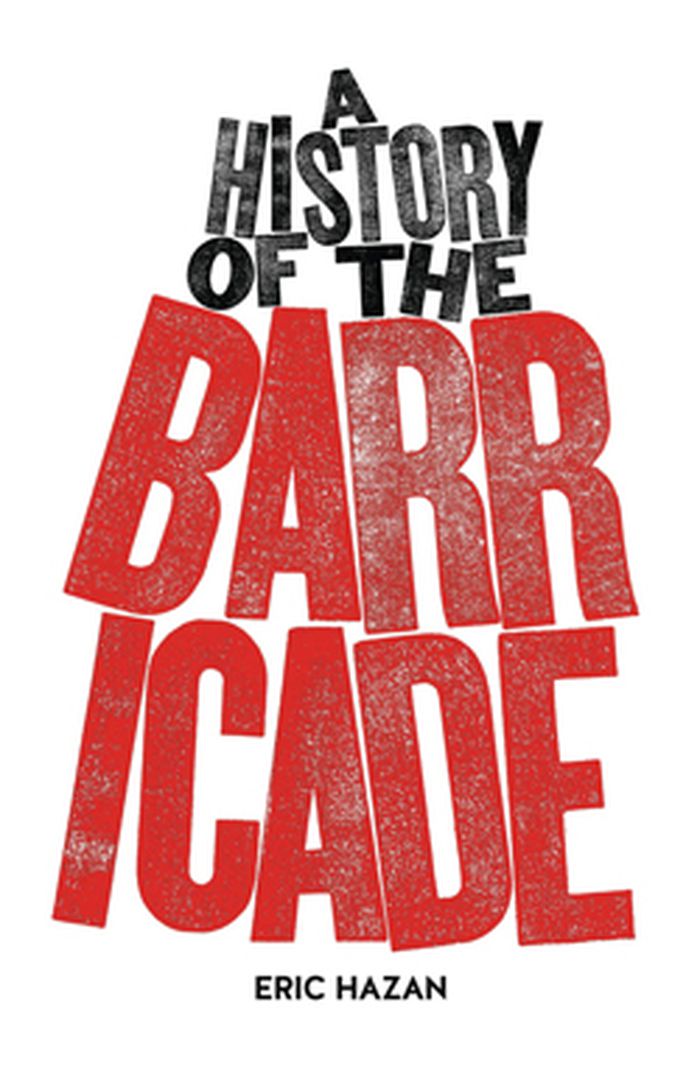
The barricade was always a makeshift construction (the word derives from barrique or barrel), and in working-class districts these ersatz fortifications could spread like wildfire. They doubled as a stage, from which insurgents could harangue soldiers and subvert their allegiance. Their symbolic power persisted into May 1968 and, more recently, the Occupy movements. Hazan traces the many stages in the barricade’s evolution, from the Wars of Religion through to the Paris Commune, drawing on the work of thinkers throughout the periods examined to illustrate and bring to life the violent practicalities of revolutionary uprising.
A history of the barricade
Actions:
Price:
$21.50
(available to order)
Summary:
The barricade was always a makeshift construction (the word derives from barrique or barrel), and in working-class districts these ersatz fortifications could spread like wildfire. They doubled as a stage, from which insurgents could harangue soldiers and subvert their allegiance. Their symbolic power persisted into May 1968 and, more recently, the Occupy movements. Hazan traces the many stages in the barricade’s evolution, from the Wars of Religion through to the Paris Commune, drawing on the work of thinkers throughout the periods examined to illustrate and bring to life the violent practicalities of revolutionary uprising.
Form:
books
books
Publication:
November 2015
November 2015
Subject:
Critical Theory
Critical Theory
Form:
books
books
Title:
The ministry of nostalgia
The ministry of nostalgia
Actions:
Price:
$32.00
(available to order)
Summary:
Author Owen Hatherley shows how our past is being resold in order to defend the indefensible. From the marketing of a “make do and mend” aesthetic to the growing nostalgia for a utopian past that never existed, a cultural distraction scam prevents people grasping the truth of their condition. The Ministry of Nostalgia looks at the creation of a false history -(...)
$32.00
(available to order)
Summary:
Author Owen Hatherley shows how our past is being resold in order to defend the indefensible. From the marketing of a “make do and mend” aesthetic to the growing nostalgia for a utopian past that never existed, a cultural distraction scam prevents people grasping the truth of their condition. The Ministry of Nostalgia looks at the creation of a false history -(...)
Title:
The ministry of nostalgia
Actions:
Price:
$32.00
(available to order)
Summary:
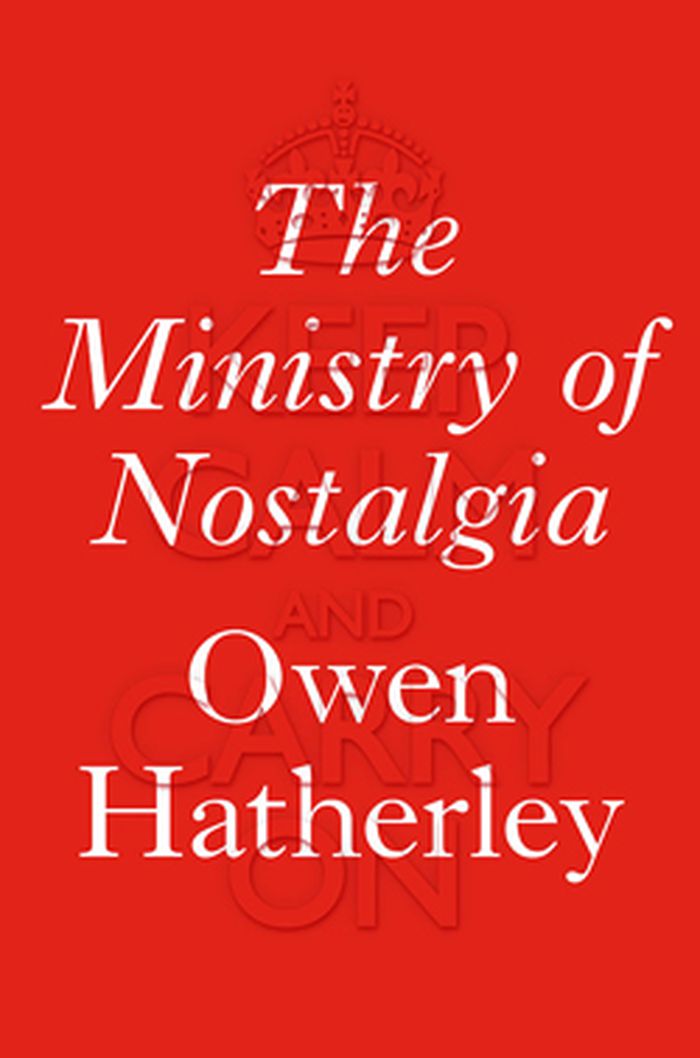
Author Owen Hatherley shows how our past is being resold in order to defend the indefensible. From the marketing of a “make do and mend” aesthetic to the growing nostalgia for a utopian past that never existed, a cultural distraction scam prevents people grasping the truth of their condition. The Ministry of Nostalgia looks at the creation of a false history - examining the austerity of the 1940s and 1950s, which saw the development of a welfare state while the nation crawled recovered from the war. Hatherley examines how this period has been recast to offer consolation for the violence of neoliberalism, an ideology dedicated to the privatisation of common wealth.
The ministry of nostalgia
Actions:
Price:
$32.00
(available to order)
Summary:
Author Owen Hatherley shows how our past is being resold in order to defend the indefensible. From the marketing of a “make do and mend” aesthetic to the growing nostalgia for a utopian past that never existed, a cultural distraction scam prevents people grasping the truth of their condition. The Ministry of Nostalgia looks at the creation of a false history - examining the austerity of the 1940s and 1950s, which saw the development of a welfare state while the nation crawled recovered from the war. Hatherley examines how this period has been recast to offer consolation for the violence of neoliberalism, an ideology dedicated to the privatisation of common wealth.
Form:
books
books
Publication:
January 2016
January 2016
Subject:
Critical Theory
Critical Theory
Form:
books
books
Actions:
Price:
$39.99
(available to order)
Summary:
Today we live in a world that can no longer be read as a two-dimensional map, but must now be understood as a series of vertical strata that reach from the satellites that encircle our planet to the tunnels deep within the ground. In "Vertical", Stephen Graham rewrites the city at every level: how the geography of inequality, politics, and identity is determined in terms(...)
$39.99
(available to order)
Summary:
Today we live in a world that can no longer be read as a two-dimensional map, but must now be understood as a series of vertical strata that reach from the satellites that encircle our planet to the tunnels deep within the ground. In "Vertical", Stephen Graham rewrites the city at every level: how the geography of inequality, politics, and identity is determined in terms(...)
Title:
Vertical : the city from satellites to bunkers
Actions:
Price:
$39.99
(available to order)
Summary:
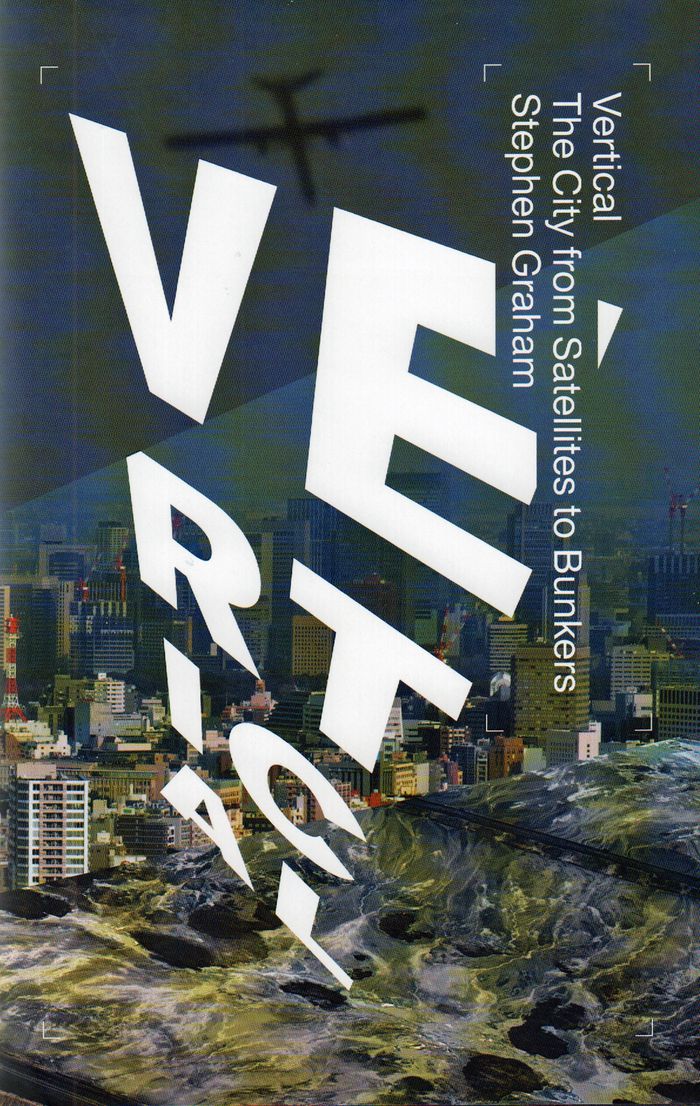
Today we live in a world that can no longer be read as a two-dimensional map, but must now be understood as a series of vertical strata that reach from the satellites that encircle our planet to the tunnels deep within the ground. In "Vertical", Stephen Graham rewrites the city at every level: how the geography of inequality, politics, and identity is determined in terms of above and below. Starting at the edge of earth’s atmosphere and, in a series of riveting studies, descending through each layer, Graham explores the world of drones, the city from the viewpoint of an aerial bomber, the design of sidewalks and the hidden depths of underground bunkers. He asks: why was Dubai built to be seen from Google Earth? How do the super-rich in São Paulo live in their penthouses far above the street? Why do London billionaires build vast subterranean basements? And how do the technology of elevators and subversive urban explorers shape life on the surface and subsurface of the earth?
Vertical : the city from satellites to bunkers
Actions:
Price:
$39.99
(available to order)
Summary:
Today we live in a world that can no longer be read as a two-dimensional map, but must now be understood as a series of vertical strata that reach from the satellites that encircle our planet to the tunnels deep within the ground. In "Vertical", Stephen Graham rewrites the city at every level: how the geography of inequality, politics, and identity is determined in terms of above and below. Starting at the edge of earth’s atmosphere and, in a series of riveting studies, descending through each layer, Graham explores the world of drones, the city from the viewpoint of an aerial bomber, the design of sidewalks and the hidden depths of underground bunkers. He asks: why was Dubai built to be seen from Google Earth? How do the super-rich in São Paulo live in their penthouses far above the street? Why do London billionaires build vast subterranean basements? And how do the technology of elevators and subversive urban explorers shape life on the surface and subsurface of the earth?
Form:
books
books
Publication:
November 2016
November 2016
Subject:
Urban Theory
Urban Theory
Form:
books
books

Price:
$12.95
(available to order)
Summary:
Cet ouvrage, paru en 1983, est très vite devenu un classique contemporain, tant après lui nombre se sont engagés dans la brèche de cette première vraie critique de la modernité artistique. Le constat demeure aujourd'hui encore lucide : depuis les années 1950 se sont multipliés aussi bien les musées d'art moderne que les écrits qui lui sont consacrés. Mais jamais on a(...)
$12.95
(available to order)
Summary:
Cet ouvrage, paru en 1983, est très vite devenu un classique contemporain, tant après lui nombre se sont engagés dans la brèche de cette première vraie critique de la modernité artistique. Le constat demeure aujourd'hui encore lucide : depuis les années 1950 se sont multipliés aussi bien les musées d'art moderne que les écrits qui lui sont consacrés. Mais jamais on a(...)
Title:
Considérations sur l'état des Beaux-Arts: critique de la modernité
Actions:
Price:
$12.95
(available to order)
Summary:
Cet ouvrage, paru en 1983, est très vite devenu un classique contemporain, tant après lui nombre se sont engagés dans la brèche de cette première vraie critique de la modernité artistique. Le constat demeure aujourd'hui encore lucide : depuis les années 1950 se sont multipliés aussi bien les musées d'art moderne que les écrits qui lui sont consacrés. Mais jamais on a aussi peu peint, jamais on a aussi mal peint.
Considérations sur l'état des Beaux-Arts: critique de la modernité
Actions:
Price:
$12.95
(available to order)
Summary:
Cet ouvrage, paru en 1983, est très vite devenu un classique contemporain, tant après lui nombre se sont engagés dans la brèche de cette première vraie critique de la modernité artistique. Le constat demeure aujourd'hui encore lucide : depuis les années 1950 se sont multipliés aussi bien les musées d'art moderne que les écrits qui lui sont consacrés. Mais jamais on a aussi peu peint, jamais on a aussi mal peint.
Form:
books
books
Publication:
July 2015
July 2015
Subject:
Art Theory
Art Theory
Form:
books
books
Actions:
Price:
$18.95
(available to order)
Summary:
L'auteur Bill Bryson entreprend un Grand Tour à l'échelle d'une maison pour raconter de pièce en pièce l'aventure du génie humain. Au fil de cette histoire de l'envers du décor, vous croiserez des personnages tels que Virginia Woolf (qui n'aimait pas sa bonne) et Karl Marx (qui couchqit avec la sienne), vous saurez tout sur l'invention de la tapette à souris et vous(...)
$18.95
(available to order)
Summary:
L'auteur Bill Bryson entreprend un Grand Tour à l'échelle d'une maison pour raconter de pièce en pièce l'aventure du génie humain. Au fil de cette histoire de l'envers du décor, vous croiserez des personnages tels que Virginia Woolf (qui n'aimait pas sa bonne) et Karl Marx (qui couchqit avec la sienne), vous saurez tout sur l'invention de la tapette à souris et vous(...)
Title:
Une histoire du monde sans sortir de chez moi
Actions:
Price:
$18.95
(available to order)
Summary:
L'auteur Bill Bryson entreprend un Grand Tour à l'échelle d'une maison pour raconter de pièce en pièce l'aventure du génie humain. Au fil de cette histoire de l'envers du décor, vous croiserez des personnages tels que Virginia Woolf (qui n'aimait pas sa bonne) et Karl Marx (qui couchqit avec la sienne), vous saurez tout sur l'invention de la tapette à souris et vous comprendrez que sans les "water-closets à chasse d'eau" il n'y aurait pas eu de révolution industrielle...
Une histoire du monde sans sortir de chez moi
Actions:
Price:
$18.95
(available to order)
Summary:
L'auteur Bill Bryson entreprend un Grand Tour à l'échelle d'une maison pour raconter de pièce en pièce l'aventure du génie humain. Au fil de cette histoire de l'envers du décor, vous croiserez des personnages tels que Virginia Woolf (qui n'aimait pas sa bonne) et Karl Marx (qui couchqit avec la sienne), vous saurez tout sur l'invention de la tapette à souris et vous comprendrez que sans les "water-closets à chasse d'eau" il n'y aurait pas eu de révolution industrielle...
Form:
books
books
Publication:
July 2015
July 2015
Subject:
Architectural Theory
Architectural Theory
Form:
books
books
Price:
$57.00
(available to order)
Summary:
With three billion more humans projected to be living in cities by 2050, all design is increasingly urban design. And with as much data now produced every day as was produced in all of human history to the year 2007, all architecture is increasingly information architecture. Praised in the NewYork Times for its "intelligent enquiry and actionable theorizing," Local Code(...)
$57.00
(available to order)
Summary:
With three billion more humans projected to be living in cities by 2050, all design is increasingly urban design. And with as much data now produced every day as was produced in all of human history to the year 2007, all architecture is increasingly information architecture. Praised in the NewYork Times for its "intelligent enquiry and actionable theorizing," Local Code(...)
Title:
Local code: 3659 proposals about data, design, and the nature of cities
Actions:
Price:
$57.00
(available to order)
Summary:
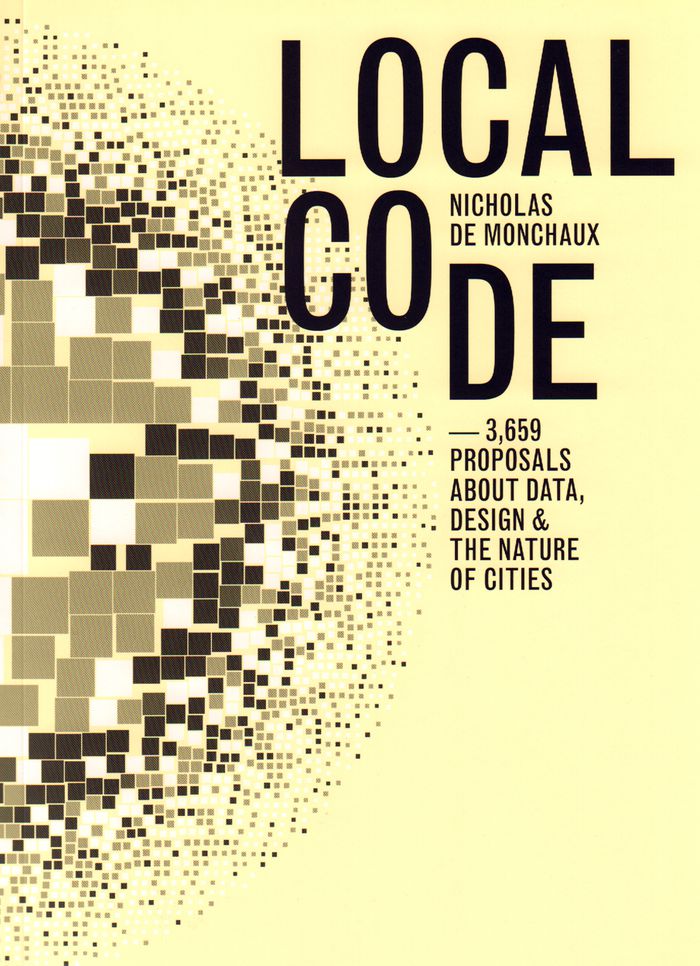
With three billion more humans projected to be living in cities by 2050, all design is increasingly urban design. And with as much data now produced every day as was produced in all of human history to the year 2007, all architecture is increasingly information architecture. Praised in the NewYork Times for its "intelligent enquiry and actionable theorizing," Local Code is a collection of data-driven tools and design prototypes for understanding and transforming the physical, social, and ecological resilience of cities.'the book's data-driven layout arranges drawings of 3,659 digitally-tailored interventions for vacant public land in San Francisco, Los Angeles, New York City, and Venice, Italy. Between these illustrated case studies, critical essays present surprising and essential links between such designs and the seminal work of urbanist Jane Jacobs, artist Gordon Matta-Clark, and digital mapping pioneer Howard Fisher, along with the developing science of urban nature and complexity. In text and image, Local Code presents'a digitally prolific, open-ended approach to urban resilience and social and environmental justice; At once analytic and visionary, it pioneers a new field of enquiry and action at the meeting of big data and the expanding city.
Local code: 3659 proposals about data, design, and the nature of cities
Actions:
Price:
$57.00
(available to order)
Summary:
With three billion more humans projected to be living in cities by 2050, all design is increasingly urban design. And with as much data now produced every day as was produced in all of human history to the year 2007, all architecture is increasingly information architecture. Praised in the NewYork Times for its "intelligent enquiry and actionable theorizing," Local Code is a collection of data-driven tools and design prototypes for understanding and transforming the physical, social, and ecological resilience of cities.'the book's data-driven layout arranges drawings of 3,659 digitally-tailored interventions for vacant public land in San Francisco, Los Angeles, New York City, and Venice, Italy. Between these illustrated case studies, critical essays present surprising and essential links between such designs and the seminal work of urbanist Jane Jacobs, artist Gordon Matta-Clark, and digital mapping pioneer Howard Fisher, along with the developing science of urban nature and complexity. In text and image, Local Code presents'a digitally prolific, open-ended approach to urban resilience and social and environmental justice; At once analytic and visionary, it pioneers a new field of enquiry and action at the meeting of big data and the expanding city.
Form:
books
books
Publication:
October 2016
October 2016
Subject:
Urban Theory
Urban Theory
Form:
books
books
Title:
The city that never was
The city that never was
Actions:
Price:
$50.00
(available to order)
Summary:
One of the most troubling consequences of the--2008 global financial collapse was the midstream abandonment of several large-scale speculative urban and suburban projects. The resulting scars on the landscape, large subdivisions with only marked-out plots and half-finished roads, are the subject of The City That Never Was, an eye-opening look at what happens when(...)
$50.00
(available to order)
Summary:
One of the most troubling consequences of the--2008 global financial collapse was the midstream abandonment of several large-scale speculative urban and suburban projects. The resulting scars on the landscape, large subdivisions with only marked-out plots and half-finished roads, are the subject of The City That Never Was, an eye-opening look at what happens when(...)
Title:
The city that never was
Actions:
Price:
$50.00
(available to order)
Summary:
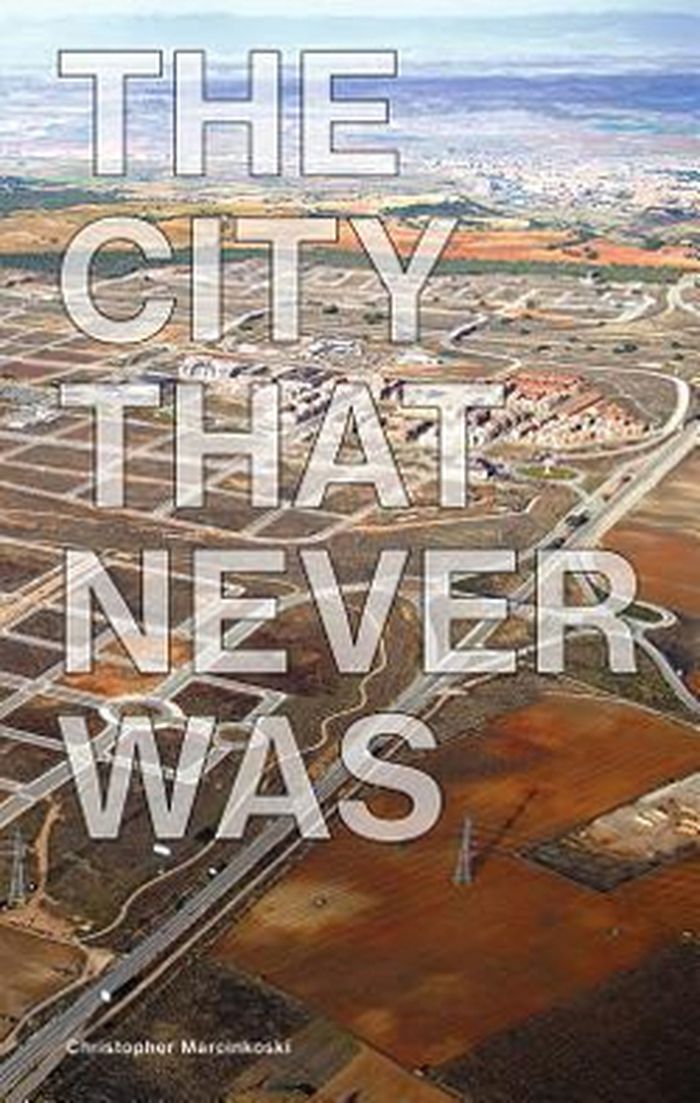
One of the most troubling consequences of the--2008 global financial collapse was the midstream abandonment of several large-scale speculative urban and suburban projects. The resulting scars on the landscape, large subdivisions with only marked-out plots and half-finished roads, are the subject of The City That Never Was, an eye-opening look at what happens when development, particularly what the author calls "speculative urbanism," is out-of-sync with financial reality. Presenting historical and recent examples from around the world---from the sprawl of the US Sun Belt and the unoccupied towns of western China, to the "ghost estates" of Ireland---and focusing on case studies in Spain, Marcinkoski proposes an ecologically based model in place of the capricious economic and political factors that typically drive development today.
The city that never was
Actions:
Price:
$50.00
(available to order)
Summary:
One of the most troubling consequences of the--2008 global financial collapse was the midstream abandonment of several large-scale speculative urban and suburban projects. The resulting scars on the landscape, large subdivisions with only marked-out plots and half-finished roads, are the subject of The City That Never Was, an eye-opening look at what happens when development, particularly what the author calls "speculative urbanism," is out-of-sync with financial reality. Presenting historical and recent examples from around the world---from the sprawl of the US Sun Belt and the unoccupied towns of western China, to the "ghost estates" of Ireland---and focusing on case studies in Spain, Marcinkoski proposes an ecologically based model in place of the capricious economic and political factors that typically drive development today.
Form:
books
books
Publication:
October 2015
October 2015
Subject:
Urban Theory
Urban Theory
Form:
books
books
Actions:
Price:
$55.00
(available to order)
Summary:
In 1925, the artists Edward Bawden and Eric Ravilious moved to the village of Great Bardfield in the countryside of Essex, England. Over time, other artists came to the village, forming a community of artists and designers that remains active today. In the 1950s, these artists, including Bawden, Ravilious, John Aldridge, Michael Rothenstein, and Marianne Straub, among(...)
$55.00
(available to order)
Summary:
In 1925, the artists Edward Bawden and Eric Ravilious moved to the village of Great Bardfield in the countryside of Essex, England. Over time, other artists came to the village, forming a community of artists and designers that remains active today. In the 1950s, these artists, including Bawden, Ravilious, John Aldridge, Michael Rothenstein, and Marianne Straub, among(...)
Title:
Bawden, Ravilious and the artists of Great Barfield
Actions:
Price:
$55.00
(available to order)
Summary:
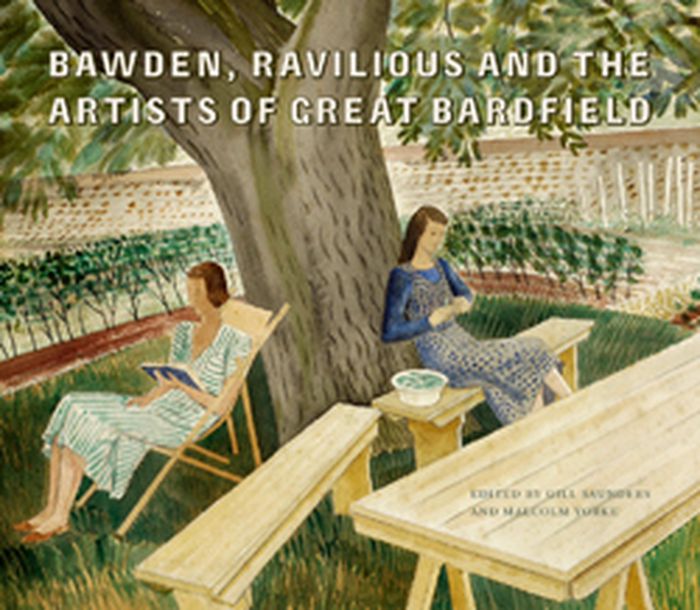
In 1925, the artists Edward Bawden and Eric Ravilious moved to the village of Great Bardfield in the countryside of Essex, England. Over time, other artists came to the village, forming a community of artists and designers that remains active today. In the 1950s, these artists, including Bawden, Ravilious, John Aldridge, Michael Rothenstein, and Marianne Straub, among others, held now-famous “open house” exhibitions, displaying their modernist works to the public in their own homes. These informal shows brought acclaim to the artists, and also brought thousands of visitors to the quaint village. This illustrated book shows how that community, and its neigh- boring landscape, nurtured a distinctive style of art, design, and illustration
Bawden, Ravilious and the artists of Great Barfield
Actions:
Price:
$55.00
(available to order)
Summary:
In 1925, the artists Edward Bawden and Eric Ravilious moved to the village of Great Bardfield in the countryside of Essex, England. Over time, other artists came to the village, forming a community of artists and designers that remains active today. In the 1950s, these artists, including Bawden, Ravilious, John Aldridge, Michael Rothenstein, and Marianne Straub, among others, held now-famous “open house” exhibitions, displaying their modernist works to the public in their own homes. These informal shows brought acclaim to the artists, and also brought thousands of visitors to the quaint village. This illustrated book shows how that community, and its neigh- boring landscape, nurtured a distinctive style of art, design, and illustration
Form:
books
books
Publication:
September 2015
September 2015
Subject:
Art Theory
Art Theory
Form:
books
books
Actions:
Price:
$48.50
(available in store)
Summary:
The interior is that space that architecture makes, which is at once set apart from the world and in its midst. Regardless of its scale, whether that of a dwelling, a temple, a settlement, a city or a continental territory, the interior is informed and shaped by ideas. These ideas appear in architecture and in the great variety of its interiors that we take to be public:(...)
$48.50
(available in store)
Summary:
The interior is that space that architecture makes, which is at once set apart from the world and in its midst. Regardless of its scale, whether that of a dwelling, a temple, a settlement, a city or a continental territory, the interior is informed and shaped by ideas. These ideas appear in architecture and in the great variety of its interiors that we take to be public:(...)
Title:
The public interior as idea and project
Actions:
Price:
$48.50
(available in store)
Summary:
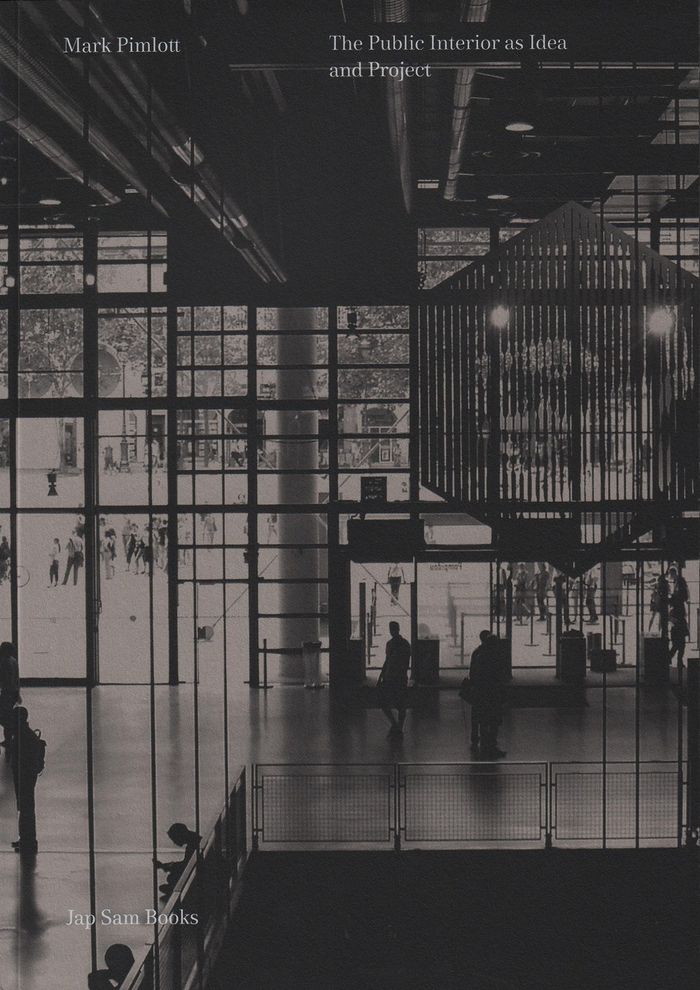
The interior is that space that architecture makes, which is at once set apart from the world and in its midst. Regardless of its scale, whether that of a dwelling, a temple, a settlement, a city or a continental territory, the interior is informed and shaped by ideas. These ideas appear in architecture and in the great variety of its interiors that we take to be public: those within which we consider ourselves to be free individuals, and where we see ourselves among others; those within which we are conscious of our place in society and in the world. Public interiors have been designed to affect and condition our consciousness and our behaviour, our relations to others and to authority.
The public interior as idea and project
Actions:
Price:
$48.50
(available in store)
Summary:
The interior is that space that architecture makes, which is at once set apart from the world and in its midst. Regardless of its scale, whether that of a dwelling, a temple, a settlement, a city or a continental territory, the interior is informed and shaped by ideas. These ideas appear in architecture and in the great variety of its interiors that we take to be public: those within which we consider ourselves to be free individuals, and where we see ourselves among others; those within which we are conscious of our place in society and in the world. Public interiors have been designed to affect and condition our consciousness and our behaviour, our relations to others and to authority.
Form:
books
books
Publication:
January 2016
January 2016
Subject:
Architectural Theory
Architectural Theory


