


4344 Results
Form:
photographs
photographs
Actions:
Reference number:
ARCH268584
Description:
Contains photographic materials on 3 projects by Abalos & Herreros: - Exposición Coam, AP164.S2.SS1.D2 (3 colour reversal films: interior views of the exhibition) - Concurso Embajada de Francia, AP164.S1.1991.D1 (5 colour slides: model) - Palencia Parque Europa, AP164.S1.1991.D2 (281 slides, 9 colour reversal films, 2 chromogenic colour prints: exterior views, perspectives, plans, model, aerial views) Several images were taken by Juan Merimero.
ARCH268584
Description:
Contains photographic materials on 3 projects by Abalos & Herreros: - Exposición Coam, AP164.S2.SS1.D2 (3 colour reversal films: interior views of the exhibition) - Concurso Embajada de Francia, AP164.S1.1991.D1 (5 colour slides: model) - Palencia Parque Europa, AP164.S1.1991.D2 (281 slides, 9 colour reversal films, 2 chromogenic colour prints: exterior views, perspectives, plans, model, aerial views) Several images were taken by Juan Merimero.
People:
Date:
1990-1991
1990-1991
Title:
Ring binder with photographic materials related to three projects by Abalos & Herreros
Actions:
ARCH268584
Description:
Contains photographic materials on 3 projects by Abalos & Herreros: - Exposición Coam, AP164.S2.SS1.D2 (3 colour reversal films: interior views of the exhibition) - Concurso Embajada de Francia, AP164.S1.1991.D1 (5 colour slides: model) - Palencia Parque Europa, AP164.S1.1991.D2 (281 slides, 9 colour reversal films, 2 chromogenic colour prints: exterior views, perspectives, plans, model, aerial views) Several images were taken by Juan Merimero.
Ring binder with photographic materials related to three projects by Abalos & Herreros
Actions:
ARCH268584
Description:
Contains photographic materials on 3 projects by Abalos & Herreros: - Exposición Coam, AP164.S2.SS1.D2 (3 colour reversal films: interior views of the exhibition) - Concurso Embajada de Francia, AP164.S1.1991.D1 (5 colour slides: model) - Palencia Parque Europa, AP164.S1.1991.D2 (281 slides, 9 colour reversal films, 2 chromogenic colour prints: exterior views, perspectives, plans, model, aerial views) Several images were taken by Juan Merimero.
Form:
photographs
photographs
Date:
1990-1991
1990-1991
People:
Form:
photographs
photographs
Actions:
Reference number:
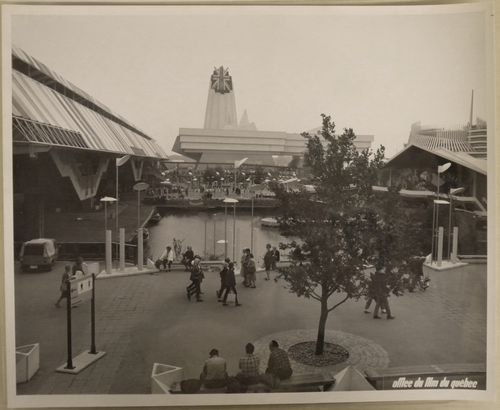
ARCH255841
ARCH255841
People:
Date:
1967
1967
Form:
photographs
photographs
Date:
1967
1967
People:
Form:
exhibitions
exhibitions
Actions:
Description:
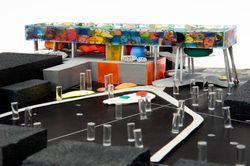
This exhibition features British architect Will Alsop’s preparatory work for the Sharp Centre for Design at the Ontario College of Art Design (OCAD) in Toronto and explores the role of painting in his design process. Completed in 2004, OCAD’s Sharp Centre for Design was designed by Alsop Architects in collaboration with the Toronto-based firm Robbie/Young + Wright. The(...)
This exhibition features British architect Will Alsop’s preparatory work for the Sharp Centre for Design at the Ontario College of Art Design (OCAD) in Toronto and explores the role of painting in his design process. Completed in 2004, OCAD’s Sharp Centre for Design was designed by Alsop Architects in collaboration with the Toronto-based firm Robbie/Young + Wright. The(...)
Location:
Octagonal gallery
Octagonal gallery
Date:
13 June 2008 to 5 October 2008
13 June 2008 to 5 October 2008
Title:
Will Alsop: OCAD, An Urban Manifesto
Actions:
Description:
This exhibition features British architect Will Alsop’s preparatory work for the Sharp Centre for Design at the Ontario College of Art Design (OCAD) in Toronto and explores the role of painting in his design process. Completed in 2004, OCAD’s Sharp Centre for Design was designed by Alsop Architects in collaboration with the Toronto-based firm Robbie/Young + Wright. The(...)
Will Alsop: OCAD, An Urban Manifesto
Actions:
Description:
This exhibition features British architect Will Alsop’s preparatory work for the Sharp Centre for Design at the Ontario College of Art Design (OCAD) in Toronto and explores the role of painting in his design process. Completed in 2004, OCAD’s Sharp Centre for Design was designed by Alsop Architects in collaboration with the Toronto-based firm Robbie/Young + Wright. The(...)
Form:
exhibitions
exhibitions
Date:
13 June 2008 to
5 October 2008
13 June 2008 to
5 October 2008
Location:
Octagonal gallery
Octagonal gallery
Actions:
Reference number:
ARCH257862
Description:
Boite en bois contenu des originaux enveloppes de photos, avec le sujet écrit sur l'enveloppe. Une boite en bois et portant l'inscription « France » et 2 autres boites ayant contenu des films, des diapositives, et des photos.
ARCH257862
Description:
Boite en bois contenu des originaux enveloppes de photos, avec le sujet écrit sur l'enveloppe. Une boite en bois et portant l'inscription « France » et 2 autres boites ayant contenu des films, des diapositives, et des photos.
People:
Date:
1924-1936
1924-1936
Title:
Boîtes en bois utilisées pour le rangement de photographies
Actions:
ARCH257862
Description:
Boite en bois contenu des originaux enveloppes de photos, avec le sujet écrit sur l'enveloppe. Une boite en bois et portant l'inscription « France » et 2 autres boites ayant contenu des films, des diapositives, et des photos.
Boîtes en bois utilisées pour le rangement de photographies
Actions:
ARCH257862
Description:
Boite en bois contenu des originaux enveloppes de photos, avec le sujet écrit sur l'enveloppe. Une boite en bois et portant l'inscription « France » et 2 autres boites ayant contenu des films, des diapositives, et des photos.
Date:
1924-1936
1924-1936
People:
Level of archival description:
Project
Project
Title:
Fun Palace Project
Fun Palace Project
Reference number:
AP144.S2.D46
Description:
File documents the various unexecuted proposals for the Fun Palace Project, an interactive and adaptable, educational and cultural complex to be located in London, England. The project was commissioned by Joan Littlewood, to be erected on disused public land slated for redevelopment and intended to be dismantled after 10 years. Conceptual and design development drawings were created for a typical Fun Palace that could be erected on any suitable site, and several sites were considered, some belonging to the Civic Trust. Presentation drawings were elaborated for a Fun Palace in the Lea Valley at Mill Meads and for a later modified Pilot Project in Camden Town. Publication drawings were also created for an article in Price, Cedric. "Fun Palace Project." 'Architectural Review'. (January 1965), 74-75. The Fun Palace Trust was created to oversee the project and the file contains material from related activities of the Trust which was active until the 1970's. Existing conditions drawings begin in 1961 and include regional, zoning, and transportation maps of Greater London and a photocollage of the site. Conceptual and diagrammatic drawings include: perspectives for the structural system; plans for site access; charts for modular systems; axonometrics for modules; preliminary drawings for escalators and service towers; and studies for activity areas. A "Table of Kindred and Affinity" separates modular components physically and visually by means of activity types, circulation, and individual/group accommodations. Design development drawings for the Fun Palace Project include: plans for activity areas, site plans, typical plans, site movement/circulation plans, theatre seating plans, diagrammatic sections, volumetric structural diagrams, perspectives, charts for services for mass activities, typical mass activity enclosure types, charts for required equipment for activities, and "clamp" structural systems and studies for three dimensional versatility and modular feasibility. Design development drawings for the 1963 Camden Town Pilot Project include: site plans; diagrammatic plans showing circulation patterns; drawings showing basic cubes with components and structural panel types; details for component connections; charts for individual activity module requirements; and network analysis charts. Presentation material includes: aerial photographs mounted on board; enlargements of clippings; reprographic copies of photographs of the design models. Material in this file was created between 1961 and 1985 but predominantly between 1961 and 1974. File contains conceptual drawings, design development drawings, presentation drawings and panels, publication drawings, reference drawings, an artefact, a film reel, models, photographic material, and textual records.
AP144.S2.D46
Description:
File documents the various unexecuted proposals for the Fun Palace Project, an interactive and adaptable, educational and cultural complex to be located in London, England. The project was commissioned by Joan Littlewood, to be erected on disused public land slated for redevelopment and intended to be dismantled after 10 years. Conceptual and design development drawings were created for a typical Fun Palace that could be erected on any suitable site, and several sites were considered, some belonging to the Civic Trust. Presentation drawings were elaborated for a Fun Palace in the Lea Valley at Mill Meads and for a later modified Pilot Project in Camden Town. Publication drawings were also created for an article in Price, Cedric. "Fun Palace Project." 'Architectural Review'. (January 1965), 74-75. The Fun Palace Trust was created to oversee the project and the file contains material from related activities of the Trust which was active until the 1970's. Existing conditions drawings begin in 1961 and include regional, zoning, and transportation maps of Greater London and a photocollage of the site. Conceptual and diagrammatic drawings include: perspectives for the structural system; plans for site access; charts for modular systems; axonometrics for modules; preliminary drawings for escalators and service towers; and studies for activity areas. A "Table of Kindred and Affinity" separates modular components physically and visually by means of activity types, circulation, and individual/group accommodations. Design development drawings for the Fun Palace Project include: plans for activity areas, site plans, typical plans, site movement/circulation plans, theatre seating plans, diagrammatic sections, volumetric structural diagrams, perspectives, charts for services for mass activities, typical mass activity enclosure types, charts for required equipment for activities, and "clamp" structural systems and studies for three dimensional versatility and modular feasibility. Design development drawings for the 1963 Camden Town Pilot Project include: site plans; diagrammatic plans showing circulation patterns; drawings showing basic cubes with components and structural panel types; details for component connections; charts for individual activity module requirements; and network analysis charts. Presentation material includes: aerial photographs mounted on board; enlargements of clippings; reprographic copies of photographs of the design models. Material in this file was created between 1961 and 1985 but predominantly between 1961 and 1974. File contains conceptual drawings, design development drawings, presentation drawings and panels, publication drawings, reference drawings, an artefact, a film reel, models, photographic material, and textual records.
People:
Date:
1961-1985, predominant 1961-1974
1961-1985, predominant 1961-1974
Title:
Fun Palace Project
Actions:
AP144.S2.D46
Description:
File documents the various unexecuted proposals for the Fun Palace Project, an interactive and adaptable, educational and cultural complex to be located in London, England. The project was commissioned by Joan Littlewood, to be erected on disused public land slated for redevelopment and intended to be dismantled after 10 years. Conceptual and design development drawings were created for a typical Fun Palace that could be erected on any suitable site, and several sites were considered, some belonging to the Civic Trust. Presentation drawings were elaborated for a Fun Palace in the Lea Valley at Mill Meads and for a later modified Pilot Project in Camden Town. Publication drawings were also created for an article in Price, Cedric. "Fun Palace Project." 'Architectural Review'. (January 1965), 74-75. The Fun Palace Trust was created to oversee the project and the file contains material from related activities of the Trust which was active until the 1970's. Existing conditions drawings begin in 1961 and include regional, zoning, and transportation maps of Greater London and a photocollage of the site. Conceptual and diagrammatic drawings include: perspectives for the structural system; plans for site access; charts for modular systems; axonometrics for modules; preliminary drawings for escalators and service towers; and studies for activity areas. A "Table of Kindred and Affinity" separates modular components physically and visually by means of activity types, circulation, and individual/group accommodations. Design development drawings for the Fun Palace Project include: plans for activity areas, site plans, typical plans, site movement/circulation plans, theatre seating plans, diagrammatic sections, volumetric structural diagrams, perspectives, charts for services for mass activities, typical mass activity enclosure types, charts for required equipment for activities, and "clamp" structural systems and studies for three dimensional versatility and modular feasibility. Design development drawings for the 1963 Camden Town Pilot Project include: site plans; diagrammatic plans showing circulation patterns; drawings showing basic cubes with components and structural panel types; details for component connections; charts for individual activity module requirements; and network analysis charts. Presentation material includes: aerial photographs mounted on board; enlargements of clippings; reprographic copies of photographs of the design models. Material in this file was created between 1961 and 1985 but predominantly between 1961 and 1974. File contains conceptual drawings, design development drawings, presentation drawings and panels, publication drawings, reference drawings, an artefact, a film reel, models, photographic material, and textual records.
Fun Palace Project
Actions:
AP144.S2.D46
Description:
File documents the various unexecuted proposals for the Fun Palace Project, an interactive and adaptable, educational and cultural complex to be located in London, England. The project was commissioned by Joan Littlewood, to be erected on disused public land slated for redevelopment and intended to be dismantled after 10 years. Conceptual and design development drawings were created for a typical Fun Palace that could be erected on any suitable site, and several sites were considered, some belonging to the Civic Trust. Presentation drawings were elaborated for a Fun Palace in the Lea Valley at Mill Meads and for a later modified Pilot Project in Camden Town. Publication drawings were also created for an article in Price, Cedric. "Fun Palace Project." 'Architectural Review'. (January 1965), 74-75. The Fun Palace Trust was created to oversee the project and the file contains material from related activities of the Trust which was active until the 1970's. Existing conditions drawings begin in 1961 and include regional, zoning, and transportation maps of Greater London and a photocollage of the site. Conceptual and diagrammatic drawings include: perspectives for the structural system; plans for site access; charts for modular systems; axonometrics for modules; preliminary drawings for escalators and service towers; and studies for activity areas. A "Table of Kindred and Affinity" separates modular components physically and visually by means of activity types, circulation, and individual/group accommodations. Design development drawings for the Fun Palace Project include: plans for activity areas, site plans, typical plans, site movement/circulation plans, theatre seating plans, diagrammatic sections, volumetric structural diagrams, perspectives, charts for services for mass activities, typical mass activity enclosure types, charts for required equipment for activities, and "clamp" structural systems and studies for three dimensional versatility and modular feasibility. Design development drawings for the 1963 Camden Town Pilot Project include: site plans; diagrammatic plans showing circulation patterns; drawings showing basic cubes with components and structural panel types; details for component connections; charts for individual activity module requirements; and network analysis charts. Presentation material includes: aerial photographs mounted on board; enlargements of clippings; reprographic copies of photographs of the design models. Material in this file was created between 1961 and 1985 but predominantly between 1961 and 1974. File contains conceptual drawings, design development drawings, presentation drawings and panels, publication drawings, reference drawings, an artefact, a film reel, models, photographic material, and textual records.
Level of archival description:
File 46
File 46
Date:
1961-1985, predominant 1961-1974
1961-1985, predominant 1961-1974
People:
Form:
exhibitions
exhibitions
Actions:
Description:
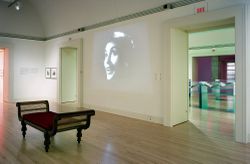
Traces of India depicts the social, political, and anthropological role of images, showing how they laid the historical foundations—real and imagined—on which an ordered empire may have been constructed, rather than an assemblage of colonial trading relationships. Organized around six themes, the exhibition explores some of the greatest architectural sites of the Indian(...)
Traces of India depicts the social, political, and anthropological role of images, showing how they laid the historical foundations—real and imagined—on which an ordered empire may have been constructed, rather than an assemblage of colonial trading relationships. Organized around six themes, the exhibition explores some of the greatest architectural sites of the Indian(...)
Location:
Main galleries
Main galleries
Date:
15 May 2003 to 14 September 2003
15 May 2003 to 14 September 2003
Title:
Traces of India: Photography, Architecture, and the Politics of Representation
Actions:
Description:
Traces of India depicts the social, political, and anthropological role of images, showing how they laid the historical foundations—real and imagined—on which an ordered empire may have been constructed, rather than an assemblage of colonial trading relationships. Organized around six themes, the exhibition explores some of the greatest architectural sites of the Indian(...)
Traces of India: Photography, Architecture, and the Politics of Representation
Actions:
Description:
Traces of India depicts the social, political, and anthropological role of images, showing how they laid the historical foundations—real and imagined—on which an ordered empire may have been constructed, rather than an assemblage of colonial trading relationships. Organized around six themes, the exhibition explores some of the greatest architectural sites of the Indian(...)
Form:
exhibitions
exhibitions
Date:
15 May 2003 to
14 September 2003
15 May 2003 to
14 September 2003
Location:
Main galleries
Main galleries
Form:
photographs
photographs
Title:
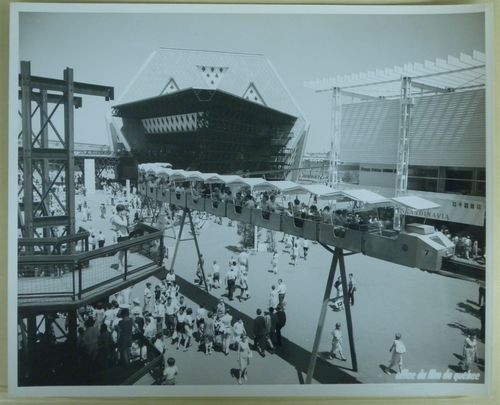
View of the minirail with Man the Explorer and Scandinavian Pavilions, Expo 67, Montréal, Québec
View of the minirail with Man the Explorer and Scandinavian Pavilions, Expo 67, Montréal, Québec
Actions:
Reference number:
ARCH255878
ARCH255878
People:
Date:
1967
1967
Form:
photographs
photographs
Date:
1967
1967
People:
Level of archival description:
Project
Project
Reference number:
AP143.S4.D14
Description:
File documents an executed project for House VI, a weekend/vacation house designed for Richard and Suzanne Frank for a six-acre lot at Great Hollow Road, Cornwall, Connecticut. The file also includes material for renovations to House VI undertaken in 1983, 1986, and 1989-1990. Material in this file was produced between 1971 and 1989. The 1,500 square foot plan of House VI comprises a kitchen, dining room, living room and study on the ground floor, and a bedroom and bathroom on the second floor. The most notable formal and compositional ambiguities of House VI are the two staircases, one green, and the other red and positioned on the ceiling. Documents include drawings by Eisenman concerning the geometric operations at the origin of House VI (DR1994:0134:055-067), conceptual drawings (DR1994:0134:001-068; DR1994:0134:086-130; DR1994:0134:131-160), numerous colour studies of the elevations (DR1994:0134:262-343), a presentation panel (DR1994:0134:521) notes (DR1994:0134:779-782), and a first set of working drawings and "check set," completed on 30 Aug. 1973, (DR1994:0134:667-689). Documents also include drawings for major revisions which occurred from 3 October 1973 through August 1974, photocopies of photographs of the house under construction (DR1994:0134:783-805), and a copy of the site survey (DR1994:0134:806). Planned and executed renovations to House VI began in 1983. Documents relating to unexecuted renovations and additions of 1983 includes drawings (DR1994:0134:604-615), a "bid set" and annotated copies (DR1994:0134:552 and DR1994:0134:554-570; copies: DR1994:0134:646-655), and a photocopy of the site plan indicating Eisenman's initial ideas (DR1994:0134:224). Documents relating to unexecuted renovations and additions of 1986 includes seven drawings (DR1994:0134:553 and DR1994:0134:628-633). House VI was extensively rebuilt between 1988 and 1990. The renovations included the replacement of the exterior plywood walls, the insertion of steel reinforcement, a new roof with skylights, the replacement of the original stucco by a coat of Finestone, the repainting of the interior, and the addition of a plexiglas barrier to the staircase. Documents relating to the renovations of 1988-90 include original and photocopied detail drawings, an interior paint schedule by Eisenman's office, correspondence, original and photocopied technical literature, an incomplete copy of the specifications, and a copy of the original survey map (identical to DR1994:0134:806). There are also numerous photographs of the building before, during and after renovation, one photograph of presentation axonometrics for House VI, and one photograph of Eisenman's office. Documents relating to a publication on House VI include: notes (DR1994:0134:807-853), the book mock-up (DR1994:0134:854-855), and fragments of the original coloured transformation diagrams (DR1994:0134:530-531). File contains conceptual drawings, including plans, axonometrics, and sections - many black felt-tip pen and/or coloured felt-tip pen on tracing paper; and reprographic copies - mostly photocopies on wove paper. Design development drawings include site plans, plans, elevations, sections, and axonometrics - some graphite and/or coloured pencil on tracing paper and some pen and black ink and/or graphite on tracing vellum; and reprographic copies - some photocopies on wove paper and some sepia prints on mylar. Schematic drawings include site plans, plans, elevations, and sections - all pen and black ink on mylar; and reprographic copies - many blackline prints on wove paper. Working drawings include site plans, plans, elevations, sections, electrical drawings, HVAC drawings, structural drawings, and detail drawings - some coloured pencil on blueline prints on wove paper; and reprographic copies - mostly blueline prints on wove paper. Presentation drawings include plans, elevations, and axonometrics - some pen and black ink and/or transparent coloured adhesive film on mylar and some translucent adhesive coloured film on cardboard; and reprographic copies - mostly photocopies on wove paper. Model includes one finished model - grey, white, and silver paint on wood and Fome-Cor with plastic sheets. Notes and documents include manuscripts - mostly black felt-tip pen on wove paper; reprographic copies - mostly photocopies on wove paper; and a land surveyor plan - one blueline print on wove paper. Book project includes layout drawings - some black felt-tip pen on ruled paper; reprographic copies - all photocopies on wove paper; manuscripts - mostly black felt-tip pen on wove or ruled paper; one sample piece of grey cardboard used as backing for some of the presentation drawings; and sets of drawings in the form of book dummies - mostly pen and coloured ink and/or black felt-tip pen on photocopies on wove paper. Detail drawings include elevations, sections, details - mostly graphite on tracing paper. The linear cm of documents includes sets, reprographic copies and manuscripts. Notes and documents include elevations, sections, and details - some graphite on photocopies on wove paper; two sets of drawing copies, some with changes - mostly photocopies on wove paper; reprographic copies - mostly photocopies on wove paper; manuscripts - many graphite on wove paper; ephemera includes trade pamphlets; and photographs include colour images of House X prior to and during one of the renovations.
AP143.S4.D14
Description:
File documents an executed project for House VI, a weekend/vacation house designed for Richard and Suzanne Frank for a six-acre lot at Great Hollow Road, Cornwall, Connecticut. The file also includes material for renovations to House VI undertaken in 1983, 1986, and 1989-1990. Material in this file was produced between 1971 and 1989. The 1,500 square foot plan of House VI comprises a kitchen, dining room, living room and study on the ground floor, and a bedroom and bathroom on the second floor. The most notable formal and compositional ambiguities of House VI are the two staircases, one green, and the other red and positioned on the ceiling. Documents include drawings by Eisenman concerning the geometric operations at the origin of House VI (DR1994:0134:055-067), conceptual drawings (DR1994:0134:001-068; DR1994:0134:086-130; DR1994:0134:131-160), numerous colour studies of the elevations (DR1994:0134:262-343), a presentation panel (DR1994:0134:521) notes (DR1994:0134:779-782), and a first set of working drawings and "check set," completed on 30 Aug. 1973, (DR1994:0134:667-689). Documents also include drawings for major revisions which occurred from 3 October 1973 through August 1974, photocopies of photographs of the house under construction (DR1994:0134:783-805), and a copy of the site survey (DR1994:0134:806). Planned and executed renovations to House VI began in 1983. Documents relating to unexecuted renovations and additions of 1983 includes drawings (DR1994:0134:604-615), a "bid set" and annotated copies (DR1994:0134:552 and DR1994:0134:554-570; copies: DR1994:0134:646-655), and a photocopy of the site plan indicating Eisenman's initial ideas (DR1994:0134:224). Documents relating to unexecuted renovations and additions of 1986 includes seven drawings (DR1994:0134:553 and DR1994:0134:628-633). House VI was extensively rebuilt between 1988 and 1990. The renovations included the replacement of the exterior plywood walls, the insertion of steel reinforcement, a new roof with skylights, the replacement of the original stucco by a coat of Finestone, the repainting of the interior, and the addition of a plexiglas barrier to the staircase. Documents relating to the renovations of 1988-90 include original and photocopied detail drawings, an interior paint schedule by Eisenman's office, correspondence, original and photocopied technical literature, an incomplete copy of the specifications, and a copy of the original survey map (identical to DR1994:0134:806). There are also numerous photographs of the building before, during and after renovation, one photograph of presentation axonometrics for House VI, and one photograph of Eisenman's office. Documents relating to a publication on House VI include: notes (DR1994:0134:807-853), the book mock-up (DR1994:0134:854-855), and fragments of the original coloured transformation diagrams (DR1994:0134:530-531). File contains conceptual drawings, including plans, axonometrics, and sections - many black felt-tip pen and/or coloured felt-tip pen on tracing paper; and reprographic copies - mostly photocopies on wove paper. Design development drawings include site plans, plans, elevations, sections, and axonometrics - some graphite and/or coloured pencil on tracing paper and some pen and black ink and/or graphite on tracing vellum; and reprographic copies - some photocopies on wove paper and some sepia prints on mylar. Schematic drawings include site plans, plans, elevations, and sections - all pen and black ink on mylar; and reprographic copies - many blackline prints on wove paper. Working drawings include site plans, plans, elevations, sections, electrical drawings, HVAC drawings, structural drawings, and detail drawings - some coloured pencil on blueline prints on wove paper; and reprographic copies - mostly blueline prints on wove paper. Presentation drawings include plans, elevations, and axonometrics - some pen and black ink and/or transparent coloured adhesive film on mylar and some translucent adhesive coloured film on cardboard; and reprographic copies - mostly photocopies on wove paper. Model includes one finished model - grey, white, and silver paint on wood and Fome-Cor with plastic sheets. Notes and documents include manuscripts - mostly black felt-tip pen on wove paper; reprographic copies - mostly photocopies on wove paper; and a land surveyor plan - one blueline print on wove paper. Book project includes layout drawings - some black felt-tip pen on ruled paper; reprographic copies - all photocopies on wove paper; manuscripts - mostly black felt-tip pen on wove or ruled paper; one sample piece of grey cardboard used as backing for some of the presentation drawings; and sets of drawings in the form of book dummies - mostly pen and coloured ink and/or black felt-tip pen on photocopies on wove paper. Detail drawings include elevations, sections, details - mostly graphite on tracing paper. The linear cm of documents includes sets, reprographic copies and manuscripts. Notes and documents include elevations, sections, and details - some graphite on photocopies on wove paper; two sets of drawing copies, some with changes - mostly photocopies on wove paper; reprographic copies - mostly photocopies on wove paper; manuscripts - many graphite on wove paper; ephemera includes trade pamphlets; and photographs include colour images of House X prior to and during one of the renovations.
People:
Date:
1971-1989
1971-1989
Title:
House VI, Cornwall, Connecticut
Actions:
AP143.S4.D14
Description:
File documents an executed project for House VI, a weekend/vacation house designed for Richard and Suzanne Frank for a six-acre lot at Great Hollow Road, Cornwall, Connecticut. The file also includes material for renovations to House VI undertaken in 1983, 1986, and 1989-1990. Material in this file was produced between 1971 and 1989. The 1,500 square foot plan of House VI comprises a kitchen, dining room, living room and study on the ground floor, and a bedroom and bathroom on the second floor. The most notable formal and compositional ambiguities of House VI are the two staircases, one green, and the other red and positioned on the ceiling. Documents include drawings by Eisenman concerning the geometric operations at the origin of House VI (DR1994:0134:055-067), conceptual drawings (DR1994:0134:001-068; DR1994:0134:086-130; DR1994:0134:131-160), numerous colour studies of the elevations (DR1994:0134:262-343), a presentation panel (DR1994:0134:521) notes (DR1994:0134:779-782), and a first set of working drawings and "check set," completed on 30 Aug. 1973, (DR1994:0134:667-689). Documents also include drawings for major revisions which occurred from 3 October 1973 through August 1974, photocopies of photographs of the house under construction (DR1994:0134:783-805), and a copy of the site survey (DR1994:0134:806). Planned and executed renovations to House VI began in 1983. Documents relating to unexecuted renovations and additions of 1983 includes drawings (DR1994:0134:604-615), a "bid set" and annotated copies (DR1994:0134:552 and DR1994:0134:554-570; copies: DR1994:0134:646-655), and a photocopy of the site plan indicating Eisenman's initial ideas (DR1994:0134:224). Documents relating to unexecuted renovations and additions of 1986 includes seven drawings (DR1994:0134:553 and DR1994:0134:628-633). House VI was extensively rebuilt between 1988 and 1990. The renovations included the replacement of the exterior plywood walls, the insertion of steel reinforcement, a new roof with skylights, the replacement of the original stucco by a coat of Finestone, the repainting of the interior, and the addition of a plexiglas barrier to the staircase. Documents relating to the renovations of 1988-90 include original and photocopied detail drawings, an interior paint schedule by Eisenman's office, correspondence, original and photocopied technical literature, an incomplete copy of the specifications, and a copy of the original survey map (identical to DR1994:0134:806). There are also numerous photographs of the building before, during and after renovation, one photograph of presentation axonometrics for House VI, and one photograph of Eisenman's office. Documents relating to a publication on House VI include: notes (DR1994:0134:807-853), the book mock-up (DR1994:0134:854-855), and fragments of the original coloured transformation diagrams (DR1994:0134:530-531). File contains conceptual drawings, including plans, axonometrics, and sections - many black felt-tip pen and/or coloured felt-tip pen on tracing paper; and reprographic copies - mostly photocopies on wove paper. Design development drawings include site plans, plans, elevations, sections, and axonometrics - some graphite and/or coloured pencil on tracing paper and some pen and black ink and/or graphite on tracing vellum; and reprographic copies - some photocopies on wove paper and some sepia prints on mylar. Schematic drawings include site plans, plans, elevations, and sections - all pen and black ink on mylar; and reprographic copies - many blackline prints on wove paper. Working drawings include site plans, plans, elevations, sections, electrical drawings, HVAC drawings, structural drawings, and detail drawings - some coloured pencil on blueline prints on wove paper; and reprographic copies - mostly blueline prints on wove paper. Presentation drawings include plans, elevations, and axonometrics - some pen and black ink and/or transparent coloured adhesive film on mylar and some translucent adhesive coloured film on cardboard; and reprographic copies - mostly photocopies on wove paper. Model includes one finished model - grey, white, and silver paint on wood and Fome-Cor with plastic sheets. Notes and documents include manuscripts - mostly black felt-tip pen on wove paper; reprographic copies - mostly photocopies on wove paper; and a land surveyor plan - one blueline print on wove paper. Book project includes layout drawings - some black felt-tip pen on ruled paper; reprographic copies - all photocopies on wove paper; manuscripts - mostly black felt-tip pen on wove or ruled paper; one sample piece of grey cardboard used as backing for some of the presentation drawings; and sets of drawings in the form of book dummies - mostly pen and coloured ink and/or black felt-tip pen on photocopies on wove paper. Detail drawings include elevations, sections, details - mostly graphite on tracing paper. The linear cm of documents includes sets, reprographic copies and manuscripts. Notes and documents include elevations, sections, and details - some graphite on photocopies on wove paper; two sets of drawing copies, some with changes - mostly photocopies on wove paper; reprographic copies - mostly photocopies on wove paper; manuscripts - many graphite on wove paper; ephemera includes trade pamphlets; and photographs include colour images of House X prior to and during one of the renovations.
House VI, Cornwall, Connecticut
Actions:
AP143.S4.D14
Description:
File documents an executed project for House VI, a weekend/vacation house designed for Richard and Suzanne Frank for a six-acre lot at Great Hollow Road, Cornwall, Connecticut. The file also includes material for renovations to House VI undertaken in 1983, 1986, and 1989-1990. Material in this file was produced between 1971 and 1989. The 1,500 square foot plan of House VI comprises a kitchen, dining room, living room and study on the ground floor, and a bedroom and bathroom on the second floor. The most notable formal and compositional ambiguities of House VI are the two staircases, one green, and the other red and positioned on the ceiling. Documents include drawings by Eisenman concerning the geometric operations at the origin of House VI (DR1994:0134:055-067), conceptual drawings (DR1994:0134:001-068; DR1994:0134:086-130; DR1994:0134:131-160), numerous colour studies of the elevations (DR1994:0134:262-343), a presentation panel (DR1994:0134:521) notes (DR1994:0134:779-782), and a first set of working drawings and "check set," completed on 30 Aug. 1973, (DR1994:0134:667-689). Documents also include drawings for major revisions which occurred from 3 October 1973 through August 1974, photocopies of photographs of the house under construction (DR1994:0134:783-805), and a copy of the site survey (DR1994:0134:806). Planned and executed renovations to House VI began in 1983. Documents relating to unexecuted renovations and additions of 1983 includes drawings (DR1994:0134:604-615), a "bid set" and annotated copies (DR1994:0134:552 and DR1994:0134:554-570; copies: DR1994:0134:646-655), and a photocopy of the site plan indicating Eisenman's initial ideas (DR1994:0134:224). Documents relating to unexecuted renovations and additions of 1986 includes seven drawings (DR1994:0134:553 and DR1994:0134:628-633). House VI was extensively rebuilt between 1988 and 1990. The renovations included the replacement of the exterior plywood walls, the insertion of steel reinforcement, a new roof with skylights, the replacement of the original stucco by a coat of Finestone, the repainting of the interior, and the addition of a plexiglas barrier to the staircase. Documents relating to the renovations of 1988-90 include original and photocopied detail drawings, an interior paint schedule by Eisenman's office, correspondence, original and photocopied technical literature, an incomplete copy of the specifications, and a copy of the original survey map (identical to DR1994:0134:806). There are also numerous photographs of the building before, during and after renovation, one photograph of presentation axonometrics for House VI, and one photograph of Eisenman's office. Documents relating to a publication on House VI include: notes (DR1994:0134:807-853), the book mock-up (DR1994:0134:854-855), and fragments of the original coloured transformation diagrams (DR1994:0134:530-531). File contains conceptual drawings, including plans, axonometrics, and sections - many black felt-tip pen and/or coloured felt-tip pen on tracing paper; and reprographic copies - mostly photocopies on wove paper. Design development drawings include site plans, plans, elevations, sections, and axonometrics - some graphite and/or coloured pencil on tracing paper and some pen and black ink and/or graphite on tracing vellum; and reprographic copies - some photocopies on wove paper and some sepia prints on mylar. Schematic drawings include site plans, plans, elevations, and sections - all pen and black ink on mylar; and reprographic copies - many blackline prints on wove paper. Working drawings include site plans, plans, elevations, sections, electrical drawings, HVAC drawings, structural drawings, and detail drawings - some coloured pencil on blueline prints on wove paper; and reprographic copies - mostly blueline prints on wove paper. Presentation drawings include plans, elevations, and axonometrics - some pen and black ink and/or transparent coloured adhesive film on mylar and some translucent adhesive coloured film on cardboard; and reprographic copies - mostly photocopies on wove paper. Model includes one finished model - grey, white, and silver paint on wood and Fome-Cor with plastic sheets. Notes and documents include manuscripts - mostly black felt-tip pen on wove paper; reprographic copies - mostly photocopies on wove paper; and a land surveyor plan - one blueline print on wove paper. Book project includes layout drawings - some black felt-tip pen on ruled paper; reprographic copies - all photocopies on wove paper; manuscripts - mostly black felt-tip pen on wove or ruled paper; one sample piece of grey cardboard used as backing for some of the presentation drawings; and sets of drawings in the form of book dummies - mostly pen and coloured ink and/or black felt-tip pen on photocopies on wove paper. Detail drawings include elevations, sections, details - mostly graphite on tracing paper. The linear cm of documents includes sets, reprographic copies and manuscripts. Notes and documents include elevations, sections, and details - some graphite on photocopies on wove paper; two sets of drawing copies, some with changes - mostly photocopies on wove paper; reprographic copies - mostly photocopies on wove paper; manuscripts - many graphite on wove paper; ephemera includes trade pamphlets; and photographs include colour images of House X prior to and during one of the renovations.
Level of archival description:
File 14
File 14
Date:
1971-1989
1971-1989
People:
Form:
articles
articles
Title:
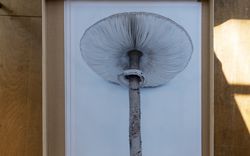
New Documentary
New Documentary
Actions:
Takashi Homma in conversation with Stefano Graziani and Bas Princen
Keyword(s):
The Lives of Documents, Photography as a Project, Stefano Graziani and Bas Princen, Takashi Homma, conversation, oral history, waves, mushrooms
The Lives of Documents, Photography as a Project, Stefano Graziani and Bas Princen, Takashi Homma, conversation, oral history, waves, mushrooms
Published:
15 May 2023
15 May 2023
Form:
exhibitions
exhibitions

Title:
The 60s: Montréal Thinks Big
The 60s: Montréal Thinks Big
Actions:
Description:
During the 1960s, the massive scale of the changes that transformed Montréal made it an archetype of the great metropolises of the Western world. As host of Expo 67, Montréal asserted itself on the international scene as a city of the future. The 60s: Montréal Thinks Big illustrates the processes that brought about these changes. The exhibition’s original models,(...)
During the 1960s, the massive scale of the changes that transformed Montréal made it an archetype of the great metropolises of the Western world. As host of Expo 67, Montréal asserted itself on the international scene as a city of the future. The 60s: Montréal Thinks Big illustrates the processes that brought about these changes. The exhibition’s original models,(...)
Location:
Main galleries
Main galleries
Date:
20 October 2004 to 11 September 2005
20 October 2004 to 11 September 2005
Title:
The 60s: Montréal Thinks Big
Actions:
Description:
During the 1960s, the massive scale of the changes that transformed Montréal made it an archetype of the great metropolises of the Western world. As host of Expo 67, Montréal asserted itself on the international scene as a city of the future. The 60s: Montréal Thinks Big illustrates the processes that brought about these changes. The exhibition’s original models,(...)
The 60s: Montréal Thinks Big
Actions:
Description:
During the 1960s, the massive scale of the changes that transformed Montréal made it an archetype of the great metropolises of the Western world. As host of Expo 67, Montréal asserted itself on the international scene as a city of the future. The 60s: Montréal Thinks Big illustrates the processes that brought about these changes. The exhibition’s original models,(...)
Form:
exhibitions
exhibitions
Date:
20 October 2004 to
11 September 2005
20 October 2004 to
11 September 2005
Location:
Main galleries
Main galleries


