


873 Results
Form:
books
books
Title:
Viaggio in Italia
Viaggio in Italia
Actions:
Price:
$79.95
(available in store)
Summary:
"Viaggio in Italia," conceived by Luigi Ghirri and published in 1984, is a milestone in contemporary Italian photography, representing the "manifesto" of the Italian School of Landscape from the 1980s onward. The project tells the story of a generation of photographers who moved away from exotic travel, sensational reportage, and formalist analysis to focus on the(...)
$79.95
(available in store)
Summary:
"Viaggio in Italia," conceived by Luigi Ghirri and published in 1984, is a milestone in contemporary Italian photography, representing the "manifesto" of the Italian School of Landscape from the 1980s onward. The project tells the story of a generation of photographers who moved away from exotic travel, sensational reportage, and formalist analysis to focus on the(...)
Subject:
Photography Collections
Photography Collections
Publication:
November 2024
November 2024
Title:
Viaggio in Italia
Actions:
Price:
$79.95
(available in store)
Summary:
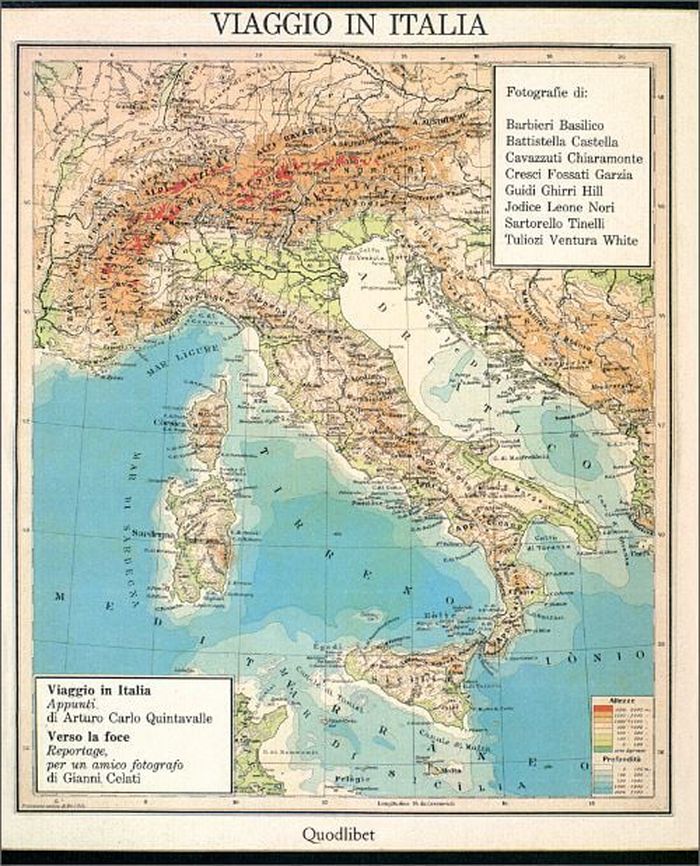
"Viaggio in Italia," conceived by Luigi Ghirri and published in 1984, is a milestone in contemporary Italian photography, representing the "manifesto" of the Italian School of Landscape from the 1980s onward. The project tells the story of a generation of photographers who moved away from exotic travel, sensational reportage, and formalist analysis to focus on the everyday Italian landscape. This shift replaced the cliché of Italy as a uniquely wonderful place with an "anti-heroic, anti-mythical, everyday and non-rhetorical" image, as noted by Gabriele Basilico. Twenty photographers, many of whom gained international recognition, participated: Olivo Barbieri, Gabriele Basilico, Gianantonio Battistella, Vincenzo Castella, Andrea Cavazzuti, Giovanni Chiaramonte, Mario Cresci, Vittore Fossati, Carlo Garzia, Guido Guidi, Luigi Ghirri, Shelley Hill, Mimmo Jodice, Gianni Leone, Claude Nori, Umberto Sartorello, Mario Tinelli, Ernesto Tuliozi, Fulvio Ventura, and Cuchi White. The volume includes an essay by Arturo Carlo Quintavalle and a paper by Gianni Celati.
Viaggio in Italia
Actions:
Price:
$79.95
(available in store)
Summary:
"Viaggio in Italia," conceived by Luigi Ghirri and published in 1984, is a milestone in contemporary Italian photography, representing the "manifesto" of the Italian School of Landscape from the 1980s onward. The project tells the story of a generation of photographers who moved away from exotic travel, sensational reportage, and formalist analysis to focus on the everyday Italian landscape. This shift replaced the cliché of Italy as a uniquely wonderful place with an "anti-heroic, anti-mythical, everyday and non-rhetorical" image, as noted by Gabriele Basilico. Twenty photographers, many of whom gained international recognition, participated: Olivo Barbieri, Gabriele Basilico, Gianantonio Battistella, Vincenzo Castella, Andrea Cavazzuti, Giovanni Chiaramonte, Mario Cresci, Vittore Fossati, Carlo Garzia, Guido Guidi, Luigi Ghirri, Shelley Hill, Mimmo Jodice, Gianni Leone, Claude Nori, Umberto Sartorello, Mario Tinelli, Ernesto Tuliozi, Fulvio Ventura, and Cuchi White. The volume includes an essay by Arturo Carlo Quintavalle and a paper by Gianni Celati.
Form:
books
books
Publication:
November 2024
November 2024
Subject:
Photography Collections
Photography Collections
Form:
books
books
Title:
Hannes Meyer: Co-op interior
Hannes Meyer: Co-op interior
Actions:
Price:
$45.00
(available to order)
Summary:
In his Co-op Interieur (1926)—a simple corner of a room known only in a photograph— Swiss architect Hannes Meyer (1889–1954) gave expression to a radical, antibourgeois style of interior. Comprised only of a bed, a lamp, two chairs and a gramophone on a table, he imagined this room for the nomadic urban worker. Through the absence of people, objects and spatial features(...)
$45.00
(available to order)
Summary:
In his Co-op Interieur (1926)—a simple corner of a room known only in a photograph— Swiss architect Hannes Meyer (1889–1954) gave expression to a radical, antibourgeois style of interior. Comprised only of a bed, a lamp, two chairs and a gramophone on a table, he imagined this room for the nomadic urban worker. Through the absence of people, objects and spatial features(...)
Subject:
Architectural Theory
Architectural Theory
Publication:
July 2016
July 2016
Title:
Hannes Meyer: Co-op interior
Actions:
Price:
$45.00
(available to order)
Summary:
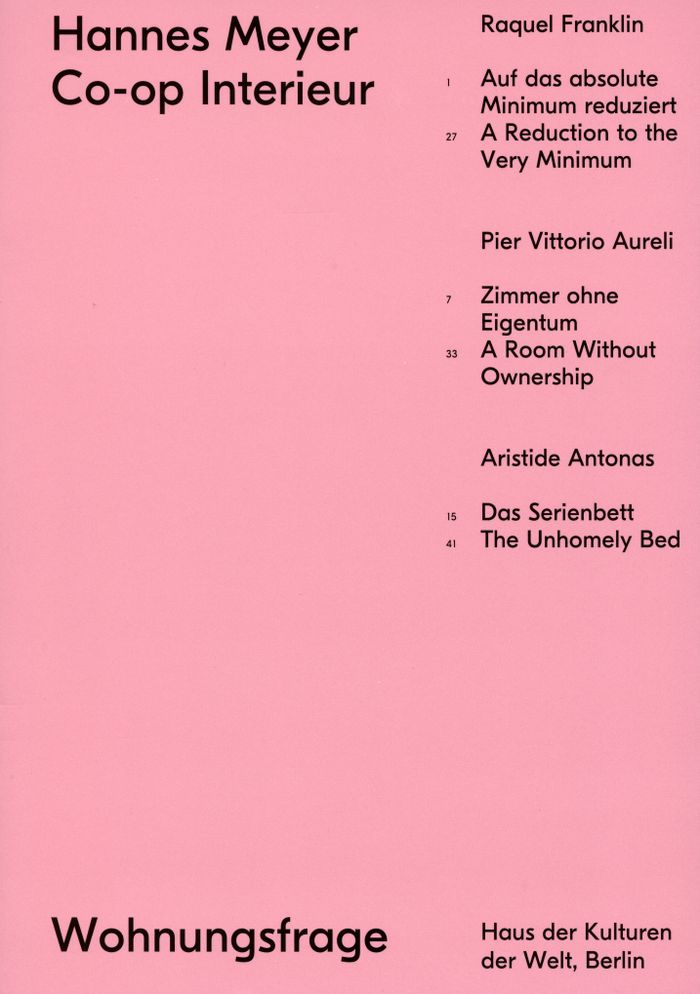
In his Co-op Interieur (1926)—a simple corner of a room known only in a photograph— Swiss architect Hannes Meyer (1889–1954) gave expression to a radical, antibourgeois style of interior. Comprised only of a bed, a lamp, two chairs and a gramophone on a table, he imagined this room for the nomadic urban worker. Through the absence of people, objects and spatial features as much as by the distinctiveness of its design, Meyer was proclaiming an alternative principle for housing, proposing that architecture and design were intended not to fulfill historically determined needs but to overcome their constraints. Historical photographs of the interior and three provocative essays on ownership, minimalism and the “unhomely,” by Brussels-based architecy Pier Vittrio, Mexican architect Raquel Franklin, and Gree architect Aristide Antonas, respectively, explore the layers of meaning within Meyer’s mise-en-scène manifesto on collectivity and utility as a counterpoint to ownership and private property.
Hannes Meyer: Co-op interior
Actions:
Price:
$45.00
(available to order)
Summary:
In his Co-op Interieur (1926)—a simple corner of a room known only in a photograph— Swiss architect Hannes Meyer (1889–1954) gave expression to a radical, antibourgeois style of interior. Comprised only of a bed, a lamp, two chairs and a gramophone on a table, he imagined this room for the nomadic urban worker. Through the absence of people, objects and spatial features as much as by the distinctiveness of its design, Meyer was proclaiming an alternative principle for housing, proposing that architecture and design were intended not to fulfill historically determined needs but to overcome their constraints. Historical photographs of the interior and three provocative essays on ownership, minimalism and the “unhomely,” by Brussels-based architecy Pier Vittrio, Mexican architect Raquel Franklin, and Gree architect Aristide Antonas, respectively, explore the layers of meaning within Meyer’s mise-en-scène manifesto on collectivity and utility as a counterpoint to ownership and private property.
Form:
books
books
Publication:
July 2016
July 2016
Subject:
Architectural Theory
Architectural Theory
Form:
books
books
Actions:
Price:
$48.95
(available in store)
Summary:
How do we make sense of the Earth at a moment in which it is presented in crisis? ''Geostories'' is a manifesto on the environmental imagination that renders sensible the issues of climate change and through geographic fiction invites readers to relate to the complexity of Earth systems in their vast scales of time and space. The book is organized into three(...)
$48.95
(available in store)
Summary:
How do we make sense of the Earth at a moment in which it is presented in crisis? ''Geostories'' is a manifesto on the environmental imagination that renders sensible the issues of climate change and through geographic fiction invites readers to relate to the complexity of Earth systems in their vast scales of time and space. The book is organized into three(...)
Title:
Geostories: another architecture for the environment
Actions:
Price:
$48.95
(available in store)
Summary:
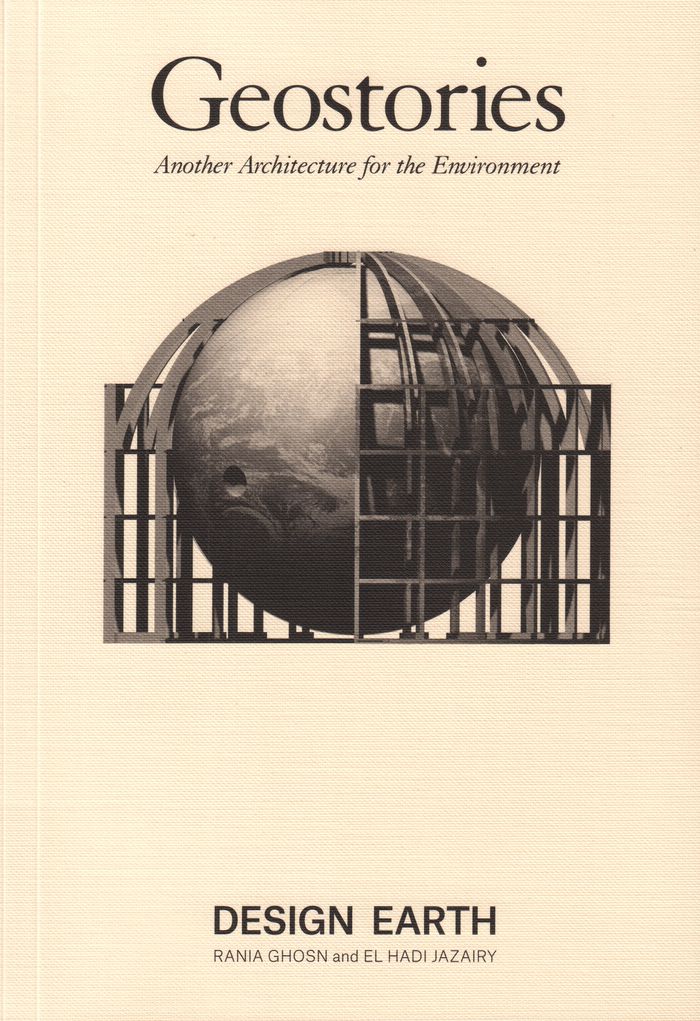
How do we make sense of the Earth at a moment in which it is presented in crisis? ''Geostories'' is a manifesto on the environmental imagination that renders sensible the issues of climate change and through geographic fiction invites readers to relate to the complexity of Earth systems in their vast scales of time and space. The book is organized into three sections–terrarium, aquarium, planetarium, each of which revisits such devices of wonder that assemble publics around representations of the Earth. The series of architectural projects becomes a medium to synthesize different forms and scales of knowledge on technological externalities, such as oil extraction, deep-sea mining, ocean acidification, water shortage, air pollution, trash, space debris, and a host of other social-ecological issues. Through design research, ''Geostories'' brings together spatial history, geographic representation, projective design, and material public assemblies to speculate on ways of living with such legacy technologies on the planet.
Geostories: another architecture for the environment
Actions:
Price:
$48.95
(available in store)
Summary:
How do we make sense of the Earth at a moment in which it is presented in crisis? ''Geostories'' is a manifesto on the environmental imagination that renders sensible the issues of climate change and through geographic fiction invites readers to relate to the complexity of Earth systems in their vast scales of time and space. The book is organized into three sections–terrarium, aquarium, planetarium, each of which revisits such devices of wonder that assemble publics around representations of the Earth. The series of architectural projects becomes a medium to synthesize different forms and scales of knowledge on technological externalities, such as oil extraction, deep-sea mining, ocean acidification, water shortage, air pollution, trash, space debris, and a host of other social-ecological issues. Through design research, ''Geostories'' brings together spatial history, geographic representation, projective design, and material public assemblies to speculate on ways of living with such legacy technologies on the planet.
Form:
books
books
Publication:
May 2018
May 2018
Subject:
Green Architecture
Green Architecture
Form:
books
books
Title:
Thomas Ruff : m.d.p.n.
Thomas Ruff : m.d.p.n.
Actions:
Price:
$42.00
(available to order)
Summary:
" Shortly after graduating in Bridge and Road Engineering in 1929 and being appointed to the rank of reserve lieutenant, I took a look around my city. There were no patterns to follow—only examples to imitate. The grand extravagant projects were the monopoly of the regime of arrogance and favoritism. A modern fish market was needed to replace the grubby “pietra del pesce”(...)
$42.00
(available to order)
Summary:
" Shortly after graduating in Bridge and Road Engineering in 1929 and being appointed to the rank of reserve lieutenant, I took a look around my city. There were no patterns to follow—only examples to imitate. The grand extravagant projects were the monopoly of the regime of arrogance and favoritism. A modern fish market was needed to replace the grubby “pietra del pesce”(...)
Subject:
Photography monographs
Photography monographs
Publication:
January 2006, Milan
January 2006, Milan
Title:
Thomas Ruff : m.d.p.n.
Actions:
Price:
$42.00
(available to order)
Summary:
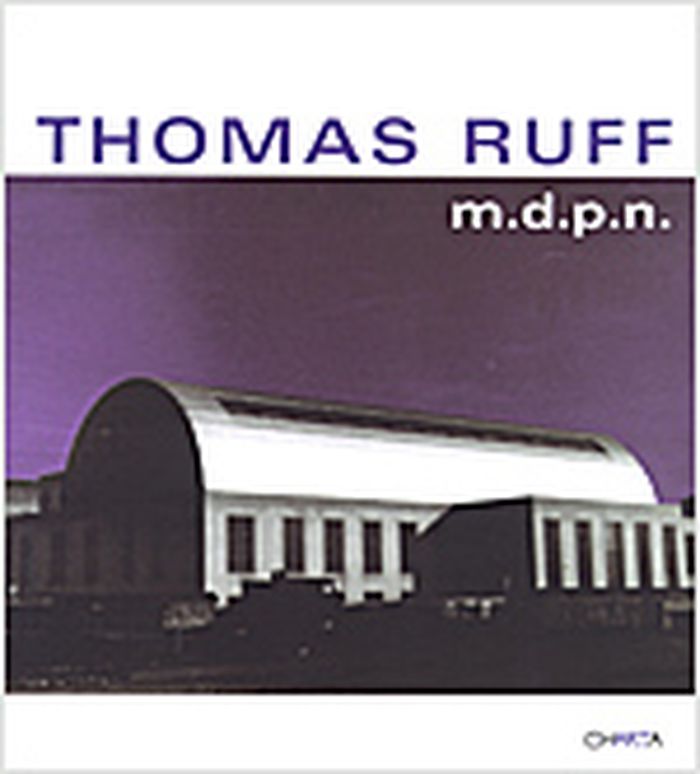
" Shortly after graduating in Bridge and Road Engineering in 1929 and being appointed to the rank of reserve lieutenant, I took a look around my city. There were no patterns to follow—only examples to imitate. The grand extravagant projects were the monopoly of the regime of arrogance and favoritism. A modern fish market was needed to replace the grubby “pietra del pesce” on Via Marina. I studied the problem on the spot and visited various other fish markets in Pozzuoli, Milan, Venice, Marseilles, Ostend, Hamburg. " This is how Luigi Cosenza (Naples 1905–1984) describes the genesis of his first project. The Fish Market of Naples—built in 1929 and considered the manifesto of the city’s rational architecture. This book documents the building with series of images produced by Thomas Ruff, a major contemporary artist from Germany, beginning with photos taken in the dazzling light of an early afternoon back in September 2002.
Thomas Ruff : m.d.p.n.
Actions:
Price:
$42.00
(available to order)
Summary:
" Shortly after graduating in Bridge and Road Engineering in 1929 and being appointed to the rank of reserve lieutenant, I took a look around my city. There were no patterns to follow—only examples to imitate. The grand extravagant projects were the monopoly of the regime of arrogance and favoritism. A modern fish market was needed to replace the grubby “pietra del pesce” on Via Marina. I studied the problem on the spot and visited various other fish markets in Pozzuoli, Milan, Venice, Marseilles, Ostend, Hamburg. " This is how Luigi Cosenza (Naples 1905–1984) describes the genesis of his first project. The Fish Market of Naples—built in 1929 and considered the manifesto of the city’s rational architecture. This book documents the building with series of images produced by Thomas Ruff, a major contemporary artist from Germany, beginning with photos taken in the dazzling light of an early afternoon back in September 2002.
Form:
books
books
Publication:
January 2006, Milan
January 2006, Milan
Subject:
Photography monographs
Photography monographs
Form:
books
books
Actions:
Price:
$65.00
(available to order)
Summary:
The Purist movement in art, founded by Charles-Édouard Jeanneret (better known as Le Corbusier) and Amedée Ozenfant, championed a traditional classicism while it simultaneously embraced new technologies and materials. The only book on Purism, "L'Esprit Nouveau" is a key contribution to(...)
$65.00
(available to order)
Summary:
The Purist movement in art, founded by Charles-Édouard Jeanneret (better known as Le Corbusier) and Amedée Ozenfant, championed a traditional classicism while it simultaneously embraced new technologies and materials. The only book on Purism, "L'Esprit Nouveau" is a key contribution to(...)
Subject:
Architecture since 1900, Europe
Architecture since 1900, Europe
Publication:
April 2001, New York
April 2001, New York
Title:
L'Esprit Nouveau: Purism in Paris, 1918-1925
Actions:
Price:
$65.00
(available to order)
Summary:
The Purist movement in art, founded by Charles-Édouard Jeanneret (better known as Le Corbusier) and Amedée Ozenfant, championed a traditional classicism while it simultaneously embraced new technologies and materials. The only book on Purism, "L'Esprit Nouveau" is a key contribution to the study of classic 20th-century modernism in painting and architecture. The book serves as the catalogue for an exhibition at the Los Angeles County Museum of Art. The title examines over 75 paintings by Le Corbusier, Ozenfant, and their closest colleague, Fernand Léger. At the heart of the study lies a single work: Le Corbusier's striking design of the Pavillon de l'Esprit Nouveau for the 1925 Exposition Internationale des Arts Décoratifs, at which the term "Art Deco" was coined. The architecture of Le Corbusier's pavilion, along with its interior decoration - paintings, sculpture, furniture, glassware, rugs, and other objects - offers a complete summation of Purist aesthetics. Included here too is the full translated text of Le Corbusier's and Ozenfant's 1918 manifesto, "Après le cubisme".
L'Esprit Nouveau: Purism in Paris, 1918-1925
Actions:
Price:
$65.00
(available to order)
Summary:
The Purist movement in art, founded by Charles-Édouard Jeanneret (better known as Le Corbusier) and Amedée Ozenfant, championed a traditional classicism while it simultaneously embraced new technologies and materials. The only book on Purism, "L'Esprit Nouveau" is a key contribution to the study of classic 20th-century modernism in painting and architecture. The book serves as the catalogue for an exhibition at the Los Angeles County Museum of Art. The title examines over 75 paintings by Le Corbusier, Ozenfant, and their closest colleague, Fernand Léger. At the heart of the study lies a single work: Le Corbusier's striking design of the Pavillon de l'Esprit Nouveau for the 1925 Exposition Internationale des Arts Décoratifs, at which the term "Art Deco" was coined. The architecture of Le Corbusier's pavilion, along with its interior decoration - paintings, sculpture, furniture, glassware, rugs, and other objects - offers a complete summation of Purist aesthetics. Included here too is the full translated text of Le Corbusier's and Ozenfant's 1918 manifesto, "Après le cubisme".
Form:
books
books
Publication:
April 2001, New York
April 2001, New York
Subject:
Architecture since 1900, Europe
Architecture since 1900, Europe
Form:
books
books
Price:
$43.50
(available in store)
Summary:
''Photography bound: reimagining photobooks and self-publishing'' is essentially a portable library, where each book – selected by the most eclectic and vibrant voices working in the field today – is declared an urgent addition. The result is a multi-part manifesto that radically and intimately engages with photography and publishing. The book unfurls from a three-day(...)
$43.50
(available in store)
Summary:
''Photography bound: reimagining photobooks and self-publishing'' is essentially a portable library, where each book – selected by the most eclectic and vibrant voices working in the field today – is declared an urgent addition. The result is a multi-part manifesto that radically and intimately engages with photography and publishing. The book unfurls from a three-day(...)
Title:
Photography bound: reimagining photobooks and self-publishing
Actions:
Price:
$43.50
(available in store)
Summary:
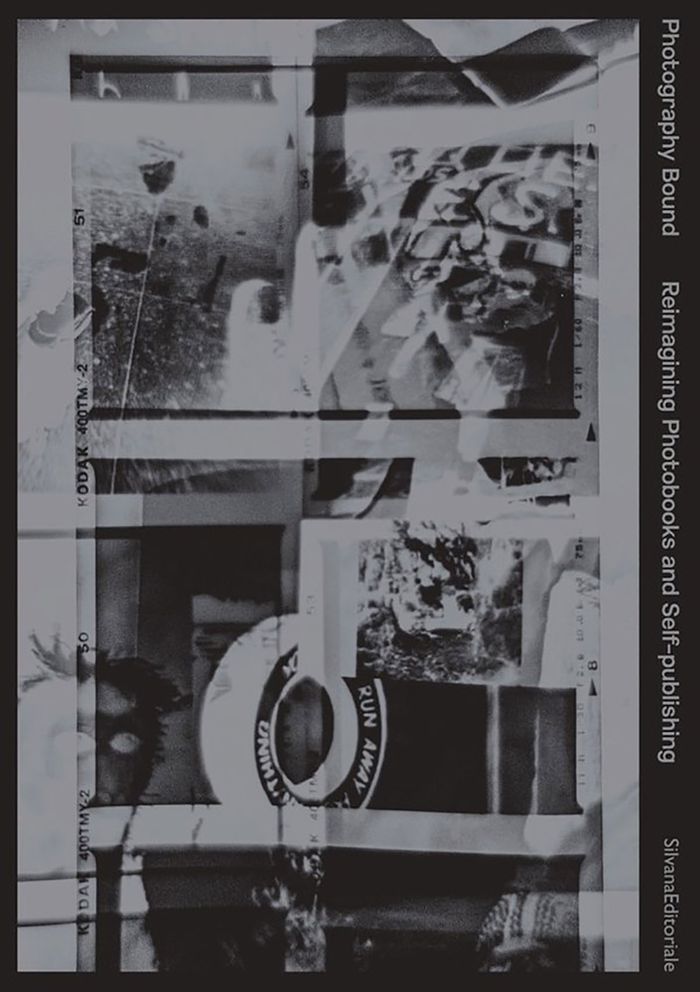
''Photography bound: reimagining photobooks and self-publishing'' is essentially a portable library, where each book – selected by the most eclectic and vibrant voices working in the field today – is declared an urgent addition. The result is a multi-part manifesto that radically and intimately engages with photography and publishing. The book unfurls from a three-day conference organised by Antonio Cataldo and Adrià Julià in 2020 at the Faculty of Fine Art, Music and Design at the University of Bergen and Fotogalleriet, Oslo. The conference found common but fragile ground amid a global health crisis. From there, it managed to catapult discussion and explore in depth the need to print and publish photobooks. Each contribution discloses a unique relationship to photobooks and publishing. Together, they are a trigger for social, political and cultural demands. This book makes a collective call to action – or actions – and asks each reader to reimagine where photography is bound to go.
Photography bound: reimagining photobooks and self-publishing
Actions:
Price:
$43.50
(available in store)
Summary:
''Photography bound: reimagining photobooks and self-publishing'' is essentially a portable library, where each book – selected by the most eclectic and vibrant voices working in the field today – is declared an urgent addition. The result is a multi-part manifesto that radically and intimately engages with photography and publishing. The book unfurls from a three-day conference organised by Antonio Cataldo and Adrià Julià in 2020 at the Faculty of Fine Art, Music and Design at the University of Bergen and Fotogalleriet, Oslo. The conference found common but fragile ground amid a global health crisis. From there, it managed to catapult discussion and explore in depth the need to print and publish photobooks. Each contribution discloses a unique relationship to photobooks and publishing. Together, they are a trigger for social, political and cultural demands. This book makes a collective call to action – or actions – and asks each reader to reimagine where photography is bound to go.
Form:
books
books
Publication:
September 2023
September 2023
Subject:
Theory of Photography
Theory of Photography
Form:
books
books
Price:
$51.95
(available to order)
Summary:
Just like the rebels in Star Wars fighting for freedom against oppressive forces, urban planner, architect and political scientist Caroline Newton was drawn to the struggles over space and rights around the world. Over the years, her work has been driven by a desire to understand – and intervene in – the spatial conditions that shape human lives and social relations.(...)
$51.95
(available to order)
Summary:
Just like the rebels in Star Wars fighting for freedom against oppressive forces, urban planner, architect and political scientist Caroline Newton was drawn to the struggles over space and rights around the world. Over the years, her work has been driven by a desire to understand – and intervene in – the spatial conditions that shape human lives and social relations.(...)
Title:
Envisioning spatial justice: Explorations, Reflections, Design
Actions:
Price:
$51.95
(available to order)
Summary:
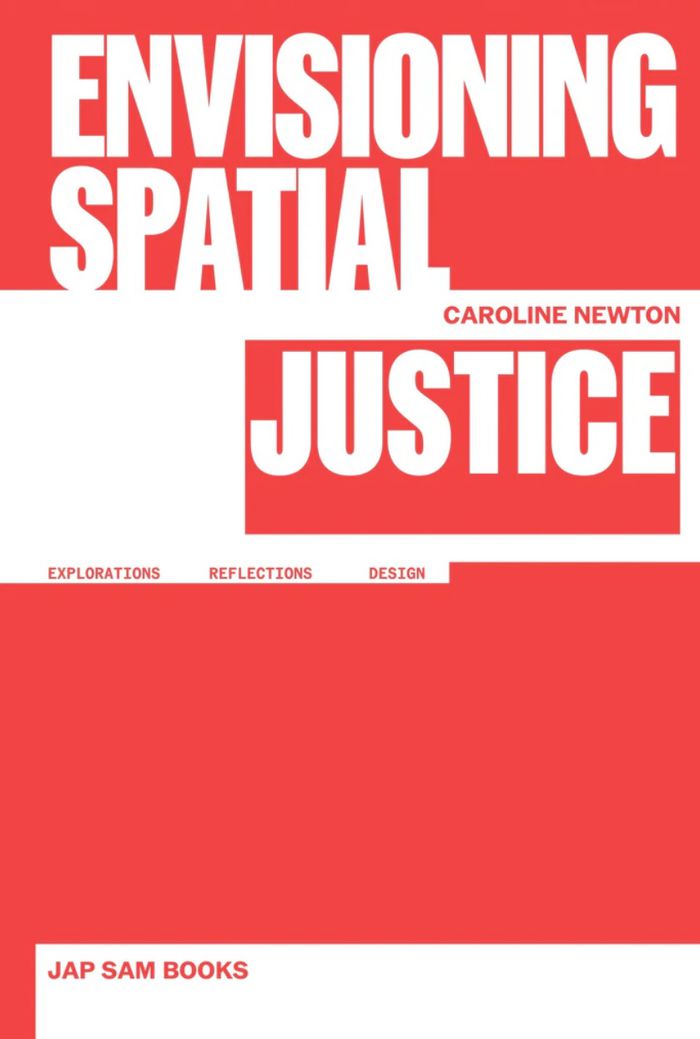
Just like the rebels in Star Wars fighting for freedom against oppressive forces, urban planner, architect and political scientist Caroline Newton was drawn to the struggles over space and rights around the world. Over the years, her work has been driven by a desire to understand – and intervene in – the spatial conditions that shape human lives and social relations. Envisioning Spatial Justice is both a reflection and a proposition. It synthesises insights accumulated through research and teaching and from years of collaborating with students whose graduation projects placed justice at the core of their spatial investigations. Structured around theory, reflection, and design, the book explores what it means to design with justice in mind. Challenging neoliberal paradigms and drawing on feminist, post-colonial, and radical urban theory, it insists on the political power of imagination. Part provocation, part toolkit, part manifesto, "Envisioning spatial justice" speaks to urbanists, designers, educators, and activists committed to co-creating more just and inclusive futures.
Envisioning spatial justice: Explorations, Reflections, Design
Actions:
Price:
$51.95
(available to order)
Summary:
Just like the rebels in Star Wars fighting for freedom against oppressive forces, urban planner, architect and political scientist Caroline Newton was drawn to the struggles over space and rights around the world. Over the years, her work has been driven by a desire to understand – and intervene in – the spatial conditions that shape human lives and social relations. Envisioning Spatial Justice is both a reflection and a proposition. It synthesises insights accumulated through research and teaching and from years of collaborating with students whose graduation projects placed justice at the core of their spatial investigations. Structured around theory, reflection, and design, the book explores what it means to design with justice in mind. Challenging neoliberal paradigms and drawing on feminist, post-colonial, and radical urban theory, it insists on the political power of imagination. Part provocation, part toolkit, part manifesto, "Envisioning spatial justice" speaks to urbanists, designers, educators, and activists committed to co-creating more just and inclusive futures.
Form:
books
books
Publication:
June 2025
June 2025
Form:
books
books
Actions:
Price:
$41.90
(available to order)
Summary:
The work of Gilles Deleuze and Felix Guattari has been inspirational for architects and architectural theorists in recent years. It has influenced the design work of architects as diverse as Greg Lynn and David Chipperfield, and is regularly cited by avant-gardist architects and by students, but usually without being well understood. The first collaboration between(...)
$41.90
(available to order)
Summary:
The work of Gilles Deleuze and Felix Guattari has been inspirational for architects and architectural theorists in recent years. It has influenced the design work of architects as diverse as Greg Lynn and David Chipperfield, and is regularly cited by avant-gardist architects and by students, but usually without being well understood. The first collaboration between(...)
Subject:
Architectural Theory
Architectural Theory
Publication:
October 2007, Abingdon, New York
October 2007, Abingdon, New York
Title:
Deleuze & Guattari for Architects
Actions:
Price:
$41.90
(available to order)
Summary:
The work of Gilles Deleuze and Felix Guattari has been inspirational for architects and architectural theorists in recent years. It has influenced the design work of architects as diverse as Greg Lynn and David Chipperfield, and is regularly cited by avant-gardist architects and by students, but usually without being well understood. The first collaboration between Deleuze and Guattari was Anti-Oedipus: Capitalism and Schizophrenia, which was taken up as a manifesto for the post-structuralist life, and was associated with the spirit of the student revolts of 1968. Their ideas promote creativity and innovation, and their work is wide-ranging, complex and endlessly stimulating. They range across politics, psychoanalysis, physics, art and literature, changing preconceptions along the way. Deleuze & Guattari for Architects is a perfect introduction for students of architecture in design studio at all levels, students of architecture pursuing undergraduate and postgraduate courses in architectural theory, academics and interested architectural practitioners.
Deleuze & Guattari for Architects
Actions:
Price:
$41.90
(available to order)
Summary:
The work of Gilles Deleuze and Felix Guattari has been inspirational for architects and architectural theorists in recent years. It has influenced the design work of architects as diverse as Greg Lynn and David Chipperfield, and is regularly cited by avant-gardist architects and by students, but usually without being well understood. The first collaboration between Deleuze and Guattari was Anti-Oedipus: Capitalism and Schizophrenia, which was taken up as a manifesto for the post-structuralist life, and was associated with the spirit of the student revolts of 1968. Their ideas promote creativity and innovation, and their work is wide-ranging, complex and endlessly stimulating. They range across politics, psychoanalysis, physics, art and literature, changing preconceptions along the way. Deleuze & Guattari for Architects is a perfect introduction for students of architecture in design studio at all levels, students of architecture pursuing undergraduate and postgraduate courses in architectural theory, academics and interested architectural practitioners.
Form:
books
books
Publication:
October 2007, Abingdon, New York
October 2007, Abingdon, New York
Subject:
Architectural Theory
Architectural Theory
Form:
books
books
Actions:
Price:
$40.00
(available to order)
Summary:
Building Subjects, the fourth issue of Standpunkte Magazine, is a collaboration between the architect De Peter Yi, the art historian Nancy P. Lin, and the graphic design studios Normal and Some All None. The publication revolves around collective housing in China, an architectural challenge expressive of the country's ongoing negotiations between its rich history and(...)
$40.00
(available to order)
Summary:
Building Subjects, the fourth issue of Standpunkte Magazine, is a collaboration between the architect De Peter Yi, the art historian Nancy P. Lin, and the graphic design studios Normal and Some All None. The publication revolves around collective housing in China, an architectural challenge expressive of the country's ongoing negotiations between its rich history and(...)
Publication:
September 2019
September 2019
Title:
Building subjects: collective housing in China
Actions:
Price:
$40.00
(available to order)
Summary:
Building Subjects, the fourth issue of Standpunkte Magazine, is a collaboration between the architect De Peter Yi, the art historian Nancy P. Lin, and the graphic design studios Normal and Some All None. The publication revolves around collective housing in China, an architectural challenge expressive of the country's ongoing negotiations between its rich history and undetermined future. The study combines typological research with the modes of the architectural manifesto by establishing an exchange between cultural-historical observations, the consideration of contemporary socio-economic pressures, and evolving architectural aspirations. Through a close reading of spaces from monumental utopian communes in Beijing to round earthen dwellings in the Fujian province, Building Subjects stages collective housing as a key to residential architecture in China. The publication is simultaneously inward and outward looking, and this duality is also reflected in its meticulously composed layout: documentary photography and detailed axonometric drawings are juxtaposed to establish a correspondence between old and new, between reality and projection.
Building subjects: collective housing in China
Actions:
Price:
$40.00
(available to order)
Summary:
Building Subjects, the fourth issue of Standpunkte Magazine, is a collaboration between the architect De Peter Yi, the art historian Nancy P. Lin, and the graphic design studios Normal and Some All None. The publication revolves around collective housing in China, an architectural challenge expressive of the country's ongoing negotiations between its rich history and undetermined future. The study combines typological research with the modes of the architectural manifesto by establishing an exchange between cultural-historical observations, the consideration of contemporary socio-economic pressures, and evolving architectural aspirations. Through a close reading of spaces from monumental utopian communes in Beijing to round earthen dwellings in the Fujian province, Building Subjects stages collective housing as a key to residential architecture in China. The publication is simultaneously inward and outward looking, and this duality is also reflected in its meticulously composed layout: documentary photography and detailed axonometric drawings are juxtaposed to establish a correspondence between old and new, between reality and projection.
Form:
books
books
Publication:
September 2019
September 2019
Form:
books
books
Title:
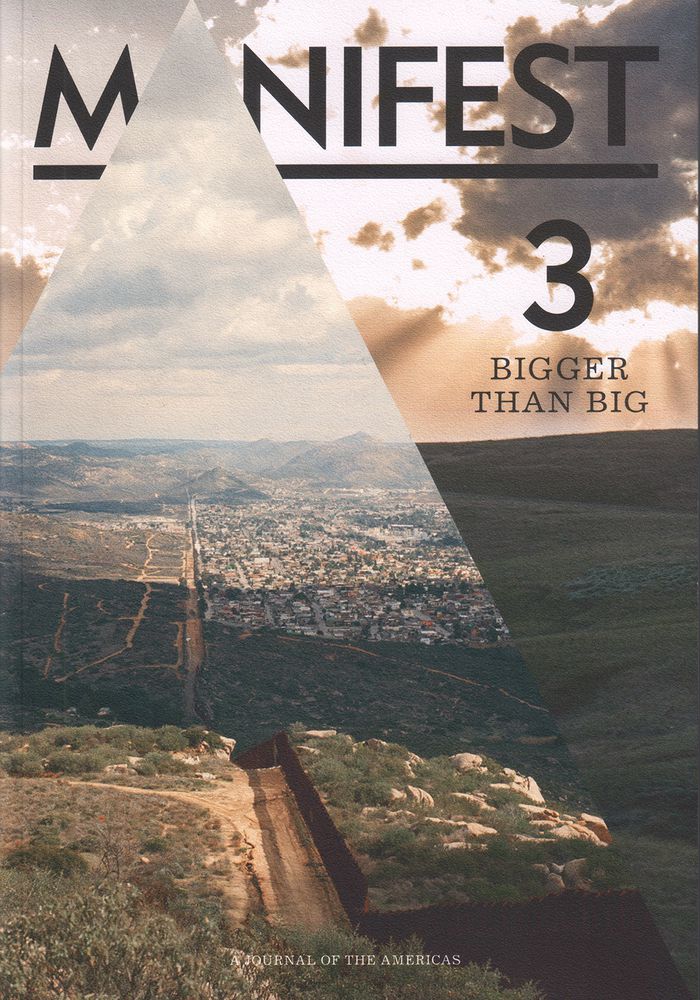
Manifest 3: Bigger than big
Manifest 3: Bigger than big
Actions:
Price:
$31.50
(available in store)
Summary:
What does it mean to grapple with the immensity of the continent itself? For the third issue, Manifesto aims to highlight propositions that have taken seriously the 'bigger than big'—design and representational experiments aimed at narrating, framing, or enacting the American continent and the forms and ideas which it animates. With contributions by Ana María León,(...)
$31.50
(available in store)
Summary:
What does it mean to grapple with the immensity of the continent itself? For the third issue, Manifesto aims to highlight propositions that have taken seriously the 'bigger than big'—design and representational experiments aimed at narrating, framing, or enacting the American continent and the forms and ideas which it animates. With contributions by Ana María León,(...)
Title:
Manifest 3: Bigger than big
Actions:
Price:
$31.50
(available in store)
Summary:
What does it mean to grapple with the immensity of the continent itself? For the third issue, Manifesto aims to highlight propositions that have taken seriously the 'bigger than big'—design and representational experiments aimed at narrating, framing, or enacting the American continent and the forms and ideas which it animates. With contributions by Ana María León, Neeraj Bhatia, Other Fields, Enrique Ramirez, Jennifer Bonner, Shane Reiner-Roth, Kathleen L. John-Alder, John Dean Davis, Lydia Xynogala, Peter Waldman, Jill Desimini, Spencer Bailey, Mariana Siracusa, Richard Sommer, Ila Berman, Frederick R. Steiner, Sara Stevens, Felipe Correa, Charles Waldheim, Elizabeth Meyer, Nader Tehrani, Aaron Betsky, Kristi Cheramie, Antoine Predock, Evangelos Kotsioris, Rutger Huiberts, Aleksandr Bierig, David Nunes Solomon, Glenn Forley, Matthew Seibert, and David Gissen, and a special addendum with contributions by Swati Chattopadhyay, Elgin Cleckley, Stephen Mueller, Elisa Silva, Sharif Kahatt, Ana María Duran Calisto, Alonso Díaz Rickards, Christine Macy, Liang Wang, Elizabeth Timme, Marshall Brown, Heather Houser, Assaf Evron, Eli Cook, and Hsuan Hsu.
Manifest 3: Bigger than big
Actions:
Price:
$31.50
(available in store)
Summary:
What does it mean to grapple with the immensity of the continent itself? For the third issue, Manifesto aims to highlight propositions that have taken seriously the 'bigger than big'—design and representational experiments aimed at narrating, framing, or enacting the American continent and the forms and ideas which it animates. With contributions by Ana María León, Neeraj Bhatia, Other Fields, Enrique Ramirez, Jennifer Bonner, Shane Reiner-Roth, Kathleen L. John-Alder, John Dean Davis, Lydia Xynogala, Peter Waldman, Jill Desimini, Spencer Bailey, Mariana Siracusa, Richard Sommer, Ila Berman, Frederick R. Steiner, Sara Stevens, Felipe Correa, Charles Waldheim, Elizabeth Meyer, Nader Tehrani, Aaron Betsky, Kristi Cheramie, Antoine Predock, Evangelos Kotsioris, Rutger Huiberts, Aleksandr Bierig, David Nunes Solomon, Glenn Forley, Matthew Seibert, and David Gissen, and a special addendum with contributions by Swati Chattopadhyay, Elgin Cleckley, Stephen Mueller, Elisa Silva, Sharif Kahatt, Ana María Duran Calisto, Alonso Díaz Rickards, Christine Macy, Liang Wang, Elizabeth Timme, Marshall Brown, Heather Houser, Assaf Evron, Eli Cook, and Hsuan Hsu.
Form:
books
books
Publication:
April 2021
April 2021
Subject:
Magazines
Magazines


