


10594 Results
Form:
books
books
Actions:
Price:
$48.95
(available to order)
Summary:
Werner Blaser is among the most respected architectural critics of recent decades, who has interacted with virtually all of the major architects, including Mies, Foster, Piano, and Calatrava. In Synthesis, he tells the story of his encounters with architects and architecture. In addition, he is also the creator of collages that make apparent aesthetic connections between(...)
$48.95
(available to order)
Summary:
Werner Blaser is among the most respected architectural critics of recent decades, who has interacted with virtually all of the major architects, including Mies, Foster, Piano, and Calatrava. In Synthesis, he tells the story of his encounters with architects and architecture. In addition, he is also the creator of collages that make apparent aesthetic connections between(...)
Title:
Synthesis: texts and collages
Actions:
Price:
$48.95
(available to order)
Summary:
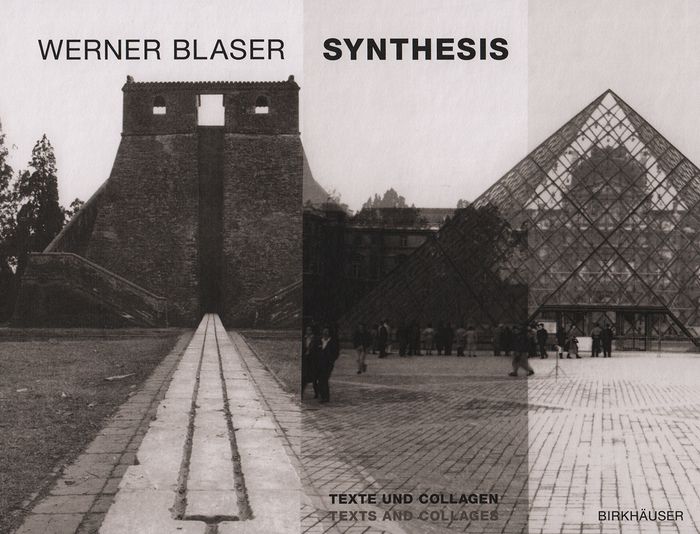
Werner Blaser is among the most respected architectural critics of recent decades, who has interacted with virtually all of the major architects, including Mies, Foster, Piano, and Calatrava. In Synthesis, he tells the story of his encounters with architects and architecture. In addition, he is also the creator of collages that make apparent aesthetic connections between the East and West, and between traditional and contemporary architecture.
Synthesis: texts and collages
Actions:
Price:
$48.95
(available to order)
Summary:
Werner Blaser is among the most respected architectural critics of recent decades, who has interacted with virtually all of the major architects, including Mies, Foster, Piano, and Calatrava. In Synthesis, he tells the story of his encounters with architects and architecture. In addition, he is also the creator of collages that make apparent aesthetic connections between the East and West, and between traditional and contemporary architecture.
Form:
books
books
Publication:
March 2017
March 2017
Subject:
Architectural Theory
Architectural Theory
Form:
books
books
Actions:
Price:
$48.95
(available to order)
Summary:
With Design is Invisible, Lucius Burckhardt was one of the first to point out that factors that are invisible can be integrated – they determine the use of objects and should be part of the design. What is the use of the most attractive tramway if it does not operate at night? Burckhardt expands on the meaning of design, in this case by including the timetable, which can(...)
$48.95
(available to order)
Summary:
With Design is Invisible, Lucius Burckhardt was one of the first to point out that factors that are invisible can be integrated – they determine the use of objects and should be part of the design. What is the use of the most attractive tramway if it does not operate at night? Burckhardt expands on the meaning of design, in this case by including the timetable, which can(...)
Subject:
Architectural Theory
Architectural Theory
Publication:
April 2017
April 2017
Title:
Design is invisible: planning, education and society
Actions:
Price:
$48.95
(available to order)
Summary:
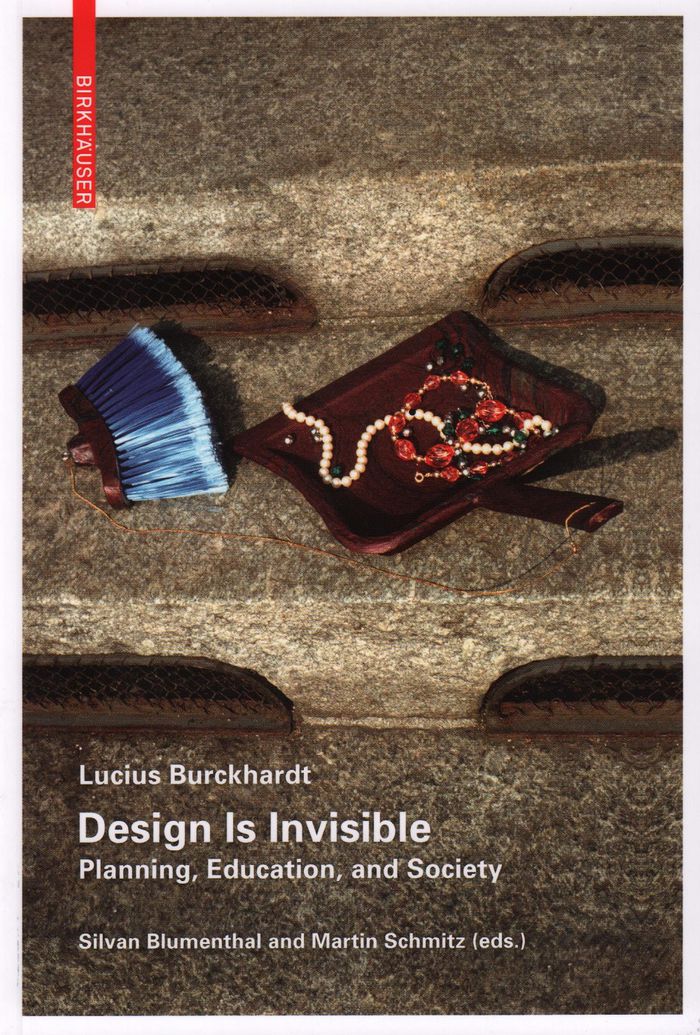
With Design is Invisible, Lucius Burckhardt was one of the first to point out that factors that are invisible can be integrated – they determine the use of objects and should be part of the design. What is the use of the most attractive tramway if it does not operate at night? Burckhardt expands on the meaning of design, in this case by including the timetable, which can also be optimized. The relevance of these articles dating from between 1965 and 1999 can be appreciated today in the current debate on architecture. Problems arising from social polarization, rural depopulation, and migration can only be resolved on an interdisciplinary basis. The articles, for the first time available in English, finally allow access to key source texts for the purpose of international debate.
Design is invisible: planning, education and society
Actions:
Price:
$48.95
(available to order)
Summary:
With Design is Invisible, Lucius Burckhardt was one of the first to point out that factors that are invisible can be integrated – they determine the use of objects and should be part of the design. What is the use of the most attractive tramway if it does not operate at night? Burckhardt expands on the meaning of design, in this case by including the timetable, which can also be optimized. The relevance of these articles dating from between 1965 and 1999 can be appreciated today in the current debate on architecture. Problems arising from social polarization, rural depopulation, and migration can only be resolved on an interdisciplinary basis. The articles, for the first time available in English, finally allow access to key source texts for the purpose of international debate.
Form:
books
books
Publication:
April 2017
April 2017
Subject:
Architectural Theory
Architectural Theory
Form:
books
books
Actions:
Price:
$130.00
(available to order)
Summary:
In the writing of urban design history of the twentieth century, functionalist and avant-garde models of the dissolution of the city are dominating. In contrast this book presents projects whose goal is the ideal of a dense and urbane city. Drawing on plans, built examples and theories of dense and urban cities and city districts in the twentieth century, modern examples(...)
$130.00
(available to order)
Summary:
In the writing of urban design history of the twentieth century, functionalist and avant-garde models of the dissolution of the city are dominating. In contrast this book presents projects whose goal is the ideal of a dense and urbane city. Drawing on plans, built examples and theories of dense and urban cities and city districts in the twentieth century, modern examples(...)
Title:
Urbanity and density in 20th century urban design
Actions:
Price:
$130.00
(available to order)
Summary:
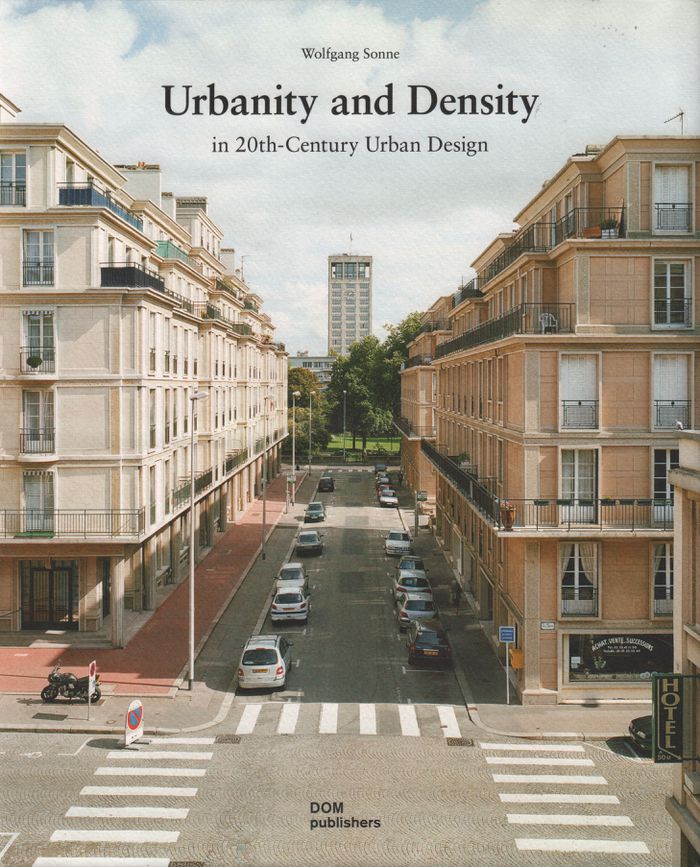
In the writing of urban design history of the twentieth century, functionalist and avant-garde models of the dissolution of the city are dominating. In contrast this book presents projects whose goal is the ideal of a dense and urbane city. Drawing on plans, built examples and theories of dense and urban cities and city districts in the twentieth century, modern examples of urban design are analyzed and highlighted, which until now have been evaluated more as fringe phenomena. These include examples characterized by functional mixture, social openness, spatially defined public spaces, urban architecture, historical reference and a cultural understanding of the city. The book's new evaluation of modern urban design history creates opportunities for current planning by offering best-practice models, which better reflect the striving for urbanity and density.
Urbanity and density in 20th century urban design
Actions:
Price:
$130.00
(available to order)
Summary:
In the writing of urban design history of the twentieth century, functionalist and avant-garde models of the dissolution of the city are dominating. In contrast this book presents projects whose goal is the ideal of a dense and urbane city. Drawing on plans, built examples and theories of dense and urban cities and city districts in the twentieth century, modern examples of urban design are analyzed and highlighted, which until now have been evaluated more as fringe phenomena. These include examples characterized by functional mixture, social openness, spatially defined public spaces, urban architecture, historical reference and a cultural understanding of the city. The book's new evaluation of modern urban design history creates opportunities for current planning by offering best-practice models, which better reflect the striving for urbanity and density.
Form:
books
books
Publication:
August 2017
August 2017
Subject:
Urban Theory
Urban Theory
Form:
books
books
Price:
$54.95
(available to order)
Summary:
Focusing on German cultural and architectural theorist Walter Benjamin’s “constellation of awakening,” TU Delft’s Footprint 18 investigates Benjamin’s conceptualization of “dialectical images,” his use of montage, his refusal of notions of both progress and decline, and his effort to demonstrate how images belong not only to a particular time but attain legibility only at(...)
$54.95
(available to order)
Summary:
Focusing on German cultural and architectural theorist Walter Benjamin’s “constellation of awakening,” TU Delft’s Footprint 18 investigates Benjamin’s conceptualization of “dialectical images,” his use of montage, his refusal of notions of both progress and decline, and his effort to demonstrate how images belong not only to a particular time but attain legibility only at(...)
Title:
Footprint 18: constellation of awakening. Benjamin and architecture
Actions:
Price:
$54.95
(available to order)
Summary:
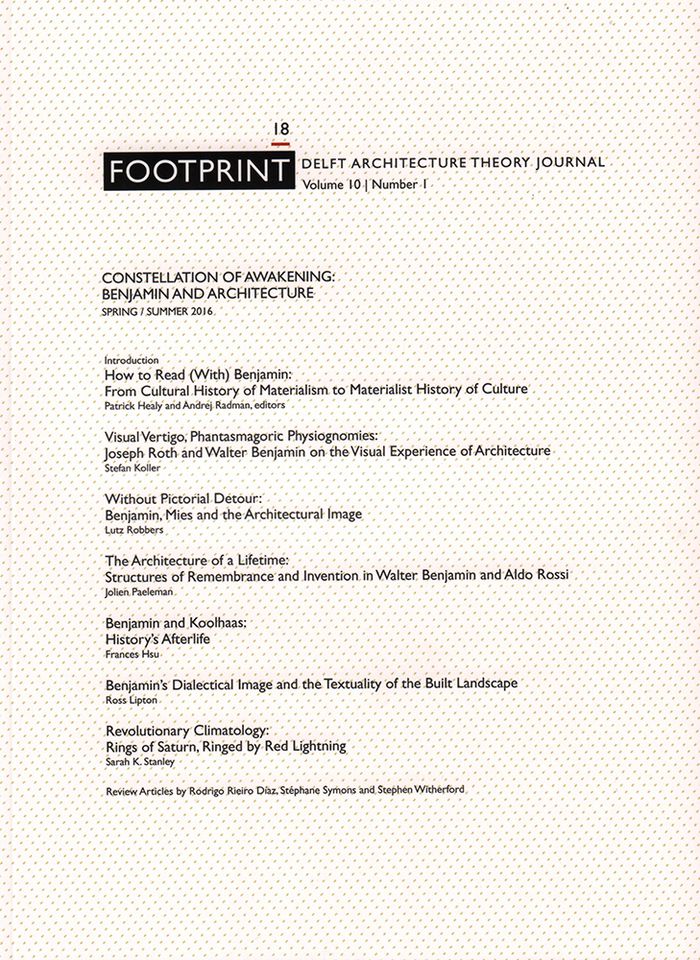
Focusing on German cultural and architectural theorist Walter Benjamin’s “constellation of awakening,” TU Delft’s Footprint 18 investigates Benjamin’s conceptualization of “dialectical images,” his use of montage, his refusal of notions of both progress and decline, and his effort to demonstrate how images belong not only to a particular time but attain legibility only at a particular time.
Footprint 18: constellation of awakening. Benjamin and architecture
Actions:
Price:
$54.95
(available to order)
Summary:
Focusing on German cultural and architectural theorist Walter Benjamin’s “constellation of awakening,” TU Delft’s Footprint 18 investigates Benjamin’s conceptualization of “dialectical images,” his use of montage, his refusal of notions of both progress and decline, and his effort to demonstrate how images belong not only to a particular time but attain legibility only at a particular time.
Form:
books
books
Publication:
October 2016
October 2016
Subject:
Architectural Theory
Architectural Theory
Form:
books
books
Actions:
Price:
$55.00
(available to order)
Summary:
Assignments can give instructions, describe an exercise, present a problem, set out rules, propose a game, stimulate a process, or simply throw out questions. "Taking a line for a walk" brings attention to something that is often neglected: the assignment as a pedagogical element and verbal artefact of design education. This book is a compendium of 224 assignments, edited(...)
$55.00
(available to order)
Summary:
Assignments can give instructions, describe an exercise, present a problem, set out rules, propose a game, stimulate a process, or simply throw out questions. "Taking a line for a walk" brings attention to something that is often neglected: the assignment as a pedagogical element and verbal artefact of design education. This book is a compendium of 224 assignments, edited(...)
Title:
Taking a line for walk: assignments in design education
Actions:
Price:
$55.00
(available to order)
Summary:
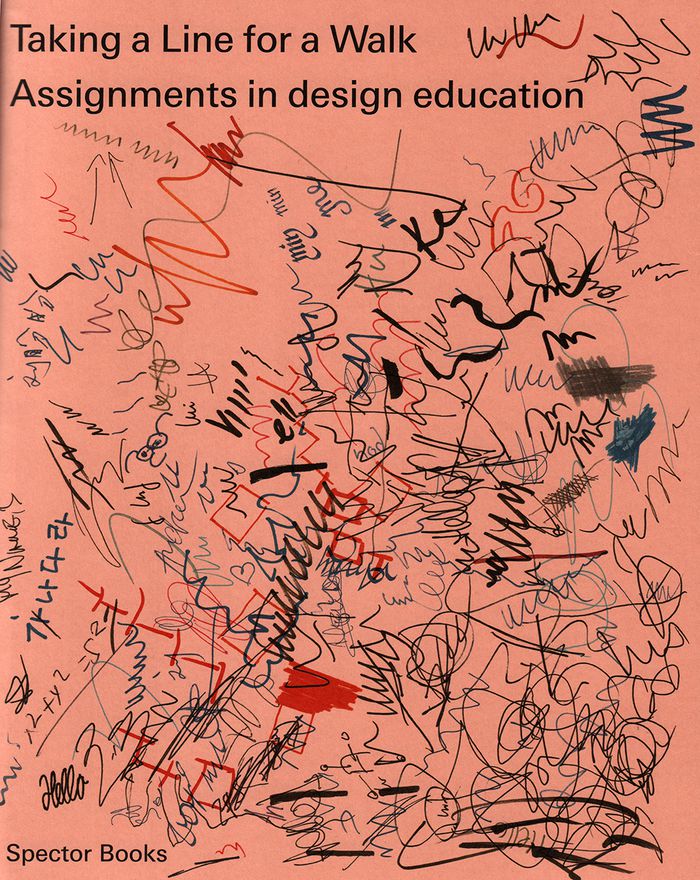
Assignments can give instructions, describe an exercise, present a problem, set out rules, propose a game, stimulate a process, or simply throw out questions. "Taking a line for a walk" brings attention to something that is often neglected: the assignment as a pedagogical element and verbal artefact of design education. This book is a compendium of 224 assignments, edited by Nina Paim and coedited by Emilia Bergmark. A reference book for educators, researchers, and students alike, it includes both contemporary and historical examples and offers a space for different lines of design pedagogy to converge and converse. An accompanying essay by Corinne Gisel takes a closer look at the various forms assignments can take and the educational contexts they exist within. Taking a Line for a Walk derived from an exhibition of the same name at the International Biennial of Graphic Design Brno 2014.
Taking a line for walk: assignments in design education
Actions:
Price:
$55.00
(available to order)
Summary:
Assignments can give instructions, describe an exercise, present a problem, set out rules, propose a game, stimulate a process, or simply throw out questions. "Taking a line for a walk" brings attention to something that is often neglected: the assignment as a pedagogical element and verbal artefact of design education. This book is a compendium of 224 assignments, edited by Nina Paim and coedited by Emilia Bergmark. A reference book for educators, researchers, and students alike, it includes both contemporary and historical examples and offers a space for different lines of design pedagogy to converge and converse. An accompanying essay by Corinne Gisel takes a closer look at the various forms assignments can take and the educational contexts they exist within. Taking a Line for a Walk derived from an exhibition of the same name at the International Biennial of Graphic Design Brno 2014.
Form:
books
books
Publication:
October 2016
October 2016
Subject:
Design Theory
Design Theory
Form:
books
books
Actions:
Price:
$54.95
(available in store)
Summary:
'Footprint 17' addresses the architectural production of those in inconspicuous offices and unexciting departments who contribute their insights and experience to the making of architecture, the formulation of architectural history, and the politics of architectural design and theory. Footprint 17 explores the intellectual frameworks, didactic practices, research methods(...)
$54.95
(available in store)
Summary:
'Footprint 17' addresses the architectural production of those in inconspicuous offices and unexciting departments who contribute their insights and experience to the making of architecture, the formulation of architectural history, and the politics of architectural design and theory. Footprint 17 explores the intellectual frameworks, didactic practices, research methods(...)
Title:
Footprint 17: the 'bread and butter' of architecture: investigating everyday practices
Actions:
Price:
$54.95
(available in store)
Summary:
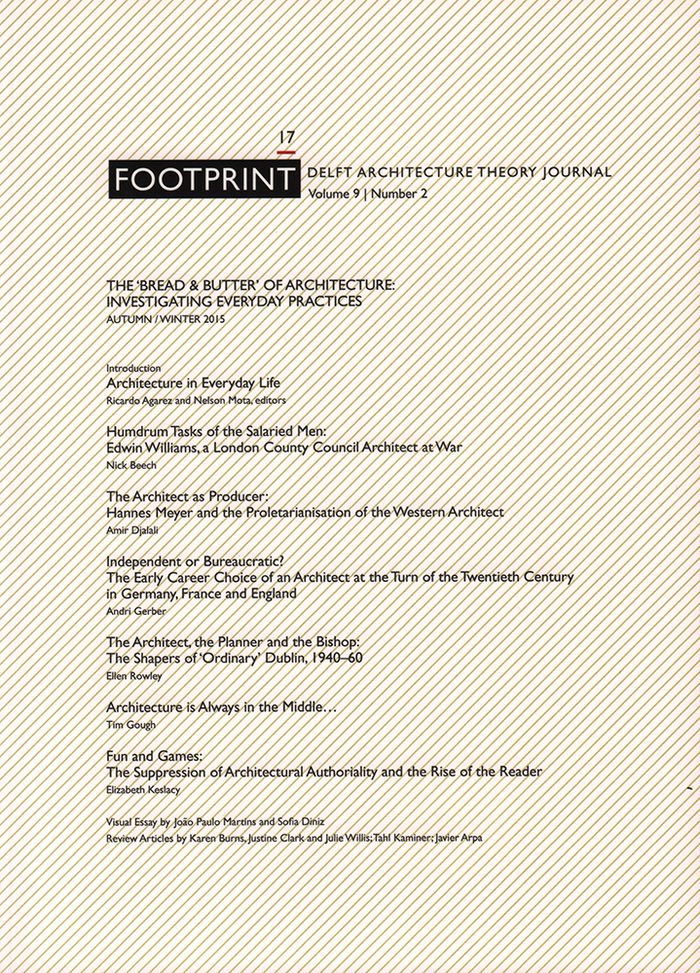
'Footprint 17' addresses the architectural production of those in inconspicuous offices and unexciting departments who contribute their insights and experience to the making of architecture, the formulation of architectural history, and the politics of architectural design and theory. Footprint 17 explores the intellectual frameworks, didactic practices, research methods and analytical instruments that develop the disciplinary focus beyond the work of the “prime mover,” and the relevance of salaried architects and institutional agencies in shaping the spatial and social practices of the everyday.
Footprint 17: the 'bread and butter' of architecture: investigating everyday practices
Actions:
Price:
$54.95
(available in store)
Summary:
'Footprint 17' addresses the architectural production of those in inconspicuous offices and unexciting departments who contribute their insights and experience to the making of architecture, the formulation of architectural history, and the politics of architectural design and theory. Footprint 17 explores the intellectual frameworks, didactic practices, research methods and analytical instruments that develop the disciplinary focus beyond the work of the “prime mover,” and the relevance of salaried architects and institutional agencies in shaping the spatial and social practices of the everyday.
Form:
books
books
Publication:
July 2016
July 2016
Subject:
Architectural Theory
Architectural Theory
Form:
books
books
Actions:
Price:
$79.95
(available in store)
Summary:
"Good space : political, aesthetic and urban Spaces" means first of all opportunities. It is explored in this book accompanying the same-titled exhibition how the demands made on public spaces can be realized. The focus is on surprising utilizations of space and subversive artistic strategies. Questions are raised about the form and significance of public spaces –(...)
$79.95
(available in store)
Summary:
"Good space : political, aesthetic and urban Spaces" means first of all opportunities. It is explored in this book accompanying the same-titled exhibition how the demands made on public spaces can be realized. The focus is on surprising utilizations of space and subversive artistic strategies. Questions are raised about the form and significance of public spaces –(...)
Title:
Good space: political, aesthetic and urban spaces
Actions:
Price:
$79.95
(available in store)
Summary:
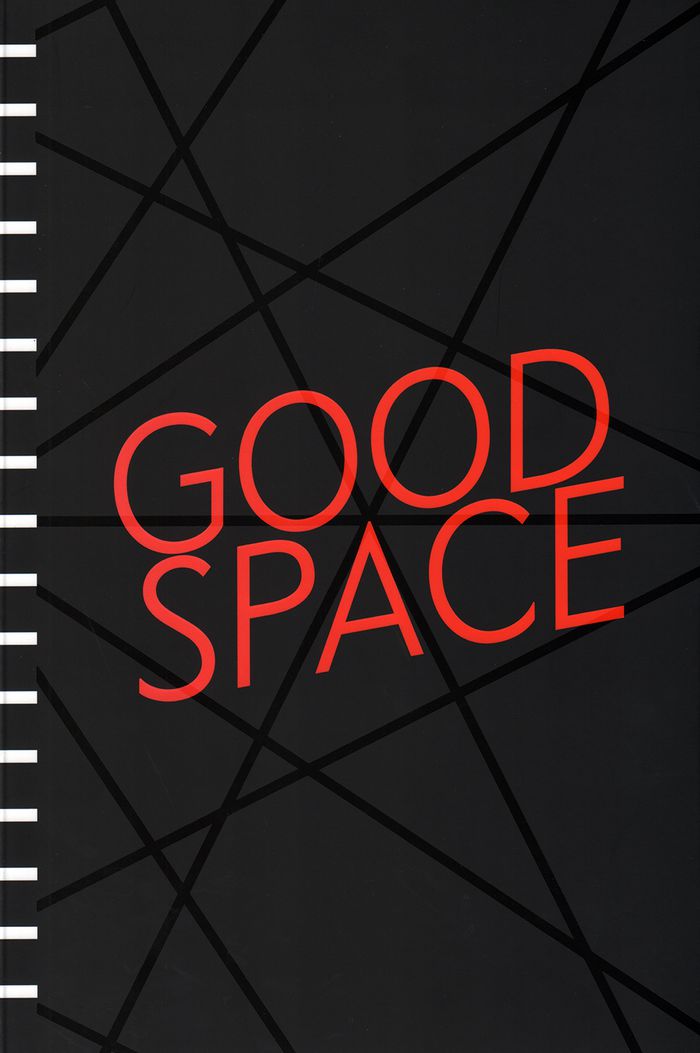
"Good space : political, aesthetic and urban Spaces" means first of all opportunities. It is explored in this book accompanying the same-titled exhibition how the demands made on public spaces can be realized. The focus is on surprising utilizations of space and subversive artistic strategies. Questions are raised about the form and significance of public spaces – regardless of whether these have actually been built or are simply utopian designs or are situated in the digital realm. With »EVERYTHING IS ARCHITECTURE: Bau Magazine from the 60s and 70s«, an exhibition by the ICA London in 2015 has been integrated into this exhibition, focusing on historical preconditions of visionary and utopian architectural and spatial concepts in the 1960s and 1970s. The book is a reader and the sum of the exhibition and the lectures during this summer 2016 at Villa Merkel.
Good space: political, aesthetic and urban spaces
Actions:
Price:
$79.95
(available in store)
Summary:
"Good space : political, aesthetic and urban Spaces" means first of all opportunities. It is explored in this book accompanying the same-titled exhibition how the demands made on public spaces can be realized. The focus is on surprising utilizations of space and subversive artistic strategies. Questions are raised about the form and significance of public spaces – regardless of whether these have actually been built or are simply utopian designs or are situated in the digital realm. With »EVERYTHING IS ARCHITECTURE: Bau Magazine from the 60s and 70s«, an exhibition by the ICA London in 2015 has been integrated into this exhibition, focusing on historical preconditions of visionary and utopian architectural and spatial concepts in the 1960s and 1970s. The book is a reader and the sum of the exhibition and the lectures during this summer 2016 at Villa Merkel.
Form:
books
books
Publication:
November 2016
November 2016
Subject:
Urban Theory
Urban Theory
Form:
books
books
Actions:
Price:
$31.95
(available in store)
Summary:
For Georges Didi-Huberman, artist James Turrell is an inventor of impossible spaces and unthinkable sites, of aporias, of fables. Creator of some of the most fascinating works of the late twentieth and early twenty-first century, Turrell uses as his medium the most elemental material of sight and art: light. One crucial aspect of his work is the fabulation of place and(...)
$31.95
(available in store)
Summary:
For Georges Didi-Huberman, artist James Turrell is an inventor of impossible spaces and unthinkable sites, of aporias, of fables. Creator of some of the most fascinating works of the late twentieth and early twenty-first century, Turrell uses as his medium the most elemental material of sight and art: light. One crucial aspect of his work is the fabulation of place and(...)
Title:
The man who walked in color: James Turrell
Actions:
Price:
$31.95
(available in store)
Summary:
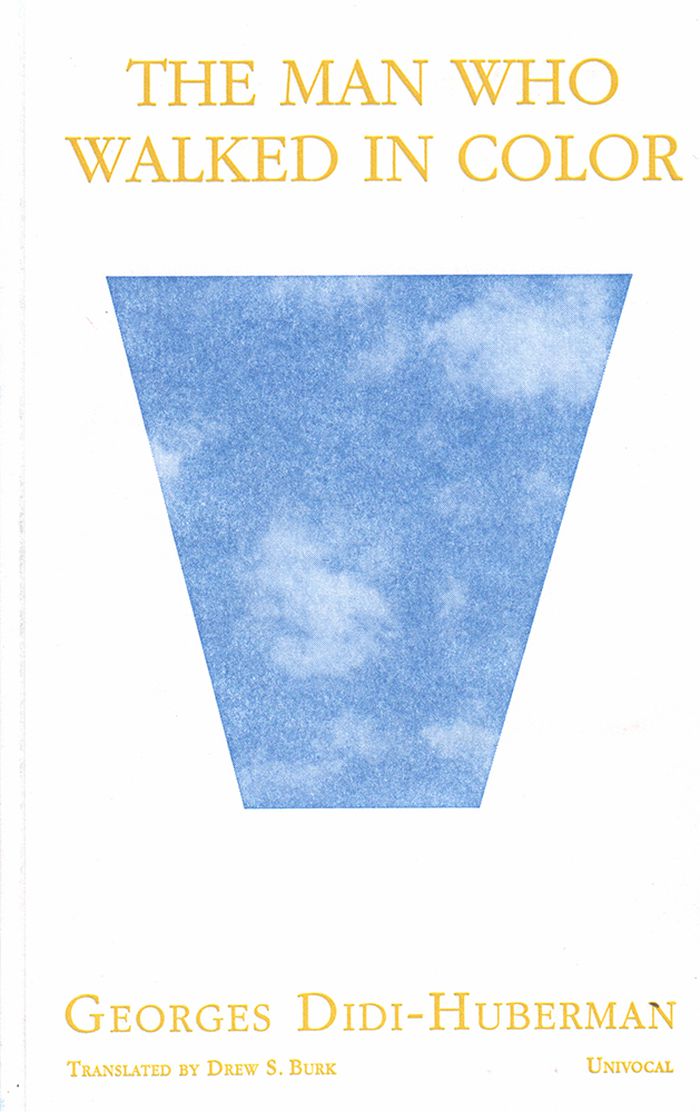
For Georges Didi-Huberman, artist James Turrell is an inventor of impossible spaces and unthinkable sites, of aporias, of fables. Creator of some of the most fascinating works of the late twentieth and early twenty-first century, Turrell uses as his medium the most elemental material of sight and art: light. One crucial aspect of his work is the fabulation of place and vision with its foundation deep in history. Didi-Huberman takes the reader on a journey between the impossible limit of the horizon and the arrival into a site of reverie and light, from the story of Exodus to the Pala d’Oro of San Marco’s Basilica in Venice, through art history and the origins of religious worship, finally plunging into Turrell’s cadmium dust and light, into the Painted Desert of his installation Roden Crater. For the esteemed art historian, Turrell’s artistic practice becomes the equivalent of walking along endless pathways in the desert, in “minuscule cathedrals where man discovers himself walking in color.”
The man who walked in color: James Turrell
Actions:
Price:
$31.95
(available in store)
Summary:
For Georges Didi-Huberman, artist James Turrell is an inventor of impossible spaces and unthinkable sites, of aporias, of fables. Creator of some of the most fascinating works of the late twentieth and early twenty-first century, Turrell uses as his medium the most elemental material of sight and art: light. One crucial aspect of his work is the fabulation of place and vision with its foundation deep in history. Didi-Huberman takes the reader on a journey between the impossible limit of the horizon and the arrival into a site of reverie and light, from the story of Exodus to the Pala d’Oro of San Marco’s Basilica in Venice, through art history and the origins of religious worship, finally plunging into Turrell’s cadmium dust and light, into the Painted Desert of his installation Roden Crater. For the esteemed art historian, Turrell’s artistic practice becomes the equivalent of walking along endless pathways in the desert, in “minuscule cathedrals where man discovers himself walking in color.”
Form:
books
books
Publication:
May 2017
May 2017
Subject:
Art Theory
Art Theory
Form:
books
books
Title:
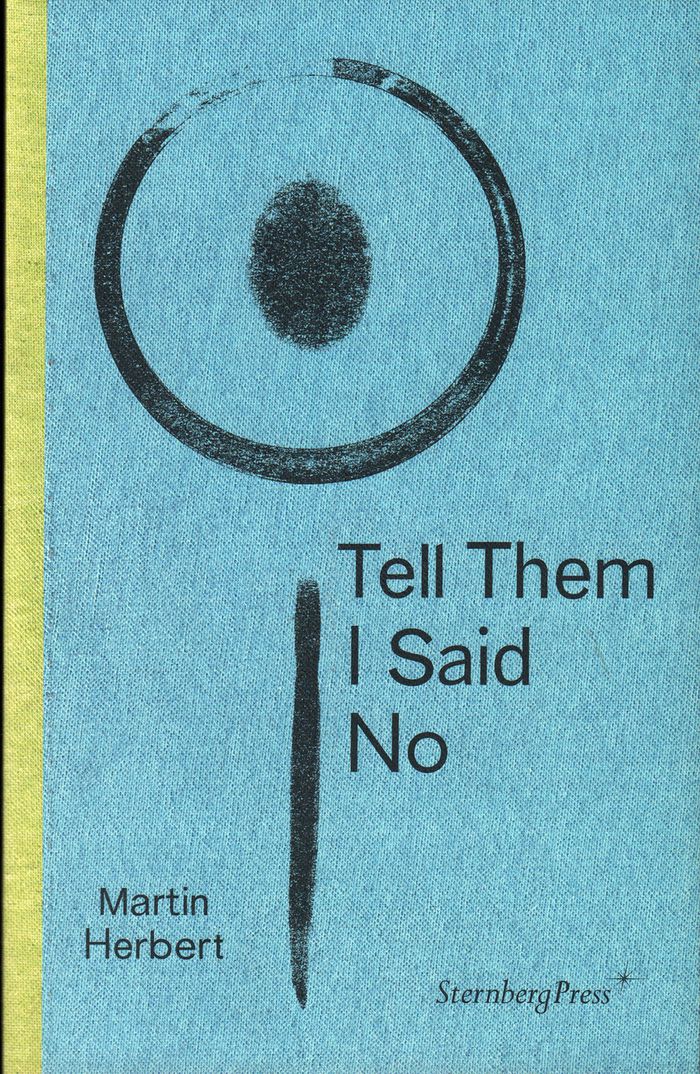
Tell them I said no
Tell them I said no
Actions:
Price:
$32.00
(available to order)
Summary:
This collection of essays by Martin Herbert considers various artists who have withdrawn from the art world or adopted an antagonistic position toward its mechanisms (essays on Lutz Bacher, Stanley Brouwn, Christopher D'Arcangelo, Trisha Donnelly, David Hammons, Agnes Martin, Cady Noland, Laurie Parsons, Charlotte Posenenske, and Albert York).
$32.00
(available to order)
Summary:
This collection of essays by Martin Herbert considers various artists who have withdrawn from the art world or adopted an antagonistic position toward its mechanisms (essays on Lutz Bacher, Stanley Brouwn, Christopher D'Arcangelo, Trisha Donnelly, David Hammons, Agnes Martin, Cady Noland, Laurie Parsons, Charlotte Posenenske, and Albert York).
Title:
Tell them I said no
Actions:
Price:
$32.00
(available to order)
Summary:
This collection of essays by Martin Herbert considers various artists who have withdrawn from the art world or adopted an antagonistic position toward its mechanisms (essays on Lutz Bacher, Stanley Brouwn, Christopher D'Arcangelo, Trisha Donnelly, David Hammons, Agnes Martin, Cady Noland, Laurie Parsons, Charlotte Posenenske, and Albert York).
Tell them I said no
Actions:
Price:
$32.00
(available to order)
Summary:
This collection of essays by Martin Herbert considers various artists who have withdrawn from the art world or adopted an antagonistic position toward its mechanisms (essays on Lutz Bacher, Stanley Brouwn, Christopher D'Arcangelo, Trisha Donnelly, David Hammons, Agnes Martin, Cady Noland, Laurie Parsons, Charlotte Posenenske, and Albert York).
Form:
books
books
Publication:
January 2017
January 2017
Subject:
Art Theory
Art Theory
Form:
books
books
Title:
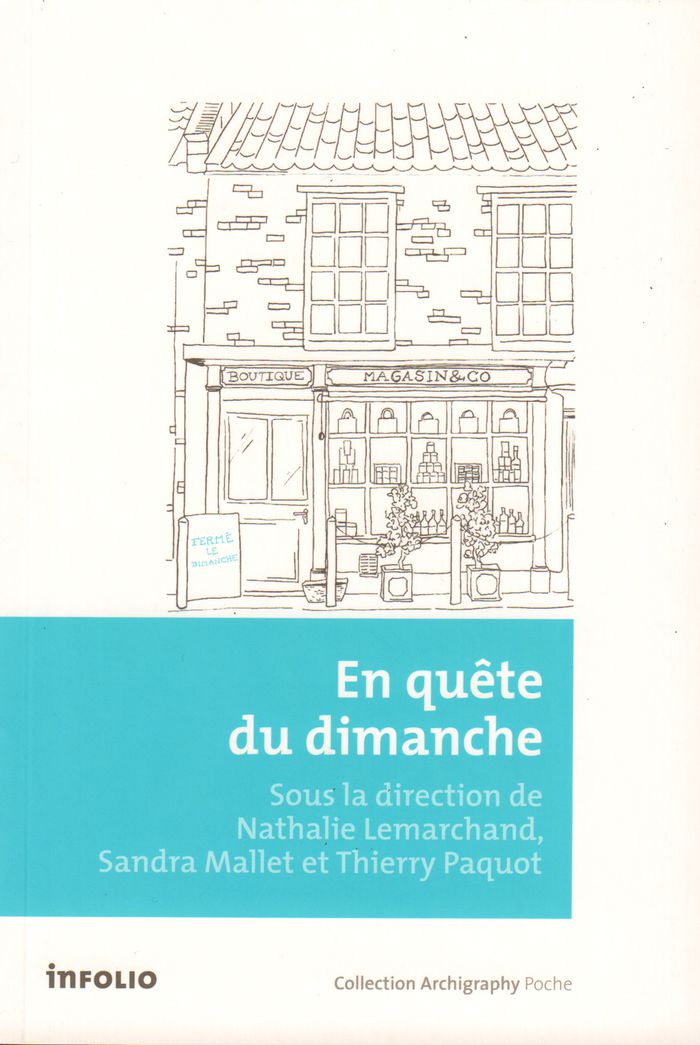
En quête du dimanche
En quête du dimanche
Actions:
Price:
$27.95
(available to order)
Summary:
Dans la plupart des pays occidentaux, le dimanche est institué jour de repos hebdomadaire, c’est aussi le « Jour du Seigneur » pour les Chrétiens. Dans le reste du monde, d’autres jours sont réservés aux cultes et seules certaines administrations et institutions pratiquent le repos dominical. Le dimanche s’affirme comme un singulier pluriel ! Cet ouvrage collectif décrit(...)
$27.95
(available to order)
Summary:
Dans la plupart des pays occidentaux, le dimanche est institué jour de repos hebdomadaire, c’est aussi le « Jour du Seigneur » pour les Chrétiens. Dans le reste du monde, d’autres jours sont réservés aux cultes et seules certaines administrations et institutions pratiquent le repos dominical. Le dimanche s’affirme comme un singulier pluriel ! Cet ouvrage collectif décrit(...)
Title:
En quête du dimanche
Actions:
Price:
$27.95
(available to order)
Summary:
Dans la plupart des pays occidentaux, le dimanche est institué jour de repos hebdomadaire, c’est aussi le « Jour du Seigneur » pour les Chrétiens. Dans le reste du monde, d’autres jours sont réservés aux cultes et seules certaines administrations et institutions pratiquent le repos dominical. Le dimanche s’affirme comme un singulier pluriel ! Cet ouvrage collectif décrit et analyse les activités urbaines qui se déroulent le dimanche, il rend compte des évolutions juridiques en cours, des représentations collectives attachées à la rythmique hebdomadaire ponctuée par ce jour pas encore comme les autres… Avec la question du dimanche se pose celle de l’accord entre les rythmes sociaux et individuels. Comment concilier désir personnel et horaires collectifs ? Aussi ne s’agit-il pas seulement du repos, mais des rituels d’une société. En cela la quête du dimanche revêt la dimension d’une écologie temporelle…
En quête du dimanche
Actions:
Price:
$27.95
(available to order)
Summary:
Dans la plupart des pays occidentaux, le dimanche est institué jour de repos hebdomadaire, c’est aussi le « Jour du Seigneur » pour les Chrétiens. Dans le reste du monde, d’autres jours sont réservés aux cultes et seules certaines administrations et institutions pratiquent le repos dominical. Le dimanche s’affirme comme un singulier pluriel ! Cet ouvrage collectif décrit et analyse les activités urbaines qui se déroulent le dimanche, il rend compte des évolutions juridiques en cours, des représentations collectives attachées à la rythmique hebdomadaire ponctuée par ce jour pas encore comme les autres… Avec la question du dimanche se pose celle de l’accord entre les rythmes sociaux et individuels. Comment concilier désir personnel et horaires collectifs ? Aussi ne s’agit-il pas seulement du repos, mais des rituels d’une société. En cela la quête du dimanche revêt la dimension d’une écologie temporelle…
Form:
books
books
Publication:
March 2017
March 2017
Subject:
Urban Theory
Urban Theory


