


10594 Results
Form:
books
books
Actions:
Price:
$34.95
(available to order)
Summary:
In this wide-ranging book, renowned philosopher and cultural theorist Peter Sloterdijk examines art in all its rich and varied forms: from music to architecture, light to movement, and design to typography. Moving between the visible and the invisible, the audible and the inaudible, his analyses span the centuries, from ancient civilizations to contemporary Hollywood.(...)
$34.95
(available to order)
Summary:
In this wide-ranging book, renowned philosopher and cultural theorist Peter Sloterdijk examines art in all its rich and varied forms: from music to architecture, light to movement, and design to typography. Moving between the visible and the invisible, the audible and the inaudible, his analyses span the centuries, from ancient civilizations to contemporary Hollywood.(...)
Title:
The aesthetic imperative: writings on art
Actions:
Price:
$34.95
(available to order)
Summary:
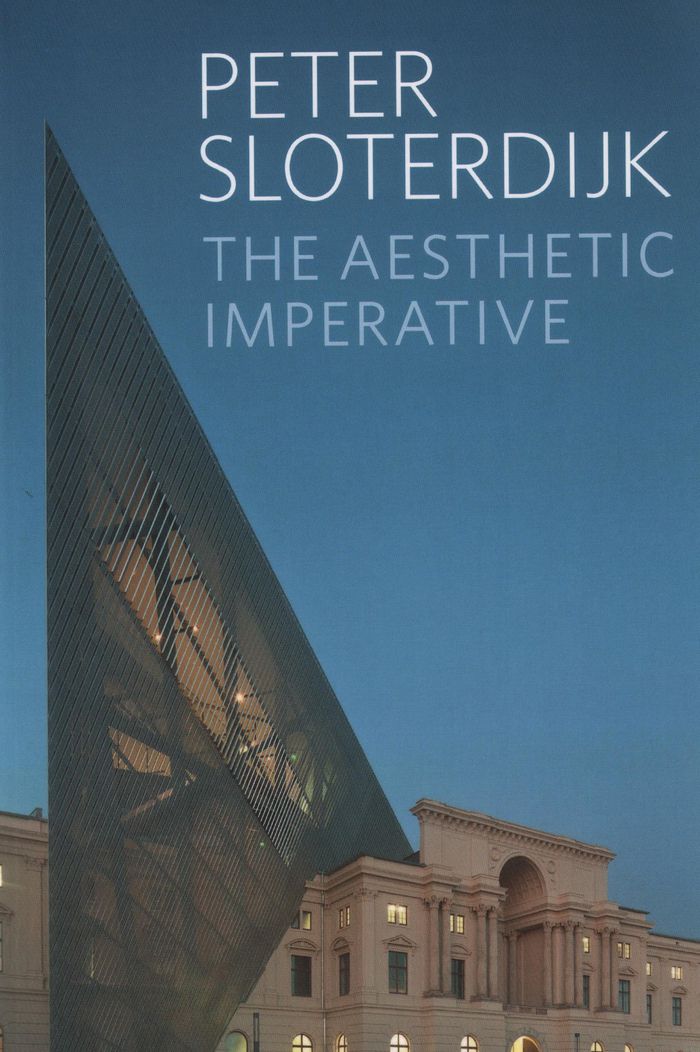
In this wide-ranging book, renowned philosopher and cultural theorist Peter Sloterdijk examines art in all its rich and varied forms: from music to architecture, light to movement, and design to typography. Moving between the visible and the invisible, the audible and the inaudible, his analyses span the centuries, from ancient civilizations to contemporary Hollywood. With great verve and insight he considers the key issues that have faced thinkers from Aristotle to Adorno, looking at art in its relation to ethics, epistemology, metaphysics, society, politics, anthropology and the subject.Sloterdijk explores a great variety of topics, including the Greek-Roman invention of postcards, medieval barter with purgatory and relics, the capitalist art market, the black boxes and white cubes of modernism, the rise of world’s fairs in the 19th century, the growth of museum and memorial culture, images of the city and the role of creativity. In doing so, Sloterdijk extends his characteristic method of defamiliarisation to transform the way we look at works of art and movements. His bold and original approach leads us away from the well-trodden paths of conventional art history to develop a theory of aesthetics which rejects strict categorisation, emphasising instead the crucial importance of individual subjectivity as a counter to the latent dangers of collective culture.This sustained collection of reflections, at once playful, serious and provocative, goes to the very heart of Sloterdijk’s enduring philosophical preoccupation with the aesthetic. It will be essential reading for students and scholars of philosophy and aesthetics and will appeal to anyone interested in culture and the arts more generally.
The aesthetic imperative: writings on art
Actions:
Price:
$34.95
(available to order)
Summary:
In this wide-ranging book, renowned philosopher and cultural theorist Peter Sloterdijk examines art in all its rich and varied forms: from music to architecture, light to movement, and design to typography. Moving between the visible and the invisible, the audible and the inaudible, his analyses span the centuries, from ancient civilizations to contemporary Hollywood. With great verve and insight he considers the key issues that have faced thinkers from Aristotle to Adorno, looking at art in its relation to ethics, epistemology, metaphysics, society, politics, anthropology and the subject.Sloterdijk explores a great variety of topics, including the Greek-Roman invention of postcards, medieval barter with purgatory and relics, the capitalist art market, the black boxes and white cubes of modernism, the rise of world’s fairs in the 19th century, the growth of museum and memorial culture, images of the city and the role of creativity. In doing so, Sloterdijk extends his characteristic method of defamiliarisation to transform the way we look at works of art and movements. His bold and original approach leads us away from the well-trodden paths of conventional art history to develop a theory of aesthetics which rejects strict categorisation, emphasising instead the crucial importance of individual subjectivity as a counter to the latent dangers of collective culture.This sustained collection of reflections, at once playful, serious and provocative, goes to the very heart of Sloterdijk’s enduring philosophical preoccupation with the aesthetic. It will be essential reading for students and scholars of philosophy and aesthetics and will appeal to anyone interested in culture and the arts more generally.
Form:
books
books
Publication:
April 2017
April 2017
Subject:
Art Theory
Art Theory
Form:
books
books
Actions:
Price:
$37.50
(available to order)
Summary:
In 2019 the Bauhaus will celebrate its hundredth anniversary! Preparations for the centenary have raised a host of questions: To what extent is the Bauhaus tied to a place, and how can its essence be conveyed in a museum? How can the tension between school and museum — in particular the Bauhaus and its everyday presence — be given a productive role in fashioning new(...)
$37.50
(available to order)
Summary:
In 2019 the Bauhaus will celebrate its hundredth anniversary! Preparations for the centenary have raised a host of questions: To what extent is the Bauhaus tied to a place, and how can its essence be conveyed in a museum? How can the tension between school and museum — in particular the Bauhaus and its everyday presence — be given a productive role in fashioning new(...)
Title:
Bauhaus news: contemporary remarks
Actions:
Price:
$37.50
(available to order)
Summary:
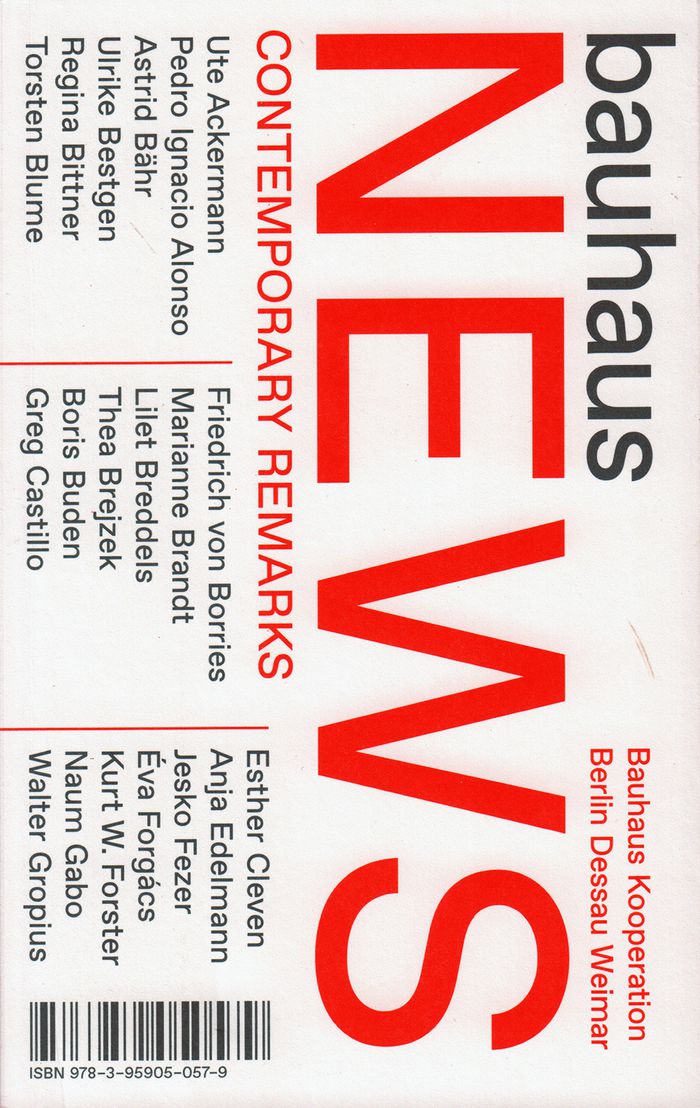
In 2019 the Bauhaus will celebrate its hundredth anniversary! Preparations for the centenary have raised a host of questions: To what extent is the Bauhaus tied to a place, and how can its essence be conveyed in a museum? How can the tension between school and museum — in particular the Bauhaus and its everyday presence — be given a productive role in fashioning new models of cultural education? What stimuli can the Bauhaus provide for a critical practice in today’s globalized world? In the process of compiling Bauhaus News, international Bauhaus experts, curators, historians, philosophers, artists, architects, educators, and teachers were asked to consider the Bauhaus from a twenty-first-century perspective. The book presents contrasting contemporary and historical statements and stories about the Bauhaus world heritage.
Bauhaus news: contemporary remarks
Actions:
Price:
$37.50
(available to order)
Summary:
In 2019 the Bauhaus will celebrate its hundredth anniversary! Preparations for the centenary have raised a host of questions: To what extent is the Bauhaus tied to a place, and how can its essence be conveyed in a museum? How can the tension between school and museum — in particular the Bauhaus and its everyday presence — be given a productive role in fashioning new models of cultural education? What stimuli can the Bauhaus provide for a critical practice in today’s globalized world? In the process of compiling Bauhaus News, international Bauhaus experts, curators, historians, philosophers, artists, architects, educators, and teachers were asked to consider the Bauhaus from a twenty-first-century perspective. The book presents contrasting contemporary and historical statements and stories about the Bauhaus world heritage.
Form:
books
books
Publication:
January 2015
January 2015
Subject:
Architectural Theory
Architectural Theory
Form:
books
books
Title:
Reassessing Paul Rudolph
Reassessing Paul Rudolph
Actions:
Price:
$46.95
(available to order)
Summary:
American architect Paul Rudolph (1918–1997) was internationally known in the 1950s and early 1960s for his powerful, large-scale concrete buildings. Hugely influential during his lifetime, Rudolph was one of the most significant American architects of his generation. To a remarkable extent, his reputation rose and fell with the fortunes of postwar modernism in America.(...)
$46.95
(available to order)
Summary:
American architect Paul Rudolph (1918–1997) was internationally known in the 1950s and early 1960s for his powerful, large-scale concrete buildings. Hugely influential during his lifetime, Rudolph was one of the most significant American architects of his generation. To a remarkable extent, his reputation rose and fell with the fortunes of postwar modernism in America.(...)
Title:
Reassessing Paul Rudolph
Actions:
Price:
$46.95
(available to order)
Summary:
American architect Paul Rudolph (1918–1997) was internationally known in the 1950s and early 1960s for his powerful, large-scale concrete buildings. Hugely influential during his lifetime, Rudolph was one of the most significant American architects of his generation. To a remarkable extent, his reputation rose and fell with the fortunes of postwar modernism in America. This insightful book reconsiders Rudolph’s architecture and the discipline’s assessment of his projects.
Reassessing Paul Rudolph
Actions:
Price:
$46.95
(available to order)
Summary:
American architect Paul Rudolph (1918–1997) was internationally known in the 1950s and early 1960s for his powerful, large-scale concrete buildings. Hugely influential during his lifetime, Rudolph was one of the most significant American architects of his generation. To a remarkable extent, his reputation rose and fell with the fortunes of postwar modernism in America. This insightful book reconsiders Rudolph’s architecture and the discipline’s assessment of his projects.
Form:
books
books
Publication:
December 2017
December 2017
Subject:
Architectural Theory
Architectural Theory
Form:
books
books
Price:
$46.95
(available to order)
Summary:
The Las Vegas Strip has impersonated the Wild West, with saloon doors and wagon wheels; it has decked itself out in midcentury modern sleekness. It has illuminated itself with twenty-story-high neon signs, then junked them. After that came Disney-like theme parks featuring castles and pirates, followed by replicas of Venetian canals, New York skyscrapers, and the Eiffel(...)
$46.95
(available to order)
Summary:
The Las Vegas Strip has impersonated the Wild West, with saloon doors and wagon wheels; it has decked itself out in midcentury modern sleekness. It has illuminated itself with twenty-story-high neon signs, then junked them. After that came Disney-like theme parks featuring castles and pirates, followed by replicas of Venetian canals, New York skyscrapers, and the Eiffel(...)
Title:
The Strip
Actions:
Price:
$46.95
(available to order)
Summary:
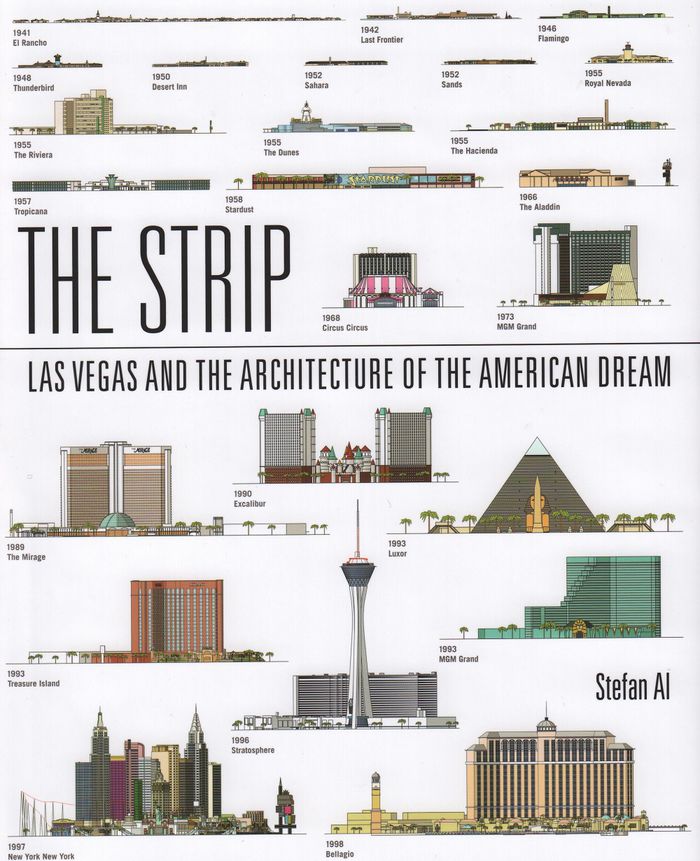
The Las Vegas Strip has impersonated the Wild West, with saloon doors and wagon wheels; it has decked itself out in midcentury modern sleekness. It has illuminated itself with twenty-story-high neon signs, then junked them. After that came Disney-like theme parks featuring castles and pirates, followed by replicas of Venetian canals, New York skyscrapers, and the Eiffel Tower. (It might be noted that forty-two million people visited Las Vegas in 2015—ten million more than visited the real Paris.) More recently, the Strip decided to get classy, with casinos designed by famous architects and zillion-dollar collections of art. Las Vegas became the “implosion capital of the world” as developers, driven by competition, got rid of the old to make way for the new—offering a non-metaphorical definition of “creative destruction.” In "The StripW, Stefan Al examines the many transformations of the Las Vegas Strip, arguing that they mirror transformations in America itself. The Strip is not, as popularly supposed, a display of architectural freaks but representative of architectural trends and a record of social, cultural, and economic change.
The Strip
Actions:
Price:
$46.95
(available to order)
Summary:
The Las Vegas Strip has impersonated the Wild West, with saloon doors and wagon wheels; it has decked itself out in midcentury modern sleekness. It has illuminated itself with twenty-story-high neon signs, then junked them. After that came Disney-like theme parks featuring castles and pirates, followed by replicas of Venetian canals, New York skyscrapers, and the Eiffel Tower. (It might be noted that forty-two million people visited Las Vegas in 2015—ten million more than visited the real Paris.) More recently, the Strip decided to get classy, with casinos designed by famous architects and zillion-dollar collections of art. Las Vegas became the “implosion capital of the world” as developers, driven by competition, got rid of the old to make way for the new—offering a non-metaphorical definition of “creative destruction.” In "The StripW, Stefan Al examines the many transformations of the Las Vegas Strip, arguing that they mirror transformations in America itself. The Strip is not, as popularly supposed, a display of architectural freaks but representative of architectural trends and a record of social, cultural, and economic change.
Form:
books
books
Publication:
March 2017
March 2017
Subject:
Urban Theory
Urban Theory
Form:
books
books
Title:
Architects' gravesites
Architects' gravesites
Actions:
Price:
$27.50
(available to order)
Summary:
All working architects leave behind a string of monuments to themselves in the form of buildings they have designed. But what about the final spaces that architects themselves will occupy? Are architects’ gravesites more monumental - more architectural - than others? This unique book provides an illustrated guide to more than 200 gravesites of famous architects, almost(...)
$27.50
(available to order)
Summary:
All working architects leave behind a string of monuments to themselves in the form of buildings they have designed. But what about the final spaces that architects themselves will occupy? Are architects’ gravesites more monumental - more architectural - than others? This unique book provides an illustrated guide to more than 200 gravesites of famous architects, almost(...)
Title:
Architects' gravesites
Actions:
Price:
$27.50
(available to order)
Summary:
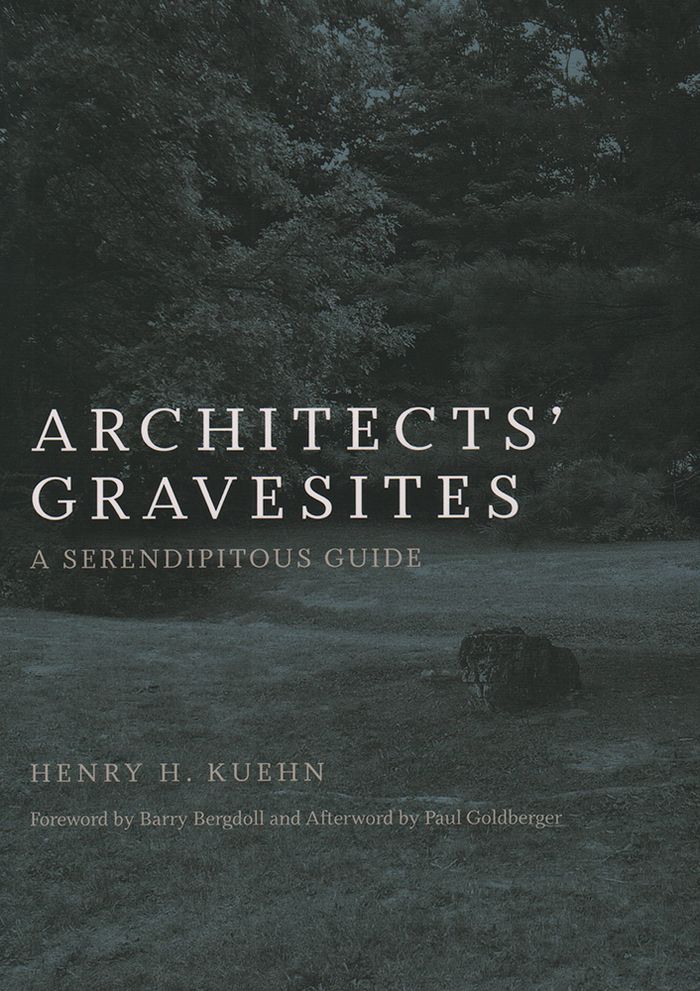
All working architects leave behind a string of monuments to themselves in the form of buildings they have designed. But what about the final spaces that architects themselves will occupy? Are architects’ gravesites more monumental - more architectural - than others? This unique book provides an illustrated guide to more than 200 gravesites of famous architects, almost all of them in the United States. Led by author Henry Kuehn, we find that most graves of architects are not monumental but rather modest, that many architects did not design their final resting places, and that a surprising number had their ashes scattered.
Architects' gravesites
Actions:
Price:
$27.50
(available to order)
Summary:
All working architects leave behind a string of monuments to themselves in the form of buildings they have designed. But what about the final spaces that architects themselves will occupy? Are architects’ gravesites more monumental - more architectural - than others? This unique book provides an illustrated guide to more than 200 gravesites of famous architects, almost all of them in the United States. Led by author Henry Kuehn, we find that most graves of architects are not monumental but rather modest, that many architects did not design their final resting places, and that a surprising number had their ashes scattered.
Form:
books
books
Publication:
May 2017
May 2017
Subject:
Architectural Theory
Architectural Theory
Form:
books
books
Price:
$60.00
(available to order)
Summary:
The English architects Alison Smithson (1928–1993) and Peter Smithson (1923–2003) were ringleaders of the New Brutalism, active in CIAM and Team 10, and influential in English Pop Art. The Smithsons, who met as architecture students, built only a few buildings but wrote prolifically throughout their career, leaving a body of writings that consider issues in architecture(...)
$60.00
(available to order)
Summary:
The English architects Alison Smithson (1928–1993) and Peter Smithson (1923–2003) were ringleaders of the New Brutalism, active in CIAM and Team 10, and influential in English Pop Art. The Smithsons, who met as architecture students, built only a few buildings but wrote prolifically throughout their career, leaving a body of writings that consider issues in architecture(...)
Title:
Not quite architecture: writing around Alison and Peter Smithson
Actions:
Price:
$60.00
(available to order)
Summary:
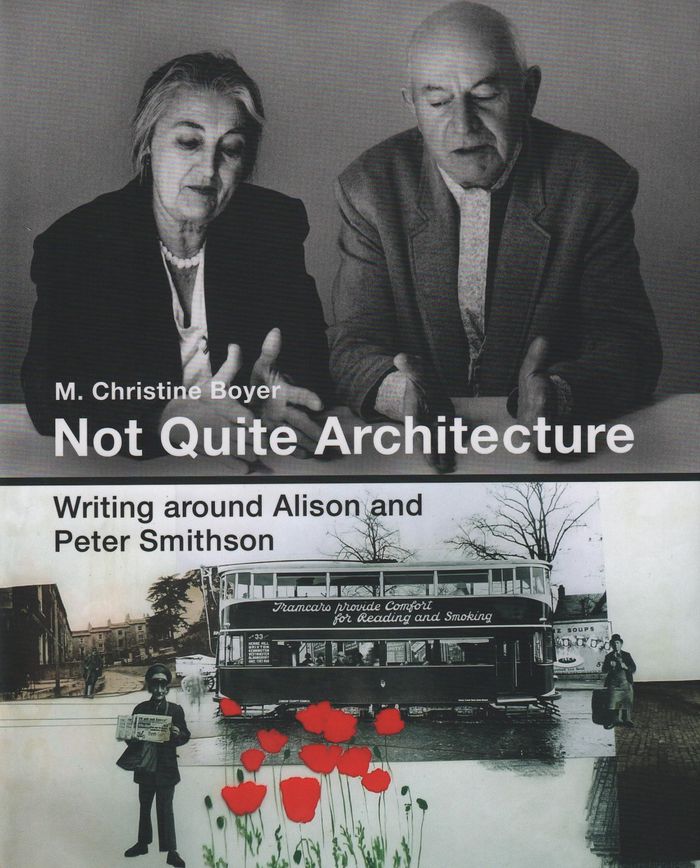
The English architects Alison Smithson (1928–1993) and Peter Smithson (1923–2003) were ringleaders of the New Brutalism, active in CIAM and Team 10, and influential in English Pop Art. The Smithsons, who met as architecture students, built only a few buildings but wrote prolifically throughout their career, leaving a body of writings that consider issues in architecture and urbanism and also take up subjects that are “not quite architecture” (the name of a series of articles written by Alison Smithson for the Architects’ Journal)—including fashion design, graphic communication, and children’s tales. In this book, M. Christine Boyer explores the Smithsons’ writings—books, articles, lectures, unpublished manuscripts, and private papers. She focuses on unpublished material, reading the letter, the scribbled note, the undelivered lecture, the scrapbook, the “magic box,” as words in the language of modern architectural history—especially that of postwar England, where the Smithsons and other architects were at the center of the richest possible range of cultural encounters. Boyer is “writing around” the Smithsons’ work by considering the cultural contexts in which they formed and wrote about their ideas.
Not quite architecture: writing around Alison and Peter Smithson
Actions:
Price:
$60.00
(available to order)
Summary:
The English architects Alison Smithson (1928–1993) and Peter Smithson (1923–2003) were ringleaders of the New Brutalism, active in CIAM and Team 10, and influential in English Pop Art. The Smithsons, who met as architecture students, built only a few buildings but wrote prolifically throughout their career, leaving a body of writings that consider issues in architecture and urbanism and also take up subjects that are “not quite architecture” (the name of a series of articles written by Alison Smithson for the Architects’ Journal)—including fashion design, graphic communication, and children’s tales. In this book, M. Christine Boyer explores the Smithsons’ writings—books, articles, lectures, unpublished manuscripts, and private papers. She focuses on unpublished material, reading the letter, the scribbled note, the undelivered lecture, the scrapbook, the “magic box,” as words in the language of modern architectural history—especially that of postwar England, where the Smithsons and other architects were at the center of the richest possible range of cultural encounters. Boyer is “writing around” the Smithsons’ work by considering the cultural contexts in which they formed and wrote about their ideas.
Form:
books
books
Publication:
March 2017
March 2017
Subject:
Architectural Theory
Architectural Theory
Form:
books
books
Title:
Elastic architecture: Frederick Kiesler and design research in the first age of robotic culture
Elastic architecture: Frederick Kiesler and design research in the first age of robotic culture
Actions:
Price:
$42.95
(available to order)
Summary:
In 1960, architect Philip Johnson championed Frederick Kiesler, calling him “the greatest non-building architect of our time.” Kiesler’s ideas were difficult to construct, but as Johnson believed, “enormous” and “profound.” Kiesler (1890–1965) went against the grain of the accepted modern style, rejecting rectilinear glass and steel in favor of more organic forms and(...)
$42.95
(available to order)
Summary:
In 1960, architect Philip Johnson championed Frederick Kiesler, calling him “the greatest non-building architect of our time.” Kiesler’s ideas were difficult to construct, but as Johnson believed, “enormous” and “profound.” Kiesler (1890–1965) went against the grain of the accepted modern style, rejecting rectilinear glass and steel in favor of more organic forms and(...)
Title:
Elastic architecture: Frederick Kiesler and design research in the first age of robotic culture
Actions:
Price:
$42.95
(available to order)
Summary:
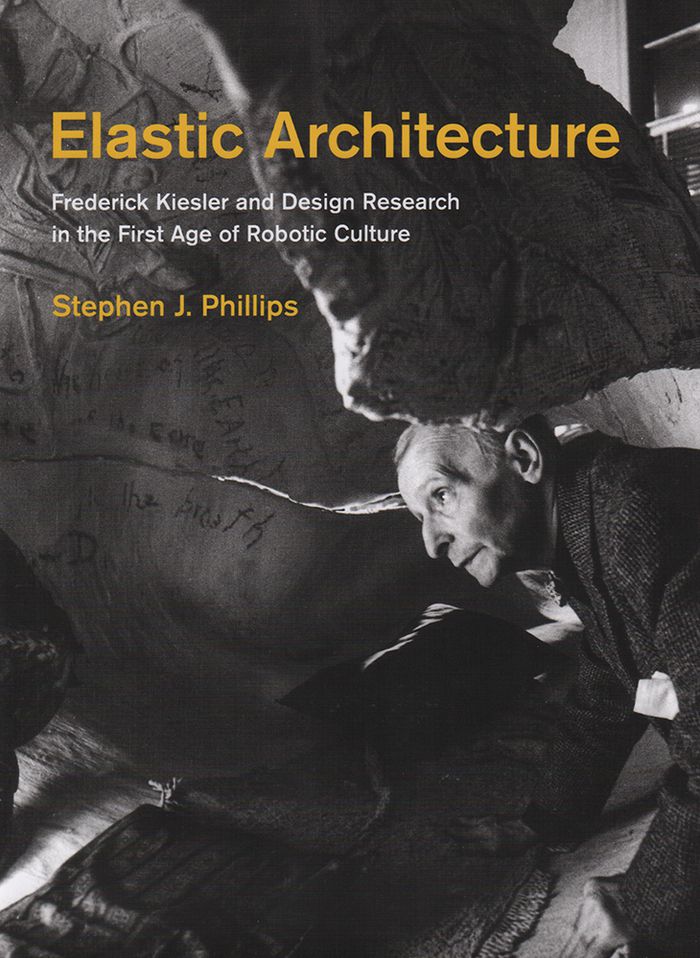
In 1960, architect Philip Johnson championed Frederick Kiesler, calling him “the greatest non-building architect of our time.” Kiesler’s ideas were difficult to construct, but as Johnson believed, “enormous” and “profound.” Kiesler (1890–1965) went against the grain of the accepted modern style, rejecting rectilinear glass and steel in favor of more organic forms and flexible structures that could respond to the ever-changing needs of the body in motion. In Elastic Architecture, Stephen Phillips offers the first in-depth exploration of Kiesler’s innovative and multidisciplinary research and design practice. Exploring Kiesler’s formative relationships with the European avant-garde, Phillips shows how Kiesler found inspiration in the plastic arts, experimental theater, early animation, and automatons to develop and refine his spatial concept of the Endless. Moving from Europe to New York in the 1920s, Kiesler applied these radical Dadaist, constructivist, and surrealist practices to his urban display projects, which included shop windows for Saks Fifth Avenue. After launching his innovative Design Correlation Laboratory at Columbia and Yale, Kiesler went on to invent new houses, theaters, and galleries that were meant to move, shift, and adapt to evolutionary changes occurring within the natural and built environment.
Elastic architecture: Frederick Kiesler and design research in the first age of robotic culture
Actions:
Price:
$42.95
(available to order)
Summary:
In 1960, architect Philip Johnson championed Frederick Kiesler, calling him “the greatest non-building architect of our time.” Kiesler’s ideas were difficult to construct, but as Johnson believed, “enormous” and “profound.” Kiesler (1890–1965) went against the grain of the accepted modern style, rejecting rectilinear glass and steel in favor of more organic forms and flexible structures that could respond to the ever-changing needs of the body in motion. In Elastic Architecture, Stephen Phillips offers the first in-depth exploration of Kiesler’s innovative and multidisciplinary research and design practice. Exploring Kiesler’s formative relationships with the European avant-garde, Phillips shows how Kiesler found inspiration in the plastic arts, experimental theater, early animation, and automatons to develop and refine his spatial concept of the Endless. Moving from Europe to New York in the 1920s, Kiesler applied these radical Dadaist, constructivist, and surrealist practices to his urban display projects, which included shop windows for Saks Fifth Avenue. After launching his innovative Design Correlation Laboratory at Columbia and Yale, Kiesler went on to invent new houses, theaters, and galleries that were meant to move, shift, and adapt to evolutionary changes occurring within the natural and built environment.
Form:
books
books
Publication:
March 2017
March 2017
Subject:
Architectural Theory
Architectural Theory
Form:
books
books
Price:
$34.95
(available to order)
Summary:
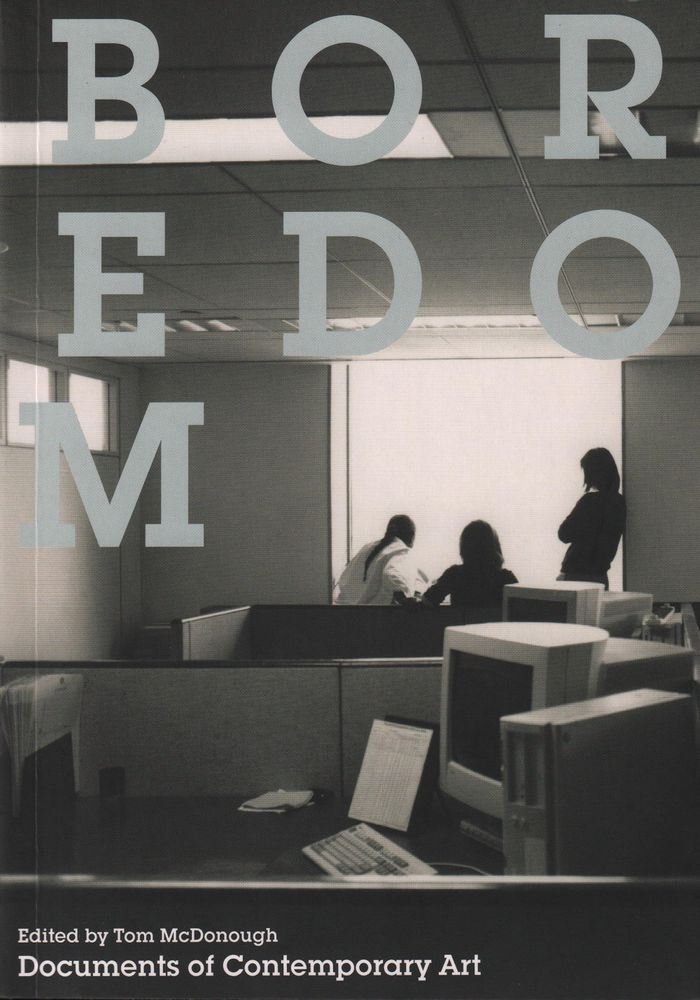
Boredom in modern and contemporary art: as something to be struggled against, embraced as an experience, or explored as a potential site of resistance.
$34.95
(available to order)
Summary:
Boredom in modern and contemporary art: as something to be struggled against, embraced as an experience, or explored as a potential site of resistance.
Form:
books
books
Title:
William Kentridge
William Kentridge
Actions:
Price:
$31.95
(available to order)
Summary:
Since the 1970s, the South African artist William Kentridge has charted the turbulent terrain of his homeland in both personal and political terms. With erudition, absurdist humor, and an underlying hope in humankind, Kentridge’s artwork has examined apartheid, humanitarian atrocities, aging, and the ambiguities of growing up white and Jewish in South Africa. This October(...)
$31.95
(available to order)
Summary:
Since the 1970s, the South African artist William Kentridge has charted the turbulent terrain of his homeland in both personal and political terms. With erudition, absurdist humor, and an underlying hope in humankind, Kentridge’s artwork has examined apartheid, humanitarian atrocities, aging, and the ambiguities of growing up white and Jewish in South Africa. This October(...)
Title:
William Kentridge
Actions:
Price:
$31.95
(available to order)
Summary:
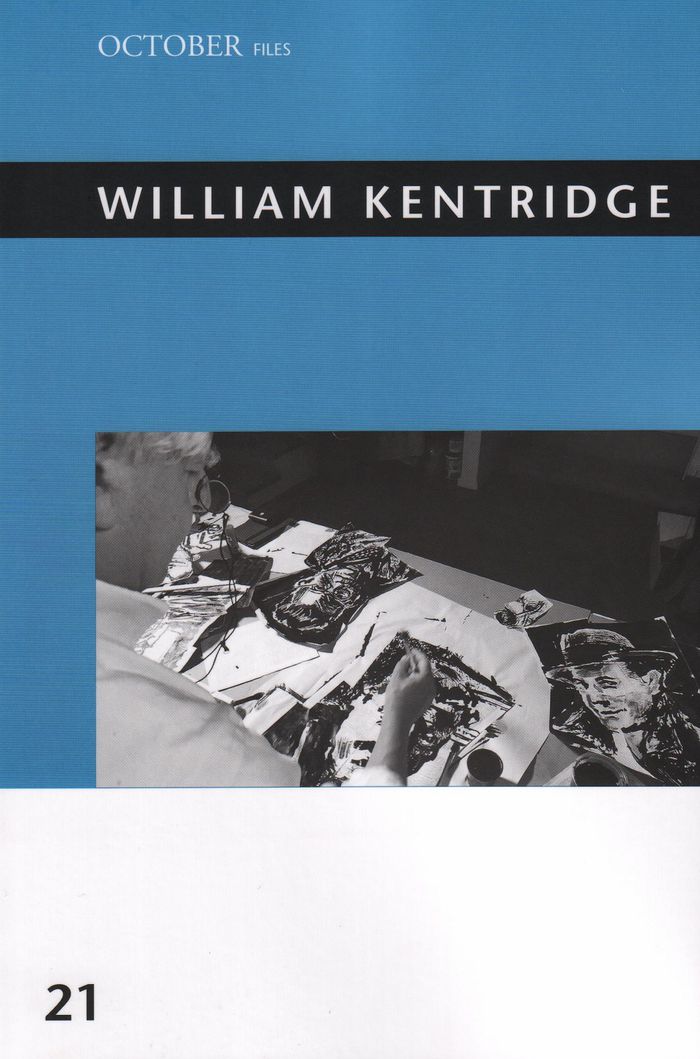
Since the 1970s, the South African artist William Kentridge has charted the turbulent terrain of his homeland in both personal and political terms. With erudition, absurdist humor, and an underlying hope in humankind, Kentridge’s artwork has examined apartheid, humanitarian atrocities, aging, and the ambiguities of growing up white and Jewish in South Africa. This October Files volume brings together critical essays and interviews that explore Kentridge’s work and shed light on the unique working processes behind his drawings, prints, stop-animation films, and theater works.
William Kentridge
Actions:
Price:
$31.95
(available to order)
Summary:
Since the 1970s, the South African artist William Kentridge has charted the turbulent terrain of his homeland in both personal and political terms. With erudition, absurdist humor, and an underlying hope in humankind, Kentridge’s artwork has examined apartheid, humanitarian atrocities, aging, and the ambiguities of growing up white and Jewish in South Africa. This October Files volume brings together critical essays and interviews that explore Kentridge’s work and shed light on the unique working processes behind his drawings, prints, stop-animation films, and theater works.
Form:
books
books
Publication:
February 2017
February 2017
Subject:
Art Theory
Art Theory
Form:
books
books
Title:
Sigmar Polke
Sigmar Polke
Actions:
Price:
$27.95
(available to order)
Summary:
Stefan Gronert approaches "Girlfriends" through its deliberate and elusive ambiguity, providing technical detail and historical background that allow some of the work’s motivation and depth to become clearer. Gronert analyzes Polke’s relationship to his tutors and peers, especially Gerhard Richter; describes the art historical context in which Polke worked; and discusses(...)
$27.95
(available to order)
Summary:
Stefan Gronert approaches "Girlfriends" through its deliberate and elusive ambiguity, providing technical detail and historical background that allow some of the work’s motivation and depth to become clearer. Gronert analyzes Polke’s relationship to his tutors and peers, especially Gerhard Richter; describes the art historical context in which Polke worked; and discusses(...)
Title:
Sigmar Polke
Actions:
Price:
$27.95
(available to order)
Summary:
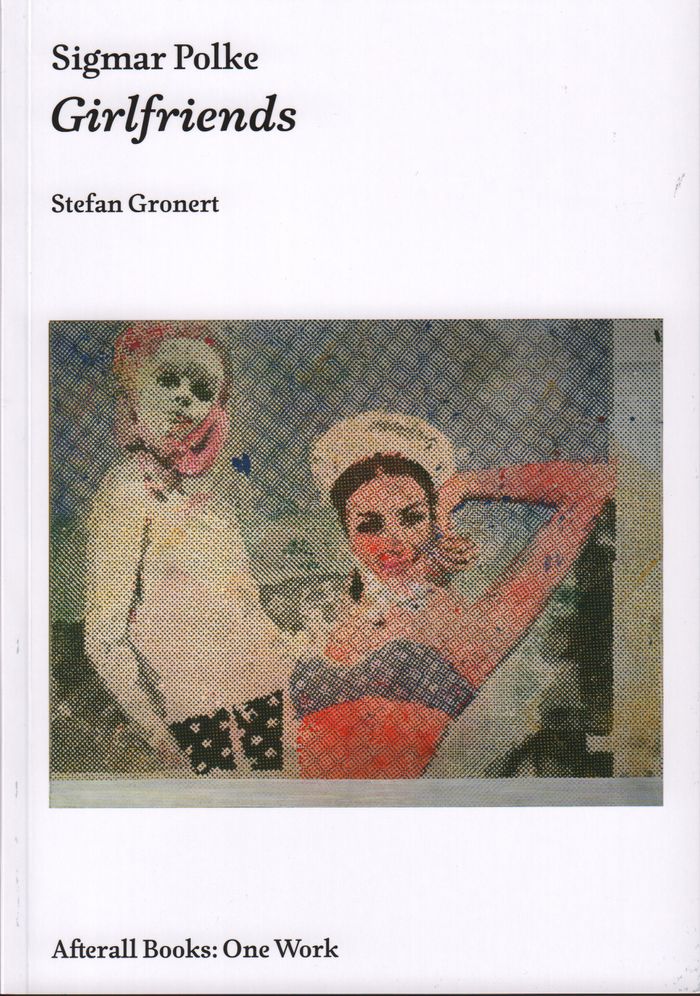
Stefan Gronert approaches "Girlfriends" through its deliberate and elusive ambiguity, providing technical detail and historical background that allow some of the work’s motivation and depth to become clearer. Gronert analyzes Polke’s relationship to his tutors and peers, especially Gerhard Richter; describes the art historical context in which Polke worked; and discusses some of the social and political issues to which Girlfriends refers. Considering such topics as the distinction between Polke and Alain Jacquet in their use of photographed material, between Polke’s use of the raster technique and that of Roy Lichtenstein, and the feminist discourse of the time, Gronert draws on a variety of critical interpretations of Polke’s work, including some material that has not yet been translated into English.
Sigmar Polke
Actions:
Price:
$27.95
(available to order)
Summary:
Stefan Gronert approaches "Girlfriends" through its deliberate and elusive ambiguity, providing technical detail and historical background that allow some of the work’s motivation and depth to become clearer. Gronert analyzes Polke’s relationship to his tutors and peers, especially Gerhard Richter; describes the art historical context in which Polke worked; and discusses some of the social and political issues to which Girlfriends refers. Considering such topics as the distinction between Polke and Alain Jacquet in their use of photographed material, between Polke’s use of the raster technique and that of Roy Lichtenstein, and the feminist discourse of the time, Gronert draws on a variety of critical interpretations of Polke’s work, including some material that has not yet been translated into English.
Form:
books
books
Publication:
August 2017
August 2017
Subject:
Art Theory
Art Theory


