


10594 Results
Form:
books
books
Title:
Forensic architecture
Forensic architecture
Actions:
Price:
$49.95
(available to order)
Summary:
In recent years, the group Forensic Architecture began using novel research methods to undertake a series of investigations into human rights abuses. Today, the group provides crucial evidence for international courts and works with a wide range of activist groups, NGOs, Amnesty International, and the UN. Forensic Architecture has not only shed new light on human rights(...)
$49.95
(available to order)
Summary:
In recent years, the group Forensic Architecture began using novel research methods to undertake a series of investigations into human rights abuses. Today, the group provides crucial evidence for international courts and works with a wide range of activist groups, NGOs, Amnesty International, and the UN. Forensic Architecture has not only shed new light on human rights(...)
Title:
Forensic architecture
Actions:
Price:
$49.95
(available to order)
Summary:
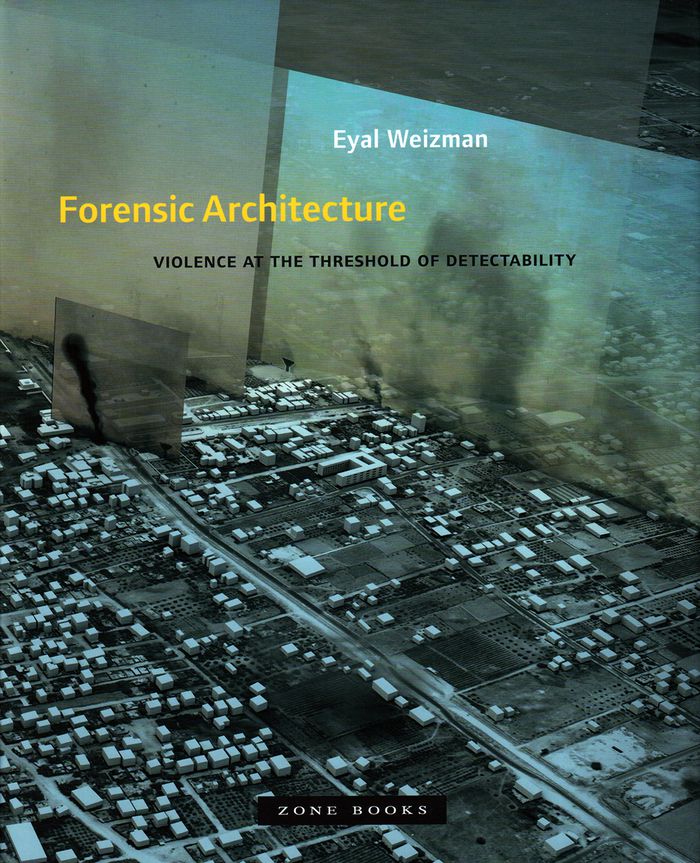
In recent years, the group Forensic Architecture began using novel research methods to undertake a series of investigations into human rights abuses. Today, the group provides crucial evidence for international courts and works with a wide range of activist groups, NGOs, Amnesty International, and the UN. Forensic Architecture has not only shed new light on human rights violations and state crimes across the globe, but has also created a new form of investigative practice that bears its name. The group uses architecture as an optical device to investigate armed conflicts and environmental destruction, as well as to cross-reference a variety of evidence sources, such as new media, remote sensing, material analysis, witness testimony, and crowd-sourcing. In "Forensic architecture", Eyal Weizman, the group’s founder, provides, for the first time, an in-depth introduction to the history, practice, assumptions, potentials, and double binds of this practice. The book includes an extensive array of images, maps, and detailed documentation that records the intricate work the group has performed. Traversing multiple scales and durations, the case studies in this volume include the analysis of the shrapnel fragments in a room struck by drones in Pakistan, the reconstruction of a contested shooting in the West Bank, the architectural recreation of a secret Syrian detention center from the memory of its survivors, a blow-by-blow account of a day-long battle in Gaza, and an investigation of environmental violence and climate change in the Guatemalan highlands and elsewhere.
Forensic architecture
Actions:
Price:
$49.95
(available to order)
Summary:
In recent years, the group Forensic Architecture began using novel research methods to undertake a series of investigations into human rights abuses. Today, the group provides crucial evidence for international courts and works with a wide range of activist groups, NGOs, Amnesty International, and the UN. Forensic Architecture has not only shed new light on human rights violations and state crimes across the globe, but has also created a new form of investigative practice that bears its name. The group uses architecture as an optical device to investigate armed conflicts and environmental destruction, as well as to cross-reference a variety of evidence sources, such as new media, remote sensing, material analysis, witness testimony, and crowd-sourcing. In "Forensic architecture", Eyal Weizman, the group’s founder, provides, for the first time, an in-depth introduction to the history, practice, assumptions, potentials, and double binds of this practice. The book includes an extensive array of images, maps, and detailed documentation that records the intricate work the group has performed. Traversing multiple scales and durations, the case studies in this volume include the analysis of the shrapnel fragments in a room struck by drones in Pakistan, the reconstruction of a contested shooting in the West Bank, the architectural recreation of a secret Syrian detention center from the memory of its survivors, a blow-by-blow account of a day-long battle in Gaza, and an investigation of environmental violence and climate change in the Guatemalan highlands and elsewhere.
Form:
books
books
Publication:
April 2017
April 2017
Subject:
Architectural Theory
Architectural Theory
Form:
books
books
Title:
Public space? Lost and found
Public space? Lost and found
Actions:
Price:
$52.50
(available to order)
Summary:
“Public space” is a potent and contentious topic among artists, architects, and cultural producers. Public Space? Lost and Found considers the role of aesthetic practices within the construction, identification, and critique of shared territories, and how artists or architects—the “antennae of the race”—can heighten our awareness of rapidly changing formulations of public(...)
$52.50
(available to order)
Summary:
“Public space” is a potent and contentious topic among artists, architects, and cultural producers. Public Space? Lost and Found considers the role of aesthetic practices within the construction, identification, and critique of shared territories, and how artists or architects—the “antennae of the race”—can heighten our awareness of rapidly changing formulations of public(...)
Subject:
Architectural Theory
Architectural Theory
Publication:
July 2017
July 2017
Title:
Public space? Lost and found
Actions:
Price:
$52.50
(available to order)
Summary:
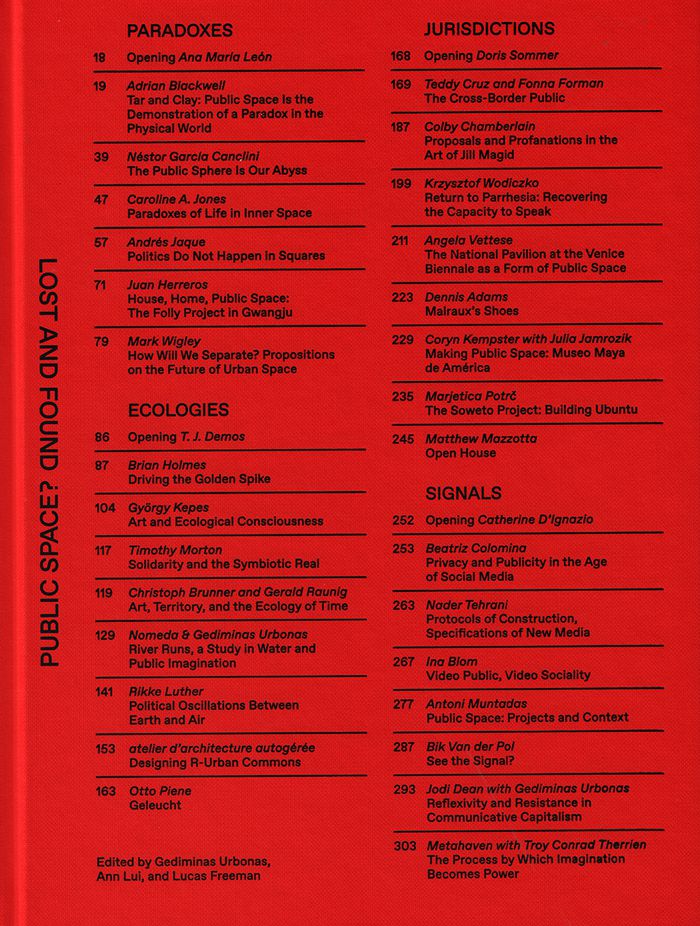
“Public space” is a potent and contentious topic among artists, architects, and cultural producers. Public Space? Lost and Found considers the role of aesthetic practices within the construction, identification, and critique of shared territories, and how artists or architects—the “antennae of the race”—can heighten our awareness of rapidly changing formulations of public space in the age of digital media, vast ecological crises, and civic uprisings. "Public Space? Lost and found" combines significant recent projects in art and architecture with writings by historians and theorists. Contributors investigate strategies for responding to underrepresented communities and areas of conflict through the work of Marjetica Potrc in Johannesburg and Teddy Cruz on the Mexico-U.S. border, among others. They explore our collective stakes in ecological catastrophe through artistic research such as atelier d’architecture autogérée’s hubs for community action and recycling in Colombes, France, and Brian Holmes’s theoretical investigation of new forms of aesthetic perception in the age of the Anthropocene. Inspired by artist and MIT professor Antoni Muntadas’ early coining of the term “media landscape,” contributors also look ahead, casting a critical eye on the fraught impact of digital media and the internet on public space. This book is the first in a new series of volumes produced by the MIT School of Architecture and Planning’s Program in Art, Culture and Technology.
Public space? Lost and found
Actions:
Price:
$52.50
(available to order)
Summary:
“Public space” is a potent and contentious topic among artists, architects, and cultural producers. Public Space? Lost and Found considers the role of aesthetic practices within the construction, identification, and critique of shared territories, and how artists or architects—the “antennae of the race”—can heighten our awareness of rapidly changing formulations of public space in the age of digital media, vast ecological crises, and civic uprisings. "Public Space? Lost and found" combines significant recent projects in art and architecture with writings by historians and theorists. Contributors investigate strategies for responding to underrepresented communities and areas of conflict through the work of Marjetica Potrc in Johannesburg and Teddy Cruz on the Mexico-U.S. border, among others. They explore our collective stakes in ecological catastrophe through artistic research such as atelier d’architecture autogérée’s hubs for community action and recycling in Colombes, France, and Brian Holmes’s theoretical investigation of new forms of aesthetic perception in the age of the Anthropocene. Inspired by artist and MIT professor Antoni Muntadas’ early coining of the term “media landscape,” contributors also look ahead, casting a critical eye on the fraught impact of digital media and the internet on public space. This book is the first in a new series of volumes produced by the MIT School of Architecture and Planning’s Program in Art, Culture and Technology.
Form:
books
books
Publication:
July 2017
July 2017
Subject:
Architectural Theory
Architectural Theory
Form:
books
books
Title:
Designing MIT
Designing MIT
Actions:
Price:
$34.95
(available to order)
Summary:
This publication is the first book to detail Bosworth’s challenges in the planning and construction of MIT’s unique Cambridge campus. MIT professor of architecture Mark Jarzombek provides a fascinating sample of the architectural debates of the time. He examines the competing project proposals—including one from Ralph Adams Cram, noted for his gothic West Point campus—and(...)
$34.95
(available to order)
Summary:
This publication is the first book to detail Bosworth’s challenges in the planning and construction of MIT’s unique Cambridge campus. MIT professor of architecture Mark Jarzombek provides a fascinating sample of the architectural debates of the time. He examines the competing project proposals—including one from Ralph Adams Cram, noted for his gothic West Point campus—and(...)
Title:
Designing MIT
Actions:
Price:
$34.95
(available to order)
Summary:
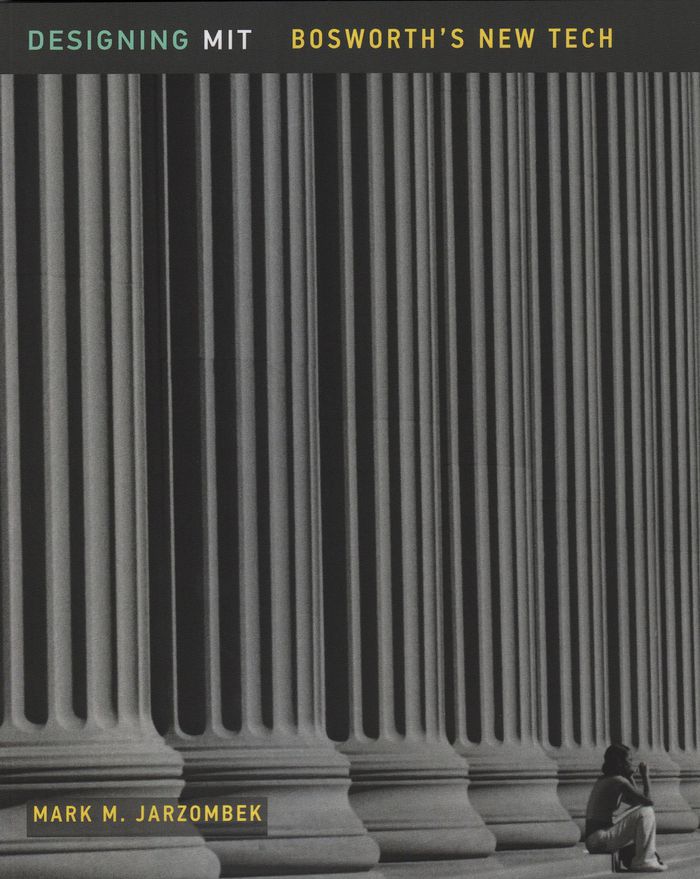
This publication is the first book to detail Bosworth’s challenges in the planning and construction of MIT’s unique Cambridge campus. MIT professor of architecture Mark Jarzombek provides a fascinating sample of the architectural debates of the time. He examines the competing project proposals—including one from Ralph Adams Cram, noted for his gothic West Point campus—and describes how Bosworth found his classically oriented vision challenged by the engineer John Freeman, a proponent of Frederick W. Taylor’s new principle of scientific management. Jarzombek shows that their conflict ultimately resulted in a far more innovative design than either of their individual approaches would have produced, one that employed new European concepts of industrialism, efficiency, and aesthetics in academic structures.
Designing MIT
Actions:
Price:
$34.95
(available to order)
Summary:
This publication is the first book to detail Bosworth’s challenges in the planning and construction of MIT’s unique Cambridge campus. MIT professor of architecture Mark Jarzombek provides a fascinating sample of the architectural debates of the time. He examines the competing project proposals—including one from Ralph Adams Cram, noted for his gothic West Point campus—and describes how Bosworth found his classically oriented vision challenged by the engineer John Freeman, a proponent of Frederick W. Taylor’s new principle of scientific management. Jarzombek shows that their conflict ultimately resulted in a far more innovative design than either of their individual approaches would have produced, one that employed new European concepts of industrialism, efficiency, and aesthetics in academic structures.
Form:
books
books
Publication:
March 2017
March 2017
Subject:
Architectural Theory
Architectural Theory
Form:
books
books
Title:
Your everyday art world
Your everyday art world
Actions:
Price:
$26.95
(available to order)
Summary:
Over the past twenty years, the network has come to dominate the art world, affecting not just interaction among art professionals but the very makeup of the art object itself. The hierarchical and restrictive structure of the museum has been replaced by temporary projects scattered across the globe, staffed by free agents hired on short-term contracts, viewed by(...)
$26.95
(available to order)
Summary:
Over the past twenty years, the network has come to dominate the art world, affecting not just interaction among art professionals but the very makeup of the art object itself. The hierarchical and restrictive structure of the museum has been replaced by temporary projects scattered across the globe, staffed by free agents hired on short-term contracts, viewed by(...)
Title:
Your everyday art world
Actions:
Price:
$26.95
(available to order)
Summary:
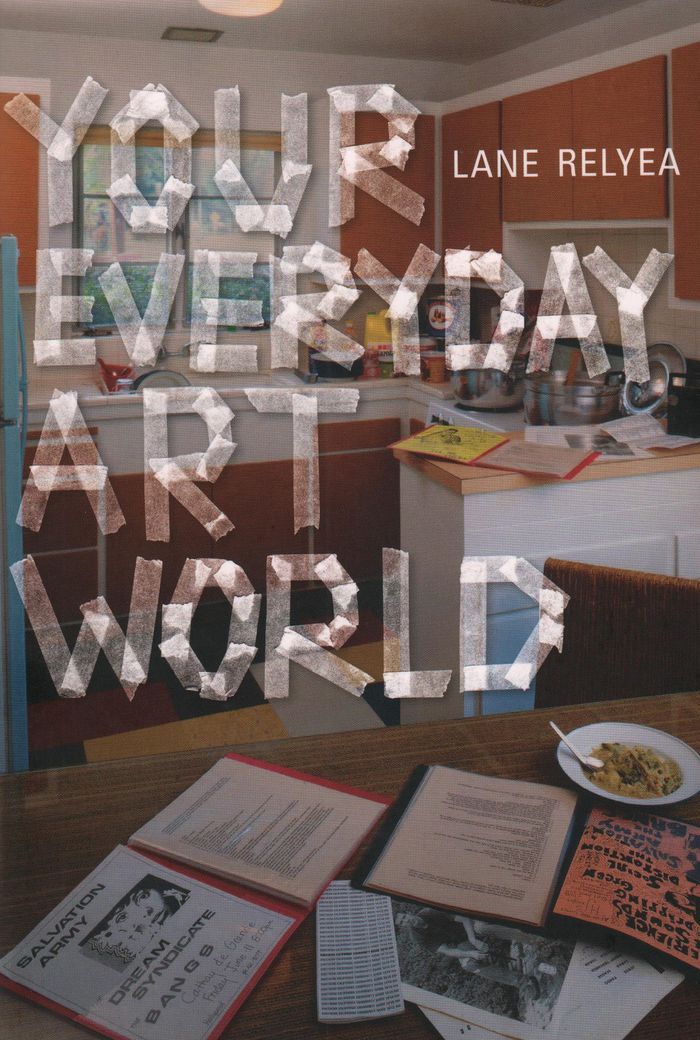
Over the past twenty years, the network has come to dominate the art world, affecting not just interaction among art professionals but the very makeup of the art object itself. The hierarchical and restrictive structure of the museum has been replaced by temporary projects scattered across the globe, staffed by free agents hired on short-term contracts, viewed by spectators defined by their predisposition to participate and make connections. In this book, Lane Relyea tries to make sense of these changes, describing a general organizational shift in the art world that affects not only material infrastructures but also conceptual categories and the construction of meaning.
Your everyday art world
Actions:
Price:
$26.95
(available to order)
Summary:
Over the past twenty years, the network has come to dominate the art world, affecting not just interaction among art professionals but the very makeup of the art object itself. The hierarchical and restrictive structure of the museum has been replaced by temporary projects scattered across the globe, staffed by free agents hired on short-term contracts, viewed by spectators defined by their predisposition to participate and make connections. In this book, Lane Relyea tries to make sense of these changes, describing a general organizational shift in the art world that affects not only material infrastructures but also conceptual categories and the construction of meaning.
Form:
books
books
Publication:
March 2017
March 2017
Subject:
Art Theory
Art Theory
Form:
books
books
Title:
Mind in architecture
Mind in architecture
Actions:
Price:
$49.00
(available to order)
Summary:
Although we spend more than ninety percent of our lives inside buildings, we understand very little about how the built environment affects our behavior, thoughts, emotions, and well-being. We are biological beings whose senses and neural systems have developed over millions of years; it stands to reason that research in the life sciences, particularly neuroscience, can(...)
$49.00
(available to order)
Summary:
Although we spend more than ninety percent of our lives inside buildings, we understand very little about how the built environment affects our behavior, thoughts, emotions, and well-being. We are biological beings whose senses and neural systems have developed over millions of years; it stands to reason that research in the life sciences, particularly neuroscience, can(...)
Title:
Mind in architecture
Actions:
Price:
$49.00
(available to order)
Summary:
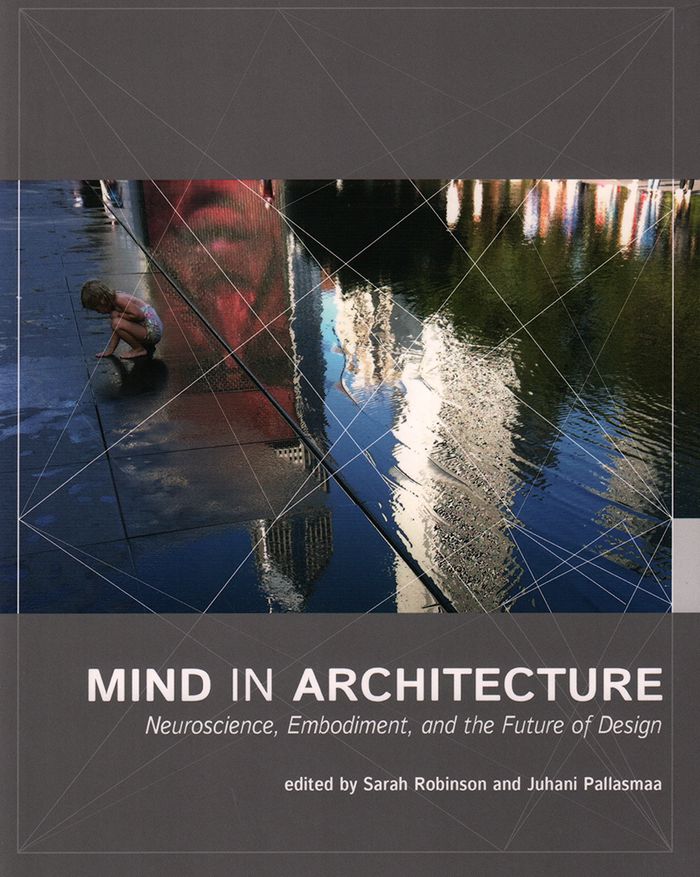
Although we spend more than ninety percent of our lives inside buildings, we understand very little about how the built environment affects our behavior, thoughts, emotions, and well-being. We are biological beings whose senses and neural systems have developed over millions of years; it stands to reason that research in the life sciences, particularly neuroscience, can offer compelling insights into the ways our buildings shape our interactions with the world. This expanded understanding can help architects design buildings that support both mind and body. In Mind in Architecture, leading thinkers from architecture and other disciplines, including neuroscience, cognitive science, psychiatry, and philosophy, explore what architecture and neuroscience can learn from each other. They offer historical context, examine the implications for current architectural practice and education, and imagine a neuroscientifically informed architecture of the future.
Mind in architecture
Actions:
Price:
$49.00
(available to order)
Summary:
Although we spend more than ninety percent of our lives inside buildings, we understand very little about how the built environment affects our behavior, thoughts, emotions, and well-being. We are biological beings whose senses and neural systems have developed over millions of years; it stands to reason that research in the life sciences, particularly neuroscience, can offer compelling insights into the ways our buildings shape our interactions with the world. This expanded understanding can help architects design buildings that support both mind and body. In Mind in Architecture, leading thinkers from architecture and other disciplines, including neuroscience, cognitive science, psychiatry, and philosophy, explore what architecture and neuroscience can learn from each other. They offer historical context, examine the implications for current architectural practice and education, and imagine a neuroscientifically informed architecture of the future.
Form:
books
books
Publication:
March 2017
March 2017
Subject:
Architectural Theory
Architectural Theory
Form:
books
books
Price:
$31.95
(available to order)
Summary:
Water lies at the intersection of landscape and infrastructure, crossing between visible and invisible domains of urban space, in the tanks and buckets of the global South and the vast subterranean technological networks of the global North. In this book, Matthew Gandy considers the cultural and material significance of water through the experiences of six cities: Paris,(...)
$31.95
(available to order)
Summary:
Water lies at the intersection of landscape and infrastructure, crossing between visible and invisible domains of urban space, in the tanks and buckets of the global South and the vast subterranean technological networks of the global North. In this book, Matthew Gandy considers the cultural and material significance of water through the experiences of six cities: Paris,(...)
Title:
The fabric of space: water, modernity, and the urban imagination
Actions:
Price:
$31.95
(available to order)
Summary:
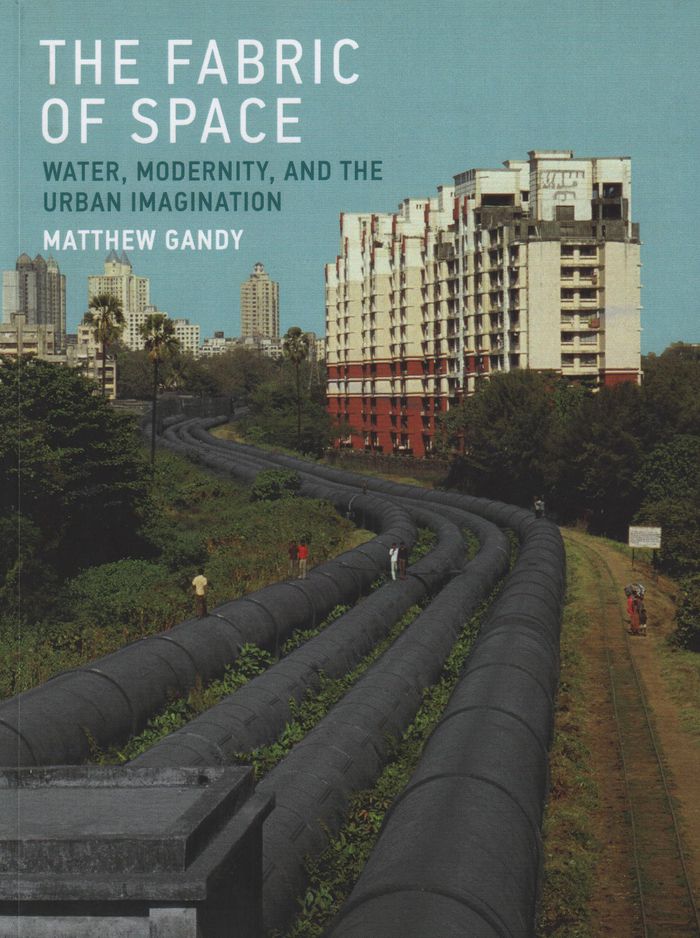
Water lies at the intersection of landscape and infrastructure, crossing between visible and invisible domains of urban space, in the tanks and buckets of the global South and the vast subterranean technological networks of the global North. In this book, Matthew Gandy considers the cultural and material significance of water through the experiences of six cities: Paris, Berlin, Lagos, Mumbai, Los Angeles, and London. Tracing the evolving relationships among modernity, nature, and the urban imagination, from different vantage points and through different periods, Gandy uses water as a lens through which to observe both the ambiguities and the limits of nature as conventionally understood.
The fabric of space: water, modernity, and the urban imagination
Actions:
Price:
$31.95
(available to order)
Summary:
Water lies at the intersection of landscape and infrastructure, crossing between visible and invisible domains of urban space, in the tanks and buckets of the global South and the vast subterranean technological networks of the global North. In this book, Matthew Gandy considers the cultural and material significance of water through the experiences of six cities: Paris, Berlin, Lagos, Mumbai, Los Angeles, and London. Tracing the evolving relationships among modernity, nature, and the urban imagination, from different vantage points and through different periods, Gandy uses water as a lens through which to observe both the ambiguities and the limits of nature as conventionally understood.
Form:
books
books
Publication:
February 2017
February 2017
Subject:
Urban Theory
Urban Theory
Form:
books
books
Price:
$47.00
(available to order)
Summary:
In this survey of the politics and meanings of urban landscapes, leading sociologist Göran Therborn offers a tour of the world’s major capital cities, showing how they have been shaped by national, popular, and global forces. Their stories begin with the emergence of various kinds of nation-state, each with its own special capital city problematic. In turn, radical shifts(...)
$47.00
(available to order)
Summary:
In this survey of the politics and meanings of urban landscapes, leading sociologist Göran Therborn offers a tour of the world’s major capital cities, showing how they have been shaped by national, popular, and global forces. Their stories begin with the emergence of various kinds of nation-state, each with its own special capital city problematic. In turn, radical shifts(...)
Title:
Cities of power: the urban, the national, the popular, the global
Actions:
Price:
$47.00
(available to order)
Summary:
In this survey of the politics and meanings of urban landscapes, leading sociologist Göran Therborn offers a tour of the world’s major capital cities, showing how they have been shaped by national, popular, and global forces. Their stories begin with the emergence of various kinds of nation-state, each with its own special capital city problematic. In turn, radical shifts of power have impacted on these cities’ development, in popular urban reforms or movements of protest and resistance; in the rise and fall of fascism and military dictatorships; and the coming and going of Communism. Therborn also analyzes global moments of urban formation, of historical globalized nationalism, as well as the cities of current global image capitalism and their variations of skyscraping, gating, and displays of novelty. Through a global, historical lens, and with a thematic range extending from the mutations of modernist architecture to the contemporary return of urban revolutions, Therborn questions received assumptions about the source, manifestations, and reach of urban power, combining perspectives on politics, sociology, urban planning, architecture, and urban iconography. He argues that, at a time when they seem to be moving apart, there is a strong link between the city and the nation-state, and that the current globalization of cities is largely driven by the global aspirations of politicians as well as those of national and local capital. With its unique systematic overview, from Washington, D.C. and revolutionary Paris to the flamboyant twenty- first-century capital Astana in Kazakhstan, its wealth of urban observations from all the populated continents, and its sharp and multi-faceted analyses, Cities of Power forces us to rethink our urban future, as well as our historically shaped present.
Cities of power: the urban, the national, the popular, the global
Actions:
Price:
$47.00
(available to order)
Summary:
In this survey of the politics and meanings of urban landscapes, leading sociologist Göran Therborn offers a tour of the world’s major capital cities, showing how they have been shaped by national, popular, and global forces. Their stories begin with the emergence of various kinds of nation-state, each with its own special capital city problematic. In turn, radical shifts of power have impacted on these cities’ development, in popular urban reforms or movements of protest and resistance; in the rise and fall of fascism and military dictatorships; and the coming and going of Communism. Therborn also analyzes global moments of urban formation, of historical globalized nationalism, as well as the cities of current global image capitalism and their variations of skyscraping, gating, and displays of novelty. Through a global, historical lens, and with a thematic range extending from the mutations of modernist architecture to the contemporary return of urban revolutions, Therborn questions received assumptions about the source, manifestations, and reach of urban power, combining perspectives on politics, sociology, urban planning, architecture, and urban iconography. He argues that, at a time when they seem to be moving apart, there is a strong link between the city and the nation-state, and that the current globalization of cities is largely driven by the global aspirations of politicians as well as those of national and local capital. With its unique systematic overview, from Washington, D.C. and revolutionary Paris to the flamboyant twenty- first-century capital Astana in Kazakhstan, its wealth of urban observations from all the populated continents, and its sharp and multi-faceted analyses, Cities of Power forces us to rethink our urban future, as well as our historically shaped present.
Form:
books
books
Publication:
May 2017
May 2017
Subject:
Urban Theory
Urban Theory
Form:
books
books
Actions:
Price:
$22.95
(available to order)
Summary:
"Bad new days" examines the evolution of art and criticism in Western Europe and North America over the last twenty-five years, exploring their dynamic relation to the general condition of emergency instilled by neoliberalism and the war on terror. Considering the work of artists such as Thomas Hirschhorn, Tacita Dean, and Isa Genzken, and the writing of thinkers like(...)
$22.95
(available to order)
Summary:
"Bad new days" examines the evolution of art and criticism in Western Europe and North America over the last twenty-five years, exploring their dynamic relation to the general condition of emergency instilled by neoliberalism and the war on terror. Considering the work of artists such as Thomas Hirschhorn, Tacita Dean, and Isa Genzken, and the writing of thinkers like(...)
Title:
Bad new days: art, criticism, emergency
Actions:
Price:
$22.95
(available to order)
Summary:
"Bad new days" examines the evolution of art and criticism in Western Europe and North America over the last twenty-five years, exploring their dynamic relation to the general condition of emergency instilled by neoliberalism and the war on terror. Considering the work of artists such as Thomas Hirschhorn, Tacita Dean, and Isa Genzken, and the writing of thinkers like Jacques Rancière, Bruno Latour, and Giorgio Agamben, Hal Foster shows the ways in which art has anticipated this condition, at times resisting the collapse of the social contract or gesturing toward its repair; at other times burlesquing it. Against the claim that art making has become so heterogeneous as to defy historical analysis, Foster argues that the critic must still articulate a clear account of the contemporary in all its complexity. To that end, he offers several paradigms for the art of recent years, which he terms “abject,” “archival,” “mimetic,” and “precarious.”
Bad new days: art, criticism, emergency
Actions:
Price:
$22.95
(available to order)
Summary:
"Bad new days" examines the evolution of art and criticism in Western Europe and North America over the last twenty-five years, exploring their dynamic relation to the general condition of emergency instilled by neoliberalism and the war on terror. Considering the work of artists such as Thomas Hirschhorn, Tacita Dean, and Isa Genzken, and the writing of thinkers like Jacques Rancière, Bruno Latour, and Giorgio Agamben, Hal Foster shows the ways in which art has anticipated this condition, at times resisting the collapse of the social contract or gesturing toward its repair; at other times burlesquing it. Against the claim that art making has become so heterogeneous as to defy historical analysis, Foster argues that the critic must still articulate a clear account of the contemporary in all its complexity. To that end, he offers several paradigms for the art of recent years, which he terms “abject,” “archival,” “mimetic,” and “precarious.”
Form:
books
books
Publication:
May 2017
May 2017
Subject:
Art Theory
Art Theory
Form:
books
books
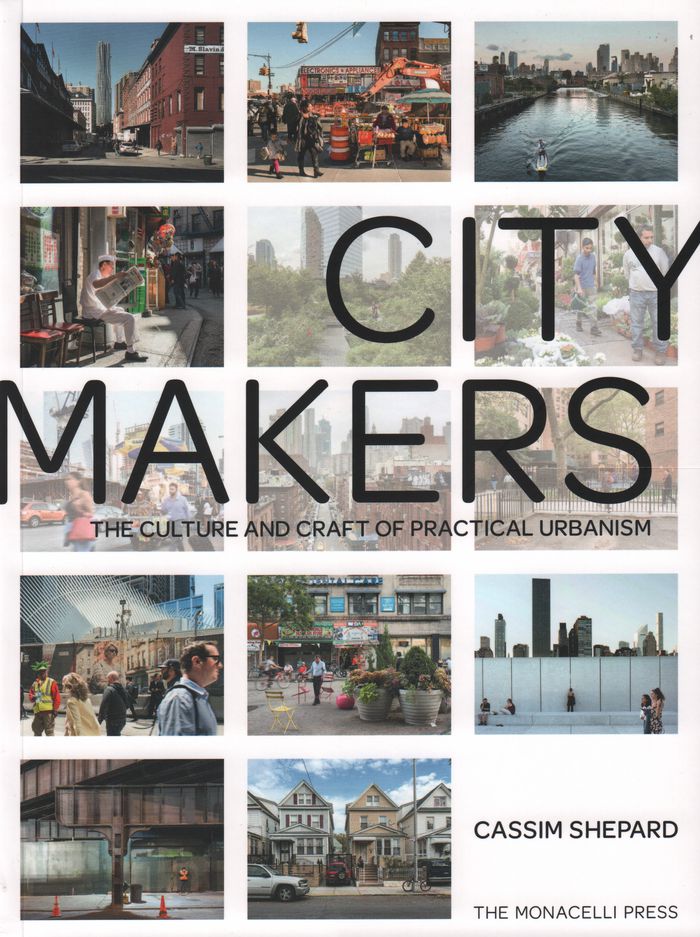
Title:
Citymakers
Citymakers
Actions:
Price:
$60.00
(available to order)
Summary:
Drawing on six years as the editor of "Urban Omnibus", Shepard explores a broad variety of projects in New York, a city at the forefront of experimental and practical research: a constructed wetland in Staten Island, a workforce development and technology program in Red Hook, Brooklyn, a public art installation in a Bronx housing project, a housing advocacy initiative in(...)
$60.00
(available to order)
Summary:
Drawing on six years as the editor of "Urban Omnibus", Shepard explores a broad variety of projects in New York, a city at the forefront of experimental and practical research: a constructed wetland in Staten Island, a workforce development and technology program in Red Hook, Brooklyn, a public art installation in a Bronx housing project, a housing advocacy initiative in(...)
Title:
Citymakers
Actions:
Price:
$60.00
(available to order)
Summary:
Drawing on six years as the editor of "Urban Omnibus", Shepard explores a broad variety of projects in New York, a city at the forefront of experimental and practical research: a constructed wetland in Staten Island, a workforce development and technology program in Red Hook, Brooklyn, a public art installation in a Bronx housing project, a housing advocacy initiative in Jackson Heights, Queens. These and a wide variety of other examples in Citymakers comprise a cross-disciplinary, from-the-ground-up approach that encourage better choices for cities of the future.
Citymakers
Actions:
Price:
$60.00
(available to order)
Summary:
Drawing on six years as the editor of "Urban Omnibus", Shepard explores a broad variety of projects in New York, a city at the forefront of experimental and practical research: a constructed wetland in Staten Island, a workforce development and technology program in Red Hook, Brooklyn, a public art installation in a Bronx housing project, a housing advocacy initiative in Jackson Heights, Queens. These and a wide variety of other examples in Citymakers comprise a cross-disciplinary, from-the-ground-up approach that encourage better choices for cities of the future.
Form:
books
books
Publication:
October 2017
October 2017
Subject:
Urban Theory
Urban Theory
Form:
books
books

Actions:
Price:
$79.95
(available to order)
Summary:
This book considers the effects of colonialism, travel, and globalization on the development of modern architecture in Germany from the 1850s until the 1930s. It argues that the rise of a new modern language of architecture within Germany during this period was shaped by the country's colonial and neo-colonial entanglements. Since architectural developments in(...)
$79.95
(available to order)
Summary:
This book considers the effects of colonialism, travel, and globalization on the development of modern architecture in Germany from the 1850s until the 1930s. It argues that the rise of a new modern language of architecture within Germany during this period was shaped by the country's colonial and neo-colonial entanglements. Since architectural developments in(...)
Title:
Colonialism and modern architecture in Germany
Actions:
Price:
$79.95
(available to order)
Summary:
This book considers the effects of colonialism, travel, and globalization on the development of modern architecture in Germany from the 1850s until the 1930s. It argues that the rise of a new modern language of architecture within Germany during this period was shaped by the country's colonial and neo-colonial entanglements. Since architectural developments in nineteenth-century Germany are typically understood as crucial to the evolution of architecture worldwide in the twentieth century, this book globalizes the history of modern architecture at its founding moment.
Colonialism and modern architecture in Germany
Actions:
Price:
$79.95
(available to order)
Summary:
This book considers the effects of colonialism, travel, and globalization on the development of modern architecture in Germany from the 1850s until the 1930s. It argues that the rise of a new modern language of architecture within Germany during this period was shaped by the country's colonial and neo-colonial entanglements. Since architectural developments in nineteenth-century Germany are typically understood as crucial to the evolution of architecture worldwide in the twentieth century, this book globalizes the history of modern architecture at its founding moment.
Form:
books
books
Publication:
June 2017
June 2017
Subject:
Architectural Theory
Architectural Theory


