


951 Results
Form:
books
books

Price:
$24.95
(available to order)
Summary:
Compiled as a field guide, travelogue, essay collection, and weather report, ''Alien Daughters Walk into the Sun'' traces Jackie Wang's trajectory from hard femme to Harvard, from dumpster dives and highway bike rides to dropping out of an MFA program, becoming a National Book Award finalist, and writing her trenchant book ''Carceral Capitalism''. ''Alien Daughters''(...)
$24.95
(available to order)
Summary:
Compiled as a field guide, travelogue, essay collection, and weather report, ''Alien Daughters Walk into the Sun'' traces Jackie Wang's trajectory from hard femme to Harvard, from dumpster dives and highway bike rides to dropping out of an MFA program, becoming a National Book Award finalist, and writing her trenchant book ''Carceral Capitalism''. ''Alien Daughters''(...)
Title:
Alien daughters walk into the sun: An almanac of extreme girlhood
Actions:
Price:
$24.95
(available to order)
Summary:
Compiled as a field guide, travelogue, essay collection, and weather report, ''Alien Daughters Walk into the Sun'' traces Jackie Wang's trajectory from hard femme to Harvard, from dumpster dives and highway bike rides to dropping out of an MFA program, becoming a National Book Award finalist, and writing her trenchant book ''Carceral Capitalism''. ''Alien Daughters'' charts the dream-seeking misadventures of an “odd girl” from Florida who emerged from punk houses and early Tumblr to become the powerful writer she is today. Anarchic and beautifully personal, ''Alien Daughters'' is a strange intellectual autobiography that demonstrates Wang's singular self-education: an early life lived where every day and every written word began like the Tarot's Fool, with a leap of faith.
Alien daughters walk into the sun: An almanac of extreme girlhood
Actions:
Price:
$24.95
(available to order)
Summary:
Compiled as a field guide, travelogue, essay collection, and weather report, ''Alien Daughters Walk into the Sun'' traces Jackie Wang's trajectory from hard femme to Harvard, from dumpster dives and highway bike rides to dropping out of an MFA program, becoming a National Book Award finalist, and writing her trenchant book ''Carceral Capitalism''. ''Alien Daughters'' charts the dream-seeking misadventures of an “odd girl” from Florida who emerged from punk houses and early Tumblr to become the powerful writer she is today. Anarchic and beautifully personal, ''Alien Daughters'' is a strange intellectual autobiography that demonstrates Wang's singular self-education: an early life lived where every day and every written word began like the Tarot's Fool, with a leap of faith.
Form:
books
books
Publication:
November 2023
November 2023
Subject:
Social
Social
Form:
books
books
Actions:
Price:
$24.95
(available in store)
Summary:
Siegfried Kracauer’s texts are a widely investigated field of sociology and media studies. It is less well known that Kracauer was a graduate architect, practised during World War I and was awarded his PhD after writing a thesis in 1915 in the field of architectural history. After the war, Kracauer published numerous critiques with a special focus on the architectural(...)
$24.95
(available in store)
Summary:
Siegfried Kracauer’s texts are a widely investigated field of sociology and media studies. It is less well known that Kracauer was a graduate architect, practised during World War I and was awarded his PhD after writing a thesis in 1915 in the field of architectural history. After the war, Kracauer published numerous critiques with a special focus on the architectural(...)
Subject:
Architectural Theory
Architectural Theory
Publication:
December 2022
December 2022
Title:
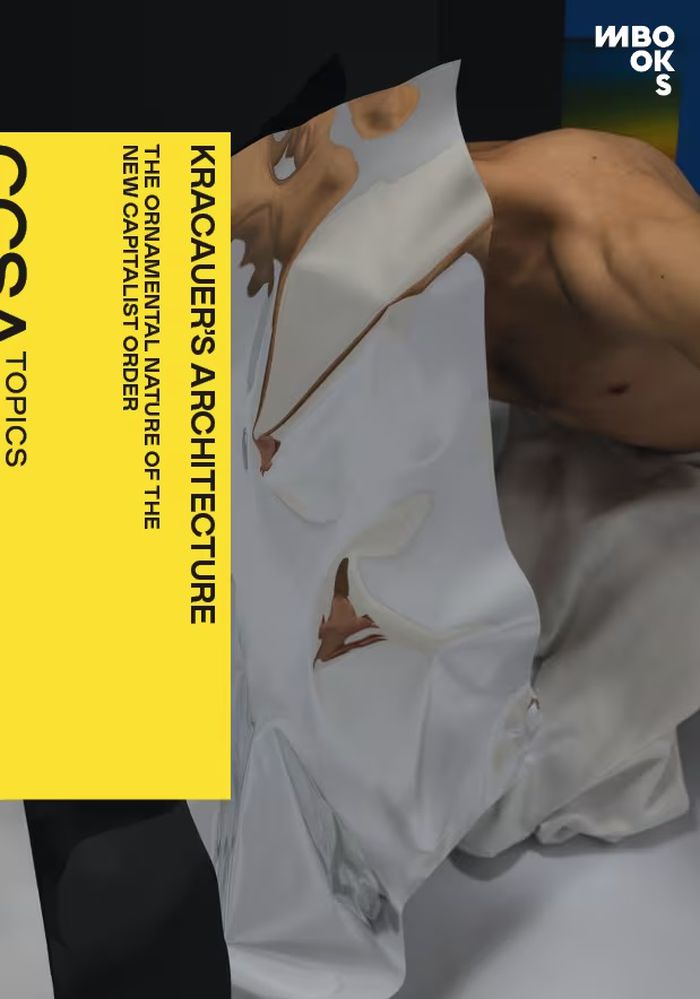
Kracauer's Architecture : The ornamental nature of the new capitalist order
Actions:
Price:
$24.95
(available in store)
Summary:
Siegfried Kracauer’s texts are a widely investigated field of sociology and media studies. It is less well known that Kracauer was a graduate architect, practised during World War I and was awarded his PhD after writing a thesis in 1915 in the field of architectural history. After the war, Kracauer published numerous critiques with a special focus on the architectural developments of the time. They document an interest in architectural phenomena ranging from a reflection on his own experiences to a general perspective on the subjectivity of the modern architect, as well as more universal social phenomena. In essence, this essay claims that the lack of ornamentation in modern architecture can be grasped as an ornamental concept of the new social order of capitalism.
Kracauer's Architecture : The ornamental nature of the new capitalist order
Actions:
Price:
$24.95
(available in store)
Summary:
Siegfried Kracauer’s texts are a widely investigated field of sociology and media studies. It is less well known that Kracauer was a graduate architect, practised during World War I and was awarded his PhD after writing a thesis in 1915 in the field of architectural history. After the war, Kracauer published numerous critiques with a special focus on the architectural developments of the time. They document an interest in architectural phenomena ranging from a reflection on his own experiences to a general perspective on the subjectivity of the modern architect, as well as more universal social phenomena. In essence, this essay claims that the lack of ornamentation in modern architecture can be grasped as an ornamental concept of the new social order of capitalism.
Form:
books
books
Publication:
December 2022
December 2022
Subject:
Architectural Theory
Architectural Theory
Form:
books
books

Title:
Melancholy Wedgewood
Melancholy Wedgewood
Actions:
Price:
$45.95
(available in store)
Summary:
"Melancholy Wedgwood" traces the multiple strands in the life of the ceramic entrepreneur Josiah Wedgwood (1730–1795) to propose an alternative view of eighteenth-century England's tenuous relationship to our own lives and times, amid the ruins of late-capitalist modernity. Through intimate vignettes and essays, and in writing at turns funny, sharp, and pensive, Iris Moon(...)
$45.95
(available in store)
Summary:
"Melancholy Wedgwood" traces the multiple strands in the life of the ceramic entrepreneur Josiah Wedgwood (1730–1795) to propose an alternative view of eighteenth-century England's tenuous relationship to our own lives and times, amid the ruins of late-capitalist modernity. Through intimate vignettes and essays, and in writing at turns funny, sharp, and pensive, Iris Moon(...)
Title:
Melancholy Wedgewood
Actions:
Price:
$45.95
(available in store)
Summary:
"Melancholy Wedgwood" traces the multiple strands in the life of the ceramic entrepreneur Josiah Wedgwood (1730–1795) to propose an alternative view of eighteenth-century England's tenuous relationship to our own lives and times, amid the ruins of late-capitalist modernity. Through intimate vignettes and essays, and in writing at turns funny, sharp, and pensive, Iris Moon chips away at the mythic image of Wedgwood as singular genius, business titan, and benevolent abolitionist, revealing an amorphous, fragile, and perhaps even shattered life. In the process the book goes so far as to dismantle certain entrenched social and economic assumptions, not least that the foundational myths of capitalism might not be quite so rosy after all, and instead induce a feeling that could only be characterized as blue.
Melancholy Wedgewood
Actions:
Price:
$45.95
(available in store)
Summary:
"Melancholy Wedgwood" traces the multiple strands in the life of the ceramic entrepreneur Josiah Wedgwood (1730–1795) to propose an alternative view of eighteenth-century England's tenuous relationship to our own lives and times, amid the ruins of late-capitalist modernity. Through intimate vignettes and essays, and in writing at turns funny, sharp, and pensive, Iris Moon chips away at the mythic image of Wedgwood as singular genius, business titan, and benevolent abolitionist, revealing an amorphous, fragile, and perhaps even shattered life. In the process the book goes so far as to dismantle certain entrenched social and economic assumptions, not least that the foundational myths of capitalism might not be quite so rosy after all, and instead induce a feeling that could only be characterized as blue.
Form:
books
books
Publication:
January 2024
January 2024
Subject:
Design Monographs
Design Monographs
Form:
books
books

Actions:
Price:
$30.95
(available in store)
Summary:
For too long, representations of climate action in the mainstream media have been white-washed, green-washed and diluted to be made compatible with capitalism. In ''It’s Not That Radical'', Loach addresses head-on the issues at the root of the climate crisis. As Loach shows, we are living in an economic system which pursues profit above all else; harmful, oppressive(...)
$30.95
(available in store)
Summary:
For too long, representations of climate action in the mainstream media have been white-washed, green-washed and diluted to be made compatible with capitalism. In ''It’s Not That Radical'', Loach addresses head-on the issues at the root of the climate crisis. As Loach shows, we are living in an economic system which pursues profit above all else; harmful, oppressive(...)
Title:
It's not that radical: Climate action to transform our world
Actions:
Price:
$30.95
(available in store)
Summary:
For too long, representations of climate action in the mainstream media have been white-washed, green-washed and diluted to be made compatible with capitalism. In ''It’s Not That Radical'', Loach addresses head-on the issues at the root of the climate crisis. As Loach shows, we are living in an economic system which pursues profit above all else; harmful, oppressive systems that heavily contribute to the climate crisis, and environmental consequences that have been toned down to the masses. Tackling the climate crisis requires us to visit the roots of poverty, capitalist exploitation, police brutality, and legal injustice. Climate justice offers the real possibility of huge leaps towards racial equality and collective liberation as it aims to dismantle the very foundations of these issues.
It's not that radical: Climate action to transform our world
Actions:
Price:
$30.95
(available in store)
Summary:
For too long, representations of climate action in the mainstream media have been white-washed, green-washed and diluted to be made compatible with capitalism. In ''It’s Not That Radical'', Loach addresses head-on the issues at the root of the climate crisis. As Loach shows, we are living in an economic system which pursues profit above all else; harmful, oppressive systems that heavily contribute to the climate crisis, and environmental consequences that have been toned down to the masses. Tackling the climate crisis requires us to visit the roots of poverty, capitalist exploitation, police brutality, and legal injustice. Climate justice offers the real possibility of huge leaps towards racial equality and collective liberation as it aims to dismantle the very foundations of these issues.
Form:
books
books
Publication:
June 2025
June 2025
Subject:
Environment and environmental theory
Environment and environmental theory
Form:
books
books
Price:
$45.95
(available in store)
Summary:
For decades, David Harvey has been teaching Marx's work, particularly Capital, to great acclaim. He has analysed chapter by chapter - sometimes line-by-line - Marx's three volumes and the Grundrisse. This new book opens up the mental universe of that work for a general reader. In ''The Story of Capital'', Harvey takes a synoptic approach to the conceptual architecture(...)
$45.95
(available in store)
Summary:
For decades, David Harvey has been teaching Marx's work, particularly Capital, to great acclaim. He has analysed chapter by chapter - sometimes line-by-line - Marx's three volumes and the Grundrisse. This new book opens up the mental universe of that work for a general reader. In ''The Story of Capital'', Harvey takes a synoptic approach to the conceptual architecture(...)
Title:
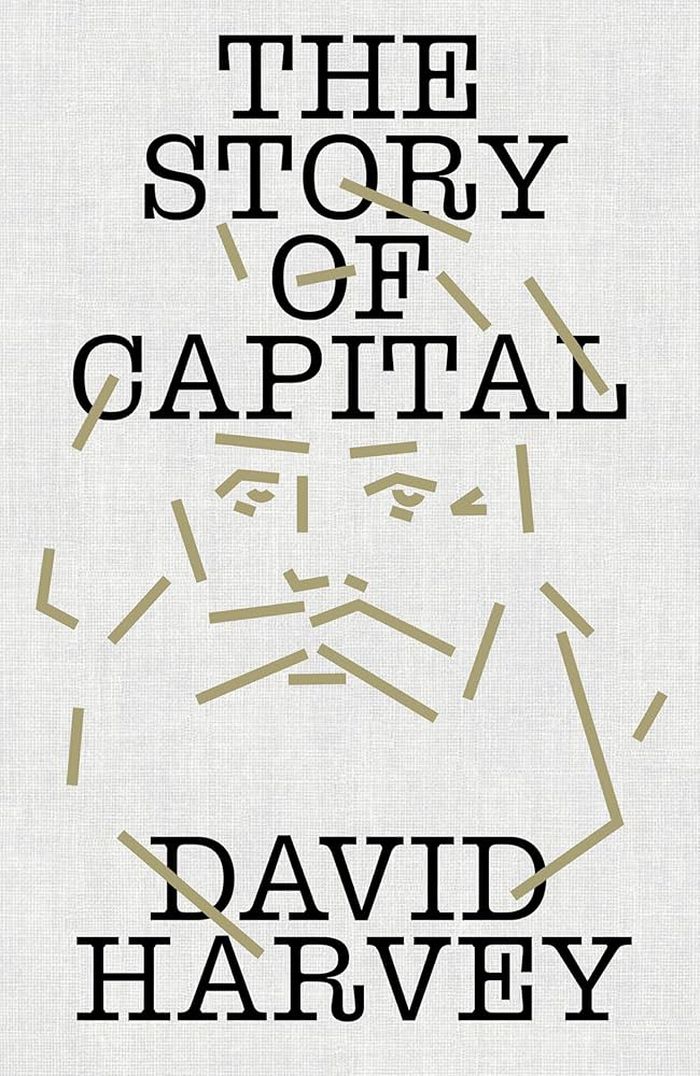
The story of capital: What everyone should know about how capital works
Actions:
Price:
$45.95
(available in store)
Summary:
For decades, David Harvey has been teaching Marx's work, particularly Capital, to great acclaim. He has analysed chapter by chapter - sometimes line-by-line - Marx's three volumes and the Grundrisse. This new book opens up the mental universe of that work for a general reader. In ''The Story of Capital'', Harvey takes a synoptic approach to the conceptual architecture as a whole and guides us through the key moments, from labour and technology to the state and geopolitics, via the profit rate, social reproduction, the relationship to nature, fictitious capital and the return of the rentiers. In doing so, Harvey has produced a work which will become a key reference for all those trying to grasp the nature of contemporary capitalism.
The story of capital: What everyone should know about how capital works
Actions:
Price:
$45.95
(available in store)
Summary:
For decades, David Harvey has been teaching Marx's work, particularly Capital, to great acclaim. He has analysed chapter by chapter - sometimes line-by-line - Marx's three volumes and the Grundrisse. This new book opens up the mental universe of that work for a general reader. In ''The Story of Capital'', Harvey takes a synoptic approach to the conceptual architecture as a whole and guides us through the key moments, from labour and technology to the state and geopolitics, via the profit rate, social reproduction, the relationship to nature, fictitious capital and the return of the rentiers. In doing so, Harvey has produced a work which will become a key reference for all those trying to grasp the nature of contemporary capitalism.
Form:
books
books
Publication:
April 2026
April 2026
Subject:
Social
Social
Form:
books
books
Title:
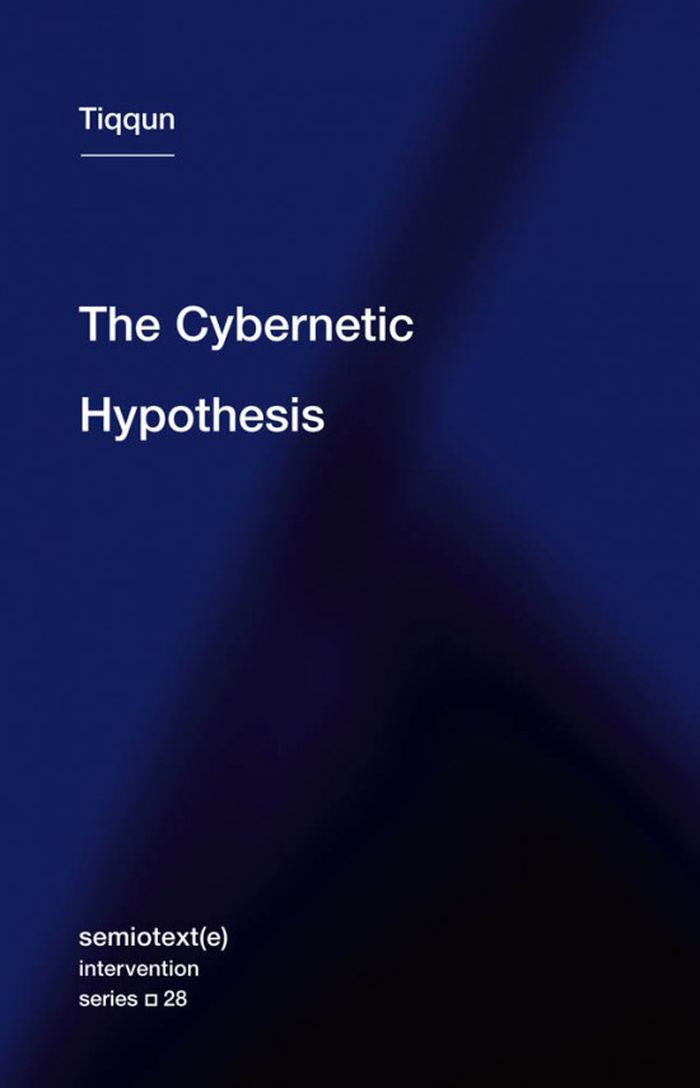
The cybernetic hypothesis
The cybernetic hypothesis
Actions:
Price:
$18.95
(available to order)
Summary:
This early Tiqqun text has lost none of its pertinence. ''The Cybernetic Hypothesis'' presents a genealogy of our “technical” present that doesn't point out the political and ethical dilemmas embedded in it as if they were puzzles to be solved, but rather unmasks an enemy force to be engaged and defeated. Cybernetics in this context is the ''teknê'' of threat reduction,(...)
$18.95
(available to order)
Summary:
This early Tiqqun text has lost none of its pertinence. ''The Cybernetic Hypothesis'' presents a genealogy of our “technical” present that doesn't point out the political and ethical dilemmas embedded in it as if they were puzzles to be solved, but rather unmasks an enemy force to be engaged and defeated. Cybernetics in this context is the ''teknê'' of threat reduction,(...)
Title:
The cybernetic hypothesis
Actions:
Price:
$18.95
(available to order)
Summary:
This early Tiqqun text has lost none of its pertinence. ''The Cybernetic Hypothesis'' presents a genealogy of our “technical” present that doesn't point out the political and ethical dilemmas embedded in it as if they were puzzles to be solved, but rather unmasks an enemy force to be engaged and defeated. Cybernetics in this context is the ''teknê'' of threat reduction, which unfortunately has required the reduction of a disturbing humanity to packets of manageable information. Not so easily done. Not smooth. A matter of civil war, in fact. According to the authors, cybernetics is the latest master fable, welcomed at a certain crisis juncture in late capitalism. And now the interesting question is: Has the guest in the house become the master of the house?
The cybernetic hypothesis
Actions:
Price:
$18.95
(available to order)
Summary:
This early Tiqqun text has lost none of its pertinence. ''The Cybernetic Hypothesis'' presents a genealogy of our “technical” present that doesn't point out the political and ethical dilemmas embedded in it as if they were puzzles to be solved, but rather unmasks an enemy force to be engaged and defeated. Cybernetics in this context is the ''teknê'' of threat reduction, which unfortunately has required the reduction of a disturbing humanity to packets of manageable information. Not so easily done. Not smooth. A matter of civil war, in fact. According to the authors, cybernetics is the latest master fable, welcomed at a certain crisis juncture in late capitalism. And now the interesting question is: Has the guest in the house become the master of the house?
Form:
books
books
Publication:
October 2019
October 2019
Subject:
Critical Theory
Critical Theory
Form:
books
books

Price:
$21.95
(available to order)
Summary:
Drawing on rich historical research, Silvia Federici maps the connections between the previous forms of enclosure that occurred with the birth of capitalism and the destruction of the commons and the "new enclosures" at the heart of the present phase of global capitalist accumulation. Considering the commons from a feminist perspective, this collection centers on women(...)
$21.95
(available to order)
Summary:
Drawing on rich historical research, Silvia Federici maps the connections between the previous forms of enclosure that occurred with the birth of capitalism and the destruction of the commons and the "new enclosures" at the heart of the present phase of global capitalist accumulation. Considering the commons from a feminist perspective, this collection centers on women(...)
Title:
Re-enchanting the world: feminism and the politics of the commons
Actions:
Price:
$21.95
(available to order)
Summary:
Drawing on rich historical research, Silvia Federici maps the connections between the previous forms of enclosure that occurred with the birth of capitalism and the destruction of the commons and the "new enclosures" at the heart of the present phase of global capitalist accumulation. Considering the commons from a feminist perspective, this collection centers on women and reproductive work as crucial to both our economic survival and the construction of a world free from the hierarchies and divisions capital has planted in the body of the world proletariat. Federici is clear that the commons should not be understood as happy islands in a sea of exploitative relations but rather autonomous spaces from which to challenge the existing capitalist organization of life and labor.
Re-enchanting the world: feminism and the politics of the commons
Actions:
Price:
$21.95
(available to order)
Summary:
Drawing on rich historical research, Silvia Federici maps the connections between the previous forms of enclosure that occurred with the birth of capitalism and the destruction of the commons and the "new enclosures" at the heart of the present phase of global capitalist accumulation. Considering the commons from a feminist perspective, this collection centers on women and reproductive work as crucial to both our economic survival and the construction of a world free from the hierarchies and divisions capital has planted in the body of the world proletariat. Federici is clear that the commons should not be understood as happy islands in a sea of exploitative relations but rather autonomous spaces from which to challenge the existing capitalist organization of life and labor.
Form:
books
books
Publication:
September 2018
September 2018
Subject:
Critical Theory
Critical Theory
Form:
books
books

Actions:
Price:
$35.00
(available to order)
Summary:
Riots are extraordinary events that have been recurring with increasing frequency and occupy a highly controversial space in the political imagination. Despite their often negative portrayals, it is undeniable that riots have played a pivotal role in the confrontation between authority and dissent. Recently, with the deepening crises of capitalism, racial violence, and(...)
$35.00
(available to order)
Summary:
Riots are extraordinary events that have been recurring with increasing frequency and occupy a highly controversial space in the political imagination. Despite their often negative portrayals, it is undeniable that riots have played a pivotal role in the confrontation between authority and dissent. Recently, with the deepening crises of capitalism, racial violence, and(...)
Title:
Nights of the dispossessed: riots unbound
Actions:
Price:
$35.00
(available to order)
Summary:
Riots are extraordinary events that have been recurring with increasing frequency and occupy a highly controversial space in the political imagination. Despite their often negative portrayals, it is undeniable that riots have played a pivotal role in the confrontation between authority and dissent. Recently, with the deepening crises of capitalism, racial violence, and communal tension, an 'age of riots' has powerfully begun. As master fictions of the sovereign nation-state implode, and the hegemonic silencing of the dispossessed reveals the cracks in governability, 'Nights of the Dispossessed: Riots Unbound' brings together artistic works, political texts, critical urban analyses, and research projects from across the world in an endeavor to 'sense,' chronicle, and think through recent riots and uprisings - evoking a phenomenology of the multitude and surplus population.
Nights of the dispossessed: riots unbound
Actions:
Price:
$35.00
(available to order)
Summary:
Riots are extraordinary events that have been recurring with increasing frequency and occupy a highly controversial space in the political imagination. Despite their often negative portrayals, it is undeniable that riots have played a pivotal role in the confrontation between authority and dissent. Recently, with the deepening crises of capitalism, racial violence, and communal tension, an 'age of riots' has powerfully begun. As master fictions of the sovereign nation-state implode, and the hegemonic silencing of the dispossessed reveals the cracks in governability, 'Nights of the Dispossessed: Riots Unbound' brings together artistic works, political texts, critical urban analyses, and research projects from across the world in an endeavor to 'sense,' chronicle, and think through recent riots and uprisings - evoking a phenomenology of the multitude and surplus population.
Form:
books
books
Publication:
July 2021
July 2021
Subject:
Critical Theory
Critical Theory
Form:
books
books

Title:
Nomography
Nomography
Actions:
Price:
$15.95
(available in store)
Summary:
This book proposes a provocative interpretation of the dynamic relationship between the normative and the transgressive. Combining sociology, biopolitics and satire, it offers a surprising theory of normative imagination as a cognitive mode characteristic of the era of emotional capitalism. Gender, fashion, artistic creation and surveillance are analyzed from the(...)
$15.95
(available in store)
Summary:
This book proposes a provocative interpretation of the dynamic relationship between the normative and the transgressive. Combining sociology, biopolitics and satire, it offers a surprising theory of normative imagination as a cognitive mode characteristic of the era of emotional capitalism. Gender, fashion, artistic creation and surveillance are analyzed from the(...)
Title:
Nomography
Actions:
Price:
$15.95
(available in store)
Summary:
This book proposes a provocative interpretation of the dynamic relationship between the normative and the transgressive. Combining sociology, biopolitics and satire, it offers a surprising theory of normative imagination as a cognitive mode characteristic of the era of emotional capitalism. Gender, fashion, artistic creation and surveillance are analyzed from the perspective of a regulatory drive, a continuously renovated and imperative push for normalcy that no longer comes from factual powers but from citizens themselves. These, united in a spontaneous popular court, armed with smartphones and driven by juridical compulsion, become the axis of societies of control. In this way the affective ways of constructing subjectivity are replaced by the distinctive pathology of our times, the name of the globalized game: normopathy for all.
Nomography
Actions:
Price:
$15.95
(available in store)
Summary:
This book proposes a provocative interpretation of the dynamic relationship between the normative and the transgressive. Combining sociology, biopolitics and satire, it offers a surprising theory of normative imagination as a cognitive mode characteristic of the era of emotional capitalism. Gender, fashion, artistic creation and surveillance are analyzed from the perspective of a regulatory drive, a continuously renovated and imperative push for normalcy that no longer comes from factual powers but from citizens themselves. These, united in a spontaneous popular court, armed with smartphones and driven by juridical compulsion, become the axis of societies of control. In this way the affective ways of constructing subjectivity are replaced by the distinctive pathology of our times, the name of the globalized game: normopathy for all.
Form:
books
books
Publication:
December 2020
December 2020
Subject:
Critical Theory
Critical Theory
Form:
books
books

Actions:
Price:
$23.95
(available to order)
Summary:
A fog of information and images has flooded the world: from advertising, television, radio, and film to the information glut produced by the new economy. With the rise of social networking, even our contemporaries, peers, and friends are all suddenly selling us the ultimate product: themselves. Here curator and critic Nato Thompson interrogates the implications of these(...)
$23.95
(available to order)
Summary:
A fog of information and images has flooded the world: from advertising, television, radio, and film to the information glut produced by the new economy. With the rise of social networking, even our contemporaries, peers, and friends are all suddenly selling us the ultimate product: themselves. Here curator and critic Nato Thompson interrogates the implications of these(...)
Title:
Seeing power: art and activism in the 21st century
Actions:
Price:
$23.95
(available to order)
Summary:
A fog of information and images has flooded the world: from advertising, television, radio, and film to the information glut produced by the new economy. With the rise of social networking, even our contemporaries, peers, and friends are all suddenly selling us the ultimate product: themselves. Here curator and critic Nato Thompson interrogates the implications of these developments for those dedicated to socially engaged art and activism. How can anyone find a voice and make change when the world is flooded with images and information? And what is one to make of the endless machine of consumer capitalism, which has appropriated much from the history of art and, in recent years, the methods of grassroots political organizing and social networking?
Seeing power: art and activism in the 21st century
Actions:
Price:
$23.95
(available to order)
Summary:
A fog of information and images has flooded the world: from advertising, television, radio, and film to the information glut produced by the new economy. With the rise of social networking, even our contemporaries, peers, and friends are all suddenly selling us the ultimate product: themselves. Here curator and critic Nato Thompson interrogates the implications of these developments for those dedicated to socially engaged art and activism. How can anyone find a voice and make change when the world is flooded with images and information? And what is one to make of the endless machine of consumer capitalism, which has appropriated much from the history of art and, in recent years, the methods of grassroots political organizing and social networking?
Form:
books
books
Publication:
December 2012
December 2012
Subject:
Art Theory
Art Theory


