


853 Results
Form:
books
books
Actions:
Price:
$42.00
(available to order)
Summary:
The past two decades have seen revolutionary shifts in our ability to navigate, inhabit, and define the spatial realm. The data flows that condition much of our lives now regularly include Global Positioning System (GPS) readings and satellite images of a quality once reserved for a few militaries and intelligence agencies, and powerful geographic information system (GIS)(...)
$42.00
(available to order)
Summary:
The past two decades have seen revolutionary shifts in our ability to navigate, inhabit, and define the spatial realm. The data flows that condition much of our lives now regularly include Global Positioning System (GPS) readings and satellite images of a quality once reserved for a few militaries and intelligence agencies, and powerful geographic information system (GIS)(...)
Title:
Close up at a distance: mapping, technology and politics
Actions:
Price:
$42.00
(available to order)
Summary:
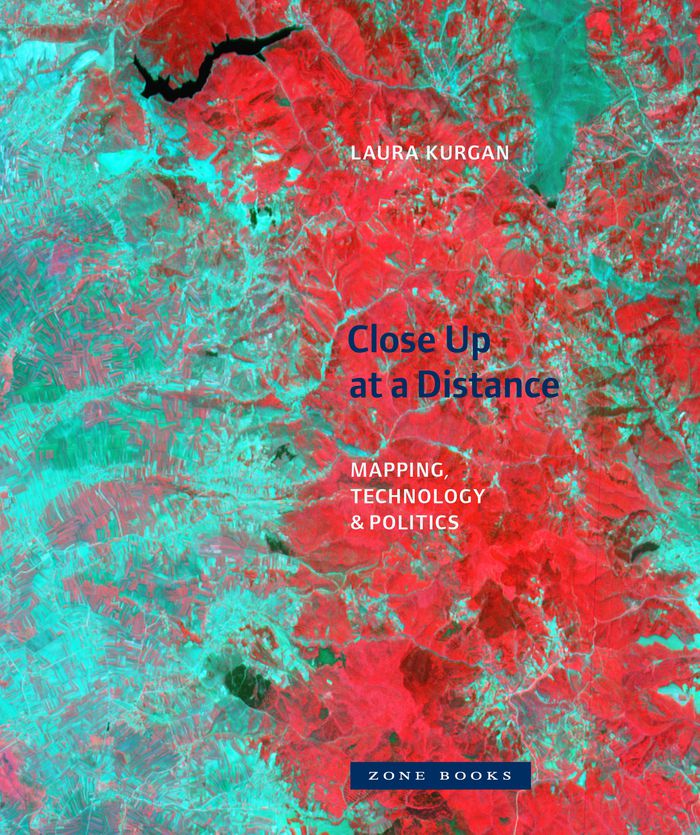
The past two decades have seen revolutionary shifts in our ability to navigate, inhabit, and define the spatial realm. The data flows that condition much of our lives now regularly include Global Positioning System (GPS) readings and satellite images of a quality once reserved for a few militaries and intelligence agencies, and powerful geographic information system (GIS) software is now commonplace. These new technologies have raised fundamental questions about the intersection between physical space and its representation, virtual space and its realization. In ''Close up at a distance,'' Laura Kurgan offers a theoretical account of these new digital technologies of location and a series of practical experiments in making maps and images with spatial data. Neither simply useful tools nor objects of wonder or anxiety, the technologies of GPS, GIS, and satellite imagery become, in this book, the subject and the medium of a critical exploration. ''Close up at a distance'' records situations of intense conflict and struggle, on the one hand, and fundamental transformations in our ways of seeing and of experiencing space, on the other. Kurgan maps and theorizes mass graves, incarceration patterns, disappearing forests, and currency flows in a series of cases that range from Kuwait (1991) to Kosovo (1999), New York (2001) to Indonesia (2010). Using digital spatial hardware and software designed for military and governmental use in reconnaissance, secrecy, monitoring, ballistics, the census, and national security, Kurgan engages and confronts the politics and complexities of these technologies and their uses. At the intersection of art, architecture, activism, and geography, she uncovers, in her essays and projects, the opacities inherent in the recording of information and data and reimagines the spaces they have opened up.
Close up at a distance: mapping, technology and politics
Actions:
Price:
$42.00
(available to order)
Summary:
The past two decades have seen revolutionary shifts in our ability to navigate, inhabit, and define the spatial realm. The data flows that condition much of our lives now regularly include Global Positioning System (GPS) readings and satellite images of a quality once reserved for a few militaries and intelligence agencies, and powerful geographic information system (GIS) software is now commonplace. These new technologies have raised fundamental questions about the intersection between physical space and its representation, virtual space and its realization. In ''Close up at a distance,'' Laura Kurgan offers a theoretical account of these new digital technologies of location and a series of practical experiments in making maps and images with spatial data. Neither simply useful tools nor objects of wonder or anxiety, the technologies of GPS, GIS, and satellite imagery become, in this book, the subject and the medium of a critical exploration. ''Close up at a distance'' records situations of intense conflict and struggle, on the one hand, and fundamental transformations in our ways of seeing and of experiencing space, on the other. Kurgan maps and theorizes mass graves, incarceration patterns, disappearing forests, and currency flows in a series of cases that range from Kuwait (1991) to Kosovo (1999), New York (2001) to Indonesia (2010). Using digital spatial hardware and software designed for military and governmental use in reconnaissance, secrecy, monitoring, ballistics, the census, and national security, Kurgan engages and confronts the politics and complexities of these technologies and their uses. At the intersection of art, architecture, activism, and geography, she uncovers, in her essays and projects, the opacities inherent in the recording of information and data and reimagines the spaces they have opened up.
Form:
books
books
Publication:
October 2022
October 2022
Subject:
Architectural Theory
Architectural Theory
Form:
books
books
Title:
Alphabet city 10 : suspects
Alphabet city 10 : suspects
Actions:
Price:
$18.95
(available in store)
Summary:
What is the condition of the suspect in a post-9/11 world? Do perpetual detention, ubiquitous surveillance cameras, and the legal apparatus of the USA Patriot Act target suspects accurately or generate suspicion indiscriminately? "Suspect", the latest in a series from Alphabet City and the first in its new format of topical book-length magazines, gathers hard evidence(...)
$18.95
(available in store)
Summary:
What is the condition of the suspect in a post-9/11 world? Do perpetual detention, ubiquitous surveillance cameras, and the legal apparatus of the USA Patriot Act target suspects accurately or generate suspicion indiscriminately? "Suspect", the latest in a series from Alphabet City and the first in its new format of topical book-length magazines, gathers hard evidence(...)
Title:
Alphabet city 10 : suspects
Actions:
Price:
$18.95
(available in store)
Summary:
What is the condition of the suspect in a post-9/11 world? Do perpetual detention, ubiquitous surveillance cameras, and the legal apparatus of the USA Patriot Act target suspects accurately or generate suspicion indiscriminately? "Suspect", the latest in a series from Alphabet City and the first in its new format of topical book-length magazines, gathers hard evidence about the fate of the suspect in a culture of suspicion with contributions from writers, artists, and filmmakers. Their testimony takes a multiplicity of forms and formats. Among them:a 24-page color comic by graphic novelist Joey Dubuc asks the reader to make narrative choices in a web of surveillance, suspicion, and fear. Harper's contributor Mark Kingwell observes that while suspicion tries to isolate the suspect, in fact we are all the suspect. Slavoj Zizek reflects on the new cultural status of the suspect after Abu Ghraib. Philosopher George Bragues argues that even as the United Nations looks for ways to discipline "suspect nations," it simply cannot succeed under current international conditions. Alphabet City editor John Knechtel interviews Naomi Klein, author of No Logo, about the legal and political strategies of the Bush administration. Sylwia Chrostowska describes what happens, in the the 1970 Italian film Investigation of a Citizen Above Suspicion, when a corrupt official investigates himself. Screenwriter Timothy Stock and illustrator Warren Heise create a documentary in comic form about Critical Ensemble artist Steve Kurtz, charged under the bioterrorism provisions of the Patriot Act. Novelist Camilla Gibb portrays, in "Things Collapse," the terrifying effects of a "separating sickness" of unknown origin, which perhaps exists only in the fears of the population it strikes. And novelist Diana Fitzgerald Bryden follows her character Rafa Ahmed, a PFLP hijacker from the 1970s, as, many years later, she is to appear at a peace conference. Filmmaker Patricia Rozema, director of Mansfield Park and other films, contributes a 16-page film-in-a-book, "Suspect." Suspect is a non-partisan handbook on the mechanisms and machinations of suspicion for the twenty-first century national security state.
Alphabet city 10 : suspects
Actions:
Price:
$18.95
(available in store)
Summary:
What is the condition of the suspect in a post-9/11 world? Do perpetual detention, ubiquitous surveillance cameras, and the legal apparatus of the USA Patriot Act target suspects accurately or generate suspicion indiscriminately? "Suspect", the latest in a series from Alphabet City and the first in its new format of topical book-length magazines, gathers hard evidence about the fate of the suspect in a culture of suspicion with contributions from writers, artists, and filmmakers. Their testimony takes a multiplicity of forms and formats. Among them:a 24-page color comic by graphic novelist Joey Dubuc asks the reader to make narrative choices in a web of surveillance, suspicion, and fear. Harper's contributor Mark Kingwell observes that while suspicion tries to isolate the suspect, in fact we are all the suspect. Slavoj Zizek reflects on the new cultural status of the suspect after Abu Ghraib. Philosopher George Bragues argues that even as the United Nations looks for ways to discipline "suspect nations," it simply cannot succeed under current international conditions. Alphabet City editor John Knechtel interviews Naomi Klein, author of No Logo, about the legal and political strategies of the Bush administration. Sylwia Chrostowska describes what happens, in the the 1970 Italian film Investigation of a Citizen Above Suspicion, when a corrupt official investigates himself. Screenwriter Timothy Stock and illustrator Warren Heise create a documentary in comic form about Critical Ensemble artist Steve Kurtz, charged under the bioterrorism provisions of the Patriot Act. Novelist Camilla Gibb portrays, in "Things Collapse," the terrifying effects of a "separating sickness" of unknown origin, which perhaps exists only in the fears of the population it strikes. And novelist Diana Fitzgerald Bryden follows her character Rafa Ahmed, a PFLP hijacker from the 1970s, as, many years later, she is to appear at a peace conference. Filmmaker Patricia Rozema, director of Mansfield Park and other films, contributes a 16-page film-in-a-book, "Suspect." Suspect is a non-partisan handbook on the mechanisms and machinations of suspicion for the twenty-first century national security state.
Form:
books
books
Publication:
October 2005, Cambridge, London
October 2005, Cambridge, London
Subject:
small format
small format
Form:
books
books
Price:
$74.00
(available to order)
Summary:
Consacré à la sauvegarde des grandes oeuvres de l’ingénierie du XXe siècle, ce premier numéro des Cahiers du TSAM explore le devenir de certaines des plus remarquables et emblématiques structures en béton du siècle passé. A travers les fi gures d’héroïques constructeurs, il interroge l’héritage construit des ingénieurs, convoquant les plus audacieux d’entre eux(...)
$74.00
(available to order)
Summary:
Consacré à la sauvegarde des grandes oeuvres de l’ingénierie du XXe siècle, ce premier numéro des Cahiers du TSAM explore le devenir de certaines des plus remarquables et emblématiques structures en béton du siècle passé. A travers les fi gures d’héroïques constructeurs, il interroge l’héritage construit des ingénieurs, convoquant les plus audacieux d’entre eux(...)
Title:
La sauvegarde des grandes oeuvres de l'ingénierie du XXe siècle
Actions:
Price:
$74.00
(available to order)
Summary:
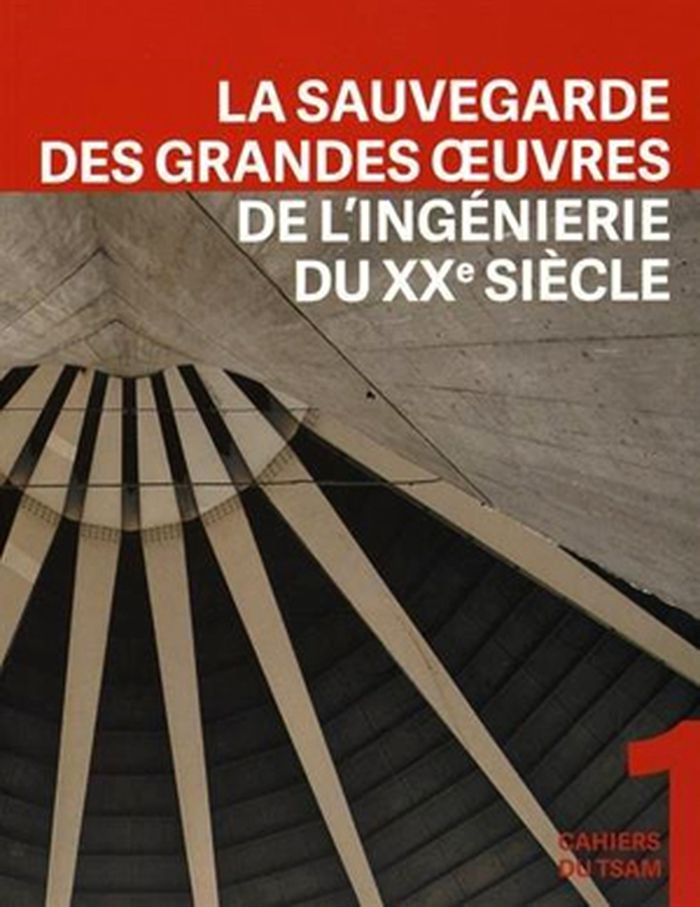
Consacré à la sauvegarde des grandes oeuvres de l’ingénierie du XXe siècle, ce premier numéro des Cahiers du TSAM explore le devenir de certaines des plus remarquables et emblématiques structures en béton du siècle passé. A travers les fi gures d’héroïques constructeurs, il interroge l’héritage construit des ingénieurs, convoquant les plus audacieux d’entre eux (Freyssinet, Isler, Maillart, Nervi, Vierendeel, etc.). Alors que la sauvegarde de l’architecture du XXe siècle s’est récemment constituée en discipline à part entière, la préservation des ouvrages de l’ingénierie de cette période est encore balbutiante. Considérés trop souvent sous le seul point de vue de la sécurité ou de la maintenance, ces ouvrages s’avèrent parfois de véritables chefs-d’oeuvre, jalons d’un «art de l’ingénieur» à la frontière entre performance technique et beauté plastique. Ces cahiers sont donc l’occasion d’initier, à l’appui d’exemples et de projets de sauvegarde concrets, une sensibilisation aux enjeux patrimoniaux dans le domaine de l’ingénierie. This first issue of the Cahiers du TSAM, dedicated to the conservation of the 20th century’s great works of engineering, aims to explore the future of some of the most remarkable and emblematic concrete structures of the previous century. Through the personalities of the heroic builders, this publication aims to consider what the engineers – the most daring of whom (Freyssinet, Isler, Maillart, Nervi, Vierendeel, etc.) are represented here – bequeathed to the century. While the conserva-tion of 20th century architecture has in recent years been seen as a discipline in its own right, the conservation of 20th century engineering is still in its infancy. Considered too offen purely from the point of view of security or maintenance, these works are now often seen as true masterpieces, cutting edge achievements of the “engineer’s art”, as stunning for their plastic beauty as for their technical performance. This publication provides an opportunity to stimulate, with reference to concrete examples and projects, an awareness of the heritage challenges to be addressed in the fi eld of engineering.
La sauvegarde des grandes oeuvres de l'ingénierie du XXe siècle
Actions:
Price:
$74.00
(available to order)
Summary:
Consacré à la sauvegarde des grandes oeuvres de l’ingénierie du XXe siècle, ce premier numéro des Cahiers du TSAM explore le devenir de certaines des plus remarquables et emblématiques structures en béton du siècle passé. A travers les fi gures d’héroïques constructeurs, il interroge l’héritage construit des ingénieurs, convoquant les plus audacieux d’entre eux (Freyssinet, Isler, Maillart, Nervi, Vierendeel, etc.). Alors que la sauvegarde de l’architecture du XXe siècle s’est récemment constituée en discipline à part entière, la préservation des ouvrages de l’ingénierie de cette période est encore balbutiante. Considérés trop souvent sous le seul point de vue de la sécurité ou de la maintenance, ces ouvrages s’avèrent parfois de véritables chefs-d’oeuvre, jalons d’un «art de l’ingénieur» à la frontière entre performance technique et beauté plastique. Ces cahiers sont donc l’occasion d’initier, à l’appui d’exemples et de projets de sauvegarde concrets, une sensibilisation aux enjeux patrimoniaux dans le domaine de l’ingénierie. This first issue of the Cahiers du TSAM, dedicated to the conservation of the 20th century’s great works of engineering, aims to explore the future of some of the most remarkable and emblematic concrete structures of the previous century. Through the personalities of the heroic builders, this publication aims to consider what the engineers – the most daring of whom (Freyssinet, Isler, Maillart, Nervi, Vierendeel, etc.) are represented here – bequeathed to the century. While the conserva-tion of 20th century architecture has in recent years been seen as a discipline in its own right, the conservation of 20th century engineering is still in its infancy. Considered too offen purely from the point of view of security or maintenance, these works are now often seen as true masterpieces, cutting edge achievements of the “engineer’s art”, as stunning for their plastic beauty as for their technical performance. This publication provides an opportunity to stimulate, with reference to concrete examples and projects, an awareness of the heritage challenges to be addressed in the fi eld of engineering.
Form:
books
books
Publication:
March 2016
March 2016
Subject:
Engineering Structures
Engineering Structures


