


36154 Results
Form:
books
books
Title:
Mount analogue: a novel of symbolically authentic non-Euclidean adventures in mountain climbing
Mount analogue: a novel of symbolically authentic non-Euclidean adventures in mountain climbing
Actions:
Price:
$24.95
(available in store)
Summary:
A beloved cult classic of surrealism, pataphysics and Gurdjieffian mysticism, René Daumal’s ''Mount Analogue'' is the allegorical tale of an expedition to a mountain whose existence can only be deduced, not observed. As its numerous editions (most now rare) over the decades attest, the book has been highly influential: Alejandro Jodorowsky's visionary 1973 film ''The Holy(...)
$24.95
(available in store)
Summary:
A beloved cult classic of surrealism, pataphysics and Gurdjieffian mysticism, René Daumal’s ''Mount Analogue'' is the allegorical tale of an expedition to a mountain whose existence can only be deduced, not observed. As its numerous editions (most now rare) over the decades attest, the book has been highly influential: Alejandro Jodorowsky's visionary 1973 film ''The Holy(...)
Title:
Mount analogue: a novel of symbolically authentic non-Euclidean adventures in mountain climbing
Actions:
Price:
$24.95
(available in store)
Summary:
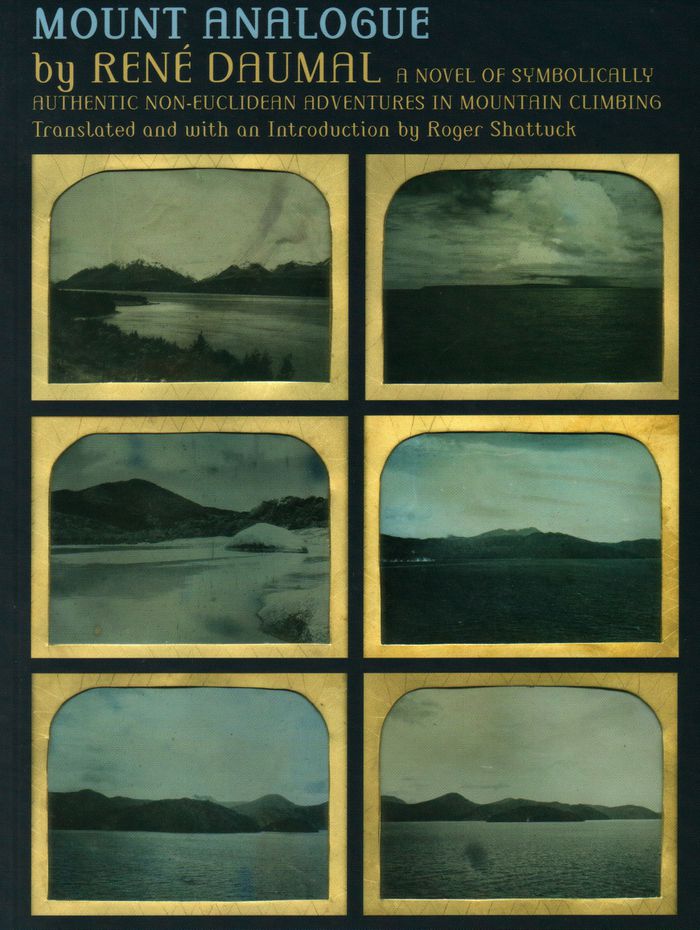
A beloved cult classic of surrealism, pataphysics and Gurdjieffian mysticism, René Daumal’s ''Mount Analogue'' is the allegorical tale of an expedition to a mountain whose existence can only be deduced, not observed. As its numerous editions (most now rare) over the decades attest, the book has been highly influential: Alejandro Jodorowsky's visionary 1973 film ''The Holy Mountain'' is a loose adaptation of the book, and John Zorn based an eponymous album on it. Left unfinished after Daumal’s death from tuberculosis in 1944—in mid-sentence, as he broke from writing to receive a visitor—''Mount Analogue'' offers a compelling and philosophically resonant chronicle of a group of travelers seeking the titular mountain, based on the symbolic calculations of one Father Sogol (“Logos” spelled backward) and his students. As Daumal writes, “ 'Mount Analogue' is the symbolic mountain—the way that unites Heaven and Earth, a way which must exist in material and human form, otherwise our situation would be without hope.”
Mount analogue: a novel of symbolically authentic non-Euclidean adventures in mountain climbing
Actions:
Price:
$24.95
(available in store)
Summary:
A beloved cult classic of surrealism, pataphysics and Gurdjieffian mysticism, René Daumal’s ''Mount Analogue'' is the allegorical tale of an expedition to a mountain whose existence can only be deduced, not observed. As its numerous editions (most now rare) over the decades attest, the book has been highly influential: Alejandro Jodorowsky's visionary 1973 film ''The Holy Mountain'' is a loose adaptation of the book, and John Zorn based an eponymous album on it. Left unfinished after Daumal’s death from tuberculosis in 1944—in mid-sentence, as he broke from writing to receive a visitor—''Mount Analogue'' offers a compelling and philosophically resonant chronicle of a group of travelers seeking the titular mountain, based on the symbolic calculations of one Father Sogol (“Logos” spelled backward) and his students. As Daumal writes, “ 'Mount Analogue' is the symbolic mountain—the way that unites Heaven and Earth, a way which must exist in material and human form, otherwise our situation would be without hope.”
Form:
books
books
Publication:
September 2019
September 2019
Subject:
Literature and poetry
Literature and poetry
Form:
books
books
Actions:
Price:
$19.95
(available to order)
Summary:
First edited and published by Marcel Marien in 1968 in a limited edition of 230 copies, half a year after Paul Nougé’s death, The Subversion of Images is a miniature classic in both the photobook and surrealist canons. It collects Nougé’s notes and photographs from 1929–30 to form a guidebook to the surrealist image. Nougé here outlines his conception of the object and(...)
$19.95
(available to order)
Summary:
First edited and published by Marcel Marien in 1968 in a limited edition of 230 copies, half a year after Paul Nougé’s death, The Subversion of Images is a miniature classic in both the photobook and surrealist canons. It collects Nougé’s notes and photographs from 1929–30 to form a guidebook to the surrealist image. Nougé here outlines his conception of the object and(...)
Title:
The subversion of images: notes illustrated with nineteen photographs. Facsimile edition
Actions:
Price:
$19.95
(available to order)
Summary:
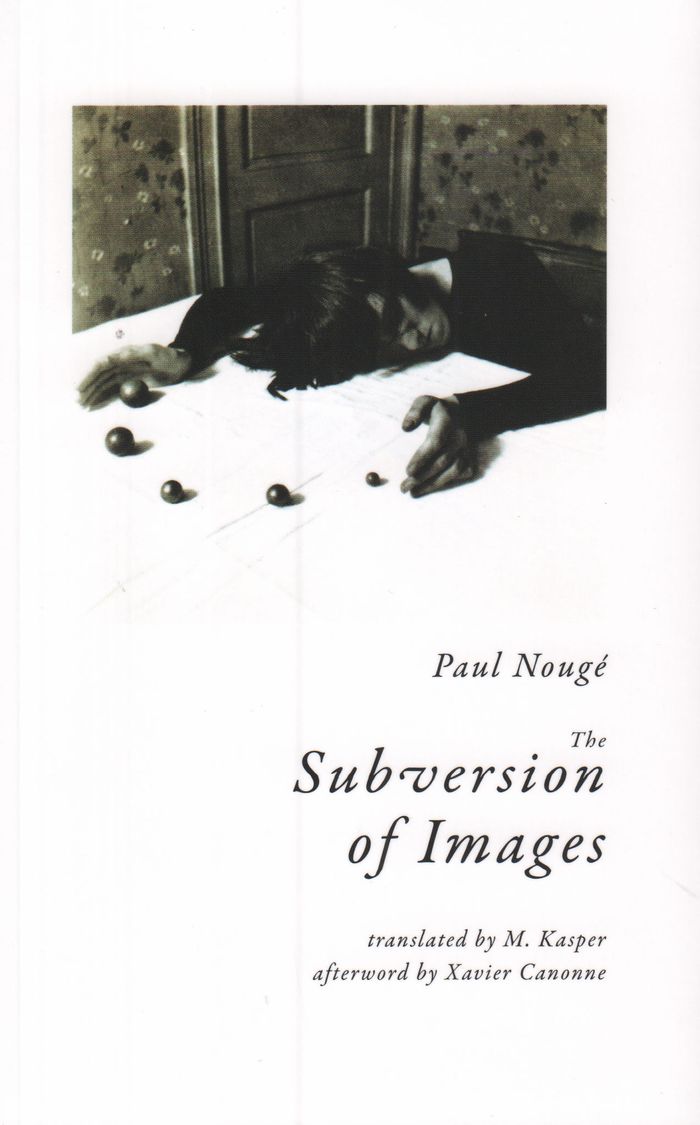
First edited and published by Marcel Marien in 1968 in a limited edition of 230 copies, half a year after Paul Nougé’s death, The Subversion of Images is a miniature classic in both the photobook and surrealist canons. It collects Nougé’s notes and photographs from 1929–30 to form a guidebook to the surrealist image. Nougé here outlines his conception of the object and the surrealist approach to it, while also offering an accompaniment to the visual work of his colleague, René Magritte, whose paintings he sometimes titled. How might a tangle of string elicit terror? How might the suppression of an object move one to sentimentality? What is the effect of a pair of gloves on a loaf of sliced bread?
The subversion of images: notes illustrated with nineteen photographs. Facsimile edition
Actions:
Price:
$19.95
(available to order)
Summary:
First edited and published by Marcel Marien in 1968 in a limited edition of 230 copies, half a year after Paul Nougé’s death, The Subversion of Images is a miniature classic in both the photobook and surrealist canons. It collects Nougé’s notes and photographs from 1929–30 to form a guidebook to the surrealist image. Nougé here outlines his conception of the object and the surrealist approach to it, while also offering an accompaniment to the visual work of his colleague, René Magritte, whose paintings he sometimes titled. How might a tangle of string elicit terror? How might the suppression of an object move one to sentimentality? What is the effect of a pair of gloves on a loaf of sliced bread?
Form:
books
books
Publication:
January 2020
January 2020
Subject:
Photography monographs
Photography monographs
Form:
books
books
Actions:
Price:
$85.00
(available to order)
Summary:
In the 1930s the Russian avant-garde project was declared alien and harmful to the work of building socialism, and much of it ended up in storage. For many years thereafter, socialist realism was the established style in the country. Only in the second half of the 1950s did artists of the new generation get the chance to see works by the heroes of the avant-garde,(...)
$85.00
(available to order)
Summary:
In the 1930s the Russian avant-garde project was declared alien and harmful to the work of building socialism, and much of it ended up in storage. For many years thereafter, socialist realism was the established style in the country. Only in the second half of the 1950s did artists of the new generation get the chance to see works by the heroes of the avant-garde,(...)
Title:
Hiroshi Sugimoto: Architecture
Actions:
Price:
$85.00
(available to order)
Summary:
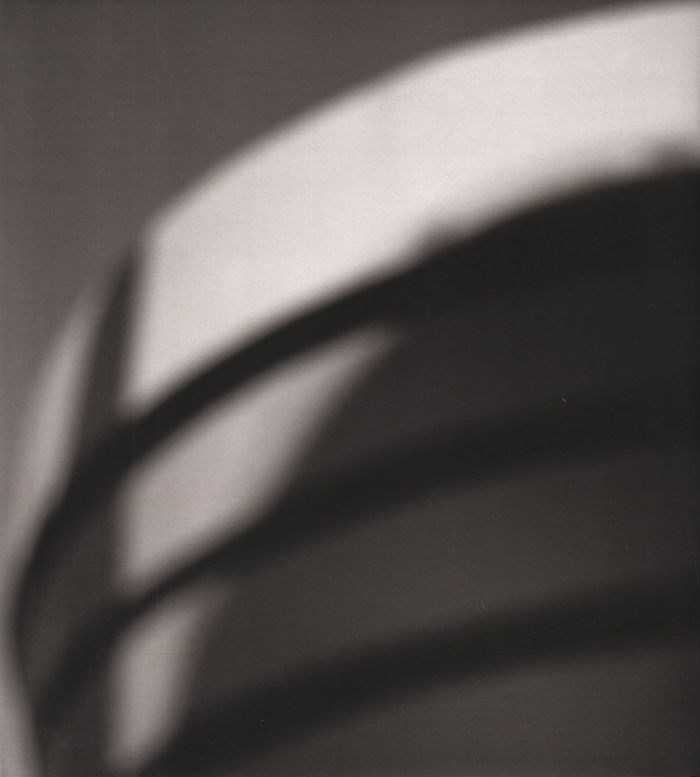
In the 1930s the Russian avant-garde project was declared alien and harmful to the work of building socialism, and much of it ended up in storage. For many years thereafter, socialist realism was the established style in the country. Only in the second half of the 1950s did artists of the new generation get the chance to see works by the heroes of the avant-garde, igniting a new phase in the development of the original ideas of Malevich, Tatlin and El Lissitzky.
Hiroshi Sugimoto: Architecture
Actions:
Price:
$85.00
(available to order)
Summary:
In the 1930s the Russian avant-garde project was declared alien and harmful to the work of building socialism, and much of it ended up in storage. For many years thereafter, socialist realism was the established style in the country. Only in the second half of the 1950s did artists of the new generation get the chance to see works by the heroes of the avant-garde, igniting a new phase in the development of the original ideas of Malevich, Tatlin and El Lissitzky.
Form:
books
books
Publication:
September 2019
September 2019
Subject:
Photography monographs
Photography monographs
Form:
books
books

Actions:
Price:
$39.95
(available to order)
Summary:
As Art Director for Muji since 2002, Japanese graphic designer Kenya Hara (born 1958) and his aesthetic of pared-back, beautifully functional objects has taken the world by (quiet) storm. With “Kenya Hara: Designing Japan”, the designer presents his vision of how his industry can contribute to the future of his country: a future founded on Hara’s unique philosophy of(...)
$39.95
(available to order)
Summary:
As Art Director for Muji since 2002, Japanese graphic designer Kenya Hara (born 1958) and his aesthetic of pared-back, beautifully functional objects has taken the world by (quiet) storm. With “Kenya Hara: Designing Japan”, the designer presents his vision of how his industry can contribute to the future of his country: a future founded on Hara’s unique philosophy of(...)
Title:
Kenya Hara, designing Japan: a future built on aesthetics
Actions:
Price:
$39.95
(available to order)
Summary:
As Art Director for Muji since 2002, Japanese graphic designer Kenya Hara (born 1958) and his aesthetic of pared-back, beautifully functional objects has taken the world by (quiet) storm. With “Kenya Hara: Designing Japan”, the designer presents his vision of how his industry can contribute to the future of his country: a future founded on Hara’s unique philosophy of beauty as well as crowd-sourced wisdom from around the world. The book spans history, from the beginnings of professional Japanese design in the 16th century to the impact of the 2011 Tohoku earthquake. But Hara's real focus is on the future. A master collaborator, meticulous organizer and globally conscious innovator, Hara draws on more than three decades of work in design and exhibition curating, as well his professional interactions with creators from many fields. “Designing Japan” offers a foundation course on the essence of Japanese aesthetics, while maintaining a practical approach to Japan’s circumstances and future possibilities. Hara reveals the methods by which designers in Japan work with government and industry, and considers how design can propose solutions for this island nation as its population ages, other nations take over manufacturing and technology develops. Illustrations and examples recognize successful problem-solving through design, proving that design is a living, changing industry that remains relevant not in spite of, but as a partner to, advancing technology.
Kenya Hara, designing Japan: a future built on aesthetics
Actions:
Price:
$39.95
(available to order)
Summary:
As Art Director for Muji since 2002, Japanese graphic designer Kenya Hara (born 1958) and his aesthetic of pared-back, beautifully functional objects has taken the world by (quiet) storm. With “Kenya Hara: Designing Japan”, the designer presents his vision of how his industry can contribute to the future of his country: a future founded on Hara’s unique philosophy of beauty as well as crowd-sourced wisdom from around the world. The book spans history, from the beginnings of professional Japanese design in the 16th century to the impact of the 2011 Tohoku earthquake. But Hara's real focus is on the future. A master collaborator, meticulous organizer and globally conscious innovator, Hara draws on more than three decades of work in design and exhibition curating, as well his professional interactions with creators from many fields. “Designing Japan” offers a foundation course on the essence of Japanese aesthetics, while maintaining a practical approach to Japan’s circumstances and future possibilities. Hara reveals the methods by which designers in Japan work with government and industry, and considers how design can propose solutions for this island nation as its population ages, other nations take over manufacturing and technology develops. Illustrations and examples recognize successful problem-solving through design, proving that design is a living, changing industry that remains relevant not in spite of, but as a partner to, advancing technology.
Form:
books
books
Publication:
October 2019
October 2019
Subject:
Graphic Designers, Monographs
Graphic Designers, Monographs
Form:
books
books
Actions:
Price:
$34.95
(available to order)
Summary:
Through a series of in-depth historical case studies and assignments that progressively build in complexity, 'A New Program for Graphic Design' serves as a practical guide both for designers and for undergraduate students coming from a range of other disciplines. Synthesizing the pragmatic with the experimental, and drawing on the work of Max Bill, Beatrice Warde, Muriel(...)
$34.95
(available to order)
Summary:
Through a series of in-depth historical case studies and assignments that progressively build in complexity, 'A New Program for Graphic Design' serves as a practical guide both for designers and for undergraduate students coming from a range of other disciplines. Synthesizing the pragmatic with the experimental, and drawing on the work of Max Bill, Beatrice Warde, Muriel(...)
Title:
A new program for graphic design
Actions:
Price:
$34.95
(available to order)
Summary:
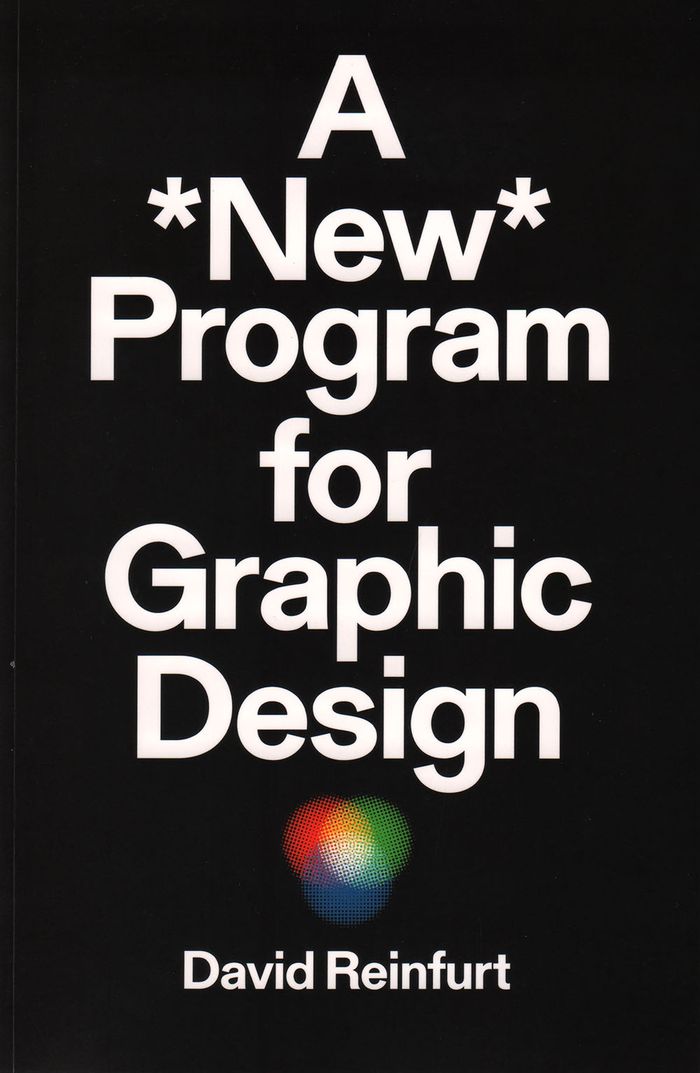
Through a series of in-depth historical case studies and assignments that progressively build in complexity, 'A New Program for Graphic Design' serves as a practical guide both for designers and for undergraduate students coming from a range of other disciplines. Synthesizing the pragmatic with the experimental, and drawing on the work of Max Bill, Beatrice Warde, Muriel Cooper and Stewart Brand (among many others),, it builds upon mid- to late-20th-century pedagogical models to convey contemporary design principles in an understandable form for students of all levels — treating graphic design as a liberal art that informs the dissemination of knowledge across all disciplines.
A new program for graphic design
Actions:
Price:
$34.95
(available to order)
Summary:
Through a series of in-depth historical case studies and assignments that progressively build in complexity, 'A New Program for Graphic Design' serves as a practical guide both for designers and for undergraduate students coming from a range of other disciplines. Synthesizing the pragmatic with the experimental, and drawing on the work of Max Bill, Beatrice Warde, Muriel Cooper and Stewart Brand (among many others),, it builds upon mid- to late-20th-century pedagogical models to convey contemporary design principles in an understandable form for students of all levels — treating graphic design as a liberal art that informs the dissemination of knowledge across all disciplines.
Form:
books
books
Publication:
September 2019
September 2019
Subject:
Graphic Design and Typography
Graphic Design and Typography
Form:
books
books

Actions:
Price:
$49.95
(available to order)
Summary:
Drawing on the early Soviet atheist magazines "Godless" and "Godless at the Machine", and postwar posters by Communist Party publishers, author Roland Elliott Brown presents an unsettling tour of atheist ideology in the USSR. Here are uncanny, imaginative and downright blasphemous visions from the very guts of the Soviet atheist apparatus: sinister priests rub shoulders(...)
$49.95
(available to order)
Summary:
Drawing on the early Soviet atheist magazines "Godless" and "Godless at the Machine", and postwar posters by Communist Party publishers, author Roland Elliott Brown presents an unsettling tour of atheist ideology in the USSR. Here are uncanny, imaginative and downright blasphemous visions from the very guts of the Soviet atheist apparatus: sinister priests rub shoulders(...)
Title:
Godless utopia: Soviet anti-religious propaganda
Actions:
Price:
$49.95
(available to order)
Summary:
Drawing on the early Soviet atheist magazines "Godless" and "Godless at the Machine", and postwar posters by Communist Party publishers, author Roland Elliott Brown presents an unsettling tour of atheist ideology in the USSR. Here are uncanny, imaginative and downright blasphemous visions from the very guts of the Soviet atheist apparatus: sinister priests rub shoulders with cross-bearing colonial torturers, greedy mullahs, a cyclopean Jehovah and a crypto-fascist Jesus; Russian cosmonauts mock God from space while vigilant border guards nab American Bible smugglers. "Godless Utopia" is the occult grimoire of a lost socialist anti-theology.
Godless utopia: Soviet anti-religious propaganda
Actions:
Price:
$49.95
(available to order)
Summary:
Drawing on the early Soviet atheist magazines "Godless" and "Godless at the Machine", and postwar posters by Communist Party publishers, author Roland Elliott Brown presents an unsettling tour of atheist ideology in the USSR. Here are uncanny, imaginative and downright blasphemous visions from the very guts of the Soviet atheist apparatus: sinister priests rub shoulders with cross-bearing colonial torturers, greedy mullahs, a cyclopean Jehovah and a crypto-fascist Jesus; Russian cosmonauts mock God from space while vigilant border guards nab American Bible smugglers. "Godless Utopia" is the occult grimoire of a lost socialist anti-theology.
Form:
books
books
Publication:
October 2019
October 2019
Subject:
Art Theory
Art Theory
Form:
books
books
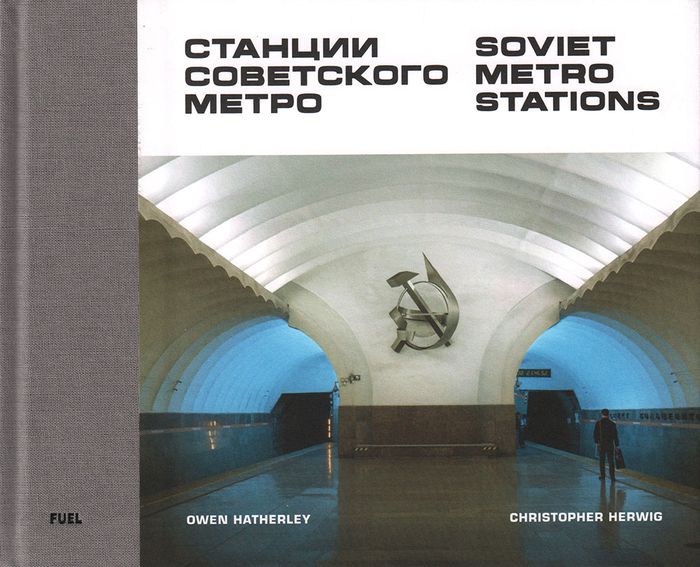
Title:
Soviet metro stations
Soviet metro stations
Actions:
Price:
$49.95
(available to order)
Summary:
Canadian photographer Christopher Herwig has completed a subterranean expedition photographing the stations of each Metro network of the former USSR. From extreme marble and chandelier opulence to brutal futuristic minimalist glory, 'Soviet Metro Stations' documents this wealth of diverse architecture.
$49.95
(available to order)
Summary:
Canadian photographer Christopher Herwig has completed a subterranean expedition photographing the stations of each Metro network of the former USSR. From extreme marble and chandelier opulence to brutal futuristic minimalist glory, 'Soviet Metro Stations' documents this wealth of diverse architecture.
Title:
Soviet metro stations
Actions:
Price:
$49.95
(available to order)
Summary:
Canadian photographer Christopher Herwig has completed a subterranean expedition photographing the stations of each Metro network of the former USSR. From extreme marble and chandelier opulence to brutal futuristic minimalist glory, 'Soviet Metro Stations' documents this wealth of diverse architecture.
Soviet metro stations
Actions:
Price:
$49.95
(available to order)
Summary:
Canadian photographer Christopher Herwig has completed a subterranean expedition photographing the stations of each Metro network of the former USSR. From extreme marble and chandelier opulence to brutal futuristic minimalist glory, 'Soviet Metro Stations' documents this wealth of diverse architecture.
Form:
books
books
Publication:
September 2019
September 2019
Subject:
Photography Collections
Photography Collections
Form:
books
books
Actions:
Price:
$39.95
(available to order)
Summary:
"Moving to Mars" is the first book ever to thoroughly explore the crucial role that design will play in the collective endeavor to travel to and inhabit Mars. A comprehensive overview of both past and current developments in space travel and colonization, it begins with the evolution of the space suit and rocket technology; it then proceeds to explore a wide range of(...)
$39.95
(available to order)
Summary:
"Moving to Mars" is the first book ever to thoroughly explore the crucial role that design will play in the collective endeavor to travel to and inhabit Mars. A comprehensive overview of both past and current developments in space travel and colonization, it begins with the evolution of the space suit and rocket technology; it then proceeds to explore a wide range of(...)
Subject:
Environment and environmental theory
Environment and environmental theory
Publication:
December 2019
December 2019
Title:
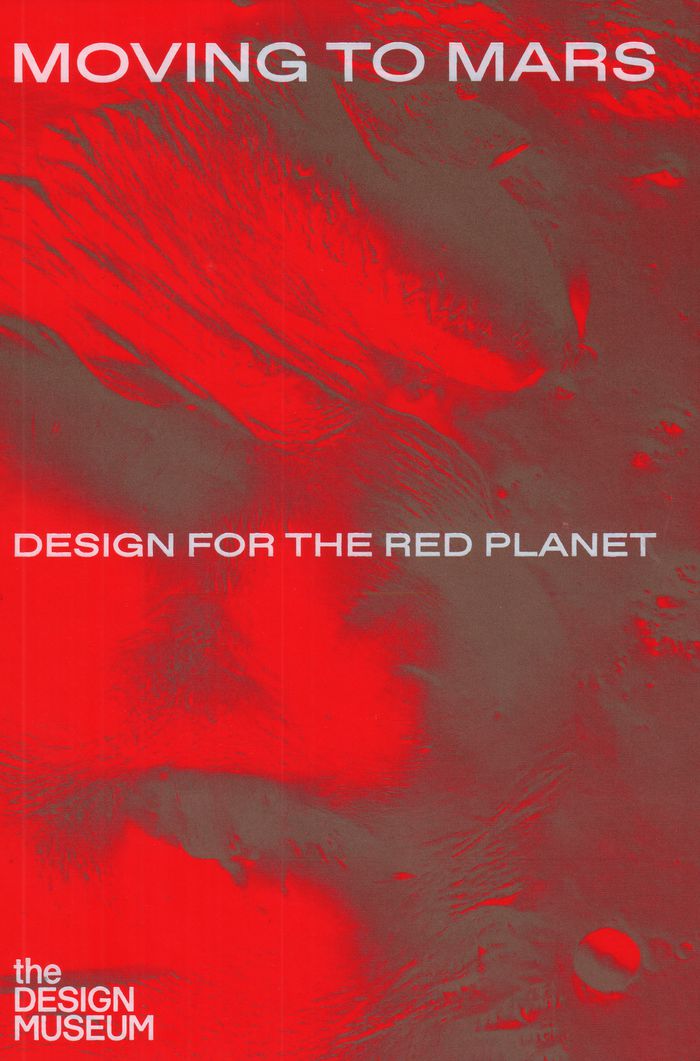
Moving to Mars: design for the red planet
Actions:
Price:
$39.95
(available to order)
Summary:
"Moving to Mars" is the first book ever to thoroughly explore the crucial role that design will play in the collective endeavor to travel to and inhabit Mars. A comprehensive overview of both past and current developments in space travel and colonization, it begins with the evolution of the space suit and rocket technology; it then proceeds to explore a wide range of fascinating and never-before-seen projects on Mars-specific habitations, covering everything from space-ready cutlery to clothes, furniture and speculative habitats. Illustrated with colour images of rarely seen drawings, concepts and prototypes, plus newly commissioned essays by the designers, artists and scientists who are charting the path forward to Mars, this book literally reveals a whole new future for humankind, fleshing out a vision of an everyday reality on another planet.
Moving to Mars: design for the red planet
Actions:
Price:
$39.95
(available to order)
Summary:
"Moving to Mars" is the first book ever to thoroughly explore the crucial role that design will play in the collective endeavor to travel to and inhabit Mars. A comprehensive overview of both past and current developments in space travel and colonization, it begins with the evolution of the space suit and rocket technology; it then proceeds to explore a wide range of fascinating and never-before-seen projects on Mars-specific habitations, covering everything from space-ready cutlery to clothes, furniture and speculative habitats. Illustrated with colour images of rarely seen drawings, concepts and prototypes, plus newly commissioned essays by the designers, artists and scientists who are charting the path forward to Mars, this book literally reveals a whole new future for humankind, fleshing out a vision of an everyday reality on another planet.
Form:
books
books
Publication:
December 2019
December 2019
Subject:
Environment and environmental theory
Environment and environmental theory
Form:
books
books
Actions:
Price:
$62.00
(available to order)
Summary:
First published in 2017 and quickly going out of print, Ellsworth Kelly: Plant Drawings features more than 30 drawings made by Kelly between 1949 and 2008. Despite the immediacy of their execution and their representational content, the most striking surprise of Kelly’s plant drawings is how much they share with his abstract paintings and sculptures.
$62.00
(available to order)
Summary:
First published in 2017 and quickly going out of print, Ellsworth Kelly: Plant Drawings features more than 30 drawings made by Kelly between 1949 and 2008. Despite the immediacy of their execution and their representational content, the most striking surprise of Kelly’s plant drawings is how much they share with his abstract paintings and sculptures.
Title:
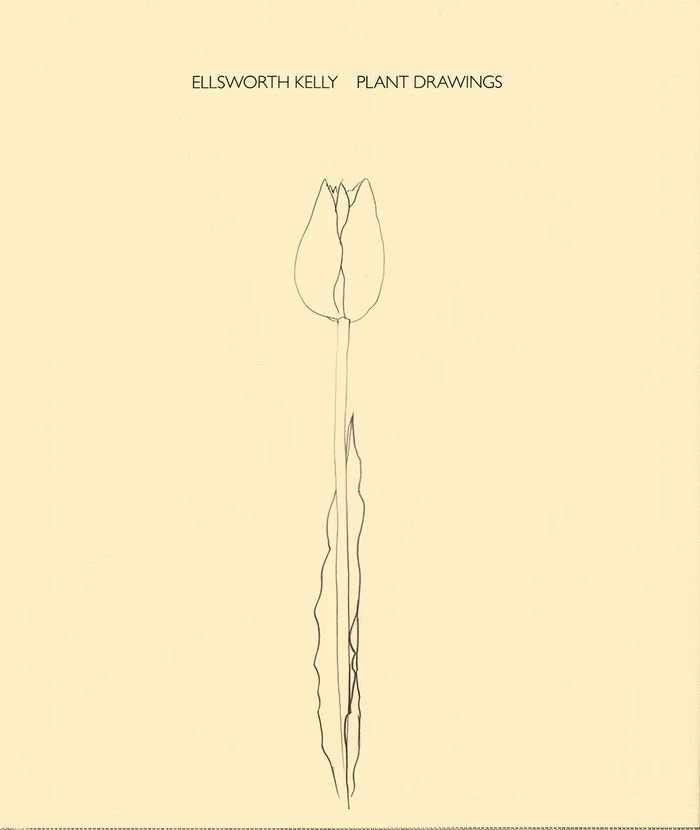
Ellsworth Kelly: Plant drawings
Actions:
Price:
$62.00
(available to order)
Summary:
First published in 2017 and quickly going out of print, Ellsworth Kelly: Plant Drawings features more than 30 drawings made by Kelly between 1949 and 2008. Despite the immediacy of their execution and their representational content, the most striking surprise of Kelly’s plant drawings is how much they share with his abstract paintings and sculptures.
Ellsworth Kelly: Plant drawings
Actions:
Price:
$62.00
(available to order)
Summary:
First published in 2017 and quickly going out of print, Ellsworth Kelly: Plant Drawings features more than 30 drawings made by Kelly between 1949 and 2008. Despite the immediacy of their execution and their representational content, the most striking surprise of Kelly’s plant drawings is how much they share with his abstract paintings and sculptures.
Form:
books
books
Publication:
October 2019
October 2019
Subject:
Contemporary Art Monographs
Contemporary Art Monographs
Form:
books
books

Title:
Polar bears
Polar bears
Actions:
Price:
$34.95
(available to order)
Summary:
People in polar-bear costumes on the beach, at pubs and fairs, arm in arm with toddlers, men, women: it can only be another gem from the collection of Hamburg-based photophile Jochen Raiss, whose flea-market finds of photos depicting women in trees have already won the enthusiasm of photography fans (Women in Trees and More Women in Trees). Here he reveals yet more(...)
$34.95
(available to order)
Summary:
People in polar-bear costumes on the beach, at pubs and fairs, arm in arm with toddlers, men, women: it can only be another gem from the collection of Hamburg-based photophile Jochen Raiss, whose flea-market finds of photos depicting women in trees have already won the enthusiasm of photography fans (Women in Trees and More Women in Trees). Here he reveals yet more(...)
Title:
Polar bears
Actions:
Price:
$34.95
(available to order)
Summary:
People in polar-bear costumes on the beach, at pubs and fairs, arm in arm with toddlers, men, women: it can only be another gem from the collection of Hamburg-based photophile Jochen Raiss, whose flea-market finds of photos depicting women in trees have already won the enthusiasm of photography fans (Women in Trees and More Women in Trees). Here he reveals yet more treasures from his trove in this new and mysterious series of people posing with polar bears.
Polar bears
Actions:
Price:
$34.95
(available to order)
Summary:
People in polar-bear costumes on the beach, at pubs and fairs, arm in arm with toddlers, men, women: it can only be another gem from the collection of Hamburg-based photophile Jochen Raiss, whose flea-market finds of photos depicting women in trees have already won the enthusiasm of photography fans (Women in Trees and More Women in Trees). Here he reveals yet more treasures from his trove in this new and mysterious series of people posing with polar bears.
Form:
books
books
Publication:
November 2019
November 2019
Subject:
Photography Collections
Photography Collections


