


8791 Results
Form:
books
books

Actions:
Price:
$45.00
(available to order)
Summary:
Itee Pootoogook belonged to a new generation of Inuit artists who are transforming and reshaping the creative traditions that were successfully pioneered by their parents and grandparents in the second half of the 20th century. A meticulous draughtsman who worked with graphite and coloured pencil, Itee depicted buildings in Kinngait that incorporated a perspectival view,(...)
$45.00
(available to order)
Summary:
Itee Pootoogook belonged to a new generation of Inuit artists who are transforming and reshaping the creative traditions that were successfully pioneered by their parents and grandparents in the second half of the 20th century. A meticulous draughtsman who worked with graphite and coloured pencil, Itee depicted buildings in Kinngait that incorporated a perspectival view,(...)
Publication:
June 2021
June 2021
Title:
Itee Pootoogook : hymns to the silence
Actions:
Price:
$45.00
(available to order)
Summary:
Itee Pootoogook belonged to a new generation of Inuit artists who are transforming and reshaping the creative traditions that were successfully pioneered by their parents and grandparents in the second half of the 20th century. A meticulous draughtsman who worked with graphite and coloured pencil, Itee depicted buildings in Kinngait that incorporated a perspectival view, a relatively recent practice influenced by his training as a carpenter and his interest in photography. His portraits of acquaintances and family members similarly bear witness to the contemporary North. Whether he depicts them at work or resting, his subjects are engaged in a range of activities from preparing carcasses brought in from hunting to playing music or contemplating the landscape of the North. Itee was also an inventive landscapist. Many of his finest Arctic scenes emphasize the open horizon that separates land from sky and the ever-shifting colours of the Arctic. Rendering the variable light of the landscape with precision, he brought a level of attention that contributed, over time, to his style.
Itee Pootoogook : hymns to the silence
Actions:
Price:
$45.00
(available to order)
Summary:
Itee Pootoogook belonged to a new generation of Inuit artists who are transforming and reshaping the creative traditions that were successfully pioneered by their parents and grandparents in the second half of the 20th century. A meticulous draughtsman who worked with graphite and coloured pencil, Itee depicted buildings in Kinngait that incorporated a perspectival view, a relatively recent practice influenced by his training as a carpenter and his interest in photography. His portraits of acquaintances and family members similarly bear witness to the contemporary North. Whether he depicts them at work or resting, his subjects are engaged in a range of activities from preparing carcasses brought in from hunting to playing music or contemplating the landscape of the North. Itee was also an inventive landscapist. Many of his finest Arctic scenes emphasize the open horizon that separates land from sky and the ever-shifting colours of the Arctic. Rendering the variable light of the landscape with precision, he brought a level of attention that contributed, over time, to his style.
Form:
books
books
Publication:
June 2021
June 2021
Form:
books
books
Actions:
Price:
$91.00
(available to order)
Summary:
The architectural practice of Hiroshi Sugimoto and Tomoyuki Sakakida is informed by a simple paradox: ''the oldest things are the newest.'' In 2008, Sugimoto and Sakakida founded New Material Research Laboratory with an aim to develop ''new'' materials for construction based upon much older materials and techniques. The NMRL reinvigorates material from ancient times and(...)
$91.00
(available to order)
Summary:
The architectural practice of Hiroshi Sugimoto and Tomoyuki Sakakida is informed by a simple paradox: ''the oldest things are the newest.'' In 2008, Sugimoto and Sakakida founded New Material Research Laboratory with an aim to develop ''new'' materials for construction based upon much older materials and techniques. The NMRL reinvigorates material from ancient times and(...)
Title:
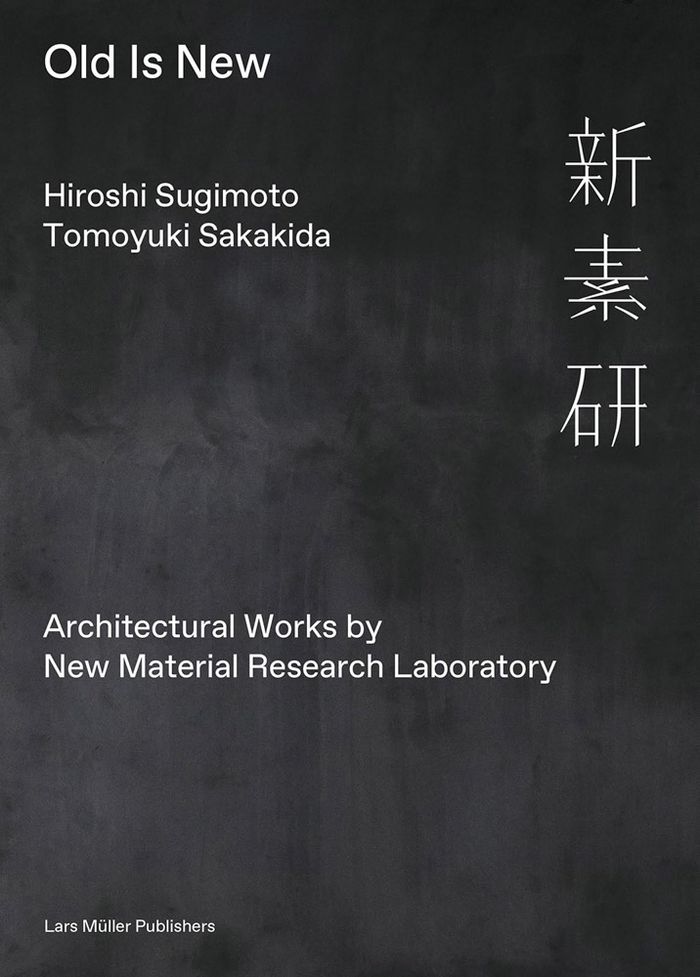
Old is new: architectural works by New Material Laboratory
Actions:
Price:
$91.00
(available to order)
Summary:
The architectural practice of Hiroshi Sugimoto and Tomoyuki Sakakida is informed by a simple paradox: ''the oldest things are the newest.'' In 2008, Sugimoto and Sakakida founded New Material Research Laboratory with an aim to develop ''new'' materials for construction based upon much older materials and techniques. The NMRL reinvigorates material from ancient times and the Middle Ages by using it in the context of a distinctly contemporary design sensibility and thus creating a physical connection between the past and the present. This beautiful hardcover volume delves into the art and architecture as well as the archaeological philosophy of the Laboratory. Each project is characterized by the materials used in its construction and is illustrated with rich full-color photography. Sugimoto and Sakakida are the principal authors of the accompanying text, extrapolating on their design ethos and its roots in Japanese aesthetic tradition; supplemental reading provides further historical context. The book also includes an annotated index of materials and classic Japanese techniques with information drawn from the Laboratory’s research.
Old is new: architectural works by New Material Laboratory
Actions:
Price:
$91.00
(available to order)
Summary:
The architectural practice of Hiroshi Sugimoto and Tomoyuki Sakakida is informed by a simple paradox: ''the oldest things are the newest.'' In 2008, Sugimoto and Sakakida founded New Material Research Laboratory with an aim to develop ''new'' materials for construction based upon much older materials and techniques. The NMRL reinvigorates material from ancient times and the Middle Ages by using it in the context of a distinctly contemporary design sensibility and thus creating a physical connection between the past and the present. This beautiful hardcover volume delves into the art and architecture as well as the archaeological philosophy of the Laboratory. Each project is characterized by the materials used in its construction and is illustrated with rich full-color photography. Sugimoto and Sakakida are the principal authors of the accompanying text, extrapolating on their design ethos and its roots in Japanese aesthetic tradition; supplemental reading provides further historical context. The book also includes an annotated index of materials and classic Japanese techniques with information drawn from the Laboratory’s research.
Form:
books
books
Publication:
May 2021
May 2021
Subject:
Architecture Monographs
Architecture Monographs
Form:
books
books
Title:
Louis Sullivan's idea
Louis Sullivan's idea
Actions:
Price:
$62.99
(available to order)
Summary:
The story of Louis H. Sullivan is considered one of the great American tragedies. While Sullivan reshaped architectural thought and practice and contributed significantly to the foundations of modern architecture, he suffered a sad and lonely death. Many have since missed his aim: that of bringing buildings to life. What mattered most to Sullivan were not the buildings(...)
$62.99
(available to order)
Summary:
The story of Louis H. Sullivan is considered one of the great American tragedies. While Sullivan reshaped architectural thought and practice and contributed significantly to the foundations of modern architecture, he suffered a sad and lonely death. Many have since missed his aim: that of bringing buildings to life. What mattered most to Sullivan were not the buildings(...)
Title:
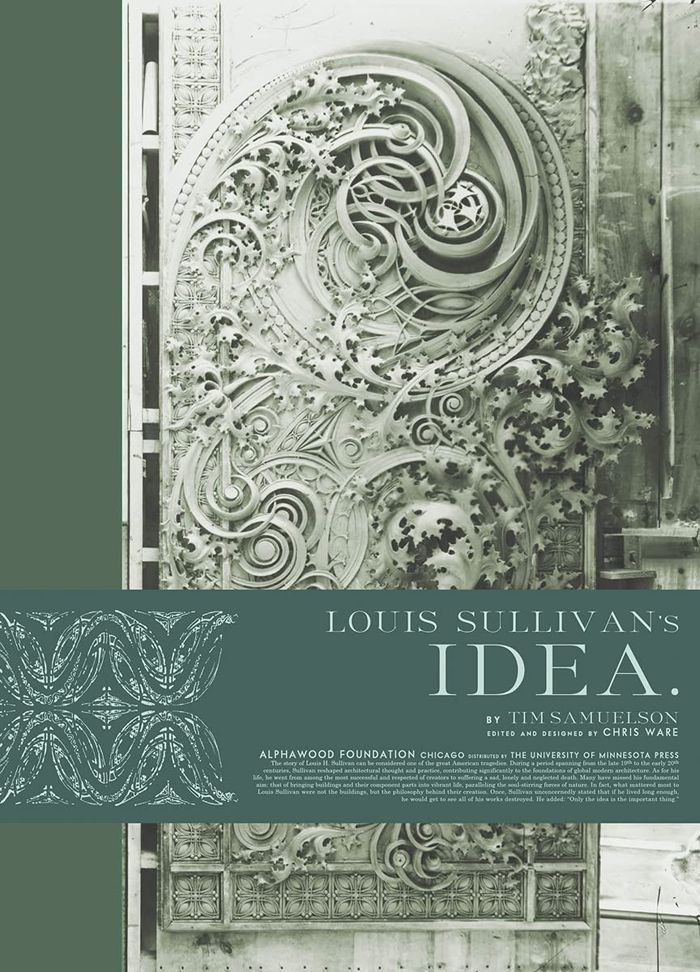
Louis Sullivan's idea
Actions:
Price:
$62.99
(available to order)
Summary:
The story of Louis H. Sullivan is considered one of the great American tragedies. While Sullivan reshaped architectural thought and practice and contributed significantly to the foundations of modern architecture, he suffered a sad and lonely death. Many have since missed his aim: that of bringing buildings to life. What mattered most to Sullivan were not the buildings but the philosophy behind their creation. Once, he unconcernedly stated that if he lived long enough, he would get to see all of his works destroyed. He added: "Only the idea is the important thing." In ''Louis Sullivan's Idea,'' Chicago architectural historian Tim Samuelson and artist/writer Chris Ware present Sullivan's commitment to his discipline of thought as the guiding force behind his work, and this collection of photographs, original documentation, and drawings all date from the period of Sullivan's life, 1856-1924, that many rarely or have never seen before. The book includes a full-size foldout facsimile reproduction of Louis Sullivan's last architectural commission and the only surviving working drawing done in his own hand.
Louis Sullivan's idea
Actions:
Price:
$62.99
(available to order)
Summary:
The story of Louis H. Sullivan is considered one of the great American tragedies. While Sullivan reshaped architectural thought and practice and contributed significantly to the foundations of modern architecture, he suffered a sad and lonely death. Many have since missed his aim: that of bringing buildings to life. What mattered most to Sullivan were not the buildings but the philosophy behind their creation. Once, he unconcernedly stated that if he lived long enough, he would get to see all of his works destroyed. He added: "Only the idea is the important thing." In ''Louis Sullivan's Idea,'' Chicago architectural historian Tim Samuelson and artist/writer Chris Ware present Sullivan's commitment to his discipline of thought as the guiding force behind his work, and this collection of photographs, original documentation, and drawings all date from the period of Sullivan's life, 1856-1924, that many rarely or have never seen before. The book includes a full-size foldout facsimile reproduction of Louis Sullivan's last architectural commission and the only surviving working drawing done in his own hand.
Form:
books
books
Publication:
October 2021
October 2021
Subject:
Architecture Monographs
Architecture Monographs
Form:
books
books
Title:
Neri Oxman: material ecology
Neri Oxman: material ecology
Actions:
Price:
$69.95
(available to order)
Summary:
The first survey on the interdisciplinary biodesign genius of Neri Oxman, pioneer of "material ecology.'' Throughout her 20-year career, Neri Oxman has invented not only new ideas for materials, buildings and construction processes, but also new frameworks for interdisciplinary—and interspecies—collaborations. She coined the term ''material ecology'' to describe her(...)
$69.95
(available to order)
Summary:
The first survey on the interdisciplinary biodesign genius of Neri Oxman, pioneer of "material ecology.'' Throughout her 20-year career, Neri Oxman has invented not only new ideas for materials, buildings and construction processes, but also new frameworks for interdisciplinary—and interspecies—collaborations. She coined the term ''material ecology'' to describe her(...)
Subject:
Architecture Monographs
Architecture Monographs
Publication:
May 2020
May 2020
Title:
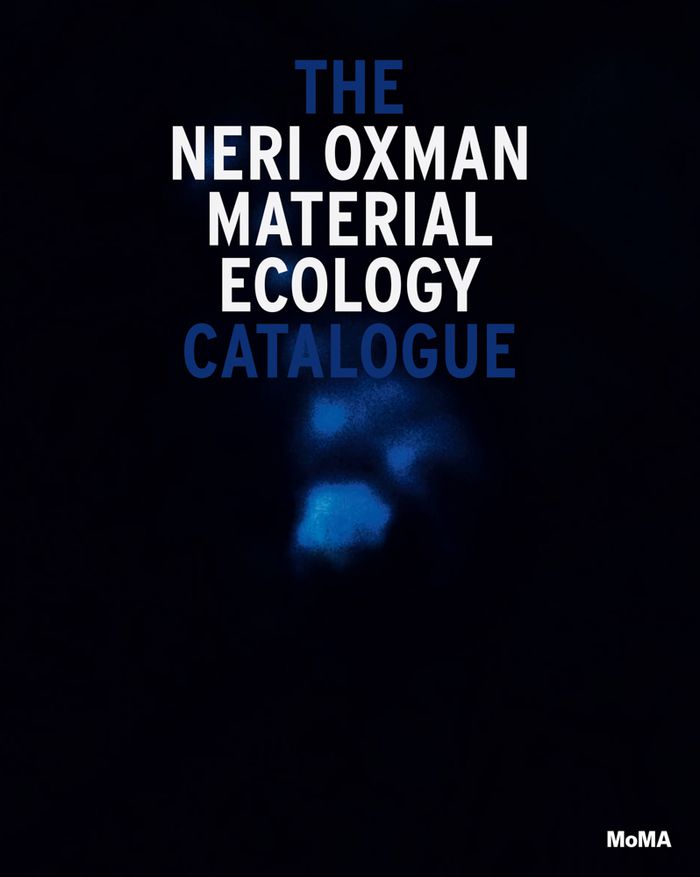
Neri Oxman: material ecology
Actions:
Price:
$69.95
(available to order)
Summary:
The first survey on the interdisciplinary biodesign genius of Neri Oxman, pioneer of "material ecology.'' Throughout her 20-year career, Neri Oxman has invented not only new ideas for materials, buildings and construction processes, but also new frameworks for interdisciplinary—and interspecies—collaborations. She coined the term ''material ecology'' to describe her process of producing techniques and objects informed by the structural, systemic and aesthetic wisdom of nature, from the shells of crustaceans to the flow of human breathing. Groundbreaking for its solid technological and scientific basis, its rigorous and daring experimentation, its visionary philosophy and its unquestionable attention to formal elegance, Oxman’s work operates at the intersection of biology, engineering, architecture and artistic design, material science and computer science. This book—designed by Irma Boom and published to accompany a midcareer retrospective of Oxman’s work—highlights the interdisciplinary nature of the designer’s practice. It demonstrates how Oxman’s contributions allow us to question and redefine the idea of modernism—a concept in constant evolution—and of organic design.
Neri Oxman: material ecology
Actions:
Price:
$69.95
(available to order)
Summary:
The first survey on the interdisciplinary biodesign genius of Neri Oxman, pioneer of "material ecology.'' Throughout her 20-year career, Neri Oxman has invented not only new ideas for materials, buildings and construction processes, but also new frameworks for interdisciplinary—and interspecies—collaborations. She coined the term ''material ecology'' to describe her process of producing techniques and objects informed by the structural, systemic and aesthetic wisdom of nature, from the shells of crustaceans to the flow of human breathing. Groundbreaking for its solid technological and scientific basis, its rigorous and daring experimentation, its visionary philosophy and its unquestionable attention to formal elegance, Oxman’s work operates at the intersection of biology, engineering, architecture and artistic design, material science and computer science. This book—designed by Irma Boom and published to accompany a midcareer retrospective of Oxman’s work—highlights the interdisciplinary nature of the designer’s practice. It demonstrates how Oxman’s contributions allow us to question and redefine the idea of modernism—a concept in constant evolution—and of organic design.
Form:
books
books
Publication:
May 2020
May 2020
Subject:
Architecture Monographs
Architecture Monographs
Form:
books
books
Actions:
Price:
$65.50
(available to order)
Summary:
The evolution of Jo Nagasaka’s design process is unveiled in a unique publication about his practice. This book tells the story of Schemata Architects, encapsulating the essence of the studio’s work. Highlighting methods and processes through a series of essays, the designer offers insight into how concepts were developed in order to realise the wide-ranging portfolio of(...)
$65.50
(available to order)
Summary:
The evolution of Jo Nagasaka’s design process is unveiled in a unique publication about his practice. This book tells the story of Schemata Architects, encapsulating the essence of the studio’s work. Highlighting methods and processes through a series of essays, the designer offers insight into how concepts were developed in order to realise the wide-ranging portfolio of(...)
Title:
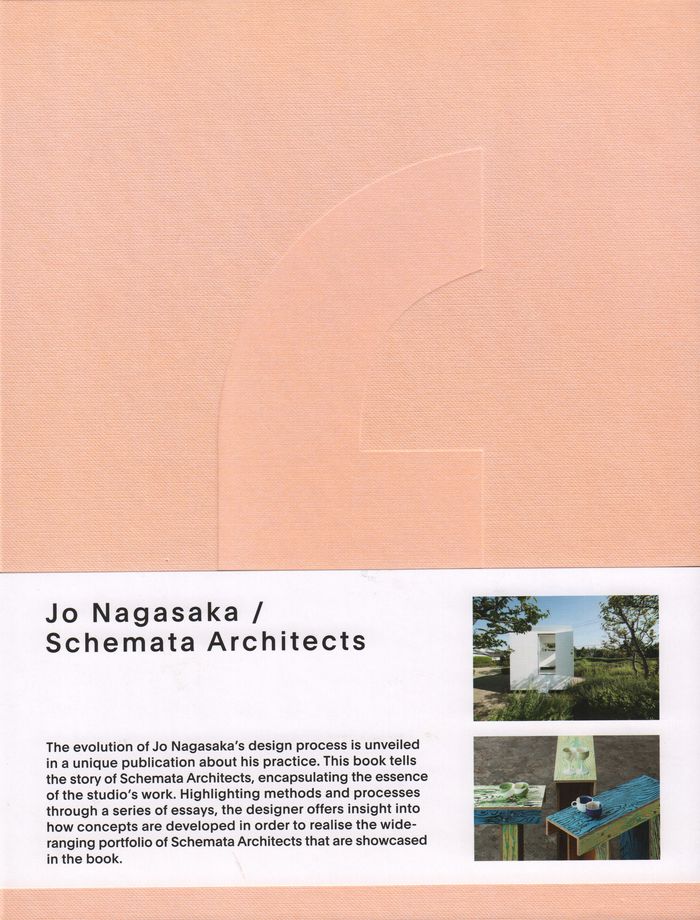
Jo Nagasaka, Schemata Architects: objects and spaces
Actions:
Price:
$65.50
(available to order)
Summary:
The evolution of Jo Nagasaka’s design process is unveiled in a unique publication about his practice. This book tells the story of Schemata Architects, encapsulating the essence of the studio’s work. Highlighting methods and processes through a series of essays, the designer offers insight into how concepts were developed in order to realise the wide-ranging portfolio of Schemata Architects that are showcased in the book. Nagasaka’s focus is often drawn to tired, found objects or unused spaces. Through investigations to seek modern solutions and pioneering re-purposing techniques, he manages to transform interiors and breathe life back into objects. His projects range from large-scale installations and interactive interior environments to smaller-scale products. Revealing insights into his way of working, the book highlights new findings about how the designer is able to capture the essence of his thoughts and relate the key aspects of a project in creative and innovative ways. The articles emphasise the designer's concepts, giving unique insight into the firm's process from the designer’s perspective.
Jo Nagasaka, Schemata Architects: objects and spaces
Actions:
Price:
$65.50
(available to order)
Summary:
The evolution of Jo Nagasaka’s design process is unveiled in a unique publication about his practice. This book tells the story of Schemata Architects, encapsulating the essence of the studio’s work. Highlighting methods and processes through a series of essays, the designer offers insight into how concepts were developed in order to realise the wide-ranging portfolio of Schemata Architects that are showcased in the book. Nagasaka’s focus is often drawn to tired, found objects or unused spaces. Through investigations to seek modern solutions and pioneering re-purposing techniques, he manages to transform interiors and breathe life back into objects. His projects range from large-scale installations and interactive interior environments to smaller-scale products. Revealing insights into his way of working, the book highlights new findings about how the designer is able to capture the essence of his thoughts and relate the key aspects of a project in creative and innovative ways. The articles emphasise the designer's concepts, giving unique insight into the firm's process from the designer’s perspective.
Form:
books
books
Publication:
May 2017
May 2017
Subject:
Architecture Monographs
Architecture Monographs
Form:
books
books
Actions:
Price:
$58.95
(available to order)
Summary:
"Recycled theory" is a multidisciplinary dictionary made of entries in form of texts, drawings and quotes, which explore the concept of “recycling” in design cultures and in the theories that nurture them. Usually we recycle things, objects, spaces but more often we return on principles and approaches to rearrange them, put them back into circulation, and override them.(...)
$58.95
(available to order)
Summary:
"Recycled theory" is a multidisciplinary dictionary made of entries in form of texts, drawings and quotes, which explore the concept of “recycling” in design cultures and in the theories that nurture them. Usually we recycle things, objects, spaces but more often we return on principles and approaches to rearrange them, put them back into circulation, and override them.(...)
Title:
Recycled theory: illustrated dictionary
Actions:
Price:
$58.95
(available to order)
Summary:
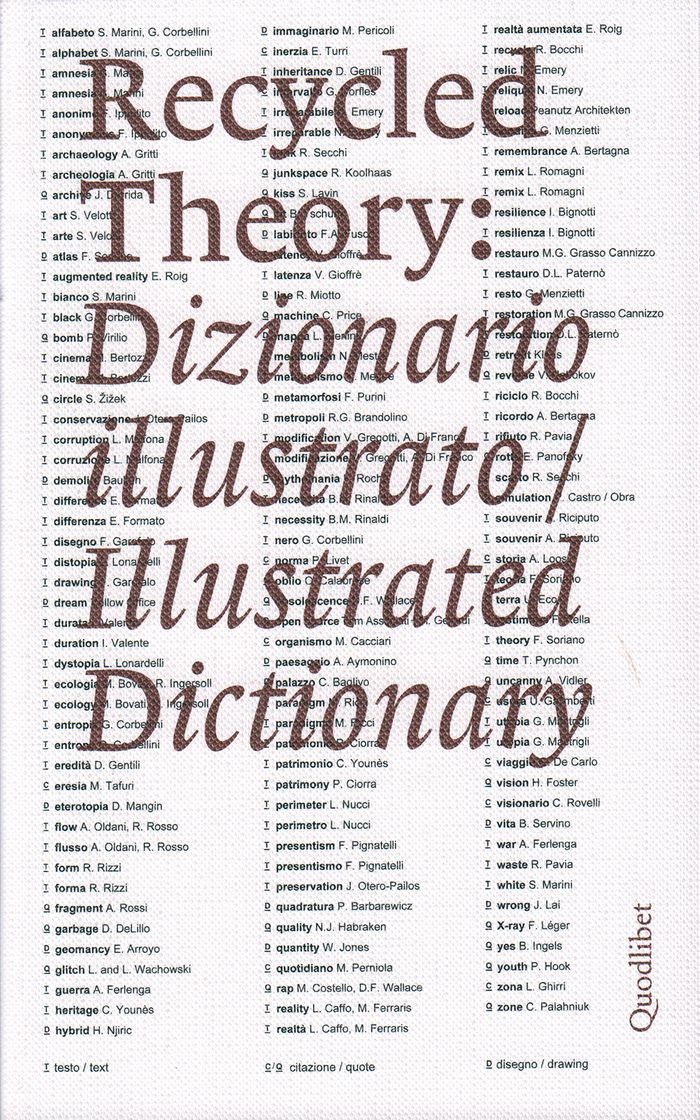
"Recycled theory" is a multidisciplinary dictionary made of entries in form of texts, drawings and quotes, which explore the concept of “recycling” in design cultures and in the theories that nurture them. Usually we recycle things, objects, spaces but more often we return on principles and approaches to rearrange them, put them back into circulation, and override them. The practice of recycling is therefore placed in an area of negotiation between memory and amnesia, it brings out the unexpected self-regeneration potential of what exists, our ability to preserve and reinvent it, even through its partial breakdown. The words here collected (from “amnesia” to “zone”) identify materials, procedures, ambiguities, deviations, and potential nexus of recycling, recording terms that tell the different processes of production and sense of city and landscape after recent socio-economic upheavals and the widening of preservation as the prevalent scenario for the project. Recycled Theory comes out of the collaboration of eleven Italian universities engaged in the research “Re-cycle Italy: New Life Cycles for Architecture and Infrastructure of City and Landscape.”
Recycled theory: illustrated dictionary
Actions:
Price:
$58.95
(available to order)
Summary:
"Recycled theory" is a multidisciplinary dictionary made of entries in form of texts, drawings and quotes, which explore the concept of “recycling” in design cultures and in the theories that nurture them. Usually we recycle things, objects, spaces but more often we return on principles and approaches to rearrange them, put them back into circulation, and override them. The practice of recycling is therefore placed in an area of negotiation between memory and amnesia, it brings out the unexpected self-regeneration potential of what exists, our ability to preserve and reinvent it, even through its partial breakdown. The words here collected (from “amnesia” to “zone”) identify materials, procedures, ambiguities, deviations, and potential nexus of recycling, recording terms that tell the different processes of production and sense of city and landscape after recent socio-economic upheavals and the widening of preservation as the prevalent scenario for the project. Recycled Theory comes out of the collaboration of eleven Italian universities engaged in the research “Re-cycle Italy: New Life Cycles for Architecture and Infrastructure of City and Landscape.”
Form:
books
books
Publication:
November 2016
November 2016
Subject:
Green Architecture
Green Architecture
Form:
books
books
Price:
$55.90
(available to order)
Summary:
Even the most inventive and revolutionary architects of today owe debts to the past, often to the distant past when architecture really was being invented for the first time. Architects depend on their own imaginations for personal insights and originality but their ideas may be stimulated (consciously or subliminally) by particularly powerful buildings from history. "The(...)
$55.90
(available to order)
Summary:
Even the most inventive and revolutionary architects of today owe debts to the past, often to the distant past when architecture really was being invented for the first time. Architects depend on their own imaginations for personal insights and originality but their ideas may be stimulated (consciously or subliminally) by particularly powerful buildings from history. "The(...)
Title:
The ten most influential buildings in history: Architecture's archetypes
Actions:
Price:
$55.90
(available to order)
Summary:
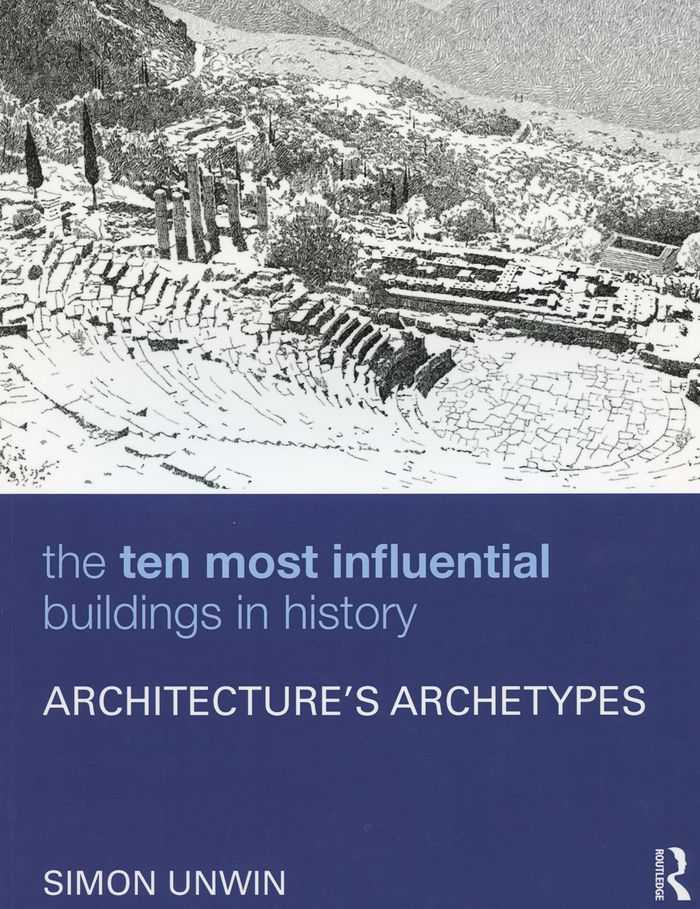
Even the most inventive and revolutionary architects of today owe debts to the past, often to the distant past when architecture really was being invented for the first time. Architects depend on their own imaginations for personal insights and originality but their ideas may be stimulated (consciously or subliminally) by particularly powerful buildings from history. "The Ten Most Influential Buildings in History: Architecture’s Archetypes" identifies ten architectural archetypes that have been sources of inspiration for architects through the centuries. Each archetype is analysed through distinctive examples, following the methodology established by the author in his previous books. The variety of 'lines of enquiry’ each archetype has provoked in latter-day architects are then explored by analysing their work to reveal ideas inspired by those earlier buildings. Archetypes have a timeless relevance. In adopting this approach, The Ten Most Influential Buildings in History is as pertinent to contemporary practice as it is to understanding buildings from antiquity, and offers insights into the bridges of influence that can operate between the two.
The ten most influential buildings in history: Architecture's archetypes
Actions:
Price:
$55.90
(available to order)
Summary:
Even the most inventive and revolutionary architects of today owe debts to the past, often to the distant past when architecture really was being invented for the first time. Architects depend on their own imaginations for personal insights and originality but their ideas may be stimulated (consciously or subliminally) by particularly powerful buildings from history. "The Ten Most Influential Buildings in History: Architecture’s Archetypes" identifies ten architectural archetypes that have been sources of inspiration for architects through the centuries. Each archetype is analysed through distinctive examples, following the methodology established by the author in his previous books. The variety of 'lines of enquiry’ each archetype has provoked in latter-day architects are then explored by analysing their work to reveal ideas inspired by those earlier buildings. Archetypes have a timeless relevance. In adopting this approach, The Ten Most Influential Buildings in History is as pertinent to contemporary practice as it is to understanding buildings from antiquity, and offers insights into the bridges of influence that can operate between the two.
Form:
books
books
Publication:
July 2016
July 2016
Subject:
Architectural Theory
Architectural Theory
Form:
books
books
Actions:
Price:
$66.00
(available to order)
Summary:
Throughout history great gardeners have risen from all walks of life. Some have been aristocratic amateur gardeners, others professional designers with an international practice. Some have come to garden-making from sister arts such as sculpture or painting; others have been hands-on nurserymen or botanists. What they all have in common is the ability to take an idea and(...)
$66.00
(available to order)
Summary:
Throughout history great gardeners have risen from all walks of life. Some have been aristocratic amateur gardeners, others professional designers with an international practice. Some have come to garden-making from sister arts such as sculpture or painting; others have been hands-on nurserymen or botanists. What they all have in common is the ability to take an idea and(...)
Title:
The lives of the great gardeners
Actions:
Price:
$66.00
(available to order)
Summary:
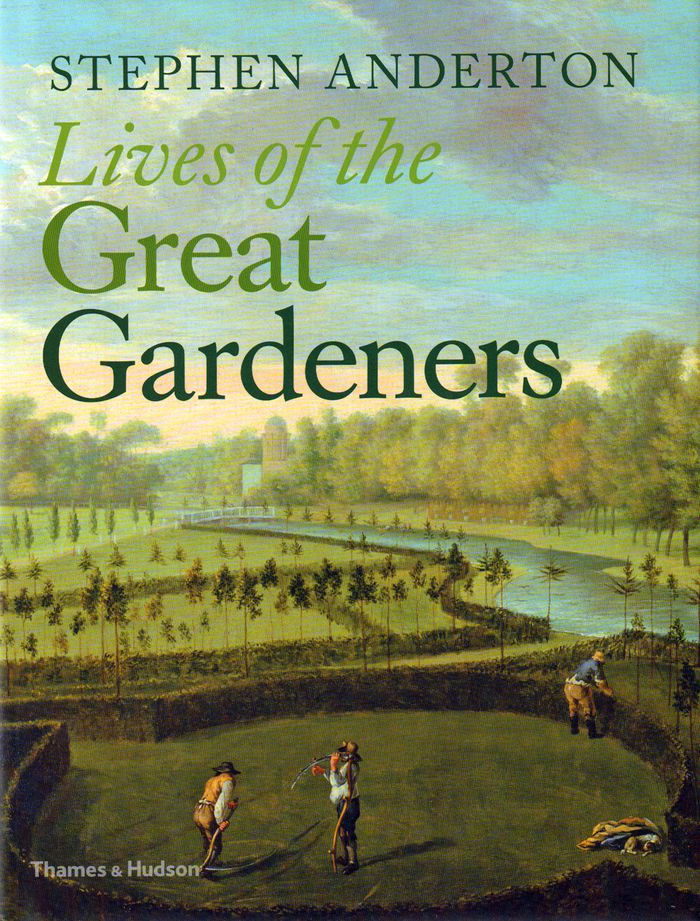
Throughout history great gardeners have risen from all walks of life. Some have been aristocratic amateur gardeners, others professional designers with an international practice. Some have come to garden-making from sister arts such as sculpture or painting; others have been hands-on nurserymen or botanists. What they all have in common is the ability to take an idea and develop it in a new manner relevant to their times. The book contains four sections. ‘Gardens of ideas’ moves from the politically allusive gardens of 18th-century England made by men such as William Kent, to Charles Jencks’s Scottish garden inspired by 21st-century cosmography. ‘Gardens of straight lines’ explores the lives of the great formalist gardeners, from Le Nôtre at Versailles to the rational English minimalism of contemporary designer Christopher Bradley-Hole. ‘Gardens of curves’ begins with that great exponent of the English landscape garden, ‘Capability’ Brown, and leads to the extraordinary Brazilian designer Roberto Burle Marx. Finally, ‘Gardens of plantsmanship’ moves from the father of naturalistic planting, William Robinson, to the sweeping prairies of New York’s favourite Dutch designer, Piet Oudolf.
The lives of the great gardeners
Actions:
Price:
$66.00
(available to order)
Summary:
Throughout history great gardeners have risen from all walks of life. Some have been aristocratic amateur gardeners, others professional designers with an international practice. Some have come to garden-making from sister arts such as sculpture or painting; others have been hands-on nurserymen or botanists. What they all have in common is the ability to take an idea and develop it in a new manner relevant to their times. The book contains four sections. ‘Gardens of ideas’ moves from the politically allusive gardens of 18th-century England made by men such as William Kent, to Charles Jencks’s Scottish garden inspired by 21st-century cosmography. ‘Gardens of straight lines’ explores the lives of the great formalist gardeners, from Le Nôtre at Versailles to the rational English minimalism of contemporary designer Christopher Bradley-Hole. ‘Gardens of curves’ begins with that great exponent of the English landscape garden, ‘Capability’ Brown, and leads to the extraordinary Brazilian designer Roberto Burle Marx. Finally, ‘Gardens of plantsmanship’ moves from the father of naturalistic planting, William Robinson, to the sweeping prairies of New York’s favourite Dutch designer, Piet Oudolf.
Form:
books
books
Publication:
September 2016
September 2016
Subject:
Gardens
Gardens
Form:
books
books
Price:
$58.50
(available to order)
Summary:
The Uses of Photography examines a network of artists who were active in Southern California between the late 1960s and early 1980s and whose experiments with photography opened the medium to a profusion of new strategies and subjects. These artists introduced urgent social issues and themes of everyday life into the seemingly neutral territory of conceptual art, through(...)
$58.50
(available to order)
Summary:
The Uses of Photography examines a network of artists who were active in Southern California between the late 1960s and early 1980s and whose experiments with photography opened the medium to a profusion of new strategies and subjects. These artists introduced urgent social issues and themes of everyday life into the seemingly neutral territory of conceptual art, through(...)
Title:
The uses of photography: art, politics and the reinvention of a medium
Actions:
Price:
$58.50
(available to order)
Summary:
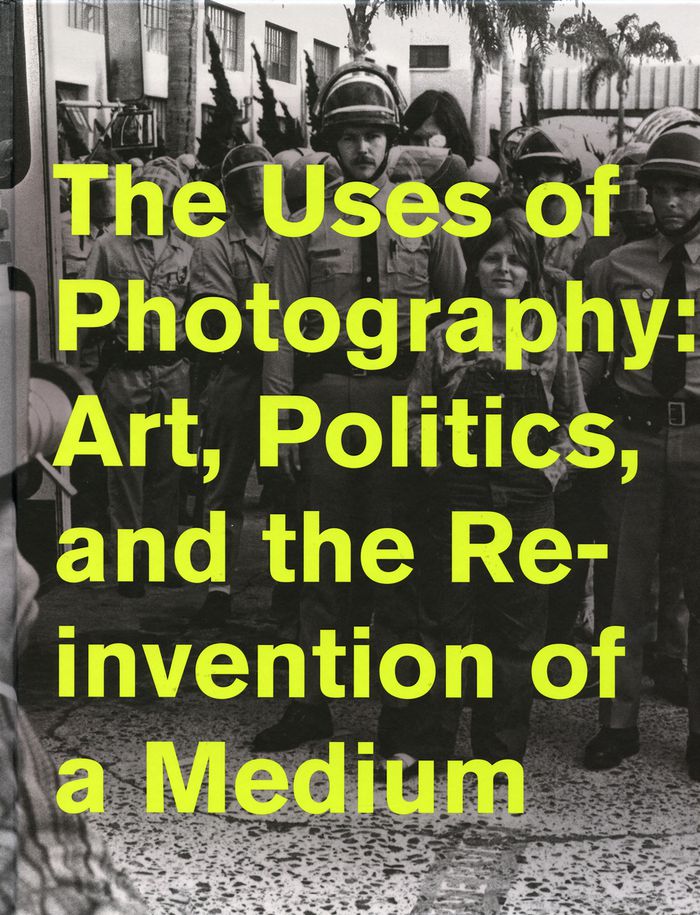
The Uses of Photography examines a network of artists who were active in Southern California between the late 1960s and early 1980s and whose experiments with photography opened the medium to a profusion of new strategies and subjects. These artists introduced urgent social issues and themes of everyday life into the seemingly neutral territory of conceptual art, through photographic works that took on hybrid forms, from books and postcards to video and text-and-image installations. Tracing a crucial history of photoconceptual practice, The Uses of Photography focuses on an artistic community that formed in and around the young University of California San Diego, founded in 1960, and its visual arts department, founded in 1967. Artists such as Eleanor Antin, Allan Kaprow, Fred Lonidier, Martha Rosler, Allan Sekula, and Carrie Mae Weems employed photography and its expanded forms as a means to dismantle modernist autonomy, to contest notions of photographic truth, and to engage in political critique. The work of these artists shaped emergent accounts of postmodernism in the visual arts and their influence is felt throughout the global contemporary art world today.
The uses of photography: art, politics and the reinvention of a medium
Actions:
Price:
$58.50
(available to order)
Summary:
The Uses of Photography examines a network of artists who were active in Southern California between the late 1960s and early 1980s and whose experiments with photography opened the medium to a profusion of new strategies and subjects. These artists introduced urgent social issues and themes of everyday life into the seemingly neutral territory of conceptual art, through photographic works that took on hybrid forms, from books and postcards to video and text-and-image installations. Tracing a crucial history of photoconceptual practice, The Uses of Photography focuses on an artistic community that formed in and around the young University of California San Diego, founded in 1960, and its visual arts department, founded in 1967. Artists such as Eleanor Antin, Allan Kaprow, Fred Lonidier, Martha Rosler, Allan Sekula, and Carrie Mae Weems employed photography and its expanded forms as a means to dismantle modernist autonomy, to contest notions of photographic truth, and to engage in political critique. The work of these artists shaped emergent accounts of postmodernism in the visual arts and their influence is felt throughout the global contemporary art world today.
Form:
books
books
Publication:
September 2016
September 2016
Subject:
Theory of Photography
Theory of Photography
Form:
books
books
Actions:
Price:
$119.00
(available to order)
Summary:
Acclaimed architect David Adjaye is known for his artistic sensitivity and deft use of space and inexpensive, unexpected materials. With the hindsight of almost twenty years of practice and a raft of high-profile projects around the world? perhaps best symbolized by the National Museum for African American History and Culture in Washington, DC?this book looks back on the(...)
$119.00
(available to order)
Summary:
Acclaimed architect David Adjaye is known for his artistic sensitivity and deft use of space and inexpensive, unexpected materials. With the hindsight of almost twenty years of practice and a raft of high-profile projects around the world? perhaps best symbolized by the National Museum for African American History and Culture in Washington, DC?this book looks back on the(...)
Title:
David Adjaye: Works 1995 - 2007
Actions:
Price:
$119.00
(available to order)
Summary:
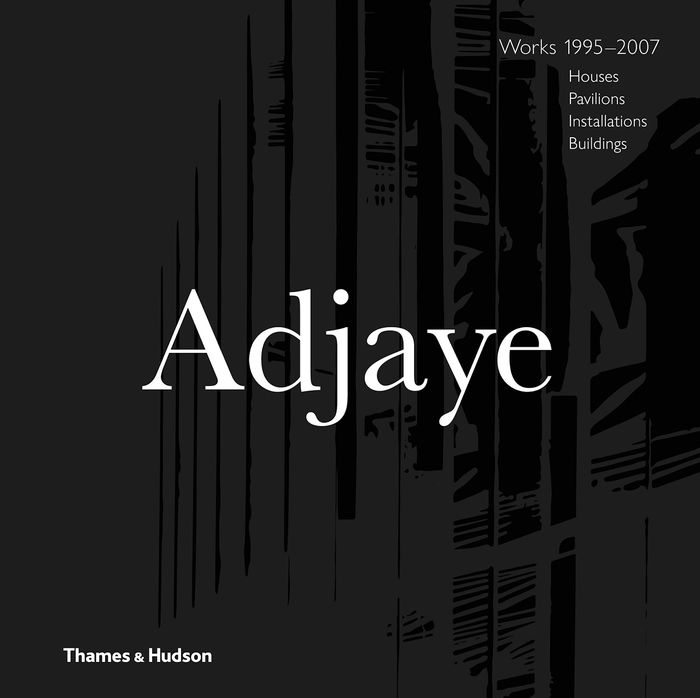
Acclaimed architect David Adjaye is known for his artistic sensitivity and deft use of space and inexpensive, unexpected materials. With the hindsight of almost twenty years of practice and a raft of high-profile projects around the world? perhaps best symbolized by the National Museum for African American History and Culture in Washington, DC?this book looks back on the houses and buildings of his early career. Adjaye’s early commissions were the test sites for what would become his unique, celebrated, and highly sought-after brand of “critical regionalism.” From London to Brooklyn, in private houses and public buildings, his clever urban interventions abound: roof-level living space is added to a factory-turned-studio, a sunken courtyard encases a tower-like house, and basalt stone extends a basement dining area to a roofless gazebo. ''David Adjaye- Works'' brings together all of these early projects and more and presents them with new analyses and recently uncovered archival material, testifying to the originality of an architect at the height of his talents who is changing the face of our built world.
David Adjaye: Works 1995 - 2007
Actions:
Price:
$119.00
(available to order)
Summary:
Acclaimed architect David Adjaye is known for his artistic sensitivity and deft use of space and inexpensive, unexpected materials. With the hindsight of almost twenty years of practice and a raft of high-profile projects around the world? perhaps best symbolized by the National Museum for African American History and Culture in Washington, DC?this book looks back on the houses and buildings of his early career. Adjaye’s early commissions were the test sites for what would become his unique, celebrated, and highly sought-after brand of “critical regionalism.” From London to Brooklyn, in private houses and public buildings, his clever urban interventions abound: roof-level living space is added to a factory-turned-studio, a sunken courtyard encases a tower-like house, and basalt stone extends a basement dining area to a roofless gazebo. ''David Adjaye- Works'' brings together all of these early projects and more and presents them with new analyses and recently uncovered archival material, testifying to the originality of an architect at the height of his talents who is changing the face of our built world.
Form:
books
books
Publication:
June 2020
June 2020
Subject:
Architecture Monographs
Architecture Monographs


