


992 Results
Form:
books
books
Actions:
Price:
$64.95
(available to order)
Summary:
With the increasing amount of issues affecting us as a whole in recent years, such as the global health crises, environmental destruction, and socio-economic disparities, the onus is on each and every one of us to do everything we can for the generations to come. Design has been—and will always be—our crucial tool in this regard. Whether it be through campaigns that(...)
$64.95
(available to order)
Summary:
With the increasing amount of issues affecting us as a whole in recent years, such as the global health crises, environmental destruction, and socio-economic disparities, the onus is on each and every one of us to do everything we can for the generations to come. Design has been—and will always be—our crucial tool in this regard. Whether it be through campaigns that(...)
Title:
Good by design: Ideas for a better world
Actions:
Price:
$64.95
(available to order)
Summary:
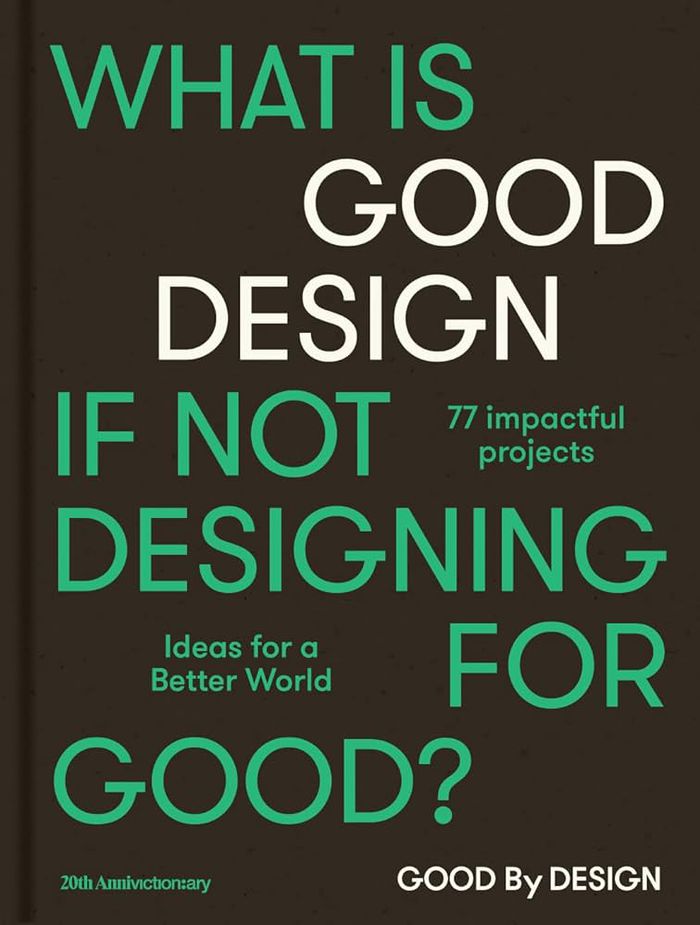
With the increasing amount of issues affecting us as a whole in recent years, such as the global health crises, environmental destruction, and socio-economic disparities, the onus is on each and every one of us to do everything we can for the generations to come. Design has been—and will always be—our crucial tool in this regard. Whether it be through campaigns that rally for action, posters that raise awareness, or products that actually change bad habits, designers combine creativity, craft, and compelling visuals to materialise concepts that can effectively transform the way we live. ''GOOD by DESIGN'' collates the best projects and insights to inspire not only those who wish to do good, but also hope for all in a better tomorrow.
Good by design: Ideas for a better world
Actions:
Price:
$64.95
(available to order)
Summary:
With the increasing amount of issues affecting us as a whole in recent years, such as the global health crises, environmental destruction, and socio-economic disparities, the onus is on each and every one of us to do everything we can for the generations to come. Design has been—and will always be—our crucial tool in this regard. Whether it be through campaigns that rally for action, posters that raise awareness, or products that actually change bad habits, designers combine creativity, craft, and compelling visuals to materialise concepts that can effectively transform the way we live. ''GOOD by DESIGN'' collates the best projects and insights to inspire not only those who wish to do good, but also hope for all in a better tomorrow.
Form:
books
books
Publication:
January 2022
January 2022
Subject:
Design Theory
Design Theory
Form:
books
books
Title:
Architecture of defeat
Architecture of defeat
Actions:
Price:
$57.95
(available to order)
Summary:
Kengo Kuma's ''Architecture of defeat,'' now available in English for the first time, explores events and architectural trends in the twentieth and twenty-first centuries in both Japan and beyond. It brings together a collection of essays which Kuma wrote after disasters such as the destruction of the World Trade Center in New York City on 9/11 and the earthquake and(...)
$57.95
(available to order)
Summary:
Kengo Kuma's ''Architecture of defeat,'' now available in English for the first time, explores events and architectural trends in the twentieth and twenty-first centuries in both Japan and beyond. It brings together a collection of essays which Kuma wrote after disasters such as the destruction of the World Trade Center in New York City on 9/11 and the earthquake and(...)
Title:
Architecture of defeat
Actions:
Price:
$57.95
(available to order)
Summary:
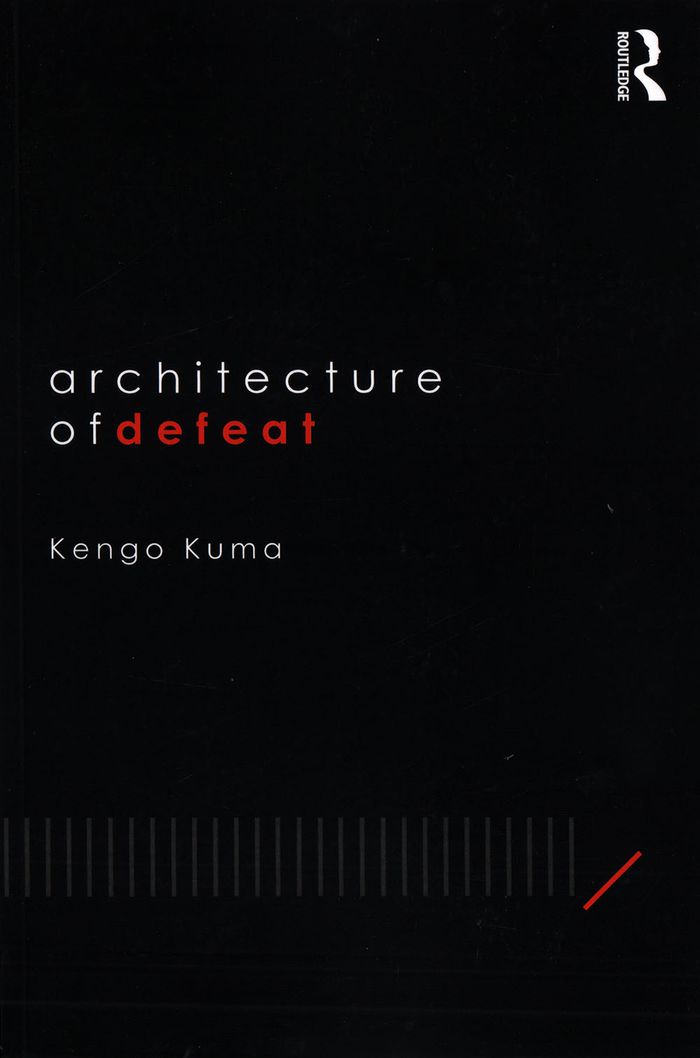
Kengo Kuma's ''Architecture of defeat,'' now available in English for the first time, explores events and architectural trends in the twentieth and twenty-first centuries in both Japan and beyond. It brings together a collection of essays which Kuma wrote after disasters such as the destruction of the World Trade Center in New York City on 9/11 and the earthquake and tsunami that obliterated much of the built landscape on Japan’s northern shore in a matter of minutes in 2011. Asking if we have been building in a manner that is too self-confident or arrogant, he examines architecture’s intrinsic- and often problematic- relationship to the powerful forces of contemporary politics, economics, consumerism, and technology, as well as its vital ties to society.
Architecture of defeat
Actions:
Price:
$57.95
(available to order)
Summary:
Kengo Kuma's ''Architecture of defeat,'' now available in English for the first time, explores events and architectural trends in the twentieth and twenty-first centuries in both Japan and beyond. It brings together a collection of essays which Kuma wrote after disasters such as the destruction of the World Trade Center in New York City on 9/11 and the earthquake and tsunami that obliterated much of the built landscape on Japan’s northern shore in a matter of minutes in 2011. Asking if we have been building in a manner that is too self-confident or arrogant, he examines architecture’s intrinsic- and often problematic- relationship to the powerful forces of contemporary politics, economics, consumerism, and technology, as well as its vital ties to society.
Form:
books
books
Publication:
June 2019
June 2019
Subject:
Architectural Theory
Architectural Theory
Form:
books
books
Title:
Urban planning today
Urban planning today
Actions:
Price:
$22.95
(available to order)
Summary:
American cities' penchants for single-use zoning and free-market development in pursuit of economic growth have produced problems that have long been recognized: grueling commutes and dependency on automobiles, social isolation, expensive public infrastructure, needless destruction of countryside. Eminent domain disputes rage on, despite recent Supreme Court decisions.(...)
$22.95
(available to order)
Summary:
American cities' penchants for single-use zoning and free-market development in pursuit of economic growth have produced problems that have long been recognized: grueling commutes and dependency on automobiles, social isolation, expensive public infrastructure, needless destruction of countryside. Eminent domain disputes rage on, despite recent Supreme Court decisions.(...)
Title:
Urban planning today
Actions:
Price:
$22.95
(available to order)
Summary:
American cities' penchants for single-use zoning and free-market development in pursuit of economic growth have produced problems that have long been recognized: grueling commutes and dependency on automobiles, social isolation, expensive public infrastructure, needless destruction of countryside. Eminent domain disputes rage on, despite recent Supreme Court decisions. Outdated public housing and failed single-function projects litter the landscape. Addressing these urgent problems and debating the public's role in urban planning, the contributors to Urban Planning Today report on real projects in Atlanta, Boston, Chicago, New York, Omaha, Portland, and Vancouver. They bring varying, and sometimes divergent, perspectives from backgrounds in urban design and development, city and regional planning, criticism, and law to bear on the mixed bag of results observed in these cities.
Urban planning today
Actions:
Price:
$22.95
(available to order)
Summary:
American cities' penchants for single-use zoning and free-market development in pursuit of economic growth have produced problems that have long been recognized: grueling commutes and dependency on automobiles, social isolation, expensive public infrastructure, needless destruction of countryside. Eminent domain disputes rage on, despite recent Supreme Court decisions. Outdated public housing and failed single-function projects litter the landscape. Addressing these urgent problems and debating the public's role in urban planning, the contributors to Urban Planning Today report on real projects in Atlanta, Boston, Chicago, New York, Omaha, Portland, and Vancouver. They bring varying, and sometimes divergent, perspectives from backgrounds in urban design and development, city and regional planning, criticism, and law to bear on the mixed bag of results observed in these cities.
Form:
books
books
Publication:
January 1900, Minneapolis
January 1900, Minneapolis
Subject:
Urban Theory
Urban Theory
Form:
books
books
Price:
$18.95
(available in store)
Summary:
Jean-Marc Gancille expose un tableau sans concession de la relation que l’être humain a nouée avec le monde animal, fondée sur la domination et l’exploitation. Sacrifices religieux, collections et commerce d’animaux sauvages, domestication, utilisation à des fins militaires ou pour des expériences de laboratoires, captivité forcée dans les zoos et aquariums, chasse et(...)
$18.95
(available in store)
Summary:
Jean-Marc Gancille expose un tableau sans concession de la relation que l’être humain a nouée avec le monde animal, fondée sur la domination et l’exploitation. Sacrifices religieux, collections et commerce d’animaux sauvages, domestication, utilisation à des fins militaires ou pour des expériences de laboratoires, captivité forcée dans les zoos et aquariums, chasse et(...)
Title:
Carnage
Actions:
Price:
$18.95
(available in store)
Summary:
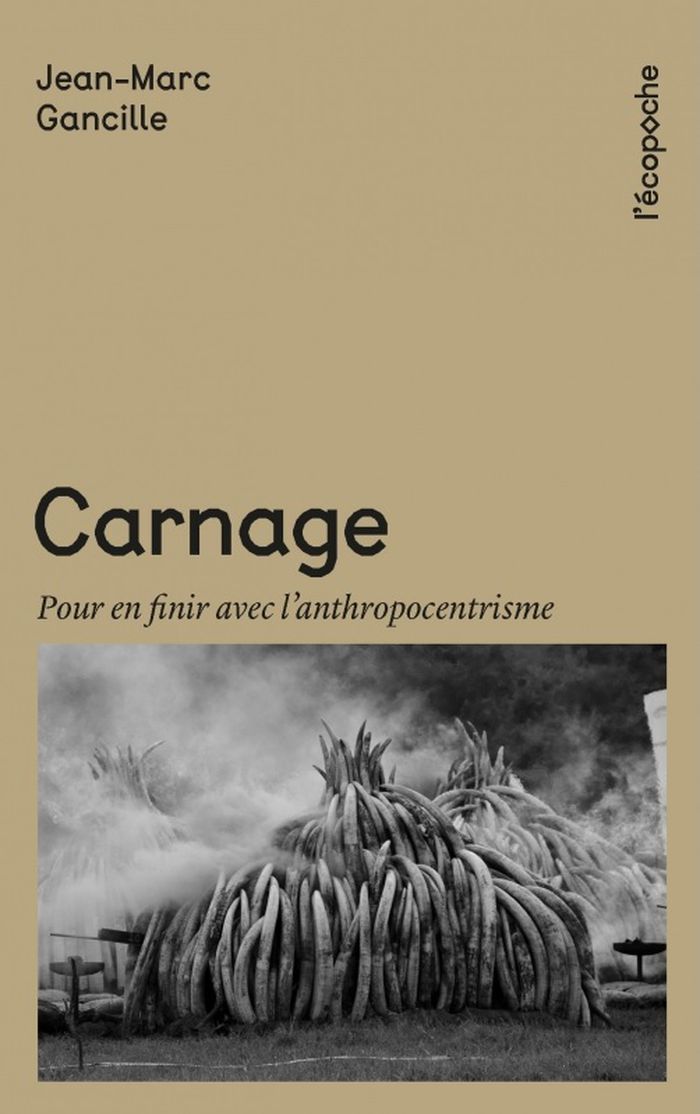
Jean-Marc Gancille expose un tableau sans concession de la relation que l’être humain a nouée avec le monde animal, fondée sur la domination et l’exploitation. Sacrifices religieux, collections et commerce d’animaux sauvages, domestication, utilisation à des fins militaires ou pour des expériences de laboratoires, captivité forcée dans les zoos et aquariums, chasse et pêche récréatives, élevage intensif ou surpêche, etc. On n’en finit pas d’établir la liste des formes qu’adopte l’anthropocentrisme. L’auteur démontre que ce carnage n’est pas seulement un éternel enfer pour les animaux, mais aussi une tragédie pour l’espèce humaine (en raison de la destruction des écosystèmes), une négation immorale d’êtres sentients et une supercherie de l’industrie agroalimentaire (qui entretient l’idée que la consommation de protéines animales serait nécessaire).
Carnage
Actions:
Price:
$18.95
(available in store)
Summary:
Jean-Marc Gancille expose un tableau sans concession de la relation que l’être humain a nouée avec le monde animal, fondée sur la domination et l’exploitation. Sacrifices religieux, collections et commerce d’animaux sauvages, domestication, utilisation à des fins militaires ou pour des expériences de laboratoires, captivité forcée dans les zoos et aquariums, chasse et pêche récréatives, élevage intensif ou surpêche, etc. On n’en finit pas d’établir la liste des formes qu’adopte l’anthropocentrisme. L’auteur démontre que ce carnage n’est pas seulement un éternel enfer pour les animaux, mais aussi une tragédie pour l’espèce humaine (en raison de la destruction des écosystèmes), une négation immorale d’êtres sentients et une supercherie de l’industrie agroalimentaire (qui entretient l’idée que la consommation de protéines animales serait nécessaire).
Form:
books
books
Publication:
March 2025
March 2025
Subject:
Environment and environmental theory
Environment and environmental theory
Form:
books
books
Price:
$37.50
(available to order)
Summary:
Que reste-t-il des Expositions universelles parisiennes, ces manifestations glorifiant les progrès industriels ou techniques, célébrant les arts à l'occasion et affirmant un goût prononcé pour une ethnologie plus pittoresque que scientifique ? La tour Eiffel, bien sûr, comme le Grand Palais ou le palais du Trocadéro. Mais la grande majorité des pavillons, faits de bois et(...)
$37.50
(available to order)
Summary:
Que reste-t-il des Expositions universelles parisiennes, ces manifestations glorifiant les progrès industriels ou techniques, célébrant les arts à l'occasion et affirmant un goût prononcé pour une ethnologie plus pittoresque que scientifique ? La tour Eiffel, bien sûr, comme le Grand Palais ou le palais du Trocadéro. Mais la grande majorité des pavillons, faits de bois et(...)
Title:
Sur les traces des expositions universelles : Paris, 1855-1937
Actions:
Price:
$37.50
(available to order)
Summary:
Que reste-t-il des Expositions universelles parisiennes, ces manifestations glorifiant les progrès industriels ou techniques, célébrant les arts à l'occasion et affirmant un goût prononcé pour une ethnologie plus pittoresque que scientifique ? La tour Eiffel, bien sûr, comme le Grand Palais ou le palais du Trocadéro. Mais la grande majorité des pavillons, faits de bois et de torchis, de brique ou de plâtre, décorés de stuc et de céramique et promis à la destruction à l'issue des festivités, ont disparu. Certaines de ces constructions précaires ont cependant été rachetées ou récupérées par des collectivités ou des particuliers. On retrouve ainsi à Paris ou plus encore en banlieue des dizaines de pavillons anciens ou d'éléments remontés de façon plus ou moins fantaisiste.
Sur les traces des expositions universelles : Paris, 1855-1937
Actions:
Price:
$37.50
(available to order)
Summary:
Que reste-t-il des Expositions universelles parisiennes, ces manifestations glorifiant les progrès industriels ou techniques, célébrant les arts à l'occasion et affirmant un goût prononcé pour une ethnologie plus pittoresque que scientifique ? La tour Eiffel, bien sûr, comme le Grand Palais ou le palais du Trocadéro. Mais la grande majorité des pavillons, faits de bois et de torchis, de brique ou de plâtre, décorés de stuc et de céramique et promis à la destruction à l'issue des festivités, ont disparu. Certaines de ces constructions précaires ont cependant été rachetées ou récupérées par des collectivités ou des particuliers. On retrouve ainsi à Paris ou plus encore en banlieue des dizaines de pavillons anciens ou d'éléments remontés de façon plus ou moins fantaisiste.
Form:
books
books
Publication:
June 2006, Paris
June 2006, Paris
Subject:
Museums and Universal Exhibitions
Museums and Universal Exhibitions
Form:
books
books
Actions:
Price:
$33.95
(available to order)
Summary:
Révolution numérique, mondialisation, dérèglement climatique... suscitent un grand désarroi. L'ampleur des défis est inédite. La destruction est en train de l'emporter sur la création. Dans cet ouvrage, Jean Carassus expose que la réorientation radicale de la troisième révolution industrielle passe par une décarbonation massive de l'investissement et la formation des(...)
$33.95
(available to order)
Summary:
Révolution numérique, mondialisation, dérèglement climatique... suscitent un grand désarroi. L'ampleur des défis est inédite. La destruction est en train de l'emporter sur la création. Dans cet ouvrage, Jean Carassus expose que la réorientation radicale de la troisième révolution industrielle passe par une décarbonation massive de l'investissement et la formation des(...)
Title:
Le choc : révolution industrielle, biosphère, société
Actions:
Price:
$33.95
(available to order)
Summary:
Révolution numérique, mondialisation, dérèglement climatique... suscitent un grand désarroi. L'ampleur des défis est inédite. La destruction est en train de l'emporter sur la création. Dans cet ouvrage, Jean Carassus expose que la réorientation radicale de la troisième révolution industrielle passe par une décarbonation massive de l'investissement et la formation des personnes non qualifiées aux métiers de l'investissement décarboné. La décarbonation de l'économie signifie également une profonde transformation des modes de vie. Comment agir ? Contrairement à l'idée dominante, en particulier en France, l'auteur pense que l'Etat n'est pas l'acteur essentiel pour piloter le changement des modes de vie. L'action se situe selon lui dans les territoires, qui sont lieux de vie et espaces de relations entre acteurs mobilisant énergies, compétences et désirs.
Le choc : révolution industrielle, biosphère, société
Actions:
Price:
$33.95
(available to order)
Summary:
Révolution numérique, mondialisation, dérèglement climatique... suscitent un grand désarroi. L'ampleur des défis est inédite. La destruction est en train de l'emporter sur la création. Dans cet ouvrage, Jean Carassus expose que la réorientation radicale de la troisième révolution industrielle passe par une décarbonation massive de l'investissement et la formation des personnes non qualifiées aux métiers de l'investissement décarboné. La décarbonation de l'économie signifie également une profonde transformation des modes de vie. Comment agir ? Contrairement à l'idée dominante, en particulier en France, l'auteur pense que l'Etat n'est pas l'acteur essentiel pour piloter le changement des modes de vie. L'action se situe selon lui dans les territoires, qui sont lieux de vie et espaces de relations entre acteurs mobilisant énergies, compétences et désirs.
Form:
books
books
Publication:
April 2019
April 2019
Subject:
Environment and environmental theory
Environment and environmental theory
Form:
books
books
Price:
$21.95
(available to order)
Summary:
Drawing on rich historical research, Silvia Federici maps the connections between the previous forms of enclosure that occurred with the birth of capitalism and the destruction of the commons and the "new enclosures" at the heart of the present phase of global capitalist accumulation. Considering the commons from a feminist perspective, this collection centers on women(...)
$21.95
(available to order)
Summary:
Drawing on rich historical research, Silvia Federici maps the connections between the previous forms of enclosure that occurred with the birth of capitalism and the destruction of the commons and the "new enclosures" at the heart of the present phase of global capitalist accumulation. Considering the commons from a feminist perspective, this collection centers on women(...)
Title:
Re-enchanting the world: feminism and the politics of the commons
Actions:
Price:
$21.95
(available to order)
Summary:
Drawing on rich historical research, Silvia Federici maps the connections between the previous forms of enclosure that occurred with the birth of capitalism and the destruction of the commons and the "new enclosures" at the heart of the present phase of global capitalist accumulation. Considering the commons from a feminist perspective, this collection centers on women and reproductive work as crucial to both our economic survival and the construction of a world free from the hierarchies and divisions capital has planted in the body of the world proletariat. Federici is clear that the commons should not be understood as happy islands in a sea of exploitative relations but rather autonomous spaces from which to challenge the existing capitalist organization of life and labor.
Re-enchanting the world: feminism and the politics of the commons
Actions:
Price:
$21.95
(available to order)
Summary:
Drawing on rich historical research, Silvia Federici maps the connections between the previous forms of enclosure that occurred with the birth of capitalism and the destruction of the commons and the "new enclosures" at the heart of the present phase of global capitalist accumulation. Considering the commons from a feminist perspective, this collection centers on women and reproductive work as crucial to both our economic survival and the construction of a world free from the hierarchies and divisions capital has planted in the body of the world proletariat. Federici is clear that the commons should not be understood as happy islands in a sea of exploitative relations but rather autonomous spaces from which to challenge the existing capitalist organization of life and labor.
Form:
books
books
Publication:
September 2018
September 2018
Subject:
Critical Theory
Critical Theory
Form:
books
books

Actions:
Price:
$50.00
(available to order)
Summary:
China’s spectacular growth has brought not just prosperity, but also serious damage to the environment. For photographer Andreas Seibert, the present state of the Huai River is a clear example of these problems. Several stretches of the river have been so seriously polluted by toxic waste that people are advised not to even touch the water. Seibert has traveled along the(...)
$50.00
(available to order)
Summary:
China’s spectacular growth has brought not just prosperity, but also serious damage to the environment. For photographer Andreas Seibert, the present state of the Huai River is a clear example of these problems. Several stretches of the river have been so seriously polluted by toxic waste that people are advised not to even touch the water. Seibert has traveled along the(...)
Title:
Andreas Seibert: The colors of growth, China's Huai river
Actions:
Price:
$50.00
(available to order)
Summary:
China’s spectacular growth has brought not just prosperity, but also serious damage to the environment. For photographer Andreas Seibert, the present state of the Huai River is a clear example of these problems. Several stretches of the river have been so seriously polluted by toxic waste that people are advised not to even touch the water. Seibert has traveled along the river from source to mouth in order to record how it changes from a stretch of water rising amidst unspoiled nature into a large and poisonous river. Pictures taken on his travels present the poor hinterlands which are generally forgotten in discussions on China, and show the people who live on and near the river — in a habitat on the brink of destruction.
Andreas Seibert: The colors of growth, China's Huai river
Actions:
Price:
$50.00
(available to order)
Summary:
China’s spectacular growth has brought not just prosperity, but also serious damage to the environment. For photographer Andreas Seibert, the present state of the Huai River is a clear example of these problems. Several stretches of the river have been so seriously polluted by toxic waste that people are advised not to even touch the water. Seibert has traveled along the river from source to mouth in order to record how it changes from a stretch of water rising amidst unspoiled nature into a large and poisonous river. Pictures taken on his travels present the poor hinterlands which are generally forgotten in discussions on China, and show the people who live on and near the river — in a habitat on the brink of destruction.
Form:
books
books
Publication:
November 2012
November 2012
Subject:
Photography monographs
Photography monographs
Form:
books
books
Actions:
Price:
$36.00
(available to order)
Summary:
4th of October, 2010 at 12.25pm in Ajka, Veszprém county, Hungary: around a million cubic meters of toxic waste were released after the rupture of the retaining wall in one of the reservoirs used for the accumulation of MAL aluminum company trash. The spill reached two meters high and started a destructive race trying to release its energy, flooding the nearby Devecser(...)
$36.00
(available to order)
Summary:
4th of October, 2010 at 12.25pm in Ajka, Veszprém county, Hungary: around a million cubic meters of toxic waste were released after the rupture of the retaining wall in one of the reservoirs used for the accumulation of MAL aluminum company trash. The spill reached two meters high and started a destructive race trying to release its energy, flooding the nearby Devecser(...)
Title:
Palindromo Meszaros: the Line
Actions:
Price:
$36.00
(available to order)
Summary:
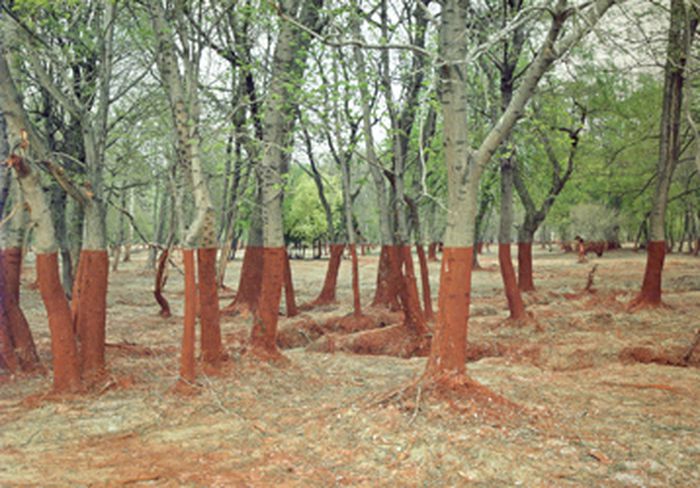
4th of October, 2010 at 12.25pm in Ajka, Veszprém county, Hungary: around a million cubic meters of toxic waste were released after the rupture of the retaining wall in one of the reservoirs used for the accumulation of MAL aluminum company trash. The spill reached two meters high and started a destructive race trying to release its energy, flooding the nearby Devecser and Kolontár villages. Ten human casualties were counted and material damages were impossible to measure, including the destruction or irreparable deterioration of numerous houses, the disappearance of infrastructures and the poisoning of dozens of fields. These photos have been taken six months after the accident when silence takes place of the headlines, and just The Line is left.
Palindromo Meszaros: the Line
Actions:
Price:
$36.00
(available to order)
Summary:
4th of October, 2010 at 12.25pm in Ajka, Veszprém county, Hungary: around a million cubic meters of toxic waste were released after the rupture of the retaining wall in one of the reservoirs used for the accumulation of MAL aluminum company trash. The spill reached two meters high and started a destructive race trying to release its energy, flooding the nearby Devecser and Kolontár villages. Ten human casualties were counted and material damages were impossible to measure, including the destruction or irreparable deterioration of numerous houses, the disappearance of infrastructures and the poisoning of dozens of fields. These photos have been taken six months after the accident when silence takes place of the headlines, and just The Line is left.
Form:
books
books
Publication:
October 2013
October 2013
Subject:
Photography monographs
Photography monographs
Form:
journals and magazines
journals and magazines

Actions:
Price:
$16.00
(available in store)
Summary:
Si notre aujourd’hui est bien un temps de ruines, ces dernières ont une saveur nouvelle. « Ce que peuvent les ruines » fait l’hypothèse d’un devenir ruine comme projet. Il ne s’agit pas d’esthétiser la destruction. Nous souhaitons dépasser la tentation romantique de la contemplation d’un monde finissant et le tragique vaniteux de la célébration des ruines comme formes.(...)
$16.00
(available in store)
Summary:
Si notre aujourd’hui est bien un temps de ruines, ces dernières ont une saveur nouvelle. « Ce que peuvent les ruines » fait l’hypothèse d’un devenir ruine comme projet. Il ne s’agit pas d’esthétiser la destruction. Nous souhaitons dépasser la tentation romantique de la contemplation d’un monde finissant et le tragique vaniteux de la célébration des ruines comme formes.(...)
Subject:
Architectural Theory
Architectural Theory
Publication:
April 2023
April 2023
Title:
Plan L**** 205: Ce que peuvent les ruines
Actions:
Price:
$16.00
(available in store)
Summary:
Si notre aujourd’hui est bien un temps de ruines, ces dernières ont une saveur nouvelle. « Ce que peuvent les ruines » fait l’hypothèse d’un devenir ruine comme projet. Il ne s’agit pas d’esthétiser la destruction. Nous souhaitons dépasser la tentation romantique de la contemplation d’un monde finissant et le tragique vaniteux de la célébration des ruines comme formes. Des ruines de quoi ? Des ruines de Rien, s’étonne Bouvard face à la construction faussement détruite de Pécuchet. La ruine, pensée comme une structure qui se déforce et qui, dans un équilibre précaire, laisse advenir l’imprévu, l’indéterminé, se tourne alors vers un avenir radieux. L’architecture y est instable et de second plan. Les ruines de ce numéro, comme les ruines de nos quotidiens, sont examinées pour leur capacité d’agir, ou de laisser agir.
Plan L**** 205: Ce que peuvent les ruines
Actions:
Price:
$16.00
(available in store)
Summary:
Si notre aujourd’hui est bien un temps de ruines, ces dernières ont une saveur nouvelle. « Ce que peuvent les ruines » fait l’hypothèse d’un devenir ruine comme projet. Il ne s’agit pas d’esthétiser la destruction. Nous souhaitons dépasser la tentation romantique de la contemplation d’un monde finissant et le tragique vaniteux de la célébration des ruines comme formes. Des ruines de quoi ? Des ruines de Rien, s’étonne Bouvard face à la construction faussement détruite de Pécuchet. La ruine, pensée comme une structure qui se déforce et qui, dans un équilibre précaire, laisse advenir l’imprévu, l’indéterminé, se tourne alors vers un avenir radieux. L’architecture y est instable et de second plan. Les ruines de ce numéro, comme les ruines de nos quotidiens, sont examinées pour leur capacité d’agir, ou de laisser agir.
Form:
journals and magazines
journals and magazines
Publication:
April 2023
April 2023
Subject:
Architectural Theory
Architectural Theory


