


8791 Results
Form:
books
books
Price:
$39.95
(available to order)
Summary:
Since the 1990s, critics and curators have broadly accepted the notion that participatory art is the ultimate political art: that by encouraging an audience to take part an artist can promote new emancipatory social relations. Around the world, the champions of this form of expression are numerous, ranging from art historians such as Grant Kester, curators such as Nicolas(...)
$39.95
(available to order)
Summary:
Since the 1990s, critics and curators have broadly accepted the notion that participatory art is the ultimate political art: that by encouraging an audience to take part an artist can promote new emancipatory social relations. Around the world, the champions of this form of expression are numerous, ranging from art historians such as Grant Kester, curators such as Nicolas(...)
Title:
Artificial hells : participatory art and the politics of spectatorship
Actions:
Price:
$39.95
(available to order)
Summary:
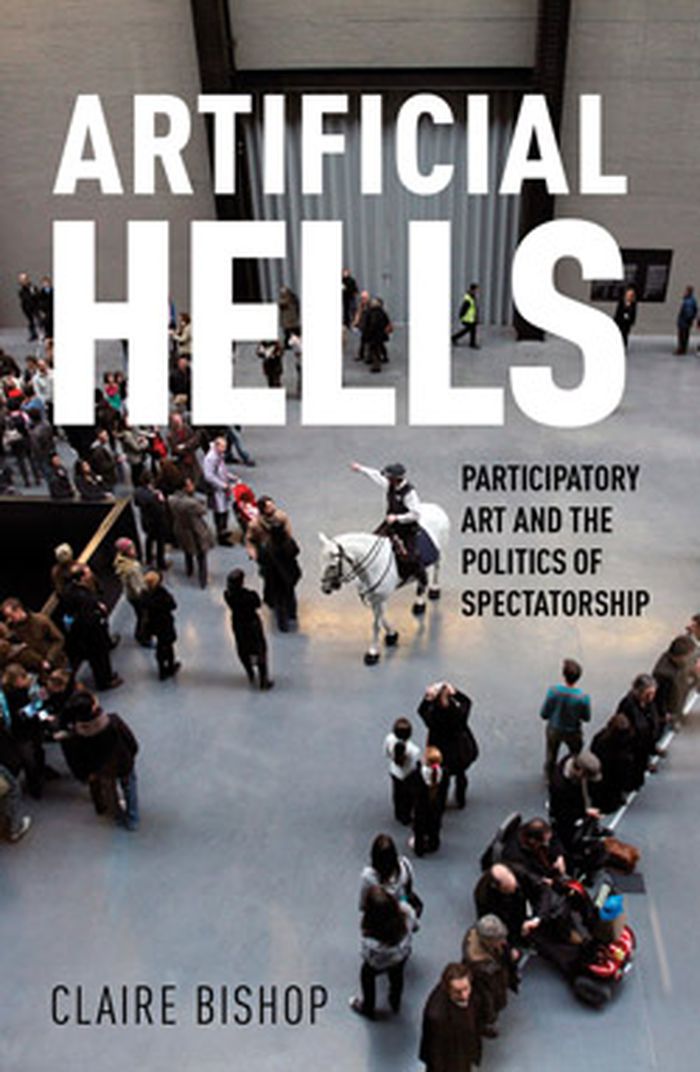
Since the 1990s, critics and curators have broadly accepted the notion that participatory art is the ultimate political art: that by encouraging an audience to take part an artist can promote new emancipatory social relations. Around the world, the champions of this form of expression are numerous, ranging from art historians such as Grant Kester, curators such as Nicolas Bourriaud and Nato Thompson, to performance theorists such as Shannon Jackson. Artificial Hells is the first historical and theoretical overview of socially engaged participatory art, known in the US as “social practice.” Claire Bishop follows the trajectory of twentieth-century art and examines key moments in the development of a participatory aesthetic. This itinerary takes in Futurism and Dada; the Situationist International; Happenings in Eastern Europe, Argentina and Paris; the 1970s Community Arts Movement; and the Artists Placement Group. It concludes with a discussion of long-term educational projects by contemporary artists such as Thomas Hirschhorn, Tania Bruguera, Pawe Althamer and Paul Chan. Since her controversial essay in Artforum in 2006, Claire Bishop has been one of the few to challenge the political and aesthetic ambitions of participatory art. In Artificial Hells, she not only scrutinizes the emancipatory claims made for these projects, but also provides an alternative to the ethical (rather than artistic) criteria invited by such artworks. Artificial Hells calls for a less prescriptive approach to art and politics, and for more compelling, troubling and bolder forms of participatory art and criticism.
Artificial hells : participatory art and the politics of spectatorship
Actions:
Price:
$39.95
(available to order)
Summary:
Since the 1990s, critics and curators have broadly accepted the notion that participatory art is the ultimate political art: that by encouraging an audience to take part an artist can promote new emancipatory social relations. Around the world, the champions of this form of expression are numerous, ranging from art historians such as Grant Kester, curators such as Nicolas Bourriaud and Nato Thompson, to performance theorists such as Shannon Jackson. Artificial Hells is the first historical and theoretical overview of socially engaged participatory art, known in the US as “social practice.” Claire Bishop follows the trajectory of twentieth-century art and examines key moments in the development of a participatory aesthetic. This itinerary takes in Futurism and Dada; the Situationist International; Happenings in Eastern Europe, Argentina and Paris; the 1970s Community Arts Movement; and the Artists Placement Group. It concludes with a discussion of long-term educational projects by contemporary artists such as Thomas Hirschhorn, Tania Bruguera, Pawe Althamer and Paul Chan. Since her controversial essay in Artforum in 2006, Claire Bishop has been one of the few to challenge the political and aesthetic ambitions of participatory art. In Artificial Hells, she not only scrutinizes the emancipatory claims made for these projects, but also provides an alternative to the ethical (rather than artistic) criteria invited by such artworks. Artificial Hells calls for a less prescriptive approach to art and politics, and for more compelling, troubling and bolder forms of participatory art and criticism.
Form:
books
books
Publication:
July 2012
July 2012
Form:
books
books
Price:
$60.00
(available in store)
Summary:
The new volume in the series “from the Collection”, by André Tavares and Susanne Cotter, presents the documentary spectrum that makes up the Álvaro Siza Archive, recently integrated into the Serralves Collection. Taken as raw material to build knowledge and generate a new understanding of Siza's work, the Archive reveals the incessant use of drawing as a working tool,(...)
$60.00
(available in store)
Summary:
The new volume in the series “from the Collection”, by André Tavares and Susanne Cotter, presents the documentary spectrum that makes up the Álvaro Siza Archive, recently integrated into the Serralves Collection. Taken as raw material to build knowledge and generate a new understanding of Siza's work, the Archive reveals the incessant use of drawing as a working tool,(...)
Publication:
January 2018
January 2018
Title:
Materia-prima / Raw material : a view of Álvaro Siza's archive
Actions:
Price:
$60.00
(available in store)
Summary:
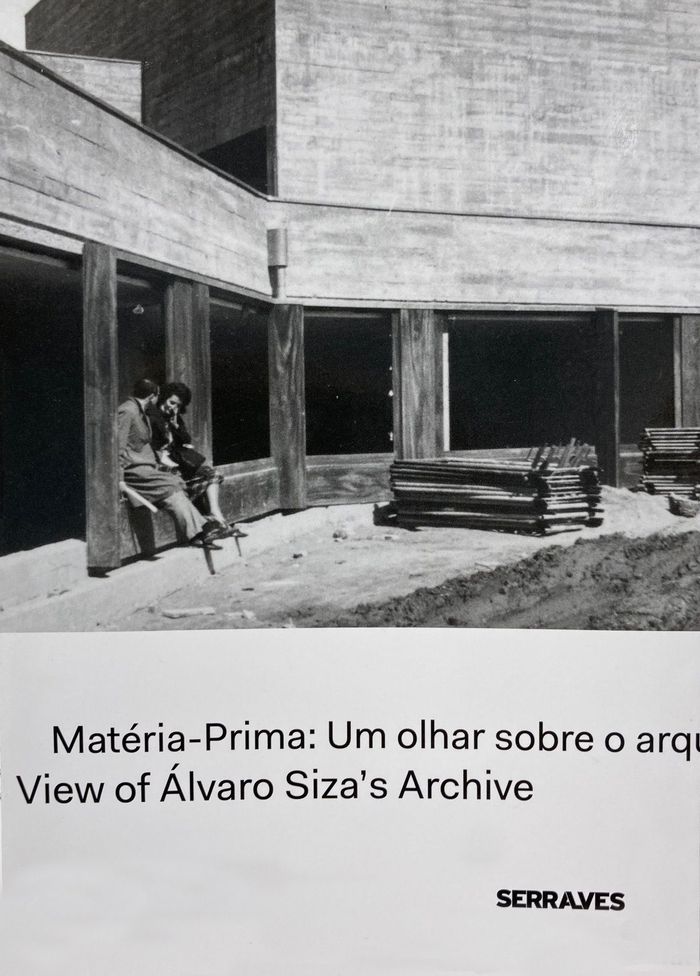
The new volume in the series “from the Collection”, by André Tavares and Susanne Cotter, presents the documentary spectrum that makes up the Álvaro Siza Archive, recently integrated into the Serralves Collection. Taken as raw material to build knowledge and generate a new understanding of Siza's work, the Archive reveals the incessant use of drawing as a working tool, the prefiguration of forms and spaces through sketch and technical drawing in a process of successive approximation to the desired result. But it also reveals various documentation — correspondence with clients, photographic records of places waiting for the works, opinions of the multiple actors involved in the construction processes, minutes of meetings and reports of tensions in the construction sites — which testify to an infinity of episodes that, despite invisible in the constructed work, contribute to the definition of a unique practice. Álvaro Siza is one of the most emblematic architects of the 20th century, and one of the names with which Portugal is associated in any part of the world, winner of the Pritzker Prize in 1992. It was in 1991 that Álvaro Siza was invited to design the Museum of Art Contemporary by Serralves, which opened in 1999. In 2019, he completed the architectural project for the Casa do Cinema Manoel de Oliveira and in 2021 the restoration and adaptation of the Casa de Serralves. Maintaining, until today, a collaborative relationship with the institution and its programming.
Materia-prima / Raw material : a view of Álvaro Siza's archive
Actions:
Price:
$60.00
(available in store)
Summary:
The new volume in the series “from the Collection”, by André Tavares and Susanne Cotter, presents the documentary spectrum that makes up the Álvaro Siza Archive, recently integrated into the Serralves Collection. Taken as raw material to build knowledge and generate a new understanding of Siza's work, the Archive reveals the incessant use of drawing as a working tool, the prefiguration of forms and spaces through sketch and technical drawing in a process of successive approximation to the desired result. But it also reveals various documentation — correspondence with clients, photographic records of places waiting for the works, opinions of the multiple actors involved in the construction processes, minutes of meetings and reports of tensions in the construction sites — which testify to an infinity of episodes that, despite invisible in the constructed work, contribute to the definition of a unique practice. Álvaro Siza is one of the most emblematic architects of the 20th century, and one of the names with which Portugal is associated in any part of the world, winner of the Pritzker Prize in 1992. It was in 1991 that Álvaro Siza was invited to design the Museum of Art Contemporary by Serralves, which opened in 1999. In 2019, he completed the architectural project for the Casa do Cinema Manoel de Oliveira and in 2021 the restoration and adaptation of the Casa de Serralves. Maintaining, until today, a collaborative relationship with the institution and its programming.
Form:
books
books
Publication:
January 2018
January 2018
Form:
books
books
Actions:
Price:
$25.95
(available to order)
Summary:
We surround ourselves with material things that are invested with memories but can only stand for what we have lost. Physical objects—such as one’s own body—situate and define us; yet at the same time they are fundamentally indifferent to us. The melancholy of this rift is a rich source of inspiration for artists. Peter Schwenger deftly weaves together philosophical(...)
$25.95
(available to order)
Summary:
We surround ourselves with material things that are invested with memories but can only stand for what we have lost. Physical objects—such as one’s own body—situate and define us; yet at the same time they are fundamentally indifferent to us. The melancholy of this rift is a rich source of inspiration for artists. Peter Schwenger deftly weaves together philosophical(...)
Title:
The tears of things : Melancholy and physical objects
Actions:
Price:
$25.95
(available to order)
Summary:
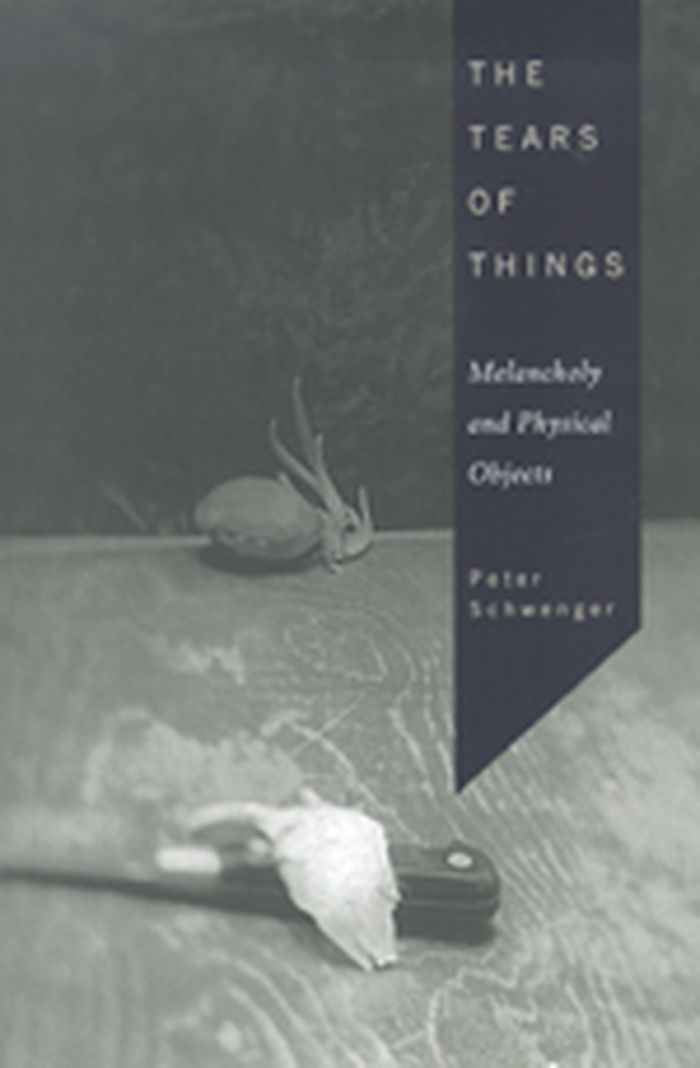
We surround ourselves with material things that are invested with memories but can only stand for what we have lost. Physical objects—such as one’s own body—situate and define us; yet at the same time they are fundamentally indifferent to us. The melancholy of this rift is a rich source of inspiration for artists. Peter Schwenger deftly weaves together philosophical and psychoanalytical theory with artistic practice. Concerned in part with the act of collecting, The Tears of Things is itself a collection of exemplary art objects—literary and cultural attempts to control and possess things—including paintings by Georgia O’Keeffe and René Magritte; sculpture by Louise Bourgeois and Marcel Duchamp; Joseph Cornell’s boxes; Edward Gorey’s graphic art; fiction by Virginia Woolf, Georges Perec, and Louise Erdrich; the hallucinatory encyclopedias of Jorge Luis Borges and Luigi Serafini; and the corpse photographs of Joel Peter Witkin. However, these representations of objects perpetually fall short of our aspirations. Schwenger examines what is left over—debris and waste—and asks what art can make of these. What emerges is not an art that reassembles but one that questions what it means to assemble in the first place. Contained in this catalog of waste is that ultimate still life, the cadaver, where the subject-object dichotomy receives its final ironic reconciliation. Peter Schwenger is professor of English at Mount St. Vincent University in Halifax, Nova Scotia. He is the author of Fantasm and Fiction: On Textual Envisioning, Letter Bomb: Nuclear Holocaust and the Exploding Word, and Phallic Critiques: Masculinity and Twentieth-Century Literature.
The tears of things : Melancholy and physical objects
Actions:
Price:
$25.95
(available to order)
Summary:
We surround ourselves with material things that are invested with memories but can only stand for what we have lost. Physical objects—such as one’s own body—situate and define us; yet at the same time they are fundamentally indifferent to us. The melancholy of this rift is a rich source of inspiration for artists. Peter Schwenger deftly weaves together philosophical and psychoanalytical theory with artistic practice. Concerned in part with the act of collecting, The Tears of Things is itself a collection of exemplary art objects—literary and cultural attempts to control and possess things—including paintings by Georgia O’Keeffe and René Magritte; sculpture by Louise Bourgeois and Marcel Duchamp; Joseph Cornell’s boxes; Edward Gorey’s graphic art; fiction by Virginia Woolf, Georges Perec, and Louise Erdrich; the hallucinatory encyclopedias of Jorge Luis Borges and Luigi Serafini; and the corpse photographs of Joel Peter Witkin. However, these representations of objects perpetually fall short of our aspirations. Schwenger examines what is left over—debris and waste—and asks what art can make of these. What emerges is not an art that reassembles but one that questions what it means to assemble in the first place. Contained in this catalog of waste is that ultimate still life, the cadaver, where the subject-object dichotomy receives its final ironic reconciliation. Peter Schwenger is professor of English at Mount St. Vincent University in Halifax, Nova Scotia. He is the author of Fantasm and Fiction: On Textual Envisioning, Letter Bomb: Nuclear Holocaust and the Exploding Word, and Phallic Critiques: Masculinity and Twentieth-Century Literature.
Form:
books
books
Publication:
May 2006, Minnesota
May 2006, Minnesota
Subject:
Architectural Theory
Architectural Theory
Form:
books
books
Title:
The gothic
The gothic
Actions:
Price:
$23.95
(available to order)
Summary:
This collection of writings examines the pervasive and influential role of "the Gothic" in contemporary visual culture. The contemporary Gothic in art is informed as much by the stock themes of the eighteenth- and nineteenth-century Gothic novel as it is by more recent permutations of the Gothic in horror film theory, Lacanian psychoanalysis, and Goth subcultures. This(...)
$23.95
(available to order)
Summary:
This collection of writings examines the pervasive and influential role of "the Gothic" in contemporary visual culture. The contemporary Gothic in art is informed as much by the stock themes of the eighteenth- and nineteenth-century Gothic novel as it is by more recent permutations of the Gothic in horror film theory, Lacanian psychoanalysis, and Goth subcultures. This(...)
Title:
The gothic
Actions:
Price:
$23.95
(available to order)
Summary:
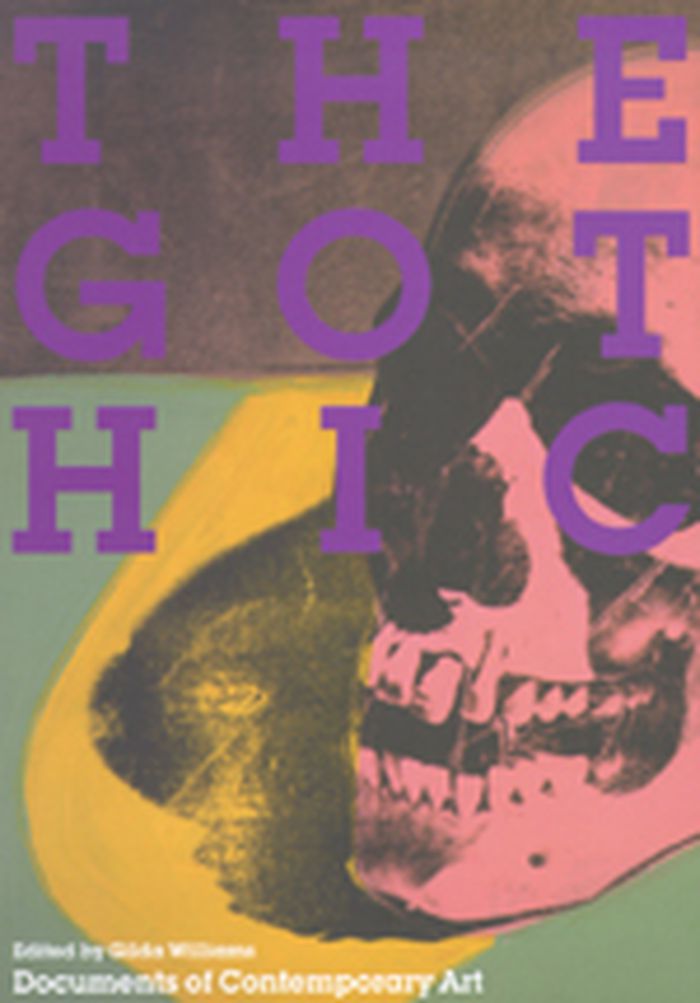
This collection of writings examines the pervasive and influential role of "the Gothic" in contemporary visual culture. The contemporary Gothic in art is informed as much by the stock themes of the eighteenth- and nineteenth-century Gothic novel as it is by more recent permutations of the Gothic in horror film theory, Lacanian psychoanalysis, and Goth subcultures. This reader from London's Whitechapel Gallery brings together artists as different as Matthew Barney, Gregor Schneider, Louise Bourgeois, and Douglas Gordon; its intent is not to use "the Gothic" to group together dissimilar artists but rather to shed light on a particular understanding of their practice. Anthony Vidler looks at ideas of the uncanny to explore Rachel Whiteread's House, and Jeff Wall uses the motif of vampirism to analyze fellow artist Dan Graham's Kammerspell; Hal Foster considers Robert Gober's recent work--laden with Christian symbolism, criticism of America as a nexus of power, and fragmented bodies--as an updated American Gothic, and Kobena Mercer examines the Gothic's depiction of the Other in relation to Michael Jackson's pop video Thriller. Texts by artists including Mike Kelley, Damien Hirst, Tacita Dean, Jonathan Meese, and Catherine Sullivan are complemented by extracts from Walpole's genre-establishing gothic novel The Castle of Otranto, William Gibson, Bret Easton Ellis, and Stephen King, among others, and theoretical writings by such key thinkers as Carol Clover, Beatriz Colomina, Julia Kristeva, Eve Kosofsky Sedgwick, Marina Warner, and Slavoj Zizek. The Gothic provides the first comprehensive overview of the uses of Gothic in contemporary visual culture.
The gothic
Actions:
Price:
$23.95
(available to order)
Summary:
This collection of writings examines the pervasive and influential role of "the Gothic" in contemporary visual culture. The contemporary Gothic in art is informed as much by the stock themes of the eighteenth- and nineteenth-century Gothic novel as it is by more recent permutations of the Gothic in horror film theory, Lacanian psychoanalysis, and Goth subcultures. This reader from London's Whitechapel Gallery brings together artists as different as Matthew Barney, Gregor Schneider, Louise Bourgeois, and Douglas Gordon; its intent is not to use "the Gothic" to group together dissimilar artists but rather to shed light on a particular understanding of their practice. Anthony Vidler looks at ideas of the uncanny to explore Rachel Whiteread's House, and Jeff Wall uses the motif of vampirism to analyze fellow artist Dan Graham's Kammerspell; Hal Foster considers Robert Gober's recent work--laden with Christian symbolism, criticism of America as a nexus of power, and fragmented bodies--as an updated American Gothic, and Kobena Mercer examines the Gothic's depiction of the Other in relation to Michael Jackson's pop video Thriller. Texts by artists including Mike Kelley, Damien Hirst, Tacita Dean, Jonathan Meese, and Catherine Sullivan are complemented by extracts from Walpole's genre-establishing gothic novel The Castle of Otranto, William Gibson, Bret Easton Ellis, and Stephen King, among others, and theoretical writings by such key thinkers as Carol Clover, Beatriz Colomina, Julia Kristeva, Eve Kosofsky Sedgwick, Marina Warner, and Slavoj Zizek. The Gothic provides the first comprehensive overview of the uses of Gothic in contemporary visual culture.
Form:
books
books
Publication:
October 2007, Whitechapel London Cambridge
October 2007, Whitechapel London Cambridge
Subject:
Art Theory
Art Theory
Form:
books
books
Actions:
Price:
$63.95
(available to order)
Summary:
Robert Smithson (1938–1973) produced his best-known work during the 1960s and early 1970s, a period in which the boundaries of the art world and the objectives of art-making were questioned perhaps more consistently and thoroughly than any time before or since. In "Robert Smithson", Ann Reynolds elucidates the complexity of Smithson’s work and thought by placing them in(...)
$63.95
(available to order)
Summary:
Robert Smithson (1938–1973) produced his best-known work during the 1960s and early 1970s, a period in which the boundaries of the art world and the objectives of art-making were questioned perhaps more consistently and thoroughly than any time before or since. In "Robert Smithson", Ann Reynolds elucidates the complexity of Smithson’s work and thought by placing them in(...)
Publication:
November 2002, Cambridge, Mass.
November 2002, Cambridge, Mass.
Title:
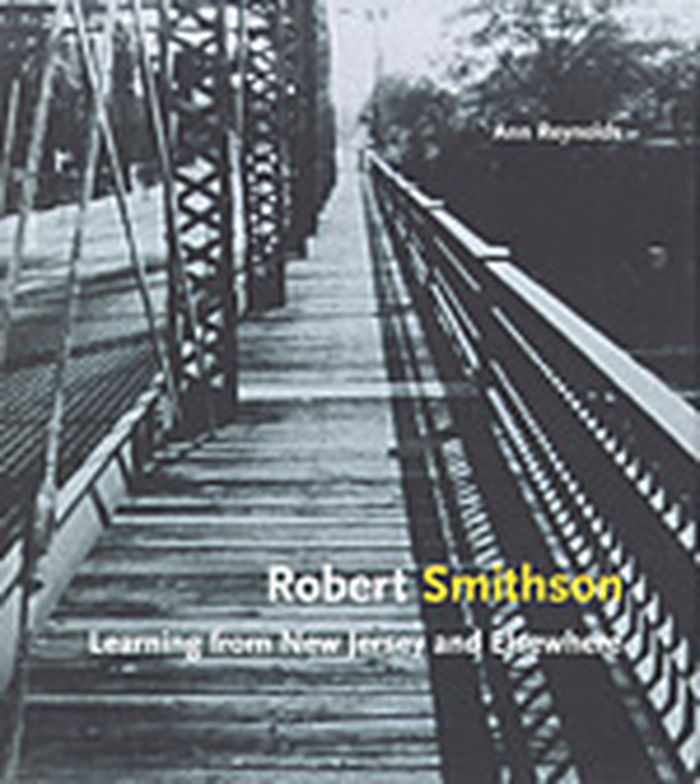
Robert Smithson : learning from New Jersey and elsewhere
Actions:
Price:
$63.95
(available to order)
Summary:
Robert Smithson (1938–1973) produced his best-known work during the 1960s and early 1970s, a period in which the boundaries of the art world and the objectives of art-making were questioned perhaps more consistently and thoroughly than any time before or since. In "Robert Smithson", Ann Reynolds elucidates the complexity of Smithson’s work and thought by placing them in their historical context, a context greatly enhanced by the vast archival materials that Smithson’s widow, Nancy Holt, donated to the Archives of American Art in 1987. The archive provides Reynolds with the remnants of Smithson’s working life--magazines, postcards from other artists, notebooks, and perhaps most important, his library--from which she reconstructs the physical and conceptual world that Smithson inhabited. Reynolds explores the relation of Smithson’s art-making, thinking about art-making, writing, and interaction with other artists to the articulated ideology and discreet assumptions that determined the parameters of artistic practice of the time. A central focus of Reynolds’s analysis is Smithson’s fascination with the blind spots at the center of established ways of seeing and thinking about culture. For Smithson, New Jersey was such a blind spot, and he returned there again and again, alone and with fellow artists, to make art that, through its location alone, undermined assumptions about what and, more important, where, art should be. For those who guarded the integrity of the established art world, New Jersey was "elsewhere"; but for Smithson, "elsewheres" were the defining, if often forgotten, locations on the map of contemporary culture.
Robert Smithson : learning from New Jersey and elsewhere
Actions:
Price:
$63.95
(available to order)
Summary:
Robert Smithson (1938–1973) produced his best-known work during the 1960s and early 1970s, a period in which the boundaries of the art world and the objectives of art-making were questioned perhaps more consistently and thoroughly than any time before or since. In "Robert Smithson", Ann Reynolds elucidates the complexity of Smithson’s work and thought by placing them in their historical context, a context greatly enhanced by the vast archival materials that Smithson’s widow, Nancy Holt, donated to the Archives of American Art in 1987. The archive provides Reynolds with the remnants of Smithson’s working life--magazines, postcards from other artists, notebooks, and perhaps most important, his library--from which she reconstructs the physical and conceptual world that Smithson inhabited. Reynolds explores the relation of Smithson’s art-making, thinking about art-making, writing, and interaction with other artists to the articulated ideology and discreet assumptions that determined the parameters of artistic practice of the time. A central focus of Reynolds’s analysis is Smithson’s fascination with the blind spots at the center of established ways of seeing and thinking about culture. For Smithson, New Jersey was such a blind spot, and he returned there again and again, alone and with fellow artists, to make art that, through its location alone, undermined assumptions about what and, more important, where, art should be. For those who guarded the integrity of the established art world, New Jersey was "elsewhere"; but for Smithson, "elsewheres" were the defining, if often forgotten, locations on the map of contemporary culture.
Form:
books
books
Publication:
November 2002, Cambridge, Mass.
November 2002, Cambridge, Mass.
Form:
books
books
Actions:
Price:
$102.00
(available to order)
Summary:
Richard Misrach is among the most influential, prolific, and internationally recognized photographers working today. Best known for his epic ongoing project, Desert Cantos-an extensive and unique photographic exploration of place-Misrach consistently addresses political and social issues through the adaptation of different photographic strategies, even as he expands(...)
$102.00
(available to order)
Summary:
Richard Misrach is among the most influential, prolific, and internationally recognized photographers working today. Best known for his epic ongoing project, Desert Cantos-an extensive and unique photographic exploration of place-Misrach consistently addresses political and social issues through the adaptation of different photographic strategies, even as he expands(...)
Title:
Richard Misrach : chronologies
Actions:
Price:
$102.00
(available to order)
Summary:
Richard Misrach is among the most influential, prolific, and internationally recognized photographers working today. Best known for his epic ongoing project, Desert Cantos-an extensive and unique photographic exploration of place-Misrach consistently addresses political and social issues through the adaptation of different photographic strategies, even as he expands notions of traditional landscape practice, and builds a complex and poignant document of American culture. His subjects have included manmade floods and fires, military bombing ranges, mass graves of dead animals, sublime night skies, and details of paintings housed in the museums of the Southwest. In one recent series, "On the beach"-which was inspired by Nevil Shute’s postapocalyptic novel of the 1950s-Misrach’s color photographs deal with the human figure seen at a distance on an unspecified beach or in the water, observed from an unsettling and difficult-to-identify point of view located high above. Misrach’s newest publication, "Chronologies" is a compelling study of the photographer’s process over the past 30 years. Stripped of their original context, the photographs-presented in chronological order-illuminate how the photographer thinks and works. Through fits and starts, reiterations and detours, the work evolves and matures, weaving in and out of the series for which Misrach has become known. Side-by-side, classic images and never-before-seen pictures flesh out the photographer’s logic and complicate it at the same time. Ultimately, "Chronologies" is about time: the span of thirty years, the importance of time in each photograph, the chronology of a life within its time, and the book itself as a timepiece.
Richard Misrach : chronologies
Actions:
Price:
$102.00
(available to order)
Summary:
Richard Misrach is among the most influential, prolific, and internationally recognized photographers working today. Best known for his epic ongoing project, Desert Cantos-an extensive and unique photographic exploration of place-Misrach consistently addresses political and social issues through the adaptation of different photographic strategies, even as he expands notions of traditional landscape practice, and builds a complex and poignant document of American culture. His subjects have included manmade floods and fires, military bombing ranges, mass graves of dead animals, sublime night skies, and details of paintings housed in the museums of the Southwest. In one recent series, "On the beach"-which was inspired by Nevil Shute’s postapocalyptic novel of the 1950s-Misrach’s color photographs deal with the human figure seen at a distance on an unspecified beach or in the water, observed from an unsettling and difficult-to-identify point of view located high above. Misrach’s newest publication, "Chronologies" is a compelling study of the photographer’s process over the past 30 years. Stripped of their original context, the photographs-presented in chronological order-illuminate how the photographer thinks and works. Through fits and starts, reiterations and detours, the work evolves and matures, weaving in and out of the series for which Misrach has become known. Side-by-side, classic images and never-before-seen pictures flesh out the photographer’s logic and complicate it at the same time. Ultimately, "Chronologies" is about time: the span of thirty years, the importance of time in each photograph, the chronology of a life within its time, and the book itself as a timepiece.
Form:
books
books
Publication:
November 2005, New York
November 2005, New York
Subject:
Photography monographs
Photography monographs
Form:
books
books
Actions:
Price:
$24.95
(available to order)
Summary:
In this book, David Brown locates jazz music within the broad aesthetic, political, and theoretical upheavals of our time, asserting that modern architecture and urbanism in particular can be strongly influenced and defined by the ways that improvisation is facilitated in jazz. Improvised music consists of diverse properties that fail to register in the(...)
$24.95
(available to order)
Summary:
In this book, David Brown locates jazz music within the broad aesthetic, political, and theoretical upheavals of our time, asserting that modern architecture and urbanism in particular can be strongly influenced and defined by the ways that improvisation is facilitated in jazz. Improvised music consists of diverse properties that fail to register in the(...)
Title:
Noise orders : jazz, improvisation, and architecture
Actions:
Price:
$24.95
(available to order)
Summary:
In this book, David Brown locates jazz music within the broad aesthetic, political, and theoretical upheavals of our time, asserting that modern architecture and urbanism in particular can be strongly influenced and defined by the ways that improvisation is facilitated in jazz. Improvised music consists of diverse properties that fail to register in the object-oriented understanding of composition. As a result, it is often dismissed as noise — an interfering signal. However, Brown asserts, such interference can bear meaning and stimulate change. "Noise orders" identifies how architecture can respond to the inclusive dynamics of extemporaneous movements, variable conceptions of composition, multiple durations, and wide manipulation of resources found in jazz to enable outcomes that far exceed a design’s seeming potential. By exploring overlapping moments between modernism and the cultural dimensions of jazz, "Noise orders" suggests that the discipline of improvisation continues to open and redefine architectural theory and practice, creating a world where designers contribute to emerging environments rather than make predetermined ones. Comparing modern and avant-garde artists and architects with individuals and groups in jazz—including Piet Mondrian and boogie-woogie, John Cage and Rahsaan Roland Kirk, Le Corbusier and Louis Armstrong, and Ludwig Mies van der Rohe and the Association for the Advancement of Creative Musicians (AACM)—Brown examines how jazz can offer alternative design ideas and directions, be incorporated in contemporary architectural practices, and provide insight on how to develop dynamic metropolitan environments. Interdisciplinary in its approace, "Noise orders" argues for a deeper understanding of the infinite potential inherent in both music and architecture.
Noise orders : jazz, improvisation, and architecture
Actions:
Price:
$24.95
(available to order)
Summary:
In this book, David Brown locates jazz music within the broad aesthetic, political, and theoretical upheavals of our time, asserting that modern architecture and urbanism in particular can be strongly influenced and defined by the ways that improvisation is facilitated in jazz. Improvised music consists of diverse properties that fail to register in the object-oriented understanding of composition. As a result, it is often dismissed as noise — an interfering signal. However, Brown asserts, such interference can bear meaning and stimulate change. "Noise orders" identifies how architecture can respond to the inclusive dynamics of extemporaneous movements, variable conceptions of composition, multiple durations, and wide manipulation of resources found in jazz to enable outcomes that far exceed a design’s seeming potential. By exploring overlapping moments between modernism and the cultural dimensions of jazz, "Noise orders" suggests that the discipline of improvisation continues to open and redefine architectural theory and practice, creating a world where designers contribute to emerging environments rather than make predetermined ones. Comparing modern and avant-garde artists and architects with individuals and groups in jazz—including Piet Mondrian and boogie-woogie, John Cage and Rahsaan Roland Kirk, Le Corbusier and Louis Armstrong, and Ludwig Mies van der Rohe and the Association for the Advancement of Creative Musicians (AACM)—Brown examines how jazz can offer alternative design ideas and directions, be incorporated in contemporary architectural practices, and provide insight on how to develop dynamic metropolitan environments. Interdisciplinary in its approace, "Noise orders" argues for a deeper understanding of the infinite potential inherent in both music and architecture.
Form:
books
books
Publication:
February 2006, Minneapolis, London
February 2006, Minneapolis, London
Subject:
Acoustics
Acoustics
Form:
books
books
Title:
Immaterialism
Immaterialism
Actions:
Price:
$13.95
(available in store)
Summary:
What objects exist in the social world and how should we understand them? Is a specific Pizza Hut restaurant as real as the employees, tables, napkins and pizzas of which it is composed, and as real as the Pizza Hut corporation with its headquarters in Wichita, the United States, the planet Earth and the social and economic impact of the restaurant on the lives of its(...)
$13.95
(available in store)
Summary:
What objects exist in the social world and how should we understand them? Is a specific Pizza Hut restaurant as real as the employees, tables, napkins and pizzas of which it is composed, and as real as the Pizza Hut corporation with its headquarters in Wichita, the United States, the planet Earth and the social and economic impact of the restaurant on the lives of its(...)
Title:
Immaterialism
Actions:
Price:
$13.95
(available in store)
Summary:
What objects exist in the social world and how should we understand them? Is a specific Pizza Hut restaurant as real as the employees, tables, napkins and pizzas of which it is composed, and as real as the Pizza Hut corporation with its headquarters in Wichita, the United States, the planet Earth and the social and economic impact of the restaurant on the lives of its employees and customers? In this book the founder of object-oriented philosophy develops his approach in order to shed light on the nature and status of objects in social life. While it is often assumed that an interest in objects amounts to a form of materialism, Harman rejects this view and develops instead an "immaterialist" method. By examining the work of leading contemporary thinkers such as Bruno Latour and Levi Bryant, he develops a forceful critique of "actor-network theory." In an extended discussion of Leibniz’s famous example of the Dutch East India Company, Harman argues that this company qualifies for objecthood neither through "what it is" or "what it does," but through its irreducibility to either of these forms. The phases of its life, argues Harman, are not demarcated primarily by dramatic incidents but by moments of symbiosis, a term he draws from the biologist Lynn Margulis. This book provides a key counterpoint to the now ubiquitous social theories of constant change, holistic networks, performative identities, and the construction of things by human practice. It will appeal to anyone interested in cutting-edge debates in philosophy and social and cultural theory.
Immaterialism
Actions:
Price:
$13.95
(available in store)
Summary:
What objects exist in the social world and how should we understand them? Is a specific Pizza Hut restaurant as real as the employees, tables, napkins and pizzas of which it is composed, and as real as the Pizza Hut corporation with its headquarters in Wichita, the United States, the planet Earth and the social and economic impact of the restaurant on the lives of its employees and customers? In this book the founder of object-oriented philosophy develops his approach in order to shed light on the nature and status of objects in social life. While it is often assumed that an interest in objects amounts to a form of materialism, Harman rejects this view and develops instead an "immaterialist" method. By examining the work of leading contemporary thinkers such as Bruno Latour and Levi Bryant, he develops a forceful critique of "actor-network theory." In an extended discussion of Leibniz’s famous example of the Dutch East India Company, Harman argues that this company qualifies for objecthood neither through "what it is" or "what it does," but through its irreducibility to either of these forms. The phases of its life, argues Harman, are not demarcated primarily by dramatic incidents but by moments of symbiosis, a term he draws from the biologist Lynn Margulis. This book provides a key counterpoint to the now ubiquitous social theories of constant change, holistic networks, performative identities, and the construction of things by human practice. It will appeal to anyone interested in cutting-edge debates in philosophy and social and cultural theory.
Form:
books
books
Publication:
February 2016
February 2016
Subject:
Critical Theory
Critical Theory
Form:
books
books
Actions:
Price:
$54.00
(available to order)
Summary:
We tend to think of architecture as a practice in permanence, but what if we looked instead for an architecture of transience? In "Things that move," Tim Anstey does just that: rather than assuming that architecture is, at a certain level, stationary, he considers how architecture moves subjects (referring to its emotive potential in the experience it creates); how it(...)
$54.00
(available to order)
Summary:
We tend to think of architecture as a practice in permanence, but what if we looked instead for an architecture of transience? In "Things that move," Tim Anstey does just that: rather than assuming that architecture is, at a certain level, stationary, he considers how architecture moves subjects (referring to its emotive potential in the experience it creates); how it(...)
Title:
Things that move: A hinterland in architectural history
Actions:
Price:
$54.00
(available to order)
Summary:
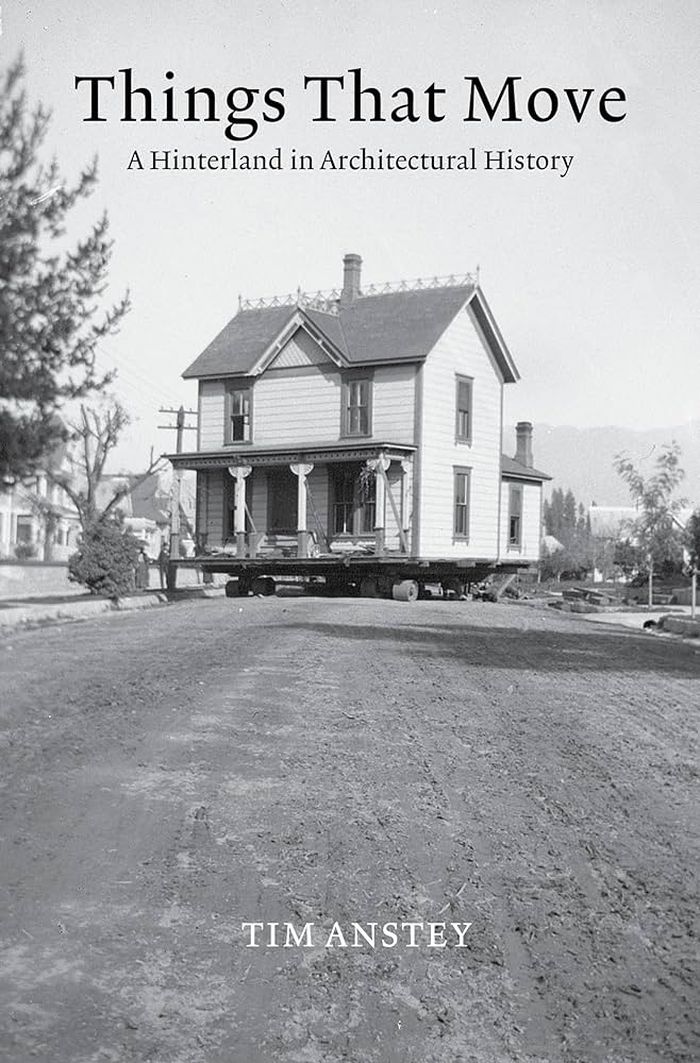
We tend to think of architecture as a practice in permanence, but what if we looked instead for an architecture of transience? In "Things that move," Tim Anstey does just that: rather than assuming that architecture is, at a certain level, stationary, he considers how architecture moves subjects (referring to its emotive potential in the experience it creates); how it moves objects (referring to how it choreographs bodies in motion); and how it is itself moved (referring to the mixture of materials, laws, affordances, and images that introduce movement into any architectural condition). The first of the book's three sections, "Cargoes," highlights the mobile peripheries of architectural history through the eighteenth and nineteenth centuries. It asks what kinds of knowledge can be included in a discussion of architecture, noting the connections between discourses of the lithe and the technical, on the one hand, and those associated with the production of monumental, static compositions on the other. The second section, “Dispatches,” reinterprets early architectural theory by examining the Renaissance ideal of decorum, the nature of the architectural work, and the ways in which architects are constituted as authors. The last part of the book, “Vehicles,” considers building in terms of literal and metaphorical movement, using two cases from the twentieth century that investigate the relationship between architecture and cultural memory. Using a broadly forensic approach to connect details in otherwise disparate cases, "Things that move" is a breathtakingly capacious architectural account that will change the way readers understand buildings, their becoming, and their significance.
Things that move: A hinterland in architectural history
Actions:
Price:
$54.00
(available to order)
Summary:
We tend to think of architecture as a practice in permanence, but what if we looked instead for an architecture of transience? In "Things that move," Tim Anstey does just that: rather than assuming that architecture is, at a certain level, stationary, he considers how architecture moves subjects (referring to its emotive potential in the experience it creates); how it moves objects (referring to how it choreographs bodies in motion); and how it is itself moved (referring to the mixture of materials, laws, affordances, and images that introduce movement into any architectural condition). The first of the book's three sections, "Cargoes," highlights the mobile peripheries of architectural history through the eighteenth and nineteenth centuries. It asks what kinds of knowledge can be included in a discussion of architecture, noting the connections between discourses of the lithe and the technical, on the one hand, and those associated with the production of monumental, static compositions on the other. The second section, “Dispatches,” reinterprets early architectural theory by examining the Renaissance ideal of decorum, the nature of the architectural work, and the ways in which architects are constituted as authors. The last part of the book, “Vehicles,” considers building in terms of literal and metaphorical movement, using two cases from the twentieth century that investigate the relationship between architecture and cultural memory. Using a broadly forensic approach to connect details in otherwise disparate cases, "Things that move" is a breathtakingly capacious architectural account that will change the way readers understand buildings, their becoming, and their significance.
Form:
books
books
Publication:
April 2024
April 2024
Subject:
Architectural Theory
Architectural Theory
Form:
books
books
Actions:
Price:
$39.95
(available to order)
Summary:
This book examines the development of Vancouver’s unique approach to zoning, planning, and urban design from its inception in the early 1970's to its maturity in the management of urban change at the beginning of the twenty-first century. By the late 1990's, Vancouver had established a reputation in North America for its planning achievement, especially for its creation(...)
$39.95
(available to order)
Summary:
This book examines the development of Vancouver’s unique approach to zoning, planning, and urban design from its inception in the early 1970's to its maturity in the management of urban change at the beginning of the twenty-first century. By the late 1990's, Vancouver had established a reputation in North America for its planning achievement, especially for its creation(...)
Title:
The Vancouver achievement : urban planning and design
Actions:
Price:
$39.95
(available to order)
Summary:
This book examines the development of Vancouver’s unique approach to zoning, planning, and urban design from its inception in the early 1970's to its maturity in the management of urban change at the beginning of the twenty-first century. By the late 1990's, Vancouver had established a reputation in North America for its planning achievement, especially for its creation of a participative, responsive, and design-led approach to urban regeneration and redevelopment. This system has other important features: an innovative approach to megaproject planning, a system of cost and amenity levies on major schemes, a participative CityPlan process to underpin active neighbourhood planning, and a sophisticated panoply of design guidelines. These systems, processes, and their achievements place Vancouver at the forefront of international planning practice. "The Vancouver Achievement" explains the evolution and evaluates the outcomes of Vancouver’s unique system of discretionary zoning. The introductory chapters set the context for the study: they cover the invention and refinement of this system in the reform movement, its development of policies, guidelines, and control processes, and its translation into official development plans and neighbourhood design in the 1970's. Subsequent chapters focus upon the downtown, waterfront megaprojects, single-family neighbourhoods, the city-wide strategic planning programme (CityPlan), pressures for reform of control processes, and current downtown and inner city developments, especially issues of affordable housing, social exclusion, and multiple deprivation. The concluding chapter summarizes "The Vancouver Achievement," explains the keys to its success, and evaluates its design success against internationally accepted criteria.
The Vancouver achievement : urban planning and design
Actions:
Price:
$39.95
(available to order)
Summary:
This book examines the development of Vancouver’s unique approach to zoning, planning, and urban design from its inception in the early 1970's to its maturity in the management of urban change at the beginning of the twenty-first century. By the late 1990's, Vancouver had established a reputation in North America for its planning achievement, especially for its creation of a participative, responsive, and design-led approach to urban regeneration and redevelopment. This system has other important features: an innovative approach to megaproject planning, a system of cost and amenity levies on major schemes, a participative CityPlan process to underpin active neighbourhood planning, and a sophisticated panoply of design guidelines. These systems, processes, and their achievements place Vancouver at the forefront of international planning practice. "The Vancouver Achievement" explains the evolution and evaluates the outcomes of Vancouver’s unique system of discretionary zoning. The introductory chapters set the context for the study: they cover the invention and refinement of this system in the reform movement, its development of policies, guidelines, and control processes, and its translation into official development plans and neighbourhood design in the 1970's. Subsequent chapters focus upon the downtown, waterfront megaprojects, single-family neighbourhoods, the city-wide strategic planning programme (CityPlan), pressures for reform of control processes, and current downtown and inner city developments, especially issues of affordable housing, social exclusion, and multiple deprivation. The concluding chapter summarizes "The Vancouver Achievement," explains the keys to its success, and evaluates its design success against internationally accepted criteria.
Form:
books
books
Publication:
April 2004, Vancouver
April 2004, Vancouver
Subject:
Architecture in Canada
Architecture in Canada


