


8791 Results
Form:
books
books
Actions:
Price:
$42.00
(available to order)
Summary:
In recent years building with stone has gained new significance, not only because of its impressive appearance, but also in the debate that has arisen in architecture between the monumental and the transparent. Principally used in façades, but also for interior design, natural stone - and even man-made stone such as concrete and bricks - is now being appreciated for its(...)
$42.00
(available to order)
Summary:
In recent years building with stone has gained new significance, not only because of its impressive appearance, but also in the debate that has arisen in architecture between the monumental and the transparent. Principally used in façades, but also for interior design, natural stone - and even man-made stone such as concrete and bricks - is now being appreciated for its(...)
Title:
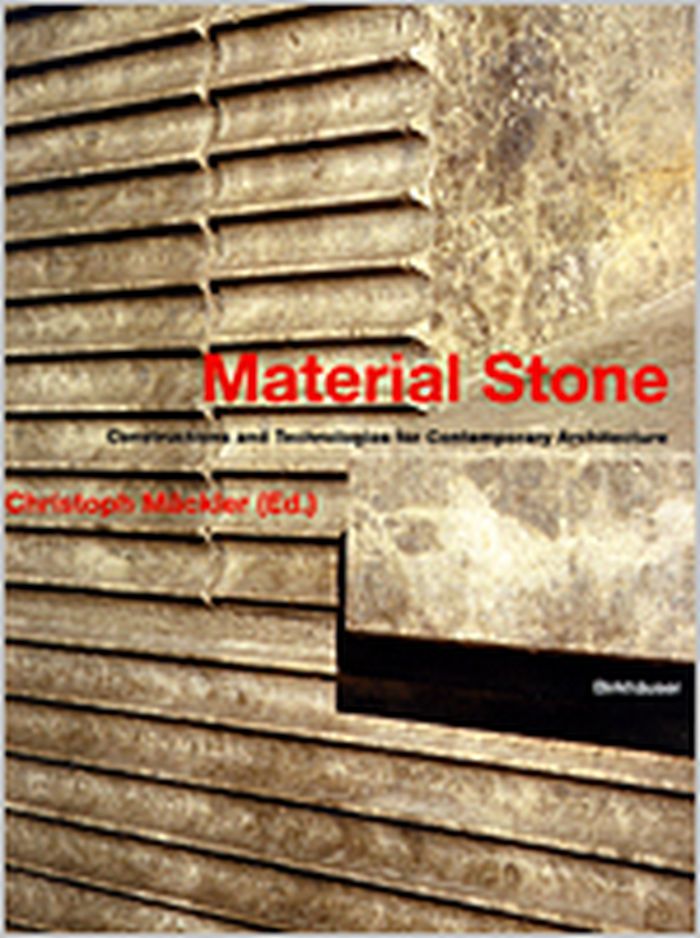
Material stone : Construction and technologies for contemporary architecture
Actions:
Price:
$42.00
(available to order)
Summary:
In recent years building with stone has gained new significance, not only because of its impressive appearance, but also in the debate that has arisen in architecture between the monumental and the transparent. Principally used in façades, but also for interior design, natural stone - and even man-made stone such as concrete and bricks - is now being appreciated for its high-quality performance. For international architects such as Michael Graves, Frank O. Gehry, Mario Botta or Richard Meier, this diverse material plays a major role. This publication examines the use of stone in contemporary architecture, drawing also on the work and experience of such great predecesors as Semper or Hoger. In thematic chapters, it presents the state of the art uses together with information on the extraction and treatment of stone. The emphasis of the book is laid on the many different kinds of natural stone, which come from a wide range of countries. Further chapters elucidate innovative applications of concrete and bricks, also illustrated by international examples. Contributions from Vittorio Magnago Lampugnani, Fritz Neumeyer and Stanislaus von Moos investigate stone as the enduring material of the town, consider its architectural expressiveness throughout history, and explore its significance as a surface material . A comprehensive appendix contains illustrations of some 70 kinds of natural stone, all of which are concisely documented, ensuring that this volume can be used as a reference for anybody interested in natural stone as a building material. Christoph Mäckler has been exploring stone as a building material both in architectural practice and in research for many years.
Material stone : Construction and technologies for contemporary architecture
Actions:
Price:
$42.00
(available to order)
Summary:
In recent years building with stone has gained new significance, not only because of its impressive appearance, but also in the debate that has arisen in architecture between the monumental and the transparent. Principally used in façades, but also for interior design, natural stone - and even man-made stone such as concrete and bricks - is now being appreciated for its high-quality performance. For international architects such as Michael Graves, Frank O. Gehry, Mario Botta or Richard Meier, this diverse material plays a major role. This publication examines the use of stone in contemporary architecture, drawing also on the work and experience of such great predecesors as Semper or Hoger. In thematic chapters, it presents the state of the art uses together with information on the extraction and treatment of stone. The emphasis of the book is laid on the many different kinds of natural stone, which come from a wide range of countries. Further chapters elucidate innovative applications of concrete and bricks, also illustrated by international examples. Contributions from Vittorio Magnago Lampugnani, Fritz Neumeyer and Stanislaus von Moos investigate stone as the enduring material of the town, consider its architectural expressiveness throughout history, and explore its significance as a surface material . A comprehensive appendix contains illustrations of some 70 kinds of natural stone, all of which are concisely documented, ensuring that this volume can be used as a reference for anybody interested in natural stone as a building material. Christoph Mäckler has been exploring stone as a building material both in architectural practice and in research for many years.
Form:
books
books
Publication:
December 2003, Basel
December 2003, Basel
Subject:
Materials and Lighting
Materials and Lighting
Form:
books
books

Actions:
Price:
$80.00
(available to order)
Summary:
"Sleeping by the Mississippi" by Alec Soth is one of the defining publications in the photobook era. First published by Steidl in 2004, it was Soth’s first book, sold through three editions, and established him as one of the leading lights of contemporary photographic practice. This MACK edition launches to coincide with the first exhibition in London dedicated to the(...)
$80.00
(available to order)
Summary:
"Sleeping by the Mississippi" by Alec Soth is one of the defining publications in the photobook era. First published by Steidl in 2004, it was Soth’s first book, sold through three editions, and established him as one of the leading lights of contemporary photographic practice. This MACK edition launches to coincide with the first exhibition in London dedicated to the(...)
Title:
Alec Soth : sleeping by the Mississippi
Actions:
Price:
$80.00
(available to order)
Summary:
"Sleeping by the Mississippi" by Alec Soth is one of the defining publications in the photobook era. First published by Steidl in 2004, it was Soth’s first book, sold through three editions, and established him as one of the leading lights of contemporary photographic practice. This MACK edition launches to coincide with the first exhibition in London dedicated to the series at Beetles+Huxley gallery, and includes two new photographs that were not included in the previous versions of the book. Evolving from a series of road trips along the Mississippi River, "Sleeping by the Mississippi" captures America’s iconic yet oft-neglected ‘third coast’. Soth’s richly descriptive, large-format colour photographs present an eclectic mix of individuals, landscapes, and interiors. Sensuous in detail and raw in subject, Sleeping by the Mississippi elicits a consistent mood of loneliness, longing, and reverie. ‘In the book’s 46 ruthlessly edited pictures’, writes Anne Wilkes Tucker in the original essay published in the book, ‘Soth alludes to illness, procreation, race, crime, learning, art, music, death, religion, redemption, politics, and cheap sex.’ Like Robert Frank’s classic "The Americans", "Sleeping by the Mississippi" merges a documentary style with poetic sensibility. The Mississippi is less the subject of the book than its organizing structure. Not bound by a rigid concept or ideology, the series is created out of a quintessentially American spirit of wanderlust. Thirteen years since the book was first published, the artist’s lyrical view has undoubtedly acquired a nuanced significance – one in which hope, fear, desire and regret coalesce in the evocative journey along this mythic river.
Alec Soth : sleeping by the Mississippi
Actions:
Price:
$80.00
(available to order)
Summary:
"Sleeping by the Mississippi" by Alec Soth is one of the defining publications in the photobook era. First published by Steidl in 2004, it was Soth’s first book, sold through three editions, and established him as one of the leading lights of contemporary photographic practice. This MACK edition launches to coincide with the first exhibition in London dedicated to the series at Beetles+Huxley gallery, and includes two new photographs that were not included in the previous versions of the book. Evolving from a series of road trips along the Mississippi River, "Sleeping by the Mississippi" captures America’s iconic yet oft-neglected ‘third coast’. Soth’s richly descriptive, large-format colour photographs present an eclectic mix of individuals, landscapes, and interiors. Sensuous in detail and raw in subject, Sleeping by the Mississippi elicits a consistent mood of loneliness, longing, and reverie. ‘In the book’s 46 ruthlessly edited pictures’, writes Anne Wilkes Tucker in the original essay published in the book, ‘Soth alludes to illness, procreation, race, crime, learning, art, music, death, religion, redemption, politics, and cheap sex.’ Like Robert Frank’s classic "The Americans", "Sleeping by the Mississippi" merges a documentary style with poetic sensibility. The Mississippi is less the subject of the book than its organizing structure. Not bound by a rigid concept or ideology, the series is created out of a quintessentially American spirit of wanderlust. Thirteen years since the book was first published, the artist’s lyrical view has undoubtedly acquired a nuanced significance – one in which hope, fear, desire and regret coalesce in the evocative journey along this mythic river.
Form:
books
books
Publication:
September 2017
September 2017
Subject:
Photography monographs
Photography monographs
Form:
books
books
Title:
Spaces of uncertainty
Spaces of uncertainty
Actions:
Price:
$42.00
(available to order)
Summary:
"Spaces of Uncertainty" is a publication on issues of contemporary urban space, from the particular view of two young architects, Kenny Cupers and Markus Miessen. Their photographic and theoretic research constitutes a double movement, which opens up the traditional architectural gaze towards the social spectrum of urban spaces, while simultaneously offering an original(...)
$42.00
(available to order)
Summary:
"Spaces of Uncertainty" is a publication on issues of contemporary urban space, from the particular view of two young architects, Kenny Cupers and Markus Miessen. Their photographic and theoretic research constitutes a double movement, which opens up the traditional architectural gaze towards the social spectrum of urban spaces, while simultaneously offering an original(...)
Title:
Spaces of uncertainty
Actions:
Price:
$42.00
(available to order)
Summary:
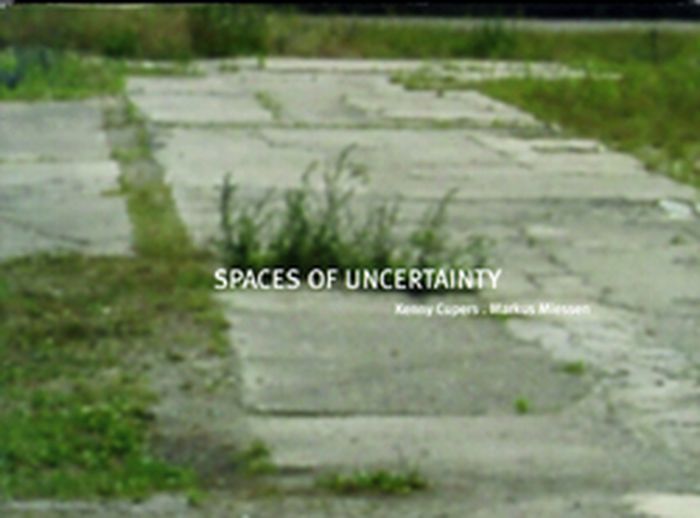
"Spaces of Uncertainty" is a publication on issues of contemporary urban space, from the particular view of two young architects, Kenny Cupers and Markus Miessen. Their photographic and theoretic research constitutes a double movement, which opens up the traditional architectural gaze towards the social spectrum of urban spaces, while simultaneously offering an original theory of contemporary cultural practice. The issue of public space is one that crosses interdisciplinary boundaries and attracts high interest in the fields of architecture, urbanism, sociology and cultural studies. With Berlin as a case study for a globalised urban condition, the publication aims at a wide international public by providing a broadly conceived theory that approaches the city at the same time as a material phenomenon and as a social and philosophical idea. Public space in its traditional interpretations is unable to follow the heartbeat of today's rapidly changing city. Instead of adding force to an ongoing rhetorical discourse of loss, this publication acknowledges the existence of places beyond traditional definition. With a photographic essay on Berlin, it opens an unexpectedly contemporary view upon this agitated debate. Left with enormous amounts of infill and fallow land, Berlin is a city in which residual space and public space lose their definitions. As playgrounds for micro-political activities, permanent hiding-places or areas for temporary occupation, its residual spaces prove their necessity. Shy and unassuming, these very spaces of uncertainty show their value for public life in the contemporary city. With contributions by Margaret Crawford, Hilde Heynen, Paul Davies, Paul Halliday and Jürgen Mayer H.
Spaces of uncertainty
Actions:
Price:
$42.00
(available to order)
Summary:
"Spaces of Uncertainty" is a publication on issues of contemporary urban space, from the particular view of two young architects, Kenny Cupers and Markus Miessen. Their photographic and theoretic research constitutes a double movement, which opens up the traditional architectural gaze towards the social spectrum of urban spaces, while simultaneously offering an original theory of contemporary cultural practice. The issue of public space is one that crosses interdisciplinary boundaries and attracts high interest in the fields of architecture, urbanism, sociology and cultural studies. With Berlin as a case study for a globalised urban condition, the publication aims at a wide international public by providing a broadly conceived theory that approaches the city at the same time as a material phenomenon and as a social and philosophical idea. Public space in its traditional interpretations is unable to follow the heartbeat of today's rapidly changing city. Instead of adding force to an ongoing rhetorical discourse of loss, this publication acknowledges the existence of places beyond traditional definition. With a photographic essay on Berlin, it opens an unexpectedly contemporary view upon this agitated debate. Left with enormous amounts of infill and fallow land, Berlin is a city in which residual space and public space lose their definitions. As playgrounds for micro-political activities, permanent hiding-places or areas for temporary occupation, its residual spaces prove their necessity. Shy and unassuming, these very spaces of uncertainty show their value for public life in the contemporary city. With contributions by Margaret Crawford, Hilde Heynen, Paul Davies, Paul Halliday and Jürgen Mayer H.
Form:
books
books
Publication:
January 2002, Wuppertal
January 2002, Wuppertal
Subject:
Urban Theory
Urban Theory
Form:
books
books
Title:
John Divola : three acts
John Divola : three acts
Actions:
Price:
$60.00
(available to order)
Summary:
In 1973, artist John Divola began the first of three highly ambitious and original bodies of work that together form this publication. The Vandalism series comprises black-and-white photographs of interiors of abandoned houses. Entering illegally, Divola spray painted expressive markings in the forms of dots, lines, and grids, creating a series of conceptual gestures that(...)
$60.00
(available to order)
Summary:
In 1973, artist John Divola began the first of three highly ambitious and original bodies of work that together form this publication. The Vandalism series comprises black-and-white photographs of interiors of abandoned houses. Entering illegally, Divola spray painted expressive markings in the forms of dots, lines, and grids, creating a series of conceptual gestures that(...)
Title:
John Divola : three acts
Actions:
Price:
$60.00
(available to order)
Summary:
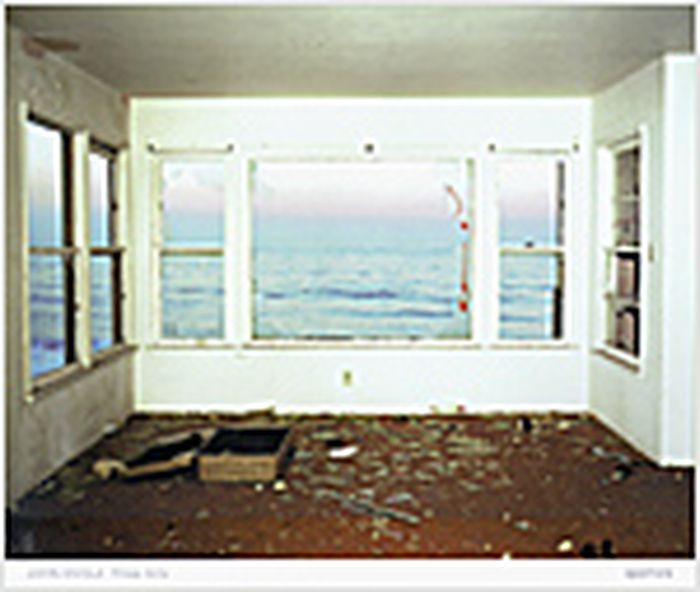
In 1973, artist John Divola began the first of three highly ambitious and original bodies of work that together form this publication. The Vandalism series comprises black-and-white photographs of interiors of abandoned houses. Entering illegally, Divola spray painted expressive markings in the forms of dots, lines, and grids, creating a series of conceptual gestures that referenced “action painting” as readily as the graffiti that was fast becoming a cultural phenomenon. The following year, Divola began the Los Angeles International Airport Noise Abatement series, photographing a condemned neighborhood bought out by the airport to serve as a noise buffer for new runways.An extensive catalog of break-ins, the photographs record the evidence of violent entries: shattered windows, doors torn from hinges, a crowbar resting in the jamb of a door pried open. The final installment in this book, the Zuma series, is the artist’s documentation of the destruction of an abandoned beachfront property. While employing similar strategies of painting and intervention, the Zuma images add variation and complexity to Divola’s established themes as they incorporate color, elements of nature, and meditation on change. These cyclical images skillfully juxtapose romantic skies and sunsets with a seaside structure that, frame by frame, deteriorates into ruin as it is vandalized by the artist and others who eventually set it on fire. Divola’s art practice shares a tradition with conceptual artists such as Bruce Nauman, whose photographs are considered to be performance or sculpture, and Robert Smithson, who used photography to investigate the built environment.
John Divola : three acts
Actions:
Price:
$60.00
(available to order)
Summary:
In 1973, artist John Divola began the first of three highly ambitious and original bodies of work that together form this publication. The Vandalism series comprises black-and-white photographs of interiors of abandoned houses. Entering illegally, Divola spray painted expressive markings in the forms of dots, lines, and grids, creating a series of conceptual gestures that referenced “action painting” as readily as the graffiti that was fast becoming a cultural phenomenon. The following year, Divola began the Los Angeles International Airport Noise Abatement series, photographing a condemned neighborhood bought out by the airport to serve as a noise buffer for new runways.An extensive catalog of break-ins, the photographs record the evidence of violent entries: shattered windows, doors torn from hinges, a crowbar resting in the jamb of a door pried open. The final installment in this book, the Zuma series, is the artist’s documentation of the destruction of an abandoned beachfront property. While employing similar strategies of painting and intervention, the Zuma images add variation and complexity to Divola’s established themes as they incorporate color, elements of nature, and meditation on change. These cyclical images skillfully juxtapose romantic skies and sunsets with a seaside structure that, frame by frame, deteriorates into ruin as it is vandalized by the artist and others who eventually set it on fire. Divola’s art practice shares a tradition with conceptual artists such as Bruce Nauman, whose photographs are considered to be performance or sculpture, and Robert Smithson, who used photography to investigate the built environment.
Form:
books
books
Publication:
May 2006, New York
May 2006, New York
Subject:
Photography monographs
Photography monographs
Form:
books
books
Title:
e-flux Index #9
e-flux Index #9
Actions:
Price:
$45.00
(available in store)
Summary:
This ninth issue of e-flux Index interweaves a selection of pieces published by e-flux throughout the Summer of 2025, and is divided into two parts. In six chapters that index the state of ''Art and Theory Today'', the first part revisits the primal scene of the Theory Wars—the tenor of which has changed, from an urgent ideological contest between humanist objectivity and(...)
$45.00
(available in store)
Summary:
This ninth issue of e-flux Index interweaves a selection of pieces published by e-flux throughout the Summer of 2025, and is divided into two parts. In six chapters that index the state of ''Art and Theory Today'', the first part revisits the primal scene of the Theory Wars—the tenor of which has changed, from an urgent ideological contest between humanist objectivity and(...)
Title:
e-flux Index #9
Actions:
Price:
$45.00
(available in store)
Summary:
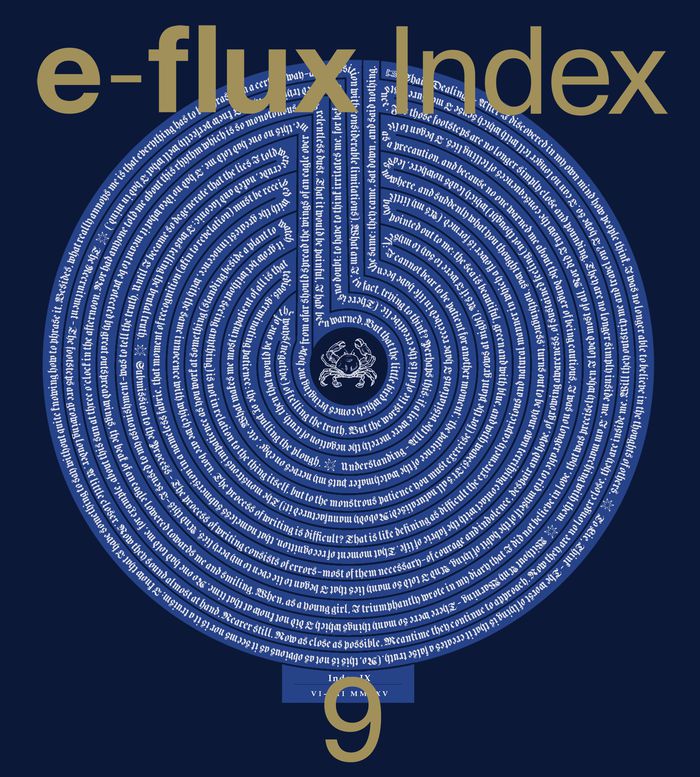
This ninth issue of e-flux Index interweaves a selection of pieces published by e-flux throughout the Summer of 2025, and is divided into two parts. In six chapters that index the state of ''Art and Theory Today'', the first part revisits the primal scene of the Theory Wars—the tenor of which has changed, from an urgent ideological contest between humanist objectivity and postmodern relativism, to a more even-handed, pragmatic, and pluralist one, in the decades since. It brings together material that the various independent publishing arms of e-flux published around the theme of the often-fraught relations between theory and (artistic, architectural, pedagogic, political) practice. The second part of Index #9, ''This world, this mutilated space'', moves onto the terrain of the Forever War, examining the resilience shown by artistic communities living on its multiplying frontlines, the deepening climate war against the nonhuman world, and those displaced by these processes of destruction. As international relations "realists" like John Mearsheimer have regularly observed on the 24/7 war-pundit circuit since the illegal strike on Ayatollah Khamenei two months ago, the Iran War is a conflict which also displays no "logical sequence of thought"—which has no theory. This is a war whose aggressors (Netanyahu–Ben-Gvir and Trump–Hegseth–Rubio) seem less in hock to Carl von Clausewitz than to the instant dopaminergic kill-feed of a fifteen-year-old hooked on ''Call of Duty'' missions—with strategy configured as content, war as engagement metric.
e-flux Index #9
Actions:
Price:
$45.00
(available in store)
Summary:
This ninth issue of e-flux Index interweaves a selection of pieces published by e-flux throughout the Summer of 2025, and is divided into two parts. In six chapters that index the state of ''Art and Theory Today'', the first part revisits the primal scene of the Theory Wars—the tenor of which has changed, from an urgent ideological contest between humanist objectivity and postmodern relativism, to a more even-handed, pragmatic, and pluralist one, in the decades since. It brings together material that the various independent publishing arms of e-flux published around the theme of the often-fraught relations between theory and (artistic, architectural, pedagogic, political) practice. The second part of Index #9, ''This world, this mutilated space'', moves onto the terrain of the Forever War, examining the resilience shown by artistic communities living on its multiplying frontlines, the deepening climate war against the nonhuman world, and those displaced by these processes of destruction. As international relations "realists" like John Mearsheimer have regularly observed on the 24/7 war-pundit circuit since the illegal strike on Ayatollah Khamenei two months ago, the Iran War is a conflict which also displays no "logical sequence of thought"—which has no theory. This is a war whose aggressors (Netanyahu–Ben-Gvir and Trump–Hegseth–Rubio) seem less in hock to Carl von Clausewitz than to the instant dopaminergic kill-feed of a fifteen-year-old hooked on ''Call of Duty'' missions—with strategy configured as content, war as engagement metric.
Form:
books
books
Publication:
August 2026
August 2026
Subject:
Magazines
Magazines
Form:
books
books
Title:
Architecture goes wild
Architecture goes wild
Actions:
Price:
$29.95
(available to order)
Summary:
In his writings, architect Kas Oosterhuis bridges the gap between theory and practice. His observations are based on the principle of concrete science fiction. He is convinced that every construct - hardware or software - that can be formulated as a consistent set of rules is realizable within the social constraints of our present-day culture. In his essay(...)
$29.95
(available to order)
Summary:
In his writings, architect Kas Oosterhuis bridges the gap between theory and practice. His observations are based on the principle of concrete science fiction. He is convinced that every construct - hardware or software - that can be formulated as a consistent set of rules is realizable within the social constraints of our present-day culture. In his essay(...)
Title:
Architecture goes wild
Actions:
Price:
$29.95
(available to order)
Summary:
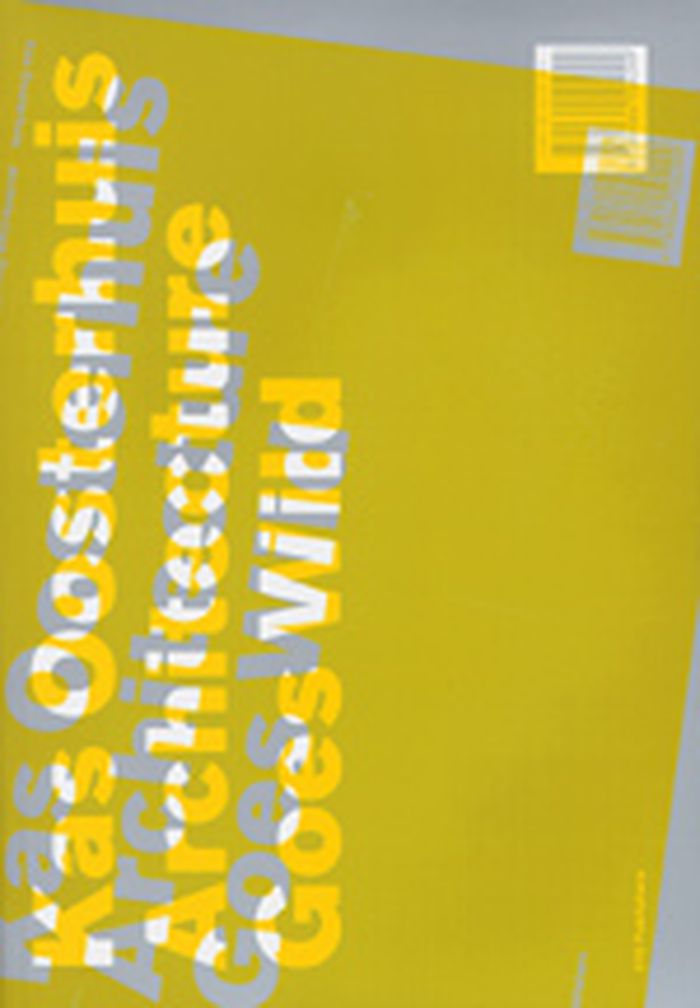
In his writings, architect Kas Oosterhuis bridges the gap between theory and practice. His observations are based on the principle of concrete science fiction. He is convinced that every construct - hardware or software - that can be formulated as a consistent set of rules is realizable within the social constraints of our present-day culture. In his essay 'Space_Time_Volume' Kas Oosterhuis places himself in the local and temporary delamination point between the micro- and macroworlds. He speculates on a seamless continuity of these worlds where the instrumental human position is only one of many possible positions. Our perception of the universe is based on observations made by instruments. Language is seen as such an instrument. In 'Wild Bodies' Oosterhuis asserts that all true architecture inevitably will be programmed to perform in real time. This point of view is based on the observation that traditional fixed and static architecture is a highly unlikely state among all possible ones. An architectural construct is regarded as a body with real-time behaviour that is always in motion. Computer programs speak the new instrumental language in which potential new worlds are described. 'Automotive Styling' declares the human driver of the automobile to be the voluntary prisoner of the physical car-road communications network. In 'Vectorial Bodies' the human driver is nothing less than fuzzy software programming the car to lead it to his destinations. There is no place for romantic ideas such as freedom of movement, but there is the overwhelming desire of carbon-based life forms to exchange data with industrial and digital life forms.
Architecture goes wild
Actions:
Price:
$29.95
(available to order)
Summary:
In his writings, architect Kas Oosterhuis bridges the gap between theory and practice. His observations are based on the principle of concrete science fiction. He is convinced that every construct - hardware or software - that can be formulated as a consistent set of rules is realizable within the social constraints of our present-day culture. In his essay 'Space_Time_Volume' Kas Oosterhuis places himself in the local and temporary delamination point between the micro- and macroworlds. He speculates on a seamless continuity of these worlds where the instrumental human position is only one of many possible positions. Our perception of the universe is based on observations made by instruments. Language is seen as such an instrument. In 'Wild Bodies' Oosterhuis asserts that all true architecture inevitably will be programmed to perform in real time. This point of view is based on the observation that traditional fixed and static architecture is a highly unlikely state among all possible ones. An architectural construct is regarded as a body with real-time behaviour that is always in motion. Computer programs speak the new instrumental language in which potential new worlds are described. 'Automotive Styling' declares the human driver of the automobile to be the voluntary prisoner of the physical car-road communications network. In 'Vectorial Bodies' the human driver is nothing less than fuzzy software programming the car to lead it to his destinations. There is no place for romantic ideas such as freedom of movement, but there is the overwhelming desire of carbon-based life forms to exchange data with industrial and digital life forms.
Form:
books
books
Publication:
March 2001, Rotterdam
March 2001, Rotterdam
Subject:
Architectural Theory
Architectural Theory
Form:
books
books
Title:
Ant Farm 1968-1978
Ant Farm 1968-1978
Actions:
Price:
$7.99
(available to order)
Summary:
This richly illustrated book, created to accompany the traveling exhibition of the same name, provides a fascinating critical overview of Ant Farm, the radical architecture collective that brought us Cadillac Ranch, Media Burn, and The Eternal Frame. Established by several young renegade architects in 1968, Ant Farm was a collaborative art and design group eager to bring(...)
$7.99
(available to order)
Summary:
This richly illustrated book, created to accompany the traveling exhibition of the same name, provides a fascinating critical overview of Ant Farm, the radical architecture collective that brought us Cadillac Ranch, Media Burn, and The Eternal Frame. Established by several young renegade architects in 1968, Ant Farm was a collaborative art and design group eager to bring(...)
Subject:
sale books
sale books
Publication:
February 2004, Berkeley
February 2004, Berkeley
Title:
Ant Farm 1968-1978
Actions:
Price:
$7.99
(available to order)
Summary:
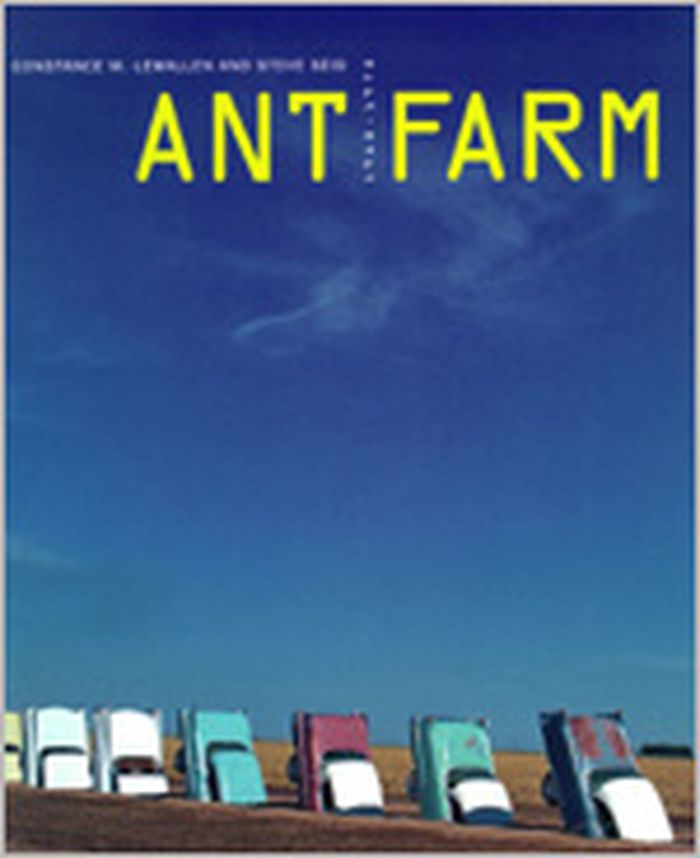
This richly illustrated book, created to accompany the traveling exhibition of the same name, provides a fascinating critical overview of Ant Farm, the radical architecture collective that brought us Cadillac Ranch, Media Burn, and The Eternal Frame. Established by several young renegade architects in 1968, Ant Farm was a collaborative art and design group eager to bring to its practice a revolutionary spirit more consistent with the times. Its vision encompassed creations for a nomadic lifestyle, including inflatable structures and radical environments that culminated in projects such as the organically appointed House of the Century and the unrealized aquatic edifice The Dolphin Embassy. Ant Farm 1968-1978 explores the sweeping career of this inspired and inspiring visionary collective as its architectural projects broadened to embrace a range of undertakings that challenged the visual architecture of image, icon, and power. Constance Lewallen provides an in-depth, anecdotally rich interview with founding members Chip Lord, Doug Michels, and Curtis Schreier. An essay by Michael Sorkin gives the multivalent cultural context for Ant Farm's radical architecture. Steve Seid takes a comprehensive look at Ant Farm's influential videotapes. Caroline Maniaque's "Searching for Energy" details the group's inflatable structures in relationship to contemporaneous architects working in a similar vein. The catalog also includes a substantial excerpt from Chip Lord's 1976 meditation on car culture, with a new epilogue; a graphically playful timeline recounting Ant Farm's essential art projects; and a rich montage of images and ephemera capturing the humor, originality, and prescience of this feisty enterprise.
Ant Farm 1968-1978
Actions:
Price:
$7.99
(available to order)
Summary:
This richly illustrated book, created to accompany the traveling exhibition of the same name, provides a fascinating critical overview of Ant Farm, the radical architecture collective that brought us Cadillac Ranch, Media Burn, and The Eternal Frame. Established by several young renegade architects in 1968, Ant Farm was a collaborative art and design group eager to bring to its practice a revolutionary spirit more consistent with the times. Its vision encompassed creations for a nomadic lifestyle, including inflatable structures and radical environments that culminated in projects such as the organically appointed House of the Century and the unrealized aquatic edifice The Dolphin Embassy. Ant Farm 1968-1978 explores the sweeping career of this inspired and inspiring visionary collective as its architectural projects broadened to embrace a range of undertakings that challenged the visual architecture of image, icon, and power. Constance Lewallen provides an in-depth, anecdotally rich interview with founding members Chip Lord, Doug Michels, and Curtis Schreier. An essay by Michael Sorkin gives the multivalent cultural context for Ant Farm's radical architecture. Steve Seid takes a comprehensive look at Ant Farm's influential videotapes. Caroline Maniaque's "Searching for Energy" details the group's inflatable structures in relationship to contemporaneous architects working in a similar vein. The catalog also includes a substantial excerpt from Chip Lord's 1976 meditation on car culture, with a new epilogue; a graphically playful timeline recounting Ant Farm's essential art projects; and a rich montage of images and ephemera capturing the humor, originality, and prescience of this feisty enterprise.
Form:
books
books
Publication:
February 2004, Berkeley
February 2004, Berkeley
Subject:
sale books
sale books
Form:
books
books
Title:
Moving archives
Moving archives
Actions:
Price:
$85.00
(available to order)
Summary:
The image of the dusty, undisturbed archive has been swept away in response to growing interest across disciplines in the materials they house and the desire to find and make meaning through an engagement with those materials. Archival studies scholars and archivists are developing related theoretical frameworks and practices that recognize that the archives are anything(...)
$85.00
(available to order)
Summary:
The image of the dusty, undisturbed archive has been swept away in response to growing interest across disciplines in the materials they house and the desire to find and make meaning through an engagement with those materials. Archival studies scholars and archivists are developing related theoretical frameworks and practices that recognize that the archives are anything(...)
Title:
Moving archives
Actions:
Price:
$85.00
(available to order)
Summary:
The image of the dusty, undisturbed archive has been swept away in response to growing interest across disciplines in the materials they house and the desire to find and make meaning through an engagement with those materials. Archival studies scholars and archivists are developing related theoretical frameworks and practices that recognize that the archives are anything but static. Archival deposits are proliferating, and the architects, practitioners, and scholars engaged with them are scarcely able to keep abreast of them. Archives, archival theory, and archival practice are on the move. But what of the archives that were once safely housed and have since been lost, or are under threat? What of the urgency that underscores the appeals made on behalf of these archives? As scholars in this volume argue, archives—their materialization, their preservation, and the research produced about them—are moving in a different way: they are involved in an emotionally engaged and charged process, one that acts equally upon archival subjects and those engaged with them. So too do archives at once represent members of various communities and the fields of study drawn to them. "Moving Archives" grounds itself in the critical trajectory related to what Sara Ahmed calls “affective economies” to offer fresh insights about the process of archiving and approaching literary materials. These economies are not necessarily determined by ethical impulses, although many scholars have called out for such impulses to underwrite current archival practices; rather, they form the crucial affective contexts for the legitimization of archival caches in the present moment and for future use.
Moving archives
Actions:
Price:
$85.00
(available to order)
Summary:
The image of the dusty, undisturbed archive has been swept away in response to growing interest across disciplines in the materials they house and the desire to find and make meaning through an engagement with those materials. Archival studies scholars and archivists are developing related theoretical frameworks and practices that recognize that the archives are anything but static. Archival deposits are proliferating, and the architects, practitioners, and scholars engaged with them are scarcely able to keep abreast of them. Archives, archival theory, and archival practice are on the move. But what of the archives that were once safely housed and have since been lost, or are under threat? What of the urgency that underscores the appeals made on behalf of these archives? As scholars in this volume argue, archives—their materialization, their preservation, and the research produced about them—are moving in a different way: they are involved in an emotionally engaged and charged process, one that acts equally upon archival subjects and those engaged with them. So too do archives at once represent members of various communities and the fields of study drawn to them. "Moving Archives" grounds itself in the critical trajectory related to what Sara Ahmed calls “affective economies” to offer fresh insights about the process of archiving and approaching literary materials. These economies are not necessarily determined by ethical impulses, although many scholars have called out for such impulses to underwrite current archival practices; rather, they form the crucial affective contexts for the legitimization of archival caches in the present moment and for future use.
Form:
books
books
Publication:
January 2020
January 2020
Subject:
Archive, library and the digital
Archive, library and the digital
Form:
books
books
Actions:
Price:
$33.95
(available to order)
Summary:
Judith Butler’s new book shows how an ethic of nonviolence must be connected to a broader political struggle for social equality. Further, it argues that nonviolence is often misunderstood as a passive practice that emanates from a calm region of the soul, or as an individualist ethical relation to existing forms of power. But, in fact, nonviolence is an ethical position(...)
$33.95
(available to order)
Summary:
Judith Butler’s new book shows how an ethic of nonviolence must be connected to a broader political struggle for social equality. Further, it argues that nonviolence is often misunderstood as a passive practice that emanates from a calm region of the soul, or as an individualist ethical relation to existing forms of power. But, in fact, nonviolence is an ethical position(...)
Title:
The force of non violence: the ethical in the political
Actions:
Price:
$33.95
(available to order)
Summary:
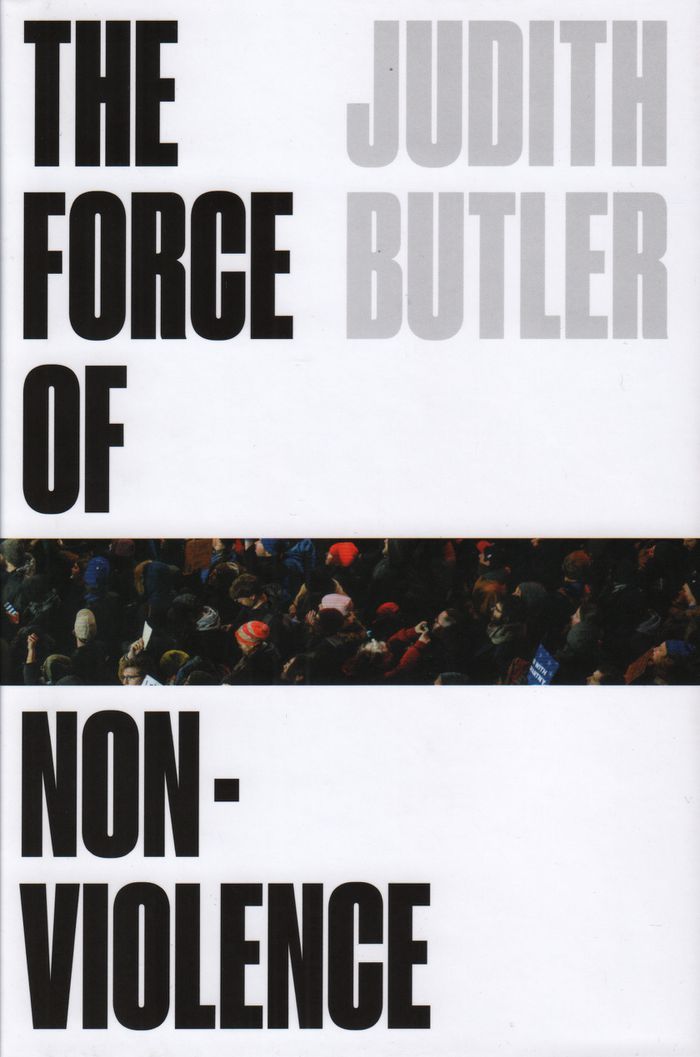
Judith Butler’s new book shows how an ethic of nonviolence must be connected to a broader political struggle for social equality. Further, it argues that nonviolence is often misunderstood as a passive practice that emanates from a calm region of the soul, or as an individualist ethical relation to existing forms of power. But, in fact, nonviolence is an ethical position found in the midst of the political field. An aggressive form of nonviolence accepts that hostility is part of our psychic constitution, but values ambivalence as a way of checking the conversion of aggression into violence. One contemporary challenge to a politics of nonviolence points out that there is a difference of opinion on what counts as violence and nonviolence. The distinction between them can be mobilized in the service of ratifying the state’s monopoly on violence. Considering nonviolence as an ethical problem within a political philosophy requires a critique of individualism as well as an understanding of the psychosocial dimensions of violence. Butler draws upon Foucault, Fanon, Freud, and Benjamin to consider how the interdiction against violence fails to include lives regarded as ungrievable. By considering how “racial phantasms” inform justifications of state and administrative violence, Butler tracks how violence is often attributed to those who are most severely exposed to its lethal effects. The struggle for nonviolence is found in movements for social transformation that reframe the grievability of lives in light of social equality and whose ethical claims follow from an insight into the interdependency of life as the basis of social and political equality.
The force of non violence: the ethical in the political
Actions:
Price:
$33.95
(available to order)
Summary:
Judith Butler’s new book shows how an ethic of nonviolence must be connected to a broader political struggle for social equality. Further, it argues that nonviolence is often misunderstood as a passive practice that emanates from a calm region of the soul, or as an individualist ethical relation to existing forms of power. But, in fact, nonviolence is an ethical position found in the midst of the political field. An aggressive form of nonviolence accepts that hostility is part of our psychic constitution, but values ambivalence as a way of checking the conversion of aggression into violence. One contemporary challenge to a politics of nonviolence points out that there is a difference of opinion on what counts as violence and nonviolence. The distinction between them can be mobilized in the service of ratifying the state’s monopoly on violence. Considering nonviolence as an ethical problem within a political philosophy requires a critique of individualism as well as an understanding of the psychosocial dimensions of violence. Butler draws upon Foucault, Fanon, Freud, and Benjamin to consider how the interdiction against violence fails to include lives regarded as ungrievable. By considering how “racial phantasms” inform justifications of state and administrative violence, Butler tracks how violence is often attributed to those who are most severely exposed to its lethal effects. The struggle for nonviolence is found in movements for social transformation that reframe the grievability of lives in light of social equality and whose ethical claims follow from an insight into the interdependency of life as the basis of social and political equality.
Form:
books
books
Publication:
February 2020
February 2020
Subject:
Social
Social
Form:
books
books
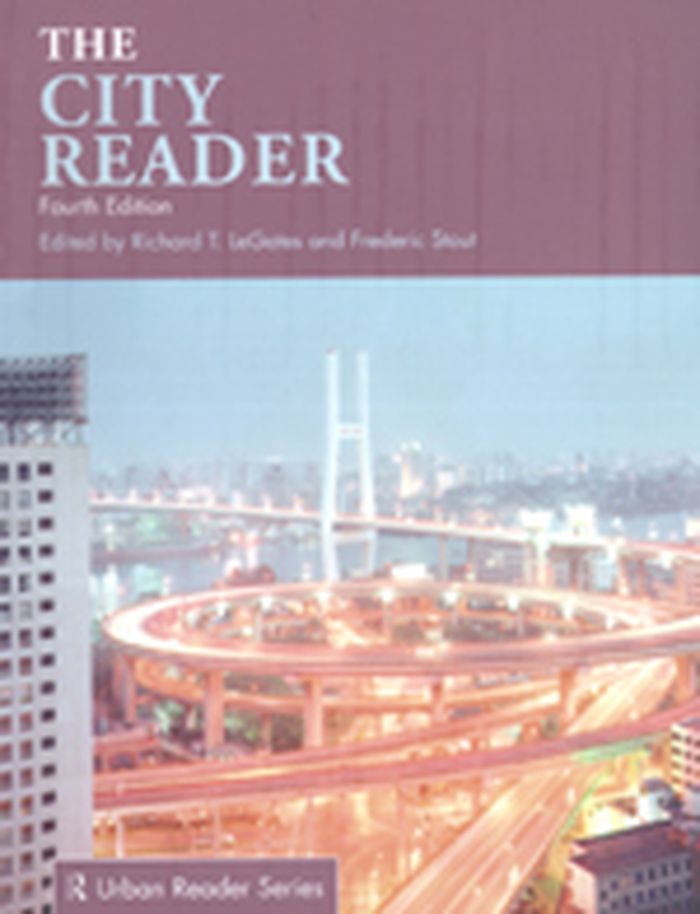
Title:
The city reader 4th edition
The city reader 4th edition
Actions:
Price:
$83.95
(available to order)
Summary:
The fourth edition of the highly successful The City Reader brings together the very best of publications on the city. Classic writings by such authors as Lewis Mumford, Ernest W. Burgess, LeCorbusier, Lewis Wirth, Jane Jacobs and Kevin Lynch meet the best contemporary writings of, among others, Sir Peter Hall, Richard Florida, Mike Davis, Michael Porter, Robert Putnam,(...)
$83.95
(available to order)
Summary:
The fourth edition of the highly successful The City Reader brings together the very best of publications on the city. Classic writings by such authors as Lewis Mumford, Ernest W. Burgess, LeCorbusier, Lewis Wirth, Jane Jacobs and Kevin Lynch meet the best contemporary writings of, among others, Sir Peter Hall, Richard Florida, Mike Davis, Michael Porter, Robert Putnam,(...)
Subject:
Urban Theory
Urban Theory
Publication:
August 2007, London New York
August 2007, London New York
Title:
The city reader 4th edition
Actions:
Price:
$83.95
(available to order)
Summary:
The fourth edition of the highly successful The City Reader brings together the very best of publications on the city. Classic writings by such authors as Lewis Mumford, Ernest W. Burgess, LeCorbusier, Lewis Wirth, Jane Jacobs and Kevin Lynch meet the best contemporary writings of, among others, Sir Peter Hall, Richard Florida, Mike Davis, Michael Porter, Robert Putnam, Andrus Duany, Saskia Sassen, and Manuel Castells. New to the fourth edition are important classic writings on urban economics by Wilbur Thomson and on bosses and machines by James Bryce, Jane Addams, and William L. Riordan, and new contemporary material on sustainable urban development , the creative class, metropolitics, occidentalism, Asian megacities, and urban futurism by The Bruntland Commission, Richard Florida, Myron Orfield, Ian Buruma and Avishai Margalit, Aprodicio Laquian, and Joel Kotkin. Fifty-seven generous selections are included: a combination of forty-six readings from the third edition and eleven entirely new selections. Structured to aid student understanding, the anthology features main and part Introductions, as well as individual introductions to the selected articles. Each selection is introduced with a brief intellectual biography and a review of the author s writings and related literature, an explanation of how the piece fits into the broader context of urban history and practice, competing ideological perspectives on the city, and the major current debates concerning race and gender, globalization, terrorism, the impact of information technology on cities, civic engagement, and postmodernism. The City Reader provides the comprehensive mapping of the terrain of Urban Studies, old and new. It is illustrated with over forty photographs and is essential reading for anyone interested in the city.
The city reader 4th edition
Actions:
Price:
$83.95
(available to order)
Summary:
The fourth edition of the highly successful The City Reader brings together the very best of publications on the city. Classic writings by such authors as Lewis Mumford, Ernest W. Burgess, LeCorbusier, Lewis Wirth, Jane Jacobs and Kevin Lynch meet the best contemporary writings of, among others, Sir Peter Hall, Richard Florida, Mike Davis, Michael Porter, Robert Putnam, Andrus Duany, Saskia Sassen, and Manuel Castells. New to the fourth edition are important classic writings on urban economics by Wilbur Thomson and on bosses and machines by James Bryce, Jane Addams, and William L. Riordan, and new contemporary material on sustainable urban development , the creative class, metropolitics, occidentalism, Asian megacities, and urban futurism by The Bruntland Commission, Richard Florida, Myron Orfield, Ian Buruma and Avishai Margalit, Aprodicio Laquian, and Joel Kotkin. Fifty-seven generous selections are included: a combination of forty-six readings from the third edition and eleven entirely new selections. Structured to aid student understanding, the anthology features main and part Introductions, as well as individual introductions to the selected articles. Each selection is introduced with a brief intellectual biography and a review of the author s writings and related literature, an explanation of how the piece fits into the broader context of urban history and practice, competing ideological perspectives on the city, and the major current debates concerning race and gender, globalization, terrorism, the impact of information technology on cities, civic engagement, and postmodernism. The City Reader provides the comprehensive mapping of the terrain of Urban Studies, old and new. It is illustrated with over forty photographs and is essential reading for anyone interested in the city.
Form:
books
books
Publication:
August 2007, London New York
August 2007, London New York
Subject:
Urban Theory
Urban Theory


