


8791 Results
Form:
books
books
Price:
$58.95
(available to order)
Summary:
The Pan Am Building and the reaction to it signalled the end of an era. Begun when the modernist aesthetic and the architectural star system ruled architectural theory and practice, the completed building became a symbol of modernism's fall from grace. In “The Pan Am Building and the Shattering of the Modernist Dream”, Meredith Clausen tells the story as both history and(...)
$58.95
(available to order)
Summary:
The Pan Am Building and the reaction to it signalled the end of an era. Begun when the modernist aesthetic and the architectural star system ruled architectural theory and practice, the completed building became a symbol of modernism's fall from grace. In “The Pan Am Building and the Shattering of the Modernist Dream”, Meredith Clausen tells the story as both history and(...)
Subject:
Architecture since 1900, Europe
Architecture since 1900, Europe
Publication:
December 2004, Cambridge, Mass.
December 2004, Cambridge, Mass.
Title:
The Pan Am building and the shattering of the modernist dream
Actions:
Price:
$58.95
(available to order)
Summary:
The Pan Am Building and the reaction to it signalled the end of an era. Begun when the modernist aesthetic and the architectural star system ruled architectural theory and practice, the completed building became a symbol of modernism's fall from grace. In “The Pan Am Building and the Shattering of the Modernist Dream”, Meredith Clausen tells the story as both history and cautionary tale -- a case study of how not to plan and execute a large-scale urban project that seems especially relevant in light of the World Trade Center and the ongoing discussions over what should be built in its place. The Pan Am Building was despised by many as soon as the plans were announced in 1958. The star power of the celebrity architects -- those deans of modernism, Walter Gropius and Pietro Belluschi -- overrode critics' objections. When construction was completed in 1963, it became more than an architectural question; this "mute, massive, over-scaled octagonal slab," as Clausen describes it, built over Grand Central Terminal, blocked the view down Park Avenue, created deep shadows where there had been sunlight, and poured 25,000 office workers on the sidewalks each morning and evening. As Clausen tells it, the story of the building -- which was undistinguished architecturally but important because of its location and its moment in history -- encompasses the end of modernism's social idealism, the decline of Gropius's and Belluschi's reputations, the victory of private interests over public good, the revival of architectural criticism in the press (both Ada Louise Huxtable and Jane Jacobs emerged as prominent and influential critics), the birth of the historic preservation movement, and the changing culture and politics of New York City.
The Pan Am building and the shattering of the modernist dream
Actions:
Price:
$58.95
(available to order)
Summary:
The Pan Am Building and the reaction to it signalled the end of an era. Begun when the modernist aesthetic and the architectural star system ruled architectural theory and practice, the completed building became a symbol of modernism's fall from grace. In “The Pan Am Building and the Shattering of the Modernist Dream”, Meredith Clausen tells the story as both history and cautionary tale -- a case study of how not to plan and execute a large-scale urban project that seems especially relevant in light of the World Trade Center and the ongoing discussions over what should be built in its place. The Pan Am Building was despised by many as soon as the plans were announced in 1958. The star power of the celebrity architects -- those deans of modernism, Walter Gropius and Pietro Belluschi -- overrode critics' objections. When construction was completed in 1963, it became more than an architectural question; this "mute, massive, over-scaled octagonal slab," as Clausen describes it, built over Grand Central Terminal, blocked the view down Park Avenue, created deep shadows where there had been sunlight, and poured 25,000 office workers on the sidewalks each morning and evening. As Clausen tells it, the story of the building -- which was undistinguished architecturally but important because of its location and its moment in history -- encompasses the end of modernism's social idealism, the decline of Gropius's and Belluschi's reputations, the victory of private interests over public good, the revival of architectural criticism in the press (both Ada Louise Huxtable and Jane Jacobs emerged as prominent and influential critics), the birth of the historic preservation movement, and the changing culture and politics of New York City.
Form:
books
books
Publication:
December 2004, Cambridge, Mass.
December 2004, Cambridge, Mass.
Subject:
Architecture since 1900, Europe
Architecture since 1900, Europe
Form:
books
books
Actions:
Price:
$34.00
(available to order)
Summary:
Along with Russian constructivism and surrealism, Dada stands as one of the three most significant movements of the historical avant-garde. Born in the heart of Europe in the midst of World War I, Dada displayed a raucous skepticism about accepted values. Its embrace of new materials, of collage and assemblage techniques, of the designation of manufactured objects as art(...)
$34.00
(available to order)
Summary:
Along with Russian constructivism and surrealism, Dada stands as one of the three most significant movements of the historical avant-garde. Born in the heart of Europe in the midst of World War I, Dada displayed a raucous skepticism about accepted values. Its embrace of new materials, of collage and assemblage techniques, of the designation of manufactured objects as art(...)
Title:
Dada: Zurich,Berlin, Hannover, Cologne, New York, Paris
Actions:
Price:
$34.00
(available to order)
Summary:
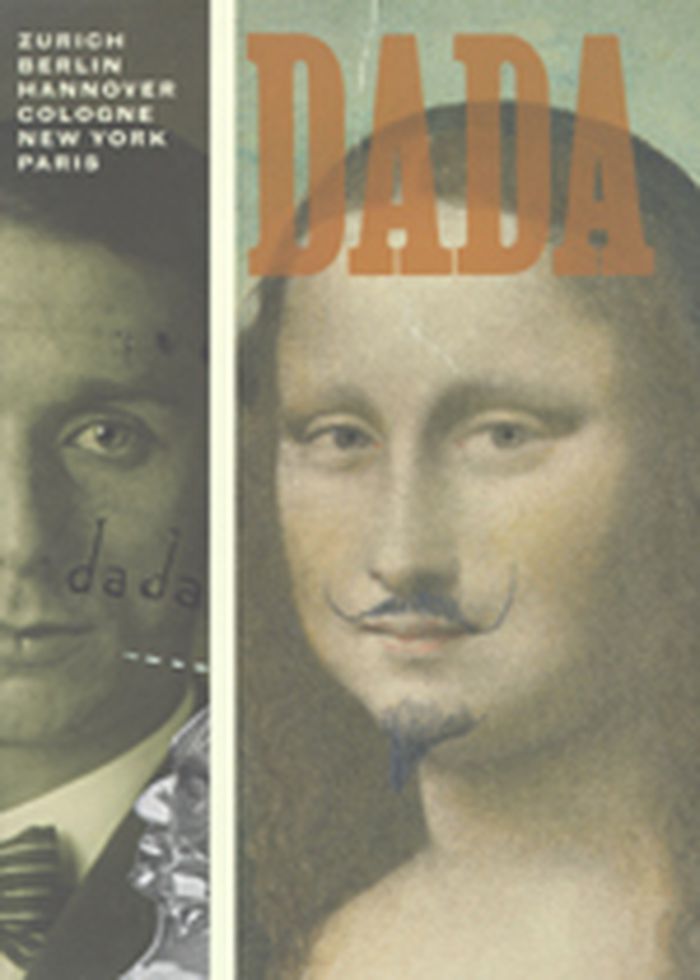
Along with Russian constructivism and surrealism, Dada stands as one of the three most significant movements of the historical avant-garde. Born in the heart of Europe in the midst of World War I, Dada displayed a raucous skepticism about accepted values. Its embrace of new materials, of collage and assemblage techniques, of the designation of manufactured objects as art objects as well as its interest in performance, sound poetry, and manifestos fundamentally shaped the terms of modern art practice and created an abiding legacy for postwar art. Yet, while the word Dada has common currency, few know much about Dada art itself. In contrast to other key avant-garde movements, there has never been a major American exhibition that explores Dada specifically in broad view. Dada--the catalogue to the exhibition on view in 2006 at the National Gallery of Art in Washington and The Museum of Modern Art in New York presents the hybrid forms of Dada art through an examination of city centers where Dada emerged: Zurich, Berlin, Cologne, Hannover, New York, and Paris. Covered here are works by some 40 artists made in the period from circa 1916, when the Cabaret Voltaire was founded in Zurich, to 1926, by which time most of the Dada groups had dispersed or significantly transformed. The city sections bring together painting, sculpture, photography, collage, photomontage, prints and graphic work. Relying on dynamic design and vivid documentary images, Dada takes us through these six cities via topical essays and extensive plate sections; an illustrated chronology of the movement; witty chronicles of events in each city center; a selected bibliography; and biographies of each artist--accompanied by Dada-era photographs.
Dada: Zurich,Berlin, Hannover, Cologne, New York, Paris
Actions:
Price:
$34.00
(available to order)
Summary:
Along with Russian constructivism and surrealism, Dada stands as one of the three most significant movements of the historical avant-garde. Born in the heart of Europe in the midst of World War I, Dada displayed a raucous skepticism about accepted values. Its embrace of new materials, of collage and assemblage techniques, of the designation of manufactured objects as art objects as well as its interest in performance, sound poetry, and manifestos fundamentally shaped the terms of modern art practice and created an abiding legacy for postwar art. Yet, while the word Dada has common currency, few know much about Dada art itself. In contrast to other key avant-garde movements, there has never been a major American exhibition that explores Dada specifically in broad view. Dada--the catalogue to the exhibition on view in 2006 at the National Gallery of Art in Washington and The Museum of Modern Art in New York presents the hybrid forms of Dada art through an examination of city centers where Dada emerged: Zurich, Berlin, Cologne, Hannover, New York, and Paris. Covered here are works by some 40 artists made in the period from circa 1916, when the Cabaret Voltaire was founded in Zurich, to 1926, by which time most of the Dada groups had dispersed or significantly transformed. The city sections bring together painting, sculpture, photography, collage, photomontage, prints and graphic work. Relying on dynamic design and vivid documentary images, Dada takes us through these six cities via topical essays and extensive plate sections; an illustrated chronology of the movement; witty chronicles of events in each city center; a selected bibliography; and biographies of each artist--accompanied by Dada-era photographs.
Form:
books
books
Publication:
March 2008, Washington
March 2008, Washington
Subject:
Contemporary Art Monographs
Contemporary Art Monographs
Form:
books
books
Actions:
Price:
$75.00
(available to order)
Summary:
This large-format monograph is the first to chronicle exclusively Shigeru Ban’s explorations in "paper architecture." Informed by a thorough and early interest in sustainable forms, his innovative practice pioneered the use of paper as a structural element in buildings. This book features permanent and temporary structures, ranging from one-off museums and exhibition(...)
$75.00
(available to order)
Summary:
This large-format monograph is the first to chronicle exclusively Shigeru Ban’s explorations in "paper architecture." Informed by a thorough and early interest in sustainable forms, his innovative practice pioneered the use of paper as a structural element in buildings. This book features permanent and temporary structures, ranging from one-off museums and exhibition(...)
Title:
Shigeru Ban: paper in architecture
Actions:
Price:
$75.00
(available to order)
Summary:
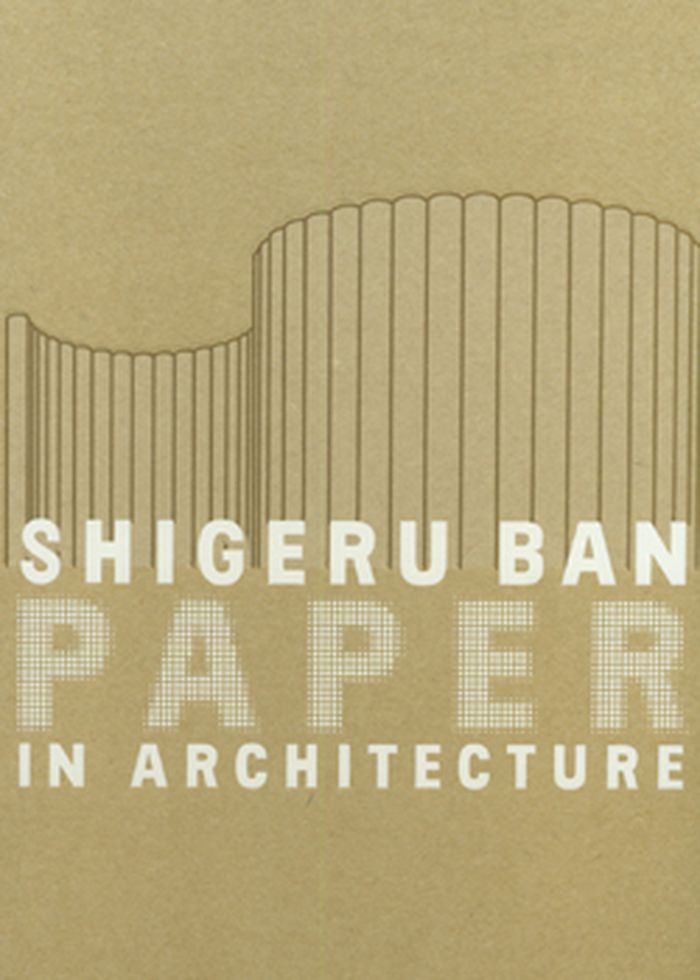
This large-format monograph is the first to chronicle exclusively Shigeru Ban’s explorations in "paper architecture." Informed by a thorough and early interest in sustainable forms, his innovative practice pioneered the use of paper as a structural element in buildings. This book features permanent and temporary structures, ranging from one-off museums and exhibition spaces to emergency structures for communities displaced by natural and man-made catastrophes. The forty projects featured in the book showcase the variety of possible applications for paper and its derivative forms (cardboard, fiber-based composites). As flexible as it is adaptable, when used in tandem with other locally sourced building materials or post-industrial surplus (maritime shipping containers), Ban’s singular use of paper knowingly references paper’s traditional uses in vernacular Japanese buildings, and advances modern construction technology, reducing its environmental impact. A number of prominent works from the last decade are featured, including the Nomadic Museums built in New York, Los Angeles, and Tokyo, his work for the Centre Pompidou in Paris and Metz, the Papertainer Museum in Seoul, his pavilions for design and luxury brands like Louis Vuitton and Artek, as well as a number of landmark residences in Japan, Europe, and North America. Of particular focus will be Ban’s humanitarian work. Documented in a book for the first time are all the relief projects his studio has undertaken in the last two decades for the U.N. High Commission on Refugees. These include housing for tsunami victims in Sri Lanka and earthquake victims in Turkey and Japan, and emergency shelter for war-ravaged communities in Rwanda and the Congo.
Shigeru Ban: paper in architecture
Actions:
Price:
$75.00
(available to order)
Summary:
This large-format monograph is the first to chronicle exclusively Shigeru Ban’s explorations in "paper architecture." Informed by a thorough and early interest in sustainable forms, his innovative practice pioneered the use of paper as a structural element in buildings. This book features permanent and temporary structures, ranging from one-off museums and exhibition spaces to emergency structures for communities displaced by natural and man-made catastrophes. The forty projects featured in the book showcase the variety of possible applications for paper and its derivative forms (cardboard, fiber-based composites). As flexible as it is adaptable, when used in tandem with other locally sourced building materials or post-industrial surplus (maritime shipping containers), Ban’s singular use of paper knowingly references paper’s traditional uses in vernacular Japanese buildings, and advances modern construction technology, reducing its environmental impact. A number of prominent works from the last decade are featured, including the Nomadic Museums built in New York, Los Angeles, and Tokyo, his work for the Centre Pompidou in Paris and Metz, the Papertainer Museum in Seoul, his pavilions for design and luxury brands like Louis Vuitton and Artek, as well as a number of landmark residences in Japan, Europe, and North America. Of particular focus will be Ban’s humanitarian work. Documented in a book for the first time are all the relief projects his studio has undertaken in the last two decades for the U.N. High Commission on Refugees. These include housing for tsunami victims in Sri Lanka and earthquake victims in Turkey and Japan, and emergency shelter for war-ravaged communities in Rwanda and the Congo.
Form:
books
books
Publication:
October 2009
October 2009
Subject:
Architecture Monographs
Architecture Monographs
Form:
books
books
Price:
$72.00
(available to order)
Summary:
"First photographs" is an extraordinary view into the origins of photography. This monograph includes many hitherto unpublished images of landscapes, architectural studies, and portraits from Talbot’s personal archive and selections from his detailed research notebooks made during the 1830s and 1840s and currently housed at Lacock Abbey in England. A gentleman and an(...)
$72.00
(available to order)
Summary:
"First photographs" is an extraordinary view into the origins of photography. This monograph includes many hitherto unpublished images of landscapes, architectural studies, and portraits from Talbot’s personal archive and selections from his detailed research notebooks made during the 1830s and 1840s and currently housed at Lacock Abbey in England. A gentleman and an(...)
Subject:
Photography monographs
Photography monographs
Publication:
October 2002, New York
October 2002, New York
Title:
First photographs : William Henry Fox Talbot and the birth of photography
Actions:
Price:
$72.00
(available to order)
Summary:
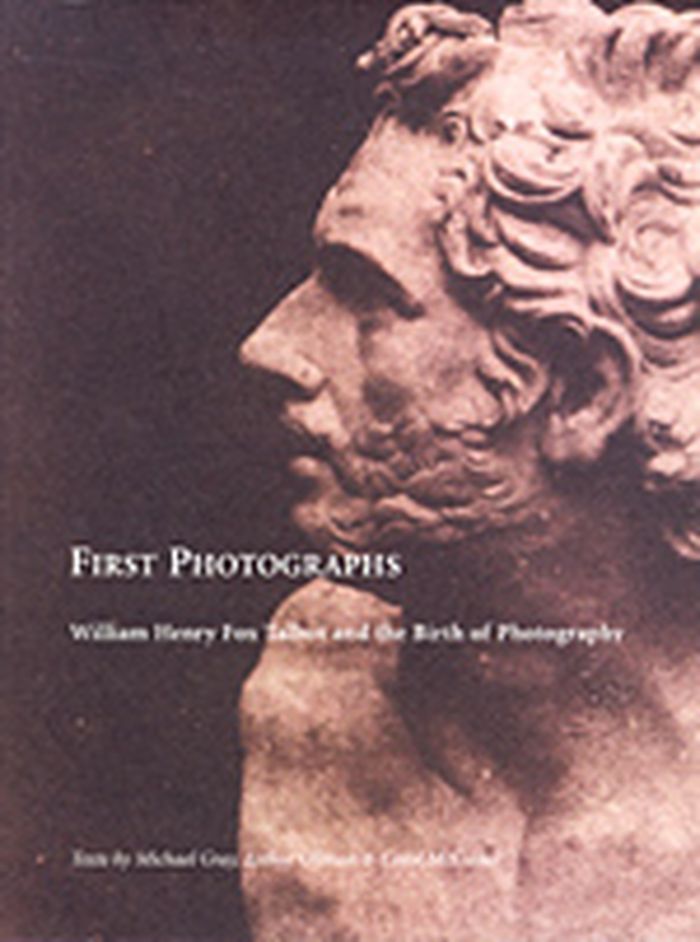
"First photographs" is an extraordinary view into the origins of photography. This monograph includes many hitherto unpublished images of landscapes, architectural studies, and portraits from Talbot’s personal archive and selections from his detailed research notebooks made during the 1830s and 1840s and currently housed at Lacock Abbey in England. A gentleman and an intellectual, Talbot was a great student of the Arts and Sciences and kept detailed notes of his activities and experiments. He discovered the negative/positive paper process which made multiple reproductions of a single image possible, and which distinguished it from its contemporary, the one-of-a-kind daguerreotype. Talbot first announced his invention to the public in 1839 in his paper “An account of the art of photogenic drawing or the process by which natural objects may be made to delineate themselves without the aid of the artist’s pencil”. The work he did during this time established in principle and in practice the foundation of modern photography—the basis of the process that is still used today. In addition to Talbot’s technological contributions, his photographs represent exceptional artistic achievement. "First photographs" includes a significant text by Michael Gray, who provides a comprehensive essay, biography, and timeline of Talbot’s life and revolutionary work. Arthur Ollman, gives an in-depth analysis of the aesthetic and social significance of Talbot’s first image, the “Oriel window.” Curator Carol McCusker considers how the Romantic Movement and the women of the Lacock household influenced Talbot’s aesthetic choices. "First photographs" and the accompanying exhibition provide a rare opportunity for contemporary audiences to experience these uncommon images and the personal, cultural, and scientific contexts in which they were made.
First photographs : William Henry Fox Talbot and the birth of photography
Actions:
Price:
$72.00
(available to order)
Summary:
"First photographs" is an extraordinary view into the origins of photography. This monograph includes many hitherto unpublished images of landscapes, architectural studies, and portraits from Talbot’s personal archive and selections from his detailed research notebooks made during the 1830s and 1840s and currently housed at Lacock Abbey in England. A gentleman and an intellectual, Talbot was a great student of the Arts and Sciences and kept detailed notes of his activities and experiments. He discovered the negative/positive paper process which made multiple reproductions of a single image possible, and which distinguished it from its contemporary, the one-of-a-kind daguerreotype. Talbot first announced his invention to the public in 1839 in his paper “An account of the art of photogenic drawing or the process by which natural objects may be made to delineate themselves without the aid of the artist’s pencil”. The work he did during this time established in principle and in practice the foundation of modern photography—the basis of the process that is still used today. In addition to Talbot’s technological contributions, his photographs represent exceptional artistic achievement. "First photographs" includes a significant text by Michael Gray, who provides a comprehensive essay, biography, and timeline of Talbot’s life and revolutionary work. Arthur Ollman, gives an in-depth analysis of the aesthetic and social significance of Talbot’s first image, the “Oriel window.” Curator Carol McCusker considers how the Romantic Movement and the women of the Lacock household influenced Talbot’s aesthetic choices. "First photographs" and the accompanying exhibition provide a rare opportunity for contemporary audiences to experience these uncommon images and the personal, cultural, and scientific contexts in which they were made.
Form:
books
books
Publication:
October 2002, New York
October 2002, New York
Subject:
Photography monographs
Photography monographs
Form:
books
books
Actions:
Price:
$64.95
(available to order)
Summary:
''Duodji Reader'' is a selection of twelve essays on duodji by Sámi duojárat and writers from the past 60 years. The craft practices of Indigenous peoples from all over the world have been getting increased attention and appreciation globally over the last few decades. It has also become a topic that has occupied its fair share of discourse in academia and in art(...)
$64.95
(available to order)
Summary:
''Duodji Reader'' is a selection of twelve essays on duodji by Sámi duojárat and writers from the past 60 years. The craft practices of Indigenous peoples from all over the world have been getting increased attention and appreciation globally over the last few decades. It has also become a topic that has occupied its fair share of discourse in academia and in art(...)
Title:
Duodji reader: Twelve essays on duodji by Sámi writers
Actions:
Price:
$64.95
(available to order)
Summary:
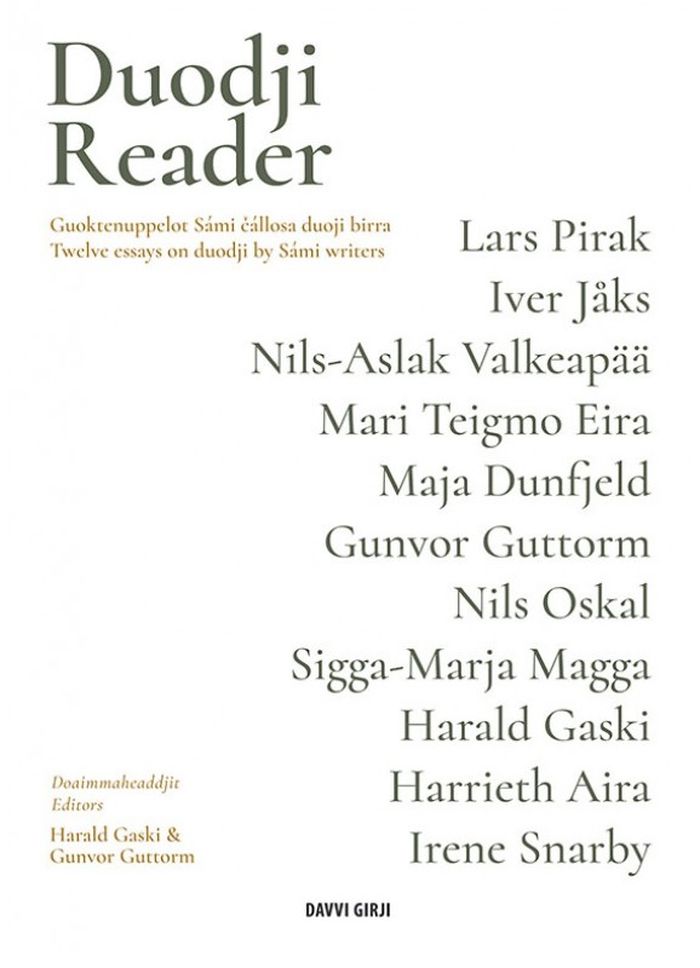
''Duodji Reader'' is a selection of twelve essays on duodji by Sámi duojárat and writers from the past 60 years. The craft practices of Indigenous peoples from all over the world have been getting increased attention and appreciation globally over the last few decades. It has also become a topic that has occupied its fair share of discourse in academia and in art education. As a contribution to this interest in Indigenous art and crafts practices, we offer this book on Sámi duodji. Duodji is the artistic crafts form of the Indigenous people of the European Arctic. Duodji refers not only to the end result, the finished object itself, but also describes the whole process - from the incipient idea to the final product. Duodji demonstrates a holistic circle of creation, how nature and humans collaborate in recognising, visualising, and shaping items that serve the need for both practical use and aesthetic form. ''Duodji reader: Twelve essays on duodji by Sámi writers'' is produced by Sámi Allaskuvla and Norwegian Crafts. The publication is edited by the professors Gunvor Guttorm and Harald Gaski, and contains essays from eleven prominent Sámi scholars, duojárat, and writers from North, South, and Lule Sámi areas. The essays are presented in Lule, South or North Sámi as well as in English. The publication also contains a wide-ranging selection of photographs of duodji by more than thirty contemporary duojárat. The book is well-suited both as background and text material for education in crafts, as well as a resource for the theory and practice of Sámi duodji as an Indigenous art form with long roots in the Arctic North.
Duodji reader: Twelve essays on duodji by Sámi writers
Actions:
Price:
$64.95
(available to order)
Summary:
''Duodji Reader'' is a selection of twelve essays on duodji by Sámi duojárat and writers from the past 60 years. The craft practices of Indigenous peoples from all over the world have been getting increased attention and appreciation globally over the last few decades. It has also become a topic that has occupied its fair share of discourse in academia and in art education. As a contribution to this interest in Indigenous art and crafts practices, we offer this book on Sámi duodji. Duodji is the artistic crafts form of the Indigenous people of the European Arctic. Duodji refers not only to the end result, the finished object itself, but also describes the whole process - from the incipient idea to the final product. Duodji demonstrates a holistic circle of creation, how nature and humans collaborate in recognising, visualising, and shaping items that serve the need for both practical use and aesthetic form. ''Duodji reader: Twelve essays on duodji by Sámi writers'' is produced by Sámi Allaskuvla and Norwegian Crafts. The publication is edited by the professors Gunvor Guttorm and Harald Gaski, and contains essays from eleven prominent Sámi scholars, duojárat, and writers from North, South, and Lule Sámi areas. The essays are presented in Lule, South or North Sámi as well as in English. The publication also contains a wide-ranging selection of photographs of duodji by more than thirty contemporary duojárat. The book is well-suited both as background and text material for education in crafts, as well as a resource for the theory and practice of Sámi duodji as an Indigenous art form with long roots in the Arctic North.
Form:
books
books
Publication:
February 2022
February 2022
Subject:
Art Theory
Art Theory
Form:
books
books
Title:
Building for hope
Building for hope
Actions:
Price:
$39.95
(available to order)
Summary:
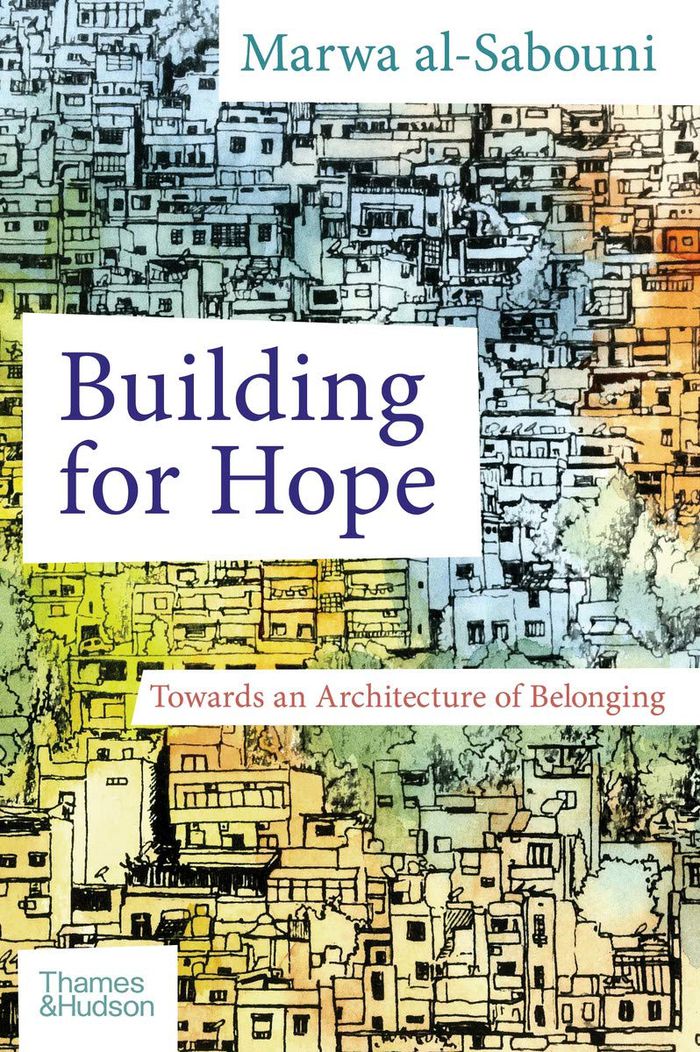
This new book by Syrian architect Marwa al-Sabouni, seeks to understand how cities and buildings- scarred by conflict, blight, and pandemic- can be healed through design and urban mindfulness. When Marwa al-Sabouni published Battle for Home in 2016, she was a little-known architect, living in battle-ravaged Homs, Syria, unable to practice her profession. She turned her(...)
$39.95
(available to order)
Summary:
This new book by Syrian architect Marwa al-Sabouni, seeks to understand how cities and buildings- scarred by conflict, blight, and pandemic- can be healed through design and urban mindfulness. When Marwa al-Sabouni published Battle for Home in 2016, she was a little-known architect, living in battle-ravaged Homs, Syria, unable to practice her profession. She turned her(...)
Title:
Building for hope
Actions:
Price:
$39.95
(available to order)
Summary:
This new book by Syrian architect Marwa al-Sabouni, seeks to understand how cities and buildings- scarred by conflict, blight, and pandemic- can be healed through design and urban mindfulness. When Marwa al-Sabouni published Battle for Home in 2016, she was a little-known architect, living in battle-ravaged Homs, Syria, unable to practice her profession. She turned her fierce intelligence to chronicling how her city and country were undone through decades of architectural mismanagement and mistakes. Once published, Marwa al-Sabouni’s book and story attracted the attention of international media- CNN, The New York Times- and received critical acclaim worldwide. The United Nations called on her for insights and expertise. She became a TED fellow, was invited to speak to audiences around the world, and some suggested she be nominated for architecture’s highest honor, the Pritzker Prize. Al-Sabouni’s deep understanding of Middle Eastern heritage and architecture gives her insight into a wide range of cities, informing her views on how cities work best, how they might fail, and what can be done to harmonize the lives of all their inhabitants. In this new book, al-Sabouni draws together several narratives: her personal and professional observations of some of the world’s most fascinating cities, from Detroit to Helsinki; the lessons that Western societies might learn from Islamic culture and design; and philosophical reflections on how our personal and communal spaces can provide the basic foundations for happiness. Through this tapestry of personal experience, unblinking perspective, and insight, al-Sabouni offers real-world solutions- and hope- for how peace might be created through mindful urban planning.
Building for hope
Actions:
Price:
$39.95
(available to order)
Summary:
This new book by Syrian architect Marwa al-Sabouni, seeks to understand how cities and buildings- scarred by conflict, blight, and pandemic- can be healed through design and urban mindfulness. When Marwa al-Sabouni published Battle for Home in 2016, she was a little-known architect, living in battle-ravaged Homs, Syria, unable to practice her profession. She turned her fierce intelligence to chronicling how her city and country were undone through decades of architectural mismanagement and mistakes. Once published, Marwa al-Sabouni’s book and story attracted the attention of international media- CNN, The New York Times- and received critical acclaim worldwide. The United Nations called on her for insights and expertise. She became a TED fellow, was invited to speak to audiences around the world, and some suggested she be nominated for architecture’s highest honor, the Pritzker Prize. Al-Sabouni’s deep understanding of Middle Eastern heritage and architecture gives her insight into a wide range of cities, informing her views on how cities work best, how they might fail, and what can be done to harmonize the lives of all their inhabitants. In this new book, al-Sabouni draws together several narratives: her personal and professional observations of some of the world’s most fascinating cities, from Detroit to Helsinki; the lessons that Western societies might learn from Islamic culture and design; and philosophical reflections on how our personal and communal spaces can provide the basic foundations for happiness. Through this tapestry of personal experience, unblinking perspective, and insight, al-Sabouni offers real-world solutions- and hope- for how peace might be created through mindful urban planning.
Form:
books
books
Publication:
April 2021
April 2021
Subject:
Architectural Theory
Architectural Theory
Form:
journals and magazines
journals and magazines
Title:
Future anterior
Future anterior
Actions:
Price:
$14.95
(available to order)
Summary:
Historic preservation is at an important moment of rethinking. The field has grown exponentially in America since its first academic program was founded at Columbia University in 1965. Although initially concerned only with buildings, preservation has recently expanded to include the protection and creative interpretation of entire urban environments, landscapes,(...)
$14.95
(available to order)
Summary:
Historic preservation is at an important moment of rethinking. The field has grown exponentially in America since its first academic program was founded at Columbia University in 1965. Although initially concerned only with buildings, preservation has recently expanded to include the protection and creative interpretation of entire urban environments, landscapes,(...)
Title:
Future anterior
Actions:
Price:
$14.95
(available to order)
Summary:
Historic preservation is at an important moment of rethinking. The field has grown exponentially in America since its first academic program was founded at Columbia University in 1965. Although initially concerned only with buildings, preservation has recently expanded to include the protection and creative interpretation of entire urban environments, landscapes, highways, cultural traditions, artistic practices, and even specific “experiences” such as historic view sheds. Most importantly, historic preservation is beginning a significant re-clarification of its purposes, sharpening and deepening its focus on the contributions old architecture and artifacts make to our understanding of the human condition and how we should address and live in it. Future Anterior is the first and only journal in American academia to be devoted to the study and advancement of preservation, which brings together the interests of scholars and professionals in multiple disciplines such as architecture, art, history, philosophy, law, planning, materials science, cultural anthropology, conservation, and others. Future Anterior establishes an important and much needed forum for the critical examination of this expanding discipline, to spur challenges of its motives, goals, forms of practice and results. The appearance of Future Anterior signals the maturation of the field of preservation and a shift away from nostalgic antiquarianism towards an active involvement in the understanding and creative transformation of human environments. This turn in preservation is reflected in an increased interest in historic architecture and artifacts as expressive resources of great public importance. The destruction of patrimony, from the colossal Buddhas in Afghanistan to New York’s World Trade Center, is seen not just as barbarism but as sources of understanding about where we are going wrong and what we need to do next. In response, architects, planners, urban designers, and artists have been producing works which engage the public in new ways of reflecting and taking on the past not as constraint but as provocation.
Future anterior
Actions:
Price:
$14.95
(available to order)
Summary:
Historic preservation is at an important moment of rethinking. The field has grown exponentially in America since its first academic program was founded at Columbia University in 1965. Although initially concerned only with buildings, preservation has recently expanded to include the protection and creative interpretation of entire urban environments, landscapes, highways, cultural traditions, artistic practices, and even specific “experiences” such as historic view sheds. Most importantly, historic preservation is beginning a significant re-clarification of its purposes, sharpening and deepening its focus on the contributions old architecture and artifacts make to our understanding of the human condition and how we should address and live in it. Future Anterior is the first and only journal in American academia to be devoted to the study and advancement of preservation, which brings together the interests of scholars and professionals in multiple disciplines such as architecture, art, history, philosophy, law, planning, materials science, cultural anthropology, conservation, and others. Future Anterior establishes an important and much needed forum for the critical examination of this expanding discipline, to spur challenges of its motives, goals, forms of practice and results. The appearance of Future Anterior signals the maturation of the field of preservation and a shift away from nostalgic antiquarianism towards an active involvement in the understanding and creative transformation of human environments. This turn in preservation is reflected in an increased interest in historic architecture and artifacts as expressive resources of great public importance. The destruction of patrimony, from the colossal Buddhas in Afghanistan to New York’s World Trade Center, is seen not just as barbarism but as sources of understanding about where we are going wrong and what we need to do next. In response, architects, planners, urban designers, and artists have been producing works which engage the public in new ways of reflecting and taking on the past not as constraint but as provocation.
Form:
journals and magazines
journals and magazines
Publication:
October 2004, New York
October 2004, New York
Subject:
Magazines
Magazines
Form:
books
books
Price:
$48.00
(available to order)
Summary:
The forced polarity between form and function in considerations of architecture - opposing art to social interests, ethics to poetic expression - obscures the deep connections between ethical and poetical values in architectural tradition. Architecture has been, and must continue to be, writes Alberto Pérez-Gómez, built upon love. Modernity has rightly rejected past(...)
$48.00
(available to order)
Summary:
The forced polarity between form and function in considerations of architecture - opposing art to social interests, ethics to poetic expression - obscures the deep connections between ethical and poetical values in architectural tradition. Architecture has been, and must continue to be, writes Alberto Pérez-Gómez, built upon love. Modernity has rightly rejected past(...)
Subject:
Architectural Theory
Architectural Theory
Publication:
January 2006, Cambridge, Mass.
January 2006, Cambridge, Mass.
Title:
Built upon love : architectural longing after ethics and aesthetics
Actions:
Price:
$48.00
(available to order)
Summary:
The forced polarity between form and function in considerations of architecture - opposing art to social interests, ethics to poetic expression - obscures the deep connections between ethical and poetical values in architectural tradition. Architecture has been, and must continue to be, writes Alberto Pérez-Gómez, built upon love. Modernity has rightly rejected past architectural excesses, but, Pérez-Gómez argues, the materialistic and technological alternatives it proposes do not answer satisfactorily the complex desire that defines humanity. True architecture is concerned with far more than fashionable form, affordable homes, and sustainable development; it responds to a desire for an eloquent place to dwell- one that lovingly provides a sense of order resonant with our dreams. In "Built upon love" Pérez-Gómez uncovers the relationship between love and architecture in order to find the points of contact between poetics and ethics - between the architect's wish to design a beautiful world and architecture's imperative to provide a better place for society. Eros, as first imagined by the early lyric poets of classical Greece, is the invisible force at the root of our capacity to create and comprehend the poetic image. Pérez-Gómez examines the nature of architectural form in the light of eros, seduction, and the tradition of the poetic image in Western architecture. He charts the ethical dimension of architecture, tracing the connections between philia - the love of friends that entails mutual responsibility among equals - and architectural program. He explores the position of architecture at the limits of language and discusses the analogical language of philia in modernist architectural theory. Finally, he uncovers connections between ethics and poetics, describing a contemporary practice of architecture under the sign of love, incorporating both eros and philia.
Built upon love : architectural longing after ethics and aesthetics
Actions:
Price:
$48.00
(available to order)
Summary:
The forced polarity between form and function in considerations of architecture - opposing art to social interests, ethics to poetic expression - obscures the deep connections between ethical and poetical values in architectural tradition. Architecture has been, and must continue to be, writes Alberto Pérez-Gómez, built upon love. Modernity has rightly rejected past architectural excesses, but, Pérez-Gómez argues, the materialistic and technological alternatives it proposes do not answer satisfactorily the complex desire that defines humanity. True architecture is concerned with far more than fashionable form, affordable homes, and sustainable development; it responds to a desire for an eloquent place to dwell- one that lovingly provides a sense of order resonant with our dreams. In "Built upon love" Pérez-Gómez uncovers the relationship between love and architecture in order to find the points of contact between poetics and ethics - between the architect's wish to design a beautiful world and architecture's imperative to provide a better place for society. Eros, as first imagined by the early lyric poets of classical Greece, is the invisible force at the root of our capacity to create and comprehend the poetic image. Pérez-Gómez examines the nature of architectural form in the light of eros, seduction, and the tradition of the poetic image in Western architecture. He charts the ethical dimension of architecture, tracing the connections between philia - the love of friends that entails mutual responsibility among equals - and architectural program. He explores the position of architecture at the limits of language and discusses the analogical language of philia in modernist architectural theory. Finally, he uncovers connections between ethics and poetics, describing a contemporary practice of architecture under the sign of love, incorporating both eros and philia.
Form:
books
books
Publication:
January 2006, Cambridge, Mass.
January 2006, Cambridge, Mass.
Subject:
Architectural Theory
Architectural Theory
Form:
books
books
Actions:
Price:
$31.25
(available to order)
Summary:
"Sowing Empire" identifies the cultivation and landscaping of colonies as one of the primary ways imperial nations justified their empires. Planting and transplanting, seeding and reshaping - the landscaping practices that emerged in the eighteenth century - are inextricable from the contested terrain of empire within which they operated. From the plantations of the(...)
$31.25
(available to order)
Summary:
"Sowing Empire" identifies the cultivation and landscaping of colonies as one of the primary ways imperial nations justified their empires. Planting and transplanting, seeding and reshaping - the landscaping practices that emerged in the eighteenth century - are inextricable from the contested terrain of empire within which they operated. From the plantations of the(...)
Title:
Sowing empire : landscape and colonization
Actions:
Price:
$31.25
(available to order)
Summary:
"Sowing Empire" identifies the cultivation and landscaping of colonies as one of the primary ways imperial nations justified their empires. Planting and transplanting, seeding and reshaping - the landscaping practices that emerged in the eighteenth century - are inextricable from the contested terrain of empire within which they operated. From the plantations of the “nabobs” to the island gardens of narrative fiction, from William Beckford’s estate at Fonthill to Marie Antoinette’s ornamented farm, "Sowing Empire" considers imperial relandscaping - its patriarchal organization, heterosexual reproduction, and slavery - and how it contributed to the construction of imperial power. At the same time, the book shows how these picturesque landscapes and sugar plantations contained within them the seeds of resistance - how, for instance, slave gardens and the Afro-Caribbean practice of Vodou threatened authority and created new possibilities for once again transforming the landscape. In an ambitious work of wide-ranging literary, visual, and historical allusion, Jill H. Casid examines how landscaping functioned in an imperial mode that defined and remade the “heartlands” of nations as well as the contact zones and colonial peripheries in the West and East Indies. Revealing the colonial landscape as far more than an agricultural system - as a means of regulating national, sexual, and gender identities - Casid also traces how the circulation of plants and hybridity influenced agriculture and landscaping on European soil and how colonial contacts materially shaped what we take as “European.” Utilizing a wide range of both visual and written sources - maps, literature, and travel writing - this book is interdisciplinary in its methodology and in its scope. Sowing Empire explores how postcolonial and queer studies can alter art history and visual studies and, in turn, what close attention to the visual may offer to both postcolonial theorizing and historically and materially based colonial cultural studies.
Sowing empire : landscape and colonization
Actions:
Price:
$31.25
(available to order)
Summary:
"Sowing Empire" identifies the cultivation and landscaping of colonies as one of the primary ways imperial nations justified their empires. Planting and transplanting, seeding and reshaping - the landscaping practices that emerged in the eighteenth century - are inextricable from the contested terrain of empire within which they operated. From the plantations of the “nabobs” to the island gardens of narrative fiction, from William Beckford’s estate at Fonthill to Marie Antoinette’s ornamented farm, "Sowing Empire" considers imperial relandscaping - its patriarchal organization, heterosexual reproduction, and slavery - and how it contributed to the construction of imperial power. At the same time, the book shows how these picturesque landscapes and sugar plantations contained within them the seeds of resistance - how, for instance, slave gardens and the Afro-Caribbean practice of Vodou threatened authority and created new possibilities for once again transforming the landscape. In an ambitious work of wide-ranging literary, visual, and historical allusion, Jill H. Casid examines how landscaping functioned in an imperial mode that defined and remade the “heartlands” of nations as well as the contact zones and colonial peripheries in the West and East Indies. Revealing the colonial landscape as far more than an agricultural system - as a means of regulating national, sexual, and gender identities - Casid also traces how the circulation of plants and hybridity influenced agriculture and landscaping on European soil and how colonial contacts materially shaped what we take as “European.” Utilizing a wide range of both visual and written sources - maps, literature, and travel writing - this book is interdisciplinary in its methodology and in its scope. Sowing Empire explores how postcolonial and queer studies can alter art history and visual studies and, in turn, what close attention to the visual may offer to both postcolonial theorizing and historically and materially based colonial cultural studies.
Form:
books
books
Publication:
January 2005, Minneapolis
January 2005, Minneapolis
Subject:
Landscape Theory
Landscape Theory
Form:
books
books
Title:
The education of the architect : historiography, urbanism, and the growth of architectural knowledge
The education of the architect : historiography, urbanism, and the growth of architectural knowledge
Actions:
Price:
$61.95
(available to order)
Summary:
The authors of these eighteen essays have all been deeply influenced by the philosophy of architecture developed by Stanford Anderson, through his writings and through the teaching programme of the Department of History, Theory, and Criticism of (...)
$61.95
(available to order)
Summary:
The authors of these eighteen essays have all been deeply influenced by the philosophy of architecture developed by Stanford Anderson, through his writings and through the teaching programme of the Department of History, Theory, and Criticism of (...)
Title:
The education of the architect : historiography, urbanism, and the growth of architectural knowledge
Actions:
Price:
$61.95
(available to order)
Summary:
The authors of these eighteen essays have all been deeply influenced by the philosophy of architecture developed by Stanford Anderson, through his writings and through the teaching programme of the Department of History, Theory, and Criticism of Architecture, which he and Henry Millon founded at MIT over twenty years ago. This "school" of architectural thought views architecture as a world of inquiry and as a discipline anchored in the epistemological bases of contemporary philosophy, especially the philosophy of science. Clear thematic concerns bind the essays together. The essays of the first section, "American Debates," share a deep preoccupation with modernism, its national ideologies, and regional responses in the American context. The contributors to the second section, "European Responses," examine European responses to these American debates. In the third section, "Historiographic Constructs," contributors comment on the writing, interpretation, and uses of architectural history. Contributors to the fourth section, "Urbanisms," grapple with the knotty interdependence of politics and the built environment. In the last section, "Teaching Architecture," four distinguished educators consider the most difficult aspect of the discipline, its pedagogical mandate. Whether historians or architects (and several have trained in both areas), the essayists all share the belief that contemporary concerns about architecture affect the way history is constructed. Because they view architecture as a body of knowledge evolving over time, they have resisted the wholesale espousal or rejection of modernism that has often polarized the examination and practice of architecture in the second half of this century. Contributors: Lawrence Anderson, Hilary Ballon, Micha Bandini, Sibel Bozdogan, Maristella Casciato, Charles Correa, Gail Fenske, Diane Ghirardo, John Habraken, Mark Jarzombek, Royston Landau, Ákos Moravánszky, Carlo Olmo, Nasser Rabbat, Mitchell Schwarzer, Joseph Siry, Nancy Stieber, Danilo Udovicki-Selb.
The education of the architect : historiography, urbanism, and the growth of architectural knowledge
Actions:
Price:
$61.95
(available to order)
Summary:
The authors of these eighteen essays have all been deeply influenced by the philosophy of architecture developed by Stanford Anderson, through his writings and through the teaching programme of the Department of History, Theory, and Criticism of Architecture, which he and Henry Millon founded at MIT over twenty years ago. This "school" of architectural thought views architecture as a world of inquiry and as a discipline anchored in the epistemological bases of contemporary philosophy, especially the philosophy of science. Clear thematic concerns bind the essays together. The essays of the first section, "American Debates," share a deep preoccupation with modernism, its national ideologies, and regional responses in the American context. The contributors to the second section, "European Responses," examine European responses to these American debates. In the third section, "Historiographic Constructs," contributors comment on the writing, interpretation, and uses of architectural history. Contributors to the fourth section, "Urbanisms," grapple with the knotty interdependence of politics and the built environment. In the last section, "Teaching Architecture," four distinguished educators consider the most difficult aspect of the discipline, its pedagogical mandate. Whether historians or architects (and several have trained in both areas), the essayists all share the belief that contemporary concerns about architecture affect the way history is constructed. Because they view architecture as a body of knowledge evolving over time, they have resisted the wholesale espousal or rejection of modernism that has often polarized the examination and practice of architecture in the second half of this century. Contributors: Lawrence Anderson, Hilary Ballon, Micha Bandini, Sibel Bozdogan, Maristella Casciato, Charles Correa, Gail Fenske, Diane Ghirardo, John Habraken, Mark Jarzombek, Royston Landau, Ákos Moravánszky, Carlo Olmo, Nasser Rabbat, Mitchell Schwarzer, Joseph Siry, Nancy Stieber, Danilo Udovicki-Selb.
Form:
books
books
Publication:
June 1997, Cambridge, Mass.
June 1997, Cambridge, Mass.
Subject:
Architectural Theory
Architectural Theory


