


12365 Results
Form:
books
books

Actions:
Price:
$36.95
(available to order)
Summary:
What does it mean to say that Native peoples exist in the present? In ''Beyond settler time'' Mark Rifkin investigates the dangers of seeking to include Indigenous peoples within settler temporal frameworks. Claims that Native peoples should be recognized as coeval with Euro-Americans, Rifkin argues, implicitly treat dominant non-native ideologies and institutions as the(...)
$36.95
(available to order)
Summary:
What does it mean to say that Native peoples exist in the present? In ''Beyond settler time'' Mark Rifkin investigates the dangers of seeking to include Indigenous peoples within settler temporal frameworks. Claims that Native peoples should be recognized as coeval with Euro-Americans, Rifkin argues, implicitly treat dominant non-native ideologies and institutions as the(...)
Title:
Beyond settler time: temporal sovereignty and indigenous self-determination
Actions:
Price:
$36.95
(available to order)
Summary:
What does it mean to say that Native peoples exist in the present? In ''Beyond settler time'' Mark Rifkin investigates the dangers of seeking to include Indigenous peoples within settler temporal frameworks. Claims that Native peoples should be recognized as coeval with Euro-Americans, Rifkin argues, implicitly treat dominant non-native ideologies and institutions as the basis for defining time itself. How, though, can Native peoples be understood as dynamic and changing while also not assuming that they belong to a present inherently shared with non-natives? Drawing on physics, phenomenology, queer studies, and postcolonial theory, Rifkin develops the concept of "settler time" to address how Native peoples are both consigned to the past and inserted into the present in ways that normalize non-native histories, geographies, and expectations. Through analysis of various kinds of texts, including government documents, film, fiction, and autobiography, he explores how Native experiences of time exceed and defy such settler impositions. In underscoring the existence of multiple temporalities, Rifkin illustrates how time plays a crucial role in Indigenous peoples' expressions of sovereignty and struggles for self-determination.
Beyond settler time: temporal sovereignty and indigenous self-determination
Actions:
Price:
$36.95
(available to order)
Summary:
What does it mean to say that Native peoples exist in the present? In ''Beyond settler time'' Mark Rifkin investigates the dangers of seeking to include Indigenous peoples within settler temporal frameworks. Claims that Native peoples should be recognized as coeval with Euro-Americans, Rifkin argues, implicitly treat dominant non-native ideologies and institutions as the basis for defining time itself. How, though, can Native peoples be understood as dynamic and changing while also not assuming that they belong to a present inherently shared with non-natives? Drawing on physics, phenomenology, queer studies, and postcolonial theory, Rifkin develops the concept of "settler time" to address how Native peoples are both consigned to the past and inserted into the present in ways that normalize non-native histories, geographies, and expectations. Through analysis of various kinds of texts, including government documents, film, fiction, and autobiography, he explores how Native experiences of time exceed and defy such settler impositions. In underscoring the existence of multiple temporalities, Rifkin illustrates how time plays a crucial role in Indigenous peoples' expressions of sovereignty and struggles for self-determination.
Form:
books
books
Publication:
February 2017
February 2017
Form:
books
books
Title:
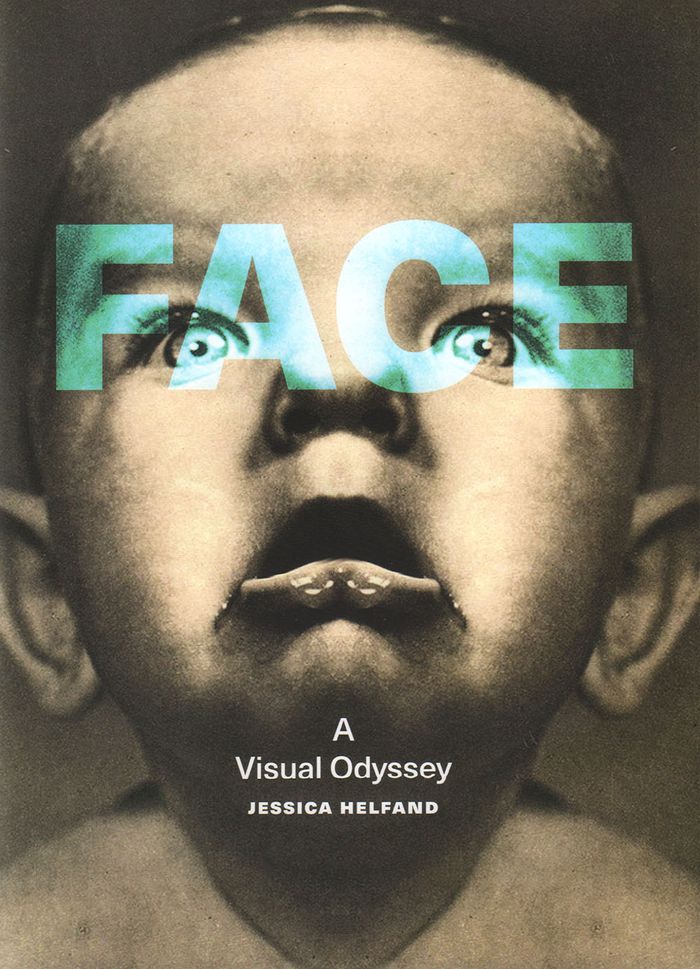
Face: a visual odyssey
Face: a visual odyssey
Actions:
Price:
$56.95
(available to order)
Summary:
By turns alarming and awe-inspiring, ''Face'' offers up an elaborately illustrated A to Z- from the didactic anthropometry of the late-nineteenth century to the selfie-obsessed zeitgeist of the twenty-first. Jessica Helfand looks at the cultural significance of the face through a critical lens, both as social currency and as palimpsest of history. Investigating everything(...)
$56.95
(available to order)
Summary:
By turns alarming and awe-inspiring, ''Face'' offers up an elaborately illustrated A to Z- from the didactic anthropometry of the late-nineteenth century to the selfie-obsessed zeitgeist of the twenty-first. Jessica Helfand looks at the cultural significance of the face through a critical lens, both as social currency and as palimpsest of history. Investigating everything(...)
Title:
Face: a visual odyssey
Actions:
Price:
$56.95
(available to order)
Summary:
By turns alarming and awe-inspiring, ''Face'' offers up an elaborately illustrated A to Z- from the didactic anthropometry of the late-nineteenth century to the selfie-obsessed zeitgeist of the twenty-first. Jessica Helfand looks at the cultural significance of the face through a critical lens, both as social currency and as palimpsest of history. Investigating everything from historical mugshots to Instagram posts, she examines how the face has been perceived and represented over time; how it has been instrumentalized by others; and how we have reclaimed it for our own purposes. From vintage advertisements for a “nose adjuster” to contemporary artists who reconsider the visual construction of race, ''Face'' delivers an intimate yet kaleidoscopic adventure while posing universal questions about identity.
Face: a visual odyssey
Actions:
Price:
$56.95
(available to order)
Summary:
By turns alarming and awe-inspiring, ''Face'' offers up an elaborately illustrated A to Z- from the didactic anthropometry of the late-nineteenth century to the selfie-obsessed zeitgeist of the twenty-first. Jessica Helfand looks at the cultural significance of the face through a critical lens, both as social currency and as palimpsest of history. Investigating everything from historical mugshots to Instagram posts, she examines how the face has been perceived and represented over time; how it has been instrumentalized by others; and how we have reclaimed it for our own purposes. From vintage advertisements for a “nose adjuster” to contemporary artists who reconsider the visual construction of race, ''Face'' delivers an intimate yet kaleidoscopic adventure while posing universal questions about identity.
Form:
books
books
Publication:
November 2019
November 2019
Subject:
Critical Theory
Critical Theory
Form:
books
books
Actions:
Price:
$47.00
(available to order)
Summary:
In The Second Self, Sherry Turkle looks at the computer not as a "tool," but as part of our social and psychological lives; she looks beyond how we use computer games and spreadsheets to explore how the computer affects our awareness of ourselves, of one another, and of our relationship with the world. "Technology," she writes, "catalyzes changes not only in what we do(...)
$47.00
(available to order)
Summary:
In The Second Self, Sherry Turkle looks at the computer not as a "tool," but as part of our social and psychological lives; she looks beyond how we use computer games and spreadsheets to explore how the computer affects our awareness of ourselves, of one another, and of our relationship with the world. "Technology," she writes, "catalyzes changes not only in what we do(...)
Publication:
January 2005
January 2005
Title:
The second self: computers and the human spirit
Actions:
Price:
$47.00
(available to order)
Summary:
In The Second Self, Sherry Turkle looks at the computer not as a "tool," but as part of our social and psychological lives; she looks beyond how we use computer games and spreadsheets to explore how the computer affects our awareness of ourselves, of one another, and of our relationship with the world. "Technology," she writes, "catalyzes changes not only in what we do but in how we think." First published in 1984, The Second Self is still essential reading as a primer in the psychology of computation. This twentieth anniversary edition allows us to reconsider two decades of computer culture--to (re)experience what was and is most novel in our new media culture and to view our own contemporary relationship with technology with fresh eyes.
The second self: computers and the human spirit
Actions:
Price:
$47.00
(available to order)
Summary:
In The Second Self, Sherry Turkle looks at the computer not as a "tool," but as part of our social and psychological lives; she looks beyond how we use computer games and spreadsheets to explore how the computer affects our awareness of ourselves, of one another, and of our relationship with the world. "Technology," she writes, "catalyzes changes not only in what we do but in how we think." First published in 1984, The Second Self is still essential reading as a primer in the psychology of computation. This twentieth anniversary edition allows us to reconsider two decades of computer culture--to (re)experience what was and is most novel in our new media culture and to view our own contemporary relationship with technology with fresh eyes.
Form:
books
books
Publication:
January 2005
January 2005
Form:
books
books

Actions:
Price:
$39.95
(available to order)
Summary:
Have you ever thought about how much rubbish you throw away? How every vegetable you buy at the supermarket seems to be wrapped in twice its weight in packaging? Have you ever thought about how that packaging is produced, or what happens to it once you throw it in the bin? "Recycle" is a comprehensive resource that asks all these questions and provides accessible,(...)
$39.95
(available to order)
Summary:
Have you ever thought about how much rubbish you throw away? How every vegetable you buy at the supermarket seems to be wrapped in twice its weight in packaging? Have you ever thought about how that packaging is produced, or what happens to it once you throw it in the bin? "Recycle" is a comprehensive resource that asks all these questions and provides accessible,(...)
Subject:
Green Architecture
Green Architecture
Publication:
November 2005, London
November 2005, London
Title:
Recycle : the essential guide
Actions:
Price:
$39.95
(available to order)
Summary:
Have you ever thought about how much rubbish you throw away? How every vegetable you buy at the supermarket seems to be wrapped in twice its weight in packaging? Have you ever thought about how that packaging is produced, or what happens to it once you throw it in the bin? "Recycle" is a comprehensive resource that asks all these questions and provides accessible, practical answers on what each individual can do to close the loop. With detailed coverage on the hows, whats and wheres of recycling, it supplies clear explanations of the recycling process and looks at interesting approaches to recycling in countries all over the world. An extensive international directory points readers on to organisations and institutions that can help take further steps towards waste reduction. With an introduction by Lucy Siegle.
Recycle : the essential guide
Actions:
Price:
$39.95
(available to order)
Summary:
Have you ever thought about how much rubbish you throw away? How every vegetable you buy at the supermarket seems to be wrapped in twice its weight in packaging? Have you ever thought about how that packaging is produced, or what happens to it once you throw it in the bin? "Recycle" is a comprehensive resource that asks all these questions and provides accessible, practical answers on what each individual can do to close the loop. With detailed coverage on the hows, whats and wheres of recycling, it supplies clear explanations of the recycling process and looks at interesting approaches to recycling in countries all over the world. An extensive international directory points readers on to organisations and institutions that can help take further steps towards waste reduction. With an introduction by Lucy Siegle.
Form:
books
books
Publication:
November 2005, London
November 2005, London
Subject:
Green Architecture
Green Architecture
Form:
books
books
Title:
Metropolis: reflection
Metropolis: reflection
Actions:
Price:
$59.00
(available to order)
Summary:
There's no getting around it anymore. We are in an age of globalization, and cities around the world are being challenged in brand new ways with no historical precedents to guide them. The highly anticipated international building exhibition IBA Hamburg 2013 is preparing to tackle the many challenges that apply to metropolises around the world in our era, asking difficult(...)
$59.00
(available to order)
Summary:
There's no getting around it anymore. We are in an age of globalization, and cities around the world are being challenged in brand new ways with no historical precedents to guide them. The highly anticipated international building exhibition IBA Hamburg 2013 is preparing to tackle the many challenges that apply to metropolises around the world in our era, asking difficult(...)
Title:
Metropolis: reflection
Actions:
Price:
$59.00
(available to order)
Summary:
There's no getting around it anymore. We are in an age of globalization, and cities around the world are being challenged in brand new ways with no historical precedents to guide them. The highly anticipated international building exhibition IBA Hamburg 2013 is preparing to tackle the many challenges that apply to metropolises around the world in our era, asking difficult questions and soliciting innovative responses. Socially and geographically, how can we bring peripheral districts back into the city? How can we tap the full potential of international urban society? How can we cope with the requirements of climate change? This first installment of a ten-volume series leading up to the 2013 conference features retrospective documentation of former German building exhibitions, an outlook to the IBA Hamburg and complex considerations of the metropolis phenomenon.
Metropolis: reflection
Actions:
Price:
$59.00
(available to order)
Summary:
There's no getting around it anymore. We are in an age of globalization, and cities around the world are being challenged in brand new ways with no historical precedents to guide them. The highly anticipated international building exhibition IBA Hamburg 2013 is preparing to tackle the many challenges that apply to metropolises around the world in our era, asking difficult questions and soliciting innovative responses. Socially and geographically, how can we bring peripheral districts back into the city? How can we tap the full potential of international urban society? How can we cope with the requirements of climate change? This first installment of a ten-volume series leading up to the 2013 conference features retrospective documentation of former German building exhibitions, an outlook to the IBA Hamburg and complex considerations of the metropolis phenomenon.
Form:
books
books
Publication:
March 2008, Hambourg
March 2008, Hambourg
Subject:
Urban Theory
Urban Theory
Form:
books
books
Actions:
Price:
$60.00
(available to order)
Summary:
A building's façade sets the aesthetic tone for its entire design while serving a variety of functions, from regulating light and protecting against the elements to providing insulation for temperature and sound. This book details hundreds of examples of interesting and progressive façades from around the world. Presented in double-page spreads, each façade is(...)
$60.00
(available to order)
Summary:
A building's façade sets the aesthetic tone for its entire design while serving a variety of functions, from regulating light and protecting against the elements to providing insulation for temperature and sound. This book details hundreds of examples of interesting and progressive façades from around the world. Presented in double-page spreads, each façade is(...)
Title:
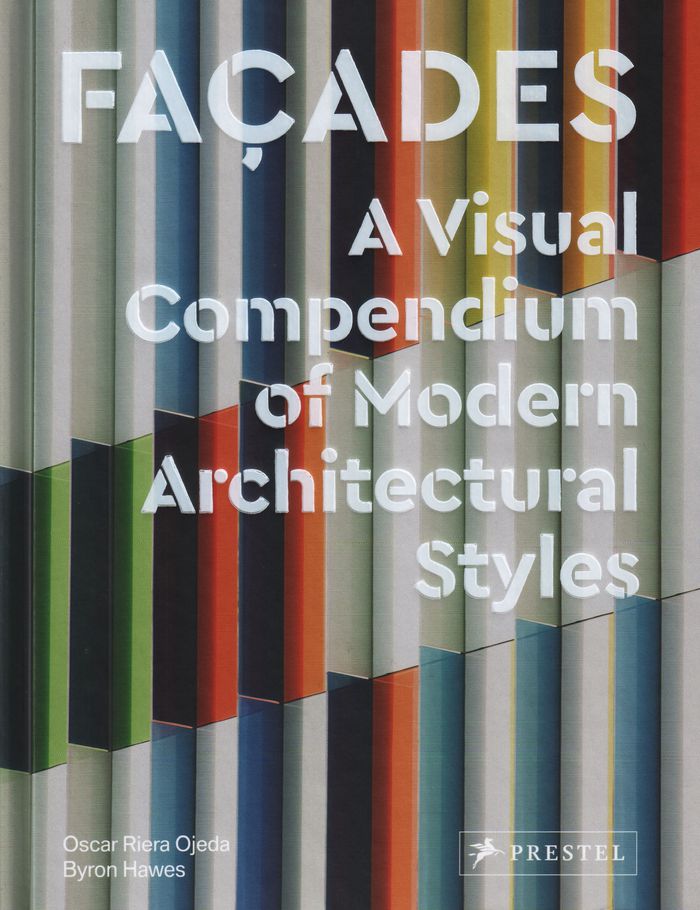
Façades: a visual compendium of modern architectural styles
Actions:
Price:
$60.00
(available to order)
Summary:
A building's façade sets the aesthetic tone for its entire design while serving a variety of functions, from regulating light and protecting against the elements to providing insulation for temperature and sound. This book details hundreds of examples of interesting and progressive façades from around the world. Presented in double-page spreads, each façade is photographed from different angles and includes texts that describe their significance. Readers can learn how traditional mashrabiyas in Abu Dhabi are being engineered to respond to light and to regulate heat, how a hospital in Mexico City has been constructed with "smog-eating" tiles, and how a "bio-adaptive" façade in Germany uses algae to generate energy and provide shade. Informative and accessible, this compendium is a highly useful resource for architects, engineers, and designers.
Façades: a visual compendium of modern architectural styles
Actions:
Price:
$60.00
(available to order)
Summary:
A building's façade sets the aesthetic tone for its entire design while serving a variety of functions, from regulating light and protecting against the elements to providing insulation for temperature and sound. This book details hundreds of examples of interesting and progressive façades from around the world. Presented in double-page spreads, each façade is photographed from different angles and includes texts that describe their significance. Readers can learn how traditional mashrabiyas in Abu Dhabi are being engineered to respond to light and to regulate heat, how a hospital in Mexico City has been constructed with "smog-eating" tiles, and how a "bio-adaptive" façade in Germany uses algae to generate energy and provide shade. Informative and accessible, this compendium is a highly useful resource for architects, engineers, and designers.
Form:
books
books
Publication:
November 2019
November 2019
Subject:
Materials and Lighting
Materials and Lighting
Form:
books
books

Price:
$69.95
(available to order)
Summary:
Wood was essential to the survival of the Venetian Republic. To build its great naval and merchant ships, maintain its extensive levee system, construct buildings, fuel industries, and heat homes, Venice needed access to large quantities of oak and beech timber. A Forest on the Sea explores the history of this enterprise and Venice's efforts to extend state control over(...)
$69.95
(available to order)
Summary:
Wood was essential to the survival of the Venetian Republic. To build its great naval and merchant ships, maintain its extensive levee system, construct buildings, fuel industries, and heat homes, Venice needed access to large quantities of oak and beech timber. A Forest on the Sea explores the history of this enterprise and Venice's efforts to extend state control over(...)
Title:
A forest on the sea: environmental expertise in Renaissance Venice
Actions:
Price:
$69.95
(available to order)
Summary:
Wood was essential to the survival of the Venetian Republic. To build its great naval and merchant ships, maintain its extensive levee system, construct buildings, fuel industries, and heat homes, Venice needed access to large quantities of oak and beech timber. A Forest on the Sea explores the history of this enterprise and Venice's efforts to extend state control over its natural resources. Karl Appuhn explains how Venice went from an isolated city completely dependent on foreign suppliers for wood to a regional state with a sophisticated system of administering and preserving forests. This publication offers a completely novel perspective on how Renaissance Europeans thought about the natural world. It sheds new light on how cultural conceptions about nature influenced political policies for resource conservation and land management in Venice.
A forest on the sea: environmental expertise in Renaissance Venice
Actions:
Price:
$69.95
(available to order)
Summary:
Wood was essential to the survival of the Venetian Republic. To build its great naval and merchant ships, maintain its extensive levee system, construct buildings, fuel industries, and heat homes, Venice needed access to large quantities of oak and beech timber. A Forest on the Sea explores the history of this enterprise and Venice's efforts to extend state control over its natural resources. Karl Appuhn explains how Venice went from an isolated city completely dependent on foreign suppliers for wood to a regional state with a sophisticated system of administering and preserving forests. This publication offers a completely novel perspective on how Renaissance Europeans thought about the natural world. It sheds new light on how cultural conceptions about nature influenced political policies for resource conservation and land management in Venice.
Form:
books
books
Publication:
October 2009
October 2009
Subject:
Landscape Theory
Landscape Theory
Form:
books
books
Actions:
Price:
$54.00
(available in store)
Summary:
The term 'style' has fallen spectacularly out of fashion in architectural circles. Once a conceptual key to understanding architecture’s inner workings, today style seems to be associated with superficiality, formalism, and obsolete periodization. But how did style—once defined by German sociologist Georg Simmel as a place where one is 'no longer alone'—in architecture(...)
$54.00
(available in store)
Summary:
The term 'style' has fallen spectacularly out of fashion in architectural circles. Once a conceptual key to understanding architecture’s inner workings, today style seems to be associated with superficiality, formalism, and obsolete periodization. But how did style—once defined by German sociologist Georg Simmel as a place where one is 'no longer alone'—in architecture(...)
Title:
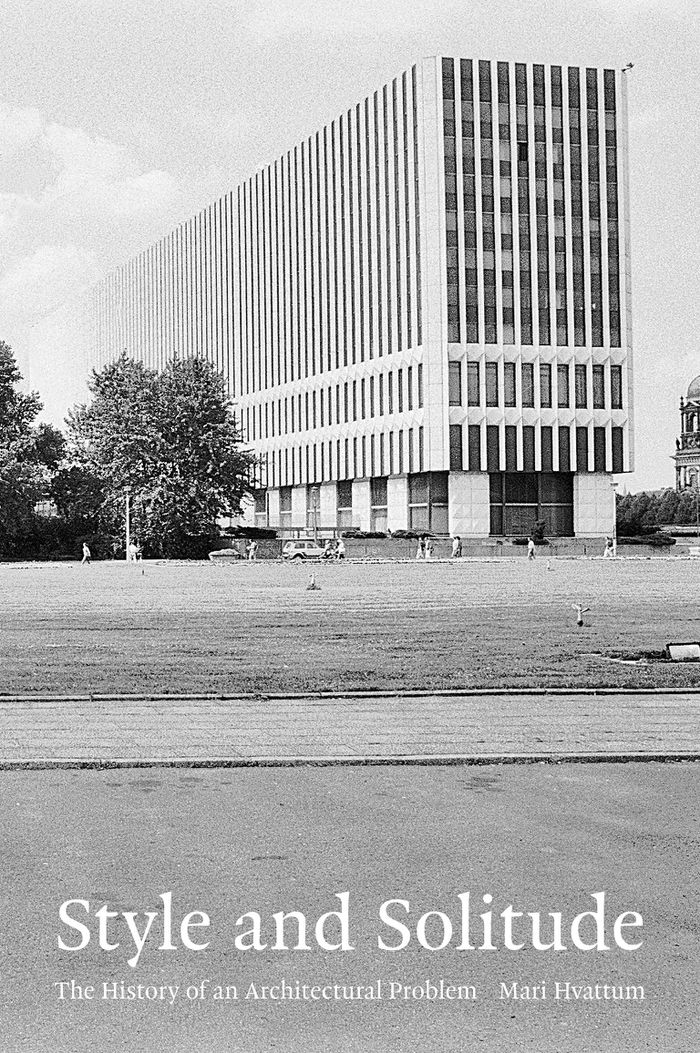
Style and solitude: The history of an architectural problem
Actions:
Price:
$54.00
(available in store)
Summary:
The term 'style' has fallen spectacularly out of fashion in architectural circles. Once a conceptual key to understanding architecture’s inner workings, today style seems to be associated with superficiality, formalism, and obsolete periodization. But how did style—once defined by German sociologist Georg Simmel as a place where one is 'no longer alone'—in architecture actually work? How was it used and what did it mean? In ''Style and solitude,'' Mari Hvattum seeks to understand the apparent death of style, returning to its birthplace in the late eighteenth century, and charting how it grew to influence modern architectural discourse and practice. As Hvattum explains, German thinkers of the eighteenth and nineteenth century offered competing ideas of what style was and how it should be applied in architecture. From Karl Friedrich Schinkel’s thoughtful eclecticism to King Maximilian II’s attempt to capture the zeitgeist in an architectural competition, style was at the center of fascinating experiments and furious disputes. Starting with Johann Joachim Winckelmann’s invention of the period style and ending a century later with Gottfried Semper’s generative theory of style, Hvattum explores critical debates that are still ongoing today.
Style and solitude: The history of an architectural problem
Actions:
Price:
$54.00
(available in store)
Summary:
The term 'style' has fallen spectacularly out of fashion in architectural circles. Once a conceptual key to understanding architecture’s inner workings, today style seems to be associated with superficiality, formalism, and obsolete periodization. But how did style—once defined by German sociologist Georg Simmel as a place where one is 'no longer alone'—in architecture actually work? How was it used and what did it mean? In ''Style and solitude,'' Mari Hvattum seeks to understand the apparent death of style, returning to its birthplace in the late eighteenth century, and charting how it grew to influence modern architectural discourse and practice. As Hvattum explains, German thinkers of the eighteenth and nineteenth century offered competing ideas of what style was and how it should be applied in architecture. From Karl Friedrich Schinkel’s thoughtful eclecticism to King Maximilian II’s attempt to capture the zeitgeist in an architectural competition, style was at the center of fascinating experiments and furious disputes. Starting with Johann Joachim Winckelmann’s invention of the period style and ending a century later with Gottfried Semper’s generative theory of style, Hvattum explores critical debates that are still ongoing today.
Form:
books
books
Publication:
June 2023
June 2023
Subject:
Architectural Theory
Architectural Theory
Form:
books
books
Actions:
Price:
$43.95
(available to order)
Summary:
The events that took place on September 11, 2001, in New York City are the background for a series of essays exploring the response of different cities at different times to natural or man-made disaster. How have cities coped with cataclysmic change in the urban fabric both physically and psychologically? How have they memorialized what they have lost, and how have they(...)
$43.95
(available to order)
Summary:
The events that took place on September 11, 2001, in New York City are the background for a series of essays exploring the response of different cities at different times to natural or man-made disaster. How have cities coped with cataclysmic change in the urban fabric both physically and psychologically? How have they memorialized what they have lost, and how have they(...)
Title:
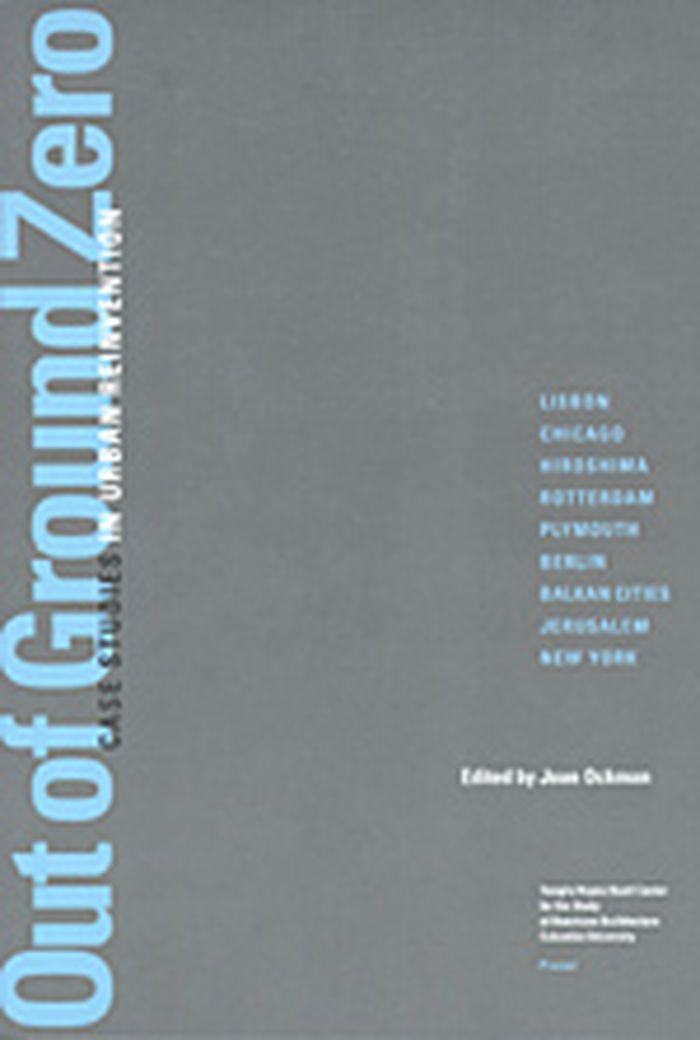
Out of ground zero : case studies in urban renewal
Actions:
Price:
$43.95
(available to order)
Summary:
The events that took place on September 11, 2001, in New York City are the background for a series of essays exploring the response of different cities at different times to natural or man-made disaster. How have cities coped with cataclysmic change in the urban fabric both physically and psychologically? How have they memorialized what they have lost, and how have they imagined their future? What have been the effects, in both the short and long term, of these efforts to rebuild the city? From the devastating earthquake that shook Lisbon in 1755 to the Great Chicago fire in 1871; from the bombing of Hiroshima to the destruction of Rotterdam and Plymouth during the second World War; from the cities and towns ravaged by the Bosnian War to the symbolism of the Dome of the Rock in Jerusalem - this book offers varying perspectives on how cities have responded to catastrophic disasters. Following these case studies is a history of destruction and rebuilding in Manhattan, and a reflection on the role of cities in sustaining democratic culture concludes the book. Contributors to this volume include leading urban theorists, architectural historians, cultural critics, architects, and a film-maker.
Out of ground zero : case studies in urban renewal
Actions:
Price:
$43.95
(available to order)
Summary:
The events that took place on September 11, 2001, in New York City are the background for a series of essays exploring the response of different cities at different times to natural or man-made disaster. How have cities coped with cataclysmic change in the urban fabric both physically and psychologically? How have they memorialized what they have lost, and how have they imagined their future? What have been the effects, in both the short and long term, of these efforts to rebuild the city? From the devastating earthquake that shook Lisbon in 1755 to the Great Chicago fire in 1871; from the bombing of Hiroshima to the destruction of Rotterdam and Plymouth during the second World War; from the cities and towns ravaged by the Bosnian War to the symbolism of the Dome of the Rock in Jerusalem - this book offers varying perspectives on how cities have responded to catastrophic disasters. Following these case studies is a history of destruction and rebuilding in Manhattan, and a reflection on the role of cities in sustaining democratic culture concludes the book. Contributors to this volume include leading urban theorists, architectural historians, cultural critics, architects, and a film-maker.
Form:
books
books
Publication:
October 2002, New York / Munich
October 2002, New York / Munich
Subject:
Urban Theory
Urban Theory
Form:
books
books
Title:
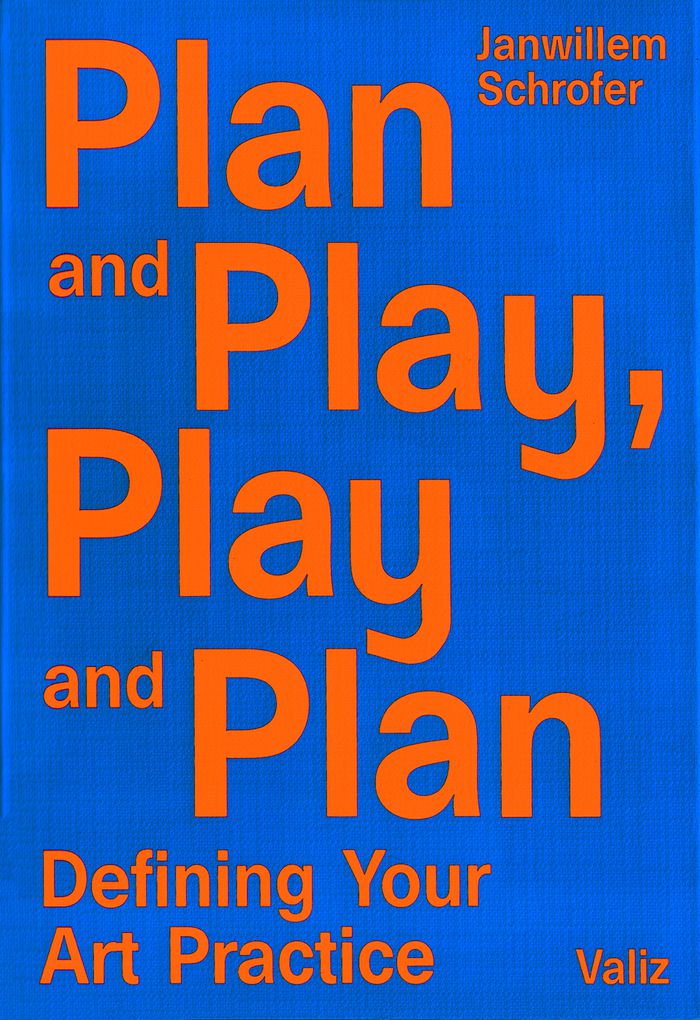
Plan and play, play and plan
Plan and play, play and plan
Actions:
Price:
$38.50
(available to order)
Summary:
"Visual artist" is a term with manifold variations and meanings. But how, as an artist (or designer, photographer or other "independent creator"), do you become who you are and who you would like to be? How can you guide your artistic practice? "Plan and Play, Play and Plan" invites the artist to explore their own questions about their work, using analytical models to(...)
$38.50
(available to order)
Summary:
"Visual artist" is a term with manifold variations and meanings. But how, as an artist (or designer, photographer or other "independent creator"), do you become who you are and who you would like to be? How can you guide your artistic practice? "Plan and Play, Play and Plan" invites the artist to explore their own questions about their work, using analytical models to(...)
Title:
Plan and play, play and plan
Actions:
Price:
$38.50
(available to order)
Summary:
"Visual artist" is a term with manifold variations and meanings. But how, as an artist (or designer, photographer or other "independent creator"), do you become who you are and who you would like to be? How can you guide your artistic practice? "Plan and Play, Play and Plan" invites the artist to explore their own questions about their work, using analytical models to help them determine where they stand and what they stand for.
Plan and play, play and plan
Actions:
Price:
$38.50
(available to order)
Summary:
"Visual artist" is a term with manifold variations and meanings. But how, as an artist (or designer, photographer or other "independent creator"), do you become who you are and who you would like to be? How can you guide your artistic practice? "Plan and Play, Play and Plan" invites the artist to explore their own questions about their work, using analytical models to help them determine where they stand and what they stand for.
Form:
books
books
Publication:
June 2018
June 2018
Subject:
Art Theory
Art Theory


