


9193 Results
Actions:
Reference number:
ARCH264222:022
Description:
La lettre contient de l'information à propos des intentions du gouvernement Punjab de retirer Parmeshwari Lal Varma de son poste de chef secrétaire de Chandigarh.
ARCH264222:022
Description:
La lettre contient de l'information à propos des intentions du gouvernement Punjab de retirer Parmeshwari Lal Varma de son poste de chef secrétaire de Chandigarh.
People:
Date:
29 septembre 1956
29 septembre 1956
Title:
Lettre de Le Corbusier à Pratap Singh Kairon relative à Chandigarh, Inde
Actions:
ARCH264222:022
Description:
La lettre contient de l'information à propos des intentions du gouvernement Punjab de retirer Parmeshwari Lal Varma de son poste de chef secrétaire de Chandigarh.
Lettre de Le Corbusier à Pratap Singh Kairon relative à Chandigarh, Inde
Actions:
ARCH264222:022
Description:
La lettre contient de l'information à propos des intentions du gouvernement Punjab de retirer Parmeshwari Lal Varma de son poste de chef secrétaire de Chandigarh.
Date:
29 septembre 1956
29 septembre 1956
People:
Reference number:
ARCH264044
Description:
La lettre contient de l'information sur les vacances de Dominique Escorsa à Cannes, en France, où il a visité Picasso. Laia Escorsa est mentionnée dans la lettre.
ARCH264044
Description:
La lettre contient de l'information sur les vacances de Dominique Escorsa à Cannes, en France, où il a visité Picasso. Laia Escorsa est mentionnée dans la lettre.
People:
Date:
27 février 1957
27 février 1957
Title:
Lettre de Dominique Escorsa à Pierre Jeanneret
Actions:
ARCH264044
Description:
La lettre contient de l'information sur les vacances de Dominique Escorsa à Cannes, en France, où il a visité Picasso. Laia Escorsa est mentionnée dans la lettre.
Lettre de Dominique Escorsa à Pierre Jeanneret
Actions:
ARCH264044
Description:
La lettre contient de l'information sur les vacances de Dominique Escorsa à Cannes, en France, où il a visité Picasso. Laia Escorsa est mentionnée dans la lettre.
Date:
27 février 1957
27 février 1957
People:
Actions:
Reference number:
ARCH264222:012
Description:
La lettre a pour sujet l'emplacement de la bibliothèque nationale à Chandigarh. La lettre en pièce-jointe contient de l'information relative à la construction du palais du gouverneur à Chandigarh.
ARCH264222:012
Description:
La lettre a pour sujet l'emplacement de la bibliothèque nationale à Chandigarh. La lettre en pièce-jointe contient de l'information relative à la construction du palais du gouverneur à Chandigarh.
People:
Date:
29 et 31 janvier 1955
29 et 31 janvier 1955
Title:
Lettre de Le Corbusier à Pierre Jeanneret relative à Chandigarh, Inde
Actions:
ARCH264222:012
Description:
La lettre a pour sujet l'emplacement de la bibliothèque nationale à Chandigarh. La lettre en pièce-jointe contient de l'information relative à la construction du palais du gouverneur à Chandigarh.
Lettre de Le Corbusier à Pierre Jeanneret relative à Chandigarh, Inde
Actions:
ARCH264222:012
Description:
La lettre a pour sujet l'emplacement de la bibliothèque nationale à Chandigarh. La lettre en pièce-jointe contient de l'information relative à la construction du palais du gouverneur à Chandigarh.
Date:
29 et 31 janvier 1955
29 et 31 janvier 1955
People:
Form:
events
events
Actions:
Description:
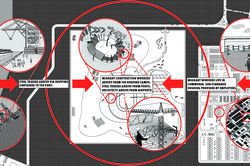
Mabel O. Wilson and Jordan Carver present the ongoing advocacy project Who Builds Your Architecture? (WBYA?), which asks architects and allied fields to better understand how the production of buildings connects their practices to migrant construction workers who build their designs. WBYA?, a group of designers, scholars, and activists based in New York City, has(...)
Mabel O. Wilson and Jordan Carver present the ongoing advocacy project Who Builds Your Architecture? (WBYA?), which asks architects and allied fields to better understand how the production of buildings connects their practices to migrant construction workers who build their designs. WBYA?, a group of designers, scholars, and activists based in New York City, has(...)
Date:
28 January 2016
28 January 2016
Title:
Practicing Advocacy: Who Builds Your Architecture?
Actions:
Description:
Mabel O. Wilson and Jordan Carver present the ongoing advocacy project Who Builds Your Architecture? (WBYA?), which asks architects and allied fields to better understand how the production of buildings connects their practices to migrant construction workers who build their designs. WBYA?, a group of designers, scholars, and activists based in New York City, has(...)
Practicing Advocacy: Who Builds Your Architecture?
Actions:
Description:
Mabel O. Wilson and Jordan Carver present the ongoing advocacy project Who Builds Your Architecture? (WBYA?), which asks architects and allied fields to better understand how the production of buildings connects their practices to migrant construction workers who build their designs. WBYA?, a group of designers, scholars, and activists based in New York City, has(...)
Form:
events
events
Date:
28 January 2016
28 January 2016
Form:
events
events
Title:
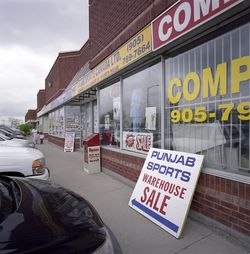
Learning from… Toronto
Learning from… Toronto
Actions:
Description:
Ian Chodikoff, architect, urban designer, and editor of Canadian Architect magazine, presents his research on the contemporary suburb and how the influences of ethnic diversity and multiculturalism affect architecture and urban design within the suburban landscape across the Greater Toronto Area (GTA). Today’s suburbs are more ethnically diverse, globally connected and(...)
Ian Chodikoff, architect, urban designer, and editor of Canadian Architect magazine, presents his research on the contemporary suburb and how the influences of ethnic diversity and multiculturalism affect architecture and urban design within the suburban landscape across the Greater Toronto Area (GTA). Today’s suburbs are more ethnically diverse, globally connected and(...)
Location:
Paul Desmarais Theatre
Paul Desmarais Theatre
Date:
4 March 2010 , 7pm
4 March 2010 , 7pm
Title:
Learning from… Toronto
Actions:
Description:
Ian Chodikoff, architect, urban designer, and editor of Canadian Architect magazine, presents his research on the contemporary suburb and how the influences of ethnic diversity and multiculturalism affect architecture and urban design within the suburban landscape across the Greater Toronto Area (GTA). Today’s suburbs are more ethnically diverse, globally connected and(...)
Learning from… Toronto
Actions:
Description:
Ian Chodikoff, architect, urban designer, and editor of Canadian Architect magazine, presents his research on the contemporary suburb and how the influences of ethnic diversity and multiculturalism affect architecture and urban design within the suburban landscape across the Greater Toronto Area (GTA). Today’s suburbs are more ethnically diverse, globally connected and(...)
Form:
events
events
Date:
4 March 2010
7pm
4 March 2010
7pm
Location:
Paul Desmarais Theatre
Paul Desmarais Theatre
Actions:
Reference number:
ARCH264470
Description:
Le manuscrit contient, entre autres, de l'information sur le plan, la circulation, le système de climatisation et l'idée d'un "hôpital moderne". M. Tushpadass est mentionné au haut du deuxième feuillet.
ARCH264470
Description:
Le manuscrit contient, entre autres, de l'information sur le plan, la circulation, le système de climatisation et l'idée d'un "hôpital moderne". M. Tushpadass est mentionné au haut du deuxième feuillet.
People:
Date:
s.d.
s.d.
Title:
Manuscrit relatif à la compétition pour le All India Medical Institute à New Delhi, Inde
Actions:
ARCH264470
Description:
Le manuscrit contient, entre autres, de l'information sur le plan, la circulation, le système de climatisation et l'idée d'un "hôpital moderne". M. Tushpadass est mentionné au haut du deuxième feuillet.
Manuscrit relatif à la compétition pour le All India Medical Institute à New Delhi, Inde
Actions:
ARCH264470
Description:
Le manuscrit contient, entre autres, de l'information sur le plan, la circulation, le système de climatisation et l'idée d'un "hôpital moderne". M. Tushpadass est mentionné au haut du deuxième feuillet.
Date:
s.d.
s.d.
People:
Actions:
Reference number:
ARCH263902
Description:
La lettre contient de l'information sur les honoraires de Pierre Jeanneret. On présume que le contenu de la lettre est relatif à Chandigarh, Inde. Une analyse plus approfondie est nécessaire.
ARCH263902
Description:
La lettre contient de l'information sur les honoraires de Pierre Jeanneret. On présume que le contenu de la lettre est relatif à Chandigarh, Inde. Une analyse plus approfondie est nécessaire.
People:
Date:
2 août 1961
2 août 1961
Title:
Brouillon d'une lettre de Pierre Jeanneret à un correspondant inconnu
Actions:
ARCH263902
Description:
La lettre contient de l'information sur les honoraires de Pierre Jeanneret. On présume que le contenu de la lettre est relatif à Chandigarh, Inde. Une analyse plus approfondie est nécessaire.
Brouillon d'une lettre de Pierre Jeanneret à un correspondant inconnu
Actions:
ARCH263902
Description:
La lettre contient de l'information sur les honoraires de Pierre Jeanneret. On présume que le contenu de la lettre est relatif à Chandigarh, Inde. Une analyse plus approfondie est nécessaire.
Date:
2 août 1961
2 août 1961
People:
Title:
Lettre de André Wogenscky de la part de Le Corbusier à Pierre Jeanneret relative à Chandigarh, Inde
Lettre de André Wogenscky de la part de Le Corbusier à Pierre Jeanneret relative à Chandigarh, Inde
Actions:
Reference number:
ARCH264222:014
Description:
La lettre traite pour sujet la peinture des bâtiments à Chandigarh. La lettre en pièce-jointe contient de l'information relative à la peinture de la Haute Cour et du palais du secrétariat à Chandigarh.
ARCH264222:014
Description:
La lettre traite pour sujet la peinture des bâtiments à Chandigarh. La lettre en pièce-jointe contient de l'information relative à la peinture de la Haute Cour et du palais du secrétariat à Chandigarh.
People:
Date:
9 février 1955
9 février 1955
Title:
Lettre de André Wogenscky de la part de Le Corbusier à Pierre Jeanneret relative à Chandigarh, Inde
Actions:
ARCH264222:014
Description:
La lettre traite pour sujet la peinture des bâtiments à Chandigarh. La lettre en pièce-jointe contient de l'information relative à la peinture de la Haute Cour et du palais du secrétariat à Chandigarh.
Lettre de André Wogenscky de la part de Le Corbusier à Pierre Jeanneret relative à Chandigarh, Inde
Actions:
ARCH264222:014
Description:
La lettre traite pour sujet la peinture des bâtiments à Chandigarh. La lettre en pièce-jointe contient de l'information relative à la peinture de la Haute Cour et du palais du secrétariat à Chandigarh.
Date:
9 février 1955
9 février 1955
People:
Level of archival description:
Project
Project
Reference number:
AP178.S1.1984.PR02
Description:
The project series documents the Punt en Komma social housing project in The Hague, The Netherlands, with some materials related to the Urban plan for Deelgebied Zone 5, Schilderswijk-West. While the records were held in the office’s archives the urban plan for Deelgebied Zone 5 was assigned the number 30/80 and Punt en Komma was assigned the number 30/80 A/B (Punt (A) and Komma (B)). The office assigned the date 1984 for this project. In the mid to late1970s The Hague underwent an urban renewal program and in 1980 Adri Duivesteijn became the alderman responsible for this program. Dissatisfied with the results, in the early to mid-1980s Duivesteijn began a campaign to look at urban renewal as a cultural approach, and was interested in the participatory process that Siza incorporated for the Serviço Ambulatório de Apoio Local (SAAL) in Portugal and the Berlin projects submitted to the International Architectural Exhibition Berlin competition (International Bauaustellung, IBA, circa 1979-1987). After taking a trip to Portugal, Duivesteijn invited Siza to speak with residents of Schilderswijk. The urban plan for Schilderswijk was the first part of a redevelopment plan for the 19th century district and included two four story blocks of 106 apartments, named Punt en Komma. Schilderswijk is in the centre of The Hague and is nearby the Haag Spoor train station. The residents are made up of multi-ethnic communities and included immigrants from Turkey, Morocco, Tunisia, and Portugal. Similarly to the Berlin projects, Siza was faced with cultural tensions between the residents of the area. The urban plan was to take into account the preservation of the neighborhood's identity while accounting for the changes brought on by multi-ethnic communities. As with the SAAL and Berlin projects there was an element of participation from the residents and included the collaboration of a residents association. In the “Plan of Zone 5 of Schilderswijk Centrum…”, found in this project series [AP178.S1.1984.PR02.024.1, AP178.S1.1984.PR02.024.2], it is outlined that meetings were periodically held with technicians appointed by the Department of Urban Planning and Housing of The Hague, the Housing Cooperative, and each of the designers. Siza’s design for Punt en Komma incorporated elements prevalent in Dutch architecture such as the Haagse Portiek. However, he also included components in his design which accounted for the needs of residents living there at the time. One feature which gained much attention was the incorporation of sliding doors in the apartments. Siza included these doors in his design in consideration of the cultural practices of Muslim families. Documenting this project series are drawings, photographic materials, and textual documentation. Among the drawings are plans, elevations, sections, and details, as well as axonometric drawings, such as the proposed design for Deelgebied zone 5 (including Punt en Komma) and drawings of the Haagse Porteik. Photographic materials document both Duivesteijn’s trip to Portugal and Siza’s first trip to The Hague and include photographs, negatives, and slides of the built project, as well as slides of drawings. Note that the photographic materials include photographs related to the housing and shopping complex in Schilderswijk. Textual documentation includes brochures regarding rent increases, a copy of “Stadsvernieuwing als Kulturele Aktiviteit” by Duivesteijn, and information booklets for the residents. Also included are minutes of meeting and correspondence from the Woningbouwvereniging’s-Gravenhage. Among the correspondence are letters regarding construction costs, including a letter from Siza to the local architectural firm Architectengemeenschap Van den Broek en Bakema explaining that he does not wish to modify the detail he specified for the lintels of the Punt building. There is also correspondence from project architect Carlos Castenheira and Duivesteijn and a summary of the meeting between Siza and the Committee of the Corporation for Social Housing (17 April, 1985)[AP178.S1.1984.PR02.025.1] It is important to note that Siza also participated in other projects for this urban renewal program: the housing and shopping complex in Schilderswijk [AP178.S1.1984.PR03], the Van der Vennepark [AP178.S1.1985.PR01], and the residential settlement in Schilderswijk (Plano de Doedijnstraat [AP178.S1.1989.PR03]). All three of these projects are arranged in separate project series.
AP178.S1.1984.PR02
Description:
The project series documents the Punt en Komma social housing project in The Hague, The Netherlands, with some materials related to the Urban plan for Deelgebied Zone 5, Schilderswijk-West. While the records were held in the office’s archives the urban plan for Deelgebied Zone 5 was assigned the number 30/80 and Punt en Komma was assigned the number 30/80 A/B (Punt (A) and Komma (B)). The office assigned the date 1984 for this project. In the mid to late1970s The Hague underwent an urban renewal program and in 1980 Adri Duivesteijn became the alderman responsible for this program. Dissatisfied with the results, in the early to mid-1980s Duivesteijn began a campaign to look at urban renewal as a cultural approach, and was interested in the participatory process that Siza incorporated for the Serviço Ambulatório de Apoio Local (SAAL) in Portugal and the Berlin projects submitted to the International Architectural Exhibition Berlin competition (International Bauaustellung, IBA, circa 1979-1987). After taking a trip to Portugal, Duivesteijn invited Siza to speak with residents of Schilderswijk. The urban plan for Schilderswijk was the first part of a redevelopment plan for the 19th century district and included two four story blocks of 106 apartments, named Punt en Komma. Schilderswijk is in the centre of The Hague and is nearby the Haag Spoor train station. The residents are made up of multi-ethnic communities and included immigrants from Turkey, Morocco, Tunisia, and Portugal. Similarly to the Berlin projects, Siza was faced with cultural tensions between the residents of the area. The urban plan was to take into account the preservation of the neighborhood's identity while accounting for the changes brought on by multi-ethnic communities. As with the SAAL and Berlin projects there was an element of participation from the residents and included the collaboration of a residents association. In the “Plan of Zone 5 of Schilderswijk Centrum…”, found in this project series [AP178.S1.1984.PR02.024.1, AP178.S1.1984.PR02.024.2], it is outlined that meetings were periodically held with technicians appointed by the Department of Urban Planning and Housing of The Hague, the Housing Cooperative, and each of the designers. Siza’s design for Punt en Komma incorporated elements prevalent in Dutch architecture such as the Haagse Portiek. However, he also included components in his design which accounted for the needs of residents living there at the time. One feature which gained much attention was the incorporation of sliding doors in the apartments. Siza included these doors in his design in consideration of the cultural practices of Muslim families. Documenting this project series are drawings, photographic materials, and textual documentation. Among the drawings are plans, elevations, sections, and details, as well as axonometric drawings, such as the proposed design for Deelgebied zone 5 (including Punt en Komma) and drawings of the Haagse Porteik. Photographic materials document both Duivesteijn’s trip to Portugal and Siza’s first trip to The Hague and include photographs, negatives, and slides of the built project, as well as slides of drawings. Note that the photographic materials include photographs related to the housing and shopping complex in Schilderswijk. Textual documentation includes brochures regarding rent increases, a copy of “Stadsvernieuwing als Kulturele Aktiviteit” by Duivesteijn, and information booklets for the residents. Also included are minutes of meeting and correspondence from the Woningbouwvereniging’s-Gravenhage. Among the correspondence are letters regarding construction costs, including a letter from Siza to the local architectural firm Architectengemeenschap Van den Broek en Bakema explaining that he does not wish to modify the detail he specified for the lintels of the Punt building. There is also correspondence from project architect Carlos Castenheira and Duivesteijn and a summary of the meeting between Siza and the Committee of the Corporation for Social Housing (17 April, 1985)[AP178.S1.1984.PR02.025.1] It is important to note that Siza also participated in other projects for this urban renewal program: the housing and shopping complex in Schilderswijk [AP178.S1.1984.PR03], the Van der Vennepark [AP178.S1.1985.PR01], and the residential settlement in Schilderswijk (Plano de Doedijnstraat [AP178.S1.1989.PR03]). All three of these projects are arranged in separate project series.
People:
Date:
circa 1981 - 1990
circa 1981 - 1990
Title:
106 habitações, Punt en Komma [Punt en Komma social housing], Schilderswijk-West, The Hague, The Netherlands, (1981-1990)
Actions:
AP178.S1.1984.PR02
Description:
The project series documents the Punt en Komma social housing project in The Hague, The Netherlands, with some materials related to the Urban plan for Deelgebied Zone 5, Schilderswijk-West. While the records were held in the office’s archives the urban plan for Deelgebied Zone 5 was assigned the number 30/80 and Punt en Komma was assigned the number 30/80 A/B (Punt (A) and Komma (B)). The office assigned the date 1984 for this project. In the mid to late1970s The Hague underwent an urban renewal program and in 1980 Adri Duivesteijn became the alderman responsible for this program. Dissatisfied with the results, in the early to mid-1980s Duivesteijn began a campaign to look at urban renewal as a cultural approach, and was interested in the participatory process that Siza incorporated for the Serviço Ambulatório de Apoio Local (SAAL) in Portugal and the Berlin projects submitted to the International Architectural Exhibition Berlin competition (International Bauaustellung, IBA, circa 1979-1987). After taking a trip to Portugal, Duivesteijn invited Siza to speak with residents of Schilderswijk. The urban plan for Schilderswijk was the first part of a redevelopment plan for the 19th century district and included two four story blocks of 106 apartments, named Punt en Komma. Schilderswijk is in the centre of The Hague and is nearby the Haag Spoor train station. The residents are made up of multi-ethnic communities and included immigrants from Turkey, Morocco, Tunisia, and Portugal. Similarly to the Berlin projects, Siza was faced with cultural tensions between the residents of the area. The urban plan was to take into account the preservation of the neighborhood's identity while accounting for the changes brought on by multi-ethnic communities. As with the SAAL and Berlin projects there was an element of participation from the residents and included the collaboration of a residents association. In the “Plan of Zone 5 of Schilderswijk Centrum…”, found in this project series [AP178.S1.1984.PR02.024.1, AP178.S1.1984.PR02.024.2], it is outlined that meetings were periodically held with technicians appointed by the Department of Urban Planning and Housing of The Hague, the Housing Cooperative, and each of the designers. Siza’s design for Punt en Komma incorporated elements prevalent in Dutch architecture such as the Haagse Portiek. However, he also included components in his design which accounted for the needs of residents living there at the time. One feature which gained much attention was the incorporation of sliding doors in the apartments. Siza included these doors in his design in consideration of the cultural practices of Muslim families. Documenting this project series are drawings, photographic materials, and textual documentation. Among the drawings are plans, elevations, sections, and details, as well as axonometric drawings, such as the proposed design for Deelgebied zone 5 (including Punt en Komma) and drawings of the Haagse Porteik. Photographic materials document both Duivesteijn’s trip to Portugal and Siza’s first trip to The Hague and include photographs, negatives, and slides of the built project, as well as slides of drawings. Note that the photographic materials include photographs related to the housing and shopping complex in Schilderswijk. Textual documentation includes brochures regarding rent increases, a copy of “Stadsvernieuwing als Kulturele Aktiviteit” by Duivesteijn, and information booklets for the residents. Also included are minutes of meeting and correspondence from the Woningbouwvereniging’s-Gravenhage. Among the correspondence are letters regarding construction costs, including a letter from Siza to the local architectural firm Architectengemeenschap Van den Broek en Bakema explaining that he does not wish to modify the detail he specified for the lintels of the Punt building. There is also correspondence from project architect Carlos Castenheira and Duivesteijn and a summary of the meeting between Siza and the Committee of the Corporation for Social Housing (17 April, 1985)[AP178.S1.1984.PR02.025.1] It is important to note that Siza also participated in other projects for this urban renewal program: the housing and shopping complex in Schilderswijk [AP178.S1.1984.PR03], the Van der Vennepark [AP178.S1.1985.PR01], and the residential settlement in Schilderswijk (Plano de Doedijnstraat [AP178.S1.1989.PR03]). All three of these projects are arranged in separate project series.
106 habitações, Punt en Komma [Punt en Komma social housing], Schilderswijk-West, The Hague, The Netherlands, (1981-1990)
Actions:
AP178.S1.1984.PR02
Description:
The project series documents the Punt en Komma social housing project in The Hague, The Netherlands, with some materials related to the Urban plan for Deelgebied Zone 5, Schilderswijk-West. While the records were held in the office’s archives the urban plan for Deelgebied Zone 5 was assigned the number 30/80 and Punt en Komma was assigned the number 30/80 A/B (Punt (A) and Komma (B)). The office assigned the date 1984 for this project. In the mid to late1970s The Hague underwent an urban renewal program and in 1980 Adri Duivesteijn became the alderman responsible for this program. Dissatisfied with the results, in the early to mid-1980s Duivesteijn began a campaign to look at urban renewal as a cultural approach, and was interested in the participatory process that Siza incorporated for the Serviço Ambulatório de Apoio Local (SAAL) in Portugal and the Berlin projects submitted to the International Architectural Exhibition Berlin competition (International Bauaustellung, IBA, circa 1979-1987). After taking a trip to Portugal, Duivesteijn invited Siza to speak with residents of Schilderswijk. The urban plan for Schilderswijk was the first part of a redevelopment plan for the 19th century district and included two four story blocks of 106 apartments, named Punt en Komma. Schilderswijk is in the centre of The Hague and is nearby the Haag Spoor train station. The residents are made up of multi-ethnic communities and included immigrants from Turkey, Morocco, Tunisia, and Portugal. Similarly to the Berlin projects, Siza was faced with cultural tensions between the residents of the area. The urban plan was to take into account the preservation of the neighborhood's identity while accounting for the changes brought on by multi-ethnic communities. As with the SAAL and Berlin projects there was an element of participation from the residents and included the collaboration of a residents association. In the “Plan of Zone 5 of Schilderswijk Centrum…”, found in this project series [AP178.S1.1984.PR02.024.1, AP178.S1.1984.PR02.024.2], it is outlined that meetings were periodically held with technicians appointed by the Department of Urban Planning and Housing of The Hague, the Housing Cooperative, and each of the designers. Siza’s design for Punt en Komma incorporated elements prevalent in Dutch architecture such as the Haagse Portiek. However, he also included components in his design which accounted for the needs of residents living there at the time. One feature which gained much attention was the incorporation of sliding doors in the apartments. Siza included these doors in his design in consideration of the cultural practices of Muslim families. Documenting this project series are drawings, photographic materials, and textual documentation. Among the drawings are plans, elevations, sections, and details, as well as axonometric drawings, such as the proposed design for Deelgebied zone 5 (including Punt en Komma) and drawings of the Haagse Porteik. Photographic materials document both Duivesteijn’s trip to Portugal and Siza’s first trip to The Hague and include photographs, negatives, and slides of the built project, as well as slides of drawings. Note that the photographic materials include photographs related to the housing and shopping complex in Schilderswijk. Textual documentation includes brochures regarding rent increases, a copy of “Stadsvernieuwing als Kulturele Aktiviteit” by Duivesteijn, and information booklets for the residents. Also included are minutes of meeting and correspondence from the Woningbouwvereniging’s-Gravenhage. Among the correspondence are letters regarding construction costs, including a letter from Siza to the local architectural firm Architectengemeenschap Van den Broek en Bakema explaining that he does not wish to modify the detail he specified for the lintels of the Punt building. There is also correspondence from project architect Carlos Castenheira and Duivesteijn and a summary of the meeting between Siza and the Committee of the Corporation for Social Housing (17 April, 1985)[AP178.S1.1984.PR02.025.1] It is important to note that Siza also participated in other projects for this urban renewal program: the housing and shopping complex in Schilderswijk [AP178.S1.1984.PR03], the Van der Vennepark [AP178.S1.1985.PR01], and the residential settlement in Schilderswijk (Plano de Doedijnstraat [AP178.S1.1989.PR03]). All three of these projects are arranged in separate project series.
Level of archival description:
Project
Project
Date:
circa 1981 - 1990
circa 1981 - 1990
People:
Form:
textual records
textual records
Title:
Correspondence relating to reproduction requests, Técnica y architectura en la ciudad contemporánea
Correspondence relating to reproduction requests, Técnica y architectura en la ciudad contemporánea
Actions:
Reference number:
ARCH278205
Description:
File's title: informe geotécnico. The title doesn't represent the content of the file. Documents are in English, Spanish and German.
ARCH278205
Description:
File's title: informe geotécnico. The title doesn't represent the content of the file. Documents are in English, Spanish and German.
People:
Date:
2001-2002, predominant 2001
2001-2002, predominant 2001
Title:
Correspondence relating to reproduction requests, Técnica y architectura en la ciudad contemporánea
Actions:
ARCH278205
Description:
File's title: informe geotécnico. The title doesn't represent the content of the file. Documents are in English, Spanish and German.
Correspondence relating to reproduction requests, Técnica y architectura en la ciudad contemporánea
Actions:
ARCH278205
Description:
File's title: informe geotécnico. The title doesn't represent the content of the file. Documents are in English, Spanish and German.
Form:
textual records
textual records
Date:
2001-2002, predominant 2001
2001-2002, predominant 2001
People:


