


4081 Results
Level of archival description:
Project
Project
Title:
Applausi [Applause] (1968)
Applausi [Applause] (1968)
Actions:
Reference number:
AP207.S1.1968.PR05
Description:
This project series documents Pettena's design for "Applausi", a suitcase split in half to create two flashing signs with the word "Applausi". The signs were designed for the music performance by Vittorio Gelmetti, "La descrittione del gran paese" a post-pop opera for which Pettena was also in charge of the scene direction. The performance was presented at the 6th Festival of Avant-Garde Music at the Teatro Biondo, in Palermo, in December 1968. The signs were placed on each side of the stage, toward the audience. "The text, together with others that indicated the piano, the singer and the cello, reminded the audience of the habits of an illiterate public participating in a televised show." [1] The "Applausi" signs were also presented in the exhibition "The living currency" in Varsaw, at the Teatr Dramatyczny in 2010, and at the 6th Berlin Biennale at the Hau1, Die lebende Münze, in 2010. The project series contains photographs of the 'Applausi' signs, a drawing of the sign, and a draft poster showing the display of the stage for Vittorio Gelmetti performance at the 6th Festival of Avant-Garde Music. The project series also includes photographs of the music performance, a video of Pettena and the sign at the Berlin Biennale in 2010, and project descriptions in English and Italian. Source: [1] Marco Scotini, editor. Non-conscious architecture: Gianni Pettena, Sternberg Press, 2018, 235 pages. p. 102.
AP207.S1.1968.PR05
Description:
This project series documents Pettena's design for "Applausi", a suitcase split in half to create two flashing signs with the word "Applausi". The signs were designed for the music performance by Vittorio Gelmetti, "La descrittione del gran paese" a post-pop opera for which Pettena was also in charge of the scene direction. The performance was presented at the 6th Festival of Avant-Garde Music at the Teatro Biondo, in Palermo, in December 1968. The signs were placed on each side of the stage, toward the audience. "The text, together with others that indicated the piano, the singer and the cello, reminded the audience of the habits of an illiterate public participating in a televised show." [1] The "Applausi" signs were also presented in the exhibition "The living currency" in Varsaw, at the Teatr Dramatyczny in 2010, and at the 6th Berlin Biennale at the Hau1, Die lebende Münze, in 2010. The project series contains photographs of the 'Applausi' signs, a drawing of the sign, and a draft poster showing the display of the stage for Vittorio Gelmetti performance at the 6th Festival of Avant-Garde Music. The project series also includes photographs of the music performance, a video of Pettena and the sign at the Berlin Biennale in 2010, and project descriptions in English and Italian. Source: [1] Marco Scotini, editor. Non-conscious architecture: Gianni Pettena, Sternberg Press, 2018, 235 pages. p. 102.
People:
Date:
circa 1968-2015
circa 1968-2015
Title:
Applausi [Applause] (1968)
Actions:
AP207.S1.1968.PR05
Description:
This project series documents Pettena's design for "Applausi", a suitcase split in half to create two flashing signs with the word "Applausi". The signs were designed for the music performance by Vittorio Gelmetti, "La descrittione del gran paese" a post-pop opera for which Pettena was also in charge of the scene direction. The performance was presented at the 6th Festival of Avant-Garde Music at the Teatro Biondo, in Palermo, in December 1968. The signs were placed on each side of the stage, toward the audience. "The text, together with others that indicated the piano, the singer and the cello, reminded the audience of the habits of an illiterate public participating in a televised show." [1] The "Applausi" signs were also presented in the exhibition "The living currency" in Varsaw, at the Teatr Dramatyczny in 2010, and at the 6th Berlin Biennale at the Hau1, Die lebende Münze, in 2010. The project series contains photographs of the 'Applausi' signs, a drawing of the sign, and a draft poster showing the display of the stage for Vittorio Gelmetti performance at the 6th Festival of Avant-Garde Music. The project series also includes photographs of the music performance, a video of Pettena and the sign at the Berlin Biennale in 2010, and project descriptions in English and Italian. Source: [1] Marco Scotini, editor. Non-conscious architecture: Gianni Pettena, Sternberg Press, 2018, 235 pages. p. 102.
Applausi [Applause] (1968)
Actions:
AP207.S1.1968.PR05
Description:
This project series documents Pettena's design for "Applausi", a suitcase split in half to create two flashing signs with the word "Applausi". The signs were designed for the music performance by Vittorio Gelmetti, "La descrittione del gran paese" a post-pop opera for which Pettena was also in charge of the scene direction. The performance was presented at the 6th Festival of Avant-Garde Music at the Teatro Biondo, in Palermo, in December 1968. The signs were placed on each side of the stage, toward the audience. "The text, together with others that indicated the piano, the singer and the cello, reminded the audience of the habits of an illiterate public participating in a televised show." [1] The "Applausi" signs were also presented in the exhibition "The living currency" in Varsaw, at the Teatr Dramatyczny in 2010, and at the 6th Berlin Biennale at the Hau1, Die lebende Münze, in 2010. The project series contains photographs of the 'Applausi' signs, a drawing of the sign, and a draft poster showing the display of the stage for Vittorio Gelmetti performance at the 6th Festival of Avant-Garde Music. The project series also includes photographs of the music performance, a video of Pettena and the sign at the Berlin Biennale in 2010, and project descriptions in English and Italian. Source: [1] Marco Scotini, editor. Non-conscious architecture: Gianni Pettena, Sternberg Press, 2018, 235 pages. p. 102.
Level of archival description:
Project
Project
Date:
circa 1968-2015
circa 1968-2015
People:
Level of archival description:
Project
Project
Actions:
Reference number:
AP056.S1.1988.PR08
Description:
This project series documents the Dome Productions offices and studio in Toronto from 1988-1989. The office identified the project number as 8804. This project consisted of a two-level office and studio area inside Toronto's SkyDome for the production company that was owned by The Sports Network (TSN). The main purpose of this space was to broadcast sports live from the stadium, but offices for producing, accounting, and marketing were also included. The two floors followed the curved shape of the stadium and were connected to one another by staircases. Visitors entered via large, glass doors into the reception area on the lower level, where they could move to the main lounge with its curved cappuccino bar, integrated into the main staircase. The lower level also held equipment rooms, fan rooms, editing areas, storage and offices. The upper level included two announcing booths, video editing suites, production spaces and conference rooms. The walls were composed of painted gypsum board but granite touches throughout stayed true to the concrete look of the stadium. Aluminum, steel, wood and sandblasted glass were also featured heavily throughout. The project is recorded through drawings and photographs dating from 1988-1989. The drawings are mostly originals and include sketches, presentation drawings, plans, details, elevations, sections, axonometric drawings, and structural drawings. The photographs show the finished interiors of the project.
AP056.S1.1988.PR08
Description:
This project series documents the Dome Productions offices and studio in Toronto from 1988-1989. The office identified the project number as 8804. This project consisted of a two-level office and studio area inside Toronto's SkyDome for the production company that was owned by The Sports Network (TSN). The main purpose of this space was to broadcast sports live from the stadium, but offices for producing, accounting, and marketing were also included. The two floors followed the curved shape of the stadium and were connected to one another by staircases. Visitors entered via large, glass doors into the reception area on the lower level, where they could move to the main lounge with its curved cappuccino bar, integrated into the main staircase. The lower level also held equipment rooms, fan rooms, editing areas, storage and offices. The upper level included two announcing booths, video editing suites, production spaces and conference rooms. The walls were composed of painted gypsum board but granite touches throughout stayed true to the concrete look of the stadium. Aluminum, steel, wood and sandblasted glass were also featured heavily throughout. The project is recorded through drawings and photographs dating from 1988-1989. The drawings are mostly originals and include sketches, presentation drawings, plans, details, elevations, sections, axonometric drawings, and structural drawings. The photographs show the finished interiors of the project.
People:
Date:
1988-1989
1988-1989
Title:
Dome Productions Offices and Studios, Toronto (1988-1989)
Actions:
AP056.S1.1988.PR08
Description:
This project series documents the Dome Productions offices and studio in Toronto from 1988-1989. The office identified the project number as 8804. This project consisted of a two-level office and studio area inside Toronto's SkyDome for the production company that was owned by The Sports Network (TSN). The main purpose of this space was to broadcast sports live from the stadium, but offices for producing, accounting, and marketing were also included. The two floors followed the curved shape of the stadium and were connected to one another by staircases. Visitors entered via large, glass doors into the reception area on the lower level, where they could move to the main lounge with its curved cappuccino bar, integrated into the main staircase. The lower level also held equipment rooms, fan rooms, editing areas, storage and offices. The upper level included two announcing booths, video editing suites, production spaces and conference rooms. The walls were composed of painted gypsum board but granite touches throughout stayed true to the concrete look of the stadium. Aluminum, steel, wood and sandblasted glass were also featured heavily throughout. The project is recorded through drawings and photographs dating from 1988-1989. The drawings are mostly originals and include sketches, presentation drawings, plans, details, elevations, sections, axonometric drawings, and structural drawings. The photographs show the finished interiors of the project.
Dome Productions Offices and Studios, Toronto (1988-1989)
Actions:
AP056.S1.1988.PR08
Description:
This project series documents the Dome Productions offices and studio in Toronto from 1988-1989. The office identified the project number as 8804. This project consisted of a two-level office and studio area inside Toronto's SkyDome for the production company that was owned by The Sports Network (TSN). The main purpose of this space was to broadcast sports live from the stadium, but offices for producing, accounting, and marketing were also included. The two floors followed the curved shape of the stadium and were connected to one another by staircases. Visitors entered via large, glass doors into the reception area on the lower level, where they could move to the main lounge with its curved cappuccino bar, integrated into the main staircase. The lower level also held equipment rooms, fan rooms, editing areas, storage and offices. The upper level included two announcing booths, video editing suites, production spaces and conference rooms. The walls were composed of painted gypsum board but granite touches throughout stayed true to the concrete look of the stadium. Aluminum, steel, wood and sandblasted glass were also featured heavily throughout. The project is recorded through drawings and photographs dating from 1988-1989. The drawings are mostly originals and include sketches, presentation drawings, plans, details, elevations, sections, axonometric drawings, and structural drawings. The photographs show the finished interiors of the project.
Level of archival description:
Project
Project
Date:
1988-1989
1988-1989
People:
Form:
exhibitions
exhibitions
Description:
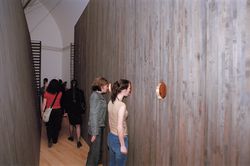
Laboratories examines how architecture can respond to an uncertain post-September 11 world and construct a new stage for thought. Six young Montreal architecture firms present environments or installations that investigate the fundamental language of architecture and that affirm the civilizing power of the imagination. The contributing firms are Atelier Big City, Atelier(...)
Laboratories examines how architecture can respond to an uncertain post-September 11 world and construct a new stage for thought. Six young Montreal architecture firms present environments or installations that investigate the fundamental language of architecture and that affirm the civilizing power of the imagination. The contributing firms are Atelier Big City, Atelier(...)
Location:
Main galleries
Main galleries
Date:
18 April 2002 to 15 September 2002
18 April 2002 to 15 September 2002
Title:
Laboratories: Six Young Architectural Firms in the CCA Galleries
Actions:
Description:
Laboratories examines how architecture can respond to an uncertain post-September 11 world and construct a new stage for thought. Six young Montreal architecture firms present environments or installations that investigate the fundamental language of architecture and that affirm the civilizing power of the imagination. The contributing firms are Atelier Big City, Atelier(...)
Laboratories: Six Young Architectural Firms in the CCA Galleries
Actions:
Description:
Laboratories examines how architecture can respond to an uncertain post-September 11 world and construct a new stage for thought. Six young Montreal architecture firms present environments or installations that investigate the fundamental language of architecture and that affirm the civilizing power of the imagination. The contributing firms are Atelier Big City, Atelier(...)
Form:
exhibitions
exhibitions
Date:
18 April 2002 to
15 September 2002
18 April 2002 to
15 September 2002
Location:
Main galleries
Main galleries
Level of archival description:
Series
Series
Reference number:
AP184.S3
Description:
Series 3, Advanced Trading Floor Operations Center, 1998-2004, combined two projects in the built environment, the Command Center and the Executive Ramp, both conceived as a technological expansion on the existing NYSE Trading Floor. This series includes textual and born-digital components, as well as a number of drawing sets. The real-time virtual reality environment returned to the physical environment with the design and construction of the Command Center and Executive Ramp. The Command Center project involved the construction of a raised platform from the Main Room to the Blue Room; features included an information desk, a systems desk, and a video wall, the last of which displayed various stock data. It was later renovated during the Executive Ramp project, which primarily involved the installation of a multi-screen display of the 3DTF into the Command Center. Together, the two projects make up the Advanced Trading Floor Operations Center, often referred to as “the ramp.” The textual records for this series include correspondence and a small number of photographs. Digital files for the Advanced Trading Floor primarily include handouts for presentation meetings; there is also a small body of photographs of NYSE and press material. Additionally, there are also approximately 65 plans, which document the design and construction of the Command Center. These include preliminary drawings, construction sets, and addendums. Notably, the oversized materials also contain a photograph of former U.S. President Bill Clinton standing on the ramp.
AP184.S3
Description:
Series 3, Advanced Trading Floor Operations Center, 1998-2004, combined two projects in the built environment, the Command Center and the Executive Ramp, both conceived as a technological expansion on the existing NYSE Trading Floor. This series includes textual and born-digital components, as well as a number of drawing sets. The real-time virtual reality environment returned to the physical environment with the design and construction of the Command Center and Executive Ramp. The Command Center project involved the construction of a raised platform from the Main Room to the Blue Room; features included an information desk, a systems desk, and a video wall, the last of which displayed various stock data. It was later renovated during the Executive Ramp project, which primarily involved the installation of a multi-screen display of the 3DTF into the Command Center. Together, the two projects make up the Advanced Trading Floor Operations Center, often referred to as “the ramp.” The textual records for this series include correspondence and a small number of photographs. Digital files for the Advanced Trading Floor primarily include handouts for presentation meetings; there is also a small body of photographs of NYSE and press material. Additionally, there are also approximately 65 plans, which document the design and construction of the Command Center. These include preliminary drawings, construction sets, and addendums. Notably, the oversized materials also contain a photograph of former U.S. President Bill Clinton standing on the ramp.
People:
Date:
1998 - 2004
1998 - 2004
Title:
Advanced Trading Floor Command Center
Actions:
AP184.S3
Description:
Series 3, Advanced Trading Floor Operations Center, 1998-2004, combined two projects in the built environment, the Command Center and the Executive Ramp, both conceived as a technological expansion on the existing NYSE Trading Floor. This series includes textual and born-digital components, as well as a number of drawing sets. The real-time virtual reality environment returned to the physical environment with the design and construction of the Command Center and Executive Ramp. The Command Center project involved the construction of a raised platform from the Main Room to the Blue Room; features included an information desk, a systems desk, and a video wall, the last of which displayed various stock data. It was later renovated during the Executive Ramp project, which primarily involved the installation of a multi-screen display of the 3DTF into the Command Center. Together, the two projects make up the Advanced Trading Floor Operations Center, often referred to as “the ramp.” The textual records for this series include correspondence and a small number of photographs. Digital files for the Advanced Trading Floor primarily include handouts for presentation meetings; there is also a small body of photographs of NYSE and press material. Additionally, there are also approximately 65 plans, which document the design and construction of the Command Center. These include preliminary drawings, construction sets, and addendums. Notably, the oversized materials also contain a photograph of former U.S. President Bill Clinton standing on the ramp.
Advanced Trading Floor Command Center
Actions:
AP184.S3
Description:
Series 3, Advanced Trading Floor Operations Center, 1998-2004, combined two projects in the built environment, the Command Center and the Executive Ramp, both conceived as a technological expansion on the existing NYSE Trading Floor. This series includes textual and born-digital components, as well as a number of drawing sets. The real-time virtual reality environment returned to the physical environment with the design and construction of the Command Center and Executive Ramp. The Command Center project involved the construction of a raised platform from the Main Room to the Blue Room; features included an information desk, a systems desk, and a video wall, the last of which displayed various stock data. It was later renovated during the Executive Ramp project, which primarily involved the installation of a multi-screen display of the 3DTF into the Command Center. Together, the two projects make up the Advanced Trading Floor Operations Center, often referred to as “the ramp.” The textual records for this series include correspondence and a small number of photographs. Digital files for the Advanced Trading Floor primarily include handouts for presentation meetings; there is also a small body of photographs of NYSE and press material. Additionally, there are also approximately 65 plans, which document the design and construction of the Command Center. These include preliminary drawings, construction sets, and addendums. Notably, the oversized materials also contain a photograph of former U.S. President Bill Clinton standing on the ramp.
Level of archival description:
Series
Series
Date:
1998 - 2004
1998 - 2004
People:
Form:
exhibitions
exhibitions
Title:
Sense of the City
Sense of the City
Actions:
Description:
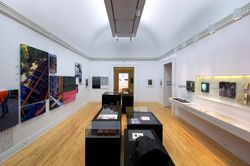
Sense of the City explores urban phenomena and perceptions of the city which have traditionally been ignored, repressed, or maligned. Challenging the dominance of the visual in the urban environment, the exhibition proposes a re-thinking of latent qualities of the city, offering complex analyses of the comforts, communication systems, and sensory dimensions of urban(...)
Sense of the City explores urban phenomena and perceptions of the city which have traditionally been ignored, repressed, or maligned. Challenging the dominance of the visual in the urban environment, the exhibition proposes a re-thinking of latent qualities of the city, offering complex analyses of the comforts, communication systems, and sensory dimensions of urban(...)
Location:
Main galleries
Main galleries
Date:
26 October 2005 to 10 September 2006
26 October 2005 to 10 September 2006
Title:
Sense of the City
Actions:
Description:
Sense of the City explores urban phenomena and perceptions of the city which have traditionally been ignored, repressed, or maligned. Challenging the dominance of the visual in the urban environment, the exhibition proposes a re-thinking of latent qualities of the city, offering complex analyses of the comforts, communication systems, and sensory dimensions of urban(...)
Sense of the City
Actions:
Description:
Sense of the City explores urban phenomena and perceptions of the city which have traditionally been ignored, repressed, or maligned. Challenging the dominance of the visual in the urban environment, the exhibition proposes a re-thinking of latent qualities of the city, offering complex analyses of the comforts, communication systems, and sensory dimensions of urban(...)
Form:
exhibitions
exhibitions
Date:
26 October 2005 to
10 September 2006
26 October 2005 to
10 September 2006
Location:
Main galleries
Main galleries
Form:
exhibitions
exhibitions
Title:
Speed Limits
Speed Limits
Actions:
Description:
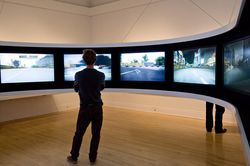
Speed Limits addresses the pivotal role played by speed in modern life: from art to architecture and urbanism to graphics and design to economics to the material culture of the eras of industry and information. It marks the centenary of the foundation of the Italian Futurist movement, whose inaugural manifesto famously proclaimed “that the world’s magnificence has been(...)
Speed Limits addresses the pivotal role played by speed in modern life: from art to architecture and urbanism to graphics and design to economics to the material culture of the eras of industry and information. It marks the centenary of the foundation of the Italian Futurist movement, whose inaugural manifesto famously proclaimed “that the world’s magnificence has been(...)
Location:
Main galleries
Main galleries
Date:
20 May 2009 to 8 November 2009
20 May 2009 to 8 November 2009
Title:
Speed Limits
Actions:
Description:
Speed Limits addresses the pivotal role played by speed in modern life: from art to architecture and urbanism to graphics and design to economics to the material culture of the eras of industry and information. It marks the centenary of the foundation of the Italian Futurist movement, whose inaugural manifesto famously proclaimed “that the world’s magnificence has been(...)
Speed Limits
Actions:
Description:
Speed Limits addresses the pivotal role played by speed in modern life: from art to architecture and urbanism to graphics and design to economics to the material culture of the eras of industry and information. It marks the centenary of the foundation of the Italian Futurist movement, whose inaugural manifesto famously proclaimed “that the world’s magnificence has been(...)
Form:
exhibitions
exhibitions
Date:
20 May 2009 to
8 November 2009
20 May 2009 to
8 November 2009
Location:
Main galleries
Main galleries
Form:
exhibitions
exhibitions

Title:
The 60s: Montréal Thinks Big
The 60s: Montréal Thinks Big
Actions:
Description:
During the 1960s, the massive scale of the changes that transformed Montréal made it an archetype of the great metropolises of the Western world. As host of Expo 67, Montréal asserted itself on the international scene as a city of the future. The 60s: Montréal Thinks Big illustrates the processes that brought about these changes. The exhibition’s original models,(...)
During the 1960s, the massive scale of the changes that transformed Montréal made it an archetype of the great metropolises of the Western world. As host of Expo 67, Montréal asserted itself on the international scene as a city of the future. The 60s: Montréal Thinks Big illustrates the processes that brought about these changes. The exhibition’s original models,(...)
Location:
Main galleries
Main galleries
Date:
20 October 2004 to 11 September 2005
20 October 2004 to 11 September 2005
Title:
The 60s: Montréal Thinks Big
Actions:
Description:
During the 1960s, the massive scale of the changes that transformed Montréal made it an archetype of the great metropolises of the Western world. As host of Expo 67, Montréal asserted itself on the international scene as a city of the future. The 60s: Montréal Thinks Big illustrates the processes that brought about these changes. The exhibition’s original models,(...)
The 60s: Montréal Thinks Big
Actions:
Description:
During the 1960s, the massive scale of the changes that transformed Montréal made it an archetype of the great metropolises of the Western world. As host of Expo 67, Montréal asserted itself on the international scene as a city of the future. The 60s: Montréal Thinks Big illustrates the processes that brought about these changes. The exhibition’s original models,(...)
Form:
exhibitions
exhibitions
Date:
20 October 2004 to
11 September 2005
20 October 2004 to
11 September 2005
Location:
Main galleries
Main galleries
Level of archival description:
Project
Project
Actions:
Reference number:
AP075.S1.2012.PR01
Description:
Project series documents Cornelia Hahn Oberlander's various landscaping projects for Lester B. Pearson College in Victoria, British Columbia. In the early 2000s, Oberlander worked on a project for the revitalization of the landscape scheme of the administration building of the College. Also in the early 2000s, she worked on the landscape planning for the GreenHome Project, a project of transforming the Calgary House into an ecological and sustainable building. This project was in collaboration with Matsuzaki and Associates and students of the college. Orberlander also worked on the renewal of master plan and the installation of a green roof in 2012 with DA Architects + Planners. The project series also includes Oberlander's project for the Calgary House Courtyard improvements in 2016 with Enns Gauthier Landscape Architects. The project series contains predominantly documents related to the 2012 renewal of the college master plan. It includes perspective drawings, landscape details and sections, irrigation plans, planting plans and grading plans. The project is also documented through correspondence with client and architects, project presentation and proposals, financial documents, documentation and products catalogs and research material on the college, including a digital version of a promotional video. The project series also includes correspondence with client, photographs and documentation related to the landscape sheme project for the administration building of 2000 and correspondence, documentation and project presentation for the GreenHome project of 2003. The project series also comprises documents related to the improvements of the Calgary House Courtyard of 2016, such as correspondence with architects and financial documents.
AP075.S1.2012.PR01
Description:
Project series documents Cornelia Hahn Oberlander's various landscaping projects for Lester B. Pearson College in Victoria, British Columbia. In the early 2000s, Oberlander worked on a project for the revitalization of the landscape scheme of the administration building of the College. Also in the early 2000s, she worked on the landscape planning for the GreenHome Project, a project of transforming the Calgary House into an ecological and sustainable building. This project was in collaboration with Matsuzaki and Associates and students of the college. Orberlander also worked on the renewal of master plan and the installation of a green roof in 2012 with DA Architects + Planners. The project series also includes Oberlander's project for the Calgary House Courtyard improvements in 2016 with Enns Gauthier Landscape Architects. The project series contains predominantly documents related to the 2012 renewal of the college master plan. It includes perspective drawings, landscape details and sections, irrigation plans, planting plans and grading plans. The project is also documented through correspondence with client and architects, project presentation and proposals, financial documents, documentation and products catalogs and research material on the college, including a digital version of a promotional video. The project series also includes correspondence with client, photographs and documentation related to the landscape sheme project for the administration building of 2000 and correspondence, documentation and project presentation for the GreenHome project of 2003. The project series also comprises documents related to the improvements of the Calgary House Courtyard of 2016, such as correspondence with architects and financial documents.
People:
Date:
1997-2016
1997-2016
Title:
Lester B. Pearson College, Victoria, British Columbia (2012)
Actions:
AP075.S1.2012.PR01
Description:
Project series documents Cornelia Hahn Oberlander's various landscaping projects for Lester B. Pearson College in Victoria, British Columbia. In the early 2000s, Oberlander worked on a project for the revitalization of the landscape scheme of the administration building of the College. Also in the early 2000s, she worked on the landscape planning for the GreenHome Project, a project of transforming the Calgary House into an ecological and sustainable building. This project was in collaboration with Matsuzaki and Associates and students of the college. Orberlander also worked on the renewal of master plan and the installation of a green roof in 2012 with DA Architects + Planners. The project series also includes Oberlander's project for the Calgary House Courtyard improvements in 2016 with Enns Gauthier Landscape Architects. The project series contains predominantly documents related to the 2012 renewal of the college master plan. It includes perspective drawings, landscape details and sections, irrigation plans, planting plans and grading plans. The project is also documented through correspondence with client and architects, project presentation and proposals, financial documents, documentation and products catalogs and research material on the college, including a digital version of a promotional video. The project series also includes correspondence with client, photographs and documentation related to the landscape sheme project for the administration building of 2000 and correspondence, documentation and project presentation for the GreenHome project of 2003. The project series also comprises documents related to the improvements of the Calgary House Courtyard of 2016, such as correspondence with architects and financial documents.
Lester B. Pearson College, Victoria, British Columbia (2012)
Actions:
AP075.S1.2012.PR01
Description:
Project series documents Cornelia Hahn Oberlander's various landscaping projects for Lester B. Pearson College in Victoria, British Columbia. In the early 2000s, Oberlander worked on a project for the revitalization of the landscape scheme of the administration building of the College. Also in the early 2000s, she worked on the landscape planning for the GreenHome Project, a project of transforming the Calgary House into an ecological and sustainable building. This project was in collaboration with Matsuzaki and Associates and students of the college. Orberlander also worked on the renewal of master plan and the installation of a green roof in 2012 with DA Architects + Planners. The project series also includes Oberlander's project for the Calgary House Courtyard improvements in 2016 with Enns Gauthier Landscape Architects. The project series contains predominantly documents related to the 2012 renewal of the college master plan. It includes perspective drawings, landscape details and sections, irrigation plans, planting plans and grading plans. The project is also documented through correspondence with client and architects, project presentation and proposals, financial documents, documentation and products catalogs and research material on the college, including a digital version of a promotional video. The project series also includes correspondence with client, photographs and documentation related to the landscape sheme project for the administration building of 2000 and correspondence, documentation and project presentation for the GreenHome project of 2003. The project series also comprises documents related to the improvements of the Calgary House Courtyard of 2016, such as correspondence with architects and financial documents.
Level of archival description:
Project
Project
Date:
1997-2016
1997-2016
People:
Reference number:
ARCH268787
Description:
Shorts videos for some of the projects by NOX, including Soft City (1998), Soft Site (1996), H20expo (1997), Foam House (1992), Blowout (1992), Tommy (1998) and V2_lab (1998).
ARCH268787
Description:
Shorts videos for some of the projects by NOX, including Soft City (1998), Soft Site (1996), H20expo (1997), Foam House (1992), Blowout (1992), Tommy (1998) and V2_lab (1998).
People:
Date:
n.d.
n.d.
Title:
Videocassette of various projects by NOX
Actions:
ARCH268787
Description:
Shorts videos for some of the projects by NOX, including Soft City (1998), Soft Site (1996), H20expo (1997), Foam House (1992), Blowout (1992), Tommy (1998) and V2_lab (1998).
Videocassette of various projects by NOX
Actions:
ARCH268787
Description:
Shorts videos for some of the projects by NOX, including Soft City (1998), Soft Site (1996), H20expo (1997), Foam House (1992), Blowout (1992), Tommy (1998) and V2_lab (1998).
Date:
n.d.
n.d.
People:
Level of archival description:
Series
Series
Reference number:
AP170.S1
Description:
Series 1, Design, prototypes, and related documentation, 1996 - 2006, documents the conceptualization, design, and testing of the HypoSurface project. This includes approximately 2,200 digital design files, a three-square metre Hyposurface wall module, 44 prototype pieces, and a small amount of textual documentation. The digital files in this series contain the bulk of the documentation on the conceptualization and design of the Hyposurface project. Much of this material is richly visual, including still and video concept renderings; images, animations, and drawings of related projects like HypoStage, HypoFloor, HypoFlex, and HypoVoxel; and drawings for prototype “squids” (actuators with rubber covering). The digital files also include material that is more textual in nature, particularly the administrative files for the project, a technical dossier, as well as patent documentation (relating to the physical textual documentation).Notably, the digital materials also include interactive software, called the Aegis Simulator, which allows the user to interact with a rendering of the HypoSurface wall, mimicking the wall’s real-life behavior. Digital formats in this series reflect the range of CAD, still image, and textual documentation present. Notably, there are a significant number of CAD formats present, including AutoCAD, 3DM, DIFF, and IGES formats, consisting of almost 400 total files. The physical component of this series contains a functional three-square metre HypoSurface wall module, as well as 44 other assorted prototype pieces. The prototypes include eight surface pieces in both metal and rubber, two sample actuators, and thirty-four smaller, miscellaneous pieces.
AP170.S1
Description:
Series 1, Design, prototypes, and related documentation, 1996 - 2006, documents the conceptualization, design, and testing of the HypoSurface project. This includes approximately 2,200 digital design files, a three-square metre Hyposurface wall module, 44 prototype pieces, and a small amount of textual documentation. The digital files in this series contain the bulk of the documentation on the conceptualization and design of the Hyposurface project. Much of this material is richly visual, including still and video concept renderings; images, animations, and drawings of related projects like HypoStage, HypoFloor, HypoFlex, and HypoVoxel; and drawings for prototype “squids” (actuators with rubber covering). The digital files also include material that is more textual in nature, particularly the administrative files for the project, a technical dossier, as well as patent documentation (relating to the physical textual documentation).Notably, the digital materials also include interactive software, called the Aegis Simulator, which allows the user to interact with a rendering of the HypoSurface wall, mimicking the wall’s real-life behavior. Digital formats in this series reflect the range of CAD, still image, and textual documentation present. Notably, there are a significant number of CAD formats present, including AutoCAD, 3DM, DIFF, and IGES formats, consisting of almost 400 total files. The physical component of this series contains a functional three-square metre HypoSurface wall module, as well as 44 other assorted prototype pieces. The prototypes include eight surface pieces in both metal and rubber, two sample actuators, and thirty-four smaller, miscellaneous pieces.
People:
Date:
1996 - 2012
1996 - 2012
Title:
Design, prototypes, and related documentation
Actions:
AP170.S1
Description:
Series 1, Design, prototypes, and related documentation, 1996 - 2006, documents the conceptualization, design, and testing of the HypoSurface project. This includes approximately 2,200 digital design files, a three-square metre Hyposurface wall module, 44 prototype pieces, and a small amount of textual documentation. The digital files in this series contain the bulk of the documentation on the conceptualization and design of the Hyposurface project. Much of this material is richly visual, including still and video concept renderings; images, animations, and drawings of related projects like HypoStage, HypoFloor, HypoFlex, and HypoVoxel; and drawings for prototype “squids” (actuators with rubber covering). The digital files also include material that is more textual in nature, particularly the administrative files for the project, a technical dossier, as well as patent documentation (relating to the physical textual documentation).Notably, the digital materials also include interactive software, called the Aegis Simulator, which allows the user to interact with a rendering of the HypoSurface wall, mimicking the wall’s real-life behavior. Digital formats in this series reflect the range of CAD, still image, and textual documentation present. Notably, there are a significant number of CAD formats present, including AutoCAD, 3DM, DIFF, and IGES formats, consisting of almost 400 total files. The physical component of this series contains a functional three-square metre HypoSurface wall module, as well as 44 other assorted prototype pieces. The prototypes include eight surface pieces in both metal and rubber, two sample actuators, and thirty-four smaller, miscellaneous pieces.
Design, prototypes, and related documentation
Actions:
AP170.S1
Description:
Series 1, Design, prototypes, and related documentation, 1996 - 2006, documents the conceptualization, design, and testing of the HypoSurface project. This includes approximately 2,200 digital design files, a three-square metre Hyposurface wall module, 44 prototype pieces, and a small amount of textual documentation. The digital files in this series contain the bulk of the documentation on the conceptualization and design of the Hyposurface project. Much of this material is richly visual, including still and video concept renderings; images, animations, and drawings of related projects like HypoStage, HypoFloor, HypoFlex, and HypoVoxel; and drawings for prototype “squids” (actuators with rubber covering). The digital files also include material that is more textual in nature, particularly the administrative files for the project, a technical dossier, as well as patent documentation (relating to the physical textual documentation).Notably, the digital materials also include interactive software, called the Aegis Simulator, which allows the user to interact with a rendering of the HypoSurface wall, mimicking the wall’s real-life behavior. Digital formats in this series reflect the range of CAD, still image, and textual documentation present. Notably, there are a significant number of CAD formats present, including AutoCAD, 3DM, DIFF, and IGES formats, consisting of almost 400 total files. The physical component of this series contains a functional three-square metre HypoSurface wall module, as well as 44 other assorted prototype pieces. The prototypes include eight surface pieces in both metal and rubber, two sample actuators, and thirty-four smaller, miscellaneous pieces.
Level of archival description:
Series
Series
Date:
1996 - 2012
1996 - 2012
People:


