


929 Results
Form:
books
books
Actions:
Price:
$25.95
(available to order)
Summary:
Between 1979 and 1981, Alfredo Jaar asked Chileans a deceptively simple question: "Are you happy?" Through private interviews, sidewalk polls and video-recorded forums, among other interventions, Jaar's three-year and seven-phase project, ''Studies on happiness'', addressed a furtive and fearful population living under Augusto Pinochet's military dictatorship. It also(...)
$25.95
(available to order)
Summary:
Between 1979 and 1981, Alfredo Jaar asked Chileans a deceptively simple question: "Are you happy?" Through private interviews, sidewalk polls and video-recorded forums, among other interventions, Jaar's three-year and seven-phase project, ''Studies on happiness'', addressed a furtive and fearful population living under Augusto Pinochet's military dictatorship. It also(...)
Title:
Alfredo Jaar: Studies on happiness
Actions:
Price:
$25.95
(available to order)
Summary:
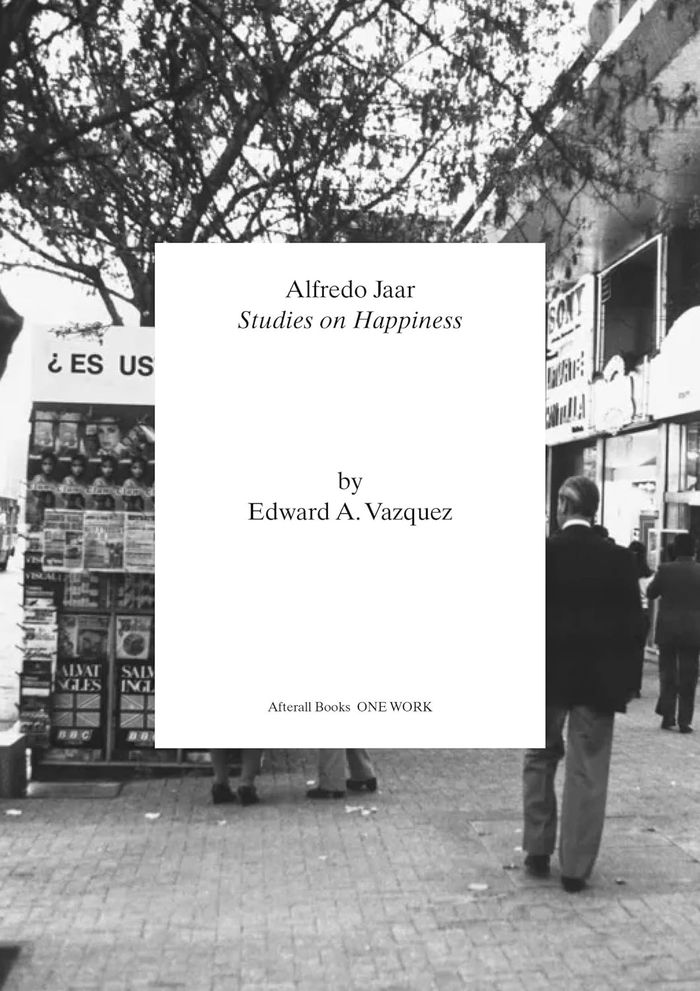
Between 1979 and 1981, Alfredo Jaar asked Chileans a deceptively simple question: "Are you happy?" Through private interviews, sidewalk polls and video-recorded forums, among other interventions, Jaar's three-year and seven-phase project, ''Studies on happiness'', addressed a furtive and fearful population living under Augusto Pinochet's military dictatorship. It also spoke to a country in transition, as a newly adopted constitution remade Chile through privatisation and other neoliberal reforms. In its varied interventions and direct mode of address, ''Studies on happiness'' functioned as a feedback device meant to catalyse a critical awareness with its blunt questioning. Edward A. Vazquez contextualises Studies on Happiness within Jaar's early production and situates his practice within a Chilean art world haunted by the residues of political violence. This study foregrounds the project's historical embeddedness and the deep political stakes of its apparent sociality, recognising the crucial role that context has always played in Jaar's practice. By turning to the Santiago of Studies on Happiness, Vazquez explores the work's political and art historical environment and provides a wedge to realign current interpretations of Chilean art and hemispheric conceptualism with the openness central to Jaar's project.
Alfredo Jaar: Studies on happiness
Actions:
Price:
$25.95
(available to order)
Summary:
Between 1979 and 1981, Alfredo Jaar asked Chileans a deceptively simple question: "Are you happy?" Through private interviews, sidewalk polls and video-recorded forums, among other interventions, Jaar's three-year and seven-phase project, ''Studies on happiness'', addressed a furtive and fearful population living under Augusto Pinochet's military dictatorship. It also spoke to a country in transition, as a newly adopted constitution remade Chile through privatisation and other neoliberal reforms. In its varied interventions and direct mode of address, ''Studies on happiness'' functioned as a feedback device meant to catalyse a critical awareness with its blunt questioning. Edward A. Vazquez contextualises Studies on Happiness within Jaar's early production and situates his practice within a Chilean art world haunted by the residues of political violence. This study foregrounds the project's historical embeddedness and the deep political stakes of its apparent sociality, recognising the crucial role that context has always played in Jaar's practice. By turning to the Santiago of Studies on Happiness, Vazquez explores the work's political and art historical environment and provides a wedge to realign current interpretations of Chilean art and hemispheric conceptualism with the openness central to Jaar's project.
Form:
books
books
Publication:
November 2023
November 2023
Subject:
Art Theory
Art Theory
Form:
books
books
Price:
$45.95
(available to order)
Summary:
Dials, knobs, microphones, clocks; heads, hands, breath, voices. Ernst Schoen joined Frankfurt Radio in the 1920s as programmer and accelerated the potentials of this collision of bodies and technologies. As with others of his generation, Schoen experienced crisis after crisis, from the violence of war, the suicide of friends, economic collapse, and a brief episode of(...)
$45.95
(available to order)
Summary:
Dials, knobs, microphones, clocks; heads, hands, breath, voices. Ernst Schoen joined Frankfurt Radio in the 1920s as programmer and accelerated the potentials of this collision of bodies and technologies. As with others of his generation, Schoen experienced crisis after crisis, from the violence of war, the suicide of friends, economic collapse, and a brief episode of(...)
Title:
Dissonant waves: Ernst Schoen and experimental sound in the 20th century
Actions:
Price:
$45.95
(available to order)
Summary:
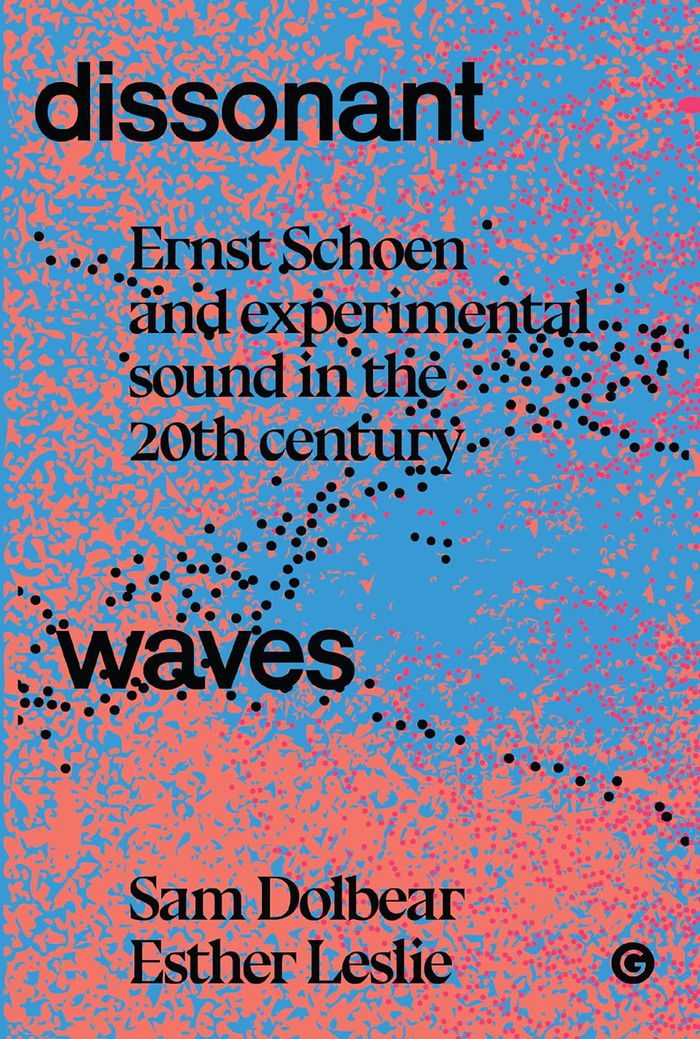
Dials, knobs, microphones, clocks; heads, hands, breath, voices. Ernst Schoen joined Frankfurt Radio in the 1920s as programmer and accelerated the potentials of this collision of bodies and technologies. As with others of his generation, Schoen experienced crisis after crisis, from the violence of war, the suicide of friends, economic collapse, and a brief episode of permitted experimentalism under the Weimar Republic for those who would foster aesthetic, technical, and political revolution. The counterreaction was Nazism—and Schoen and his milieux fell victim to it, found ways out of it, or hit against it with all their might. ''Dissonant waves'' tracks the life of Ernst Schoen—poet, composer, radio programmer, theorist, and best friend of Walter Benjamin from childhood—as he moves between Frankfurt, Berlin, Paris, and London. It casts radio history and practice into concrete spaces, into networks of friends and institutions, into political exigencies and domestic plights, and into broader aesthetic discussions of the politicization of art and the aestheticization of politics. Through friendship and comradeship, a position in state-backed radio, imprisonment, exile, networking in a new country, re-emigration, ill-treatment, neglect, Schoen suffers the century and articulates its broken promises.
Dissonant waves: Ernst Schoen and experimental sound in the 20th century
Actions:
Price:
$45.95
(available to order)
Summary:
Dials, knobs, microphones, clocks; heads, hands, breath, voices. Ernst Schoen joined Frankfurt Radio in the 1920s as programmer and accelerated the potentials of this collision of bodies and technologies. As with others of his generation, Schoen experienced crisis after crisis, from the violence of war, the suicide of friends, economic collapse, and a brief episode of permitted experimentalism under the Weimar Republic for those who would foster aesthetic, technical, and political revolution. The counterreaction was Nazism—and Schoen and his milieux fell victim to it, found ways out of it, or hit against it with all their might. ''Dissonant waves'' tracks the life of Ernst Schoen—poet, composer, radio programmer, theorist, and best friend of Walter Benjamin from childhood—as he moves between Frankfurt, Berlin, Paris, and London. It casts radio history and practice into concrete spaces, into networks of friends and institutions, into political exigencies and domestic plights, and into broader aesthetic discussions of the politicization of art and the aestheticization of politics. Through friendship and comradeship, a position in state-backed radio, imprisonment, exile, networking in a new country, re-emigration, ill-treatment, neglect, Schoen suffers the century and articulates its broken promises.
Form:
books
books
Publication:
September 2023
September 2023
Subject:
Acoustics
Acoustics
Form:
books
books
Actions:
Price:
$20.95
(available to order)
Summary:
« Parmi les membres de la nation, il y a ceux qui lui seraient originellement liés et en seraient les membres authentiques – ce sont les garants de son intégrité – et puis les autres, dont le lien est construit et donc artificiel. » À l’époque coloniale, le corps indigène est soumis à un état d’exception permanent. Ce procédé est au cœur de l’institution de l’indigénat.(...)
$20.95
(available to order)
Summary:
« Parmi les membres de la nation, il y a ceux qui lui seraient originellement liés et en seraient les membres authentiques – ce sont les garants de son intégrité – et puis les autres, dont le lien est construit et donc artificiel. » À l’époque coloniale, le corps indigène est soumis à un état d’exception permanent. Ce procédé est au cœur de l’institution de l’indigénat.(...)
Title:
Le corps d'exception: Le artifices du pouvoir colonial et la destruction de la vie
Actions:
Price:
$20.95
(available to order)
Summary:
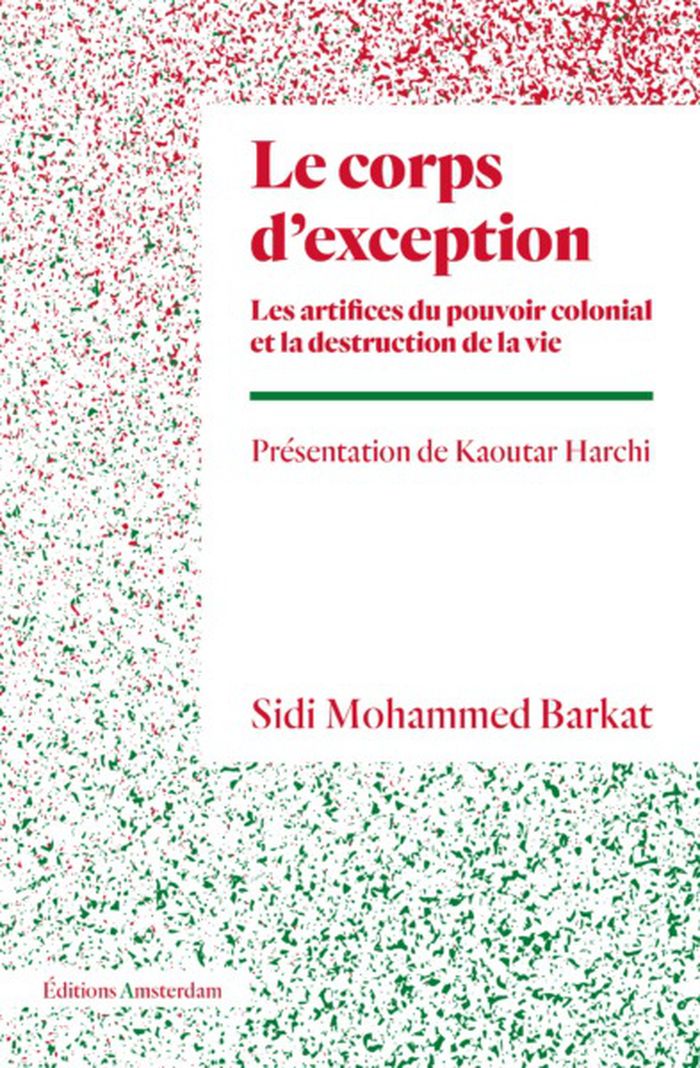
« Parmi les membres de la nation, il y a ceux qui lui seraient originellement liés et en seraient les membres authentiques – ce sont les garants de son intégrité – et puis les autres, dont le lien est construit et donc artificiel. » À l’époque coloniale, le corps indigène est soumis à un état d’exception permanent. Ce procédé est au cœur de l’institution de l’indigénat. Sur le plan juridique et politique, le sénatus-consulte rend le droit musulman et les coutumes des colonisés incompatibles avec la moralité républicaine, tandis que sur le plan culturel, le colonisé est représenté comme indigne de la qualité de citoyen – bien qu’il soit membre de la nation française. Inclus en tant qu’exclu, il se trouve assujetti à un régime légal qui établit au cœur de l’État de droit une suspension du principe d’égalité. Cette exception juridique et politique n’a toutefois pas disparu avec la décolonisation, comme le montre la fréquence des crimes policiers dans les quartiers populaires ou le caractère xénophobe et répressif des lois successives sur l’immigration. Les représentations discriminantes demeurent vivaces dans la société française d’aujourd’hui, et la violence institutionnalisée s’abat depuis des décennies sur les populations issues des anciennes colonies.
Le corps d'exception: Le artifices du pouvoir colonial et la destruction de la vie
Actions:
Price:
$20.95
(available to order)
Summary:
« Parmi les membres de la nation, il y a ceux qui lui seraient originellement liés et en seraient les membres authentiques – ce sont les garants de son intégrité – et puis les autres, dont le lien est construit et donc artificiel. » À l’époque coloniale, le corps indigène est soumis à un état d’exception permanent. Ce procédé est au cœur de l’institution de l’indigénat. Sur le plan juridique et politique, le sénatus-consulte rend le droit musulman et les coutumes des colonisés incompatibles avec la moralité républicaine, tandis que sur le plan culturel, le colonisé est représenté comme indigne de la qualité de citoyen – bien qu’il soit membre de la nation française. Inclus en tant qu’exclu, il se trouve assujetti à un régime légal qui établit au cœur de l’État de droit une suspension du principe d’égalité. Cette exception juridique et politique n’a toutefois pas disparu avec la décolonisation, comme le montre la fréquence des crimes policiers dans les quartiers populaires ou le caractère xénophobe et répressif des lois successives sur l’immigration. Les représentations discriminantes demeurent vivaces dans la société française d’aujourd’hui, et la violence institutionnalisée s’abat depuis des décennies sur les populations issues des anciennes colonies.
Form:
books
books
Publication:
August 2024
August 2024
Subject:
Social
Social
Form:
books
books
Title:
John Lehr: The last things
John Lehr: The last things
Actions:
Price:
$168.95
(available in store)
Summary:
"The last things" explores the artifacts of an American archeological present. The work in this series depicts vernacular forms of architecture, signage, images, and objects that were hastily made in a rush for attention, or abandoned in place after their usefulness had expired. Lehr posits them as symptomatic symbols of the repetitive cycles of decline, rehabilitation,(...)
$168.95
(available in store)
Summary:
"The last things" explores the artifacts of an American archeological present. The work in this series depicts vernacular forms of architecture, signage, images, and objects that were hastily made in a rush for attention, or abandoned in place after their usefulness had expired. Lehr posits them as symptomatic symbols of the repetitive cycles of decline, rehabilitation,(...)
Title:
John Lehr: The last things
Actions:
Price:
$168.95
(available in store)
Summary:
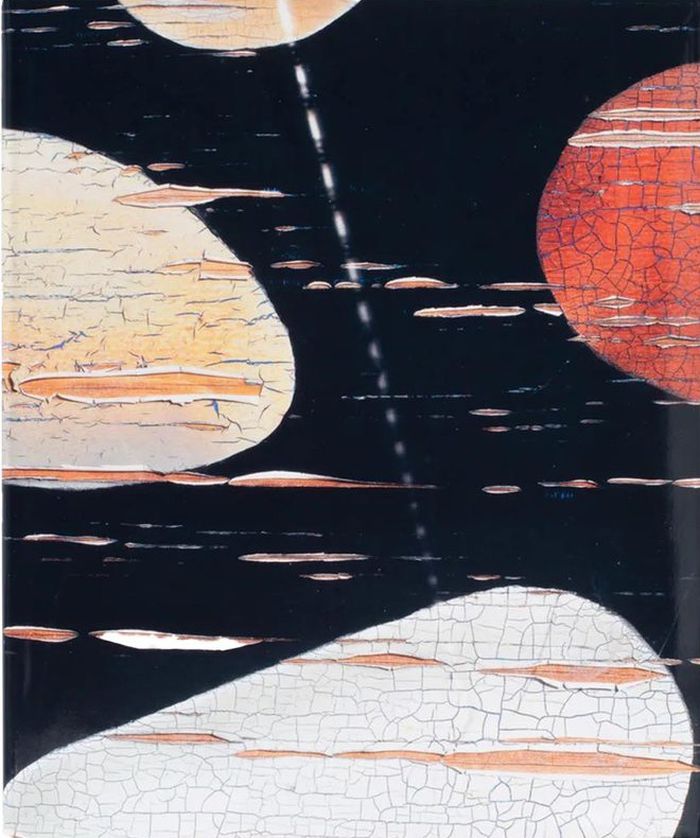
"The last things" explores the artifacts of an American archeological present. The work in this series depicts vernacular forms of architecture, signage, images, and objects that were hastily made in a rush for attention, or abandoned in place after their usefulness had expired. Lehr posits them as symptomatic symbols of the repetitive cycles of decline, rehabilitation, violence, and mourning that are woven into the fabric of contemporary American life. These light-drenched photographs vividly describe a nation speaking through the language of capitalism. Words and images repeat and contradict throughout the work, reflecting emphatic pleas and shifting priorities. At other times, language breaks down completely, giving way to pictographic forms that are both primitive and utterly contemporary. Flaking paint morphs into JPEG vinyl printouts and LED displays, blurring the line between commercial speech and individual expression. Embedded in the work is a belief in the power and absurdity of objects that—like a body—bear the traces of collective experience. In its distilled and emphatic sequencing "The last things" reads as a prose poem and a cryptic cipher about a country at the brink of a tipping point.
John Lehr: The last things
Actions:
Price:
$168.95
(available in store)
Summary:
"The last things" explores the artifacts of an American archeological present. The work in this series depicts vernacular forms of architecture, signage, images, and objects that were hastily made in a rush for attention, or abandoned in place after their usefulness had expired. Lehr posits them as symptomatic symbols of the repetitive cycles of decline, rehabilitation, violence, and mourning that are woven into the fabric of contemporary American life. These light-drenched photographs vividly describe a nation speaking through the language of capitalism. Words and images repeat and contradict throughout the work, reflecting emphatic pleas and shifting priorities. At other times, language breaks down completely, giving way to pictographic forms that are both primitive and utterly contemporary. Flaking paint morphs into JPEG vinyl printouts and LED displays, blurring the line between commercial speech and individual expression. Embedded in the work is a belief in the power and absurdity of objects that—like a body—bear the traces of collective experience. In its distilled and emphatic sequencing "The last things" reads as a prose poem and a cryptic cipher about a country at the brink of a tipping point.
Form:
books
books
Publication:
November 2024
November 2024
Subject:
Photography monographs
Photography monographs
Form:
books
books
Title:
Volcano: nature and culture
Volcano: nature and culture
Actions:
Price:
$35.50
(available to order)
Summary:
For years, tourists have trekked across cracked rock at Hawaii’s Kilauea volcano to witness the inspiring sight of creeping lava and its devastating effects on the landscape. In 2010, Eyjafjallajökull erupted in Iceland, stranding travelers as a cloud of ash covered western and northern Europe, causing the largest disruption of air travel since World War II. And just a(...)
$35.50
(available to order)
Summary:
For years, tourists have trekked across cracked rock at Hawaii’s Kilauea volcano to witness the inspiring sight of creeping lava and its devastating effects on the landscape. In 2010, Eyjafjallajökull erupted in Iceland, stranding travelers as a cloud of ash covered western and northern Europe, causing the largest disruption of air travel since World War II. And just a(...)
Title:
Volcano: nature and culture
Actions:
Price:
$35.50
(available to order)
Summary:
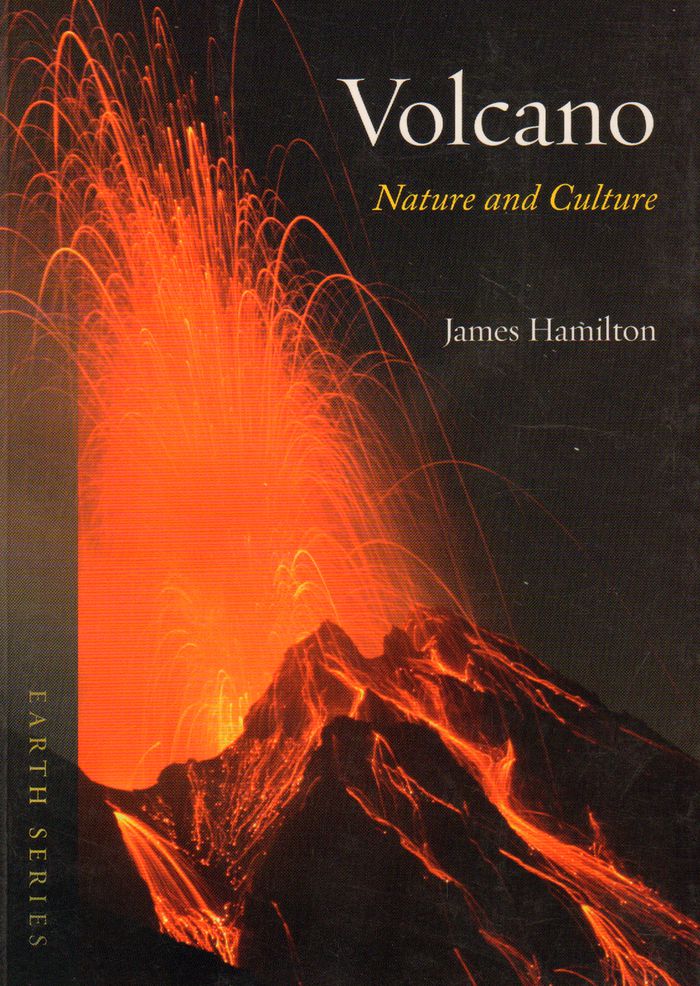
For years, tourists have trekked across cracked rock at Hawaii’s Kilauea volcano to witness the inspiring sight of creeping lava and its devastating effects on the landscape. In 2010, Eyjafjallajökull erupted in Iceland, stranding travelers as a cloud of ash covered western and northern Europe, causing the largest disruption of air travel since World War II. And just a few months later, Mount Merapi blew in Indonesia, killing over 350 people and displacing over 350,000 others, awakening people once more to the dangerous potential of these sleeping giants. Though today largely dormant, volcanoes continue to erupt across the world, reminding us of their sheer physical power. In Volcano, James Hamilton explores the cultural history generated by the violence and terrifying beauty of volcanoes. He describes the reverberations of early eruptions of Vesuvius and Etna in Greek and Roman myth. He also examines the depiction of volcanoes in art—from the earliest known wall painting of an erupting volcano in 6200 BCE to the distinctive colors of Andy Warhol and Michael Sandle’s exploding mountains. Surveying a number of twenty-first-century works, Hamilton shows that volcanoes continue to influence the artistic imagination.
Volcano: nature and culture
Actions:
Price:
$35.50
(available to order)
Summary:
For years, tourists have trekked across cracked rock at Hawaii’s Kilauea volcano to witness the inspiring sight of creeping lava and its devastating effects on the landscape. In 2010, Eyjafjallajökull erupted in Iceland, stranding travelers as a cloud of ash covered western and northern Europe, causing the largest disruption of air travel since World War II. And just a few months later, Mount Merapi blew in Indonesia, killing over 350 people and displacing over 350,000 others, awakening people once more to the dangerous potential of these sleeping giants. Though today largely dormant, volcanoes continue to erupt across the world, reminding us of their sheer physical power. In Volcano, James Hamilton explores the cultural history generated by the violence and terrifying beauty of volcanoes. He describes the reverberations of early eruptions of Vesuvius and Etna in Greek and Roman myth. He also examines the depiction of volcanoes in art—from the earliest known wall painting of an erupting volcano in 6200 BCE to the distinctive colors of Andy Warhol and Michael Sandle’s exploding mountains. Surveying a number of twenty-first-century works, Hamilton shows that volcanoes continue to influence the artistic imagination.
Form:
books
books
Publication:
June 2012
June 2012
Subject:
Landscape Theory
Landscape Theory
Form:
books
books
Actions:
Price:
$54.95
(available in store)
Summary:
Un nombre croissant d'artistes contemporains opte pour le mode de l'enquête. Plutôt que de « faire œuvre », ces artistes se soucient avant tout de documenter la violence d'État, l'effet des technologies répressives ou la destruction de l'environnement. En parallèle, des journalistes, des avocats et des activistes ont de plus en plus recours à des pratiques de(...)
$54.95
(available in store)
Summary:
Un nombre croissant d'artistes contemporains opte pour le mode de l'enquête. Plutôt que de « faire œuvre », ces artistes se soucient avant tout de documenter la violence d'État, l'effet des technologies répressives ou la destruction de l'environnement. En parallèle, des journalistes, des avocats et des activistes ont de plus en plus recours à des pratiques de(...)
Title:
L'art de la contre-enquête : Esthétiques de l'investigation, politiques de vérité
Actions:
Price:
$54.95
(available in store)
Summary:
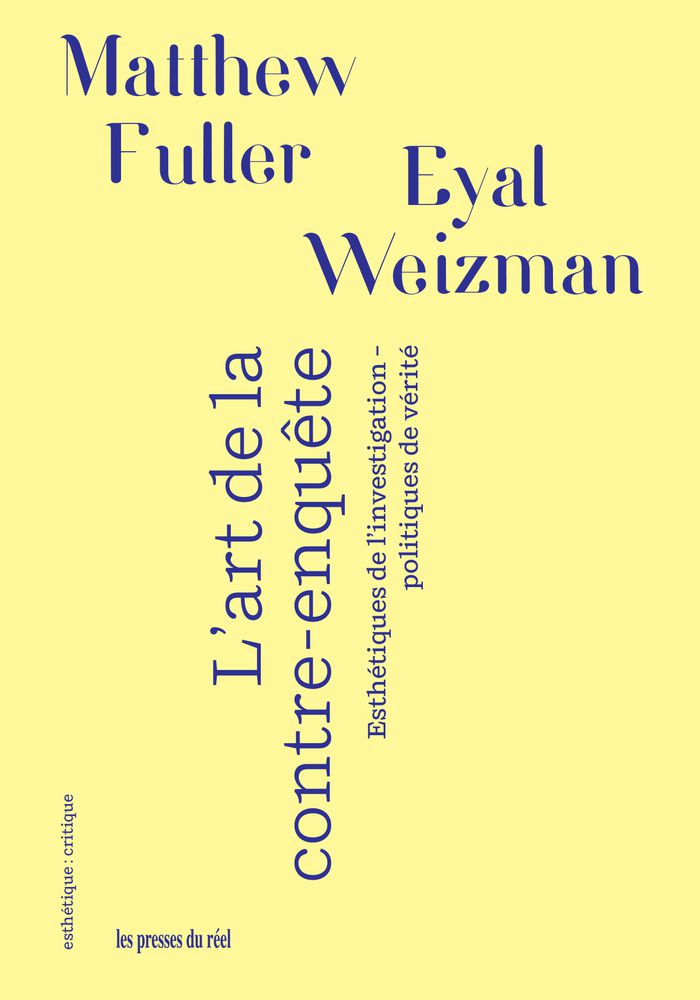
Un nombre croissant d'artistes contemporains opte pour le mode de l'enquête. Plutôt que de « faire œuvre », ces artistes se soucient avant tout de documenter la violence d'État, l'effet des technologies répressives ou la destruction de l'environnement. En parallèle, des journalistes, des avocats et des activistes ont de plus en plus recours à des pratiques de visualisation issues du domaine de l'art. En croisant vidéos amateurs, images satellites et témoignages, des contre-enquêtes voient le jour dont la dimension visuelle et esthétique a d'autant plus d'impact. Le livre donne à voir toute l'ampleur de cette nouvelle « esthétique d'investigation » : en mobilisant des stratégies éprouvées en art ou en architecture, il s'agit de montrer les torts subis et de faire émerger une vérité souvent inconfortable. Le travail mené depuis désormais de longues années par « Forensic Architecture » rejoint d'autres pratiques de contre-analyse citoyenne, afin de briser les monopoles d'État sur les technologies de surveillance et de contredire les récits officiels. Que ce soit dans l'atelier ou le laboratoire, la salle d'audience ou la galerie, en ligne ou dans la rue, cet art de la contre-enquête replace la vérité au cœur d'un souci partagé et tisse les liens d'un nouveau « sens commun ».
L'art de la contre-enquête : Esthétiques de l'investigation, politiques de vérité
Actions:
Price:
$54.95
(available in store)
Summary:
Un nombre croissant d'artistes contemporains opte pour le mode de l'enquête. Plutôt que de « faire œuvre », ces artistes se soucient avant tout de documenter la violence d'État, l'effet des technologies répressives ou la destruction de l'environnement. En parallèle, des journalistes, des avocats et des activistes ont de plus en plus recours à des pratiques de visualisation issues du domaine de l'art. En croisant vidéos amateurs, images satellites et témoignages, des contre-enquêtes voient le jour dont la dimension visuelle et esthétique a d'autant plus d'impact. Le livre donne à voir toute l'ampleur de cette nouvelle « esthétique d'investigation » : en mobilisant des stratégies éprouvées en art ou en architecture, il s'agit de montrer les torts subis et de faire émerger une vérité souvent inconfortable. Le travail mené depuis désormais de longues années par « Forensic Architecture » rejoint d'autres pratiques de contre-analyse citoyenne, afin de briser les monopoles d'État sur les technologies de surveillance et de contredire les récits officiels. Que ce soit dans l'atelier ou le laboratoire, la salle d'audience ou la galerie, en ligne ou dans la rue, cet art de la contre-enquête replace la vérité au cœur d'un souci partagé et tisse les liens d'un nouveau « sens commun ».
Form:
books
books
Publication:
October 2025
October 2025
Subject:
Art Theory
Art Theory
Form:
books
books
Price:
$32.95
(available to order)
Summary:
In "Enduring innocence", Keller Easterling tells the stories of outlaw "spatial products" -resorts, information technology campuses, retail chains, golf courses, ports, and other hybrid spaces that exist outside normal constituencies and jurisdictions, in difficult political situations around the world. These spaces -familiar commercial formulas of retail, business, and(...)
$32.95
(available to order)
Summary:
In "Enduring innocence", Keller Easterling tells the stories of outlaw "spatial products" -resorts, information technology campuses, retail chains, golf courses, ports, and other hybrid spaces that exist outside normal constituencies and jurisdictions, in difficult political situations around the world. These spaces -familiar commercial formulas of retail, business, and(...)
Subject:
Architectural Theory
Architectural Theory
Publication:
October 2007, Cambridge (MA), London
October 2007, Cambridge (MA), London
Title:
Enduring innocence : global archtitecture and its political masquerades
Actions:
Price:
$32.95
(available to order)
Summary:
In "Enduring innocence", Keller Easterling tells the stories of outlaw "spatial products" -resorts, information technology campuses, retail chains, golf courses, ports, and other hybrid spaces that exist outside normal constituencies and jurisdictions, in difficult political situations around the world. These spaces -familiar commercial formulas of retail, business, and trade - aspire to be worlds unto themselves, self-reflexive and innocent of politics. But as Easterling shows, these enclaves can become political pawns and objects of contention. Jurisdictionally ambiguous, they are imbued with myths, desires, and symbolic capital. Their hilarious and dangerous masquerades often mix quite easily with the cunning of political platforms. Easterling argues that the study of such "real estate cocktails" provides vivid evidence of the market's weakness, resilience, or violence. These regimes of nonnational sovereignty, she writes, "move around the world like weather fronts"; Easterling focuses not on their blending - their global connectivity - but on their segregation and the cultural collisions that ensue. "Enduring innocence" resists the dream of one globally legible world found in many architectural discourses on globalization. Instead, Easterling's consideration of these segregated worlds provides new tools for practitioners sensitive to the political composition of urban landscapes.
Enduring innocence : global archtitecture and its political masquerades
Actions:
Price:
$32.95
(available to order)
Summary:
In "Enduring innocence", Keller Easterling tells the stories of outlaw "spatial products" -resorts, information technology campuses, retail chains, golf courses, ports, and other hybrid spaces that exist outside normal constituencies and jurisdictions, in difficult political situations around the world. These spaces -familiar commercial formulas of retail, business, and trade - aspire to be worlds unto themselves, self-reflexive and innocent of politics. But as Easterling shows, these enclaves can become political pawns and objects of contention. Jurisdictionally ambiguous, they are imbued with myths, desires, and symbolic capital. Their hilarious and dangerous masquerades often mix quite easily with the cunning of political platforms. Easterling argues that the study of such "real estate cocktails" provides vivid evidence of the market's weakness, resilience, or violence. These regimes of nonnational sovereignty, she writes, "move around the world like weather fronts"; Easterling focuses not on their blending - their global connectivity - but on their segregation and the cultural collisions that ensue. "Enduring innocence" resists the dream of one globally legible world found in many architectural discourses on globalization. Instead, Easterling's consideration of these segregated worlds provides new tools for practitioners sensitive to the political composition of urban landscapes.
Form:
books
books
Publication:
October 2007, Cambridge (MA), London
October 2007, Cambridge (MA), London
Subject:
Architectural Theory
Architectural Theory
Form:
books
books
Price:
$38.95
(available in store)
Summary:
Comment, dans un paysage politique en ruines, reconstituer la vérité des faits ? La réponse d'Eyal Weizman tient en une formule-programme: "l'architecture forensique". Approche novatrice au carrefour de plusieurs disciplines, cette sorte d'architecture se soucie moins de construire des bâtiments que d'analyser des traces que porte le bâti afin de rétablir des vérités(...)
$38.95
(available in store)
Summary:
Comment, dans un paysage politique en ruines, reconstituer la vérité des faits ? La réponse d'Eyal Weizman tient en une formule-programme: "l'architecture forensique". Approche novatrice au carrefour de plusieurs disciplines, cette sorte d'architecture se soucie moins de construire des bâtiments que d'analyser des traces que porte le bâti afin de rétablir des vérités(...)
Title:
La vérité en ruines : Manifeste pour une architecture forensique
Actions:
Price:
$38.95
(available in store)
Summary:
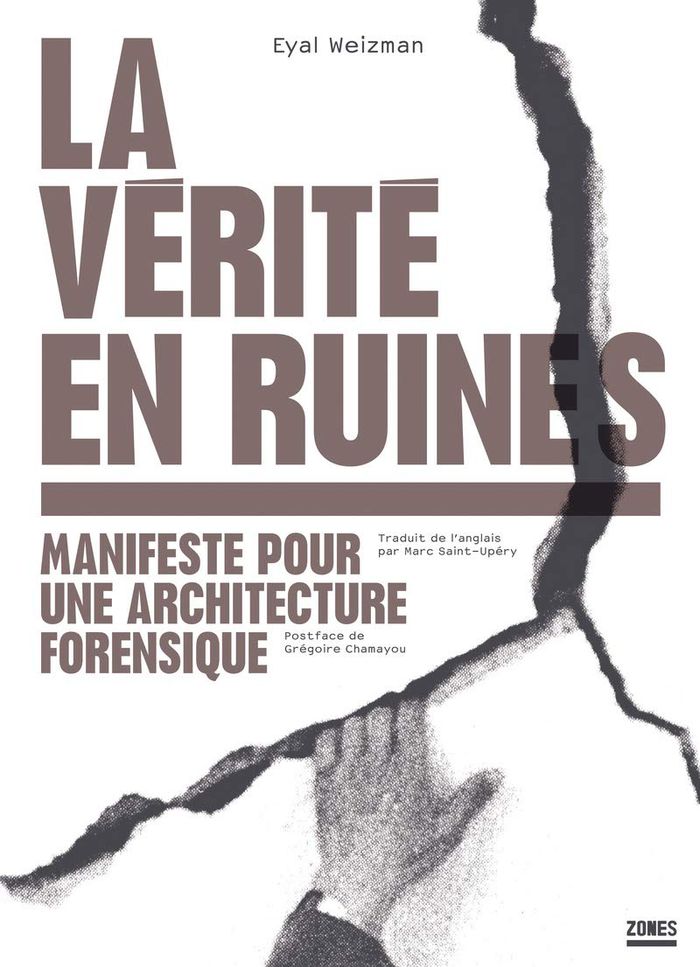
Comment, dans un paysage politique en ruines, reconstituer la vérité des faits ? La réponse d'Eyal Weizman tient en une formule-programme: "l'architecture forensique". Approche novatrice au carrefour de plusieurs disciplines, cette sorte d'architecture se soucie moins de construire des bâtiments que d'analyser des traces que porte le bâti afin de rétablir des vérités menacées. Impacts de balles, trous de missiles, ombres projetées sur les murs de corps annihilés par le souffle d'une explosion : l'architecture forensique consiste à faire parler ces indices. Si elle mobilise à cette fin des techniques en partie héritées de la médecine légale et de la police scientifique, c'est en les retournant contre la violence d'État, ses dénis et ses "fake news". Il s'agit donc d'une "contre-forensique" qui tente de se réapproprier les moyens de la preuve dans un contexte d'inégalité structurelle d'accès aux moyens de la manifestation de la vérité. Au fil des pages, cet ouvrage illustré offre un panorama saisissant des champs d'application de cette démarche, depuis le cas des frappes de drone au Pakistan, en Afghanistan et à Gaza, jusqu'à celui de la prison secrète de Saidnaya en Syrie, en passant par le camp de Staro Sajmiste, dans la région de Belgrade.
La vérité en ruines : Manifeste pour une architecture forensique
Actions:
Price:
$38.95
(available in store)
Summary:
Comment, dans un paysage politique en ruines, reconstituer la vérité des faits ? La réponse d'Eyal Weizman tient en une formule-programme: "l'architecture forensique". Approche novatrice au carrefour de plusieurs disciplines, cette sorte d'architecture se soucie moins de construire des bâtiments que d'analyser des traces que porte le bâti afin de rétablir des vérités menacées. Impacts de balles, trous de missiles, ombres projetées sur les murs de corps annihilés par le souffle d'une explosion : l'architecture forensique consiste à faire parler ces indices. Si elle mobilise à cette fin des techniques en partie héritées de la médecine légale et de la police scientifique, c'est en les retournant contre la violence d'État, ses dénis et ses "fake news". Il s'agit donc d'une "contre-forensique" qui tente de se réapproprier les moyens de la preuve dans un contexte d'inégalité structurelle d'accès aux moyens de la manifestation de la vérité. Au fil des pages, cet ouvrage illustré offre un panorama saisissant des champs d'application de cette démarche, depuis le cas des frappes de drone au Pakistan, en Afghanistan et à Gaza, jusqu'à celui de la prison secrète de Saidnaya en Syrie, en passant par le camp de Staro Sajmiste, dans la région de Belgrade.
Form:
books
books
Publication:
June 2021
June 2021
Subject:
Architectural Theory
Architectural Theory
Form:
books
books
Actions:
Price:
$20.00
(available to order)
Summary:
Nature and communities in the global south is being overwhelmed at a shocking rate. In many places this is due to ventures such as large-scale open-pit mining, oil extraction in tropical areas, and the spread of monocultures. These and other such forms of natural resource appropriation are usually known as extractivisms. This introductory book on the one hand adopts an(...)
$20.00
(available to order)
Summary:
Nature and communities in the global south is being overwhelmed at a shocking rate. In many places this is due to ventures such as large-scale open-pit mining, oil extraction in tropical areas, and the spread of monocultures. These and other such forms of natural resource appropriation are usually known as extractivisms. This introductory book on the one hand adopts an(...)
Title:
Extractivisms: politics, economy and ecology
Actions:
Price:
$20.00
(available to order)
Summary:
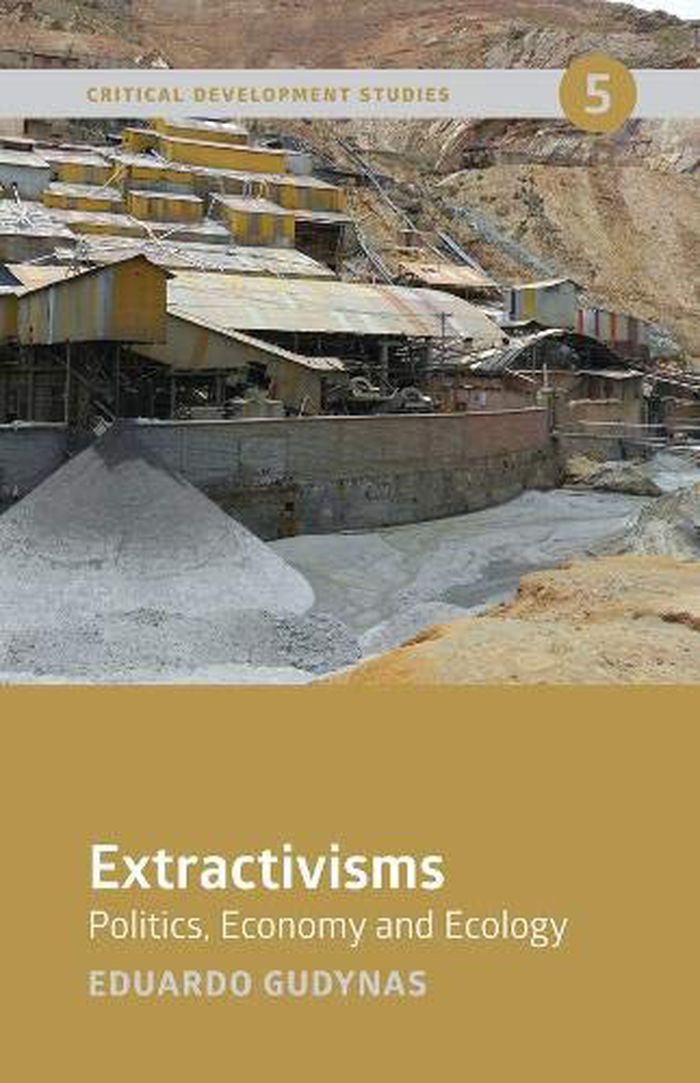
Nature and communities in the global south is being overwhelmed at a shocking rate. In many places this is due to ventures such as large-scale open-pit mining, oil extraction in tropical areas, and the spread of monocultures. These and other such forms of natural resource appropriation are usually known as extractivisms. This introductory book on the one hand adopts an interdisciplinary and critical perspective, incorporating contributions from economics, politics, ecology, and more. On the other hand it is an exercise in the politics among humans and with the environment. Eduardo Gudnyas explores negative local impacts such as ecological and health degradation or violence, along with spillover effects that redefines democracy and justice. Significantly, presented for the first time in English is a comprehensive overview of the theoretical innovations currently being discussed in the South, such as the distinction between appropriation and production modes and a redefinition of surplus to include social and economic features or new understandings on conflict dynamics. Furthermore, Gudynas discusses the Latin American peculiarities of extractivisms produced both by conservative and new-left governments, making clear that it has very deep roots in culture and ideologies, and offers solutions for the future.
Extractivisms: politics, economy and ecology
Actions:
Price:
$20.00
(available to order)
Summary:
Nature and communities in the global south is being overwhelmed at a shocking rate. In many places this is due to ventures such as large-scale open-pit mining, oil extraction in tropical areas, and the spread of monocultures. These and other such forms of natural resource appropriation are usually known as extractivisms. This introductory book on the one hand adopts an interdisciplinary and critical perspective, incorporating contributions from economics, politics, ecology, and more. On the other hand it is an exercise in the politics among humans and with the environment. Eduardo Gudnyas explores negative local impacts such as ecological and health degradation or violence, along with spillover effects that redefines democracy and justice. Significantly, presented for the first time in English is a comprehensive overview of the theoretical innovations currently being discussed in the South, such as the distinction between appropriation and production modes and a redefinition of surplus to include social and economic features or new understandings on conflict dynamics. Furthermore, Gudynas discusses the Latin American peculiarities of extractivisms produced both by conservative and new-left governments, making clear that it has very deep roots in culture and ideologies, and offers solutions for the future.
Form:
books
books
Publication:
September 2021
September 2021
Subject:
Environment and environmental theory
Environment and environmental theory
Form:
books
books
Actions:
Price:
$41.99
(available in store)
Summary:
Digital and social media have transformed how much and how fast we communicate, but they have also altered the palette of expressive strategies: the cultural forms that shape how citizens, activists, and artists speak and interact. Most familiar among these strategies are storytelling and representation. In A Theory of Assembly, Kyle Parry argues that one of the most(...)
$41.99
(available in store)
Summary:
Digital and social media have transformed how much and how fast we communicate, but they have also altered the palette of expressive strategies: the cultural forms that shape how citizens, activists, and artists speak and interact. Most familiar among these strategies are storytelling and representation. In A Theory of Assembly, Kyle Parry argues that one of the most(...)
Publication:
January 2023
January 2023
Title:
A theory of assembly: From museums to memes
Actions:
Price:
$41.99
(available in store)
Summary:
Digital and social media have transformed how much and how fast we communicate, but they have also altered the palette of expressive strategies: the cultural forms that shape how citizens, activists, and artists speak and interact. Most familiar among these strategies are storytelling and representation. In A Theory of Assembly, Kyle Parry argues that one of the most powerful and pervasive cultural forms in the digital era is assembly. Whether as subtle photographic sequences, satirical Venn diagrams, or networked archives, projects based in assembly do not so much narrate or represent the world as rearrange it. This work of rearranging can take place at any scale, from a simple pairing of images, undertaken by one person, to the entire history of internet memes, undertaken by millions. With examples ranging from GIFs and paintings to museum exhibitions and social movement hashtags, Parry shows how, in the internet age, assembly has come to equal narrative and representation in its reach and influence, particularly as a response to ecological and social violence. He also emphasizes the ambivalence of assembly—the way it can be both emancipatory and antidemocratic.
A theory of assembly: From museums to memes
Actions:
Price:
$41.99
(available in store)
Summary:
Digital and social media have transformed how much and how fast we communicate, but they have also altered the palette of expressive strategies: the cultural forms that shape how citizens, activists, and artists speak and interact. Most familiar among these strategies are storytelling and representation. In A Theory of Assembly, Kyle Parry argues that one of the most powerful and pervasive cultural forms in the digital era is assembly. Whether as subtle photographic sequences, satirical Venn diagrams, or networked archives, projects based in assembly do not so much narrate or represent the world as rearrange it. This work of rearranging can take place at any scale, from a simple pairing of images, undertaken by one person, to the entire history of internet memes, undertaken by millions. With examples ranging from GIFs and paintings to museum exhibitions and social movement hashtags, Parry shows how, in the internet age, assembly has come to equal narrative and representation in its reach and influence, particularly as a response to ecological and social violence. He also emphasizes the ambivalence of assembly—the way it can be both emancipatory and antidemocratic.
Form:
books
books
Publication:
January 2023
January 2023


