


10594 Results
Form:
books
books
Actions:
Price:
$69.95
(available to order)
Summary:
The world's growing vulnerability to planet-sized risks invites action on a global scale. The World as an Architectural Project shows how for more than a century architects have imagined the future of the planet through world-scale projects. With fifty speculative projects by Patrick Geddes, Alison and Peter Smithson, Kiyonori Kikutake, Saverio Muratori, Takis Zenetos,(...)
$69.95
(available to order)
Summary:
The world's growing vulnerability to planet-sized risks invites action on a global scale. The World as an Architectural Project shows how for more than a century architects have imagined the future of the planet through world-scale projects. With fifty speculative projects by Patrick Geddes, Alison and Peter Smithson, Kiyonori Kikutake, Saverio Muratori, Takis Zenetos,(...)
Title:
The world as an architectural project
Actions:
Price:
$69.95
(available to order)
Summary:
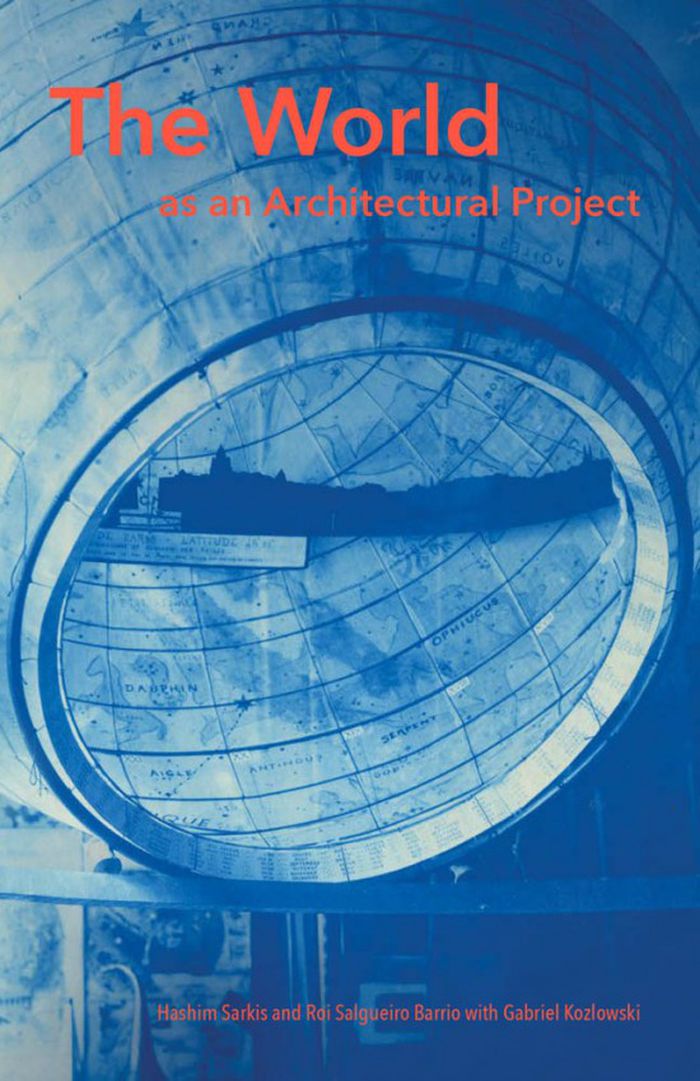
The world's growing vulnerability to planet-sized risks invites action on a global scale. The World as an Architectural Project shows how for more than a century architects have imagined the future of the planet through world-scale projects. With fifty speculative projects by Patrick Geddes, Alison and Peter Smithson, Kiyonori Kikutake, Saverio Muratori, Takis Zenetos, Sergio Bernardes, Juan Navarro Baldeweg, Luc Deleu, and many others, documented in text and images, this ambitious and wide-ranging book is the first compilation of its kind. Interestingly, architects begin to address the world as a project long before the advent of contemporary globalism and its assorted anxieties. The Spanish urban theorist and entrepreneur Arturo Soria y Mata, for example, in 1882 envisions a system that connects the entire planet in a linear urban network. In 1927, Buckminster Fuller's “World Town Plan—4D Tower” proposes to solve global housing problems with mobile structures delivered and installed by a Zeppelin. And Joyce Hsiang and Bimal Mendis visualize the conditions of a worldwide “City of Seven Billion” in a 2015–2019 project. Rather than indulging the cliché of the megalomaniac architect, this volume presents a discipline reflecting on its own responsibilities.
The world as an architectural project
Actions:
Price:
$69.95
(available to order)
Summary:
The world's growing vulnerability to planet-sized risks invites action on a global scale. The World as an Architectural Project shows how for more than a century architects have imagined the future of the planet through world-scale projects. With fifty speculative projects by Patrick Geddes, Alison and Peter Smithson, Kiyonori Kikutake, Saverio Muratori, Takis Zenetos, Sergio Bernardes, Juan Navarro Baldeweg, Luc Deleu, and many others, documented in text and images, this ambitious and wide-ranging book is the first compilation of its kind. Interestingly, architects begin to address the world as a project long before the advent of contemporary globalism and its assorted anxieties. The Spanish urban theorist and entrepreneur Arturo Soria y Mata, for example, in 1882 envisions a system that connects the entire planet in a linear urban network. In 1927, Buckminster Fuller's “World Town Plan—4D Tower” proposes to solve global housing problems with mobile structures delivered and installed by a Zeppelin. And Joyce Hsiang and Bimal Mendis visualize the conditions of a worldwide “City of Seven Billion” in a 2015–2019 project. Rather than indulging the cliché of the megalomaniac architect, this volume presents a discipline reflecting on its own responsibilities.
Form:
books
books
Publication:
April 2020
April 2020
Subject:
Architectural Theory
Architectural Theory
Form:
books
books
Price:
$49.95
(available in store)
Summary:
Du Parc Marianne (Montpellier, France) à Vinhomes Riverside (Hanoï, Vietnam), en passant par l'Olympic Village (Vancouver, Canada) ou encore l'Eco-parc du Bardo (Constantine, Algérie), cet ouvrage présente quatorze projets urbains durables dans le monde et en analyse les succès mais aussi les difficultés et les échecs. Son objectif : développer un regard critique(...)
$49.95
(available in store)
Summary:
Du Parc Marianne (Montpellier, France) à Vinhomes Riverside (Hanoï, Vietnam), en passant par l'Olympic Village (Vancouver, Canada) ou encore l'Eco-parc du Bardo (Constantine, Algérie), cet ouvrage présente quatorze projets urbains durables dans le monde et en analyse les succès mais aussi les difficultés et les échecs. Son objectif : développer un regard critique(...)
Title:
(re)Penser la ville du XXIe siècle : 20 ans d'écoquartiers dans le monde
Actions:
Price:
$49.95
(available in store)
Summary:
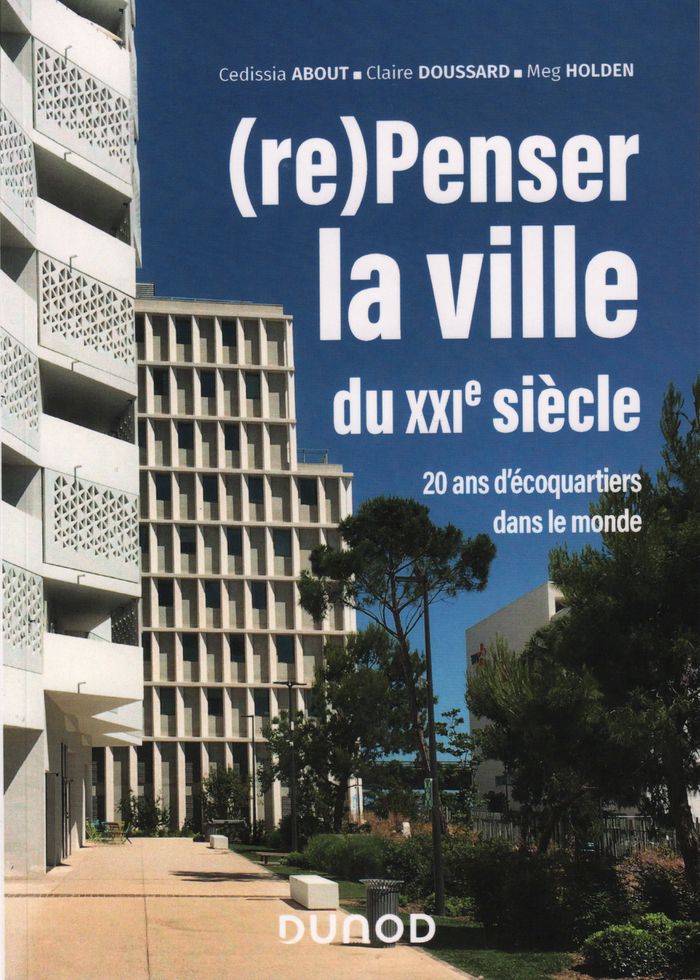
Du Parc Marianne (Montpellier, France) à Vinhomes Riverside (Hanoï, Vietnam), en passant par l'Olympic Village (Vancouver, Canada) ou encore l'Eco-parc du Bardo (Constantine, Algérie), cet ouvrage présente quatorze projets urbains durables dans le monde et en analyse les succès mais aussi les difficultés et les échecs. Son objectif : développer un regard critique vis-à-vis des pratiques d'aménagement qui ont contribué à la multiplication de ces (éco)quartiers depuis vingt ans, mettre en lumière les expériences réussies et proposer de possibles points d'amélioration. Il expose et interroge également l'apport des démarches de suivi, d'évaluation et de labellisation apparues suite aux premières expérimentations urbaines emblématiques comme BedZED au Royaume-Uni ou Fribourg en Allemagne. L'ouvrage permettra ainsi à tous les acteurs et observateurs de l'aménagement urbain d'identifier les pratiques vertueuses et les réussites à capitaliser dans le cadre du développement de futurs projets urbains durables, pour des villes décarbonnées, inclusives et « smarts ».
(re)Penser la ville du XXIe siècle : 20 ans d'écoquartiers dans le monde
Actions:
Price:
$49.95
(available in store)
Summary:
Du Parc Marianne (Montpellier, France) à Vinhomes Riverside (Hanoï, Vietnam), en passant par l'Olympic Village (Vancouver, Canada) ou encore l'Eco-parc du Bardo (Constantine, Algérie), cet ouvrage présente quatorze projets urbains durables dans le monde et en analyse les succès mais aussi les difficultés et les échecs. Son objectif : développer un regard critique vis-à-vis des pratiques d'aménagement qui ont contribué à la multiplication de ces (éco)quartiers depuis vingt ans, mettre en lumière les expériences réussies et proposer de possibles points d'amélioration. Il expose et interroge également l'apport des démarches de suivi, d'évaluation et de labellisation apparues suite aux premières expérimentations urbaines emblématiques comme BedZED au Royaume-Uni ou Fribourg en Allemagne. L'ouvrage permettra ainsi à tous les acteurs et observateurs de l'aménagement urbain d'identifier les pratiques vertueuses et les réussites à capitaliser dans le cadre du développement de futurs projets urbains durables, pour des villes décarbonnées, inclusives et « smarts ».
Form:
books
books
Publication:
September 2019
September 2019
Subject:
Urban Theory
Urban Theory
Form:
books
books
Title:
The Urban Archetypes of Jane Jacobs and Ebenezer Howard: Contradiction and meaning in city form
The Urban Archetypes of Jane Jacobs and Ebenezer Howard: Contradiction and meaning in city form
Actions:
Price:
$80.00
(available to order)
Summary:
Ebenezer Howard, an Englishman, and Jane Jacobs, a naturalized Canadian, personify the twentieth century’s opposing outlooks on cities. Howard had envisaged small towns, newly built from scratch, fashioned on single family homes with small gardens. Jacobs embraced existing inner-city neighbourhoods emphasizing the verve of the living street. From Howard’s idea, the(...)
$80.00
(available to order)
Summary:
Ebenezer Howard, an Englishman, and Jane Jacobs, a naturalized Canadian, personify the twentieth century’s opposing outlooks on cities. Howard had envisaged small towns, newly built from scratch, fashioned on single family homes with small gardens. Jacobs embraced existing inner-city neighbourhoods emphasizing the verve of the living street. From Howard’s idea, the(...)
Title:
The Urban Archetypes of Jane Jacobs and Ebenezer Howard: Contradiction and meaning in city form
Actions:
Price:
$80.00
(available to order)
Summary:
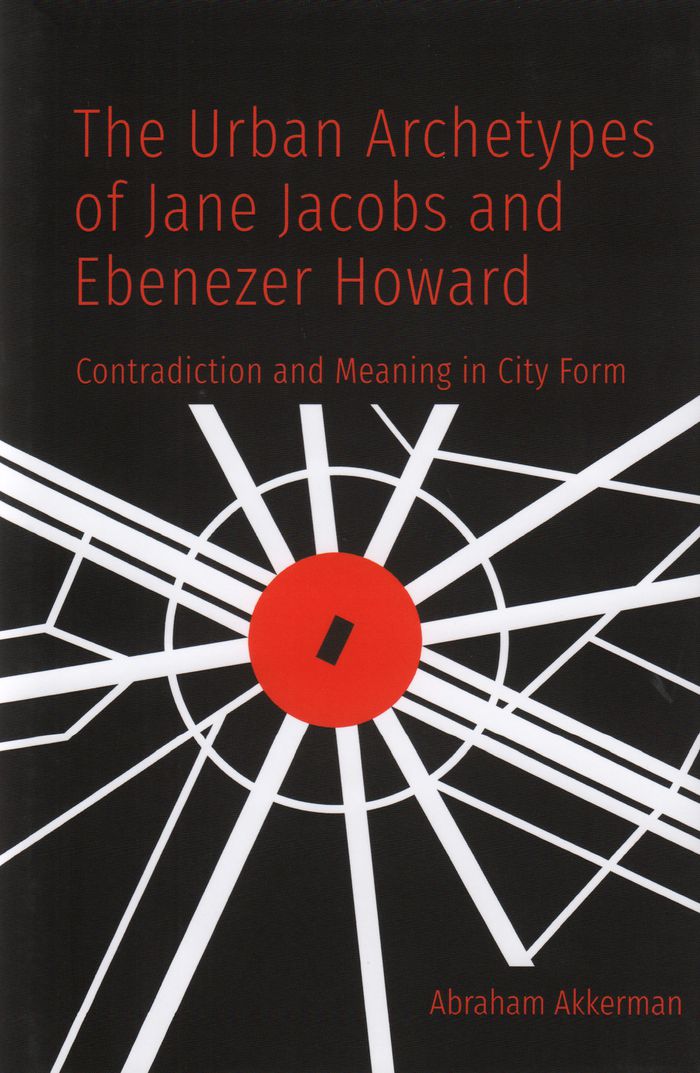
Ebenezer Howard, an Englishman, and Jane Jacobs, a naturalized Canadian, personify the twentieth century’s opposing outlooks on cities. Howard had envisaged small towns, newly built from scratch, fashioned on single family homes with small gardens. Jacobs embraced existing inner-city neighbourhoods emphasizing the verve of the living street. From Howard’s idea, the American Dream of garden suburbs had emerged, yet his conceptualization of a modern city received criticism for being uniform and alienated from the rest of the city. Similarly, at the turn of the new century, Jacobs’ inner-city neighbourhoods came to be recognized as the result of commodification, vacillating between poverty and newly discovered hubs of urban authenticity. Presenting Howard and Jacobs within a psychocultural context, ''The urban archetypes of Jane Jacobs and Ebenezer Howard'' addresses our urban crisis in the recognition that ''city form'' is a gendered, allegorical medium expressing femininity and masculinity within two founding features of the built environment: void and volume. Both founding contrasts bring tensions, but also the opportunities of fusion between pairs of urban polarities: human scale against superscale, gait against speed, and spontaneity against surveillance. Jacobs and Howard, in their respective attitudes, have come to embrace the two ancient archetypes, the Garden and the Citadel, leaving it to future generations to blend their two contrarian stances.
The Urban Archetypes of Jane Jacobs and Ebenezer Howard: Contradiction and meaning in city form
Actions:
Price:
$80.00
(available to order)
Summary:
Ebenezer Howard, an Englishman, and Jane Jacobs, a naturalized Canadian, personify the twentieth century’s opposing outlooks on cities. Howard had envisaged small towns, newly built from scratch, fashioned on single family homes with small gardens. Jacobs embraced existing inner-city neighbourhoods emphasizing the verve of the living street. From Howard’s idea, the American Dream of garden suburbs had emerged, yet his conceptualization of a modern city received criticism for being uniform and alienated from the rest of the city. Similarly, at the turn of the new century, Jacobs’ inner-city neighbourhoods came to be recognized as the result of commodification, vacillating between poverty and newly discovered hubs of urban authenticity. Presenting Howard and Jacobs within a psychocultural context, ''The urban archetypes of Jane Jacobs and Ebenezer Howard'' addresses our urban crisis in the recognition that ''city form'' is a gendered, allegorical medium expressing femininity and masculinity within two founding features of the built environment: void and volume. Both founding contrasts bring tensions, but also the opportunities of fusion between pairs of urban polarities: human scale against superscale, gait against speed, and spontaneity against surveillance. Jacobs and Howard, in their respective attitudes, have come to embrace the two ancient archetypes, the Garden and the Citadel, leaving it to future generations to blend their two contrarian stances.
Form:
books
books
Publication:
January 2020
January 2020
Subject:
Urban Theory
Urban Theory
Form:
books
books
Actions:
Price:
$37.95
(available in store)
Summary:
Some utopian plans have shaped our cities, from England's New Towns and Garden Cities to the Haussmann plan for Paris and the L'Enfant plan for Washington, DC. But these grand plans are the exception, and seldom turn out as envisioned by the utopian planner. Inviting city neighbourhoods are more often works of improvisation on a small scale. This type of bottom-up(...)
$37.95
(available in store)
Summary:
Some utopian plans have shaped our cities, from England's New Towns and Garden Cities to the Haussmann plan for Paris and the L'Enfant plan for Washington, DC. But these grand plans are the exception, and seldom turn out as envisioned by the utopian planner. Inviting city neighbourhoods are more often works of improvisation on a small scale. This type of bottom-up(...)
Title:
DIY city: The collective power of small actions
Actions:
Price:
$37.95
(available in store)
Summary:
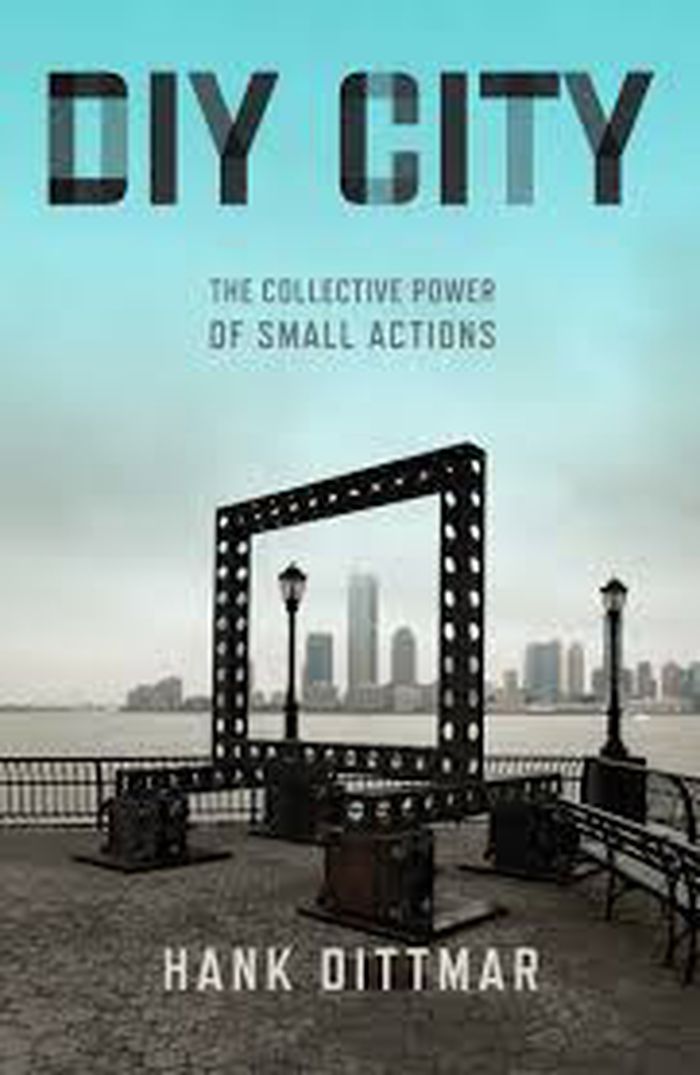
Some utopian plans have shaped our cities, from England's New Towns and Garden Cities to the Haussmann plan for Paris and the L'Enfant plan for Washington, DC. But these grand plans are the exception, and seldom turn out as envisioned by the utopian planner. Inviting city neighbourhoods are more often works of improvisation on a small scale. This type of bottom-up development gives cities both their character and the ability to respond to sudden change. In DIY City, Hank Dittmar explains why individual initiative, small-scale business, and small development matter, using lively stories from his own experience and examples from recent history, such as the revival of Camden Lock in London and the nascent rebirth of Detroit. DIY City, Dittmar's last original work, captures the lessons he learned throughout the course of his varied career, from transit-oriented development to Lean Urbanism, that can be replicated to create cities where people can flourish.
DIY city: The collective power of small actions
Actions:
Price:
$37.95
(available in store)
Summary:
Some utopian plans have shaped our cities, from England's New Towns and Garden Cities to the Haussmann plan for Paris and the L'Enfant plan for Washington, DC. But these grand plans are the exception, and seldom turn out as envisioned by the utopian planner. Inviting city neighbourhoods are more often works of improvisation on a small scale. This type of bottom-up development gives cities both their character and the ability to respond to sudden change. In DIY City, Hank Dittmar explains why individual initiative, small-scale business, and small development matter, using lively stories from his own experience and examples from recent history, such as the revival of Camden Lock in London and the nascent rebirth of Detroit. DIY City, Dittmar's last original work, captures the lessons he learned throughout the course of his varied career, from transit-oriented development to Lean Urbanism, that can be replicated to create cities where people can flourish.
Form:
books
books
Publication:
June 2020
June 2020
Subject:
Urban Theory
Urban Theory
Form:
books
books
Actions:
Price:
$41.95
(available to order)
Summary:
How do designers in research-driven practices differentiate themselves from each other and form distinctive platforms for future practice? The research presented in this second edition and carried out in Australia as part of an Australian Research Council Discovery Program is of significance for design practice, review, and our deeper understanding of the design of(...)
$41.95
(available to order)
Summary:
How do designers in research-driven practices differentiate themselves from each other and form distinctive platforms for future practice? The research presented in this second edition and carried out in Australia as part of an Australian Research Council Discovery Program is of significance for design practice, review, and our deeper understanding of the design of(...)
Subject:
Architectural Theory
Architectural Theory
Publication:
March 2020
March 2020
Title:
The practice of spatial thinking
Actions:
Price:
$41.95
(available to order)
Summary:
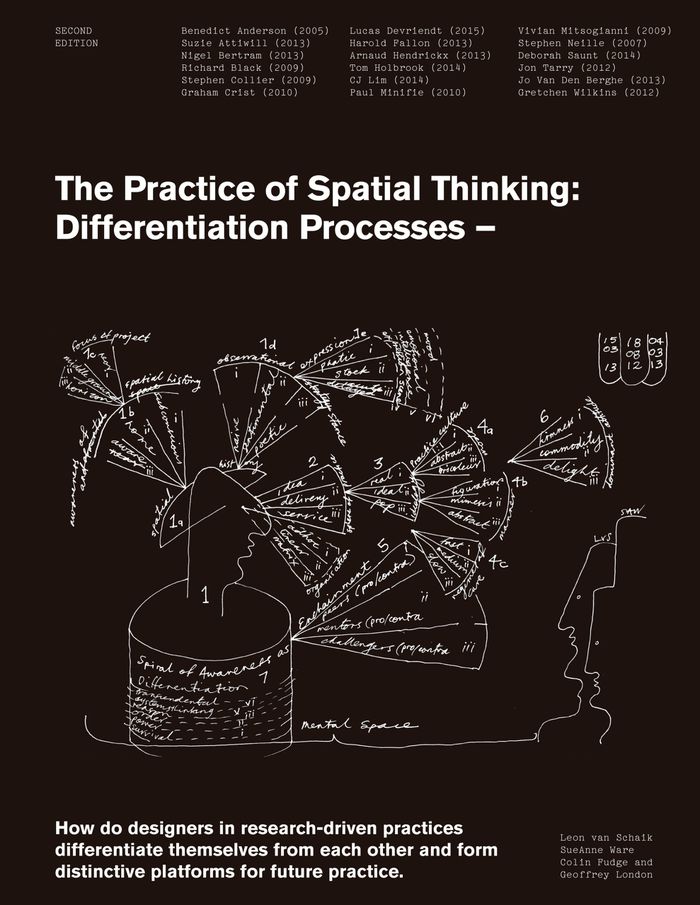
How do designers in research-driven practices differentiate themselves from each other and form distinctive platforms for future practice? The research presented in this second edition and carried out in Australia as part of an Australian Research Council Discovery Program is of significance for design practice, review, and our deeper understanding of the design of space and spaces. In continuing the exploration of spatial intelligence,” this research further develops our understanding of designers, how they work and what they draw on through their lives that shapes their spatial thinking, and their practice. The research also provides broader insights into a more public understanding and acknowledgement of our collective spatial intelligence. It shows how this could be developed and enhanced to provide more spatial and design literacy in our communities, and how these can engage with their changing environments.
The practice of spatial thinking
Actions:
Price:
$41.95
(available to order)
Summary:
How do designers in research-driven practices differentiate themselves from each other and form distinctive platforms for future practice? The research presented in this second edition and carried out in Australia as part of an Australian Research Council Discovery Program is of significance for design practice, review, and our deeper understanding of the design of space and spaces. In continuing the exploration of spatial intelligence,” this research further develops our understanding of designers, how they work and what they draw on through their lives that shapes their spatial thinking, and their practice. The research also provides broader insights into a more public understanding and acknowledgement of our collective spatial intelligence. It shows how this could be developed and enhanced to provide more spatial and design literacy in our communities, and how these can engage with their changing environments.
Form:
books
books
Publication:
March 2020
March 2020
Subject:
Architectural Theory
Architectural Theory
Form:
books
books
Price:
$36.99
(available in store)
Summary:
One of the nation's chief architecture critics reveals how the environments we build profoundly shape our feelings, memories, and well-being, and argues that we must harness this knowledge to construct a world better suited to human experience. Taking us on a fascinating journey through some of the world's best and worst landscapes, buildings, and cityscapes, Sarah(...)
$36.99
(available in store)
Summary:
One of the nation's chief architecture critics reveals how the environments we build profoundly shape our feelings, memories, and well-being, and argues that we must harness this knowledge to construct a world better suited to human experience. Taking us on a fascinating journey through some of the world's best and worst landscapes, buildings, and cityscapes, Sarah(...)
Title:
Welcome to your world: How the built environment shapes our lives
Actions:
Price:
$36.99
(available in store)
Summary:
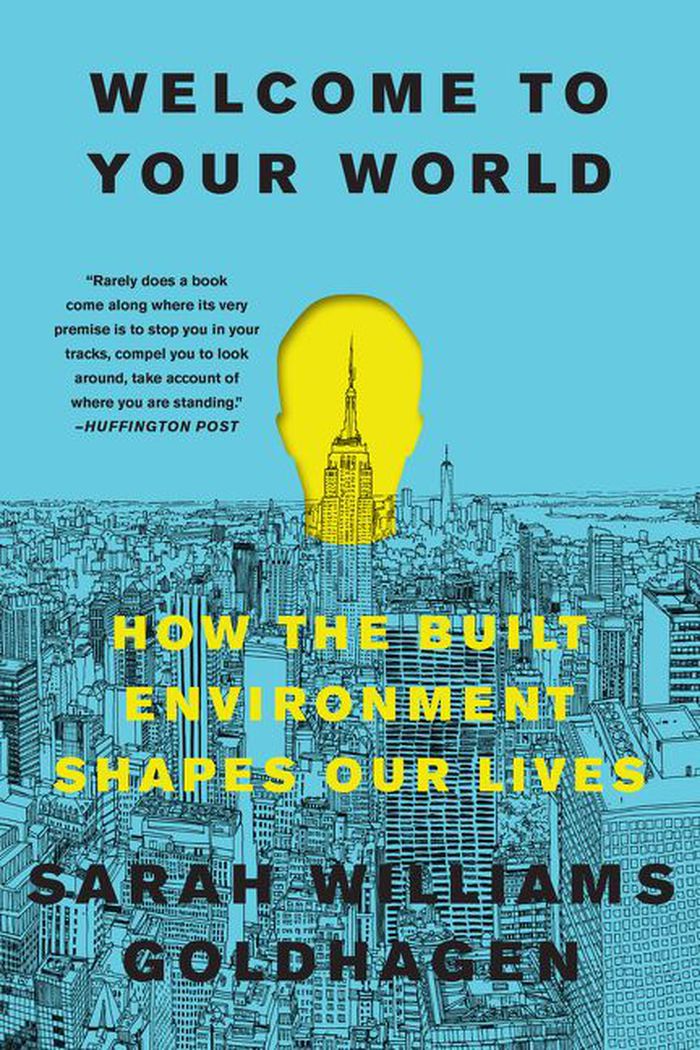
One of the nation's chief architecture critics reveals how the environments we build profoundly shape our feelings, memories, and well-being, and argues that we must harness this knowledge to construct a world better suited to human experience. Taking us on a fascinating journey through some of the world's best and worst landscapes, buildings, and cityscapes, Sarah Williams Goldhagen draws from recent research in cognitive neuroscience and psychology to demonstrate how people's experiences of the places they build are central to their well-being, their physical health, their communal and social lives, and even their very sense of themselves. From this foundation, Goldhagen presents a powerful case that societies must use this knowledge to rethink what and how they build: the world needs better-designed, healthier environments that address the complex range of human individual and social needs.
Welcome to your world: How the built environment shapes our lives
Actions:
Price:
$36.99
(available in store)
Summary:
One of the nation's chief architecture critics reveals how the environments we build profoundly shape our feelings, memories, and well-being, and argues that we must harness this knowledge to construct a world better suited to human experience. Taking us on a fascinating journey through some of the world's best and worst landscapes, buildings, and cityscapes, Sarah Williams Goldhagen draws from recent research in cognitive neuroscience and psychology to demonstrate how people's experiences of the places they build are central to their well-being, their physical health, their communal and social lives, and even their very sense of themselves. From this foundation, Goldhagen presents a powerful case that societies must use this knowledge to rethink what and how they build: the world needs better-designed, healthier environments that address the complex range of human individual and social needs.
Form:
books
books
Publication:
March 2020
March 2020
Subject:
Architectural Theory
Architectural Theory
Form:
books
books
Title:
Autour de la maison
Autour de la maison
Actions:
Price:
$42.95
(available to order)
Summary:
Heinrich Tessenow publie la première édition de son ''Hausbau und dergleichen'' en 1916, en pleine Première Guerre mondiale. Et, à l'image de ses projets et édifices bâtis, cette œuvre aussi brève que lumineuse ne manquera pas de susciter l'admiration des grands protagonistes de l'architecture européenne de l'époque. La construction de maisons dans ses déclinaisons les(...)
$42.95
(available to order)
Summary:
Heinrich Tessenow publie la première édition de son ''Hausbau und dergleichen'' en 1916, en pleine Première Guerre mondiale. Et, à l'image de ses projets et édifices bâtis, cette œuvre aussi brève que lumineuse ne manquera pas de susciter l'admiration des grands protagonistes de l'architecture européenne de l'époque. La construction de maisons dans ses déclinaisons les(...)
Title:
Autour de la maison
Actions:
Price:
$42.95
(available to order)
Summary:
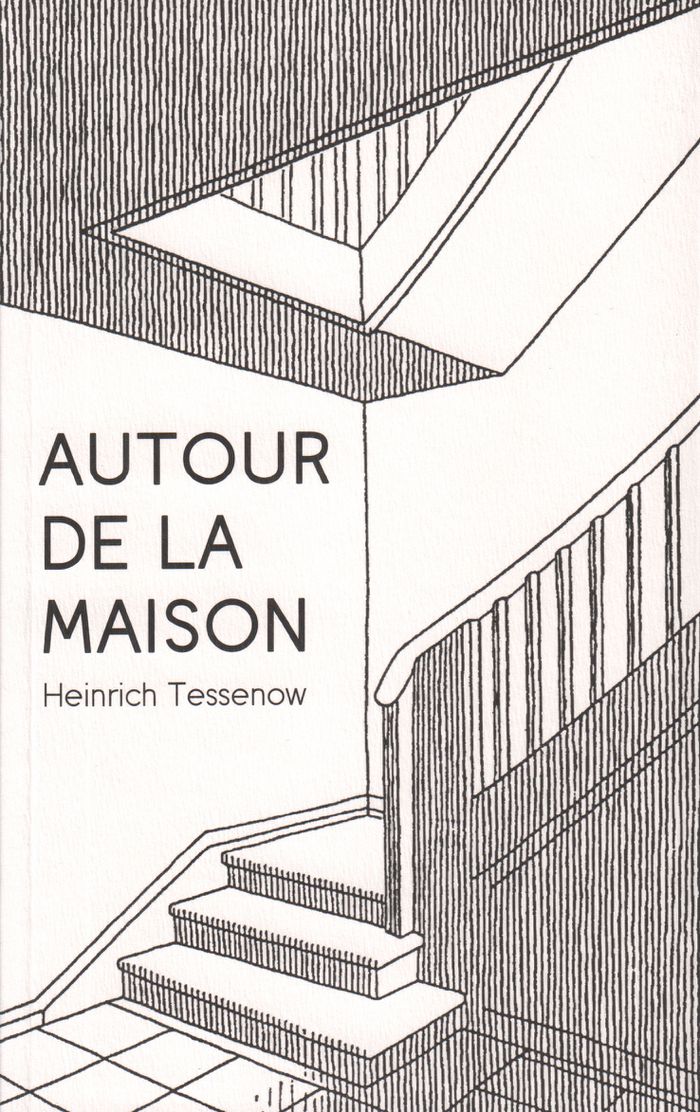
Heinrich Tessenow publie la première édition de son ''Hausbau und dergleichen'' en 1916, en pleine Première Guerre mondiale. Et, à l'image de ses projets et édifices bâtis, cette œuvre aussi brève que lumineuse ne manquera pas de susciter l'admiration des grands protagonistes de l'architecture européenne de l'époque. La construction de maisons dans ses déclinaisons les plus modestes (maisons ouvrières ou pour la petite bourgeoisie) lui offre un terreau fertile pour questionner les principes fondamentaux de la composition. Accompagnée de ses légendaires dessins au trait, la voix simple et claire de Tessenow s'écarte ainsi discrètement des slogans de l'avant-garde dans l'intense débat qui anime les premières décennies du XXe siècle. C'est peut-être ce qui lui a valu d'être laissé en marge des grands récits de la modernité architecturale. Or, un siècle plus tard, à l'heure où l'on se met à repenser les limites d'un concept de ''modernité'' souvent trop étroit, la posture originale et inimitable de cette architecture, plaçant l'habitation au centre de la réflexion, trouvera plus que jamais, dans cette première édition française, l'écho qu'elle mérite.
Autour de la maison
Actions:
Price:
$42.95
(available to order)
Summary:
Heinrich Tessenow publie la première édition de son ''Hausbau und dergleichen'' en 1916, en pleine Première Guerre mondiale. Et, à l'image de ses projets et édifices bâtis, cette œuvre aussi brève que lumineuse ne manquera pas de susciter l'admiration des grands protagonistes de l'architecture européenne de l'époque. La construction de maisons dans ses déclinaisons les plus modestes (maisons ouvrières ou pour la petite bourgeoisie) lui offre un terreau fertile pour questionner les principes fondamentaux de la composition. Accompagnée de ses légendaires dessins au trait, la voix simple et claire de Tessenow s'écarte ainsi discrètement des slogans de l'avant-garde dans l'intense débat qui anime les premières décennies du XXe siècle. C'est peut-être ce qui lui a valu d'être laissé en marge des grands récits de la modernité architecturale. Or, un siècle plus tard, à l'heure où l'on se met à repenser les limites d'un concept de ''modernité'' souvent trop étroit, la posture originale et inimitable de cette architecture, plaçant l'habitation au centre de la réflexion, trouvera plus que jamais, dans cette première édition française, l'écho qu'elle mérite.
Form:
books
books
Publication:
November 2019
November 2019
Subject:
Architectural Theory
Architectural Theory
Form:
books
books
Title:
Reinventing daily life
Reinventing daily life
Actions:
Price:
$25.95
(available to order)
Summary:
Does art possess the power to cause structural and meaningful changes in daily life? How can we inject our daily reality with the estranging, binding, and reflective qualities of theater, performance art, and the visual arts? Using the artist’s desire to escape institutional space as a point of departure, the temporary master 'Reinventing Daily Life' investigated the(...)
$25.95
(available to order)
Summary:
Does art possess the power to cause structural and meaningful changes in daily life? How can we inject our daily reality with the estranging, binding, and reflective qualities of theater, performance art, and the visual arts? Using the artist’s desire to escape institutional space as a point of departure, the temporary master 'Reinventing Daily Life' investigated the(...)
Title:
Reinventing daily life
Actions:
Price:
$25.95
(available to order)
Summary:
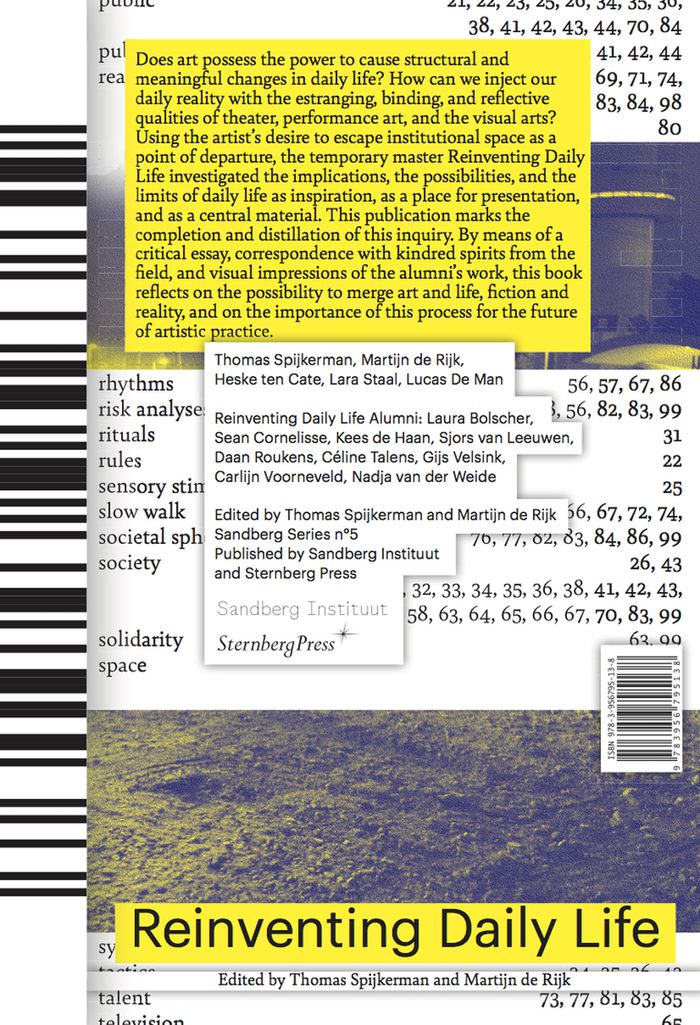
Does art possess the power to cause structural and meaningful changes in daily life? How can we inject our daily reality with the estranging, binding, and reflective qualities of theater, performance art, and the visual arts? Using the artist’s desire to escape institutional space as a point of departure, the temporary master 'Reinventing Daily Life' investigated the implications, the possibilities, and the limits of daily life as inspiration, as a place for presentation, and as a central material. This publication marks the completion and distillation of this inquiry. By means of a critical essay, correspondence with kindred spirits from the field, and visual impressions of the alumni’s work, this book reflects on the possibility to merge art and life, fiction and reality, and on the importance of this process for the future of artistic practice.
Reinventing daily life
Actions:
Price:
$25.95
(available to order)
Summary:
Does art possess the power to cause structural and meaningful changes in daily life? How can we inject our daily reality with the estranging, binding, and reflective qualities of theater, performance art, and the visual arts? Using the artist’s desire to escape institutional space as a point of departure, the temporary master 'Reinventing Daily Life' investigated the implications, the possibilities, and the limits of daily life as inspiration, as a place for presentation, and as a central material. This publication marks the completion and distillation of this inquiry. By means of a critical essay, correspondence with kindred spirits from the field, and visual impressions of the alumni’s work, this book reflects on the possibility to merge art and life, fiction and reality, and on the importance of this process for the future of artistic practice.
Form:
books
books
Publication:
February 2020
February 2020
Subject:
Art Theory
Art Theory
Form:
books
books
Actions:
Price:
$39.00
(available to order)
Summary:
How we deal with land has far-reaching implications for architecture and urban development. The last decade has seen a dramatic rise in the privatization of urban land and in speculation. Many European cities that today find themselves under extreme development pressure have virtually no land left to build on. In view of the acute housing shortage, the question of who(...)
$39.00
(available to order)
Summary:
How we deal with land has far-reaching implications for architecture and urban development. The last decade has seen a dramatic rise in the privatization of urban land and in speculation. Many European cities that today find themselves under extreme development pressure have virtually no land left to build on. In view of the acute housing shortage, the question of who(...)
Title:
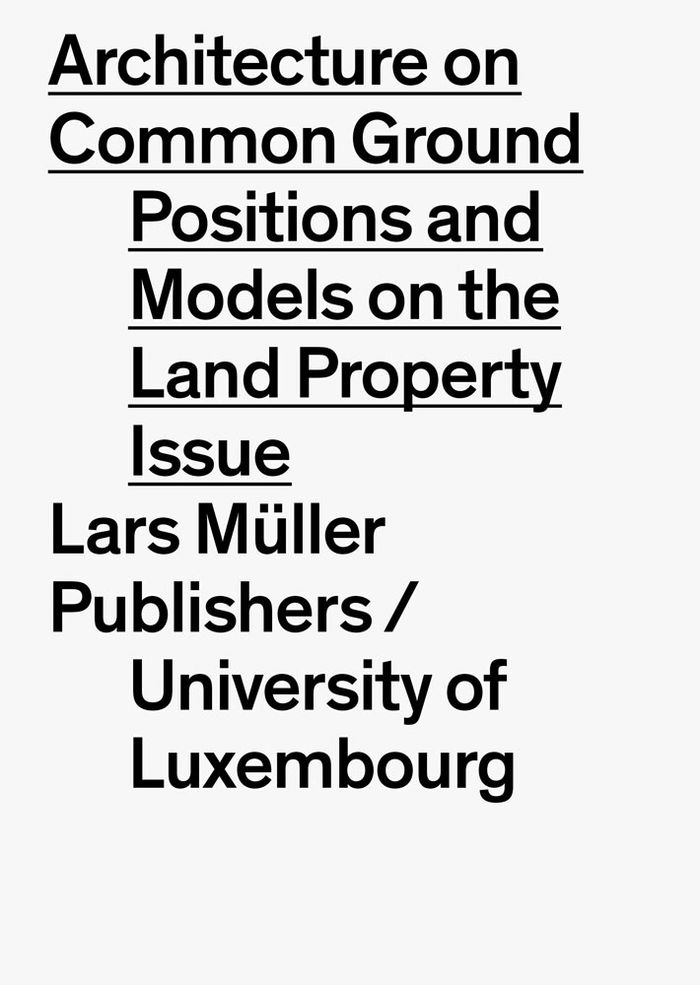
Architecture on common ground: positions and models on the land property issue
Actions:
Price:
$39.00
(available to order)
Summary:
How we deal with land has far-reaching implications for architecture and urban development. The last decade has seen a dramatic rise in the privatization of urban land and in speculation. Many European cities that today find themselves under extreme development pressure have virtually no land left to build on. In view of the acute housing shortage, the question of who owns the land is therefore more relevant than ever. To what extent are we able to treat the land as a common good and guard it from the excesses of capitalism? ''Architecture on common ground'' provides a historical overview of land property from Henry George to the present. Interviews with stakeholders in global models provide insights into the current handling of the land issue. The book presents outstanding projects based on either a legal or spatial distribution of land and thus makes a valuable contribution to the current discussion on sustainable land policy.
Architecture on common ground: positions and models on the land property issue
Actions:
Price:
$39.00
(available to order)
Summary:
How we deal with land has far-reaching implications for architecture and urban development. The last decade has seen a dramatic rise in the privatization of urban land and in speculation. Many European cities that today find themselves under extreme development pressure have virtually no land left to build on. In view of the acute housing shortage, the question of who owns the land is therefore more relevant than ever. To what extent are we able to treat the land as a common good and guard it from the excesses of capitalism? ''Architecture on common ground'' provides a historical overview of land property from Henry George to the present. Interviews with stakeholders in global models provide insights into the current handling of the land issue. The book presents outstanding projects based on either a legal or spatial distribution of land and thus makes a valuable contribution to the current discussion on sustainable land policy.
Form:
books
books
Publication:
April 2021
April 2021
Subject:
Urban Theory
Urban Theory
Form:
books
books

Actions:
Price:
$84.95
(available to order)
Summary:
Scholars, cultural theorists and urban designers reflect on the transformation of seven post-socialist cities. Reflecting on the 'urban commons' concept currently in vogue in architectural discourse, this volume collects research, data and photographs for seven case studies—post-socialist cities in Central Europe—emphasizing the collective action of remaking cities.
$84.95
(available to order)
Summary:
Scholars, cultural theorists and urban designers reflect on the transformation of seven post-socialist cities. Reflecting on the 'urban commons' concept currently in vogue in architectural discourse, this volume collects research, data and photographs for seven case studies—post-socialist cities in Central Europe—emphasizing the collective action of remaking cities.
Title:
Shared cities atlas: post-socialist cities and active citizenship in Central Europe
Actions:
Price:
$84.95
(available to order)
Summary:
Scholars, cultural theorists and urban designers reflect on the transformation of seven post-socialist cities. Reflecting on the 'urban commons' concept currently in vogue in architectural discourse, this volume collects research, data and photographs for seven case studies—post-socialist cities in Central Europe—emphasizing the collective action of remaking cities.
Shared cities atlas: post-socialist cities and active citizenship in Central Europe
Actions:
Price:
$84.95
(available to order)
Summary:
Scholars, cultural theorists and urban designers reflect on the transformation of seven post-socialist cities. Reflecting on the 'urban commons' concept currently in vogue in architectural discourse, this volume collects research, data and photographs for seven case studies—post-socialist cities in Central Europe—emphasizing the collective action of remaking cities.
Form:
books
books
Publication:
February 2020
February 2020
Subject:
Urban Theory
Urban Theory


