


10595 Results
Form:
books
books
Price:
$26.95
(available to order)
Summary:
Sans doute faut-il préciser l’objet qui donne son titre à ce livre. Le temps du paysage ici considéré n’est pas celui où l’on a commencé à décrire dans des poèmes ou à représenter sur des murs des jardins fleuris. Il est celui où le paysage s’est imposé comme un objet de pensée spécifique. Cet objet de pensée s’est constitué à travers des querelles concrètes sur(...)
$26.95
(available to order)
Summary:
Sans doute faut-il préciser l’objet qui donne son titre à ce livre. Le temps du paysage ici considéré n’est pas celui où l’on a commencé à décrire dans des poèmes ou à représenter sur des murs des jardins fleuris. Il est celui où le paysage s’est imposé comme un objet de pensée spécifique. Cet objet de pensée s’est constitué à travers des querelles concrètes sur(...)
Title:
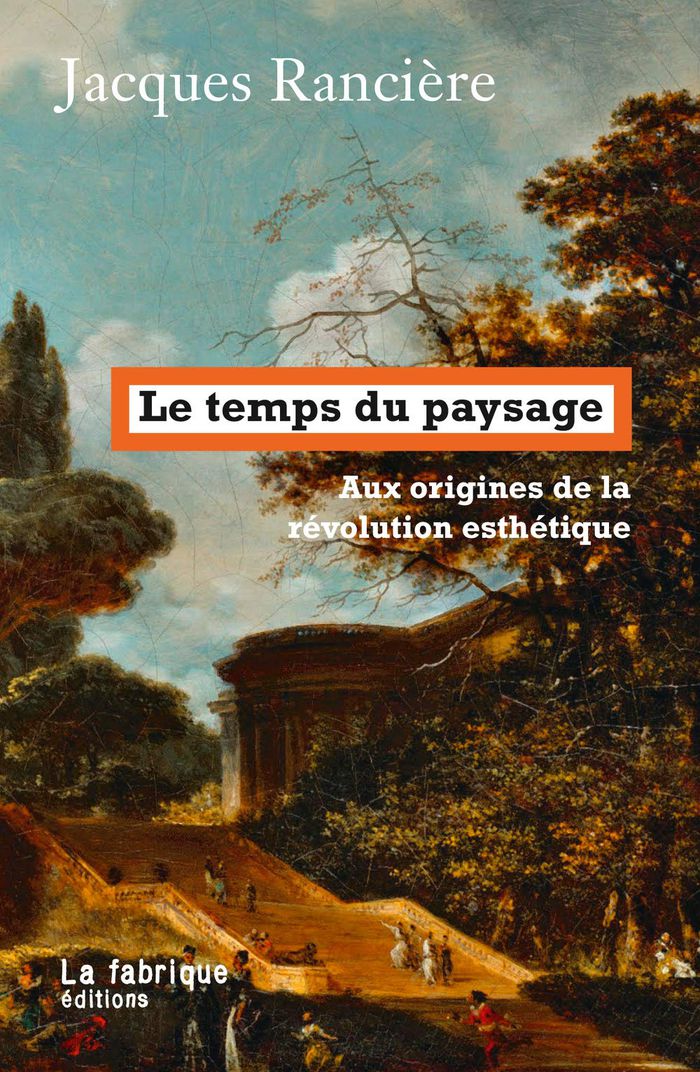
Le temps du paysage : aux origines de la révolution esthétique
Actions:
Price:
$26.95
(available to order)
Summary:
Sans doute faut-il préciser l’objet qui donne son titre à ce livre. Le temps du paysage ici considéré n’est pas celui où l’on a commencé à décrire dans des poèmes ou à représenter sur des murs des jardins fleuris. Il est celui où le paysage s’est imposé comme un objet de pensée spécifique. Cet objet de pensée s’est constitué à travers des querelles concrètes sur l’aménagement des jardins, des descriptions minutieuses de parcs ornés de temples à l’antique ou d’humbles sentiers forestiers, des récits de voyages à travers lacs et montagnes solitaires ou des évocations de peintures mythologiques ou rustiques. Et ce livre en suivra les détours. Mais ce qui se forme à travers ces récits et ces querelles, ce n’est pas simplement le goût pour un spectacle qui charme les yeux ou élève l’âme. C’est l’expérience d’une forme d’unité de la diversité sensible propre à modifier la configuration existante des objets de pensée et des notions propres à les penser. Le temps du paysage est celui où l’harmonie ou la dysharmonie présentée par les jardins aménagés ou par la nature sauvage contribue à bouleverser les critères du beau et le sens même du mot art. Ce bouleversement en implique un autre qui affecte le sens d’une notion fondamentale, dans l’usage commun comme dans la réflexion philosophique, celle de nature. Or on ne touche pas à la nature sans toucher à la société qui est censée obéir à ses lois. Et le temps du paysage est aussi celui où une certaine harmonie du spectacle des champs, des forêts ou des cours d’eau s’avère propre à métaphoriser l’ordre qui convient aux sociétés humaines.
Le temps du paysage : aux origines de la révolution esthétique
Actions:
Price:
$26.95
(available to order)
Summary:
Sans doute faut-il préciser l’objet qui donne son titre à ce livre. Le temps du paysage ici considéré n’est pas celui où l’on a commencé à décrire dans des poèmes ou à représenter sur des murs des jardins fleuris. Il est celui où le paysage s’est imposé comme un objet de pensée spécifique. Cet objet de pensée s’est constitué à travers des querelles concrètes sur l’aménagement des jardins, des descriptions minutieuses de parcs ornés de temples à l’antique ou d’humbles sentiers forestiers, des récits de voyages à travers lacs et montagnes solitaires ou des évocations de peintures mythologiques ou rustiques. Et ce livre en suivra les détours. Mais ce qui se forme à travers ces récits et ces querelles, ce n’est pas simplement le goût pour un spectacle qui charme les yeux ou élève l’âme. C’est l’expérience d’une forme d’unité de la diversité sensible propre à modifier la configuration existante des objets de pensée et des notions propres à les penser. Le temps du paysage est celui où l’harmonie ou la dysharmonie présentée par les jardins aménagés ou par la nature sauvage contribue à bouleverser les critères du beau et le sens même du mot art. Ce bouleversement en implique un autre qui affecte le sens d’une notion fondamentale, dans l’usage commun comme dans la réflexion philosophique, celle de nature. Or on ne touche pas à la nature sans toucher à la société qui est censée obéir à ses lois. Et le temps du paysage est aussi celui où une certaine harmonie du spectacle des champs, des forêts ou des cours d’eau s’avère propre à métaphoriser l’ordre qui convient aux sociétés humaines.
Form:
books
books
Publication:
March 2020
March 2020
Subject:
Landscape Theory
Landscape Theory
Form:
books
books
Actions:
Price:
$17.95
(available to order)
Summary:
Année après année, la campagne française disparaît sous la ville : la terre fertile se raréfie, les espaces naturels se morcellent, la ville s’éparpille et se cloisonne, l’automobile s’impose comme unique lien social. Le phénomène, connu sous le nom d’étalement urbain, ne résulte pas seulement de la crise du logement et du désir d’accession à la propriété. La ville(...)
$17.95
(available to order)
Summary:
Année après année, la campagne française disparaît sous la ville : la terre fertile se raréfie, les espaces naturels se morcellent, la ville s’éparpille et se cloisonne, l’automobile s’impose comme unique lien social. Le phénomène, connu sous le nom d’étalement urbain, ne résulte pas seulement de la crise du logement et du désir d’accession à la propriété. La ville(...)
Title:
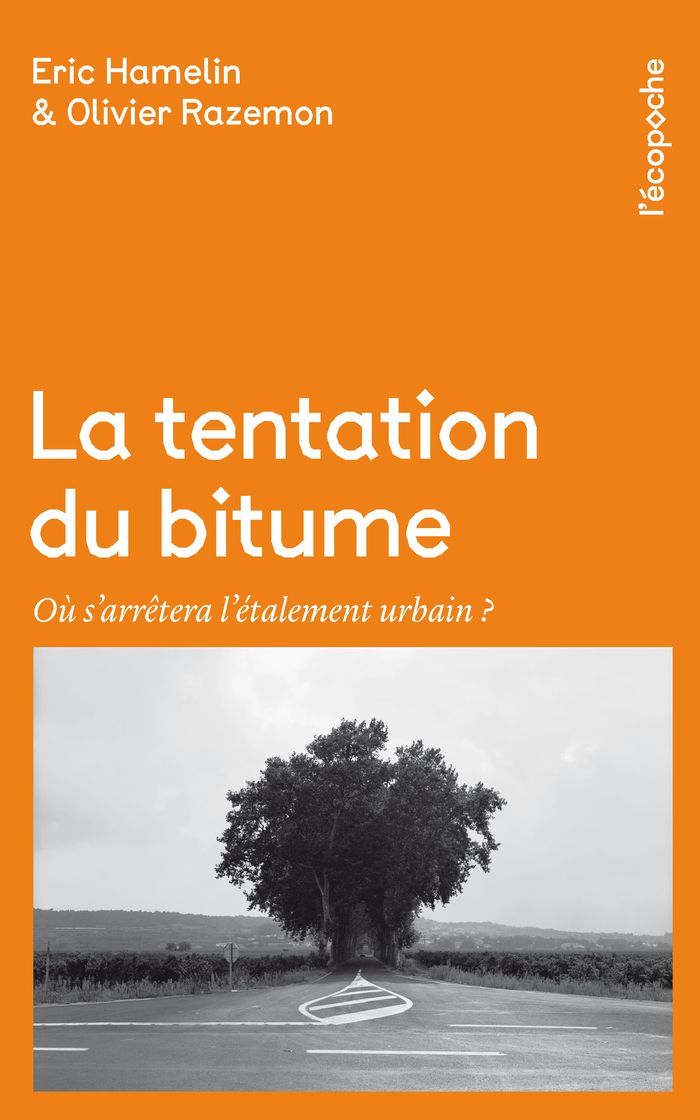
La tentation du bitume : où s'arrêtera l'étalement urbain ?
Actions:
Price:
$17.95
(available to order)
Summary:
Année après année, la campagne française disparaît sous la ville : la terre fertile se raréfie, les espaces naturels se morcellent, la ville s’éparpille et se cloisonne, l’automobile s’impose comme unique lien social. Le phénomène, connu sous le nom d’étalement urbain, ne résulte pas seulement de la crise du logement et du désir d’accession à la propriété. La ville étalée se nourrit, en France comme ailleurs, d’une économie opulente et d’une société qui valorise le bonheur individuel, à court terme de préférence. Autrement dit, nous sommes tous responsables. Les auteurs brossent dans cet essai un portrait sans concession de la bataille inégale qui se livre entre la soif de bitume et les rares garde-fous susceptibles de contrer le phénomène. Édition de poche qui reprend intégralement le texte publié en 2012 afin de maintenir disponible un livre salué pour sa pertinence et sa pédagogie.
La tentation du bitume : où s'arrêtera l'étalement urbain ?
Actions:
Price:
$17.95
(available to order)
Summary:
Année après année, la campagne française disparaît sous la ville : la terre fertile se raréfie, les espaces naturels se morcellent, la ville s’éparpille et se cloisonne, l’automobile s’impose comme unique lien social. Le phénomène, connu sous le nom d’étalement urbain, ne résulte pas seulement de la crise du logement et du désir d’accession à la propriété. La ville étalée se nourrit, en France comme ailleurs, d’une économie opulente et d’une société qui valorise le bonheur individuel, à court terme de préférence. Autrement dit, nous sommes tous responsables. Les auteurs brossent dans cet essai un portrait sans concession de la bataille inégale qui se livre entre la soif de bitume et les rares garde-fous susceptibles de contrer le phénomène. Édition de poche qui reprend intégralement le texte publié en 2012 afin de maintenir disponible un livre salué pour sa pertinence et sa pédagogie.
Form:
books
books
Publication:
March 2020
March 2020
Subject:
Urban Theory
Urban Theory
Form:
books
books

Actions:
Price:
$29.95
(available in store)
Summary:
Qu'est-ce qu'un scandale en art et que révèle-t-il ? Comment se déploie-t-il dans l'espace public et comment agit-il rétrospectivement sur ce qui fait mémoire ? Comment s'enracine-t-il dans les contextes artistique et sociopolitique tout en dévoilant certaines de leurs facettes ? Comment s'articule-t-il au pôle censure - liberté d'expression ? Comment l'analyse(...)
$29.95
(available in store)
Summary:
Qu'est-ce qu'un scandale en art et que révèle-t-il ? Comment se déploie-t-il dans l'espace public et comment agit-il rétrospectivement sur ce qui fait mémoire ? Comment s'enracine-t-il dans les contextes artistique et sociopolitique tout en dévoilant certaines de leurs facettes ? Comment s'articule-t-il au pôle censure - liberté d'expression ? Comment l'analyse(...)
Title:
Arts, entre libertés et scandales : études de cas
Actions:
Price:
$29.95
(available in store)
Summary:
Qu'est-ce qu'un scandale en art et que révèle-t-il ? Comment se déploie-t-il dans l'espace public et comment agit-il rétrospectivement sur ce qui fait mémoire ? Comment s'enracine-t-il dans les contextes artistique et sociopolitique tout en dévoilant certaines de leurs facettes ? Comment s'articule-t-il au pôle censure - liberté d'expression ? Comment l'analyse rétrospective de celui-ci est-elle elle-même ancrée dans des choix théoriques et des sensibilités éthiques et politiques qui peuvent en redéfinir les contours ? C'est ce à quoi réfléchissent les chercheurs et chercheures dans une quinzaine d'études de cas aussi divers que l'oeuvre de Brancusi Princesse X, le Mémorial lyonnais du génocide des Arméniens, Les fées ont soif de Denise Boucher, Des femmes de Wajdi Mouawad, Sur le concept du visage du fils de Dieu de Romeo Castellucci, le Carnaval des vagins à dents, etc. Qu'est-ce qui fait scandale ? Qui sont les acteurset actrices du scandale ? Quelles sont les définitions du scandale ? Que peut le scandale ?
Arts, entre libertés et scandales : études de cas
Actions:
Price:
$29.95
(available in store)
Summary:
Qu'est-ce qu'un scandale en art et que révèle-t-il ? Comment se déploie-t-il dans l'espace public et comment agit-il rétrospectivement sur ce qui fait mémoire ? Comment s'enracine-t-il dans les contextes artistique et sociopolitique tout en dévoilant certaines de leurs facettes ? Comment s'articule-t-il au pôle censure - liberté d'expression ? Comment l'analyse rétrospective de celui-ci est-elle elle-même ancrée dans des choix théoriques et des sensibilités éthiques et politiques qui peuvent en redéfinir les contours ? C'est ce à quoi réfléchissent les chercheurs et chercheures dans une quinzaine d'études de cas aussi divers que l'oeuvre de Brancusi Princesse X, le Mémorial lyonnais du génocide des Arméniens, Les fées ont soif de Denise Boucher, Des femmes de Wajdi Mouawad, Sur le concept du visage du fils de Dieu de Romeo Castellucci, le Carnaval des vagins à dents, etc. Qu'est-ce qui fait scandale ? Qui sont les acteurset actrices du scandale ? Quelles sont les définitions du scandale ? Que peut le scandale ?
Form:
books
books
Publication:
March 2020
March 2020
Subject:
Art Theory
Art Theory
Form:
books
books
Actions:
Price:
$39.95
(available to order)
Summary:
From climate change to migration, all across the world cities are having to come to terms with contemporary challenges for which there are few easy answers. The Amsterdam Agenda invites 12 urban thinkers to share their knowledge, insights, and vision for the future of cities in light of today’s ongoing transformations. Be it the repercussions of over-tourism, alternative(...)
$39.95
(available to order)
Summary:
From climate change to migration, all across the world cities are having to come to terms with contemporary challenges for which there are few easy answers. The Amsterdam Agenda invites 12 urban thinkers to share their knowledge, insights, and vision for the future of cities in light of today’s ongoing transformations. Be it the repercussions of over-tourism, alternative(...)
Subject:
Urban Theory
Urban Theory
Publication:
June 2020
June 2020
Title:
The Amsterdam agenda: 12 good ideas for the future of cities
Actions:
Price:
$39.95
(available to order)
Summary:
From climate change to migration, all across the world cities are having to come to terms with contemporary challenges for which there are few easy answers. The Amsterdam Agenda invites 12 urban thinkers to share their knowledge, insights, and vision for the future of cities in light of today’s ongoing transformations. Be it the repercussions of over-tourism, alternative forms of civic engagement, or incorporating new technologies into existing infrastructure, these are urgent issues with global impact. Based on a 2018 lecture series at the Amsterdam Academy of Architecture, The Amsterdam Agenda brings together the views of today’s brightest names from the fields of architecture, planning, activism, and more.
The Amsterdam agenda: 12 good ideas for the future of cities
Actions:
Price:
$39.95
(available to order)
Summary:
From climate change to migration, all across the world cities are having to come to terms with contemporary challenges for which there are few easy answers. The Amsterdam Agenda invites 12 urban thinkers to share their knowledge, insights, and vision for the future of cities in light of today’s ongoing transformations. Be it the repercussions of over-tourism, alternative forms of civic engagement, or incorporating new technologies into existing infrastructure, these are urgent issues with global impact. Based on a 2018 lecture series at the Amsterdam Academy of Architecture, The Amsterdam Agenda brings together the views of today’s brightest names from the fields of architecture, planning, activism, and more.
Form:
books
books
Publication:
June 2020
June 2020
Subject:
Urban Theory
Urban Theory
Form:
books
books
Actions:
Price:
$56.95
(available in store)
Summary:
''Architecture Is Just a Pretext'' is a publication that resumes a large research about the state of the art of young Architecture practices in Europe. The work, dealing with architectural practices through a biographic approach, addresses the new directions the profession is taking in Europe among young architects. Carnets is a research project started two years ago(...)
$56.95
(available in store)
Summary:
''Architecture Is Just a Pretext'' is a publication that resumes a large research about the state of the art of young Architecture practices in Europe. The work, dealing with architectural practices through a biographic approach, addresses the new directions the profession is taking in Europe among young architects. Carnets is a research project started two years ago(...)
Title:
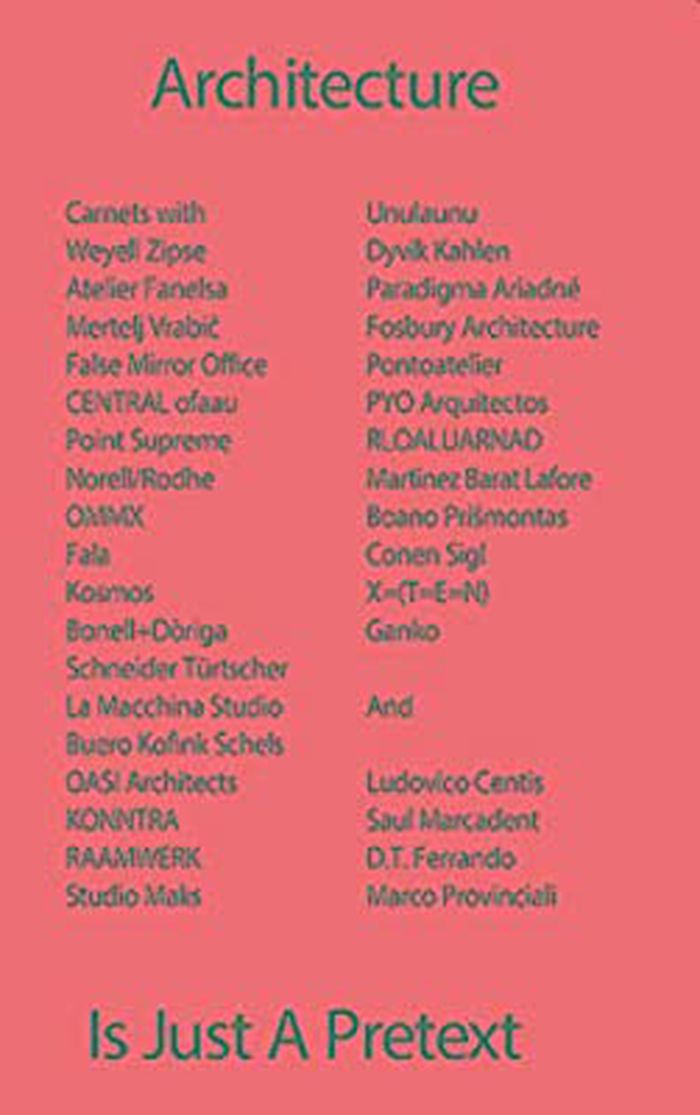
Architecture is just a pretext
Actions:
Price:
$56.95
(available in store)
Summary:
''Architecture Is Just a Pretext'' is a publication that resumes a large research about the state of the art of young Architecture practices in Europe. The work, dealing with architectural practices through a biographic approach, addresses the new directions the profession is taking in Europe among young architects. Carnets is a research project started two years ago by eight architecture students from IUAV University of Venice. The aim is to investigate the current landscape of Architecture in Europe, after the 2008 economical crisis, through interviews, talks, round tables and workshops. The protagonists of this research are 30 young architecture offices from around Europe.
Architecture is just a pretext
Actions:
Price:
$56.95
(available in store)
Summary:
''Architecture Is Just a Pretext'' is a publication that resumes a large research about the state of the art of young Architecture practices in Europe. The work, dealing with architectural practices through a biographic approach, addresses the new directions the profession is taking in Europe among young architects. Carnets is a research project started two years ago by eight architecture students from IUAV University of Venice. The aim is to investigate the current landscape of Architecture in Europe, after the 2008 economical crisis, through interviews, talks, round tables and workshops. The protagonists of this research are 30 young architecture offices from around Europe.
Form:
books
books
Publication:
December 2019
December 2019
Subject:
Architectural Theory
Architectural Theory
Form:
books
books
Actions:
Price:
$42.95
(available to order)
Summary:
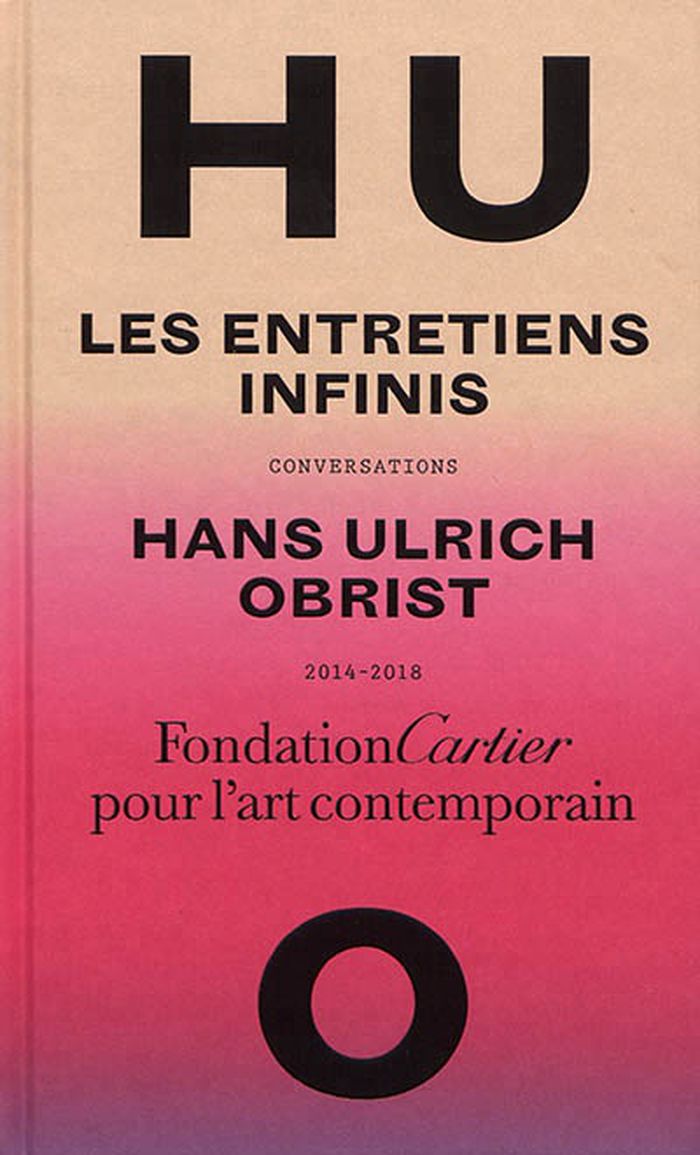
Pour les trente ans de la Fondation Cartier, l'auteur et commissaire d'exposition, propose un recueil des entretiens tenus avec des artistes, des penseurs, des architectes, des écrivains et des scientifiques réalisés à l'occasion d'expositions artistiques entre 2014 et 2018 : Jean Nouvel, Raymond Depardon, Agnès Varda, Vinciane Despret, Fredi Casco, Freddy Mamani, entre autres.
$42.95
(available to order)
Summary:
Pour les trente ans de la Fondation Cartier, l'auteur et commissaire d'exposition, propose un recueil des entretiens tenus avec des artistes, des penseurs, des architectes, des écrivains et des scientifiques réalisés à l'occasion d'expositions artistiques entre 2014 et 2018 : Jean Nouvel, Raymond Depardon, Agnès Varda, Vinciane Despret, Fredi Casco, Freddy Mamani, entre autres.
Title:
Les entretiens infinis : conversations 2014-2018
Actions:
Price:
$42.95
(available to order)
Summary:
Pour les trente ans de la Fondation Cartier, l'auteur et commissaire d'exposition, propose un recueil des entretiens tenus avec des artistes, des penseurs, des architectes, des écrivains et des scientifiques réalisés à l'occasion d'expositions artistiques entre 2014 et 2018 : Jean Nouvel, Raymond Depardon, Agnès Varda, Vinciane Despret, Fredi Casco, Freddy Mamani, entre autres.
Les entretiens infinis : conversations 2014-2018
Actions:
Price:
$42.95
(available to order)
Summary:
Pour les trente ans de la Fondation Cartier, l'auteur et commissaire d'exposition, propose un recueil des entretiens tenus avec des artistes, des penseurs, des architectes, des écrivains et des scientifiques réalisés à l'occasion d'expositions artistiques entre 2014 et 2018 : Jean Nouvel, Raymond Depardon, Agnès Varda, Vinciane Despret, Fredi Casco, Freddy Mamani, entre autres.
Form:
books
books
Publication:
May 2020
May 2020
Subject:
Art Theory
Art Theory
Form:
books
books
Price:
$39.95
(available to order)
Summary:
Olivier Vallerand investigates how queer critiques, building on pioneering feminist work, question the relation between identity and architecture and highlight normative constructs underlying domestic spaces. He draws out a genealogy of queer space in theoretical discourse in architecture, studying projects by Mark Robbins, Joel Sanders, J Mayer H, Elmgreen & Dragset,(...)
$39.95
(available to order)
Summary:
Olivier Vallerand investigates how queer critiques, building on pioneering feminist work, question the relation between identity and architecture and highlight normative constructs underlying domestic spaces. He draws out a genealogy of queer space in theoretical discourse in architecture, studying projects by Mark Robbins, Joel Sanders, J Mayer H, Elmgreen & Dragset,(...)
Title:
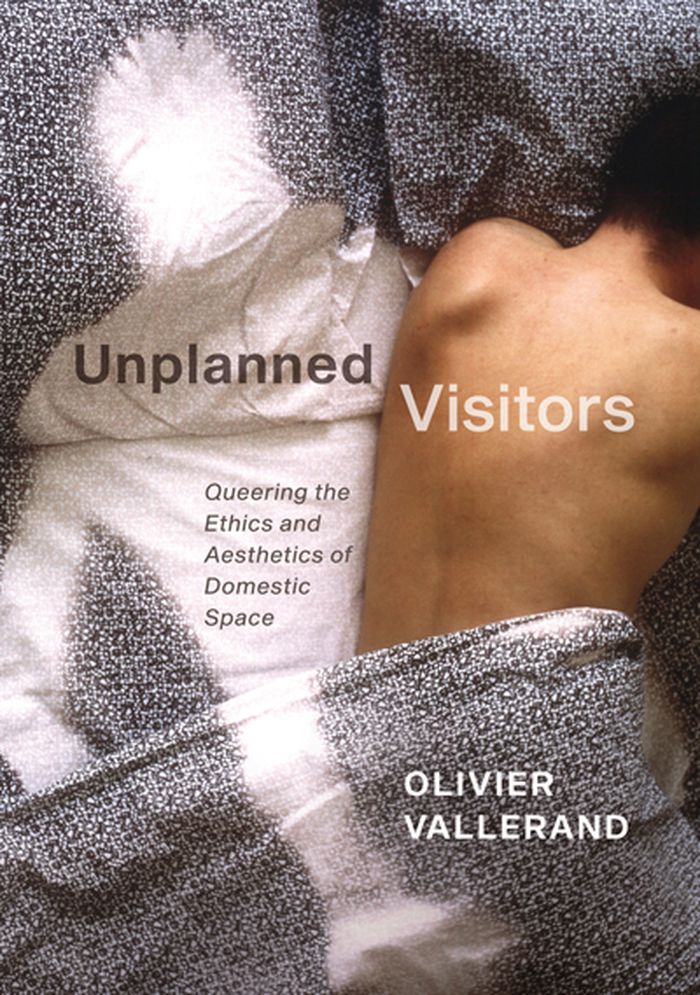
Unplanned visitors: queering the ethics and aesthetics of domestic space
Actions:
Price:
$39.95
(available to order)
Summary:
Olivier Vallerand investigates how queer critiques, building on pioneering feminist work, question the relation between identity and architecture and highlight normative constructs underlying domestic spaces. He draws out a genealogy of queer space in theoretical discourse in architecture, studying projects by Mark Robbins, Joel Sanders, J Mayer H, Elmgreen & Dragset, Andrés Jaque, and MYCKET, among others. These works blur the traditional borders between architecture and art to emphasize the tensions between private and public and their impact on assumptions about domestic space and family structure. Sexuality and gender have long been influential in understanding the construction of domestic space, its meanings, often revealing a binary division of private and public, female and male. By reconstructing the foundation of queer critiques of space and by analyzing the representation of domesticity in contemporary art and architecture, Unplanned Visitors shows the blurring of private and public that can occur in any domestic space and explores the potential of queer theory for understanding, and designing, the built environment.
Unplanned visitors: queering the ethics and aesthetics of domestic space
Actions:
Price:
$39.95
(available to order)
Summary:
Olivier Vallerand investigates how queer critiques, building on pioneering feminist work, question the relation between identity and architecture and highlight normative constructs underlying domestic spaces. He draws out a genealogy of queer space in theoretical discourse in architecture, studying projects by Mark Robbins, Joel Sanders, J Mayer H, Elmgreen & Dragset, Andrés Jaque, and MYCKET, among others. These works blur the traditional borders between architecture and art to emphasize the tensions between private and public and their impact on assumptions about domestic space and family structure. Sexuality and gender have long been influential in understanding the construction of domestic space, its meanings, often revealing a binary division of private and public, female and male. By reconstructing the foundation of queer critiques of space and by analyzing the representation of domesticity in contemporary art and architecture, Unplanned Visitors shows the blurring of private and public that can occur in any domestic space and explores the potential of queer theory for understanding, and designing, the built environment.
Form:
books
books
Publication:
May 2020
May 2020
Subject:
Architectural Theory
Architectural Theory
Form:
books
books
Actions:
Price:
$54.95
(available to order)
Summary:
In ''How the working-class home became modern, 1900–1940,'' Hubka analyzes a period when millions of average Americans saw accelerated improvement in their housing and domestic conditions. These improvements were intertwined with the acquisition of entirely new mechanical conveniences, new types of rooms and patterns of domestic life, and such innovations—from public(...)
$54.95
(available to order)
Summary:
In ''How the working-class home became modern, 1900–1940,'' Hubka analyzes a period when millions of average Americans saw accelerated improvement in their housing and domestic conditions. These improvements were intertwined with the acquisition of entirely new mechanical conveniences, new types of rooms and patterns of domestic life, and such innovations—from public(...)
Title:
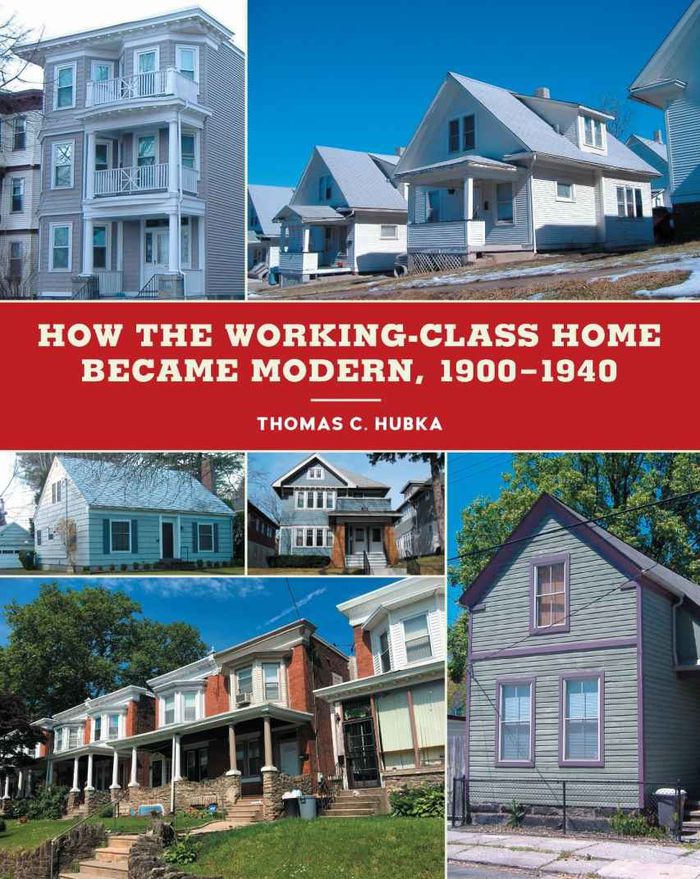
How the working-class home became modern
Actions:
Price:
$54.95
(available to order)
Summary:
In ''How the working-class home became modern, 1900–1940,'' Hubka analyzes a period when millions of average Americans saw accelerated improvement in their housing and domestic conditions. These improvements were intertwined with the acquisition of entirely new mechanical conveniences, new types of rooms and patterns of domestic life, and such innovations—from public utilities and kitchen appliances to remodeled and multi-unit housing—are at the center of the story Hubka tells. It is a narrative that traces changes in household hygiene, sociability, and privacy practices that launched large portions of the working classes into the middle class—and that, in Hubka’s telling, reconfigures and enriches the standard account of the domestic transformation of the American home.
How the working-class home became modern
Actions:
Price:
$54.95
(available to order)
Summary:
In ''How the working-class home became modern, 1900–1940,'' Hubka analyzes a period when millions of average Americans saw accelerated improvement in their housing and domestic conditions. These improvements were intertwined with the acquisition of entirely new mechanical conveniences, new types of rooms and patterns of domestic life, and such innovations—from public utilities and kitchen appliances to remodeled and multi-unit housing—are at the center of the story Hubka tells. It is a narrative that traces changes in household hygiene, sociability, and privacy practices that launched large portions of the working classes into the middle class—and that, in Hubka’s telling, reconfigures and enriches the standard account of the domestic transformation of the American home.
Form:
books
books
Publication:
December 2020
December 2020
Subject:
Architectural Theory
Architectural Theory
Form:
books
books
Title:
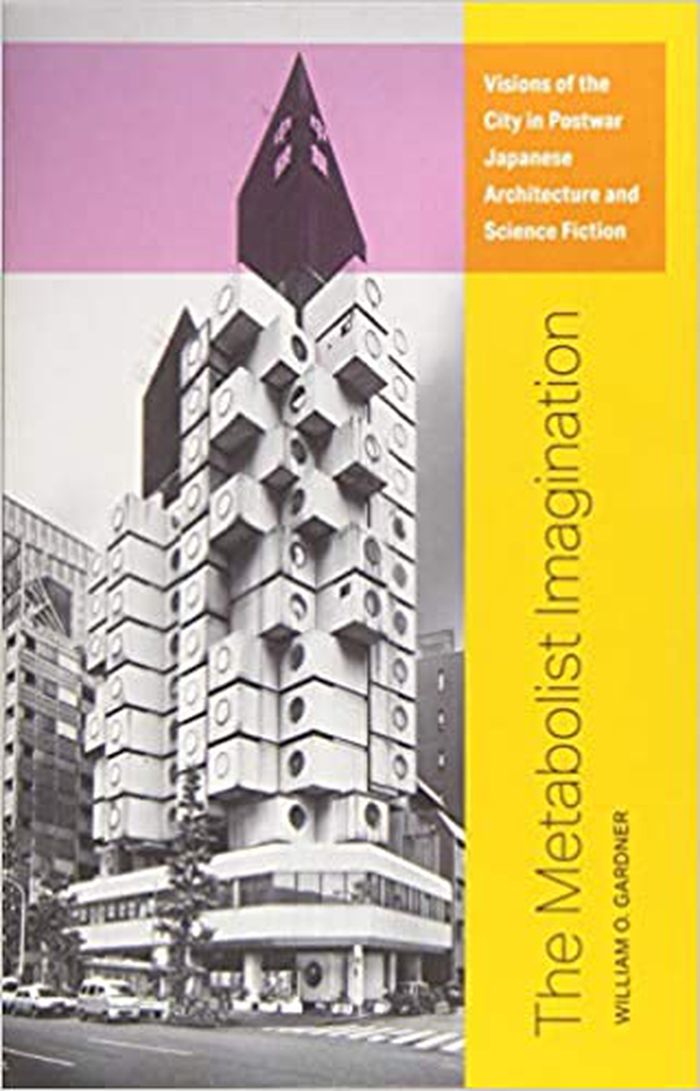
The metabolist imagination: visions of the city in postwar Japanese architecture and science fiction
The metabolist imagination: visions of the city in postwar Japanese architecture and science fiction
Actions:
Price:
$39.95
(available to order)
Summary:
The devastation of the Second World War gave rise to imaginations both utopian and apocalyptic. In Japan, a fascinating confluence of architects and science fiction writers took advantage of this space to begin remaking urban design. In 'The Metabolist Imagination', William O. Gardner explores the unique Metabolism movement, which allied with science fiction authors to(...)
$39.95
(available to order)
Summary:
The devastation of the Second World War gave rise to imaginations both utopian and apocalyptic. In Japan, a fascinating confluence of architects and science fiction writers took advantage of this space to begin remaking urban design. In 'The Metabolist Imagination', William O. Gardner explores the unique Metabolism movement, which allied with science fiction authors to(...)
Title:
The metabolist imagination: visions of the city in postwar Japanese architecture and science fiction
Actions:
Price:
$39.95
(available to order)
Summary:
The devastation of the Second World War gave rise to imaginations both utopian and apocalyptic. In Japan, a fascinating confluence of architects and science fiction writers took advantage of this space to begin remaking urban design. In 'The Metabolist Imagination', William O. Gardner explores the unique Metabolism movement, which allied with science fiction authors to foresee the global cities that would emerge in the postwar era. This first comparative study of postwar Japanese architecture and science fiction builds on the resurgence of interest in Metabolist architecture while establishing new directions for exploration. Gardner focuses on how these innovators created unique versions of shared concepts—including futurity, megastructures, capsules, and cybercities—making lasting contributions that resonate with contemporary conversations around cyberpunk, climate change, anime, and more.
The metabolist imagination: visions of the city in postwar Japanese architecture and science fiction
Actions:
Price:
$39.95
(available to order)
Summary:
The devastation of the Second World War gave rise to imaginations both utopian and apocalyptic. In Japan, a fascinating confluence of architects and science fiction writers took advantage of this space to begin remaking urban design. In 'The Metabolist Imagination', William O. Gardner explores the unique Metabolism movement, which allied with science fiction authors to foresee the global cities that would emerge in the postwar era. This first comparative study of postwar Japanese architecture and science fiction builds on the resurgence of interest in Metabolist architecture while establishing new directions for exploration. Gardner focuses on how these innovators created unique versions of shared concepts—including futurity, megastructures, capsules, and cybercities—making lasting contributions that resonate with contemporary conversations around cyberpunk, climate change, anime, and more.
Form:
books
books
Publication:
May 2020
May 2020
Subject:
Architectural Theory
Architectural Theory
Form:
books
books

Actions:
Price:
$42.99
(available to order)
Summary:
This publication takes the reader on a visual journey from some of the earliest known tree species on our planet to the latest fruit cultivars. The chosen trees have all had a profound effect on the planet and humankind. Starting with the Ginkgo Biloba, fossils of which date back 270 million years, we learn about how trees came to be integral to the development of our(...)
$42.99
(available to order)
Summary:
This publication takes the reader on a visual journey from some of the earliest known tree species on our planet to the latest fruit cultivars. The chosen trees have all had a profound effect on the planet and humankind. Starting with the Ginkgo Biloba, fossils of which date back 270 million years, we learn about how trees came to be integral to the development of our(...)
Title:
The story of trees, and how they changed the way we live
Actions:
Price:
$42.99
(available to order)
Summary:
This publication takes the reader on a visual journey from some of the earliest known tree species on our planet to the latest fruit cultivars. The chosen trees have all had a profound effect on the planet and humankind. Starting with the Ginkgo Biloba, fossils of which date back 270 million years, we learn about how trees came to be integral to the development of our species, and how specific trees have become important religious, political, and cultural symbols. With beautiful illustrations by Thibaud Herem and fascinating botanical facts and figures, this book will appeal to tree lovers from all over the world.
The story of trees, and how they changed the way we live
Actions:
Price:
$42.99
(available to order)
Summary:
This publication takes the reader on a visual journey from some of the earliest known tree species on our planet to the latest fruit cultivars. The chosen trees have all had a profound effect on the planet and humankind. Starting with the Ginkgo Biloba, fossils of which date back 270 million years, we learn about how trees came to be integral to the development of our species, and how specific trees have become important religious, political, and cultural symbols. With beautiful illustrations by Thibaud Herem and fascinating botanical facts and figures, this book will appeal to tree lovers from all over the world.
Form:
books
books
Publication:
March 2020
March 2020
Subject:
Landscape Theory
Landscape Theory


