


1067 Results
Form:
books
books

Title:
Holocaust memorial, Berlin
Holocaust memorial, Berlin
Actions:
Price:
$58.00
(available to order)
Summary:
Inescapably controversial, the Holocaust Memorial Berlin (or, as it’s formally known, the Memorial to the Murdered Jews of Europe) is now finished, some 16 years after it was first proposed. Architect Peter Eisenman’s design, which filled a four-football-field-size parcel of land in the middle of Berlin with more than 2,700 concrete slabs, or stelae, was itself hotly(...)
$58.00
(available to order)
Summary:
Inescapably controversial, the Holocaust Memorial Berlin (or, as it’s formally known, the Memorial to the Murdered Jews of Europe) is now finished, some 16 years after it was first proposed. Architect Peter Eisenman’s design, which filled a four-football-field-size parcel of land in the middle of Berlin with more than 2,700 concrete slabs, or stelae, was itself hotly(...)
Subject:
Architecture Monographs
Architecture Monographs
Publication:
January 1900, Baden
January 1900, Baden
Title:
Holocaust memorial, Berlin
Actions:
Price:
$58.00
(available to order)
Summary:
Inescapably controversial, the Holocaust Memorial Berlin (or, as it’s formally known, the Memorial to the Murdered Jews of Europe) is now finished, some 16 years after it was first proposed. Architect Peter Eisenman’s design, which filled a four-football-field-size parcel of land in the middle of Berlin with more than 2,700 concrete slabs, or stelae, was itself hotly debated, with some complaining that its abstractness, Eisenman’s trademark, made it a monument that evoked no memories. As the debates give way to accounts of the experience of the space, the readers of this book, produced with Eisenman’s cooperation, will be able to compare how successfully the architect’s conception matches the reality. This volume offers a full picture of the process from conceptual and architectural drawings and digital plans to photographs of construction. It holds the narrative of a difficult task, turning “the place of no meaning,” as Eisenman once referred to the site in the hopes of dispelling fears that he was trying to symbolize the deaths that took place during the Holocaust, into a confrontation with the past. Photographs by Hélène Binet and Lukas Wasserman.
Holocaust memorial, Berlin
Actions:
Price:
$58.00
(available to order)
Summary:
Inescapably controversial, the Holocaust Memorial Berlin (or, as it’s formally known, the Memorial to the Murdered Jews of Europe) is now finished, some 16 years after it was first proposed. Architect Peter Eisenman’s design, which filled a four-football-field-size parcel of land in the middle of Berlin with more than 2,700 concrete slabs, or stelae, was itself hotly debated, with some complaining that its abstractness, Eisenman’s trademark, made it a monument that evoked no memories. As the debates give way to accounts of the experience of the space, the readers of this book, produced with Eisenman’s cooperation, will be able to compare how successfully the architect’s conception matches the reality. This volume offers a full picture of the process from conceptual and architectural drawings and digital plans to photographs of construction. It holds the narrative of a difficult task, turning “the place of no meaning,” as Eisenman once referred to the site in the hopes of dispelling fears that he was trying to symbolize the deaths that took place during the Holocaust, into a confrontation with the past. Photographs by Hélène Binet and Lukas Wasserman.
Form:
books
books
Publication:
January 1900, Baden
January 1900, Baden
Subject:
Architecture Monographs
Architecture Monographs
Form:
books
books
Actions:
Price:
$60.00
(available to order)
Summary:
The Dutch office of Strootman Landscape Architects is extensively profiled in this gorgeous monographic publication by C3. The book is divided by chapter into the themes most relevant to the practice: Garden & Park, Forest & Park, Re-use, Historico-cultural Landscapes, and Living in Water Landscapes. Tackling issues such as planning versus design, spatial solutions in an(...)
$60.00
(available to order)
Summary:
The Dutch office of Strootman Landscape Architects is extensively profiled in this gorgeous monographic publication by C3. The book is divided by chapter into the themes most relevant to the practice: Garden & Park, Forest & Park, Re-use, Historico-cultural Landscapes, and Living in Water Landscapes. Tackling issues such as planning versus design, spatial solutions in an(...)
Title:
Strootman: strategies for the sublime
Actions:
Price:
$60.00
(available to order)
Summary:
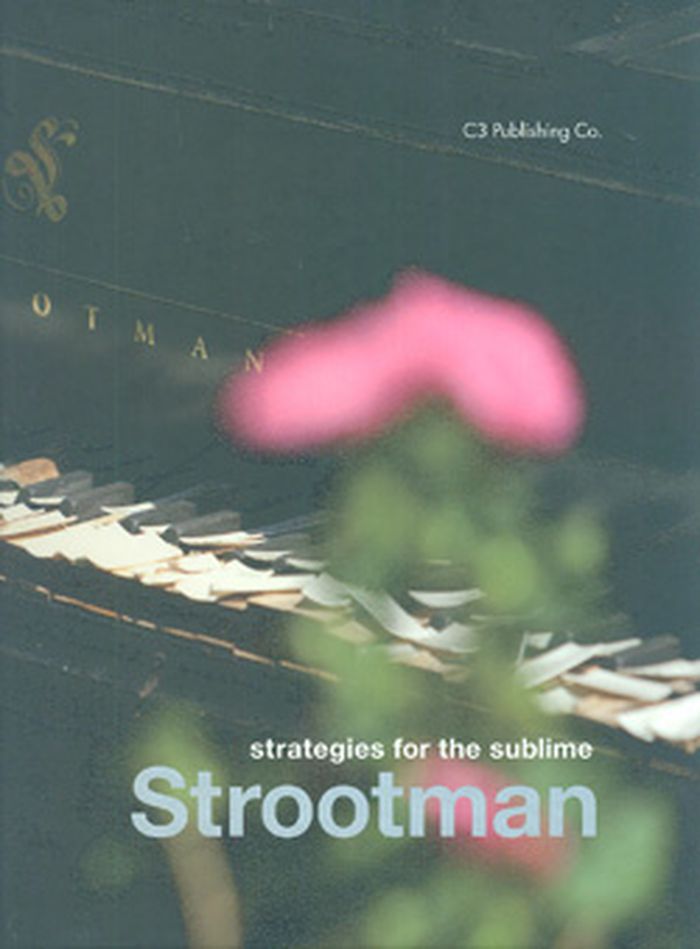
The Dutch office of Strootman Landscape Architects is extensively profiled in this gorgeous monographic publication by C3. The book is divided by chapter into the themes most relevant to the practice: Garden & Park, Forest & Park, Re-use, Historico-cultural Landscapes, and Living in Water Landscapes. Tackling issues such as planning versus design, spatial solutions in an urbanised world, accommodating natural forms and systems, and the pursuit of the sublime, Strootman presents itself as formally rooted in the history of the Dutch landscape while simultaneously applying contemporary ecological and spatial strategies. Included are a variety of notable projects from both within the Netherlands and across Europe.
Strootman: strategies for the sublime
Actions:
Price:
$60.00
(available to order)
Summary:
The Dutch office of Strootman Landscape Architects is extensively profiled in this gorgeous monographic publication by C3. The book is divided by chapter into the themes most relevant to the practice: Garden & Park, Forest & Park, Re-use, Historico-cultural Landscapes, and Living in Water Landscapes. Tackling issues such as planning versus design, spatial solutions in an urbanised world, accommodating natural forms and systems, and the pursuit of the sublime, Strootman presents itself as formally rooted in the history of the Dutch landscape while simultaneously applying contemporary ecological and spatial strategies. Included are a variety of notable projects from both within the Netherlands and across Europe.
Form:
books
books
Publication:
December 2012
December 2012
Subject:
Landscape Architecture, Monographs
Landscape Architecture, Monographs
Form:
books
books
Title:
Domesticity at War
Domesticity at War
Actions:
Price:
$54.95
(available to order)
Summary:
In the years immediately following World War II, America embraced modern architecture--not as something imported from Europe, but as an entirely new mode of operation, with original and captivating designs made in the USA. Beatriz Colomina shows how postwar American architecture adapted the techniques and materials that were developed for military applications to domestic(...)
$54.95
(available to order)
Summary:
In the years immediately following World War II, America embraced modern architecture--not as something imported from Europe, but as an entirely new mode of operation, with original and captivating designs made in the USA. Beatriz Colomina shows how postwar American architecture adapted the techniques and materials that were developed for military applications to domestic(...)
Title:
Domesticity at War
Actions:
Price:
$54.95
(available to order)
Summary:
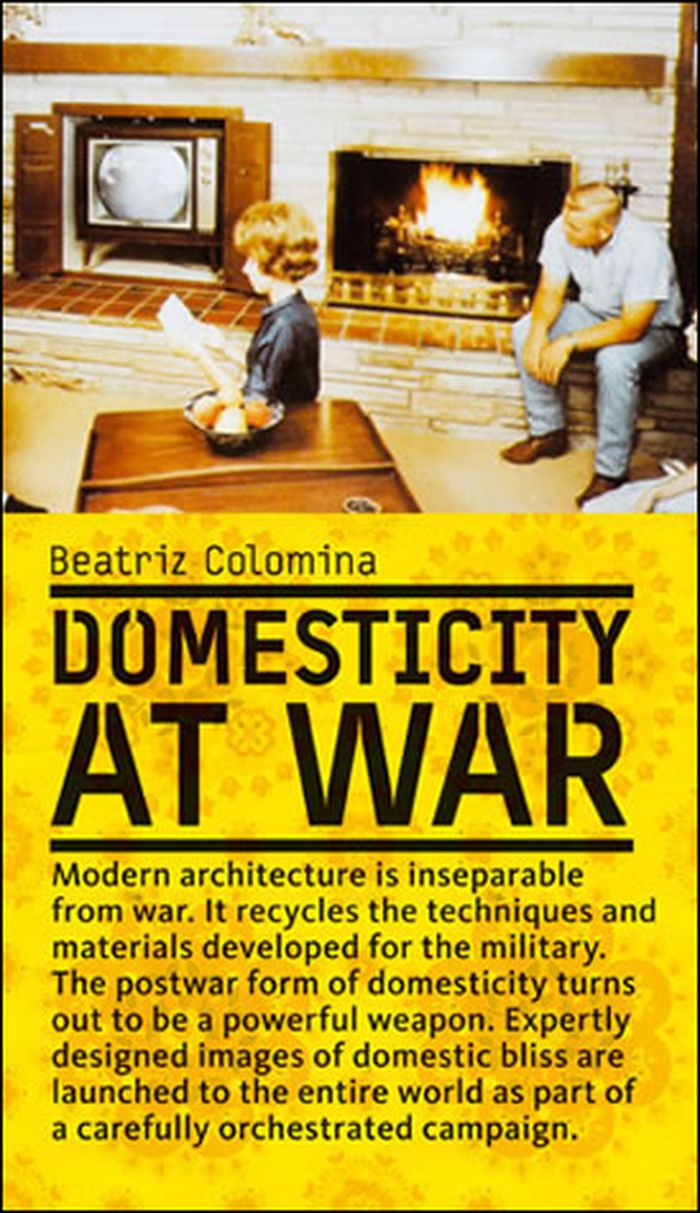
In the years immediately following World War II, America embraced modern architecture--not as something imported from Europe, but as an entirely new mode of operation, with original and captivating designs made in the USA. Beatriz Colomina shows how postwar American architecture adapted the techniques and materials that were developed for military applications to domestic use. Just as manufacturers were turning wartime industry to peacetime productivity--going from missiles to washing machines--American architects and cultural institutions were, in Buckminster Fuller’s words, turning "weaponry into livingry." This new form of domesticity itself turned out to be a powerful weapon. Images of American domestic bliss--suburban homes, manicured lawns, kitchen accessories--went around the world as an effective propaganda campaign. Cold War anxieties were masked by endlessly repeated images of a picture-perfect domestic environment. Even the popular conception of the architect became domesticated, changing from that of an austere modernist to a plaid-shirt wearing homebody. Domesticity at War itself has a distinctive architecture. Housed within the case are two units: one book of text, and one book of illustrations--most of them in color, including advertisements, newspaper and magazine articles, architectural photographs, and more.
Domesticity at War
Actions:
Price:
$54.95
(available to order)
Summary:
In the years immediately following World War II, America embraced modern architecture--not as something imported from Europe, but as an entirely new mode of operation, with original and captivating designs made in the USA. Beatriz Colomina shows how postwar American architecture adapted the techniques and materials that were developed for military applications to domestic use. Just as manufacturers were turning wartime industry to peacetime productivity--going from missiles to washing machines--American architects and cultural institutions were, in Buckminster Fuller’s words, turning "weaponry into livingry." This new form of domesticity itself turned out to be a powerful weapon. Images of American domestic bliss--suburban homes, manicured lawns, kitchen accessories--went around the world as an effective propaganda campaign. Cold War anxieties were masked by endlessly repeated images of a picture-perfect domestic environment. Even the popular conception of the architect became domesticated, changing from that of an austere modernist to a plaid-shirt wearing homebody. Domesticity at War itself has a distinctive architecture. Housed within the case are two units: one book of text, and one book of illustrations--most of them in color, including advertisements, newspaper and magazine articles, architectural photographs, and more.
Form:
books
books
Publication:
March 2007, Cambridge / London
March 2007, Cambridge / London
Subject:
Architectural Theory
Architectural Theory
Form:
books
books
Actions:
Price:
$31.50
(available to order)
Summary:
A manifesto for a radically different philosophy and practice of manufacture and environmentalism. "Reduce, reuse, recycle" urge environmentalists; in other words, do more with less in order to minimize damage. As William McDonough and Michael Braungart argue in their provocative, visionary book, however, this approach perpetuates a one-way, "cradle to grave"(...)
$31.50
(available to order)
Summary:
A manifesto for a radically different philosophy and practice of manufacture and environmentalism. "Reduce, reuse, recycle" urge environmentalists; in other words, do more with less in order to minimize damage. As William McDonough and Michael Braungart argue in their provocative, visionary book, however, this approach perpetuates a one-way, "cradle to grave"(...)
Subject:
Green Architecture
Green Architecture
Publication:
January 1900, New York
January 1900, New York
Title:
Cradle to cradle : remaking the way we make things
Actions:
Price:
$31.50
(available to order)
Summary:
A manifesto for a radically different philosophy and practice of manufacture and environmentalism. "Reduce, reuse, recycle" urge environmentalists; in other words, do more with less in order to minimize damage. As William McDonough and Michael Braungart argue in their provocative, visionary book, however, this approach perpetuates a one-way, "cradle to grave" manufacturing model that dates to the industrial revolution and casts off as much as 90 percent of the materials it uses as waste, much of it toxic. Why not challenge the notion that human industry must inevitably damage the natural world, they ask. In fact, why not take nature itself as our model? A tree produces thousands of blossoms in order to create another tree, yet we do not consider its abundance wasteful but safe, beautiful, and highly effective; hence, "waste equals food" is the first principle the book sets forth. Products might be designed so that, after their useful life, they provide nourishment for something new-either as "biological nutrients" that safely re-enter the environment or as "technical nutrients" that circulate within closed-loop industrial cycles, without being "downcycled" into low-grade uses (as most "recyclables" now are). Elaborating their principles from experience (re)designing everything from carpeting to corporate campuses, the authors make an exciting and viable case for change.
Cradle to cradle : remaking the way we make things
Actions:
Price:
$31.50
(available to order)
Summary:
A manifesto for a radically different philosophy and practice of manufacture and environmentalism. "Reduce, reuse, recycle" urge environmentalists; in other words, do more with less in order to minimize damage. As William McDonough and Michael Braungart argue in their provocative, visionary book, however, this approach perpetuates a one-way, "cradle to grave" manufacturing model that dates to the industrial revolution and casts off as much as 90 percent of the materials it uses as waste, much of it toxic. Why not challenge the notion that human industry must inevitably damage the natural world, they ask. In fact, why not take nature itself as our model? A tree produces thousands of blossoms in order to create another tree, yet we do not consider its abundance wasteful but safe, beautiful, and highly effective; hence, "waste equals food" is the first principle the book sets forth. Products might be designed so that, after their useful life, they provide nourishment for something new-either as "biological nutrients" that safely re-enter the environment or as "technical nutrients" that circulate within closed-loop industrial cycles, without being "downcycled" into low-grade uses (as most "recyclables" now are). Elaborating their principles from experience (re)designing everything from carpeting to corporate campuses, the authors make an exciting and viable case for change.
Form:
books
books
Publication:
January 1900, New York
January 1900, New York
Subject:
Green Architecture
Green Architecture
Form:
books
books
Title:
Unbuilt Victoria
Unbuilt Victoria
Actions:
Price:
$28.99
(available to order)
Summary:
For most people, resident and visitor alike, Victoria, British Columbia, is a time capsule of Victorian and Edwardian buildings. For its first 50 years the settlement flourished as the capital of the province. A smallpox epidemic in the 1890s closed Victoria's port, causing the city to go into decline and shelving plans for the Canada Western Hotel, for a replica of the(...)
$28.99
(available to order)
Summary:
For most people, resident and visitor alike, Victoria, British Columbia, is a time capsule of Victorian and Edwardian buildings. For its first 50 years the settlement flourished as the capital of the province. A smallpox epidemic in the 1890s closed Victoria's port, causing the city to go into decline and shelving plans for the Canada Western Hotel, for a replica of the(...)
Title:
Unbuilt Victoria
Actions:
Price:
$28.99
(available to order)
Summary:
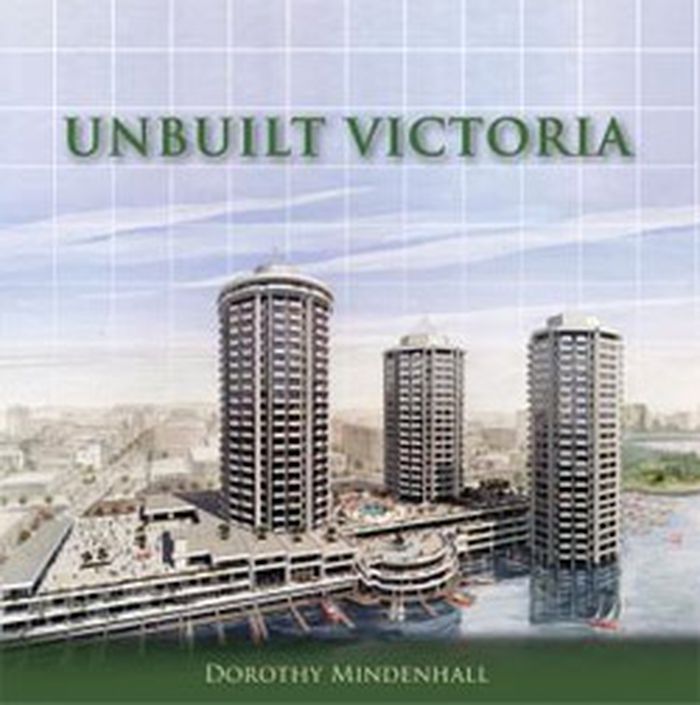
For most people, resident and visitor alike, Victoria, British Columbia, is a time capsule of Victorian and Edwardian buildings. For its first 50 years the settlement flourished as the capital of the province. A smallpox epidemic in the 1890s closed Victoria's port, causing the city to go into decline and shelving plans for the Canada Western Hotel, for a replica of the Parthenon in Beacon Hill Park, and for the grandiose Italianate facade that was to complete City Hall. Victoria tried to reinvent itself as a tourist destination, but it wasn't until the modernizing boom after the Second World War that attempts were made to drag the city's built environment into the mainstream. Unbuilt Victoria examines some of the architectural plans that were proposed but rejected. That some of them were ever dreamed of will probably amaze; that others never made it might well be a matter of regret.
Unbuilt Victoria
Actions:
Price:
$28.99
(available to order)
Summary:
For most people, resident and visitor alike, Victoria, British Columbia, is a time capsule of Victorian and Edwardian buildings. For its first 50 years the settlement flourished as the capital of the province. A smallpox epidemic in the 1890s closed Victoria's port, causing the city to go into decline and shelving plans for the Canada Western Hotel, for a replica of the Parthenon in Beacon Hill Park, and for the grandiose Italianate facade that was to complete City Hall. Victoria tried to reinvent itself as a tourist destination, but it wasn't until the modernizing boom after the Second World War that attempts were made to drag the city's built environment into the mainstream. Unbuilt Victoria examines some of the architectural plans that were proposed but rejected. That some of them were ever dreamed of will probably amaze; that others never made it might well be a matter of regret.
Form:
books
books
Publication:
April 2012
April 2012
Subject:
Architecture in Canada
Architecture in Canada
Form:
books
books
Price:
$74.95
(available to order)
Summary:
From Victorian London to the Swinging 60s; from the Battle of Britain to Punk; from the Festival of Britain to the 2012 Olympics; from the foggy cobbled streets to the architectural masterpieces of the millennium; from rough pubs to private drinking clubs; from Royal Weddings to raves, from the charm of the East End to the wonders of the Westminster; from Chelsea girls to(...)
$74.95
(available to order)
Summary:
From Victorian London to the Swinging 60s; from the Battle of Britain to Punk; from the Festival of Britain to the 2012 Olympics; from the foggy cobbled streets to the architectural masterpieces of the millennium; from rough pubs to private drinking clubs; from Royal Weddings to raves, from the charm of the East End to the wonders of the Westminster; from Chelsea girls to(...)
Title:
London
Actions:
Price:
$74.95
(available to order)
Summary:
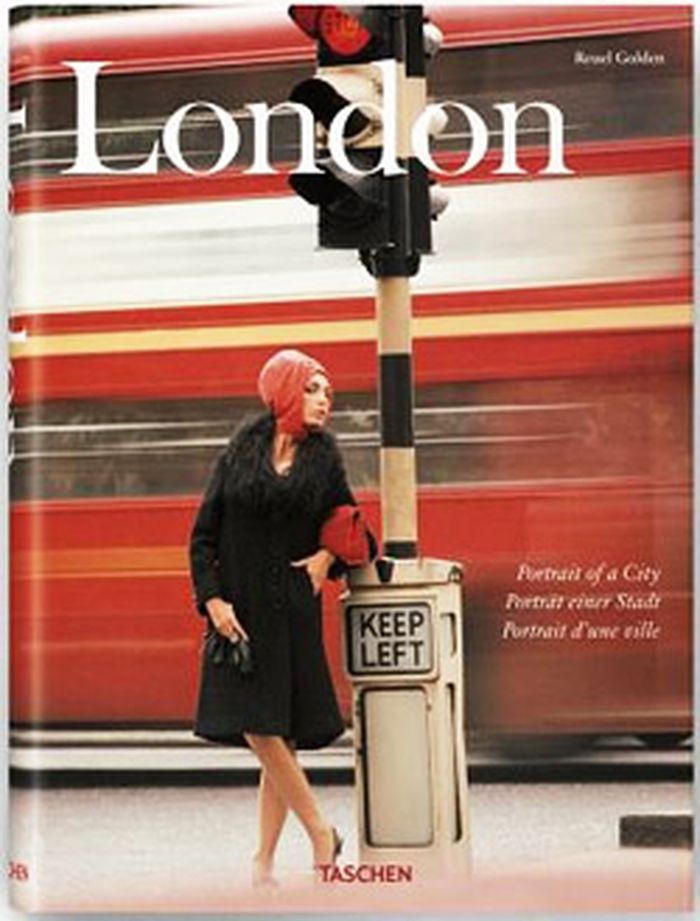
From Victorian London to the Swinging 60s; from the Battle of Britain to Punk; from the Festival of Britain to the 2012 Olympics; from the foggy cobbled streets to the architectural masterpieces of the millennium; from rough pubs to private drinking clubs; from Royal Weddings to raves, from the charm of the East End to the wonders of the Westminster; from Chelsea girls to Hoxton hipsters; from the power to the glory: in page after page of photographs, reproduced big and bold like the city itself, London at last gets the photographic tribute it deserves.
London
Actions:
Price:
$74.95
(available to order)
Summary:
From Victorian London to the Swinging 60s; from the Battle of Britain to Punk; from the Festival of Britain to the 2012 Olympics; from the foggy cobbled streets to the architectural masterpieces of the millennium; from rough pubs to private drinking clubs; from Royal Weddings to raves, from the charm of the East End to the wonders of the Westminster; from Chelsea girls to Hoxton hipsters; from the power to the glory: in page after page of photographs, reproduced big and bold like the city itself, London at last gets the photographic tribute it deserves.
Form:
books
books
Publication:
August 2012
August 2012
Subject:
Architecture since 1900, Europe
Architecture since 1900, Europe
Form:
books
books
Price:
$18.00
(available to order)
Summary:
"The edifice complex" explores the intimate and inextricable relationship between power, money and architecture in the twentieth century. How and why have presidents, prime ministers, mayors, millionaires and bishops come to share such a fascination with grand designs? From Blair to Mitterrand, from Hitler to Stalin to Saddam Hussein, architecture has become an end in(...)
$18.00
(available to order)
Summary:
"The edifice complex" explores the intimate and inextricable relationship between power, money and architecture in the twentieth century. How and why have presidents, prime ministers, mayors, millionaires and bishops come to share such a fascination with grand designs? From Blair to Mitterrand, from Hitler to Stalin to Saddam Hussein, architecture has become an end in(...)
Title:
The edifice complex : how the rich and powerful shape the world
Actions:
Price:
$18.00
(available to order)
Summary:
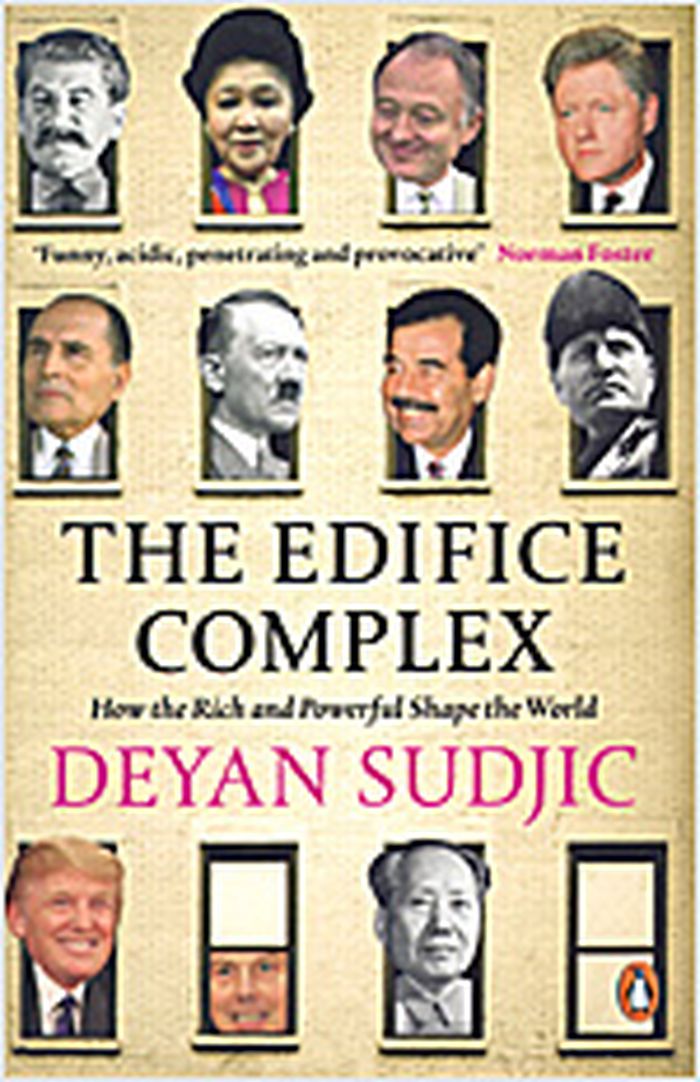
"The edifice complex" explores the intimate and inextricable relationship between power, money and architecture in the twentieth century. How and why have presidents, prime ministers, mayors, millionaires and bishops come to share such a fascination with grand designs? From Blair to Mitterrand, from Hitler to Stalin to Saddam Hussein, architecture has become an end in itself, as well as a means to an end. This is a book of genuine timeliness, throwing new light on the motivations of the rich and powerful around the world - and on the ways they seek to affect us.
The edifice complex : how the rich and powerful shape the world
Actions:
Price:
$18.00
(available to order)
Summary:
"The edifice complex" explores the intimate and inextricable relationship between power, money and architecture in the twentieth century. How and why have presidents, prime ministers, mayors, millionaires and bishops come to share such a fascination with grand designs? From Blair to Mitterrand, from Hitler to Stalin to Saddam Hussein, architecture has become an end in itself, as well as a means to an end. This is a book of genuine timeliness, throwing new light on the motivations of the rich and powerful around the world - and on the ways they seek to affect us.
Form:
books
books
Publication:
May 2006, London, New York
May 2006, London, New York
Subject:
Architectural Theory
Architectural Theory
Form:
books
books
Actions:
Price:
$29.99
(available to order)
Summary:
Broadway avenue in downtown Los Angeles holds an extraordinary collection of twelve once-luxurious and now abandoned film-palaces, built between 1910 and 1931. In most cities worldwide, such a concentration of cinemas would have been demolished long ago - here however the buildings have survived the end of film-projection intact, some of their interiors ruined and gutted,(...)
$29.99
(available to order)
Summary:
Broadway avenue in downtown Los Angeles holds an extraordinary collection of twelve once-luxurious and now abandoned film-palaces, built between 1910 and 1931. In most cities worldwide, such a concentration of cinemas would have been demolished long ago - here however the buildings have survived the end of film-projection intact, some of their interiors ruined and gutted,(...)
Title:
Abandoned images: film and film's end
Actions:
Price:
$29.99
(available to order)
Summary:
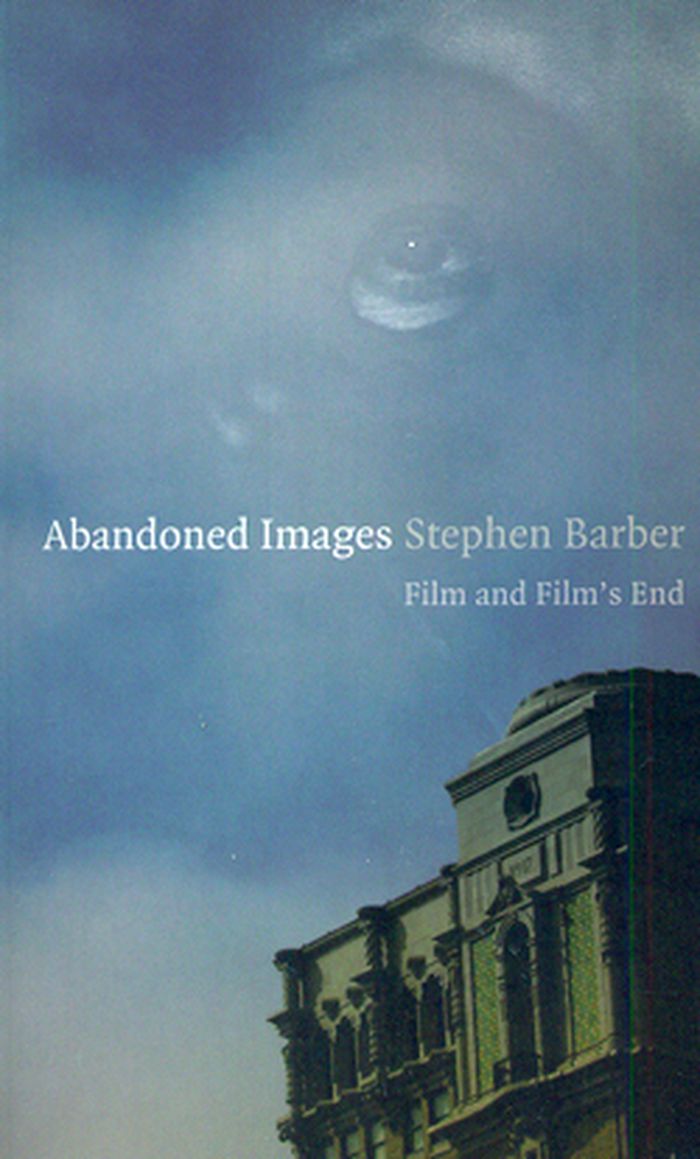
Broadway avenue in downtown Los Angeles holds an extraordinary collection of twelve once-luxurious and now abandoned film-palaces, built between 1910 and 1931. In most cities worldwide, such a concentration of cinemas would have been demolished long ago - here however the buildings have survived the end of film-projection intact, some of their interiors ruined and gutted, others transformed and re-used as churches, nightclubs and storage spaces. Stephen Barber begins with an exploration of these remarkable derelicts, and broadens to ask questions about the abandonment of film itself.
Abandoned images: film and film's end
Actions:
Price:
$29.99
(available to order)
Summary:
Broadway avenue in downtown Los Angeles holds an extraordinary collection of twelve once-luxurious and now abandoned film-palaces, built between 1910 and 1931. In most cities worldwide, such a concentration of cinemas would have been demolished long ago - here however the buildings have survived the end of film-projection intact, some of their interiors ruined and gutted, others transformed and re-used as churches, nightclubs and storage spaces. Stephen Barber begins with an exploration of these remarkable derelicts, and broadens to ask questions about the abandonment of film itself.
Form:
books
books
Publication:
February 2010
February 2010
Subject:
Architecture and Film, Set Design
Architecture and Film, Set Design
Form:
books
books
Actions:
Price:
$66.00
(available to order)
Summary:
This monograph explores the design philosophy of the three partners of Surfacedesign, who are committed to solutions that emerge from the site itself and challenge conventional approaches to landscape. The work is informed by the vast openness and frontier spirit of the West, expressed in rugged materials and sustainable planting. Surfacedesign focuses on cultivating a(...)
$66.00
(available to order)
Summary:
This monograph explores the design philosophy of the three partners of Surfacedesign, who are committed to solutions that emerge from the site itself and challenge conventional approaches to landscape. The work is informed by the vast openness and frontier spirit of the West, expressed in rugged materials and sustainable planting. Surfacedesign focuses on cultivating a(...)
Subject:
Landscape Architecture, Monographs
Landscape Architecture, Monographs
Publication:
October 2019
October 2019
Title:
Surafcedesign: material landscapes
Actions:
Price:
$66.00
(available to order)
Summary:
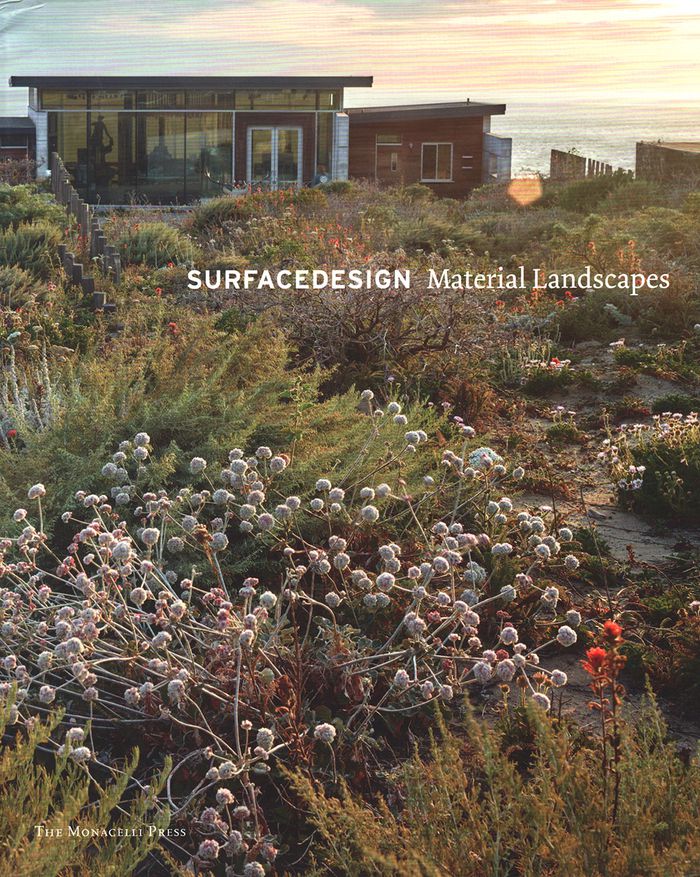
This monograph explores the design philosophy of the three partners of Surfacedesign, who are committed to solutions that emerge from the site itself and challenge conventional approaches to landscape. The work is informed by the vast openness and frontier spirit of the West, expressed in rugged materials and sustainable planting. Surfacedesign focuses on cultivating a sense of connection to the built and natural world, pushing people to engage with the landscape in new ways. The design approach emphasizes and celebrates the unique context and imaginative potential of each project. The studio's process is rooted in asking novel questions and listening to a site and its users, a process that has led to engaging and inspiring landscapes that are rugged, contemporary, and crafted.
Surafcedesign: material landscapes
Actions:
Price:
$66.00
(available to order)
Summary:
This monograph explores the design philosophy of the three partners of Surfacedesign, who are committed to solutions that emerge from the site itself and challenge conventional approaches to landscape. The work is informed by the vast openness and frontier spirit of the West, expressed in rugged materials and sustainable planting. Surfacedesign focuses on cultivating a sense of connection to the built and natural world, pushing people to engage with the landscape in new ways. The design approach emphasizes and celebrates the unique context and imaginative potential of each project. The studio's process is rooted in asking novel questions and listening to a site and its users, a process that has led to engaging and inspiring landscapes that are rugged, contemporary, and crafted.
Form:
books
books
Publication:
October 2019
October 2019
Subject:
Landscape Architecture, Monographs
Landscape Architecture, Monographs
Form:
books
books
Price:
$67.95
(available to order)
Summary:
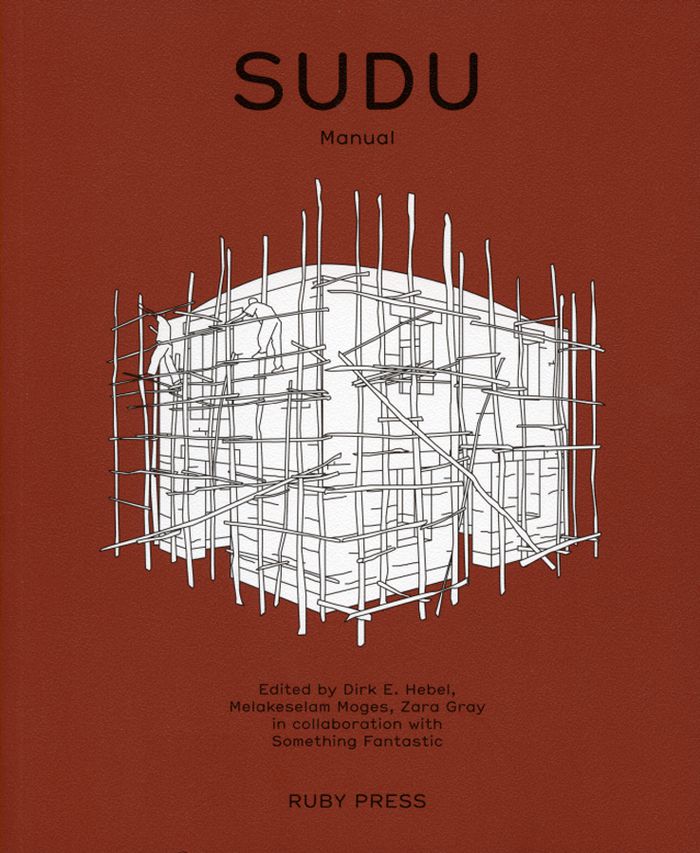
The Sustainable Urban Dwelling Unit (SUDU), which emerged out of a summer workshop in Addis Ababa, Ethiopia, is a new, sustainable housing alternative that can be self-constructed with minimal technical ability, low start-up costs, and local materials (such as soil). This publication documents the building process in two parts: the first part narratively records the(...)
$67.95
(available to order)
Summary:
The Sustainable Urban Dwelling Unit (SUDU), which emerged out of a summer workshop in Addis Ababa, Ethiopia, is a new, sustainable housing alternative that can be self-constructed with minimal technical ability, low start-up costs, and local materials (such as soil). This publication documents the building process in two parts: the first part narratively records the(...)
Title:
SUDU : the sustainable urban dwelling unit in Ethiopia, 2 volumes
Actions:
Price:
$67.95
(available to order)
Summary:
The Sustainable Urban Dwelling Unit (SUDU), which emerged out of a summer workshop in Addis Ababa, Ethiopia, is a new, sustainable housing alternative that can be self-constructed with minimal technical ability, low start-up costs, and local materials (such as soil). This publication documents the building process in two parts: the first part narratively records the construction process itself while providing historical and technical context. The second part functions as a manual, providing a detailed list of tools, materials, and step-by-step instructions that can be used by readers to carry out their own SUDU project.
SUDU : the sustainable urban dwelling unit in Ethiopia, 2 volumes
Actions:
Price:
$67.95
(available to order)
Summary:
The Sustainable Urban Dwelling Unit (SUDU), which emerged out of a summer workshop in Addis Ababa, Ethiopia, is a new, sustainable housing alternative that can be self-constructed with minimal technical ability, low start-up costs, and local materials (such as soil). This publication documents the building process in two parts: the first part narratively records the construction process itself while providing historical and technical context. The second part functions as a manual, providing a detailed list of tools, materials, and step-by-step instructions that can be used by readers to carry out their own SUDU project.
Form:
books
books
Publication:
June 2015
June 2015
Subject:
Architecture since 1900, Africa
Architecture since 1900, Africa


