


951 Results
Form:
books
books
Title:
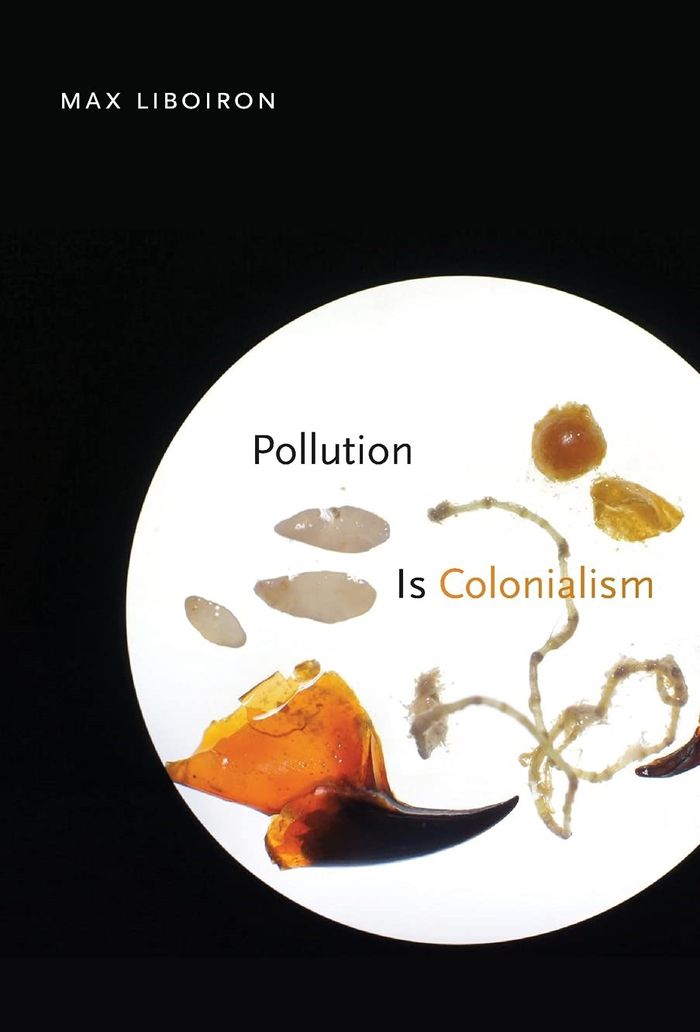
Pollution is colonialism
Pollution is colonialism
Actions:
Price:
$33.95
(available to order)
Summary:
In 'Pollution Is Colonialism' Max Liboiron presents a framework for understanding scientific research methods as practices that can align with or against colonialism. They point out that even when researchers are working toward benevolent goals, environmental science and activism are often premised on a colonial worldview and access to land. Focusing on plastic pollution,(...)
$33.95
(available to order)
Summary:
In 'Pollution Is Colonialism' Max Liboiron presents a framework for understanding scientific research methods as practices that can align with or against colonialism. They point out that even when researchers are working toward benevolent goals, environmental science and activism are often premised on a colonial worldview and access to land. Focusing on plastic pollution,(...)
Title:
Pollution is colonialism
Actions:
Price:
$33.95
(available to order)
Summary:
In 'Pollution Is Colonialism' Max Liboiron presents a framework for understanding scientific research methods as practices that can align with or against colonialism. They point out that even when researchers are working toward benevolent goals, environmental science and activism are often premised on a colonial worldview and access to land. Focusing on plastic pollution, the book models an anticolonial scientific practice aligned with Indigenous, particularly Métis, concepts of land, ethics, and relations. Liboiron draws on their work in the Civic Laboratory for Environmental Action Research (CLEAR) — an anticolonial science laboratory in Newfoundland, Canada — to illuminate how pollution is not a symptom of capitalism but a violent enactment of colonial land relations that claim access to Indigenous land. Liboiron's creative, lively, and passionate text refuses theories of pollution that make Indigenous land available for settler and colonial goals. In this way, their methodology demonstrates that anticolonial science is not only possible but is currently being practiced in ways that enact more ethical modes of being in the world.
Pollution is colonialism
Actions:
Price:
$33.95
(available to order)
Summary:
In 'Pollution Is Colonialism' Max Liboiron presents a framework for understanding scientific research methods as practices that can align with or against colonialism. They point out that even when researchers are working toward benevolent goals, environmental science and activism are often premised on a colonial worldview and access to land. Focusing on plastic pollution, the book models an anticolonial scientific practice aligned with Indigenous, particularly Métis, concepts of land, ethics, and relations. Liboiron draws on their work in the Civic Laboratory for Environmental Action Research (CLEAR) — an anticolonial science laboratory in Newfoundland, Canada — to illuminate how pollution is not a symptom of capitalism but a violent enactment of colonial land relations that claim access to Indigenous land. Liboiron's creative, lively, and passionate text refuses theories of pollution that make Indigenous land available for settler and colonial goals. In this way, their methodology demonstrates that anticolonial science is not only possible but is currently being practiced in ways that enact more ethical modes of being in the world.
Form:
books
books
Publication:
May 2021
May 2021
Subject:
Environment and environmental theory
Environment and environmental theory
Form:
books
books
Actions:
Price:
$37.95
(available to order)
Summary:
Bringing together media studies and environmental humanities, the contributors to ''Saturation'' develop saturation as a heuristic to analyze phenomena in which the elements involved are difficult or impossible to separate. In ordinary language, saturation describes the condition of being thoroughly soaked, while in chemistry it is the threshold at which something can be(...)
$37.95
(available to order)
Summary:
Bringing together media studies and environmental humanities, the contributors to ''Saturation'' develop saturation as a heuristic to analyze phenomena in which the elements involved are difficult or impossible to separate. In ordinary language, saturation describes the condition of being thoroughly soaked, while in chemistry it is the threshold at which something can be(...)
Subject:
Environment and environmental theory
Environment and environmental theory
Publication:
November 2021
November 2021
Title:
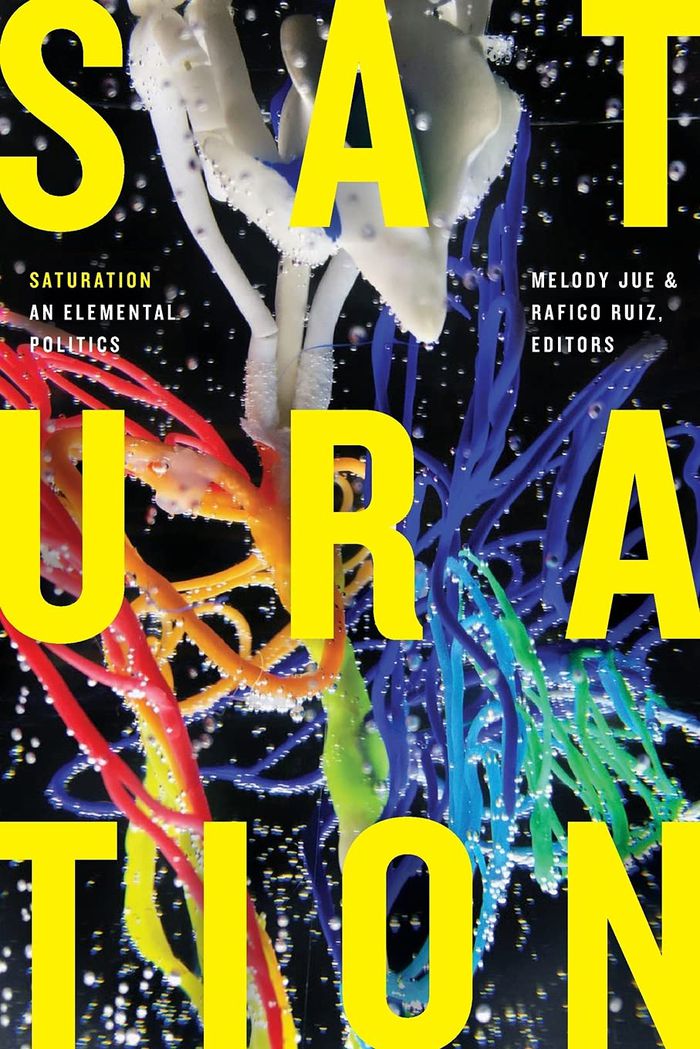
Saturation: an elemental politics
Actions:
Price:
$37.95
(available to order)
Summary:
Bringing together media studies and environmental humanities, the contributors to ''Saturation'' develop saturation as a heuristic to analyze phenomena in which the elements involved are difficult or impossible to separate. In ordinary language, saturation describes the condition of being thoroughly soaked, while in chemistry it is the threshold at which something can be maximally dissolved or absorbed in a solution. Contributors to this collection expand notions of saturation beyond water to consider saturation in sound, infrastructure, media, Big Data, capitalism, and visual culture. Essays include analyses of the thresholds of HIV detectability in bloodwork, militarism's saturation of oceans, and the deleterious effects of the saturation of cellphone and wi-fi signals into the human body. By channeling saturation to explore the relationship between media, the environment, technology, capital, and the legacies of settler colonialism, ''Saturation'' illuminates how elements, the natural world, and anthropogenic infrastructures, politics, and processes exist in and through each other.
Saturation: an elemental politics
Actions:
Price:
$37.95
(available to order)
Summary:
Bringing together media studies and environmental humanities, the contributors to ''Saturation'' develop saturation as a heuristic to analyze phenomena in which the elements involved are difficult or impossible to separate. In ordinary language, saturation describes the condition of being thoroughly soaked, while in chemistry it is the threshold at which something can be maximally dissolved or absorbed in a solution. Contributors to this collection expand notions of saturation beyond water to consider saturation in sound, infrastructure, media, Big Data, capitalism, and visual culture. Essays include analyses of the thresholds of HIV detectability in bloodwork, militarism's saturation of oceans, and the deleterious effects of the saturation of cellphone and wi-fi signals into the human body. By channeling saturation to explore the relationship between media, the environment, technology, capital, and the legacies of settler colonialism, ''Saturation'' illuminates how elements, the natural world, and anthropogenic infrastructures, politics, and processes exist in and through each other.
Form:
books
books
Publication:
November 2021
November 2021
Subject:
Environment and environmental theory
Environment and environmental theory
Form:
books
books
Actions:
Price:
$33.95
(available to order)
Summary:
The current ecological crisis brings about a new relational landscape: an unprecedented collapse of distances creates interspecies promiscuities and a crisis of the human scale. In his latest book, Nicolas Bourriaud proposes that artists are the anthropologists of this new era. Artists acknowledge the fading of the division between nature and culture, which has been the(...)
$33.95
(available to order)
Summary:
The current ecological crisis brings about a new relational landscape: an unprecedented collapse of distances creates interspecies promiscuities and a crisis of the human scale. In his latest book, Nicolas Bourriaud proposes that artists are the anthropologists of this new era. Artists acknowledge the fading of the division between nature and culture, which has been the(...)
Title:
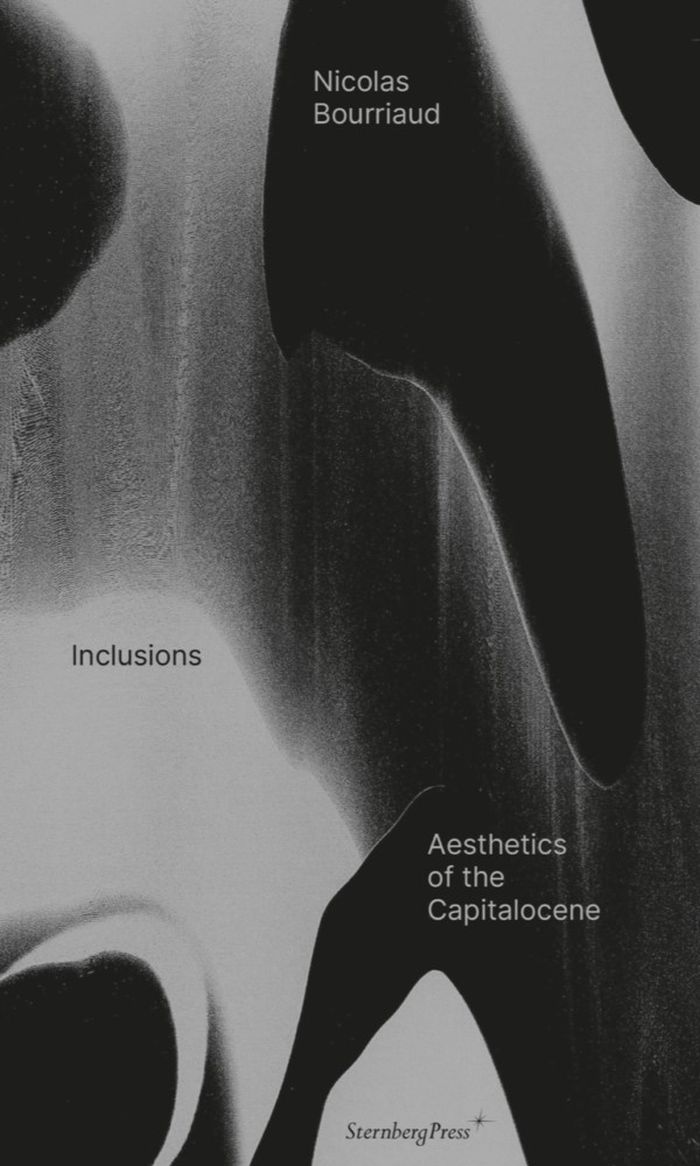
Inclusions: Aesthetics of the Capitalocene
Actions:
Price:
$33.95
(available to order)
Summary:
The current ecological crisis brings about a new relational landscape: an unprecedented collapse of distances creates interspecies promiscuities and a crisis of the human scale. In his latest book, Nicolas Bourriaud proposes that artists are the anthropologists of this new era. Artists acknowledge the fading of the division between nature and culture, which has been the matrix of segregation for millenia. Capitalism, patriarchy, slavery, social segregation, the exploitation of land, subsoil, and animals—all are based on status distinctions between subject and object. Against the commodification of natural elements, Bourriaud sees a new generation of artists calling for a molecular anthropology that studies the human effects on the universe and the interaction between humans and nonhumans. Contemporary art reconnects to archaic magic, the witches, sorcerers, and shamans of precapitalist societies. Against the devitalization of the world, art has managed to preserve certain aspects of the social function and spiritualist practices of these societies.
Inclusions: Aesthetics of the Capitalocene
Actions:
Price:
$33.95
(available to order)
Summary:
The current ecological crisis brings about a new relational landscape: an unprecedented collapse of distances creates interspecies promiscuities and a crisis of the human scale. In his latest book, Nicolas Bourriaud proposes that artists are the anthropologists of this new era. Artists acknowledge the fading of the division between nature and culture, which has been the matrix of segregation for millenia. Capitalism, patriarchy, slavery, social segregation, the exploitation of land, subsoil, and animals—all are based on status distinctions between subject and object. Against the commodification of natural elements, Bourriaud sees a new generation of artists calling for a molecular anthropology that studies the human effects on the universe and the interaction between humans and nonhumans. Contemporary art reconnects to archaic magic, the witches, sorcerers, and shamans of precapitalist societies. Against the devitalization of the world, art has managed to preserve certain aspects of the social function and spiritualist practices of these societies.
Form:
books
books
Publication:
September 2021
September 2021
Subject:
Critical Theory
Critical Theory
Form:
books
books
Actions:
Price:
$65.95
(available to order)
Summary:
The book uses saturation as an organizing concept, in part to suggest that current paradigms cannot encompass the complex realities of race. Saturation provides avenues to situate race as it relates to perception, science, aesthetics, the corporeal, and the sonic. In color theory, saturation is understood in terms of the degree to which a color differs from whiteness. In(...)
$65.95
(available to order)
Summary:
The book uses saturation as an organizing concept, in part to suggest that current paradigms cannot encompass the complex realities of race. Saturation provides avenues to situate race as it relates to perception, science, aesthetics, the corporeal, and the sonic. In color theory, saturation is understood in terms of the degree to which a color differs from whiteness. In(...)
Title:
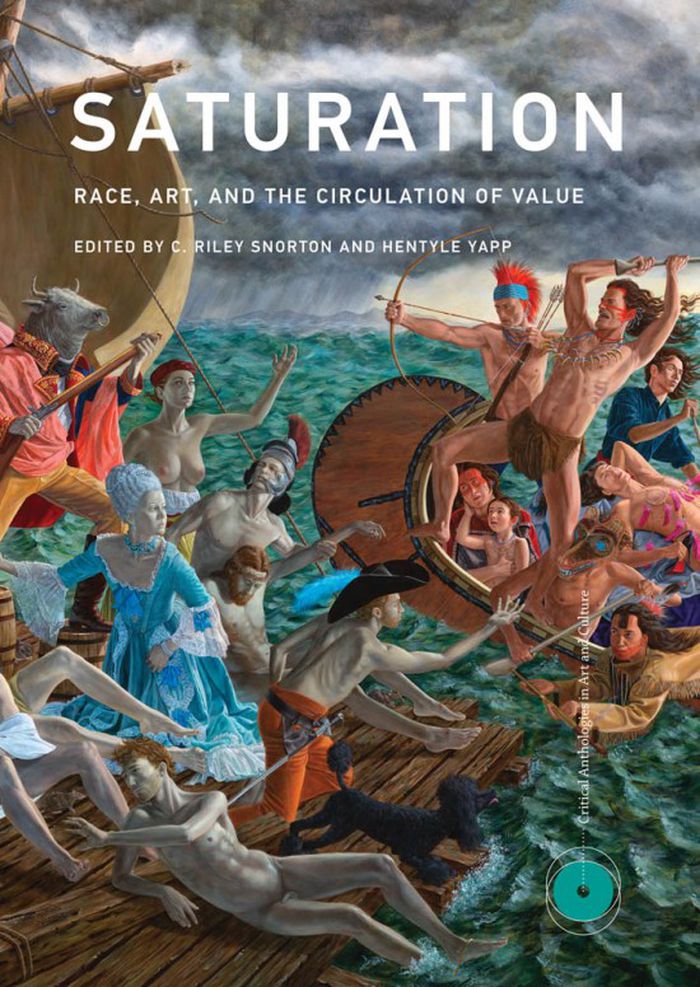
Saturation: Race, art, and the circulation of value
Actions:
Price:
$65.95
(available to order)
Summary:
The book uses saturation as an organizing concept, in part to suggest that current paradigms cannot encompass the complex realities of race. Saturation provides avenues to situate race as it relates to perception, science, aesthetics, the corporeal, and the sonic. In color theory, saturation is understood in terms of the degree to which a color differs from whiteness. In science, saturation points describe not only the moment in which race exceeds legibility, but also how diversity operates for institutions. Contributors consider how racialization, globalization, and the production and consumption of art converge in the art market, engaging such topics as racial capitalism, the aesthetics of colonialism, and disability cultures. They examine methods for theorizing race and representation, including “aboutness,” which interprets artworks by racialized subjects as being “about” race; modes of unruly, decolonized, and queer visual practices that resist disciplinary boundaries; and a model by which to think with and alongside blackness and indigeneity.
Saturation: Race, art, and the circulation of value
Actions:
Price:
$65.95
(available to order)
Summary:
The book uses saturation as an organizing concept, in part to suggest that current paradigms cannot encompass the complex realities of race. Saturation provides avenues to situate race as it relates to perception, science, aesthetics, the corporeal, and the sonic. In color theory, saturation is understood in terms of the degree to which a color differs from whiteness. In science, saturation points describe not only the moment in which race exceeds legibility, but also how diversity operates for institutions. Contributors consider how racialization, globalization, and the production and consumption of art converge in the art market, engaging such topics as racial capitalism, the aesthetics of colonialism, and disability cultures. They examine methods for theorizing race and representation, including “aboutness,” which interprets artworks by racialized subjects as being “about” race; modes of unruly, decolonized, and queer visual practices that resist disciplinary boundaries; and a model by which to think with and alongside blackness and indigeneity.
Form:
books
books
Publication:
December 2021
December 2021
Subject:
Art Theory
Art Theory
Form:
books
books
Actions:
Price:
$55.95
(available in store)
Summary:
If participation has been an ideal in politics since ancient democracy, in art it became central only with the avant-gardes emerging from WWI and the Russian Revolution. Politics and aesthetics are still catching up with each other. In the 21st century, since the revolutionary unrest of the 1960s, participation in art and architecture has lost its utopian glow and become(...)
$55.95
(available in store)
Summary:
If participation has been an ideal in politics since ancient democracy, in art it became central only with the avant-gardes emerging from WWI and the Russian Revolution. Politics and aesthetics are still catching up with each other. In the 21st century, since the revolutionary unrest of the 1960s, participation in art and architecture has lost its utopian glow and become(...)
Title:
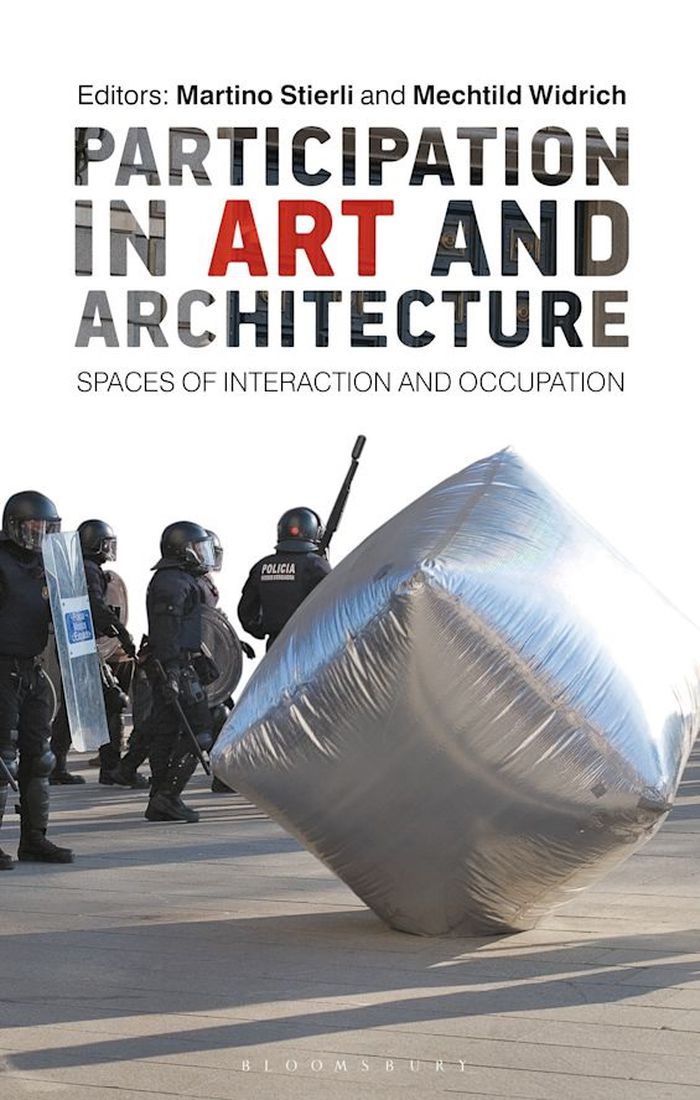
Participation in art and architecture: Spaces of interaction and occupation
Actions:
Price:
$55.95
(available in store)
Summary:
If participation has been an ideal in politics since ancient democracy, in art it became central only with the avant-gardes emerging from WWI and the Russian Revolution. Politics and aesthetics are still catching up with each other. In the 21st century, since the revolutionary unrest of the 1960s, participation in art and architecture has lost its utopian glow and become the focus of a fierce debate: does 'participatory' art and architecture shape social reality, or is it shaped by it? Contemporary critics see in participation only technocratic control, while others embrace it as a viable politics in an era of global capitalism. This innovative book breaks the impasse by looking at how participants themselves exert power, rather than being victimized or liberated from it. From artists hijacking Google Earth to protesters setting up a museum of the revolution in Cairo, art, architecture and daily life are explored in their participatory dimension.
Participation in art and architecture: Spaces of interaction and occupation
Actions:
Price:
$55.95
(available in store)
Summary:
If participation has been an ideal in politics since ancient democracy, in art it became central only with the avant-gardes emerging from WWI and the Russian Revolution. Politics and aesthetics are still catching up with each other. In the 21st century, since the revolutionary unrest of the 1960s, participation in art and architecture has lost its utopian glow and become the focus of a fierce debate: does 'participatory' art and architecture shape social reality, or is it shaped by it? Contemporary critics see in participation only technocratic control, while others embrace it as a viable politics in an era of global capitalism. This innovative book breaks the impasse by looking at how participants themselves exert power, rather than being victimized or liberated from it. From artists hijacking Google Earth to protesters setting up a museum of the revolution in Cairo, art, architecture and daily life are explored in their participatory dimension.
Form:
books
books
Publication:
July 2022
July 2022
Form:
books
books
Actions:
Price:
$24.95
(available to order)
Summary:
Robots designed to care for people and neglected landscapes of digital trash. The promise of synthetic biology and the panic of living on a dying planet. Wonderful feats of intelligence and systemic acts of violence. Exhilaration and exhaustion. Rosi Braidotti argues that we must think about these apparent contradictions all together in order to make differences that(...)
$24.95
(available to order)
Summary:
Robots designed to care for people and neglected landscapes of digital trash. The promise of synthetic biology and the panic of living on a dying planet. Wonderful feats of intelligence and systemic acts of violence. Exhilaration and exhaustion. Rosi Braidotti argues that we must think about these apparent contradictions all together in order to make differences that(...)
Title:
Posthuman knowledge and the critical posthumanities
Actions:
Price:
$24.95
(available to order)
Summary:
Robots designed to care for people and neglected landscapes of digital trash. The promise of synthetic biology and the panic of living on a dying planet. Wonderful feats of intelligence and systemic acts of violence. Exhilaration and exhaustion. Rosi Braidotti argues that we must think about these apparent contradictions all together in order to make differences that actually matter. "Posthuman knowledge and the critical posthumanities" oscillates between evocations and transections of contemporary conditions, for which Braidotti offers what she calls the "posthuman convergence" as a new paradigm for situating and navigating their problems and possibilities. Reflecting on the knotted situation of the academic humanities, cognitive capitalism, and advanced climate change, she delivers an intersectional critique of humanism and anthropocentrism, and targets their exclusions and aporias to address subjectivity, knowledge production, and academic structures within that posthuman convergence. Braidotti's convergence demands imagination, endurance, connectivity, and perspectives multiplied, embodied, and grounded in the only world we have.
Posthuman knowledge and the critical posthumanities
Actions:
Price:
$24.95
(available to order)
Summary:
Robots designed to care for people and neglected landscapes of digital trash. The promise of synthetic biology and the panic of living on a dying planet. Wonderful feats of intelligence and systemic acts of violence. Exhilaration and exhaustion. Rosi Braidotti argues that we must think about these apparent contradictions all together in order to make differences that actually matter. "Posthuman knowledge and the critical posthumanities" oscillates between evocations and transections of contemporary conditions, for which Braidotti offers what she calls the "posthuman convergence" as a new paradigm for situating and navigating their problems and possibilities. Reflecting on the knotted situation of the academic humanities, cognitive capitalism, and advanced climate change, she delivers an intersectional critique of humanism and anthropocentrism, and targets their exclusions and aporias to address subjectivity, knowledge production, and academic structures within that posthuman convergence. Braidotti's convergence demands imagination, endurance, connectivity, and perspectives multiplied, embodied, and grounded in the only world we have.
Form:
books
books
Publication:
November 2022
November 2022
Subject:
Critical Theory
Critical Theory
Form:
books
books

Title:
The Immaterial
The Immaterial
Actions:
Price:
$23.95
(available to order)
Summary:
In ''The Immaterial'', French social philosopher André Gorz (1923–2007) argues that the economic boom that accelerated in the 1990s and crashed so spectacularly in 2008 was based largely on an immaterial consumption of symbols and ideas, as capitalism tried to overcome the crisis of the formally industrial regime by throwing itself into a new, so-called knowledge economy.(...)
$23.95
(available to order)
Summary:
In ''The Immaterial'', French social philosopher André Gorz (1923–2007) argues that the economic boom that accelerated in the 1990s and crashed so spectacularly in 2008 was based largely on an immaterial consumption of symbols and ideas, as capitalism tried to overcome the crisis of the formally industrial regime by throwing itself into a new, so-called knowledge economy.(...)
Title:
The Immaterial
Actions:
Price:
$23.95
(available to order)
Summary:
In ''The Immaterial'', French social philosopher André Gorz (1923–2007) argues that the economic boom that accelerated in the 1990s and crashed so spectacularly in 2008 was based largely on an immaterial consumption of symbols and ideas, as capitalism tried to overcome the crisis of the formally industrial regime by throwing itself into a new, so-called knowledge economy. In this volume, Gorz argues instead for the creation of a true knowledge economy. This economy would be based on zero-cost exchange and pooled resources, and knowledge would be treated as humanity's common property. Currently, in order to exploit knowledge and turn it into capital, the capitalist enterprise privatizes specialized knowledge and claims ownership through private licenses and copyright. But as Gorz shows, the traditional foundations of such capitalist economics have begun to crumble because of the immaterial nature of this new form of product, which makes it almost impossible to measure in monetary terms.
The Immaterial
Actions:
Price:
$23.95
(available to order)
Summary:
In ''The Immaterial'', French social philosopher André Gorz (1923–2007) argues that the economic boom that accelerated in the 1990s and crashed so spectacularly in 2008 was based largely on an immaterial consumption of symbols and ideas, as capitalism tried to overcome the crisis of the formally industrial regime by throwing itself into a new, so-called knowledge economy. In this volume, Gorz argues instead for the creation of a true knowledge economy. This economy would be based on zero-cost exchange and pooled resources, and knowledge would be treated as humanity's common property. Currently, in order to exploit knowledge and turn it into capital, the capitalist enterprise privatizes specialized knowledge and claims ownership through private licenses and copyright. But as Gorz shows, the traditional foundations of such capitalist economics have begun to crumble because of the immaterial nature of this new form of product, which makes it almost impossible to measure in monetary terms.
Form:
books
books
Publication:
December 2010
December 2010
Subject:
Art Theory
Art Theory
Form:
books
books
Actions:
Holdings:
Description:
228 pages ; 22 cm.
Description:
228 pages ; 22 cm.
Author:
Subject:
Publication:
Paris : Stock, 2010.
Paris : Stock, 2010.
Title:
Tokyo, ville flottante : scène urbaine, mises en scène / François Laplantine.
Actions:
Holdings:
Description:
228 pages ; 22 cm.
Tokyo, ville flottante : scène urbaine, mises en scène / François Laplantine.
Actions:
Holdings:
Description:
228 pages ; 22 cm.
Form:
books
books
Publication:
Paris : Stock, 2010.
Paris : Stock, 2010.
Author:
Subject:
Form:
books
books
Actions:
Holdings:
Description:
190 pages : illustrations, cartes ; 21 cm
Description:
190 pages : illustrations, cartes ; 21 cm
Author:
Subject:
Publication:
Paris : Hachette, [1994]
Paris : Hachette, [1994]
Title:
Le monde des villes au Moyen âge : XIe-XVe siècle / Simone Roux ; sous la direction de Michel Balard.
Actions:
Holdings:
Description:
190 pages : illustrations, cartes ; 21 cm
Le monde des villes au Moyen âge : XIe-XVe siècle / Simone Roux ; sous la direction de Michel Balard.
Actions:
Holdings:
Description:
190 pages : illustrations, cartes ; 21 cm
Form:
books
books
Publication:
Paris : Hachette, [1994]
Paris : Hachette, [1994]
Author:
Subject:
Form:
books
books
Actions:
Price:
$25.00
(available to order)
Summary:
The body of the seafarer is a fulcrum upon which global systems of power, longstanding maritime traditions, and gendered and racialised pressures all rest. In this vital new essay, scholar Laleh Khalili draws on her ongoing research and experiences of travelling on cargo ships to explore the embodied life of these labourers. She investigates an experience riddled with(...)
$25.00
(available to order)
Summary:
The body of the seafarer is a fulcrum upon which global systems of power, longstanding maritime traditions, and gendered and racialised pressures all rest. In this vital new essay, scholar Laleh Khalili draws on her ongoing research and experiences of travelling on cargo ships to explore the embodied life of these labourers. She investigates an experience riddled with(...)
Title:
The corporeal life of seafaring
Actions:
Price:
$25.00
(available to order)
Summary:
The body of the seafarer is a fulcrum upon which global systems of power, longstanding maritime traditions, and gendered and racialised pressures all rest. In this vital new essay, scholar Laleh Khalili draws on her ongoing research and experiences of travelling on cargo ships to explore the embodied life of these labourers. She investigates an experience riddled with adversities – loneliness, loss, and violence, stolen wages and exploitative shipowners – as well as ephemeral moments of joy and solidarity. In the unique arena of the ship, Khalili traces the many forms of corporeality involved in work at sea and the ways the body is engaged by the institutions that engulf seafarers’ lives and work. Illustrated throughout with the author’s own photographs, this book takes in both scholarly and literary accounts to describe with care and imagination the material and physical realities of contemporary commerce at sea. Drawing on the insights of feminists and scholars of racial capitalism, it centres the lives of those so often forgotten or dismissed in enterprises of capital accumulation and the raced and gendered hierarchies that shape them.
The corporeal life of seafaring
Actions:
Price:
$25.00
(available to order)
Summary:
The body of the seafarer is a fulcrum upon which global systems of power, longstanding maritime traditions, and gendered and racialised pressures all rest. In this vital new essay, scholar Laleh Khalili draws on her ongoing research and experiences of travelling on cargo ships to explore the embodied life of these labourers. She investigates an experience riddled with adversities – loneliness, loss, and violence, stolen wages and exploitative shipowners – as well as ephemeral moments of joy and solidarity. In the unique arena of the ship, Khalili traces the many forms of corporeality involved in work at sea and the ways the body is engaged by the institutions that engulf seafarers’ lives and work. Illustrated throughout with the author’s own photographs, this book takes in both scholarly and literary accounts to describe with care and imagination the material and physical realities of contemporary commerce at sea. Drawing on the insights of feminists and scholars of racial capitalism, it centres the lives of those so often forgotten or dismissed in enterprises of capital accumulation and the raced and gendered hierarchies that shape them.
Form:
books
books
Publication:
February 2024
February 2024


