


12365 Results
Form:
books
books
Title:
Una Huna? What is this?
Una Huna? What is this?
Actions:
Price:
$16.95
(available to order)
Summary:
Ukpik loves living in her camp in the North with her family. When a captain from the south arrives to trade with Ukpik’s father, Ukpik is excited to learn how to use the forks, knives, and spoons he brings with him. At first, Ukpik enjoys teaching the other children how to use these new tools. But soon, she starts to wonder if they’ll need to use the new tools all the(...)
$16.95
(available to order)
Summary:
Ukpik loves living in her camp in the North with her family. When a captain from the south arrives to trade with Ukpik’s father, Ukpik is excited to learn how to use the forks, knives, and spoons he brings with him. At first, Ukpik enjoys teaching the other children how to use these new tools. But soon, she starts to wonder if they’ll need to use the new tools all the(...)
Title:
Una Huna? What is this?
Actions:
Price:
$16.95
(available to order)
Summary:
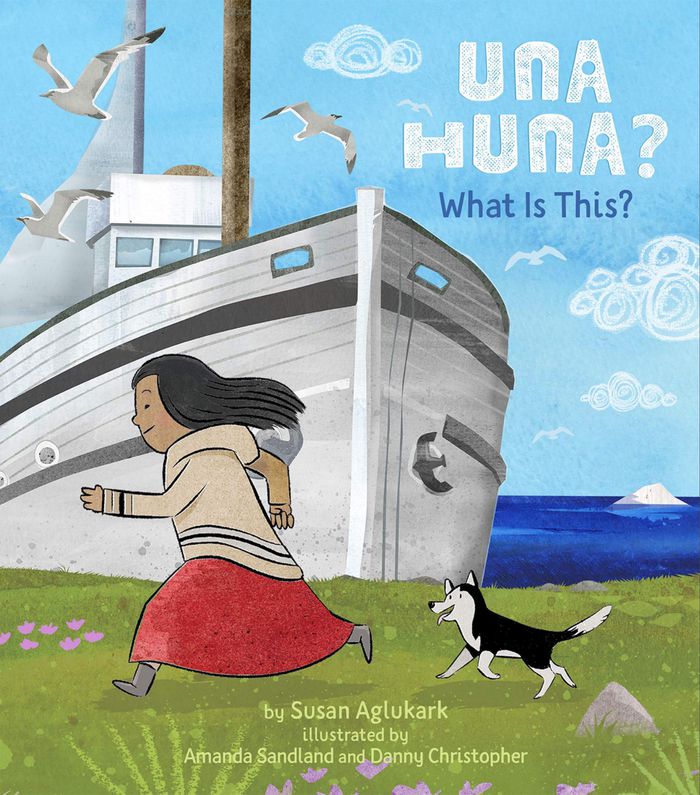
Ukpik loves living in her camp in the North with her family. When a captain from the south arrives to trade with Ukpik’s father, Ukpik is excited to learn how to use the forks, knives, and spoons he brings with him. At first, Ukpik enjoys teaching the other children how to use these new tools. But soon, she starts to wonder if they’ll need to use the new tools all the time, and if that means that everything in camp will change. After a conversation with her grandmother, Ukpik realizes that even though she will learn many new things, her love for her family and camp will never change.
Una Huna? What is this?
Actions:
Price:
$16.95
(available to order)
Summary:
Ukpik loves living in her camp in the North with her family. When a captain from the south arrives to trade with Ukpik’s father, Ukpik is excited to learn how to use the forks, knives, and spoons he brings with him. At first, Ukpik enjoys teaching the other children how to use these new tools. But soon, she starts to wonder if they’ll need to use the new tools all the time, and if that means that everything in camp will change. After a conversation with her grandmother, Ukpik realizes that even though she will learn many new things, her love for her family and camp will never change.
Form:
books
books
Publication:
October 2018
October 2018
Subject:
Children's Books
Children's Books
Form:
books
books
Title:
Library: An Unquiet History
Library: An Unquiet History
Actions:
Price:
$18.95
(available to order)
Summary:
Through the ages, libraries have not only accumulated and preserved but also shaped, inspired, and obliterated knowledge. Now they are in crisis. Former rare books librarian and Harvard MetaLAB visionary Matthew Battles takes us from Boston to Baghdad, from classical scriptoria to medieval monasteries and on to the Information Age, to explore how libraries are built and(...)
$18.95
(available to order)
Summary:
Through the ages, libraries have not only accumulated and preserved but also shaped, inspired, and obliterated knowledge. Now they are in crisis. Former rare books librarian and Harvard MetaLAB visionary Matthew Battles takes us from Boston to Baghdad, from classical scriptoria to medieval monasteries and on to the Information Age, to explore how libraries are built and(...)
Publication:
March 2015
March 2015
Title:
Library: An Unquiet History
Actions:
Price:
$18.95
(available to order)
Summary:
Through the ages, libraries have not only accumulated and preserved but also shaped, inspired, and obliterated knowledge. Now they are in crisis. Former rare books librarian and Harvard MetaLAB visionary Matthew Battles takes us from Boston to Baghdad, from classical scriptoria to medieval monasteries and on to the Information Age, to explore how libraries are built and how they are destroyed: from the scroll burnings in ancient China to the burning of libraries in Europe and Bosnia to the latest revolutionary upheavals of the digital age. A new epilogue elucidates the preservation of knowledge amid the creative destruction of twenty-first century technology. 10 illustrations.
Library: An Unquiet History
Actions:
Price:
$18.95
(available to order)
Summary:
Through the ages, libraries have not only accumulated and preserved but also shaped, inspired, and obliterated knowledge. Now they are in crisis. Former rare books librarian and Harvard MetaLAB visionary Matthew Battles takes us from Boston to Baghdad, from classical scriptoria to medieval monasteries and on to the Information Age, to explore how libraries are built and how they are destroyed: from the scroll burnings in ancient China to the burning of libraries in Europe and Bosnia to the latest revolutionary upheavals of the digital age. A new epilogue elucidates the preservation of knowledge amid the creative destruction of twenty-first century technology. 10 illustrations.
Form:
books
books
Publication:
March 2015
March 2015
Form:
books
books
Title:
Everyman's castle: the story of our cottages, country houses, terraces, flats, semis and bungalows
Everyman's castle: the story of our cottages, country houses, terraces, flats, semis and bungalows
Actions:
Price:
$29.99
(available to order)
Summary:
Everyman's Castle restores people to the panorama of domestic architecture. Philippa Lewis turns an affectionate eye to the characteristics of British types of houses - cottages, farmhouses, semi-detached, suburban, flats, terraces, bungalows, country houses - and charts their rise and fall. How were they perceived when they were built, and what happened to them(...)
$29.99
(available to order)
Summary:
Everyman's Castle restores people to the panorama of domestic architecture. Philippa Lewis turns an affectionate eye to the characteristics of British types of houses - cottages, farmhouses, semi-detached, suburban, flats, terraces, bungalows, country houses - and charts their rise and fall. How were they perceived when they were built, and what happened to them(...)
Title:
Everyman's castle: the story of our cottages, country houses, terraces, flats, semis and bungalows
Actions:
Price:
$29.99
(available to order)
Summary:
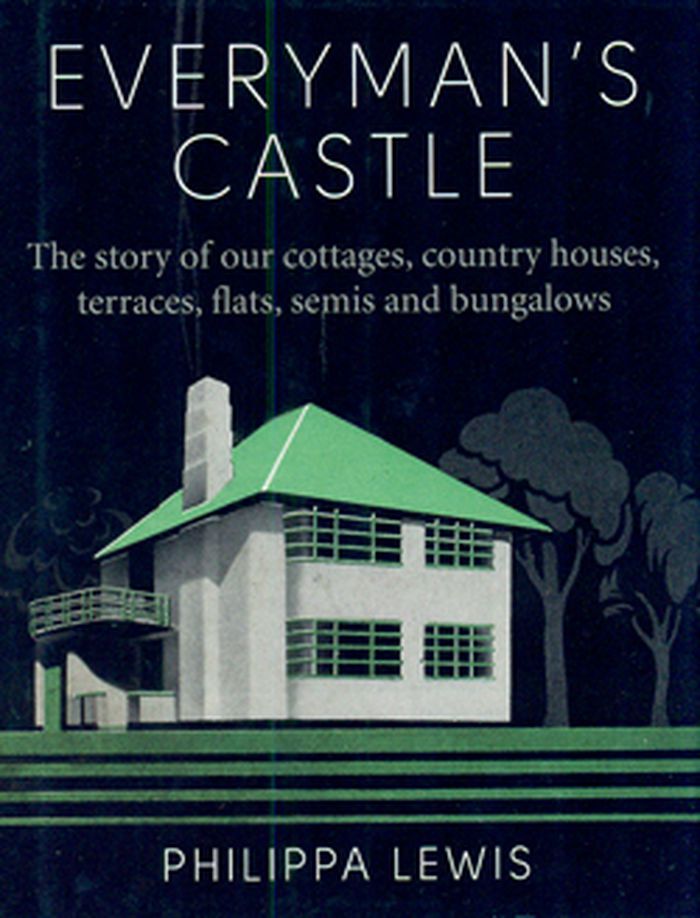
Everyman's Castle restores people to the panorama of domestic architecture. Philippa Lewis turns an affectionate eye to the characteristics of British types of houses - cottages, farmhouses, semi-detached, suburban, flats, terraces, bungalows, country houses - and charts their rise and fall. How were they perceived when they were built, and what happened to them subsequently? How were the interior spaces used and altered over time? This books provides insight to all these questions, even what sort of message the design of a house sends about the inhabitants, from stairs up to the front door (implying servants living below) in a Victorian terrace to bay windows (implying private ownership) in the twentieth century.
Everyman's castle: the story of our cottages, country houses, terraces, flats, semis and bungalows
Actions:
Price:
$29.99
(available to order)
Summary:
Everyman's Castle restores people to the panorama of domestic architecture. Philippa Lewis turns an affectionate eye to the characteristics of British types of houses - cottages, farmhouses, semi-detached, suburban, flats, terraces, bungalows, country houses - and charts their rise and fall. How were they perceived when they were built, and what happened to them subsequently? How were the interior spaces used and altered over time? This books provides insight to all these questions, even what sort of message the design of a house sends about the inhabitants, from stairs up to the front door (implying servants living below) in a Victorian terrace to bay windows (implying private ownership) in the twentieth century.
Form:
books
books
Publication:
March 2014
March 2014
Subject:
Residential Architecture
Residential Architecture
Form:
books
books
Price:
$81.50
(available in store)
Summary:
Do you know how to design for a circular economy? A truly sustainable, circular economy is both a robust and viable option for architecture. Through 24 inspirational case studies, interviews and essays, this book is an accessible and practical guide to how architects can move from a linear economy towards a circular economy. This atlas to sustainable, closed-loop systems(...)
$81.50
(available in store)
Summary:
Do you know how to design for a circular economy? A truly sustainable, circular economy is both a robust and viable option for architecture. Through 24 inspirational case studies, interviews and essays, this book is an accessible and practical guide to how architects can move from a linear economy towards a circular economy. This atlas to sustainable, closed-loop systems(...)
Title:
The re-use atlas: A designer's guide towards a circular economy
Actions:
Price:
$81.50
(available in store)
Summary:
Do you know how to design for a circular economy? A truly sustainable, circular economy is both a robust and viable option for architecture. Through 24 inspirational case studies, interviews and essays, this book is an accessible and practical guide to how architects can move from a linear economy towards a circular economy. This atlas to sustainable, closed-loop systems takes the reader on a journey through four distinct steps (Recycle, Reuse, Reduce, Circular Economy) that show how they can dramatically reduce the negative impact humans have on the planet. It gives architects the skills and knowledge to navigate through the emerging fields of resource management towards a true Circular Economy. Each step is supplemented with an in-depth interview with an expert who is successfully tacking one or more of the challenges facing all designers today. If we change our behaviour, we enable humanity to work with nature rather than against it.
The re-use atlas: A designer's guide towards a circular economy
Actions:
Price:
$81.50
(available in store)
Summary:
Do you know how to design for a circular economy? A truly sustainable, circular economy is both a robust and viable option for architecture. Through 24 inspirational case studies, interviews and essays, this book is an accessible and practical guide to how architects can move from a linear economy towards a circular economy. This atlas to sustainable, closed-loop systems takes the reader on a journey through four distinct steps (Recycle, Reuse, Reduce, Circular Economy) that show how they can dramatically reduce the negative impact humans have on the planet. It gives architects the skills and knowledge to navigate through the emerging fields of resource management towards a true Circular Economy. Each step is supplemented with an in-depth interview with an expert who is successfully tacking one or more of the challenges facing all designers today. If we change our behaviour, we enable humanity to work with nature rather than against it.
Form:
books
books
Publication:
November 2024
November 2024
Subject:
Green Architecture
Green Architecture
Form:
books
books
Actions:
Price:
$33.95
(available to order)
Summary:
In City/Art anthropologists, literary and cultural critics, a philosopher, and an architect explore how creative practices continually reconstruct the urban scene in Latin America. The contributors, all Latin Americanists, describe how creativity—broadly conceived to encompass urban design, museums, graffiti, film, music, literature, architecture, performance art, and(...)
$33.95
(available to order)
Summary:
In City/Art anthropologists, literary and cultural critics, a philosopher, and an architect explore how creative practices continually reconstruct the urban scene in Latin America. The contributors, all Latin Americanists, describe how creativity—broadly conceived to encompass urban design, museums, graffiti, film, music, literature, architecture, performance art, and(...)
Title:
City/art: the urban scene in Latin America
Actions:
Price:
$33.95
(available to order)
Summary:
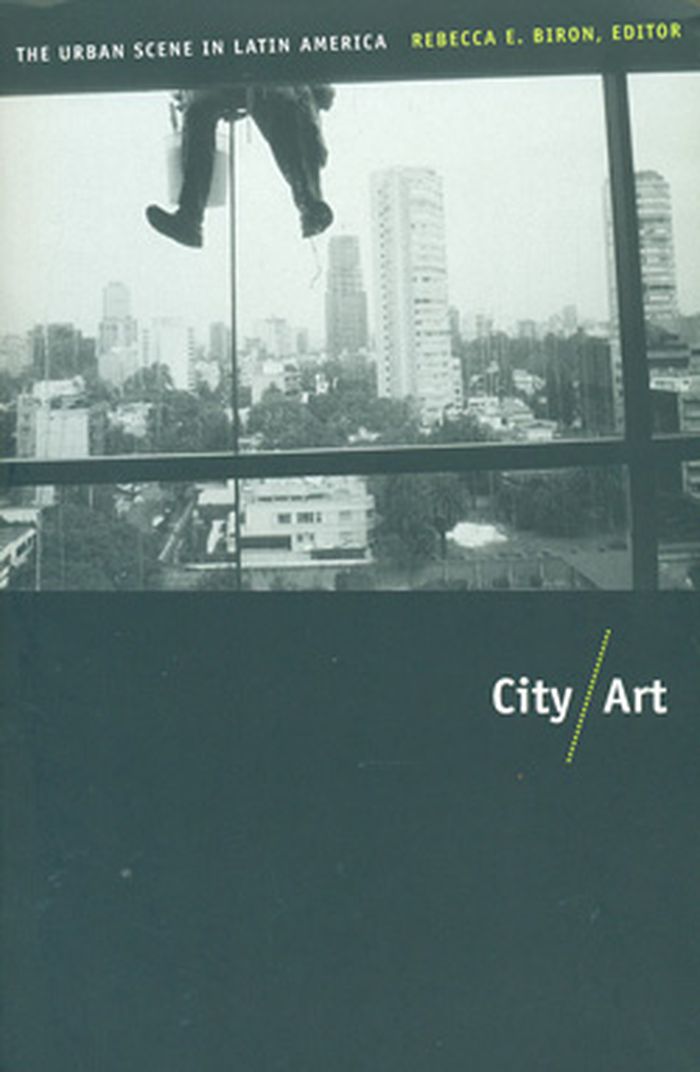
In City/Art anthropologists, literary and cultural critics, a philosopher, and an architect explore how creative practices continually reconstruct the urban scene in Latin America. The contributors, all Latin Americanists, describe how creativity—broadly conceived to encompass urban design, museums, graffiti, film, music, literature, architecture, performance art, and more—combines with nationalist rhetoric and historical discourse to define Latin American cities. Taken together, the essays model different ways of approaching Latin America’s urban centers not only as places that inspire and house creative practices but also as ongoing collective creative endeavors themselves. The essays range from an examination of how differences of scale and point of view affect people’s experience of everyday life in Mexico City to a reflection on the transformation of a prison into a shopping mall in Uruguay, and from an analysis of Buenos Aires’ preoccupation with its own status and cultural identity to a consideration of what Miami means to Cubans in the United States.
City/art: the urban scene in Latin America
Actions:
Price:
$33.95
(available to order)
Summary:
In City/Art anthropologists, literary and cultural critics, a philosopher, and an architect explore how creative practices continually reconstruct the urban scene in Latin America. The contributors, all Latin Americanists, describe how creativity—broadly conceived to encompass urban design, museums, graffiti, film, music, literature, architecture, performance art, and more—combines with nationalist rhetoric and historical discourse to define Latin American cities. Taken together, the essays model different ways of approaching Latin America’s urban centers not only as places that inspire and house creative practices but also as ongoing collective creative endeavors themselves. The essays range from an examination of how differences of scale and point of view affect people’s experience of everyday life in Mexico City to a reflection on the transformation of a prison into a shopping mall in Uruguay, and from an analysis of Buenos Aires’ preoccupation with its own status and cultural identity to a consideration of what Miami means to Cubans in the United States.
Form:
books
books
Publication:
July 2009
July 2009
Subject:
Public Space
Public Space
Form:
books
books
Actions:
Price:
$49.95
(available to order)
Summary:
What might our cities look like in ten, twenty or fifty years? How may future cities face global challenges? Imagining the city of the future has long been an inspiration for many architects, artists and designers. This book examines how cities of the future have been visualised, what these projects sought to communicate and what the implications may be for us now. It(...)
$49.95
(available to order)
Summary:
What might our cities look like in ten, twenty or fifty years? How may future cities face global challenges? Imagining the city of the future has long been an inspiration for many architects, artists and designers. This book examines how cities of the future have been visualised, what these projects sought to communicate and what the implications may be for us now. It(...)
Title:
Future cities: a visual guide
Actions:
Price:
$49.95
(available to order)
Summary:
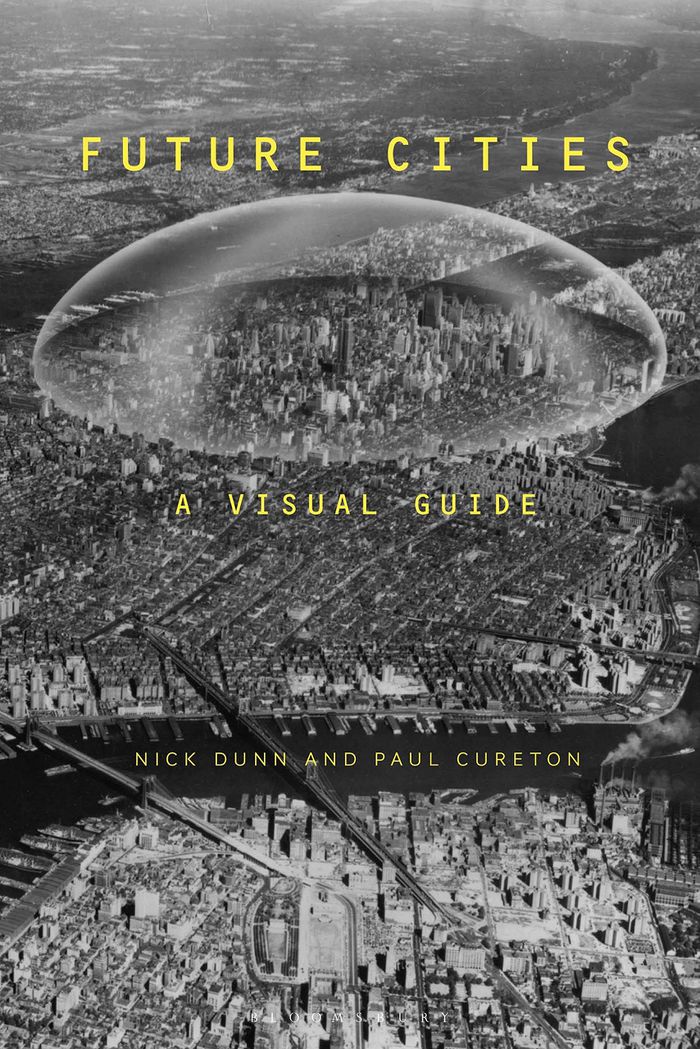
What might our cities look like in ten, twenty or fifty years? How may future cities face global challenges? Imagining the city of the future has long been an inspiration for many architects, artists and designers. This book examines how cities of the future have been visualised, what these projects sought to communicate and what the implications may be for us now. It provides a visual history of the future and explores the relationships between different visualisation techniques and ideologies for cities. Thinking about what futures are, who they are for, why they are desirable, and how and when they are to be brought into being is central to this book. Through visualisation we are able to experiment in ways that would be impractical and potentially hazardous in the real world, and this book, therefore, aims to contribute toward a better understanding of the power and agency of visualisations for future cities.
Future cities: a visual guide
Actions:
Price:
$49.95
(available to order)
Summary:
What might our cities look like in ten, twenty or fifty years? How may future cities face global challenges? Imagining the city of the future has long been an inspiration for many architects, artists and designers. This book examines how cities of the future have been visualised, what these projects sought to communicate and what the implications may be for us now. It provides a visual history of the future and explores the relationships between different visualisation techniques and ideologies for cities. Thinking about what futures are, who they are for, why they are desirable, and how and when they are to be brought into being is central to this book. Through visualisation we are able to experiment in ways that would be impractical and potentially hazardous in the real world, and this book, therefore, aims to contribute toward a better understanding of the power and agency of visualisations for future cities.
Form:
books
books
Publication:
February 2021
February 2021
Subject:
Urban Theory
Urban Theory
Form:
books
books
Title:
The city in mind
The city in mind
Actions:
Price:
$18.50
(available to order)
Summary:
In the highly acclaimed "The Geography of Nowhere," James Howard Kunstler declared suburbia "a tragic landscape" and fueled a fierce debate over how we will live in twenty-first-century America. Here, Kunstler turns his discerning eye to urban life in America and beyond in dazzling excursions to classical Rome, the Aztec capital of Tenochtitlan, Louis-Napoleon's Paris,(...)
$18.50
(available to order)
Summary:
In the highly acclaimed "The Geography of Nowhere," James Howard Kunstler declared suburbia "a tragic landscape" and fueled a fierce debate over how we will live in twenty-first-century America. Here, Kunstler turns his discerning eye to urban life in America and beyond in dazzling excursions to classical Rome, the Aztec capital of Tenochtitlan, Louis-Napoleon's Paris,(...)
Title:
The city in mind
Actions:
Price:
$18.50
(available to order)
Summary:
In the highly acclaimed "The Geography of Nowhere," James Howard Kunstler declared suburbia "a tragic landscape" and fueled a fierce debate over how we will live in twenty-first-century America. Here, Kunstler turns his discerning eye to urban life in America and beyond in dazzling excursions to classical Rome, the Aztec capital of Tenochtitlan, Louis-Napoleon's Paris, the "gigantic hairball" that is contemporary Atlanta, the ludicrous spectacle of Las Vegas, and more. Seeking to discover what is constant and enduring in cities at their greatest, Kunstler explores how America got lost in suburban wilderness and locates pathways that might lead to civic revival. His authoritative tour is both a concise history of cities and a stunning critique of how they can aid or hinder social and civil progress. By turns dramatic and comic, "The City in Mind" is an exceptional glimpse into the urban condition.
The city in mind
Actions:
Price:
$18.50
(available to order)
Summary:
In the highly acclaimed "The Geography of Nowhere," James Howard Kunstler declared suburbia "a tragic landscape" and fueled a fierce debate over how we will live in twenty-first-century America. Here, Kunstler turns his discerning eye to urban life in America and beyond in dazzling excursions to classical Rome, the Aztec capital of Tenochtitlan, Louis-Napoleon's Paris, the "gigantic hairball" that is contemporary Atlanta, the ludicrous spectacle of Las Vegas, and more. Seeking to discover what is constant and enduring in cities at their greatest, Kunstler explores how America got lost in suburban wilderness and locates pathways that might lead to civic revival. His authoritative tour is both a concise history of cities and a stunning critique of how they can aid or hinder social and civil progress. By turns dramatic and comic, "The City in Mind" is an exceptional glimpse into the urban condition.
Form:
books
books
Publication:
January 2003, New York
January 2003, New York
Subject:
Urban Theory
Urban Theory
Form:
books
books

Actions:
Price:
$34.95
(available to order)
Summary:
Do both the zoo and the mental hospital induce psychosis, as humans are treated as animals and animals are treated as humans? How have we looked at animals in the past, and how do we look at them today? How have zoos presented themselves, and their purpose, over time? In response to the emergence of environmental and animal studies, anthropologists, sociologists,(...)
$34.95
(available to order)
Summary:
Do both the zoo and the mental hospital induce psychosis, as humans are treated as animals and animals are treated as humans? How have we looked at animals in the past, and how do we look at them today? How have zoos presented themselves, and their purpose, over time? In response to the emergence of environmental and animal studies, anthropologists, sociologists,(...)
Subject:
Environment and environmental theory
Environment and environmental theory
Publication:
June 2019
June 2019
Title:
Zoo studies: a new humanities
Actions:
Price:
$34.95
(available to order)
Summary:
Do both the zoo and the mental hospital induce psychosis, as humans are treated as animals and animals are treated as humans? How have we looked at animals in the past, and how do we look at them today? How have zoos presented themselves, and their purpose, over time? In response to the emergence of environmental and animal studies, anthropologists, sociologists, philosophers, theorists, literature scholars, and historians around the world have begun to explore the significance of zoological parks, past and present. “Zoo Studies” considers the modern zoo from a range of approaches and disciplines, united in a desire to blur the boundaries between human and nonhuman animals. This collection immerses readers in the lives of animals and their experiences of captivity and asks us to reflect on our own assumptions about both humans and animals. “Zoo Studies” will change the way readers see nonhuman animals and themselves.
Zoo studies: a new humanities
Actions:
Price:
$34.95
(available to order)
Summary:
Do both the zoo and the mental hospital induce psychosis, as humans are treated as animals and animals are treated as humans? How have we looked at animals in the past, and how do we look at them today? How have zoos presented themselves, and their purpose, over time? In response to the emergence of environmental and animal studies, anthropologists, sociologists, philosophers, theorists, literature scholars, and historians around the world have begun to explore the significance of zoological parks, past and present. “Zoo Studies” considers the modern zoo from a range of approaches and disciplines, united in a desire to blur the boundaries between human and nonhuman animals. This collection immerses readers in the lives of animals and their experiences of captivity and asks us to reflect on our own assumptions about both humans and animals. “Zoo Studies” will change the way readers see nonhuman animals and themselves.
Form:
books
books
Publication:
June 2019
June 2019
Subject:
Environment and environmental theory
Environment and environmental theory
Form:
books
books
Actions:
Price:
$22.00
(available to order)
Summary:
How does the world form itself? How does it create itself as a world? And how do we understand the role of the visual in this regard? Most responses to these questions within cultural theory and visual culture refer to the rise of globalization, thus highlighting the acceleration of exchanges, the proliferation of information and communication devices, and the(...)
$22.00
(available to order)
Summary:
How does the world form itself? How does it create itself as a world? And how do we understand the role of the visual in this regard? Most responses to these questions within cultural theory and visual culture refer to the rise of globalization, thus highlighting the acceleration of exchanges, the proliferation of information and communication devices, and the(...)
Title:
Visual cultures as world forming
Actions:
Price:
$22.00
(available to order)
Summary:
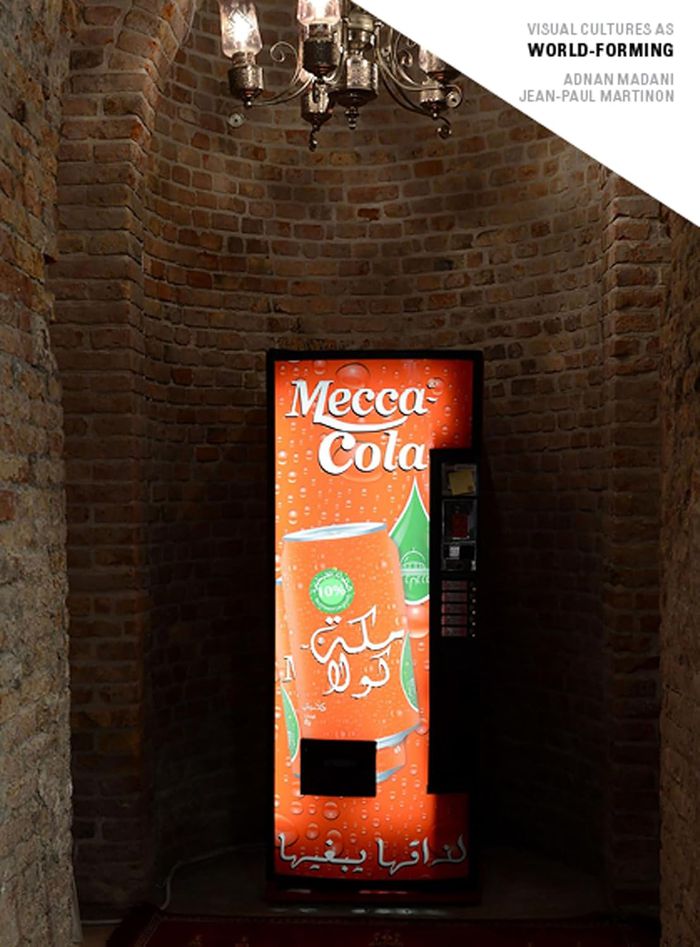
How does the world form itself? How does it create itself as a world? And how do we understand the role of the visual in this regard? Most responses to these questions within cultural theory and visual culture refer to the rise of globalization, thus highlighting the acceleration of exchanges, the proliferation of information and communication devices, and the multiplication of globally circulated goods and images that characterize the world we live in. "Visual cultures as world forming" takes a different approach by focusing on the taking place of the world, a creative act that knows no economic return. This taking place does not lead to more proliferation of goods, additional financial exchanges, further communications, or an increase in the distribution of visual material, but leads to the continued "worlding" of the world. This approach is predominantly, but not exclusively, inspired by the work of Jean-Luc Nancy. Through a reading of his work and of some of his contemporaries both inside and outside of the Western canon, Madani and Martinon attempt to expose how the world—and the world of visual culture in particular—creates itself and the ways in which each one of us is embodying this creation without economy.
Visual cultures as world forming
Actions:
Price:
$22.00
(available to order)
Summary:
How does the world form itself? How does it create itself as a world? And how do we understand the role of the visual in this regard? Most responses to these questions within cultural theory and visual culture refer to the rise of globalization, thus highlighting the acceleration of exchanges, the proliferation of information and communication devices, and the multiplication of globally circulated goods and images that characterize the world we live in. "Visual cultures as world forming" takes a different approach by focusing on the taking place of the world, a creative act that knows no economic return. This taking place does not lead to more proliferation of goods, additional financial exchanges, further communications, or an increase in the distribution of visual material, but leads to the continued "worlding" of the world. This approach is predominantly, but not exclusively, inspired by the work of Jean-Luc Nancy. Through a reading of his work and of some of his contemporaries both inside and outside of the Western canon, Madani and Martinon attempt to expose how the world—and the world of visual culture in particular—creates itself and the ways in which each one of us is embodying this creation without economy.
Form:
books
books
Publication:
August 2024
August 2024
Subject:
Critical Theory
Critical Theory
Form:
books
books
Price:
$42.95
(available to order)
Summary:
Its restrained design once again makes this year's annual an inspiring overview of present-day design education. This annual gives an overall view of education at the Academy of Architecture in Amsterdam. Shedding light on how theory and professional skills are conveyed, it also shows how a new generation of architects, urban designers and landscape architects adopts a(...)
$42.95
(available to order)
Summary:
Its restrained design once again makes this year's annual an inspiring overview of present-day design education. This annual gives an overall view of education at the Academy of Architecture in Amsterdam. Shedding light on how theory and professional skills are conveyed, it also shows how a new generation of architects, urban designers and landscape architects adopts a(...)
Subject:
Architecture since 1900, Europe
Architecture since 1900, Europe
Publication:
January 1900, Rotterdam
January 1900, Rotterdam
Title:
A/S/L - A/U/L : yearbook academy of architecture, amsterdam 2003-2004
Actions:
Price:
$42.95
(available to order)
Summary:
Its restrained design once again makes this year's annual an inspiring overview of present-day design education. This annual gives an overall view of education at the Academy of Architecture in Amsterdam. Shedding light on how theory and professional skills are conveyed, it also shows how a new generation of architects, urban designers and landscape architects adopts a design stance and relates it to current design briefs. To give form to the study programme, the Academy enlists the aid of top designers and researchers and organizes public exhibitions, talks and discussions.
A/S/L - A/U/L : yearbook academy of architecture, amsterdam 2003-2004
Actions:
Price:
$42.95
(available to order)
Summary:
Its restrained design once again makes this year's annual an inspiring overview of present-day design education. This annual gives an overall view of education at the Academy of Architecture in Amsterdam. Shedding light on how theory and professional skills are conveyed, it also shows how a new generation of architects, urban designers and landscape architects adopts a design stance and relates it to current design briefs. To give form to the study programme, the Academy enlists the aid of top designers and researchers and organizes public exhibitions, talks and discussions.
Form:
books
books
Publication:
January 1900, Rotterdam
January 1900, Rotterdam
Subject:
Architecture since 1900, Europe
Architecture since 1900, Europe


