


12433 Results
Level of archival description:
Series
Series
Title:
Architectural projects
Architectural projects
Reference number:
AP178.S1
Description:
Series AP178.S1 is the largest series of the Álvaro Siza fonds and documents over 200 of Siza’s built and unbuilt architectural projects. The series is divided into project series which are arranged chronologically by project year. Presently, materials in this series range from 1958-2012. The CCA will also receive materials documenting Siza’s more recent work in future additions. Documenting the projects are conceptual, design, presentation, and working drawings, as well as photographic materials, textual documentation, and models. Although the drawings for each project have been identified, Siza often sketches or doodles on textual documentation, such as minutes of meetings or notes. When possible, folders that include textual documents with sketches or doodles have been identified. Amounts and types of materials vary from project to project. Project documentation is usually in Portuguese, with some exceptions including French, English, German, and Dutch. Most project series include sketches, studies, and working drawings. Other drawings included are site plans, floor plans, topographic surveys, elevations, sections, as well as technical and mechanical details. Also documenting the projects are photographic materials and textual documentation, such as correspondence, building programs, contracts, notes, and other working details. Photographic materials found within this archive are slides, negatives, photomontages and photographs of project sites and models.The photomontages were often used to study the function of the project site. To fully understand Siza’s methodology, sketchbooks (Series AP178.S2) should be viewed alongside the project drawings, when possible. Each project series description highlights sketchbooks in series AP178.S2 which contain related sketches. It is important to note that not all projects are represented in the sketchbooks in Series AP178.S2. Moreover, project series descriptions only list related sketchbooks when sketches have been positively identified as related to the corresponding project. The Siza fonds will be processed in four phases. The materials processed in the first, second, and third phases are architectural projects from the 1950’s, 1960’s, and 1970’s; urban planning projects; Reconstrução do Chiado; Berlin projects submitted to the IBA competition; cultural institutions; individual houses; and the Plano de urbanização Deelgebied 5 Schilderswijk-West in The Hague. Among The Hague and the Berlin projects are the Punt en Komma social housing, Bonjour Tristesse, and the Residential settlement in Schilderswijk. This series is better understood in the context of how the records for architectural projects were arranged by Siza’s office. Earlier projects were initially numbered by Siza’s office and then received new project numbers by the office archivist, who joined the office in the 1990s. Project files have been kept in the order in which they were received by the CCA, which is how they were arranged by the office archivist. The project numbers and dates assigned by Siza’s office archivist are included in the descriptions for each project and form the basis for the arrangement of this series. The office archivist numbered projects consecutively by decade, for instance, 58/80 was the 58th project during the 1980s. Numbers which were included in square brackets, ex. [14]/75, show that the project was not a ‘full’ project and contains a small amount of documentation. When projects are followed by a letter (A, B, C) this signifies a project is connected to the first. When the project number is followed by a number (1, 2, 3) this signifies a separate building within a larger project. For the purposes of arrangement, project numbers that were assigned a letter or number are arranged as sub-series of the related project series. Exceptions to this numbering convention are projects 23/60, 25/60, 28/60, 33/60, 34/60 and 35/60. These projects were not in the office’s original project list and were not officially considered projects. The office archivist assembled documentation related to these projects and assigned them numbers. In the early 2000s a large number of photographic materials were gathered together by the office archivist from various correspondence files for a digitization project initiated by the office. These materials remained housed together as a photograph collection in the office. Not all of these materials were digitized by the office. Those that were digitized were assigned numbers which have been identified in the file descriptions. It is important to note that several photographic materials were left with the textual documentation or drawings. When this is the case they are identified in the file description. There are also several panoramic photomontages which were created by either gluing or taping several photographs together to make panoramas of project sites.
AP178.S1
Description:
Series AP178.S1 is the largest series of the Álvaro Siza fonds and documents over 200 of Siza’s built and unbuilt architectural projects. The series is divided into project series which are arranged chronologically by project year. Presently, materials in this series range from 1958-2012. The CCA will also receive materials documenting Siza’s more recent work in future additions. Documenting the projects are conceptual, design, presentation, and working drawings, as well as photographic materials, textual documentation, and models. Although the drawings for each project have been identified, Siza often sketches or doodles on textual documentation, such as minutes of meetings or notes. When possible, folders that include textual documents with sketches or doodles have been identified. Amounts and types of materials vary from project to project. Project documentation is usually in Portuguese, with some exceptions including French, English, German, and Dutch. Most project series include sketches, studies, and working drawings. Other drawings included are site plans, floor plans, topographic surveys, elevations, sections, as well as technical and mechanical details. Also documenting the projects are photographic materials and textual documentation, such as correspondence, building programs, contracts, notes, and other working details. Photographic materials found within this archive are slides, negatives, photomontages and photographs of project sites and models.The photomontages were often used to study the function of the project site. To fully understand Siza’s methodology, sketchbooks (Series AP178.S2) should be viewed alongside the project drawings, when possible. Each project series description highlights sketchbooks in series AP178.S2 which contain related sketches. It is important to note that not all projects are represented in the sketchbooks in Series AP178.S2. Moreover, project series descriptions only list related sketchbooks when sketches have been positively identified as related to the corresponding project. The Siza fonds will be processed in four phases. The materials processed in the first, second, and third phases are architectural projects from the 1950’s, 1960’s, and 1970’s; urban planning projects; Reconstrução do Chiado; Berlin projects submitted to the IBA competition; cultural institutions; individual houses; and the Plano de urbanização Deelgebied 5 Schilderswijk-West in The Hague. Among The Hague and the Berlin projects are the Punt en Komma social housing, Bonjour Tristesse, and the Residential settlement in Schilderswijk. This series is better understood in the context of how the records for architectural projects were arranged by Siza’s office. Earlier projects were initially numbered by Siza’s office and then received new project numbers by the office archivist, who joined the office in the 1990s. Project files have been kept in the order in which they were received by the CCA, which is how they were arranged by the office archivist. The project numbers and dates assigned by Siza’s office archivist are included in the descriptions for each project and form the basis for the arrangement of this series. The office archivist numbered projects consecutively by decade, for instance, 58/80 was the 58th project during the 1980s. Numbers which were included in square brackets, ex. [14]/75, show that the project was not a ‘full’ project and contains a small amount of documentation. When projects are followed by a letter (A, B, C) this signifies a project is connected to the first. When the project number is followed by a number (1, 2, 3) this signifies a separate building within a larger project. For the purposes of arrangement, project numbers that were assigned a letter or number are arranged as sub-series of the related project series. Exceptions to this numbering convention are projects 23/60, 25/60, 28/60, 33/60, 34/60 and 35/60. These projects were not in the office’s original project list and were not officially considered projects. The office archivist assembled documentation related to these projects and assigned them numbers. In the early 2000s a large number of photographic materials were gathered together by the office archivist from various correspondence files for a digitization project initiated by the office. These materials remained housed together as a photograph collection in the office. Not all of these materials were digitized by the office. Those that were digitized were assigned numbers which have been identified in the file descriptions. It is important to note that several photographic materials were left with the textual documentation or drawings. When this is the case they are identified in the file description. There are also several panoramic photomontages which were created by either gluing or taping several photographs together to make panoramas of project sites.
People:
Date:
1948-2012
1948-2012
Title:
Architectural projects
Actions:
AP178.S1
Description:
Series AP178.S1 is the largest series of the Álvaro Siza fonds and documents over 200 of Siza’s built and unbuilt architectural projects. The series is divided into project series which are arranged chronologically by project year. Presently, materials in this series range from 1958-2012. The CCA will also receive materials documenting Siza’s more recent work in future additions. Documenting the projects are conceptual, design, presentation, and working drawings, as well as photographic materials, textual documentation, and models. Although the drawings for each project have been identified, Siza often sketches or doodles on textual documentation, such as minutes of meetings or notes. When possible, folders that include textual documents with sketches or doodles have been identified. Amounts and types of materials vary from project to project. Project documentation is usually in Portuguese, with some exceptions including French, English, German, and Dutch. Most project series include sketches, studies, and working drawings. Other drawings included are site plans, floor plans, topographic surveys, elevations, sections, as well as technical and mechanical details. Also documenting the projects are photographic materials and textual documentation, such as correspondence, building programs, contracts, notes, and other working details. Photographic materials found within this archive are slides, negatives, photomontages and photographs of project sites and models.The photomontages were often used to study the function of the project site. To fully understand Siza’s methodology, sketchbooks (Series AP178.S2) should be viewed alongside the project drawings, when possible. Each project series description highlights sketchbooks in series AP178.S2 which contain related sketches. It is important to note that not all projects are represented in the sketchbooks in Series AP178.S2. Moreover, project series descriptions only list related sketchbooks when sketches have been positively identified as related to the corresponding project. The Siza fonds will be processed in four phases. The materials processed in the first, second, and third phases are architectural projects from the 1950’s, 1960’s, and 1970’s; urban planning projects; Reconstrução do Chiado; Berlin projects submitted to the IBA competition; cultural institutions; individual houses; and the Plano de urbanização Deelgebied 5 Schilderswijk-West in The Hague. Among The Hague and the Berlin projects are the Punt en Komma social housing, Bonjour Tristesse, and the Residential settlement in Schilderswijk. This series is better understood in the context of how the records for architectural projects were arranged by Siza’s office. Earlier projects were initially numbered by Siza’s office and then received new project numbers by the office archivist, who joined the office in the 1990s. Project files have been kept in the order in which they were received by the CCA, which is how they were arranged by the office archivist. The project numbers and dates assigned by Siza’s office archivist are included in the descriptions for each project and form the basis for the arrangement of this series. The office archivist numbered projects consecutively by decade, for instance, 58/80 was the 58th project during the 1980s. Numbers which were included in square brackets, ex. [14]/75, show that the project was not a ‘full’ project and contains a small amount of documentation. When projects are followed by a letter (A, B, C) this signifies a project is connected to the first. When the project number is followed by a number (1, 2, 3) this signifies a separate building within a larger project. For the purposes of arrangement, project numbers that were assigned a letter or number are arranged as sub-series of the related project series. Exceptions to this numbering convention are projects 23/60, 25/60, 28/60, 33/60, 34/60 and 35/60. These projects were not in the office’s original project list and were not officially considered projects. The office archivist assembled documentation related to these projects and assigned them numbers. In the early 2000s a large number of photographic materials were gathered together by the office archivist from various correspondence files for a digitization project initiated by the office. These materials remained housed together as a photograph collection in the office. Not all of these materials were digitized by the office. Those that were digitized were assigned numbers which have been identified in the file descriptions. It is important to note that several photographic materials were left with the textual documentation or drawings. When this is the case they are identified in the file description. There are also several panoramic photomontages which were created by either gluing or taping several photographs together to make panoramas of project sites.
Architectural projects
Actions:
AP178.S1
Description:
Series AP178.S1 is the largest series of the Álvaro Siza fonds and documents over 200 of Siza’s built and unbuilt architectural projects. The series is divided into project series which are arranged chronologically by project year. Presently, materials in this series range from 1958-2012. The CCA will also receive materials documenting Siza’s more recent work in future additions. Documenting the projects are conceptual, design, presentation, and working drawings, as well as photographic materials, textual documentation, and models. Although the drawings for each project have been identified, Siza often sketches or doodles on textual documentation, such as minutes of meetings or notes. When possible, folders that include textual documents with sketches or doodles have been identified. Amounts and types of materials vary from project to project. Project documentation is usually in Portuguese, with some exceptions including French, English, German, and Dutch. Most project series include sketches, studies, and working drawings. Other drawings included are site plans, floor plans, topographic surveys, elevations, sections, as well as technical and mechanical details. Also documenting the projects are photographic materials and textual documentation, such as correspondence, building programs, contracts, notes, and other working details. Photographic materials found within this archive are slides, negatives, photomontages and photographs of project sites and models.The photomontages were often used to study the function of the project site. To fully understand Siza’s methodology, sketchbooks (Series AP178.S2) should be viewed alongside the project drawings, when possible. Each project series description highlights sketchbooks in series AP178.S2 which contain related sketches. It is important to note that not all projects are represented in the sketchbooks in Series AP178.S2. Moreover, project series descriptions only list related sketchbooks when sketches have been positively identified as related to the corresponding project. The Siza fonds will be processed in four phases. The materials processed in the first, second, and third phases are architectural projects from the 1950’s, 1960’s, and 1970’s; urban planning projects; Reconstrução do Chiado; Berlin projects submitted to the IBA competition; cultural institutions; individual houses; and the Plano de urbanização Deelgebied 5 Schilderswijk-West in The Hague. Among The Hague and the Berlin projects are the Punt en Komma social housing, Bonjour Tristesse, and the Residential settlement in Schilderswijk. This series is better understood in the context of how the records for architectural projects were arranged by Siza’s office. Earlier projects were initially numbered by Siza’s office and then received new project numbers by the office archivist, who joined the office in the 1990s. Project files have been kept in the order in which they were received by the CCA, which is how they were arranged by the office archivist. The project numbers and dates assigned by Siza’s office archivist are included in the descriptions for each project and form the basis for the arrangement of this series. The office archivist numbered projects consecutively by decade, for instance, 58/80 was the 58th project during the 1980s. Numbers which were included in square brackets, ex. [14]/75, show that the project was not a ‘full’ project and contains a small amount of documentation. When projects are followed by a letter (A, B, C) this signifies a project is connected to the first. When the project number is followed by a number (1, 2, 3) this signifies a separate building within a larger project. For the purposes of arrangement, project numbers that were assigned a letter or number are arranged as sub-series of the related project series. Exceptions to this numbering convention are projects 23/60, 25/60, 28/60, 33/60, 34/60 and 35/60. These projects were not in the office’s original project list and were not officially considered projects. The office archivist assembled documentation related to these projects and assigned them numbers. In the early 2000s a large number of photographic materials were gathered together by the office archivist from various correspondence files for a digitization project initiated by the office. These materials remained housed together as a photograph collection in the office. Not all of these materials were digitized by the office. Those that were digitized were assigned numbers which have been identified in the file descriptions. It is important to note that several photographic materials were left with the textual documentation or drawings. When this is the case they are identified in the file description. There are also several panoramic photomontages which were created by either gluing or taping several photographs together to make panoramas of project sites.
Level of archival description:
Series
Series
Date:
1948-2012
1948-2012
People:
Form:
events
events
Description:
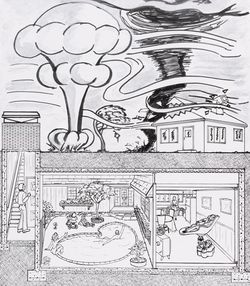
Join 2023 CCA-WRI Fellows Andrea Alberto Dutto, Oxana Gourinovitch, and Tomomi Miyata as they share their research on how the underground has evolved as a space of Cold War anxiety and resource extraction, to contemporary concerns around climate and other unnational disasters from which the earth can provide shelter.
Join 2023 CCA-WRI Fellows Andrea Alberto Dutto, Oxana Gourinovitch, and Tomomi Miyata as they share their research on how the underground has evolved as a space of Cold War anxiety and resource extraction, to contemporary concerns around climate and other unnational disasters from which the earth can provide shelter.
Location:
Online Keyword(s):
Andrea Alberto Dutto, Oxana Gourinovitch, Tomomi Miyata, Yoshiharu Tsukamoto, Jungyoon Kim, WRI, light, planet
Online Keyword(s):
Andrea Alberto Dutto, Oxana Gourinovitch, Tomomi Miyata, Yoshiharu Tsukamoto, Jungyoon Kim, WRI, light, planet
Date:
10 August 2023, 9 a.m. to noon
10 August 2023, 9 a.m. to noon
Title:
Underground Anxieties: 2023 CCA-WRI Research Symposium
Actions:
Description:
Join 2023 CCA-WRI Fellows Andrea Alberto Dutto, Oxana Gourinovitch, and Tomomi Miyata as they share their research on how the underground has evolved as a space of Cold War anxiety and resource extraction, to contemporary concerns around climate and other unnational disasters from which the earth can provide shelter.
Underground Anxieties: 2023 CCA-WRI Research Symposium
Actions:
Description:
Join 2023 CCA-WRI Fellows Andrea Alberto Dutto, Oxana Gourinovitch, and Tomomi Miyata as they share their research on how the underground has evolved as a space of Cold War anxiety and resource extraction, to contemporary concerns around climate and other unnational disasters from which the earth can provide shelter.
Form:
events
events
Date:
10 August 2023
9 a.m. to noon
10 August 2023
9 a.m. to noon
Location:
Online Keyword(s):
Andrea Alberto Dutto, Oxana Gourinovitch, Tomomi Miyata, Yoshiharu Tsukamoto, Jungyoon Kim, WRI, light, planet
Online Keyword(s):
Andrea Alberto Dutto, Oxana Gourinovitch, Tomomi Miyata, Yoshiharu Tsukamoto, Jungyoon Kim, WRI, light, planet
Form:
archives
Level of archival description:
Fonds
archives
Level of archival description:
Fonds
Actions:
Reference number:
AP176
Synopsis:
Karl Chu X PHYLUM project records, 1998-2014 (predominant 1998-2002), documents the development and design process of Chu’s project X PHYLUM. The archive consists exclusively of original born-digital material.
AP176
Synopsis:
Karl Chu X PHYLUM project records, 1998-2014 (predominant 1998-2002), documents the development and design process of Chu’s project X PHYLUM. The archive consists exclusively of original born-digital material.
People:
Date:
1998-2014
1998-2014
Title:
Karl Chu X Phylum project records
Actions:
AP176
Synopsis:
Karl Chu X PHYLUM project records, 1998-2014 (predominant 1998-2002), documents the development and design process of Chu’s project X PHYLUM. The archive consists exclusively of original born-digital material.
Karl Chu X Phylum project records
Actions:
AP176
Synopsis:
Karl Chu X PHYLUM project records, 1998-2014 (predominant 1998-2002), documents the development and design process of Chu’s project X PHYLUM. The archive consists exclusively of original born-digital material.
Form:
archives
Level of archival description:
Fonds
archives
Level of archival description:
Fonds
Date:
1998-2014
1998-2014
People:
Form:
events
events
Actions:
Description:
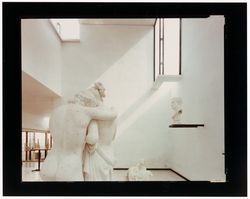
How are computational optics operating in and through the built environment? How have they become so ubiquitous and taken for granted, completing the desires of fulfillment centres and the legibility that computation craves? What computational logics, imaginaries, and frameworks lie outside of their dominant modes of perception and commoditization? Join us on Thursday 17(...)
How are computational optics operating in and through the built environment? How have they become so ubiquitous and taken for granted, completing the desires of fulfillment centres and the legibility that computation craves? What computational logics, imaginaries, and frameworks lie outside of their dominant modes of perception and commoditization? Join us on Thursday 17(...)
Date:
17 July 2025, 6pm
17 July 2025, 6pm
Title:
Toolkit for Today: Defying Computational Cravings
Actions:
Description:
How are computational optics operating in and through the built environment? How have they become so ubiquitous and taken for granted, completing the desires of fulfillment centres and the legibility that computation craves? What computational logics, imaginaries, and frameworks lie outside of their dominant modes of perception and commoditization? Join us on Thursday 17(...)
Toolkit for Today: Defying Computational Cravings
Actions:
Description:
How are computational optics operating in and through the built environment? How have they become so ubiquitous and taken for granted, completing the desires of fulfillment centres and the legibility that computation craves? What computational logics, imaginaries, and frameworks lie outside of their dominant modes of perception and commoditization? Join us on Thursday 17(...)
Form:
events
events
Date:
17 July 2025
6pm
17 July 2025
6pm
Form:
archives
Level of archival description:
Collection
archives
Level of archival description:
Collection
Actions:
Reference number:
CD033
Synopsis:
The Aldo Cibic Microrealities project collection primarily consists of presentation materials, publications and born digital materials, like videos and photographs, by Aldo Cibic produced between 2003 and 2008 for the project “Microrealities”.
CD033
Synopsis:
The Aldo Cibic Microrealities project collection primarily consists of presentation materials, publications and born digital materials, like videos and photographs, by Aldo Cibic produced between 2003 and 2008 for the project “Microrealities”.
People:
Date:
2003-2008
2003-2008
Title:
Aldo Cibic Microrealities project collection
Actions:
CD033
Synopsis:
The Aldo Cibic Microrealities project collection primarily consists of presentation materials, publications and born digital materials, like videos and photographs, by Aldo Cibic produced between 2003 and 2008 for the project “Microrealities”.
Aldo Cibic Microrealities project collection
Actions:
CD033
Synopsis:
The Aldo Cibic Microrealities project collection primarily consists of presentation materials, publications and born digital materials, like videos and photographs, by Aldo Cibic produced between 2003 and 2008 for the project “Microrealities”.
Form:
archives
Level of archival description:
collection
archives
Level of archival description:
collection
Date:
2003-2008
2003-2008
People:
Level of archival description:
Project
Project
Reference number:
AP143.S4.D65
Description:
File documents the unexecuted project for the University Art Museum, Long Beach, California. Material in this file was produced between 1986 and 1988. California State University, Long Beach (CSULB), commissioned Eisenman/Robertson Architects to design an art museum adjacent to the main campus entrance. The 67,500-square-foot building was to comprise four galleries, a black-box theater, an auditorium, a cafe, conference rooms, a library, offices, preparation spaces, and storage vaults. The project, sited on a 23-acre arboretum, included landscaping; terraced sculpture courtyards, botanical gardens, and a two-acre pond. Eisenman linked the northern and southern parts of the arboretum by an elevated public walkway through the museum. Sets of drawings were presented on 8 and 30 April, 2 June, and 5 Aug. In the first design phase Eisenman explores the cartographic figures which form the basis of his artificial excavation when superposed: a series of sketches establishes the analogical relationships which fix the relative scales of the plans and produce the superpositions; another series contextualizes the superposed figures by placing them within the museum site (DR1987:0859:087-090). The second phase concerns the building; the working model shows the building carved out of a square pit, from which spring an oil derrick and a reconstruction of a recreational pier (Rainbow Pier, 1920s) used here as circulatory bridge (DR1987:0859:160). In the third phase the architect systematizes his archeological procedure by using five significant cartographic dates - 1849, 1889, 1949, 1989, 2049 - each corresponding to a specific superposition (see DR1987:0859:274-277). In the fourth phase, Eisenman simplifies the superposition of 2049 to a few iconic colour-coded forms: ranch (green), ranch house (blue), campus site (red), and water forms (river and pond) (gold). Material for the fourth phase includes three relief models, four presentation drawings, and a model (property of the CSULB) (relief models: DR1987:0859:001-003; drawings: DR1987:0859:004-008). Eisenman "inhabits" his artifical archeology by detailed planning of interior spaces, and gives substance to the cartographic traces in a series of sketch sections, perspectives, and working models. Working models reveal how the central "canal" area gradually became the museum's access point (DR1987:0859:484-490); the museum, galleries, offices, and preparation areas are on one side of this deep cut, while the cafeteria and black-box theater are on the other. The upper level was to house offices, meeting rooms, and the library. File contains audiovisual material, conceptual drawings, design development drawings, presentation drawings, reference drawings, working drawings, photographic materials, and textual records.
AP143.S4.D65
Description:
File documents the unexecuted project for the University Art Museum, Long Beach, California. Material in this file was produced between 1986 and 1988. California State University, Long Beach (CSULB), commissioned Eisenman/Robertson Architects to design an art museum adjacent to the main campus entrance. The 67,500-square-foot building was to comprise four galleries, a black-box theater, an auditorium, a cafe, conference rooms, a library, offices, preparation spaces, and storage vaults. The project, sited on a 23-acre arboretum, included landscaping; terraced sculpture courtyards, botanical gardens, and a two-acre pond. Eisenman linked the northern and southern parts of the arboretum by an elevated public walkway through the museum. Sets of drawings were presented on 8 and 30 April, 2 June, and 5 Aug. In the first design phase Eisenman explores the cartographic figures which form the basis of his artificial excavation when superposed: a series of sketches establishes the analogical relationships which fix the relative scales of the plans and produce the superpositions; another series contextualizes the superposed figures by placing them within the museum site (DR1987:0859:087-090). The second phase concerns the building; the working model shows the building carved out of a square pit, from which spring an oil derrick and a reconstruction of a recreational pier (Rainbow Pier, 1920s) used here as circulatory bridge (DR1987:0859:160). In the third phase the architect systematizes his archeological procedure by using five significant cartographic dates - 1849, 1889, 1949, 1989, 2049 - each corresponding to a specific superposition (see DR1987:0859:274-277). In the fourth phase, Eisenman simplifies the superposition of 2049 to a few iconic colour-coded forms: ranch (green), ranch house (blue), campus site (red), and water forms (river and pond) (gold). Material for the fourth phase includes three relief models, four presentation drawings, and a model (property of the CSULB) (relief models: DR1987:0859:001-003; drawings: DR1987:0859:004-008). Eisenman "inhabits" his artifical archeology by detailed planning of interior spaces, and gives substance to the cartographic traces in a series of sketch sections, perspectives, and working models. Working models reveal how the central "canal" area gradually became the museum's access point (DR1987:0859:484-490); the museum, galleries, offices, and preparation areas are on one side of this deep cut, while the cafeteria and black-box theater are on the other. The upper level was to house offices, meeting rooms, and the library. File contains audiovisual material, conceptual drawings, design development drawings, presentation drawings, reference drawings, working drawings, photographic materials, and textual records.
People:
Date:
1986-1988
1986-1988
Title:
University Art Museum
Actions:
AP143.S4.D65
Description:
File documents the unexecuted project for the University Art Museum, Long Beach, California. Material in this file was produced between 1986 and 1988. California State University, Long Beach (CSULB), commissioned Eisenman/Robertson Architects to design an art museum adjacent to the main campus entrance. The 67,500-square-foot building was to comprise four galleries, a black-box theater, an auditorium, a cafe, conference rooms, a library, offices, preparation spaces, and storage vaults. The project, sited on a 23-acre arboretum, included landscaping; terraced sculpture courtyards, botanical gardens, and a two-acre pond. Eisenman linked the northern and southern parts of the arboretum by an elevated public walkway through the museum. Sets of drawings were presented on 8 and 30 April, 2 June, and 5 Aug. In the first design phase Eisenman explores the cartographic figures which form the basis of his artificial excavation when superposed: a series of sketches establishes the analogical relationships which fix the relative scales of the plans and produce the superpositions; another series contextualizes the superposed figures by placing them within the museum site (DR1987:0859:087-090). The second phase concerns the building; the working model shows the building carved out of a square pit, from which spring an oil derrick and a reconstruction of a recreational pier (Rainbow Pier, 1920s) used here as circulatory bridge (DR1987:0859:160). In the third phase the architect systematizes his archeological procedure by using five significant cartographic dates - 1849, 1889, 1949, 1989, 2049 - each corresponding to a specific superposition (see DR1987:0859:274-277). In the fourth phase, Eisenman simplifies the superposition of 2049 to a few iconic colour-coded forms: ranch (green), ranch house (blue), campus site (red), and water forms (river and pond) (gold). Material for the fourth phase includes three relief models, four presentation drawings, and a model (property of the CSULB) (relief models: DR1987:0859:001-003; drawings: DR1987:0859:004-008). Eisenman "inhabits" his artifical archeology by detailed planning of interior spaces, and gives substance to the cartographic traces in a series of sketch sections, perspectives, and working models. Working models reveal how the central "canal" area gradually became the museum's access point (DR1987:0859:484-490); the museum, galleries, offices, and preparation areas are on one side of this deep cut, while the cafeteria and black-box theater are on the other. The upper level was to house offices, meeting rooms, and the library. File contains audiovisual material, conceptual drawings, design development drawings, presentation drawings, reference drawings, working drawings, photographic materials, and textual records.
University Art Museum
Actions:
AP143.S4.D65
Description:
File documents the unexecuted project for the University Art Museum, Long Beach, California. Material in this file was produced between 1986 and 1988. California State University, Long Beach (CSULB), commissioned Eisenman/Robertson Architects to design an art museum adjacent to the main campus entrance. The 67,500-square-foot building was to comprise four galleries, a black-box theater, an auditorium, a cafe, conference rooms, a library, offices, preparation spaces, and storage vaults. The project, sited on a 23-acre arboretum, included landscaping; terraced sculpture courtyards, botanical gardens, and a two-acre pond. Eisenman linked the northern and southern parts of the arboretum by an elevated public walkway through the museum. Sets of drawings were presented on 8 and 30 April, 2 June, and 5 Aug. In the first design phase Eisenman explores the cartographic figures which form the basis of his artificial excavation when superposed: a series of sketches establishes the analogical relationships which fix the relative scales of the plans and produce the superpositions; another series contextualizes the superposed figures by placing them within the museum site (DR1987:0859:087-090). The second phase concerns the building; the working model shows the building carved out of a square pit, from which spring an oil derrick and a reconstruction of a recreational pier (Rainbow Pier, 1920s) used here as circulatory bridge (DR1987:0859:160). In the third phase the architect systematizes his archeological procedure by using five significant cartographic dates - 1849, 1889, 1949, 1989, 2049 - each corresponding to a specific superposition (see DR1987:0859:274-277). In the fourth phase, Eisenman simplifies the superposition of 2049 to a few iconic colour-coded forms: ranch (green), ranch house (blue), campus site (red), and water forms (river and pond) (gold). Material for the fourth phase includes three relief models, four presentation drawings, and a model (property of the CSULB) (relief models: DR1987:0859:001-003; drawings: DR1987:0859:004-008). Eisenman "inhabits" his artifical archeology by detailed planning of interior spaces, and gives substance to the cartographic traces in a series of sketch sections, perspectives, and working models. Working models reveal how the central "canal" area gradually became the museum's access point (DR1987:0859:484-490); the museum, galleries, offices, and preparation areas are on one side of this deep cut, while the cafeteria and black-box theater are on the other. The upper level was to house offices, meeting rooms, and the library. File contains audiovisual material, conceptual drawings, design development drawings, presentation drawings, reference drawings, working drawings, photographic materials, and textual records.
Level of archival description:
File 65
File 65
Date:
1986-1988
1986-1988
People:
Level of archival description:
Project
Project
Reference number:
AP148.S1.1970.PR02
Description:
The project series documents Poli's work on the Interplanetary Architecture project, which was also made into a film by Superstudio directed by Alessandro Poli (the film is not included in the fonds). The project reflects Poli's deep fascination with the moon landing in 1969. Poli uses this major media event as a catalyst for thinking about a new approach to architecture and tools for design, including the idea that film and the movie camera should become part of the toolset. The project also seems to be in some way a response to Epoch magazine's challenge for a "Primo concorso di architettura nello spazio" (the first architectural competition in space), and includes much imagery and textual references to a new road or architectural links between the earth and other planets, including an earth moon highway. In his storyboard, Poli also makes reference to his earlier Piper project, and some imagery features wheels and an amusement park. The Interplanetary Architecture project was exhibited by Superstudio in Rome in 1972 and featured in "Casabella" magazine in April 1972 (no. 364). The project was also featured in the 2010 CCA exhibition "Other Space Odysseys". In the accompanying CCA publication, Poli describes this project as "a voyage off earthbound routes in quest of architecture unfettered by the urban nightmare, by induced needs or by planning as the only tool for regulating and solving the world's problems" (Poli quoted in Borasi and Zardini, 2010, 110). Poli's work on this project is deeply tied to the Zeno project, which was also featured in this exhibition and is included in this fonds (see AP148.S1.1972.PR01). For the Zeno project, Poli envisioned a dialogue between astronaut Buzz Aldrin and an Italian peasant, Zeno of Riparbella. Poli felt that these two shared a similarity in that both their homes were isolated capsules, one that provided a lens from which to see the rest of the world and understand their place in it. The material in the series includes numerous photomontages and collages of astronauts in space, as well as drawings of plantery shapes and structures. There are also texts, some of which include calculations of distances and diameters of planets, as well as notebooks and sketchbooks, many of which Poli included in a folder he entitled "Storyboard." The series also includes an unsent letter from Poli to Adolfo Natalini which describes how, after the moon landing, everything - the planet, the moon, the stars - is architecture, and that this will necessitate the need for new design tools, such as the movie camera. Some works are signed Alessandro Poli-Superstudio. Source cited: Giovanna Borasi and Mirko Zardini, eds., Other Space Odysseys, Montreal and Baden: Canadian Centre for Architecture/Lars Müller Publishers, 2010.
AP148.S1.1970.PR02
Description:
The project series documents Poli's work on the Interplanetary Architecture project, which was also made into a film by Superstudio directed by Alessandro Poli (the film is not included in the fonds). The project reflects Poli's deep fascination with the moon landing in 1969. Poli uses this major media event as a catalyst for thinking about a new approach to architecture and tools for design, including the idea that film and the movie camera should become part of the toolset. The project also seems to be in some way a response to Epoch magazine's challenge for a "Primo concorso di architettura nello spazio" (the first architectural competition in space), and includes much imagery and textual references to a new road or architectural links between the earth and other planets, including an earth moon highway. In his storyboard, Poli also makes reference to his earlier Piper project, and some imagery features wheels and an amusement park. The Interplanetary Architecture project was exhibited by Superstudio in Rome in 1972 and featured in "Casabella" magazine in April 1972 (no. 364). The project was also featured in the 2010 CCA exhibition "Other Space Odysseys". In the accompanying CCA publication, Poli describes this project as "a voyage off earthbound routes in quest of architecture unfettered by the urban nightmare, by induced needs or by planning as the only tool for regulating and solving the world's problems" (Poli quoted in Borasi and Zardini, 2010, 110). Poli's work on this project is deeply tied to the Zeno project, which was also featured in this exhibition and is included in this fonds (see AP148.S1.1972.PR01). For the Zeno project, Poli envisioned a dialogue between astronaut Buzz Aldrin and an Italian peasant, Zeno of Riparbella. Poli felt that these two shared a similarity in that both their homes were isolated capsules, one that provided a lens from which to see the rest of the world and understand their place in it. The material in the series includes numerous photomontages and collages of astronauts in space, as well as drawings of plantery shapes and structures. There are also texts, some of which include calculations of distances and diameters of planets, as well as notebooks and sketchbooks, many of which Poli included in a folder he entitled "Storyboard." The series also includes an unsent letter from Poli to Adolfo Natalini which describes how, after the moon landing, everything - the planet, the moon, the stars - is architecture, and that this will necessitate the need for new design tools, such as the movie camera. Some works are signed Alessandro Poli-Superstudio. Source cited: Giovanna Borasi and Mirko Zardini, eds., Other Space Odysseys, Montreal and Baden: Canadian Centre for Architecture/Lars Müller Publishers, 2010.
People:
Date:
1969-1971
1969-1971
Title:
Architettura Interplanetaria [Interplanetary Architecture] (1970-1971)
Actions:
AP148.S1.1970.PR02
Description:
The project series documents Poli's work on the Interplanetary Architecture project, which was also made into a film by Superstudio directed by Alessandro Poli (the film is not included in the fonds). The project reflects Poli's deep fascination with the moon landing in 1969. Poli uses this major media event as a catalyst for thinking about a new approach to architecture and tools for design, including the idea that film and the movie camera should become part of the toolset. The project also seems to be in some way a response to Epoch magazine's challenge for a "Primo concorso di architettura nello spazio" (the first architectural competition in space), and includes much imagery and textual references to a new road or architectural links between the earth and other planets, including an earth moon highway. In his storyboard, Poli also makes reference to his earlier Piper project, and some imagery features wheels and an amusement park. The Interplanetary Architecture project was exhibited by Superstudio in Rome in 1972 and featured in "Casabella" magazine in April 1972 (no. 364). The project was also featured in the 2010 CCA exhibition "Other Space Odysseys". In the accompanying CCA publication, Poli describes this project as "a voyage off earthbound routes in quest of architecture unfettered by the urban nightmare, by induced needs or by planning as the only tool for regulating and solving the world's problems" (Poli quoted in Borasi and Zardini, 2010, 110). Poli's work on this project is deeply tied to the Zeno project, which was also featured in this exhibition and is included in this fonds (see AP148.S1.1972.PR01). For the Zeno project, Poli envisioned a dialogue between astronaut Buzz Aldrin and an Italian peasant, Zeno of Riparbella. Poli felt that these two shared a similarity in that both their homes were isolated capsules, one that provided a lens from which to see the rest of the world and understand their place in it. The material in the series includes numerous photomontages and collages of astronauts in space, as well as drawings of plantery shapes and structures. There are also texts, some of which include calculations of distances and diameters of planets, as well as notebooks and sketchbooks, many of which Poli included in a folder he entitled "Storyboard." The series also includes an unsent letter from Poli to Adolfo Natalini which describes how, after the moon landing, everything - the planet, the moon, the stars - is architecture, and that this will necessitate the need for new design tools, such as the movie camera. Some works are signed Alessandro Poli-Superstudio. Source cited: Giovanna Borasi and Mirko Zardini, eds., Other Space Odysseys, Montreal and Baden: Canadian Centre for Architecture/Lars Müller Publishers, 2010.
Architettura Interplanetaria [Interplanetary Architecture] (1970-1971)
Actions:
AP148.S1.1970.PR02
Description:
The project series documents Poli's work on the Interplanetary Architecture project, which was also made into a film by Superstudio directed by Alessandro Poli (the film is not included in the fonds). The project reflects Poli's deep fascination with the moon landing in 1969. Poli uses this major media event as a catalyst for thinking about a new approach to architecture and tools for design, including the idea that film and the movie camera should become part of the toolset. The project also seems to be in some way a response to Epoch magazine's challenge for a "Primo concorso di architettura nello spazio" (the first architectural competition in space), and includes much imagery and textual references to a new road or architectural links between the earth and other planets, including an earth moon highway. In his storyboard, Poli also makes reference to his earlier Piper project, and some imagery features wheels and an amusement park. The Interplanetary Architecture project was exhibited by Superstudio in Rome in 1972 and featured in "Casabella" magazine in April 1972 (no. 364). The project was also featured in the 2010 CCA exhibition "Other Space Odysseys". In the accompanying CCA publication, Poli describes this project as "a voyage off earthbound routes in quest of architecture unfettered by the urban nightmare, by induced needs or by planning as the only tool for regulating and solving the world's problems" (Poli quoted in Borasi and Zardini, 2010, 110). Poli's work on this project is deeply tied to the Zeno project, which was also featured in this exhibition and is included in this fonds (see AP148.S1.1972.PR01). For the Zeno project, Poli envisioned a dialogue between astronaut Buzz Aldrin and an Italian peasant, Zeno of Riparbella. Poli felt that these two shared a similarity in that both their homes were isolated capsules, one that provided a lens from which to see the rest of the world and understand their place in it. The material in the series includes numerous photomontages and collages of astronauts in space, as well as drawings of plantery shapes and structures. There are also texts, some of which include calculations of distances and diameters of planets, as well as notebooks and sketchbooks, many of which Poli included in a folder he entitled "Storyboard." The series also includes an unsent letter from Poli to Adolfo Natalini which describes how, after the moon landing, everything - the planet, the moon, the stars - is architecture, and that this will necessitate the need for new design tools, such as the movie camera. Some works are signed Alessandro Poli-Superstudio. Source cited: Giovanna Borasi and Mirko Zardini, eds., Other Space Odysseys, Montreal and Baden: Canadian Centre for Architecture/Lars Müller Publishers, 2010.
Level of archival description:
Project
Project
Date:
1969-1971
1969-1971
People:
Level of archival description:
Project
Project
Title:
BMI/HQ
BMI/HQ
Reference number:
AP144.S2.D74
Description:
File documents the unexecuted design for the headquarters of the Birmingham and Midland Institute (BMI), in Birmingham, England. This project is related to the Shantasea Development (AP144.S2.D72) from which Cedric Price resigned as architect to take on the role of architect for BMI, one of the proposed tenants for the Shantasea project. Cedric Price proposed a municipal and regional "nerve centre" to house seminar and study rooms, workshops, galleries, film, television and music studios, a library, a planetarium, and a theatre. A flexible life-cycle plan (expansion, static, contraction) for the building and the activities would allow BMI to expand in the short and medium term, and to shrink in the long term, when it was assumed that many of its roles would be replaced by the UK's Open University plan (Works II, 42). Work on the project came to a stop in 1970 under a new city council (Architectural Design, June 1971, 368). Existing conditions material consists of maps and a survey of Birmingham. Conceptual sketches and drawings include: annotated diagrammatic plans and sections used to develop the building's massing and the horizontal/vertical relationships between functional areas; axonometric views showing the building's general form/functions; plans used for calculating square footage; diagrams showing visual and physical movement through the building; information and movement charts; and flow charts showing the building's organization. Design development drawings consist of graphs showing how functional areas might be used over time. Design development and working drawings include: diagrammatic plans and sections; exploded axonometric views of the functional relationships between areas; exterior axonometric views; sectional perspectives; space allocation plans; circulation drawings; diagrams showing activities throughout the day; furniture equipment schedules; theatre seating and stair studies; and elevations for exterior cladding. Charts show links between activities/actions; activity distribution; activity/capacity; progress of pre-contract work; and the telephone network. File also includes drawings by engineering consultants Felix Samuely and Partners and Zisman, Bowyer and Partners. Presentation material includes: newspaper clippings and text concerning the project; diagrammatic plans, sections, and charts; and a photo collage of the site; and a text by Cedric Price entitled "The Present Position". Some materials in this file were published in "Cedric Price Supplement No. 3", 'Architectural Design', vol. 41, (June 1971), 364-368, and 'Cedric Price-Works II' (London: Architectural Press, 1984), 36, 42. Material in this file was produced between 1967 and 1971. Zisman Bowyer and Partners appear as the mechanical and electrical consulting engineers; Silk and Frazier as the quantity surveyors; and Versa-Serve Ltd as the catering consultants on this project. File contains cartographic materials, conceptual drawings, design development drawings, panels, photographic materials, presentation drawings, presentation panels, publication drawings, technical drawings, and textual records.
AP144.S2.D74
Description:
File documents the unexecuted design for the headquarters of the Birmingham and Midland Institute (BMI), in Birmingham, England. This project is related to the Shantasea Development (AP144.S2.D72) from which Cedric Price resigned as architect to take on the role of architect for BMI, one of the proposed tenants for the Shantasea project. Cedric Price proposed a municipal and regional "nerve centre" to house seminar and study rooms, workshops, galleries, film, television and music studios, a library, a planetarium, and a theatre. A flexible life-cycle plan (expansion, static, contraction) for the building and the activities would allow BMI to expand in the short and medium term, and to shrink in the long term, when it was assumed that many of its roles would be replaced by the UK's Open University plan (Works II, 42). Work on the project came to a stop in 1970 under a new city council (Architectural Design, June 1971, 368). Existing conditions material consists of maps and a survey of Birmingham. Conceptual sketches and drawings include: annotated diagrammatic plans and sections used to develop the building's massing and the horizontal/vertical relationships between functional areas; axonometric views showing the building's general form/functions; plans used for calculating square footage; diagrams showing visual and physical movement through the building; information and movement charts; and flow charts showing the building's organization. Design development drawings consist of graphs showing how functional areas might be used over time. Design development and working drawings include: diagrammatic plans and sections; exploded axonometric views of the functional relationships between areas; exterior axonometric views; sectional perspectives; space allocation plans; circulation drawings; diagrams showing activities throughout the day; furniture equipment schedules; theatre seating and stair studies; and elevations for exterior cladding. Charts show links between activities/actions; activity distribution; activity/capacity; progress of pre-contract work; and the telephone network. File also includes drawings by engineering consultants Felix Samuely and Partners and Zisman, Bowyer and Partners. Presentation material includes: newspaper clippings and text concerning the project; diagrammatic plans, sections, and charts; and a photo collage of the site; and a text by Cedric Price entitled "The Present Position". Some materials in this file were published in "Cedric Price Supplement No. 3", 'Architectural Design', vol. 41, (June 1971), 364-368, and 'Cedric Price-Works II' (London: Architectural Press, 1984), 36, 42. Material in this file was produced between 1967 and 1971. Zisman Bowyer and Partners appear as the mechanical and electrical consulting engineers; Silk and Frazier as the quantity surveyors; and Versa-Serve Ltd as the catering consultants on this project. File contains cartographic materials, conceptual drawings, design development drawings, panels, photographic materials, presentation drawings, presentation panels, publication drawings, technical drawings, and textual records.
People:
Date:
1967-1971
1967-1971
Title:
BMI/HQ
Actions:
AP144.S2.D74
Description:
File documents the unexecuted design for the headquarters of the Birmingham and Midland Institute (BMI), in Birmingham, England. This project is related to the Shantasea Development (AP144.S2.D72) from which Cedric Price resigned as architect to take on the role of architect for BMI, one of the proposed tenants for the Shantasea project. Cedric Price proposed a municipal and regional "nerve centre" to house seminar and study rooms, workshops, galleries, film, television and music studios, a library, a planetarium, and a theatre. A flexible life-cycle plan (expansion, static, contraction) for the building and the activities would allow BMI to expand in the short and medium term, and to shrink in the long term, when it was assumed that many of its roles would be replaced by the UK's Open University plan (Works II, 42). Work on the project came to a stop in 1970 under a new city council (Architectural Design, June 1971, 368). Existing conditions material consists of maps and a survey of Birmingham. Conceptual sketches and drawings include: annotated diagrammatic plans and sections used to develop the building's massing and the horizontal/vertical relationships between functional areas; axonometric views showing the building's general form/functions; plans used for calculating square footage; diagrams showing visual and physical movement through the building; information and movement charts; and flow charts showing the building's organization. Design development drawings consist of graphs showing how functional areas might be used over time. Design development and working drawings include: diagrammatic plans and sections; exploded axonometric views of the functional relationships between areas; exterior axonometric views; sectional perspectives; space allocation plans; circulation drawings; diagrams showing activities throughout the day; furniture equipment schedules; theatre seating and stair studies; and elevations for exterior cladding. Charts show links between activities/actions; activity distribution; activity/capacity; progress of pre-contract work; and the telephone network. File also includes drawings by engineering consultants Felix Samuely and Partners and Zisman, Bowyer and Partners. Presentation material includes: newspaper clippings and text concerning the project; diagrammatic plans, sections, and charts; and a photo collage of the site; and a text by Cedric Price entitled "The Present Position". Some materials in this file were published in "Cedric Price Supplement No. 3", 'Architectural Design', vol. 41, (June 1971), 364-368, and 'Cedric Price-Works II' (London: Architectural Press, 1984), 36, 42. Material in this file was produced between 1967 and 1971. Zisman Bowyer and Partners appear as the mechanical and electrical consulting engineers; Silk and Frazier as the quantity surveyors; and Versa-Serve Ltd as the catering consultants on this project. File contains cartographic materials, conceptual drawings, design development drawings, panels, photographic materials, presentation drawings, presentation panels, publication drawings, technical drawings, and textual records.
BMI/HQ
Actions:
AP144.S2.D74
Description:
File documents the unexecuted design for the headquarters of the Birmingham and Midland Institute (BMI), in Birmingham, England. This project is related to the Shantasea Development (AP144.S2.D72) from which Cedric Price resigned as architect to take on the role of architect for BMI, one of the proposed tenants for the Shantasea project. Cedric Price proposed a municipal and regional "nerve centre" to house seminar and study rooms, workshops, galleries, film, television and music studios, a library, a planetarium, and a theatre. A flexible life-cycle plan (expansion, static, contraction) for the building and the activities would allow BMI to expand in the short and medium term, and to shrink in the long term, when it was assumed that many of its roles would be replaced by the UK's Open University plan (Works II, 42). Work on the project came to a stop in 1970 under a new city council (Architectural Design, June 1971, 368). Existing conditions material consists of maps and a survey of Birmingham. Conceptual sketches and drawings include: annotated diagrammatic plans and sections used to develop the building's massing and the horizontal/vertical relationships between functional areas; axonometric views showing the building's general form/functions; plans used for calculating square footage; diagrams showing visual and physical movement through the building; information and movement charts; and flow charts showing the building's organization. Design development drawings consist of graphs showing how functional areas might be used over time. Design development and working drawings include: diagrammatic plans and sections; exploded axonometric views of the functional relationships between areas; exterior axonometric views; sectional perspectives; space allocation plans; circulation drawings; diagrams showing activities throughout the day; furniture equipment schedules; theatre seating and stair studies; and elevations for exterior cladding. Charts show links between activities/actions; activity distribution; activity/capacity; progress of pre-contract work; and the telephone network. File also includes drawings by engineering consultants Felix Samuely and Partners and Zisman, Bowyer and Partners. Presentation material includes: newspaper clippings and text concerning the project; diagrammatic plans, sections, and charts; and a photo collage of the site; and a text by Cedric Price entitled "The Present Position". Some materials in this file were published in "Cedric Price Supplement No. 3", 'Architectural Design', vol. 41, (June 1971), 364-368, and 'Cedric Price-Works II' (London: Architectural Press, 1984), 36, 42. Material in this file was produced between 1967 and 1971. Zisman Bowyer and Partners appear as the mechanical and electrical consulting engineers; Silk and Frazier as the quantity surveyors; and Versa-Serve Ltd as the catering consultants on this project. File contains cartographic materials, conceptual drawings, design development drawings, panels, photographic materials, presentation drawings, presentation panels, publication drawings, technical drawings, and textual records.
Level of archival description:
File 74
File 74
Date:
1967-1971
1967-1971
People:
Form:
articles
articles
Actions:
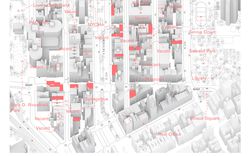
Hilary Sample interviewed by Jack Self on how architects can respond to the changing urban dynamics of retail
Published:
9 January 2023
9 January 2023
Title:
Without even trying, retail is civic and political
Hilary Sample interviewed by Jack Self on how architects can respond to the changing urban dynamics of retail
Actions:
Without even trying, retail is civic and political
Hilary Sample interviewed by Jack Self on how architects can respond to the changing urban dynamics of retail
Actions:
Form:
archives
Level of archival description:
Fonds
archives
Level of archival description:
Fonds
Actions:
Reference number:
AP194
Synopsis:
The Johan Bettum OCEAN North projects records, 1995-2000, consist of born-digital files and a physical drawing that document three projects by the OCEAN North collective: Synthetic Landscape (1995-2000), Jyväskylä Music and Arts Centre (competition, 1997), and Tölöö Football Stadium (competition, 1997). The archive also includes a small amount of additional born-digital reference materials on 11 projects from the collective, including the three projects mentioned above.
AP194
Synopsis:
The Johan Bettum OCEAN North projects records, 1995-2000, consist of born-digital files and a physical drawing that document three projects by the OCEAN North collective: Synthetic Landscape (1995-2000), Jyväskylä Music and Arts Centre (competition, 1997), and Tölöö Football Stadium (competition, 1997). The archive also includes a small amount of additional born-digital reference materials on 11 projects from the collective, including the three projects mentioned above.
People:
Date:
1995-2000
1995-2000
Title:
Johan Bettum OCEAN North project records
Actions:
AP194
Synopsis:
The Johan Bettum OCEAN North projects records, 1995-2000, consist of born-digital files and a physical drawing that document three projects by the OCEAN North collective: Synthetic Landscape (1995-2000), Jyväskylä Music and Arts Centre (competition, 1997), and Tölöö Football Stadium (competition, 1997). The archive also includes a small amount of additional born-digital reference materials on 11 projects from the collective, including the three projects mentioned above.
Johan Bettum OCEAN North project records
Actions:
AP194
Synopsis:
The Johan Bettum OCEAN North projects records, 1995-2000, consist of born-digital files and a physical drawing that document three projects by the OCEAN North collective: Synthetic Landscape (1995-2000), Jyväskylä Music and Arts Centre (competition, 1997), and Tölöö Football Stadium (competition, 1997). The archive also includes a small amount of additional born-digital reference materials on 11 projects from the collective, including the three projects mentioned above.
Form:
archives
Level of archival description:
Fonds
archives
Level of archival description:
Fonds
Date:
1995-2000
1995-2000
People:


