


974 Results
Form:
books
books
Price:
$59.99
(available to order)
Summary:
Innovative textile-based artwork exploded across the Canadian Prairies in the second half of the twentieth century. Melding craft traditions with modern and modernist movements in art and theory, a diverse body of creators opened a beautiful new chapter in textile art. "Prairie Interlace" brings together some of the most important scholars of art and craft in Canada to(...)
$59.99
(available to order)
Summary:
Innovative textile-based artwork exploded across the Canadian Prairies in the second half of the twentieth century. Melding craft traditions with modern and modernist movements in art and theory, a diverse body of creators opened a beautiful new chapter in textile art. "Prairie Interlace" brings together some of the most important scholars of art and craft in Canada to(...)
Title:
Prairie interlace: Weaving, modernisms, and the expanded frame, 1960-2000
Actions:
Price:
$59.99
(available to order)
Summary:
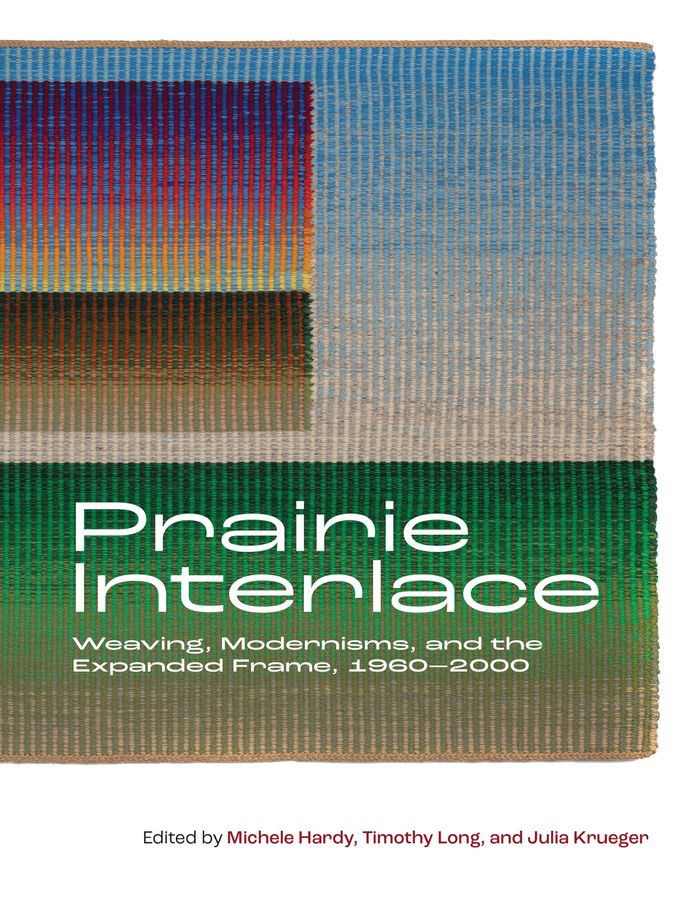
Innovative textile-based artwork exploded across the Canadian Prairies in the second half of the twentieth century. Melding craft traditions with modern and modernist movements in art and theory, a diverse body of creators opened a beautiful new chapter in textile art. "Prairie Interlace" brings together some of the most important scholars of art and craft in Canada to examine the work of forty-eight artists working with textiles from the 1960s to 2000. Recapturing and recording lost histories, this book explores both artists working with textiles and centres of textile study and production, paying special attention to the contexts in which artworks were produced. Indigenous scholars, experts in textile techniques, and experts in Prairie textile history provide fascinating insight into an artistic movement which, until now, has been largely overlooked.
Prairie interlace: Weaving, modernisms, and the expanded frame, 1960-2000
Actions:
Price:
$59.99
(available to order)
Summary:
Innovative textile-based artwork exploded across the Canadian Prairies in the second half of the twentieth century. Melding craft traditions with modern and modernist movements in art and theory, a diverse body of creators opened a beautiful new chapter in textile art. "Prairie Interlace" brings together some of the most important scholars of art and craft in Canada to examine the work of forty-eight artists working with textiles from the 1960s to 2000. Recapturing and recording lost histories, this book explores both artists working with textiles and centres of textile study and production, paying special attention to the contexts in which artworks were produced. Indigenous scholars, experts in textile techniques, and experts in Prairie textile history provide fascinating insight into an artistic movement which, until now, has been largely overlooked.
Form:
books
books
Publication:
November 2023
November 2023
Subject:
Canadian art
Canadian art
Form:
books
books
Actions:
Price:
$16.95
(available in store)
Summary:
This 53rd issue of The Funambulist mostly consists of translations into thirty "non-hegemonic" languages of a text Indigenous Mixe writer Yásnaya Elena Aguilar Gil wrote for the magazine. Entitled "Languages and Nation-States" and originally written in Ayuujk, it was then translated into Spanish, English, and French to serve as vehicles towards these thirty translations(...)
$16.95
(available in store)
Summary:
This 53rd issue of The Funambulist mostly consists of translations into thirty "non-hegemonic" languages of a text Indigenous Mixe writer Yásnaya Elena Aguilar Gil wrote for the magazine. Entitled "Languages and Nation-States" and originally written in Ayuujk, it was then translated into Spanish, English, and French to serve as vehicles towards these thirty translations(...)
Title:
The Funambulist 53 : Thread of translation
Actions:
Price:
$16.95
(available in store)
Summary:
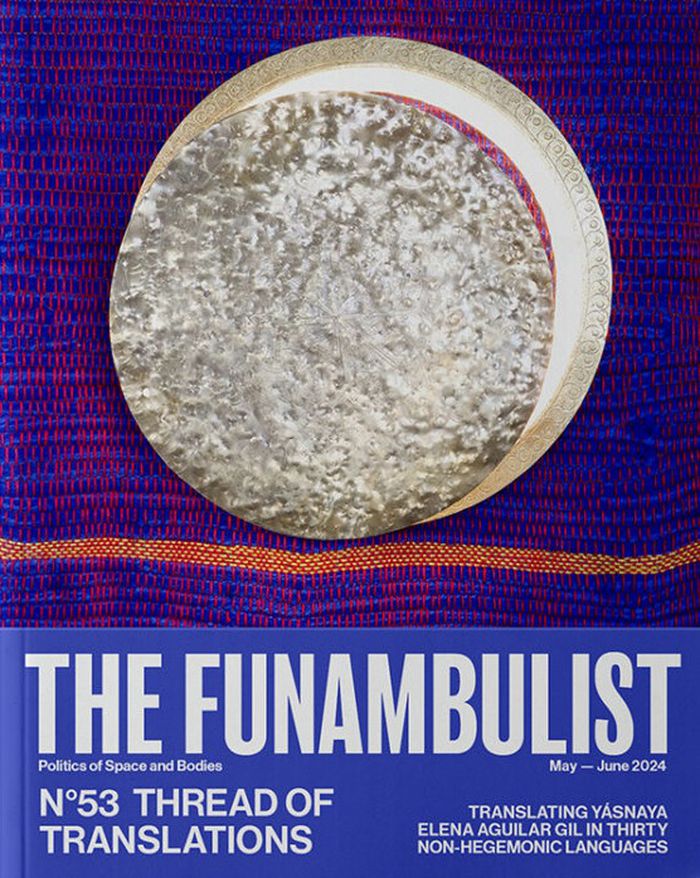
This 53rd issue of The Funambulist mostly consists of translations into thirty "non-hegemonic" languages of a text Indigenous Mixe writer Yásnaya Elena Aguilar Gil wrote for the magazine. Entitled "Languages and Nation-States" and originally written in Ayuujk, it was then translated into Spanish, English, and French to serve as vehicles towards these thirty translations into Albanian, Armenian, Bahasa Indonesia, Bambara, Basque, Bosnian, Guyanese Creole, Haitian Creole, Hausa, Hawaiian, Inuktitut, Irish, Kashmiri (Koshur), Kikongo, Kurdish, Lao, Mapuche, Mauritian Creole, Maya, Mongolian, Quechua, Rroma, Shona, Somali, Swahili, Tagalog, Tamazight, Tamil, and Uzbek. The translations are accompanied by details of the weave Eclipse (also featured on the cover) by Bolivian artist Kenia Almaraz Murillo. This issue concludes with a text entitled “Black Plumes, White Ink" by Malagasy author Marie Ranjanoro.
The Funambulist 53 : Thread of translation
Actions:
Price:
$16.95
(available in store)
Summary:
This 53rd issue of The Funambulist mostly consists of translations into thirty "non-hegemonic" languages of a text Indigenous Mixe writer Yásnaya Elena Aguilar Gil wrote for the magazine. Entitled "Languages and Nation-States" and originally written in Ayuujk, it was then translated into Spanish, English, and French to serve as vehicles towards these thirty translations into Albanian, Armenian, Bahasa Indonesia, Bambara, Basque, Bosnian, Guyanese Creole, Haitian Creole, Hausa, Hawaiian, Inuktitut, Irish, Kashmiri (Koshur), Kikongo, Kurdish, Lao, Mapuche, Mauritian Creole, Maya, Mongolian, Quechua, Rroma, Shona, Somali, Swahili, Tagalog, Tamazight, Tamil, and Uzbek. The translations are accompanied by details of the weave Eclipse (also featured on the cover) by Bolivian artist Kenia Almaraz Murillo. This issue concludes with a text entitled “Black Plumes, White Ink" by Malagasy author Marie Ranjanoro.
Form:
books
books
Publication:
May 2024
May 2024
Subject:
Magazines
Magazines
Form:
books
books
Actions:
Price:
$32.95
(available to order)
Summary:
"This system is killing us" is an insider look at the catastrophic effects that energy infrastructure and mining are having on communities and our planet. Xander Dunlap spent a decade living and working with Indigenous activists and land defenders across the world to uncover evidence of the repression people have faced in the wake of untamed capitalist growth. By(...)
$32.95
(available to order)
Summary:
"This system is killing us" is an insider look at the catastrophic effects that energy infrastructure and mining are having on communities and our planet. Xander Dunlap spent a decade living and working with Indigenous activists and land defenders across the world to uncover evidence of the repression people have faced in the wake of untamed capitalist growth. By(...)
Title:
This system is killing us: Land grabbing, the green economy and ecological conflict
Actions:
Price:
$32.95
(available to order)
Summary:
"This system is killing us" is an insider look at the catastrophic effects that energy infrastructure and mining are having on communities and our planet. Xander Dunlap spent a decade living and working with Indigenous activists and land defenders across the world to uncover evidence of the repression people have faced in the wake of untamed capitalist growth. By centring the struggles of people whose lives are being systematically destroyed, Dunlap reveals gaps within the current official debates around climate change. This includes reviewing feuds between socialist modernism and degrowth. While changing public policy could play a constructive role in remediating climate catastrophe, by understanding the successes and failures of those "on the front lines," it becomes clear that ecologically decentralized self-organization could be the only way out of this environmental nightmare.
This system is killing us: Land grabbing, the green economy and ecological conflict
Actions:
Price:
$32.95
(available to order)
Summary:
"This system is killing us" is an insider look at the catastrophic effects that energy infrastructure and mining are having on communities and our planet. Xander Dunlap spent a decade living and working with Indigenous activists and land defenders across the world to uncover evidence of the repression people have faced in the wake of untamed capitalist growth. By centring the struggles of people whose lives are being systematically destroyed, Dunlap reveals gaps within the current official debates around climate change. This includes reviewing feuds between socialist modernism and degrowth. While changing public policy could play a constructive role in remediating climate catastrophe, by understanding the successes and failures of those "on the front lines," it becomes clear that ecologically decentralized self-organization could be the only way out of this environmental nightmare.
Form:
books
books
Publication:
March 2024
March 2024
Subject:
Environment and environmental theory
Environment and environmental theory
Form:
books
books
Price:
$36.95
(available to order)
Summary:
In this book, Brenna Bhandar examines how modern property law contributes to the formation of racial subjects in settler colonies and to the development of racial capitalism. Examining both historical cases and ongoing processes of settler colonialism in Canada, Australia, and Israel and Palestine, Bhandar shows how the colonial appropriation of indigenous lands depends(...)
$36.95
(available to order)
Summary:
In this book, Brenna Bhandar examines how modern property law contributes to the formation of racial subjects in settler colonies and to the development of racial capitalism. Examining both historical cases and ongoing processes of settler colonialism in Canada, Australia, and Israel and Palestine, Bhandar shows how the colonial appropriation of indigenous lands depends(...)
Title:
Colonial lives of property: law, land, and racial regimes of ownership
Actions:
Price:
$36.95
(available to order)
Summary:
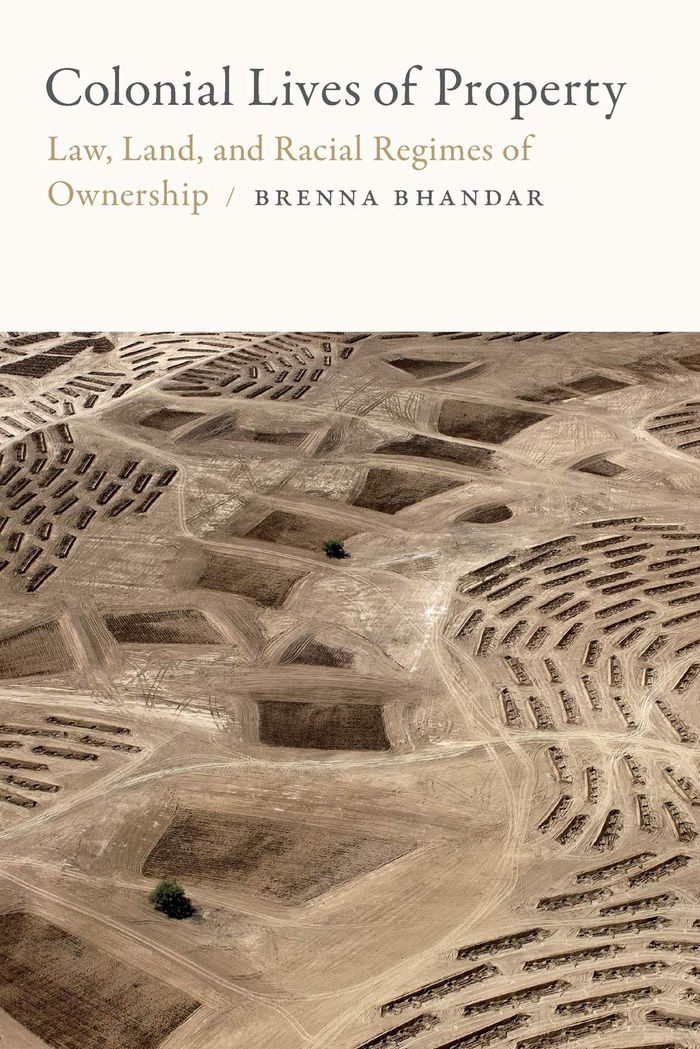
In this book, Brenna Bhandar examines how modern property law contributes to the formation of racial subjects in settler colonies and to the development of racial capitalism. Examining both historical cases and ongoing processes of settler colonialism in Canada, Australia, and Israel and Palestine, Bhandar shows how the colonial appropriation of indigenous lands depends upon ideologies of European racial superiority as well as upon legal narratives that equate civilized life with English concepts of property. In this way, property law legitimates and rationalizes settler colonial practices while it racializes those deemed unfit to own property. The solution to these enduring racial and economic inequities, Bhandar demonstrates, requires developing a new political imaginary of property in which freedom is connected to shared practices of use and community rather than individual possession.
Colonial lives of property: law, land, and racial regimes of ownership
Actions:
Price:
$36.95
(available to order)
Summary:
In this book, Brenna Bhandar examines how modern property law contributes to the formation of racial subjects in settler colonies and to the development of racial capitalism. Examining both historical cases and ongoing processes of settler colonialism in Canada, Australia, and Israel and Palestine, Bhandar shows how the colonial appropriation of indigenous lands depends upon ideologies of European racial superiority as well as upon legal narratives that equate civilized life with English concepts of property. In this way, property law legitimates and rationalizes settler colonial practices while it racializes those deemed unfit to own property. The solution to these enduring racial and economic inequities, Bhandar demonstrates, requires developing a new political imaginary of property in which freedom is connected to shared practices of use and community rather than individual possession.
Form:
books
books
Publication:
May 2018
May 2018
Subject:
Architecture ecologies
Architecture ecologies
Form:
journals and magazines
journals and magazines
Actions:
Price:
$17.95
(available to order)
Summary:
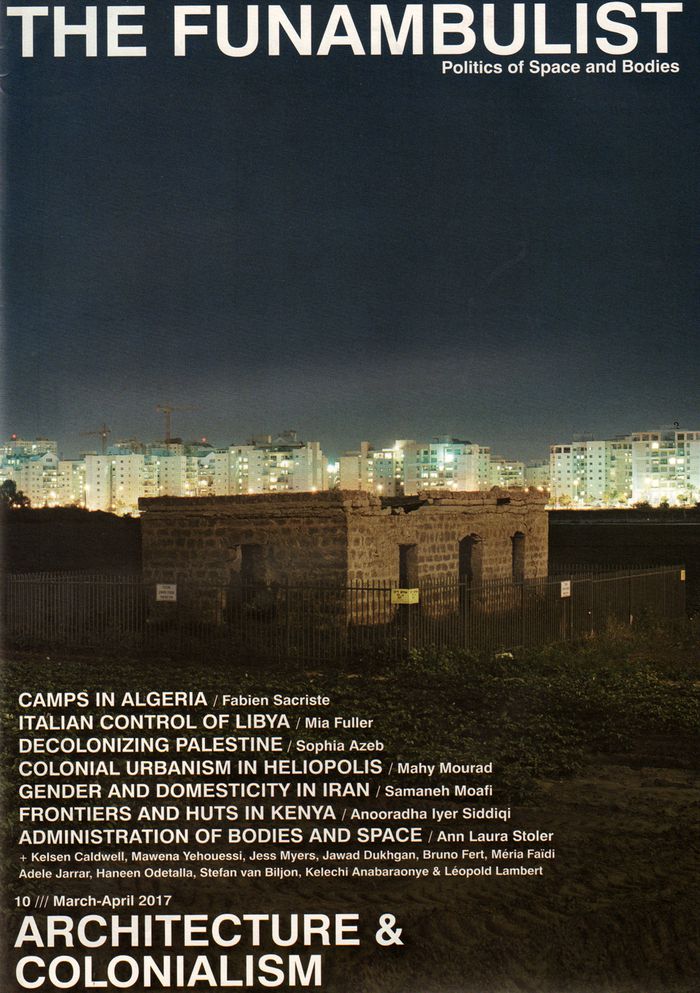
The tenth issue of "The Funambulist" operates somehow in continuity with issue 9 Islands (January-February 2017), which offered the words of indigenous and anticolonial struggles from various islands of the world. Voices from Kanaky, Mayotte, Hawai’i, and Puerto Rico resonate therefore here with those from Libya, Kenya, Palestine, and Java, in the colonial situations they(...)
$17.95
(available to order)
Summary:
The tenth issue of "The Funambulist" operates somehow in continuity with issue 9 Islands (January-February 2017), which offered the words of indigenous and anticolonial struggles from various islands of the world. Voices from Kanaky, Mayotte, Hawai’i, and Puerto Rico resonate therefore here with those from Libya, Kenya, Palestine, and Java, in the colonial situations they(...)
Title:
The Funambulist 10: Architecture and colonialism
Actions:
Price:
$17.95
(available to order)
Summary:
The tenth issue of "The Funambulist" operates somehow in continuity with issue 9 Islands (January-February 2017), which offered the words of indigenous and anticolonial struggles from various islands of the world. Voices from Kanaky, Mayotte, Hawai’i, and Puerto Rico resonate therefore here with those from Libya, Kenya, Palestine, and Java, in the colonial situations they all describe. While the last issue was dedicated to the seminal work of Édouard Glissant, inscribed throughout the pages of this present one is the influence of another Martiniquais: Frantz Fanon. The two editorial arguments of this issue are simple: colonialism is not an era, it is a system of military/police, legal, administrative, social, and cultural system of domination; and, architecture is not (only) an aesthetic vessel, it is an apparatus organizing and hierarchizing bodies in space.
The Funambulist 10: Architecture and colonialism
Actions:
Price:
$17.95
(available to order)
Summary:
The tenth issue of "The Funambulist" operates somehow in continuity with issue 9 Islands (January-February 2017), which offered the words of indigenous and anticolonial struggles from various islands of the world. Voices from Kanaky, Mayotte, Hawai’i, and Puerto Rico resonate therefore here with those from Libya, Kenya, Palestine, and Java, in the colonial situations they all describe. While the last issue was dedicated to the seminal work of Édouard Glissant, inscribed throughout the pages of this present one is the influence of another Martiniquais: Frantz Fanon. The two editorial arguments of this issue are simple: colonialism is not an era, it is a system of military/police, legal, administrative, social, and cultural system of domination; and, architecture is not (only) an aesthetic vessel, it is an apparatus organizing and hierarchizing bodies in space.
Form:
journals and magazines
journals and magazines
Publication:
March 2017
March 2017
Form:
books
books
Actions:
Price:
$62.00
(available to order)
Summary:
“The North” has long held powerful sway in Western culture. Often seen through contradictions —empty of life yet full of promise, populated by indigenous communities yet ripe for conquest, pristine yet marked by a long human history —the North has moved to the foreground of contemporary life as the most dramatic stage for the reality of climate change. This book(...)
$62.00
(available to order)
Summary:
“The North” has long held powerful sway in Western culture. Often seen through contradictions —empty of life yet full of promise, populated by indigenous communities yet ripe for conquest, pristine yet marked by a long human history —the North has moved to the foreground of contemporary life as the most dramatic stage for the reality of climate change. This book(...)
Title:
Critical norths: space, nature, theory
Actions:
Price:
$62.00
(available to order)
Summary:
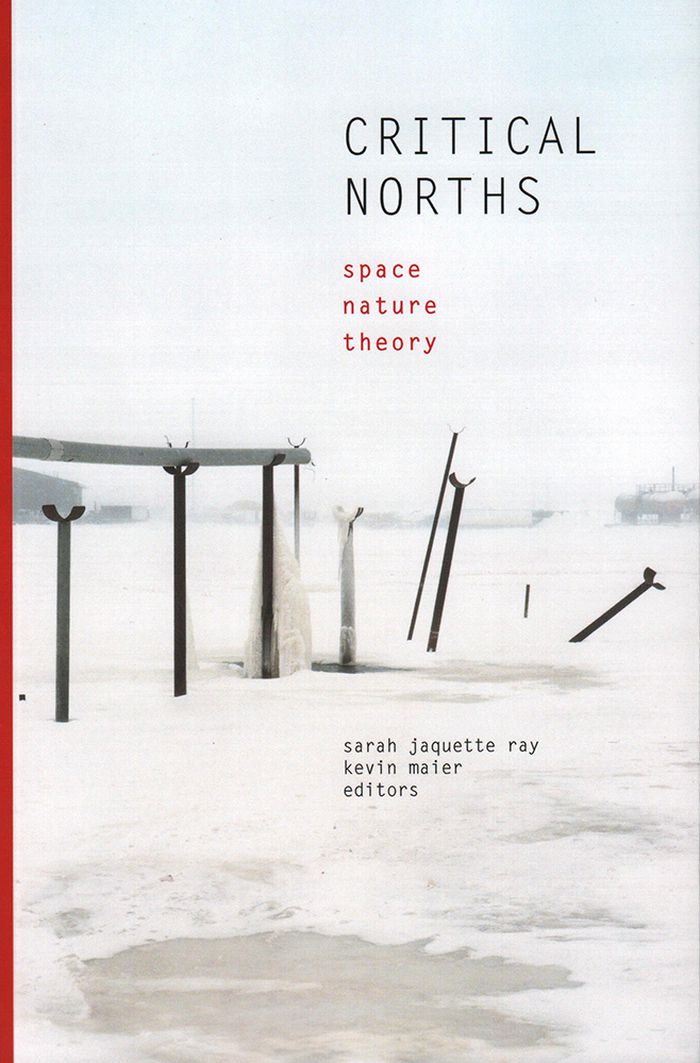
“The North” has long held powerful sway in Western culture. Often seen through contradictions —empty of life yet full of promise, populated by indigenous communities yet ripe for conquest, pristine yet marked by a long human history —the North has moved to the foreground of contemporary life as the most dramatic stage for the reality of climate change. This book brings together scholars from a range of disciplines to ask key questions about the North and how we’ve conceived it—and how conceiving of it in those terms has caused us to fail the region’s human and nonhuman life. Engaging questions of space, place, ingenuity, identity, nature, the environment, justice, narrative, history, and more; it offers a crucial starting point for an essential rethinking of both the idea and the reality of the North.
Critical norths: space, nature, theory
Actions:
Price:
$62.00
(available to order)
Summary:
“The North” has long held powerful sway in Western culture. Often seen through contradictions —empty of life yet full of promise, populated by indigenous communities yet ripe for conquest, pristine yet marked by a long human history —the North has moved to the foreground of contemporary life as the most dramatic stage for the reality of climate change. This book brings together scholars from a range of disciplines to ask key questions about the North and how we’ve conceived it—and how conceiving of it in those terms has caused us to fail the region’s human and nonhuman life. Engaging questions of space, place, ingenuity, identity, nature, the environment, justice, narrative, history, and more; it offers a crucial starting point for an essential rethinking of both the idea and the reality of the North.
Form:
books
books
Publication:
May 2017
May 2017
Subject:
Architectural Theory
Architectural Theory
Form:
books
books
Price:
$36.95
(available to order)
Summary:
The Mill is the second of three projects to engage the resource industries of Vancouver Island (mining, forestry, and fisheries) through contemporary art and writing. This volume responds to forestry: a mobile industry of logging camps that follow the trees; prices that rise and fall; mills that open and close; communities that boom and bust. In The Mill, artworks are(...)
$36.95
(available to order)
Summary:
The Mill is the second of three projects to engage the resource industries of Vancouver Island (mining, forestry, and fisheries) through contemporary art and writing. This volume responds to forestry: a mobile industry of logging camps that follow the trees; prices that rise and fall; mills that open and close; communities that boom and bust. In The Mill, artworks are(...)
Title:
The mill
Actions:
Price:
$36.95
(available to order)
Summary:
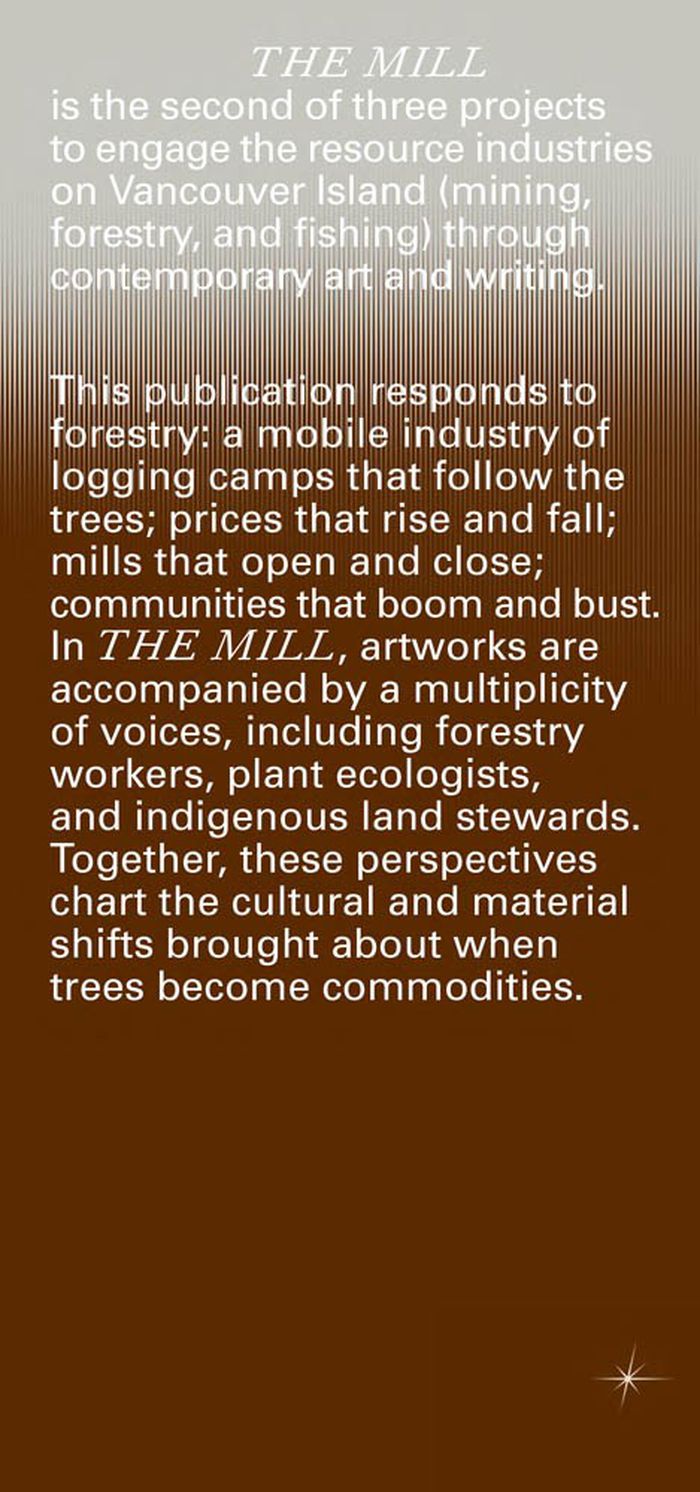
The Mill is the second of three projects to engage the resource industries of Vancouver Island (mining, forestry, and fisheries) through contemporary art and writing. This volume responds to forestry: a mobile industry of logging camps that follow the trees; prices that rise and fall; mills that open and close; communities that boom and bust. In The Mill, artworks are accompanied by a multiplicity of voices, including forestry workers, plant ecologists, and indigenous land stewards. Together, these perspectives chart the cultural and material shifts brought about when trees become commodities. Expanded from two contemporary art exhibitions, Silva Part I: O Horizon and Silva Part II: Booming Grounds, The Mill examines forgotten or under-acknowledged histories, while considering both local sites and forms of cultural expression that surround international forestry practices.
The mill
Actions:
Price:
$36.95
(available to order)
Summary:
The Mill is the second of three projects to engage the resource industries of Vancouver Island (mining, forestry, and fisheries) through contemporary art and writing. This volume responds to forestry: a mobile industry of logging camps that follow the trees; prices that rise and fall; mills that open and close; communities that boom and bust. In The Mill, artworks are accompanied by a multiplicity of voices, including forestry workers, plant ecologists, and indigenous land stewards. Together, these perspectives chart the cultural and material shifts brought about when trees become commodities. Expanded from two contemporary art exhibitions, Silva Part I: O Horizon and Silva Part II: Booming Grounds, The Mill examines forgotten or under-acknowledged histories, while considering both local sites and forms of cultural expression that surround international forestry practices.
Form:
books
books
Publication:
November 2019
November 2019
Subject:
Contemporary Art Monographs
Contemporary Art Monographs
Form:
books
books
Actions:
Price:
$39.50
(available to order)
Summary:
Samuel Mockbee and Coleman Coker have been practicing architecture together since 1986 through means both conventional and unique. The context of their work is the rural American South, images of which run(...)
$39.50
(available to order)
Summary:
Samuel Mockbee and Coleman Coker have been practicing architecture together since 1986 through means both conventional and unique. The context of their work is the rural American South, images of which run(...)
Title:
Mockbee Coker : thought and process
Actions:
Price:
$39.50
(available to order)
Summary:
Samuel Mockbee and Coleman Coker have been practicing architecture together since 1986 through means both conventional and unique. The context of their work is the rural American South, images of which run throughout this monograph. They have created a remarkable and visually appealing collection of projects from indigenous imagery. Primarily residential, their architecture both reflects its vernacular surroundings and enriches its environment by transforming the commonplace into an object of beauty. "Mockbee Coker: Thought and Process" is the first book to be published on their work, bringing together their paintings, writings, and architecture. Projects presented in this monograph include the Barton House, Madison County, Mississippi; the Cook House, Oxford, Mississippi; the Kennedy House, Seaside, Florida; Magee Church of Christ, Magee, Mississippi; Flautt Tractor Shed, Leflore County, Mississippi; and Canton Fire Station No. 3, Canton, Mississippi.
Mockbee Coker : thought and process
Actions:
Price:
$39.50
(available to order)
Summary:
Samuel Mockbee and Coleman Coker have been practicing architecture together since 1986 through means both conventional and unique. The context of their work is the rural American South, images of which run throughout this monograph. They have created a remarkable and visually appealing collection of projects from indigenous imagery. Primarily residential, their architecture both reflects its vernacular surroundings and enriches its environment by transforming the commonplace into an object of beauty. "Mockbee Coker: Thought and Process" is the first book to be published on their work, bringing together their paintings, writings, and architecture. Projects presented in this monograph include the Barton House, Madison County, Mississippi; the Cook House, Oxford, Mississippi; the Kennedy House, Seaside, Florida; Magee Church of Christ, Magee, Mississippi; Flautt Tractor Shed, Leflore County, Mississippi; and Canton Fire Station No. 3, Canton, Mississippi.
Form:
books
books
Publication:
May 1995, New York
May 1995, New York
Subject:
Architecture Monographs
Architecture Monographs
Form:
books
books
Actions:
Price:
$69.95
(available in store)
Summary:
This volume offers a welcome and long-awaited intervention for the field by shining a spotlight on constructions of race and their impact on architecture and theory in Europe and North America and across various global contexts since the eighteenth century. Challenging us to write race back into architectural history, contributors confront how racial thinking has(...)
$69.95
(available in store)
Summary:
This volume offers a welcome and long-awaited intervention for the field by shining a spotlight on constructions of race and their impact on architecture and theory in Europe and North America and across various global contexts since the eighteenth century. Challenging us to write race back into architectural history, contributors confront how racial thinking has(...)
Subject:
Architectural Theory
Architectural Theory
Publication:
July 2020
July 2020
Title:
Race and modern architecture: a critical history from Enlightenment to the present
Actions:
Price:
$69.95
(available in store)
Summary:
This volume offers a welcome and long-awaited intervention for the field by shining a spotlight on constructions of race and their impact on architecture and theory in Europe and North America and across various global contexts since the eighteenth century. Challenging us to write race back into architectural history, contributors confront how racial thinking has intimately shaped some of the key concepts of modern architecture and culture over time, including freedom, revolution, character, national and indigenous style, progress, hybridity, climate, representation, and radicalism. By analyzing how architecture has intersected with histories of slavery, colonialism, and inequality — from eighteenth-century neoclassical governmental buildings to present-day housing projects for immigrants — 'Race and Modern Architecture' challenges, complicates, and revises the standard association of modern architecture with a universal project of emancipation and progress.
Race and modern architecture: a critical history from Enlightenment to the present
Actions:
Price:
$69.95
(available in store)
Summary:
This volume offers a welcome and long-awaited intervention for the field by shining a spotlight on constructions of race and their impact on architecture and theory in Europe and North America and across various global contexts since the eighteenth century. Challenging us to write race back into architectural history, contributors confront how racial thinking has intimately shaped some of the key concepts of modern architecture and culture over time, including freedom, revolution, character, national and indigenous style, progress, hybridity, climate, representation, and radicalism. By analyzing how architecture has intersected with histories of slavery, colonialism, and inequality — from eighteenth-century neoclassical governmental buildings to present-day housing projects for immigrants — 'Race and Modern Architecture' challenges, complicates, and revises the standard association of modern architecture with a universal project of emancipation and progress.
Form:
books
books
Publication:
July 2020
July 2020
Subject:
Architectural Theory
Architectural Theory
Form:
books
books
Actions:
Price:
$39.95
(available in store)
Summary:
The anthology comprises two distinct narrative sections, temporal structures, and points of view: the River and the Forest. The river is a kind of timeline, a sentence, a thread (of water) winding its way through the book, exploring indigenous thought and histories, issues of memory, erasure, rights and cultural practice, as well as the notion of ancestors and activism.(...)
$39.95
(available in store)
Summary:
The anthology comprises two distinct narrative sections, temporal structures, and points of view: the River and the Forest. The river is a kind of timeline, a sentence, a thread (of water) winding its way through the book, exploring indigenous thought and histories, issues of memory, erasure, rights and cultural practice, as well as the notion of ancestors and activism.(...)
Subject:
Environment and environmental theory
Environment and environmental theory
Publication:
February 2022
February 2022
Title:
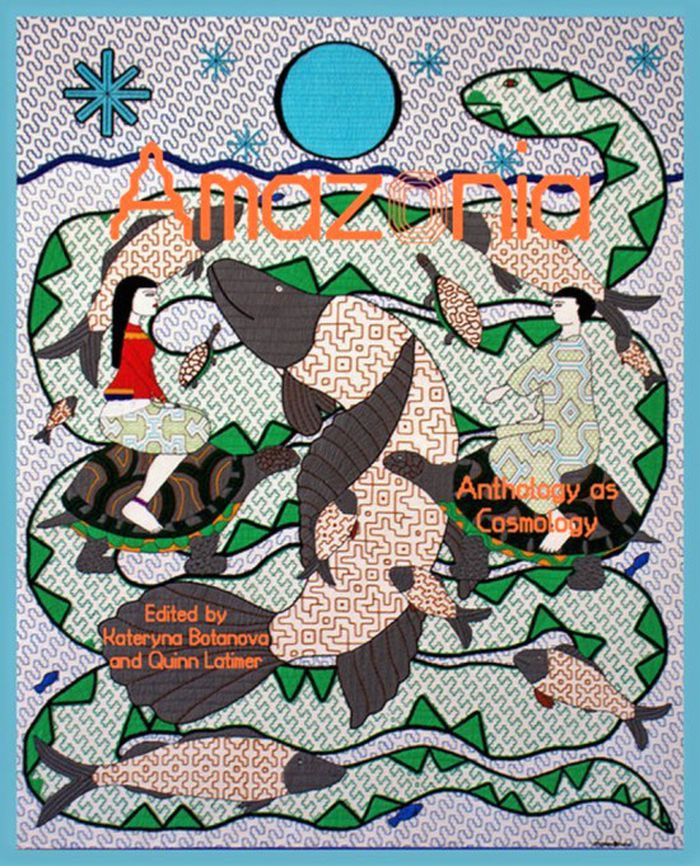
Amazonia: Anthology as cosmology
Actions:
Price:
$39.95
(available in store)
Summary:
The anthology comprises two distinct narrative sections, temporal structures, and points of view: the River and the Forest. The river is a kind of timeline, a sentence, a thread (of water) winding its way through the book, exploring indigenous thought and histories, issues of memory, erasure, rights and cultural practice, as well as the notion of ancestors and activism. The space of the forest, meanwhile, is represented as one of oral testimony and conversation, of voices speaking inside the present, in a kind of circular time in which past and future both impress upon and constitute the current uncertain moment. These voices include recorded conversations with elders, shamans, artists, and thinkers, as well as poetry, oral testimony, and artistic works from Amazonia that use the forest as both ground and cover.
Amazonia: Anthology as cosmology
Actions:
Price:
$39.95
(available in store)
Summary:
The anthology comprises two distinct narrative sections, temporal structures, and points of view: the River and the Forest. The river is a kind of timeline, a sentence, a thread (of water) winding its way through the book, exploring indigenous thought and histories, issues of memory, erasure, rights and cultural practice, as well as the notion of ancestors and activism. The space of the forest, meanwhile, is represented as one of oral testimony and conversation, of voices speaking inside the present, in a kind of circular time in which past and future both impress upon and constitute the current uncertain moment. These voices include recorded conversations with elders, shamans, artists, and thinkers, as well as poetry, oral testimony, and artistic works from Amazonia that use the forest as both ground and cover.
Form:
books
books
Publication:
February 2022
February 2022
Subject:
Environment and environmental theory
Environment and environmental theory


