


947 Results
Form:
journals and magazines
journals and magazines
Actions:
Price:
$52.00
(available in store)
Summary:
Although there were smart ideas and approaches over 50 years ago that sought to do so much better, ecological building has, to this day, been stuck with the dry image of muesli. Anyone who has ever stood in a house made of timber, earth, or straw knows that architecture means far more than "form follows function." Today, natural building materials are driven less by(...)
$52.00
(available in store)
Summary:
Although there were smart ideas and approaches over 50 years ago that sought to do so much better, ecological building has, to this day, been stuck with the dry image of muesli. Anyone who has ever stood in a house made of timber, earth, or straw knows that architecture means far more than "form follows function." Today, natural building materials are driven less by(...)
Title:
Detail 3 2026 : Natural building materials
Actions:
Price:
$52.00
(available in store)
Summary:
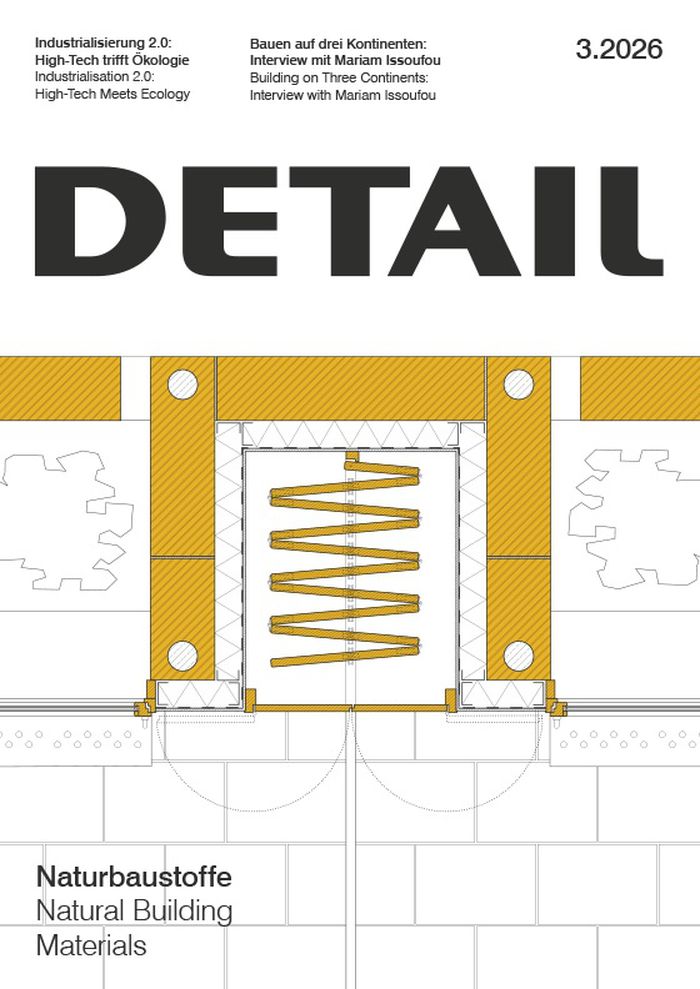
Although there were smart ideas and approaches over 50 years ago that sought to do so much better, ecological building has, to this day, been stuck with the dry image of muesli. Anyone who has ever stood in a house made of timber, earth, or straw knows that architecture means far more than "form follows function." Today, natural building materials are driven less by ideology than by pragmatic choices and a pursuit of longevity. The synthesis of high-tech and "eco" has long been aesthetically convincing too. In this issue, we showcase the beauty and potential of natural stone, hemp bricks, and hempcrete; visit a reconstructed "Strickbau" (traditional timber-log construction) that upends the very definition of "immovable property"; look behind the facades of a 16-storey timber housing block; and examine the timber-earth slabs at Hortus, a key project by Herzog & de Meuron.
Detail 3 2026 : Natural building materials
Actions:
Price:
$52.00
(available in store)
Summary:
Although there were smart ideas and approaches over 50 years ago that sought to do so much better, ecological building has, to this day, been stuck with the dry image of muesli. Anyone who has ever stood in a house made of timber, earth, or straw knows that architecture means far more than "form follows function." Today, natural building materials are driven less by ideology than by pragmatic choices and a pursuit of longevity. The synthesis of high-tech and "eco" has long been aesthetically convincing too. In this issue, we showcase the beauty and potential of natural stone, hemp bricks, and hempcrete; visit a reconstructed "Strickbau" (traditional timber-log construction) that upends the very definition of "immovable property"; look behind the facades of a 16-storey timber housing block; and examine the timber-earth slabs at Hortus, a key project by Herzog & de Meuron.
Form:
journals and magazines
journals and magazines
Publication:
March 2026
March 2026
Subject:
Magazines
Magazines
Form:
journals and magazines
journals and magazines

Actions:
Price:
$36.00
(available to order)
Summary:
Sound is everywhere and plays a crucial role in the experience and perception of public space. Nevertheless, in the reflection about that space and its organization, the visual image usually takes centre stage. Over recent years, however, there seems to have been a sensitization to the auditory aspects of daily life and the public domain. In the visual arts in particular,(...)
$36.00
(available to order)
Summary:
Sound is everywhere and plays a crucial role in the experience and perception of public space. Nevertheless, in the reflection about that space and its organization, the visual image usually takes centre stage. Over recent years, however, there seems to have been a sensitization to the auditory aspects of daily life and the public domain. In the visual arts in particular,(...)
Title:
Open 9 Sound : sound in art and culture
Actions:
Price:
$36.00
(available to order)
Summary:
Sound is everywhere and plays a crucial role in the experience and perception of public space. Nevertheless, in the reflection about that space and its organization, the visual image usually takes centre stage. Over recent years, however, there seems to have been a sensitization to the auditory aspects of daily life and the public domain. In the visual arts in particular, but also in architecture and landscape architecture, people are studying the potential of sound as an element that can lend meaning in relation to social or spatial surroundings. The medium of radio seems to be undergoing a cultural revival, and research into image-sound relationships has become an important subject within the field of 'cultural studies'. What is the role of sound and the sense of hearing in the public domain? An investigation of the topicality and the effects of sound, from the perspectives of cultural philosophy, art theory and media theory, could provide fresh insights into the current conditions of the public domain. With contributions by Jonathan Sterne, Dirk van Weelden, Edwin Carels, Moniek Toebosch, Suzanne van de Ven, Studio Popcorn, RadioDays and many others.
Open 9 Sound : sound in art and culture
Actions:
Price:
$36.00
(available to order)
Summary:
Sound is everywhere and plays a crucial role in the experience and perception of public space. Nevertheless, in the reflection about that space and its organization, the visual image usually takes centre stage. Over recent years, however, there seems to have been a sensitization to the auditory aspects of daily life and the public domain. In the visual arts in particular, but also in architecture and landscape architecture, people are studying the potential of sound as an element that can lend meaning in relation to social or spatial surroundings. The medium of radio seems to be undergoing a cultural revival, and research into image-sound relationships has become an important subject within the field of 'cultural studies'. What is the role of sound and the sense of hearing in the public domain? An investigation of the topicality and the effects of sound, from the perspectives of cultural philosophy, art theory and media theory, could provide fresh insights into the current conditions of the public domain. With contributions by Jonathan Sterne, Dirk van Weelden, Edwin Carels, Moniek Toebosch, Suzanne van de Ven, Studio Popcorn, RadioDays and many others.
Form:
journals and magazines
journals and magazines
Publication:
January 1900
January 1900
Subject:
Magazines
Magazines
Form:
books
books
Price:
$37.95
(available to order)
Summary:
In this first full-length study of a largely forgotten optical device from the eighteenth century, Arnaud Maillet reconfigures our historical understanding of visual experience and meaning in relation to notions of opacity, transparency, and imagination. Many are familiar with the Claude glass as a small black convex mirror used by artists and spectators of landscape to(...)
$37.95
(available to order)
Summary:
In this first full-length study of a largely forgotten optical device from the eighteenth century, Arnaud Maillet reconfigures our historical understanding of visual experience and meaning in relation to notions of opacity, transparency, and imagination. Many are familiar with the Claude glass as a small black convex mirror used by artists and spectators of landscape to(...)
Title:
The Claude glass : use and meaning of the black mirror in Western art
Actions:
Price:
$37.95
(available to order)
Summary:
In this first full-length study of a largely forgotten optical device from the eighteenth century, Arnaud Maillet reconfigures our historical understanding of visual experience and meaning in relation to notions of opacity, transparency, and imagination. Many are familiar with the Claude glass as a small black convex mirror used by artists and spectators of landscape to reflect a view and make tonal values and areas of light and shade visible. In a groundbreaking account, Maillet goes well beyond this particular function of the glass and situates it within a richer archaeology of Western thought, exploring the uncertainties and anxieties about mirrors, reflections, and their potential distortions. He takes us from the magical and occult background of the "black mirror," through a full evaluation of its importance in the age of the picturesque, to its persistence in a range of technological and representational practices, including photography, film, and contemporary art. The Claude Glass is a lasting contribution to the history of Western visual culture.
The Claude glass : use and meaning of the black mirror in Western art
Actions:
Price:
$37.95
(available to order)
Summary:
In this first full-length study of a largely forgotten optical device from the eighteenth century, Arnaud Maillet reconfigures our historical understanding of visual experience and meaning in relation to notions of opacity, transparency, and imagination. Many are familiar with the Claude glass as a small black convex mirror used by artists and spectators of landscape to reflect a view and make tonal values and areas of light and shade visible. In a groundbreaking account, Maillet goes well beyond this particular function of the glass and situates it within a richer archaeology of Western thought, exploring the uncertainties and anxieties about mirrors, reflections, and their potential distortions. He takes us from the magical and occult background of the "black mirror," through a full evaluation of its importance in the age of the picturesque, to its persistence in a range of technological and representational practices, including photography, film, and contemporary art. The Claude Glass is a lasting contribution to the history of Western visual culture.
Form:
books
books
Publication:
October 2004, New York
October 2004, New York
Subject:
Architectural Theory
Architectural Theory
Form:
books
books
Actions:
Price:
$124.00
(available to order)
Summary:
The private single-family house is by far the most popular form of housing, and because of its size, it is a popular project with architects. In this book, 15 international examples are presented, reviewing the most important aspects of construction including the use of wood, steel, brickwork and concrete which have all become established materials for this type of(...)
$124.00
(available to order)
Summary:
The private single-family house is by far the most popular form of housing, and because of its size, it is a popular project with architects. In this book, 15 international examples are presented, reviewing the most important aspects of construction including the use of wood, steel, brickwork and concrete which have all become established materials for this type of(...)
Title:
In detail : single family houses
Actions:
Price:
$124.00
(available to order)
Summary:
The private single-family house is by far the most popular form of housing, and because of its size, it is a popular project with architects. In this book, 15 international examples are presented, reviewing the most important aspects of construction including the use of wood, steel, brickwork and concrete which have all become established materials for this type of building. All plans and details from the base to the roof have been painstakingly researched with the high degree of competence typical of the review Detail and the uniform presentation makes the information immediately accessible, inviting comparison and analysis. The authors provide explanatory introductions to the fundamental aspects of planning, from the design of the floor plans to the realisation, and they set this type of building within the context of the 20th century, pointing towards the potential developments of the single family house. In cooperation with DETAIL, review of architecture and construction detail
In detail : single family houses
Actions:
Price:
$124.00
(available to order)
Summary:
The private single-family house is by far the most popular form of housing, and because of its size, it is a popular project with architects. In this book, 15 international examples are presented, reviewing the most important aspects of construction including the use of wood, steel, brickwork and concrete which have all become established materials for this type of building. All plans and details from the base to the roof have been painstakingly researched with the high degree of competence typical of the review Detail and the uniform presentation makes the information immediately accessible, inviting comparison and analysis. The authors provide explanatory introductions to the fundamental aspects of planning, from the design of the floor plans to the realisation, and they set this type of building within the context of the 20th century, pointing towards the potential developments of the single family house. In cooperation with DETAIL, review of architecture and construction detail
Form:
books
books
Publication:
December 2005, Basel
December 2005, Basel
Subject:
Collective Housing
Collective Housing
Form:
books
books
Title:
Public art : a reader
Public art : a reader
Actions:
Price:
$49.50
(available to order)
Summary:
An indispensable handbook on art in the public sphere with profoundly thoughtful texts by curators, artists, and art historians. Few topics in the visual arts have created such controversy recently as the debate surrounding the significance and potential of public art. In response to this, "Public Art" was published in a bilingual edition and quickly sold out. The book(...)
$49.50
(available to order)
Summary:
An indispensable handbook on art in the public sphere with profoundly thoughtful texts by curators, artists, and art historians. Few topics in the visual arts have created such controversy recently as the debate surrounding the significance and potential of public art. In response to this, "Public Art" was published in a bilingual edition and quickly sold out. The book(...)
Subject:
Contemporary Art Monographs
Contemporary Art Monographs
Publication:
January 2004, Ostfildern-Ruit
January 2004, Ostfildern-Ruit
Title:
Public art : a reader
Actions:
Price:
$49.50
(available to order)
Summary:
An indispensable handbook on art in the public sphere with profoundly thoughtful texts by curators, artists, and art historians. Few topics in the visual arts have created such controversy recently as the debate surrounding the significance and potential of public art. In response to this, "Public Art" was published in a bilingual edition and quickly sold out. The book has now been republished in separate language editions. In this handbook, over fifty authors take a critical look at the subject of public art: the result is a fascinating compendium of opinions and statements, experiences and reports. The wide-ranging material by curators, art historians, and artists is divided into "Art and the City", "Art and Architecture", "Art and History", "Art and Society", "Art and the Exhibition", and "Art and the Public". Contributors include Vito Acconci, Daniel Buren, Dan Graham, Walter Grasskamp, Hans Haacke, Ilya Kabakov, Kasper König, Joseph Kosuth, Florian Matzner, Ulrich Rückriem, Lawrence Weiner among many others.
Public art : a reader
Actions:
Price:
$49.50
(available to order)
Summary:
An indispensable handbook on art in the public sphere with profoundly thoughtful texts by curators, artists, and art historians. Few topics in the visual arts have created such controversy recently as the debate surrounding the significance and potential of public art. In response to this, "Public Art" was published in a bilingual edition and quickly sold out. The book has now been republished in separate language editions. In this handbook, over fifty authors take a critical look at the subject of public art: the result is a fascinating compendium of opinions and statements, experiences and reports. The wide-ranging material by curators, art historians, and artists is divided into "Art and the City", "Art and Architecture", "Art and History", "Art and Society", "Art and the Exhibition", and "Art and the Public". Contributors include Vito Acconci, Daniel Buren, Dan Graham, Walter Grasskamp, Hans Haacke, Ilya Kabakov, Kasper König, Joseph Kosuth, Florian Matzner, Ulrich Rückriem, Lawrence Weiner among many others.
Form:
books
books
Publication:
January 2004, Ostfildern-Ruit
January 2004, Ostfildern-Ruit
Subject:
Contemporary Art Monographs
Contemporary Art Monographs
Form:
books
books
Actions:
Price:
$39.00
(available to order)
Summary:
Text by Slavoj Zizek, Edward Soja, Juliet Flower MacCannell, Neil Smith, Dieter Lesage. In Urban Politics Now, the Rotterdam-based "architect philosophers" Gideon Boie and Matthias Pauwels--otherwise known as The BAVO Bureau for Architectural Theory--issue a challenge to sociologists, social geographers, philosophers, urban planners and architects, asking, "What ails(...)
$39.00
(available to order)
Summary:
Text by Slavoj Zizek, Edward Soja, Juliet Flower MacCannell, Neil Smith, Dieter Lesage. In Urban Politics Now, the Rotterdam-based "architect philosophers" Gideon Boie and Matthias Pauwels--otherwise known as The BAVO Bureau for Architectural Theory--issue a challenge to sociologists, social geographers, philosophers, urban planners and architects, asking, "What ails(...)
Title:
Reflect 06. Urban politics now. Re-imagining democracy in the neoliberal city
Actions:
Price:
$39.00
(available to order)
Summary:
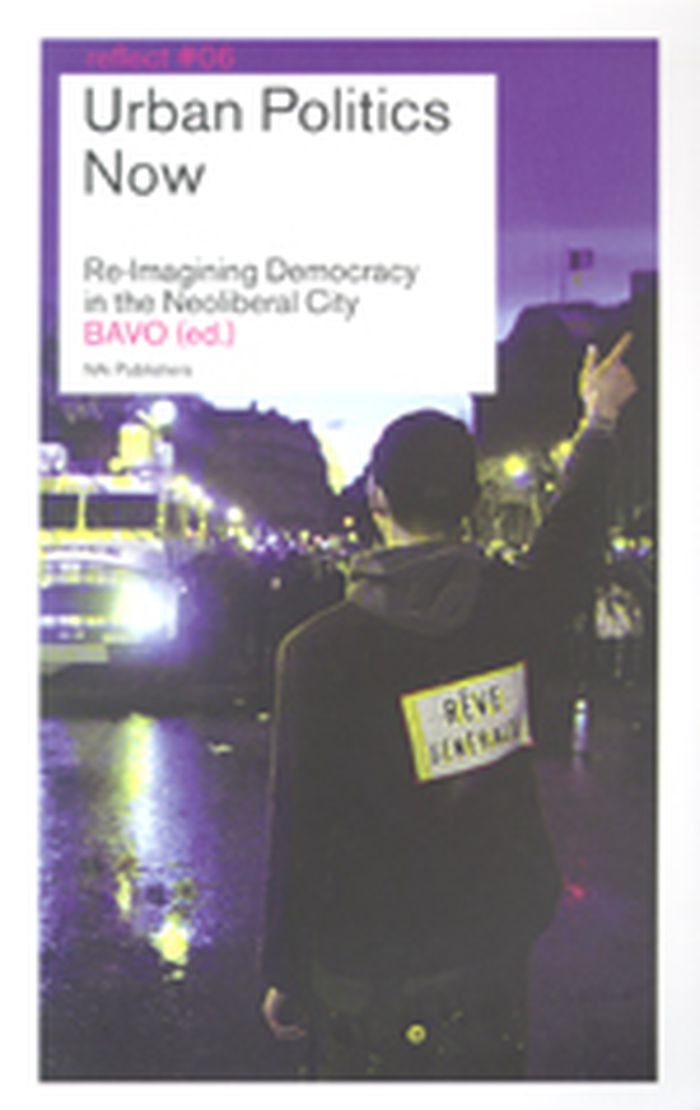
Text by Slavoj Zizek, Edward Soja, Juliet Flower MacCannell, Neil Smith, Dieter Lesage. In Urban Politics Now, the Rotterdam-based "architect philosophers" Gideon Boie and Matthias Pauwels--otherwise known as The BAVO Bureau for Architectural Theory--issue a challenge to sociologists, social geographers, philosophers, urban planners and architects, asking, "What ails contemporary urban politics?" Having stated as part of their mission that, "It is only by conceiving architecture as a symptom that its potential to make a difference in society can be assessed and/or enhanced", BAVO asks here if democratic urban politics are possible in the contemporary climate--with neoliberals and neoconservatives on the rise, environmental concerns on everyones mind and an eruption of increasingly heated cultural differences plaguing every city in the world. If the symptoms of such ills are violence, socioeconomic disparities and hedonistic consumerism, what are the cures? An ability to reconfigure familiar disciplines seems a good start.
Reflect 06. Urban politics now. Re-imagining democracy in the neoliberal city
Actions:
Price:
$39.00
(available to order)
Summary:
Text by Slavoj Zizek, Edward Soja, Juliet Flower MacCannell, Neil Smith, Dieter Lesage. In Urban Politics Now, the Rotterdam-based "architect philosophers" Gideon Boie and Matthias Pauwels--otherwise known as The BAVO Bureau for Architectural Theory--issue a challenge to sociologists, social geographers, philosophers, urban planners and architects, asking, "What ails contemporary urban politics?" Having stated as part of their mission that, "It is only by conceiving architecture as a symptom that its potential to make a difference in society can be assessed and/or enhanced", BAVO asks here if democratic urban politics are possible in the contemporary climate--with neoliberals and neoconservatives on the rise, environmental concerns on everyones mind and an eruption of increasingly heated cultural differences plaguing every city in the world. If the symptoms of such ills are violence, socioeconomic disparities and hedonistic consumerism, what are the cures? An ability to reconfigure familiar disciplines seems a good start.
Form:
books
books
Publication:
March 2008, Rotterdam
March 2008, Rotterdam
Subject:
Urban Theory
Urban Theory
Form:
books
books
Title:
Frauke Dannert: collage
Frauke Dannert: collage
Actions:
Price:
$71.00
(available to order)
Summary:
Artists who create collages appropriate existing images and assemble them in new ways without being bound to a style or a medium. Frauke Dannert (b. Herdecke, 1979; lives and works in Cologne and Düsseldorf) has dedicated herself to this technique since her days as a student in Düsseldorf and London. Over the course of almost a decade, she has built a considerable(...)
$71.00
(available to order)
Summary:
Artists who create collages appropriate existing images and assemble them in new ways without being bound to a style or a medium. Frauke Dannert (b. Herdecke, 1979; lives and works in Cologne and Düsseldorf) has dedicated herself to this technique since her days as a student in Düsseldorf and London. Over the course of almost a decade, she has built a considerable(...)
Title:
Frauke Dannert: collage
Actions:
Price:
$71.00
(available to order)
Summary:
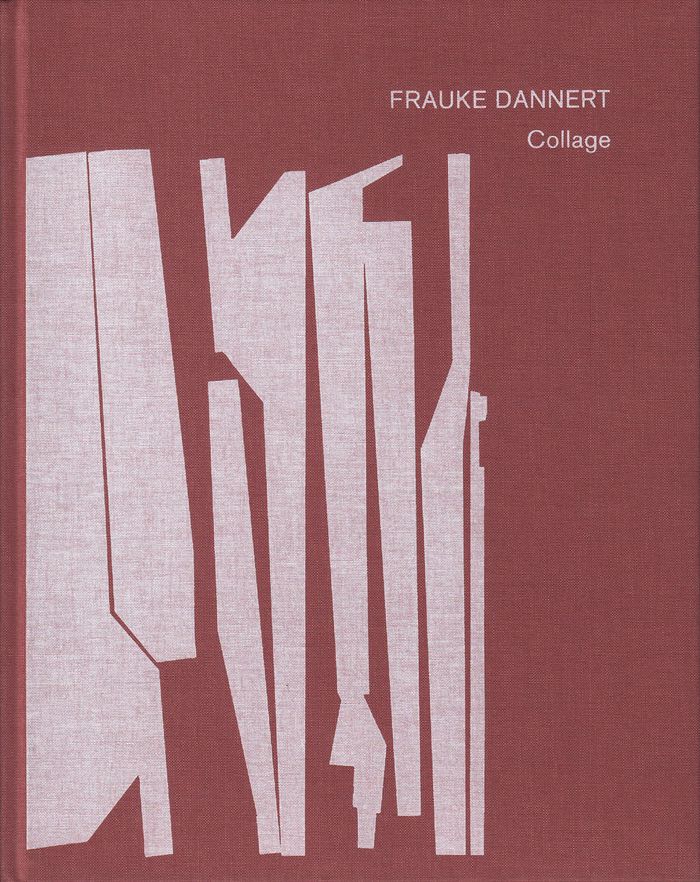
Artists who create collages appropriate existing images and assemble them in new ways without being bound to a style or a medium. Frauke Dannert (b. Herdecke, 1979; lives and works in Cologne and Düsseldorf) has dedicated herself to this technique since her days as a student in Düsseldorf and London. Over the course of almost a decade, she has built a considerable repertoire of forms she now variously applies in works on paper, wall paintings, projections, films, and photographs. Architecture is the basic material and subject of the collages in which she explores questions of perception as well as orientation and recollection. She dismantles structures to examine their sculptural potential. Drawing on a personal archive of found pictures and her own photographs, she selects jutties, spires, ribbon windows, or entire façades, makes multiple photocopies, and alters dimensions and proportions. Out of the resulting elements she then pieces together weightless structures with a futuristic air.
Frauke Dannert: collage
Actions:
Price:
$71.00
(available to order)
Summary:
Artists who create collages appropriate existing images and assemble them in new ways without being bound to a style or a medium. Frauke Dannert (b. Herdecke, 1979; lives and works in Cologne and Düsseldorf) has dedicated herself to this technique since her days as a student in Düsseldorf and London. Over the course of almost a decade, she has built a considerable repertoire of forms she now variously applies in works on paper, wall paintings, projections, films, and photographs. Architecture is the basic material and subject of the collages in which she explores questions of perception as well as orientation and recollection. She dismantles structures to examine their sculptural potential. Drawing on a personal archive of found pictures and her own photographs, she selects jutties, spires, ribbon windows, or entire façades, makes multiple photocopies, and alters dimensions and proportions. Out of the resulting elements she then pieces together weightless structures with a futuristic air.
Form:
books
books
Publication:
April 2016
April 2016
Subject:
Contemporary Art Monographs
Contemporary Art Monographs
Form:
books
books
Actions:
Price:
$40.00
(available in store)
Summary:
Last 2007 La Casa Encendida organised the Sueño de Casa Propia (Dream of a Home of One’s Own) exhibition, curated by María Inés Rodríguez, in which a series of reflections on housing by artists, designers and architects served as the basis for an analysis of how different contexts produce different strategies for resolving the issue of access to housing. Parallel to the(...)
$40.00
(available in store)
Summary:
Last 2007 La Casa Encendida organised the Sueño de Casa Propia (Dream of a Home of One’s Own) exhibition, curated by María Inés Rodríguez, in which a series of reflections on housing by artists, designers and architects served as the basis for an analysis of how different contexts produce different strategies for resolving the issue of access to housing. Parallel to the(...)
Title:
Housing and domestic space in the XXI century
Actions:
Price:
$40.00
(available in store)
Summary:
Last 2007 La Casa Encendida organised the Sueño de Casa Propia (Dream of a Home of One’s Own) exhibition, curated by María Inés Rodríguez, in which a series of reflections on housing by artists, designers and architects served as the basis for an analysis of how different contexts produce different strategies for resolving the issue of access to housing. Parallel to the exhibition, a seminar entitled Housing and Domestic Space in the 21st Century was organised. Coordinated by Juan Herreros, an architect and lecturer at the Madrid University School of Architecture, the seminar brought together a group of intellectuals from both Spain and abroad for discussions on this theme. The ultimate aim of the seminar was to raise awareness about architecture’s potential role in the current and evident transformation of lifestyles. With the collaboration of: Raúl Cárdenas, María Auxiliadora Gálvez, Vicente Guallart, Hans-Walter Müller, Philippe Rahm, Alejandro Aravena, Robert Kronenburg, Colin Davies and Enric Ruiz-Geli.
Housing and domestic space in the XXI century
Actions:
Price:
$40.00
(available in store)
Summary:
Last 2007 La Casa Encendida organised the Sueño de Casa Propia (Dream of a Home of One’s Own) exhibition, curated by María Inés Rodríguez, in which a series of reflections on housing by artists, designers and architects served as the basis for an analysis of how different contexts produce different strategies for resolving the issue of access to housing. Parallel to the exhibition, a seminar entitled Housing and Domestic Space in the 21st Century was organised. Coordinated by Juan Herreros, an architect and lecturer at the Madrid University School of Architecture, the seminar brought together a group of intellectuals from both Spain and abroad for discussions on this theme. The ultimate aim of the seminar was to raise awareness about architecture’s potential role in the current and evident transformation of lifestyles. With the collaboration of: Raúl Cárdenas, María Auxiliadora Gálvez, Vicente Guallart, Hans-Walter Müller, Philippe Rahm, Alejandro Aravena, Robert Kronenburg, Colin Davies and Enric Ruiz-Geli.
Form:
books
books
Publication:
January 2009
January 2009
Subject:
Collective Housing
Collective Housing
Form:
books
books
Actions:
Price:
$39.95
(available to order)
Summary:
Transformative Avant-Garde and Other Writings is a comprehensive collection of writings by the artist Krzysztof Wodiczko spanning from the 1970s to the present day. Known for his large-scale, politically charged video and slide projections onto prominent architectural structures, this publication explores the development of Wodiczko's political, theoretical and social(...)
$39.95
(available to order)
Summary:
Transformative Avant-Garde and Other Writings is a comprehensive collection of writings by the artist Krzysztof Wodiczko spanning from the 1970s to the present day. Known for his large-scale, politically charged video and slide projections onto prominent architectural structures, this publication explores the development of Wodiczko's political, theoretical and social(...)
Title:
Transformative Avant-Garde and Other Writings
Actions:
Price:
$39.95
(available to order)
Summary:
Transformative Avant-Garde and Other Writings is a comprehensive collection of writings by the artist Krzysztof Wodiczko spanning from the 1970s to the present day. Known for his large-scale, politically charged video and slide projections onto prominent architectural structures, this publication explores the development of Wodiczko's political, theoretical and social motivations in relation to his practice. These writings encompass the artist's ongoing critique of public space and his argument for the integral role that art plays in challenging the institutionalised and national narratives inscribed in the architecture of urban environments, and therefore in the democratic process. Working with marginalised city residents since the 1980s as active, critical democratic agents, Wodizcko explores the political and psychological potential of "fearless" or parrhesiastic speaking in the reanimation of our public spaces and monuments.Krzysztof Wodiczko is Professor in Residence at Harvard University and was awarded the Hiroshima Prize in 1998 for his contribution as an artist to world peace.
Transformative Avant-Garde and Other Writings
Actions:
Price:
$39.95
(available to order)
Summary:
Transformative Avant-Garde and Other Writings is a comprehensive collection of writings by the artist Krzysztof Wodiczko spanning from the 1970s to the present day. Known for his large-scale, politically charged video and slide projections onto prominent architectural structures, this publication explores the development of Wodiczko's political, theoretical and social motivations in relation to his practice. These writings encompass the artist's ongoing critique of public space and his argument for the integral role that art plays in challenging the institutionalised and national narratives inscribed in the architecture of urban environments, and therefore in the democratic process. Working with marginalised city residents since the 1980s as active, critical democratic agents, Wodizcko explores the political and psychological potential of "fearless" or parrhesiastic speaking in the reanimation of our public spaces and monuments.Krzysztof Wodiczko is Professor in Residence at Harvard University and was awarded the Hiroshima Prize in 1998 for his contribution as an artist to world peace.
Form:
books
books
Publication:
October 2016
October 2016
Subject:
Art Theory
Art Theory
Form:
books
books
Actions:
Price:
$33.00
(available to order)
Summary:
Caroline Constant examines diverse approaches to landscape in the work of architects practicing in Europe and the United States between 1915 and the mid-1980s. Case studies highlight landscapes in the public realm rather than the private garden, which had been a primary focus of much Western landscape theory and practice during the early decades of the century. These(...)
$33.00
(available to order)
Summary:
Caroline Constant examines diverse approaches to landscape in the work of architects practicing in Europe and the United States between 1915 and the mid-1980s. Case studies highlight landscapes in the public realm rather than the private garden, which had been a primary focus of much Western landscape theory and practice during the early decades of the century. These(...)
Title:
The modern architectural landscape
Actions:
Price:
$33.00
(available to order)
Summary:
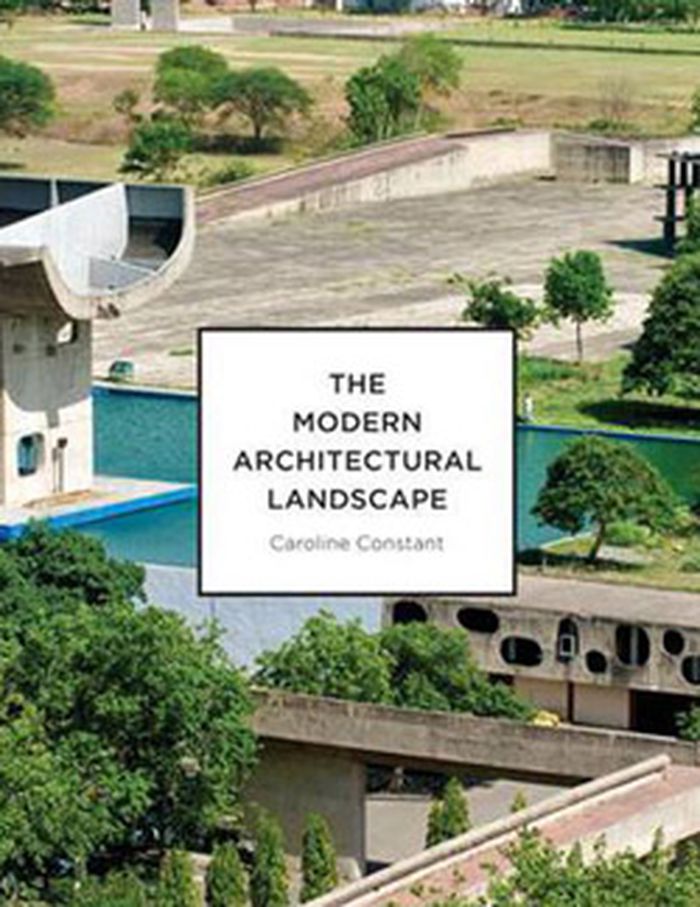
Caroline Constant examines diverse approaches to landscape in the work of architects practicing in Europe and the United States between 1915 and the mid-1980s. Case studies highlight landscapes in the public realm rather than the private garden, which had been a primary focus of much Western landscape theory and practice during the early decades of the century. These landscapes do more than accommodate the functional needs of the evolving mass society in parks, playgrounds, and places of assembly; they give formal expression to Modern Movement social and political ideologies, engaging the symbolic potential of the modern landscape—particularly in its ability to take on new, more democratic forms of social organization. Approaching landscape as an essential component of modern architecture’s constructive endowment of material with social value, The Modern Architectural Landscape focuses on the precise material forms and ideological underpinnings of landscapes conceived by architects, revealing them as salient to the formulation of both modern architecture and the modern landscape.
The modern architectural landscape
Actions:
Price:
$33.00
(available to order)
Summary:
Caroline Constant examines diverse approaches to landscape in the work of architects practicing in Europe and the United States between 1915 and the mid-1980s. Case studies highlight landscapes in the public realm rather than the private garden, which had been a primary focus of much Western landscape theory and practice during the early decades of the century. These landscapes do more than accommodate the functional needs of the evolving mass society in parks, playgrounds, and places of assembly; they give formal expression to Modern Movement social and political ideologies, engaging the symbolic potential of the modern landscape—particularly in its ability to take on new, more democratic forms of social organization. Approaching landscape as an essential component of modern architecture’s constructive endowment of material with social value, The Modern Architectural Landscape focuses on the precise material forms and ideological underpinnings of landscapes conceived by architects, revealing them as salient to the formulation of both modern architecture and the modern landscape.
Form:
books
books
Publication:
April 2012
April 2012
Subject:
Landscape Theory
Landscape Theory


