


9272 Results
Form:
journals and magazines
journals and magazines
Title:
Cabinet 61: Calendars
Cabinet 61: Calendars
Actions:
Price:
$15.00
(available to order)
Summary:
This description of "Cabinet issue 61" was written on 1 September 2015. Which also happens to be 17 Dhu al-Qada 1436. And 17 Elul 5775. And 19 Wu 4713. The passage of time may be immutable, but the innumerable systems (Gregorian, Islamic, Hebrew and Chinese, respectively, above) that have been used to order our experience of Earth’s transit through the solar system(...)
$15.00
(available to order)
Summary:
This description of "Cabinet issue 61" was written on 1 September 2015. Which also happens to be 17 Dhu al-Qada 1436. And 17 Elul 5775. And 19 Wu 4713. The passage of time may be immutable, but the innumerable systems (Gregorian, Islamic, Hebrew and Chinese, respectively, above) that have been used to order our experience of Earth’s transit through the solar system(...)
Title:
Cabinet 61: Calendars
Actions:
Price:
$15.00
(available to order)
Summary:
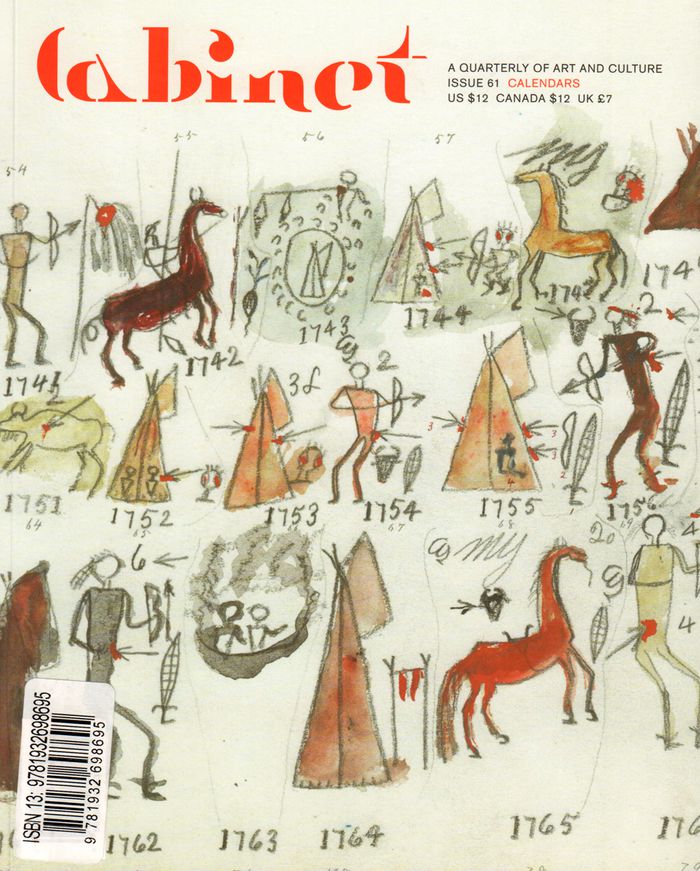
This description of "Cabinet issue 61" was written on 1 September 2015. Which also happens to be 17 Dhu al-Qada 1436. And 17 Elul 5775. And 19 Wu 4713. The passage of time may be immutable, but the innumerable systems (Gregorian, Islamic, Hebrew and Chinese, respectively, above) that have been used to order our experience of Earth’s transit through the solar system suggest that our methods of measuring it are not. With its roots in the Latin kalendae—meaning "the called," the word refers to the practice of Roman priests "calling" the first day of each Roman month—the calendar has long had a profound relationship to the state’s economic, religious and political power. And the common trajectory of calendars’ development during mid- to late antiquity, from empirical, flexible systems to schematic, fixed ones, also has telling parallels with shifts in broader social, scientific and technological attitudes. "Cabinet issue 61", with a special section on "Calendars," includes Sebastian Lunefeld on why so many radical political movements have tried to institute calendar reform; Joanna Dopico on 19th-century French sociologist August Comte’s positivist calendar; and Gordon Landon on why some cultures developed, and continue to use, lunar calendars. Elsewhere in the issue: David Serlin on the long history of battlefield bandages with instructions printed on them; Tom Levin on early "voicemail," messages recorded on vinyl and mailed to loved ones; and Christopher Turner on the rise and fall of scratch-and-sniff films.
Cabinet 61: Calendars
Actions:
Price:
$15.00
(available to order)
Summary:
This description of "Cabinet issue 61" was written on 1 September 2015. Which also happens to be 17 Dhu al-Qada 1436. And 17 Elul 5775. And 19 Wu 4713. The passage of time may be immutable, but the innumerable systems (Gregorian, Islamic, Hebrew and Chinese, respectively, above) that have been used to order our experience of Earth’s transit through the solar system suggest that our methods of measuring it are not. With its roots in the Latin kalendae—meaning "the called," the word refers to the practice of Roman priests "calling" the first day of each Roman month—the calendar has long had a profound relationship to the state’s economic, religious and political power. And the common trajectory of calendars’ development during mid- to late antiquity, from empirical, flexible systems to schematic, fixed ones, also has telling parallels with shifts in broader social, scientific and technological attitudes. "Cabinet issue 61", with a special section on "Calendars," includes Sebastian Lunefeld on why so many radical political movements have tried to institute calendar reform; Joanna Dopico on 19th-century French sociologist August Comte’s positivist calendar; and Gordon Landon on why some cultures developed, and continue to use, lunar calendars. Elsewhere in the issue: David Serlin on the long history of battlefield bandages with instructions printed on them; Tom Levin on early "voicemail," messages recorded on vinyl and mailed to loved ones; and Christopher Turner on the rise and fall of scratch-and-sniff films.
Form:
journals and magazines
journals and magazines
Publication:
February 2017
February 2017
Subject:
Magazines
Magazines
Form:
books
books
Actions:
Price:
$44.95
(available to order)
Summary:
Based on the popular online photo series and now published in print for the first time, ''The debt project'' collects 99 portraits of debt across the United States, featuring people of all different backgrounds and stories, to recontextualize an often stigmatized experience. In 2013, Brittany Powell made the difficult decision to file for bankruptcy for her photography(...)
$44.95
(available to order)
Summary:
Based on the popular online photo series and now published in print for the first time, ''The debt project'' collects 99 portraits of debt across the United States, featuring people of all different backgrounds and stories, to recontextualize an often stigmatized experience. In 2013, Brittany Powell made the difficult decision to file for bankruptcy for her photography(...)
Title:
The debt project: 99 portraits across America
Actions:
Price:
$44.95
(available to order)
Summary:
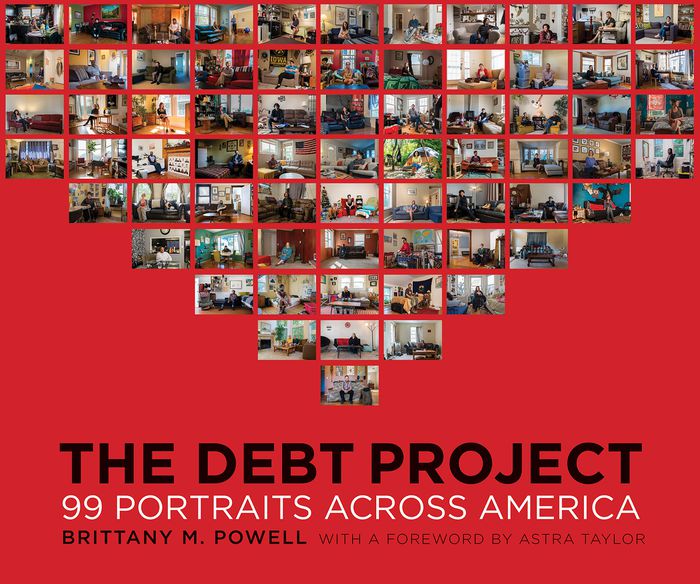
Based on the popular online photo series and now published in print for the first time, ''The debt project'' collects 99 portraits of debt across the United States, featuring people of all different backgrounds and stories, to recontextualize an often stigmatized experience. In 2013, Brittany Powell made the difficult decision to file for bankruptcy for her photography business. In the years following the 2008 economic collapse, she found herself in a significant amount of debt, a position many Americans across the country still share, a common yet isolating and private experience often steeped in shame. Her personal experience, bolstered by the We Are the 99% slogan that came out of the Occupy movement, brought her to start The Debt Project, an exploration of the role debt and finance plays in our personal identity and social structure. This book presents an intimate look into 99 different lives: each shares an arrestingly honest portrait in the person’s home, surrounded by all their belongings, accompanied by a handwritten note of the amount of debt that person is in and the story behind the numbers. ''The debt project,'' with a foreword by writer and filmmaker Astra Taylor plus resources at the back of the book to support people in debt, examines the social and personal hold financial debt has on us and invites others into a private world, while at the same empowering people to share their stories and overcome the shame they may feel.
The debt project: 99 portraits across America
Actions:
Price:
$44.95
(available to order)
Summary:
Based on the popular online photo series and now published in print for the first time, ''The debt project'' collects 99 portraits of debt across the United States, featuring people of all different backgrounds and stories, to recontextualize an often stigmatized experience. In 2013, Brittany Powell made the difficult decision to file for bankruptcy for her photography business. In the years following the 2008 economic collapse, she found herself in a significant amount of debt, a position many Americans across the country still share, a common yet isolating and private experience often steeped in shame. Her personal experience, bolstered by the We Are the 99% slogan that came out of the Occupy movement, brought her to start The Debt Project, an exploration of the role debt and finance plays in our personal identity and social structure. This book presents an intimate look into 99 different lives: each shares an arrestingly honest portrait in the person’s home, surrounded by all their belongings, accompanied by a handwritten note of the amount of debt that person is in and the story behind the numbers. ''The debt project,'' with a foreword by writer and filmmaker Astra Taylor plus resources at the back of the book to support people in debt, examines the social and personal hold financial debt has on us and invites others into a private world, while at the same empowering people to share their stories and overcome the shame they may feel.
Form:
books
books
Publication:
October 2020
October 2020
Subject:
Photography monographs
Photography monographs
Form:
books
books

Price:
$13.95
(available to order)
Summary:
In 1975, when political scientist Benedict Anderson reached Wat Phai Rong Wua, a massive temple complex in rural Thailand conceived by Buddhist monk Luang Phor Khom, he felt he had wandered into a demented Disneyland. One of the world's most bizarre tourist attractions, Wat Phai Rong Wua was designed as a cautionary museum of sorts; its gruesome statues depict violent and(...)
$13.95
(available to order)
Summary:
In 1975, when political scientist Benedict Anderson reached Wat Phai Rong Wua, a massive temple complex in rural Thailand conceived by Buddhist monk Luang Phor Khom, he felt he had wandered into a demented Disneyland. One of the world's most bizarre tourist attractions, Wat Phai Rong Wua was designed as a cautionary museum of sorts; its gruesome statues depict violent and(...)
Title:
The fate of rural hell : ascetism and desire in buddhist Thailand
Actions:
Price:
$13.95
(available to order)
Summary:
In 1975, when political scientist Benedict Anderson reached Wat Phai Rong Wua, a massive temple complex in rural Thailand conceived by Buddhist monk Luang Phor Khom, he felt he had wandered into a demented Disneyland. One of the world's most bizarre tourist attractions, Wat Phai Rong Wua was designed as a cautionary museum of sorts; its gruesome statues depict violent and torturous scenes that showcase what hell may be like. Over the next few decades, Anderson found himself transfixed by this unusual amalgamation of objects, returning several times to see attractions like the largest metal-cast Buddha figure in the world and the Palace of a Hundred Spires. The concrete statuaries and perverse art in Luang Phor Khom's personal museum of hell included, 'side by side, an upright human skeleton in a glass cabinet and a life-size replica of Michelangelo's gigantic nude David, wearing fashionable red underpants from the top of which poked part of a swollen, un-Florentine penis,' alongside dozens of statues of evildoers being ferociously punished in their afterlife. In The Fate of Rural Hell, Anderson unravels the intrigue of this strange setting, trying to discover what compels so many Thai visitors to travel to this popular spectacle and what order, if any, inspired its creation. At the same time, he notes the unexpected effects of the gradual advance of capitalism into the far reaches of rural Asia.
The fate of rural hell : ascetism and desire in buddhist Thailand
Actions:
Price:
$13.95
(available to order)
Summary:
In 1975, when political scientist Benedict Anderson reached Wat Phai Rong Wua, a massive temple complex in rural Thailand conceived by Buddhist monk Luang Phor Khom, he felt he had wandered into a demented Disneyland. One of the world's most bizarre tourist attractions, Wat Phai Rong Wua was designed as a cautionary museum of sorts; its gruesome statues depict violent and torturous scenes that showcase what hell may be like. Over the next few decades, Anderson found himself transfixed by this unusual amalgamation of objects, returning several times to see attractions like the largest metal-cast Buddha figure in the world and the Palace of a Hundred Spires. The concrete statuaries and perverse art in Luang Phor Khom's personal museum of hell included, 'side by side, an upright human skeleton in a glass cabinet and a life-size replica of Michelangelo's gigantic nude David, wearing fashionable red underpants from the top of which poked part of a swollen, un-Florentine penis,' alongside dozens of statues of evildoers being ferociously punished in their afterlife. In The Fate of Rural Hell, Anderson unravels the intrigue of this strange setting, trying to discover what compels so many Thai visitors to travel to this popular spectacle and what order, if any, inspired its creation. At the same time, he notes the unexpected effects of the gradual advance of capitalism into the far reaches of rural Asia.
Form:
books
books
Publication:
April 2012
April 2012
Subject:
Art Theory
Art Theory
Form:
books
books
Actions:
Holdings:
Description:
383 pages : color illustrations ; 16 cm
Description:
383 pages : color illustrations ; 16 cm
Author:
Subject:
Publication:
Roma : Gangemi Editore, 2011.
Roma : Gangemi Editore, 2011.
Title:
Paolo Portoghesi, architect / Francesca Gottardo ; [translation, Erika G. Young].
Actions:
Holdings:
Description:
383 pages : color illustrations ; 16 cm
Paolo Portoghesi, architect / Francesca Gottardo ; [translation, Erika G. Young].
Actions:
Holdings:
Description:
383 pages : color illustrations ; 16 cm
Form:
books
books
Publication:
Roma : Gangemi Editore, 2011.
Roma : Gangemi Editore, 2011.
Author:
Subject:
Form:
books
books
Title:
It's a matter of packaging
It's a matter of packaging
Actions:
Price:
$42.95
(available to order)
Summary:
We may encounter different types of packaging everyday, but how many of us truly appreciate the art of packaging? From food packaging to beverage containers, tissue boxes to CD covers, packaging is hard to be missed in our daily lives. Yet not many of us see packaging as a form of art. Are we taking it for granted because it is around us at all times? Or perhaps we see it(...)
$42.95
(available to order)
Summary:
We may encounter different types of packaging everyday, but how many of us truly appreciate the art of packaging? From food packaging to beverage containers, tissue boxes to CD covers, packaging is hard to be missed in our daily lives. Yet not many of us see packaging as a form of art. Are we taking it for granted because it is around us at all times? Or perhaps we see it(...)
Title:
It's a matter of packaging
Actions:
Price:
$42.95
(available to order)
Summary:
We may encounter different types of packaging everyday, but how many of us truly appreciate the art of packaging? From food packaging to beverage containers, tissue boxes to CD covers, packaging is hard to be missed in our daily lives. Yet not many of us see packaging as a form of art. Are we taking it for granted because it is around us at all times? Or perhaps we see it simply as a marketing tool to sell products? When was the last time you were excited by the packaging of a product? Did it persuade you to buy the product? Packaging is not only a powerful selling tool, it is also an effective method of communication that can stimulate the viewers’ senses. Good packaging can break through the language barrier and can stand the test of time. Like the three previous books in the series, the fourth book ‘It’s a matter of Packaging’ showcases some of the most creative and interesting work produced by designers from all over the world. The book is divided into three main sections: Visual, Touch and Idea, featuring work from almost sixty designers/ companies around the globe. The work ranges from shopping bags to music, food to beverages, books to catalogues, toys to fashion. There are interviews from three established packaging designers, Giannis Kouroudis from K2 design, Sayuri Shoji from Sayuri Studio and Tom Lancaster from Stylo Design. With the diverse collection of work, this book will arouse your senses, inspire your mind and encourage you to appreciate the art of packaging.
It's a matter of packaging
Actions:
Price:
$42.95
(available to order)
Summary:
We may encounter different types of packaging everyday, but how many of us truly appreciate the art of packaging? From food packaging to beverage containers, tissue boxes to CD covers, packaging is hard to be missed in our daily lives. Yet not many of us see packaging as a form of art. Are we taking it for granted because it is around us at all times? Or perhaps we see it simply as a marketing tool to sell products? When was the last time you were excited by the packaging of a product? Did it persuade you to buy the product? Packaging is not only a powerful selling tool, it is also an effective method of communication that can stimulate the viewers’ senses. Good packaging can break through the language barrier and can stand the test of time. Like the three previous books in the series, the fourth book ‘It’s a matter of Packaging’ showcases some of the most creative and interesting work produced by designers from all over the world. The book is divided into three main sections: Visual, Touch and Idea, featuring work from almost sixty designers/ companies around the globe. The work ranges from shopping bags to music, food to beverages, books to catalogues, toys to fashion. There are interviews from three established packaging designers, Giannis Kouroudis from K2 design, Sayuri Shoji from Sayuri Studio and Tom Lancaster from Stylo Design. With the diverse collection of work, this book will arouse your senses, inspire your mind and encourage you to appreciate the art of packaging.
Form:
books
books
Publication:
January 1900, Hong Kong
January 1900, Hong Kong
Subject:
Graphic Design and Typography
Graphic Design and Typography
Form:
books
books
Actions:
Price:
$30.00
(available to order)
Summary:
Amidst city concrete and suburban sprawl, Americans are discovering new ways to reconnect with the natural world. From community gardens in New York's Lower East Side to homeless shelters in California, the search for a more sustainable future has led grassroots groups to a profound reconnection to place and to the natural world. Studies of the health consequences of(...)
$30.00
(available to order)
Summary:
Amidst city concrete and suburban sprawl, Americans are discovering new ways to reconnect with the natural world. From community gardens in New York's Lower East Side to homeless shelters in California, the search for a more sustainable future has led grassroots groups to a profound reconnection to place and to the natural world. Studies of the health consequences of(...)
Title:
Urban place : reconnecting with the natural world
Actions:
Price:
$30.00
(available to order)
Summary:
Amidst city concrete and suburban sprawl, Americans are discovering new ways to reconnect with the natural world. From community gardens in New York's Lower East Side to homeless shelters in California, the search for a more sustainable future has led grassroots groups to a profound reconnection to place and to the natural world. Studies of the health consequences of renewing a connection with nature support the urgency of providing green surroundings as cities expand and the majority of the earth's population lives in urban areas. Medical research results, from groups as diverse as healthy volunteers, surgery patients, and heart attack survivors, suggest that contact with nature may improve health and well-being. Engagement with nearby natural places also provides restoration from mental fatigue and support for more resilient and cooperative behavior. Aspects of stronger community life are fostered by access to nature, suggesting that there are significant social as well as physical and psychological benefits from connection with the natural world. This volume brings together research from anthropology, sociology, public health, psychology, and landscape architecture to highlight how awareness of locale and a meaningful renewal of attachment with the earth are connected to delight in learning about nature as well as to civic action and new forms of community. Community garden coalitions, organic market advocates, and greenspace preservationists resist the power of global forces, enacting visions of a different future. Their creative efforts tell a story of a constructive and dynamic middle ground between private plots and public action, between human health and ecosystem health, between individual attachment and urban sustainability.
Urban place : reconnecting with the natural world
Actions:
Price:
$30.00
(available to order)
Summary:
Amidst city concrete and suburban sprawl, Americans are discovering new ways to reconnect with the natural world. From community gardens in New York's Lower East Side to homeless shelters in California, the search for a more sustainable future has led grassroots groups to a profound reconnection to place and to the natural world. Studies of the health consequences of renewing a connection with nature support the urgency of providing green surroundings as cities expand and the majority of the earth's population lives in urban areas. Medical research results, from groups as diverse as healthy volunteers, surgery patients, and heart attack survivors, suggest that contact with nature may improve health and well-being. Engagement with nearby natural places also provides restoration from mental fatigue and support for more resilient and cooperative behavior. Aspects of stronger community life are fostered by access to nature, suggesting that there are significant social as well as physical and psychological benefits from connection with the natural world. This volume brings together research from anthropology, sociology, public health, psychology, and landscape architecture to highlight how awareness of locale and a meaningful renewal of attachment with the earth are connected to delight in learning about nature as well as to civic action and new forms of community. Community garden coalitions, organic market advocates, and greenspace preservationists resist the power of global forces, enacting visions of a different future. Their creative efforts tell a story of a constructive and dynamic middle ground between private plots and public action, between human health and ecosystem health, between individual attachment and urban sustainability.
Form:
books
books
Publication:
January 1900, Cambridge, London
January 1900, Cambridge, London
Subject:
Urban Theory
Urban Theory
Form:
books
books
Title:
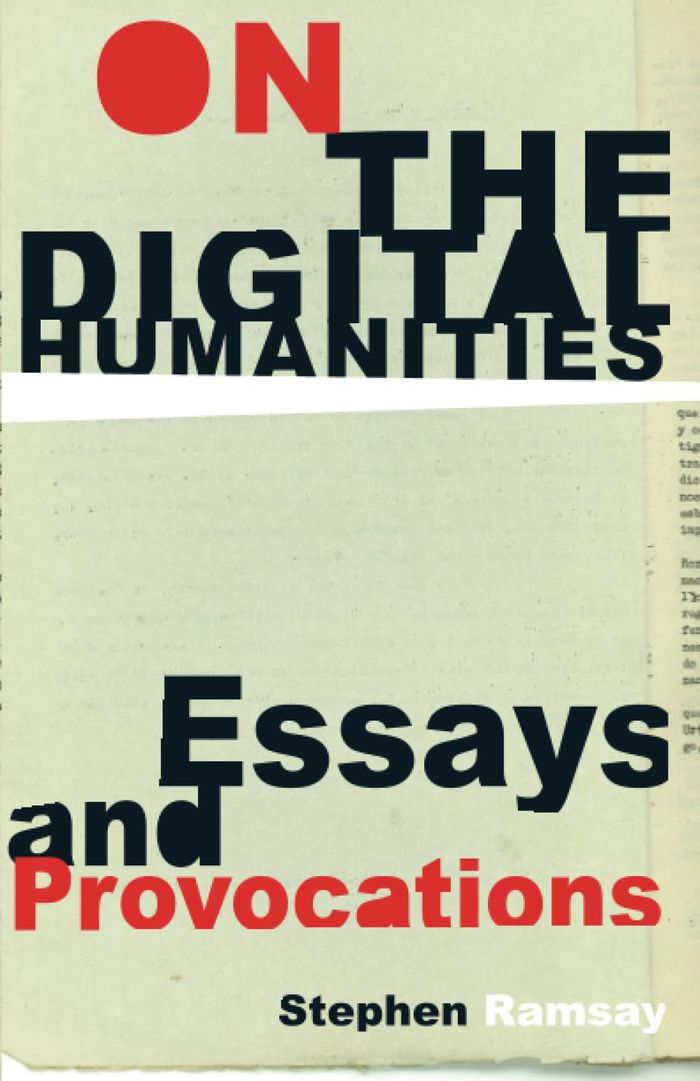
On the digital humanities
On the digital humanities
Actions:
Price:
$35.99
(available to order)
Summary:
Since its inception, the digital humanities has been repeatedly attacked as a threat to the humanities: warnings from literary and cultural theorists of technology overtaking English departments and the mechanization of teaching have peppered popular media. Stephen Ramsay’s ''On the digital humanities'', a collection of essays spanning the personal to the polemic, is a(...)
$35.99
(available to order)
Summary:
Since its inception, the digital humanities has been repeatedly attacked as a threat to the humanities: warnings from literary and cultural theorists of technology overtaking English departments and the mechanization of teaching have peppered popular media. Stephen Ramsay’s ''On the digital humanities'', a collection of essays spanning the personal to the polemic, is a(...)
Title:
On the digital humanities
Actions:
Price:
$35.99
(available to order)
Summary:
Since its inception, the digital humanities has been repeatedly attacked as a threat to the humanities: warnings from literary and cultural theorists of technology overtaking English departments and the mechanization of teaching have peppered popular media. Stephen Ramsay’s ''On the digital humanities'', a collection of essays spanning the personal to the polemic, is a spirited defense of the field of digital humanities. A founding figure in what was once known as 'humanities computing,' Ramsay has a well-known and contentious relationship with what is now called the digital humanities (DH). Here Ramsay collects and updates his most influential and notorious essays and speeches from the past fifteen years, considering DH from an array of practical and theoretical perspectives. The essays pursue a broad variety of themes, including the nature of data and its place in more conventional notions of text and interpretation, the relationship between the constraints of computation and the more open-ended nature of the humanities, the positioning of practical skills and infrastructures in both research and pedagogical contexts, the status of DH as a program for political and social action, and personal reflections on the author’s journey into the field as both a theorist and a technologist. These wide-ranging essays all center around one idea: that DH not forsake its connection to the humanities. While 'digital humanities' may sound like an entirely new form of engagement with the artifacts of human culture, Ramsay argues that the field well reveals what is most essential to humanistic inquiry.
On the digital humanities
Actions:
Price:
$35.99
(available to order)
Summary:
Since its inception, the digital humanities has been repeatedly attacked as a threat to the humanities: warnings from literary and cultural theorists of technology overtaking English departments and the mechanization of teaching have peppered popular media. Stephen Ramsay’s ''On the digital humanities'', a collection of essays spanning the personal to the polemic, is a spirited defense of the field of digital humanities. A founding figure in what was once known as 'humanities computing,' Ramsay has a well-known and contentious relationship with what is now called the digital humanities (DH). Here Ramsay collects and updates his most influential and notorious essays and speeches from the past fifteen years, considering DH from an array of practical and theoretical perspectives. The essays pursue a broad variety of themes, including the nature of data and its place in more conventional notions of text and interpretation, the relationship between the constraints of computation and the more open-ended nature of the humanities, the positioning of practical skills and infrastructures in both research and pedagogical contexts, the status of DH as a program for political and social action, and personal reflections on the author’s journey into the field as both a theorist and a technologist. These wide-ranging essays all center around one idea: that DH not forsake its connection to the humanities. While 'digital humanities' may sound like an entirely new form of engagement with the artifacts of human culture, Ramsay argues that the field well reveals what is most essential to humanistic inquiry.
Form:
books
books
Publication:
August 2023
August 2023
Subject:
Archive, library and the digital
Archive, library and the digital
Form:
books
books

Title:
Laure Tiberghien
Laure Tiberghien
Actions:
Price:
$65.00
(available in store)
Summary:
This book is the first monograph to be published on the artist Laure Tiberghien. It brings together 84 prints, allowing the reader to gain an appreciation of 10 years of work and experimentation. Tiberghien is intrigued by the visual and plastic aspects of photography and enjoys exploring the inventive potential of this medium. She has developed a process avoiding the use(...)
$65.00
(available in store)
Summary:
This book is the first monograph to be published on the artist Laure Tiberghien. It brings together 84 prints, allowing the reader to gain an appreciation of 10 years of work and experimentation. Tiberghien is intrigued by the visual and plastic aspects of photography and enjoys exploring the inventive potential of this medium. She has developed a process avoiding the use(...)
Title:
Laure Tiberghien
Actions:
Price:
$65.00
(available in store)
Summary:
This book is the first monograph to be published on the artist Laure Tiberghien. It brings together 84 prints, allowing the reader to gain an appreciation of 10 years of work and experimentation. Tiberghien is intrigued by the visual and plastic aspects of photography and enjoys exploring the inventive potential of this medium. She has developed a process avoiding the use of the camera that takes its place within a long lineage of experimentation in photography, which has notably given rise to Anna Atkins’ cyanotypes and Man Ray’s Rayographs. Produced through the combination of chemistry, light and time, her ''abstract'' photographs emerge from a masterful approach to composition, whereby colours are organized after having been tested first to obtain the desired tone relationships. The surface, in this case the type of paper selected, also plays a primordial role. For example, Cibachrome results in a ''wet'' effect and very dense colours whereas a metallic paper offers a more electric result. If at times she may leave things open to accident or chance, while giving life to shapes and colours Tiberghien has put in place a procedure, through her constant testing, that although far from mechanical affords her control over the result. All the pieces she produces in this manner are necessarily unique, another feature her art shares with painting. The book’s design, by the studio SP Millot, arrays the text of the essay by Erik Verhagen across its pages, in a way that punctuates the images just as the images propel the text.
Laure Tiberghien
Actions:
Price:
$65.00
(available in store)
Summary:
This book is the first monograph to be published on the artist Laure Tiberghien. It brings together 84 prints, allowing the reader to gain an appreciation of 10 years of work and experimentation. Tiberghien is intrigued by the visual and plastic aspects of photography and enjoys exploring the inventive potential of this medium. She has developed a process avoiding the use of the camera that takes its place within a long lineage of experimentation in photography, which has notably given rise to Anna Atkins’ cyanotypes and Man Ray’s Rayographs. Produced through the combination of chemistry, light and time, her ''abstract'' photographs emerge from a masterful approach to composition, whereby colours are organized after having been tested first to obtain the desired tone relationships. The surface, in this case the type of paper selected, also plays a primordial role. For example, Cibachrome results in a ''wet'' effect and very dense colours whereas a metallic paper offers a more electric result. If at times she may leave things open to accident or chance, while giving life to shapes and colours Tiberghien has put in place a procedure, through her constant testing, that although far from mechanical affords her control over the result. All the pieces she produces in this manner are necessarily unique, another feature her art shares with painting. The book’s design, by the studio SP Millot, arrays the text of the essay by Erik Verhagen across its pages, in a way that punctuates the images just as the images propel the text.
Form:
books
books
Publication:
September 2023
September 2023
Subject:
Photography monographs
Photography monographs
Form:
books
books
Actions:
Price:
$52.50
(available in store)
Summary:
Eating and drinking images may seem like an anomalous notion but, since antiquity, in the European and Mediterranean worlds, people have swallowed down frescoes, icons, engravings, eucharistic hosts stamped with images, heraldic wafers, marzipan figures, and other sculpted dishes. Either specifically made for human consumption or diverted from their original purpose so as(...)
$52.50
(available in store)
Summary:
Eating and drinking images may seem like an anomalous notion but, since antiquity, in the European and Mediterranean worlds, people have swallowed down frescoes, icons, engravings, eucharistic hosts stamped with images, heraldic wafers, marzipan figures, and other sculpted dishes. Either specifically made for human consumption or diverted from their original purpose so as(...)
Title:
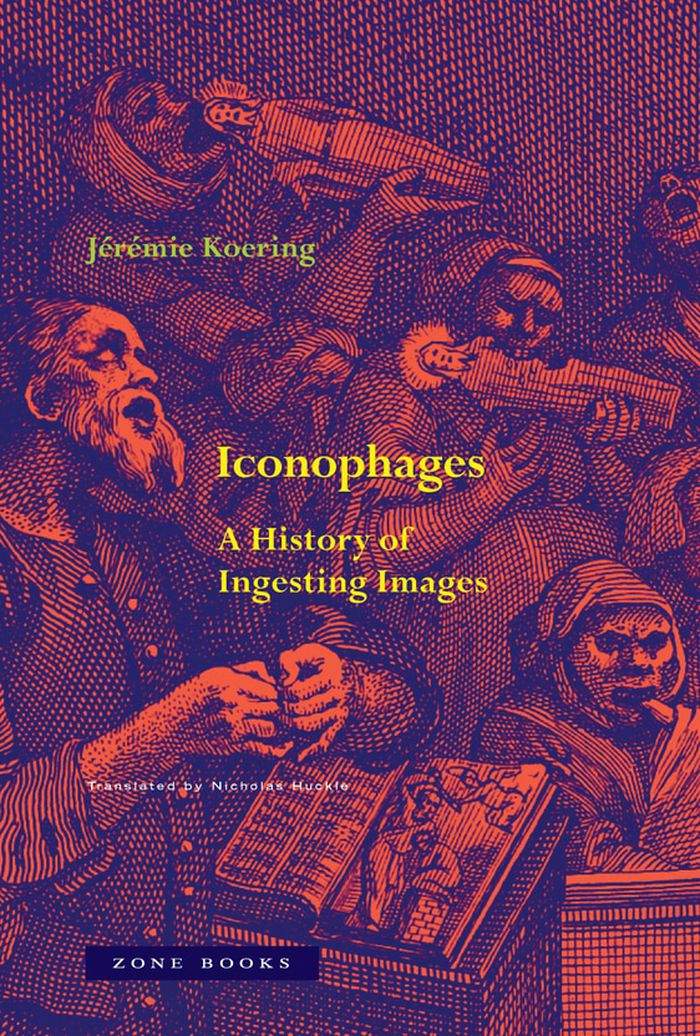
Iconophages: A history of ingesting images
Actions:
Price:
$52.50
(available in store)
Summary:
Eating and drinking images may seem like an anomalous notion but, since antiquity, in the European and Mediterranean worlds, people have swallowed down frescoes, icons, engravings, eucharistic hosts stamped with images, heraldic wafers, marzipan figures, and other sculpted dishes. Either specifically made for human consumption or diverted from their original purpose so as to be ingested, these figured artifacts have been not only gazed upon but also incorporated—taken into the body—as solids or liquids. How can we explain such behavior? Why take an image into one’s own body, devouring it at the risk of destroying it, consuming rather than contemplating it wisely from a distance? What structures of the imagination underlie and justify these desires for incorporation? What are the visual configurations offered up to the mouth, and what are their effects? What therapeutic, religious, symbolic, and social functions can we attribute to these forms of relations with icons? These are a few of the questions raised in this investigation into iconophagy. "Iconophages" aims to retrace, for the first time, the history of iconophagy. Jérémie Koering examines this unexplored facet of the history of images through an interdisciplinary approach that ranges across art history, cultural and material history, anthropology, philosophy, and the history of the body and the senses. He analyzes the human investment, in terms of culture and imagination, at stake in this seemingly paradoxical way of experiencing images. Beyond the hidden knowledge unearthed here, these pages bring to light a new way of understanding images, just as they illuminate the occasionally outlandish relations we maintain with them.
Iconophages: A history of ingesting images
Actions:
Price:
$52.50
(available in store)
Summary:
Eating and drinking images may seem like an anomalous notion but, since antiquity, in the European and Mediterranean worlds, people have swallowed down frescoes, icons, engravings, eucharistic hosts stamped with images, heraldic wafers, marzipan figures, and other sculpted dishes. Either specifically made for human consumption or diverted from their original purpose so as to be ingested, these figured artifacts have been not only gazed upon but also incorporated—taken into the body—as solids or liquids. How can we explain such behavior? Why take an image into one’s own body, devouring it at the risk of destroying it, consuming rather than contemplating it wisely from a distance? What structures of the imagination underlie and justify these desires for incorporation? What are the visual configurations offered up to the mouth, and what are their effects? What therapeutic, religious, symbolic, and social functions can we attribute to these forms of relations with icons? These are a few of the questions raised in this investigation into iconophagy. "Iconophages" aims to retrace, for the first time, the history of iconophagy. Jérémie Koering examines this unexplored facet of the history of images through an interdisciplinary approach that ranges across art history, cultural and material history, anthropology, philosophy, and the history of the body and the senses. He analyzes the human investment, in terms of culture and imagination, at stake in this seemingly paradoxical way of experiencing images. Beyond the hidden knowledge unearthed here, these pages bring to light a new way of understanding images, just as they illuminate the occasionally outlandish relations we maintain with them.
Form:
books
books
Publication:
January 2026
January 2026
Subject:
Art Theory
Art Theory
Form:
books
books

Title:
Vanishing British Columbia
Vanishing British Columbia
Actions:
Price:
$39.95
(available to order)
Summary:
The old buildings and historic places of British Columbia form a kind of “roadside memory,” a tangible link with stories of settlement, change, and abandonment that reflect the great themes of our history. With small towns declining and old rural properties changing, so little of the history of these places has been recorded in museums or archives, and so much of it may(...)
$39.95
(available to order)
Summary:
The old buildings and historic places of British Columbia form a kind of “roadside memory,” a tangible link with stories of settlement, change, and abandonment that reflect the great themes of our history. With small towns declining and old rural properties changing, so little of the history of these places has been recorded in museums or archives, and so much of it may(...)
Subject:
Architecture in Canada
Architecture in Canada
Publication:
October 2005, Vancouver Toronto Seattle
October 2005, Vancouver Toronto Seattle
Title:
Vanishing British Columbia
Actions:
Price:
$39.95
(available to order)
Summary:
The old buildings and historic places of British Columbia form a kind of “roadside memory,” a tangible link with stories of settlement, change, and abandonment that reflect the great themes of our history. With small towns declining and old rural properties changing, so little of the history of these places has been recorded in museums or archives, and so much of it may disappear as families disperse and memories dim. More than a decade ago, Michael Kluckner began painting these dots on his personal map of the province in a watercolour sketchbook. In 1999, after he put a few of the sketches on his website, a network of correspondents emerged that eventually led him to the family letters, photo albums, and memories – all from a disappearing era of the province. Vanishing British Columbia is a record of these places and the stories they tell. It combines engaging and insightful historical commentary with over 160 of the author’s original paintings. It has an exceptional assortment of historic imagery, including old postcards, architectural plans, and photographs. The study of roadside memory demonstrates the visceral connection that people, especially those who are part of the rural-to-urban diaspora of modern times, have for the sites of their family memories. On a grander scale this approach leads to a broader understanding of more abstract historical themes and of the province’s history and culture. It also presents a compelling argument for stewardship of regional history in the face of urbanization and globalization.
Vanishing British Columbia
Actions:
Price:
$39.95
(available to order)
Summary:
The old buildings and historic places of British Columbia form a kind of “roadside memory,” a tangible link with stories of settlement, change, and abandonment that reflect the great themes of our history. With small towns declining and old rural properties changing, so little of the history of these places has been recorded in museums or archives, and so much of it may disappear as families disperse and memories dim. More than a decade ago, Michael Kluckner began painting these dots on his personal map of the province in a watercolour sketchbook. In 1999, after he put a few of the sketches on his website, a network of correspondents emerged that eventually led him to the family letters, photo albums, and memories – all from a disappearing era of the province. Vanishing British Columbia is a record of these places and the stories they tell. It combines engaging and insightful historical commentary with over 160 of the author’s original paintings. It has an exceptional assortment of historic imagery, including old postcards, architectural plans, and photographs. The study of roadside memory demonstrates the visceral connection that people, especially those who are part of the rural-to-urban diaspora of modern times, have for the sites of their family memories. On a grander scale this approach leads to a broader understanding of more abstract historical themes and of the province’s history and culture. It also presents a compelling argument for stewardship of regional history in the face of urbanization and globalization.
Form:
books
books
Publication:
October 2005, Vancouver Toronto Seattle
October 2005, Vancouver Toronto Seattle
Subject:
Architecture in Canada
Architecture in Canada


