


9272 Results
Form:
books
books
Actions:
Price:
$72.95
(available to order)
Summary:
Landforms are a fast-developing art form that enjoy a wide following today, because of their multiple uses and their enveloping beauty. As formal landscapes that often arise from necessity - recycling a coal site for human use or making new use of excess earth - they are a pleasure to walk over and through. In this collection of his recent work, Charles Jencks explains(...)
$72.95
(available to order)
Summary:
Landforms are a fast-developing art form that enjoy a wide following today, because of their multiple uses and their enveloping beauty. As formal landscapes that often arise from necessity - recycling a coal site for human use or making new use of excess earth - they are a pleasure to walk over and through. In this collection of his recent work, Charles Jencks explains(...)
Title:
The universe in the landscape: landforms by Charles Jencks
Actions:
Price:
$72.95
(available to order)
Summary:
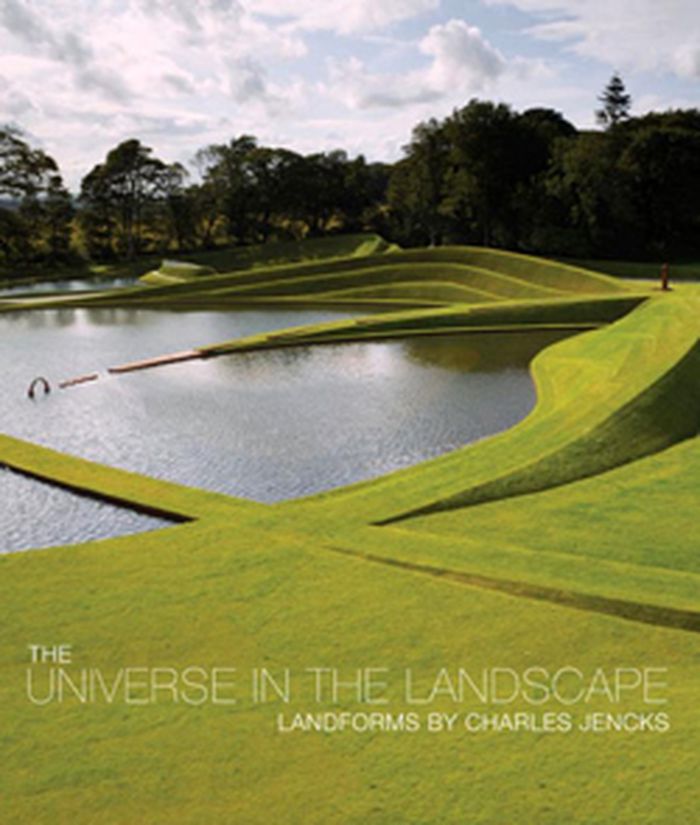
Landforms are a fast-developing art form that enjoy a wide following today, because of their multiple uses and their enveloping beauty. As formal landscapes that often arise from necessity - recycling a coal site for human use or making new use of excess earth - they are a pleasure to walk over and through. In this collection of his recent work, Charles Jencks explains his particular approach to the landform. Like the prehistoric earthworks of Britain that have been an inspiration, such as Stonehenge, his landforms contain cosmic symbolism, and they draw together sculpture, epigraphy, water, gardens, scrap metal and architecture. They address perennial themes - identity, patterns of nature, death and the power of life - but in a contemporary way, based on the insights of science. So Jencks portrays universal aspects of DNA, the spacetime warp of a black hole, the extraordinary way cells divide and unite and some basic forms of life. In this publication Jencks seeks to define a new landscape iconography based on forms and themes that may be eternal, in the sense that they crystallise nature's laws, some of which have been recently discovered. To see a world in a grain of sand was a poetic quest of William Blake and, in a different sense, to find the universe in a ritual landscape was a goal of prehistoric cultures. Jencks allies these spiritual affinities with the view of science that stresses the common patterns that underlie all parts of the cosmos, thus making them like our home planet, and the universe in a landscape.
The universe in the landscape: landforms by Charles Jencks
Actions:
Price:
$72.95
(available to order)
Summary:
Landforms are a fast-developing art form that enjoy a wide following today, because of their multiple uses and their enveloping beauty. As formal landscapes that often arise from necessity - recycling a coal site for human use or making new use of excess earth - they are a pleasure to walk over and through. In this collection of his recent work, Charles Jencks explains his particular approach to the landform. Like the prehistoric earthworks of Britain that have been an inspiration, such as Stonehenge, his landforms contain cosmic symbolism, and they draw together sculpture, epigraphy, water, gardens, scrap metal and architecture. They address perennial themes - identity, patterns of nature, death and the power of life - but in a contemporary way, based on the insights of science. So Jencks portrays universal aspects of DNA, the spacetime warp of a black hole, the extraordinary way cells divide and unite and some basic forms of life. In this publication Jencks seeks to define a new landscape iconography based on forms and themes that may be eternal, in the sense that they crystallise nature's laws, some of which have been recently discovered. To see a world in a grain of sand was a poetic quest of William Blake and, in a different sense, to find the universe in a ritual landscape was a goal of prehistoric cultures. Jencks allies these spiritual affinities with the view of science that stresses the common patterns that underlie all parts of the cosmos, thus making them like our home planet, and the universe in a landscape.
Form:
books
books
Publication:
June 2011
June 2011
Subject:
Landscape Architecture, Monographs
Landscape Architecture, Monographs
Form:
books
books
Title:
The ecstasy of communication
The ecstasy of communication
Actions:
Price:
$16.95
(available to order)
Summary:
First published in France in 1987, The Ecstasy of Communication was Baudrillard’s summarization of his work for a postdoctoral degree at the Sorbonne : a dense, poetically crystalline essay that boiled down two decades of radical, provocative theory into an aphoristically eloquent swan song to twentieth-century alienation. Baudrillard’s quixotic effort to be recognized by(...)
$16.95
(available to order)
Summary:
First published in France in 1987, The Ecstasy of Communication was Baudrillard’s summarization of his work for a postdoctoral degree at the Sorbonne : a dense, poetically crystalline essay that boiled down two decades of radical, provocative theory into an aphoristically eloquent swan song to twentieth-century alienation. Baudrillard’s quixotic effort to be recognized by(...)
Title:
The ecstasy of communication
Actions:
Price:
$16.95
(available to order)
Summary:
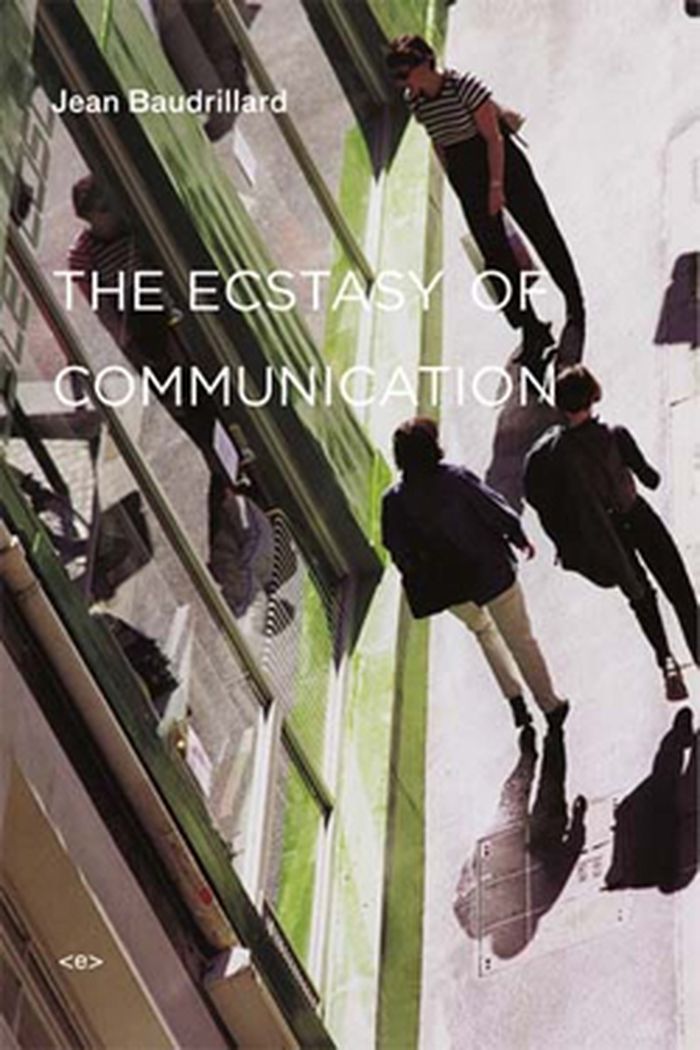
First published in France in 1987, The Ecstasy of Communication was Baudrillard’s summarization of his work for a postdoctoral degree at the Sorbonne : a dense, poetically crystalline essay that boiled down two decades of radical, provocative theory into an aphoristically eloquent swan song to twentieth-century alienation. Baudrillard’s quixotic effort to be recognized by the French intellectual establishment may have been doomed to failure, but this text immediately became a pinnacle to his work, a mid-career assessment that looked both forward and back. By carefully distilling the most radical elements of his previous books, Baudrillard constructed the skeleton key to all of the work that was to come in the second half of his career, and set the scene for what he termed the “obscene”: a world in which alienation has been succeeded by ceaseless communication and information. The Ecstasy of Communication is a decisive, compact description of what it means to be “wired” in our braver-than-brave new world, where sexuality has been superseded by pornography, knowledge by information, hysteria by schizophrenia, subject by object, and violence by terror. The Ecstasy of Communication is an anti-manifesto that confronted and dispensed with such influences as Marshall McLuhan, Guy Debord, and Georges Bataille. It is an essential crib-book, lexicon, and companion piece to any and all of Baudrillard’s books. Twenty-five years after its original publication, it remains not only a prescient portrait of our contemporary condition, but also a dark mirror into which we have not yet dared to look.
The ecstasy of communication
Actions:
Price:
$16.95
(available to order)
Summary:
First published in France in 1987, The Ecstasy of Communication was Baudrillard’s summarization of his work for a postdoctoral degree at the Sorbonne : a dense, poetically crystalline essay that boiled down two decades of radical, provocative theory into an aphoristically eloquent swan song to twentieth-century alienation. Baudrillard’s quixotic effort to be recognized by the French intellectual establishment may have been doomed to failure, but this text immediately became a pinnacle to his work, a mid-career assessment that looked both forward and back. By carefully distilling the most radical elements of his previous books, Baudrillard constructed the skeleton key to all of the work that was to come in the second half of his career, and set the scene for what he termed the “obscene”: a world in which alienation has been succeeded by ceaseless communication and information. The Ecstasy of Communication is a decisive, compact description of what it means to be “wired” in our braver-than-brave new world, where sexuality has been superseded by pornography, knowledge by information, hysteria by schizophrenia, subject by object, and violence by terror. The Ecstasy of Communication is an anti-manifesto that confronted and dispensed with such influences as Marshall McLuhan, Guy Debord, and Georges Bataille. It is an essential crib-book, lexicon, and companion piece to any and all of Baudrillard’s books. Twenty-five years after its original publication, it remains not only a prescient portrait of our contemporary condition, but also a dark mirror into which we have not yet dared to look.
Form:
books
books
Publication:
November 2012
November 2012
Subject:
Critical Theory
Critical Theory
Form:
books
books

Price:
$18.95
(available to order)
Summary:
Why is it so hard to make up our minds? Adam and Eve set the template : do we or don’t we eat the apple? They chose, half-heartedly, and nothing was ever the same again. With this book, Kenneth Weisbrode offers an introduction to the age-old struggle with ambivalence. Ambivalence results from a basic desire to have it both ways. This is only natural - although(...)
$18.95
(available to order)
Summary:
Why is it so hard to make up our minds? Adam and Eve set the template : do we or don’t we eat the apple? They chose, half-heartedly, and nothing was ever the same again. With this book, Kenneth Weisbrode offers an introduction to the age-old struggle with ambivalence. Ambivalence results from a basic desire to have it both ways. This is only natural - although(...)
Title:
On ambivalence : the problems and pleasures of having it both ways
Actions:
Price:
$18.95
(available to order)
Summary:
Why is it so hard to make up our minds? Adam and Eve set the template : do we or don’t we eat the apple? They chose, half-heartedly, and nothing was ever the same again. With this book, Kenneth Weisbrode offers an introduction to the age-old struggle with ambivalence. Ambivalence results from a basic desire to have it both ways. This is only natural - although insisting upon it against all reason often results not in "both" but in the disappointing "neither." Ambivalence has insinuated itself into our culture as a kind of obligatory reflex, or default position, before practically every choice we make. It affects not only individuals; organizations, societies, and cultures can also be ambivalent. How often have we asked the scornful question, "Are we the Hamlet of nations"? How often have we demanded that our leaders appear decisive, judicious, and stalwart? And how eager have we been to censure them when they hesitate or waver? Weisbrode traces the concept of ambivalence, from the Garden of Eden to Freud and beyond. The Obama era, he says, may be America’s own era of ambivalence: neither red nor blue but a multicolored kaleidoscope. Ambivalence, he argues, need not be destructive. We must learn to distinguish it from its symptoms - selfishness, ambiguity, and indecision - and accept that frustration, guilt, and paralysis felt by individuals need not lead automatically to a collective pathology. Drawing upon examples from philosophy, history, literature, and the social sciences, On Ambivalence is a pocket-sized portrait of a complex human condition.
On ambivalence : the problems and pleasures of having it both ways
Actions:
Price:
$18.95
(available to order)
Summary:
Why is it so hard to make up our minds? Adam and Eve set the template : do we or don’t we eat the apple? They chose, half-heartedly, and nothing was ever the same again. With this book, Kenneth Weisbrode offers an introduction to the age-old struggle with ambivalence. Ambivalence results from a basic desire to have it both ways. This is only natural - although insisting upon it against all reason often results not in "both" but in the disappointing "neither." Ambivalence has insinuated itself into our culture as a kind of obligatory reflex, or default position, before practically every choice we make. It affects not only individuals; organizations, societies, and cultures can also be ambivalent. How often have we asked the scornful question, "Are we the Hamlet of nations"? How often have we demanded that our leaders appear decisive, judicious, and stalwart? And how eager have we been to censure them when they hesitate or waver? Weisbrode traces the concept of ambivalence, from the Garden of Eden to Freud and beyond. The Obama era, he says, may be America’s own era of ambivalence: neither red nor blue but a multicolored kaleidoscope. Ambivalence, he argues, need not be destructive. We must learn to distinguish it from its symptoms - selfishness, ambiguity, and indecision - and accept that frustration, guilt, and paralysis felt by individuals need not lead automatically to a collective pathology. Drawing upon examples from philosophy, history, literature, and the social sciences, On Ambivalence is a pocket-sized portrait of a complex human condition.
Form:
books
books
Publication:
January 2012
January 2012
Subject:
Critical Theory
Critical Theory
Form:
books
books
Price:
$136.95
(available to order)
Summary:
The overall design process of ‘Orientation and Identity’ discusses 18 new direction graphics systems, from analysis to their everyday use. The selection concentrates on information design from all of Europe. The broad range of projects isn’t the only new aspect. The comprehensive exploration of these projects as well as the focus on the current discourse on orientation(...)
$136.95
(available to order)
Summary:
The overall design process of ‘Orientation and Identity’ discusses 18 new direction graphics systems, from analysis to their everyday use. The selection concentrates on information design from all of Europe. The broad range of projects isn’t the only new aspect. The comprehensive exploration of these projects as well as the focus on the current discourse on orientation(...)
Title:
Orientation & identity portraits of international way finding systems
Actions:
Price:
$136.95
(available to order)
Summary:
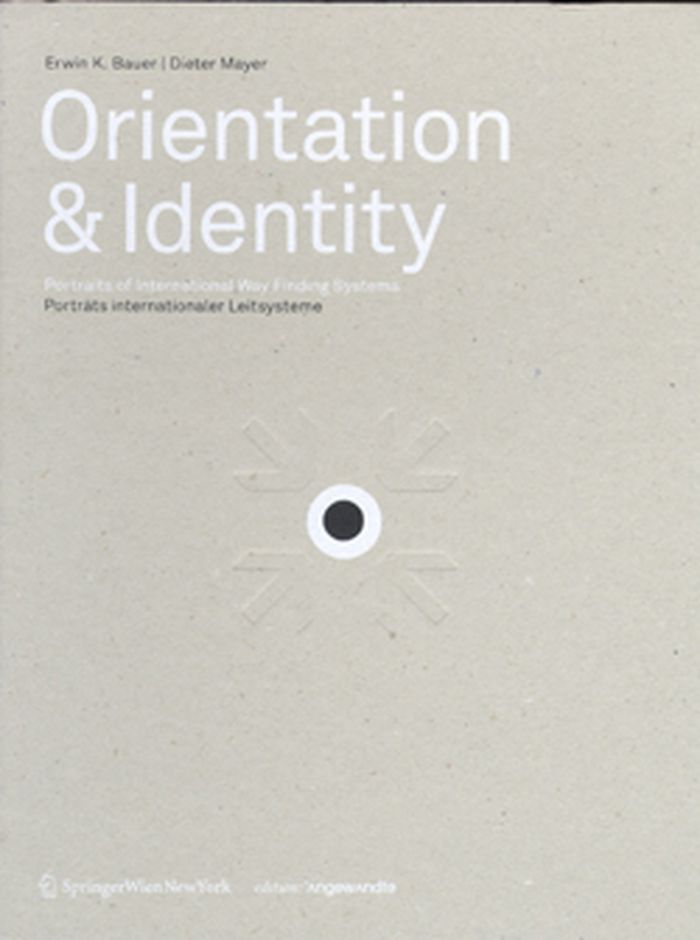
The overall design process of ‘Orientation and Identity’ discusses 18 new direction graphics systems, from analysis to their everyday use. The selection concentrates on information design from all of Europe. The broad range of projects isn’t the only new aspect. The comprehensive exploration of these projects as well as the focus on the current discourse on orientation and interdisciplinary work between visual and spatial design is another innovative aspect. Each project was photographed individually and features detailed project information on the symbols, typography, etc. Interviews with designers give the reader an exciting glimpse behind the scenes.
Orientation & identity portraits of international way finding systems
Actions:
Price:
$136.95
(available to order)
Summary:
The overall design process of ‘Orientation and Identity’ discusses 18 new direction graphics systems, from analysis to their everyday use. The selection concentrates on information design from all of Europe. The broad range of projects isn’t the only new aspect. The comprehensive exploration of these projects as well as the focus on the current discourse on orientation and interdisciplinary work between visual and spatial design is another innovative aspect. Each project was photographed individually and features detailed project information on the symbols, typography, etc. Interviews with designers give the reader an exciting glimpse behind the scenes.
Form:
books
books
Publication:
November 2008, New York
November 2008, New York
Subject:
Signage
Signage
Form:
books
books
Actions:
Price:
$38.95
(available in store)
Summary:
When Ursula K. Le Guin started writing a new story, she would begin by drawing a map. "The Word for World" presents a selection of these images by the celebrated author, many of which have never been published before, to consider how her imaginary worlds enable us to re-envision our own. Le Guin’s maps offer journeys of consciousness beyond conventional cartography,(...)
$38.95
(available in store)
Summary:
When Ursula K. Le Guin started writing a new story, she would begin by drawing a map. "The Word for World" presents a selection of these images by the celebrated author, many of which have never been published before, to consider how her imaginary worlds enable us to re-envision our own. Le Guin’s maps offer journeys of consciousness beyond conventional cartography,(...)
Title:
The word for world: The maps of Ursula K. Leguin
Actions:
Price:
$38.95
(available in store)
Summary:
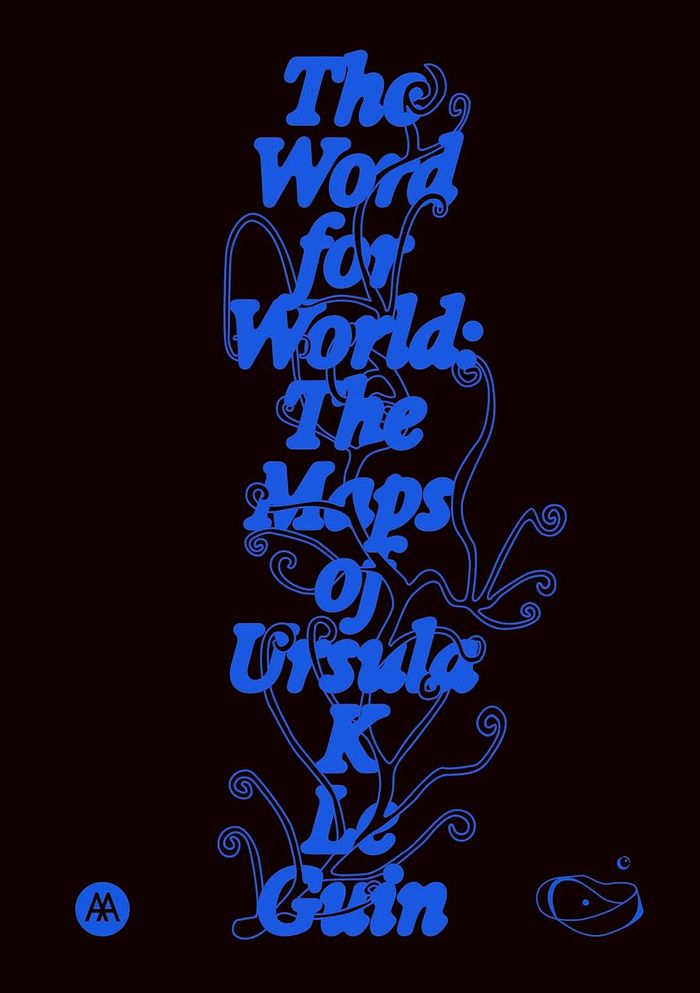
When Ursula K. Le Guin started writing a new story, she would begin by drawing a map. "The Word for World" presents a selection of these images by the celebrated author, many of which have never been published before, to consider how her imaginary worlds enable us to re-envision our own. Le Guin’s maps offer journeys of consciousness beyond conventional cartography, from the Rorschach-like archipelagos of Earthsea to the talismanic maps of "Always Coming Home." Rather than remaining within known terrain, they open up paradigms of knowledge, exemplified by the map’s edges and how a map is read, made and re-made, together. "The Word for World" brings her maps together with poems, stories, interviews, recipes and essays by contributors from a variety of perspectives to enquire into the relationship between worlds and how they are represented and imagined.
The word for world: The maps of Ursula K. Leguin
Actions:
Price:
$38.95
(available in store)
Summary:
When Ursula K. Le Guin started writing a new story, she would begin by drawing a map. "The Word for World" presents a selection of these images by the celebrated author, many of which have never been published before, to consider how her imaginary worlds enable us to re-envision our own. Le Guin’s maps offer journeys of consciousness beyond conventional cartography, from the Rorschach-like archipelagos of Earthsea to the talismanic maps of "Always Coming Home." Rather than remaining within known terrain, they open up paradigms of knowledge, exemplified by the map’s edges and how a map is read, made and re-made, together. "The Word for World" brings her maps together with poems, stories, interviews, recipes and essays by contributors from a variety of perspectives to enquire into the relationship between worlds and how they are represented and imagined.
Form:
books
books
Publication:
December 2025
December 2025
Subject:
Architectural Plans and Cartography
Architectural Plans and Cartography
Form:
books
books
Actions:
Price:
$54.95
(available to order)
Summary:
Contemporary Austrian architecture has received widespread international recognition over the last few decades. But is there really a specifically Austrian architecture? Six critics, including Walter Chramosta, Bart Lootsma and Ute Woltron present a personal selection of recent projects, mostly small buildings, in an attempt to identify typical regional qualities.
$54.95
(available to order)
Summary:
Contemporary Austrian architecture has received widespread international recognition over the last few decades. But is there really a specifically Austrian architecture? Six critics, including Walter Chramosta, Bart Lootsma and Ute Woltron present a personal selection of recent projects, mostly small buildings, in an attempt to identify typical regional qualities.
Subject:
Architecture since 1900, Europe
Architecture since 1900, Europe
Publication:
January 1900, Brakel
January 1900, Brakel
Title:
Just! architecture from Austria, critic's choice
Actions:
Price:
$54.95
(available to order)
Summary:
Contemporary Austrian architecture has received widespread international recognition over the last few decades. But is there really a specifically Austrian architecture? Six critics, including Walter Chramosta, Bart Lootsma and Ute Woltron present a personal selection of recent projects, mostly small buildings, in an attempt to identify typical regional qualities.
Just! architecture from Austria, critic's choice
Actions:
Price:
$54.95
(available to order)
Summary:
Contemporary Austrian architecture has received widespread international recognition over the last few decades. But is there really a specifically Austrian architecture? Six critics, including Walter Chramosta, Bart Lootsma and Ute Woltron present a personal selection of recent projects, mostly small buildings, in an attempt to identify typical regional qualities.
Form:
books
books
Publication:
January 1900, Brakel
January 1900, Brakel
Subject:
Architecture since 1900, Europe
Architecture since 1900, Europe
Form:
journals and magazines
journals and magazines
Actions:
Price:
$38.00
(available to order)
Summary:
At a moment when the word “design” has come to refer to everything and thus nothing, this issue examines the hidden mechanics and visible output of design practice in order to track the shifting role of designers in society and to gauge the capacity of designers to effect change in a world of mounting crises. The issue’s title, ''Instruments of Service'', carries a(...)
$38.00
(available to order)
Summary:
At a moment when the word “design” has come to refer to everything and thus nothing, this issue examines the hidden mechanics and visible output of design practice in order to track the shifting role of designers in society and to gauge the capacity of designers to effect change in a world of mounting crises. The issue’s title, ''Instruments of Service'', carries a(...)
Title:
Harvard Design Magazine no. 52 : Instruments of service
Actions:
Price:
$38.00
(available to order)
Summary:
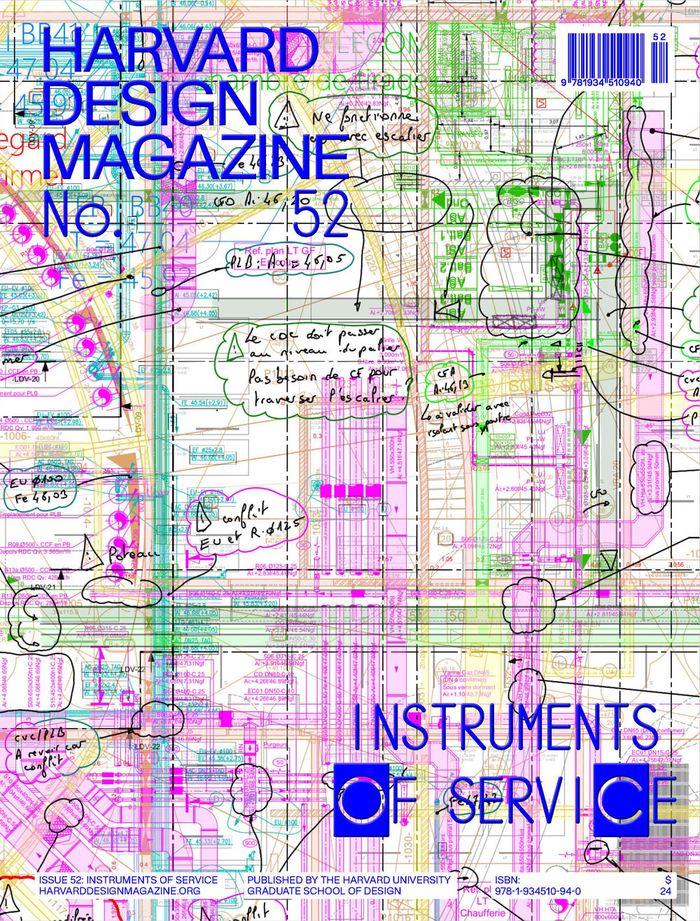
At a moment when the word “design” has come to refer to everything and thus nothing, this issue examines the hidden mechanics and visible output of design practice in order to track the shifting role of designers in society and to gauge the capacity of designers to effect change in a world of mounting crises. The issue’s title, ''Instruments of Service'', carries a double meaning. As defined in standard American Institute of Architects contracts, “Instruments of Service are representations, in any medium of expression now known or later developed, of the tangible and intangible creative work performed by the Architect and the Architect’s consultants under their respective professional services agreements. Instruments of Service may include, without limitation, studies, surveys, models, sketches, drawings, specifications, and other similar materials.” Instruments of service are the instruction manuals that architects—and other designers—make so that others can make something. They define the architect’s relationships with labor, construction, clients, and society. And these relationships—along with the agency of architectural practice—are changing as a growing number of external pressures force instruments of service to change. Architects and designers can also be seen as instruments of service to society, responsible to a continually shifting set of values. At a fundamental level, the designer’s job is to imagine and articulate a better future. In a time of crisis and competing value systems—market returns, cultural relevance, environmental response, social equity, automation—the role of the designer in society is ever more important and increasingly accountable to divergent interests that call into question the raison d’être of design practice itself.
Harvard Design Magazine no. 52 : Instruments of service
Actions:
Price:
$38.00
(available to order)
Summary:
At a moment when the word “design” has come to refer to everything and thus nothing, this issue examines the hidden mechanics and visible output of design practice in order to track the shifting role of designers in society and to gauge the capacity of designers to effect change in a world of mounting crises. The issue’s title, ''Instruments of Service'', carries a double meaning. As defined in standard American Institute of Architects contracts, “Instruments of Service are representations, in any medium of expression now known or later developed, of the tangible and intangible creative work performed by the Architect and the Architect’s consultants under their respective professional services agreements. Instruments of Service may include, without limitation, studies, surveys, models, sketches, drawings, specifications, and other similar materials.” Instruments of service are the instruction manuals that architects—and other designers—make so that others can make something. They define the architect’s relationships with labor, construction, clients, and society. And these relationships—along with the agency of architectural practice—are changing as a growing number of external pressures force instruments of service to change. Architects and designers can also be seen as instruments of service to society, responsible to a continually shifting set of values. At a fundamental level, the designer’s job is to imagine and articulate a better future. In a time of crisis and competing value systems—market returns, cultural relevance, environmental response, social equity, automation—the role of the designer in society is ever more important and increasingly accountable to divergent interests that call into question the raison d’être of design practice itself.
Form:
journals and magazines
journals and magazines
Publication:
February 2025
February 2025
Subject:
Magazines
Magazines
Form:
books
books

Actions:
Price:
$39.95
(available to order)
Summary:
As we spend more and more of our time staring at the screens of movies, televisions, computers, and handheld devices--"windows" full of moving images, texts, and icons--how the world is framed has become as important as what is in the frame. In The Virtual Window, Anne Friedberg examines the window as metaphor, as architectural component, and as an opening to the(...)
$39.95
(available to order)
Summary:
As we spend more and more of our time staring at the screens of movies, televisions, computers, and handheld devices--"windows" full of moving images, texts, and icons--how the world is framed has become as important as what is in the frame. In The Virtual Window, Anne Friedberg examines the window as metaphor, as architectural component, and as an opening to the(...)
Title:
The virtual window : from Alberti to Microsoft
Actions:
Price:
$39.95
(available to order)
Summary:
As we spend more and more of our time staring at the screens of movies, televisions, computers, and handheld devices--"windows" full of moving images, texts, and icons--how the world is framed has become as important as what is in the frame. In The Virtual Window, Anne Friedberg examines the window as metaphor, as architectural component, and as an opening to the dematerialized reality we see on the screen. In De pictura (1435), Leon Battista Alberti famously instructed painters to consider the frame of the painting as an open window. Taking Alberti's metaphor as her starting point, Friedberg tracks shifts in the perspectival paradigm as she gives us histories of the architectural window, developments in glass and transparency, and the emerging apparatuses of photography, cinema, television, and digital imaging. Single-point perspective--Alberti's metaphorical window--has long been challenged by modern painting, modern architecture, and moving-image technologies. And yet, notes Friedberg, for most of the twentieth century the dominant form of the moving image was a single image in a single frame. The fractured modernism exemplified by cubist painting, for example, remained largely confined to experimental, avant-garde work. On the computer screen, however, where multiple "windows" coexist and overlap, perspective may have met its end. In this wide-ranging book, Friedberg considers such topics as the framed view of the camera obscura, Le Corbusier's mandates for the architectural window, Eisenstein's opinions on the shape of the movie screen, and the multiple images and nested windows commonly displayed on screens today. The Virtual Window proposes a new logic of visuality, framed and virtual: an architecture not only of space but of time.
The virtual window : from Alberti to Microsoft
Actions:
Price:
$39.95
(available to order)
Summary:
As we spend more and more of our time staring at the screens of movies, televisions, computers, and handheld devices--"windows" full of moving images, texts, and icons--how the world is framed has become as important as what is in the frame. In The Virtual Window, Anne Friedberg examines the window as metaphor, as architectural component, and as an opening to the dematerialized reality we see on the screen. In De pictura (1435), Leon Battista Alberti famously instructed painters to consider the frame of the painting as an open window. Taking Alberti's metaphor as her starting point, Friedberg tracks shifts in the perspectival paradigm as she gives us histories of the architectural window, developments in glass and transparency, and the emerging apparatuses of photography, cinema, television, and digital imaging. Single-point perspective--Alberti's metaphorical window--has long been challenged by modern painting, modern architecture, and moving-image technologies. And yet, notes Friedberg, for most of the twentieth century the dominant form of the moving image was a single image in a single frame. The fractured modernism exemplified by cubist painting, for example, remained largely confined to experimental, avant-garde work. On the computer screen, however, where multiple "windows" coexist and overlap, perspective may have met its end. In this wide-ranging book, Friedberg considers such topics as the framed view of the camera obscura, Le Corbusier's mandates for the architectural window, Eisenstein's opinions on the shape of the movie screen, and the multiple images and nested windows commonly displayed on screens today. The Virtual Window proposes a new logic of visuality, framed and virtual: an architecture not only of space but of time.
Form:
books
books
Publication:
January 2006, Cambridge
January 2006, Cambridge
Subject:
Architectural Theory
Architectural Theory
Form:
books
books
Price:
$72.00
(available to order)
Summary:
"First photographs" is an extraordinary view into the origins of photography. This monograph includes many hitherto unpublished images of landscapes, architectural studies, and portraits from Talbot’s personal archive and selections from his detailed research notebooks made during the 1830s and 1840s and currently housed at Lacock Abbey in England. A gentleman and an(...)
$72.00
(available to order)
Summary:
"First photographs" is an extraordinary view into the origins of photography. This monograph includes many hitherto unpublished images of landscapes, architectural studies, and portraits from Talbot’s personal archive and selections from his detailed research notebooks made during the 1830s and 1840s and currently housed at Lacock Abbey in England. A gentleman and an(...)
Subject:
Photography monographs
Photography monographs
Publication:
October 2002, New York
October 2002, New York
Title:
First photographs : William Henry Fox Talbot and the birth of photography
Actions:
Price:
$72.00
(available to order)
Summary:
"First photographs" is an extraordinary view into the origins of photography. This monograph includes many hitherto unpublished images of landscapes, architectural studies, and portraits from Talbot’s personal archive and selections from his detailed research notebooks made during the 1830s and 1840s and currently housed at Lacock Abbey in England. A gentleman and an intellectual, Talbot was a great student of the Arts and Sciences and kept detailed notes of his activities and experiments. He discovered the negative/positive paper process which made multiple reproductions of a single image possible, and which distinguished it from its contemporary, the one-of-a-kind daguerreotype. Talbot first announced his invention to the public in 1839 in his paper “An account of the art of photogenic drawing or the process by which natural objects may be made to delineate themselves without the aid of the artist’s pencil”. The work he did during this time established in principle and in practice the foundation of modern photography—the basis of the process that is still used today. In addition to Talbot’s technological contributions, his photographs represent exceptional artistic achievement. "First photographs" includes a significant text by Michael Gray, who provides a comprehensive essay, biography, and timeline of Talbot’s life and revolutionary work. Arthur Ollman, gives an in-depth analysis of the aesthetic and social significance of Talbot’s first image, the “Oriel window.” Curator Carol McCusker considers how the Romantic Movement and the women of the Lacock household influenced Talbot’s aesthetic choices. "First photographs" and the accompanying exhibition provide a rare opportunity for contemporary audiences to experience these uncommon images and the personal, cultural, and scientific contexts in which they were made.
First photographs : William Henry Fox Talbot and the birth of photography
Actions:
Price:
$72.00
(available to order)
Summary:
"First photographs" is an extraordinary view into the origins of photography. This monograph includes many hitherto unpublished images of landscapes, architectural studies, and portraits from Talbot’s personal archive and selections from his detailed research notebooks made during the 1830s and 1840s and currently housed at Lacock Abbey in England. A gentleman and an intellectual, Talbot was a great student of the Arts and Sciences and kept detailed notes of his activities and experiments. He discovered the negative/positive paper process which made multiple reproductions of a single image possible, and which distinguished it from its contemporary, the one-of-a-kind daguerreotype. Talbot first announced his invention to the public in 1839 in his paper “An account of the art of photogenic drawing or the process by which natural objects may be made to delineate themselves without the aid of the artist’s pencil”. The work he did during this time established in principle and in practice the foundation of modern photography—the basis of the process that is still used today. In addition to Talbot’s technological contributions, his photographs represent exceptional artistic achievement. "First photographs" includes a significant text by Michael Gray, who provides a comprehensive essay, biography, and timeline of Talbot’s life and revolutionary work. Arthur Ollman, gives an in-depth analysis of the aesthetic and social significance of Talbot’s first image, the “Oriel window.” Curator Carol McCusker considers how the Romantic Movement and the women of the Lacock household influenced Talbot’s aesthetic choices. "First photographs" and the accompanying exhibition provide a rare opportunity for contemporary audiences to experience these uncommon images and the personal, cultural, and scientific contexts in which they were made.
Form:
books
books
Publication:
October 2002, New York
October 2002, New York
Subject:
Photography monographs
Photography monographs
Form:
books
books
Actions:
Price:
$39.95
(available to order)
Summary:
For generations, our remote ancestors have been cast as primitive and childlike--either free and equal innocents, or thuggish and warlike. Civilization, we are told, could only be achieved by sacrificing those original freedoms, or alternatively, by taming our baser instincts. Graeber and Wengrow show how such theories first emerged in the eighteenth century as a(...)
$39.95
(available to order)
Summary:
For generations, our remote ancestors have been cast as primitive and childlike--either free and equal innocents, or thuggish and warlike. Civilization, we are told, could only be achieved by sacrificing those original freedoms, or alternatively, by taming our baser instincts. Graeber and Wengrow show how such theories first emerged in the eighteenth century as a(...)
Title:
The dawn of everything: a new history of humanity
Actions:
Price:
$39.95
(available to order)
Summary:
For generations, our remote ancestors have been cast as primitive and childlike--either free and equal innocents, or thuggish and warlike. Civilization, we are told, could only be achieved by sacrificing those original freedoms, or alternatively, by taming our baser instincts. Graeber and Wengrow show how such theories first emerged in the eighteenth century as a conservative reaction to powerful critiques of European society posed by Indigenous observers and intellectuals. Revisiting this encounter has startling implications for how we make sense of human history today, including the origins of farming, property, cities, democracy, slavery, and civilization itself. Drawing on path-breaking research in archaeology and anthropology, the authors show how history becomes a far more interesting place once we learn to throw off our conceptual shackles and perceive what's really there. If humans did not spend 95% of their evolutionary past in tiny bands of hunter-gatherers, what were they doing all that time? If agriculture, and cities, did not mean a plunge into hierarchy and domination, then what kinds of social and economic organization did they lead to? What was really happening during the periods that we usually describe as the emergence of "the state"? The answers are often unexpected, and suggest that the course of human history may be less set in stone, and more full of playful, hopeful possibilities, than we tend to assume. ''The dawn of everything'' fundamentally transforms our understanding of the human past and offers a path toward imagining new forms of freedom, new ways of organizing society. This is a monumental book of formidable intellectual range, animated by curiosity, moral vision, and a faith in the power of direct action.
The dawn of everything: a new history of humanity
Actions:
Price:
$39.95
(available to order)
Summary:
For generations, our remote ancestors have been cast as primitive and childlike--either free and equal innocents, or thuggish and warlike. Civilization, we are told, could only be achieved by sacrificing those original freedoms, or alternatively, by taming our baser instincts. Graeber and Wengrow show how such theories first emerged in the eighteenth century as a conservative reaction to powerful critiques of European society posed by Indigenous observers and intellectuals. Revisiting this encounter has startling implications for how we make sense of human history today, including the origins of farming, property, cities, democracy, slavery, and civilization itself. Drawing on path-breaking research in archaeology and anthropology, the authors show how history becomes a far more interesting place once we learn to throw off our conceptual shackles and perceive what's really there. If humans did not spend 95% of their evolutionary past in tiny bands of hunter-gatherers, what were they doing all that time? If agriculture, and cities, did not mean a plunge into hierarchy and domination, then what kinds of social and economic organization did they lead to? What was really happening during the periods that we usually describe as the emergence of "the state"? The answers are often unexpected, and suggest that the course of human history may be less set in stone, and more full of playful, hopeful possibilities, than we tend to assume. ''The dawn of everything'' fundamentally transforms our understanding of the human past and offers a path toward imagining new forms of freedom, new ways of organizing society. This is a monumental book of formidable intellectual range, animated by curiosity, moral vision, and a faith in the power of direct action.
Form:
books
books
Publication:
October 2021
October 2021
Subject:
Social
Social


