


9272 Results
Form:
books
books
Actions:
Price:
$102.00
(available to order)
Summary:
Edward Burtynsky’s imagery explores the intricate link between industry and nature, combining the raw elements of mining, quarrying, shipping, oil production, and recycling into eloquent, highly expressive visions that find beauty and humanity in the most unlikely places. These images are metaphors for the dilemma of our modern existence: we are drawn by desire-the desire(...)
$102.00
(available to order)
Summary:
Edward Burtynsky’s imagery explores the intricate link between industry and nature, combining the raw elements of mining, quarrying, shipping, oil production, and recycling into eloquent, highly expressive visions that find beauty and humanity in the most unlikely places. These images are metaphors for the dilemma of our modern existence: we are drawn by desire-the desire(...)
Subject:
Photography monographs
Photography monographs
Publication:
January 2006, Göttingen
January 2006, Göttingen
Title:
Burtynsky - China : the photographs of Edward Burtynsky
Actions:
Price:
$102.00
(available to order)
Summary:
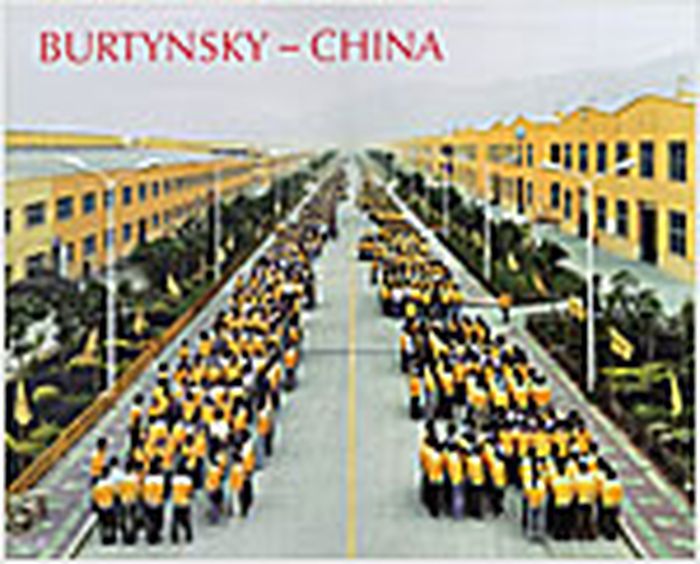
Edward Burtynsky’s imagery explores the intricate link between industry and nature, combining the raw elements of mining, quarrying, shipping, oil production, and recycling into eloquent, highly expressive visions that find beauty and humanity in the most unlikely places. These images are metaphors for the dilemma of our modern existence: we are drawn by desire-the desire to live well and in comfort-yet we all know that the world is suffering to meet those demands. Our dependence on nature to provide the materials for our consumption and our concern for the health of our planet sets us into uneasy contradiction and feeds the dialogue in Burtynsky’s images between attraction and repulsion, seduction and fear. Burtysnky’s latest body of work gives visual form to the industrial and urban transformation of China, a place where industrial forces are gathering on a scale that the world has never experienced before. If the earth’s resources were up to now under siege through western colonialism and technological progress, then China is on the brink of a sweeping assault on the planet’s ecosystem that is only just forming and is nowhere close to expressing its full impact.
Burtynsky - China : the photographs of Edward Burtynsky
Actions:
Price:
$102.00
(available to order)
Summary:
Edward Burtynsky’s imagery explores the intricate link between industry and nature, combining the raw elements of mining, quarrying, shipping, oil production, and recycling into eloquent, highly expressive visions that find beauty and humanity in the most unlikely places. These images are metaphors for the dilemma of our modern existence: we are drawn by desire-the desire to live well and in comfort-yet we all know that the world is suffering to meet those demands. Our dependence on nature to provide the materials for our consumption and our concern for the health of our planet sets us into uneasy contradiction and feeds the dialogue in Burtynsky’s images between attraction and repulsion, seduction and fear. Burtysnky’s latest body of work gives visual form to the industrial and urban transformation of China, a place where industrial forces are gathering on a scale that the world has never experienced before. If the earth’s resources were up to now under siege through western colonialism and technological progress, then China is on the brink of a sweeping assault on the planet’s ecosystem that is only just forming and is nowhere close to expressing its full impact.
Form:
books
books
Publication:
January 2006, Göttingen
January 2006, Göttingen
Subject:
Photography monographs
Photography monographs
Form:
audio
audio
Title:
These are They.
These are They.
Actions:
Description:
1 online resource.
Author:
Subject:
Publication:
[Place of publication not identified] : Lateral Addition, 2019.
[Place of publication not identified] : Lateral Addition, 2019.
Form:
audio
audio
Publication:
[Place of publication not identified] : Lateral Addition, 2019.
[Place of publication not identified] : Lateral Addition, 2019.
Author:
Subject:
Form:
books
books
Actions:
Price:
$21.50
(available to order)
Summary:
Digital Ground is an architect's response to the design challenge posed by pervasive computing. One century into the electronic age, people have become accustomed to interacting indirectly, mediated through networks. But now as digital technology becomes invisibly embedded in everyday things, even more activities become mediated, and networks extend rather than replace(...)
$21.50
(available to order)
Summary:
Digital Ground is an architect's response to the design challenge posed by pervasive computing. One century into the electronic age, people have become accustomed to interacting indirectly, mediated through networks. But now as digital technology becomes invisibly embedded in everyday things, even more activities become mediated, and networks extend rather than replace(...)
Title:
Digital ground : architecture, pervasive computing, and environmental knowing
Actions:
Price:
$21.50
(available to order)
Summary:
Digital Ground is an architect's response to the design challenge posed by pervasive computing. One century into the electronic age, people have become accustomed to interacting indirectly, mediated through networks. But now as digital technology becomes invisibly embedded in everyday things, even more activities become mediated, and networks extend rather than replace architecture. The young field of interaction design reflects not only how people deal with machine interfaces but also how people deal with each other in situations where interactivity has become ambient. It shifts previously utilitarian digital design concerns to a cultural level, adding notions of premise, appropriateness, and appreciation. Malcolm McCullough offers an account of the intersections of architecture and interaction design, arguing that the ubiquitous technology does not obviate the human need for place. His concept of "digital ground" expresses an alternative to anytime-anyplace sameness in computing; he shows that context not only shapes usability but ideally becomes the subject matter of interaction design and that "environmental knowing" is a process that technology may serve and not erode. Drawing on arguments from architecture, psychology, software engineering, and geography, writing for practicing interaction designers, pervasive computing researchers, architects, and the general reader on digital culture, McCullough gives us a theory of place for interaction design. Part I, "Expectations," explores our technological predispositions -- many of which ("situated interactions") arise from our embodiment in architectural settings. Part II, "Technologies," discusses hardware, software, and applications, including embedded technology ("bashing the desktop"), and building technology genres around life situations. Part III, "Practices," argues for design as a liberal art, seeing interactivity as a cultural -- not only technological -- challenge and a practical notion of place as essential. Part IV, "Epilogue," acknowledges the epochal changes occurring today, and argues for the role of "digital ground" in the necessary adaptation.
Digital ground : architecture, pervasive computing, and environmental knowing
Actions:
Price:
$21.50
(available to order)
Summary:
Digital Ground is an architect's response to the design challenge posed by pervasive computing. One century into the electronic age, people have become accustomed to interacting indirectly, mediated through networks. But now as digital technology becomes invisibly embedded in everyday things, even more activities become mediated, and networks extend rather than replace architecture. The young field of interaction design reflects not only how people deal with machine interfaces but also how people deal with each other in situations where interactivity has become ambient. It shifts previously utilitarian digital design concerns to a cultural level, adding notions of premise, appropriateness, and appreciation. Malcolm McCullough offers an account of the intersections of architecture and interaction design, arguing that the ubiquitous technology does not obviate the human need for place. His concept of "digital ground" expresses an alternative to anytime-anyplace sameness in computing; he shows that context not only shapes usability but ideally becomes the subject matter of interaction design and that "environmental knowing" is a process that technology may serve and not erode. Drawing on arguments from architecture, psychology, software engineering, and geography, writing for practicing interaction designers, pervasive computing researchers, architects, and the general reader on digital culture, McCullough gives us a theory of place for interaction design. Part I, "Expectations," explores our technological predispositions -- many of which ("situated interactions") arise from our embodiment in architectural settings. Part II, "Technologies," discusses hardware, software, and applications, including embedded technology ("bashing the desktop"), and building technology genres around life situations. Part III, "Practices," argues for design as a liberal art, seeing interactivity as a cultural -- not only technological -- challenge and a practical notion of place as essential. Part IV, "Epilogue," acknowledges the epochal changes occurring today, and argues for the role of "digital ground" in the necessary adaptation.
Form:
books
books
Publication:
October 2005, Cambridge
October 2005, Cambridge
Subject:
Architectural Theory
Architectural Theory
Form:
books
books
Actions:
Price:
$34.95
(available to order)
Summary:
"The complex answer: On art as a non-binary intelligence" presents a series of entangled essays on the question on how art—and contemporary art practices in particular—embodies an intelligence capable of serving the erasure of the culture/nature distinction. The book is conceived in four parts and each not only introduces a slightly different writing on the subject(...)
$34.95
(available to order)
Summary:
"The complex answer: On art as a non-binary intelligence" presents a series of entangled essays on the question on how art—and contemporary art practices in particular—embodies an intelligence capable of serving the erasure of the culture/nature distinction. The book is conceived in four parts and each not only introduces a slightly different writing on the subject(...)
Title:
The complex answer: On art as a non-binary intelligence
Actions:
Price:
$34.95
(available to order)
Summary:
"The complex answer: On art as a non-binary intelligence" presents a series of entangled essays on the question on how art—and contemporary art practices in particular—embodies an intelligence capable of serving the erasure of the culture/nature distinction. The book is conceived in four parts and each not only introduces a slightly different writing on the subject matter, but also refers to concrete questions that affect the practice of art, the exercise of exhibiting, the duty of reflecting, and the institutional forms that define our present but may radically change in a near future. The book imagines art and contemporary art as an organ. An organ that produces an experience of inexpressible realities that are fundamental to understanding life and its processes. Stem cells exist, first, without a purpose and it is for the whole organism to decide if they will become part of an auditive nerve or the brain or the cornea of an eye. This adding to an organ is how Chus Martínez understands the intelligence of art. Poets and artists have claimed to understand the language of birds and flowers. We speak now of multi-species communication without a trace of metaphoric language. The experience of nature has evolved inside artistic practice. One could claim that the very fact that we talk about artificial intelligence is a merit of the arts. To transfer traits of organic life to inorganic entities such as information systems is a bold move that took centuries to prepare. Art has been essential in getting our senses and our arguments ready to accept this reality. The same with animal language, the synchronized reactions of a rainforest, and the transformative way fish have been discovered as able to recognize their own image in a mirror. These are just jests on the part of the sciences, developments of technical knowledges.
The complex answer: On art as a non-binary intelligence
Actions:
Price:
$34.95
(available to order)
Summary:
"The complex answer: On art as a non-binary intelligence" presents a series of entangled essays on the question on how art—and contemporary art practices in particular—embodies an intelligence capable of serving the erasure of the culture/nature distinction. The book is conceived in four parts and each not only introduces a slightly different writing on the subject matter, but also refers to concrete questions that affect the practice of art, the exercise of exhibiting, the duty of reflecting, and the institutional forms that define our present but may radically change in a near future. The book imagines art and contemporary art as an organ. An organ that produces an experience of inexpressible realities that are fundamental to understanding life and its processes. Stem cells exist, first, without a purpose and it is for the whole organism to decide if they will become part of an auditive nerve or the brain or the cornea of an eye. This adding to an organ is how Chus Martínez understands the intelligence of art. Poets and artists have claimed to understand the language of birds and flowers. We speak now of multi-species communication without a trace of metaphoric language. The experience of nature has evolved inside artistic practice. One could claim that the very fact that we talk about artificial intelligence is a merit of the arts. To transfer traits of organic life to inorganic entities such as information systems is a bold move that took centuries to prepare. Art has been essential in getting our senses and our arguments ready to accept this reality. The same with animal language, the synchronized reactions of a rainforest, and the transformative way fish have been discovered as able to recognize their own image in a mirror. These are just jests on the part of the sciences, developments of technical knowledges.
Form:
books
books
Publication:
February 2024
February 2024
Subject:
Art Theory
Art Theory
Form:
journals and magazines
journals and magazines
Title:
e-flux index #3
e-flux index #3
Actions:
Price:
$65.00
(available in store)
Summary:
Today we are accustomed to the apophatic gesture of free-speech fundamentalists and far-right demagogues, who use the flimsy legal cover of “just asking questions” to broadcast ever more widely the most violent and reactionary forms of hate speech. In resisting this enclosure of thought, art and theory continue to be instructive, if not essential activities. The late(...)
$65.00
(available in store)
Summary:
Today we are accustomed to the apophatic gesture of free-speech fundamentalists and far-right demagogues, who use the flimsy legal cover of “just asking questions” to broadcast ever more widely the most violent and reactionary forms of hate speech. In resisting this enclosure of thought, art and theory continue to be instructive, if not essential activities. The late(...)
Title:
e-flux index #3
Actions:
Price:
$65.00
(available in store)
Summary:
Today we are accustomed to the apophatic gesture of free-speech fundamentalists and far-right demagogues, who use the flimsy legal cover of “just asking questions” to broadcast ever more widely the most violent and reactionary forms of hate speech. In resisting this enclosure of thought, art and theory continue to be instructive, if not essential activities. The late Lawrence Weiner memorably declared that “the purpose of art is to ask questions… it doesn’t answer anybody’s question but gives them the means to answer a particular question at a particular moment.” All the better when those questions can provoke a certain illuminating friction with the contradictions of one’s environment and disrupt the automaticity of one’s learned responses, remaining themselves ambiguous or unanswered—because unanswerable. This third issue of e-flux Index, bringing together all the content commissioned and published by e-flux between April and May 2024, contains many such unexpected and unanswered (or unanswerable) questions across its 76 contributions, each of which cut across and reach beyond existing disciplines and borders: “Who is willing to care?”; “Who is the addressee at the end of the regulated pipelines of the English language?”; “Yes, but is it edible?”; “Why does everyone hate college students?”; “Is some form of suffering the condition for the emergence of an organic type of intelligence?”; “What does it mean to make a film today, in 2024, when most of our image consumption has been transferred to other (smaller) screens and other media?; “How to represent history?”; “Whose lives are worth remembering—or even, living?”; “How is it possible to speak the language of imperial renaissance and decolonization in the same breath?”; “Today is which day of the revolution?”—“Are these all just notes for a poem?”
e-flux index #3
Actions:
Price:
$65.00
(available in store)
Summary:
Today we are accustomed to the apophatic gesture of free-speech fundamentalists and far-right demagogues, who use the flimsy legal cover of “just asking questions” to broadcast ever more widely the most violent and reactionary forms of hate speech. In resisting this enclosure of thought, art and theory continue to be instructive, if not essential activities. The late Lawrence Weiner memorably declared that “the purpose of art is to ask questions… it doesn’t answer anybody’s question but gives them the means to answer a particular question at a particular moment.” All the better when those questions can provoke a certain illuminating friction with the contradictions of one’s environment and disrupt the automaticity of one’s learned responses, remaining themselves ambiguous or unanswered—because unanswerable. This third issue of e-flux Index, bringing together all the content commissioned and published by e-flux between April and May 2024, contains many such unexpected and unanswered (or unanswerable) questions across its 76 contributions, each of which cut across and reach beyond existing disciplines and borders: “Who is willing to care?”; “Who is the addressee at the end of the regulated pipelines of the English language?”; “Yes, but is it edible?”; “Why does everyone hate college students?”; “Is some form of suffering the condition for the emergence of an organic type of intelligence?”; “What does it mean to make a film today, in 2024, when most of our image consumption has been transferred to other (smaller) screens and other media?; “How to represent history?”; “Whose lives are worth remembering—or even, living?”; “How is it possible to speak the language of imperial renaissance and decolonization in the same breath?”; “Today is which day of the revolution?”—“Are these all just notes for a poem?”
Form:
journals and magazines
journals and magazines
Publication:
December 2024
December 2024
Subject:
Magazines
Magazines
Form:
books
books
Price:
$90.95
(available in store)
Summary:
Roger Fenton (1819-1869) was England’s most celebrated and influential photographer during the 1850s, the “golden age” of this radically new medium. Fenton’s majestic pictures of cathedrals, country houses, and varied countryside were without peer in England--as were his views of the royal castles and Houses of Parliament that embodied Britain’s power. But Fenton’s(...)
$90.95
(available in store)
Summary:
Roger Fenton (1819-1869) was England’s most celebrated and influential photographer during the 1850s, the “golden age” of this radically new medium. Fenton’s majestic pictures of cathedrals, country houses, and varied countryside were without peer in England--as were his views of the royal castles and Houses of Parliament that embodied Britain’s power. But Fenton’s(...)
Subject:
Photography monographs
Photography monographs
Publication:
November 2004, New Haven, London
November 2004, New Haven, London
Title:
All the mighty world : the photographs of Roger Fenton, 1852-1860
Actions:
Price:
$90.95
(available in store)
Summary:
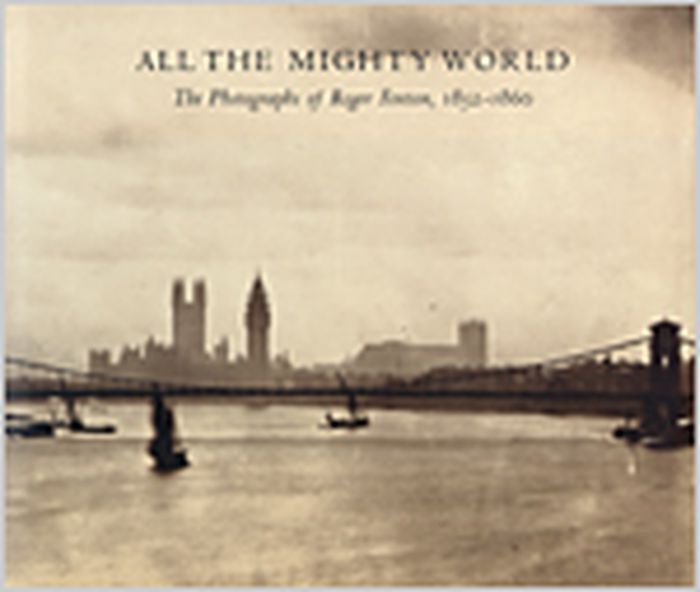
Roger Fenton (1819-1869) was England’s most celebrated and influential photographer during the 1850s, the “golden age” of this radically new medium. Fenton’s majestic pictures of cathedrals, country houses, and varied countryside were without peer in England--as were his views of the royal castles and Houses of Parliament that embodied Britain’s power. But Fenton’s choice of subjects ranged more widely still: he was among the first to photograph the Kremlin and other landmarks of Moscow and Kiev; he was commissioned in 1855 to document the Crimean War, producing early war photographs; and he created theatrical Orientalist costume pictures and a startling series of lush still lifes. Fenton had first studied law and painting, but soon after he took up the camera he was making photographs that were technically superb and highly original in their handling of composition, perspective, atmosphere, and light. Always he strove to demonstrate that photography could equal the art of painting and even surpass it. He was the force behind the founding of the Photographic Society (later the Royal Photographic Society), which worked to advance the profession and encouraged the exhibition of members’ works throughout Britain. In a career of a single decade, Fenton did much to transform photography into a medium of powerful expression and visual delight. This exquisitely produced book--the first comprehensive publication on Fenton in almost twenty years--presents eighty-five of the artist’s finest photographs and discusses every aspect of his work and his remarkable career. This catalogue accompanies an exhibition on view at the National Gallery of Art, Washington, D.C. (October 17, 2004, to January 2, 2005); the J. Paul Getty Museum, Los Angeles (February 1 to April 25, 2005); The Metropolitan Museum of Art, New York (May 16 to August 14, 2005); and Tate Britain, London (September 25, 2005, to January 2, 2006).
All the mighty world : the photographs of Roger Fenton, 1852-1860
Actions:
Price:
$90.95
(available in store)
Summary:
Roger Fenton (1819-1869) was England’s most celebrated and influential photographer during the 1850s, the “golden age” of this radically new medium. Fenton’s majestic pictures of cathedrals, country houses, and varied countryside were without peer in England--as were his views of the royal castles and Houses of Parliament that embodied Britain’s power. But Fenton’s choice of subjects ranged more widely still: he was among the first to photograph the Kremlin and other landmarks of Moscow and Kiev; he was commissioned in 1855 to document the Crimean War, producing early war photographs; and he created theatrical Orientalist costume pictures and a startling series of lush still lifes. Fenton had first studied law and painting, but soon after he took up the camera he was making photographs that were technically superb and highly original in their handling of composition, perspective, atmosphere, and light. Always he strove to demonstrate that photography could equal the art of painting and even surpass it. He was the force behind the founding of the Photographic Society (later the Royal Photographic Society), which worked to advance the profession and encouraged the exhibition of members’ works throughout Britain. In a career of a single decade, Fenton did much to transform photography into a medium of powerful expression and visual delight. This exquisitely produced book--the first comprehensive publication on Fenton in almost twenty years--presents eighty-five of the artist’s finest photographs and discusses every aspect of his work and his remarkable career. This catalogue accompanies an exhibition on view at the National Gallery of Art, Washington, D.C. (October 17, 2004, to January 2, 2005); the J. Paul Getty Museum, Los Angeles (February 1 to April 25, 2005); The Metropolitan Museum of Art, New York (May 16 to August 14, 2005); and Tate Britain, London (September 25, 2005, to January 2, 2006).
Form:
books
books
Publication:
November 2004, New Haven, London
November 2004, New Haven, London
Subject:
Photography monographs
Photography monographs
Form:
books
books
Title:
London the biography
London the biography
Actions:
Price:
$37.95
(available to order)
Summary:
Novelist and biographer Ackroyd (The Plato Papers; T.S. Eliot; etc.) offers a huge, enthralling "biography" of the city of London. The reader segues through this litany of lists and anthology of anecdotes via the sketchiest of topical linkages, but no matter not a page is dull, until brief closing chapters in which Ackroyd succumbs to bathos, for which he's(...)
$37.95
(available to order)
Summary:
Novelist and biographer Ackroyd (The Plato Papers; T.S. Eliot; etc.) offers a huge, enthralling "biography" of the city of London. The reader segues through this litany of lists and anthology of anecdotes via the sketchiest of topical linkages, but no matter not a page is dull, until brief closing chapters in which Ackroyd succumbs to bathos, for which he's(...)
Title:
London the biography
Actions:
Price:
$37.95
(available to order)
Summary:
Novelist and biographer Ackroyd (The Plato Papers; T.S. Eliot; etc.) offers a huge, enthralling "biography" of the city of London. The reader segues through this litany of lists and anthology of anecdotes via the sketchiest of topical linkages, but no matter not a page is dull, until brief closing chapters in which Ackroyd succumbs to bathos, for which he's instantaneously redeemed by the preceding chapters. He admits to using no original research, openly crediting his printed sources. Ackroyd examines London from its pre-history through today, artfully selecting, organizing and pacing stories, and rendering the past in witty and imaginative ways. "The opium quarter of Limehouse," he tells readers, for example, "is now represented by a Chinese take-away." Fast food, it seems, was always part of the London scene. When poet Thomas Southey asked a pastry cook why she kept her shop open in the worst weather, she told him that otherwise she would lose business, "so many were the persons who took up buns or biscuits as they passed by and threw their pence in, not allowing themselves time to enter." Ackroyd covers unrest and peace, fires and ruins, river and rail transport, crime and punishment, wealth and poverty, markets and churches, uncontrolled growth and barely controlled filth. If there is a hero among the throngs, it may be engineer Joseph Bazalgette, who in 1855 began building 1,265 miles of sewers to contain the Stygian odor of progress and keep the huge, ugly metropolis livable. No one should mind the extraordinary price of this extraordinary achievement. B illus., maps not seen by PW. (On sale Oct. 16)Forecast: Published to acclaim in England, this is virtually guaranteed major review coverage here, and the publisher will also shoot for national media. Anglophiles and others will rejoice.
London the biography
Actions:
Price:
$37.95
(available to order)
Summary:
Novelist and biographer Ackroyd (The Plato Papers; T.S. Eliot; etc.) offers a huge, enthralling "biography" of the city of London. The reader segues through this litany of lists and anthology of anecdotes via the sketchiest of topical linkages, but no matter not a page is dull, until brief closing chapters in which Ackroyd succumbs to bathos, for which he's instantaneously redeemed by the preceding chapters. He admits to using no original research, openly crediting his printed sources. Ackroyd examines London from its pre-history through today, artfully selecting, organizing and pacing stories, and rendering the past in witty and imaginative ways. "The opium quarter of Limehouse," he tells readers, for example, "is now represented by a Chinese take-away." Fast food, it seems, was always part of the London scene. When poet Thomas Southey asked a pastry cook why she kept her shop open in the worst weather, she told him that otherwise she would lose business, "so many were the persons who took up buns or biscuits as they passed by and threw their pence in, not allowing themselves time to enter." Ackroyd covers unrest and peace, fires and ruins, river and rail transport, crime and punishment, wealth and poverty, markets and churches, uncontrolled growth and barely controlled filth. If there is a hero among the throngs, it may be engineer Joseph Bazalgette, who in 1855 began building 1,265 miles of sewers to contain the Stygian odor of progress and keep the huge, ugly metropolis livable. No one should mind the extraordinary price of this extraordinary achievement. B illus., maps not seen by PW. (On sale Oct. 16)Forecast: Published to acclaim in England, this is virtually guaranteed major review coverage here, and the publisher will also shoot for national media. Anglophiles and others will rejoice.
Form:
books
books
Publication:
September 2001, London
September 2001, London
Subject:
Urban Theory
Urban Theory
Form:
books
books
Title:
Guy Debord
Guy Debord
Actions:
Price:
$21.50
(available to order)
Summary:
Guy Debord (1931–94) was one of the most important and intriguing intellectual figures of the twentieth century. Filmmaker and poet, urban critic and political theorist, adventurer and activist extraordinaire during Paris’s May 1968 uprisings, Debord was simultaneously behind and ahead of his times. Best-known as guru of the avant-garde revolutionary movement the(...)
$21.50
(available to order)
Summary:
Guy Debord (1931–94) was one of the most important and intriguing intellectual figures of the twentieth century. Filmmaker and poet, urban critic and political theorist, adventurer and activist extraordinaire during Paris’s May 1968 uprisings, Debord was simultaneously behind and ahead of his times. Best-known as guru of the avant-garde revolutionary movement the(...)
Title:
Guy Debord
Actions:
Price:
$21.50
(available to order)
Summary:
Guy Debord (1931–94) was one of the most important and intriguing intellectual figures of the twentieth century. Filmmaker and poet, urban critic and political theorist, adventurer and activist extraordinaire during Paris’s May 1968 uprisings, Debord was simultaneously behind and ahead of his times. Best-known as guru of the avant-garde revolutionary movement the Situationist International (1957-72), and for a classic indictment of post-war capitalist consumerism The Society of the Spectacle (1967), Debord’s life and work remains fascinating to this day. Yet the man himself remained elusive and enigmatic throughout his life. Master urban tactician in the 1950s, political muckraker, organizer and theorist during the 1960s, vagabond throughout the 1970s, fleeing to Spain and Italy, he lived as a recluse during the 1980s and early 1990s in an isolated farmhouse in Champot (Auvergne), behind a high stone wall. Guy Debord crosses over that Champot wall, pushes back Debord’s shutters and peers through his windows. It crosses his threshold, drinks his wine, and listens to him talk. Andrew Merrifield focuses on the particulars of Debord’s life, shedding light on this admirable yet apparently impenetrable figure, a free spirit who was radically at odds with life but at the same time loved many things in it, and thought them worth fighting for. The book reveals the dynamics of the man, his ideas, and his times – which have much to say to our own, equally troubled times. The ideas of Guy Debord, who died only 10 years ago, continue to expose the fragility of our democracy and the mismatch between people and political power today; this book shows that the lessons of Debord are as fresh, subversive, and relevant now as they were forty years ago.
Guy Debord
Actions:
Price:
$21.50
(available to order)
Summary:
Guy Debord (1931–94) was one of the most important and intriguing intellectual figures of the twentieth century. Filmmaker and poet, urban critic and political theorist, adventurer and activist extraordinaire during Paris’s May 1968 uprisings, Debord was simultaneously behind and ahead of his times. Best-known as guru of the avant-garde revolutionary movement the Situationist International (1957-72), and for a classic indictment of post-war capitalist consumerism The Society of the Spectacle (1967), Debord’s life and work remains fascinating to this day. Yet the man himself remained elusive and enigmatic throughout his life. Master urban tactician in the 1950s, political muckraker, organizer and theorist during the 1960s, vagabond throughout the 1970s, fleeing to Spain and Italy, he lived as a recluse during the 1980s and early 1990s in an isolated farmhouse in Champot (Auvergne), behind a high stone wall. Guy Debord crosses over that Champot wall, pushes back Debord’s shutters and peers through his windows. It crosses his threshold, drinks his wine, and listens to him talk. Andrew Merrifield focuses on the particulars of Debord’s life, shedding light on this admirable yet apparently impenetrable figure, a free spirit who was radically at odds with life but at the same time loved many things in it, and thought them worth fighting for. The book reveals the dynamics of the man, his ideas, and his times – which have much to say to our own, equally troubled times. The ideas of Guy Debord, who died only 10 years ago, continue to expose the fragility of our democracy and the mismatch between people and political power today; this book shows that the lessons of Debord are as fresh, subversive, and relevant now as they were forty years ago.
Form:
books
books
Publication:
October 2005, London
October 2005, London
Subject:
Architectural Theory
Architectural Theory
Form:
books
books
Actions:
Price:
$31.25
(available to order)
Summary:
"Sowing Empire" identifies the cultivation and landscaping of colonies as one of the primary ways imperial nations justified their empires. Planting and transplanting, seeding and reshaping - the landscaping practices that emerged in the eighteenth century - are inextricable from the contested terrain of empire within which they operated. From the plantations of the(...)
$31.25
(available to order)
Summary:
"Sowing Empire" identifies the cultivation and landscaping of colonies as one of the primary ways imperial nations justified their empires. Planting and transplanting, seeding and reshaping - the landscaping practices that emerged in the eighteenth century - are inextricable from the contested terrain of empire within which they operated. From the plantations of the(...)
Title:
Sowing empire : landscape and colonization
Actions:
Price:
$31.25
(available to order)
Summary:
"Sowing Empire" identifies the cultivation and landscaping of colonies as one of the primary ways imperial nations justified their empires. Planting and transplanting, seeding and reshaping - the landscaping practices that emerged in the eighteenth century - are inextricable from the contested terrain of empire within which they operated. From the plantations of the “nabobs” to the island gardens of narrative fiction, from William Beckford’s estate at Fonthill to Marie Antoinette’s ornamented farm, "Sowing Empire" considers imperial relandscaping - its patriarchal organization, heterosexual reproduction, and slavery - and how it contributed to the construction of imperial power. At the same time, the book shows how these picturesque landscapes and sugar plantations contained within them the seeds of resistance - how, for instance, slave gardens and the Afro-Caribbean practice of Vodou threatened authority and created new possibilities for once again transforming the landscape. In an ambitious work of wide-ranging literary, visual, and historical allusion, Jill H. Casid examines how landscaping functioned in an imperial mode that defined and remade the “heartlands” of nations as well as the contact zones and colonial peripheries in the West and East Indies. Revealing the colonial landscape as far more than an agricultural system - as a means of regulating national, sexual, and gender identities - Casid also traces how the circulation of plants and hybridity influenced agriculture and landscaping on European soil and how colonial contacts materially shaped what we take as “European.” Utilizing a wide range of both visual and written sources - maps, literature, and travel writing - this book is interdisciplinary in its methodology and in its scope. Sowing Empire explores how postcolonial and queer studies can alter art history and visual studies and, in turn, what close attention to the visual may offer to both postcolonial theorizing and historically and materially based colonial cultural studies.
Sowing empire : landscape and colonization
Actions:
Price:
$31.25
(available to order)
Summary:
"Sowing Empire" identifies the cultivation and landscaping of colonies as one of the primary ways imperial nations justified their empires. Planting and transplanting, seeding and reshaping - the landscaping practices that emerged in the eighteenth century - are inextricable from the contested terrain of empire within which they operated. From the plantations of the “nabobs” to the island gardens of narrative fiction, from William Beckford’s estate at Fonthill to Marie Antoinette’s ornamented farm, "Sowing Empire" considers imperial relandscaping - its patriarchal organization, heterosexual reproduction, and slavery - and how it contributed to the construction of imperial power. At the same time, the book shows how these picturesque landscapes and sugar plantations contained within them the seeds of resistance - how, for instance, slave gardens and the Afro-Caribbean practice of Vodou threatened authority and created new possibilities for once again transforming the landscape. In an ambitious work of wide-ranging literary, visual, and historical allusion, Jill H. Casid examines how landscaping functioned in an imperial mode that defined and remade the “heartlands” of nations as well as the contact zones and colonial peripheries in the West and East Indies. Revealing the colonial landscape as far more than an agricultural system - as a means of regulating national, sexual, and gender identities - Casid also traces how the circulation of plants and hybridity influenced agriculture and landscaping on European soil and how colonial contacts materially shaped what we take as “European.” Utilizing a wide range of both visual and written sources - maps, literature, and travel writing - this book is interdisciplinary in its methodology and in its scope. Sowing Empire explores how postcolonial and queer studies can alter art history and visual studies and, in turn, what close attention to the visual may offer to both postcolonial theorizing and historically and materially based colonial cultural studies.
Form:
books
books
Publication:
January 2005, Minneapolis
January 2005, Minneapolis
Subject:
Landscape Theory
Landscape Theory
Form:
books
books
Price:
$44.95
(available to order)
Summary:
Why does technology change over time, how does it change, and what difference does it make? In this sweeping, ambitious look at a thousand years of Western experience, Robert Friedel argues that technological change comes largely through the pursuit of improvement--the deep-rooted belief that things could be done in a better way. What Friedel calls the "culture of(...)
$44.95
(available to order)
Summary:
Why does technology change over time, how does it change, and what difference does it make? In this sweeping, ambitious look at a thousand years of Western experience, Robert Friedel argues that technological change comes largely through the pursuit of improvement--the deep-rooted belief that things could be done in a better way. What Friedel calls the "culture of(...)
Title:
A culture of improvement : technology and the western millennium
Actions:
Price:
$44.95
(available to order)
Summary:
Why does technology change over time, how does it change, and what difference does it make? In this sweeping, ambitious look at a thousand years of Western experience, Robert Friedel argues that technological change comes largely through the pursuit of improvement--the deep-rooted belief that things could be done in a better way. What Friedel calls the "culture of improvement" is manifested every day in the ways people carry out their tasks in life--from tilling fields and raising children to waging war. Improvements can be ephemeral or lasting, and one person’s improvement may not always be viewed as such by others. Friedel stresses the social processes by which we define what improvements are and decide which improvements will last and which will not. These processes, he emphasizes, have created both winners and losers in history. Friedel presents a series of narratives of Western technology that begin in the eleventh century and stretch into the twenty-first. Familiar figures from the history of invention are joined by others--the Italian preacher who described the first eyeglasses, the dairywomen displaced from their control over cheesemaking, and the little-known engineer who first suggested a grand tower to Gustav Eiffel. Friedel traces technology from the plow and the printing press to the internal combustion engine, the transistor, and the space shuttle. Friedel also reminds us that faith in improvement can sometimes have horrific consequences: improved weaponry makes warfare ever more deadly and the drive for improving human beings can lead to eugenics and even genocide. The most comprehensive attempt to tell the story of Western technology in many years, engagingly written and lavishly illustrated, A Culture of Improvement documents the ways in which the drive for improvement has shaped our modern world.
A culture of improvement : technology and the western millennium
Actions:
Price:
$44.95
(available to order)
Summary:
Why does technology change over time, how does it change, and what difference does it make? In this sweeping, ambitious look at a thousand years of Western experience, Robert Friedel argues that technological change comes largely through the pursuit of improvement--the deep-rooted belief that things could be done in a better way. What Friedel calls the "culture of improvement" is manifested every day in the ways people carry out their tasks in life--from tilling fields and raising children to waging war. Improvements can be ephemeral or lasting, and one person’s improvement may not always be viewed as such by others. Friedel stresses the social processes by which we define what improvements are and decide which improvements will last and which will not. These processes, he emphasizes, have created both winners and losers in history. Friedel presents a series of narratives of Western technology that begin in the eleventh century and stretch into the twenty-first. Familiar figures from the history of invention are joined by others--the Italian preacher who described the first eyeglasses, the dairywomen displaced from their control over cheesemaking, and the little-known engineer who first suggested a grand tower to Gustav Eiffel. Friedel traces technology from the plow and the printing press to the internal combustion engine, the transistor, and the space shuttle. Friedel also reminds us that faith in improvement can sometimes have horrific consequences: improved weaponry makes warfare ever more deadly and the drive for improving human beings can lead to eugenics and even genocide. The most comprehensive attempt to tell the story of Western technology in many years, engagingly written and lavishly illustrated, A Culture of Improvement documents the ways in which the drive for improvement has shaped our modern world.
Form:
books
books
Publication:
May 2007, Cambridge / London
May 2007, Cambridge / London
Subject:
Engineering Structures
Engineering Structures


