


1067 Results
Form:
books
books
Title:
Celebration at persepolis
Celebration at persepolis
Actions:
Price:
$19.00
(available to order)
Summary:
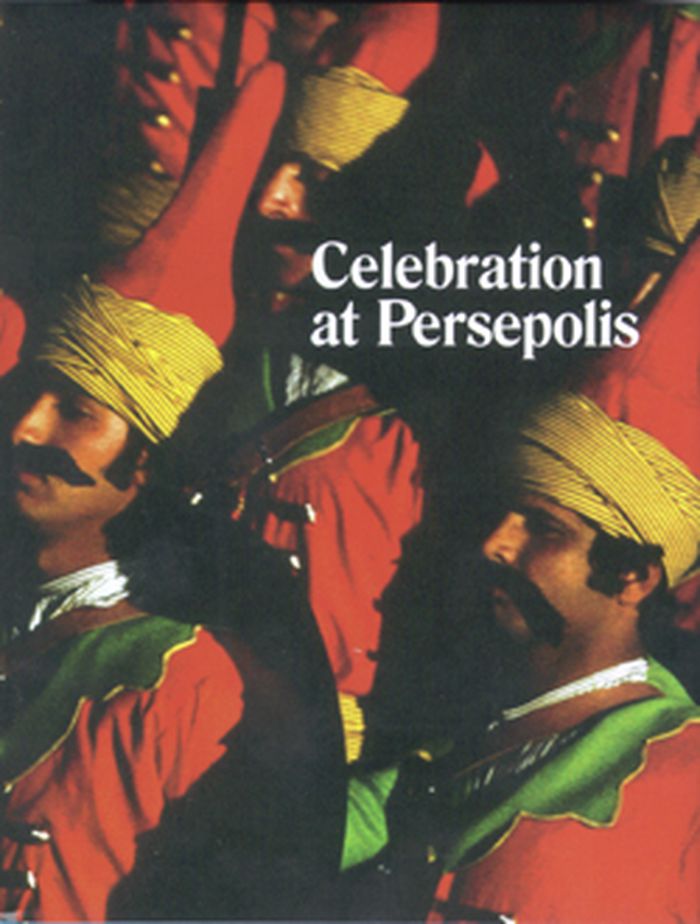
In 1971, the Shah of Iran held a week-long party among the ruins of Persepolis, leaving the temporary architecture behind when the celebration was done. For Art Basel 2008, "anthropologist of the avant-garde" Michael Stevenson reconstructed one of the guest tents, now a ruin itself, at scale. That project is expanded upon here.
$19.00
(available to order)
Summary:
In 1971, the Shah of Iran held a week-long party among the ruins of Persepolis, leaving the temporary architecture behind when the celebration was done. For Art Basel 2008, "anthropologist of the avant-garde" Michael Stevenson reconstructed one of the guest tents, now a ruin itself, at scale. That project is expanded upon here.
Title:
Celebration at persepolis
Actions:
Price:
$19.00
(available to order)
Summary:
In 1971, the Shah of Iran held a week-long party among the ruins of Persepolis, leaving the temporary architecture behind when the celebration was done. For Art Basel 2008, "anthropologist of the avant-garde" Michael Stevenson reconstructed one of the guest tents, now a ruin itself, at scale. That project is expanded upon here.
Celebration at persepolis
Actions:
Price:
$19.00
(available to order)
Summary:
In 1971, the Shah of Iran held a week-long party among the ruins of Persepolis, leaving the temporary architecture behind when the celebration was done. For Art Basel 2008, "anthropologist of the avant-garde" Michael Stevenson reconstructed one of the guest tents, now a ruin itself, at scale. That project is expanded upon here.
Form:
books
books
Publication:
June 2008, Bristol
June 2008, Bristol
Subject:
Contemporary Art Monographs
Contemporary Art Monographs
Form:
books
books
Actions:
Price:
$15.00
(available to order)
Summary:
In the summer of 1970, the artist Les Levine arrived at the University of Toronto to take part in the installation of site-specific work on the quadrangle in front of the University's Hart House. The intended piece—construction materials hung from high-tension rope between campus buildings—was quickly stymied as Levine encountered a series of bureaucratic impediments on(...)
$15.00
(available to order)
Summary:
In the summer of 1970, the artist Les Levine arrived at the University of Toronto to take part in the installation of site-specific work on the quadrangle in front of the University's Hart House. The intended piece—construction materials hung from high-tension rope between campus buildings—was quickly stymied as Levine encountered a series of bureaucratic impediments on(...)
Publication:
February 2016
February 2016
Title:
Red tape, a new work by Les Levine, 1970
Actions:
Price:
$15.00
(available to order)
Summary:
In the summer of 1970, the artist Les Levine arrived at the University of Toronto to take part in the installation of site-specific work on the quadrangle in front of the University's Hart House. The intended piece—construction materials hung from high-tension rope between campus buildings—was quickly stymied as Levine encountered a series of bureaucratic impediments on the part of the University staff. What ensued was played into the conceptual conceit the artist had envisioned for the project. By collating the correspondence, telephone transcripts, and visual documentation of the eventual installation process, Levine used the work to demonstrate how the university itself functioned as a system. Red Tape publishes this project, which had existed only as a dossier in the artist's archive, for the first time.
Red tape, a new work by Les Levine, 1970
Actions:
Price:
$15.00
(available to order)
Summary:
In the summer of 1970, the artist Les Levine arrived at the University of Toronto to take part in the installation of site-specific work on the quadrangle in front of the University's Hart House. The intended piece—construction materials hung from high-tension rope between campus buildings—was quickly stymied as Levine encountered a series of bureaucratic impediments on the part of the University staff. What ensued was played into the conceptual conceit the artist had envisioned for the project. By collating the correspondence, telephone transcripts, and visual documentation of the eventual installation process, Levine used the work to demonstrate how the university itself functioned as a system. Red Tape publishes this project, which had existed only as a dossier in the artist's archive, for the first time.
Form:
books
books
Publication:
February 2016
February 2016
Form:
books
books
Actions:
Holdings:
Description:
312 pages : illustrations (some color) ; 25 cm
Description:
312 pages : illustrations (some color) ; 25 cm
Author:
Subject:
Publication:
New York : Thames & Hudson, 2012.
New York : Thames & Hudson, 2012.
Title:
Medieval modern : art out of time / Alexander Nagel.
Actions:
Holdings:
Description:
312 pages : illustrations (some color) ; 25 cm
Medieval modern : art out of time / Alexander Nagel.
Actions:
Holdings:
Description:
312 pages : illustrations (some color) ; 25 cm
Form:
books
books
Publication:
New York : Thames & Hudson, 2012.
New York : Thames & Hudson, 2012.
Author:
Subject:
Form:
books
books
Actions:
Price:
$32.95
(available to order)
Summary:
Earth Moves, Bernard Cache's first major work, conceptualizes a series of architectural images as vehicles for two important developments. First, he offers a new understanding of the architectural image itself. Following Gilles Deleuze and Henri Bergson, he develops an account of the image that is nonrepresentational and constructive—images as constituents of a primary,(...)
$32.95
(available to order)
Summary:
Earth Moves, Bernard Cache's first major work, conceptualizes a series of architectural images as vehicles for two important developments. First, he offers a new understanding of the architectural image itself. Following Gilles Deleuze and Henri Bergson, he develops an account of the image that is nonrepresentational and constructive—images as constituents of a primary,(...)
Title:
Earth moves: the furnishing of territories
Actions:
Price:
$32.95
(available to order)
Summary:
Earth Moves, Bernard Cache's first major work, conceptualizes a series of architectural images as vehicles for two important developments. First, he offers a new understanding of the architectural image itself. Following Gilles Deleuze and Henri Bergson, he develops an account of the image that is nonrepresentational and constructive—images as constituents of a primary, image world, of which subjectivity itself is a special kind of image. Second, Cache redefines architecture beyond building proper to include cinematic, pictoral, and other framings. Complementary to this classification, Cache offers what is to date the only Deleuzean architectural development of the "fold," a form and concept that has become important over the last few years. For Cache, as for Deleuze, what is significant about the fold is that it provides a way to rethink the relationship between interior and exterior, between past and present, and between architecture and the urban.
Earth moves: the furnishing of territories
Actions:
Price:
$32.95
(available to order)
Summary:
Earth Moves, Bernard Cache's first major work, conceptualizes a series of architectural images as vehicles for two important developments. First, he offers a new understanding of the architectural image itself. Following Gilles Deleuze and Henri Bergson, he develops an account of the image that is nonrepresentational and constructive—images as constituents of a primary, image world, of which subjectivity itself is a special kind of image. Second, Cache redefines architecture beyond building proper to include cinematic, pictoral, and other framings. Complementary to this classification, Cache offers what is to date the only Deleuzean architectural development of the "fold," a form and concept that has become important over the last few years. For Cache, as for Deleuze, what is significant about the fold is that it provides a way to rethink the relationship between interior and exterior, between past and present, and between architecture and the urban.
Form:
books
books
Publication:
January 1995
January 1995
Subject:
Archive, library and the digital
Archive, library and the digital
Form:
books
books
Actions:
Price:
$49.50
(available in store)
Summary:
Yoko Ando envisions textiles that are one with architecture. For buildings and the spaces they create, textiles are a medium as any other. Translucent sheets change how things look, something which varies with the nature of their transparency and relationship with light. Textiles are, in this sense, similar to light, as both exist between people and architecture, acting(...)
$49.50
(available in store)
Summary:
Yoko Ando envisions textiles that are one with architecture. For buildings and the spaces they create, textiles are a medium as any other. Translucent sheets change how things look, something which varies with the nature of their transparency and relationship with light. Textiles are, in this sense, similar to light, as both exist between people and architecture, acting(...)
Title:
The textiles of Yoko Ando : weaving spaces and structures
Actions:
Price:
$49.50
(available in store)
Summary:
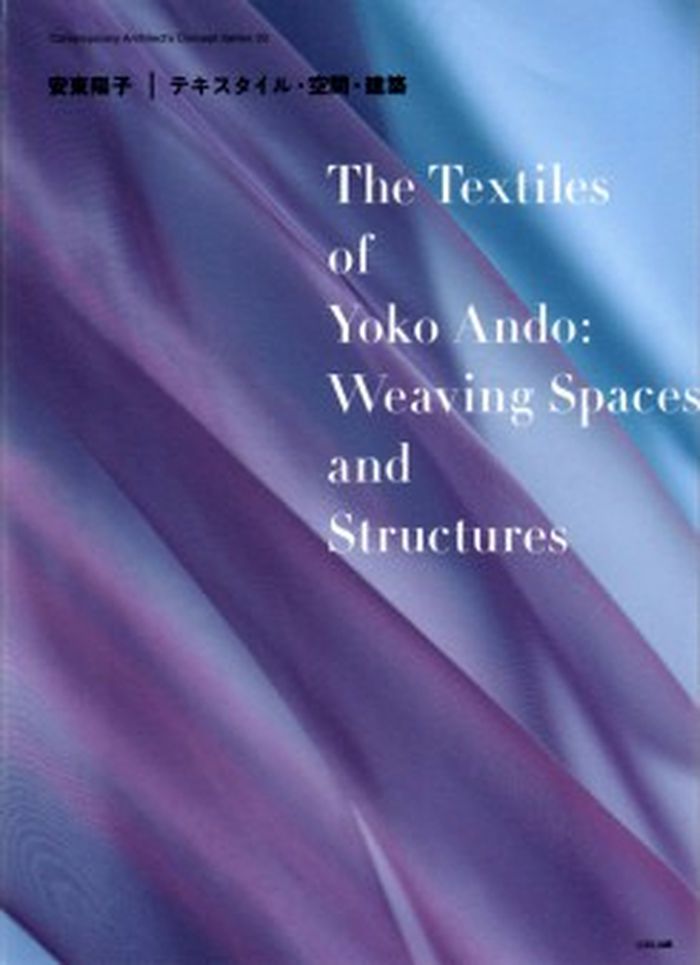
Yoko Ando envisions textiles that are one with architecture. For buildings and the spaces they create, textiles are a medium as any other. Translucent sheets change how things look, something which varies with the nature of their transparency and relationship with light. Textiles are, in this sense, similar to light, as both exist between people and architecture, acting as mediators – whether of the space, the materials, or the encompassing order. Ando’s textile designs thus create experiences within architecture, as part of the architecture itself. The book also includes a conversation between the designer and architect Toyo Ito.
The textiles of Yoko Ando : weaving spaces and structures
Actions:
Price:
$49.50
(available in store)
Summary:
Yoko Ando envisions textiles that are one with architecture. For buildings and the spaces they create, textiles are a medium as any other. Translucent sheets change how things look, something which varies with the nature of their transparency and relationship with light. Textiles are, in this sense, similar to light, as both exist between people and architecture, acting as mediators – whether of the space, the materials, or the encompassing order. Ando’s textile designs thus create experiences within architecture, as part of the architecture itself. The book also includes a conversation between the designer and architect Toyo Ito.
Form:
books
books
Publication:
October 2015
October 2015
Subject:
Materials and Lighting
Materials and Lighting
Form:
books
books
Actions:
Price:
$22.95
(available to order)
Summary:
In response to the contentious process surrounding the selection of a design for the World Trade Center site, the use of spectacular buildings to brand cities and institutions, and the dizzying transformations of the skylines of Shanghai and Dubai, public awareness of architecture and design has perhaps never been higher. At the same time, architecture itself is(...)
$22.95
(available to order)
Summary:
In response to the contentious process surrounding the selection of a design for the World Trade Center site, the use of spectacular buildings to brand cities and institutions, and the dizzying transformations of the skylines of Shanghai and Dubai, public awareness of architecture and design has perhaps never been higher. At the same time, architecture itself is(...)
Title:
The new architectural pragmatism
Actions:
Price:
$22.95
(available to order)
Summary:
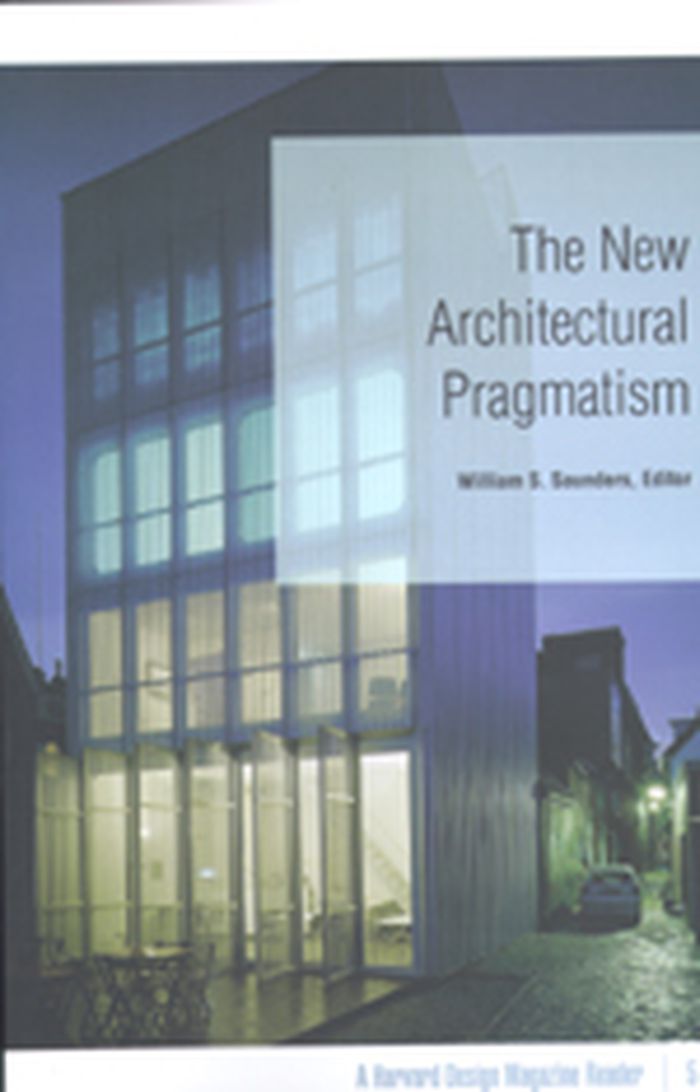
In response to the contentious process surrounding the selection of a design for the World Trade Center site, the use of spectacular buildings to brand cities and institutions, and the dizzying transformations of the skylines of Shanghai and Dubai, public awareness of architecture and design has perhaps never been higher. At the same time, architecture itself is undergoing an identity crisis as it confronts fundamental issues: the effect of digital technology on design, the pervasive impact of global capitalism, and whether to embrace or resist popular media and taste. The New Architectural Pragmatism collects the most provocative, penetrating, and influential attempts by leading theorists and practitioners in the field to define what architectural practice should be at the beginning of the twenty-first century. Written in the aftermath of modernism’s utopian impulse and postmodernism’s detached playfulness, the essays gathered here express and critique a new spirit of cultural and political engagement with contemporary society. Interrogating the architect’s social responsibility, the contributors deliberate about how much we should ask of architecture and suggest that in the coming century, architecture must be at once flexible and robust, responsive and self-directed.
The new architectural pragmatism
Actions:
Price:
$22.95
(available to order)
Summary:
In response to the contentious process surrounding the selection of a design for the World Trade Center site, the use of spectacular buildings to brand cities and institutions, and the dizzying transformations of the skylines of Shanghai and Dubai, public awareness of architecture and design has perhaps never been higher. At the same time, architecture itself is undergoing an identity crisis as it confronts fundamental issues: the effect of digital technology on design, the pervasive impact of global capitalism, and whether to embrace or resist popular media and taste. The New Architectural Pragmatism collects the most provocative, penetrating, and influential attempts by leading theorists and practitioners in the field to define what architectural practice should be at the beginning of the twenty-first century. Written in the aftermath of modernism’s utopian impulse and postmodernism’s detached playfulness, the essays gathered here express and critique a new spirit of cultural and political engagement with contemporary society. Interrogating the architect’s social responsibility, the contributors deliberate about how much we should ask of architecture and suggest that in the coming century, architecture must be at once flexible and robust, responsive and self-directed.
Form:
books
books
Publication:
November 2007, Minneapolis
November 2007, Minneapolis
Subject:
Architectural Theory
Architectural Theory
Form:
books
books
Actions:
Price:
$44.50
(available to order)
Summary:
In "Archiveology" Catherine Russell uses the work of Walter Benjamin to explore how the practice of archiveology-the reuse, recycling, appropriation, and borrowing of archival sounds and images by filmmakers-provides ways to imagine the past and the future. Noting how the film archive does not function simply as a place where moving images are preserved, Russell examines(...)
$44.50
(available to order)
Summary:
In "Archiveology" Catherine Russell uses the work of Walter Benjamin to explore how the practice of archiveology-the reuse, recycling, appropriation, and borrowing of archival sounds and images by filmmakers-provides ways to imagine the past and the future. Noting how the film archive does not function simply as a place where moving images are preserved, Russell examines(...)
Title:
Archiveology: Walter Benjamin and archival film practices
Actions:
Price:
$44.50
(available to order)
Summary:
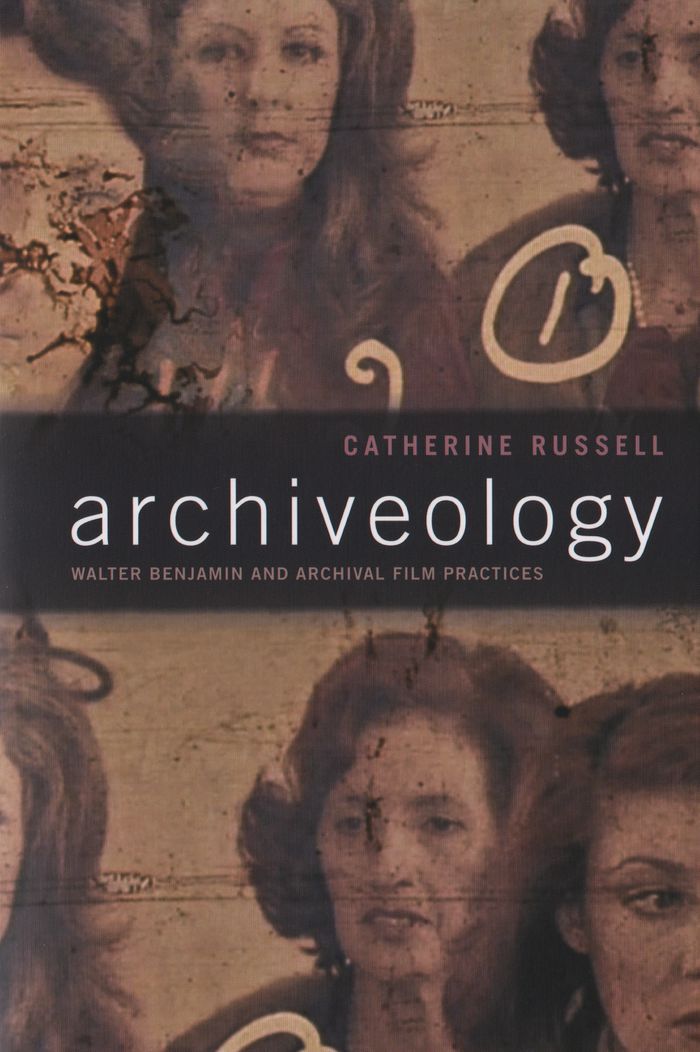
In "Archiveology" Catherine Russell uses the work of Walter Benjamin to explore how the practice of archiveology-the reuse, recycling, appropriation, and borrowing of archival sounds and images by filmmakers-provides ways to imagine the past and the future. Noting how the film archive does not function simply as a place where moving images are preserved, Russell examines a range of films alongside Benjamin's conceptions of memory, document, excavation, and historiography. She shows how city films such as Nicole Vedres's Paris 1900 (1947) and Thom Andersen's Los Angeles Plays Itself (2003) reconstruct notions of urban life and uses Christian Marclay's The Clock (2010) to draw parallels between critical cinephilia and Benjamin's theory of the phantasmagoria. Russell also discusses practices of collecting in archiveological film and rereads films by Joseph Cornell and Rania Stephan to explore an archival practice that dislocates and relocates the female image in film. In so doing, she not only shows how Benjamin's work is as relevant to film theory as ever; she shows how archiveology can awaken artists and audiences to critical forms of history and memory.
Archiveology: Walter Benjamin and archival film practices
Actions:
Price:
$44.50
(available to order)
Summary:
In "Archiveology" Catherine Russell uses the work of Walter Benjamin to explore how the practice of archiveology-the reuse, recycling, appropriation, and borrowing of archival sounds and images by filmmakers-provides ways to imagine the past and the future. Noting how the film archive does not function simply as a place where moving images are preserved, Russell examines a range of films alongside Benjamin's conceptions of memory, document, excavation, and historiography. She shows how city films such as Nicole Vedres's Paris 1900 (1947) and Thom Andersen's Los Angeles Plays Itself (2003) reconstruct notions of urban life and uses Christian Marclay's The Clock (2010) to draw parallels between critical cinephilia and Benjamin's theory of the phantasmagoria. Russell also discusses practices of collecting in archiveological film and rereads films by Joseph Cornell and Rania Stephan to explore an archival practice that dislocates and relocates the female image in film. In so doing, she not only shows how Benjamin's work is as relevant to film theory as ever; she shows how archiveology can awaken artists and audiences to critical forms of history and memory.
Form:
books
books
Publication:
March 2018
March 2018
Subject:
Architecture and Film, Set Design
Architecture and Film, Set Design
Form:
journals and magazines
journals and magazines
Title:
Vesper n.1: Supervenice
Vesper n.1: Supervenice
Actions:
Price:
$40.00
(available to order)
Summary:
This first issue of ‘Vesper’ is dedicated to the realities and unreleased imaginaries of the famous lagoon city. Venice is read as a paradigm of contemporaneity, the place where the architecture, arts, and theories have superlative dimensions: very slow, extremely long-lasting, super short, or overexposed. The journal collects projects, essays, and other views from(...)
$40.00
(available to order)
Summary:
This first issue of ‘Vesper’ is dedicated to the realities and unreleased imaginaries of the famous lagoon city. Venice is read as a paradigm of contemporaneity, the place where the architecture, arts, and theories have superlative dimensions: very slow, extremely long-lasting, super short, or overexposed. The journal collects projects, essays, and other views from(...)
Title:
Vesper n.1: Supervenice
Actions:
Price:
$40.00
(available to order)
Summary:
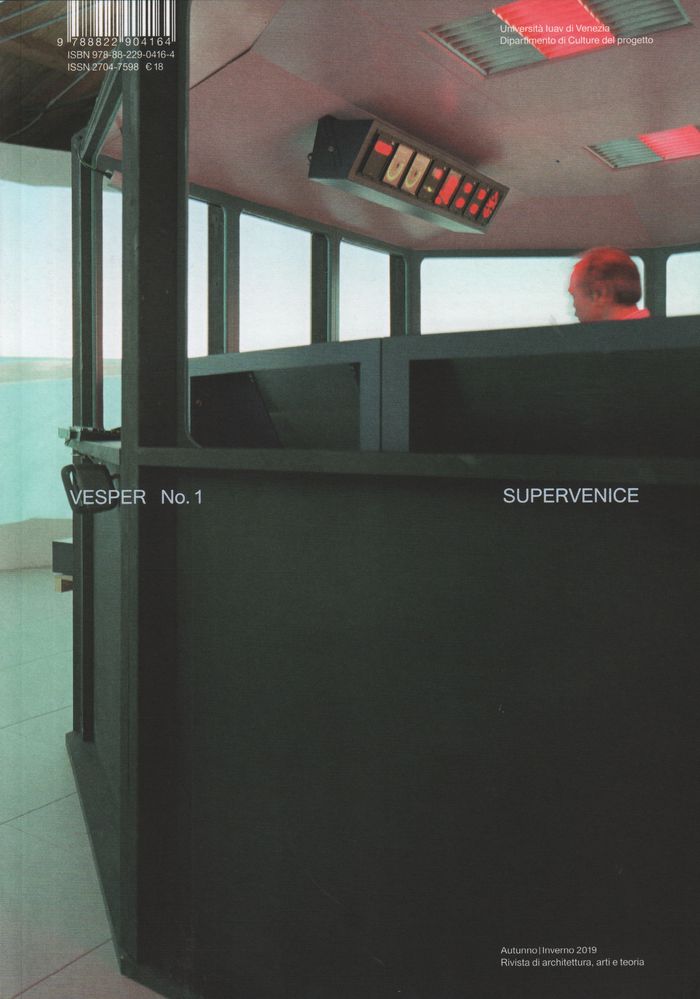
This first issue of ‘Vesper’ is dedicated to the realities and unreleased imaginaries of the famous lagoon city. Venice is read as a paradigm of contemporaneity, the place where the architecture, arts, and theories have superlative dimensions: very slow, extremely long-lasting, super short, or overexposed. The journal collects projects, essays, and other views from various directions and perspectives, whether a reflection on the city, its architecture, music and theatre, or on Venice as a literary body in itself.
Vesper n.1: Supervenice
Actions:
Price:
$40.00
(available to order)
Summary:
This first issue of ‘Vesper’ is dedicated to the realities and unreleased imaginaries of the famous lagoon city. Venice is read as a paradigm of contemporaneity, the place where the architecture, arts, and theories have superlative dimensions: very slow, extremely long-lasting, super short, or overexposed. The journal collects projects, essays, and other views from various directions and perspectives, whether a reflection on the city, its architecture, music and theatre, or on Venice as a literary body in itself.
Form:
journals and magazines
journals and magazines
Publication:
January 2020
January 2020
Subject:
Magazines
Magazines
Form:
books
books
Actions:
Price:
$32.95
(available to order)
Summary:
Over the past two decades, many books and articles have explored the larger meaning of public acts of remembrance. Although these studies have brought the links between public memory, imperialism, and nation building into focus, they overlook local expressions of memory that lie at the heart of our everyday experiences and identities. This publication maps a terrain in(...)
$32.95
(available to order)
Summary:
Over the past two decades, many books and articles have explored the larger meaning of public acts of remembrance. Although these studies have brought the links between public memory, imperialism, and nation building into focus, they overlook local expressions of memory that lie at the heart of our everyday experiences and identities. This publication maps a terrain in(...)
Publication:
July 2011
July 2011
Title:
Placing memory and remembering place in Canada
Actions:
Price:
$32.95
(available to order)
Summary:
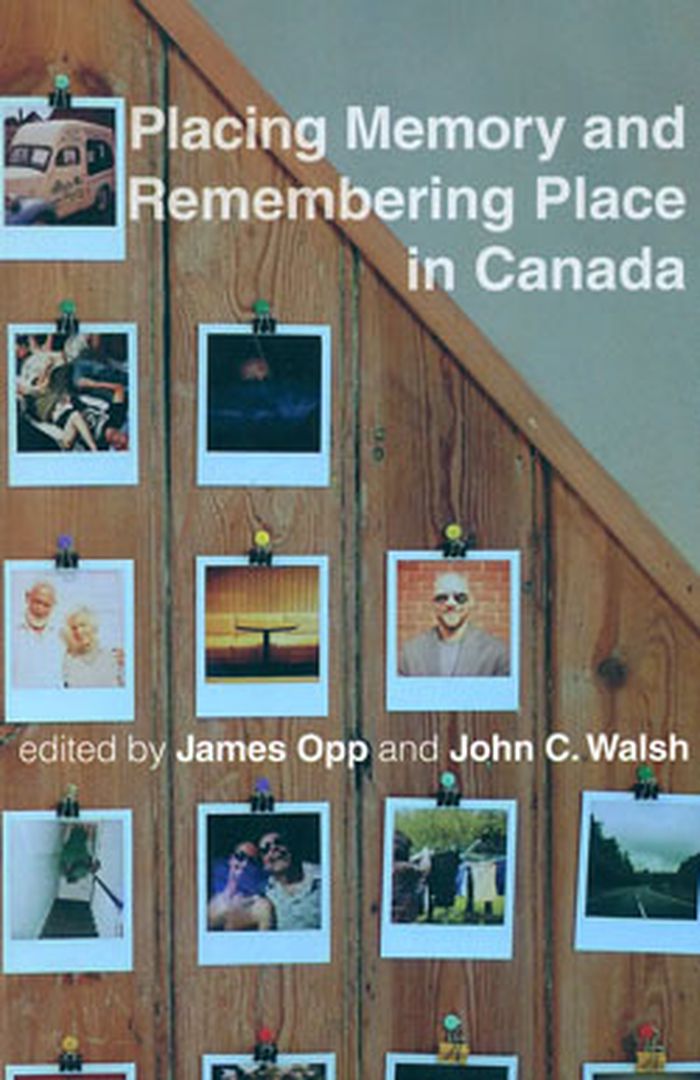
Over the past two decades, many books and articles have explored the larger meaning of public acts of remembrance. Although these studies have brought the links between public memory, imperialism, and nation building into focus, they overlook local expressions of memory that lie at the heart of our everyday experiences and identities. This publication maps a terrain in memory studies by shifting the focus to local places that sit at the intersection of memory making and identity formation - the main street, the city square, the village museum, internment camps, industrial wastelands, and the rural landscape. Offering a perspective on the politics of place and memory across differing chronologies and geographies, the first part of the book traces how local expressions of memory such as celebrations, museums, statues, postcards, and plaques have contributed to a sense of place and belonging in twentieth-century Canada. The second part in turn explores how ordinary Canadians have embedded their memories of place in oral stories, photographs, and the landscape itself. With its focus on the materiality of image, text, and artefact, these essays argue for an understanding of place as imagined, made, claimed, fought for, and defended - always in a state of becoming.
Placing memory and remembering place in Canada
Actions:
Price:
$32.95
(available to order)
Summary:
Over the past two decades, many books and articles have explored the larger meaning of public acts of remembrance. Although these studies have brought the links between public memory, imperialism, and nation building into focus, they overlook local expressions of memory that lie at the heart of our everyday experiences and identities. This publication maps a terrain in memory studies by shifting the focus to local places that sit at the intersection of memory making and identity formation - the main street, the city square, the village museum, internment camps, industrial wastelands, and the rural landscape. Offering a perspective on the politics of place and memory across differing chronologies and geographies, the first part of the book traces how local expressions of memory such as celebrations, museums, statues, postcards, and plaques have contributed to a sense of place and belonging in twentieth-century Canada. The second part in turn explores how ordinary Canadians have embedded their memories of place in oral stories, photographs, and the landscape itself. With its focus on the materiality of image, text, and artefact, these essays argue for an understanding of place as imagined, made, claimed, fought for, and defended - always in a state of becoming.
Form:
books
books
Publication:
July 2011
July 2011
Form:
books
books
Actions:
Price:
$24.95
(available to order)
Summary:
Since the election of Mayor David Miller in November 2003, Toronto has experienced a wave of civic pride and enthusiasm not felt in decades. At long last, Torontonians see their city as a place of possibility and potential. Visions of a truly workable, liveable and world-class city are once again dancing in citizens’ heads. In the past two years, this spirit has, directly(...)
$24.95
(available to order)
Summary:
Since the election of Mayor David Miller in November 2003, Toronto has experienced a wave of civic pride and enthusiasm not felt in decades. At long last, Torontonians see their city as a place of possibility and potential. Visions of a truly workable, liveable and world-class city are once again dancing in citizens’ heads. In the past two years, this spirit has, directly(...)
Subject:
Architecture in Canada
Architecture in Canada
Publication:
October 2005, Toronto
October 2005, Toronto
Title:
Utopia : towards a new Toronto
Actions:
Price:
$24.95
(available to order)
Summary:
Since the election of Mayor David Miller in November 2003, Toronto has experienced a wave of civic pride and enthusiasm not felt in decades. At long last, Torontonians see their city as a place of possibility and potential. Visions of a truly workable, liveable and world-class city are once again dancing in citizens’ heads. In the past two years, this spirit has, directly or indirectly, manifested itself in multifarious forms: in writer Sheila Heti’s sui generis lecture series, Trampoline Hall; in the transformation of derelict hotels such as the Drake and the Gladstone into cultural hotspots; in renewed interest in waterfront revitalization and public transportation; in exciting, controversial architectural developments such as the OCAD building, the expansion of the ROM and the AGO; in the [murmur] project, which catalogues stories about Toronto neighbourhoods and broadcasts them to people’s cell phones; in the explosion of the local independent music scene. "uTOpia" aims to capture and chronicle that spirit, collecting writing by many of the people inspired by and involved in these projects. Featuring passionate, visionary essays by thirty-four different journalists, artists, thinkers, architects and activists, "uTOpia" is a compendium of ideas, opinions and strategies. The anthology explores plans to redevelop the Island airport into a Ward’s Island-style community; how the Zeidler family is energizing artist-run centres; what a car-free Kensington Market might mean; the necessity and beauty of laneway housing; the way past efforts to combat devastating developments like the Spadina Expressway have shaped current activism; what a utopian Toronto might look like mapped out; and much, much more. "uTOpia" writes Toronto as it is shared and created by the people who live here. Though it is by no means a complete picture of what is happening in the city right now, it will hopefully show that what was once just a T-shirt slogan – I Heart T.O. – is now genuine, heartfelt sentiment.
Utopia : towards a new Toronto
Actions:
Price:
$24.95
(available to order)
Summary:
Since the election of Mayor David Miller in November 2003, Toronto has experienced a wave of civic pride and enthusiasm not felt in decades. At long last, Torontonians see their city as a place of possibility and potential. Visions of a truly workable, liveable and world-class city are once again dancing in citizens’ heads. In the past two years, this spirit has, directly or indirectly, manifested itself in multifarious forms: in writer Sheila Heti’s sui generis lecture series, Trampoline Hall; in the transformation of derelict hotels such as the Drake and the Gladstone into cultural hotspots; in renewed interest in waterfront revitalization and public transportation; in exciting, controversial architectural developments such as the OCAD building, the expansion of the ROM and the AGO; in the [murmur] project, which catalogues stories about Toronto neighbourhoods and broadcasts them to people’s cell phones; in the explosion of the local independent music scene. "uTOpia" aims to capture and chronicle that spirit, collecting writing by many of the people inspired by and involved in these projects. Featuring passionate, visionary essays by thirty-four different journalists, artists, thinkers, architects and activists, "uTOpia" is a compendium of ideas, opinions and strategies. The anthology explores plans to redevelop the Island airport into a Ward’s Island-style community; how the Zeidler family is energizing artist-run centres; what a car-free Kensington Market might mean; the necessity and beauty of laneway housing; the way past efforts to combat devastating developments like the Spadina Expressway have shaped current activism; what a utopian Toronto might look like mapped out; and much, much more. "uTOpia" writes Toronto as it is shared and created by the people who live here. Though it is by no means a complete picture of what is happening in the city right now, it will hopefully show that what was once just a T-shirt slogan – I Heart T.O. – is now genuine, heartfelt sentiment.
Form:
books
books
Publication:
October 2005, Toronto
October 2005, Toronto
Subject:
Architecture in Canada
Architecture in Canada


