


941 Results
Form:
books
books
Price:
$75.00
(available to order)
Summary:
Over the past decade installation art has achieved mainstream status within contemporary visual culture. Its ubiquitous presence has given rise to new terms that redefine the art form and impact not just on art, but also on international fashion shows, movie design, and club culture. This volume surveys how installation has evolved, embracing often unexpected media, and(...)
$75.00
(available to order)
Summary:
Over the past decade installation art has achieved mainstream status within contemporary visual culture. Its ubiquitous presence has given rise to new terms that redefine the art form and impact not just on art, but also on international fashion shows, movie design, and club culture. This volume surveys how installation has evolved, embracing often unexpected media, and(...)
Subject:
Contemporary Art Monographs
Contemporary Art Monographs
Publication:
October 2003, London
October 2003, London
Title:
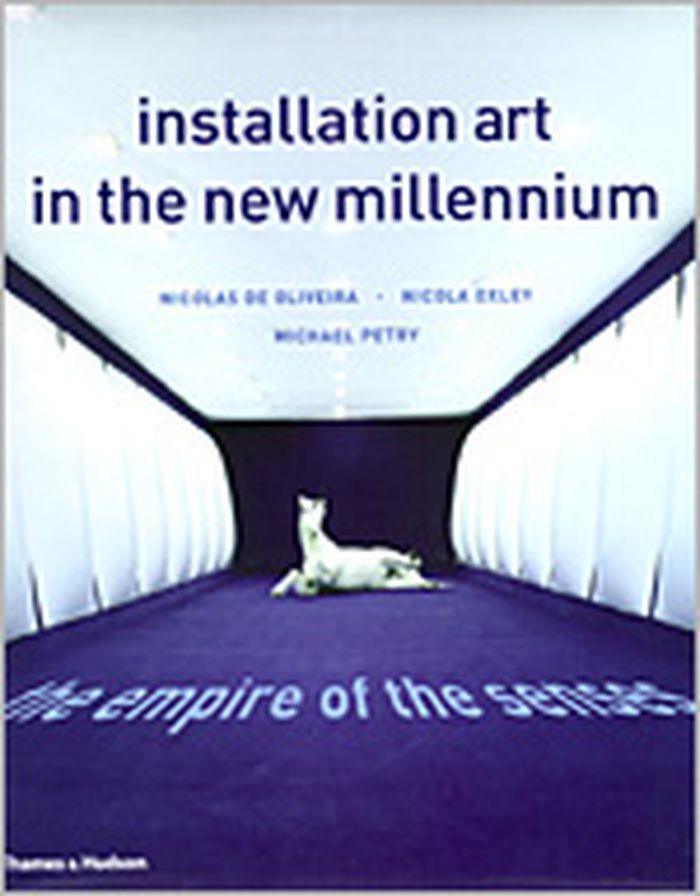
Installation art in the new millenium : the empire of the senses
Actions:
Price:
$75.00
(available to order)
Summary:
Over the past decade installation art has achieved mainstream status within contemporary visual culture. Its ubiquitous presence has given rise to new terms that redefine the art form and impact not just on art, but also on international fashion shows, movie design, and club culture. This volume surveys how installation has evolved, embracing often unexpected media, and its far-reaching influence worldwide. The new "immersive" installation reflects a desire for sensual pleasure, as the viewer is totally enveloped in a hermetic and narcissistic artwork, as illustrated by the American artist Doug Aitken and the Japanese artist Kazuo Katase, among others. New dynamics have developed between the artist and institutions, and installation is more than ever an open-ended experiment that transforms the museum into a cultural laboratory, as seen in the work of Hans Haacke. Installation refuses to accept fixed boundaries, and practitioners, such as the Mexican Jose Dávila, are now looking to forge relationships on a global level, collaborating with specialists in other non-art areas. In a rapidly changing world, time and memory become key concerns, and artists such as Christian Boltanksi and Damien Hirst prefer to construct their own spaces of memory. The culmination of these processes has made the audience itself the key site of the installation as witnessed in the works of Vanessa Beecroft, Gary Hill, Mariko Mori, and Bill Viola. This astonishing process returns us to the body, to the spectator, a space that is both sentient and active, the "empire of the senses."
Installation art in the new millenium : the empire of the senses
Actions:
Price:
$75.00
(available to order)
Summary:
Over the past decade installation art has achieved mainstream status within contemporary visual culture. Its ubiquitous presence has given rise to new terms that redefine the art form and impact not just on art, but also on international fashion shows, movie design, and club culture. This volume surveys how installation has evolved, embracing often unexpected media, and its far-reaching influence worldwide. The new "immersive" installation reflects a desire for sensual pleasure, as the viewer is totally enveloped in a hermetic and narcissistic artwork, as illustrated by the American artist Doug Aitken and the Japanese artist Kazuo Katase, among others. New dynamics have developed between the artist and institutions, and installation is more than ever an open-ended experiment that transforms the museum into a cultural laboratory, as seen in the work of Hans Haacke. Installation refuses to accept fixed boundaries, and practitioners, such as the Mexican Jose Dávila, are now looking to forge relationships on a global level, collaborating with specialists in other non-art areas. In a rapidly changing world, time and memory become key concerns, and artists such as Christian Boltanksi and Damien Hirst prefer to construct their own spaces of memory. The culmination of these processes has made the audience itself the key site of the installation as witnessed in the works of Vanessa Beecroft, Gary Hill, Mariko Mori, and Bill Viola. This astonishing process returns us to the body, to the spectator, a space that is both sentient and active, the "empire of the senses."
Form:
books
books
Publication:
October 2003, London
October 2003, London
Subject:
Contemporary Art Monographs
Contemporary Art Monographs
Form:
books
books
Actions:
Price:
$90.00
(available to order)
Summary:
Henri Cartier-Bresson (1908–2004) is one of the most influential and beloved figures in the history of photography. His inventive work of the early 1930s helped define the creative potential of modern photography. Following World War II, he helped found the Magnum photo agency, which enabled photojournalists to reach a broad audience through magazines such as Life while(...)
$90.00
(available to order)
Summary:
Henri Cartier-Bresson (1908–2004) is one of the most influential and beloved figures in the history of photography. His inventive work of the early 1930s helped define the creative potential of modern photography. Following World War II, he helped found the Magnum photo agency, which enabled photojournalists to reach a broad audience through magazines such as Life while(...)
Title:
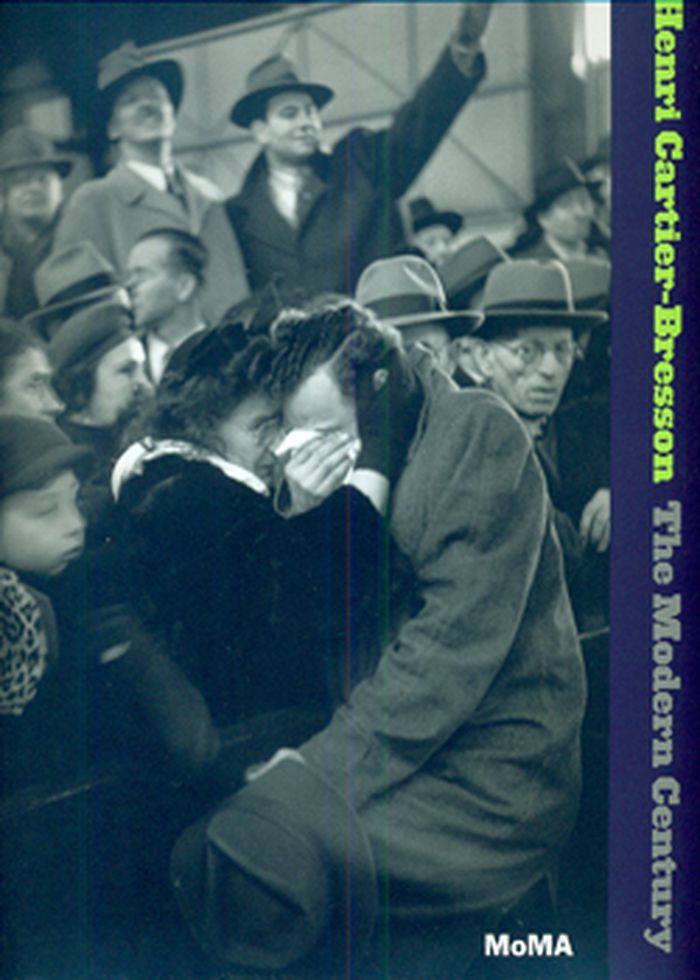
Henri Cartier-Bresson : the modern century
Actions:
Price:
$90.00
(available to order)
Summary:
Henri Cartier-Bresson (1908–2004) is one of the most influential and beloved figures in the history of photography. His inventive work of the early 1930s helped define the creative potential of modern photography. Following World War II, he helped found the Magnum photo agency, which enabled photojournalists to reach a broad audience through magazines such as Life while retaining control over their work. Cartier-Bresson would go on to produce major bodies of photographic reportage, capturing such events as China during the revolution, the Soviet Union after Stalin's death, the United States in the postwar boom and Europe as its older cultures confronted modern realities. Published to accompany an exhibition at The Museum of Modern Art, this is the first major publication to make full use of the extensive holdings of the Fondation Cartier-Bresson — including thousands of prints and a vast resource of documents relating to the photographer's life and work. The heart of the book surveys Cartier-Bresson's career through 300 photographs divided into 12 chapters. While many of his most famous pictures are included, a great number of images will be unfamiliar even to specialists. A wide-ranging essay by Peter Galassi, Chief Curator of Photography at the Museum, offers an entirely new understanding of Cartier-Bresson's extraordinary career and its overlapping contexts of journalism and art. The extensive supporting material — featuring detailed chronologies of the photographer's professional travels and of spreads of his picture stories as they appeared in magazines — will revolutionize the study of Cartier-Bresson's work.
Henri Cartier-Bresson : the modern century
Actions:
Price:
$90.00
(available to order)
Summary:
Henri Cartier-Bresson (1908–2004) is one of the most influential and beloved figures in the history of photography. His inventive work of the early 1930s helped define the creative potential of modern photography. Following World War II, he helped found the Magnum photo agency, which enabled photojournalists to reach a broad audience through magazines such as Life while retaining control over their work. Cartier-Bresson would go on to produce major bodies of photographic reportage, capturing such events as China during the revolution, the Soviet Union after Stalin's death, the United States in the postwar boom and Europe as its older cultures confronted modern realities. Published to accompany an exhibition at The Museum of Modern Art, this is the first major publication to make full use of the extensive holdings of the Fondation Cartier-Bresson — including thousands of prints and a vast resource of documents relating to the photographer's life and work. The heart of the book surveys Cartier-Bresson's career through 300 photographs divided into 12 chapters. While many of his most famous pictures are included, a great number of images will be unfamiliar even to specialists. A wide-ranging essay by Peter Galassi, Chief Curator of Photography at the Museum, offers an entirely new understanding of Cartier-Bresson's extraordinary career and its overlapping contexts of journalism and art. The extensive supporting material — featuring detailed chronologies of the photographer's professional travels and of spreads of his picture stories as they appeared in magazines — will revolutionize the study of Cartier-Bresson's work.
Form:
books
books
Publication:
April 2010
April 2010
Subject:
Photography monographs
Photography monographs
Form:
books
books
Actions:
Holdings:
Description:
543 pages : illustrations (some color), maps ; 23 cm
Description:
543 pages : illustrations (some color), maps ; 23 cm
Author:
Subject:
Publication:
Chicago, Illinois : Terra Foundation for American Art, [2020], ©2020
Chicago, Illinois : Terra Foundation for American Art, [2020], ©2020
Title:
Art of the United States, 1750-2000 : primary sources / John Davis, Michael Leja ; edited by Francesca Rose ; with contributions by Lacey Baradel.
Actions:
Holdings:
Description:
543 pages : illustrations (some color), maps ; 23 cm
Art of the United States, 1750-2000 : primary sources / John Davis, Michael Leja ; edited by Francesca Rose ; with contributions by Lacey Baradel.
Actions:
Holdings:
Description:
543 pages : illustrations (some color), maps ; 23 cm
Form:
books
books
Publication:
Chicago, Illinois : Terra Foundation for American Art, [2020], ©2020
Chicago, Illinois : Terra Foundation for American Art, [2020], ©2020
Author:
Subject:
Form:
books
books
Title:
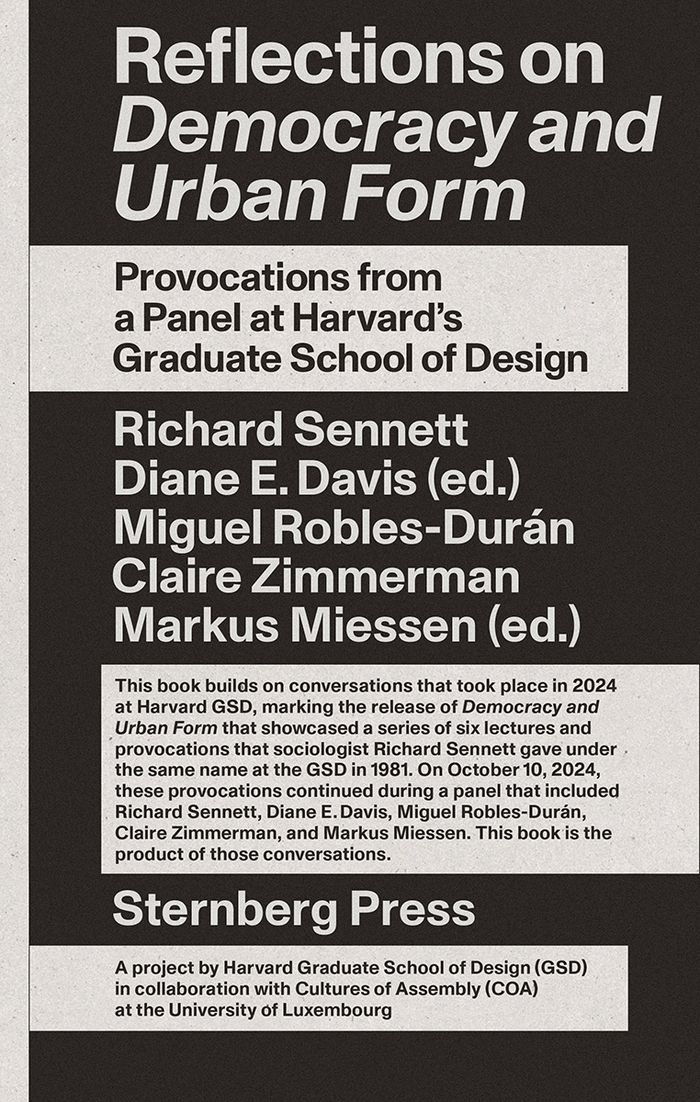
Reflections on democracy and urban form: Provocations from a panel at Harvard's Graduate School
Reflections on democracy and urban form: Provocations from a panel at Harvard's Graduate School
Actions:
Price:
$24.95
(available in store)
Summary:
This book builds on conversations that took place in the Fall of 2024 at Harvard’s Graduate School of Design marking the release of the book ''Democracy and Urban Form'', a co-publication by Harvard Design Press and Sternberg Press. The original book showcased a series of six lectures that the sociologist Richard Sennett gave under the same name at the GSD in the fall of(...)
$24.95
(available in store)
Summary:
This book builds on conversations that took place in the Fall of 2024 at Harvard’s Graduate School of Design marking the release of the book ''Democracy and Urban Form'', a co-publication by Harvard Design Press and Sternberg Press. The original book showcased a series of six lectures that the sociologist Richard Sennett gave under the same name at the GSD in the fall of(...)
Title:
Reflections on democracy and urban form: Provocations from a panel at Harvard's Graduate School
Actions:
Price:
$24.95
(available in store)
Summary:
This book builds on conversations that took place in the Fall of 2024 at Harvard’s Graduate School of Design marking the release of the book ''Democracy and Urban Form'', a co-publication by Harvard Design Press and Sternberg Press. The original book showcased a series of six lectures that the sociologist Richard Sennett gave under the same name at the GSD in the fall of 1981. The original lectures, which happened more than forty years ago, addressed a much different political climate. Even so, Richard’s core insights into the connections between democracy and justice, matters of architecture and urban design, the growth of cities, cosmopolitanism, inclusion, free speech, and other related matters remain just as relevant today. In the spirit of reflecting on these urgencies, the GSD invited the political philosopher Michael Sandel to deliver a lecture that drew on themes from the new edition of his book ''Democracy’s Discontent''. In his opening talk, which took place on the evening of Wednesday, October 9, Sandel encouraged the audience to consider what might account for the polarization that imperils democracy today, as well as what might be done about it? Beyond analyzing the forces that were about to decide the 2024 election, he proposed a bold project of civic renewal to reimagine the economy and empower citizens as participants in a shared public life. On Thursday, October 10, these provocations continued during a panel discussion that included Richard Sennett, Diane Davis, Claire Zimmerman, Markus Miessen, and Miguel Robles-Durán. All reflected on Sandel’s talk, as well as on the state of democracy as it related more specifically to architecture and the design and planning of cities and metropolitan regions.
Reflections on democracy and urban form: Provocations from a panel at Harvard's Graduate School
Actions:
Price:
$24.95
(available in store)
Summary:
This book builds on conversations that took place in the Fall of 2024 at Harvard’s Graduate School of Design marking the release of the book ''Democracy and Urban Form'', a co-publication by Harvard Design Press and Sternberg Press. The original book showcased a series of six lectures that the sociologist Richard Sennett gave under the same name at the GSD in the fall of 1981. The original lectures, which happened more than forty years ago, addressed a much different political climate. Even so, Richard’s core insights into the connections between democracy and justice, matters of architecture and urban design, the growth of cities, cosmopolitanism, inclusion, free speech, and other related matters remain just as relevant today. In the spirit of reflecting on these urgencies, the GSD invited the political philosopher Michael Sandel to deliver a lecture that drew on themes from the new edition of his book ''Democracy’s Discontent''. In his opening talk, which took place on the evening of Wednesday, October 9, Sandel encouraged the audience to consider what might account for the polarization that imperils democracy today, as well as what might be done about it? Beyond analyzing the forces that were about to decide the 2024 election, he proposed a bold project of civic renewal to reimagine the economy and empower citizens as participants in a shared public life. On Thursday, October 10, these provocations continued during a panel discussion that included Richard Sennett, Diane Davis, Claire Zimmerman, Markus Miessen, and Miguel Robles-Durán. All reflected on Sandel’s talk, as well as on the state of democracy as it related more specifically to architecture and the design and planning of cities and metropolitan regions.
Form:
books
books
Publication:
August 2026
August 2026
Subject:
Urban Theory
Urban Theory
Form:
books
books
Actions:
Price:
$33.95
(available to order)
Summary:
"Fuel" is an idiosyncratic, speculative dictionary of fuels, real and imagined, historical and futuristic, hopeless and utopian. Drawing on literature, film, and scientific treatises--most produced long before "climate change" was in circulation--"Fuel" argues for a distinction between energy (a system of power) and fuel (a substance, which can be thought of as(...)
$33.95
(available to order)
Summary:
"Fuel" is an idiosyncratic, speculative dictionary of fuels, real and imagined, historical and futuristic, hopeless and utopian. Drawing on literature, film, and scientific treatises--most produced long before "climate change" was in circulation--"Fuel" argues for a distinction between energy (a system of power) and fuel (a substance, which can be thought of as(...)
Title:
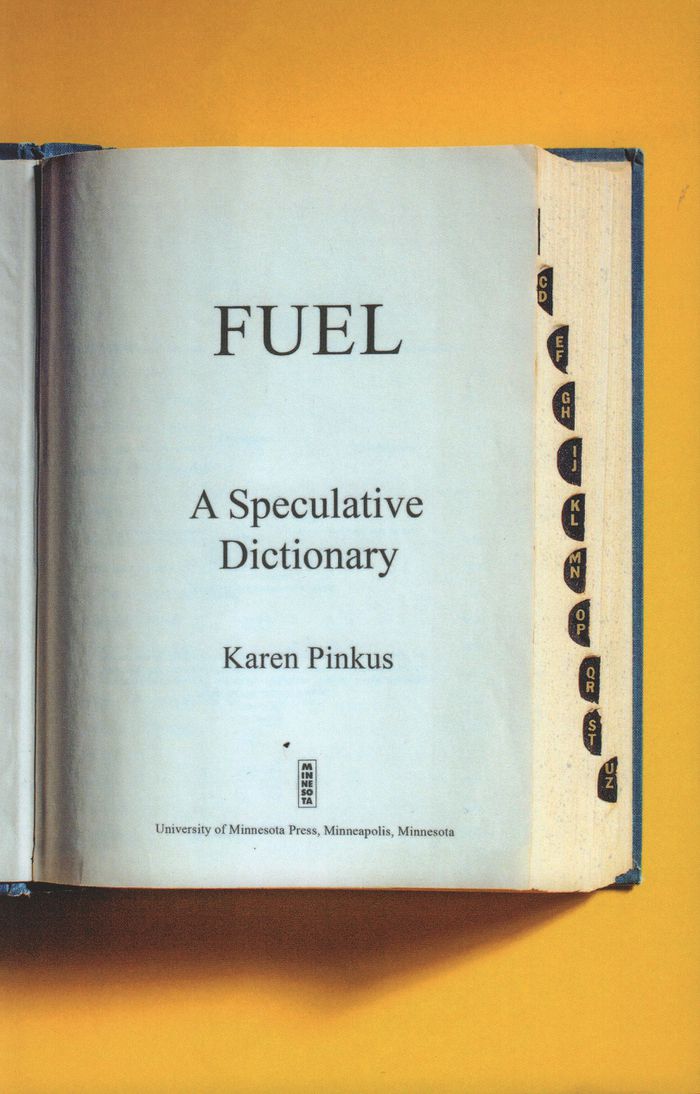
Fuel : a speculative dictionary
Actions:
Price:
$33.95
(available to order)
Summary:
"Fuel" is an idiosyncratic, speculative dictionary of fuels, real and imagined, historical and futuristic, hopeless and utopian. Drawing on literature, film, and scientific treatises--most produced long before "climate change" was in circulation--"Fuel" argues for a distinction between energy (a system of power) and fuel (a substance, which can be thought of as "potentiality") as it endeavors to undo the dream that we can simply switch to renewables and all will be golden. From "Air" to "Zyklon B," entries in this unusual "dictionary" include Algae, Clathrates, Dilithium, Fleece, Goats, Theology, Whale Oil, and many, many more. The tone of the entries ranges as widely as the topics: from historical anecdotes (the Ford Fiesta "boozemobile") to eccentric readings of the classics of "energy lit" ( Germinal and Oil! ); from literary observations (a high octane Odyssey ?) to excursions into literary theory. The dictionary draws from an eccentric canon, including works by Jules Verne, George Eliot's Silas Marner , Paolo Bacigalupi's Windup Girl , and the Tom Cruise vehicle Oblivion , among others. A message from this ambitious project is that energy can be understood as a heterogeneous set of self-mystifying systems or machines that block access to thought as they fascinate us. Fuels emerge as more primal elements that the audience can grasp at various points along the way to consumption/combustion. This dictionary can help scramble our thinking about fuel--not in order to demonize energy and not in order to create a new hierarchy in which certain renewables take over from fossil fuels but instead to open up potential ways of interacting with real and imaginary substances, by wrenching them out of narrative and placing them into an idiosyncratic dictionary to be applied by readers into new narratives.
Fuel : a speculative dictionary
Actions:
Price:
$33.95
(available to order)
Summary:
"Fuel" is an idiosyncratic, speculative dictionary of fuels, real and imagined, historical and futuristic, hopeless and utopian. Drawing on literature, film, and scientific treatises--most produced long before "climate change" was in circulation--"Fuel" argues for a distinction between energy (a system of power) and fuel (a substance, which can be thought of as "potentiality") as it endeavors to undo the dream that we can simply switch to renewables and all will be golden. From "Air" to "Zyklon B," entries in this unusual "dictionary" include Algae, Clathrates, Dilithium, Fleece, Goats, Theology, Whale Oil, and many, many more. The tone of the entries ranges as widely as the topics: from historical anecdotes (the Ford Fiesta "boozemobile") to eccentric readings of the classics of "energy lit" ( Germinal and Oil! ); from literary observations (a high octane Odyssey ?) to excursions into literary theory. The dictionary draws from an eccentric canon, including works by Jules Verne, George Eliot's Silas Marner , Paolo Bacigalupi's Windup Girl , and the Tom Cruise vehicle Oblivion , among others. A message from this ambitious project is that energy can be understood as a heterogeneous set of self-mystifying systems or machines that block access to thought as they fascinate us. Fuels emerge as more primal elements that the audience can grasp at various points along the way to consumption/combustion. This dictionary can help scramble our thinking about fuel--not in order to demonize energy and not in order to create a new hierarchy in which certain renewables take over from fossil fuels but instead to open up potential ways of interacting with real and imaginary substances, by wrenching them out of narrative and placing them into an idiosyncratic dictionary to be applied by readers into new narratives.
Form:
books
books
Publication:
November 2016
November 2016
Subject:
Environment and environmental theory
Environment and environmental theory
Form:
books
books
Price:
$48.00
(available to order)
Summary:
This book introduces to an English-language audience the writings of the so-called New Vienna School of art history. In the 1930s Hans Sedlmayr (1896-1984) and Otto Pächt (1902-1988) undertook an ambitious extension of the formalist art historical project of Alois (...)
$48.00
(available to order)
Summary:
This book introduces to an English-language audience the writings of the so-called New Vienna School of art history. In the 1930s Hans Sedlmayr (1896-1984) and Otto Pächt (1902-1988) undertook an ambitious extension of the formalist art historical project of Alois (...)
Title:
The Vienna School reader : politics and art historical method in the 1930s
Actions:
Price:
$48.00
(available to order)
Summary:
This book introduces to an English-language audience the writings of the so-called New Vienna School of art history. In the 1930s Hans Sedlmayr (1896-1984) and Otto Pächt (1902-1988) undertook an ambitious extension of the formalist art historical project of Alois Riegl (1858-1905). Sedlmayr and Pächt began with an aestheticist conception of the autonomy and irreducibility of the artistic process. At the same time they believed they could read entire cultures and worldviews in the work of art. The key to this contextualist alchemy was the concept of "structure," a kind of deep formal property that the work of art shared with the world. Sedlmayr and Pächt's project immediately caught the attention of thinkers like Walter Benjamin who were similarly impatient with traditional empiricist scholarship. But the new project had its dark side. Sedlmayr used art history as a vehicle for a sweeping critique of modernity that soon escalated into nationalist and outright fascist polemic, even while Pächt, a Jew, was forced into exile. Sedlmayr and the whole scholarly project of Strukturanalyse were sharply repudiated by Meyer Schapiro and later Ernst Gombrich. After an introductory essay, the book opens with two selections from Riegl. The next section includes two essays by Sedlmayr, two by Pächt, and one each by Guido Kaschnitz-Weinberg and Fritz Novotny, all dating from the 1930s. The book closes with the divergent responses of Benjamin (1933) and Schapiro (1936). The difference of opinion between these two key voices raises again the question of the legitimacy and effectiveness of the method, and reveals the analogies between the New Vienna School project and the antiempiricist cultural histories of our own time. The book also contains an extensive bibliography.
The Vienna School reader : politics and art historical method in the 1930s
Actions:
Price:
$48.00
(available to order)
Summary:
This book introduces to an English-language audience the writings of the so-called New Vienna School of art history. In the 1930s Hans Sedlmayr (1896-1984) and Otto Pächt (1902-1988) undertook an ambitious extension of the formalist art historical project of Alois Riegl (1858-1905). Sedlmayr and Pächt began with an aestheticist conception of the autonomy and irreducibility of the artistic process. At the same time they believed they could read entire cultures and worldviews in the work of art. The key to this contextualist alchemy was the concept of "structure," a kind of deep formal property that the work of art shared with the world. Sedlmayr and Pächt's project immediately caught the attention of thinkers like Walter Benjamin who were similarly impatient with traditional empiricist scholarship. But the new project had its dark side. Sedlmayr used art history as a vehicle for a sweeping critique of modernity that soon escalated into nationalist and outright fascist polemic, even while Pächt, a Jew, was forced into exile. Sedlmayr and the whole scholarly project of Strukturanalyse were sharply repudiated by Meyer Schapiro and later Ernst Gombrich. After an introductory essay, the book opens with two selections from Riegl. The next section includes two essays by Sedlmayr, two by Pächt, and one each by Guido Kaschnitz-Weinberg and Fritz Novotny, all dating from the 1930s. The book closes with the divergent responses of Benjamin (1933) and Schapiro (1936). The difference of opinion between these two key voices raises again the question of the legitimacy and effectiveness of the method, and reveals the analogies between the New Vienna School project and the antiempiricist cultural histories of our own time. The book also contains an extensive bibliography.
Form:
books
books
Publication:
January 1900, New York
January 1900, New York
Subject:
Architectural Theory
Architectural Theory
Form:
books
books
Title:
Among others : Blackness at MoMA / Darby English and Charlotte Barat ; [foreword by Glenn D. Lowry].
Among others : Blackness at MoMA / Darby English and Charlotte Barat ; [foreword by Glenn D. Lowry].
Actions:
Holdings:
Description:
475 pages : illustrations (chiefly color) ; 28 x 24 cm
Description:
475 pages : illustrations (chiefly color) ; 28 x 24 cm
Author:
Subject:
Publication:
New York : The Museum of Modern Art, [2019], New York : Distributed in the United States and Canada by ARTBOOK/D.A.P., ©2019
New York : The Museum of Modern Art, [2019], New York : Distributed in the United States and Canada by ARTBOOK/D.A.P., ©2019
Title:
Among others : Blackness at MoMA / Darby English and Charlotte Barat ; [foreword by Glenn D. Lowry].
Actions:
Holdings:
Description:
475 pages : illustrations (chiefly color) ; 28 x 24 cm
Among others : Blackness at MoMA / Darby English and Charlotte Barat ; [foreword by Glenn D. Lowry].
Actions:
Holdings:
Description:
475 pages : illustrations (chiefly color) ; 28 x 24 cm
Form:
books
books
Publication:
New York : The Museum of Modern Art, [2019], New York : Distributed in the United States and Canada by ARTBOOK/D.A.P., ©2019
New York : The Museum of Modern Art, [2019], New York : Distributed in the United States and Canada by ARTBOOK/D.A.P., ©2019
Author:
Subject:
Form:
books
books
Price:
$49.95
(available in store)
Summary:
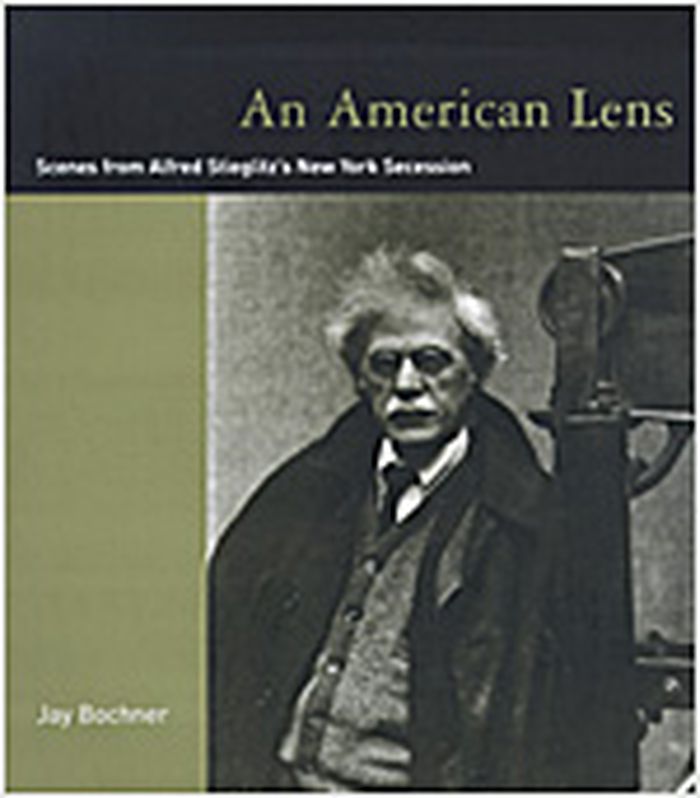
In "An American lens", Jay Bochner looks at a series of milestones in the development of the American avant-garde that capture a pivotal period in artistic consciousness. He focuses on the multiple roles of Alfred Stieglitz-as influential gallery owner, photographer, and impresario of the emerging art scene-at a series of significant moments in his career. These close-ups(...)
$49.95
(available in store)
Summary:
In "An American lens", Jay Bochner looks at a series of milestones in the development of the American avant-garde that capture a pivotal period in artistic consciousness. He focuses on the multiple roles of Alfred Stieglitz-as influential gallery owner, photographer, and impresario of the emerging art scene-at a series of significant moments in his career. These close-ups(...)
Title:
An American lens : scenes from Alfred Stieglitz's New York Secession
Actions:
Price:
$49.95
(available in store)
Summary:
In "An American lens", Jay Bochner looks at a series of milestones in the development of the American avant-garde that capture a pivotal period in artistic consciousness. He focuses on the multiple roles of Alfred Stieglitz-as influential gallery owner, photographer, and impresario of the emerging art scene-at a series of significant moments in his career. These close-ups offer a more intense and expanded understanding of the subject than the familiar long view. Bochner uses these scenes to recreate for today's readers the birth of modernism in America-what it was like to be an audience for the art of the early avant-garde. Moving from frame to frame, he shows us, for example, a single photograph by Stieglitz of a snowy night in 1893 and a short description by Stephen Crane of just such a snowfall; the preparation, the reception, and the aftermath of the famous Armory Show of modern art in 1913; Gertrude Stein's portraits in prose; New York at the dawn of Dada, with Paul Strand, Francis Picabia, and others; and the intersecting paths of Mina Loy, William Carlos Williams, and Marcel Duchamp in 1917. Bochner also examines Stieglitz's three great photographic series: his photographs of Georgia O'Keeffe, of clouds, and of skyscrapers. These sections of the book include many Stieglitz photos, including some rarely seen portraits of O'Keeffe. Stieglitz as impresario and artist achieved an almost mythical status, which some recent critics have worked to deflate-casting him, for example, as Svengali to Georgia O'Keeffe's spellbound Trilby. Engaging in neither idolatry nor demolition, Bochner looks instead for the truth about the man and the myth. The scenes from American art in "An American lens" create a new version of Stieglitz's biography, allowing us to reread his life and the life of his times by focusing intently on what is visible and not so visible in the art he left behind.
An American lens : scenes from Alfred Stieglitz's New York Secession
Actions:
Price:
$49.95
(available in store)
Summary:
In "An American lens", Jay Bochner looks at a series of milestones in the development of the American avant-garde that capture a pivotal period in artistic consciousness. He focuses on the multiple roles of Alfred Stieglitz-as influential gallery owner, photographer, and impresario of the emerging art scene-at a series of significant moments in his career. These close-ups offer a more intense and expanded understanding of the subject than the familiar long view. Bochner uses these scenes to recreate for today's readers the birth of modernism in America-what it was like to be an audience for the art of the early avant-garde. Moving from frame to frame, he shows us, for example, a single photograph by Stieglitz of a snowy night in 1893 and a short description by Stephen Crane of just such a snowfall; the preparation, the reception, and the aftermath of the famous Armory Show of modern art in 1913; Gertrude Stein's portraits in prose; New York at the dawn of Dada, with Paul Strand, Francis Picabia, and others; and the intersecting paths of Mina Loy, William Carlos Williams, and Marcel Duchamp in 1917. Bochner also examines Stieglitz's three great photographic series: his photographs of Georgia O'Keeffe, of clouds, and of skyscrapers. These sections of the book include many Stieglitz photos, including some rarely seen portraits of O'Keeffe. Stieglitz as impresario and artist achieved an almost mythical status, which some recent critics have worked to deflate-casting him, for example, as Svengali to Georgia O'Keeffe's spellbound Trilby. Engaging in neither idolatry nor demolition, Bochner looks instead for the truth about the man and the myth. The scenes from American art in "An American lens" create a new version of Stieglitz's biography, allowing us to reread his life and the life of his times by focusing intently on what is visible and not so visible in the art he left behind.
Form:
books
books
Publication:
October 2005, Cambridge, London
October 2005, Cambridge, London
Subject:
Photography monographs
Photography monographs
Form:
books
books
Actions:
Price:
$99.95
(available to order)
Summary:
While the history of photography is a well-established canon, much less critical attention has been directed at the phenomenon of the photobook, which for many photographers is perhaps the most significant vehicle for the display of their work and the communication of their vision to a mass audience. In the first of two volumes, both co-edited by Martin Parr and Gerry(...)
$99.95
(available to order)
Summary:
While the history of photography is a well-established canon, much less critical attention has been directed at the phenomenon of the photobook, which for many photographers is perhaps the most significant vehicle for the display of their work and the communication of their vision to a mass audience. In the first of two volumes, both co-edited by Martin Parr and Gerry(...)
Subject:
Photography Collections
Photography Collections
Publication:
November 2004, London
November 2004, London
Title:
The photobook : a history, volume 1
Actions:
Price:
$99.95
(available to order)
Summary:
While the history of photography is a well-established canon, much less critical attention has been directed at the phenomenon of the photobook, which for many photographers is perhaps the most significant vehicle for the display of their work and the communication of their vision to a mass audience. In the first of two volumes, both co-edited by Martin Parr and Gerry Badger, "The Photobook" provides a comprehensive overview of the development of the photobook, from its inception at the dawn of photography in the early nineteenth century through to the radical Japanese photobooks of the 1960s and 70s, by way of the modernist and propaganda books of the 1930s and 40s. In his introduction, Badger argues that the photobook is one of the most significant photographic genres due to the extent of its distribution and level of availability, and contests the traditional notion that the history of photography is best represented by the original print. This study provides an important corrective to the traditional history of photography. The selection of photographers made by Badger and Parr challenges the popular canon, and their survey of the history of the photobook reveals a secret web of influence and interrelationships between photographers and photographic movements around the world. The book is divided into a series of thematic and broadly chronological chapters, each featuring a general introductory text providing background information and highlighting the dominant political and artistic influences on the photobook in the period, followed by more detailed discussion of the individual photobooks. The chapter texts are followed by spreads and images from over 200 books, which provide the central means of telling the history of the photobook. Chosen by Parr and Badger, these illustrations show around 200 of the most artistically and culturally important photobooks in three dimensions, with the cover or jacket and a selection of spreads from the book shown. Volume One also features an illuminating and provocative introduction, ‘The Photobook: Between the Film and the Novel’ by Badger, which is accompanied by a preface written by Parr.
The photobook : a history, volume 1
Actions:
Price:
$99.95
(available to order)
Summary:
While the history of photography is a well-established canon, much less critical attention has been directed at the phenomenon of the photobook, which for many photographers is perhaps the most significant vehicle for the display of their work and the communication of their vision to a mass audience. In the first of two volumes, both co-edited by Martin Parr and Gerry Badger, "The Photobook" provides a comprehensive overview of the development of the photobook, from its inception at the dawn of photography in the early nineteenth century through to the radical Japanese photobooks of the 1960s and 70s, by way of the modernist and propaganda books of the 1930s and 40s. In his introduction, Badger argues that the photobook is one of the most significant photographic genres due to the extent of its distribution and level of availability, and contests the traditional notion that the history of photography is best represented by the original print. This study provides an important corrective to the traditional history of photography. The selection of photographers made by Badger and Parr challenges the popular canon, and their survey of the history of the photobook reveals a secret web of influence and interrelationships between photographers and photographic movements around the world. The book is divided into a series of thematic and broadly chronological chapters, each featuring a general introductory text providing background information and highlighting the dominant political and artistic influences on the photobook in the period, followed by more detailed discussion of the individual photobooks. The chapter texts are followed by spreads and images from over 200 books, which provide the central means of telling the history of the photobook. Chosen by Parr and Badger, these illustrations show around 200 of the most artistically and culturally important photobooks in three dimensions, with the cover or jacket and a selection of spreads from the book shown. Volume One also features an illuminating and provocative introduction, ‘The Photobook: Between the Film and the Novel’ by Badger, which is accompanied by a preface written by Parr.
Form:
books
books
Publication:
November 2004, London
November 2004, London
Subject:
Photography Collections
Photography Collections
Form:
books
books
Title:
The afterlife of gardens
The afterlife of gardens
Actions:
Price:
$62.50
(available to order)
Summary:
Most historical and critical discussions of gardens focus on their design. What happens after the completion of the design, however, is largely ignored, which neglects a much larger part of the site's interest and potential. For gardens, John Dixon Hunt contends, are experienced, often by a succession of visitors at different times and often from different cultures; this(...)
$62.50
(available to order)
Summary:
Most historical and critical discussions of gardens focus on their design. What happens after the completion of the design, however, is largely ignored, which neglects a much larger part of the site's interest and potential. For gardens, John Dixon Hunt contends, are experienced, often by a succession of visitors at different times and often from different cultures; this(...)
Title:
The afterlife of gardens
Actions:
Price:
$62.50
(available to order)
Summary:
Most historical and critical discussions of gardens focus on their design. What happens after the completion of the design, however, is largely ignored, which neglects a much larger part of the site's interest and potential. For gardens, John Dixon Hunt contends, are experienced, often by a succession of visitors at different times and often from different cultures; this experience, though determined by the original design and its subsequent modifications, also augments the site's potentialities, and this "afterlife" of gardens comes to enhance the original moment of creation. One way of exploring the experience of designed landscapes is to adapt literary reception theory to the study of gardens. Hunt argues that such an approach via the reception or experience of gardens enlarges how we should understand their significance and meanings. It is generally assumed that the experience of gardens became a prime ingredient of late eighteenth-century landscapes -- picturesque literature especially highlighted how visitors responded to their surroundings, reading inscriptions and recognizing the significance of carefully placed architectural items or fabriqués. But there is considerable evidence for a much earlier interest in how experience came to constitute an essential aspect of a site beyond the intentions of the original designer or patron. Among other early examples, Hunt examines the book “Hypnerotomachia Polifili” (1499) to show how its protagonist is shown exploring and negotiating a series of strange and baffling landscapes. Through other inquiries -- particularly into the role of movement in such different situations as Versailles, and Chiswick or along modern highways – “The Afterlife of Gardens” provides a fresh approach to the study of designed landscapes that goes beyond their production and into how they exist and are understood by their users. In this ambitious new book the author shows how the complete history of a garden must extend beyond the moment of its design and the aims of the designer to record its subsequent reception. He raises questions about the preservation of historical sites, and provides lessons for the contemporary designer, who may perhaps be more attentive to the life of a work after its design and implementation. This book will interest all who have a professional interest in gardens, as well as the wide general audience for gardens and landscapes of past and present.
The afterlife of gardens
Actions:
Price:
$62.50
(available to order)
Summary:
Most historical and critical discussions of gardens focus on their design. What happens after the completion of the design, however, is largely ignored, which neglects a much larger part of the site's interest and potential. For gardens, John Dixon Hunt contends, are experienced, often by a succession of visitors at different times and often from different cultures; this experience, though determined by the original design and its subsequent modifications, also augments the site's potentialities, and this "afterlife" of gardens comes to enhance the original moment of creation. One way of exploring the experience of designed landscapes is to adapt literary reception theory to the study of gardens. Hunt argues that such an approach via the reception or experience of gardens enlarges how we should understand their significance and meanings. It is generally assumed that the experience of gardens became a prime ingredient of late eighteenth-century landscapes -- picturesque literature especially highlighted how visitors responded to their surroundings, reading inscriptions and recognizing the significance of carefully placed architectural items or fabriqués. But there is considerable evidence for a much earlier interest in how experience came to constitute an essential aspect of a site beyond the intentions of the original designer or patron. Among other early examples, Hunt examines the book “Hypnerotomachia Polifili” (1499) to show how its protagonist is shown exploring and negotiating a series of strange and baffling landscapes. Through other inquiries -- particularly into the role of movement in such different situations as Versailles, and Chiswick or along modern highways – “The Afterlife of Gardens” provides a fresh approach to the study of designed landscapes that goes beyond their production and into how they exist and are understood by their users. In this ambitious new book the author shows how the complete history of a garden must extend beyond the moment of its design and the aims of the designer to record its subsequent reception. He raises questions about the preservation of historical sites, and provides lessons for the contemporary designer, who may perhaps be more attentive to the life of a work after its design and implementation. This book will interest all who have a professional interest in gardens, as well as the wide general audience for gardens and landscapes of past and present.
Form:
books
books
Publication:
January 1900, Philadelphia
January 1900, Philadelphia
Subject:
Landscape Theory
Landscape Theory


