


9524 Results
Form:
books
books
Actions:
Price:
$44.95
(available to order)
Summary:
The Nature of Landscape offers an inspiring, personal account of a quest into the meaning and background of the term ‘landscape’. The author, a landscape planner and designer currently teaching at Eindhoven University of Technology, researches the origins of landscape in our civilization and describes different points of view that have helped shape our opinions on(...)
$44.95
(available to order)
Summary:
The Nature of Landscape offers an inspiring, personal account of a quest into the meaning and background of the term ‘landscape’. The author, a landscape planner and designer currently teaching at Eindhoven University of Technology, researches the origins of landscape in our civilization and describes different points of view that have helped shape our opinions on(...)
Title:
The nature of landscape : a personal quest
Actions:
Price:
$44.95
(available to order)
Summary:
The Nature of Landscape offers an inspiring, personal account of a quest into the meaning and background of the term ‘landscape’. The author, a landscape planner and designer currently teaching at Eindhoven University of Technology, researches the origins of landscape in our civilization and describes different points of view that have helped shape our opinions on landscape. For the author, our notion of landscape is focused around the terms 'nature versus culture' and 'native versus foreign'. These counterparts make up his 'mindscape diamond', a modified matrix that not only explains trends in landscape perception and design, but also helps to define developments in land use, architecture, urban planning and environmental art. On a more metaphorical level, the author's abundantly illustrated quest is symbolized by a number of personal impressions, such as the discovery of a stone circle in the desert, a lesson in the peculiarities of the Russian language, a journey along the industrial heritage of the German Ruhrgebiet and a visit to a town where ‘Bavaria comes to Washington’. Offering an unexpected reading experience, these and other descriptions demonstrate how varied ‘landscape’ can be. In a worldwide overview of 30 landscape related artworks and 30 park designs, the author discusses landscape attitudes past and present. In a final chapter, he brings together recent developments in society, architecture and art to make a forecast of landscape trends in the near future. Themes such as man-made nature and reinvented heritage conclude this unusual book on the essence of landscape.
The nature of landscape : a personal quest
Actions:
Price:
$44.95
(available to order)
Summary:
The Nature of Landscape offers an inspiring, personal account of a quest into the meaning and background of the term ‘landscape’. The author, a landscape planner and designer currently teaching at Eindhoven University of Technology, researches the origins of landscape in our civilization and describes different points of view that have helped shape our opinions on landscape. For the author, our notion of landscape is focused around the terms 'nature versus culture' and 'native versus foreign'. These counterparts make up his 'mindscape diamond', a modified matrix that not only explains trends in landscape perception and design, but also helps to define developments in land use, architecture, urban planning and environmental art. On a more metaphorical level, the author's abundantly illustrated quest is symbolized by a number of personal impressions, such as the discovery of a stone circle in the desert, a lesson in the peculiarities of the Russian language, a journey along the industrial heritage of the German Ruhrgebiet and a visit to a town where ‘Bavaria comes to Washington’. Offering an unexpected reading experience, these and other descriptions demonstrate how varied ‘landscape’ can be. In a worldwide overview of 30 landscape related artworks and 30 park designs, the author discusses landscape attitudes past and present. In a final chapter, he brings together recent developments in society, architecture and art to make a forecast of landscape trends in the near future. Themes such as man-made nature and reinvented heritage conclude this unusual book on the essence of landscape.
Form:
books
books
Publication:
March 2001, Rotterdam
March 2001, Rotterdam
Subject:
Landscape Theory
Landscape Theory
Form:
books
books
Actions:
Price:
$47.95
(available to order)
Summary:
Since its invention, photography has been used to document and interpret the landscape. Survey photographers in the 1860s were the first environmental advocates, arguing for the U.S. national park system. During the first half of the 20th century photographers Ansel Adams and Eliot Porter were central figures in influencing American attitudes toward wilderness and(...)
$47.95
(available to order)
Summary:
Since its invention, photography has been used to document and interpret the landscape. Survey photographers in the 1860s were the first environmental advocates, arguing for the U.S. national park system. During the first half of the 20th century photographers Ansel Adams and Eliot Porter were central figures in influencing American attitudes toward wilderness and(...)
Subject:
Photography by Region
Photography by Region
Publication:
April 2011
April 2011
Title:
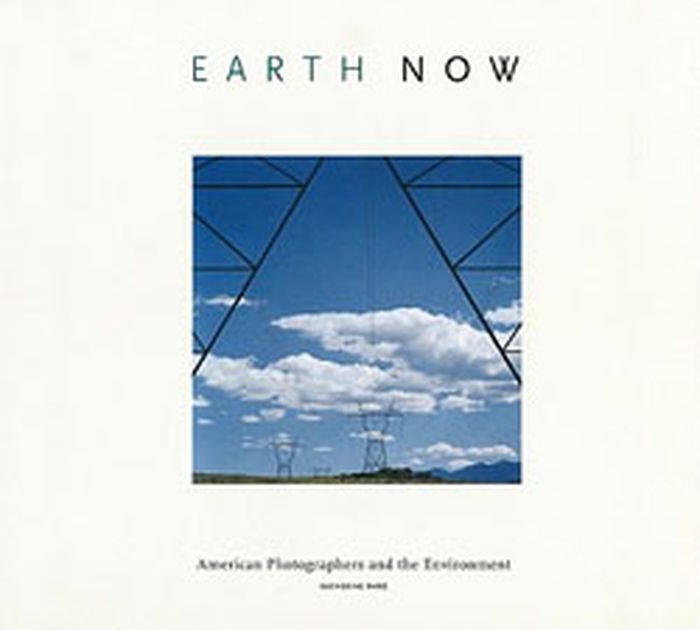
Earth now: american photographers and the environment
Actions:
Price:
$47.95
(available to order)
Summary:
Since its invention, photography has been used to document and interpret the landscape. Survey photographers in the 1860s were the first environmental advocates, arguing for the U.S. national park system. During the first half of the 20th century photographers Ansel Adams and Eliot Porter were central figures in influencing American attitudes toward wilderness and conservation. This book traces the development of environmental photography beginning with Adams, Porter and others, and the next generation of landscape photographers - Robert Adams, Richard Misrach, Robert Glenn Ketchum, Patrick Nagatani, Mark Klett, whose works confronted the issues of landscape and the environment in less idealised terms. Shifting from the historical framework, the book presents new work by twenty-three photographers working in the U.S., the next wave of artists using the camera to engage the environmental issues of the day. Ranging from documentary to conceptual, the photographs touch on topics such as land and water use, the human place in the landscape, mounting consumer waste, industrial pollution, roof gardens and the green roof initiative, local food production, energy consumption, and the effects of industry on humans and animals. Katherine Ware's text offers insightful commentary on photography and the ways that environmental issues have been framed and advanced through the medium of photography. This is a powerful commentary on global environmental issues as seen through the lens of the newest wave of environmental photographers. This book is published to coincide with an exhibition to open at the New Mexico Museum of Art, Santa Fe, New Mexico, in April 2011.
Earth now: american photographers and the environment
Actions:
Price:
$47.95
(available to order)
Summary:
Since its invention, photography has been used to document and interpret the landscape. Survey photographers in the 1860s were the first environmental advocates, arguing for the U.S. national park system. During the first half of the 20th century photographers Ansel Adams and Eliot Porter were central figures in influencing American attitudes toward wilderness and conservation. This book traces the development of environmental photography beginning with Adams, Porter and others, and the next generation of landscape photographers - Robert Adams, Richard Misrach, Robert Glenn Ketchum, Patrick Nagatani, Mark Klett, whose works confronted the issues of landscape and the environment in less idealised terms. Shifting from the historical framework, the book presents new work by twenty-three photographers working in the U.S., the next wave of artists using the camera to engage the environmental issues of the day. Ranging from documentary to conceptual, the photographs touch on topics such as land and water use, the human place in the landscape, mounting consumer waste, industrial pollution, roof gardens and the green roof initiative, local food production, energy consumption, and the effects of industry on humans and animals. Katherine Ware's text offers insightful commentary on photography and the ways that environmental issues have been framed and advanced through the medium of photography. This is a powerful commentary on global environmental issues as seen through the lens of the newest wave of environmental photographers. This book is published to coincide with an exhibition to open at the New Mexico Museum of Art, Santa Fe, New Mexico, in April 2011.
Form:
books
books
Publication:
April 2011
April 2011
Subject:
Photography by Region
Photography by Region
Form:
books
books
Actions:
Holdings:
Description:
320 pages : illustrations (some color) ; 30 cm
Description:
320 pages : illustrations (some color) ; 30 cm
Author:
Subject:
Publication:
New York : Van Nostrand Reinhold, ©1978.
New York : Van Nostrand Reinhold, ©1978.
Title:
The Encyclopedia of decorative arts, 1890-1940 / edited by Philippe Garner.
Actions:
Holdings:
Description:
320 pages : illustrations (some color) ; 30 cm
The Encyclopedia of decorative arts, 1890-1940 / edited by Philippe Garner.
Actions:
Holdings:
Description:
320 pages : illustrations (some color) ; 30 cm
Form:
books
books
Publication:
New York : Van Nostrand Reinhold, ©1978.
New York : Van Nostrand Reinhold, ©1978.
Author:
Subject:
Form:
books
books
Actions:
Description:
1 online resource.
Author:
Subject:
Publication:
[Place of publication not identified] : Printed Matter, 2010.
[Place of publication not identified] : Printed Matter, 2010.
Title:
The New American Dream: Something for Everyone [The Behavioral Guide to a Luxurious Home].
Actions:
Description:
1 online resource.
The New American Dream: Something for Everyone [The Behavioral Guide to a Luxurious Home].
Actions:
Description:
1 online resource.
Form:
books
books
Publication:
[Place of publication not identified] : Printed Matter, 2010.
[Place of publication not identified] : Printed Matter, 2010.
Author:
Subject:
Form:
books
books
Actions:
Holdings:
Description:
xv, 400 pages : illustrations ; 26 cm
Description:
xv, 400 pages : illustrations ; 26 cm
Author:
Subject:
Publication:
Cambridge [England] ; New York, NY, USA : Cambridge University Press, 1992.
Cambridge [England] ; New York, NY, USA : Cambridge University Press, 1992.
Title:
Public space / Stephen Carr [and others].
Actions:
Holdings:
Description:
xv, 400 pages : illustrations ; 26 cm
Public space / Stephen Carr [and others].
Actions:
Holdings:
Description:
xv, 400 pages : illustrations ; 26 cm
Form:
books
books
Publication:
Cambridge [England] ; New York, NY, USA : Cambridge University Press, 1992.
Cambridge [England] ; New York, NY, USA : Cambridge University Press, 1992.
Author:
Subject:
Form:
books
books
Actions:
Holdings:
Description:
202 pages : illustrations ; 31 cm
Description:
202 pages : illustrations ; 31 cm
Author:
Subject:
Publication:
London : T. Telford, 1983.
London : T. Telford, 1983.
Title:
Highway investment in developing countries.
Actions:
Holdings:
Description:
202 pages : illustrations ; 31 cm
Highway investment in developing countries.
Actions:
Holdings:
Description:
202 pages : illustrations ; 31 cm
Form:
books
books
Publication:
London : T. Telford, 1983.
London : T. Telford, 1983.
Author:
Subject:
Form:
books
books

Actions:
Price:
$54.50
(available to order)
Summary:
In this book, editors Lisa Parks and Nicole Starosielski use the term "media infrastructure" to signal a shift in critical focus and approach that questions the international telecommunication network as a given. Contributors instead confront vital questions concerning the multiple and hybrid forms networks take, the different ways they are imagined and engaged with by(...)
$54.50
(available to order)
Summary:
In this book, editors Lisa Parks and Nicole Starosielski use the term "media infrastructure" to signal a shift in critical focus and approach that questions the international telecommunication network as a given. Contributors instead confront vital questions concerning the multiple and hybrid forms networks take, the different ways they are imagined and engaged with by(...)
Title:
Signal traffic: critical studies of media infrastructures
Actions:
Price:
$54.50
(available to order)
Summary:
In this book, editors Lisa Parks and Nicole Starosielski use the term "media infrastructure" to signal a shift in critical focus and approach that questions the international telecommunication network as a given. Contributors instead confront vital questions concerning the multiple and hybrid forms networks take, the different ways they are imagined and engaged with by publics around the world, their local effects, and what human beings experience when a network fails.
Signal traffic: critical studies of media infrastructures
Actions:
Price:
$54.50
(available to order)
Summary:
In this book, editors Lisa Parks and Nicole Starosielski use the term "media infrastructure" to signal a shift in critical focus and approach that questions the international telecommunication network as a given. Contributors instead confront vital questions concerning the multiple and hybrid forms networks take, the different ways they are imagined and engaged with by publics around the world, their local effects, and what human beings experience when a network fails.
Form:
books
books
Publication:
June 2015
June 2015
Subject:
Digital Architecture
Digital Architecture
Form:
books
books
Actions:
Holdings:
Description:
342 pages : illustrations (some color) ; 31 cm.
Description:
342 pages : illustrations (some color) ; 31 cm.
Author:
Subject:
Publication:
Houston : Menil Collection ; New Haven, Conn. : Distributed by Yale University Press, 2010.
Houston : Menil Collection ; New Haven, Conn. : Distributed by Yale University Press, 2010.
Title:
Art and activism : projects of John and Dominique de Menil / edited by Josef Helfenstein and Laureen Schipsi ; [essays by] Suzanne Deal Booth [and others].
Actions:
Holdings:
Description:
342 pages : illustrations (some color) ; 31 cm.
Art and activism : projects of John and Dominique de Menil / edited by Josef Helfenstein and Laureen Schipsi ; [essays by] Suzanne Deal Booth [and others].
Actions:
Holdings:
Description:
342 pages : illustrations (some color) ; 31 cm.
Form:
books
books
Publication:
Houston : Menil Collection ; New Haven, Conn. : Distributed by Yale University Press, 2010.
Houston : Menil Collection ; New Haven, Conn. : Distributed by Yale University Press, 2010.
Author:
Subject:
Form:
books
books
Title:
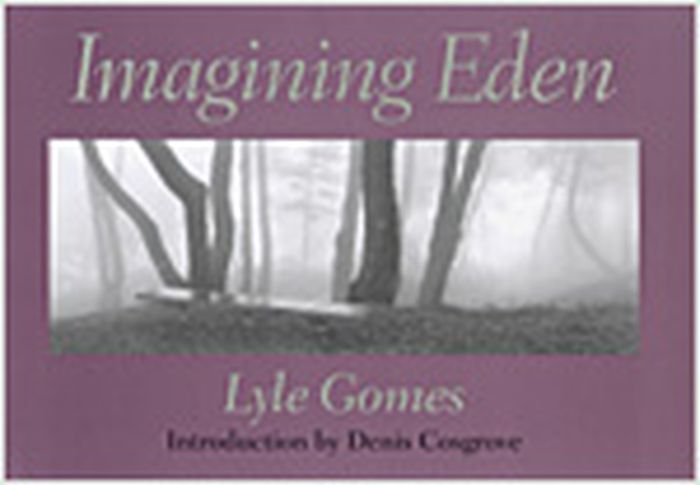
Lyle Gomes : imagining Eden
Lyle Gomes : imagining Eden
Actions:
Price:
$10.00
(available to order)
Summary:
What did Eden look like? In "Imagining Eden", the photographer Lyle Gomes observes landscapes that represent the idea of locus amoenus—the pleasant place. The tradition of locus amoenus goes back to the idyllic descriptions of fictional locations, often called Arcadia, in the writings of Sappho, Apollonius, and Virgil, in the imagined period of the Golden Age. We also(...)
$10.00
(available to order)
Summary:
What did Eden look like? In "Imagining Eden", the photographer Lyle Gomes observes landscapes that represent the idea of locus amoenus—the pleasant place. The tradition of locus amoenus goes back to the idyllic descriptions of fictional locations, often called Arcadia, in the writings of Sappho, Apollonius, and Virgil, in the imagined period of the Golden Age. We also(...)
Subject:
sale books
sale books
Publication:
November 2005, Charlottesville, London
November 2005, Charlottesville, London
Title:
Lyle Gomes : imagining Eden
Actions:
Price:
$10.00
(available to order)
Summary:
What did Eden look like? In "Imagining Eden", the photographer Lyle Gomes observes landscapes that represent the idea of locus amoenus—the pleasant place. The tradition of locus amoenus goes back to the idyllic descriptions of fictional locations, often called Arcadia, in the writings of Sappho, Apollonius, and Virgil, in the imagined period of the Golden Age. We also recognize this concept in Eden, of course, where it suggests a loss that still haunts our imaginations. It is an idea distinctly different from that of wilderness, for we feel protected in these places—even provided for, though there is no sign of toil. The chance that this Eden might somehow be regained gives the concept its consolatory power. For fifteen years, Gomes has traveled across America and Europe to find examples of this enduring ideal of place in parks, English gardens, even golf courses. Gomes’s search took him to Mount Auburn cemetery, Central Park, Monticello, the San Francisco Presidio, villa gardens near Italy’s Lake Como, Melbourne Hall in Derbyshire, and private gardens such as Biltmore and Dumbarton Oaks. "Imagining Eden" includes an introductory essay in which the landscape historian Denis Cosgrove explores how the concept of the locus amoenus relates to Gomes’s work, and the photographs are accompanied by an evocative selection of quotes by the various settings designers and by inspired observers. The book concludes with an extensive interview in which Gomes discusses how he balances craft and inspiration, the role of research in preparing a shoot, his preference for black-and-white over color (“I was completely, and immediately, enamored with the silver image”), and a sense of discovery as a chief motivation in all his work.
Lyle Gomes : imagining Eden
Actions:
Price:
$10.00
(available to order)
Summary:
What did Eden look like? In "Imagining Eden", the photographer Lyle Gomes observes landscapes that represent the idea of locus amoenus—the pleasant place. The tradition of locus amoenus goes back to the idyllic descriptions of fictional locations, often called Arcadia, in the writings of Sappho, Apollonius, and Virgil, in the imagined period of the Golden Age. We also recognize this concept in Eden, of course, where it suggests a loss that still haunts our imaginations. It is an idea distinctly different from that of wilderness, for we feel protected in these places—even provided for, though there is no sign of toil. The chance that this Eden might somehow be regained gives the concept its consolatory power. For fifteen years, Gomes has traveled across America and Europe to find examples of this enduring ideal of place in parks, English gardens, even golf courses. Gomes’s search took him to Mount Auburn cemetery, Central Park, Monticello, the San Francisco Presidio, villa gardens near Italy’s Lake Como, Melbourne Hall in Derbyshire, and private gardens such as Biltmore and Dumbarton Oaks. "Imagining Eden" includes an introductory essay in which the landscape historian Denis Cosgrove explores how the concept of the locus amoenus relates to Gomes’s work, and the photographs are accompanied by an evocative selection of quotes by the various settings designers and by inspired observers. The book concludes with an extensive interview in which Gomes discusses how he balances craft and inspiration, the role of research in preparing a shoot, his preference for black-and-white over color (“I was completely, and immediately, enamored with the silver image”), and a sense of discovery as a chief motivation in all his work.
Form:
books
books
Publication:
November 2005, Charlottesville, London
November 2005, Charlottesville, London
Subject:
sale books
sale books
Form:
journals and magazines
journals and magazines
Title:
Open 6 (in)security
Open 6 (in)security
Actions:
Price:
$36.00
(available to order)
Summary:
There is a yearning for security in today's public domain. The individual and the community are increasingly demanding protection from and control over the space, themselves and others. A society of control is looming, but one lacking a clear idea about the nature and the origin of its underlying fears. This cahier examines the consequences of the current preoccupation(...)
$36.00
(available to order)
Summary:
There is a yearning for security in today's public domain. The individual and the community are increasingly demanding protection from and control over the space, themselves and others. A society of control is looming, but one lacking a clear idea about the nature and the origin of its underlying fears. This cahier examines the consequences of the current preoccupation(...)
Subject:
Magazines
Magazines
Publication:
August 2004, Rotterdam
August 2004, Rotterdam
Title:
Open 6 (in)security
Actions:
Price:
$36.00
(available to order)
Summary:
There is a yearning for security in today's public domain. The individual and the community are increasingly demanding protection from and control over the space, themselves and others. A society of control is looming, but one lacking a clear idea about the nature and the origin of its underlying fears. This cahier examines the consequences of the current preoccupation with security for the public space and the visual arts. What are the implications for the functioning of the public domain, for its arrangement, design and experience? And how does this influence the task and perception of art? From art, architecture, philosophy and politics come theoretical and practical scenarios, proposals and visions that expose something of today's security paradigm, advocate alternative (conceptual) models or offer insights into the current ethics and aesthetics of security. Gijs van Oenen subjects the 'new securityscape' to a critical analysis. Lieven De Cauter digs into the various strata of the new fear. Sean Snyder presents images from his Temporary Occupation project. Thomas Y. Levin looks at how artists deal with surveillance in the public space. Sven Lütticken reflects on the concept of a 'human park' in philosophy, art and media. Harm Tilman focuses on architecture in a society of control. Mark Wigley analyses the issue of security in relation to the World Trade Center buildings in New York. Hans Boutellier wishes art would apply the brakes to the security Utopia. Jouke Kleerebezem calls for vigilance in the information society. Willem van Weelden discusses the project in Kanaleneiland, Utrecht. Q.S. Serafijn shows multiple dimensions of the interactive D-Tower in Doetinchem. Mark Wigley dissects the abode of the Unabomber.
Open 6 (in)security
Actions:
Price:
$36.00
(available to order)
Summary:
There is a yearning for security in today's public domain. The individual and the community are increasingly demanding protection from and control over the space, themselves and others. A society of control is looming, but one lacking a clear idea about the nature and the origin of its underlying fears. This cahier examines the consequences of the current preoccupation with security for the public space and the visual arts. What are the implications for the functioning of the public domain, for its arrangement, design and experience? And how does this influence the task and perception of art? From art, architecture, philosophy and politics come theoretical and practical scenarios, proposals and visions that expose something of today's security paradigm, advocate alternative (conceptual) models or offer insights into the current ethics and aesthetics of security. Gijs van Oenen subjects the 'new securityscape' to a critical analysis. Lieven De Cauter digs into the various strata of the new fear. Sean Snyder presents images from his Temporary Occupation project. Thomas Y. Levin looks at how artists deal with surveillance in the public space. Sven Lütticken reflects on the concept of a 'human park' in philosophy, art and media. Harm Tilman focuses on architecture in a society of control. Mark Wigley analyses the issue of security in relation to the World Trade Center buildings in New York. Hans Boutellier wishes art would apply the brakes to the security Utopia. Jouke Kleerebezem calls for vigilance in the information society. Willem van Weelden discusses the project in Kanaleneiland, Utrecht. Q.S. Serafijn shows multiple dimensions of the interactive D-Tower in Doetinchem. Mark Wigley dissects the abode of the Unabomber.
Form:
journals and magazines
journals and magazines
Publication:
August 2004, Rotterdam
August 2004, Rotterdam
Subject:
Magazines
Magazines


