


12621 Results
Level of archival description:
Sub-series
Sub-series
Reference number:
AP163.S2.SS2
Description:
Sub-series documents promotional activities of Victor Prus and of the firm Victor Prus and Associates. The sub-series also documents professional awards and honours accorded to Victor and Maria Prus. Material in this sub-series was produced between 1954 and 1985. The sub-series contains promotional documents, such as leaflets, photographs of their projects, promotional booklets and photographs of Victor and Maria Prus. It also includes index cards and microfiches listing and reproducing some of the drawings of Victor Prus for architectural projects between 1950 and 1972.
AP163.S2.SS2
Description:
Sub-series documents promotional activities of Victor Prus and of the firm Victor Prus and Associates. The sub-series also documents professional awards and honours accorded to Victor and Maria Prus. Material in this sub-series was produced between 1954 and 1985. The sub-series contains promotional documents, such as leaflets, photographs of their projects, promotional booklets and photographs of Victor and Maria Prus. It also includes index cards and microfiches listing and reproducing some of the drawings of Victor Prus for architectural projects between 1950 and 1972.
People:
Date:
1954-1985
1954-1985
Title:
Promotional documents and professional recognition
Actions:
AP163.S2.SS2
Description:
Sub-series documents promotional activities of Victor Prus and of the firm Victor Prus and Associates. The sub-series also documents professional awards and honours accorded to Victor and Maria Prus. Material in this sub-series was produced between 1954 and 1985. The sub-series contains promotional documents, such as leaflets, photographs of their projects, promotional booklets and photographs of Victor and Maria Prus. It also includes index cards and microfiches listing and reproducing some of the drawings of Victor Prus for architectural projects between 1950 and 1972.
Promotional documents and professional recognition
Actions:
AP163.S2.SS2
Description:
Sub-series documents promotional activities of Victor Prus and of the firm Victor Prus and Associates. The sub-series also documents professional awards and honours accorded to Victor and Maria Prus. Material in this sub-series was produced between 1954 and 1985. The sub-series contains promotional documents, such as leaflets, photographs of their projects, promotional booklets and photographs of Victor and Maria Prus. It also includes index cards and microfiches listing and reproducing some of the drawings of Victor Prus for architectural projects between 1950 and 1972.
Level of archival description:
Sub-series 2
Sub-series 2
Date:
1954-1985
1954-1985
People:
Level of archival description:
Project
Project
Reference number:
AP178.S1.1989.PR02
Description:
This project series documents the Biblioteca de França (Bibliothèque Nationale de France) in Paris, France. While the records were held in the office’s archives this project was assigned the number 62/80. The office assigned the date 1989 for this project. An architectural competition for the Bibliothèque Nationale de France was held in 1988. Siza proposed a design but was not selected by the jury to build the library. Dominique Perrault was the architect seletected and the library was open in 1996. Documenting this project are presentation drawings, competition documentation, and slides of models.
AP178.S1.1989.PR02
Description:
This project series documents the Biblioteca de França (Bibliothèque Nationale de France) in Paris, France. While the records were held in the office’s archives this project was assigned the number 62/80. The office assigned the date 1989 for this project. An architectural competition for the Bibliothèque Nationale de France was held in 1988. Siza proposed a design but was not selected by the jury to build the library. Dominique Perrault was the architect seletected and the library was open in 1996. Documenting this project are presentation drawings, competition documentation, and slides of models.
People:
Date:
1989-2016
1989-2016
Title:
Biblioteca de França [National Library of France], Paris, France (1989)
Actions:
AP178.S1.1989.PR02
Description:
This project series documents the Biblioteca de França (Bibliothèque Nationale de France) in Paris, France. While the records were held in the office’s archives this project was assigned the number 62/80. The office assigned the date 1989 for this project. An architectural competition for the Bibliothèque Nationale de France was held in 1988. Siza proposed a design but was not selected by the jury to build the library. Dominique Perrault was the architect seletected and the library was open in 1996. Documenting this project are presentation drawings, competition documentation, and slides of models.
Biblioteca de França [National Library of France], Paris, France (1989)
Actions:
AP178.S1.1989.PR02
Description:
This project series documents the Biblioteca de França (Bibliothèque Nationale de France) in Paris, France. While the records were held in the office’s archives this project was assigned the number 62/80. The office assigned the date 1989 for this project. An architectural competition for the Bibliothèque Nationale de France was held in 1988. Siza proposed a design but was not selected by the jury to build the library. Dominique Perrault was the architect seletected and the library was open in 1996. Documenting this project are presentation drawings, competition documentation, and slides of models.
Level of archival description:
Project
Project
Date:
1989-2016
1989-2016
People:
Level of archival description:
Project
Project
Actions:
Reference number:
AP056.S1.1991.PR08
Description:
This project series documents an expansion of the Marc Laurent store at 110 Bloor Street West in Toronto in 1989. The office identified the project number as 9109. This project consisted of the expansion of the high-end retail store whose original design was completed prior to the founding of KPMB, by Bruce Kuwabara and Thomas Payne in 1986. The new space was made to accommodate the Hugo Boss Store within the Marc Laurent Store. The store consisted of a street level space connected by stairs to a lower concourse level, with the new store space added at the street level. The new space extended the architectural style already established in earlier phases of the store's development. The new area had granite and honed area stone flooring, aluminum racks and display cases, sandblasted glass display walls, and imbuya veneer change rooms and panel doors. This project is considered Phase 4 of the store's development, with 1 future phase to be completed by KPMB Architects soon after. The project is recorded through drawings dating from 1991-1992. The drawings are mostly originals and include sections, elevations, floor and ceiling plans, details, axonometric studies and perspectives. Also present are drawings of custom furnishings designed for the store such as display cases, racks and counters, and architectural elements such as walls, doors and stairs.
AP056.S1.1991.PR08
Description:
This project series documents an expansion of the Marc Laurent store at 110 Bloor Street West in Toronto in 1989. The office identified the project number as 9109. This project consisted of the expansion of the high-end retail store whose original design was completed prior to the founding of KPMB, by Bruce Kuwabara and Thomas Payne in 1986. The new space was made to accommodate the Hugo Boss Store within the Marc Laurent Store. The store consisted of a street level space connected by stairs to a lower concourse level, with the new store space added at the street level. The new space extended the architectural style already established in earlier phases of the store's development. The new area had granite and honed area stone flooring, aluminum racks and display cases, sandblasted glass display walls, and imbuya veneer change rooms and panel doors. This project is considered Phase 4 of the store's development, with 1 future phase to be completed by KPMB Architects soon after. The project is recorded through drawings dating from 1991-1992. The drawings are mostly originals and include sections, elevations, floor and ceiling plans, details, axonometric studies and perspectives. Also present are drawings of custom furnishings designed for the store such as display cases, racks and counters, and architectural elements such as walls, doors and stairs.
People:
Date:
1991-1992
1991-1992
Title:
Marc Laurent Store, Phase 4 Hugo Boss Store, Toronto (1991-1992)
Actions:
AP056.S1.1991.PR08
Description:
This project series documents an expansion of the Marc Laurent store at 110 Bloor Street West in Toronto in 1989. The office identified the project number as 9109. This project consisted of the expansion of the high-end retail store whose original design was completed prior to the founding of KPMB, by Bruce Kuwabara and Thomas Payne in 1986. The new space was made to accommodate the Hugo Boss Store within the Marc Laurent Store. The store consisted of a street level space connected by stairs to a lower concourse level, with the new store space added at the street level. The new space extended the architectural style already established in earlier phases of the store's development. The new area had granite and honed area stone flooring, aluminum racks and display cases, sandblasted glass display walls, and imbuya veneer change rooms and panel doors. This project is considered Phase 4 of the store's development, with 1 future phase to be completed by KPMB Architects soon after. The project is recorded through drawings dating from 1991-1992. The drawings are mostly originals and include sections, elevations, floor and ceiling plans, details, axonometric studies and perspectives. Also present are drawings of custom furnishings designed for the store such as display cases, racks and counters, and architectural elements such as walls, doors and stairs.
Marc Laurent Store, Phase 4 Hugo Boss Store, Toronto (1991-1992)
Actions:
AP056.S1.1991.PR08
Description:
This project series documents an expansion of the Marc Laurent store at 110 Bloor Street West in Toronto in 1989. The office identified the project number as 9109. This project consisted of the expansion of the high-end retail store whose original design was completed prior to the founding of KPMB, by Bruce Kuwabara and Thomas Payne in 1986. The new space was made to accommodate the Hugo Boss Store within the Marc Laurent Store. The store consisted of a street level space connected by stairs to a lower concourse level, with the new store space added at the street level. The new space extended the architectural style already established in earlier phases of the store's development. The new area had granite and honed area stone flooring, aluminum racks and display cases, sandblasted glass display walls, and imbuya veneer change rooms and panel doors. This project is considered Phase 4 of the store's development, with 1 future phase to be completed by KPMB Architects soon after. The project is recorded through drawings dating from 1991-1992. The drawings are mostly originals and include sections, elevations, floor and ceiling plans, details, axonometric studies and perspectives. Also present are drawings of custom furnishings designed for the store such as display cases, racks and counters, and architectural elements such as walls, doors and stairs.
Level of archival description:
Project
Project
Date:
1991-1992
1991-1992
People:
Level of archival description:
Project
Project
Actions:
Reference number:
AP164.S1.2003.D12
Description:
The project series documents the commission for the new Gallery Building in Miami, Florida, United States. The museum would include the Rosa de la Cruz and Craig Robins’ art collections. The building was designed to include temporary and permanent exhibitions’ showrooms, offices, architectural promenade, esplanade, interior patio with a garden, etc. The gallery was never built. The firm identified this project as number 175. Documenting the project are conceptual, design development and presentation drawings, correspondence, invoices, notes, agreements, proposals, and reference and graphic materials.
AP164.S1.2003.D12
Description:
The project series documents the commission for the new Gallery Building in Miami, Florida, United States. The museum would include the Rosa de la Cruz and Craig Robins’ art collections. The building was designed to include temporary and permanent exhibitions’ showrooms, offices, architectural promenade, esplanade, interior patio with a garden, etc. The gallery was never built. The firm identified this project as number 175. Documenting the project are conceptual, design development and presentation drawings, correspondence, invoices, notes, agreements, proposals, and reference and graphic materials.
People:
Date:
2003-2006
2003-2006
Title:
The Collection building, Miami, United States (2003)
Actions:
AP164.S1.2003.D12
Description:
The project series documents the commission for the new Gallery Building in Miami, Florida, United States. The museum would include the Rosa de la Cruz and Craig Robins’ art collections. The building was designed to include temporary and permanent exhibitions’ showrooms, offices, architectural promenade, esplanade, interior patio with a garden, etc. The gallery was never built. The firm identified this project as number 175. Documenting the project are conceptual, design development and presentation drawings, correspondence, invoices, notes, agreements, proposals, and reference and graphic materials.
The Collection building, Miami, United States (2003)
Actions:
AP164.S1.2003.D12
Description:
The project series documents the commission for the new Gallery Building in Miami, Florida, United States. The museum would include the Rosa de la Cruz and Craig Robins’ art collections. The building was designed to include temporary and permanent exhibitions’ showrooms, offices, architectural promenade, esplanade, interior patio with a garden, etc. The gallery was never built. The firm identified this project as number 175. Documenting the project are conceptual, design development and presentation drawings, correspondence, invoices, notes, agreements, proposals, and reference and graphic materials.
Level of archival description:
Project
Project
Date:
2003-2006
2003-2006
People:
Form:
exhibitions
exhibitions
Actions:
Description:
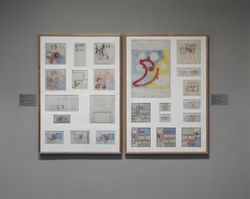
Paul Nelson (1895–1979), American architect, film set designer, painter, critic, and educator, taught and practised architecture in the United States and France for over fifty years. Nelson was a central figure in the development of functionalism in the 1930s and 1940s, which rejected the Beaux-Arts language in favour of technological and functional expression. The Filter(...)
Paul Nelson (1895–1979), American architect, film set designer, painter, critic, and educator, taught and practised architecture in the United States and France for over fifty years. Nelson was a central figure in the development of functionalism in the 1930s and 1940s, which rejected the Beaux-Arts language in favour of technological and functional expression. The Filter(...)
Location:
Main galleries
Main galleries
Date:
27 March 1991 to 26 May 1991
27 March 1991 to 26 May 1991
Title:
The Filter of Reason: The Work of Paul Nelson
Actions:
Description:
Paul Nelson (1895–1979), American architect, film set designer, painter, critic, and educator, taught and practised architecture in the United States and France for over fifty years. Nelson was a central figure in the development of functionalism in the 1930s and 1940s, which rejected the Beaux-Arts language in favour of technological and functional expression. The Filter(...)
The Filter of Reason: The Work of Paul Nelson
Actions:
Description:
Paul Nelson (1895–1979), American architect, film set designer, painter, critic, and educator, taught and practised architecture in the United States and France for over fifty years. Nelson was a central figure in the development of functionalism in the 1930s and 1940s, which rejected the Beaux-Arts language in favour of technological and functional expression. The Filter(...)
Form:
exhibitions
exhibitions
Date:
27 March 1991 to
26 May 1991
27 March 1991 to
26 May 1991
Location:
Main galleries
Main galleries
Level of archival description:
Project
Project
Title:
Ice House II (1972)
Ice House II (1972)
Reference number:
AP207.S1.1972.PR01
Description:
The project series documents "Ice House II" a project which consisted of freezing a small house in suburban Minneapolis, by pouring water into a wooden mold surrounding the house and letting the water freeze to create a block of ice. "If the addition of material then leads, paradoxically, to the disappearence of the 'architectural' object, this subtraction only highlights the serial repetitiveness of the dwellings in American suburbia." [1] It is unclear if this project was ever performed. The project series contains photographs of the frozen house, photographic reproductions of aerial views and plans of the neighbourhood for the selection of the house, sketches and a perspective drawing. Source: [1] Marco Scotini, editor. Non-conscious architecture: Gianni Pettena, Sternberg Press, 2018, 235 pages. p. 152.
AP207.S1.1972.PR01
Description:
The project series documents "Ice House II" a project which consisted of freezing a small house in suburban Minneapolis, by pouring water into a wooden mold surrounding the house and letting the water freeze to create a block of ice. "If the addition of material then leads, paradoxically, to the disappearence of the 'architectural' object, this subtraction only highlights the serial repetitiveness of the dwellings in American suburbia." [1] It is unclear if this project was ever performed. The project series contains photographs of the frozen house, photographic reproductions of aerial views and plans of the neighbourhood for the selection of the house, sketches and a perspective drawing. Source: [1] Marco Scotini, editor. Non-conscious architecture: Gianni Pettena, Sternberg Press, 2018, 235 pages. p. 152.
People:
Date:
circa 1972-2015
circa 1972-2015
Title:
Ice House II (1972)
Actions:
AP207.S1.1972.PR01
Description:
The project series documents "Ice House II" a project which consisted of freezing a small house in suburban Minneapolis, by pouring water into a wooden mold surrounding the house and letting the water freeze to create a block of ice. "If the addition of material then leads, paradoxically, to the disappearence of the 'architectural' object, this subtraction only highlights the serial repetitiveness of the dwellings in American suburbia." [1] It is unclear if this project was ever performed. The project series contains photographs of the frozen house, photographic reproductions of aerial views and plans of the neighbourhood for the selection of the house, sketches and a perspective drawing. Source: [1] Marco Scotini, editor. Non-conscious architecture: Gianni Pettena, Sternberg Press, 2018, 235 pages. p. 152.
Ice House II (1972)
Actions:
AP207.S1.1972.PR01
Description:
The project series documents "Ice House II" a project which consisted of freezing a small house in suburban Minneapolis, by pouring water into a wooden mold surrounding the house and letting the water freeze to create a block of ice. "If the addition of material then leads, paradoxically, to the disappearence of the 'architectural' object, this subtraction only highlights the serial repetitiveness of the dwellings in American suburbia." [1] It is unclear if this project was ever performed. The project series contains photographs of the frozen house, photographic reproductions of aerial views and plans of the neighbourhood for the selection of the house, sketches and a perspective drawing. Source: [1] Marco Scotini, editor. Non-conscious architecture: Gianni Pettena, Sternberg Press, 2018, 235 pages. p. 152.
Level of archival description:
Project
Project
Date:
circa 1972-2015
circa 1972-2015
People:
Level of archival description:
Project
Project
Title:
Hair Tent
Hair Tent
Reference number:
AP144.S2.D76
Description:
File documents the Hair Tent, a temporary theatre structure which was to house performances of the musical 'Hair', in Holland, for David Convyers Productions Ltd. Cedric Price was hired to convert a tent into a theatre venue. The tent structure was designed for an audience of 1,200 and was to be used for a six-month period. Due to cost and time constraints, the materials were recycled: the seating came from a demolished cinema; the steel structure from a field near Hartlepool; and the mobile heating was provided by the Dutch Military (Cedric Price-Works II). Design development drawings show numerous plans and sections of the tent structure and structural components; a plan and section show the seating arrangements; a section through the tent shows various internal stackable structures; and an axonometric view of the site shows the main tent, a tin hut entrance bar, and military mobile heaters. Reprographic copies of construction drawings of a Cinerama and circus structure with details of trussing configurations, mast layout and anchor plans were possibly for reference purposes. Some material in this file was published in "Cedric Price Supplement", 'Architectural Design', vol. 40, (October 1970), 516, and Price, Cedric, 'Cedric Price-Works II' (London: Architectural Press, 1984), 72, 76. Material in this file was produced between 1963 and 1971. Reference drawings included with the design development drawings are inscribed with the name L. Stromeyer, engineer, or Leonard Allen, architect. Tom Parkinson and Victor Spinetti are involved in the project. File contains design development drawings, photographic materials, and textual records.
AP144.S2.D76
Description:
File documents the Hair Tent, a temporary theatre structure which was to house performances of the musical 'Hair', in Holland, for David Convyers Productions Ltd. Cedric Price was hired to convert a tent into a theatre venue. The tent structure was designed for an audience of 1,200 and was to be used for a six-month period. Due to cost and time constraints, the materials were recycled: the seating came from a demolished cinema; the steel structure from a field near Hartlepool; and the mobile heating was provided by the Dutch Military (Cedric Price-Works II). Design development drawings show numerous plans and sections of the tent structure and structural components; a plan and section show the seating arrangements; a section through the tent shows various internal stackable structures; and an axonometric view of the site shows the main tent, a tin hut entrance bar, and military mobile heaters. Reprographic copies of construction drawings of a Cinerama and circus structure with details of trussing configurations, mast layout and anchor plans were possibly for reference purposes. Some material in this file was published in "Cedric Price Supplement", 'Architectural Design', vol. 40, (October 1970), 516, and Price, Cedric, 'Cedric Price-Works II' (London: Architectural Press, 1984), 72, 76. Material in this file was produced between 1963 and 1971. Reference drawings included with the design development drawings are inscribed with the name L. Stromeyer, engineer, or Leonard Allen, architect. Tom Parkinson and Victor Spinetti are involved in the project. File contains design development drawings, photographic materials, and textual records.
People:
Date:
1963-1971
1963-1971
Title:
Hair Tent
Actions:
AP144.S2.D76
Description:
File documents the Hair Tent, a temporary theatre structure which was to house performances of the musical 'Hair', in Holland, for David Convyers Productions Ltd. Cedric Price was hired to convert a tent into a theatre venue. The tent structure was designed for an audience of 1,200 and was to be used for a six-month period. Due to cost and time constraints, the materials were recycled: the seating came from a demolished cinema; the steel structure from a field near Hartlepool; and the mobile heating was provided by the Dutch Military (Cedric Price-Works II). Design development drawings show numerous plans and sections of the tent structure and structural components; a plan and section show the seating arrangements; a section through the tent shows various internal stackable structures; and an axonometric view of the site shows the main tent, a tin hut entrance bar, and military mobile heaters. Reprographic copies of construction drawings of a Cinerama and circus structure with details of trussing configurations, mast layout and anchor plans were possibly for reference purposes. Some material in this file was published in "Cedric Price Supplement", 'Architectural Design', vol. 40, (October 1970), 516, and Price, Cedric, 'Cedric Price-Works II' (London: Architectural Press, 1984), 72, 76. Material in this file was produced between 1963 and 1971. Reference drawings included with the design development drawings are inscribed with the name L. Stromeyer, engineer, or Leonard Allen, architect. Tom Parkinson and Victor Spinetti are involved in the project. File contains design development drawings, photographic materials, and textual records.
Hair Tent
Actions:
AP144.S2.D76
Description:
File documents the Hair Tent, a temporary theatre structure which was to house performances of the musical 'Hair', in Holland, for David Convyers Productions Ltd. Cedric Price was hired to convert a tent into a theatre venue. The tent structure was designed for an audience of 1,200 and was to be used for a six-month period. Due to cost and time constraints, the materials were recycled: the seating came from a demolished cinema; the steel structure from a field near Hartlepool; and the mobile heating was provided by the Dutch Military (Cedric Price-Works II). Design development drawings show numerous plans and sections of the tent structure and structural components; a plan and section show the seating arrangements; a section through the tent shows various internal stackable structures; and an axonometric view of the site shows the main tent, a tin hut entrance bar, and military mobile heaters. Reprographic copies of construction drawings of a Cinerama and circus structure with details of trussing configurations, mast layout and anchor plans were possibly for reference purposes. Some material in this file was published in "Cedric Price Supplement", 'Architectural Design', vol. 40, (October 1970), 516, and Price, Cedric, 'Cedric Price-Works II' (London: Architectural Press, 1984), 72, 76. Material in this file was produced between 1963 and 1971. Reference drawings included with the design development drawings are inscribed with the name L. Stromeyer, engineer, or Leonard Allen, architect. Tom Parkinson and Victor Spinetti are involved in the project. File contains design development drawings, photographic materials, and textual records.
Level of archival description:
File 76
File 76
Date:
1963-1971
1963-1971
People:
Level of archival description:
Project
Project
Reference number:
AP207.S1.1968.PR07
Description:
The project series documents "Citta Futura", a series of architectural drawings made by Pettena as part of his graduation thesis at University of Florence in 1968. Pettena's thesis was on the urban requalification of the Santa Croce area in Florence damaged by a flood in 1966. For this project Pettena was "influcenced by the many visionary proposals of 'cities of the future' of the early '60s" [1] The project series contains project descriptions in English and in Italian, and scanned copies of drawings by Pettena for his thesis at the end of the 1960s. Source: [1] Gianni Pettena website, https://www.giannipettena.it/italiano/opere-1/arch-cities-of-the-future-1968/ (last accessed 12 November 2019).
AP207.S1.1968.PR07
Description:
The project series documents "Citta Futura", a series of architectural drawings made by Pettena as part of his graduation thesis at University of Florence in 1968. Pettena's thesis was on the urban requalification of the Santa Croce area in Florence damaged by a flood in 1966. For this project Pettena was "influcenced by the many visionary proposals of 'cities of the future' of the early '60s" [1] The project series contains project descriptions in English and in Italian, and scanned copies of drawings by Pettena for his thesis at the end of the 1960s. Source: [1] Gianni Pettena website, https://www.giannipettena.it/italiano/opere-1/arch-cities-of-the-future-1968/ (last accessed 12 November 2019).
People:
Date:
2011-2015
2011-2015
Title:
Citta Futura [Citites of the Future] (1968)
Actions:
AP207.S1.1968.PR07
Description:
The project series documents "Citta Futura", a series of architectural drawings made by Pettena as part of his graduation thesis at University of Florence in 1968. Pettena's thesis was on the urban requalification of the Santa Croce area in Florence damaged by a flood in 1966. For this project Pettena was "influcenced by the many visionary proposals of 'cities of the future' of the early '60s" [1] The project series contains project descriptions in English and in Italian, and scanned copies of drawings by Pettena for his thesis at the end of the 1960s. Source: [1] Gianni Pettena website, https://www.giannipettena.it/italiano/opere-1/arch-cities-of-the-future-1968/ (last accessed 12 November 2019).
Citta Futura [Citites of the Future] (1968)
Actions:
AP207.S1.1968.PR07
Description:
The project series documents "Citta Futura", a series of architectural drawings made by Pettena as part of his graduation thesis at University of Florence in 1968. Pettena's thesis was on the urban requalification of the Santa Croce area in Florence damaged by a flood in 1966. For this project Pettena was "influcenced by the many visionary proposals of 'cities of the future' of the early '60s" [1] The project series contains project descriptions in English and in Italian, and scanned copies of drawings by Pettena for his thesis at the end of the 1960s. Source: [1] Gianni Pettena website, https://www.giannipettena.it/italiano/opere-1/arch-cities-of-the-future-1968/ (last accessed 12 November 2019).
Level of archival description:
Project
Project
Date:
2011-2015
2011-2015
People:
Level of archival description:
Project
Project
Actions:
Reference number:
AP144.S2.D21
Description:
File documents a project for Paston House School, Cambridge, England, and includes drawings for new bicycle sheds and store rooms, possibly for an existing building, including details for glazing, entrance gates and screens. Cedric Price worked for architect, David Roberts, on this project. It was undertaken during the summer of 1955, after Price received his M.A. from Cambridge University and before he began studies at the Architectural Association in London. The scope of the project cannot be determined from the drawings in this file. Material in this file was produced in1955. Information on attribution based on 'Contemporary Architects, 3rd ed.' (New York: St. James Press, 1994), s.v. "Price, Cedric"; 'CCA Consignment List'; and notes by Howard Shubert, CCA Curator of Prints and Drawings, in conversation with Cedric Price. File contains working drawings.
AP144.S2.D21
Description:
File documents a project for Paston House School, Cambridge, England, and includes drawings for new bicycle sheds and store rooms, possibly for an existing building, including details for glazing, entrance gates and screens. Cedric Price worked for architect, David Roberts, on this project. It was undertaken during the summer of 1955, after Price received his M.A. from Cambridge University and before he began studies at the Architectural Association in London. The scope of the project cannot be determined from the drawings in this file. Material in this file was produced in1955. Information on attribution based on 'Contemporary Architects, 3rd ed.' (New York: St. James Press, 1994), s.v. "Price, Cedric"; 'CCA Consignment List'; and notes by Howard Shubert, CCA Curator of Prints and Drawings, in conversation with Cedric Price. File contains working drawings.
People:
Date:
1955
1955
Title:
Paston House School, Cambridge
Actions:
AP144.S2.D21
Description:
File documents a project for Paston House School, Cambridge, England, and includes drawings for new bicycle sheds and store rooms, possibly for an existing building, including details for glazing, entrance gates and screens. Cedric Price worked for architect, David Roberts, on this project. It was undertaken during the summer of 1955, after Price received his M.A. from Cambridge University and before he began studies at the Architectural Association in London. The scope of the project cannot be determined from the drawings in this file. Material in this file was produced in1955. Information on attribution based on 'Contemporary Architects, 3rd ed.' (New York: St. James Press, 1994), s.v. "Price, Cedric"; 'CCA Consignment List'; and notes by Howard Shubert, CCA Curator of Prints and Drawings, in conversation with Cedric Price. File contains working drawings.
Paston House School, Cambridge
Actions:
AP144.S2.D21
Description:
File documents a project for Paston House School, Cambridge, England, and includes drawings for new bicycle sheds and store rooms, possibly for an existing building, including details for glazing, entrance gates and screens. Cedric Price worked for architect, David Roberts, on this project. It was undertaken during the summer of 1955, after Price received his M.A. from Cambridge University and before he began studies at the Architectural Association in London. The scope of the project cannot be determined from the drawings in this file. Material in this file was produced in1955. Information on attribution based on 'Contemporary Architects, 3rd ed.' (New York: St. James Press, 1994), s.v. "Price, Cedric"; 'CCA Consignment List'; and notes by Howard Shubert, CCA Curator of Prints and Drawings, in conversation with Cedric Price. File contains working drawings.
Level of archival description:
File 21
File 21
Date:
1955
1955
People:
Level of archival description:
Project
Project
Title:
O.C.H. Feasibility Study
O.C.H. Feasibility Study
Reference number:
AP144.S2.D59
Description:
File documents a feasibility study commissioned by J. Lyons Co. Ltd for the conversion of the Oxford Corner House, in London, England, United Kingdom, into a combined information, education and skill centre. The unrealized project was to include a 'self-pace public skill and information hive' with facilities for conferences, teaching, exhibitions, computer use, planetarium, audio-visual library, and public eating areas. The project included a movable floor system and projection screens. Reference material includes plans and details of London Electric Railway subway line, alterations to Oxford Street Corner House by J. Lyons and Co. Ltd., field notes, photographs and photomontages of site. Conceptual diagrammatic plans explore designs for the organization of activities. Charts show variables, including number of people, monitors/screens, and study carrels; circulation patterns; and maximization of viewing capacity. Preliminary presentation boards illustrate project feasibility and include photographs of model and existing conditions. Design development drawings include floor plans, plans exploring the relationships between various activities, analysis of building volumes and networks, comparative plans showing main structural grid, sections, diagrammatic sections for public activity areas, axonometric drawings of roof, perspectives of projection screens and moveable floor system, progress charts, and diagrams and graphs of communication and travel modes, routes, and time into central London from outlying areas. Some material in this file was published in Price, Cedric. 'Cedric Price-Works II' (London: Architectural Press, 1984), 11, 54, 112; Landau, Royston. 'New Directions in British Architecture'. New York: George Braziller, 1968. 108-111; and 'Self-Pace Public Skill and Information Hive.' 'Architectural Design'. (May 1968), 237-239. Material in this file was produced between 1927 and 1967, but predominantly between 1965 and 1966. Group DR1995:0224:001-013 contains reference drawings attributed to London Transport Architect's Department and J. Lyons & Company Limited Architect's Office. Group DR1995:0224:333-341 contains drawings attributed to Richard Sutcliffe Limited, Felix J. Samuely & Partners, and G.E.C. (Process Engineering) Ltd. File contains conceptual drawings, consultant drawings, design development drawings, presentation drawings, presentation panels, reference drawings, photographic material, and textual records.
AP144.S2.D59
Description:
File documents a feasibility study commissioned by J. Lyons Co. Ltd for the conversion of the Oxford Corner House, in London, England, United Kingdom, into a combined information, education and skill centre. The unrealized project was to include a 'self-pace public skill and information hive' with facilities for conferences, teaching, exhibitions, computer use, planetarium, audio-visual library, and public eating areas. The project included a movable floor system and projection screens. Reference material includes plans and details of London Electric Railway subway line, alterations to Oxford Street Corner House by J. Lyons and Co. Ltd., field notes, photographs and photomontages of site. Conceptual diagrammatic plans explore designs for the organization of activities. Charts show variables, including number of people, monitors/screens, and study carrels; circulation patterns; and maximization of viewing capacity. Preliminary presentation boards illustrate project feasibility and include photographs of model and existing conditions. Design development drawings include floor plans, plans exploring the relationships between various activities, analysis of building volumes and networks, comparative plans showing main structural grid, sections, diagrammatic sections for public activity areas, axonometric drawings of roof, perspectives of projection screens and moveable floor system, progress charts, and diagrams and graphs of communication and travel modes, routes, and time into central London from outlying areas. Some material in this file was published in Price, Cedric. 'Cedric Price-Works II' (London: Architectural Press, 1984), 11, 54, 112; Landau, Royston. 'New Directions in British Architecture'. New York: George Braziller, 1968. 108-111; and 'Self-Pace Public Skill and Information Hive.' 'Architectural Design'. (May 1968), 237-239. Material in this file was produced between 1927 and 1967, but predominantly between 1965 and 1966. Group DR1995:0224:001-013 contains reference drawings attributed to London Transport Architect's Department and J. Lyons & Company Limited Architect's Office. Group DR1995:0224:333-341 contains drawings attributed to Richard Sutcliffe Limited, Felix J. Samuely & Partners, and G.E.C. (Process Engineering) Ltd. File contains conceptual drawings, consultant drawings, design development drawings, presentation drawings, presentation panels, reference drawings, photographic material, and textual records.
People:
Date:
1927-1967, predominant 1965-1966
1927-1967, predominant 1965-1966
Title:
O.C.H. Feasibility Study
Actions:
AP144.S2.D59
Description:
File documents a feasibility study commissioned by J. Lyons Co. Ltd for the conversion of the Oxford Corner House, in London, England, United Kingdom, into a combined information, education and skill centre. The unrealized project was to include a 'self-pace public skill and information hive' with facilities for conferences, teaching, exhibitions, computer use, planetarium, audio-visual library, and public eating areas. The project included a movable floor system and projection screens. Reference material includes plans and details of London Electric Railway subway line, alterations to Oxford Street Corner House by J. Lyons and Co. Ltd., field notes, photographs and photomontages of site. Conceptual diagrammatic plans explore designs for the organization of activities. Charts show variables, including number of people, monitors/screens, and study carrels; circulation patterns; and maximization of viewing capacity. Preliminary presentation boards illustrate project feasibility and include photographs of model and existing conditions. Design development drawings include floor plans, plans exploring the relationships between various activities, analysis of building volumes and networks, comparative plans showing main structural grid, sections, diagrammatic sections for public activity areas, axonometric drawings of roof, perspectives of projection screens and moveable floor system, progress charts, and diagrams and graphs of communication and travel modes, routes, and time into central London from outlying areas. Some material in this file was published in Price, Cedric. 'Cedric Price-Works II' (London: Architectural Press, 1984), 11, 54, 112; Landau, Royston. 'New Directions in British Architecture'. New York: George Braziller, 1968. 108-111; and 'Self-Pace Public Skill and Information Hive.' 'Architectural Design'. (May 1968), 237-239. Material in this file was produced between 1927 and 1967, but predominantly between 1965 and 1966. Group DR1995:0224:001-013 contains reference drawings attributed to London Transport Architect's Department and J. Lyons & Company Limited Architect's Office. Group DR1995:0224:333-341 contains drawings attributed to Richard Sutcliffe Limited, Felix J. Samuely & Partners, and G.E.C. (Process Engineering) Ltd. File contains conceptual drawings, consultant drawings, design development drawings, presentation drawings, presentation panels, reference drawings, photographic material, and textual records.
O.C.H. Feasibility Study
Actions:
AP144.S2.D59
Description:
File documents a feasibility study commissioned by J. Lyons Co. Ltd for the conversion of the Oxford Corner House, in London, England, United Kingdom, into a combined information, education and skill centre. The unrealized project was to include a 'self-pace public skill and information hive' with facilities for conferences, teaching, exhibitions, computer use, planetarium, audio-visual library, and public eating areas. The project included a movable floor system and projection screens. Reference material includes plans and details of London Electric Railway subway line, alterations to Oxford Street Corner House by J. Lyons and Co. Ltd., field notes, photographs and photomontages of site. Conceptual diagrammatic plans explore designs for the organization of activities. Charts show variables, including number of people, monitors/screens, and study carrels; circulation patterns; and maximization of viewing capacity. Preliminary presentation boards illustrate project feasibility and include photographs of model and existing conditions. Design development drawings include floor plans, plans exploring the relationships between various activities, analysis of building volumes and networks, comparative plans showing main structural grid, sections, diagrammatic sections for public activity areas, axonometric drawings of roof, perspectives of projection screens and moveable floor system, progress charts, and diagrams and graphs of communication and travel modes, routes, and time into central London from outlying areas. Some material in this file was published in Price, Cedric. 'Cedric Price-Works II' (London: Architectural Press, 1984), 11, 54, 112; Landau, Royston. 'New Directions in British Architecture'. New York: George Braziller, 1968. 108-111; and 'Self-Pace Public Skill and Information Hive.' 'Architectural Design'. (May 1968), 237-239. Material in this file was produced between 1927 and 1967, but predominantly between 1965 and 1966. Group DR1995:0224:001-013 contains reference drawings attributed to London Transport Architect's Department and J. Lyons & Company Limited Architect's Office. Group DR1995:0224:333-341 contains drawings attributed to Richard Sutcliffe Limited, Felix J. Samuely & Partners, and G.E.C. (Process Engineering) Ltd. File contains conceptual drawings, consultant drawings, design development drawings, presentation drawings, presentation panels, reference drawings, photographic material, and textual records.
Level of archival description:
File 59
File 59
Date:
1927-1967, predominant 1965-1966
1927-1967, predominant 1965-1966
People:


