


12372 Results
Form:
books
books
Price:
$26.99
(available to order)
Summary:
In the late 2000s human society entered a new urban epoch in which the majority of human beings live in cities. Whilst the city has historically been viewed as the foundation of democracy and citizenship, the geo-political spaces of modern cities are widely misunderstood despite their key role in shaping contemporary global society. How and why have cities become the(...)
$26.99
(available to order)
Summary:
In the late 2000s human society entered a new urban epoch in which the majority of human beings live in cities. Whilst the city has historically been viewed as the foundation of democracy and citizenship, the geo-political spaces of modern cities are widely misunderstood despite their key role in shaping contemporary global society. How and why have cities become the(...)
Title:
Rise of cities: Montréal, Toronto, Vancouver and other cities
Actions:
Price:
$26.99
(available to order)
Summary:
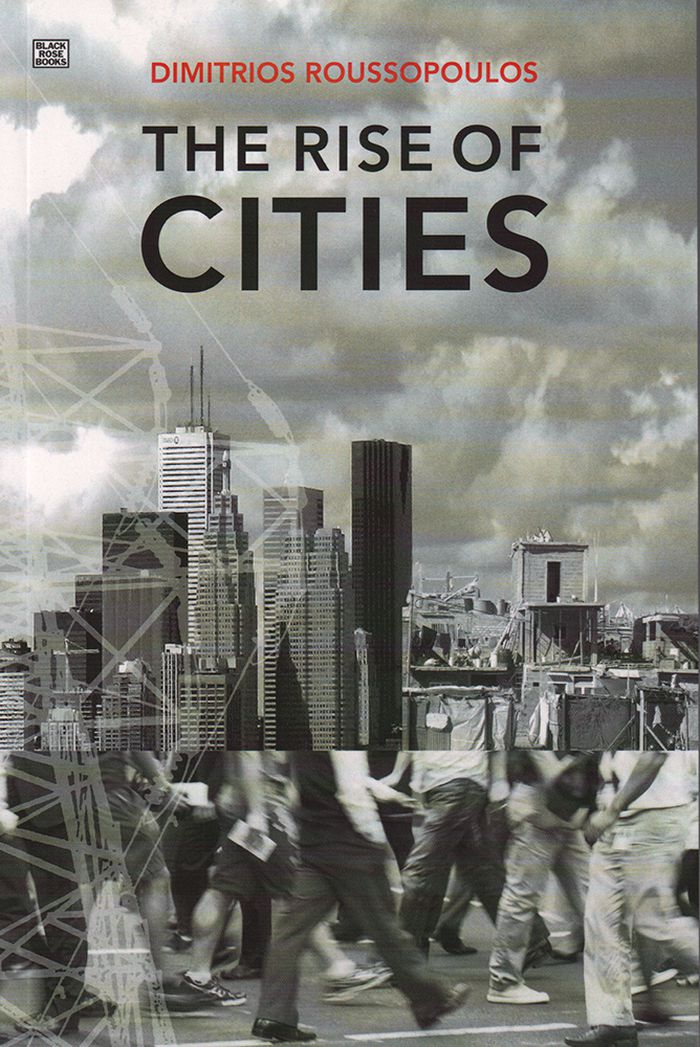
In the late 2000s human society entered a new urban epoch in which the majority of human beings live in cities. Whilst the city has historically been viewed as the foundation of democracy and citizenship, the geo-political spaces of modern cities are widely misunderstood despite their key role in shaping contemporary global society. How and why have cities become the command centres of the world economy? Does globalization menace cities as we know them? Are cities able to exercise democratic control and strategic choice when multinational corporate competition increasingly limits the importance of place? The Rise of Cities offers intriguing responses to these questions by analyzing how cities coalesce, develop and thrive, and how they can remake themselves for better for worse. Examining key issues such as the parasitic relationships cities have with Nature, the webs of trade and immigration they rely on to survive, and the spatial structure of the contemporary metropolis, the contributors develop a startling outline of cities in crisis and demonstrate why the State has failed, and must fail, to end the urban crisis. These themes are explored through a variety of concrete, real-world examples of the challenges of urban politics: metropolitan governance, urban redevelopment policy, housing problems, grass roots activism and urban planning. In the background looms the spectre of neo-liberal globalization, with the development of influential world cities related to the emergence of modern telecommunications, the growth of multinational corporations and the generation of a world economy with an increased movement of cultural symbols and artifacts across national borders.
Rise of cities: Montréal, Toronto, Vancouver and other cities
Actions:
Price:
$26.99
(available to order)
Summary:
In the late 2000s human society entered a new urban epoch in which the majority of human beings live in cities. Whilst the city has historically been viewed as the foundation of democracy and citizenship, the geo-political spaces of modern cities are widely misunderstood despite their key role in shaping contemporary global society. How and why have cities become the command centres of the world economy? Does globalization menace cities as we know them? Are cities able to exercise democratic control and strategic choice when multinational corporate competition increasingly limits the importance of place? The Rise of Cities offers intriguing responses to these questions by analyzing how cities coalesce, develop and thrive, and how they can remake themselves for better for worse. Examining key issues such as the parasitic relationships cities have with Nature, the webs of trade and immigration they rely on to survive, and the spatial structure of the contemporary metropolis, the contributors develop a startling outline of cities in crisis and demonstrate why the State has failed, and must fail, to end the urban crisis. These themes are explored through a variety of concrete, real-world examples of the challenges of urban politics: metropolitan governance, urban redevelopment policy, housing problems, grass roots activism and urban planning. In the background looms the spectre of neo-liberal globalization, with the development of influential world cities related to the emergence of modern telecommunications, the growth of multinational corporations and the generation of a world economy with an increased movement of cultural symbols and artifacts across national borders.
Form:
books
books
Publication:
June 2017
June 2017
Subject:
Architecture in Canada
Architecture in Canada
Form:
books
books

Actions:
Price:
$46.00
(available to order)
Summary:
Is architecture art? This vexed question has been posed since the 1700s, when—breaking from earlier centuries in which there were no divisions between visual artist, architect, and engineer—architects and laypeople alike began to see these vocations as distinct. Exploring how this separation of roles occurred, and how in the twentieth century arts and architecture started(...)
$46.00
(available to order)
Summary:
Is architecture art? This vexed question has been posed since the 1700s, when—breaking from earlier centuries in which there were no divisions between visual artist, architect, and engineer—architects and laypeople alike began to see these vocations as distinct. Exploring how this separation of roles occurred, and how in the twentieth century arts and architecture started(...)
Title:
The judicious eye: architecture against the other arts
Actions:
Price:
$46.00
(available to order)
Summary:
Is architecture art? This vexed question has been posed since the 1700s, when—breaking from earlier centuries in which there were no divisions between visual artist, architect, and engineer—architects and laypeople alike began to see these vocations as distinct. Exploring how this separation of roles occurred, and how in the twentieth century arts and architecture started to come together again, The Judicious Eye is the definitive history of the relationships between painting, sculpture, and architecture as they have shifted over the past three centuries. Joseph Rykwert locates the first major shift during the Enlightenment, when key philosophers drew implied and explicit distinctions between the visual arts and architecture. As time progressed, architects came to see themselves as part of an established profession, while visual artists increasingly moved toward society’s margins, deepening the chasm between them. Detailing the eventual attempts to heal this breach, Rykwert concludes in the mid-twentieth century, when the artistic avant-garde turned to architects in its battle against a stagnant society. The Judicious Eye, then, provides a necessary foundation for understanding architecture and visual art in the twenty-first century, as they continue to break new ground by growing closer to their intertwined roots.
The judicious eye: architecture against the other arts
Actions:
Price:
$46.00
(available to order)
Summary:
Is architecture art? This vexed question has been posed since the 1700s, when—breaking from earlier centuries in which there were no divisions between visual artist, architect, and engineer—architects and laypeople alike began to see these vocations as distinct. Exploring how this separation of roles occurred, and how in the twentieth century arts and architecture started to come together again, The Judicious Eye is the definitive history of the relationships between painting, sculpture, and architecture as they have shifted over the past three centuries. Joseph Rykwert locates the first major shift during the Enlightenment, when key philosophers drew implied and explicit distinctions between the visual arts and architecture. As time progressed, architects came to see themselves as part of an established profession, while visual artists increasingly moved toward society’s margins, deepening the chasm between them. Detailing the eventual attempts to heal this breach, Rykwert concludes in the mid-twentieth century, when the artistic avant-garde turned to architects in its battle against a stagnant society. The Judicious Eye, then, provides a necessary foundation for understanding architecture and visual art in the twenty-first century, as they continue to break new ground by growing closer to their intertwined roots.
Form:
books
books
Publication:
May 2008, Chicago, London
May 2008, Chicago, London
Subject:
Architectural Theory
Architectural Theory
Form:
books
books
Actions:
Price:
$59.95
(available to order)
Summary:
How do today's brightest and best designers see the future of design? What are the defining elements of form, function, and aesthetics at the turn of the millennium? In response to these questions, the editors put together the definitive book on cutting-edge product design, furniture, ceramics, glassware, and textiles.
$59.95
(available to order)
Summary:
How do today's brightest and best designers see the future of design? What are the defining elements of form, function, and aesthetics at the turn of the millennium? In response to these questions, the editors put together the definitive book on cutting-edge product design, furniture, ceramics, glassware, and textiles.
Title:
Designing the 21st century / Le design du 21ième siècle
Actions:
Price:
$59.95
(available to order)
Summary:
How do today's brightest and best designers see the future of design? What are the defining elements of form, function, and aesthetics at the turn of the millennium? In response to these questions, the editors put together the definitive book on cutting-edge product design, furniture, ceramics, glassware, and textiles.
Designing the 21st century / Le design du 21ième siècle
Actions:
Price:
$59.95
(available to order)
Summary:
How do today's brightest and best designers see the future of design? What are the defining elements of form, function, and aesthetics at the turn of the millennium? In response to these questions, the editors put together the definitive book on cutting-edge product design, furniture, ceramics, glassware, and textiles.
Form:
books
books
Publication:
October 2001, Cologne
October 2001, Cologne
Subject:
Interior Design
Interior Design
Form:
books
books

Price:
$17.00
(available to order)
Summary:
Building the Green Economy shows how community groups, families, and individual citizens have taken action to protect their food and water, clean up their neighborhoods, and strengthen their local economies. Their unlikely victories- over polluters, unresponsive bureaucracies and unexamined routines- dramatize the opportunities and challenges facing the local green economy movement.
$17.00
(available to order)
Summary:
Building the Green Economy shows how community groups, families, and individual citizens have taken action to protect their food and water, clean up their neighborhoods, and strengthen their local economies. Their unlikely victories- over polluters, unresponsive bureaucracies and unexamined routines- dramatize the opportunities and challenges facing the local green economy movement.
Subject:
Green Architecture
Green Architecture
Publication:
January 1900, Sausalito
January 1900, Sausalito
Title:
Building the green economy success stories from the grass roots
Actions:
Price:
$17.00
(available to order)
Summary:
Building the Green Economy shows how community groups, families, and individual citizens have taken action to protect their food and water, clean up their neighborhoods, and strengthen their local economies. Their unlikely victories- over polluters, unresponsive bureaucracies and unexamined routines- dramatize the opportunities and challenges facing the local green economy movement.
Building the green economy success stories from the grass roots
Actions:
Price:
$17.00
(available to order)
Summary:
Building the Green Economy shows how community groups, families, and individual citizens have taken action to protect their food and water, clean up their neighborhoods, and strengthen their local economies. Their unlikely victories- over polluters, unresponsive bureaucracies and unexamined routines- dramatize the opportunities and challenges facing the local green economy movement.
Form:
books
books
Publication:
January 1900, Sausalito
January 1900, Sausalito
Subject:
Green Architecture
Green Architecture
Form:
books
books
Price:
$52.50
(available to order)
Summary:
This book describes for the first time how American federal agencies such as the Commerce Department and the U.S. Information Agency teamed up with corportations like IBM, Walt Disney Company, and General Mills during the 1950s to ensure that American displays at foreign trade shows presented compelling images of material abundance.
$52.50
(available to order)
Summary:
This book describes for the first time how American federal agencies such as the Commerce Department and the U.S. Information Agency teamed up with corportations like IBM, Walt Disney Company, and General Mills during the 1950s to ensure that American displays at foreign trade shows presented compelling images of material abundance.
Title:
Pavillions of plenty : exhibiting American culture abroad in the 1950s
Actions:
Price:
$52.50
(available to order)
Summary:
This book describes for the first time how American federal agencies such as the Commerce Department and the U.S. Information Agency teamed up with corportations like IBM, Walt Disney Company, and General Mills during the 1950s to ensure that American displays at foreign trade shows presented compelling images of material abundance.
Pavillions of plenty : exhibiting American culture abroad in the 1950s
Actions:
Price:
$52.50
(available to order)
Summary:
This book describes for the first time how American federal agencies such as the Commerce Department and the U.S. Information Agency teamed up with corportations like IBM, Walt Disney Company, and General Mills during the 1950s to ensure that American displays at foreign trade shows presented compelling images of material abundance.
Form:
books
books
Publication:
May 1997, Washington, D.C.
May 1997, Washington, D.C.
Subject:
Architectural Theory
Architectural Theory
Form:
books
books
Price:
$48.00
(available to order)
Summary:
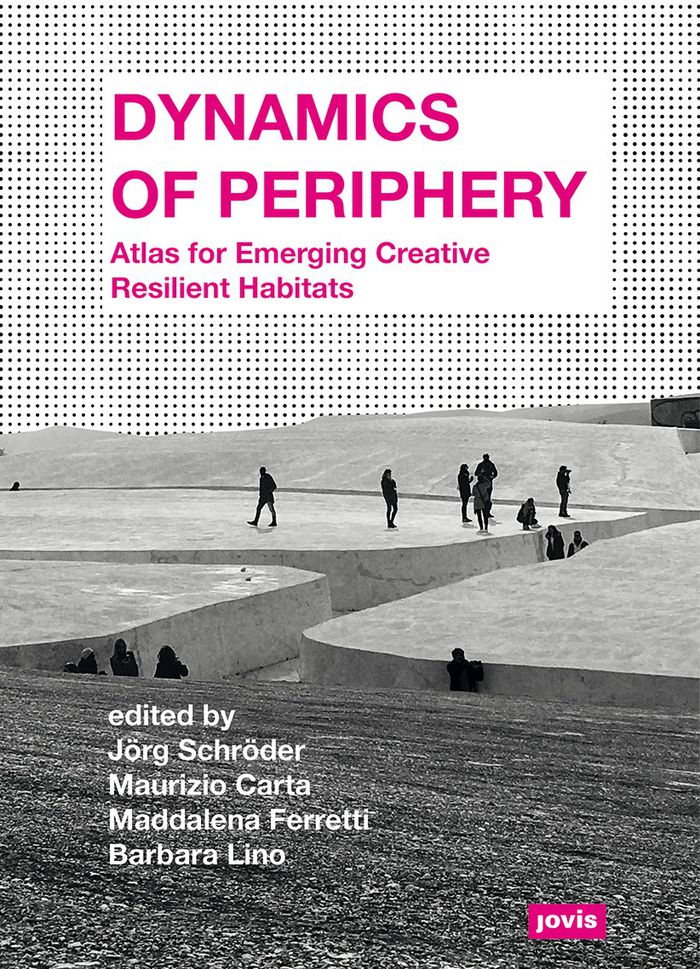
How can dynamic factors and dynamic phenomena outside of metropolitan cores be displayed for debates of territorial futures? 'Dynamics of Periphery' showcases emerging creative and resilient habitat futures to develop concepts for metropolitan, urban, and rural networks — with a perspective not on urban margins, but on new centres for community.
$48.00
(available to order)
Summary:
How can dynamic factors and dynamic phenomena outside of metropolitan cores be displayed for debates of territorial futures? 'Dynamics of Periphery' showcases emerging creative and resilient habitat futures to develop concepts for metropolitan, urban, and rural networks — with a perspective not on urban margins, but on new centres for community.
Subject:
Urban Theory
Urban Theory
Publication:
March 2018
March 2018
Title:
Dynamics of periphery: atlas for emerging creative resilient habitats
Actions:
Price:
$48.00
(available to order)
Summary:
How can dynamic factors and dynamic phenomena outside of metropolitan cores be displayed for debates of territorial futures? 'Dynamics of Periphery' showcases emerging creative and resilient habitat futures to develop concepts for metropolitan, urban, and rural networks — with a perspective not on urban margins, but on new centres for community.
Dynamics of periphery: atlas for emerging creative resilient habitats
Actions:
Price:
$48.00
(available to order)
Summary:
How can dynamic factors and dynamic phenomena outside of metropolitan cores be displayed for debates of territorial futures? 'Dynamics of Periphery' showcases emerging creative and resilient habitat futures to develop concepts for metropolitan, urban, and rural networks — with a perspective not on urban margins, but on new centres for community.
Form:
books
books
Publication:
March 2018
March 2018
Subject:
Urban Theory
Urban Theory
Form:
books
books
Title:
World and system
World and system
Actions:
Price:
$55.00
(available to order)
Summary:
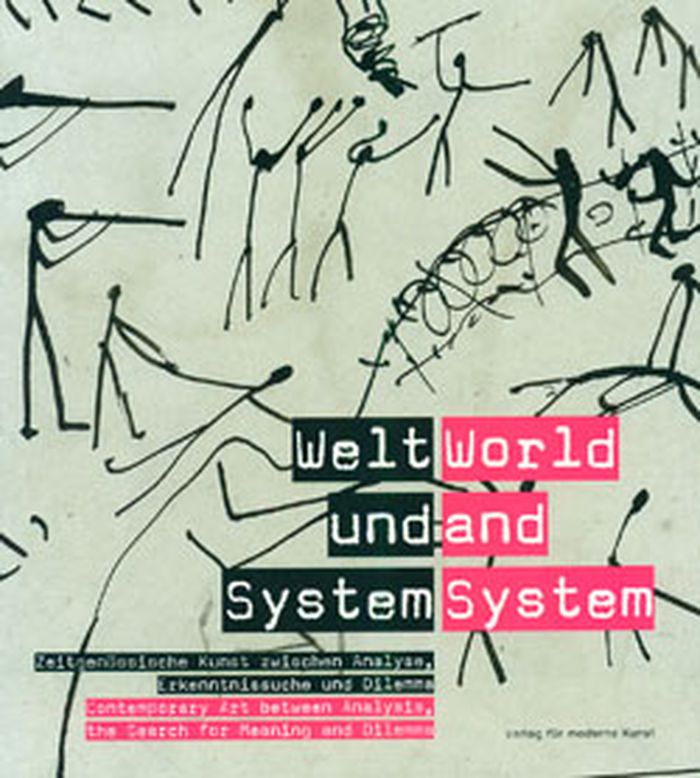
This publication takes A.R. Penck's System Pictures series (inspired by the idea of images as a global language) as a springboard to examine how contemporary artists such as Mark Dion, Charles and Ray Eames, Öyvind Fahlström, Mark Lombardi, Frank Nitsche, Jorinde Voigt and others devise complex systems of their own.
$55.00
(available to order)
Summary:
This publication takes A.R. Penck's System Pictures series (inspired by the idea of images as a global language) as a springboard to examine how contemporary artists such as Mark Dion, Charles and Ray Eames, Öyvind Fahlström, Mark Lombardi, Frank Nitsche, Jorinde Voigt and others devise complex systems of their own.
Title:
World and system
Actions:
Price:
$55.00
(available to order)
Summary:
This publication takes A.R. Penck's System Pictures series (inspired by the idea of images as a global language) as a springboard to examine how contemporary artists such as Mark Dion, Charles and Ray Eames, Öyvind Fahlström, Mark Lombardi, Frank Nitsche, Jorinde Voigt and others devise complex systems of their own.
World and system
Actions:
Price:
$55.00
(available to order)
Summary:
This publication takes A.R. Penck's System Pictures series (inspired by the idea of images as a global language) as a springboard to examine how contemporary artists such as Mark Dion, Charles and Ray Eames, Öyvind Fahlström, Mark Lombardi, Frank Nitsche, Jorinde Voigt and others devise complex systems of their own.
Form:
books
books
Publication:
July 2011
July 2011
Subject:
Art Theory
Art Theory
Form:
books
books

Actions:
Price:
$45.00
(available to order)
Summary:
With the birth of film came the birth of a revolutionary visual language. This book examines the relationship between the visual language of film and the onscreen perception of space and architectural design, revealing how film's visual vocabulary influenced architecture in the twentieth century and continues to influence it today.
$45.00
(available to order)
Summary:
With the birth of film came the birth of a revolutionary visual language. This book examines the relationship between the visual language of film and the onscreen perception of space and architectural design, revealing how film's visual vocabulary influenced architecture in the twentieth century and continues to influence it today.
Title:
The architecture of the screen
Actions:
Price:
$45.00
(available to order)
Summary:
With the birth of film came the birth of a revolutionary visual language. This book examines the relationship between the visual language of film and the onscreen perception of space and architectural design, revealing how film's visual vocabulary influenced architecture in the twentieth century and continues to influence it today.
The architecture of the screen
Actions:
Price:
$45.00
(available to order)
Summary:
With the birth of film came the birth of a revolutionary visual language. This book examines the relationship between the visual language of film and the onscreen perception of space and architectural design, revealing how film's visual vocabulary influenced architecture in the twentieth century and continues to influence it today.
Form:
books
books
Publication:
February 2013
February 2013
Subject:
Architecture and Film, Set Design
Architecture and Film, Set Design
Form:
books
books
Price:
$59.99
(available to order)
Summary:
Featuring 40 essays by U.S. and European historians, designers, cultural critics, geographers and social scientists, illustrated with over 250 color images in extensive visual "gazetteers" — including specially-commissioned portfolios by artists and designers — "Else/where mapping" investigates : how new technologies of navigation and location are emerging to chart(...)
$59.99
(available to order)
Summary:
Featuring 40 essays by U.S. and European historians, designers, cultural critics, geographers and social scientists, illustrated with over 250 color images in extensive visual "gazetteers" — including specially-commissioned portfolios by artists and designers — "Else/where mapping" investigates : how new technologies of navigation and location are emerging to chart(...)
Subject:
Architectural Plans and Cartography
Architectural Plans and Cartography
Publication:
October 2005, Minneapolis
October 2005, Minneapolis
Title:
Else/where : mapping new cartographies of networks and territories
Actions:
Price:
$59.99
(available to order)
Summary:
Featuring 40 essays by U.S. and European historians, designers, cultural critics, geographers and social scientists, illustrated with over 250 color images in extensive visual "gazetteers" — including specially-commissioned portfolios by artists and designers — "Else/where mapping" investigates : how new technologies of navigation and location are emerging to chart "virtual" terrain such as social networks and online conversations; how these new mapping strategies borrow and reinvent metaphors adapted from the cartography of physical terrain, considered at various scales — urban, regional, continental, global ; how new modes of representation of spatial data are evolving to explore the potential for collective "bottom-up" (rather than "top-down") mapping ; how cities, communities and social networks are being re-envisioned, as artists and designers use technologies such as GPS, GIS and digital interface design to devise alternative mappings of social and spatial relationships. Authors : Janet Abrams, Ole Bouman, Andrea Codrington, Denis Cosgrove, Steve Dietz, Paul Elliman, Yuri Engelhardt, Peter Hall, Brian Holmes, J.J. King, Cathy Lang Ho, Andrea Moed, David Pescovitz, Rebecca Ross, Ben Schouten, Alex Terzich, Alice Twemlow, Dirk van Weelden, Tom Vanderbilt, Peter Walsh and Stephen Zacks. Featured artists and designers included : Antenna Design New York, Julian Bleecker, Bureau d'Etudes, Sulki Choi, Layla Curtis, Judith Donath, Entropy8Zuper!, Michael Frumin, Ben Fry, De Geuzen, govcom.org, Marti Guixe, Mark Hansen, Robert Horn, Natalie Jeremijenko, Lisa Jevbratt, Nina Katchadourian, Valdis Krebs, Laura Kurgan, Mark Lombardi, The London Particular, Lumeta.org, Barrett Lyon, Brian McGrath, Julie Mehretu, Paul Mijksenaar, Sigi Moeslinger, MUST Architects, MVRDV, Josh On, W. Bradford Paley, Scott Paterson, Esther Polak, Richard Rogers, Ben Rubin, Warren Sack, Mike Silver, Marco Susani, Terraswarm, UN Studio, Urban Tapestries, Waag Society for Old and New Media, Ronald Wall, Kimberlee Whaley, Jeremy Wood and Marina Zurkow. Book design : Deborah Littlejohn.
Else/where : mapping new cartographies of networks and territories
Actions:
Price:
$59.99
(available to order)
Summary:
Featuring 40 essays by U.S. and European historians, designers, cultural critics, geographers and social scientists, illustrated with over 250 color images in extensive visual "gazetteers" — including specially-commissioned portfolios by artists and designers — "Else/where mapping" investigates : how new technologies of navigation and location are emerging to chart "virtual" terrain such as social networks and online conversations; how these new mapping strategies borrow and reinvent metaphors adapted from the cartography of physical terrain, considered at various scales — urban, regional, continental, global ; how new modes of representation of spatial data are evolving to explore the potential for collective "bottom-up" (rather than "top-down") mapping ; how cities, communities and social networks are being re-envisioned, as artists and designers use technologies such as GPS, GIS and digital interface design to devise alternative mappings of social and spatial relationships. Authors : Janet Abrams, Ole Bouman, Andrea Codrington, Denis Cosgrove, Steve Dietz, Paul Elliman, Yuri Engelhardt, Peter Hall, Brian Holmes, J.J. King, Cathy Lang Ho, Andrea Moed, David Pescovitz, Rebecca Ross, Ben Schouten, Alex Terzich, Alice Twemlow, Dirk van Weelden, Tom Vanderbilt, Peter Walsh and Stephen Zacks. Featured artists and designers included : Antenna Design New York, Julian Bleecker, Bureau d'Etudes, Sulki Choi, Layla Curtis, Judith Donath, Entropy8Zuper!, Michael Frumin, Ben Fry, De Geuzen, govcom.org, Marti Guixe, Mark Hansen, Robert Horn, Natalie Jeremijenko, Lisa Jevbratt, Nina Katchadourian, Valdis Krebs, Laura Kurgan, Mark Lombardi, The London Particular, Lumeta.org, Barrett Lyon, Brian McGrath, Julie Mehretu, Paul Mijksenaar, Sigi Moeslinger, MUST Architects, MVRDV, Josh On, W. Bradford Paley, Scott Paterson, Esther Polak, Richard Rogers, Ben Rubin, Warren Sack, Mike Silver, Marco Susani, Terraswarm, UN Studio, Urban Tapestries, Waag Society for Old and New Media, Ronald Wall, Kimberlee Whaley, Jeremy Wood and Marina Zurkow. Book design : Deborah Littlejohn.
Form:
books
books
Publication:
October 2005, Minneapolis
October 2005, Minneapolis
Subject:
Architectural Plans and Cartography
Architectural Plans and Cartography
Form:
books
books
Price:
$46.00
(available in store)
Summary:
How can art, science and institutional practices counteract the negative consequences of climate and ecological breakdown? How can these practices and ideas advance systemic change? ''Worlding Ecologies'' serves as an anthology of examples and wayward navigational tool, assembling eighteen authors exploring this question from their diverse backgrounds––as scientists,(...)
$46.00
(available in store)
Summary:
How can art, science and institutional practices counteract the negative consequences of climate and ecological breakdown? How can these practices and ideas advance systemic change? ''Worlding Ecologies'' serves as an anthology of examples and wayward navigational tool, assembling eighteen authors exploring this question from their diverse backgrounds––as scientists,(...)
Subject:
Environment and environmental theory
Environment and environmental theory
Publication:
October 2024
October 2024
Title:
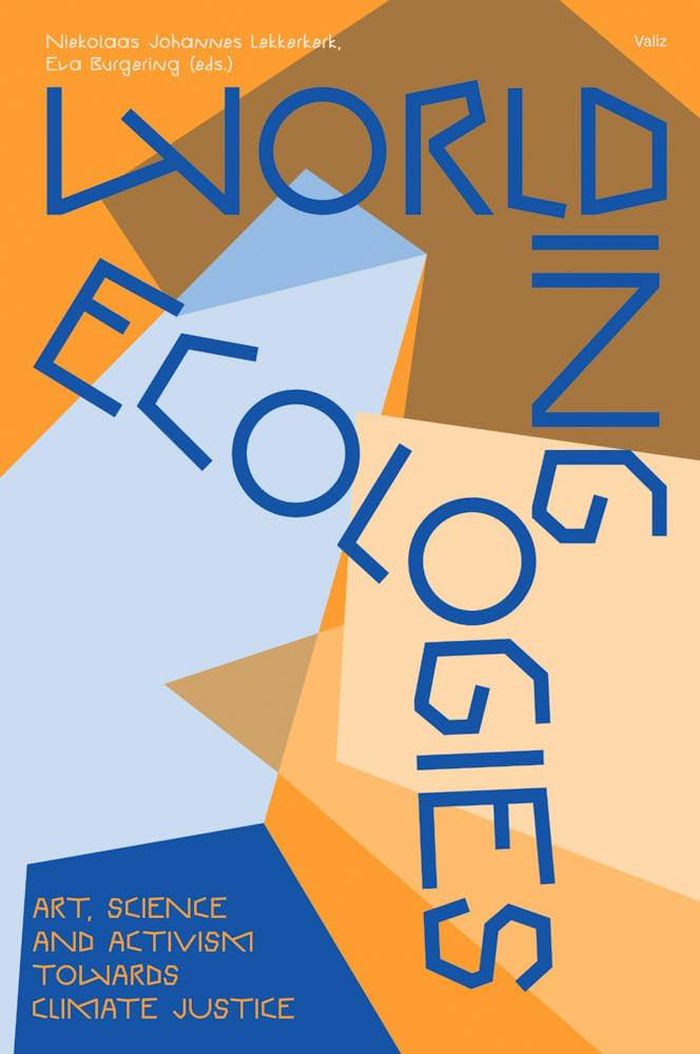
Worlding Ecologies: Art, science and activism towards climate justice
Actions:
Price:
$46.00
(available in store)
Summary:
How can art, science and institutional practices counteract the negative consequences of climate and ecological breakdown? How can these practices and ideas advance systemic change? ''Worlding Ecologies'' serves as an anthology of examples and wayward navigational tool, assembling eighteen authors exploring this question from their diverse backgrounds––as scientists, artists, philosophers, activists, theorists and curators––to rigorously approach urgent ecological challenges, including climate breakdown, pollution, biodiversity loss, environmental and social justice. This book emphasizes the fundamental role of art as a vehicle and support structure for intersectional ecological thought. Whilst navigating imagination, worlding-possibility, science fact, social justice and climate action, the book prompts a fundamental role for art to create the blueprints for regenerative and sustainable more-than-human worlds. Structured alongside three sections––Science and Climate Truth; Activism and Climate Justice and Social Justice in Institutional Ecosystems–– ''Worlding Ecologies'' moves from fieldwork-taking to patchwork-making, unifying the arts with science, politics and ecology into a field of synthetic thought and commitment.
Worlding Ecologies: Art, science and activism towards climate justice
Actions:
Price:
$46.00
(available in store)
Summary:
How can art, science and institutional practices counteract the negative consequences of climate and ecological breakdown? How can these practices and ideas advance systemic change? ''Worlding Ecologies'' serves as an anthology of examples and wayward navigational tool, assembling eighteen authors exploring this question from their diverse backgrounds––as scientists, artists, philosophers, activists, theorists and curators––to rigorously approach urgent ecological challenges, including climate breakdown, pollution, biodiversity loss, environmental and social justice. This book emphasizes the fundamental role of art as a vehicle and support structure for intersectional ecological thought. Whilst navigating imagination, worlding-possibility, science fact, social justice and climate action, the book prompts a fundamental role for art to create the blueprints for regenerative and sustainable more-than-human worlds. Structured alongside three sections––Science and Climate Truth; Activism and Climate Justice and Social Justice in Institutional Ecosystems–– ''Worlding Ecologies'' moves from fieldwork-taking to patchwork-making, unifying the arts with science, politics and ecology into a field of synthetic thought and commitment.
Form:
books
books
Publication:
October 2024
October 2024
Subject:
Environment and environmental theory
Environment and environmental theory


