


1070 Results
Form:
books
books
Title:
Capital and language
Capital and language
Actions:
Price:
$14.95
(available to order)
Summary:
The Swiss-Italian economist Christian Marazzi is one of the core theorists of the Italian postfordist movement, along with Antonio Negri, Paolo Virno, and Bifo (Franco Berardi). But although his work is often cited by scholars (particularly by those in the field of "Cognitive Capitalism"), his writing has never appeared in English. This translation of his most recent(...)
$14.95
(available to order)
Summary:
The Swiss-Italian economist Christian Marazzi is one of the core theorists of the Italian postfordist movement, along with Antonio Negri, Paolo Virno, and Bifo (Franco Berardi). But although his work is often cited by scholars (particularly by those in the field of "Cognitive Capitalism"), his writing has never appeared in English. This translation of his most recent(...)
Title:
Capital and language
Actions:
Price:
$14.95
(available to order)
Summary:
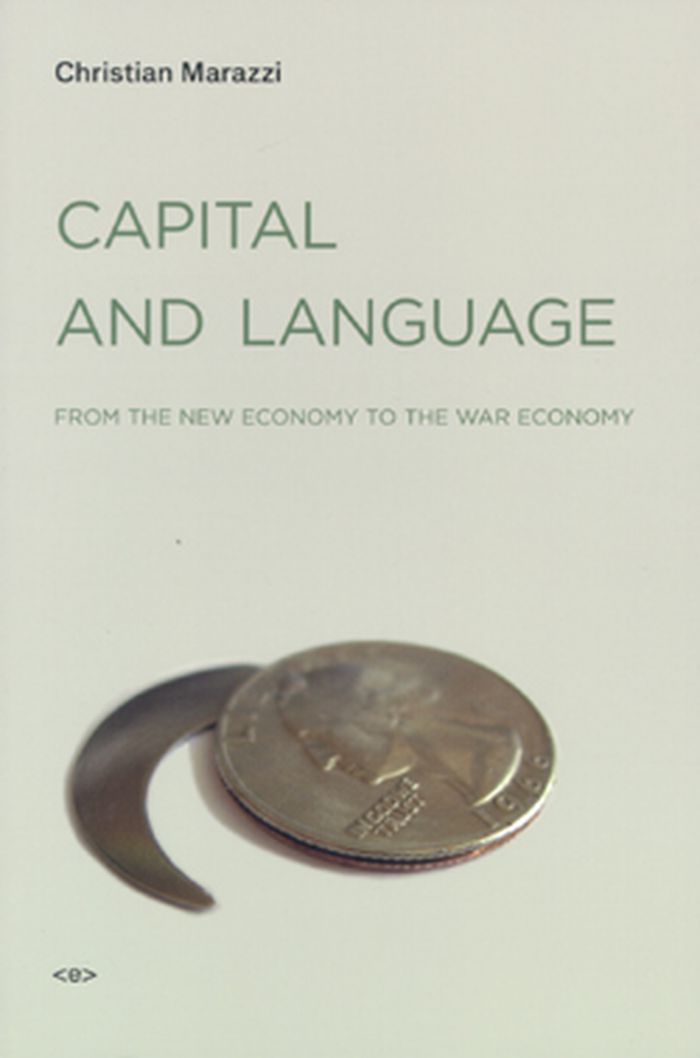
The Swiss-Italian economist Christian Marazzi is one of the core theorists of the Italian postfordist movement, along with Antonio Negri, Paolo Virno, and Bifo (Franco Berardi). But although his work is often cited by scholars (particularly by those in the field of "Cognitive Capitalism"), his writing has never appeared in English. This translation of his most recent work, Capital and Language (published in Italian in 2002), finally makes Marazzi's work available to an English-speaking audience. Capital and Language takes as its starting point the fact that the extreme volatility of financial markets is generally attributed to the discrepancy between the "real economy" (that of material goods produced and sold) and the more speculative monetary-financial economy. But this distinction has long ceased to apply in the postfordist New Economy, in which both spheres are structurally affected by language and communication. In Capital and Language Marazzi argues that the changes in financial markets and the transformation of labor into immaterial labor (that is, its reliance on abstract knowledge, general intellect, and social cooperation) are just two sides of the same coin. Capital and Language focuses on the causes behind the international economic and financial depression of 2001, and on the primary instrument that the U.S. government has since been using to face them: war. Marazzi points to capitalism’s fourth stage (after mercantilism, industrialism, and the postfordist culmination of the New Economy): the "War Economy" that is already upon us.
Capital and language
Actions:
Price:
$14.95
(available to order)
Summary:
The Swiss-Italian economist Christian Marazzi is one of the core theorists of the Italian postfordist movement, along with Antonio Negri, Paolo Virno, and Bifo (Franco Berardi). But although his work is often cited by scholars (particularly by those in the field of "Cognitive Capitalism"), his writing has never appeared in English. This translation of his most recent work, Capital and Language (published in Italian in 2002), finally makes Marazzi's work available to an English-speaking audience. Capital and Language takes as its starting point the fact that the extreme volatility of financial markets is generally attributed to the discrepancy between the "real economy" (that of material goods produced and sold) and the more speculative monetary-financial economy. But this distinction has long ceased to apply in the postfordist New Economy, in which both spheres are structurally affected by language and communication. In Capital and Language Marazzi argues that the changes in financial markets and the transformation of labor into immaterial labor (that is, its reliance on abstract knowledge, general intellect, and social cooperation) are just two sides of the same coin. Capital and Language focuses on the causes behind the international economic and financial depression of 2001, and on the primary instrument that the U.S. government has since been using to face them: war. Marazzi points to capitalism’s fourth stage (after mercantilism, industrialism, and the postfordist culmination of the New Economy): the "War Economy" that is already upon us.
Form:
books
books
Publication:
September 2008, Los Angeles
September 2008, Los Angeles
Subject:
Critical Theory
Critical Theory
Form:
books
books
Holdings:
Description:
192 pages : illustrations ; 24 cm
Description:
192 pages : illustrations ; 24 cm
Author:
Subject:
Publication:
Chicago ; London : The University of Chicago Press, [2016]
Chicago ; London : The University of Chicago Press, [2016]
Title:
Obsolescence : an architectural history / Daniel M. Abramson.
Actions:
Holdings:
Description:
192 pages : illustrations ; 24 cm
Obsolescence : an architectural history / Daniel M. Abramson.
Actions:
Holdings:
Description:
192 pages : illustrations ; 24 cm
Form:
books
books
Publication:
Chicago ; London : The University of Chicago Press, [2016]
Chicago ; London : The University of Chicago Press, [2016]
Author:
Subject:
Form:
books
books

Actions:
Price:
$44.95
(available to order)
Summary:
As cultural heritage institutions across the nation grapple with the realization that their collecting histories have captured an incomplete picture of history, curators and archivists like Dorothy Berry have been drawn into complicated conversations. "The house archives built and other thoughts on Black archival possibilities" brings together years of those conversations(...)
$44.95
(available to order)
Summary:
As cultural heritage institutions across the nation grapple with the realization that their collecting histories have captured an incomplete picture of history, curators and archivists like Dorothy Berry have been drawn into complicated conversations. "The house archives built and other thoughts on Black archival possibilities" brings together years of those conversations(...)
Title:
The house archives built and other thoughts on Black archival possibilities
Actions:
Price:
$44.95
(available to order)
Summary:
As cultural heritage institutions across the nation grapple with the realization that their collecting histories have captured an incomplete picture of history, curators and archivists like Dorothy Berry have been drawn into complicated conversations. "The house archives built and other thoughts on Black archival possibilities" brings together years of those conversations from their origins in conference halls, webinars, and reading rooms to open them up to the public. The labor and theory that upholds archives has been obscured, but our understandings of history and ourselves rest on those invisible foundations. This book clarifies those foundations while offering new possibilities for imagining archival futures in and outside of institutional holdings.
The house archives built and other thoughts on Black archival possibilities
Actions:
Price:
$44.95
(available to order)
Summary:
As cultural heritage institutions across the nation grapple with the realization that their collecting histories have captured an incomplete picture of history, curators and archivists like Dorothy Berry have been drawn into complicated conversations. "The house archives built and other thoughts on Black archival possibilities" brings together years of those conversations from their origins in conference halls, webinars, and reading rooms to open them up to the public. The labor and theory that upholds archives has been obscured, but our understandings of history and ourselves rest on those invisible foundations. This book clarifies those foundations while offering new possibilities for imagining archival futures in and outside of institutional holdings.
Form:
books
books
Publication:
October 2025
October 2025
Subject:
Archive, library and the digital
Archive, library and the digital
Form:
books
books

Title:
Bog Myrtle
Bog Myrtle
Actions:
Price:
$22.99
(available in store)
Summary:
Two sisters, one stubbornly cheerful (Beatrice) and one relentlessly grumpy (Magnolia), live in a drafty old house with a family of helpful spiders. When Beatrice is gifted magic yarn from a giant forest spider obsessed with sustainability named Bog Myrtle, she and the spiders set to work knitting up a perfectly warm sweater. But greedy Magnolia sees only the opportunity(...)
$22.99
(available in store)
Summary:
Two sisters, one stubbornly cheerful (Beatrice) and one relentlessly grumpy (Magnolia), live in a drafty old house with a family of helpful spiders. When Beatrice is gifted magic yarn from a giant forest spider obsessed with sustainability named Bog Myrtle, she and the spiders set to work knitting up a perfectly warm sweater. But greedy Magnolia sees only the opportunity(...)
Title:
Bog Myrtle
Actions:
Price:
$22.99
(available in store)
Summary:
Two sisters, one stubbornly cheerful (Beatrice) and one relentlessly grumpy (Magnolia), live in a drafty old house with a family of helpful spiders. When Beatrice is gifted magic yarn from a giant forest spider obsessed with sustainability named Bog Myrtle, she and the spiders set to work knitting up a perfectly warm sweater. But greedy Magnolia sees only the opportunity for profit, and quickly converts the old house into a magic sweater factory. The exhausted spiders are driven to strike, and Bog Myrtle is not pleased . . . "Bog Myrtle" is a witty modern folktale that touches on themes of capitalism, environmentalism, labor rights, and being a nice person.
Bog Myrtle
Actions:
Price:
$22.99
(available in store)
Summary:
Two sisters, one stubbornly cheerful (Beatrice) and one relentlessly grumpy (Magnolia), live in a drafty old house with a family of helpful spiders. When Beatrice is gifted magic yarn from a giant forest spider obsessed with sustainability named Bog Myrtle, she and the spiders set to work knitting up a perfectly warm sweater. But greedy Magnolia sees only the opportunity for profit, and quickly converts the old house into a magic sweater factory. The exhausted spiders are driven to strike, and Bog Myrtle is not pleased . . . "Bog Myrtle" is a witty modern folktale that touches on themes of capitalism, environmentalism, labor rights, and being a nice person.
Form:
books
books
Publication:
October 2024
October 2024
Subject:
Children's Books
Children's Books
Form:
books
books
Actions:
Price:
$119.00
(available to order)
Summary:
This book examines one of the key notions of modernist architecture as it was formulated in Vienna around 1900. Providing a close analysis of four major buildings - Olbrich's Secession Building, Hoffmann's Purkersdorf Sanatorium, Wagner's Postal Savings Bank, and Loos's Michaelerplatz building - Leslie Topp investigates how "truth" had a variety of meanings, including(...)
$119.00
(available to order)
Summary:
This book examines one of the key notions of modernist architecture as it was formulated in Vienna around 1900. Providing a close analysis of four major buildings - Olbrich's Secession Building, Hoffmann's Purkersdorf Sanatorium, Wagner's Postal Savings Bank, and Loos's Michaelerplatz building - Leslie Topp investigates how "truth" had a variety of meanings, including(...)
Title:
Architecture and truth in fin-de-siècle Vienna
Actions:
Price:
$119.00
(available to order)
Summary:
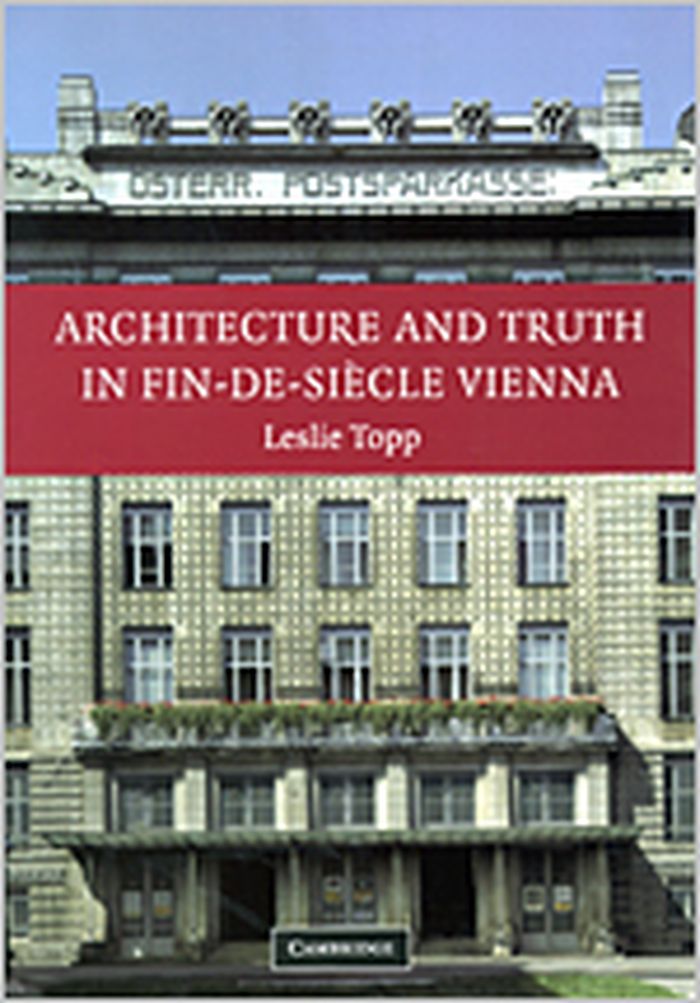
This book examines one of the key notions of modernist architecture as it was formulated in Vienna around 1900. Providing a close analysis of four major buildings - Olbrich's Secession Building, Hoffmann's Purkersdorf Sanatorium, Wagner's Postal Savings Bank, and Loos's Michaelerplatz building - Leslie Topp investigates how "truth" had a variety of meanings, including truth to purpose, symbolist or ideal truth, and ethical notions of authenticity. Drawing on newly uncovered archival material, Topp offers a new interpretation of familiar buildings that are shown to encompass utopianis, hyper-rationality and subjectivism. She also explores the connections between Viennese modern architecture and contemporary painting, psychiatry, fashion, labor issues, and anti-Semitic politics.
Architecture and truth in fin-de-siècle Vienna
Actions:
Price:
$119.00
(available to order)
Summary:
This book examines one of the key notions of modernist architecture as it was formulated in Vienna around 1900. Providing a close analysis of four major buildings - Olbrich's Secession Building, Hoffmann's Purkersdorf Sanatorium, Wagner's Postal Savings Bank, and Loos's Michaelerplatz building - Leslie Topp investigates how "truth" had a variety of meanings, including truth to purpose, symbolist or ideal truth, and ethical notions of authenticity. Drawing on newly uncovered archival material, Topp offers a new interpretation of familiar buildings that are shown to encompass utopianis, hyper-rationality and subjectivism. She also explores the connections between Viennese modern architecture and contemporary painting, psychiatry, fashion, labor issues, and anti-Semitic politics.
Form:
books
books
Publication:
March 2004, Cambridge
March 2004, Cambridge
Subject:
History until 1900
History until 1900
Form:
books
books
Price:
$34.50
(available to order)
Summary:
Nonetheless, it presents ambiguities that offer a highly productive departure point for analysis of the cultural shifts in our post-digital society. Digital technology is embedded in our personal relationships, in labor conditions and in aesthetic practices. What does this fact mean for the “authentic”? This book gathers various thinkers who explore the meaning of(...)
$34.50
(available to order)
Summary:
Nonetheless, it presents ambiguities that offer a highly productive departure point for analysis of the cultural shifts in our post-digital society. Digital technology is embedded in our personal relationships, in labor conditions and in aesthetic practices. What does this fact mean for the “authentic”? This book gathers various thinkers who explore the meaning of(...)
Title:
Authenticity? observations and artistic strategies in the post-digital age
Actions:
Price:
$34.50
(available to order)
Summary:
Nonetheless, it presents ambiguities that offer a highly productive departure point for analysis of the cultural shifts in our post-digital society. Digital technology is embedded in our personal relationships, in labor conditions and in aesthetic practices. What does this fact mean for the “authentic”? This book gathers various thinkers who explore the meaning of authenticity today—not just in terms of art and art-making, but in every single nook of contemporary life, from the intimate to the public. The contributors are Erika Balsom, Franco “Bifo” Berardi, Mat Dryhurst, Jazmina Figueroa, Holly Herndon, Rob Horning, David Joselit, Oliver Laric, Timotheus Vermeulen, Beny Wagner and McKenzie Wark.
Authenticity? observations and artistic strategies in the post-digital age
Actions:
Price:
$34.50
(available to order)
Summary:
Nonetheless, it presents ambiguities that offer a highly productive departure point for analysis of the cultural shifts in our post-digital society. Digital technology is embedded in our personal relationships, in labor conditions and in aesthetic practices. What does this fact mean for the “authentic”? This book gathers various thinkers who explore the meaning of authenticity today—not just in terms of art and art-making, but in every single nook of contemporary life, from the intimate to the public. The contributors are Erika Balsom, Franco “Bifo” Berardi, Mat Dryhurst, Jazmina Figueroa, Holly Herndon, Rob Horning, David Joselit, Oliver Laric, Timotheus Vermeulen, Beny Wagner and McKenzie Wark.
Form:
books
books
Publication:
August 2017
August 2017
Subject:
Digital Architecture
Digital Architecture
Form:
books
books
Title:
Infrastuctural monument
Infrastuctural monument
Actions:
Price:
$41.95
(available to order)
Summary:
Infrastructural Monument presents the proceedings of the first of two conferences organized by MIT's new Center for Advanced Urbanism around the biennial theme of infrastructure. Held in the spring of 2013, the "Infrastructural Monument" conference gathered designers, developers, policy experts, and scholars to address the potential to leverage infrastructure design(...)
$41.95
(available to order)
Summary:
Infrastructural Monument presents the proceedings of the first of two conferences organized by MIT's new Center for Advanced Urbanism around the biennial theme of infrastructure. Held in the spring of 2013, the "Infrastructural Monument" conference gathered designers, developers, policy experts, and scholars to address the potential to leverage infrastructure design(...)
Title:
Infrastuctural monument
Actions:
Price:
$41.95
(available to order)
Summary:
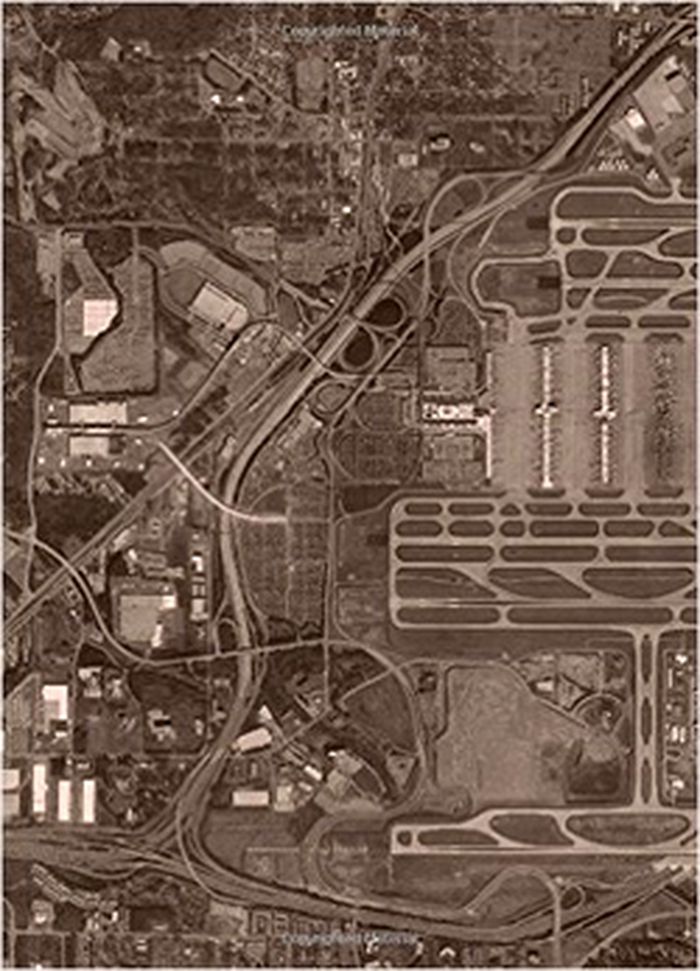
Infrastructural Monument presents the proceedings of the first of two conferences organized by MIT's new Center for Advanced Urbanism around the biennial theme of infrastructure. Held in the spring of 2013, the "Infrastructural Monument" conference gathered designers, developers, policy experts, and scholars to address the potential to leverage infrastructure design beyond the realm of transportation of goods and labor into the realm of culture, public space, architecture, and landscape form. In other words, can infrastructure transcend mere practicality and fulfill a role that is profoundly cultural? Can targeted infrastructure projects transform a city from a collection of fragments to one with a common and cohesive regional identity?
Infrastuctural monument
Actions:
Price:
$41.95
(available to order)
Summary:
Infrastructural Monument presents the proceedings of the first of two conferences organized by MIT's new Center for Advanced Urbanism around the biennial theme of infrastructure. Held in the spring of 2013, the "Infrastructural Monument" conference gathered designers, developers, policy experts, and scholars to address the potential to leverage infrastructure design beyond the realm of transportation of goods and labor into the realm of culture, public space, architecture, and landscape form. In other words, can infrastructure transcend mere practicality and fulfill a role that is profoundly cultural? Can targeted infrastructure projects transform a city from a collection of fragments to one with a common and cohesive regional identity?
Form:
books
books
Publication:
February 2016
February 2016
Subject:
Urban Theory
Urban Theory
Form:
books
books
Actions:
Price:
$69.95
(available in store)
Summary:
Solid, earthbound edifices of iron, brick, and stone made way for towers of steel and plate glass, imparting a striking new look to Chicago's growing urban landscape. Thomas Leslie reveals the daily struggles, technical breakthroughs, and negotiations that produced these magnificent buildings. He also considers how the city's infamous political climate contributed to its(...)
$69.95
(available in store)
Summary:
Solid, earthbound edifices of iron, brick, and stone made way for towers of steel and plate glass, imparting a striking new look to Chicago's growing urban landscape. Thomas Leslie reveals the daily struggles, technical breakthroughs, and negotiations that produced these magnificent buildings. He also considers how the city's infamous political climate contributed to its(...)
Title:
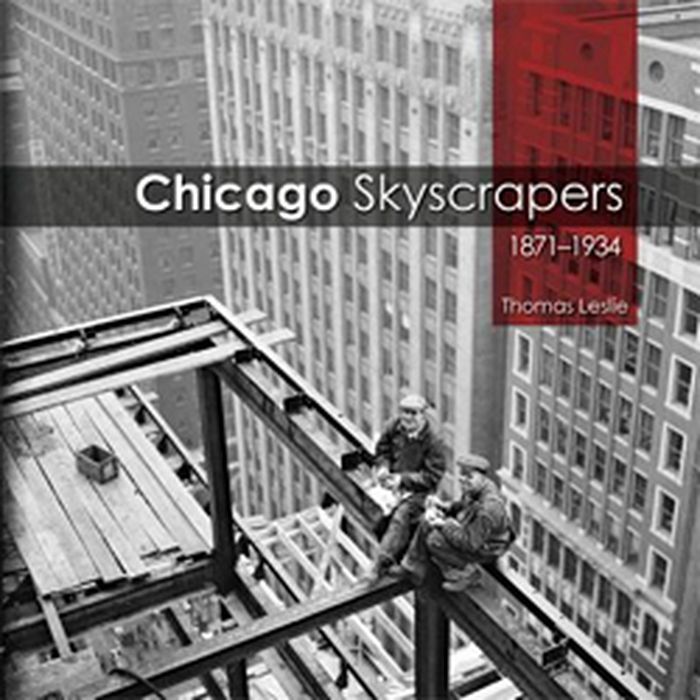
Chicago skyscrapers: 1871-1934
Actions:
Price:
$69.95
(available in store)
Summary:
Solid, earthbound edifices of iron, brick, and stone made way for towers of steel and plate glass, imparting a striking new look to Chicago's growing urban landscape. Thomas Leslie reveals the daily struggles, technical breakthroughs, and negotiations that produced these magnificent buildings. He also considers how the city's infamous political climate contributed to its architecture, as building and zoning codes were often disputed by shifting networks of rivals, labor unions, professional organizations, and municipal bodies. Featuring more than a hundred photographs and illustrations of the city's physically impressive and beautifully diverse architecture, Chicago Skyscrapers, 1871-1934 highlights an exceptionally dynamic, energetic period of architectural progress in Chicago.
Chicago skyscrapers: 1871-1934
Actions:
Price:
$69.95
(available in store)
Summary:
Solid, earthbound edifices of iron, brick, and stone made way for towers of steel and plate glass, imparting a striking new look to Chicago's growing urban landscape. Thomas Leslie reveals the daily struggles, technical breakthroughs, and negotiations that produced these magnificent buildings. He also considers how the city's infamous political climate contributed to its architecture, as building and zoning codes were often disputed by shifting networks of rivals, labor unions, professional organizations, and municipal bodies. Featuring more than a hundred photographs and illustrations of the city's physically impressive and beautifully diverse architecture, Chicago Skyscrapers, 1871-1934 highlights an exceptionally dynamic, energetic period of architectural progress in Chicago.
Form:
books
books
Publication:
May 2013
May 2013
Subject:
Gratte-ciels
Gratte-ciels
Form:
books
books
Title:
Textiles : open letter
Textiles : open letter
Actions:
Price:
$69.95
(available to order)
Summary:
An essential characteristic of textiles is their richly intertextual nature. Textiles: Open Letter stems from an exhibition at Museum Abteiberg, Germany, plus an extensive research project (2010 14) examining the place of textiles in the history of art and culture, media, society and technology through various voices. Representing traditions found in both applied and(...)
$69.95
(available to order)
Summary:
An essential characteristic of textiles is their richly intertextual nature. Textiles: Open Letter stems from an exhibition at Museum Abteiberg, Germany, plus an extensive research project (2010 14) examining the place of textiles in the history of art and culture, media, society and technology through various voices. Representing traditions found in both applied and(...)
Title:
Textiles : open letter
Actions:
Price:
$69.95
(available to order)
Summary:
An essential characteristic of textiles is their richly intertextual nature. Textiles: Open Letter stems from an exhibition at Museum Abteiberg, Germany, plus an extensive research project (2010 14) examining the place of textiles in the history of art and culture, media, society and technology through various voices. Representing traditions found in both applied and fine arts, textiles hover between formalism and functionalism; as objects and techniques, they mediate between self and world, between affect-driven and knowledge-driven processes of appropriation. Functionally versatile, textiles are the fulcrum of an ensemble of activities, and illustrate relations between subject and object, material and immaterial, artistic and artisanal labor, and different cultures.
Textiles : open letter
Actions:
Price:
$69.95
(available to order)
Summary:
An essential characteristic of textiles is their richly intertextual nature. Textiles: Open Letter stems from an exhibition at Museum Abteiberg, Germany, plus an extensive research project (2010 14) examining the place of textiles in the history of art and culture, media, society and technology through various voices. Representing traditions found in both applied and fine arts, textiles hover between formalism and functionalism; as objects and techniques, they mediate between self and world, between affect-driven and knowledge-driven processes of appropriation. Functionally versatile, textiles are the fulcrum of an ensemble of activities, and illustrate relations between subject and object, material and immaterial, artistic and artisanal labor, and different cultures.
Form:
books
books
Publication:
July 2015
July 2015
Subject:
Design Theory
Design Theory
Form:
books
books

Price:
$63.00
(available in store)
Summary:
Anna Andreeva (1917–2008) was a Soviet textile designer and leading artist at the famous Red Rose Silk Factory in Moscow from 1944 to 1984. The former Giraud silk factory, nationalized in 1919 after the October Revolution and renamed to commemorate the murdered Polish-German socialist revolutionary Rosa Luxemburg, became a site of collective female design labor that(...)
$63.00
(available in store)
Summary:
Anna Andreeva (1917–2008) was a Soviet textile designer and leading artist at the famous Red Rose Silk Factory in Moscow from 1944 to 1984. The former Giraud silk factory, nationalized in 1919 after the October Revolution and renamed to commemorate the murdered Polish-German socialist revolutionary Rosa Luxemburg, became a site of collective female design labor that(...)
Title:
Collective threads: Anna Andreeva at the Red Rose Silk Factory
Actions:
Price:
$63.00
(available in store)
Summary:
Anna Andreeva (1917–2008) was a Soviet textile designer and leading artist at the famous Red Rose Silk Factory in Moscow from 1944 to 1984. The former Giraud silk factory, nationalized in 1919 after the October Revolution and renamed to commemorate the murdered Polish-German socialist revolutionary Rosa Luxemburg, became a site of collective female design labor that shaped the fashion and material culture of late socialism. Andreeva’s spectacular patterns range from abstract and geometric to cosmic and space-age and to pictorial themes of the city of Moscow and Russian folk art. Her mass-produced designs were among the most popular textile prints distributed within the USSR in the 1960s and 1970s.
Collective threads: Anna Andreeva at the Red Rose Silk Factory
Actions:
Price:
$63.00
(available in store)
Summary:
Anna Andreeva (1917–2008) was a Soviet textile designer and leading artist at the famous Red Rose Silk Factory in Moscow from 1944 to 1984. The former Giraud silk factory, nationalized in 1919 after the October Revolution and renamed to commemorate the murdered Polish-German socialist revolutionary Rosa Luxemburg, became a site of collective female design labor that shaped the fashion and material culture of late socialism. Andreeva’s spectacular patterns range from abstract and geometric to cosmic and space-age and to pictorial themes of the city of Moscow and Russian folk art. Her mass-produced designs were among the most popular textile prints distributed within the USSR in the 1960s and 1970s.
Form:
books
books
Publication:
August 2025
August 2025
Subject:
Design Monographs
Design Monographs


