


12372 Results
Form:
journals and magazines
journals and magazines

Title:
Pineapple, issue 1
Pineapple, issue 1
Actions:
Price:
$15.00
(available to order)
Summary:
This is a printed magazine where stories are told by unexpected characters of our community. It is a crossroad of travel and anthropology; a document of community, belonging and shared space. Pineapple is a platform for the stories from Airbnb’s extended family to be shared; it is somewhere for readers to see how people live and create connections in cities today. With(...)
$15.00
(available to order)
Summary:
This is a printed magazine where stories are told by unexpected characters of our community. It is a crossroad of travel and anthropology; a document of community, belonging and shared space. Pineapple is a platform for the stories from Airbnb’s extended family to be shared; it is somewhere for readers to see how people live and create connections in cities today. With(...)
Title:
Pineapple, issue 1
Actions:
Price:
$15.00
(available to order)
Summary:
This is a printed magazine where stories are told by unexpected characters of our community. It is a crossroad of travel and anthropology; a document of community, belonging and shared space. Pineapple is a platform for the stories from Airbnb’s extended family to be shared; it is somewhere for readers to see how people live and create connections in cities today. With stories collected from London, Seoul and San Francisco.
Pineapple, issue 1
Actions:
Price:
$15.00
(available to order)
Summary:
This is a printed magazine where stories are told by unexpected characters of our community. It is a crossroad of travel and anthropology; a document of community, belonging and shared space. Pineapple is a platform for the stories from Airbnb’s extended family to be shared; it is somewhere for readers to see how people live and create connections in cities today. With stories collected from London, Seoul and San Francisco.
Form:
journals and magazines
journals and magazines
Publication:
January 2015
January 2015
Subject:
Magazines
Magazines
Form:
books
books
Actions:
Price:
$32.95
(available to order)
Summary:
How did a First World urban population come to imagine itself as part of a global anti-colonial movement? This book tackles this and other paradoxes created by the surprising power and influence of Third World decolonization on political activism in 1960s Montreal. In a brilliant history of a turbulent time and place, Mills pulls back the curtain on the decade's(...)
$32.95
(available to order)
Summary:
How did a First World urban population come to imagine itself as part of a global anti-colonial movement? This book tackles this and other paradoxes created by the surprising power and influence of Third World decolonization on political activism in 1960s Montreal. In a brilliant history of a turbulent time and place, Mills pulls back the curtain on the decade's(...)
Title:
The empire within: postcolonial thought and political activism in Sixties Montréal
Actions:
Price:
$32.95
(available to order)
Summary:
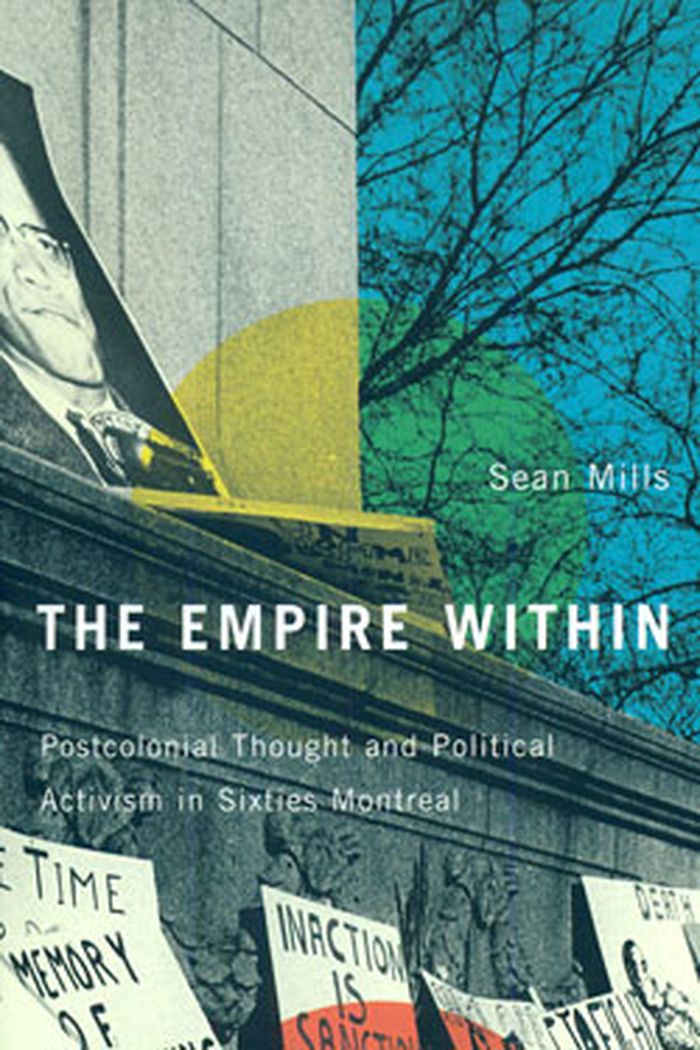
How did a First World urban population come to imagine itself as part of a global anti-colonial movement? This book tackles this and other paradoxes created by the surprising power and influence of Third World decolonization on political activism in 1960s Montreal. In a brilliant history of a turbulent time and place, Mills pulls back the curtain on the decade's activists and intellectuals, showing their engagement both with each other and with people from around the world. He demonstrates how activists of different backgrounds and with different political aims drew on ideas of decolonization to rethink the meanings attached to the politics of sex, race, and class and to imagine themselves as part of a broad transnational movement of anti-colonial and anti-imperialist resistance. The temporary unity forged around ideas of decolonization came undone in the 1970s, however, as many were forced to come to terms with the contradictions and ambiguities of applying ideas of decolonization in Quebec. From linguistic debates to labour unions, and from the political activities of citizens in the city's poorest neighbourhoods to its Caribbean intellectuals, this publication is a political tour of Montreal that reconsiders the meaning and legacy of the city's dissident traditions. It is also a fascinating chapter in the history of postcolonial thought.
The empire within: postcolonial thought and political activism in Sixties Montréal
Actions:
Price:
$32.95
(available to order)
Summary:
How did a First World urban population come to imagine itself as part of a global anti-colonial movement? This book tackles this and other paradoxes created by the surprising power and influence of Third World decolonization on political activism in 1960s Montreal. In a brilliant history of a turbulent time and place, Mills pulls back the curtain on the decade's activists and intellectuals, showing their engagement both with each other and with people from around the world. He demonstrates how activists of different backgrounds and with different political aims drew on ideas of decolonization to rethink the meanings attached to the politics of sex, race, and class and to imagine themselves as part of a broad transnational movement of anti-colonial and anti-imperialist resistance. The temporary unity forged around ideas of decolonization came undone in the 1970s, however, as many were forced to come to terms with the contradictions and ambiguities of applying ideas of decolonization in Quebec. From linguistic debates to labour unions, and from the political activities of citizens in the city's poorest neighbourhoods to its Caribbean intellectuals, this publication is a political tour of Montreal that reconsiders the meaning and legacy of the city's dissident traditions. It is also a fascinating chapter in the history of postcolonial thought.
Form:
books
books
Publication:
August 2010
August 2010
Subject:
Architecture de Montréal
Architecture de Montréal
Form:
books
books
Title:
In praise of copying
In praise of copying
Actions:
Price:
$29.95
(available to order)
Summary:
This book is devoted to a deceptively simple but original argument: that copying is an essential part of being human, that the ability to copy is worthy of celebration, and that, without recognizing how integral copying is to being human, we cannot understand ourselves or the world we live in. In spite of the laws, stigmas, and anxieties attached to it, the word(...)
$29.95
(available to order)
Summary:
This book is devoted to a deceptively simple but original argument: that copying is an essential part of being human, that the ability to copy is worthy of celebration, and that, without recognizing how integral copying is to being human, we cannot understand ourselves or the world we live in. In spite of the laws, stigmas, and anxieties attached to it, the word(...)
Title:
In praise of copying
Actions:
Price:
$29.95
(available to order)
Summary:
This book is devoted to a deceptively simple but original argument: that copying is an essential part of being human, that the ability to copy is worthy of celebration, and that, without recognizing how integral copying is to being human, we cannot understand ourselves or the world we live in. In spite of the laws, stigmas, and anxieties attached to it, the word “copying” permeates contemporary culture, shaping discourse on issues from hip hop to digitization to gender reassignment, and is particularly crucial in legal debates concerning intellectual property and copyright. Yet as a philosophical concept, copying remains poorly understood. Working comparatively across cultures and times, Marcus Boon undertakes an examination of what this word means—historically, culturally, philosophically—and why it fills us with fear and fascination. He argues that the dominant legal-political structures that define copying today obscure much broader processes of imitation that have constituted human communities for ages and continue to shape various subcultures today. Drawing on contemporary art, music and film, the history of aesthetics, critical theory, and Buddhist philosophy and practice, In Praise of Copying seeks to show how and why copying works, what the sources of its power are, and the political stakes of renegotiating the way we value copying in the age of globalization.
In praise of copying
Actions:
Price:
$29.95
(available to order)
Summary:
This book is devoted to a deceptively simple but original argument: that copying is an essential part of being human, that the ability to copy is worthy of celebration, and that, without recognizing how integral copying is to being human, we cannot understand ourselves or the world we live in. In spite of the laws, stigmas, and anxieties attached to it, the word “copying” permeates contemporary culture, shaping discourse on issues from hip hop to digitization to gender reassignment, and is particularly crucial in legal debates concerning intellectual property and copyright. Yet as a philosophical concept, copying remains poorly understood. Working comparatively across cultures and times, Marcus Boon undertakes an examination of what this word means—historically, culturally, philosophically—and why it fills us with fear and fascination. He argues that the dominant legal-political structures that define copying today obscure much broader processes of imitation that have constituted human communities for ages and continue to shape various subcultures today. Drawing on contemporary art, music and film, the history of aesthetics, critical theory, and Buddhist philosophy and practice, In Praise of Copying seeks to show how and why copying works, what the sources of its power are, and the political stakes of renegotiating the way we value copying in the age of globalization.
Form:
books
books
Publication:
October 2010
October 2010
Subject:
Critical Theory
Critical Theory
Form:
books
books
Title:
In praise of copying
In praise of copying
Actions:
Price:
$24.95
(available to order)
Summary:
This book is devoted to a deceptively simple but original argument : that copying is an essential part of being human, that the ability to copy is worthy of celebration, and that, without recognizing how integral copying is to being human, we cannot understand ourselves or the world we live in. In spite of the laws, stigmas, and anxieties attached to it, the word(...)
$24.95
(available to order)
Summary:
This book is devoted to a deceptively simple but original argument : that copying is an essential part of being human, that the ability to copy is worthy of celebration, and that, without recognizing how integral copying is to being human, we cannot understand ourselves or the world we live in. In spite of the laws, stigmas, and anxieties attached to it, the word(...)
Title:
In praise of copying
Actions:
Price:
$24.95
(available to order)
Summary:
This book is devoted to a deceptively simple but original argument : that copying is an essential part of being human, that the ability to copy is worthy of celebration, and that, without recognizing how integral copying is to being human, we cannot understand ourselves or the world we live in. In spite of the laws, stigmas, and anxieties attached to it, the word “copying” permeates contemporary culture, shaping discourse on issues from hip hop to digitization to gender reassignment, and is particularly crucial in legal debates concerning intellectual property and copyright. Yet as a philosophical concept, copying remains poorly understood. Working comparatively across cultures and times, Marcus Boon undertakes an examination of what this word means — historically, culturally, philosophically — and why it fills us with fear and fascination. He argues that the dominant legal-political structures that define copying today obscure much broader processes of imitation that have constituted human communities for ages and continue to shape various subcultures today. Drawing on contemporary art, music and film, the history of aesthetics, critical theory, and Buddhist philosophy and practice, In Praise of Copying seeks to show how and why copying works, what the sources of its power are, and the political stakes of renegotiating the way we value copying in the age of globalization.
In praise of copying
Actions:
Price:
$24.95
(available to order)
Summary:
This book is devoted to a deceptively simple but original argument : that copying is an essential part of being human, that the ability to copy is worthy of celebration, and that, without recognizing how integral copying is to being human, we cannot understand ourselves or the world we live in. In spite of the laws, stigmas, and anxieties attached to it, the word “copying” permeates contemporary culture, shaping discourse on issues from hip hop to digitization to gender reassignment, and is particularly crucial in legal debates concerning intellectual property and copyright. Yet as a philosophical concept, copying remains poorly understood. Working comparatively across cultures and times, Marcus Boon undertakes an examination of what this word means — historically, culturally, philosophically — and why it fills us with fear and fascination. He argues that the dominant legal-political structures that define copying today obscure much broader processes of imitation that have constituted human communities for ages and continue to shape various subcultures today. Drawing on contemporary art, music and film, the history of aesthetics, critical theory, and Buddhist philosophy and practice, In Praise of Copying seeks to show how and why copying works, what the sources of its power are, and the political stakes of renegotiating the way we value copying in the age of globalization.
Form:
books
books
Publication:
March 2013
March 2013
Subject:
Critical Theory
Critical Theory
Form:
books
books

Actions:
Price:
$30.00
(available to order)
Summary:
Compiled here for the first time, the selected writings of Aria Dean (b. 1993, Los Angeles) mount a trenchant critique of representational systems. A visual artist and filmmaker, Dean has also emerged as one of the leading critical voices of her generation through a body of writing that maps the forces of aesthetic theory, image regimes, and visibility onto questions of(...)
$30.00
(available to order)
Summary:
Compiled here for the first time, the selected writings of Aria Dean (b. 1993, Los Angeles) mount a trenchant critique of representational systems. A visual artist and filmmaker, Dean has also emerged as one of the leading critical voices of her generation through a body of writing that maps the forces of aesthetic theory, image regimes, and visibility onto questions of(...)
Title:
Bad infinity: Selected writings
Actions:
Price:
$30.00
(available to order)
Summary:
Compiled here for the first time, the selected writings of Aria Dean (b. 1993, Los Angeles) mount a trenchant critique of representational systems. A visual artist and filmmaker, Dean has also emerged as one of the leading critical voices of her generation through a body of writing that maps the forces of aesthetic theory, image regimes, and visibility onto questions of race and power. Dean’s work across media has long been defined by what she calls a “fixation on the subject and its borders,” and the texts collected here filter that inquiry through digital networks, art history, and Black radical thought. Equally at home discussing artists who embrace difficulty—from Robert Morris to David Hammons, Lorna Simpson, and Ulysses Jenkins—and conceptual frameworks such as Afropessimism, Dean often contends with how theoretical positions brush against the grain of lived reality: how the Structuralism handed down from the academy, for instance, can be commingled with critiques of structural racism, or how Georges Bataille’s notion of base matter transforms through an encounter with Blackness.
Bad infinity: Selected writings
Actions:
Price:
$30.00
(available to order)
Summary:
Compiled here for the first time, the selected writings of Aria Dean (b. 1993, Los Angeles) mount a trenchant critique of representational systems. A visual artist and filmmaker, Dean has also emerged as one of the leading critical voices of her generation through a body of writing that maps the forces of aesthetic theory, image regimes, and visibility onto questions of race and power. Dean’s work across media has long been defined by what she calls a “fixation on the subject and its borders,” and the texts collected here filter that inquiry through digital networks, art history, and Black radical thought. Equally at home discussing artists who embrace difficulty—from Robert Morris to David Hammons, Lorna Simpson, and Ulysses Jenkins—and conceptual frameworks such as Afropessimism, Dean often contends with how theoretical positions brush against the grain of lived reality: how the Structuralism handed down from the academy, for instance, can be commingled with critiques of structural racism, or how Georges Bataille’s notion of base matter transforms through an encounter with Blackness.
Form:
books
books
Publication:
May 2023
May 2023
Subject:
Art Theory
Art Theory
Form:
books
books
Actions:
Price:
$36.95
(available to order)
Summary:
In "Fugitive time", Matthew Omelsky theorizes the embodied experience of time in twentieth- and twenty-first-century black artforms from across the world. Through the lens of time, he charts the sensations and coursing thoughts that accompany desires for freedom as they appear in the work of artists as varied as Toni Morrison, Yvonne Vera, Aimé Césaire, and Issa Samb.(...)
$36.95
(available to order)
Summary:
In "Fugitive time", Matthew Omelsky theorizes the embodied experience of time in twentieth- and twenty-first-century black artforms from across the world. Through the lens of time, he charts the sensations and coursing thoughts that accompany desires for freedom as they appear in the work of artists as varied as Toni Morrison, Yvonne Vera, Aimé Césaire, and Issa Samb.(...)
Title:
Fugitive time: Global aesthetics and the black beyond
Actions:
Price:
$36.95
(available to order)
Summary:
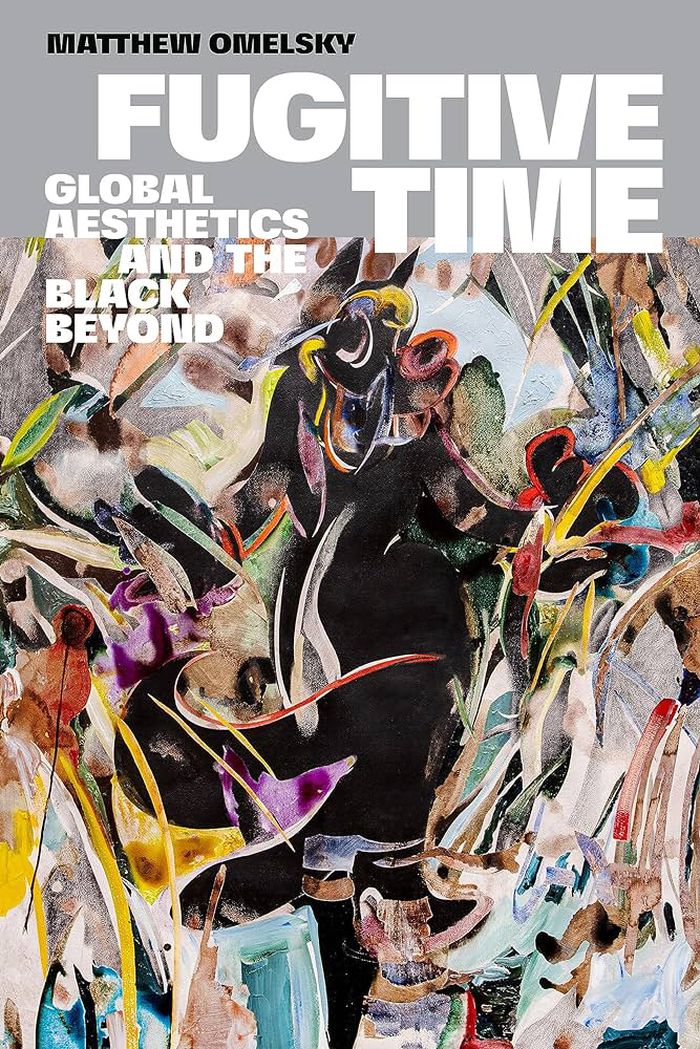
In "Fugitive time", Matthew Omelsky theorizes the embodied experience of time in twentieth- and twenty-first-century black artforms from across the world. Through the lens of time, he charts the sensations and coursing thoughts that accompany desires for freedom as they appear in the work of artists as varied as Toni Morrison, Yvonne Vera, Aimé Césaire, and Issa Samb. "Fugitive time" names a distinct utopian desire directed at the anticipated moment when the body and mind have been unburdened of the violence that has consumed black life globally for centuries, bringing with it a new form of being. Omelsky shows how fugitive time is not about attaining this transcendent release but is instead about sustaining the idea of it as an ecstatic social gathering. From the desire for ethereal queer worlds in the Black Audio Film Collective's "Twilight City" to Sun Ra's transformation of nineteenth-century scientific racism into an insurgent fugitive aesthetic, Omelsky shows how fugitive time evolves and how it remains a dominant form of imagining freedom in global black cultural expression.
Fugitive time: Global aesthetics and the black beyond
Actions:
Price:
$36.95
(available to order)
Summary:
In "Fugitive time", Matthew Omelsky theorizes the embodied experience of time in twentieth- and twenty-first-century black artforms from across the world. Through the lens of time, he charts the sensations and coursing thoughts that accompany desires for freedom as they appear in the work of artists as varied as Toni Morrison, Yvonne Vera, Aimé Césaire, and Issa Samb. "Fugitive time" names a distinct utopian desire directed at the anticipated moment when the body and mind have been unburdened of the violence that has consumed black life globally for centuries, bringing with it a new form of being. Omelsky shows how fugitive time is not about attaining this transcendent release but is instead about sustaining the idea of it as an ecstatic social gathering. From the desire for ethereal queer worlds in the Black Audio Film Collective's "Twilight City" to Sun Ra's transformation of nineteenth-century scientific racism into an insurgent fugitive aesthetic, Omelsky shows how fugitive time evolves and how it remains a dominant form of imagining freedom in global black cultural expression.
Form:
books
books
Publication:
December 2023
December 2023
Subject:
Art Theory
Art Theory
Form:
books
books
Actions:
Price:
$39.00
(available to order)
Summary:
Visiting the villas of Renaissance architect Andrea Palladio (1508-80), one inevitably asks oneself how people actually occupied them. Palladio conceived his villas as ''small towns'' (piccole città) that formed a single unit with adjacent service buildings and farm fields. Within their walls lived people of all ages, social backgrounds and skills. These buildings were(...)
$39.00
(available to order)
Summary:
Visiting the villas of Renaissance architect Andrea Palladio (1508-80), one inevitably asks oneself how people actually occupied them. Palladio conceived his villas as ''small towns'' (piccole città) that formed a single unit with adjacent service buildings and farm fields. Within their walls lived people of all ages, social backgrounds and skills. These buildings were(...)
Title:
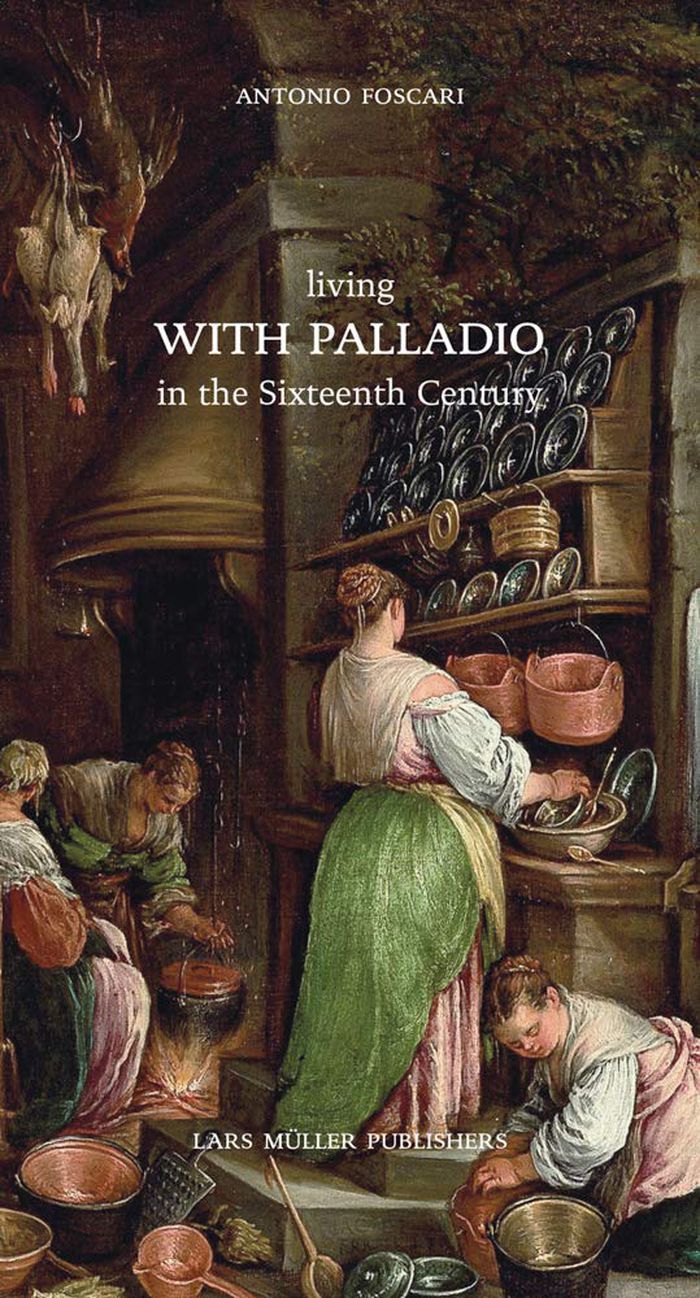
Living with Palladio in the sixteenth century
Actions:
Price:
$39.00
(available to order)
Summary:
Visiting the villas of Renaissance architect Andrea Palladio (1508-80), one inevitably asks oneself how people actually occupied them. Palladio conceived his villas as ''small towns'' (piccole città) that formed a single unit with adjacent service buildings and farm fields. Within their walls lived people of all ages, social backgrounds and skills. These buildings were the venue for significant moments of public life, and the principles of hygiene, privacy and comfort, which we consider so defining and essential today, did not apply- in a sense furniture as such did not exist. ''Living with Palladio in the sixteenth century'' investigates how Palladio’s houses, their floors, rooms and measurements, were designed to structure the life of such a heterogeneous family of people. It analyses their hierarchical structure with the owner (padrone) at the top and everyone involved in the everyday running of the household (famiglia minuta) at the bottom. This book fills a decisive gap in research literature on the famous Italian architect by looking at how Palladio prioritized the domestic functions of his private buildings.
Living with Palladio in the sixteenth century
Actions:
Price:
$39.00
(available to order)
Summary:
Visiting the villas of Renaissance architect Andrea Palladio (1508-80), one inevitably asks oneself how people actually occupied them. Palladio conceived his villas as ''small towns'' (piccole città) that formed a single unit with adjacent service buildings and farm fields. Within their walls lived people of all ages, social backgrounds and skills. These buildings were the venue for significant moments of public life, and the principles of hygiene, privacy and comfort, which we consider so defining and essential today, did not apply- in a sense furniture as such did not exist. ''Living with Palladio in the sixteenth century'' investigates how Palladio’s houses, their floors, rooms and measurements, were designed to structure the life of such a heterogeneous family of people. It analyses their hierarchical structure with the owner (padrone) at the top and everyone involved in the everyday running of the household (famiglia minuta) at the bottom. This book fills a decisive gap in research literature on the famous Italian architect by looking at how Palladio prioritized the domestic functions of his private buildings.
Form:
books
books
Publication:
June 2020
June 2020
Subject:
Architecture Monographs
Architecture Monographs
Form:
books
books
Title:
Machine art, 1934
Machine art, 1934
Actions:
Price:
$49.95
(available to order)
Summary:
In 1934, New York’s Museum of Modern Art staged a major exhibition of ball bearings, airplane propellers, pots and pans, cocktail tumblers, petri dishes, protractors, and other machine parts and products. The exhibition, titled Machine Art, explored these ordinary objects as works of modern art, teaching museumgoers about the nature of beauty and value in the era of mass(...)
$49.95
(available to order)
Summary:
In 1934, New York’s Museum of Modern Art staged a major exhibition of ball bearings, airplane propellers, pots and pans, cocktail tumblers, petri dishes, protractors, and other machine parts and products. The exhibition, titled Machine Art, explored these ordinary objects as works of modern art, teaching museumgoers about the nature of beauty and value in the era of mass(...)
Title:
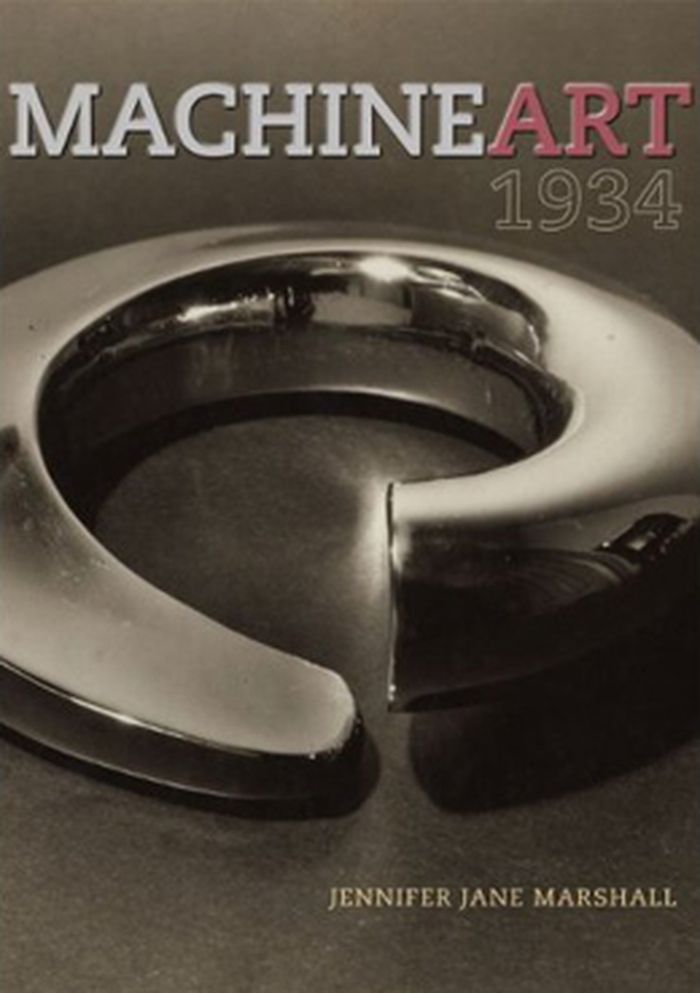
Machine art, 1934
Actions:
Price:
$49.95
(available to order)
Summary:
In 1934, New York’s Museum of Modern Art staged a major exhibition of ball bearings, airplane propellers, pots and pans, cocktail tumblers, petri dishes, protractors, and other machine parts and products. The exhibition, titled Machine Art, explored these ordinary objects as works of modern art, teaching museumgoers about the nature of beauty and value in the era of mass production. Telling the story of this popular but controversial show, Jennifer Jane Marshall examines its history and the relationship between the museum’s director, Alfred H. Barr Jr., and its curator, Philip Johnson, who oversaw it. She situates the show within the tumultuous climate of the interwar period and the Great Depression, considering how these unadorned objects served as a response to timely debates over photography, abstract art, the end of the American gold standard, and John Dewey’s insight that how a person experiences things depends on the context in which they are encountered. An engaging investigation of interwar American modernism, Machine Art, 1934 reveals how even simple things can serve as a defense against uncertainty.
Machine art, 1934
Actions:
Price:
$49.95
(available to order)
Summary:
In 1934, New York’s Museum of Modern Art staged a major exhibition of ball bearings, airplane propellers, pots and pans, cocktail tumblers, petri dishes, protractors, and other machine parts and products. The exhibition, titled Machine Art, explored these ordinary objects as works of modern art, teaching museumgoers about the nature of beauty and value in the era of mass production. Telling the story of this popular but controversial show, Jennifer Jane Marshall examines its history and the relationship between the museum’s director, Alfred H. Barr Jr., and its curator, Philip Johnson, who oversaw it. She situates the show within the tumultuous climate of the interwar period and the Great Depression, considering how these unadorned objects served as a response to timely debates over photography, abstract art, the end of the American gold standard, and John Dewey’s insight that how a person experiences things depends on the context in which they are encountered. An engaging investigation of interwar American modernism, Machine Art, 1934 reveals how even simple things can serve as a defense against uncertainty.
Form:
books
books
Publication:
April 2012
April 2012
Subject:
Museums and Universal Exhibitions
Museums and Universal Exhibitions
Form:
books
books
Actions:
Price:
$56.50
(available to order)
Summary:
In this book, the designer for the first time communicates the ideas that have guided and inspired her work throughout her career. Each aspect of the design process is analysed - variety, spontaneity, line, contour, shading, and texture, among others - to show how the best works are the result of a dialogue between creator and objects.
$56.50
(available to order)
Summary:
In this book, the designer for the first time communicates the ideas that have guided and inspired her work throughout her career. Each aspect of the design process is analysed - variety, spontaneity, line, contour, shading, and texture, among others - to show how the best works are the result of a dialogue between creator and objects.
Title:
Eva Zeisel on design : the magic language of things
Actions:
Price:
$56.50
(available to order)
Summary:
In this book, the designer for the first time communicates the ideas that have guided and inspired her work throughout her career. Each aspect of the design process is analysed - variety, spontaneity, line, contour, shading, and texture, among others - to show how the best works are the result of a dialogue between creator and objects.
Eva Zeisel on design : the magic language of things
Actions:
Price:
$56.50
(available to order)
Summary:
In this book, the designer for the first time communicates the ideas that have guided and inspired her work throughout her career. Each aspect of the design process is analysed - variety, spontaneity, line, contour, shading, and texture, among others - to show how the best works are the result of a dialogue between creator and objects.
Form:
books
books
Publication:
March 2004, Woodstock, New York
March 2004, Woodstock, New York
Subject:
Design Monographs
Design Monographs
Form:
books
books
Title:
MAK Architects
MAK Architects
Actions:
Price:
$59.95
(available in store)
Summary:
MAK Architects understand 'process' as fluid and open, their body of work cannot be defined as a monograph or a mere representation of process. Compiled in this book, the MAK approach comes across as conventional; and playful in tone with a strong desire to engage with how environments can become meaningful for the user.
$59.95
(available in store)
Summary:
MAK Architects understand 'process' as fluid and open, their body of work cannot be defined as a monograph or a mere representation of process. Compiled in this book, the MAK approach comes across as conventional; and playful in tone with a strong desire to engage with how environments can become meaningful for the user.
Subject:
Architecture Monographs
Architecture Monographs
Publication:
October 2003, London
October 2003, London
Title:
MAK Architects
Actions:
Price:
$59.95
(available in store)
Summary:
MAK Architects understand 'process' as fluid and open, their body of work cannot be defined as a monograph or a mere representation of process. Compiled in this book, the MAK approach comes across as conventional; and playful in tone with a strong desire to engage with how environments can become meaningful for the user.
MAK Architects
Actions:
Price:
$59.95
(available in store)
Summary:
MAK Architects understand 'process' as fluid and open, their body of work cannot be defined as a monograph or a mere representation of process. Compiled in this book, the MAK approach comes across as conventional; and playful in tone with a strong desire to engage with how environments can become meaningful for the user.
Form:
books
books
Publication:
October 2003, London
October 2003, London
Subject:
Architecture Monographs
Architecture Monographs


