


1046 Results
Form:
books
books
Actions:
Price:
$60.00
(available to order)
Summary:
Kenz Tange (1913–2005) is a peerless figure among twentieth-century Japanese architects, unmatched in his talent, influence, and versatility. A leading force of the Metabolist movement, he was the first non-Western architect whose works would be embraced as universal in value. This unique assemblage of new scholarship by an international team of experts reframes Tange(...)
$60.00
(available to order)
Summary:
Kenz Tange (1913–2005) is a peerless figure among twentieth-century Japanese architects, unmatched in his talent, influence, and versatility. A leading force of the Metabolist movement, he was the first non-Western architect whose works would be embraced as universal in value. This unique assemblage of new scholarship by an international team of experts reframes Tange(...)
Title:
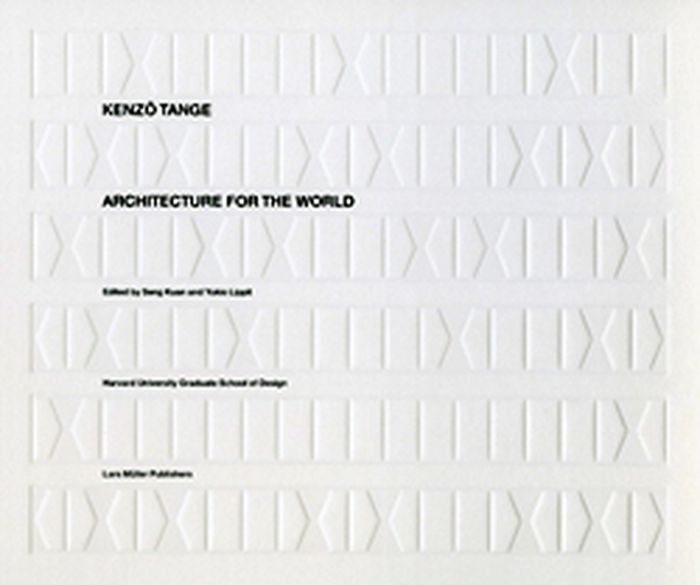
Kenz Tange: architecture for the world
Actions:
Price:
$60.00
(available to order)
Summary:
Kenz Tange (1913–2005) is a peerless figure among twentieth-century Japanese architects, unmatched in his talent, influence, and versatility. A leading force of the Metabolist movement, he was the first non-Western architect whose works would be embraced as universal in value. This unique assemblage of new scholarship by an international team of experts reframes Tange according to the contingencies of Japanese modernism as well as contemporary discourses of cultural identity, technology, urbanization, and the synthesis of the arts. Case studies on celebrated works—Hiroshima, Tokyo Bay Plan, and Yoyogi Stadiums—clarify Tange’s wide-ranging interests and design methodology. Illustrated with archival drawings and period photographs, this volume provides fresh and compelling perspectives on the practices, discourses, and production contexts of Tange’s work as well as the architecture and urbanism of postwar Japan. Kenz Tange—Architecture for the World represents the most serious and comprehensive reassessment of Tange in the English language in decades.
Kenz Tange: architecture for the world
Actions:
Price:
$60.00
(available to order)
Summary:
Kenz Tange (1913–2005) is a peerless figure among twentieth-century Japanese architects, unmatched in his talent, influence, and versatility. A leading force of the Metabolist movement, he was the first non-Western architect whose works would be embraced as universal in value. This unique assemblage of new scholarship by an international team of experts reframes Tange according to the contingencies of Japanese modernism as well as contemporary discourses of cultural identity, technology, urbanization, and the synthesis of the arts. Case studies on celebrated works—Hiroshima, Tokyo Bay Plan, and Yoyogi Stadiums—clarify Tange’s wide-ranging interests and design methodology. Illustrated with archival drawings and period photographs, this volume provides fresh and compelling perspectives on the practices, discourses, and production contexts of Tange’s work as well as the architecture and urbanism of postwar Japan. Kenz Tange—Architecture for the World represents the most serious and comprehensive reassessment of Tange in the English language in decades.
Form:
books
books
Publication:
November 2012
November 2012
Subject:
Architecture Monographs
Architecture Monographs
Form:
books
books
Actions:
Price:
$56.95
(available in store)
Summary:
This book tells the story of the architects and buildings that have defined Australia’s architectural culture since the founding of the modern nation through Federation in 1901. That year marked the beginning of a search for better city forms and buildings to accommodate the changing realities of Australian life and to express an emerging, distinctive, and, eventually,(...)
$56.95
(available in store)
Summary:
This book tells the story of the architects and buildings that have defined Australia’s architectural culture since the founding of the modern nation through Federation in 1901. That year marked the beginning of a search for better city forms and buildings to accommodate the changing realities of Australian life and to express an emerging, distinctive, and, eventually,(...)
Title:
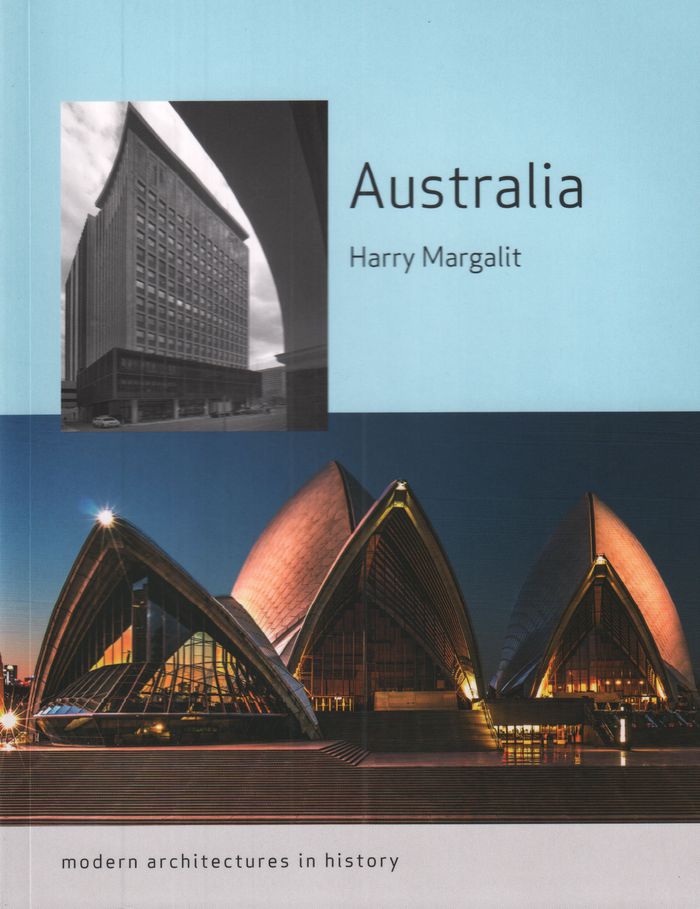
Australia: modern architectures in history
Actions:
Price:
$56.95
(available in store)
Summary:
This book tells the story of the architects and buildings that have defined Australia’s architectural culture since the founding of the modern nation through Federation in 1901. That year marked the beginning of a search for better city forms and buildings to accommodate the changing realities of Australian life and to express an emerging, distinctive, and, eventually, confident Australian identity. While Sydney and Melbourne were the settings for many of the major buildings, all states and territories developed architectural traditions based on distinctive histories and climates. Harry Margalit explores the flowering of these many architectural variants, from the bid to create a model city in Canberra, through the stylistic battles that opened a space for modernism, to the idealism of postwar reconstruction, and beyond to the new millennium. Australia reveals a vibrant and influential culture of the built environment, at its best when it matches civic idealism with the sensuality of a country of stunning light and landscapes.
Australia: modern architectures in history
Actions:
Price:
$56.95
(available in store)
Summary:
This book tells the story of the architects and buildings that have defined Australia’s architectural culture since the founding of the modern nation through Federation in 1901. That year marked the beginning of a search for better city forms and buildings to accommodate the changing realities of Australian life and to express an emerging, distinctive, and, eventually, confident Australian identity. While Sydney and Melbourne were the settings for many of the major buildings, all states and territories developed architectural traditions based on distinctive histories and climates. Harry Margalit explores the flowering of these many architectural variants, from the bid to create a model city in Canberra, through the stylistic battles that opened a space for modernism, to the idealism of postwar reconstruction, and beyond to the new millennium. Australia reveals a vibrant and influential culture of the built environment, at its best when it matches civic idealism with the sensuality of a country of stunning light and landscapes.
Form:
books
books
Publication:
December 2019
December 2019
Form:
books
books
Title:
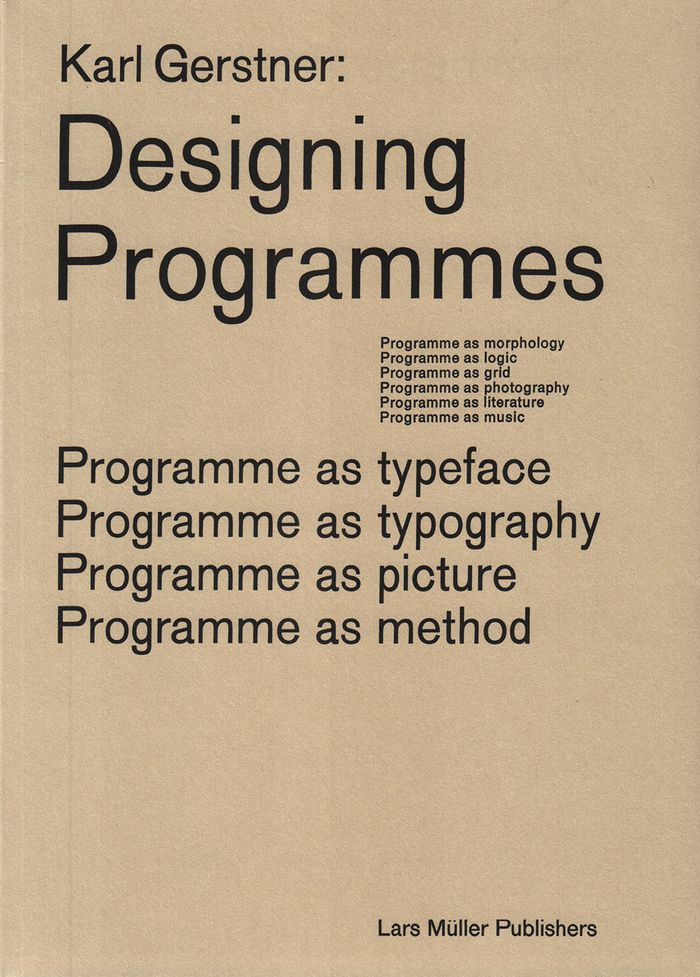
Karl Gerstner: Designing programmes. programme as typeface, typography, picture, method. Facsimile
Karl Gerstner: Designing programmes. programme as typeface, typography, picture, method. Facsimile
Actions:
Price:
$54.00
(available to order)
Summary:
Swiss designer and artist Karl Gerstner (1930–2017) had a significant influence on typography and the history and development of postwar graphic design. "Designing Programmes" is one of his most important and influential works. It was first published in 1964, and reissued in a new design by Lars Müller Publishers in 2007; both editions are now rare (the first almost(...)
$54.00
(available to order)
Summary:
Swiss designer and artist Karl Gerstner (1930–2017) had a significant influence on typography and the history and development of postwar graphic design. "Designing Programmes" is one of his most important and influential works. It was first published in 1964, and reissued in a new design by Lars Müller Publishers in 2007; both editions are now rare (the first almost(...)
Title:
Karl Gerstner: Designing programmes. programme as typeface, typography, picture, method. Facsimile
Actions:
Price:
$54.00
(available to order)
Summary:
Swiss designer and artist Karl Gerstner (1930–2017) had a significant influence on typography and the history and development of postwar graphic design. "Designing Programmes" is one of his most important and influential works. It was first published in 1964, and reissued in a new design by Lars Müller Publishers in 2007; both editions are now rare (the first almost completely unavailable). Now, Lars Müller reissues the book with its original design. Here, across four essays, Gerstner provides a basic introduction to his design methodology and suggests a model for design in the early days of the computer era. Gerstner's innovation was to propose a rule set or system defined by the designer that would determine all aesthetic decisions for a given product: for example, a logo might also function as a layout grid system or inspire a font. Today the book is especially topical in the context of current developments in computational design.
Karl Gerstner: Designing programmes. programme as typeface, typography, picture, method. Facsimile
Actions:
Price:
$54.00
(available to order)
Summary:
Swiss designer and artist Karl Gerstner (1930–2017) had a significant influence on typography and the history and development of postwar graphic design. "Designing Programmes" is one of his most important and influential works. It was first published in 1964, and reissued in a new design by Lars Müller Publishers in 2007; both editions are now rare (the first almost completely unavailable). Now, Lars Müller reissues the book with its original design. Here, across four essays, Gerstner provides a basic introduction to his design methodology and suggests a model for design in the early days of the computer era. Gerstner's innovation was to propose a rule set or system defined by the designer that would determine all aesthetic decisions for a given product: for example, a logo might also function as a layout grid system or inspire a font. Today the book is especially topical in the context of current developments in computational design.
Form:
books
books
Publication:
October 2019
October 2019
Subject:
Graphic Design and Typography
Graphic Design and Typography
Form:
books
books
Title:
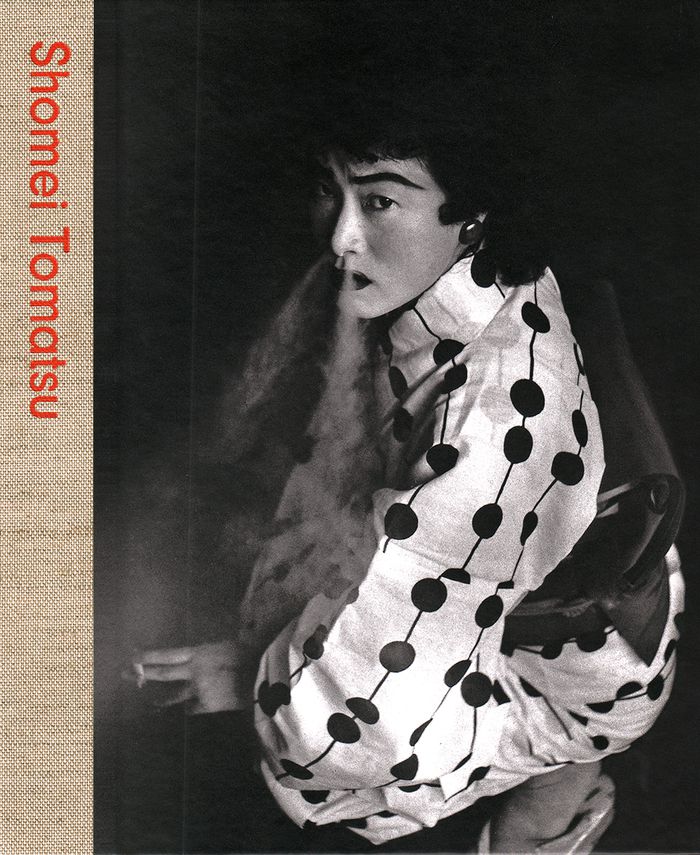
Shomei Tomatsu
Shomei Tomatsu
Actions:
Price:
$92.50
(available to order)
Summary:
Casting a cold eye on postwar Japan, the raw, grainy and impressionistic photography of Shomei Tomatsu practically defined Japanese photography in the second half of the 20th century, greatly influencing Daido Moriyama, Nobuyoshi Araki and Takuma Nakihara. His best-known images are his portraits of people and street scenes from the 1950s, when the country struggled to(...)
$92.50
(available to order)
Summary:
Casting a cold eye on postwar Japan, the raw, grainy and impressionistic photography of Shomei Tomatsu practically defined Japanese photography in the second half of the 20th century, greatly influencing Daido Moriyama, Nobuyoshi Araki and Takuma Nakihara. His best-known images are his portraits of people and street scenes from the 1950s, when the country struggled to(...)
Title:
Shomei Tomatsu
Actions:
Price:
$92.50
(available to order)
Summary:
Casting a cold eye on postwar Japan, the raw, grainy and impressionistic photography of Shomei Tomatsu practically defined Japanese photography in the second half of the 20th century, greatly influencing Daido Moriyama, Nobuyoshi Araki and Takuma Nakihara. His best-known images are his portraits of people and street scenes from the 1950s, when the country struggled to recover from World War II and US military presence was ubiquitous; his photographs of 1960s Japan; and throughout his career, his images of Okinawa, where he died in 2012. Tomatsu's most famous single photograph is probably Melted Bottle, Nagasaki, 1961, which depicts a beer bottle rendered grotesquely biomorphic by the nuclear blast that devastated Nagasaki on August 9, 1945. The American photographer and writer Leo Rubinfien described Tomatsu's Nagasaki images as "sad, haggard facts," noting that "beneath the surface there was a grief so great that any overt expression of sympathy would have been an insult."
Shomei Tomatsu
Actions:
Price:
$92.50
(available to order)
Summary:
Casting a cold eye on postwar Japan, the raw, grainy and impressionistic photography of Shomei Tomatsu practically defined Japanese photography in the second half of the 20th century, greatly influencing Daido Moriyama, Nobuyoshi Araki and Takuma Nakihara. His best-known images are his portraits of people and street scenes from the 1950s, when the country struggled to recover from World War II and US military presence was ubiquitous; his photographs of 1960s Japan; and throughout his career, his images of Okinawa, where he died in 2012. Tomatsu's most famous single photograph is probably Melted Bottle, Nagasaki, 1961, which depicts a beer bottle rendered grotesquely biomorphic by the nuclear blast that devastated Nagasaki on August 9, 1945. The American photographer and writer Leo Rubinfien described Tomatsu's Nagasaki images as "sad, haggard facts," noting that "beneath the surface there was a grief so great that any overt expression of sympathy would have been an insult."
Form:
books
books
Publication:
September 2018
September 2018
Subject:
Photography monographs
Photography monographs
Form:
books
books

Price:
$39.95
(available in store)
Summary:
''Nejishiki'' unveils the most iconic scenes from Yoshiharu Tsuge’s highly respected body of work alongside his most beloved stories. A cornerstone of Japan’s legendary 1960s counterculture that galvanized avant-garde manga and comics criticism, the title story follows an injured young man as he wanders through a village of strangers in search of emotional and physical(...)
$39.95
(available in store)
Summary:
''Nejishiki'' unveils the most iconic scenes from Yoshiharu Tsuge’s highly respected body of work alongside his most beloved stories. A cornerstone of Japan’s legendary 1960s counterculture that galvanized avant-garde manga and comics criticism, the title story follows an injured young man as he wanders through a village of strangers in search of emotional and physical(...)
Title:
Nejishiki
Actions:
Price:
$39.95
(available in store)
Summary:
''Nejishiki'' unveils the most iconic scenes from Yoshiharu Tsuge’s highly respected body of work alongside his most beloved stories. A cornerstone of Japan’s legendary 1960s counterculture that galvanized avant-garde manga and comics criticism, the title story follows an injured young man as he wanders through a village of strangers in search of emotional and physical release. Other stories in this collection follow a series of weary travelers who while away sultry nights and face menacing doppelgängers. Even banal activities like afternoon strolls uncover unsavory impulses. The emotionally and erotically charged imagery collected in this third volume remains as shocking and vivid today as it did upon its debut fifty years ago. Tsuge’s stories push boundaries, abruptly crossing the threshold of conventional storytelling. Unassuming protagonists venture further into eerie symbolism against a shadowy, perceptibly dreamlike landscape easily mistaken for the real world. The angst that pervades postwar Japanese society threatens to devour his characters and their pastoral sensibilities as each protagonist’s wanderlust turns surreal.
Nejishiki
Actions:
Price:
$39.95
(available in store)
Summary:
''Nejishiki'' unveils the most iconic scenes from Yoshiharu Tsuge’s highly respected body of work alongside his most beloved stories. A cornerstone of Japan’s legendary 1960s counterculture that galvanized avant-garde manga and comics criticism, the title story follows an injured young man as he wanders through a village of strangers in search of emotional and physical release. Other stories in this collection follow a series of weary travelers who while away sultry nights and face menacing doppelgängers. Even banal activities like afternoon strolls uncover unsavory impulses. The emotionally and erotically charged imagery collected in this third volume remains as shocking and vivid today as it did upon its debut fifty years ago. Tsuge’s stories push boundaries, abruptly crossing the threshold of conventional storytelling. Unassuming protagonists venture further into eerie symbolism against a shadowy, perceptibly dreamlike landscape easily mistaken for the real world. The angst that pervades postwar Japanese society threatens to devour his characters and their pastoral sensibilities as each protagonist’s wanderlust turns surreal.
Form:
books
books
Publication:
October 2023
October 2023
Subject:
Illustration
Illustration
Form:
books
books
Actions:
Price:
$108.50
(available to order)
Summary:
Spanning 65 years of Ed Ruscha’s remarkable career and mirroring his own cross-disciplinary approach, ''Ed Ruscha / Now then'' features over 250 objects, produced from 1958 to the present, including paintings, drawings, prints, films, photographs, artist’s books and installations. Published to accompany the most comprehensive presentation of the artist’s work to date, and(...)
$108.50
(available to order)
Summary:
Spanning 65 years of Ed Ruscha’s remarkable career and mirroring his own cross-disciplinary approach, ''Ed Ruscha / Now then'' features over 250 objects, produced from 1958 to the present, including paintings, drawings, prints, films, photographs, artist’s books and installations. Published to accompany the most comprehensive presentation of the artist’s work to date, and(...)
Publication:
October 2023
October 2023
Title:
Ed Ruscha / Now then: A retrospective
Actions:
Price:
$108.50
(available to order)
Summary:
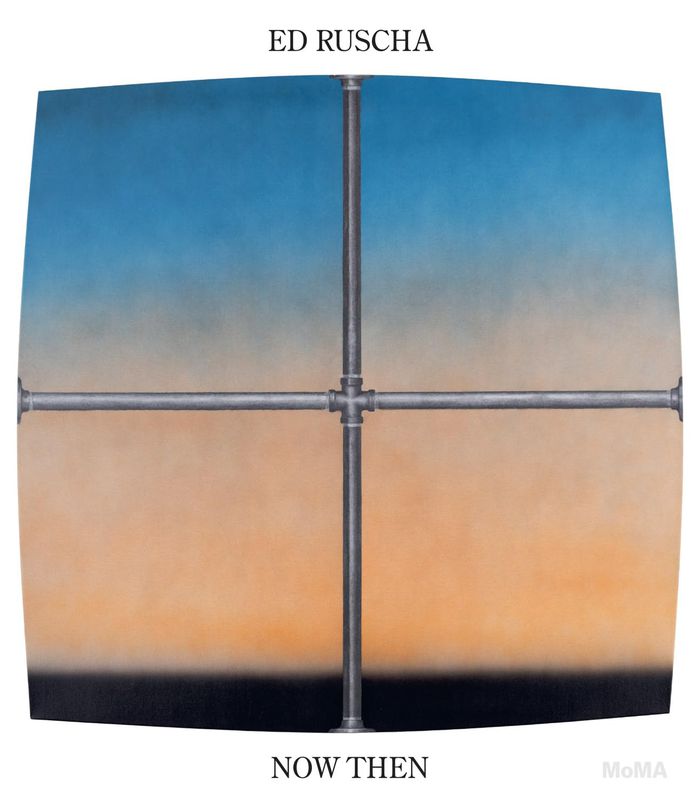
Spanning 65 years of Ed Ruscha’s remarkable career and mirroring his own cross-disciplinary approach, ''Ed Ruscha / Now then'' features over 250 objects, produced from 1958 to the present, including paintings, drawings, prints, films, photographs, artist’s books and installations. Published to accompany the most comprehensive presentation of the artist’s work to date, and his first solo exhibition at the Museum of Modern Art, New York, this richly illustrated catalog highlights Ruscha’s most acclaimed works alongside lesser-known aspects of his practice. Essays by an interdisciplinary group of contributors examine Ruscha’s work under a new light, beyond the categories of Pop and Conceptual art with which he has traditionally been associated, to present fresh perspectives on one of the most influential figures in postwar American art. Taken together, they underscore Ruscha’s singular contributions, including his material exploration of language, experiments with unconventional mediums--nsuch as gunpowder, chocolate or chewing tobacco-- and his groundbreaking self-published books. Supplemented by an illustrated chronology and exhibition history, this publication captures the ceaseless reinvention that has defined his prolific, six-decade career.
Ed Ruscha / Now then: A retrospective
Actions:
Price:
$108.50
(available to order)
Summary:
Spanning 65 years of Ed Ruscha’s remarkable career and mirroring his own cross-disciplinary approach, ''Ed Ruscha / Now then'' features over 250 objects, produced from 1958 to the present, including paintings, drawings, prints, films, photographs, artist’s books and installations. Published to accompany the most comprehensive presentation of the artist’s work to date, and his first solo exhibition at the Museum of Modern Art, New York, this richly illustrated catalog highlights Ruscha’s most acclaimed works alongside lesser-known aspects of his practice. Essays by an interdisciplinary group of contributors examine Ruscha’s work under a new light, beyond the categories of Pop and Conceptual art with which he has traditionally been associated, to present fresh perspectives on one of the most influential figures in postwar American art. Taken together, they underscore Ruscha’s singular contributions, including his material exploration of language, experiments with unconventional mediums--nsuch as gunpowder, chocolate or chewing tobacco-- and his groundbreaking self-published books. Supplemented by an illustrated chronology and exhibition history, this publication captures the ceaseless reinvention that has defined his prolific, six-decade career.
Form:
books
books
Publication:
October 2023
October 2023
Form:
books
books
Title:
Joseph Beuys and history
Joseph Beuys and history
Actions:
Price:
$49.95
(available in store)
Summary:
Joseph Beuys (1921–1986) was one of the most significant artists of the twentieth century—and one of the most controversial. Working in Germany in the aftermath of World War II, he explored a radically expanded concept of art through a practice that ranged from performative actions to large-scale sculptural ensembles. While some contemporaries found his claim that(...)
$49.95
(available in store)
Summary:
Joseph Beuys (1921–1986) was one of the most significant artists of the twentieth century—and one of the most controversial. Working in Germany in the aftermath of World War II, he explored a radically expanded concept of art through a practice that ranged from performative actions to large-scale sculptural ensembles. While some contemporaries found his claim that(...)
Title:
Joseph Beuys and history
Actions:
Price:
$49.95
(available in store)
Summary:
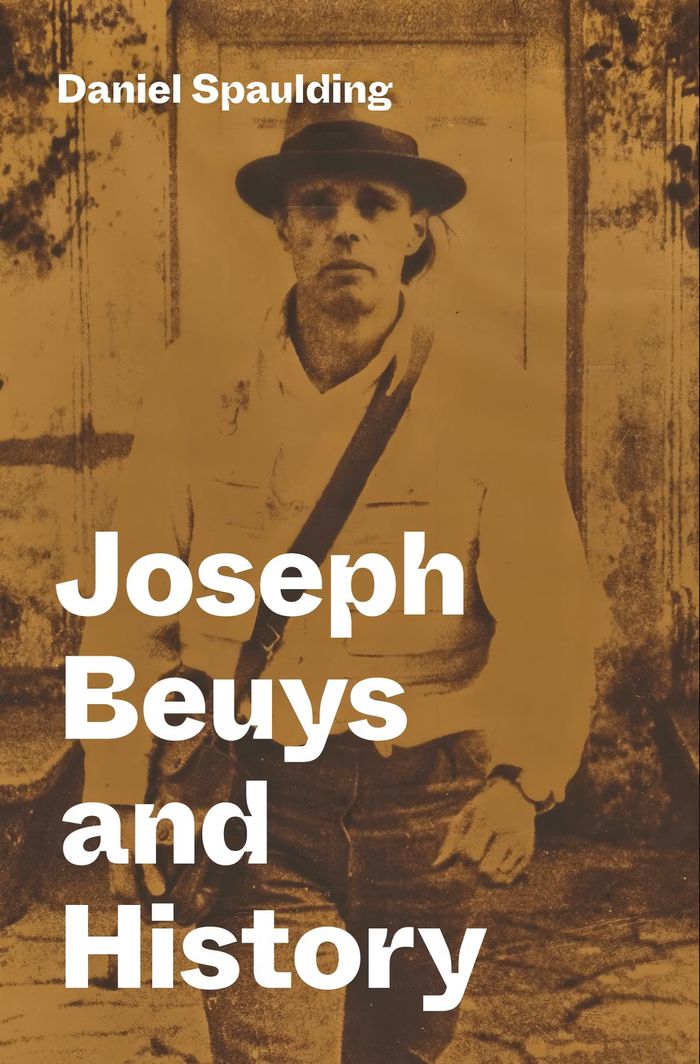
Joseph Beuys (1921–1986) was one of the most significant artists of the twentieth century—and one of the most controversial. Working in Germany in the aftermath of World War II, he explored a radically expanded concept of art through a practice that ranged from performative actions to large-scale sculptural ensembles. While some contemporaries found his claim that “everyone is an artist” liberating, even revolutionary, others accused him of fostering a dangerous cult of personality. In "Joseph Beuys and History", the first rigorous art historical study of the artist in English, Daniel Spaulding presents a striking new interpretation of Beuys’s work and career. By putting Beuys in the context of Germany’s postwar recovery, Spaulding shows that the artist’s superimposed biological, political, and economic metaphors offered a powerful way to think about the trajectory of human freedom, the place of art in capitalist modernity, and the possibility of an ecological aesthetics. At the same time, his oeuvre’s disquieting echoes of the Nazi past suggest that not everything could be reconciled in what Beuys called “social sculpture.”
Joseph Beuys and history
Actions:
Price:
$49.95
(available in store)
Summary:
Joseph Beuys (1921–1986) was one of the most significant artists of the twentieth century—and one of the most controversial. Working in Germany in the aftermath of World War II, he explored a radically expanded concept of art through a practice that ranged from performative actions to large-scale sculptural ensembles. While some contemporaries found his claim that “everyone is an artist” liberating, even revolutionary, others accused him of fostering a dangerous cult of personality. In "Joseph Beuys and History", the first rigorous art historical study of the artist in English, Daniel Spaulding presents a striking new interpretation of Beuys’s work and career. By putting Beuys in the context of Germany’s postwar recovery, Spaulding shows that the artist’s superimposed biological, political, and economic metaphors offered a powerful way to think about the trajectory of human freedom, the place of art in capitalist modernity, and the possibility of an ecological aesthetics. At the same time, his oeuvre’s disquieting echoes of the Nazi past suggest that not everything could be reconciled in what Beuys called “social sculpture.”
Form:
books
books
Publication:
April 2026
April 2026
Subject:
Contemporary Art Monographs
Contemporary Art Monographs
Form:
books
books
Actions:
Price:
$63.95
(available to order)
Summary:
Reyner Banham (1922-88) was one of the most influential writers on architecture, design, and popular culture from the mid-1950s to the late 1980s. Trained in mechanical engineering and art history, he was convinced that technology was making society not only more exciting but more democratic. His combination of academic rigor and pop culture sensibility put him in(...)
$63.95
(available to order)
Summary:
Reyner Banham (1922-88) was one of the most influential writers on architecture, design, and popular culture from the mid-1950s to the late 1980s. Trained in mechanical engineering and art history, he was convinced that technology was making society not only more exciting but more democratic. His combination of academic rigor and pop culture sensibility put him in(...)
Title:
Reyner Banham : historian of the immediate future
Actions:
Price:
$63.95
(available to order)
Summary:
Reyner Banham (1922-88) was one of the most influential writers on architecture, design, and popular culture from the mid-1950s to the late 1980s. Trained in mechanical engineering and art history, he was convinced that technology was making society not only more exciting but more democratic. His combination of academic rigor and pop culture sensibility put him in opposition to both traditionalists and orthodox Modernists, but placed him in a unique position to understand the cultural, social, and political implications of the visual arts in the postwar period. His first book, "Theory and Design in the First Machine Age", was central to the overhaul of Modernism, and it gave Futurism and Expressionism credibility amid the dynamism and change of the 1960s. This intellectual biography is the first comprehensive critical examination of Banham’s theories and ideas, not only on architecture but also on the wide variety of subjects that interested him. It covers the full range of his oeuvre and discusses the values, enthusiasms, and influences that formed his thinking.
Reyner Banham : historian of the immediate future
Actions:
Price:
$63.95
(available to order)
Summary:
Reyner Banham (1922-88) was one of the most influential writers on architecture, design, and popular culture from the mid-1950s to the late 1980s. Trained in mechanical engineering and art history, he was convinced that technology was making society not only more exciting but more democratic. His combination of academic rigor and pop culture sensibility put him in opposition to both traditionalists and orthodox Modernists, but placed him in a unique position to understand the cultural, social, and political implications of the visual arts in the postwar period. His first book, "Theory and Design in the First Machine Age", was central to the overhaul of Modernism, and it gave Futurism and Expressionism credibility amid the dynamism and change of the 1960s. This intellectual biography is the first comprehensive critical examination of Banham’s theories and ideas, not only on architecture but also on the wide variety of subjects that interested him. It covers the full range of his oeuvre and discusses the values, enthusiasms, and influences that formed his thinking.
Form:
books
books
Publication:
October 2001, Cambridge, MA
October 2001, Cambridge, MA
Subject:
Architectural Theory
Architectural Theory
Form:
books
books

Actions:
Price:
$27.95
(available to order)
Summary:
When World War II came along, the American military found itself in need of a prefabricated, lightweight shelter that could be easily shipped and quickly assembled. The quonset hut, that sliced tube of corrugated metal, was the answer. Over a hundred thousand were produced as part of the war effort. In its aftermath, even more were built and existing huts were adapted to(...)
$27.95
(available to order)
Summary:
When World War II came along, the American military found itself in need of a prefabricated, lightweight shelter that could be easily shipped and quickly assembled. The quonset hut, that sliced tube of corrugated metal, was the answer. Over a hundred thousand were produced as part of the war effort. In its aftermath, even more were built and existing huts were adapted to(...)
Title:
Quonset hut : metal living for a modern age
Actions:
Price:
$27.95
(available to order)
Summary:
When World War II came along, the American military found itself in need of a prefabricated, lightweight shelter that could be easily shipped and quickly assembled. The quonset hut, that sliced tube of corrugated metal, was the answer. Over a hundred thousand were produced as part of the war effort. In its aftermath, even more were built and existing huts were adapted to house the postwar population boom. Of course, it couldn't last: the American desire for permanence meant decay and neglect for many of these rough-and-ready shelters and quickie warehouses. But in the midst of its almost tragic tale of extinction, the quonset hut has emerged as an unexpected icon of Americana and an oasis of architectural imagination. Travel the back roads of America and you will find the quonset's distinctive shape enclosing everything from houses of worship to houses of pancakes. "Quonset Hut" tells the story of this unique architectural phenomena, from its birth during WWII as a mass-production shelter to its new status as an icon of American pragmatism, ingenuity, perseverance, and individuality.
Quonset hut : metal living for a modern age
Actions:
Price:
$27.95
(available to order)
Summary:
When World War II came along, the American military found itself in need of a prefabricated, lightweight shelter that could be easily shipped and quickly assembled. The quonset hut, that sliced tube of corrugated metal, was the answer. Over a hundred thousand were produced as part of the war effort. In its aftermath, even more were built and existing huts were adapted to house the postwar population boom. Of course, it couldn't last: the American desire for permanence meant decay and neglect for many of these rough-and-ready shelters and quickie warehouses. But in the midst of its almost tragic tale of extinction, the quonset hut has emerged as an unexpected icon of Americana and an oasis of architectural imagination. Travel the back roads of America and you will find the quonset's distinctive shape enclosing everything from houses of worship to houses of pancakes. "Quonset Hut" tells the story of this unique architectural phenomena, from its birth during WWII as a mass-production shelter to its new status as an icon of American pragmatism, ingenuity, perseverance, and individuality.
Form:
books
books
Publication:
August 2005, New York
August 2005, New York
Subject:
sale books
sale books
Form:
books
books
Title:
MiMo : Miami modern revealed
MiMo : Miami modern revealed
Actions:
Price:
$19.99
(available to order)
Summary:
"MiMo : Miami Modern Revealed" is the first comprehensive survey of the rich postwar architecture that epitomizes the romance and energy that is Miami. Well-known for its revitalized South Beach Deco architecture, Miami's vibrant strain of modern architecture combines attention to space, form, and innovative design with a nuanced subtropical exoticism particular to the(...)
$19.99
(available to order)
Summary:
"MiMo : Miami Modern Revealed" is the first comprehensive survey of the rich postwar architecture that epitomizes the romance and energy that is Miami. Well-known for its revitalized South Beach Deco architecture, Miami's vibrant strain of modern architecture combines attention to space, form, and innovative design with a nuanced subtropical exoticism particular to the(...)
Subject:
sale books
sale books
Publication:
June 2004, San Francisco
June 2004, San Francisco
Title:
MiMo : Miami modern revealed
Actions:
Price:
$19.99
(available to order)
Summary:
"MiMo : Miami Modern Revealed" is the first comprehensive survey of the rich postwar architecture that epitomizes the romance and energy that is Miami. Well-known for its revitalized South Beach Deco architecture, Miami's vibrant strain of modern architecture combines attention to space, form, and innovative design with a nuanced subtropical exoticism particular to the region, the gateway between the United States and Latin America. From humble motels to sprawling ocean-side resorts, this lively style also thrives in the city's civic, domestic, and commercial architecture. "MiMo" tracks the history and development of the Magic City from the days of nightclub acts and swank hotels to the advent of the crystalline downtown skyscrapers, including detailed overviews of work by Morris Lapidus, Gilbert Fein, and regional masters Alfred Browning Parker, Norman M. Giller, and others. Preservation-minded, the authors list the important buildings which did not survive decades of redevelopment, and conclude with a chapter on the effort to protect threatened MiMo masterpieces. Hundreds of recent and period photographs from the heyday of Miami glamour complete this celebration of some of the hottest architecture around.
MiMo : Miami modern revealed
Actions:
Price:
$19.99
(available to order)
Summary:
"MiMo : Miami Modern Revealed" is the first comprehensive survey of the rich postwar architecture that epitomizes the romance and energy that is Miami. Well-known for its revitalized South Beach Deco architecture, Miami's vibrant strain of modern architecture combines attention to space, form, and innovative design with a nuanced subtropical exoticism particular to the region, the gateway between the United States and Latin America. From humble motels to sprawling ocean-side resorts, this lively style also thrives in the city's civic, domestic, and commercial architecture. "MiMo" tracks the history and development of the Magic City from the days of nightclub acts and swank hotels to the advent of the crystalline downtown skyscrapers, including detailed overviews of work by Morris Lapidus, Gilbert Fein, and regional masters Alfred Browning Parker, Norman M. Giller, and others. Preservation-minded, the authors list the important buildings which did not survive decades of redevelopment, and conclude with a chapter on the effort to protect threatened MiMo masterpieces. Hundreds of recent and period photographs from the heyday of Miami glamour complete this celebration of some of the hottest architecture around.
Form:
books
books
Publication:
June 2004, San Francisco
June 2004, San Francisco
Subject:
sale books
sale books


