


1018 Results
Form:
books
books

Actions:
Price:
$110.00
(available to order)
Summary:
In the past few years, Mexico has brought to light a new generation of architects whose extraordinary vision and productivity has positioned the country among the most creative design cultures of the world. Under his own firm FR-EE, since 2000 Fernando Romero has designed and created a number of projects which represent a new vision of Mexican and world architecture.(...)
$110.00
(available to order)
Summary:
In the past few years, Mexico has brought to light a new generation of architects whose extraordinary vision and productivity has positioned the country among the most creative design cultures of the world. Under his own firm FR-EE, since 2000 Fernando Romero has designed and created a number of projects which represent a new vision of Mexican and world architecture.(...)
Title:
Fernando Romero: FR-EE Architecture
Actions:
Price:
$110.00
(available to order)
Summary:
In the past few years, Mexico has brought to light a new generation of architects whose extraordinary vision and productivity has positioned the country among the most creative design cultures of the world. Under his own firm FR-EE, since 2000 Fernando Romero has designed and created a number of projects which represent a new vision of Mexican and world architecture. Romero's approach to architecture is innovative and an inspirational tool for empowering future generations. The volume will focus on three themes that intertwine throughout the content of the book. On-site photographs (mainly aerial views) highlight the different places where FR-EE works, from urban centers to the desert. The location is what drives FR-EE's creative work, while the practice strives to investigate the dynamic forces of each site and client. Photographs give the reader a vision of how Romero's perspective shifts between different focuses of references, and reimagines them in new symbolic visions of the world (from monuments to colors, from natural elements to animals). The images include renderings, photographs, diagrams, plans, and sections. The projects are presented in situ and through architectural drawings, so as to explain the projects' concepts and contents.
Fernando Romero: FR-EE Architecture
Actions:
Price:
$110.00
(available to order)
Summary:
In the past few years, Mexico has brought to light a new generation of architects whose extraordinary vision and productivity has positioned the country among the most creative design cultures of the world. Under his own firm FR-EE, since 2000 Fernando Romero has designed and created a number of projects which represent a new vision of Mexican and world architecture. Romero's approach to architecture is innovative and an inspirational tool for empowering future generations. The volume will focus on three themes that intertwine throughout the content of the book. On-site photographs (mainly aerial views) highlight the different places where FR-EE works, from urban centers to the desert. The location is what drives FR-EE's creative work, while the practice strives to investigate the dynamic forces of each site and client. Photographs give the reader a vision of how Romero's perspective shifts between different focuses of references, and reimagines them in new symbolic visions of the world (from monuments to colors, from natural elements to animals). The images include renderings, photographs, diagrams, plans, and sections. The projects are presented in situ and through architectural drawings, so as to explain the projects' concepts and contents.
Form:
books
books
Publication:
March 2020
March 2020
Subject:
Architecture Monographs
Architecture Monographs
Form:
books
books
Actions:
Price:
$22.99
(available to order)
Summary:
How do the most diverse and relevant voices of contemporary photography respond to the urgent issues of today? In this series of small, insightful, and beautifully presented books, Henry Carroll, the bestselling photography writer of the last decade, unpacks the ideas behind images to reflect on race, gender, faith, inequality, beauty, politics, and our shifting(...)
$22.99
(available to order)
Summary:
How do the most diverse and relevant voices of contemporary photography respond to the urgent issues of today? In this series of small, insightful, and beautifully presented books, Henry Carroll, the bestselling photography writer of the last decade, unpacks the ideas behind images to reflect on race, gender, faith, inequality, beauty, politics, and our shifting(...)
Title:
LAND: Photographs that make you think
Actions:
Price:
$22.99
(available to order)
Summary:
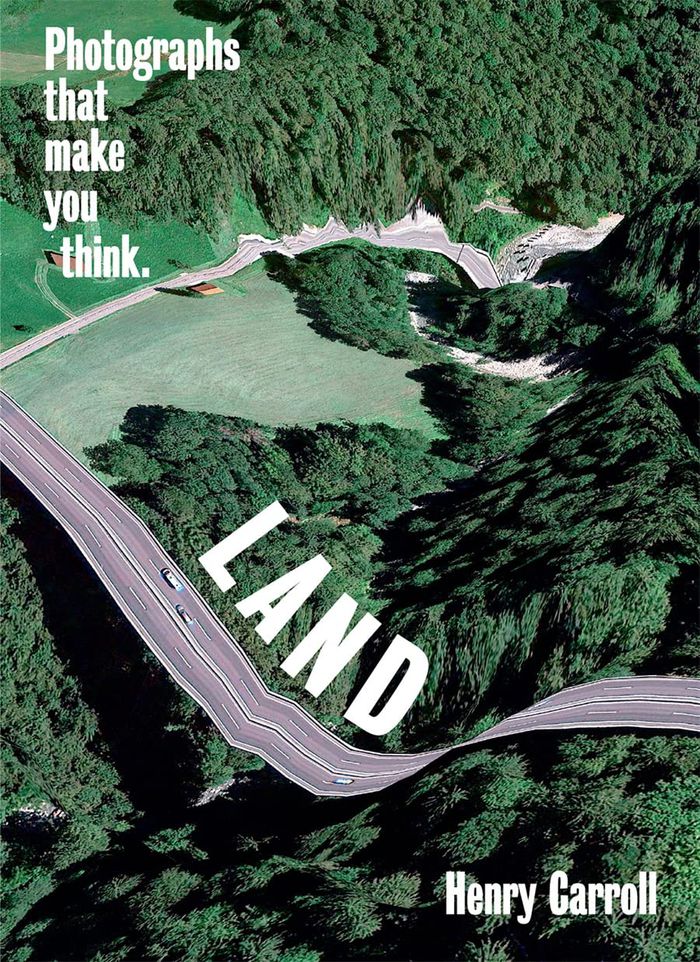
How do the most diverse and relevant voices of contemporary photography respond to the urgent issues of today? In this series of small, insightful, and beautifully presented books, Henry Carroll, the bestselling photography writer of the last decade, unpacks the ideas behind images to reflect on race, gender, faith, inequality, beauty, politics, and our shifting relationship to animals, nature, and the environment. ''LAND: Photographs that make you think'' considers humanity’s changing relationship with the natural world, a relationship that has seen us edge further away from real encounters. The photographs explore how the sublime can be commodified, packaged, and distributed, leading to an alarming emotional distancing. With images from a diverse group of photographers, Carroll explores the impermanence of borders, the human reaction to scenes of devastation on Instagram feeds, and the many variables that inform one’s relationship to land. He considers how a photographer’s response to landscape is subjective, full of meaning that’s coloured by their own psyches, foibles, fears, and hopes. With captivating and striking photography, Carroll invites the reader to contemplate how their inner world influences their interactions with the natural world.
LAND: Photographs that make you think
Actions:
Price:
$22.99
(available to order)
Summary:
How do the most diverse and relevant voices of contemporary photography respond to the urgent issues of today? In this series of small, insightful, and beautifully presented books, Henry Carroll, the bestselling photography writer of the last decade, unpacks the ideas behind images to reflect on race, gender, faith, inequality, beauty, politics, and our shifting relationship to animals, nature, and the environment. ''LAND: Photographs that make you think'' considers humanity’s changing relationship with the natural world, a relationship that has seen us edge further away from real encounters. The photographs explore how the sublime can be commodified, packaged, and distributed, leading to an alarming emotional distancing. With images from a diverse group of photographers, Carroll explores the impermanence of borders, the human reaction to scenes of devastation on Instagram feeds, and the many variables that inform one’s relationship to land. He considers how a photographer’s response to landscape is subjective, full of meaning that’s coloured by their own psyches, foibles, fears, and hopes. With captivating and striking photography, Carroll invites the reader to contemplate how their inner world influences their interactions with the natural world.
Form:
books
books
Publication:
March 2022
March 2022
Subject:
Theory of Photography
Theory of Photography
Form:
books
books
Price:
$37.95
(available to order)
Summary:
In ''Ruderal city'' Bettina Stoetzer traces relationships among people, plants, and animals in contemporary Berlin as they make their lives in the ruins of European nationalism and capitalism. She develops the notion of the ruderal—originally an ecological designation for the unruly life that inhabits inhospitable environments such as rubble, roadsides, train tracks, and(...)
$37.95
(available to order)
Summary:
In ''Ruderal city'' Bettina Stoetzer traces relationships among people, plants, and animals in contemporary Berlin as they make their lives in the ruins of European nationalism and capitalism. She develops the notion of the ruderal—originally an ecological designation for the unruly life that inhabits inhospitable environments such as rubble, roadsides, train tracks, and(...)
Title:
Ruderal city: ecologies of migration, race, and urban nature in Berlin
Actions:
Price:
$37.95
(available to order)
Summary:
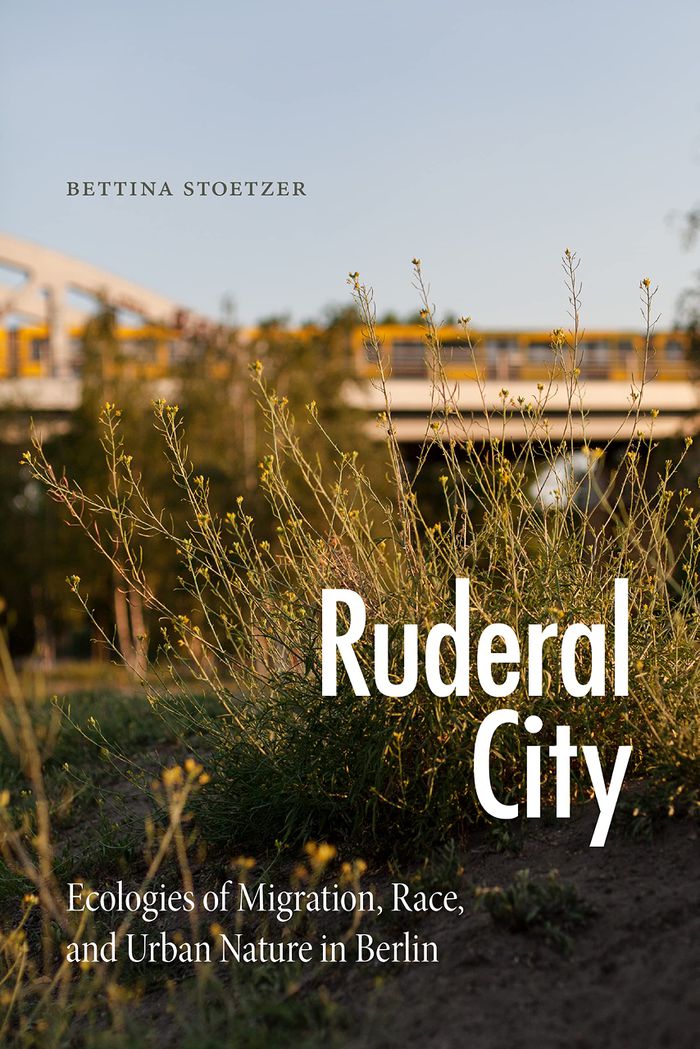
In ''Ruderal city'' Bettina Stoetzer traces relationships among people, plants, and animals in contemporary Berlin as they make their lives in the ruins of European nationalism and capitalism. She develops the notion of the ruderal—originally an ecological designation for the unruly life that inhabits inhospitable environments such as rubble, roadsides, train tracks, and sidewalk cracks—to theorize Berlin as a “ruderal city.” Stoetzer explores sites in and around Berlin that have figured in German national imaginaries—gardens, forests, parks, and rubble fields—to show how racial, class, and gender inequalities shape contestations over today’s uses and knowledges of urban nature. Drawing on fieldwork with gardeners, botanists, migrant workers, refugees, public officials, and nature enthusiasts while charting human and more-than-human worlds, Stoetzer offers a wide-ranging ethnographic portrait of Berlin’s postwar ecologies that reveals emergent futures in the margins of European cities. Brimming with stories that break down divides between environmental perspectives and the study of migration and racial politics, Berlin’s ruderal worlds help us rethink the space of nature and culture and the categories through which we make sense of urban life in inhospitable times.
Ruderal city: ecologies of migration, race, and urban nature in Berlin
Actions:
Price:
$37.95
(available to order)
Summary:
In ''Ruderal city'' Bettina Stoetzer traces relationships among people, plants, and animals in contemporary Berlin as they make their lives in the ruins of European nationalism and capitalism. She develops the notion of the ruderal—originally an ecological designation for the unruly life that inhabits inhospitable environments such as rubble, roadsides, train tracks, and sidewalk cracks—to theorize Berlin as a “ruderal city.” Stoetzer explores sites in and around Berlin that have figured in German national imaginaries—gardens, forests, parks, and rubble fields—to show how racial, class, and gender inequalities shape contestations over today’s uses and knowledges of urban nature. Drawing on fieldwork with gardeners, botanists, migrant workers, refugees, public officials, and nature enthusiasts while charting human and more-than-human worlds, Stoetzer offers a wide-ranging ethnographic portrait of Berlin’s postwar ecologies that reveals emergent futures in the margins of European cities. Brimming with stories that break down divides between environmental perspectives and the study of migration and racial politics, Berlin’s ruderal worlds help us rethink the space of nature and culture and the categories through which we make sense of urban life in inhospitable times.
Form:
books
books
Publication:
December 2022
December 2022
Subject:
Urban Theory
Urban Theory
Form:
books
books
Actions:
Price:
$35.00
(available to order)
Summary:
Suddenly fed up with city life and New York, Tomi Ungerer and his wife Yvonne, set out in search of a simpler life. They ended up on an isolated peninsula in Nova Scotia, Canada. The nearest town was two miles away and it was three years before they had a road to the house built, so it offered them the chance to create a totally different life for themselves. While(...)
$35.00
(available to order)
Summary:
Suddenly fed up with city life and New York, Tomi Ungerer and his wife Yvonne, set out in search of a simpler life. They ended up on an isolated peninsula in Nova Scotia, Canada. The nearest town was two miles away and it was three years before they had a road to the house built, so it offered them the chance to create a totally different life for themselves. While(...)
Title:
Far out isn't far enough : life in the back of beyond
Actions:
Price:
$35.00
(available to order)
Summary:
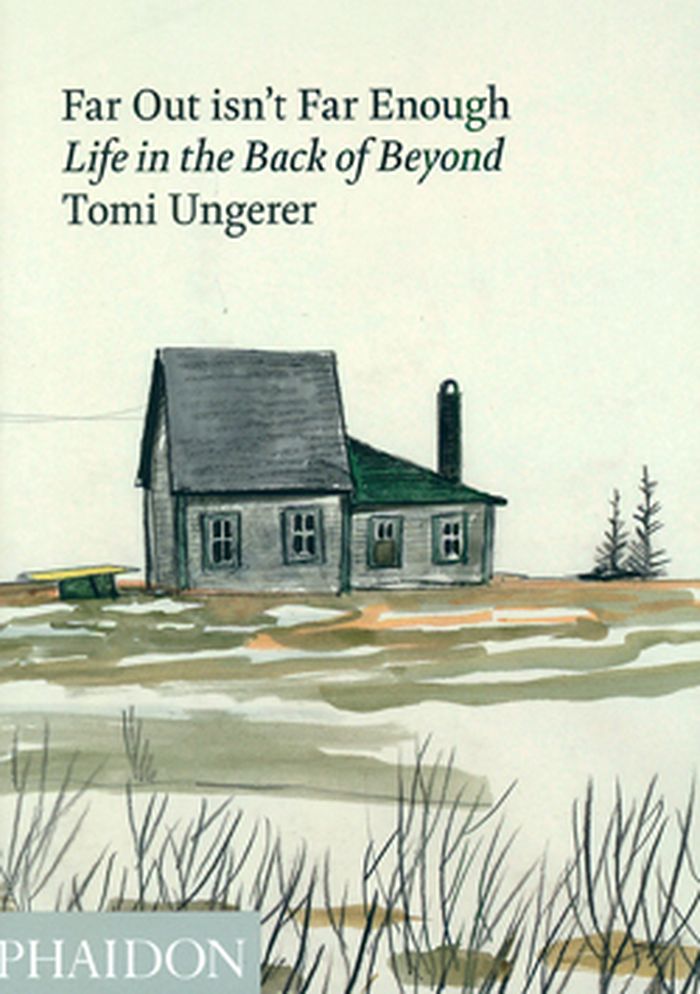
Suddenly fed up with city life and New York, Tomi Ungerer and his wife Yvonne, set out in search of a simpler life. They ended up on an isolated peninsula in Nova Scotia, Canada. The nearest town was two miles away and it was three years before they had a road to the house built, so it offered them the chance to create a totally different life for themselves. While they were there Ungerer continued to paint and write but he also learnt how to be a farmer, a herdsman and, where necessary, a butcher, because without ever intending to establish a farm they gradually acquired sheep, chickens, ducks, geese, rabbits, goats, cows, pigs and horses. In his diary, Ungerer describes in vivid detail their trials, tribulations and at times downright bizarre life on the isolated peninsula. Carefully observed drawings of the landscape, the wild animals, their own domestic flock and bring his words to life and create a distinctive impression of the wild and a times bleak landscape. Originally published in 1983, Far Out isn’t Far Enough is now reissued to introduce a new audience to Tomi Ungerer’s evocative style of drawing and writing.
Far out isn't far enough : life in the back of beyond
Actions:
Price:
$35.00
(available to order)
Summary:
Suddenly fed up with city life and New York, Tomi Ungerer and his wife Yvonne, set out in search of a simpler life. They ended up on an isolated peninsula in Nova Scotia, Canada. The nearest town was two miles away and it was three years before they had a road to the house built, so it offered them the chance to create a totally different life for themselves. While they were there Ungerer continued to paint and write but he also learnt how to be a farmer, a herdsman and, where necessary, a butcher, because without ever intending to establish a farm they gradually acquired sheep, chickens, ducks, geese, rabbits, goats, cows, pigs and horses. In his diary, Ungerer describes in vivid detail their trials, tribulations and at times downright bizarre life on the isolated peninsula. Carefully observed drawings of the landscape, the wild animals, their own domestic flock and bring his words to life and create a distinctive impression of the wild and a times bleak landscape. Originally published in 1983, Far Out isn’t Far Enough is now reissued to introduce a new audience to Tomi Ungerer’s evocative style of drawing and writing.
Form:
books
books
Publication:
April 2011
April 2011
Subject:
Illustration
Illustration
Form:
books
books
Actions:
Holdings:
Description:
379 pages ; 23 cm.
Description:
379 pages ; 23 cm.
Author:
Subject:
Publication:
Paris : Éditions critiques, [2022].
Paris : Éditions critiques, [2022].
Title:
Le pillage de la nature : capitalisme et rupture écologique / John Bellamy Foster & Brett Clark ; traduit de l'anglais (États-Unis) par Cyrille Rivallan.
Actions:
Holdings:
Description:
379 pages ; 23 cm.
Le pillage de la nature : capitalisme et rupture écologique / John Bellamy Foster & Brett Clark ; traduit de l'anglais (États-Unis) par Cyrille Rivallan.
Actions:
Holdings:
Description:
379 pages ; 23 cm.
Form:
books
books
Publication:
Paris : Éditions critiques, [2022].
Paris : Éditions critiques, [2022].
Author:
Subject:
Form:
books
books
Actions:
Holdings:
Description:
xv, 107 pages : illustrations ; 27 cm.
Description:
xv, 107 pages : illustrations ; 27 cm.
Author:
Subject:
Publication:
Los Angeles, Calif. : Getty Conservation Institute, 1998.
Los Angeles, Calif. : Getty Conservation Institute, 1998.
Title:
Inert gases in the control of museum insect pests / Charles Selwitz, Shin Maekawa.
Actions:
Holdings:
Description:
xv, 107 pages : illustrations ; 27 cm.
Inert gases in the control of museum insect pests / Charles Selwitz, Shin Maekawa.
Actions:
Holdings:
Description:
xv, 107 pages : illustrations ; 27 cm.
Form:
books
books
Publication:
Los Angeles, Calif. : Getty Conservation Institute, 1998.
Los Angeles, Calif. : Getty Conservation Institute, 1998.
Author:
Subject:
Form:
journals and magazines
journals and magazines
Title:
Ecology.
Ecology.
Actions:
Author:
Subject:
Publication:
Brooklyn, NY : Brooklyn Botanical Garden, 1920-, Durham, N.C. : Ecological Society of America and Duke University Press, Tempe, Ariz. : Ecological Society of America, Washington, D.C. : Ecological Society of America, Hoboken, NJ : Wiley Subscription Services, Inc.
Brooklyn, NY : Brooklyn Botanical Garden, 1920-, Durham, N.C. : Ecological Society of America and Duke University Press, Tempe, Ariz. : Ecological Society of America, Washington, D.C. : Ecological Society of America, Hoboken, NJ : Wiley Subscription Services, Inc.
Form:
journals and magazines
journals and magazines
Publication:
Brooklyn, NY : Brooklyn Botanical Garden, 1920-, Durham, N.C. : Ecological Society of America and Duke University Press, Tempe, Ariz. : Ecological Society of America, Washington, D.C. : Ecological Society of America, Hoboken, NJ : Wiley Subscription Services, Inc.
Brooklyn, NY : Brooklyn Botanical Garden, 1920-, Durham, N.C. : Ecological Society of America and Duke University Press, Tempe, Ariz. : Ecological Society of America, Washington, D.C. : Ecological Society of America, Hoboken, NJ : Wiley Subscription Services, Inc.
Author:
Subject:
Form:
books
books
Actions:
Price:
$25.95
(available to order)
Summary:
The crackling of a campfire. The scratch, hiss, and pop of a vinyl record. The first glug of wine as it is poured from a bottle. These are just a few of writer Caspar Henderson’s favorite sounds. In ''A book of noises,'' Henderson invites readers to use their ears a little better—to tune in to the world in all its surprising noisiness. Describing sounds from around(...)
$25.95
(available to order)
Summary:
The crackling of a campfire. The scratch, hiss, and pop of a vinyl record. The first glug of wine as it is poured from a bottle. These are just a few of writer Caspar Henderson’s favorite sounds. In ''A book of noises,'' Henderson invites readers to use their ears a little better—to tune in to the world in all its surprising noisiness. Describing sounds from around(...)
Title:
A book of noises: notes on the auraculous
Actions:
Price:
$25.95
(available to order)
Summary:
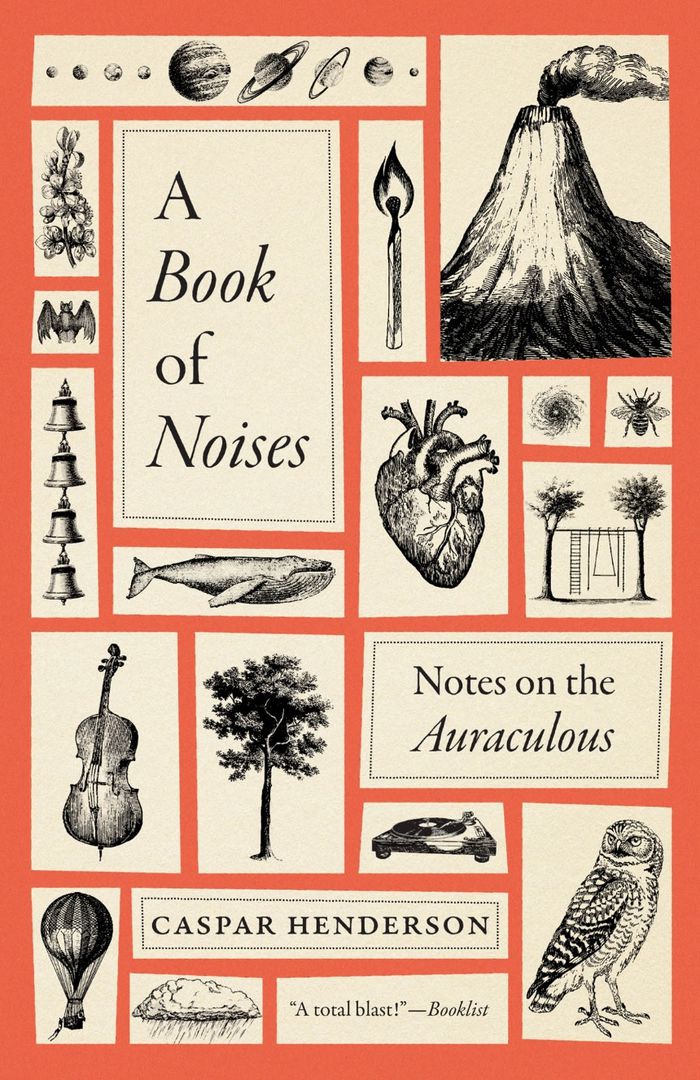
The crackling of a campfire. The scratch, hiss, and pop of a vinyl record. The first glug of wine as it is poured from a bottle. These are just a few of writer Caspar Henderson’s favorite sounds. In ''A book of noises,'' Henderson invites readers to use their ears a little better—to tune in to the world in all its surprising noisiness. Describing sounds from around the natural and human world, the forty-eight essays that make up A Book of Noises are a celebration of all things ''auraculous.'' Henderson calls on his characteristic curiosity to explore sounds related to humans (anthropophony), other life (biophony), the planet (geophony), and space (cosmophony). Henderson finds the beauty in everyday sounds, like the ringing of a bell, the buzz of a bee, or the ''earworm'' songs that get stuck in our heads.''A book of noises'' also explores the marvelous, miraculous sounds we may never get the chance to hear, like the deep boom of a volcano or the quiet, rustling sound of the Northern Lights. ''A book of noises'' will teach readers to really listen to the sounds of the world around them, to broaden and deepen their appreciation of the humans, animals, rocks, and trees simultaneously broadcasting across the whole spectrum of sentience.
A book of noises: notes on the auraculous
Actions:
Price:
$25.95
(available to order)
Summary:
The crackling of a campfire. The scratch, hiss, and pop of a vinyl record. The first glug of wine as it is poured from a bottle. These are just a few of writer Caspar Henderson’s favorite sounds. In ''A book of noises,'' Henderson invites readers to use their ears a little better—to tune in to the world in all its surprising noisiness. Describing sounds from around the natural and human world, the forty-eight essays that make up A Book of Noises are a celebration of all things ''auraculous.'' Henderson calls on his characteristic curiosity to explore sounds related to humans (anthropophony), other life (biophony), the planet (geophony), and space (cosmophony). Henderson finds the beauty in everyday sounds, like the ringing of a bell, the buzz of a bee, or the ''earworm'' songs that get stuck in our heads.''A book of noises'' also explores the marvelous, miraculous sounds we may never get the chance to hear, like the deep boom of a volcano or the quiet, rustling sound of the Northern Lights. ''A book of noises'' will teach readers to really listen to the sounds of the world around them, to broaden and deepen their appreciation of the humans, animals, rocks, and trees simultaneously broadcasting across the whole spectrum of sentience.
Form:
books
books
Publication:
May 2025
May 2025
Form:
books
books
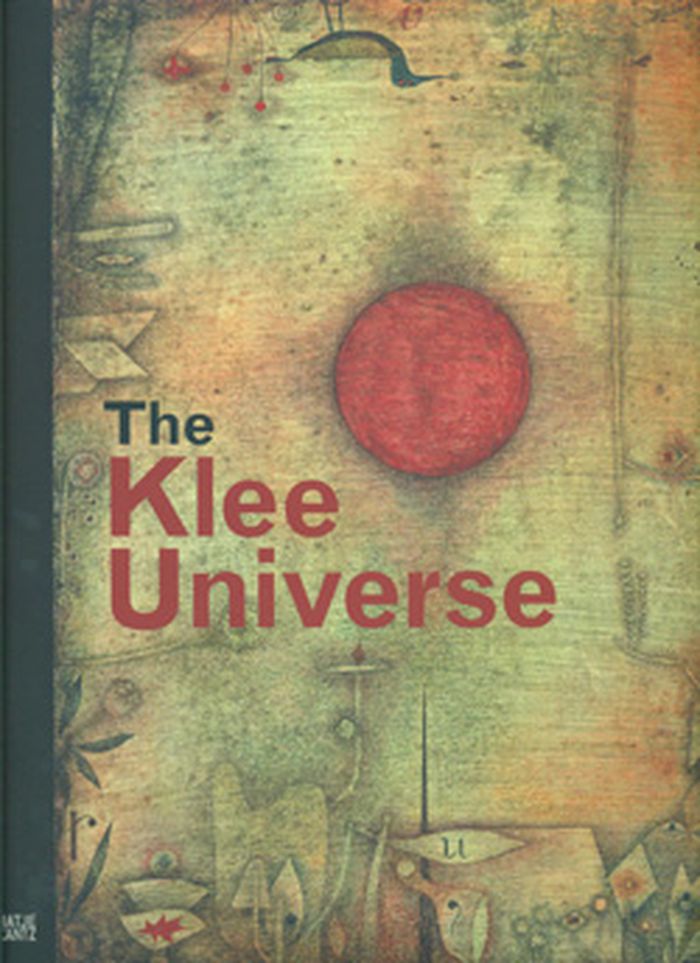
Title:
The Klee universe
The Klee universe
Actions:
Price:
$72.00
(available to order)
Summary:
There are artists whose métier is the observation or documentation of the world, and artists who set the world aside altogether to build their own visionary cosmology, designing its constituent parts from scratch as a personal mythology relayed in motifs. Paul Klee (1879-1940) was such an artist, as his aphorism “Art does not reproduce the visible, rather it makes(...)
$72.00
(available to order)
Summary:
There are artists whose métier is the observation or documentation of the world, and artists who set the world aside altogether to build their own visionary cosmology, designing its constituent parts from scratch as a personal mythology relayed in motifs. Paul Klee (1879-1940) was such an artist, as his aphorism “Art does not reproduce the visible, rather it makes(...)
Title:
The Klee universe
Actions:
Price:
$72.00
(available to order)
Summary:
There are artists whose métier is the observation or documentation of the world, and artists who set the world aside altogether to build their own visionary cosmology, designing its constituent parts from scratch as a personal mythology relayed in motifs. Paul Klee (1879-1940) was such an artist, as his aphorism “Art does not reproduce the visible, rather it makes visible” testifies, and The Klee Universe addresses his work from this perspective. In 1906, Klee noted in his diary, "All will be Klee," and in 1911, as the encyclopedist of his cosmos, he began to meticulously chronicle his works in a catalogue that, by the time he died, was to contain more than 9,000 items. Here, in the fashion of an Orbis Pictus or a Renaissance emblem book, Klee's oeuvre is made legible as a cogent entirety, in thematic units address: the human life cycle, from birth and childhood to sexual desire, parenthood and death; music, architecture, theater and religion; plants, animals and landscapes; and, finally, darker, destructive forces in the shape of war, fear and death. The Klee Universe reimagines the artist as a Renaissance man, an artist of great learning whose cosmos proves to be a coherent system of ideas and images.
The Klee universe
Actions:
Price:
$72.00
(available to order)
Summary:
There are artists whose métier is the observation or documentation of the world, and artists who set the world aside altogether to build their own visionary cosmology, designing its constituent parts from scratch as a personal mythology relayed in motifs. Paul Klee (1879-1940) was such an artist, as his aphorism “Art does not reproduce the visible, rather it makes visible” testifies, and The Klee Universe addresses his work from this perspective. In 1906, Klee noted in his diary, "All will be Klee," and in 1911, as the encyclopedist of his cosmos, he began to meticulously chronicle his works in a catalogue that, by the time he died, was to contain more than 9,000 items. Here, in the fashion of an Orbis Pictus or a Renaissance emblem book, Klee's oeuvre is made legible as a cogent entirety, in thematic units address: the human life cycle, from birth and childhood to sexual desire, parenthood and death; music, architecture, theater and religion; plants, animals and landscapes; and, finally, darker, destructive forces in the shape of war, fear and death. The Klee Universe reimagines the artist as a Renaissance man, an artist of great learning whose cosmos proves to be a coherent system of ideas and images.
Form:
books
books
Publication:
January 2009, Berlin
January 2009, Berlin
Subject:
Contemporary Art Monographs
Contemporary Art Monographs
Form:
books
books

Price:
$30.95
(available to order)
Summary:
Although others have written eloquently on the relationship of water to built form, until now no one has investigated the swimming pool as a quintessentially modern and American space, reflecting America's infatuation with hygiene, skin, and recreation. In The Springboard in the (...)
$30.95
(available to order)
Summary:
Although others have written eloquently on the relationship of water to built form, until now no one has investigated the swimming pool as a quintessentially modern and American space, reflecting America's infatuation with hygiene, skin, and recreation. In The Springboard in the (...)
Subject:
Commercial interiors, Building types
Commercial interiors, Building types
Publication:
April 2000, Cambridge, London
April 2000, Cambridge, London
Title:
The Springboard in the Pond: an intimate history of the swimming pool
Actions:
Price:
$30.95
(available to order)
Summary:
Although others have written eloquently on the relationship of water to built form, until now no one has investigated the swimming pool as a quintessentially modern and American space, reflecting America's infatuation with hygiene, skin, and recreation. In The Springboard in the Pond, Thomas van Leeuwen looks at a familiar hole--the domestic swimming pool--and discovers an icon indispensable to the reading of twentieth-century modernism. At one level, the book is a rereading of modern architecture that will leave that story permanently altered. At another level, it is the story of the origin and evolution of the private swimming pool as a building type and cultural artifact. At still another level, it is a material philosophy of water. Van Leeuwen explores the human relationship to water from a variety of viewpoints: social, religious, artistic, sexual, psychological, technical, and above all architectural. Throughout the book, he weaves a series of analogies to three emblematic animals--frog, swan, and penguin--that represent the three prevailing human attitudes toward water: hydrophilia, hydrophobia, and ambivalence. The books many illustrations--drawings, plans, and photographs--come from an unusual variety of sources, creating what is surely the most provocative visual archive of the swimming pool ever assembled.
The Springboard in the Pond: an intimate history of the swimming pool
Actions:
Price:
$30.95
(available to order)
Summary:
Although others have written eloquently on the relationship of water to built form, until now no one has investigated the swimming pool as a quintessentially modern and American space, reflecting America's infatuation with hygiene, skin, and recreation. In The Springboard in the Pond, Thomas van Leeuwen looks at a familiar hole--the domestic swimming pool--and discovers an icon indispensable to the reading of twentieth-century modernism. At one level, the book is a rereading of modern architecture that will leave that story permanently altered. At another level, it is the story of the origin and evolution of the private swimming pool as a building type and cultural artifact. At still another level, it is a material philosophy of water. Van Leeuwen explores the human relationship to water from a variety of viewpoints: social, religious, artistic, sexual, psychological, technical, and above all architectural. Throughout the book, he weaves a series of analogies to three emblematic animals--frog, swan, and penguin--that represent the three prevailing human attitudes toward water: hydrophilia, hydrophobia, and ambivalence. The books many illustrations--drawings, plans, and photographs--come from an unusual variety of sources, creating what is surely the most provocative visual archive of the swimming pool ever assembled.
Form:
books
books
Publication:
April 2000, Cambridge, London
April 2000, Cambridge, London
Subject:
Commercial interiors, Building types
Commercial interiors, Building types


