


1666 Results
Form:
journals and magazines
journals and magazines
Form:
journals and magazines
journals and magazines
Date:
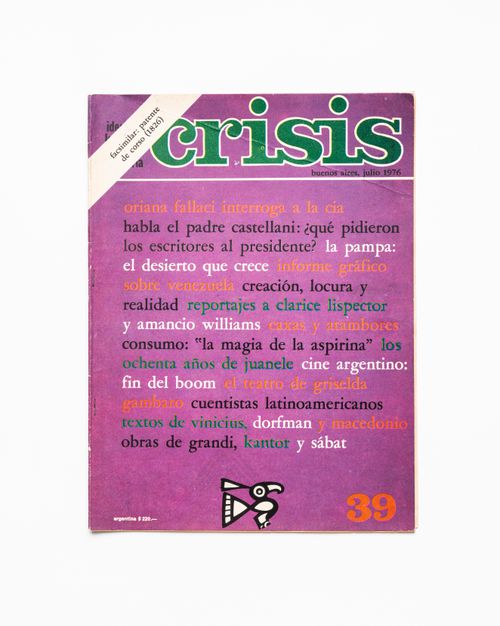
July 1976
July 1976
People:
Form:
events
events
Actions:
Description:
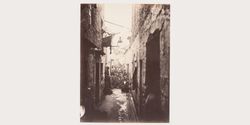
Drawing on selected works from the CCA photography collection, Sarah Churchill examines how historic visual strategies of “othering” and “ruin lust” have been embedded in a broader canon of insecurity and environmental deprivation.
Drawing on selected works from the CCA photography collection, Sarah Churchill examines how historic visual strategies of “othering” and “ruin lust” have been embedded in a broader canon of insecurity and environmental deprivation.
Date:
30 July 2026, 6pm to 7:30pm
30 July 2026, 6pm to 7:30pm
Title:
The Origins of Housing Crisis: Photography, Empire, and the Architecture of Precarity
Actions:
Description:
Drawing on selected works from the CCA photography collection, Sarah Churchill examines how historic visual strategies of “othering” and “ruin lust” have been embedded in a broader canon of insecurity and environmental deprivation.
The Origins of Housing Crisis: Photography, Empire, and the Architecture of Precarity
Actions:
Description:
Drawing on selected works from the CCA photography collection, Sarah Churchill examines how historic visual strategies of “othering” and “ruin lust” have been embedded in a broader canon of insecurity and environmental deprivation.
Form:
events
events
Date:
30 July 2026
6pm to 7:30pm
30 July 2026
6pm to 7:30pm
Form:
graphic materials
graphic materials
Actions:
Reference number:
ARCH279003
ARCH279003
People:
Date:
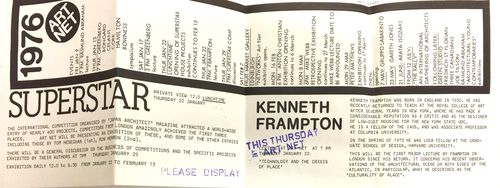
1976
1976
Form:
graphic materials
graphic materials
Date:
1976
1976
People:
Form:
textual records
textual records
Actions:
Reference number:
ARCH285499
ARCH285499
People:
Date:
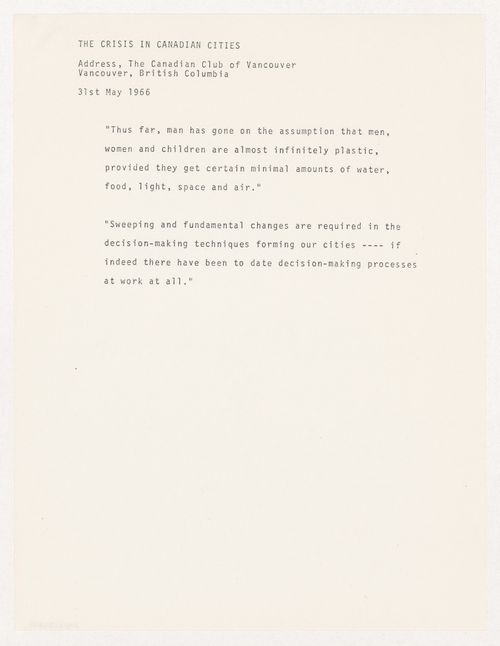
31 May 1966
31 May 1966
Form:
textual records
textual records
Date:
31 May 1966
31 May 1966
People:
Form:
articles
articles
Title:
The place of money
The place of money
Actions:
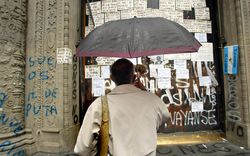
Juan Campanini and Josefina Sposito discuss how an aesthetic of trust abruptly comes to an end
Keyword(s):
Juan Campanini, Josefina Sposito, Buenos Aires, CCA c/o, banks, doors, financial crisis, 2001
Juan Campanini, Josefina Sposito, Buenos Aires, CCA c/o, banks, doors, financial crisis, 2001
Published:
9 January 2021
9 January 2021
Title:
The place of money
Juan Campanini and Josefina Sposito discuss how an aesthetic of trust abruptly comes to an end
Actions:
The place of money
Juan Campanini and Josefina Sposito discuss how an aesthetic of trust abruptly comes to an end
Actions:
Form:
events
events

Description:
Come help us add facts to Wikipedia around climate change. Free access to our galleries. Open to all.
Come help us add facts to Wikipedia around climate change. Free access to our galleries. Open to all.
Location:
The Study Room at the CCA
The Study Room at the CCA
Date:
30 April 2025, 3pm to 7pm
30 April 2025, 3pm to 7pm
Title:
Wiki Edit-a-thon no. 3: Editing for the Ecological Crisis
Actions:
Description:
Come help us add facts to Wikipedia around climate change. Free access to our galleries. Open to all.
Wiki Edit-a-thon no. 3: Editing for the Ecological Crisis
Actions:
Description:
Come help us add facts to Wikipedia around climate change. Free access to our galleries. Open to all.
Form:
events
events
Date:
30 April 2025
3pm to 7pm
30 April 2025
3pm to 7pm
Location:
The Study Room at the CCA
The Study Room at the CCA
Form:
events
events
Actions:
Description:
Miguel Robles-Durán discusses Cohabitation Strategies’s action research endeavours, which aim to facilitate transformative and progressive urban intervention projects in various cities across Europe and South and North America. Presented in conjunction with the exhibition The Other Architect.
Miguel Robles-Durán discusses Cohabitation Strategies’s action research endeavours, which aim to facilitate transformative and progressive urban intervention projects in various cities across Europe and South and North America. Presented in conjunction with the exhibition The Other Architect.
Date:
24 March 2016
24 March 2016
Title:
Cohabitation Strategies: Studies and Projects on the Contemporary Urban Crisis
Actions:
Description:
Miguel Robles-Durán discusses Cohabitation Strategies’s action research endeavours, which aim to facilitate transformative and progressive urban intervention projects in various cities across Europe and South and North America. Presented in conjunction with the exhibition The Other Architect.
Cohabitation Strategies: Studies and Projects on the Contemporary Urban Crisis
Actions:
Description:
Miguel Robles-Durán discusses Cohabitation Strategies’s action research endeavours, which aim to facilitate transformative and progressive urban intervention projects in various cities across Europe and South and North America. Presented in conjunction with the exhibition The Other Architect.
Form:
events
events
Date:
24 March 2016
24 March 2016
Form:
textual records
textual records

Actions:
Reference number:
ARCH401534
ARCH401534
People:
Date:
14 December 1971
14 December 1971
Form:
textual records
textual records
Date:
14 December 1971
14 December 1971
People:
Level of archival description:
Project
Project
Actions:
Reference number:
CI005.S1.1919.PR3
Description:
The post-First World War shortage of affordable housing led the city of Rotterdam to initiate low income dwelling developments to alleviate the crisis in housing for working class residents. Oud's involvement with the Rotterdam Housing Authority -- the Rotterdam Woningdienst -- allowed him to use public housing projects as a platform for his ideas about urban development, including this design for a semi-detached dwelling in reinforced concrete. Oud's plans were never realized as Rotterdam only experimented with concrete building projects later, in 1921 (Taverne et al. 2001,191, 210-212). The project series includes Oud's drawings of plans for the Double Worker's Dwelling in Reinforced Concrete.
CI005.S1.1919.PR3
Description:
The post-First World War shortage of affordable housing led the city of Rotterdam to initiate low income dwelling developments to alleviate the crisis in housing for working class residents. Oud's involvement with the Rotterdam Housing Authority -- the Rotterdam Woningdienst -- allowed him to use public housing projects as a platform for his ideas about urban development, including this design for a semi-detached dwelling in reinforced concrete. Oud's plans were never realized as Rotterdam only experimented with concrete building projects later, in 1921 (Taverne et al. 2001,191, 210-212). The project series includes Oud's drawings of plans for the Double Worker's Dwelling in Reinforced Concrete.
People:
Date:
1918
1918
Title:
Double Worker's Dwelling in Reinforced Concrete, Rotterdam, Netherlands (1919)
Actions:
CI005.S1.1919.PR3
Description:
The post-First World War shortage of affordable housing led the city of Rotterdam to initiate low income dwelling developments to alleviate the crisis in housing for working class residents. Oud's involvement with the Rotterdam Housing Authority -- the Rotterdam Woningdienst -- allowed him to use public housing projects as a platform for his ideas about urban development, including this design for a semi-detached dwelling in reinforced concrete. Oud's plans were never realized as Rotterdam only experimented with concrete building projects later, in 1921 (Taverne et al. 2001,191, 210-212). The project series includes Oud's drawings of plans for the Double Worker's Dwelling in Reinforced Concrete.
Double Worker's Dwelling in Reinforced Concrete, Rotterdam, Netherlands (1919)
Actions:
CI005.S1.1919.PR3
Description:
The post-First World War shortage of affordable housing led the city of Rotterdam to initiate low income dwelling developments to alleviate the crisis in housing for working class residents. Oud's involvement with the Rotterdam Housing Authority -- the Rotterdam Woningdienst -- allowed him to use public housing projects as a platform for his ideas about urban development, including this design for a semi-detached dwelling in reinforced concrete. Oud's plans were never realized as Rotterdam only experimented with concrete building projects later, in 1921 (Taverne et al. 2001,191, 210-212). The project series includes Oud's drawings of plans for the Double Worker's Dwelling in Reinforced Concrete.
Level of archival description:
project
project
Date:
1918
1918
People:
Level of archival description:
Project
Project
Actions:
Reference number:
CI005.S1.1922.PR1
Description:
The city of Rotterdam in May 1922 commissioned a project to re-house homeless slum-dwellers and to alleviate Rotterdam's crisis in housing shortage: the housing unit was known as The Witte Dorp housing community, in the polder of Oud-Mathenesse. Oud designed the site plan and dwellings for this municipal housing project of 343 dwellings, eight shop units and a fire-engine shed. Oud created a geometric street plan with short axes that joined at the playground and townscape with identical facades of row houses facing one another. The houses were white with contrasting red roofs, blue front doors and yellow door frames and window casings (Taverne et al. 2001, 250). Project series includes drawings of plans and eighteen photographs, including exterior views and photographs of a plan.
CI005.S1.1922.PR1
Description:
The city of Rotterdam in May 1922 commissioned a project to re-house homeless slum-dwellers and to alleviate Rotterdam's crisis in housing shortage: the housing unit was known as The Witte Dorp housing community, in the polder of Oud-Mathenesse. Oud designed the site plan and dwellings for this municipal housing project of 343 dwellings, eight shop units and a fire-engine shed. Oud created a geometric street plan with short axes that joined at the playground and townscape with identical facades of row houses facing one another. The houses were white with contrasting red roofs, blue front doors and yellow door frames and window casings (Taverne et al. 2001, 250). Project series includes drawings of plans and eighteen photographs, including exterior views and photographs of a plan.
People:
Date:
1922-1924
1922-1924
Title:
Oud-Mathenesse Municipal Housing Scheme, Rotterdam, Netherlands (1922-1924)
Actions:
CI005.S1.1922.PR1
Description:
The city of Rotterdam in May 1922 commissioned a project to re-house homeless slum-dwellers and to alleviate Rotterdam's crisis in housing shortage: the housing unit was known as The Witte Dorp housing community, in the polder of Oud-Mathenesse. Oud designed the site plan and dwellings for this municipal housing project of 343 dwellings, eight shop units and a fire-engine shed. Oud created a geometric street plan with short axes that joined at the playground and townscape with identical facades of row houses facing one another. The houses were white with contrasting red roofs, blue front doors and yellow door frames and window casings (Taverne et al. 2001, 250). Project series includes drawings of plans and eighteen photographs, including exterior views and photographs of a plan.
Oud-Mathenesse Municipal Housing Scheme, Rotterdam, Netherlands (1922-1924)
Actions:
CI005.S1.1922.PR1
Description:
The city of Rotterdam in May 1922 commissioned a project to re-house homeless slum-dwellers and to alleviate Rotterdam's crisis in housing shortage: the housing unit was known as The Witte Dorp housing community, in the polder of Oud-Mathenesse. Oud designed the site plan and dwellings for this municipal housing project of 343 dwellings, eight shop units and a fire-engine shed. Oud created a geometric street plan with short axes that joined at the playground and townscape with identical facades of row houses facing one another. The houses were white with contrasting red roofs, blue front doors and yellow door frames and window casings (Taverne et al. 2001, 250). Project series includes drawings of plans and eighteen photographs, including exterior views and photographs of a plan.
Level of archival description:
project
project
Date:
1922-1924
1922-1924
People:


