


33 Results
Form:
books
books
Actions:
Price:
$19.99
(available to order)
Summary:
Whether you simply want to challenge your local shop to reduce their plastic or go big and demand a new law to be passed, this book is the place to start. Full of lessons from the real world, this book contains practical steps and a blueprint anyone can follow - from helping you to pinpoint the fundamentals of what you want to achieve to mobilising supporters and(...)
$19.99
(available to order)
Summary:
Whether you simply want to challenge your local shop to reduce their plastic or go big and demand a new law to be passed, this book is the place to start. Full of lessons from the real world, this book contains practical steps and a blueprint anyone can follow - from helping you to pinpoint the fundamentals of what you want to achieve to mobilising supporters and(...)
Title:
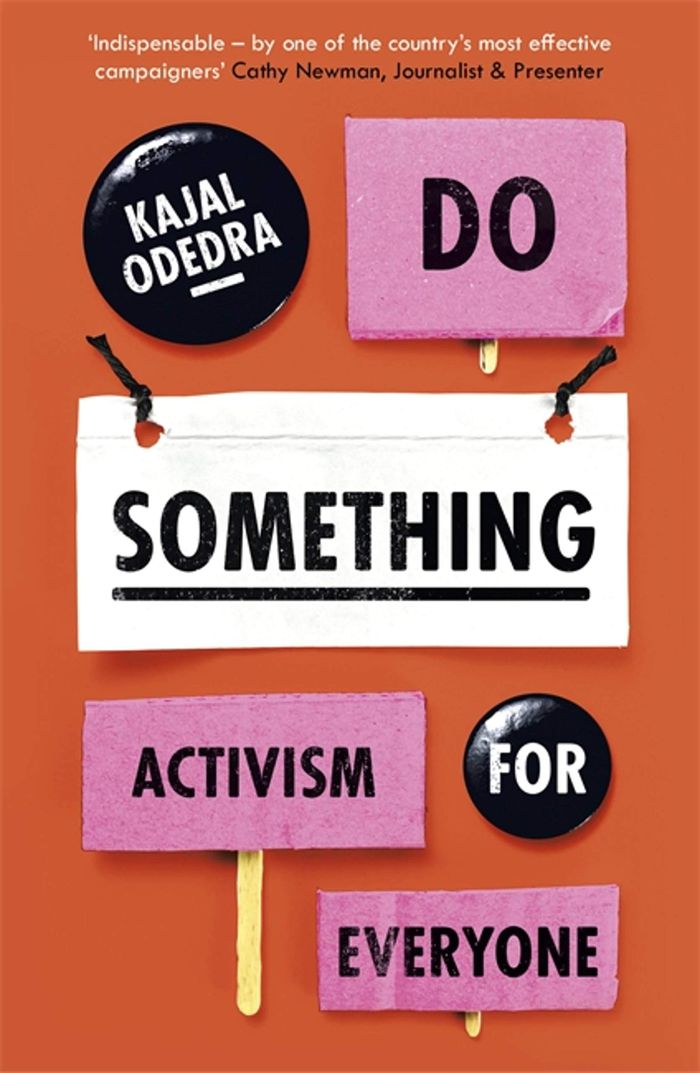
Do something: activism for everyone
Actions:
Price:
$19.99
(available to order)
Summary:
Whether you simply want to challenge your local shop to reduce their plastic or go big and demand a new law to be passed, this book is the place to start. Full of lessons from the real world, this book contains practical steps and a blueprint anyone can follow - from helping you to pinpoint the fundamentals of what you want to achieve to mobilising supporters and harnessing traditional and social media. Having worked as a campaigner for over a decade Kajal Odedra knows the tricks that have typically been held by people in circles of power and believes that everyone should know how to speak up and be heard. Revolution on every scale is happening all around the world - but rather than being led by governments, policy makers or political leaders, it is individuals, communities and collectives who are calling for action.
Do something: activism for everyone
Actions:
Price:
$19.99
(available to order)
Summary:
Whether you simply want to challenge your local shop to reduce their plastic or go big and demand a new law to be passed, this book is the place to start. Full of lessons from the real world, this book contains practical steps and a blueprint anyone can follow - from helping you to pinpoint the fundamentals of what you want to achieve to mobilising supporters and harnessing traditional and social media. Having worked as a campaigner for over a decade Kajal Odedra knows the tricks that have typically been held by people in circles of power and believes that everyone should know how to speak up and be heard. Revolution on every scale is happening all around the world - but rather than being led by governments, policy makers or political leaders, it is individuals, communities and collectives who are calling for action.
Form:
books
books
Publication:
December 2021
December 2021
Subject:
Social
Social
Form:
books
books
Price:
$26.95
(available to order)
Summary:
Timber is a vital resource that is all around us. It is the house that shelters us, the furniture we relax in, the books we read, the paper we print, the disposable diapers for our babies, and the boxes that contain our cereal, detergent, and new appliances. The way we produce and consume timber, however, is changing. With international timber companies and big box(...)
$26.95
(available to order)
Summary:
Timber is a vital resource that is all around us. It is the house that shelters us, the furniture we relax in, the books we read, the paper we print, the disposable diapers for our babies, and the boxes that contain our cereal, detergent, and new appliances. The way we produce and consume timber, however, is changing. With international timber companies and big box(...)
Title:
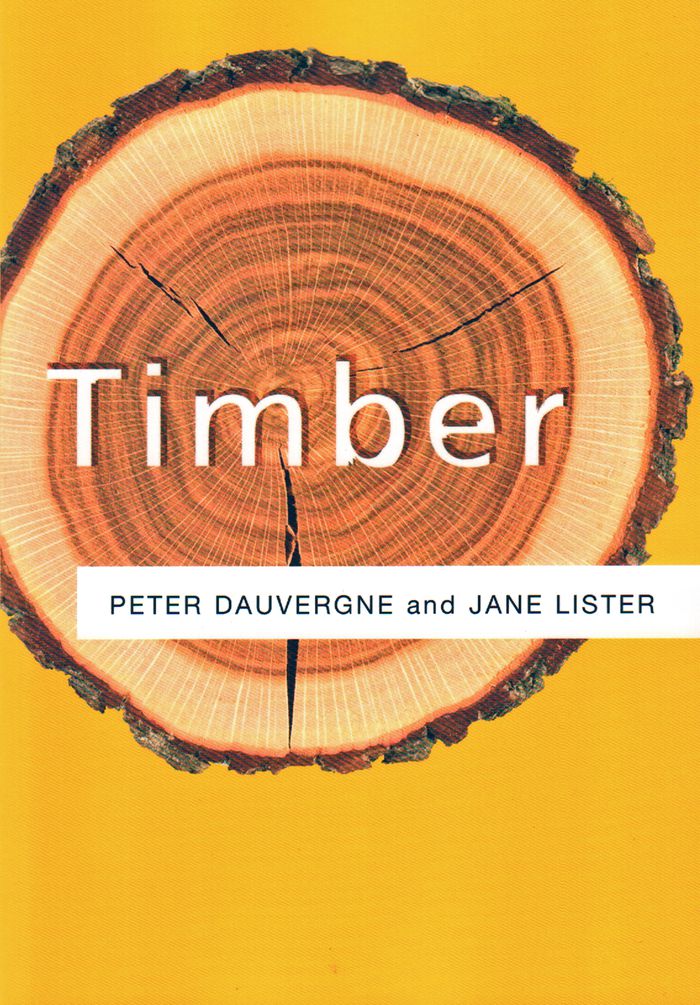
Timber
Actions:
Price:
$26.95
(available to order)
Summary:
Timber is a vital resource that is all around us. It is the house that shelters us, the furniture we relax in, the books we read, the paper we print, the disposable diapers for our babies, and the boxes that contain our cereal, detergent, and new appliances. The way we produce and consume timber, however, is changing. With international timber companies and big box discount retailers increasingly controlling through global commodity chains where and how much timber is traded, the world's remaining old-growth forests, particularly in the developing world, are under threat of disappearing - all for the price of a consumer bargain. This trailblazing book is the first to expose what's happening inside corporate commodity chains with conclusions that fundamentally challenge our understanding of how and why deforestation persists. Authors Peter Dauvergne and Jane Lister reveal how timber now moves through long and complex supply chains from the forests of the global South through the factories of emerging economies like China to the big box retail shelves of Europe and North America. Well-off consumers are getting unprecedented deals. But the social and environmental costs are extraordinarily high as corporations mine the world's poorest regions and most vulnerable ecosystems. The growing power of big retail within these commodity chains is further increasing South-North inequities and unsustainable global consumption. Yet, as this book's highly original analysis uncovers, it is also creating some intriguing opportunities to promote more responsible business practices and better global forest governance.
Timber
Actions:
Price:
$26.95
(available to order)
Summary:
Timber is a vital resource that is all around us. It is the house that shelters us, the furniture we relax in, the books we read, the paper we print, the disposable diapers for our babies, and the boxes that contain our cereal, detergent, and new appliances. The way we produce and consume timber, however, is changing. With international timber companies and big box discount retailers increasingly controlling through global commodity chains where and how much timber is traded, the world's remaining old-growth forests, particularly in the developing world, are under threat of disappearing - all for the price of a consumer bargain. This trailblazing book is the first to expose what's happening inside corporate commodity chains with conclusions that fundamentally challenge our understanding of how and why deforestation persists. Authors Peter Dauvergne and Jane Lister reveal how timber now moves through long and complex supply chains from the forests of the global South through the factories of emerging economies like China to the big box retail shelves of Europe and North America. Well-off consumers are getting unprecedented deals. But the social and environmental costs are extraordinarily high as corporations mine the world's poorest regions and most vulnerable ecosystems. The growing power of big retail within these commodity chains is further increasing South-North inequities and unsustainable global consumption. Yet, as this book's highly original analysis uncovers, it is also creating some intriguing opportunities to promote more responsible business practices and better global forest governance.
Form:
books
books
Publication:
April 2011
April 2011
Subject:
Current Exhibitions
Current Exhibitions
Form:
books
books
Price:
$40.00
(available to order)
Summary:
Cities can make us sick. They always have—diseases spread more easily when more people are close to one another. And disease is hardly the only ill that accompanies urban density. Cities have been demonized as breeding grounds for vice and crime from Sodom and Gomorrah on. But cities have flourished nonetheless because they are humanity’s greatest invention, indispensable(...)
$40.00
(available to order)
Summary:
Cities can make us sick. They always have—diseases spread more easily when more people are close to one another. And disease is hardly the only ill that accompanies urban density. Cities have been demonized as breeding grounds for vice and crime from Sodom and Gomorrah on. But cities have flourished nonetheless because they are humanity’s greatest invention, indispensable(...)
Title:
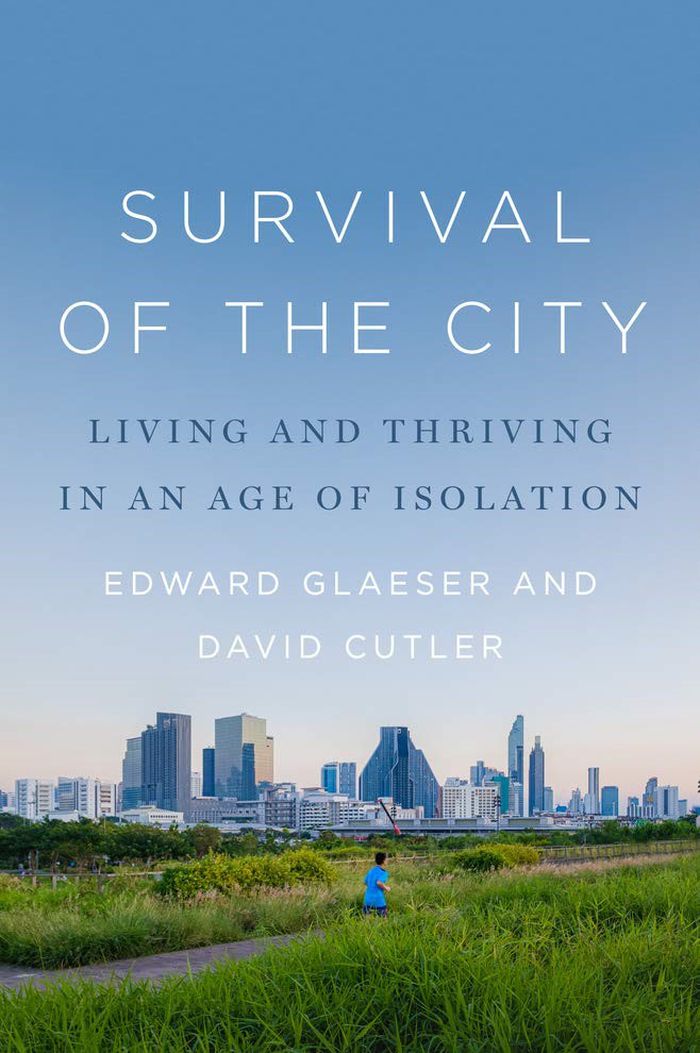
Survival of the city: Living and thriving in an age of isolation
Actions:
Price:
$40.00
(available to order)
Summary:
Cities can make us sick. They always have—diseases spread more easily when more people are close to one another. And disease is hardly the only ill that accompanies urban density. Cities have been demonized as breeding grounds for vice and crime from Sodom and Gomorrah on. But cities have flourished nonetheless because they are humanity’s greatest invention, indispensable engines for creativity, innovation, wealth, and connection, the loom on which the fabric of civilization is woven. But cities now stand at a crossroads. During the global COVID crisis, cities grew silent as people worked from home—if they could work at all. The normal forms of socializing ground to a halt. How permanent are these changes? Advances in digital technology mean that many people can opt out of city life as never before. Will they? Are we on the brink of a post-urban world? City life will survive but individual cities face terrible risks, argue Edward Glaeser and David Cutler, and a wave of urban failure would be absolutely disastrous. In terms of intimacy and inspiration, nothing can replace what cities offer. Great cities have always demanded great management, and our current crisis has exposed fearful gaps in our capacity for good governance. It is possible to drive a city into the ground, pandemic or not. Glaeser and Cutler examine the evolution that is already happening, and describe the possible futures that lie before us.
Survival of the city: Living and thriving in an age of isolation
Actions:
Price:
$40.00
(available to order)
Summary:
Cities can make us sick. They always have—diseases spread more easily when more people are close to one another. And disease is hardly the only ill that accompanies urban density. Cities have been demonized as breeding grounds for vice and crime from Sodom and Gomorrah on. But cities have flourished nonetheless because they are humanity’s greatest invention, indispensable engines for creativity, innovation, wealth, and connection, the loom on which the fabric of civilization is woven. But cities now stand at a crossroads. During the global COVID crisis, cities grew silent as people worked from home—if they could work at all. The normal forms of socializing ground to a halt. How permanent are these changes? Advances in digital technology mean that many people can opt out of city life as never before. Will they? Are we on the brink of a post-urban world? City life will survive but individual cities face terrible risks, argue Edward Glaeser and David Cutler, and a wave of urban failure would be absolutely disastrous. In terms of intimacy and inspiration, nothing can replace what cities offer. Great cities have always demanded great management, and our current crisis has exposed fearful gaps in our capacity for good governance. It is possible to drive a city into the ground, pandemic or not. Glaeser and Cutler examine the evolution that is already happening, and describe the possible futures that lie before us.
Form:
books
books
Publication:
September 2021
September 2021
Subject:
Urban Theory
Urban Theory


