


1897 Results
Form:
books
books
Price:
$43.00
(available to order)
Summary:
Rivers, on a long view, are alive. They are born; they change; they shift their channels; they forge new routes to the sea; they move both gradually and violently; they can teem (usually) with life; they may die a quasi-natural death; they are frequently maimed and even murdered. It is the annual flood pulse?the brief time when the river occupies the floodplain?that gives(...)
$43.00
(available to order)
Summary:
Rivers, on a long view, are alive. They are born; they change; they shift their channels; they forge new routes to the sea; they move both gradually and violently; they can teem (usually) with life; they may die a quasi-natural death; they are frequently maimed and even murdered. It is the annual flood pulse?the brief time when the river occupies the floodplain?that gives(...)
Title:
In praise of floods: The untamed river and the life it brings
Actions:
Price:
$43.00
(available to order)
Summary:
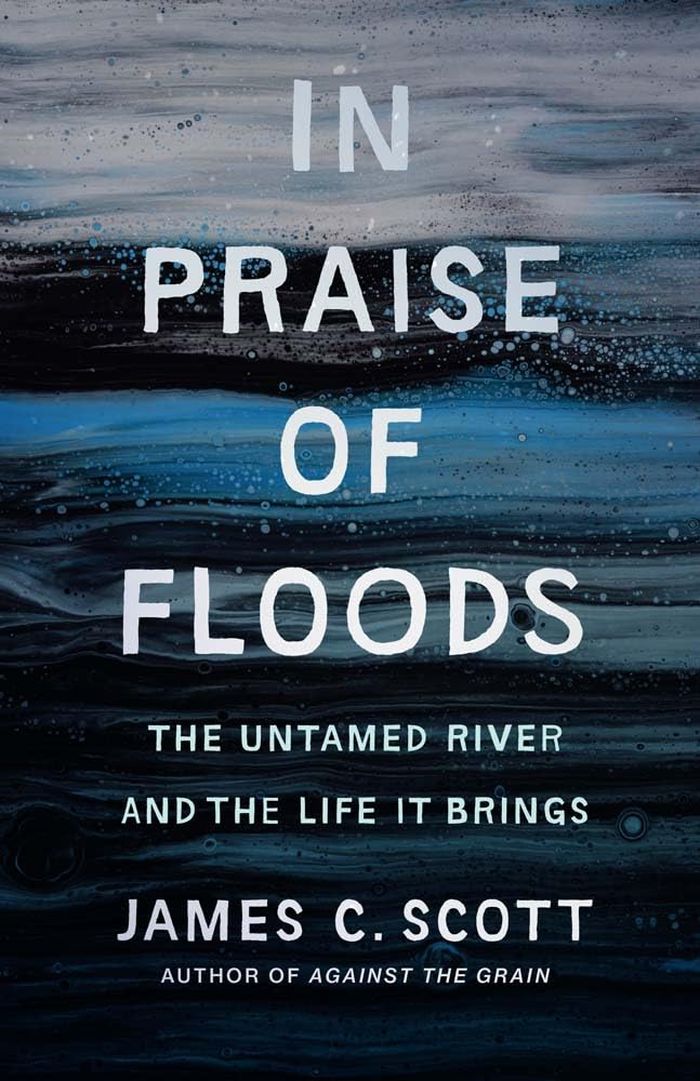
Rivers, on a long view, are alive. They are born; they change; they shift their channels; they forge new routes to the sea; they move both gradually and violently; they can teem (usually) with life; they may die a quasi-natural death; they are frequently maimed and even murdered. It is the annual flood pulse?the brief time when the river occupies the floodplain?that gives a river its vitality, but it is human engineering that kills it, suppressing the flood pulse with dams, irrigation, siltation, dikes, and levees. In demonstrating these threats to the riverine world, award-winning author James C. Scott examines the life history of a particular river, the Ayeyarwady (Irrawaddy) of Burma, the heartland and superhighway of Burman culture. Scott opens our understanding of rivers to encompass their entirety?tributaries, wetlands, floodplains, backwaters, eddies, periodic marshlands, and the assemblage of life forms dependent on rivers for their existence and well-being. For anyone interested in the Anthropocene and the Great Acceleration, rivers offer a striking example of the consequences of human intervention in trying to control and domesticate a natural process, the complexity and variability of which we barely understand.
In praise of floods: The untamed river and the life it brings
Actions:
Price:
$43.00
(available to order)
Summary:
Rivers, on a long view, are alive. They are born; they change; they shift their channels; they forge new routes to the sea; they move both gradually and violently; they can teem (usually) with life; they may die a quasi-natural death; they are frequently maimed and even murdered. It is the annual flood pulse?the brief time when the river occupies the floodplain?that gives a river its vitality, but it is human engineering that kills it, suppressing the flood pulse with dams, irrigation, siltation, dikes, and levees. In demonstrating these threats to the riverine world, award-winning author James C. Scott examines the life history of a particular river, the Ayeyarwady (Irrawaddy) of Burma, the heartland and superhighway of Burman culture. Scott opens our understanding of rivers to encompass their entirety?tributaries, wetlands, floodplains, backwaters, eddies, periodic marshlands, and the assemblage of life forms dependent on rivers for their existence and well-being. For anyone interested in the Anthropocene and the Great Acceleration, rivers offer a striking example of the consequences of human intervention in trying to control and domesticate a natural process, the complexity and variability of which we barely understand.
Form:
books
books
Publication:
February 2025
February 2025
Subject:
Landscape Theory
Landscape Theory
Form:
books
books
Price:
$32.50
(available to order)
Summary:
Rivers, on a long view, are alive. They are born; they change; they shift their channels; they forge new routes to the sea; they move both gradually and violently; they can teem (usually) with life; they may die a quasi-natural death; they are frequently maimed and even murdered. It is the annual flood pulse—the brief time when the river occupies the floodplain—that(...)
$32.50
(available to order)
Summary:
Rivers, on a long view, are alive. They are born; they change; they shift their channels; they forge new routes to the sea; they move both gradually and violently; they can teem (usually) with life; they may die a quasi-natural death; they are frequently maimed and even murdered. It is the annual flood pulse—the brief time when the river occupies the floodplain—that(...)
Title:
In praise of floods: the untamed river and the life it brings
Actions:
Price:
$32.50
(available to order)
Summary:
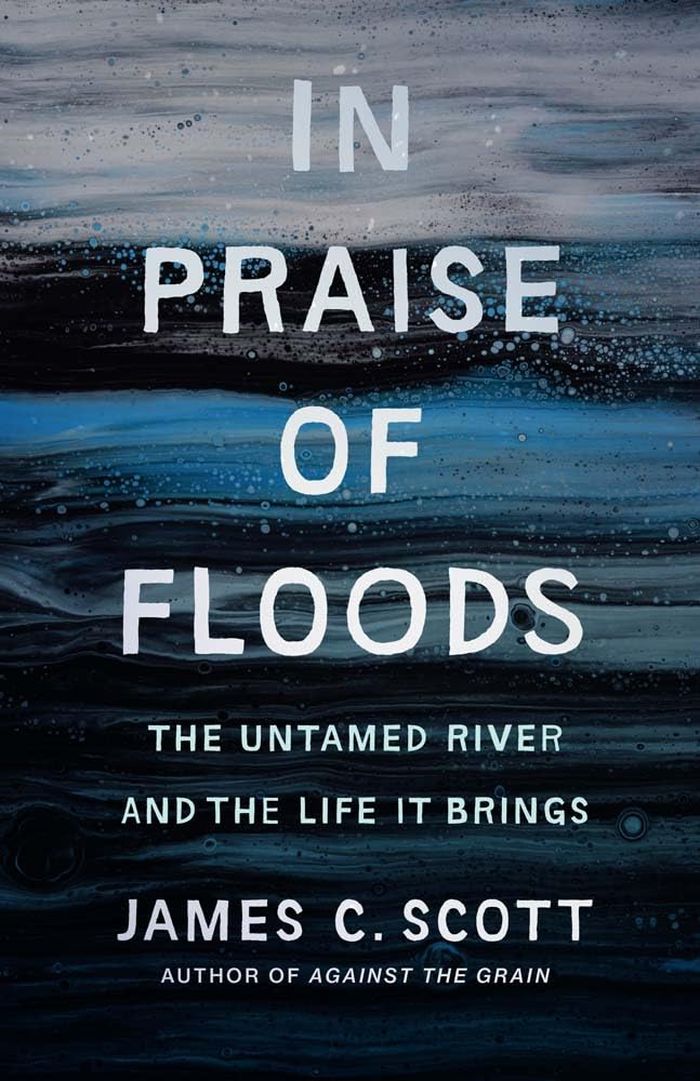
Rivers, on a long view, are alive. They are born; they change; they shift their channels; they forge new routes to the sea; they move both gradually and violently; they can teem (usually) with life; they may die a quasi-natural death; they are frequently maimed and even murdered. It is the annual flood pulse—the brief time when the river occupies the floodplain—that gives a river its vitality, but it is human engineering that kills it, suppressing the flood pulse with dams, irrigation, siltation, dikes, and levees. In demonstrating these threats to the riverine world, award-winning author James C. Scott examines the life history of a particular river, the Ayeyarwady (Irrawaddy) of Burma, the heartland and superhighway of Burman culture. Scott opens our understanding of rivers to encompass their entirety—tributaries, wetlands, floodplains, backwaters, eddies, periodic marshlands, and the assemblage of life forms dependent on rivers for their existence and well-being. For anyone interested in the Anthropocene and the Great Acceleration, rivers offer a striking example of the consequences of human intervention in trying to control and domesticate a natural process, the complexity and variability of which we barely understand.
In praise of floods: the untamed river and the life it brings
Actions:
Price:
$32.50
(available to order)
Summary:
Rivers, on a long view, are alive. They are born; they change; they shift their channels; they forge new routes to the sea; they move both gradually and violently; they can teem (usually) with life; they may die a quasi-natural death; they are frequently maimed and even murdered. It is the annual flood pulse—the brief time when the river occupies the floodplain—that gives a river its vitality, but it is human engineering that kills it, suppressing the flood pulse with dams, irrigation, siltation, dikes, and levees. In demonstrating these threats to the riverine world, award-winning author James C. Scott examines the life history of a particular river, the Ayeyarwady (Irrawaddy) of Burma, the heartland and superhighway of Burman culture. Scott opens our understanding of rivers to encompass their entirety—tributaries, wetlands, floodplains, backwaters, eddies, periodic marshlands, and the assemblage of life forms dependent on rivers for their existence and well-being. For anyone interested in the Anthropocene and the Great Acceleration, rivers offer a striking example of the consequences of human intervention in trying to control and domesticate a natural process, the complexity and variability of which we barely understand.
Form:
books
books
Publication:
May 2026
May 2026
Subject:
Landscape Theory
Landscape Theory
Form:
books
books
Title:
Auroville: A city of dreams
Auroville: A city of dreams
Actions:
Price:
$27.95
(available to order)
Summary:
In 1967 the Mother founded Auroville, a planned utopia that would be both self-sustaining and, through the yogic practices of Sri Aurobindo, a community that would herald the next evolution of humanity. She designed a city to resemble the galaxy, and to house 50,000 people from around the world who, through a series of utopic ideals—transforming the desert into(...)
$27.95
(available to order)
Summary:
In 1967 the Mother founded Auroville, a planned utopia that would be both self-sustaining and, through the yogic practices of Sri Aurobindo, a community that would herald the next evolution of humanity. She designed a city to resemble the galaxy, and to house 50,000 people from around the world who, through a series of utopic ideals—transforming the desert into(...)
Title:
Auroville: A city of dreams
Actions:
Price:
$27.95
(available to order)
Summary:
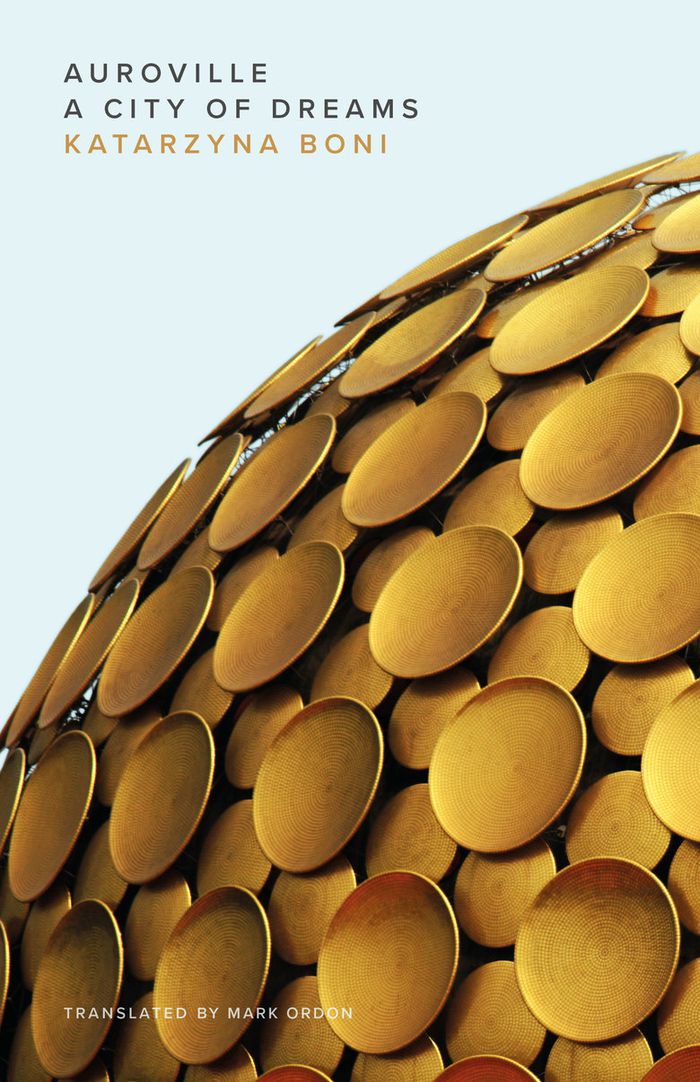
In 1967 the Mother founded Auroville, a planned utopia that would be both self-sustaining and, through the yogic practices of Sri Aurobindo, a community that would herald the next evolution of humanity. She designed a city to resemble the galaxy, and to house 50,000 people from around the world who, through a series of utopic ideals—transforming the desert into self-sustaining farmland, eliminating the need for money, removing religious conflicts, among others—would transform the world into a more just place. Despite the death of the Mother, contentious infighting, and the Indian government taking control of the city, Auroville has survived, and still attracts thousands of visitors every year. Katarzyna Boni merges the official history of Auroville with her experiences with the people she meets while living in this unique city, from Daniel who owns a local bakery, to Auroson, the reincarnation of the first child born in Auroville. A fascinating work that is never judgmental, ''Auroville: A City of Dreams'' looks at the successes and failures of this unique attempt at utopia, and the benefits such ambitious dreams can have regardless of outcome.
Auroville: A city of dreams
Actions:
Price:
$27.95
(available to order)
Summary:
In 1967 the Mother founded Auroville, a planned utopia that would be both self-sustaining and, through the yogic practices of Sri Aurobindo, a community that would herald the next evolution of humanity. She designed a city to resemble the galaxy, and to house 50,000 people from around the world who, through a series of utopic ideals—transforming the desert into self-sustaining farmland, eliminating the need for money, removing religious conflicts, among others—would transform the world into a more just place. Despite the death of the Mother, contentious infighting, and the Indian government taking control of the city, Auroville has survived, and still attracts thousands of visitors every year. Katarzyna Boni merges the official history of Auroville with her experiences with the people she meets while living in this unique city, from Daniel who owns a local bakery, to Auroson, the reincarnation of the first child born in Auroville. A fascinating work that is never judgmental, ''Auroville: A City of Dreams'' looks at the successes and failures of this unique attempt at utopia, and the benefits such ambitious dreams can have regardless of outcome.
Form:
books
books
Publication:
August 2026
August 2026
Subject:
Urban Theory
Urban Theory
Form:
books
books
Title:
Joel Sternfeld: Nags Head
Joel Sternfeld: Nags Head
Actions:
Price:
$79.00
(available to order)
Summary:
In the summer of 1975, facing surgery with the potential of paralysis, a young Joel Sternfeld went off in search of a last idyll-- and found it in Nags Head, on North Carolina’s Outer Banks. From June to August he captured the beach town floating in time, a sense of spatial and temporal fluidity. Sternfeld’s images show beachgoers of all ages enjoying scenes of leisure(...)
$79.00
(available to order)
Summary:
In the summer of 1975, facing surgery with the potential of paralysis, a young Joel Sternfeld went off in search of a last idyll-- and found it in Nags Head, on North Carolina’s Outer Banks. From June to August he captured the beach town floating in time, a sense of spatial and temporal fluidity. Sternfeld’s images show beachgoers of all ages enjoying scenes of leisure(...)
Title:
Joel Sternfeld: Nags Head
Actions:
Price:
$79.00
(available to order)
Summary:
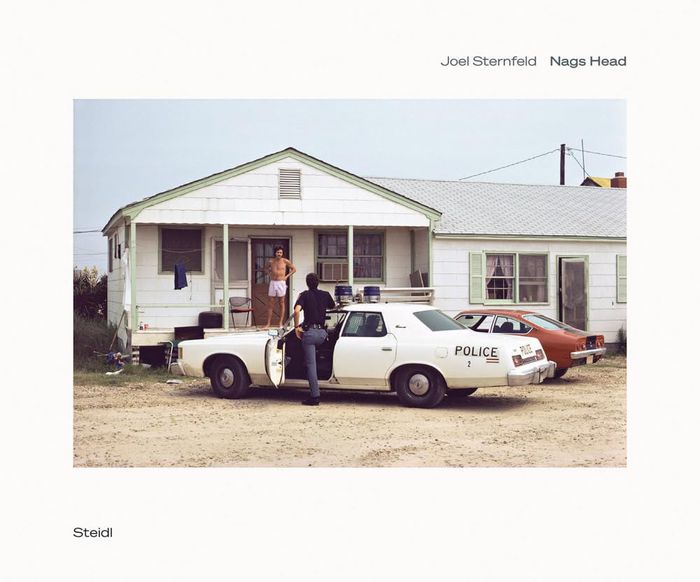
In the summer of 1975, facing surgery with the potential of paralysis, a young Joel Sternfeld went off in search of a last idyll-- and found it in Nags Head, on North Carolina’s Outer Banks. From June to August he captured the beach town floating in time, a sense of spatial and temporal fluidity. Sternfeld’s images show beachgoers of all ages enjoying scenes of leisure and partying in what became his first body of work addressing a season. Yet this summer sojourn was tragically broken by the news of the death of his brother; Sternfeld returned to New York, never to go back to Nags Head. Eventually he began working again and one day ventured to Rockaway Beach, Queens. Here he took a picture in which "all at once the ugly scene appeared beautiful to me": the hues of sand, apartments and sky fuse into a cohesive whole. This photo, with its conceptual roots in Nags Head, would lead to the color structures of Sternfeld’s magnum opus American Prospects, his ambitious realization of what he had always wanted to do: follow the seasons across America.
Joel Sternfeld: Nags Head
Actions:
Price:
$79.00
(available to order)
Summary:
In the summer of 1975, facing surgery with the potential of paralysis, a young Joel Sternfeld went off in search of a last idyll-- and found it in Nags Head, on North Carolina’s Outer Banks. From June to August he captured the beach town floating in time, a sense of spatial and temporal fluidity. Sternfeld’s images show beachgoers of all ages enjoying scenes of leisure and partying in what became his first body of work addressing a season. Yet this summer sojourn was tragically broken by the news of the death of his brother; Sternfeld returned to New York, never to go back to Nags Head. Eventually he began working again and one day ventured to Rockaway Beach, Queens. Here he took a picture in which "all at once the ugly scene appeared beautiful to me": the hues of sand, apartments and sky fuse into a cohesive whole. This photo, with its conceptual roots in Nags Head, would lead to the color structures of Sternfeld’s magnum opus American Prospects, his ambitious realization of what he had always wanted to do: follow the seasons across America.
Form:
books
books
Publication:
June 2024
June 2024
Subject:
Photography monographs
Photography monographs
Form:
books
books
Actions:
Price:
$105.00
(available to order)
Summary:
Josef Paul Kleihues (1933–2004) was one of the most prolific architects of postwar Germany, famous both as the Director of the International Building Exhibition Berlin in 1987 and for his design for the Museum of Contemporary Art in Chicago. He was also known for his sensitive interventions into older buildings, an instance of which is the former Hamburger Bahnhof - now(...)
$105.00
(available to order)
Summary:
Josef Paul Kleihues (1933–2004) was one of the most prolific architects of postwar Germany, famous both as the Director of the International Building Exhibition Berlin in 1987 and for his design for the Museum of Contemporary Art in Chicago. He was also known for his sensitive interventions into older buildings, an instance of which is the former Hamburger Bahnhof - now(...)
Title:
Josef Paul Kleihues: works 1966-1980 Vol. 1
Actions:
Price:
$105.00
(available to order)
Summary:
Josef Paul Kleihues (1933–2004) was one of the most prolific architects of postwar Germany, famous both as the Director of the International Building Exhibition Berlin in 1987 and for his design for the Museum of Contemporary Art in Chicago. He was also known for his sensitive interventions into older buildings, an instance of which is the former Hamburger Bahnhof - now the Museum für Gegenwart - in Berlin, where Kleihues intermixed glass walls and light installations by the American Minimalist Dan Flavin with the building’s original nineteenth-century Neoclassical design. (His reconstruction was widely deemed to rival or even surpass Gae Aulenti's overhaul of the interior of the Musée d'Orsay in Paris.) This first volume of a three-part monograph presents projects up to 1980, including the highly acclaimed Berlin Sanitation Department and the Neukölln Hospital. Even in these early works, Kleihues’ practical, problem-solving approach is already evident, indicating his readiness to reflect on the traditional approaches of Modern architecture and his capacity to expand them in interesting ways. This very generously illustrated volume was designed by Kleihues himself, just before his death in 2004.
Josef Paul Kleihues: works 1966-1980 Vol. 1
Actions:
Price:
$105.00
(available to order)
Summary:
Josef Paul Kleihues (1933–2004) was one of the most prolific architects of postwar Germany, famous both as the Director of the International Building Exhibition Berlin in 1987 and for his design for the Museum of Contemporary Art in Chicago. He was also known for his sensitive interventions into older buildings, an instance of which is the former Hamburger Bahnhof - now the Museum für Gegenwart - in Berlin, where Kleihues intermixed glass walls and light installations by the American Minimalist Dan Flavin with the building’s original nineteenth-century Neoclassical design. (His reconstruction was widely deemed to rival or even surpass Gae Aulenti's overhaul of the interior of the Musée d'Orsay in Paris.) This first volume of a three-part monograph presents projects up to 1980, including the highly acclaimed Berlin Sanitation Department and the Neukölln Hospital. Even in these early works, Kleihues’ practical, problem-solving approach is already evident, indicating his readiness to reflect on the traditional approaches of Modern architecture and his capacity to expand them in interesting ways. This very generously illustrated volume was designed by Kleihues himself, just before his death in 2004.
Form:
books
books
Publication:
March 2008, Ostfildern
March 2008, Ostfildern
Subject:
Architecture Monographs
Architecture Monographs
Form:
books
books
Actions:
Price:
$22.00
(available to order)
Summary:
This book is an attempt to tell a story from the closest point of a source. Before it is supposed to be a gossip. Before the juice is added and still is a bit boring and stiff. When looking up at reliable sources like Wikipedia and Google, the word gossip: ''Originates from God-sib, he Godparent of one's child, referring to a relationship of close friendship'' and it(...)
$22.00
(available to order)
Summary:
This book is an attempt to tell a story from the closest point of a source. Before it is supposed to be a gossip. Before the juice is added and still is a bit boring and stiff. When looking up at reliable sources like Wikipedia and Google, the word gossip: ''Originates from God-sib, he Godparent of one's child, referring to a relationship of close friendship'' and it(...)
Subject:
Design Theory
Design Theory
Publication:
March 2008, London, Amsterdam, New York
March 2008, London, Amsterdam, New York
Title:
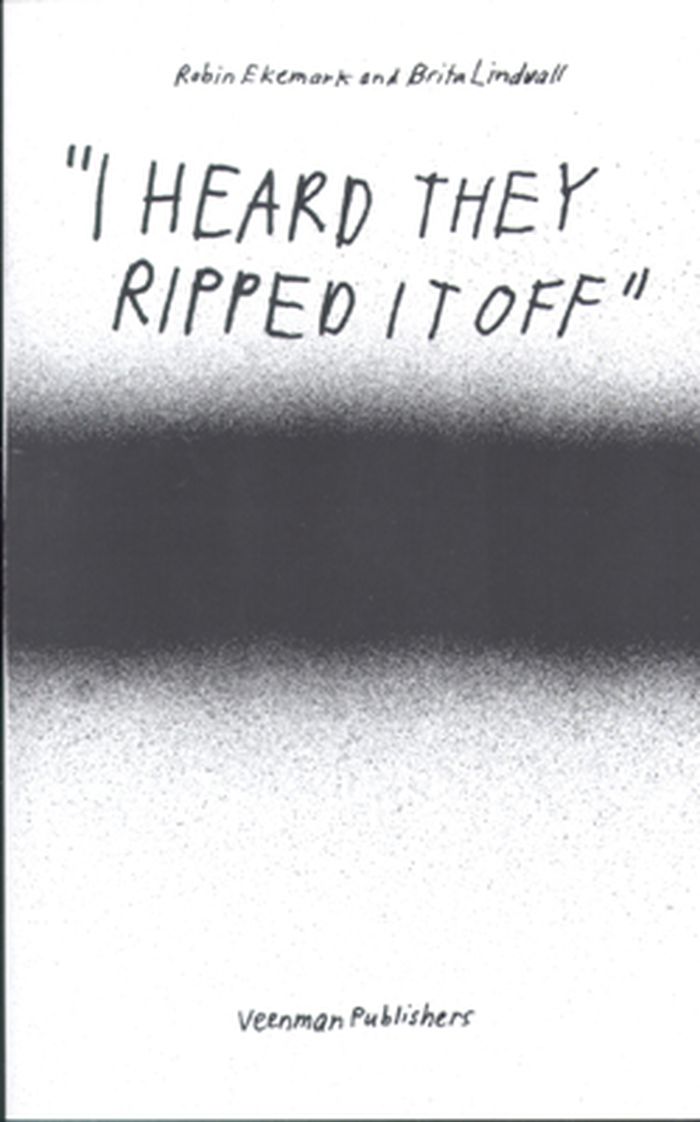
'' I heard they ripped it off ''
Actions:
Price:
$22.00
(available to order)
Summary:
This book is an attempt to tell a story from the closest point of a source. Before it is supposed to be a gossip. Before the juice is added and still is a bit boring and stiff. When looking up at reliable sources like Wikipedia and Google, the word gossip: ''Originates from God-sib, he Godparent of one's child, referring to a relationship of close friendship'' and it is also: '' An event between loose mouthed assholes, that happens as soon as you get into high-school, and follows you all the way to your death bed. It never ends.'' It is also: '' In it's form one of the oldest and most common means of spreading and sharing facts, with a reputation of errors and other variations'' This we of course found highly interesting so we did this book based on that, about the variations of a story when it comes from the same source. To try it out we asked people from the graphics design department in the Rietveld Academy, to re-tell us a story we are supposed to know better than others.
'' I heard they ripped it off ''
Actions:
Price:
$22.00
(available to order)
Summary:
This book is an attempt to tell a story from the closest point of a source. Before it is supposed to be a gossip. Before the juice is added and still is a bit boring and stiff. When looking up at reliable sources like Wikipedia and Google, the word gossip: ''Originates from God-sib, he Godparent of one's child, referring to a relationship of close friendship'' and it is also: '' An event between loose mouthed assholes, that happens as soon as you get into high-school, and follows you all the way to your death bed. It never ends.'' It is also: '' In it's form one of the oldest and most common means of spreading and sharing facts, with a reputation of errors and other variations'' This we of course found highly interesting so we did this book based on that, about the variations of a story when it comes from the same source. To try it out we asked people from the graphics design department in the Rietveld Academy, to re-tell us a story we are supposed to know better than others.
Form:
books
books
Publication:
March 2008, London, Amsterdam, New York
March 2008, London, Amsterdam, New York
Subject:
Design Theory
Design Theory
Form:
books
books
Actions:
Price:
$30.00
(available to order)
Summary:
We owe our idea of the contemporary exhibition to Harald Szeemann--the first of the jet-setting international curators. From 1961 to 1969, he was Curator of the Kunsthalle Bern, where in 1968 he had the foresight to give Christo and Jeanne-Claude the opportunity to wrap the entire museum building. Szeemann's groundbreaking 1969 exhibition When Attitudes Become Form, also(...)
$30.00
(available to order)
Summary:
We owe our idea of the contemporary exhibition to Harald Szeemann--the first of the jet-setting international curators. From 1961 to 1969, he was Curator of the Kunsthalle Bern, where in 1968 he had the foresight to give Christo and Jeanne-Claude the opportunity to wrap the entire museum building. Szeemann's groundbreaking 1969 exhibition When Attitudes Become Form, also(...)
Subject:
Museology
Museology
Publication:
March 2008, Berlin, Dijon, New York, Manchester
March 2008, Berlin, Dijon, New York, Manchester
Title:
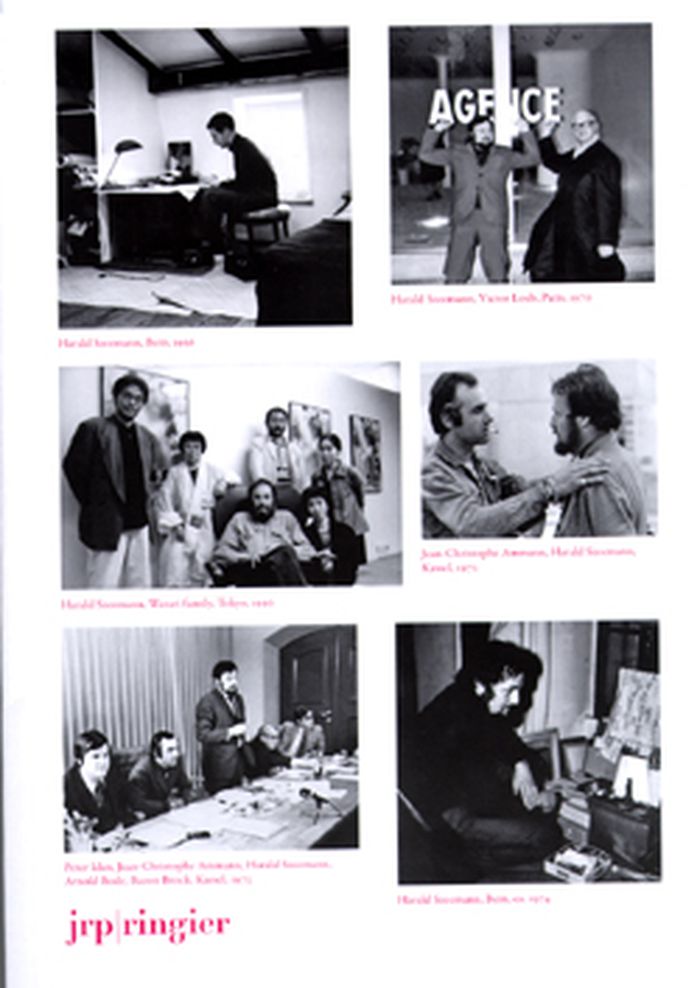
Harald Szeemann Individual Methodology
Actions:
Price:
$30.00
(available to order)
Summary:
We owe our idea of the contemporary exhibition to Harald Szeemann--the first of the jet-setting international curators. From 1961 to 1969, he was Curator of the Kunsthalle Bern, where in 1968 he had the foresight to give Christo and Jeanne-Claude the opportunity to wrap the entire museum building. Szeemann's groundbreaking 1969 exhibition When Attitudes Become Form, also at the Kunsthalle, introduced European audiences to artists like Joseph Beuys, Eva Hesse, Richard Serra and Lawrence Weiner. It also introduced the now-commonplace practice of curating an exhibition around a theme. Since Szeemann's death in 2005, there has been research underway at his archive in Tessin, Switzerland. An invaluable resource, this volume provides access to previously unpublished plans, documents and photographs from the archive, along with important essays by Hal Foster and Jean-Marc Poinsot. There is also an informative interview with Tobia Bezzola--curator at the Kunsthauz Zurich and Szeemann's collaborator for many years. Two of Szeemann's most ambitious exhibitions are presented as case studies: Documenta V (1972) and L'Autre, the 4th Lyon Biennial (1997). A biography, an illustrated chronology of Szeemann's exhibitions and a selection of his writings complete this exhaustive survey.
Harald Szeemann Individual Methodology
Actions:
Price:
$30.00
(available to order)
Summary:
We owe our idea of the contemporary exhibition to Harald Szeemann--the first of the jet-setting international curators. From 1961 to 1969, he was Curator of the Kunsthalle Bern, where in 1968 he had the foresight to give Christo and Jeanne-Claude the opportunity to wrap the entire museum building. Szeemann's groundbreaking 1969 exhibition When Attitudes Become Form, also at the Kunsthalle, introduced European audiences to artists like Joseph Beuys, Eva Hesse, Richard Serra and Lawrence Weiner. It also introduced the now-commonplace practice of curating an exhibition around a theme. Since Szeemann's death in 2005, there has been research underway at his archive in Tessin, Switzerland. An invaluable resource, this volume provides access to previously unpublished plans, documents and photographs from the archive, along with important essays by Hal Foster and Jean-Marc Poinsot. There is also an informative interview with Tobia Bezzola--curator at the Kunsthauz Zurich and Szeemann's collaborator for many years. Two of Szeemann's most ambitious exhibitions are presented as case studies: Documenta V (1972) and L'Autre, the 4th Lyon Biennial (1997). A biography, an illustrated chronology of Szeemann's exhibitions and a selection of his writings complete this exhaustive survey.
Form:
books
books
Publication:
March 2008, Berlin, Dijon, New York, Manchester
March 2008, Berlin, Dijon, New York, Manchester
Subject:
Museology
Museology
Form:
books
books
Title:
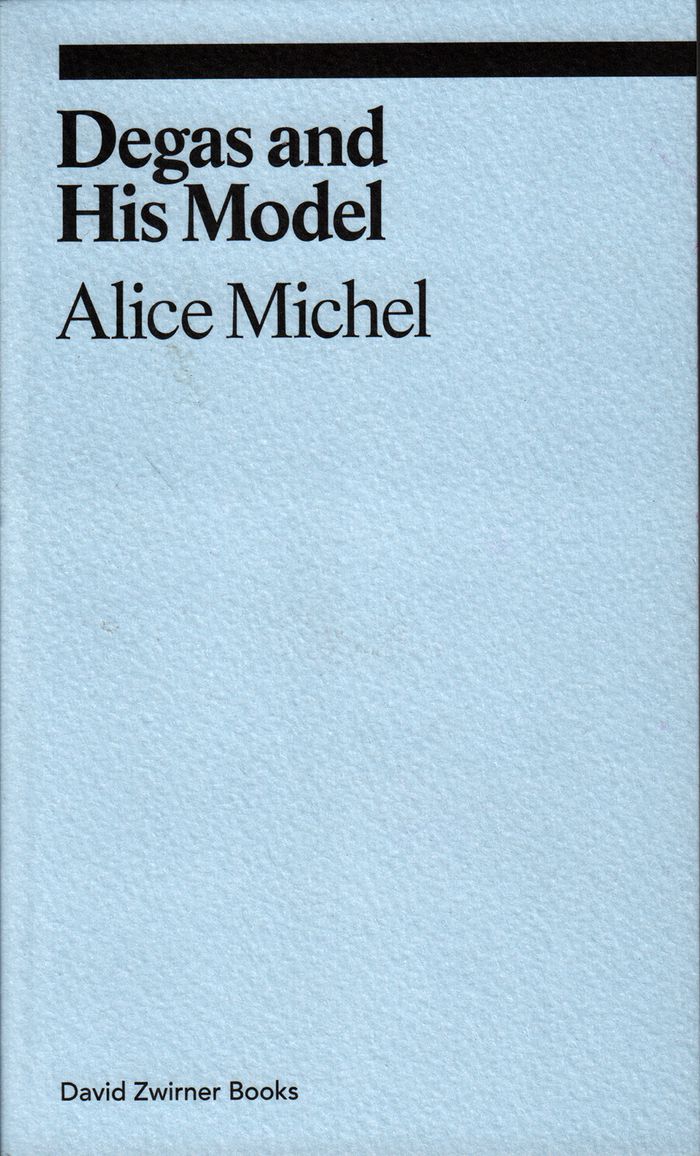
Degas and his model
Degas and his model
Actions:
Price:
$16.95
(available to order)
Summary:
"Monsieur Degas, you just said some things that would make an old soldier blush!" There are many myths about Edgar Degas—from Degas the misanthrope to Degas the deviant to Degas the obsessive. But there is no single text that better stokes the fire than Degas and His Model, a short memoir by Alice Michel, who purportedly modeled for Degas. Never before translated into(...)
$16.95
(available to order)
Summary:
"Monsieur Degas, you just said some things that would make an old soldier blush!" There are many myths about Edgar Degas—from Degas the misanthrope to Degas the deviant to Degas the obsessive. But there is no single text that better stokes the fire than Degas and His Model, a short memoir by Alice Michel, who purportedly modeled for Degas. Never before translated into(...)
Title:
Degas and his model
Actions:
Price:
$16.95
(available to order)
Summary:
"Monsieur Degas, you just said some things that would make an old soldier blush!" There are many myths about Edgar Degas—from Degas the misanthrope to Degas the deviant to Degas the obsessive. But there is no single text that better stokes the fire than Degas and His Model, a short memoir by Alice Michel, who purportedly modeled for Degas. Never before translated into English, the text’s original publication in Mercure de France in 1919, shortly after the artist’s death, has been treated as an important account of the master sculptor at work. We know that Alice was writing under a pseudonym, but who the real person behind this account was remains a mystery. Yet the descriptions seem too accurate, the anecdotes too spot-on to discount; even the dialogue captures the artist’s tone and mannerisms. What is found in these pages is at times a woman’s flirtatious recollection of a bizarre “artistic type” and at others a moving attempt to connect with a great, often tragic man. The descriptions are limpid; the dialogue is lively and intimate, not unlike reading the very best kind of gossip, with world-historical significance.
Degas and his model
Actions:
Price:
$16.95
(available to order)
Summary:
"Monsieur Degas, you just said some things that would make an old soldier blush!" There are many myths about Edgar Degas—from Degas the misanthrope to Degas the deviant to Degas the obsessive. But there is no single text that better stokes the fire than Degas and His Model, a short memoir by Alice Michel, who purportedly modeled for Degas. Never before translated into English, the text’s original publication in Mercure de France in 1919, shortly after the artist’s death, has been treated as an important account of the master sculptor at work. We know that Alice was writing under a pseudonym, but who the real person behind this account was remains a mystery. Yet the descriptions seem too accurate, the anecdotes too spot-on to discount; even the dialogue captures the artist’s tone and mannerisms. What is found in these pages is at times a woman’s flirtatious recollection of a bizarre “artistic type” and at others a moving attempt to connect with a great, often tragic man. The descriptions are limpid; the dialogue is lively and intimate, not unlike reading the very best kind of gossip, with world-historical significance.
Form:
books
books
Publication:
August 2017
August 2017
Subject:
Art Theory
Art Theory
Form:
books
books

Actions:
Price:
$60.00
(available to order)
Summary:
Samuel Mockbee believed in architecture as a tool for social and environmental change. He also understood the limitations of traditional architectural teaching in providing the students with hands-on experience and a moral sense of service to the community. And so he founded the Rural Studio, 200 miles west of the Auburn University campus, in the heart of Alabama's(...)
$60.00
(available to order)
Summary:
Samuel Mockbee believed in architecture as a tool for social and environmental change. He also understood the limitations of traditional architectural teaching in providing the students with hands-on experience and a moral sense of service to the community. And so he founded the Rural Studio, 200 miles west of the Auburn University campus, in the heart of Alabama's(...)
Title:
The making of the porch house
Actions:
Price:
$60.00
(available to order)
Summary:
Samuel Mockbee believed in architecture as a tool for social and environmental change. He also understood the limitations of traditional architectural teaching in providing the students with hands-on experience and a moral sense of service to the community. And so he founded the Rural Studio, 200 miles west of the Auburn University campus, in the heart of Alabama's poorest county, Hale. Until Mockbee's death in 2001, the studio had sown the land with thirty homes and community buildings. Under its successor, Andrew Freear, an architect hailing from England and a product of London's Architectural Association, the studio has continued to thrive. Over the last fifteen years, it has earned the respect of the communities it works with. Work is now pouring in, and its ambitions have grown with its reputation: larger projects are being undertaken, budgets have increased and students are now able to take on greater responsibility. In 2006, the Rural Studio was selected by the American Institute of Architects to represent the country at the famed Sao Paulo Art Biennial. Each and everyone of the forty projects exhibited was designed and built by students.
The making of the porch house
Actions:
Price:
$60.00
(available to order)
Summary:
Samuel Mockbee believed in architecture as a tool for social and environmental change. He also understood the limitations of traditional architectural teaching in providing the students with hands-on experience and a moral sense of service to the community. And so he founded the Rural Studio, 200 miles west of the Auburn University campus, in the heart of Alabama's poorest county, Hale. Until Mockbee's death in 2001, the studio had sown the land with thirty homes and community buildings. Under its successor, Andrew Freear, an architect hailing from England and a product of London's Architectural Association, the studio has continued to thrive. Over the last fifteen years, it has earned the respect of the communities it works with. Work is now pouring in, and its ambitions have grown with its reputation: larger projects are being undertaken, budgets have increased and students are now able to take on greater responsibility. In 2006, the Rural Studio was selected by the American Institute of Architects to represent the country at the famed Sao Paulo Art Biennial. Each and everyone of the forty projects exhibited was designed and built by students.
Form:
books
books
Publication:
March 2008, Montréal
March 2008, Montréal
Subject:
Architecture Monographs
Architecture Monographs
Form:
books
books

Price:
$91.00
(available to order)
Summary:
Joseph Gandy’s life is in many respects the familiar saga of genius unrecognized. Upon his death he seemed to the world, and to himself, a failure. Having begun his career with high hopes, great imagination and exceptional talent, he ended it in a state of neglect and obscurity. A century and a half later Gandy is recognized as one of the most original figures of(...)
$91.00
(available to order)
Summary:
Joseph Gandy’s life is in many respects the familiar saga of genius unrecognized. Upon his death he seemed to the world, and to himself, a failure. Having begun his career with high hopes, great imagination and exceptional talent, he ended it in a state of neglect and obscurity. A century and a half later Gandy is recognized as one of the most original figures of(...)
Title:
Joseph Gandy : an architectural visionary in Georgian England
Actions:
Price:
$91.00
(available to order)
Summary:
Joseph Gandy’s life is in many respects the familiar saga of genius unrecognized. Upon his death he seemed to the world, and to himself, a failure. Having begun his career with high hopes, great imagination and exceptional talent, he ended it in a state of neglect and obscurity. A century and a half later Gandy is recognized as one of the most original figures of English romanticism. Works such as "Pandemonium" or "Tomb of Merlin" have a hypnotic power that he brought to bear on Sir John Soane’s bizarre "Monk’s Parlour" at his renowned house-musuem in Lincoln’s Inn and on the lost masterpiece of Soane’s Bank of England in the City of London, buildings that we have come to see through Gandy’s eyes. Brian Lukacher, the acknowledged authority on Gandy, has now written the definitive life of this architect-artist who exemplified the cultural temper of the romantic period. It is a fresh, deeply researched biography and a critical assessment of Gandy’s work in its historical context. It is a tragic story but also an inspiring one, and a significant episode in the history of the architectural imagination and the visual arts during the nineteenth century.
Joseph Gandy : an architectural visionary in Georgian England
Actions:
Price:
$91.00
(available to order)
Summary:
Joseph Gandy’s life is in many respects the familiar saga of genius unrecognized. Upon his death he seemed to the world, and to himself, a failure. Having begun his career with high hopes, great imagination and exceptional talent, he ended it in a state of neglect and obscurity. A century and a half later Gandy is recognized as one of the most original figures of English romanticism. Works such as "Pandemonium" or "Tomb of Merlin" have a hypnotic power that he brought to bear on Sir John Soane’s bizarre "Monk’s Parlour" at his renowned house-musuem in Lincoln’s Inn and on the lost masterpiece of Soane’s Bank of England in the City of London, buildings that we have come to see through Gandy’s eyes. Brian Lukacher, the acknowledged authority on Gandy, has now written the definitive life of this architect-artist who exemplified the cultural temper of the romantic period. It is a fresh, deeply researched biography and a critical assessment of Gandy’s work in its historical context. It is a tragic story but also an inspiring one, and a significant episode in the history of the architectural imagination and the visual arts during the nineteenth century.
Form:
books
books
Publication:
May 2006, London
May 2006, London
Subject:
Architecture Monographs
Architecture Monographs


