


1897 Results
Form:
books
books

Title:
Elisabeth Wild: Fantasias
Elisabeth Wild: Fantasias
Actions:
Price:
$47.95
(available in store)
Summary:
This monograph exhibits Elisabeth Wild’s kaleidoscopic and vibrant collages. Using cutouts of commercial imagery from glossy magazines, Wild composes a dimensionless reality that is witty yet menacing, ancient yet immortal. Imagining figures that are structural and anatomical, her work presents a shimmering dream logic. Wooden totems and stone altars, woven rugs, and(...)
$47.95
(available in store)
Summary:
This monograph exhibits Elisabeth Wild’s kaleidoscopic and vibrant collages. Using cutouts of commercial imagery from glossy magazines, Wild composes a dimensionless reality that is witty yet menacing, ancient yet immortal. Imagining figures that are structural and anatomical, her work presents a shimmering dream logic. Wooden totems and stone altars, woven rugs, and(...)
Title:
Elisabeth Wild: Fantasias
Actions:
Price:
$47.95
(available in store)
Summary:
This monograph exhibits Elisabeth Wild’s kaleidoscopic and vibrant collages. Using cutouts of commercial imagery from glossy magazines, Wild composes a dimensionless reality that is witty yet menacing, ancient yet immortal. Imagining figures that are structural and anatomical, her work presents a shimmering dream logic. Wooden totems and stone altars, woven rugs, and precious stones are the cosmic architectural inhabitants that unveil the artist’s fantasies. Along with Wild’s collages, this volume includes contributions by poet Negma Coy, curator Adam Szymczyk, art educator and writer Barbara Casavecchia, art historian and critic Noit Banai, and gallerist Karolina Dankow of Karma International, all which frame the importance of this singular artist’s work and life. Born in Austria, Elisabeth Wild (1922-2020) fled to Argentina during WWII with her parents. In 1962 the family escaped the regime of Juan Peron and found a new home in Basel, Switzerland. Wild opened an antique shop at St. Johannstor which became the outlet for her creativity at the time and also supported her and her family financially. Until her death at the age of 98, Wild was carefully crafting her light-hearted, joyous abstract worlds walking the line between construction and deconstruction. Alongside her daughter, Vivian Suter, Wild has exhibited at Kunsthalle Basel, documenta 14, and the Powerplant in Toronto.
Elisabeth Wild: Fantasias
Actions:
Price:
$47.95
(available in store)
Summary:
This monograph exhibits Elisabeth Wild’s kaleidoscopic and vibrant collages. Using cutouts of commercial imagery from glossy magazines, Wild composes a dimensionless reality that is witty yet menacing, ancient yet immortal. Imagining figures that are structural and anatomical, her work presents a shimmering dream logic. Wooden totems and stone altars, woven rugs, and precious stones are the cosmic architectural inhabitants that unveil the artist’s fantasies. Along with Wild’s collages, this volume includes contributions by poet Negma Coy, curator Adam Szymczyk, art educator and writer Barbara Casavecchia, art historian and critic Noit Banai, and gallerist Karolina Dankow of Karma International, all which frame the importance of this singular artist’s work and life. Born in Austria, Elisabeth Wild (1922-2020) fled to Argentina during WWII with her parents. In 1962 the family escaped the regime of Juan Peron and found a new home in Basel, Switzerland. Wild opened an antique shop at St. Johannstor which became the outlet for her creativity at the time and also supported her and her family financially. Until her death at the age of 98, Wild was carefully crafting her light-hearted, joyous abstract worlds walking the line between construction and deconstruction. Alongside her daughter, Vivian Suter, Wild has exhibited at Kunsthalle Basel, documenta 14, and the Powerplant in Toronto.
Form:
books
books
Publication:
August 2021
August 2021
Subject:
Contemporary Art Monographs
Contemporary Art Monographs
Form:
books
books

Price:
$50.00
(available in store)
Summary:
''Ad Astra'' is an artist book created as part of a public art project commissioned for the medical library of the University of Montreal Health Center (CHUM), in Montréal, Quebec. Involving the arts, science, and public participation, ''Ad Astra'' consists of an archive of messages that are poetically sent to the stars and to the future. The messages, collected from the(...)
$50.00
(available in store)
Summary:
''Ad Astra'' is an artist book created as part of a public art project commissioned for the medical library of the University of Montreal Health Center (CHUM), in Montréal, Quebec. Involving the arts, science, and public participation, ''Ad Astra'' consists of an archive of messages that are poetically sent to the stars and to the future. The messages, collected from the(...)
Publication:
September 2021
September 2021
Title:
Ad Astra
Actions:
Price:
$50.00
(available in store)
Summary:
''Ad Astra'' is an artist book created as part of a public art project commissioned for the medical library of the University of Montreal Health Center (CHUM), in Montréal, Quebec. Involving the arts, science, and public participation, ''Ad Astra'' consists of an archive of messages that are poetically sent to the stars and to the future. The messages, collected from the hospital community, are transformed by means of a collaboration between art and neuroscience to generate astral images, and ultimately, a collective artwork representing a collection of prayers, hopes and fears. Rooted in deep human experiences,''Ad Astra'' gives voice to the range of emotions and the cycle of life and death that the hospital context is witness to daily. In compliment to the permanent multimedia artwork installed in the library, the book presents a tightly knit set of relationships among the various elements that compose the project, including messages, portraits, neurological diagrams, video-stills, citations, and texts. An introductory essay by Claire Moeder creatively illuminates the core interests of the project while the graphic design by Criterium echoes the installation with material means. The book is a nomadic archive and tactile object that was created to travel beyond the primary site of medical library, and ultimately towards the stars.
Ad Astra
Actions:
Price:
$50.00
(available in store)
Summary:
''Ad Astra'' is an artist book created as part of a public art project commissioned for the medical library of the University of Montreal Health Center (CHUM), in Montréal, Quebec. Involving the arts, science, and public participation, ''Ad Astra'' consists of an archive of messages that are poetically sent to the stars and to the future. The messages, collected from the hospital community, are transformed by means of a collaboration between art and neuroscience to generate astral images, and ultimately, a collective artwork representing a collection of prayers, hopes and fears. Rooted in deep human experiences,''Ad Astra'' gives voice to the range of emotions and the cycle of life and death that the hospital context is witness to daily. In compliment to the permanent multimedia artwork installed in the library, the book presents a tightly knit set of relationships among the various elements that compose the project, including messages, portraits, neurological diagrams, video-stills, citations, and texts. An introductory essay by Claire Moeder creatively illuminates the core interests of the project while the graphic design by Criterium echoes the installation with material means. The book is a nomadic archive and tactile object that was created to travel beyond the primary site of medical library, and ultimately towards the stars.
Form:
books
books
Publication:
September 2021
September 2021
Form:
books
books
Actions:
Price:
$83.00
(available to order)
Summary:
"The Unseen Eye" presents a idiosyncratic and compelling collection of photographs assembled around a particular theme: in each image, the gaze of the subject is averted, the face obscured or the eyes firmly closed. The pictures present a catalog of anti-portraiture, characterized at first glance by what its subjects conceal, not by what the camera reveals. Amassed over(...)
$83.00
(available to order)
Summary:
"The Unseen Eye" presents a idiosyncratic and compelling collection of photographs assembled around a particular theme: in each image, the gaze of the subject is averted, the face obscured or the eyes firmly closed. The pictures present a catalog of anti-portraiture, characterized at first glance by what its subjects conceal, not by what the camera reveals. Amassed over(...)
Title:
The unseen eye: photographs from the unconscious
Actions:
Price:
$83.00
(available to order)
Summary:
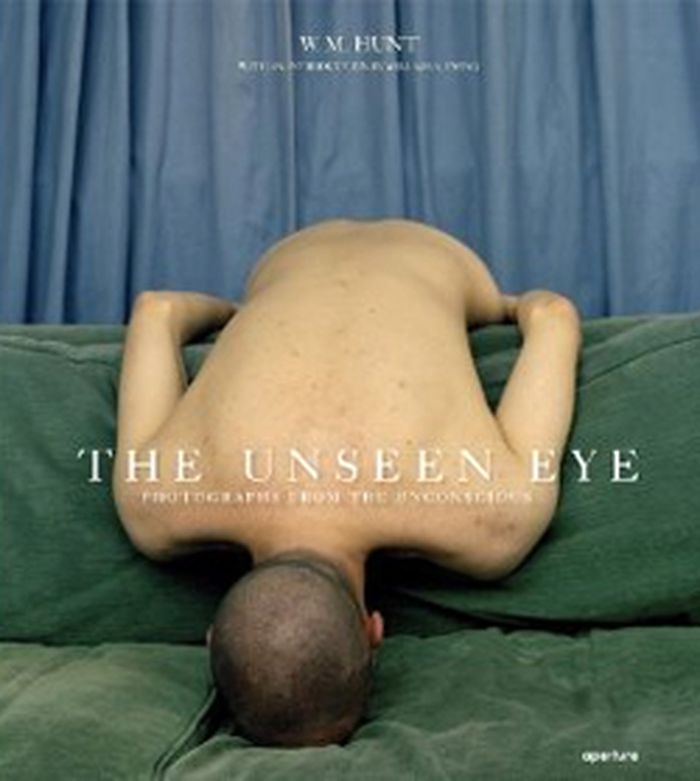
"The Unseen Eye" presents a idiosyncratic and compelling collection of photographs assembled around a particular theme: in each image, the gaze of the subject is averted, the face obscured or the eyes firmly closed. The pictures present a catalog of anti-portraiture, characterized at first glance by what its subjects conceal, not by what the camera reveals. Amassed over the course of 30 years by New York collector W.M. Hunt, the collection includes works by masters such as Richard Avedon, Diane Arbus, Imogen Cunningham, William Klein, Robert Mapplethorpe and Robert Frank, as well as works by lesser-known artists and vernacular images. Hunt's instinctive pursuit of striking images has resulted in a collection that manages to evoke a picture of humanity from birth to death, with all the associated nuances of memory, wit, eroticism, fear, grief and horror. More than 350 evocative and frequently surreal images are brilliantly sequenced in this volume; the cumulative effect is unnerving and riveting. Most critically, the images are drawn together by the narrative of the collector himself, in a highly personal monologue that weaves throughout the book, in which Hunt offers his own perceptive responses to the images he has gathered over many years. The result is a series of surprising epiphanies about how and why one collects.
The unseen eye: photographs from the unconscious
Actions:
Price:
$83.00
(available to order)
Summary:
"The Unseen Eye" presents a idiosyncratic and compelling collection of photographs assembled around a particular theme: in each image, the gaze of the subject is averted, the face obscured or the eyes firmly closed. The pictures present a catalog of anti-portraiture, characterized at first glance by what its subjects conceal, not by what the camera reveals. Amassed over the course of 30 years by New York collector W.M. Hunt, the collection includes works by masters such as Richard Avedon, Diane Arbus, Imogen Cunningham, William Klein, Robert Mapplethorpe and Robert Frank, as well as works by lesser-known artists and vernacular images. Hunt's instinctive pursuit of striking images has resulted in a collection that manages to evoke a picture of humanity from birth to death, with all the associated nuances of memory, wit, eroticism, fear, grief and horror. More than 350 evocative and frequently surreal images are brilliantly sequenced in this volume; the cumulative effect is unnerving and riveting. Most critically, the images are drawn together by the narrative of the collector himself, in a highly personal monologue that weaves throughout the book, in which Hunt offers his own perceptive responses to the images he has gathered over many years. The result is a series of surprising epiphanies about how and why one collects.
Form:
books
books
Publication:
September 2011
September 2011
Subject:
Photography Collections
Photography Collections
Form:
books
books

Title:
The agony of power
The agony of power
Actions:
Price:
$15.95
(available to order)
Summary:
In these previously unpublished manuscripts written just before his death in 2007, Jean Baudrillard takes a last crack at the bewildering situation currently facing us as we exit the system of "domination" (based on alienation, revolt, revolution) and enter a world of generalized "hegemony" in which everyone becomes both hostage and accomplice of the global market. But in(...)
$15.95
(available to order)
Summary:
In these previously unpublished manuscripts written just before his death in 2007, Jean Baudrillard takes a last crack at the bewildering situation currently facing us as we exit the system of "domination" (based on alienation, revolt, revolution) and enter a world of generalized "hegemony" in which everyone becomes both hostage and accomplice of the global market. But in(...)
Title:
The agony of power
Actions:
Price:
$15.95
(available to order)
Summary:
In these previously unpublished manuscripts written just before his death in 2007, Jean Baudrillard takes a last crack at the bewildering situation currently facing us as we exit the system of "domination" (based on alienation, revolt, revolution) and enter a world of generalized "hegemony" in which everyone becomes both hostage and accomplice of the global market. But in the free-form market of political and sexual liberation, as the possibility of revolution (and our understanding of it) dissipates, Baudrillard sees the hegemonic process as only beginning. Once expelled, negativity returns from within ourselves as an antagonistic force — most vividly in the phenomenon of terrorism, but also as irony, mockery, and the symbolic liquidation of all human values. This is the dimension of hegemony marked by an unbridled circulation — of capital, goods, information, or manufactured history — that is bringing the very concept of exchange to an end and pushing capital beyond its limits : to the point at which it destroys the conditions of its own existence. In the system of hegemony, the alienated, the oppressed, and the colonized find themselves on the side of the system that holds them hostage. In this paradoxical moment in which history has turned to farce, domination itself may appear to have been a lesser evil.
The agony of power
Actions:
Price:
$15.95
(available to order)
Summary:
In these previously unpublished manuscripts written just before his death in 2007, Jean Baudrillard takes a last crack at the bewildering situation currently facing us as we exit the system of "domination" (based on alienation, revolt, revolution) and enter a world of generalized "hegemony" in which everyone becomes both hostage and accomplice of the global market. But in the free-form market of political and sexual liberation, as the possibility of revolution (and our understanding of it) dissipates, Baudrillard sees the hegemonic process as only beginning. Once expelled, negativity returns from within ourselves as an antagonistic force — most vividly in the phenomenon of terrorism, but also as irony, mockery, and the symbolic liquidation of all human values. This is the dimension of hegemony marked by an unbridled circulation — of capital, goods, information, or manufactured history — that is bringing the very concept of exchange to an end and pushing capital beyond its limits : to the point at which it destroys the conditions of its own existence. In the system of hegemony, the alienated, the oppressed, and the colonized find themselves on the side of the system that holds them hostage. In this paradoxical moment in which history has turned to farce, domination itself may appear to have been a lesser evil.
Form:
books
books
Publication:
November 2012
November 2012
Subject:
Critical Theory
Critical Theory
Form:
books
books
Price:
$49.95
(available to order)
Summary:
Born into a large French-Canadian family in 1926, Mariette Rousseau embraced her passion for creative expression through wool and weaving at an early age. She studied art and weaving at l'École des beaux-arts in Quebec City and then worked at the California studio of ground-breaking American textile designer Dorothy Liebes. Back in Canada after an art-inspired trip to(...)
$49.95
(available to order)
Summary:
Born into a large French-Canadian family in 1926, Mariette Rousseau embraced her passion for creative expression through wool and weaving at an early age. She studied art and weaving at l'École des beaux-arts in Quebec City and then worked at the California studio of ground-breaking American textile designer Dorothy Liebes. Back in Canada after an art-inspired trip to(...)
Title:
Weaving modernist art: The life and work of Mariette Rousseau-Vermette
Actions:
Price:
$49.95
(available to order)
Summary:
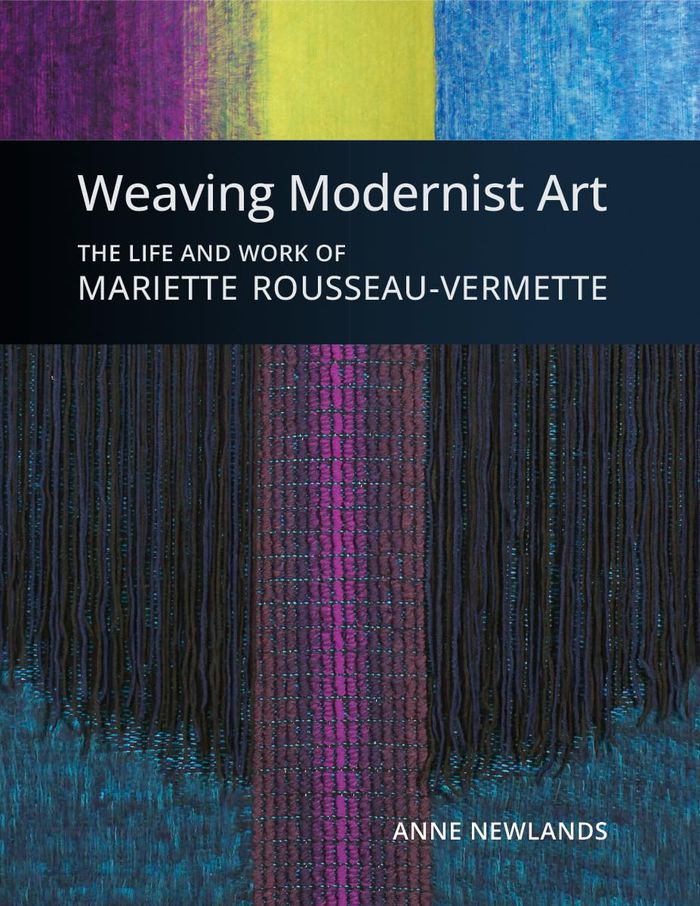
Born into a large French-Canadian family in 1926, Mariette Rousseau embraced her passion for creative expression through wool and weaving at an early age. She studied art and weaving at l'École des beaux-arts in Quebec City and then worked at the California studio of ground-breaking American textile designer Dorothy Liebes. Back in Canada after an art-inspired trip to Europe, she and her husband, artist and ceramist Claude Vermette, joined the growing movement of young French-Canadian artists in their embrace of abstraction and new forms of art and their rejection of the conservatism of Maurice Duplessis' mid-century Quebec. By the early 1960s, Rousseau-Vermette had forged collaborations with fellow artists, designers and architects with like ideas about public art. Over the next 40 years, she scaled the heights of her profession, weaving hundreds of radiant large-scale tapestries that complemented the cool interiors of modern architecture. She exhibited across Canada and internationally and attracted prestigious commissions from the private and public sectors, including commissions for theater curtains at the National Arts Centre, Ottawa and the Kennedy Center in Washington, DC. Yet three years after Rousseau-Vermette's death in 2006, Newlands discovered there wasn't a single book that told her story as a pioneer of modernist tapestry and one of Canada's most prolific and influential artist-weavers.
Weaving modernist art: The life and work of Mariette Rousseau-Vermette
Actions:
Price:
$49.95
(available to order)
Summary:
Born into a large French-Canadian family in 1926, Mariette Rousseau embraced her passion for creative expression through wool and weaving at an early age. She studied art and weaving at l'École des beaux-arts in Quebec City and then worked at the California studio of ground-breaking American textile designer Dorothy Liebes. Back in Canada after an art-inspired trip to Europe, she and her husband, artist and ceramist Claude Vermette, joined the growing movement of young French-Canadian artists in their embrace of abstraction and new forms of art and their rejection of the conservatism of Maurice Duplessis' mid-century Quebec. By the early 1960s, Rousseau-Vermette had forged collaborations with fellow artists, designers and architects with like ideas about public art. Over the next 40 years, she scaled the heights of her profession, weaving hundreds of radiant large-scale tapestries that complemented the cool interiors of modern architecture. She exhibited across Canada and internationally and attracted prestigious commissions from the private and public sectors, including commissions for theater curtains at the National Arts Centre, Ottawa and the Kennedy Center in Washington, DC. Yet three years after Rousseau-Vermette's death in 2006, Newlands discovered there wasn't a single book that told her story as a pioneer of modernist tapestry and one of Canada's most prolific and influential artist-weavers.
Form:
books
books
Publication:
March 2023
March 2023
Subject:
Current Exhibitions
Current Exhibitions
Form:
books
books
Actions:
Price:
$45.95
(available to order)
Summary:
In his new book, critical theorist Mark Neocleous engages in a sustained critique of the theory and practice of pacification. Combining philosophical analysis with historical detail, Neocleous analyses the development of pacification as a key concept through which capitalist modernity has been organised, offering readers the first book that treats pacification as an(...)
$45.95
(available to order)
Summary:
In his new book, critical theorist Mark Neocleous engages in a sustained critique of the theory and practice of pacification. Combining philosophical analysis with historical detail, Neocleous analyses the development of pacification as a key concept through which capitalist modernity has been organised, offering readers the first book that treats pacification as an(...)
Title:
Pacification: Social war and the power of police
Actions:
Price:
$45.95
(available to order)
Summary:
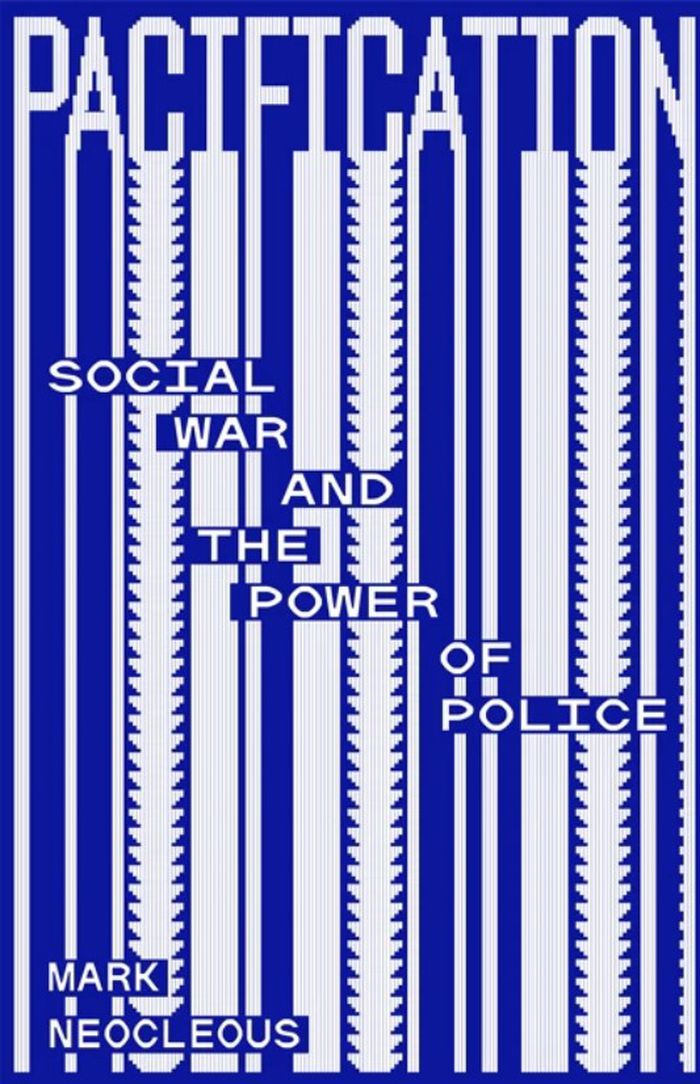
In his new book, critical theorist Mark Neocleous engages in a sustained critique of the theory and practice of pacification. Combining philosophical analysis with historical detail, Neocleous analyses the development of pacification as a key concept through which capitalist modernity has been organised, offering readers the first book that treats pacification as an important concept in the history of state power and capitalism. Neocleous’s approach is fourfold, examining pacification as social warfare carried out through the ideology of peace; as a form of social police carried out through mechanisms of security; as law and order exercised through the permanent wars of class society; and as the myriad practices of power designed to counter insurgency. Making use of official documents of state, the writings of counterinsurgency thinkers and the ideas perpetuated by practitioners of counterrevolution, the book unravels the complex ways through which pacification generates new forms of social war and new modes of policing that reproduce capitalist order and fabricate obedient subjects. Through expansive accounts of war and police, and engaging with a range of topics from debt to death, from stasis to civil war, and from the police kettle to the politics of fear, the book offers a provocative analysis of the ways in which state and capital combine to build a pacified social order.
Pacification: Social war and the power of police
Actions:
Price:
$45.95
(available to order)
Summary:
In his new book, critical theorist Mark Neocleous engages in a sustained critique of the theory and practice of pacification. Combining philosophical analysis with historical detail, Neocleous analyses the development of pacification as a key concept through which capitalist modernity has been organised, offering readers the first book that treats pacification as an important concept in the history of state power and capitalism. Neocleous’s approach is fourfold, examining pacification as social warfare carried out through the ideology of peace; as a form of social police carried out through mechanisms of security; as law and order exercised through the permanent wars of class society; and as the myriad practices of power designed to counter insurgency. Making use of official documents of state, the writings of counterinsurgency thinkers and the ideas perpetuated by practitioners of counterrevolution, the book unravels the complex ways through which pacification generates new forms of social war and new modes of policing that reproduce capitalist order and fabricate obedient subjects. Through expansive accounts of war and police, and engaging with a range of topics from debt to death, from stasis to civil war, and from the police kettle to the politics of fear, the book offers a provocative analysis of the ways in which state and capital combine to build a pacified social order.
Form:
books
books
Publication:
February 2025
February 2025
Subject:
Social
Social
Form:
books
books
Title:
Generation X
Generation X
Actions:
Price:
$21.99
(available to order)
Summary:
"Generation X" is Douglas Coupland's acclaimed salute to the generation born in the late 1950s and 1960s - a generation known vaguely up to then as "twentysomething." Andy, Claire, and Dag, each in their twenties, have quit "pointless jobs done grudgingly to little applause" in their respective hometowns and cut themselves adrift on the California desert. In search of the(...)
$21.99
(available to order)
Summary:
"Generation X" is Douglas Coupland's acclaimed salute to the generation born in the late 1950s and 1960s - a generation known vaguely up to then as "twentysomething." Andy, Claire, and Dag, each in their twenties, have quit "pointless jobs done grudgingly to little applause" in their respective hometowns and cut themselves adrift on the California desert. In search of the(...)
Title:
Generation X
Actions:
Price:
$21.99
(available to order)
Summary:
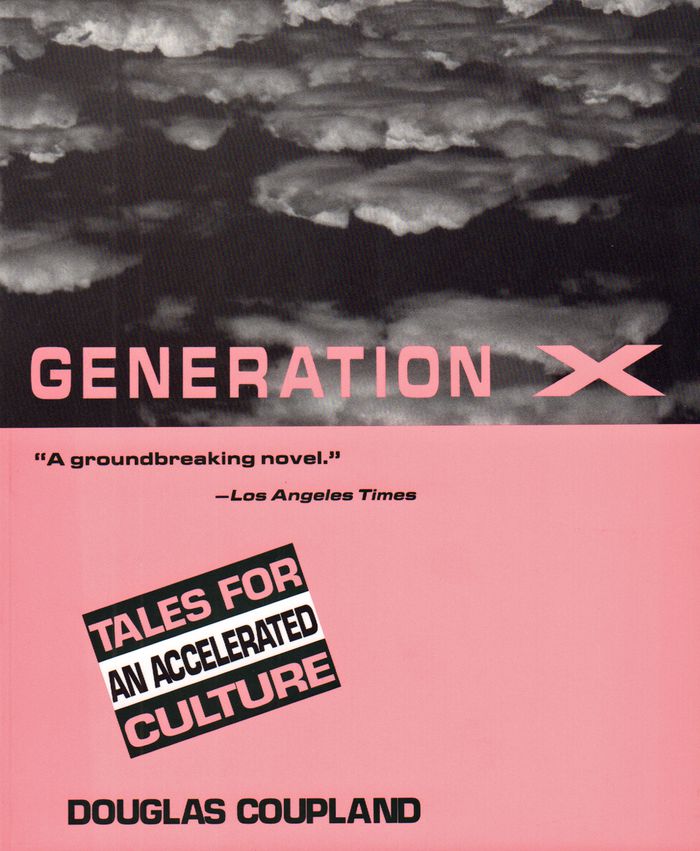
"Generation X" is Douglas Coupland's acclaimed salute to the generation born in the late 1950s and 1960s - a generation known vaguely up to then as "twentysomething." Andy, Claire, and Dag, each in their twenties, have quit "pointless jobs done grudgingly to little applause" in their respective hometowns and cut themselves adrift on the California desert. In search of the drastic changes that will lend meaning to their lives, they've mired themselves in the detritus of American cultural memory. Refugees from history, the three develop an ascetic regime of story-telling, boozing, and working McJobs - "low-pay, low-prestige, low-benefit, no-future jobs in the service industry." They create modern fables of love and death among the cosmetic surgery parlors and cocktail bars of Palm Springs, disturbingly funny tales of nuclear waste, historical overdosing, and mall culture. A dark snapshot of the trio's highly fortressed inner world quickly emerges - landscapes peopled with dead TV shows, "Elvis moments," and semi-disposable Swedish furniture. And from these landscapes, deeper portraits emerge, those of fanatically independent individuals, pathologically ambivalent about the future and brimming with unsatisfied longings for permanence, for love, and for their own home. Andy, Dag, and Claire are underemployed, overeducated, intensely private, and unpredictable. Like the group they mirror, they have nowhere to assuage their fears, and no culture to replace their anomie.
Generation X
Actions:
Price:
$21.99
(available to order)
Summary:
"Generation X" is Douglas Coupland's acclaimed salute to the generation born in the late 1950s and 1960s - a generation known vaguely up to then as "twentysomething." Andy, Claire, and Dag, each in their twenties, have quit "pointless jobs done grudgingly to little applause" in their respective hometowns and cut themselves adrift on the California desert. In search of the drastic changes that will lend meaning to their lives, they've mired themselves in the detritus of American cultural memory. Refugees from history, the three develop an ascetic regime of story-telling, boozing, and working McJobs - "low-pay, low-prestige, low-benefit, no-future jobs in the service industry." They create modern fables of love and death among the cosmetic surgery parlors and cocktail bars of Palm Springs, disturbingly funny tales of nuclear waste, historical overdosing, and mall culture. A dark snapshot of the trio's highly fortressed inner world quickly emerges - landscapes peopled with dead TV shows, "Elvis moments," and semi-disposable Swedish furniture. And from these landscapes, deeper portraits emerge, those of fanatically independent individuals, pathologically ambivalent about the future and brimming with unsatisfied longings for permanence, for love, and for their own home. Andy, Dag, and Claire are underemployed, overeducated, intensely private, and unpredictable. Like the group they mirror, they have nowhere to assuage their fears, and no culture to replace their anomie.
Form:
books
books
Publication:
March 1991
March 1991
Subject:
Literature and poetry
Literature and poetry
Form:
books
books

Actions:
Price:
$38.50
(available to order)
Summary:
A celebrated figure in myth, song, and story, the nightingale has captivated the imagination for millennia, its complex song evoking a prism of human emotions,-from melancholy to joy, from the fear of death to the immortality of art. As philosopher and musician David Rothenberg shows in this searching and personal new book, the nightingale's song is so peculiar in part(...)
$38.50
(available to order)
Summary:
A celebrated figure in myth, song, and story, the nightingale has captivated the imagination for millennia, its complex song evoking a prism of human emotions,-from melancholy to joy, from the fear of death to the immortality of art. As philosopher and musician David Rothenberg shows in this searching and personal new book, the nightingale's song is so peculiar in part(...)
Title:
Nightingales in Berlin: searching for the perfect sound
Actions:
Price:
$38.50
(available to order)
Summary:
A celebrated figure in myth, song, and story, the nightingale has captivated the imagination for millennia, its complex song evoking a prism of human emotions,-from melancholy to joy, from the fear of death to the immortality of art. As philosopher and musician David Rothenberg shows in this searching and personal new book, the nightingale's song is so peculiar in part because it reflects our own cacophony back at us. As vocal learners, nightingales acquire their music through the world around them, singing amidst the sounds of humanity in all its contradictions of noise and beauty, hard machinery and soft melody. Rather than try to capture a sound not made for us to understand, Rothenberg seeks these musical creatures out, clarinet in tow, and makes a new sound with them. He takes us to the urban landscape of Berlin—longtime home to nightingale colonies where the birds sing ever louder in order to be heard—and invites us to listen in on their remarkable collaboration as birds and instruments riff off of each other's sounds. Through dialogue, travel records, sonograms, tours of Berlin's city parks, and musings on the place animal music occupies in our collective imagination, Rothenberg takes us on a quest for a new sonic alchemy, a music impossible for any one species to make alone.
Nightingales in Berlin: searching for the perfect sound
Actions:
Price:
$38.50
(available to order)
Summary:
A celebrated figure in myth, song, and story, the nightingale has captivated the imagination for millennia, its complex song evoking a prism of human emotions,-from melancholy to joy, from the fear of death to the immortality of art. As philosopher and musician David Rothenberg shows in this searching and personal new book, the nightingale's song is so peculiar in part because it reflects our own cacophony back at us. As vocal learners, nightingales acquire their music through the world around them, singing amidst the sounds of humanity in all its contradictions of noise and beauty, hard machinery and soft melody. Rather than try to capture a sound not made for us to understand, Rothenberg seeks these musical creatures out, clarinet in tow, and makes a new sound with them. He takes us to the urban landscape of Berlin—longtime home to nightingale colonies where the birds sing ever louder in order to be heard—and invites us to listen in on their remarkable collaboration as birds and instruments riff off of each other's sounds. Through dialogue, travel records, sonograms, tours of Berlin's city parks, and musings on the place animal music occupies in our collective imagination, Rothenberg takes us on a quest for a new sonic alchemy, a music impossible for any one species to make alone.
Form:
books
books
Publication:
May 2019
May 2019
Subject:
Landscape Theory
Landscape Theory
Form:
books
books
Actions:
Price:
$96.00
(available to order)
Summary:
Recognized in his own time for extraordinary architectural achievements, Leon Battista Alberti (14041472) five hundred years after his death continues to influence the practice and theory of architecture. This book is the first full-scale study of Alberti's life and architecture in more than a quarter century. Robert Tavernor provides a biographical account of the(...)
$96.00
(available to order)
Summary:
Recognized in his own time for extraordinary architectural achievements, Leon Battista Alberti (14041472) five hundred years after his death continues to influence the practice and theory of architecture. This book is the first full-scale study of Alberti's life and architecture in more than a quarter century. Robert Tavernor provides a biographical account of the(...)
Title:
On Alberti and the art of building
Actions:
Price:
$96.00
(available to order)
Summary:
Recognized in his own time for extraordinary architectural achievements, Leon Battista Alberti (14041472) five hundred years after his death continues to influence the practice and theory of architecture. This book is the first full-scale study of Alberti's life and architecture in more than a quarter century. Robert Tavernor provides a biographical account of the Italian architect and a detailed consideration of each of the building projects with which he was involved. With new reconstructions of Alberti's buildings and new interpretations of his design intentions, this book will fascinate every reader with an interest in Renaissance architecture. From Alberti's supreme knowledge of the thought and buildings of antiquity, he developed a set of writings on science and the visual arts, including his important treatise on architecture, De re aedificatoria. In this volume, Tavernor examines Alberti's architectural writings and his practical example, his relations with his patrons, how he extended his theory into practice through major building projects across Italy, and how he succeeded in raising the status of architecture to an art-one that sought harmony with the natural world. Focusing on the analysis of Alberti's buildings, the author sets each in historical context; provides a building history; and considers source material, proportional systems, and iconography. He concludes the book with a fresh view of Alberti's theory and practice and a summary of his design process.
On Alberti and the art of building
Actions:
Price:
$96.00
(available to order)
Summary:
Recognized in his own time for extraordinary architectural achievements, Leon Battista Alberti (14041472) five hundred years after his death continues to influence the practice and theory of architecture. This book is the first full-scale study of Alberti's life and architecture in more than a quarter century. Robert Tavernor provides a biographical account of the Italian architect and a detailed consideration of each of the building projects with which he was involved. With new reconstructions of Alberti's buildings and new interpretations of his design intentions, this book will fascinate every reader with an interest in Renaissance architecture. From Alberti's supreme knowledge of the thought and buildings of antiquity, he developed a set of writings on science and the visual arts, including his important treatise on architecture, De re aedificatoria. In this volume, Tavernor examines Alberti's architectural writings and his practical example, his relations with his patrons, how he extended his theory into practice through major building projects across Italy, and how he succeeded in raising the status of architecture to an art-one that sought harmony with the natural world. Focusing on the analysis of Alberti's buildings, the author sets each in historical context; provides a building history; and considers source material, proportional systems, and iconography. He concludes the book with a fresh view of Alberti's theory and practice and a summary of his design process.
Form:
books
books
Publication:
December 1998, New Haven
December 1998, New Haven
Subject:
Treatises
Treatises
Form:
books
books
Actions:
Price:
$60.00
(available to order)
Summary:
Conception and birth, growth and maturity, aging and death--these are important moments in the human life story. They are also stages in the existence of a building, says the author of this unconventional history of the rituals and practices that surround built structures in America. Drawing on sources as varied as Masonic manuals, promotional brochures, janitorial(...)
$60.00
(available to order)
Summary:
Conception and birth, growth and maturity, aging and death--these are important moments in the human life story. They are also stages in the existence of a building, says the author of this unconventional history of the rituals and practices that surround built structures in America. Drawing on sources as varied as Masonic manuals, promotional brochures, janitorial(...)
Title:
Building lives : constructing rites and passages
Actions:
Price:
$60.00
(available to order)
Summary:
Conception and birth, growth and maturity, aging and death--these are important moments in the human life story. They are also stages in the existence of a building, says the author of this unconventional history of the rituals and practices that surround built structures in America. Drawing on sources as varied as Masonic manuals, promotional brochures, janitorial contracts, tourist guidebooks, and religious texts, cultural historian Neil Harris explores the rites of building passage over the past one hundred and fifty years. In this generously illustrated volume, he offers fascinating new insights into the social and cultural roles of buildings. This book suggests that architecture is a performing art as well as a fine art. Harris provides entertaining accounts of building introductions and presentations; celebrations, including groundbreakings, cornerstone layings, dedication ceremonies, and milestone anniversaries; efforts by builders, designers, real estate agents, photographers, and users to endow buildings with personality; debates over the naming of buildings; and attempts to document the erection and aging of buildings. Harris details recent strenuous efforts to prolong building life and vitality, and the increasing concern over "sick" and endangered buildings. Observing the difficulty that people experience in saying goodbye to old buildings that feel like friends, he calls for ceremony to mark the end as well as the beginning of a building's life.
Building lives : constructing rites and passages
Actions:
Price:
$60.00
(available to order)
Summary:
Conception and birth, growth and maturity, aging and death--these are important moments in the human life story. They are also stages in the existence of a building, says the author of this unconventional history of the rituals and practices that surround built structures in America. Drawing on sources as varied as Masonic manuals, promotional brochures, janitorial contracts, tourist guidebooks, and religious texts, cultural historian Neil Harris explores the rites of building passage over the past one hundred and fifty years. In this generously illustrated volume, he offers fascinating new insights into the social and cultural roles of buildings. This book suggests that architecture is a performing art as well as a fine art. Harris provides entertaining accounts of building introductions and presentations; celebrations, including groundbreakings, cornerstone layings, dedication ceremonies, and milestone anniversaries; efforts by builders, designers, real estate agents, photographers, and users to endow buildings with personality; debates over the naming of buildings; and attempts to document the erection and aging of buildings. Harris details recent strenuous efforts to prolong building life and vitality, and the increasing concern over "sick" and endangered buildings. Observing the difficulty that people experience in saying goodbye to old buildings that feel like friends, he calls for ceremony to mark the end as well as the beginning of a building's life.
Form:
books
books
Publication:
October 1998, New Haven
October 1998, New Haven
Subject:
Architectural Theory
Architectural Theory


