


236 Results
Form:
journals and magazines
journals and magazines
Actions:
Price:
$42.95
(available to order)
Summary:
Breuer was extremely prolific and produced a wide-ranging output that extends from large-scale projects to furniture. A major part of his oeuvre consists of single-family dwellings, many of which are found in the United States. This issue of "2G" brings together a selection of his more important houses: from the first examples at the end of the 1930s, in which (...)
$42.95
(available to order)
Summary:
Breuer was extremely prolific and produced a wide-ranging output that extends from large-scale projects to furniture. A major part of his oeuvre consists of single-family dwellings, many of which are found in the United States. This issue of "2G" brings together a selection of his more important houses: from the first examples at the end of the 1930s, in which (...)
Subject:
Magazines
Magazines
Publication:
June 2001, Barcelona
June 2001, Barcelona
Title:
2G 17 : Marcel Breuer, American houses
Actions:
Price:
$42.95
(available to order)
Summary:
Breuer was extremely prolific and produced a wide-ranging output that extends from large-scale projects to furniture. A major part of his oeuvre consists of single-family dwellings, many of which are found in the United States. This issue of "2G" brings together a selection of his more important houses: from the first examples at the end of the 1930s, in which the influence of the Bauhaus is still very strong, to those of the 1960s in which Breuer has encountered his own highly original language. Works and projects include: Hagerty House, Cohasset; Breuer I House, Lincoln; Robinson House, Williamstown; Breuer II House, New Canaan; Breuer Cottage, Wellfleet; Kepes Cottage, Wellfleet; Stillman Beach Cottage, Wellfleet; Wise Cottage, Wellfleet; Exhibition House in the MOMA Garden; Pocantico, Tarrytown; Clark House, Orange; Pack House, Scarsdale; Grieco House, Andover; Hooper House, Baltimore; Starkey House, Duluth; Stillman II House, Lichfield. The nexus section comprises texts by Peter Smithson, Marcel, Breuer, Mathias Klotz, and Amy Lelyveld.
2G 17 : Marcel Breuer, American houses
Actions:
Price:
$42.95
(available to order)
Summary:
Breuer was extremely prolific and produced a wide-ranging output that extends from large-scale projects to furniture. A major part of his oeuvre consists of single-family dwellings, many of which are found in the United States. This issue of "2G" brings together a selection of his more important houses: from the first examples at the end of the 1930s, in which the influence of the Bauhaus is still very strong, to those of the 1960s in which Breuer has encountered his own highly original language. Works and projects include: Hagerty House, Cohasset; Breuer I House, Lincoln; Robinson House, Williamstown; Breuer II House, New Canaan; Breuer Cottage, Wellfleet; Kepes Cottage, Wellfleet; Stillman Beach Cottage, Wellfleet; Wise Cottage, Wellfleet; Exhibition House in the MOMA Garden; Pocantico, Tarrytown; Clark House, Orange; Pack House, Scarsdale; Grieco House, Andover; Hooper House, Baltimore; Starkey House, Duluth; Stillman II House, Lichfield. The nexus section comprises texts by Peter Smithson, Marcel, Breuer, Mathias Klotz, and Amy Lelyveld.
Form:
journals and magazines
journals and magazines
Publication:
June 2001, Barcelona
June 2001, Barcelona
Subject:
Magazines
Magazines
Form:
books
books
Actions:
Price:
$27.95
(available to order)
Summary:
Artists surveyed include: Chantal Akerman, Francis Alÿs, Vladimir Arkhipov, Ian Breakwell, Stanley Brouwn, Sophie Calle, Marcel Duchamp, Fischli & Weiss, Nan Goldin, Dan Graham, Mona Hatoum, Susan Hiller, Ilya and Emilia Kabakov, Mary Kelly, Lettrist International, Jonas Mekas, Annette Messager, Aleksandra Mir, Roman Ondák, Yoko Ono, Gabriel Orozco, Martha Rosler, Allen(...)
$27.95
(available to order)
Summary:
Artists surveyed include: Chantal Akerman, Francis Alÿs, Vladimir Arkhipov, Ian Breakwell, Stanley Brouwn, Sophie Calle, Marcel Duchamp, Fischli & Weiss, Nan Goldin, Dan Graham, Mona Hatoum, Susan Hiller, Ilya and Emilia Kabakov, Mary Kelly, Lettrist International, Jonas Mekas, Annette Messager, Aleksandra Mir, Roman Ondák, Yoko Ono, Gabriel Orozco, Martha Rosler, Allen(...)
Subject:
Contemporary Art Monographs
Contemporary Art Monographs
Publication:
March 2008, London/Massachusetts
March 2008, London/Massachusetts
Title:
The everyday: Documents on contemporary art
Actions:
Price:
$27.95
(available to order)
Summary:
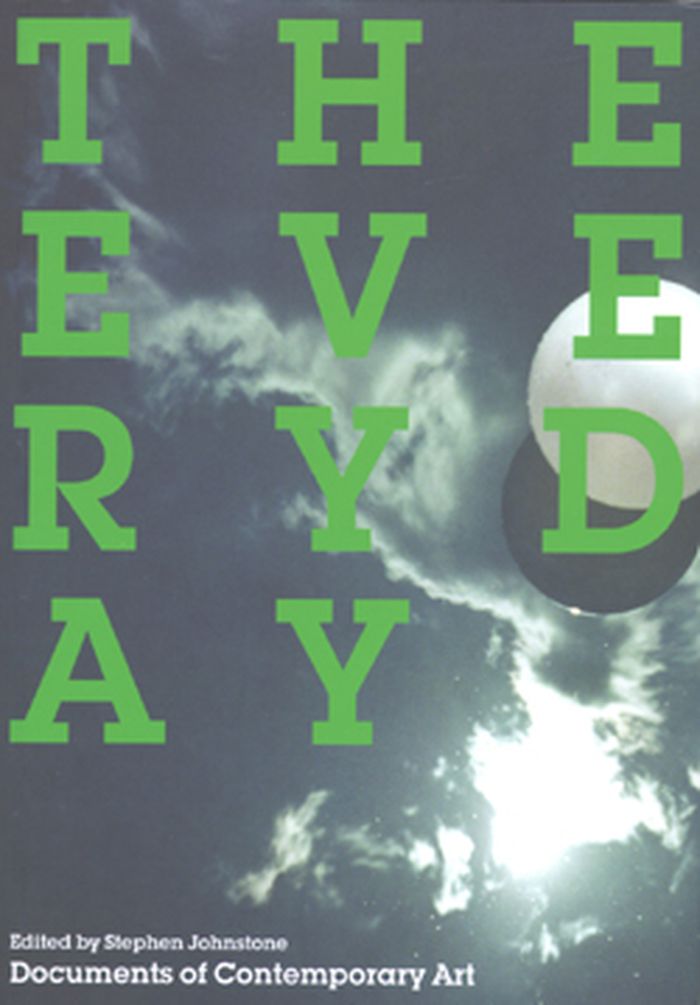
Artists surveyed include: Chantal Akerman, Francis Alÿs, Vladimir Arkhipov, Ian Breakwell, Stanley Brouwn, Sophie Calle, Marcel Duchamp, Fischli & Weiss, Nan Goldin, Dan Graham, Mona Hatoum, Susan Hiller, Ilya and Emilia Kabakov, Mary Kelly, Lettrist International, Jonas Mekas, Annette Messager, Aleksandra Mir, Roman Ondák, Yoko Ono, Gabriel Orozco, Martha Rosler, Allen Ruppersberg, Daniel Spoerri, Wolfgang Tillmans, Mierle Laderman Ukeles, Andy Warhol, Richard Wentworth, Stephen Willats. Writers include: Paul Auster, Maurice Blanchot, Geoff Dyer, Hal Foster, Suzy Gablik, Ben Highmore, Henri Lefebvre, Lucy R. Lippard, Michel Maffesoli, Helen Molesworth, Nikos Papastergiadis, Georges Perec, John Roberts, David Ross, Nicholas Serota, Michael Sheringham, Alison and Peter Smithson, Abigail Solomon-Godeau, Jeff Wall, Jonathan Watkins. About the Editor: Stephen Johnstone is a London-based artist and filmmaker and a Senior Lecturer in the Department of Art at Goldsmiths College, London. Since 1993, he has worked collaboratively with Graham Ellard, and their film and video work has been exhibited in museums and galleries including the Centre Pompidou, the Tate Liverpool, the Museum of Modern Art, Sydney, and the National Film Theatre, London.
The everyday: Documents on contemporary art
Actions:
Price:
$27.95
(available to order)
Summary:
Artists surveyed include: Chantal Akerman, Francis Alÿs, Vladimir Arkhipov, Ian Breakwell, Stanley Brouwn, Sophie Calle, Marcel Duchamp, Fischli & Weiss, Nan Goldin, Dan Graham, Mona Hatoum, Susan Hiller, Ilya and Emilia Kabakov, Mary Kelly, Lettrist International, Jonas Mekas, Annette Messager, Aleksandra Mir, Roman Ondák, Yoko Ono, Gabriel Orozco, Martha Rosler, Allen Ruppersberg, Daniel Spoerri, Wolfgang Tillmans, Mierle Laderman Ukeles, Andy Warhol, Richard Wentworth, Stephen Willats. Writers include: Paul Auster, Maurice Blanchot, Geoff Dyer, Hal Foster, Suzy Gablik, Ben Highmore, Henri Lefebvre, Lucy R. Lippard, Michel Maffesoli, Helen Molesworth, Nikos Papastergiadis, Georges Perec, John Roberts, David Ross, Nicholas Serota, Michael Sheringham, Alison and Peter Smithson, Abigail Solomon-Godeau, Jeff Wall, Jonathan Watkins. About the Editor: Stephen Johnstone is a London-based artist and filmmaker and a Senior Lecturer in the Department of Art at Goldsmiths College, London. Since 1993, he has worked collaboratively with Graham Ellard, and their film and video work has been exhibited in museums and galleries including the Centre Pompidou, the Tate Liverpool, the Museum of Modern Art, Sydney, and the National Film Theatre, London.
Form:
books
books
Publication:
March 2008, London/Massachusetts
March 2008, London/Massachusetts
Subject:
Contemporary Art Monographs
Contemporary Art Monographs
Form:
books
books

Title:
Carme Pinos : architectures
Carme Pinos : architectures
Actions:
Price:
$65.95
(available to order)
Summary:
Not only a complete monograph of Carme Pis architectural oeuvre, "Carme Pis : architectures" traces the development of her practice over several decades via an in-depth investigation of the recurring themes and concerns that inform her work. Through studies of significant city projects and selected works, critical contributions from Peter Smithson, Daniela Colafranceschi,(...)
$65.95
(available to order)
Summary:
Not only a complete monograph of Carme Pis architectural oeuvre, "Carme Pis : architectures" traces the development of her practice over several decades via an in-depth investigation of the recurring themes and concerns that inform her work. Through studies of significant city projects and selected works, critical contributions from Peter Smithson, Daniela Colafranceschi,(...)
Title:
Carme Pinos : architectures
Actions:
Price:
$65.95
(available to order)
Summary:
Not only a complete monograph of Carme Pis architectural oeuvre, "Carme Pis : architectures" traces the development of her practice over several decades via an in-depth investigation of the recurring themes and concerns that inform her work. Through studies of significant city projects and selected works, critical contributions from Peter Smithson, Daniela Colafranceschi, Rafael Moneo, Pedro Azura, Rafael Argullol, Francis Rambert, Juan Jose Lahuerta, Josep Quetglas, Magdelena Jaume and from Carme Pis herself, come together to elucidate the motivations of one of the most compelling figures currently working in the contemporary architectural landscape. This publication journeys from Pis early collaborations with Enric Miralles, characterised by an exploration of natural materials and forms that merge with their setting, to the evolution of her own emphatic works a striking articulation of complex shapes and spaces that maintain a clear commitment to the quality of construction while perfectly integrating with the environment, whether natural or urban. "Carme Pis : architectures" is a comprehensive overview of the atypical architectural expression of Carme Pis truly unique and intriguing practice.
Carme Pinos : architectures
Actions:
Price:
$65.95
(available to order)
Summary:
Not only a complete monograph of Carme Pis architectural oeuvre, "Carme Pis : architectures" traces the development of her practice over several decades via an in-depth investigation of the recurring themes and concerns that inform her work. Through studies of significant city projects and selected works, critical contributions from Peter Smithson, Daniela Colafranceschi, Rafael Moneo, Pedro Azura, Rafael Argullol, Francis Rambert, Juan Jose Lahuerta, Josep Quetglas, Magdelena Jaume and from Carme Pis herself, come together to elucidate the motivations of one of the most compelling figures currently working in the contemporary architectural landscape. This publication journeys from Pis early collaborations with Enric Miralles, characterised by an exploration of natural materials and forms that merge with their setting, to the evolution of her own emphatic works a striking articulation of complex shapes and spaces that maintain a clear commitment to the quality of construction while perfectly integrating with the environment, whether natural or urban. "Carme Pis : architectures" is a comprehensive overview of the atypical architectural expression of Carme Pis truly unique and intriguing practice.
Form:
books
books
Publication:
March 2016
March 2016
Subject:
Architecture Monographs
Architecture Monographs
Form:
books
books

Price:
$134.99
(available in store)
Summary:
The 1960s continue to hold an almost mythical place in Western culture, particularly in Britain, where change was widespread and infiltrated many aspects of life. This included architecture, whose role in a modern democracy and the form it should take were hotly debated. This book discusses the architectural thinking of the time through an examination of the design of(...)
$134.99
(available in store)
Summary:
The 1960s continue to hold an almost mythical place in Western culture, particularly in Britain, where change was widespread and infiltrated many aspects of life. This included architecture, whose role in a modern democracy and the form it should take were hotly debated. This book discusses the architectural thinking of the time through an examination of the design of(...)
Title:
1960s University buildings: The golden age of British modern architecture
Actions:
Price:
$134.99
(available in store)
Summary:
The 1960s continue to hold an almost mythical place in Western culture, particularly in Britain, where change was widespread and infiltrated many aspects of life. This included architecture, whose role in a modern democracy and the form it should take were hotly debated. This book discusses the architectural thinking of the time through an examination of the design of university buildings. While there were notable buildings being built in other spheres, no other field of architecture provided the opportunity to express those ideas as freely, while also reflecting innovative new thinking about education and society. Somehow, the university buildings of the 1960s seemed to represent the cutting edge of modern architecture in the UK. This book provides the first critical analysis and overview of these buildings, designed by some of the leading British architects of the period including Basil Spence, Leslie Martin, Alison and Peter Smithson, Denys Lasdun, Powell and Moya and James Stirling. By placing the buildings in a wider social, cultural and political context, it examines the combination of circumstances and attitudes that produced results that are equally admired and detested and allows us to understand how we might replicate or avoid them in the future.
1960s University buildings: The golden age of British modern architecture
Actions:
Price:
$134.99
(available in store)
Summary:
The 1960s continue to hold an almost mythical place in Western culture, particularly in Britain, where change was widespread and infiltrated many aspects of life. This included architecture, whose role in a modern democracy and the form it should take were hotly debated. This book discusses the architectural thinking of the time through an examination of the design of university buildings. While there were notable buildings being built in other spheres, no other field of architecture provided the opportunity to express those ideas as freely, while also reflecting innovative new thinking about education and society. Somehow, the university buildings of the 1960s seemed to represent the cutting edge of modern architecture in the UK. This book provides the first critical analysis and overview of these buildings, designed by some of the leading British architects of the period including Basil Spence, Leslie Martin, Alison and Peter Smithson, Denys Lasdun, Powell and Moya and James Stirling. By placing the buildings in a wider social, cultural and political context, it examines the combination of circumstances and attitudes that produced results that are equally admired and detested and allows us to understand how we might replicate or avoid them in the future.
Form:
books
books
Publication:
June 2025
June 2025
Subject:
Modernism
Modernism
Form:
books
books
Actions:
Price:
$69.95
(available to order)
Summary:
The world's growing vulnerability to planet-sized risks invites action on a global scale. The World as an Architectural Project shows how for more than a century architects have imagined the future of the planet through world-scale projects. With fifty speculative projects by Patrick Geddes, Alison and Peter Smithson, Kiyonori Kikutake, Saverio Muratori, Takis Zenetos,(...)
$69.95
(available to order)
Summary:
The world's growing vulnerability to planet-sized risks invites action on a global scale. The World as an Architectural Project shows how for more than a century architects have imagined the future of the planet through world-scale projects. With fifty speculative projects by Patrick Geddes, Alison and Peter Smithson, Kiyonori Kikutake, Saverio Muratori, Takis Zenetos,(...)
Title:
The world as an architectural project
Actions:
Price:
$69.95
(available to order)
Summary:
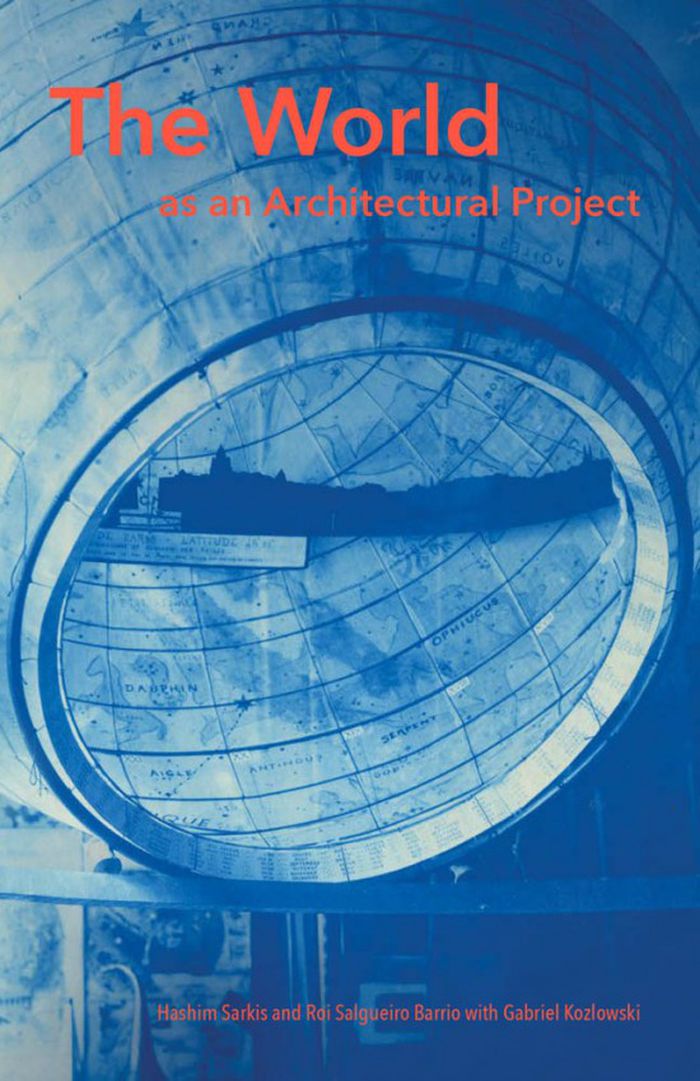
The world's growing vulnerability to planet-sized risks invites action on a global scale. The World as an Architectural Project shows how for more than a century architects have imagined the future of the planet through world-scale projects. With fifty speculative projects by Patrick Geddes, Alison and Peter Smithson, Kiyonori Kikutake, Saverio Muratori, Takis Zenetos, Sergio Bernardes, Juan Navarro Baldeweg, Luc Deleu, and many others, documented in text and images, this ambitious and wide-ranging book is the first compilation of its kind. Interestingly, architects begin to address the world as a project long before the advent of contemporary globalism and its assorted anxieties. The Spanish urban theorist and entrepreneur Arturo Soria y Mata, for example, in 1882 envisions a system that connects the entire planet in a linear urban network. In 1927, Buckminster Fuller's “World Town Plan—4D Tower” proposes to solve global housing problems with mobile structures delivered and installed by a Zeppelin. And Joyce Hsiang and Bimal Mendis visualize the conditions of a worldwide “City of Seven Billion” in a 2015–2019 project. Rather than indulging the cliché of the megalomaniac architect, this volume presents a discipline reflecting on its own responsibilities.
The world as an architectural project
Actions:
Price:
$69.95
(available to order)
Summary:
The world's growing vulnerability to planet-sized risks invites action on a global scale. The World as an Architectural Project shows how for more than a century architects have imagined the future of the planet through world-scale projects. With fifty speculative projects by Patrick Geddes, Alison and Peter Smithson, Kiyonori Kikutake, Saverio Muratori, Takis Zenetos, Sergio Bernardes, Juan Navarro Baldeweg, Luc Deleu, and many others, documented in text and images, this ambitious and wide-ranging book is the first compilation of its kind. Interestingly, architects begin to address the world as a project long before the advent of contemporary globalism and its assorted anxieties. The Spanish urban theorist and entrepreneur Arturo Soria y Mata, for example, in 1882 envisions a system that connects the entire planet in a linear urban network. In 1927, Buckminster Fuller's “World Town Plan—4D Tower” proposes to solve global housing problems with mobile structures delivered and installed by a Zeppelin. And Joyce Hsiang and Bimal Mendis visualize the conditions of a worldwide “City of Seven Billion” in a 2015–2019 project. Rather than indulging the cliché of the megalomaniac architect, this volume presents a discipline reflecting on its own responsibilities.
Form:
books
books
Publication:
April 2020
April 2020
Subject:
Architectural Theory
Architectural Theory
Form:
books
books
Actions:
Price:
$37.95
(available to order)
Summary:
Dans les années 1950 et jusqu’à la fin des années 1960, la science-fiction a joué, pour nombre d’artistes et de théoriciens anglais et américains, tant au plan iconographique qu’au plan méthodologique, un rôle stratégique : celui d’un véritable objet régulateur utilisé pour déplacer l’activité artistique loin de ses coordonnées conventionnelles. Dans cette entreprise,(...)
$37.95
(available to order)
Summary:
Dans les années 1950 et jusqu’à la fin des années 1960, la science-fiction a joué, pour nombre d’artistes et de théoriciens anglais et américains, tant au plan iconographique qu’au plan méthodologique, un rôle stratégique : celui d’un véritable objet régulateur utilisé pour déplacer l’activité artistique loin de ses coordonnées conventionnelles. Dans cette entreprise,(...)
Title:
Art et science-fiction: la ballard connection
Actions:
Price:
$37.95
(available to order)
Summary:
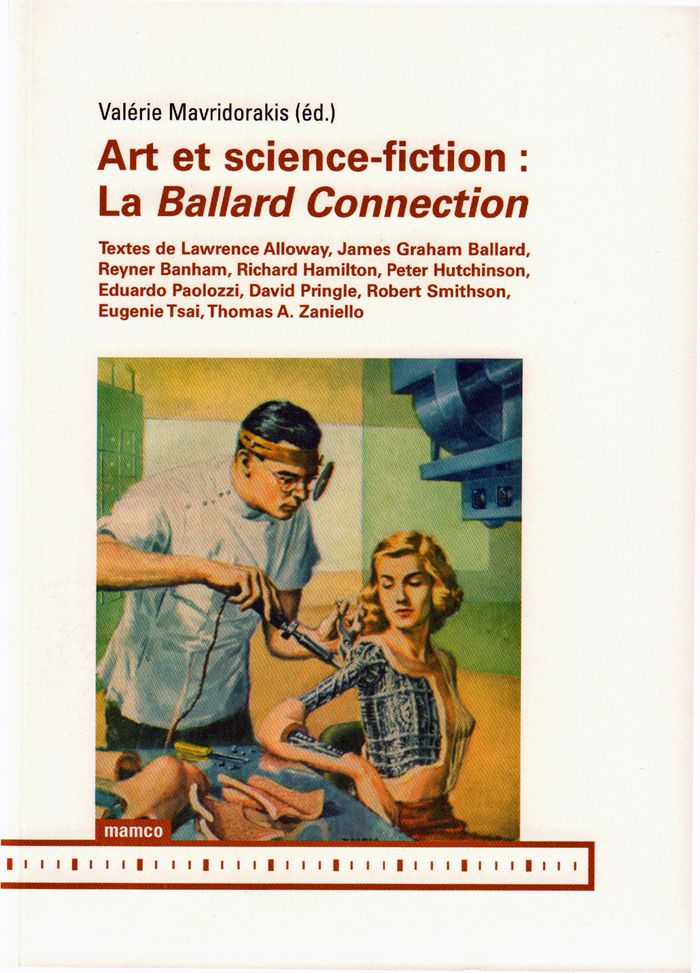
Dans les années 1950 et jusqu’à la fin des années 1960, la science-fiction a joué, pour nombre d’artistes et de théoriciens anglais et américains, tant au plan iconographique qu’au plan méthodologique, un rôle stratégique : celui d’un véritable objet régulateur utilisé pour déplacer l’activité artistique loin de ses coordonnées conventionnelles. Dans cette entreprise, Eduardo Paolozzi côtoie Reyner Banham, Robert Smithson ou James Graham Ballard, Peter Hutchinson voisine avec Lawrence Alloway pour explorer ce que ce dernier a appelé « le front élargi de la culture » qui devient ici un ensemble d’images et d’idées rétrocédant en deçà du pop art, là où la subculture se fait relais d’invention. Passer l’art novateur au filtre de la SF, c’est par conséquent, pour les créateurs et les penseurs de l’époque mettant en œuvre cette opération théorique et plastique, ébranler radicalement les cadres d’une esthétique dominante — le formalisme — dont ils auront été les critiques en acte. Il en résulte notamment une révision des notions de passé, de présent et de futur dont Ballard, cet « anticipateur qui ne croit pas en l’avenir » comme il est dit dans l’ouvrage, est le fer de lance. Ce livre propose les pièces de ce dossier crucial pour la compréhension de l’art actuel.
Art et science-fiction: la ballard connection
Actions:
Price:
$37.95
(available to order)
Summary:
Dans les années 1950 et jusqu’à la fin des années 1960, la science-fiction a joué, pour nombre d’artistes et de théoriciens anglais et américains, tant au plan iconographique qu’au plan méthodologique, un rôle stratégique : celui d’un véritable objet régulateur utilisé pour déplacer l’activité artistique loin de ses coordonnées conventionnelles. Dans cette entreprise, Eduardo Paolozzi côtoie Reyner Banham, Robert Smithson ou James Graham Ballard, Peter Hutchinson voisine avec Lawrence Alloway pour explorer ce que ce dernier a appelé « le front élargi de la culture » qui devient ici un ensemble d’images et d’idées rétrocédant en deçà du pop art, là où la subculture se fait relais d’invention. Passer l’art novateur au filtre de la SF, c’est par conséquent, pour les créateurs et les penseurs de l’époque mettant en œuvre cette opération théorique et plastique, ébranler radicalement les cadres d’une esthétique dominante — le formalisme — dont ils auront été les critiques en acte. Il en résulte notamment une révision des notions de passé, de présent et de futur dont Ballard, cet « anticipateur qui ne croit pas en l’avenir » comme il est dit dans l’ouvrage, est le fer de lance. Ce livre propose les pièces de ce dossier crucial pour la compréhension de l’art actuel.
Form:
books
books
Publication:
April 2011
April 2011
Subject:
Critical Theory
Critical Theory


