


121 Results
Form:
books
books
Actions:
Price:
$100.00
(available in store)
Summary:
This exhibition catalogue highlights Girard’s deep engagement with the urban landscape, beginning with his early work in Vancouver, where he documented the city’s streets, neighbourhoods, and shifting social fabric in the 1970s and 1980s. His images from this period, collected in ''Under Vancouver'', 1972–1982 (2017), reveal a city in flux and a photographer attuned to(...)
$100.00
(available in store)
Summary:
This exhibition catalogue highlights Girard’s deep engagement with the urban landscape, beginning with his early work in Vancouver, where he documented the city’s streets, neighbourhoods, and shifting social fabric in the 1970s and 1980s. His images from this period, collected in ''Under Vancouver'', 1972–1982 (2017), reveal a city in flux and a photographer attuned to(...)
Title:
Greg Girard Photographs 1972-2026
Actions:
Price:
$100.00
(available in store)
Summary:
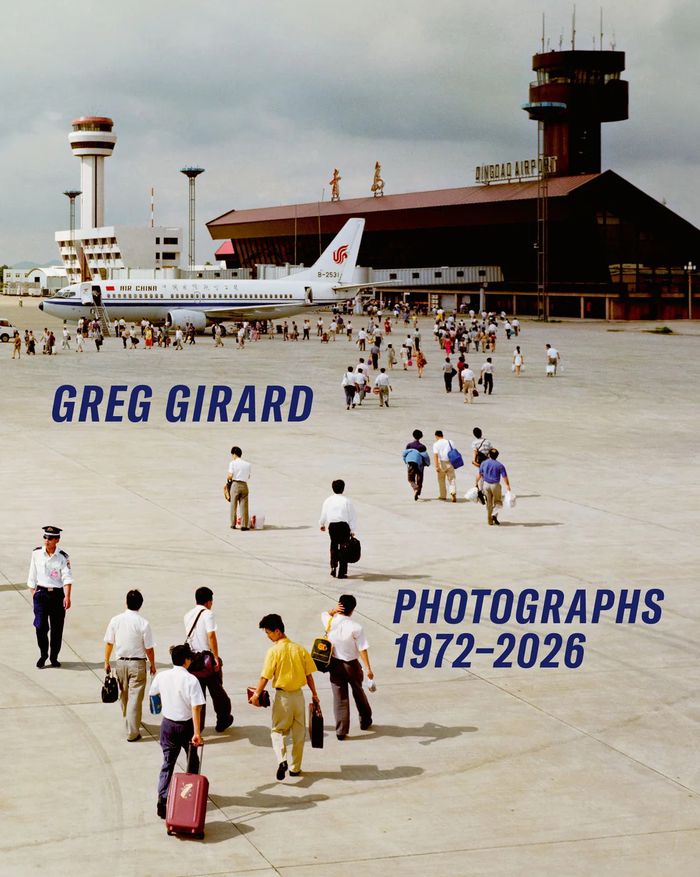
This exhibition catalogue highlights Girard’s deep engagement with the urban landscape, beginning with his early work in Vancouver, where he documented the city’s streets, neighbourhoods, and shifting social fabric in the 1970s and 1980s. His images from this period, collected in ''Under Vancouver'', 1972–1982 (2017), reveal a city in flux and a photographer attuned to both human presence and architectural change, offering an intimate yet expansive portrait of Vancouver’s history and culture. An early interest in Asia resulted in his living for decades in Tokyo, Hong Kong and Shanghai where he captured these cities extraordinary and often tumultuous transformations at the end of the 20th century and into the 21st. His record of life in Hong Kong’s Kowloon Walled City in ''City of Darkness'' (1993, first edition; 1999, reprint) and in ''City of Darkness Revisited'' (2014, first edition; 2021, reprint) co-authored with Ian Lambot, have formed the basis for countless reimaginings of a dystopian/romantic, Asia-influenced, urbanized near future in film and video games. These images, along with the work in ''Phantom Shanghai'' (2007), illustrate the tension between memory and progress, the built environment and human experience, and have earned international acclaim.
Greg Girard Photographs 1972-2026
Actions:
Price:
$100.00
(available in store)
Summary:
This exhibition catalogue highlights Girard’s deep engagement with the urban landscape, beginning with his early work in Vancouver, where he documented the city’s streets, neighbourhoods, and shifting social fabric in the 1970s and 1980s. His images from this period, collected in ''Under Vancouver'', 1972–1982 (2017), reveal a city in flux and a photographer attuned to both human presence and architectural change, offering an intimate yet expansive portrait of Vancouver’s history and culture. An early interest in Asia resulted in his living for decades in Tokyo, Hong Kong and Shanghai where he captured these cities extraordinary and often tumultuous transformations at the end of the 20th century and into the 21st. His record of life in Hong Kong’s Kowloon Walled City in ''City of Darkness'' (1993, first edition; 1999, reprint) and in ''City of Darkness Revisited'' (2014, first edition; 2021, reprint) co-authored with Ian Lambot, have formed the basis for countless reimaginings of a dystopian/romantic, Asia-influenced, urbanized near future in film and video games. These images, along with the work in ''Phantom Shanghai'' (2007), illustrate the tension between memory and progress, the built environment and human experience, and have earned international acclaim.
Form:
books
books
Publication:
August 2026
August 2026
Subject:
Photography monographs
Photography monographs
Form:
books
books

Title:
A right to housing?
A right to housing?
Actions:
Price:
$25.95
(available in store)
Summary:
In the fight for housing, we are caught between the world we know and the world we want. This book is both a road map and a reckoning. Drawing on his own experience of on-the-ground organizing, Samuel Stein presents practical policies for enacting a right to shelter, a right to a home, and a right to the city itself. With raw honesty, he then explores why these visions(...)
$25.95
(available in store)
Summary:
In the fight for housing, we are caught between the world we know and the world we want. This book is both a road map and a reckoning. Drawing on his own experience of on-the-ground organizing, Samuel Stein presents practical policies for enacting a right to shelter, a right to a home, and a right to the city itself. With raw honesty, he then explores why these visions(...)
Title:
A right to housing?
Actions:
Price:
$25.95
(available in store)
Summary:
In the fight for housing, we are caught between the world we know and the world we want. This book is both a road map and a reckoning. Drawing on his own experience of on-the-ground organizing, Samuel Stein presents practical policies for enacting a right to shelter, a right to a home, and a right to the city itself. With raw honesty, he then explores why these visions founder on the rocks of political reality. He reveals the forces blocking our path—from the power of real estate capital to the inadequacy of our institutions—and captures the complex feelings of a left that has lost faith in the future. Written in the heady weeks surrounding Zohran Mamdani’s historic election for New York City mayor, Stein frames the book around the stirring possibilities and structural constraints of a socialist administration in the financial center of a sputtering empire.
A right to housing?
Actions:
Price:
$25.95
(available in store)
Summary:
In the fight for housing, we are caught between the world we know and the world we want. This book is both a road map and a reckoning. Drawing on his own experience of on-the-ground organizing, Samuel Stein presents practical policies for enacting a right to shelter, a right to a home, and a right to the city itself. With raw honesty, he then explores why these visions founder on the rocks of political reality. He reveals the forces blocking our path—from the power of real estate capital to the inadequacy of our institutions—and captures the complex feelings of a left that has lost faith in the future. Written in the heady weeks surrounding Zohran Mamdani’s historic election for New York City mayor, Stein frames the book around the stirring possibilities and structural constraints of a socialist administration in the financial center of a sputtering empire.
Form:
books
books
Publication:
September 2026
September 2026
Subject:
Social
Social
Form:
books
books

Title:
Walker Evans
Walker Evans
Actions:
Price:
$86.00
(available in store)
Summary:
Walker Evans (1903–1975) is one of the great enduring figures of modern photography. His vivid images are inseparable from the history of the medium and the history of the USA. The subject matter was quintessentially American – small-town life, typical buildings, commercial signs and anonymous citizens – but Evans brought to them the curiosity and fascination of an(...)
$86.00
(available in store)
Summary:
Walker Evans (1903–1975) is one of the great enduring figures of modern photography. His vivid images are inseparable from the history of the medium and the history of the USA. The subject matter was quintessentially American – small-town life, typical buildings, commercial signs and anonymous citizens – but Evans brought to them the curiosity and fascination of an(...)
Title:
Walker Evans
Actions:
Price:
$86.00
(available in store)
Summary:
Walker Evans (1903–1975) is one of the great enduring figures of modern photography. His vivid images are inseparable from the history of the medium and the history of the USA. The subject matter was quintessentially American – small-town life, typical buildings, commercial signs and anonymous citizens – but Evans brought to them the curiosity and fascination of an outsider. His exacting eye defined an era while also questioning it. Pop artists and Conceptualists saw Evans as a pioneer and precursor, and his sensibility continues to inspire countless younger image makers. "Walker Evans" offers a broad overview of his work and its lasting influence on generations of artists. It brings together key photographs and projects spanning his entire career – from self-portraits of the 1920s to his Polaroid experiments in the 1970s – along with books and other publications that reflect his tireless capacity for observation. Together, the works reveal a creator who not only documented the world around him but also invited viewers to question the nature of photography and the perception of reality itself.
Walker Evans
Actions:
Price:
$86.00
(available in store)
Summary:
Walker Evans (1903–1975) is one of the great enduring figures of modern photography. His vivid images are inseparable from the history of the medium and the history of the USA. The subject matter was quintessentially American – small-town life, typical buildings, commercial signs and anonymous citizens – but Evans brought to them the curiosity and fascination of an outsider. His exacting eye defined an era while also questioning it. Pop artists and Conceptualists saw Evans as a pioneer and precursor, and his sensibility continues to inspire countless younger image makers. "Walker Evans" offers a broad overview of his work and its lasting influence on generations of artists. It brings together key photographs and projects spanning his entire career – from self-portraits of the 1920s to his Polaroid experiments in the 1970s – along with books and other publications that reflect his tireless capacity for observation. Together, the works reveal a creator who not only documented the world around him but also invited viewers to question the nature of photography and the perception of reality itself.
Form:
books
books
Publication:
April 2026
April 2026
Subject:
Photography monographs
Photography monographs
Form:
books
books
Actions:
Price:
$23.00
(available in store)
Summary:
Social justice and climate activism combine in this brief history of Paris’ Institut de l’Environnement. Founded in the heated atmosphere generated by worldwide protests and a growing awareness of climate change, Paris’ Institut de l’Environnement (1969–71) sought to redefine architecture and design pedagogy. The focus of the Bauhaus Lab 2024 was on the school’s teaching(...)
$23.00
(available in store)
Summary:
Social justice and climate activism combine in this brief history of Paris’ Institut de l’Environnement. Founded in the heated atmosphere generated by worldwide protests and a growing awareness of climate change, Paris’ Institut de l’Environnement (1969–71) sought to redefine architecture and design pedagogy. The focus of the Bauhaus Lab 2024 was on the school’s teaching(...)
Subject:
Environment and environmental theory
Environment and environmental theory
Publication:
August 2026
August 2026
Title:
On behalf of the environment: Pedagogies of unrest
Actions:
Price:
$23.00
(available in store)
Summary:
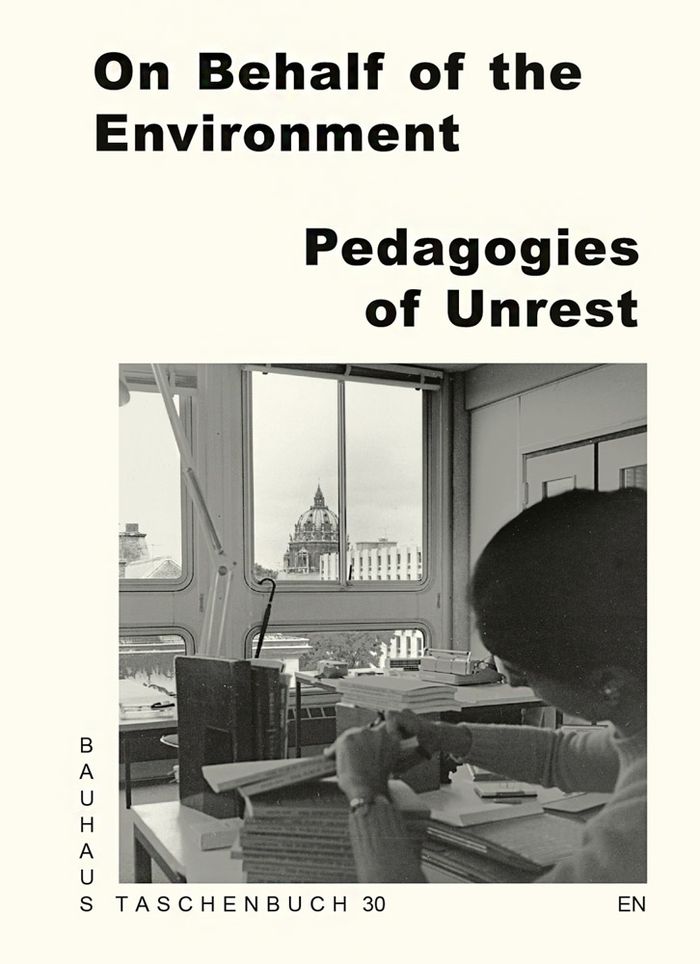
Social justice and climate activism combine in this brief history of Paris’ Institut de l’Environnement. Founded in the heated atmosphere generated by worldwide protests and a growing awareness of climate change, Paris’ Institut de l’Environnement (1969–71) sought to redefine architecture and design pedagogy. The focus of the Bauhaus Lab 2024 was on the school’s teaching and research activities and the cultural context in which it operated.
On behalf of the environment: Pedagogies of unrest
Actions:
Price:
$23.00
(available in store)
Summary:
Social justice and climate activism combine in this brief history of Paris’ Institut de l’Environnement. Founded in the heated atmosphere generated by worldwide protests and a growing awareness of climate change, Paris’ Institut de l’Environnement (1969–71) sought to redefine architecture and design pedagogy. The focus of the Bauhaus Lab 2024 was on the school’s teaching and research activities and the cultural context in which it operated.
Form:
books
books
Publication:
August 2026
August 2026
Subject:
Environment and environmental theory
Environment and environmental theory
Form:
books
books
Actions:
Price:
$105.00
(available in store)
Summary:
Albania is a young democracy, home to nearly three million people. The country sits at the heart of the Mediterranean; its geographic location has long shaped the country’s cultural exchanges and built environment. Three decades after the collapse of the communist regime, Albania remains in transition – culturally, socially and architecturally. This ongoing renewal has(...)
$105.00
(available in store)
Summary:
Albania is a young democracy, home to nearly three million people. The country sits at the heart of the Mediterranean; its geographic location has long shaped the country’s cultural exchanges and built environment. Three decades after the collapse of the communist regime, Albania remains in transition – culturally, socially and architecturally. This ongoing renewal has(...)
Title:
The Albanian files: Freedom and architecture
Actions:
Price:
$105.00
(available in store)
Summary:
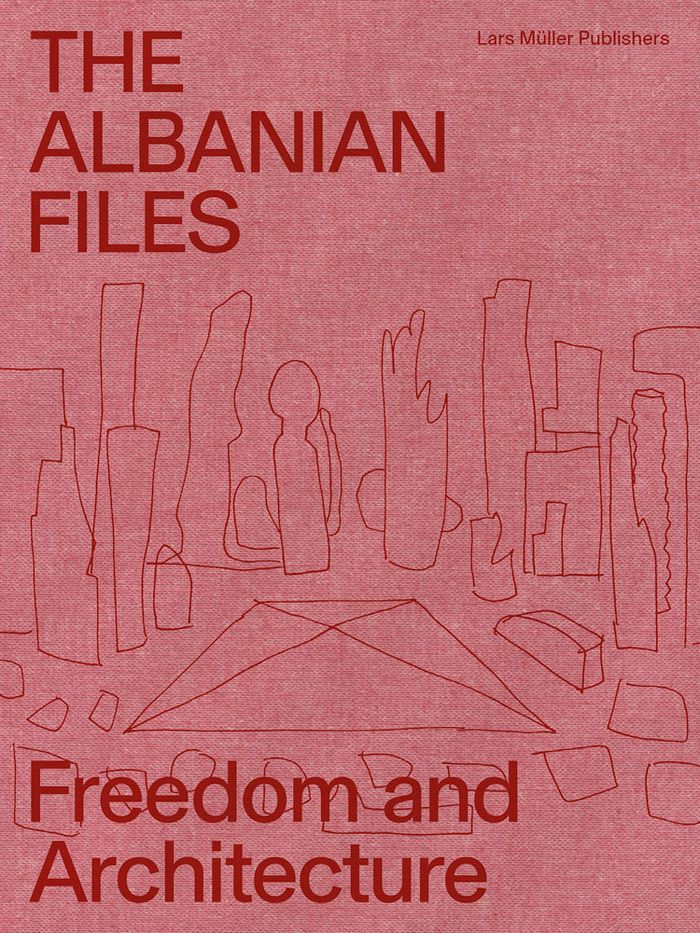
Albania is a young democracy, home to nearly three million people. The country sits at the heart of the Mediterranean; its geographic location has long shaped the country’s cultural exchanges and built environment. Three decades after the collapse of the communist regime, Albania remains in transition – culturally, socially and architecturally. This ongoing renewal has placed architecture at the center of national discourse and created a specific opportunity for architects. “The Albanian Files” focuses on that transformation. This book brings together sixty international offices currently working in Albania, some of which have been active in the country since the early 2000s. Each office submitted a contribution with reflections on their experiences in Albania and on architecture built and proposed.
The Albanian files: Freedom and architecture
Actions:
Price:
$105.00
(available in store)
Summary:
Albania is a young democracy, home to nearly three million people. The country sits at the heart of the Mediterranean; its geographic location has long shaped the country’s cultural exchanges and built environment. Three decades after the collapse of the communist regime, Albania remains in transition – culturally, socially and architecturally. This ongoing renewal has placed architecture at the center of national discourse and created a specific opportunity for architects. “The Albanian Files” focuses on that transformation. This book brings together sixty international offices currently working in Albania, some of which have been active in the country since the early 2000s. Each office submitted a contribution with reflections on their experiences in Albania and on architecture built and proposed.
Form:
books
books
Publication:
September 2026
September 2026
Subject:
Architecture since 1900, Europe
Architecture since 1900, Europe
Form:
books
books
Actions:
Price:
$25.00
(available in store)
Summary:
Considered one of the greatest critics of her generation, Susan Sontag followed up her monumental ''On Photography'' with an extended study of human violence, reflecting on a question first posed by Virginia Woolf in ''Three Guineas'': How in your opinion are we to prevent war? “For a long time some people believed that if the horror could be made vivid enough, most(...)
$25.00
(available in store)
Summary:
Considered one of the greatest critics of her generation, Susan Sontag followed up her monumental ''On Photography'' with an extended study of human violence, reflecting on a question first posed by Virginia Woolf in ''Three Guineas'': How in your opinion are we to prevent war? “For a long time some people believed that if the horror could be made vivid enough, most(...)
Title:
Regarding the pain of others, n.e.
Actions:
Price:
$25.00
(available in store)
Summary:
Considered one of the greatest critics of her generation, Susan Sontag followed up her monumental ''On Photography'' with an extended study of human violence, reflecting on a question first posed by Virginia Woolf in ''Three Guineas'': How in your opinion are we to prevent war? “For a long time some people believed that if the horror could be made vivid enough, most people would finally take in the outrageousness, the insanity of war.” One of the distinguishing features of modern life is that it supplies countless opportunities for regarding (at a distance, through the medium of photography) horrors taking place throughout the world. But are viewers inured—or incited—to violence by the depiction of cruelty? Is the viewer’s perception of reality eroded by the daily barrage of such images? What does it mean to care about the suffering of others far away? First published more than twenty years after her now-classic book ''On Photography'', which changed how we understand the very condition of being modern, Regarding the Pain of Others challenges our thinking not only about the uses and means of images, but about how war itself is waged (and understood) in our time, the limits of sympathy, and the obligations of conscience.
Regarding the pain of others, n.e.
Actions:
Price:
$25.00
(available in store)
Summary:
Considered one of the greatest critics of her generation, Susan Sontag followed up her monumental ''On Photography'' with an extended study of human violence, reflecting on a question first posed by Virginia Woolf in ''Three Guineas'': How in your opinion are we to prevent war? “For a long time some people believed that if the horror could be made vivid enough, most people would finally take in the outrageousness, the insanity of war.” One of the distinguishing features of modern life is that it supplies countless opportunities for regarding (at a distance, through the medium of photography) horrors taking place throughout the world. But are viewers inured—or incited—to violence by the depiction of cruelty? Is the viewer’s perception of reality eroded by the daily barrage of such images? What does it mean to care about the suffering of others far away? First published more than twenty years after her now-classic book ''On Photography'', which changed how we understand the very condition of being modern, Regarding the Pain of Others challenges our thinking not only about the uses and means of images, but about how war itself is waged (and understood) in our time, the limits of sympathy, and the obligations of conscience.
Form:
books
books
Publication:
July 2025
July 2025
Subject:
Theory of Photography
Theory of Photography
Form:
books
books
Actions:
Price:
$28.95
(available in store)
Summary:
The third issue of the Bauhaus Journal is titled ''Experiment: Learning Communities'' and features a diverse set of contributions that look at learning communities from a contemporary and historical perspective. In one way or another, these communities have contributed on an ongoing basis to the creation of alternative learning environments in art, architecture, and(...)
$28.95
(available in store)
Summary:
The third issue of the Bauhaus Journal is titled ''Experiment: Learning Communities'' and features a diverse set of contributions that look at learning communities from a contemporary and historical perspective. In one way or another, these communities have contributed on an ongoing basis to the creation of alternative learning environments in art, architecture, and(...)
Title:
Experiment: Learning communities. Schools of departure No. 3. Bauhaus journal
Actions:
Price:
$28.95
(available in store)
Summary:
The third issue of the Bauhaus Journal is titled ''Experiment: Learning Communities'' and features a diverse set of contributions that look at learning communities from a contemporary and historical perspective. In one way or another, these communities have contributed on an ongoing basis to the creation of alternative learning environments in art, architecture, and design. Katja Klaus at the Bauhaus Dessau Foundation invited the authors of this new issue to explore the question of how pedagogical reform attempts shaped past ideas of education and community. Some of these attempts continue to develop today in various pedagogical approaches and schools. In their essays, the authors analyse how teachers and learners come together to shape their en- vironment, share knowledge in neighbourhoods, and try out new, experimental ways of shaping society and learning and living together.
Experiment: Learning communities. Schools of departure No. 3. Bauhaus journal
Actions:
Price:
$28.95
(available in store)
Summary:
The third issue of the Bauhaus Journal is titled ''Experiment: Learning Communities'' and features a diverse set of contributions that look at learning communities from a contemporary and historical perspective. In one way or another, these communities have contributed on an ongoing basis to the creation of alternative learning environments in art, architecture, and design. Katja Klaus at the Bauhaus Dessau Foundation invited the authors of this new issue to explore the question of how pedagogical reform attempts shaped past ideas of education and community. Some of these attempts continue to develop today in various pedagogical approaches and schools. In their essays, the authors analyse how teachers and learners come together to shape their en- vironment, share knowledge in neighbourhoods, and try out new, experimental ways of shaping society and learning and living together.
Form:
books
books
Publication:
July 2026
July 2026
Subject:
Modernism
Modernism
Form:
books
books
Actions:
Price:
$115.00
(available to order)
Summary:
This is a conceptual journey through Joep van Lieshout’s radical thought experiments. The art and design produced by the artist’s studio go beyond aesthetic objects, becoming functional tools for an alternative way of life. The book is like an architectural blueprint for an imaginary house. Readers can wander from one room to another, where each space has specific,(...)
$115.00
(available to order)
Summary:
This is a conceptual journey through Joep van Lieshout’s radical thought experiments. The art and design produced by the artist’s studio go beyond aesthetic objects, becoming functional tools for an alternative way of life. The book is like an architectural blueprint for an imaginary house. Readers can wander from one room to another, where each space has specific,(...)
Title:
Atelier Van Lieshout: Bad ideas for good living
Actions:
Price:
$115.00
(available to order)
Summary:
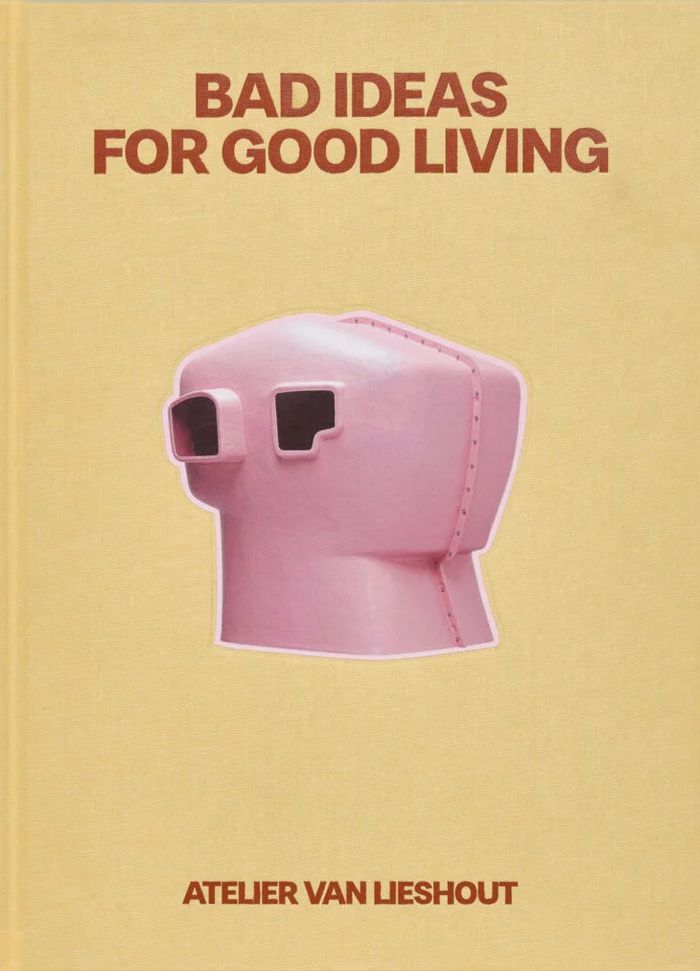
This is a conceptual journey through Joep van Lieshout’s radical thought experiments. The art and design produced by the artist’s studio go beyond aesthetic objects, becoming functional tools for an alternative way of life. The book is like an architectural blueprint for an imaginary house. Readers can wander from one room to another, where each space has specific, logical, aesthetical, surprising, and also sometimes unsettling elements. In this way the works are a test – an invitation to look past the initial shock the viewer might experience. This imaginary house does not tell us how to live, but teaches that we must consciously think about the way we organise our lives.
Atelier Van Lieshout: Bad ideas for good living
Actions:
Price:
$115.00
(available to order)
Summary:
This is a conceptual journey through Joep van Lieshout’s radical thought experiments. The art and design produced by the artist’s studio go beyond aesthetic objects, becoming functional tools for an alternative way of life. The book is like an architectural blueprint for an imaginary house. Readers can wander from one room to another, where each space has specific, logical, aesthetical, surprising, and also sometimes unsettling elements. In this way the works are a test – an invitation to look past the initial shock the viewer might experience. This imaginary house does not tell us how to live, but teaches that we must consciously think about the way we organise our lives.
Form:
books
books
Publication:
October 2025
October 2025
Subject:
Design Monographs
Design Monographs
Form:
books
books
Actions:
Price:
$59.98
(available in store)
Summary:
The Hôtel de la Marine, an exemplary monument on Paris’s Place de la Concorde, is a superb architectural achievement constructed in the eighteenth century by Ange-Jacques Gabriel, the official architect of King Louis XV. The institution it housed was charged with choosing, purchasing, and maintaining all of the king’s furniture—from beds to the simplest chair—and the(...)
$59.98
(available in store)
Summary:
The Hôtel de la Marine, an exemplary monument on Paris’s Place de la Concorde, is a superb architectural achievement constructed in the eighteenth century by Ange-Jacques Gabriel, the official architect of King Louis XV. The institution it housed was charged with choosing, purchasing, and maintaining all of the king’s furniture—from beds to the simplest chair—and the(...)
Subject:
History until 1900, France
History until 1900, France
Publication:
February 2022
February 2022
Title:
The French Royal Wardrobe: The Hôtel de la Marine Restored
Actions:
Price:
$59.98
(available in store)
Summary:
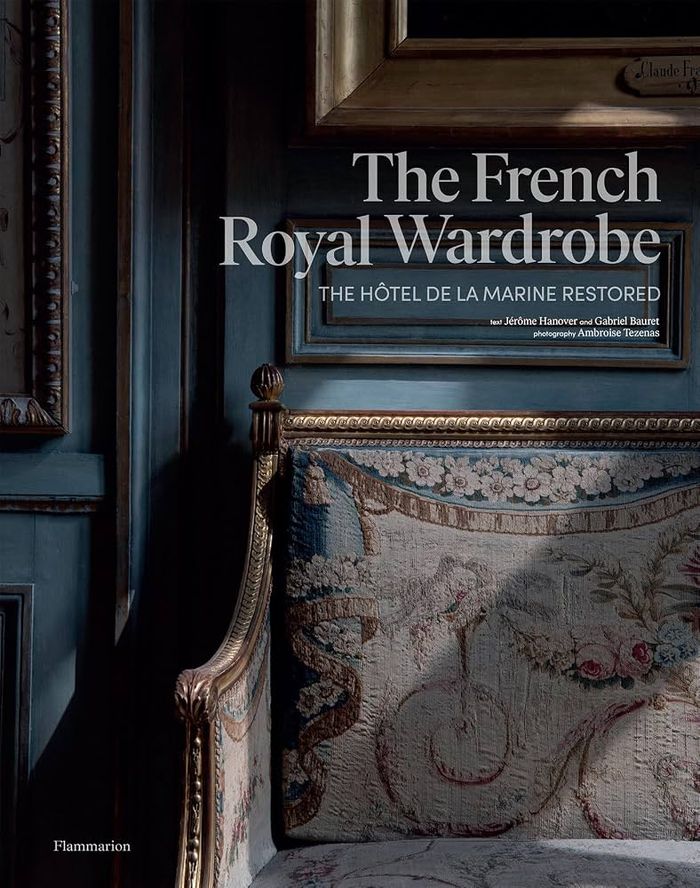
The Hôtel de la Marine, an exemplary monument on Paris’s Place de la Concorde, is a superb architectural achievement constructed in the eighteenth century by Ange-Jacques Gabriel, the official architect of King Louis XV. The institution it housed was charged with choosing, purchasing, and maintaining all of the king’s furniture—from beds to the simplest chair—and the crown’s treasures were stored here until 1789, after which it became the site of the Ministry of the Navy for more than two hundred years. An extensive four-year restoration was completed in 2021; the building reopened to the public and features a museum, conserved apartments that highlight the tastes of the eighteenth and nineteenth centuries, an exhibition hall, a bookshop, and three restaurants. Previously unpublished photography captures the splendor and majesty of the monument.
The French Royal Wardrobe: The Hôtel de la Marine Restored
Actions:
Price:
$59.98
(available in store)
Summary:
The Hôtel de la Marine, an exemplary monument on Paris’s Place de la Concorde, is a superb architectural achievement constructed in the eighteenth century by Ange-Jacques Gabriel, the official architect of King Louis XV. The institution it housed was charged with choosing, purchasing, and maintaining all of the king’s furniture—from beds to the simplest chair—and the crown’s treasures were stored here until 1789, after which it became the site of the Ministry of the Navy for more than two hundred years. An extensive four-year restoration was completed in 2021; the building reopened to the public and features a museum, conserved apartments that highlight the tastes of the eighteenth and nineteenth centuries, an exhibition hall, a bookshop, and three restaurants. Previously unpublished photography captures the splendor and majesty of the monument.
Form:
books
books
Publication:
February 2022
February 2022
Subject:
History until 1900, France
History until 1900, France
Form:
books
books
Actions:
Price:
$56.95
(available in store)
Summary:
L'ouvrage de Jose Luis Romero constitue un condense remarquable de l'histoire de la conquete de l'Amerique du Sud et du developpement par les villes de ce continent. Il situe son analyse a partir de l'Europe et, plus particulierement, de la peninsule iberique a la fin du xive siecle, et la poursuit jusqu'a l'Amerique latine du XXe siecle. Quatre decennies apres sa(...)
$56.95
(available in store)
Summary:
L'ouvrage de Jose Luis Romero constitue un condense remarquable de l'histoire de la conquete de l'Amerique du Sud et du developpement par les villes de ce continent. Il situe son analyse a partir de l'Europe et, plus particulierement, de la peninsule iberique a la fin du xive siecle, et la poursuit jusqu'a l'Amerique latine du XXe siecle. Quatre decennies apres sa(...)
Title:
L'Amérique latin, villes et idées
Actions:
Price:
$56.95
(available in store)
Summary:
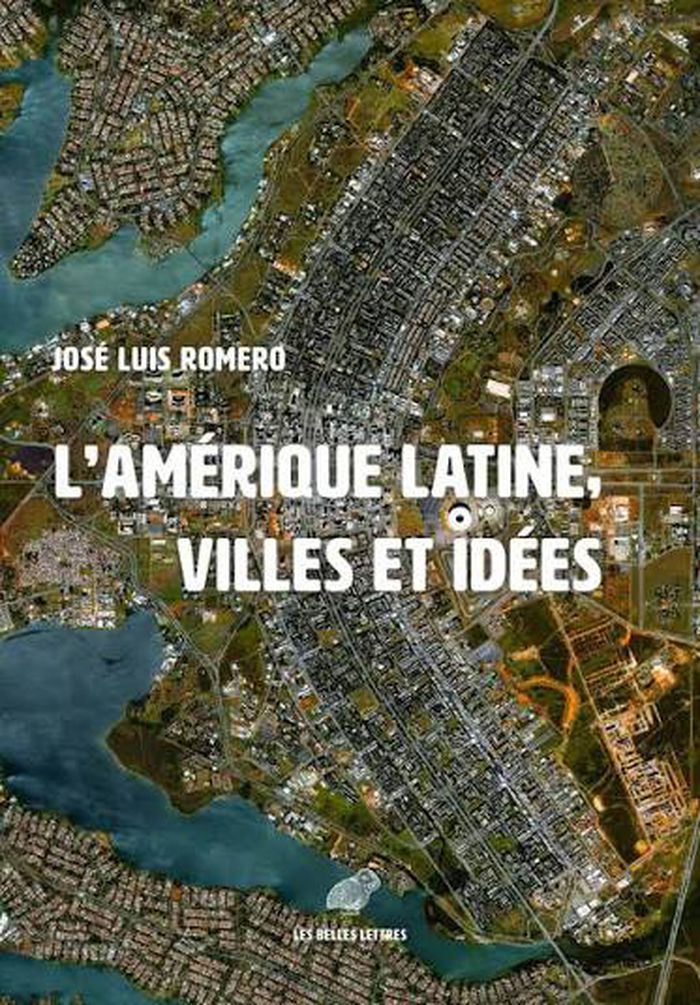
L'ouvrage de Jose Luis Romero constitue un condense remarquable de l'histoire de la conquete de l'Amerique du Sud et du developpement par les villes de ce continent. Il situe son analyse a partir de l'Europe et, plus particulierement, de la peninsule iberique a la fin du xive siecle, et la poursuit jusqu'a l'Amerique latine du XXe siecle. Quatre decennies apres sa publication, cet ouvrage est devenu un classique de l'historiographie latino-americaine. A la fin de sa vie, Jose Luis Romero tire de son experience d'historien des sciences urbaines europeennes une hypothese sur le processus historique latino-americain. Celle-ci apparait dans son livre comme le resultat d'une tension, d'un conflit et d'une integration entre la ville et la campagne.
L'Amérique latin, villes et idées
Actions:
Price:
$56.95
(available in store)
Summary:
L'ouvrage de Jose Luis Romero constitue un condense remarquable de l'histoire de la conquete de l'Amerique du Sud et du developpement par les villes de ce continent. Il situe son analyse a partir de l'Europe et, plus particulierement, de la peninsule iberique a la fin du xive siecle, et la poursuit jusqu'a l'Amerique latine du XXe siecle. Quatre decennies apres sa publication, cet ouvrage est devenu un classique de l'historiographie latino-americaine. A la fin de sa vie, Jose Luis Romero tire de son experience d'historien des sciences urbaines europeennes une hypothese sur le processus historique latino-americain. Celle-ci apparait dans son livre comme le resultat d'une tension, d'un conflit et d'une integration entre la ville et la campagne.
Form:
books
books
Publication:
November 2020
November 2020
Subject:
Urban Theory
Urban Theory


