


14 Results
Form:
books
books
Title:
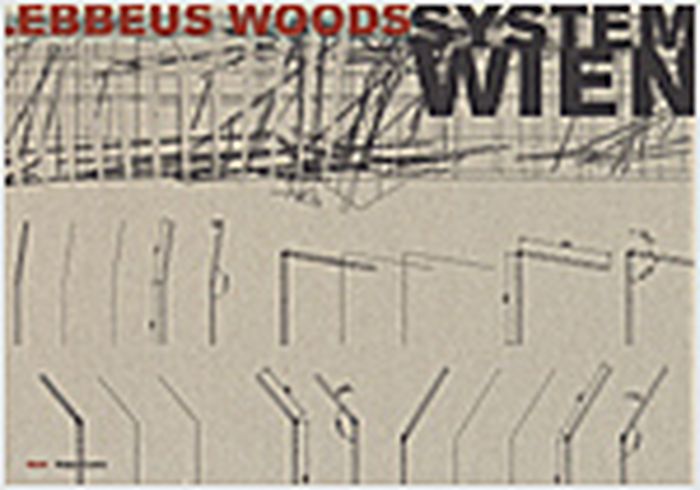
Lebbeus Woods : System Wien
Lebbeus Woods : System Wien
Actions:
Price:
$48.00
(available to order)
Summary:
The New York based architect Lebbeus Woods – founder of the Research Institute for Experimental Architecture (RIEA) – concerns himself intensively with architectural theory and experimental architecture. His approach is free from the pressures of specific purpose built projects and rather tends to develop visionary projects which integrate research, philosophy, and art.(...)
Subject:
Architecture Monographs
Architecture Monographs
Publication:
February 2006, Vienna
February 2006, Vienna
Title:
Lebbeus Woods : System Wien
Actions:
Price:
$48.00
(available to order)
Summary:
The New York based architect Lebbeus Woods – founder of the Research Institute for Experimental Architecture (RIEA) – concerns himself intensively with architectural theory and experimental architecture. His approach is free from the pressures of specific purpose built projects and rather tends to develop visionary projects which integrate research, philosophy, and art. The subject of his exhibition entitled “System Wien” which he developed in collaboration with Christoph a. Kumpusch is the urban structure of the city of Vienna which he plans to interfere in with specific architectural interventions. This publication - published for the exhibition of the same name in the MAK Vienna - documents the various works comprising the "System Wien" project. It develops an idea that the making of architectuere can be understood as the organization of energy. The project explores how energy relations in public and private city spaces might be represented tectonically in the form of drawings and installations; how existing energy elations in the city can be changed by the input tectonically in the form of drawings and installations; and hoe the future of the city need not depend for creative energy input on the development of building projects requiring large capital investments and institutional approval, but rather on the redistribution of energy at the human scale of the street and the room.
Form:
books
books
Publication:
February 2006, Vienna
February 2006, Vienna
Subject:
Architecture Monographs
Architecture Monographs
Form:
books
books

Actions:
Price:
$42.95
(available to order)
Summary:
Claude-Nicolas Ledoux (1736–1806) is a French revolutionary architect. Since the 1930s, when he was rediscovered by Emil Kaufmann in the famous study “From Ledoux to Le Corbusier,” his visionary but widely realized buildings have served as a source of inspiration for unusual designs.
Title:
Claude-Nicolas Ledoux : architecture and utopia in the era of the french revolution
Actions:
Price:
$42.95
(available to order)
Summary:
Claude-Nicolas Ledoux (1736–1806) is a French revolutionary architect. Since the 1930s, when he was rediscovered by Emil Kaufmann in the famous study “From Ledoux to Le Corbusier,” his visionary but widely realized buildings have served as a source of inspiration for unusual designs.
Form:
books
books
Publication:
April 2006, Basel
April 2006, Basel
Subject:
Architecture Monographs
Architecture Monographs
Form:
books
books
Price:
$42.95
(available to order)
Summary:
In this book, Anthony Vidler examines the work of four historians of architectural modernism and the ways in which their histories were constructed as more or less overt programs for the theory and practice of design in a contemporary context. Vidler looks at the historical approaches of Emil Kaufmann, Colin Rowe, Reyner Banham, and Manfredo Tafuri, and the specific(...)
Title:
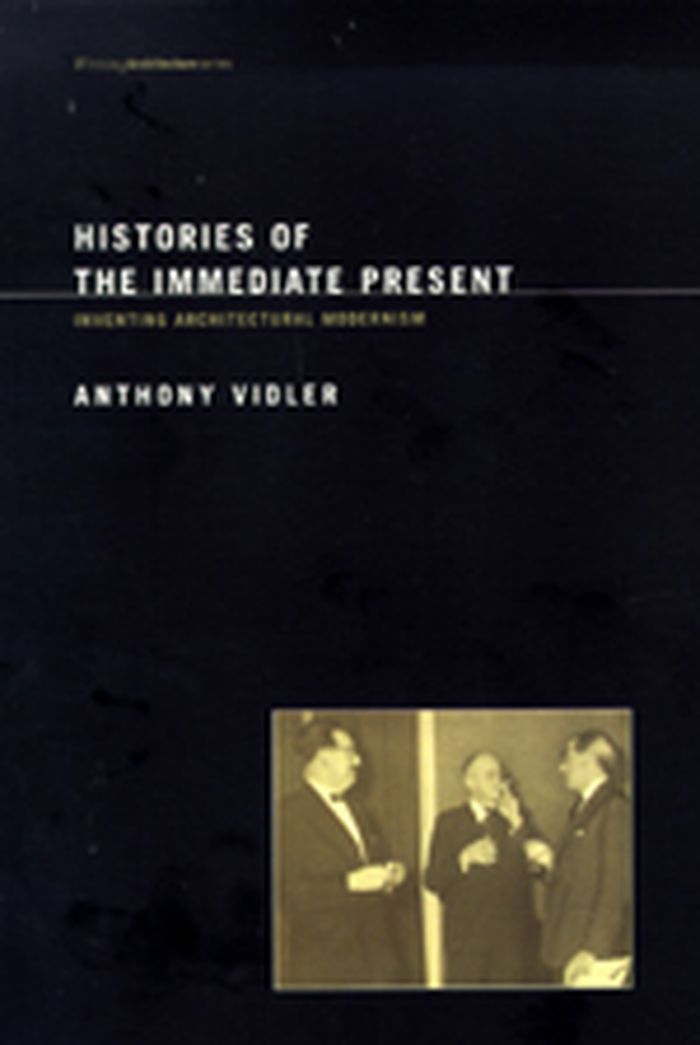
Histories of the immediate present: inventing architectural modernism
Actions:
Price:
$42.95
(available to order)
Summary:
In this book, Anthony Vidler examines the work of four historians of architectural modernism and the ways in which their histories were constructed as more or less overt programs for the theory and practice of design in a contemporary context. Vidler looks at the historical approaches of Emil Kaufmann, Colin Rowe, Reyner Banham, and Manfredo Tafuri, and the specific versions of modernism advanced by their historical narratives. Vidler shows that the modernism conceived by Kaufmann was, like the late Enlightenment projects he revered, one of pure, geometrical forms and elemental composition; that of Rowe saw mannerist ambiguity and complexity in contemporary design; Banham's modernism took its cue from the aspirations of the futurists; and the "Renaissance modernism" of Tafuri found its source in the division between the technical experimentation of Brunelleschi and the cultural nostalgia of Alberti.
Form:
books
books
Publication:
March 2008, Cambridge
March 2008, Cambridge
Subject:
Architectural Theory
Architectural Theory
Form:
books
books
Price:
$49.50
(available to order)
Summary:
Beginning with agoraphobia and claustrophobia in the late nineteenth century, followed by shell shock and panic fear after World War I, phobias and anxiety came to be seen as the mental condition of modern life. They became incorporated into the media and arts, in particular the (...)
Title:
Warped space : art, architecture, and anxiety in modern culture
Actions:
Price:
$49.50
(available to order)
Summary:
Beginning with agoraphobia and claustrophobia in the late nineteenth century, followed by shell shock and panic fear after World War I, phobias and anxiety came to be seen as the mental condition of modern life. They became incorporated into the media and arts, in particular the spatial arts of architecture, urbanism, and film. This "spatial warping" is now being reshaped by digitalization and virtual reality. Anthony Vidler is concerned with two forms of warped space. The first, a psychological space, is the repository of neuroses and phobias. This space is not empty but full of disturbing forms, including those of architecture and the city. The second kind of warping is produced when artists break the boundaries of genre to depict space in new ways. Vidler traces the emergence of a psychological idea of space from Pascal and Freud to the identification of agoraphobia and claustrophobia in the nineteenth century to twentieth-century theories of spatial alienation and estrangement in the writings of Georg Simmel, Siegfried Kracauer, and Walter Benjamin. Focusing on current conditions of displacement and placelessness, he examines ways in which contemporary artists and architects have produced new forms of spatial warping. The discussion ranges from theorists such as Jacques Lacan and Gilles Deleuze to artists such as Vito Acconci, Mike Kelley, Martha Rosler, and Rachel Whiteread. Finally, Vidler looks at the architectural experiments of Frank Gehry, Coop Himmelblau, Daniel Libeskind, Greg Lynn, Morphosis, and Eric Owen Moss in the light of new digital techniques that, while relying on traditional perspective, have radically transformed the composition, production, and experience of architecture.
Form:
books
books
Publication:
June 2000, Cambridge, Mass.
June 2000, Cambridge, Mass.
Subject:
Architectural Theory
Architectural Theory


