


4 Results
Form:
books
books
Actions:
Price:
$44.95
(available to order)
Summary:
This volume expands David Reinfurt’s uniquely pragmatic and experimental approach to pedagogy into a collaborative project that weaves together a multiplicity of voices to present a polyphonic approach to design history and teaching. Three of Reinfurt’s new Princeton University graphic design courses—C-i-r-c-u-l-a-t-i-o-n, M-u-l-t-p-l-i-c-i-t-y and(...)
$44.95
(available to order)
Summary:
This volume expands David Reinfurt’s uniquely pragmatic and experimental approach to pedagogy into a collaborative project that weaves together a multiplicity of voices to present a polyphonic approach to design history and teaching. Three of Reinfurt’s new Princeton University graphic design courses—C-i-r-c-u-l-a-t-i-o-n, M-u-l-t-p-l-i-c-i-t-y and(...)
Subject:
Graphic Design and Typography
Graphic Design and Typography
Publication:
August 2025
August 2025
Title:
A Co* program for graphic design
Actions:
Price:
$44.95
(available to order)
Summary:
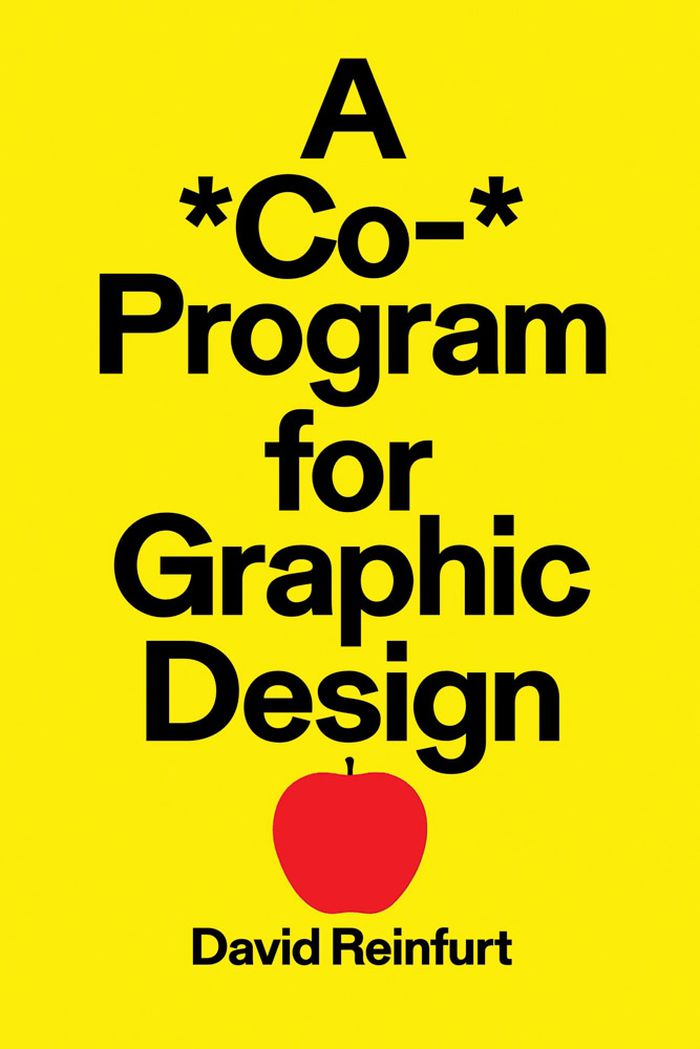
This volume expands David Reinfurt’s uniquely pragmatic and experimental approach to pedagogy into a collaborative project that weaves together a multiplicity of voices to present a polyphonic approach to design history and teaching. Three of Reinfurt’s new Princeton University graphic design courses—C-i-r-c-u-l-a-t-i-o-n, M-u-l-t-p-l-i-c-i-t-y and R-e-s-e-a-r-c-h—developed explicitly in the context of remote teaching and in light of urgent realignments around whose stories get told and who does the telling, are presented in this follow-up to A *New* Program for Graphic Design (Inventory Press/D.A.P., 2018). C-i-r-c-u-l-a-t-i-o-n examines the distribution networks for graphic design including electronic and conventional means. M-u-l-t-p-l-i-c-i-t-y, taught with mathematics professor Philip Ording, explores graphic design from the perspective of topology and topology through the practice of graphic design. R-e-s-e-a-r-c-h is an advanced graphic design class which cultivates an exploratory and expansive design process and investigates what the term ""design research"" has meant at different points in design history.
A Co* program for graphic design
Actions:
Price:
$44.95
(available to order)
Summary:
This volume expands David Reinfurt’s uniquely pragmatic and experimental approach to pedagogy into a collaborative project that weaves together a multiplicity of voices to present a polyphonic approach to design history and teaching. Three of Reinfurt’s new Princeton University graphic design courses—C-i-r-c-u-l-a-t-i-o-n, M-u-l-t-p-l-i-c-i-t-y and R-e-s-e-a-r-c-h—developed explicitly in the context of remote teaching and in light of urgent realignments around whose stories get told and who does the telling, are presented in this follow-up to A *New* Program for Graphic Design (Inventory Press/D.A.P., 2018). C-i-r-c-u-l-a-t-i-o-n examines the distribution networks for graphic design including electronic and conventional means. M-u-l-t-p-l-i-c-i-t-y, taught with mathematics professor Philip Ording, explores graphic design from the perspective of topology and topology through the practice of graphic design. R-e-s-e-a-r-c-h is an advanced graphic design class which cultivates an exploratory and expansive design process and investigates what the term ""design research"" has meant at different points in design history.
Form:
books
books
Publication:
August 2025
August 2025
Subject:
Graphic Design and Typography
Graphic Design and Typography
Form:
books
books
Price:
$45.00
(available to order)
Summary:
Lafayette Park, a middle-class residential area in downtown Detroit, is home to the largest collection of buildings designed by Ludwig Mies van der Rohe in the world. Throughout the 1990s and 2000s, it remained one of Detroit's most racially integrated and economically stable neighborhoods, although it was surrounded by evidence of a city in financial distress. Through(...)
$45.00
(available to order)
Summary:
Lafayette Park, a middle-class residential area in downtown Detroit, is home to the largest collection of buildings designed by Ludwig Mies van der Rohe in the world. Throughout the 1990s and 2000s, it remained one of Detroit's most racially integrated and economically stable neighborhoods, although it was surrounded by evidence of a city in financial distress. Through(...)
Subject:
Architecture Monographs
Architecture Monographs
Publication:
February 2019
February 2019
Title:
Thanks for the view, Mr. Mies. Lafeyette Park, Detroit. Revised edition
Actions:
Price:
$45.00
(available to order)
Summary:
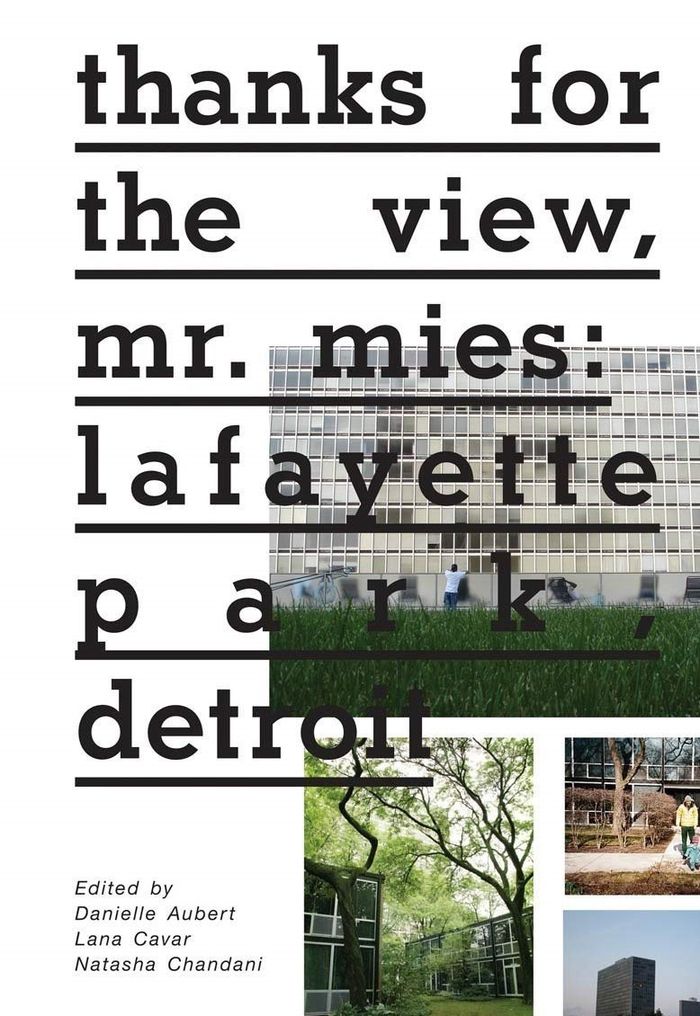
Lafayette Park, a middle-class residential area in downtown Detroit, is home to the largest collection of buildings designed by Ludwig Mies van der Rohe in the world. Throughout the 1990s and 2000s, it remained one of Detroit's most racially integrated and economically stable neighborhoods, although it was surrounded by evidence of a city in financial distress. Through interviews with and essays by residents, reproductions of archival material, new photographs by Karin Jobst, Vasco Roma and Corine Vermeulen, and previously unpublished photographs by documentary filmmaker Janine Debanné, 'Thanks for the View, Mr. Mies' examines the way that Lafayette Park residents confront and interact with this unique modernist environment. This book is a reaction against the way that iconic modernist architecture is often represented. Whereas other writers may focus on the design intentions of the architect, authors Aubert, Cavar and Chandani seek to show the organic and idiosyncratic ways in which the people who live in Lafayette Park actually use the architecture and how this experience, in turn, affects their everyday lives.
Thanks for the view, Mr. Mies. Lafeyette Park, Detroit. Revised edition
Actions:
Price:
$45.00
(available to order)
Summary:
Lafayette Park, a middle-class residential area in downtown Detroit, is home to the largest collection of buildings designed by Ludwig Mies van der Rohe in the world. Throughout the 1990s and 2000s, it remained one of Detroit's most racially integrated and economically stable neighborhoods, although it was surrounded by evidence of a city in financial distress. Through interviews with and essays by residents, reproductions of archival material, new photographs by Karin Jobst, Vasco Roma and Corine Vermeulen, and previously unpublished photographs by documentary filmmaker Janine Debanné, 'Thanks for the View, Mr. Mies' examines the way that Lafayette Park residents confront and interact with this unique modernist environment. This book is a reaction against the way that iconic modernist architecture is often represented. Whereas other writers may focus on the design intentions of the architect, authors Aubert, Cavar and Chandani seek to show the organic and idiosyncratic ways in which the people who live in Lafayette Park actually use the architecture and how this experience, in turn, affects their everyday lives.
Form:
books
books
Publication:
February 2019
February 2019
Subject:
Architecture Monographs
Architecture Monographs
Form:
books
books
Title:
The politics of the joy of printing: Fredy and Lorraine Perlman, The Detroit Printing Co-op 1969-80
The politics of the joy of printing: Fredy and Lorraine Perlman, The Detroit Printing Co-op 1969-80
Actions:
Price:
$39.95
(available to order)
Summary:
In 1969, shortly after moving to Detroit with wife and partner Lorraine Nybakken, Fredy Perlman and a group of kindred spirits purchased a printing press from a Chicago dealer, transported it, in parts, back to Detroit in their cars and the Detroit Printing Co-op was born. Operating between 1969 and 1980 out of southwest Detroit, the Co-op was the site for the printing of(...)
$39.95
(available to order)
Summary:
In 1969, shortly after moving to Detroit with wife and partner Lorraine Nybakken, Fredy Perlman and a group of kindred spirits purchased a printing press from a Chicago dealer, transported it, in parts, back to Detroit in their cars and the Detroit Printing Co-op was born. Operating between 1969 and 1980 out of southwest Detroit, the Co-op was the site for the printing of(...)
Title:
The politics of the joy of printing: Fredy and Lorraine Perlman, The Detroit Printing Co-op 1969-80
Actions:
Price:
$39.95
(available to order)
Summary:
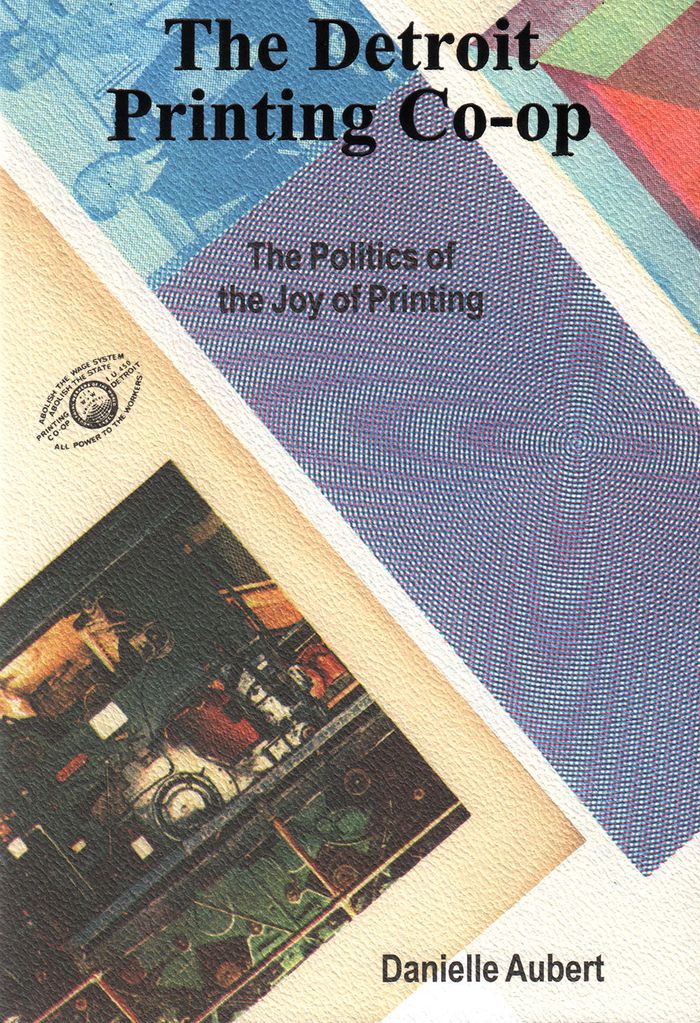
In 1969, shortly after moving to Detroit with wife and partner Lorraine Nybakken, Fredy Perlman and a group of kindred spirits purchased a printing press from a Chicago dealer, transported it, in parts, back to Detroit in their cars and the Detroit Printing Co-op was born. Operating between 1969 and 1980 out of southwest Detroit, the Co-op was the site for the printing of the first English translation of Guy Debord’s "Society of the Spectacle" and journals like "Radical America," produced by the Students for a Democratic Society; books such as "The Political Thought of James Forman" printed by the League of Revolutionary Black Workers; and the occasional broadsheet, such as Judy Campbell’s stirring indictment, "Open letter from ‘white bitch’ to the black youths who beat up on me and my friend."F redy Perlman was not a printer or a designer by training, but was deeply engaged in the ideas, issues, processes and materiality of printing. While at the Detroit Printing Co-op, he radically rethought the possibilities of print by experimenting with overprinting, collage techniques, different kinds of papers and so on. Behind the calls to action and class consciousness written in his publications, there was an innate sense of the politics of design, experimentation and pride of craft.
The politics of the joy of printing: Fredy and Lorraine Perlman, The Detroit Printing Co-op 1969-80
Actions:
Price:
$39.95
(available to order)
Summary:
In 1969, shortly after moving to Detroit with wife and partner Lorraine Nybakken, Fredy Perlman and a group of kindred spirits purchased a printing press from a Chicago dealer, transported it, in parts, back to Detroit in their cars and the Detroit Printing Co-op was born. Operating between 1969 and 1980 out of southwest Detroit, the Co-op was the site for the printing of the first English translation of Guy Debord’s "Society of the Spectacle" and journals like "Radical America," produced by the Students for a Democratic Society; books such as "The Political Thought of James Forman" printed by the League of Revolutionary Black Workers; and the occasional broadsheet, such as Judy Campbell’s stirring indictment, "Open letter from ‘white bitch’ to the black youths who beat up on me and my friend."F redy Perlman was not a printer or a designer by training, but was deeply engaged in the ideas, issues, processes and materiality of printing. While at the Detroit Printing Co-op, he radically rethought the possibilities of print by experimenting with overprinting, collage techniques, different kinds of papers and so on. Behind the calls to action and class consciousness written in his publications, there was an innate sense of the politics of design, experimentation and pride of craft.
Form:
books
books
Publication:
November 2019
November 2019
Subject:
Book Design
Book Design
Form:
books
books
Actions:
Price:
$35.00
(available to order)
Summary:
Lafayette Park, an affordable middle-class residential area in downtown Detroit, is home to the largest collection of buildings designed by Ludwig Mies van der Rohe in the world. Today, it is one of Detroit’s most racially integrated and economically stable neighborhoods, although it is surrounded by evidence of a city in financial distress. Through interviews with and(...)
$35.00
(available to order)
Summary:
Lafayette Park, an affordable middle-class residential area in downtown Detroit, is home to the largest collection of buildings designed by Ludwig Mies van der Rohe in the world. Today, it is one of Detroit’s most racially integrated and economically stable neighborhoods, although it is surrounded by evidence of a city in financial distress. Through interviews with and(...)
Title:
Thanks for the view Mr. Mies: Lafayette Park, Detroit
Actions:
Price:
$35.00
(available to order)
Summary:
Lafayette Park, an affordable middle-class residential area in downtown Detroit, is home to the largest collection of buildings designed by Ludwig Mies van der Rohe in the world. Today, it is one of Detroit’s most racially integrated and economically stable neighborhoods, although it is surrounded by evidence of a city in financial distress. Through interviews with and essays by residents; reproductions of archival material; and new photographs by Karin Jobst, Vasco Roma, and Corine Vermeulen, and previously unpublished photographs by documentary filmmaker Janine Debanné, Thanks for the View, Mr. Mies examines the way that Lafayette Park residents confront and interact with this unique modernist environment. While there are many publications about abandoned buildings in Detroit and about the city’s prosperous past, this book is about a remarkable part of the city as it exists today, in the twenty-first century.
Thanks for the view Mr. Mies: Lafayette Park, Detroit
Actions:
Price:
$35.00
(available to order)
Summary:
Lafayette Park, an affordable middle-class residential area in downtown Detroit, is home to the largest collection of buildings designed by Ludwig Mies van der Rohe in the world. Today, it is one of Detroit’s most racially integrated and economically stable neighborhoods, although it is surrounded by evidence of a city in financial distress. Through interviews with and essays by residents; reproductions of archival material; and new photographs by Karin Jobst, Vasco Roma, and Corine Vermeulen, and previously unpublished photographs by documentary filmmaker Janine Debanné, Thanks for the View, Mr. Mies examines the way that Lafayette Park residents confront and interact with this unique modernist environment. While there are many publications about abandoned buildings in Detroit and about the city’s prosperous past, this book is about a remarkable part of the city as it exists today, in the twenty-first century.
Form:
books
books
Publication:
October 2012
October 2012
Subject:
Architecture Monographs
Architecture Monographs


