


24 Results
Form:
books
books
Price:
$22.00
(available to order)
Summary:
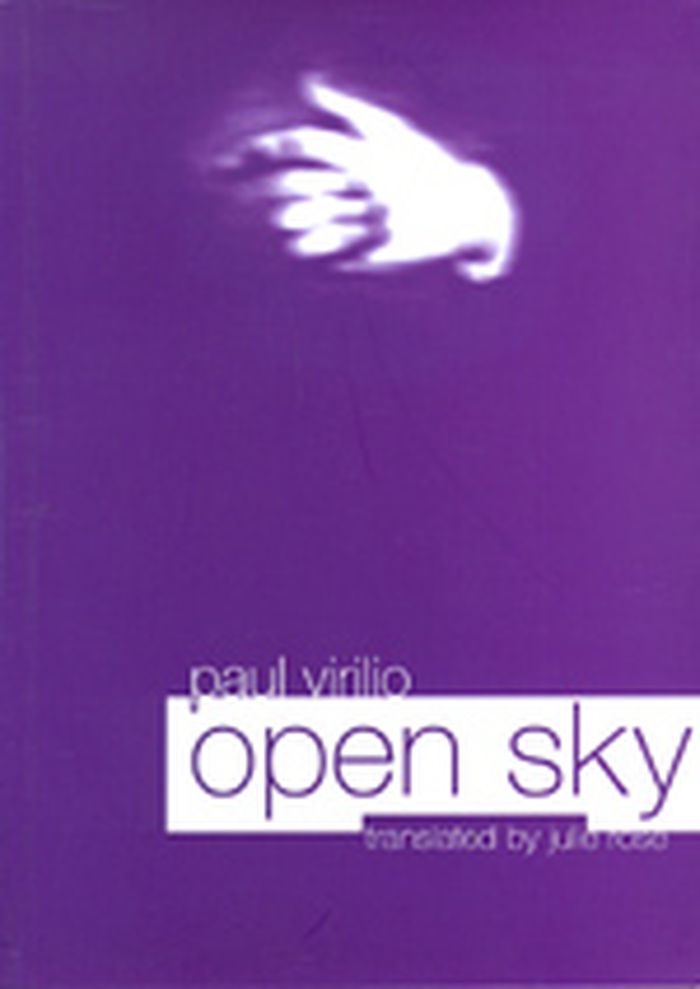
Deepening and extending his earlier work, Paul Virilio explores the growing danger of what he calls a "generalized accident," provoked by the breakdown of our collective and individual relation to time, space and movement in the contex of global electronic media. Translated by Julie Rose.
Title:
Open sky
Actions:
Price:
$22.00
(available to order)
Summary:
Deepening and extending his earlier work, Paul Virilio explores the growing danger of what he calls a "generalized accident," provoked by the breakdown of our collective and individual relation to time, space and movement in the contex of global electronic media. Translated by Julie Rose.
Form:
books
books
Publication:
July 1997, London / New York
July 1997, London / New York
Subject:
Critical Theory
Critical Theory
Form:
books
books
Actions:
Price:
$47.95
(available to order)
Summary:
À l'occasion de son trentième, le manifeste Architecture Principe réédite l'intégrale des neuf numéros parus en 1966 et lance son dixième et tout dernier numéro, sous le titre ''Désorientation ou Dislocation''. Avec des essais de CoopHimmelb(l)au, Daniel Libeskind, Jean Nouvel, François Seigneur, Bernard Tschumi et Frédéric Migayrou.
Subject:
Architectural Theory
Architectural Theory
Publication:
October 1996, Besançon
October 1996, Besançon
Title:
Architecture principe 1966 et 1996
Actions:
Price:
$47.95
(available to order)
Summary:
À l'occasion de son trentième, le manifeste Architecture Principe réédite l'intégrale des neuf numéros parus en 1966 et lance son dixième et tout dernier numéro, sous le titre ''Désorientation ou Dislocation''. Avec des essais de CoopHimmelb(l)au, Daniel Libeskind, Jean Nouvel, François Seigneur, Bernard Tschumi et Frédéric Migayrou.
Form:
books
books
Publication:
October 1996, Besançon
October 1996, Besançon
Subject:
Architectural Theory
Architectural Theory
Form:
books
books
Title:
The information bomb
The information bomb
Actions:
Price:
$33.00
(available to order)
Summary:
"Civilization or the militarization of science?" With this typically hyperbolic and provocative question as a starting point, Paul Virilio explores the dominion of techno-science, cyberwar and the new information technologies over our lives . . . and deaths. After the era of the atomic bomb, Virilio(...)
Title:
The information bomb
Actions:
Price:
$33.00
(available to order)
Summary:
"Civilization or the militarization of science?" With this typically hyperbolic and provocative question as a starting point, Paul Virilio explores the dominion of techno-science, cyberwar and the new information technologies over our lives . . . and deaths. After the era of the atomic bomb, Virilio posits an era of genetic and information bombs which replace the apocalyptic bang of nuclear death with the whimper of a subliminally reinforced eugenics. We are entering the age of euthanasia. These exhilarating bulletins from the information war extend the range of Virilio's work. "The Information Bomb" spans everything from Fukuyama to Larry Flynt, the Sensation exhibition of New British Art to space travel, all seen through the optic of Virilio's trenchant and committed theoretical position.
Form:
books
books
Publication:
January 1900, London
January 1900, London
Subject:
Architectural Theory
Architectural Theory
Form:
books
books
Price:
$25.95
(available to order)
Summary:
This publication sheds light on the reflections that led to the creation of EXIT, the 360° video installation created for the exhibition spaces of the Fondation Cartier pour l'art contemporain in Paris. Based on an idea by French philosopher and urbanist, Paul Virilio, the 360° video installation EXIT was created in 2008 by the New York-based studio of artists and(...)
Title:
Diller Scofidio + Renfro: Exit: Based on an idea by Paul Virilio
Actions:
Price:
$25.95
(available to order)
Summary:
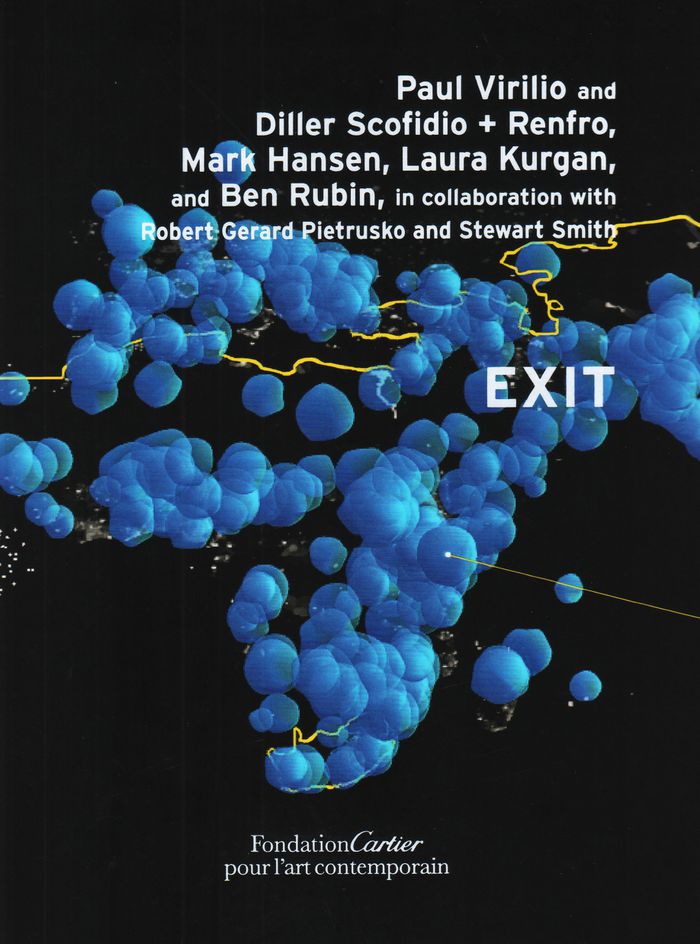
This publication sheds light on the reflections that led to the creation of EXIT, the 360° video installation created for the exhibition spaces of the Fondation Cartier pour l'art contemporain in Paris. Based on an idea by French philosopher and urbanist, Paul Virilio, the 360° video installation EXIT was created in 2008 by the New York-based studio of artists and architects Diller Scofidio + Renfro for the exhibition spaces of the Fondation Cartier pour l'art contemporain in Paris. Composed of a series of animated maps generated by data, this immersive installation investigates human migrations today and their leading causes, including the impact of climate change. Through six scenarios - Population Shifts: Cities; Remittances: Sending Money Home; Political Refugees and Forced Migration; Rising Seas, Sinking Cities; Natural Disasters; and Speechless and Deforestation - it provides the rare opportunity to understand visually the complex relationships between the various economic, political and environmental factors underpinning contemporary human migrations. The work was updated entirely in 2015, reflecting the alarming evolution of the data since it was first presented in 2008. Through various texts, descriptions of the animated maps, and numerous illustrations, this book sheds light on the reflections that led to the creation of EXIT, and proposes to delve deeper into the very notions and questions that it raises and that are more relevant today than ever.
Form:
books
books
Publication:
November 2019
November 2019
Subject:
Architecture Monographs
Architecture Monographs


